
Business
Women in Tech Positions have Increased to Nearly 30%: Report
WASHINGTON INFORMER — The number of women working in tech positions is growing, according to the 2019 Top Companies for Women Technologists Insights Report by AnitaB.org. AnitaB.org is a nonprofit that works to increase representation of women working in tech, and their annual report serves as a benchmark on how the industry is doing. This report is the only one of its kind that specifically looks at women in technical positions.


By Olivia Riggio
The number of women working in tech positions is growing, according to the 2019 Top Companies for Women Technologists Insights Report by AnitaB.org.
AnitaB.org is a nonprofit that works to increase representation of women working in tech, and their annual report serves as a benchmark on how the industry is doing. This report is the only one of its kind that specifically looks at women in technical positions.
The number of women working in these positions in the companies that participated has risen to 29.8% at the entry level and 25.12% overall. The report cites that, according to research, when an underrepresented group reaches 30% representation in an organization, the culture begins to change and equity becomes more accessible.
The number of women in entry-level tech positions is up slightly from 29.5% in 2018. In 2017, the percentage was 27.8%.
Though the numbers of women in entry tech positions are rising, the rate decreases ascending the corporate ladder. This year, women fill 24.5% of mid-level positions, 19.7% of senior positions and 18.5% of executive positions.
However, as the report states, the high rate of women entering tech positions should fuel the pipeline for women in higher-level positions in the future.
Top Companies for Women Technologists gathered data from 76 companies across various fields.
Regarding policies that better foster a diverse workforce, the companies that participated reported an increase in flex-time policy — which allows workers to set their own hours — gender diversity training and sponsorship programs. Policies up most significantly from 2018 covered gender pay equity and eliminating gender bias in performance reviews.

Most of the companies who participated in the report also offered information on the race of women technologists. Women of color are still greatly underrepresented. Black/African American women make up 8.2% of women in tech, and Hispanic/Latina women make up 5.8%. Though these numbers are small, they are up from last year. In 2018, the numbers were 5.5% for Black women and 4.9% for Hispanic/Latina women. White women are the most represented at 47.2%, and Asian women come in second at 36.5%. Those who identify as multiracial make up 1.8%, and Pacific Islanders and Native Americans both make up 0.3%.
While white women reportedly make 81 cents to a man’s dollar across the board, the numbers become more dismal for women of color. According to the National Partnership for Women & Families, Black women make only 61 cents.
Some of the leading companies for gender diversity in tech jobs include Quora, Inc. and the New York Times for companies with fewer than 1,000 tech employees. For those with a medium-sized technical workforce (between 1,000 and 10,000 employees) include Airbnb, Allstate Insurance Company and Blackbaud. For those with a large technical workforce, leaders include Accenture (No. 7 on The DiversityInc Top 50 list), Bank of America and IBM.
AnitaB.org advocates for 50/50 gender equity in tech by 2025 and says that the goal is possible through the improvement of pay, hiring, retention, venture funding and overall empowerment.
This post originally appeared in The Washington Informer.








Black Press
Oakland City Council Extends AI Data Center Moratorium for 10 Months.
POST NEWS GROUP — The city must ensure that it has adequate guardrails and that the community is actively involved in decision-making, she said. “It’s important that our staff have the ability to do the appropriate study, and … to do the appropriate outreach to the community, so the community has a voice in anything that we do that will impact their lives.”

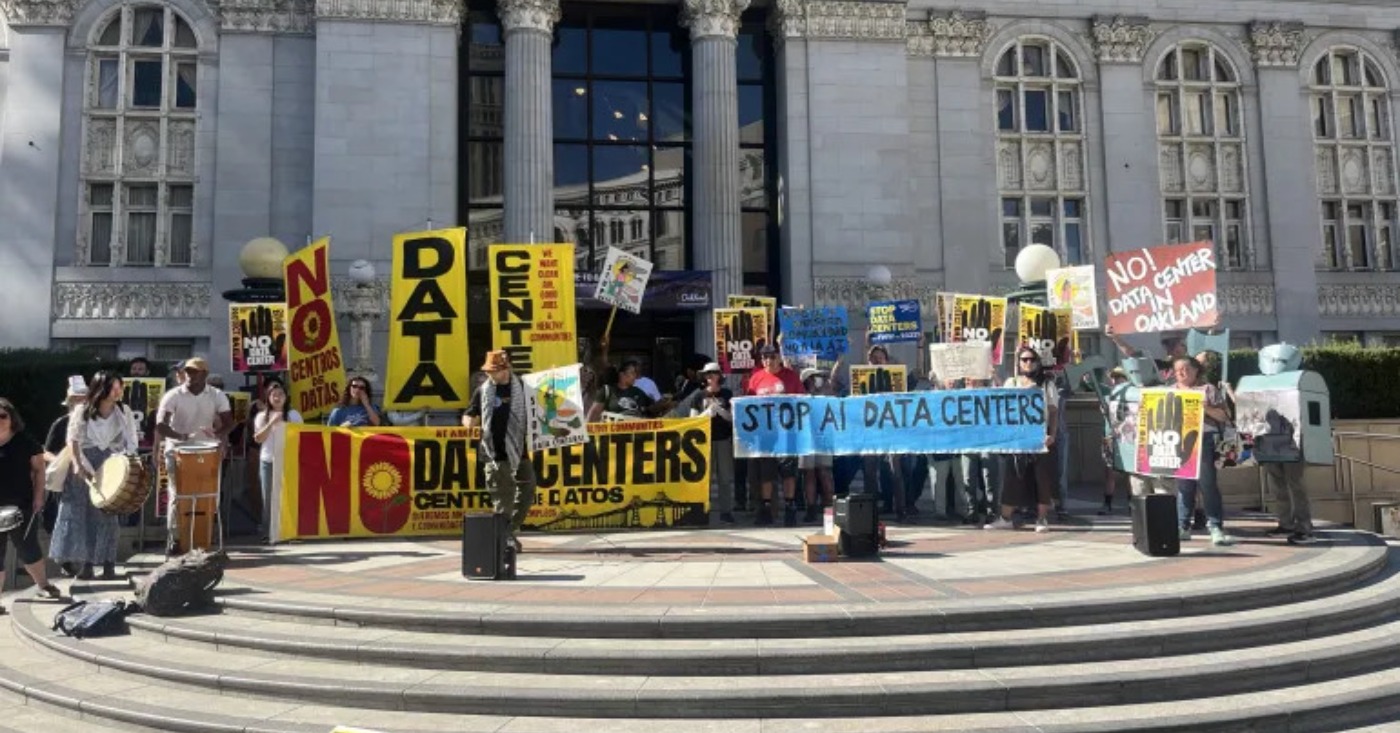
The Oakland City Council voted unanimously this week to extend the city’s moratorium on AI data centers for 10 months – giving the city time to produce a policy that protects residents from the public health and safety dangers that are posed by the proliferation of data centers.
The moratorium extension, which passed at Tuesday’s council meeting, will keep the existing 45-day moratorium in place until Oct. 5, 2027.
“We’re seeing basically an uprising across the country when it comes to how data centers are operating in regard to land use, impacts to the environment, excessive water use and pollution, air pollution, noise pollution, a host of things that are really negatively impacting communities,” said Councilmember Carroll Fife, who is leading the City Council’s efforts to pass the moratorium.
“I represent a district that many of these potential entities are interested in, and two of the giants in the tech industry have leased space in West Oakland, and there’s been another showing interest in a downtown location,” she said.
“I felt it was imperative that I take immediate action to protect Oakland residents from what we’ve seen happen in other parts of the country,” Fife continued. “This is not a rejection of technology. This is not a rejection of economic growth. It’s guardrails against an industry that we’ve seen steamroll individuals throughout the entire globe.”
The city must ensure that it has adequate guardrails and that the community is actively involved in decision-making, she said. “It’s important that our staff have the ability to do the appropriate study, and … to do the appropriate outreach to the community, so the community has a voice in anything that we do that will impact their lives.”
In her recent State of the City address, Mayor Barbara Lee backed the original 45-day moratorium, which passed on Oct. 6 and is set to expire on Nov. 20.
Lee supported the moratorium to give residents more time to consider before any projects move forward, saying, “Residents need to weigh in on any industry that’s trying to come to Oakland.”
Other California cities that already have passed data center moratoriums include San Francisco, Hayward, Oakley, Richmond, Monterey Park, Gilroy, South El Monte, Montebello, and Calexico.
Speaking at the meeting, Bill Gilchrist director of the city’s Planning and Building Department, said that during the moratorium, the city is committed to “looking at areas that might be most severely impacted by land use and residential proximity, and making sure we engage members of the community who may historically have not been able to participate or be invited to participated (in this kind of discussion).”
“The idea for us is to ‘do no harm,’” he said.
Thirty-five public speakers signed up to talk about on the moratorium extension. Almost of them supported the extension, some praising Fife for her leadership on the issue.
Some of the speakers urged the council to consider a permanent ban on data center development in the city.
Supporting the moratorium extension, Laney College professor Peter Brown said, “Don’t cast your vote today based on the illusion we’re operating in the old economy, where corporate investment in Oakland meant thousands of lasting, good-paying jobs, as well as property, business, and income taxes flowing into city coffers,” he said.
“Those days are long gone in this new economy, where every investment is just another asset to be exploited and used as collateral for more investment,” Brown continued. “Every corporate move is to extract from our communities.”
Nyah Tisdell, an East Oakland community organizer with Communities for a Better Environment (CBE), said, “We have community meeting every month…Community members say no (to data centers),” that will go straight to East Oakland, which already has so much industry, so much pollution, and we are trying to better our communities.”
A speaker for Care for Community Action (C4C) said her organization has surveyed more than 400 residents and found that 73% favor a permanent ban on all data centers being built in Oakland.
According to Rev. Leslie Bowling-Dyer, “Data centers are a part of the necessary infrastructure for the rise of an economically and politically untouchable class, and people are not just being lunatics displaying an irrational fear of technology. Technological innovation is not equivalent to social progress. Technological advance is not the problem in itself, but it’s the people who control it.”
Black Press
Farms to Grow, Inc. Hosts the 8th Annual Sweet Potato Pie Tasting Contest
POST NEWS GROUP — For years, one baker dominated the competition and proudly held the Best N’ West crown. Then, in 2024, a longtime friend rose to the challenge and snatched the title away. Not to be outdone, the former champion reclaimed the crown in 2025, setting the stage for an exciting showdown this year.
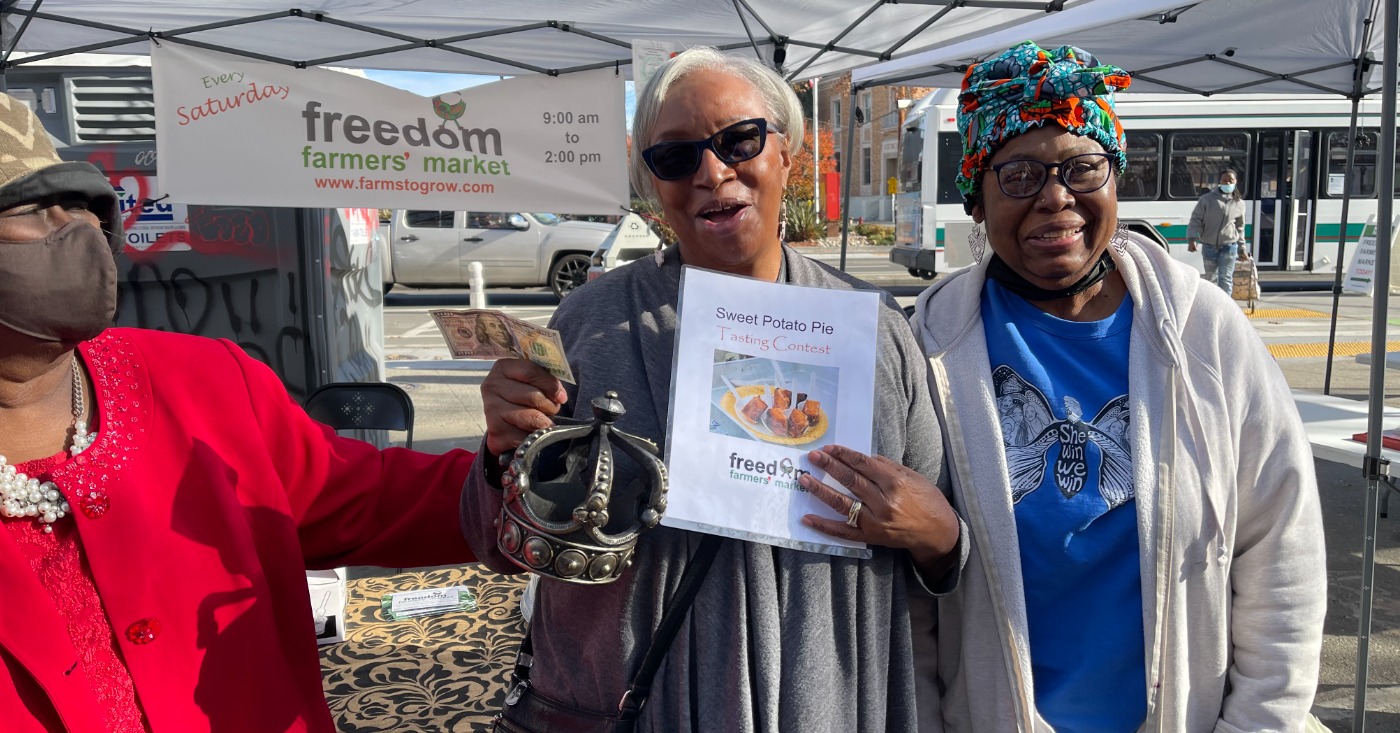
Community Invited to Crown the 2026 ‘Best N’ West’ Sweet Potato Pie Champion
Farms to Grow, Inc. invites sweet potato pie lovers, food enthusiasts, and friendly rivals to gather for the Eighth Annual Sweet Potato Pie Tasting Contest on Saturday, Nov.14, 10 a.m.–12 p.m. at the Freedom Farmers’ Market, 4521 Telegraph Ave., Oakland, CA.
Community members are encouraged to come hungry, cast their votes as official judges, and be part of the crowning of the next Best N’ West Sweet Potato Pie Champion.
Creating a championship-worthy sweet potato pie is no simple task. It takes the perfect blend of spices, carefully selected sweet potatoes, and a magical crust. Each year, contestants bring their best recipes to the table, competing for bragging rights, a beautiful crown, and a cash prize.
For years, one baker dominated the competition and proudly held the Best N’ West crown. Then, in 2024, a longtime friend rose to the challenge and snatched the title away. Not to be outdone, the former champion reclaimed the crown in 2025, setting the stage for an exciting showdown this year.
Now the question on everyone’s mind is: Who will take home the crown in 2026?
Will the reigning Best N’ West queen defend her title? Will her rival and friend reclaim the throne? Or will a newcomer surprise everyone and emerge victorious?
The Sweet Potato Pie Tasting Contest has become a beloved community tradition at the Freedom Farmers’ Market season, bringing on friendly competition. Beyond the delicious pies, attendees can purchase fresh sweet potatoes grown by black farmers, enjoy live music, and help decide who earns the title of Best N’ West Sweet Potato Pie Champion.
Farms to Grow, Inc. works to preserve Black agricultural heritage, strengthen local food systems, and support farmers through education, advocacy, market development, and community-based programs that increase access to fresh, locally grown food.
Black Press
OP-ED: Closing the Next Digital Divide — Communities of Color Must Have a Voice in the AI Future
As artificial intelligence reshapes the global economy, leaders are warning that communities of color risk falling behind if they lack access to critical training. Following the push to bridge the pandemic-era digital divide, new initiatives like the AI Fluency Initiative in Houston are providing practical exposure to these tools for small business owners and students. Ensuring Black and Brown communities are not the last to benefit from this technological transformation requires a combination of literacy programs and developer accountability to prepare workers for an evolving landscape. Read more.

Technology has long shaped who has access to opportunity. As artificial intelligence begins reshaping our workplaces, schools, and daily lives, we must ensure communities of color are not left catching up once again.
In 2020, the pandemic risked widening a digital divide that has put people of color at a disadvantage for years. Access to the technologies that are shaping the world should be available to all. When the internet emerged as the technology of note, children needed access for their education. Adults needed access to find work and succeed in their jobs. Increasingly, upward mobility and economic opportunity depend on having the skills to use the tools transforming our economy.
In Harris County, we worked to make sure our residents were not on the wrong side of that vast digital divide. Through the Office of Broadband, we distributed thousands of hotspots, established more than 100 public Wi-Fi locations, and invested in infrastructure to increase internet availability for under-resourced families.
Today, another divide is emerging. In 2020, the challenge was whether families could get online. Now, communities need to learn to navigate a world increasingly influenced by AI or risk being left behind. More than access, responsible AI requires thinking critically about the technology, its outputs, and the companies behind it. AI literacy builds a foundation for that reflection. We cannot allow Black and Brown communities to be the last to benefit from another technological transformation.
That is why I was proud to partner with Reverend Al Sharpton and the National Action Network (NAN) in September to bring the AI Fluency Initiative to Houston. The program seeks to provide people with practical exposure to AI and show how these tools can be used in jobs, education, small business, and more. Open to the public, programs like this give residents the knowledge to participate in a changing economy and shape the systems developing around them.
Technology companies also have a role to play in making information accessible. OpenAI partnered with NAN on AI literacy in Houston and has supported practical training across the country through OpenAI Academy. Local businesses, older adults, and educators are among the groups the company has targeted through these efforts. This kind of engagement matters. The organizations building AI tools must equip communities with the skills and confidence to use them effectively. When people understand its capabilities and limitations, AI can help them address problems they are already facing.
Entrepreneurs like Kaija Pack are already putting that potential into practice here in Texas. As she built Break Life Houston, she leveraged ChatGPT to develop business strategies and expand her customer base, ultimately growing her business enough to open a second location.
Small business owners like Kaija should understand how AI can help them compete. Workers should understand how it may change their industries. Students should learn how to use these tools responsibly. Communities should understand AI so they can have a meaningful voice when decisions about the technology affect them.
This principle has guided much of my public service. Earlier this year, Commissioner Lesley Briones and I championed Harris County’s first worker Consultation Policy because workers deserve a say in the choices that will impact their livelihoods. Those voices are amplified when we understand their means of empowerment.
AI literacy is a path to that understanding. A seat at the table is most powerful when people have the knowledge they need to advocate for themselves.
Understanding includes risks as well as opportunities. We need to learn how to use these tools safely, and developers have the responsibility to build safety into their systems. OpenAI, for example, has invested in external testing, safeguards, and publicly documented standards for model behavior. Developers should pair innovation with accountability.
Closing the AI divide will be a collaborative effort. Harris County already has networks like our Digital Navigators that connect residents with technology and digital skills. We should build on initiatives like these and make practical AI education accessible at a greater scale.
Too often, people of color have been asked to adapt to new systems after they were built and the rules were already written. With AI, we have an opportunity to be involved from the outset.
The future should not simply happen to us. We should have a hand in shaping it.
Black Press
Do You Want to Transform a Standard Venue into a Luxury Experience?
BLACKPRESSUSA NEWSWIRE — Creating a luxury event involves far more than simply providing high-quality food and a formal dress code. To truly transform a standard venue into an unforgettable experience, event planners must ensure that every detail, from the atmosphere to the entertainment, is meticulously curated to match a specific theme.

A luxury experience involves elevated food, atmosphere, and entertainment for attendees. The venue matters just as much. Focus on comfortable seating, premium lighting, and other elements to provide guests with a beautiful event that they will not forget.
Have you ever stepped into an event space that took your breath away? A well-curated luxury event space with matching party backdrop setups can transport you to another time or place, providing a needed break from the stresses of everyday life. Event planners understand that the venue needs to contribute to the luxury experience as much as any other factor.
What Is a Luxury Experience?
A luxury experience simply means that the event provides attendees with a beautiful setting and premium food. Additionally, every part of the event should be curated to match its theme and purpose.
How Can Venue Transformation Turn a Regular Space Into a Luxury Experience?
How can you upgrade your venue from a regular party to a luxury experience? Here are some steps to take that will elevate the quality of your venue and setting.
Divide the Room Into Zones
If possible, divide the room into several zones, so attendees can mix and mingle. For instance, an event with a cocktail hour and a sit-down dinner can have a cocktail area with standing tables and a dining area with traditional sit-down setups. A silent auction functions better when the auction area is separated from where guests tend to congregate and socialize.
Consider Beverly Hills event equipment rentals to make each zone unique. Provide features that attract guests so they make their way around the space, rather than staying in one area.
Find a Sophisticated Color Palette
Garish, tacky colors can instantly downgrade your event. Guests will notice before anything else, and the glaring shades may be unpleasant to look at.
Some events have a predesignated color scheme based on their purpose or the hosting organization. In these cases, try to incorporate neutral shades wherever possible to soften the space and avoid clashing with the existing color palette.
If you can choose the colors, consider the theme of the event. A fundraiser for breast cancer awareness, for example, may call for shades of pink. A casino night will work better with a darker theme.
Use Comfortable Seating
Guests should find respite when sitting, not immediately feel uncomfortable. Invest in chair rentals that have cushions and are wide enough to accommodate your guests. Create spaces designed for comfort with couches and plushy chairs.
Set Up Premium Lighting
Cheap lighting can put an unpleasant glare on the entire space. Use soft, warm lights that emit luxury, rather than whiter lights. With warmer undertones, even brighter lights will not hurt the eyes as much.
Add table lamps and lower lighting for a cozier glow. Allow guests to adjust the lighting to their preferences as well.
Ensure the Acoustics Are Balanced
Sound is essential for creating a premium experience. Live music is a wonderful option, but the acoustics need to be balanced to prevent your guests from feeling overwhelmed. Perform sound checks with live musicians before the event begins so you can assess the sound quality all over the event venue, not just in front of the stage.
If you choose prerecorded music or a DJ, speaker placement is crucial. Avoid putting speakers too close to seating areas or places where guests congregate. Rather, place the speakers in areas that allow them to fill the room instead of directly next to people’s ears.
Highlight Nature
An outdoor event should emphasize nature to elevate the event space. Consider incorporating and highlighting the natural beauty of the venue. Indoor events can be instantly upgraded by bringing plant life, such as trees and flowers, into the room to cultivate an inviting oasis.
Frequently Asked Questions
Is a Luxury Event Worth the Higher Price Tag?
Often, yes, especially when fundraising is involved. Luxury events that are curated to a higher net-worth audience may translate to more money raised overall.
VIP guests expect a premium experience. When guests pay hundreds of dollars per plate or thousands per table, it is important to deliver every element of luxury to show them that they did not waste their money.
For weddings or other events that do not include raising money, a luxury event may still be the best option to suit your needs. If you have always dreamed of an exquisite wedding with finer touches, then adding luxury will be worth it to have the day that you deserve.
What Is the Dress Code for a Luxury Event?
It depends on the style of the event, as well as the time of day, setting, and many other elements. Luxury events that take place in the evening typically lean toward black- or white-tie, but a mid-morning brunch may feature more casual wear.
If you are hosting a luxury event, it is best practice to outline the dress code on the invitation. There will not be any guesswork involved for guests, and you do not have to worry about attendees showing up with the wrong attire.
Consider including advice, even if it doesn’t strictly relate to the dress code. Heels, for example, may not work well in events that take place on a golf course or another grassy area.
How Far in Advance Do You Have to Start Planning a Luxury Event?
Ultimately, it is up to you when you need to start planning the event. When contacting vendors such as caterers and entertainment, see how far out you can book and lock in those elements as soon as possible.
The earlier you plan, the less stressed you will be. As your event approaches, you can focus on finishing touches rather than nailing down huge problems.
Consider Luxury Party Aesthetics
A luxury experience is about more than just a fancy plate of food and a black-tie or white-tie dress code. Curating the event space to match the event’s mood will help bring the entire concept together.
Would you like to learn more about event hosting? Explore our site for ideas and inspiration to suit your next event.
Content provided through ContentManagerIO.
Advertising
PRESS ROOM: AutoNetwork.com Launches a Free Auto Section for Newspapers, Credit Unions, Banks, Churches, Schools and Nonprofits
BLACKPRESSUSA NEWSWIRE — Right now, someone who reads your paper, banks with you, sits in your pews, or attends your school is signing a car deal. Too often, they leave with a high-cost loan, old trade-in debt rolled into a new one, add-ons they never asked for, or a repair bill they didn’t understand. Most of those losses happen because no one gave them the facts first.

One line of code puts free, sourced car-buying and car-repair lessons in front of the people you serve. No cost. No contract. No staff needed.
AutoNetwork.com, which has served car buyers since 1986, today launched the Auto Section: a free, ready-made car-money education section that any organization can add to its website by pasting one line of code. Its message is simple: Know Before You Go To A Dealer.
The people you serve are paying for what no one told them
Right now, someone who reads your paper, banks with you, sits in your pews, or attends your school is signing a car deal. Too often, they leave with a high-cost loan, old trade-in debt rolled into a new one, add-ons they never asked for, or a repair bill they didn’t understand. Most of those losses happen because no one gave them the facts first.
Every organization on this list exists to look out for its people. The facts are now free and take minutes to add. Not sharing them means letting the next family learn the hard way, at the dealer’s desk or the repair counter.
One Auto Section, five ways to serve
- Newspapers: a reader-service section you don’t have to staff, write or pay for. You keep 100% of the ad space around it and 100% of any sponsor line you sell, such as “Auto Section sponsored by…” on your own page.
- Credit unions and banks: member education that reaches people before they sit down in the dealer’s finance office, where the loan terms get decided.
- Churches: a stewardship and money ministry for families. A car is one of the biggest purchases most households make.
- HBCUs and schools: first-car, first-loan and first-repair lessons for students and their families.
- Nonprofits: a ready-made addition to financial-empowerment programs, with no added cost or staff.
- What your people learn
- Financing: leasing vs. buying, who should lease, mileage limits, wear charges and GAP coverage.
- Trade-in debt: how owing more than a car is worth happens, and how to get out.
- Depreciation: how fast a car can lose value, with a free calculator.
- Add-ons and fees: what to get in writing before signing.
- Warranties: what the factory covers, and when extended coverage may not pay off.
- Credit: rights and steps for buyers with low or no credit, plus a first-time buyer guide.
- Service costs: how to choose a repair shop, ask for a written estimate, know your rights and spot a padded bill, plus factory maintenance schedules and estimated ownership costs so routine service is never a surprise.
- Plus: Ask AI Roosevelt for answers to car questions, and new-model walkaround videos.
Every guide links to its sources. The Auto Section teaches what to ask and what is normal; it never quotes local shop prices or sells repairs.
Built to be safe, simple, and yours
- Easy: copy one line from the free setup page, paste it where you want the section, and you’re done. New guides and videos appear by themselves.
- Safe: it runs in a sealed frame that cannot read or change your site, your logins or your ad accounts. It collects no reader names or emails.
- Clean: only AutoNetwork.com education appears inside the section. No outside ads. Guides and videos open inside it, so readers stay on your page.
- No strings: no cost and no contract. Delete the line, and it’s gone.
A word from the founder
“For forty years I’ve watched good people pay too much for cars and repairs simply because nobody told them what to ask,” said Roosevelt Gist, founder of AutoNetwork.com. “The organizations people already trust are the best messengers. We built the Auto Section so they can share the facts without spending a dime or hiring anyone.”
The next car deal or repair bill in your community is happening now. Add the free Auto Section today and make sure your people walk in knowing the facts:
https://autonetwork.com/autosection?src=press-release
If you can paste a link into your website, you can install it. Questions? Email [email protected].
About AutoNetwork.com
AutoNetwork.com has served car buyers since 1986 with free, sourced consumer education, vehicle reviews, and the free AutoNetwork.com app. The Auto Section is general education, not legal or financial advice. Learn more at autonetwork.com.
Black History
Superb Woman: Destiny B. Sadler
TEXAS METRO NEWS — Destiny B. Sadler is a dynamic entrepreneur and empowerment coach who serves as a Top Executive with the global beauty brand LimeLife by Alcone. A graduate of Southern University, Sadler leverages her background in leadership and community impact to mentor others on the transformative power of confidence.
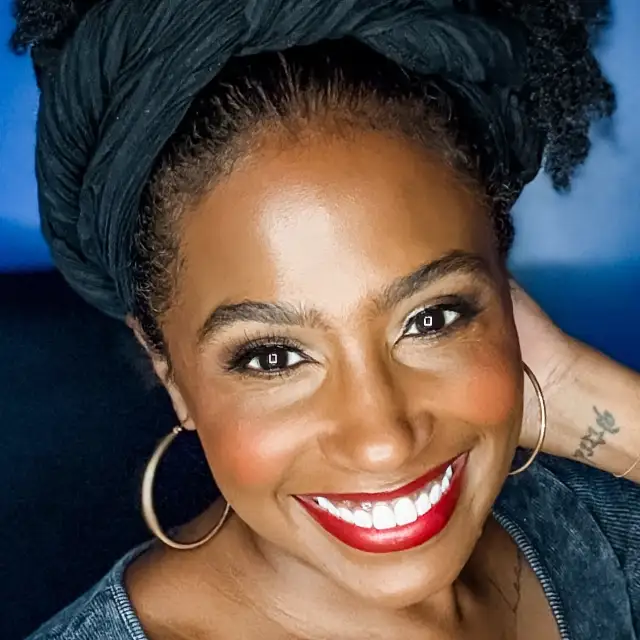
Destiny B. Sadler is a dynamic entrepreneur, digital creator, and empowerment coach dedicated to helping individuals look, feel, and live at their absolute best. With a background rooted in leadership and community impact, she serves as a Top Executive with the global beauty brand LimeLife by Alcone, where she mentors a growing network of beauty guides and champions the transformative power of confidence.
Driven by a passion for personal development and education, Destiny founded YSTBYOU and You’re Simply the Best Kids, an educational services organization focused on building foundational confidence and leadership skills in youth. She’s a graduate of Lamar High School and Southern University. Destiny’s life work centers on a simple, powerful philosophy: embracing who you are is the ultimate key to success.
Based on reporting by Texas Metro News.


Austin vs. Kashmere (9-10-26) | Houston High School Football

Bellaire vs. Westside (9-18-26) | Houston High School Football

Lamar vs. Heights (9-17-26) | Houston High School Football

Madison vs. Austin (9-8-26) | Houston High School Volleyball

Milby vs. Madison (9-19-26) | Houston High School Football

Ridge Point vs. Shadow Creek (9-4-26) | Houston High School Football

How Black professionals close the AI opportunity gap

🎬 ST. LOUIS CULTURE ON THE BIG SCREEN!

Athlete of the Week – Ameer Carter

Nissan Frontier Review: Is This Mid-Size Truck Right for You? #shorts

Practitioners of African Traditional Spirituality Offer Ancestral Reverence Ritual Oct. 31

Tamiko Armstead | 2026 Lifetime Achiever in Education

HISTORY MADE: Keisha Lance Bottoms Becomes First Black Woman Elected Governor in American History

OP-ED: The Black Church Writes AI’s Next Chapter

Kickstarter CEO Everette Taylor Shares Tips on Creating and Growing a Business

BLACK MEN VOTE: Mobilizing 100,000 Black Men Ahead of the Midterms 📱

NFN live presents 🎙️ THE ROAD TO BEYOND IWDM 50: WE CANNOT STOP NOW! 8-Week Podcast

Black Household Wealth Plummeted 25% in Three Years, New Data Shows

Secretary of State Shirley Weber Pushes Back Against DOJ Demands Over California Voter Rolls

Columbus’s Oldest Businesses Still Open: 10 That Have Lasted 75+ Years
Austin vs. Kashmere (9-10-26) | Houston High School Football
Bellaire vs. Westside (9-18-26) | Houston High School Football
Lamar vs. Heights (9-17-26) | Houston High School Football
Madison vs. Austin (9-8-26) | Houston High School Volleyball
Milby vs. Madison (9-19-26) | Houston High School Football
Ridge Point vs. Shadow Creek (9-4-26) | Houston High School Football
How Black professionals close the AI opportunity gap
🎬 ST. LOUIS CULTURE ON THE BIG SCREEN!
Athlete of the Week – Ameer Carter
Nissan Frontier Review: Is This Mid-Size Truck Right for You? #shorts
-
 Black History1 week ago
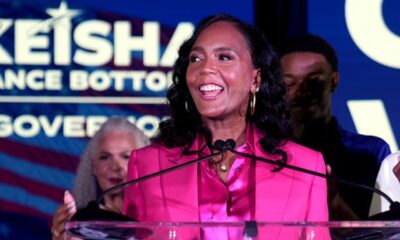
Keisha Lance Bottoms to Govern State Where Her Great-Great-Grandfather Was Enslaved
-

 Black History1 week ago
IN MEMORIAM: Marcia Ann Gillespie, Editor of Essence and Ms. Magazines, Dies at 82
-

 Black History6 days ago
Don’t Pass the Torch. Expand the Circle.
-

 Black History1 week ago
Meet Scott Colom, the Mississippi Democrat Leading Tight Mississippi Senate Race
-

 Black Press2 days ago
OP-ED: Closing the Next Digital Divide — Communities of Color Must Have a Voice in the AI Future
-

 Black Press1 week ago
Eight Black Women Win Georgia Statewide Offices
