
Education
Why Standards are Important under the Every Student Succeeds Act


By Dr. Elizabeth Primas (Program Manager, NNPA/ESSA Public Awareness Campaign)
Standards have always been a part of society. From standards of measurement and time to driver’s licenses, food preparation in restaurants and language, standards keep us healthy and safe and help us communicate with each other.
In the 1980s, the United States began to expand and formalize public education standards. This process was the driving force behind the education reform movement. Standards in education were supposed to set clear guidelines for what all students were expected to learn and be able to do. The curriculum and assessments were supposed to be aligned with established standards.
In 2001, with the signing of the No Child Left Behind Act (NCLB) by President W. Bush, a significant emphasis on standards took on a life of its own. Under NCLB, all states were required to develop standards and assessments to measure student achievement. Problems occurred when states developed individual standards that measured knowledge and skill levels. There was no way to determine if a student passing one state’s standards was equivalent to a student’s level of accomplishment in another state. Test that were national, like the PSAT, SAT, ACT, and the National Educational Assessment of Progress (NAEP), all indicated that students with passing grades in high school, that met state standards, were not necessarily prepared to be successful in college and career.
In 2009, there was a state-led effort to develop the Common Core State Standards (CCSS); the effort was launched by state leaders, including governors and state commissioners of education from 48 states, two territories and the District of Columbia; CCSS was supposed to remedy the differentiation in state standards under NCLB. The National Governors Association Center for Best Practices (NGA Center) and the Council of Chief State School Officers (CCSSO) worked with educational agencies to create one set of standards that would be uniform for the country. That same year, the Obama Administration developed the Race to the Top Fund, a $4.35 billion dollar competitive grant program designed to ensure that all students graduated high school prepared for college, career, and life. Race to the Top used financial incentives to encourage states to adopt CCSS.
Along with common standards, came high-stakes testing. Most states adopted one of two assessments: the Smarter Balance Assessment or the Partnership for Assessment of Readiness for College and Careers (PARCC). Many stakeholders saw high-stakes assessments as unrealistic, because all children were required to perform at world-class levels, merely by raising expectations and imposing punishments and sanctions on schools and children who fell short of the standards. The standard implementation did not consider students with persistent challenges that could have impeded them from reaching high-levels of achievement. There was no flexibility in meeting these standards, regardless of socioeconomic status, age, race, gender, cultural or ethnic background, disabilities or family circumstances.
The discussions around the implementation of standards did acknowledge that student learning abilities were not homogeneous. Yet, schools seldom provided the range of training, personnel, and strategy needed to meet all students. Subsequently, when students didn’t meet the goals, they were retained and schools faced sanctions.
Research has indicated that minority students, including English Language Learners (ELL), students living in poverty, and students with disabilities are disproportionately represented in the group of students that do not make sufficient and significant growth to meet the standards and objectives promoted.
Under the “Every Student Succeeds Act” (ESSA), states have been given the leeway to: continue using the Common Core State Standards and/or create and adopt their own rigorous standards. Along with the freedom to select standards best suited for specific state demographics, states can also select what assessments they administer. As states submit their ESSA plans, many states have steered away from the CCSS. Several states have indicated that they will not continue using Smarter Balance or PARCC to measure standard mastery.
The only way to be sure what standards your child must meet is for you, the parent, to get involved, and stay engaged at every level. Your child is our future, and we ask all parents to remain focused in the pursuit of their education.
Every meeting that involves your child’s education is important. Be there, be vigilante, stay persistent, have your voice heard.
Dr. Elizabeth Primas is an educator, who spent more than 40 years working towards improving education for children of diverse ethnicities and backgrounds. Dr. Primas is the program manager for the NNPA’s Every Student Succeeds Act Public Awareness Campaign. Follow Dr. Primas on Twitter @elizabethprimas.











Black History
Beyond the Job Search: DC Black MBA Invests in Helping Black Women Reclaim Their Next Chapter
WASHINGTON INFORMER — Black women in the Washington metropolitan region are facing employment challenges, with revised data showing approximately 251,000 job losses between January and August 2025. This accounts for over half of all female employment losses during that period, despite Black women making up only 14.1% of the female workforce.
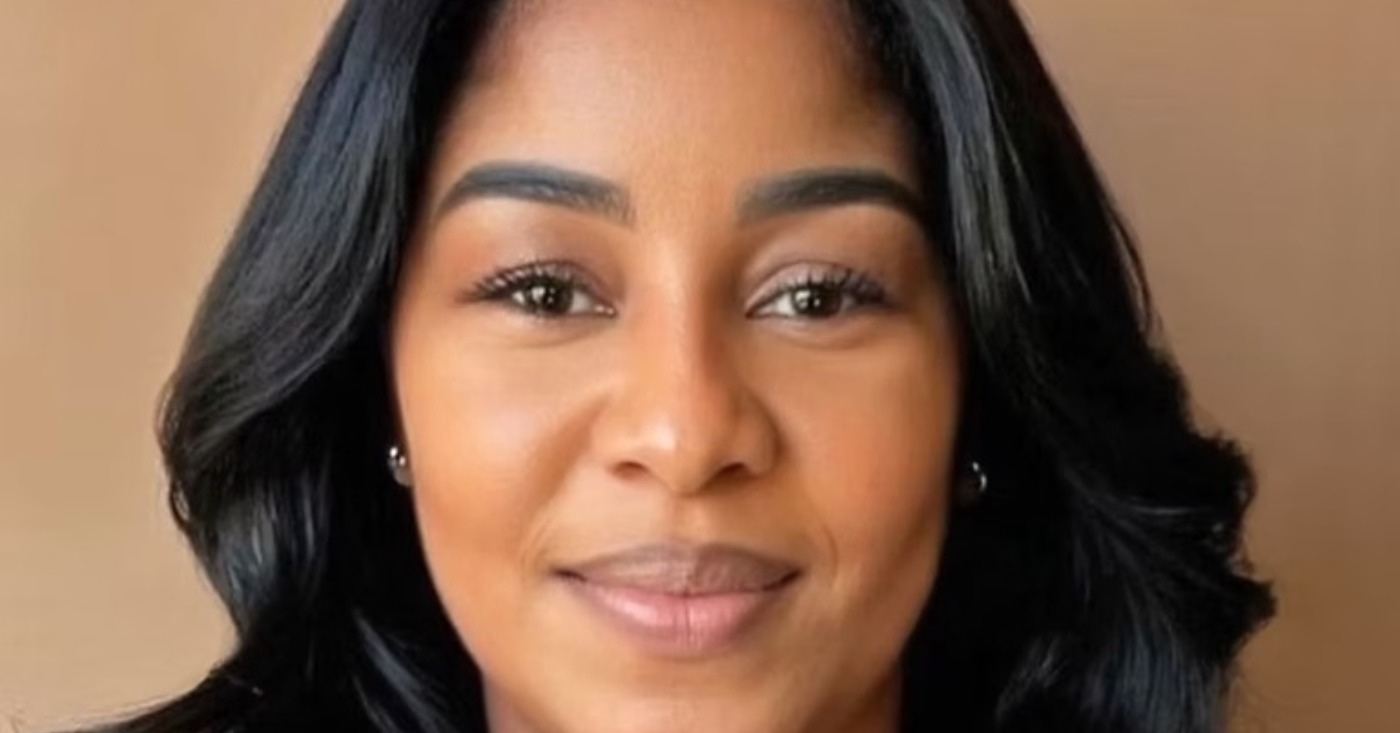
For Black women across the Washington metropolitan region, the changing employment landscape is about more than a paycheck. It can mean reassessing a career, redefining success and deciding what comes next.
The numbers underscore the challenge. Revised employment data show that approximately 251,000 Black women lost jobs between January and August 2025, accounting for more than half of the employment losses among women during that period, despite Black women representing just 14.1% of the female workforce. By the end of 2025, there were 113,000 fewer Black women employed than at the beginning of the year.
The impact has been particularly significant in the DMV, where federal employment has long provided economic stability and career opportunities for Black professionals. Maryland alone lost approximately 25,000 federal jobs in 2025, according to state employment data.
For DC Black MBA, those realities call for support that extends beyond helping women find their next job.
“I am focused on doing more and providing as many opportunities as possible for Black women to invest in themselves both professionally and personally,” said Dr. Carletta S. Hurt, president of the DC Black MBA. “We know that when Black women proceed and prosper, everyone benefits.”
That commitment is behind Leading with Intention by Investing in Self, a three-part, in-person workshop series hosted by DC Black MBA in partnership with Blu Topaz Inc. Educational Consulting.
The series builds on the chapter’s August Women’s Symposium, MastHERpiece: Designing a Life with Intention, which challenged women to see themselves as architects of their careers, wealth, wellness and impact. The new workshops take that conversation a step further, asking women to consider where they can work next and who they want to become next.
The series opens Oct. 22 with “Recalibrating Your Compass,” led by Geraldine P. White, Founder and CEO of Identity & Impact. White will guide participants through questions of identity, direction and purpose.
“You can be proud of what you’ve built and ready for something different. Both can be true,” White said. “Investing in yourself includes giving yourself permission to revisit an earlier definition of success and consider what you want your next chapter to make possible.”

On Oct. 29, Tonya Camille, creator of Me in the Making and Unstuck & Inspired, will lead “Successful, But Stuck: How High-Achieving Professionals Reconnect, Realign & Move Forward.”
Her interactive workshop will help women identify fears, limiting beliefs and recurring patterns that may prevent them from moving forward, while developing a concrete next step. “You can’t change what you won’t acknowledge, and you can’t transform what you’re unwilling to confront,” Camille said.
The series concludes Nov. 5 with nonprofit leader, author and consultant Tokiwa T. Smith leading “Rest is Revolutionary.”Her session challenges a familiar expectation placed upon Black women: that achievement and service to others must come at the expense of themselves.

Smith said Black women must recognize that prioritizing themselves, setting boundaries and making room for joy are not signs of diminished ambition. “I believe we thrive when we engage in self-care and community care,” Smith said.
For Hurt, the goal is to create space for Black women to move beyond reacting to an uncertain economy and begin intentionally determining what comes next.
A job loss can require a new résumé. A changing workplace may demand new skills. However, a life transition can also become an invitation to reconsider purpose, boundaries, entrepreneurship, leadership, rest and the meaning of success itself.
For more information, visit the DC Black MBA website (www.dcblackmbaa.org)/.
Based on reporting by Washington Informer.
Black History
Can Black Houston Create a Black Tech Corridor?
HOUSTON DEFENDER — Black professionals remain significantly underrepresented in the American technology sector, holding only 7.4% of high-tech jobs despite making up 12.7% of the U.S. workforce in 2025. This disparity is even wider for Black women, who constitute less than 3% of the tech workforce.

For years, technology has been one of America’s fastest-growing economic sectors—and one where Black professionals remain significantly underrepresented.
In 2025, Black workers made up 12.7% of the U.S. workforce, according to the U.S. Bureau of Labor Statistics, but only 7.4% of the high-tech workforce, according to the U.S. Equal Employment Opportunity Commission. Their share of high-tech employment had remained essentially stagnant since 2005. Black workers also represented just 5.7% of high-tech managers.
For Black women, the gap is even wider. A 2023 Kapor Foundation report found Black women represented less than 3% of the tech workforce, with even fewer in decision-making and ownership roles.
So, instead of waiting for the broader technology industry to solve its representation problem, could Black Houston build something of its own?
The answer: Yes—but not simply by drawing a line on a map.
Houston has the pieces
Dr. Reagan Flowers, founder of C-STEM and Education Consulting Services, believes Houston already possesses many of the building blocks needed for a Black Tech Corridor.
“What I have not seen is the intentionality to connect, capitalize, and organize assets into an ecosystem where Black Houstonians can create, own, and scale technology companies and participate meaningfully in the wealth those companies generate,” said Flowers.
She contends Houston already offers examples of what a technology ecosystem can look like.
The Texas Medical Center’s innovation infrastructure demonstrates the power of institutional partnerships, specialized facilities, and venture funding. The Ion District demonstrates how universities, corporations, entrepreneurs, real estate, and capital can converge. TXRX Labs shows the value of community-accessible maker and technical-skills infrastructure.
Flowers argues Black Houston can learn from all three without simply copying them. The goal, she said, should be a hybrid public-private-community ownership model.
Third Ward makes sense
If there is a geographic spine for such an ecosystem, Flowers points to Third Ward—particularly Emancipation Avenue. Its location is difficult to ignore.
Third Ward sits near Texas Southern University, the University of Houston, and Houston Community College, and connects to Midtown, the Ion District, and the Texas Medical Center.
UH already has a commercialization platform that takes innovations through invention, prototyping, licensing, venture creation, investor connections, and market expansion. Its Technology Bridge provides a large innovation park with laboratories, offices, and space for technology companies.
“To the west is Rice’s Ion District,” shared Flowers. “To the southwest is the Texas Medical Center and its health-tech commercialization engine.”
In other words, Black Houston would not have to build an ecosystem from scratch.
“The pieces are already on the board,” said Flowers. “They have not been organized around Black technology ownership and wealth creation.”
Is there already one?
Parts of a Black tech ecosystem clearly exist. Houston has Black technology professionals, Black-owned startups, STEM nonprofits, workforce development programs, minority business organizations, Black founders and investors, universities that produce diverse talent, and historically Black fraternities and sororities that support innovation.

But Kara Branch, founder and CEO of Black Girls Do Engineer, cautions against defining success by geography alone.
“I think the conversation needs to be bigger than creating a physical ‘corridor,’” said Branch. “A successful technology ecosystem should be measured by what it produces for the community—not simply where it is located or who occupies the space.”
Loretta Williams Gurnell, founder and CEO of SUPERGirls SHINE Foundation, agrees.
“I believe we have one, yet a successful Black tech corridor cannot simply be viewed as a geographic location. It must function as an ecosystem,” offered Gurnell.
That ecosystem would connect K-12 STEM education, colleges and universities, workforce development, entrepreneurs, startups, corporations, investors, innovation hubs, government, faith communities, and civic organizations.
The objective: Create a seamless pathway from classroom to career to entrepreneurship.
Ownership is the point
Why does Black Houston need a Black-centered technology ecosystem? Because access doesn’t automatically equal ownership.
“As AI, automation, cybersecurity, data analytics, robotics, and emerging technologies continue reshaping the economy, we must ask: Who is building the technology? Who owns the companies? Who owns the intellectual property? Who receives the investment capital? Who benefits economically?” pondered Gurnell.
Those questions matter because technology increasingly drives wealth creation.
Laolu Davies-Yemitan, founding principal of Five Woods Realty, similarly argues that participation alone is insufficient.

“If the Black community is going to capture a meaningful share of the wealth generated by the next generation of technological innovation, the pathway must increasingly include ownership—ownership of companies, intellectual property, real estate, investment capital, and the institutions that support entrepreneurial growth,”
– Laolu Davies-Yemitan, founding principal of Five Woods Realty
“If the Black community is going to capture a meaningful share of the wealth generated by the next generation of technological innovation, the pathway must increasingly include ownership—ownership of companies, intellectual property, real estate, investment capital, and the institutions that support entrepreneurial growth,” shared Davies-Yemitan.
Real barriers
Building the corridor—or innovation district—will not be easy. Capital is perhaps the biggest obstacle. Black founders receive a disproportionately small share of venture funding, making it harder to scale companies, hire workers, and conduct research.
Then there is fragmentation. Houston has organizations doing valuable work in STEM education, entrepreneurship, workforce development, and innovation, but many operate independently rather than as parts of a coordinated ecosystem.

Talent pipelines also require attention. Young people in underserved communities can face limited exposure to STEM, limited access to technology resources, mentorship, and professional networks, and limited knowledge of technology careers. Gurnell’s philosophy is straightforward: Exposure creates aspiration; information drives preparation; preparation creates access.
Digital inequity remains another challenge, including disparities in broadband access, devices, digital literacy, and training in advanced technology. And then there’s social capital.
“Deals are made through trusted relationships,” Gurnell said. “Therefore, those relationships have to be exposed, nurtured, and strengthened.”
Branch adds another warning: Houston cannot confuse activity with impact.
“There can be a lot of panels, events, programs, announcements, and conversations,” she said. “But doing the work means consistently showing up after the spotlight is gone.”
Build talent before buildings
That may be the most important lesson.
“The conversation should not begin with buildings,” said Gurnell. “It should begin with talent.”
That means investing in early STEM exposure, workforce readiness, mentorship, entrepreneurship, capital access, and collaboration among nonprofits, corporations, universities, philanthropies, government, and industry.
Branch points to Black Girls Do Engineer’s STEMXUS EdTech infrastructure as an example of building rather than merely discussing solutions.
“We don’t want a young person to simply hear that engineering, technology, or innovation are possible careers,” Branch said. “We want them to build something, solve a problem, use the technology, meet professionals, develop skills, and understand what their next step can be.”
Branch’s litmus test asks, did someone gain a skill, get a job, launch a business, discover a career, or secure capital or customers? Did a family gain access to opportunity?
From corridor to economy
Flowers suggests thinking beyond a traditional corridor and toward a Black Innovation District; one that connects Third Ward, TSU, UH, and HCC with the Ion, TMC, and Houston’s manufacturing and maker infrastructure.
Rather than competing with Houston’s existing innovation centers, it could become connective tissue between those institutions and Black Houston.
“The pieces are already on the board. They have not been organized around Black technology ownership and wealth creation.”
Dr. Reagan Flowers
Gurnell envisions additional benefits.
“The greatest opportunity before us is not simply creating a Black tech corridor,” Gurnell said. “It is creating a Black innovation economy.”
The infrastructure for such a corridor/economy exists. The question is whether Black Houston can summon the intentionality, investment, collaboration, and ownership required to make it happen.
Based on reporting by Houston Defender.
Black Press
More Families to Benefit from Evidence-Based Home Visiting
BLACKPRESSUSA NEWSWIRE — The MIECHV program reaches families where services are needed most, including those who are rural, low-income, and at greater risk of poor health outcomes. Trained home visitors meet regularly with expecting mothers and families with young children. Decades of gold-standard scientific research show that voluntary home visits during pregnancy and early childhood can help prevent chronic disease and child abuse and neglect.

The Maternal, Infant, and Early Childhood Home Visiting (MIECHV) program supports voluntary, evidence-based home visiting for expectant parents and families with young children, particularly in communities facing greater barriers to positive maternal and child health outcomes.
The U.S Department of Health and Human Services’ agency Health Resources and Services Administration (HRSA) recently announced more than $525 million in fiscal year (FY) 2026 Maternal, Infant, and Early Childhood Home Visiting (MIECHV) Program awards to 56 state and jurisdiction recipients — the largest federal investment in the program’s history.
There are examples of the program success across the country. For instance, in Florida, Tracy says she gained the confidence and support to overcome challenges and achieve her goals. With the guidance of her home visitor, she strengthened her parenting skills, prioritized her well-being, and advanced her career. Today, Tracy continues to set goals for herself and her family and says, “This program has provided me with the tools to not just survive but to thrive.”
In California, Faraha said “I became pregnant and…I knew I wanted to make a difference in my life and that of my child. The home visiting program not only helped me as a mom, but also with my growth to….better myself, and now I’m in a position that I’ve always wanted to be in.” Faraha is currently employed and pursuing a master’s degree to become a licensed counselor.
HRSA Administrator Tom Engels announced the new awards in Columbus, Ohio, on Child Health Day. The awards will expand access to evidence-based home visiting services that improve maternal and child health, promote healthy child development, and connect families with the support they need during pregnancy and early childhood.
“MIECHV reflects a simple idea: supporting parents early gives children a stronger start. Parents are a child’s first and most important teacher, and by giving them the tools and support they need, we help create a strong foundation for children to thrive,” said Administrator Engels.
The MIECHV program reaches families where services are needed most, including those who are rural, low-income, and at greater risk of poor health outcomes. Trained home visitors meet regularly with expecting mothers and families with young children. Decades of gold-standard scientific research show that voluntary home visits during pregnancy and early childhood can help prevent chronic disease and child abuse and neglect, promote school readiness, and boost families’ economic self-sufficiency.
These awards include both base and matching grants. Base grants provide foundational support for evidence-based home visiting programs in every eligible state and jurisdiction, while matching grants help recipients expand services and reach more eligible families. In FY 2026, 55 of the 56 award recipients applied for and received matching grant awards, reflecting the continued commitment of our state partners to expand evidence-based home visiting services in communities across the country.
Since its reauthorization in 2022, the MIECHV program has served 15 percent more parents and children and delivered 23 percent more home visits. In FY 2025, the program provided more than 1 million home visits to more than 158,000 parents and children across one-third of all U.S. counties, helping connect families with services that support healthy pregnancies, positive parenting, child development, and family economic well-being.
As home visiting services expand, a strong and well-supported workforce is essential to meeting the needs of more families.
Black Press
WCCUSD Joins Statewide Organic School Food Purchasing Cooperative
Other districts involved include: Alameda USD, Albany USD, Berkeley USD, Capistrano USD, Cupertino Union SD, Hayward USD, Laguna Beach USD, Lagunitas Elementary SD, Mt. Diablo USD, North Monterey County USD, Pajaro Valley USD, San Leandro USD, San Ramon Valley USD, Santa Clara USD, Sausalito Marin City SD, Tahoe-Truckee USD and West Contra Costa USD.
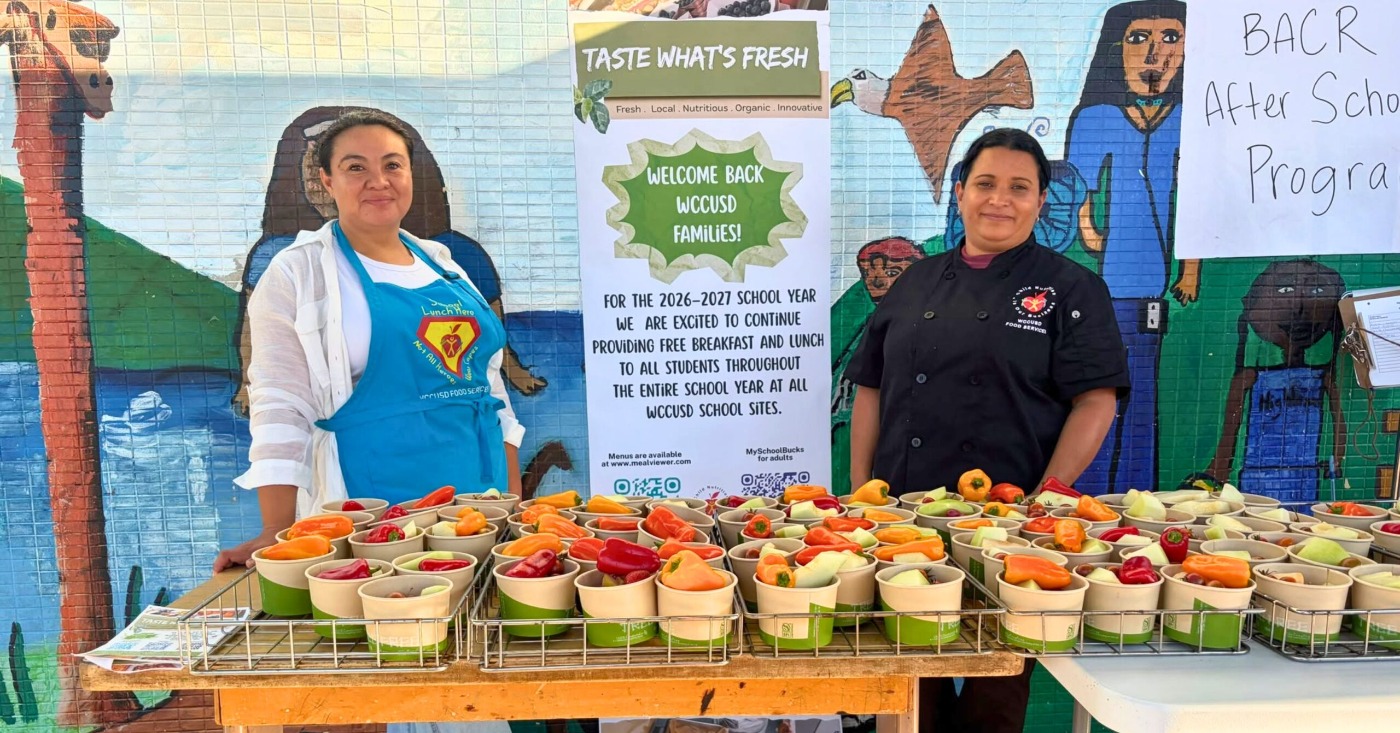
Seventeen California public school districts, including West Contra Costa Unified (WCCUSD), have joined a purchasing cooperative to pool their buying power and expand access to organic food in school meals.
The nonprofit Conscious Kitchen recently announced the launch of the Conscious Organic School Food Purchasing Cooperative. Its founding districts serve more than 300,000 students combined.
The cooperative partnered with food distributors UNFI and Sysco to expand the organic products available to participating districts. Combining schools’ purchasing demand helps distributors plan with suppliers while creating more dependable markets for organic farmers and food makers, according to Conscious Kitchen.
Other eligible California school districts can access the cooperative’s products and pricing through its existing contracts without conducting their own bids. Mt. Diablo Unified School District serves as the lead district for the cooperative’s grocery bid.
Other districts involved include: Alameda USD, Albany USD, Berkeley USD, Capistrano USD, Cupertino Union SD, Hayward USD, Laguna Beach USD, Lagunitas Elementary SD, Mt. Diablo USD, North Monterey County USD, Pajaro Valley USD, San Leandro USD, San Ramon Valley USD, Santa Clara USD, Sausalito Marin City SD, Tahoe-Truckee USD and West Contra Costa USD.
Barbara Jellison, WCCUSD’s executive director of food services, said the cooperative builds on years of work bringing fresh, organic food into school kitchens.
“The next challenge has always been how to make that possible for more districts,” Jellison said. “The Co-op gives schools a way to take what we have learned and move it to a completely different scale.”
Art
Houston’s ‘call Me Mother’ Exhibit Opens Today, Spotlighting Black Maternal Health
AFRICAN-AMERICAN NEWS AND ISSUES – DALLAS — The Health Museum in Houston today opens “The Call Me Mother Experience,” an exhibition spotlighting Black maternal health through art and personal storytelling. Curated by Houston’s first Black poet laureate, Deborah D.E.E.P. Mouton, the project originated from her own poem written during a miscarriage.

HOUSTON — A new exhibition opening Sunday, Oct. 4, at The Health Museum is bringing Black maternal health into public view through art and personal storytelling.
The Call Me Mother Experience will be on display through Feb. 28, 2027. The museum lists a preview reception today from 3 to 5 p.m. at 1515 Hermann Drive, with tickets priced at $5 for members and $15 for nonmembers.
A personal story becomes a community conversation
According to the museum, founder, curator and lead artist Deborah D.E.E.P. Mouton developed the project from a poem she wrote during a miscarriage. The installation combines films, recorded interviews, visual artwork and contributions created with community members.
Mouton, Houston’s first Black poet laureate, discussed the exhibition and her connection to its subject in an Oct. 1 appearance on KPRC’s Houston Life. The station described the project as addressing the unequal burden of pregnancy-related illness and death faced by Black women in Harris County.
An announcement distributed by the Call Me Mother Experience says the initiative will also reach community locations and faith-based organizations across Greater Houston. Those additional settings are intended to extend the conversation beyond a museum visit.
What visitors can expect
The museum says reception guests can explore the exhibit, hear the curator and meet participating artists. Reception admission includes general museum entry; refreshments are available while supplies last.
The featured image accompanying this article is an original illustrative concept, not a photograph of the exhibition or its artwork.
Sources and visitor information:The Health Museum exhibition listing; preview reception details and tickets; KPRC Houston Life; organizer announcement.
The post Houston’s ‘Call Me Mother’ Exhibit Opens Today, Spotlighting Black Maternal Health appeared first on African American News and Issues.
Based on reporting by African-American News and Issues – Dallas.
Black Press
NCCU Ramping up for the 89th Ultimate Homecoming Experience
NORTH CAROLINA CENTRAL UNIVERSITY – CAMPUS ECHO — N.C. Central University is preparing for its 89th Ultimate Homecoming Experience, a week-long celebration. Thousands of students, family, friends, and alumni are expected to gather on campus for festivities including the Homecoming Countdown, parade, Miss and Mister NCCU Coronation, concerts, and the football game.

This Saturday N.C. Central University will kick off its 89th Ultimate Homecoming Experience — a week-long celebration bringing thousands of students, family, friends and alumni to campus.
This year’s festivities include the Homecoming Countdown, parade, Miss and Mister NCCU Coronation, concerts and the football game.
The number of visitors to the football game on Saturday, Oct. 10 is expected to reach at least 10,000 — O’Kelly Riddick Stadium’s capacity, with NCCU’s recent enrollment increase of more than 10,000 students.
The Eagles will face William & Mary after playing against the Campbell University’s Fighting Camels on Oct 3.
Students are already expressing excitement for the upcoming festivities.
“I’m excited for homecoming because I can meet alumni and go outside and party with my fellow eagles,” Digital Filmmaking junior Rhese Gardner said. “I’m also really looking forward to the Greek Bowl because there’s a lot going on.”
He added that even though he’s disappointed this semester’s Oil Spill was canceled, he’s still excited for the other events like the parade and concerts.
Here is a list of the week’s on-campus events:
- Oct. 3 – Homecoming Countdown
- Oct. 4 – Gospel Concert
- Oct. 5 – Coronation of Miss and Mister NCCU
- Oct. 6 – 10:40 Break
- Oct. 6 – Homecoming Experience Showcase
- Oct. 7 – Fried Chicken Wednesday
- Oct. 7 – Festival Block Party
- Oct. 7 – Late Night Breakfast
- Oct. 8 – Back to the Nest Young Alumni Mixer
- Oct. 8 – Old School Greek Stroll Off
- Oct. 8 – Hip-Hop Concert
- Oct. 9 – Step Show
- Oct. 10 – Football Game
The post NCCU ramping up for the 89th Ultimate Homecoming Experience first appeared on Campus Echo Online.
Based on reporting by North Carolina Central University – Campus Echo.


62 Years of Telling Our Stories: Honoring the Legacy, Celebrating the Future.

Finding Community: Minneapolis Black Experience After George Floyd #shorts

How a Nonprofit Is Building a Grassroots Movement Incubator #shorts

First Black Woman Manager at KARE 11: My Journey #shorts

Building a Flexible, Community-Led Space for Protest Support #shorts

Beyond the Job Search: DC Black MBA Invests in Helping Black Women Reclaim Their Next Chapter

Can Black Houston Create a Black Tech Corridor?

OPINION: Black Capitalism Re-Analyzed: June 5, 1971 – Huey Newton

Called to Do This: Overcoming Doubt and Finding Family #shorts

Black-Owned Banks: Community Lending is Our Business #shorts

The Youngest American Killed in the Vietnam War

Passing for White, Fighting for Black America: The Courage of Walter White

OP-ED: Haiti TPS: Have We Lost Sense of Humanity?

OP-ED: How Does Your State Rank for Pre-K?

NFL: Week Two Recap | Jalen Hurts did not fold; Caleb Williams exits game with injury

Remembering Chauncey Bailey as Student Journalists Face Threats to Truth-Telling

Headlines and Hot Topics 📱

Obama Urges Democrats to make AI a Priority 📱

Peter Magubane: a Camera Against Apartheid

Mayor Lee Announces $1 Million Kaiser Permanente Grant for Pilot Program to Address Homelessness, Clean Up Public Spaces throughout Oakland
62 Years of Telling Our Stories: Honoring the Legacy, Celebrating the Future.
Finding Community: Minneapolis Black Experience After George Floyd #shorts
How a Nonprofit Is Building a Grassroots Movement Incubator #shorts
First Black Woman Manager at KARE 11: My Journey #shorts
Building a Flexible, Community-Led Space for Protest Support #shorts
Called to Do This: Overcoming Doubt and Finding Family #shorts
Black-Owned Banks: Community Lending is Our Business #shorts

LeBrent Speed on Building the B3 Project | MSR On the Radar

Towing Assistance Features on This Truck Explained #shorts

Keg House Commons: Black Ownership Brings New Life to the Historic Schmidt Keg House in St. Paul
-

 Black Press1 week ago
A $2.1 Trillion Wellness Industry Never Built a Daily Practice for Black Children. So This Atlanta Family Did.
-
 BlackPressUSA1 week ago
Latinas Deserve Equal Pay. Unions Help Make It Happen.
-

 Black Press3 days ago
All Skinfolk Ain’t Kinfolk
-

 Art1 week ago
Montclair Brewery: Brewing Culture, Community, History
-

 Black Press1 week ago
COMMENTARY: But God!
-

 Black Press1 week ago
Master P Encourages Norwood Elementary Students to Dream Big, Work Hard
