
Law
Voters will issue final verdict on Dallas District Attorney race
NORTH DALLAS GAZETTE — For months now, Republican Faith Johnson and Democrat John Creuzot have strenuously competed to serve as the Dallas District Attorney.


By the North Dallas Gazette
For months now, Republican Faith Johnson and Democrat John Creuzot have strenuously competed to serve as the Dallas District Attorney. Throughout the campaign, they have shared their positions and policies. Their supporters have canvassed neighborhoods and passionately presented their case via social media. Now, the final jury in this matter are the voters of Dallas County and they will render their verdict on Tuesday, Nov. 6.
Johnson sought to keep the spotlight on the recent successful conviction of Balch Springs officer Roy Oliver, gaining a rare murder conviction after the shooting of Jordan Edwards, 15-years-old.
“For the first time in history – for 45 years – a police officer was convicted of murder – not manslaughter – right here in Dallas,” Johnson recently reminded the audience at the Monday Night Politics, hosted by the Dallas Examiner, a forum held on Sept. 17.
However, in a case which has captured national attention and led to protests in the streets of Dallas, Johnson’s handling of the recent killing of Botham Jean by an off-duty Dallas police officer has remained a key focus for voters. Jean was killed in his apartment by Amy Guyger, who was later fired by the Police Chief Renee Hall.
“I believe a police officer who has shot and killed someone should be treated the same way you or I would if we had shot and killed someone,” Creuzot said.
He then pointed to policies which have given officers 72 hours to file reports, an opportunity to review video evidence and consult with an attorney before issuing their version of events. These policies have been challenged, but in the latest case Creuzot said, “It looks like we’re going back to that.”
Later, at a meet and greet event in Irving, Johnson continued to attempt to set the record straight on the Jean shooting and the public’s perception of her department’s actions.
“That particular shooting took place on the (Sept.) 6th, and of course a lot of people were up in arms,” Johnson said. “The case was turned over to us by the Texas Rangers on Sept. 9. A lot of folks thought people got upset about the search warrant return that was released. They thought that the DA’s office released it and we had nothing to do with it.” Read more of her comments on the Jean case and see the video here.
In a recent interview with the North Dallas Gazette, Creuzot said. “I am the only candidate in this race focusing on ending mass incarceration. Ending mass incarceration requires an acknowledgment of racial and socioeconomic disparities that give rise to mass incarceration. Understanding and acknowledging those facts are the only basis for developing a new approach to end the structural components of mass incarceration.”
Both sides will continue to present their closing arguments until the polls close at 7 p.m. on Nov. 6. Then the final verdict is in the hands of the voters.











Black History
“Blue Tsunami” Sweeps Georgia, Bottoms Makes History
MOREHOUSE COLLEGE – THE MAROON TIGER — A political shift described as a “Blue Tsunami” has transformed the landscape of Georgia leadership following the recent election. Keisha Lance Bottoms made history when the race was called on Nov. 3, becoming the first woman and the first Black person elected as governor of Georgia.

The race was called on Nov. 3 at 9:24 p.m., which is much earlier than most elections. The atmosphere of the Marriott Marquis located in downtown Atlanta was only a mere sample of the excitement statewide. The event hall could barely hold the guests as the line for access passes extended across the entire lobby floor. Everyone came in some of their best attire, sporting unmistakable blue diamond pins with the words, “Keisha Lance Bottoms for governor.”
Now, Bottoms will become Georgia’s first woman and first Black governor when she takes office in January, making her the first Black woman to serve as governor of any U.S. state.
She described her campaign as reaching every corner of the state, “from the red hills of Georgia to the Blue Ridge Mountains of the Piedmont,” as cameras crowded in to capture the moment.
Joining her onstage were her mother, her children and her husband, Derek Bottoms, whom she met while attending Georgia State University College of Law and married in October 1994.
Supporters who had campaigned alongside Bottoms for 578 days shed tears of joy at her election watch party. Among those near the stage were U.S. Sen. Raphael Warnock ‘91, D-Ga., the senior pastor of Ebenezer Baptist Church, and the Rev. Jamal Harrison Bryant ‘94, the senior pastor of New Birth Missionary Baptist Church.
Eight Black women, many firsts
In 2025, Black women experienced disproportionate employment losses as the Trump administration implemented federal workforce cuts and rolled back diversity, equity and inclusion initiatives.
The losses disproportionately affected Black women across the country. In 2026, Georgia voters elected eight Black women to statewide office, marking a historic shift in the state’s political leadership. The South had something to say.
Georgia’s eight major statewide executive offices are the governor, lieutenant governor, attorney general, secretary of state, agriculture commissioner, insurance commissioner, labor commissioner and state school superintendent.
When the newly elected officials take office in January, Black women will hold seven of Georgia’s eight statewide executive offices, a first for the state, with Lt. Gov.-elect Josh McLaurin holding the eighth seat.
Several broke barriers of their own. Tanya Miller will become Georgia’s first elected woman attorney general. Penny Brown Reynolds, a former Fulton County judge, will become the first Black person elected Georgia secretary of state. Keisha Sean Waites, a former Atlanta City Council member, will become Georgia’s first Black woman insurance commissioner. Educator Lydia Powell will become its first Black woman state school superintendent, while Nikki Porcher will become its first Black woman labor commissioner.
Agriculture Commissioner-elect Katherine Juhan-Arnold founded Baby Katie’s Pharm & Kitchen, a nonprofit farm that provides fresh produce and agricultural education to underserved communities. Shelia Edwards, who won the District 5 race, will join Alicia Johnson as one of only two Black women on the Georgia Public Service Commission. Johnson became the first Black woman elected to a statewide partisan office outside the judiciary in Georgia after winning her commission seat in 2025.
“Georgia chose competence,” Brown Reynolds told The 19th. “We were not selected because we were Black women. I believe that we were selected because all of us bring something that Georgia desperately needs.”
Andra Gillespie, a political science professor at Emory University, told USA Today that the number of Black women elected to leadership positions in Georgia is unprecedented.
“Black women have definitely reached a point where they can not only run and be taken seriously for leadership positions in major parties,” she said.
The wins reached Congress too. State Rep. Jasmine Clark, D-Ga, became the first Black woman with a doctorate in science elected to Congress, winning Georgia’s 13th Congressional District seat, while U.S. Reps. Lucy McBath and Nikema Williams won reelection.
“Georgia has shown up”
Warnock said Georgia voters showed the power of organizing this election cycle and pledged to keep fighting for historically Black colleges and universities.
“I’m proud of Georgia. Georgia has shown up,” Warnock said. “Some 3 million of them early voted.”
He said churches played a key role in that turnout.
“What we saw, among other things, in this election cycle is the power of organizing, and the faith community has always been an important part of that,” he said.
When asked about the legislative priorities he plans to pursue with Keisha Lance Bottoms, Warnock highlighted his efforts to secure federal funding for historically Black colleges and universities.
Warnock pointed to a recent $97.1 million federal award supporting STEM programs at 10 historically Black colleges and universities and other minority-serving institutions, including Clark Atlanta University. His office has also reported securing more than $17 billion for HBCUs nationwide since he began his full Senate term.
With Governor-Elect Bottoms being an HBCU graduate of Florida A&M University, Georgia will have two HBCU alumni representing the people of the state.
“My own life is a testament to how these schools perform way above their weight,” he said. “And so I’ll continue to fight for them.”
His advice for current students was simple: “Morehouse gave me everything I needed to get ready,” he said. “I want the students to look at someone like me, and many others in various fields, and know that we sat in those same desks that they sit in. And so the sky is the limit.”
“Money doesn’t make you a success; character does”
Bryant said the win was personal, crediting Black men and Black churches for helping elect Bottoms.
“Super excited to know history was made, and to know that Black men supported a Black woman to get to this place,” he said.
The biggest hurdle, Bryant said, was getting Black churches involved and engaged, which he described as a return to the church’s tradition from the civil rights movement.
His advice for young men at Morehouse and across Georgia was direct.
“The takeaway lesson for all of us is money doesn’t make you a success,” Bryant said. “Character does.”
When the officials-elect take office in January, Black women will lead nearly every corner of Georgia’s executive branch. Bottoms announced her transition team Friday, Nov. 6. She and the seven other statewide officials-elect will be sworn in in January.
This site uses Akismet to reduce spam. Learn how your comment data is processed.
Based on reporting by Morehouse College – The Maroon Tiger.
Black History
“Blue Tsunami” Sweeps Georgia, Bottoms Makes History
MOREHOUSE COLLEGE – THE MAROON TIGER — A political shift described as a “Blue Tsunami” has transformed the landscape of Georgia leadership following the recent election. Keisha Lance Bottoms made history when the race was called on Nov. 3, becoming the first woman and the first Black person elected as governor of Georgia.

The race was called on Nov. 3 at 9:24 p.m., which is much earlier than most elections. The atmosphere of the Marriott Marquis located in downtown Atlanta was only a mere sample of the excitement statewide. The event hall could barely hold the guests as the line for access passes extended across the entire lobby floor. Everyone came in some of their best attire, sporting unmistakable blue diamond pins with the words, “Keisha Lance Bottoms for governor.”
Now, Bottoms will become Georgia’s first woman and first Black governor when she takes office in January, making her the first Black woman to serve as governor of any U.S. state.
She described her campaign as reaching every corner of the state, “from the red hills of Georgia to the Blue Ridge Mountains of the Piedmont,” as cameras crowded in to capture the moment.
Joining her onstage were her mother, her children and her husband, Derek Bottoms, whom she met while attending Georgia State University College of Law and married in October 1994.
Supporters who had campaigned alongside Bottoms for 578 days shed tears of joy at her election watch party. Among those near the stage were U.S. Sen. Raphael Warnock ‘91, D-Ga., the senior pastor of Ebenezer Baptist Church, and the Rev. Jamal Harrison Bryant ‘94, the senior pastor of New Birth Missionary Baptist Church.
Eight Black women, many firsts
In 2025, Black women experienced disproportionate employment losses as the Trump administration implemented federal workforce cuts and rolled back diversity, equity and inclusion initiatives.
The losses disproportionately affected Black women across the country. In 2026, Georgia voters elected eight Black women to statewide office, marking a historic shift in the state’s political leadership. The South had something to say.
Georgia’s eight major statewide executive offices are the governor, lieutenant governor, attorney general, secretary of state, agriculture commissioner, insurance commissioner, labor commissioner and state school superintendent.
When the newly elected officials take office in January, Black women will hold seven of Georgia’s eight statewide executive offices, a first for the state, with Lt. Gov.-elect Josh McLaurin holding the eighth seat.
Several broke barriers of their own. Tanya Miller will become Georgia’s first elected woman attorney general. Penny Brown Reynolds, a former Fulton County judge, will become the first Black person elected Georgia secretary of state. Keisha Sean Waites, a former Atlanta City Council member, will become Georgia’s first Black woman insurance commissioner. Educator Lydia Powell will become its first Black woman state school superintendent, while Nikki Porcher will become its first Black woman labor commissioner.
Agriculture Commissioner-elect Katherine Juhan-Arnold founded Baby Katie’s Pharm & Kitchen, a nonprofit farm that provides fresh produce and agricultural education to underserved communities. Shelia Edwards, who won the District 5 race, will join Alicia Johnson as one of only two Black women on the Georgia Public Service Commission. Johnson became the first Black woman elected to a statewide partisan office outside the judiciary in Georgia after winning her commission seat in 2025.
“Georgia chose competence,” Brown Reynolds told The 19th. “We were not selected because we were Black women. I believe that we were selected because all of us bring something that Georgia desperately needs.”
Andra Gillespie, a political science professor at Emory University, told USA Today that the number of Black women elected to leadership positions in Georgia is unprecedented.
“Black women have definitely reached a point where they can not only run and be taken seriously for leadership positions in major parties,” she said.
The wins reached Congress too. State Rep. Jasmine Clark, D-Ga, became the first Black woman with a doctorate in science elected to Congress, winning Georgia’s 13th Congressional District seat, while U.S. Reps. Lucy McBath and Nikema Williams won reelection.
“Georgia has shown up”
Warnock said Georgia voters showed the power of organizing this election cycle and pledged to keep fighting for historically Black colleges and universities.
“I’m proud of Georgia. Georgia has shown up,” Warnock said. “Some 3 million of them early voted.”
He said churches played a key role in that turnout.
“What we saw, among other things, in this election cycle is the power of organizing, and the faith community has always been an important part of that,” he said.
When asked about the legislative priorities he plans to pursue with Keisha Lance Bottoms, Warnock highlighted his efforts to secure federal funding for historically Black colleges and universities.
Warnock pointed to a recent $97.1 million federal award supporting STEM programs at 10 historically Black colleges and universities and other minority-serving institutions, including Clark Atlanta University. His office has also reported securing more than $17 billion for HBCUs nationwide since he began his full Senate term.
With Governor-Elect Bottoms being an HBCU graduate of Florida A&M University, Georgia will have two HBCU alumni representing the people of the state.
“My own life is a testament to how these schools perform way above their weight,” he said. “And so I’ll continue to fight for them.”
His advice for current students was simple: “Morehouse gave me everything I needed to get ready,” he said. “I want the students to look at someone like me, and many others in various fields, and know that we sat in those same desks that they sit in. And so the sky is the limit.”
“Money doesn’t make you a success; character does”
Bryant said the win was personal, crediting Black men and Black churches for helping elect Bottoms.
“Super excited to know history was made, and to know that Black men supported a Black woman to get to this place,” he said.
The biggest hurdle, Bryant said, was getting Black churches involved and engaged, which he described as a return to the church’s tradition from the civil rights movement.
His advice for young men at Morehouse and across Georgia was direct.
“The takeaway lesson for all of us is money doesn’t make you a success,” Bryant said. “Character does.”
When the officials-elect take office in January, Black women will lead nearly every corner of Georgia’s executive branch. Bottoms announced her transition team Friday, Nov. 6. She and the seven other statewide officials-elect will be sworn in in January.
This site uses Akismet to reduce spam. Learn how your comment data is processed.
Based on reporting by Morehouse College – The Maroon Tiger.
Black Press
Campus Accountability: Universities Must Do More to Address Sexual Assault
SOUTHERN UNIVERSITY – SOUTHERNDIGEST — Colleges and universities are meant to be safe environments for learning and personal growth, yet recurring reports of sexual assault continue to challenge the effectiveness of institutional protections.
College campuses are supposed to be places where students can learn, grow and feel safe. However, reports of sexual assault at universities across the country continue to raise questions about whether institutions are doing enough to protect their students and hold individuals accountable.
From Louisiana State University to Harvard University and Cornell University, campus sexual assault cases have brought renewed attention to how colleges investigate allegations, discipline students and support survivors. For many, the concern is not only the actions of students accused of sexual misconduct but also how university administrators respond when these situations occur.
At LSU, recent reporting has raised questions about the effectiveness of the university’s Title IX process. According to WBRZ, more than 300 sexual assault reports were made through LSU’s Title IX process between 2022 and 2025, with three resulting in disciplinary action. Although not every report results in a finding of responsibility, the numbers raise important questions about how institutions communicate outcomes and address reports of misconduct.
Cornell University has also faced scrutiny following allegations involving seven students and an alleged sexual assault at a fraternity house in 2024. The university’s investigation resulted in different disciplinary actions, including expulsions and suspensions. However, questions about one student’s return to campus and housing arrangements have continued to draw criticism.
These cases highlight a larger issue: University accountability cannot stop at having a Title IX office or publishing policies in a student handbook.
Title IX prohibits sex-based discrimination in federally funded education programs and addresses sexual harassment and sexual violence. Universities must have procedures for responding to complaints, conducting investigations and providing supportive measures. However, having policies in place means little if students do not understand them or believe reports will be handled appropriately.
Students who are found responsible for sexual misconduct should face consequences that reflect the seriousness of their actions. Universities should also examine whether their investigative procedures are timely, whether survivors receive adequate support and whether disciplinary decisions are consistently enforced.
Accountability must also include university administrators. Institutions should be transparent about their procedures, provide clear reporting options and regularly review whether their policies are working.
At the same time, every student involved in a disciplinary proceeding deserves a fair investigation and an opportunity to respond to allegations. Protecting survivors and respecting due process should not be treated as competing priorities.
Ultimately, universities have a responsibility that extends beyond academics and athletics. Students deserve to know that their safety matters and that misconduct will be taken seriously. A university’s commitment to student safety should be measured not only by the policies it publishes but also by the actions it takes when those policies are tested.
Based on reporting by Southern University – SouthernDIGEST.
Black History
Meet Scott Colom, the Mississippi Democrat Leading Tight Mississippi Senate Race
ATLANTA DAILY WORLD — Mississippi Democrat Scott Colom holds a narrow lead over Republican incumbent Cindy Hyde-Smith in a high-stakes U.S. Senate race that remains too close to call. A longtime prosecutor from Columbus, Colom seeks to become the first Black person to represent Mississippi in the Senate since Reconstruction.
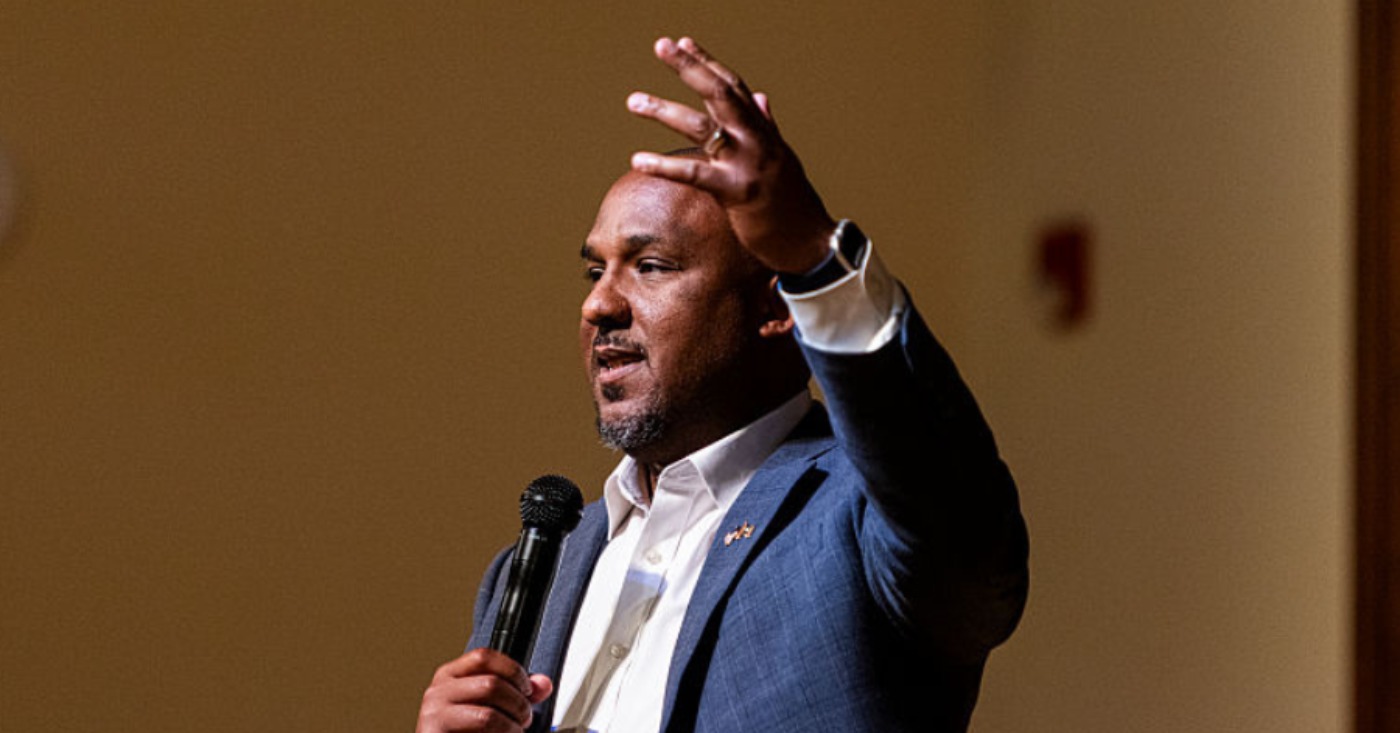
Scott Colom, a Mississippi Democrat challenging Republican Sen. Cindy Hyde-Smith, could become the first Black person elected to represent the state in the U.S. Senate since Reconstruction.
As of Thursday afternoon (November 5), unofficial results showed Colom leading Hyde-Smith by 1,138 votes, with 96% of estimated votes counted, according to Associated Press election results. The race has not been called.
If Colom wins, the longtime prosecutor would become the first Democrat elected to the U.S. Senate from Mississippi since John C. Stennis won reelection in 1982. A seventh-generation Mississippian raised in Columbus, Colom comes from a family with deep legal and political ties.His mother, retired Judge Dorothy Colom, was the first Black person elected to serve on her region’s Chancery Court. His father, Wilbur Colom, is an attorney and former Republican who worked for President Ronald Reagan.
In 2015, Colom defeated 27-year incumbent Forrest Allgood to become district attorney for Mississippi’s 16th Circuit District at age 32, making him the first Black person to hold the position, Mississippi Public Broadcasting reported. His campaign says his office has won 94% of its trials and secured convictions in more than 15 high-profile murder cases.
Colom’s history with Hyde-Smith dates back to 2023 when she blocked his nomination to a federal judgeship despite support from Republican Sen. Roger Wicker, according to CNN.
Colom told CNN, “I’m a Christian. I forgive her,” adding that the blocked nomination was not motivating his Senate campaign.
His campaign website outlines priorities that include raising the federal minimum wage, lowering costs for families, protecting rural hospitals and restoring Affordable Care Act tax credits. He also wants to require data center companies to cover their own electricity and water costs.
Mississippi’s last two Black U.S. senators were Hiram Revels, who was elected in 1870 and became the first Black senator in the country, and Blanche K. Bruce, who was elected in 1875 and served until 1881, according to the U.S. Senate Historical Office.
The Black Information Network is your source for Black News! Get the latest news 24/7 on The Black Information Network. Listen now on the iHeartRadio app or click HEREto tune in live.
The post Meet Scott Colom, The Mississippi Democrat Leading Tight Mississippi Senate Race appeared first on Atlanta Daily World.
Based on reporting by Atlanta Daily World.
Black Press
Gov. Gavin Newsom to Commute All 548 California Death Row Sentences
ATLANTA DAILY WORLD — Governor Gavin Newsom has initiated the process to commute the death sentences of all 548 inmates on California’s death row to life in prison without parole. This historic move would empty the largest death row in the United States, representing more than a quarter of the nation’s condemned population.

California Gov. Gavin Newsom has begun the process of commuting the death sentences of all 548 people on the state’s death row to life in prison without the possibility of parole, The Washington Post reported.
If completed, the move would empty the nation’s largest death row, affecting more than a quarter of the country’s death-sentenced population.
However, the commutations will not be automatic for everyone. Approximately 70% of the inmates have multiple felony convictions and will need approval from at least four of the California Supreme Court’s seven justices before their sentences can be changed.
Newsom defended his decision in an open letter to Californians, arguing that he believes capital punishment is incompatible with California’s values and undermines the justice system.
“I take this action because I firmly believe that state-sanctioned killing is incompatible with California’s values, undermines the foundations of our legal system, and diminishes each of us,” Newsom wrote.
He also acknowledged that his decision could reopen painful memories for victims’ families, writing that the announcement “may surface excruciating memories for victims’ families.”
California voters previously rejected a ballot measure to repeal the death penalty in 2016, but Newsom argued that the state Constitution gives the authority to grant clemency.
“California voters have voted to keep the death penalty on the books and I respect that,” he wrote. “But the Constitution also gave every governor clemency authority, and that power exists for moments when law as applied cannot be squared with justice. For me, this is that moment.”
The Washington Post reported that California has not executed anyone since 2006. Newsom previously imposed a moratorium on executions in 2019, dismantled the state’s death chamber, and repealed its lethal injection protocol.
The Black Information Network is your source for Black News! Get the latest news 24/7 on The Black Information Network. Listen now on the iHeartRadio app or click HEREto tune in live.
The post Gov. Gavin Newsom To Commute All 548 California Death Row Sentences appeared first on Atlanta Daily World.
Based on reporting by Atlanta Daily World.
Black Press
Eight Black Women Win Georgia Statewide Offices
COMMUNITY VOICE (KS) — Georgia voters made history on Nov. 3 by electing eight Democratic women to statewide offices, securing seven of the state’s eight major executive positions. Among the victors, Penny Brown Reynolds defeated her Republican opponent to become the first Black woman elected as Georgia’s secretary of state.
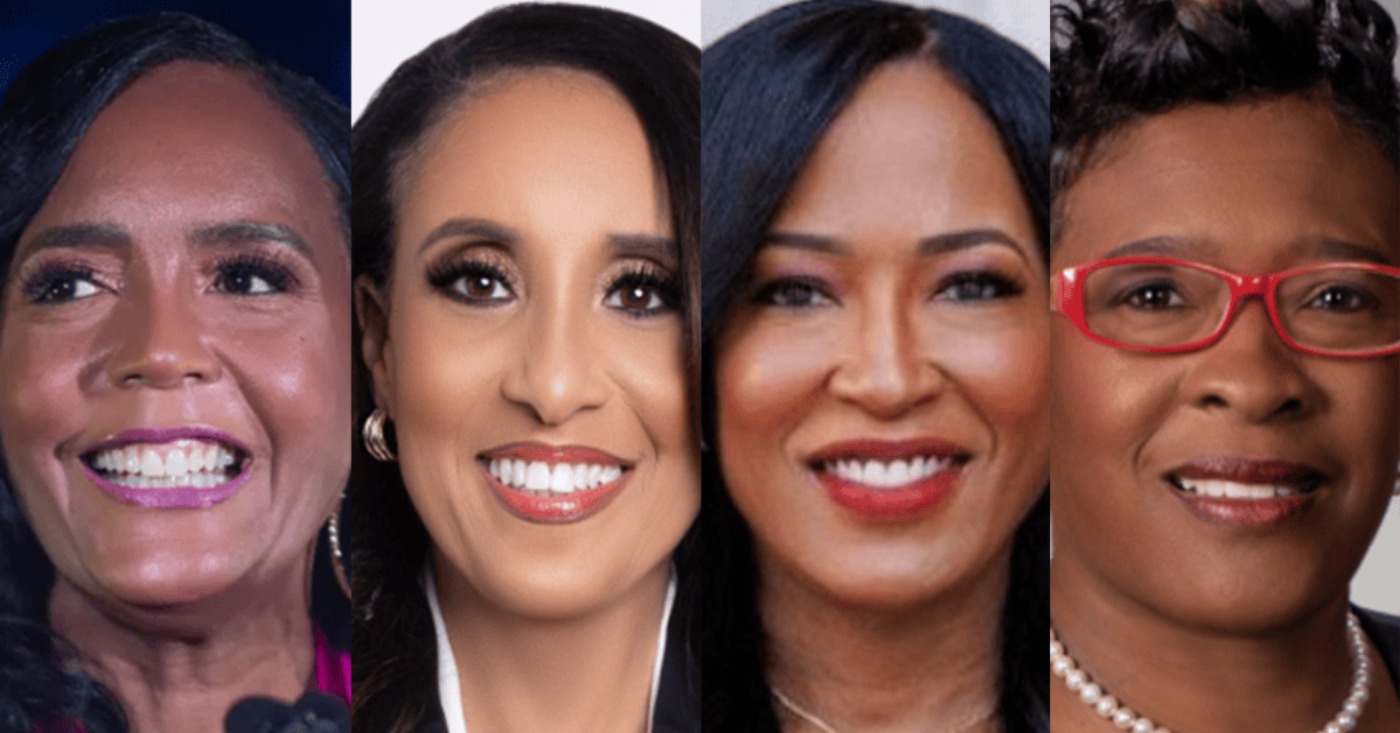
Georgia voters elected eight Democratic women to statewide offices Nov. 3, giving women seven of the state’s eight major executive positions and a seat on its utility regulatory commission.
The winners are:
- Keisha Lance Bottoms: Governor
- Penny Brown Reynolds: Secretary of state
- Tanya Miller: Attorney general
- Keisha Sean Waites: Insurance and safety fire commissioner
- Nikki Porcher: Labor commissioner
- Katherine Juhan-Arnold: Agriculture commissioner
- Lydia Powell: State school superintendent
- Shelia Edwards: Public Service Commission, District 5.
Brown Reynolds, a lawyer and former Fulton County judge, defeated Republican Tim Fleming to become the first Black woman elected Georgia secretary of state. She succeeds Republican Brad Raffensperger, who ran unsuccessfully for governor. The office gained national attention after Donald Trump pressured Raffensperger in a January 2021 phone call to “find 11,780 votes” to overturn his Georgia defeat. Raffensperger refused. Brown Reynolds will now serve as the state’s top elections official.
Miller, a state representative and former federal and county prosecutor, defeated Republican Brian Strickland to become Georgia’s first Black female attorney general. Waites, a former Atlanta city councilor and state representative, unseated Republican Insurance Commissioner John King.
The post Eight Black Women Win Georgia Statewide Offices appeared first on The Community Voice.
Based on reporting by Community Voice (KS).


The SEC Championship Game is ending. College football will feel the loss.

Chevy Bolt RS: The Real Cost and Charging Question #shorts

NFN presents Pioneer Lunch & Learn

Frontier 3.8L V6 SUV: Quiet Cabin, Strong Acceleration #shorts

Sterling vs. North Forest (9-12-26) | Houston High School Football

Westbury vs. Dulles (9-4-26) | Houston High School Football

Yates vs. Madison (9-5-26) | Houston High School Football

Yates vs. Worthing (9-8-26) | Houston High School Volleyball

Black Veterans’ Fight for Equality…The Forgotten Cost of Service

“Blue Tsunami” Sweeps Georgia, Bottoms Makes History

Practitioners of African Traditional Spirituality Offer Ancestral Reverence Ritual Oct. 31

Tamiko Armstead | 2026 Lifetime Achiever in Education

HISTORY MADE: Keisha Lance Bottoms Becomes First Black Woman Elected Governor in American History

OP-ED: The Black Church Writes AI’s Next Chapter

Kickstarter CEO Everette Taylor Shares Tips on Creating and Growing a Business

BLACK MEN VOTE: Mobilizing 100,000 Black Men Ahead of the Midterms 📱

NFN live presents 🎙️ THE ROAD TO BEYOND IWDM 50: WE CANNOT STOP NOW! 8-Week Podcast

Black Household Wealth Plummeted 25% in Three Years, New Data Shows

Secretary of State Shirley Weber Pushes Back Against DOJ Demands Over California Voter Rolls

Columbus’s Oldest Businesses Still Open: 10 That Have Lasted 75+ Years
Chevy Bolt RS: The Real Cost and Charging Question #shorts
NFN presents Pioneer Lunch & Learn
Frontier 3.8L V6 SUV: Quiet Cabin, Strong Acceleration #shorts
Sterling vs. North Forest (9-12-26) | Houston High School Football
Westbury vs. Dulles (9-4-26) | Houston High School Football
Yates vs. Madison (9-5-26) | Houston High School Football
Yates vs. Worthing (9-8-26) | Houston High School Volleyball
Black Veterans’ Fight for Equality…The Forgotten Cost of Service

Which Car Comfort Features Are Worth Paying For? #shorts

Choosing a Truck Bed? Test Your Gear Before You Buy #shorts
-
 Black History1 week ago
Keisha Lance Bottoms to Govern State Where Her Great-Great-Grandfather Was Enslaved
-
 Black History1 week ago
IN MEMORIAM: Marcia Ann Gillespie, Editor of Essence and Ms. Magazines, Dies at 82
-
 Black History5 days ago
Don’t Pass the Torch. Expand the Circle.
-
 Black Press1 week ago
Eight Black Women Win Georgia Statewide Offices
-
 Black History6 days ago
Meet Scott Colom, the Mississippi Democrat Leading Tight Mississippi Senate Race
-
Black Press1 week ago
What It Actually Takes to Convert Potential Customers Quickly and Consistently
