
Commentary
The Forgotten Legacy of The Black Man Who Blazed a Trail for Stephen A. Smith and Others to Make Millions
NNPA NEWSWIRE — While today’s hosts thrive on multi-million-dollar contracts and extensive coverage, Rust’s era was vastly different. Before the 1980s, sports talk radio and general sports coverage were limited to brief segments on the evening news and sporadic radio shows. Salaries barely covered the gas and tolls it took to arrive at a dusty Manhattan studio.

By Stacy M. Brown
NNPA Newswire Senior National Correspondent
@StacyBrownMedia
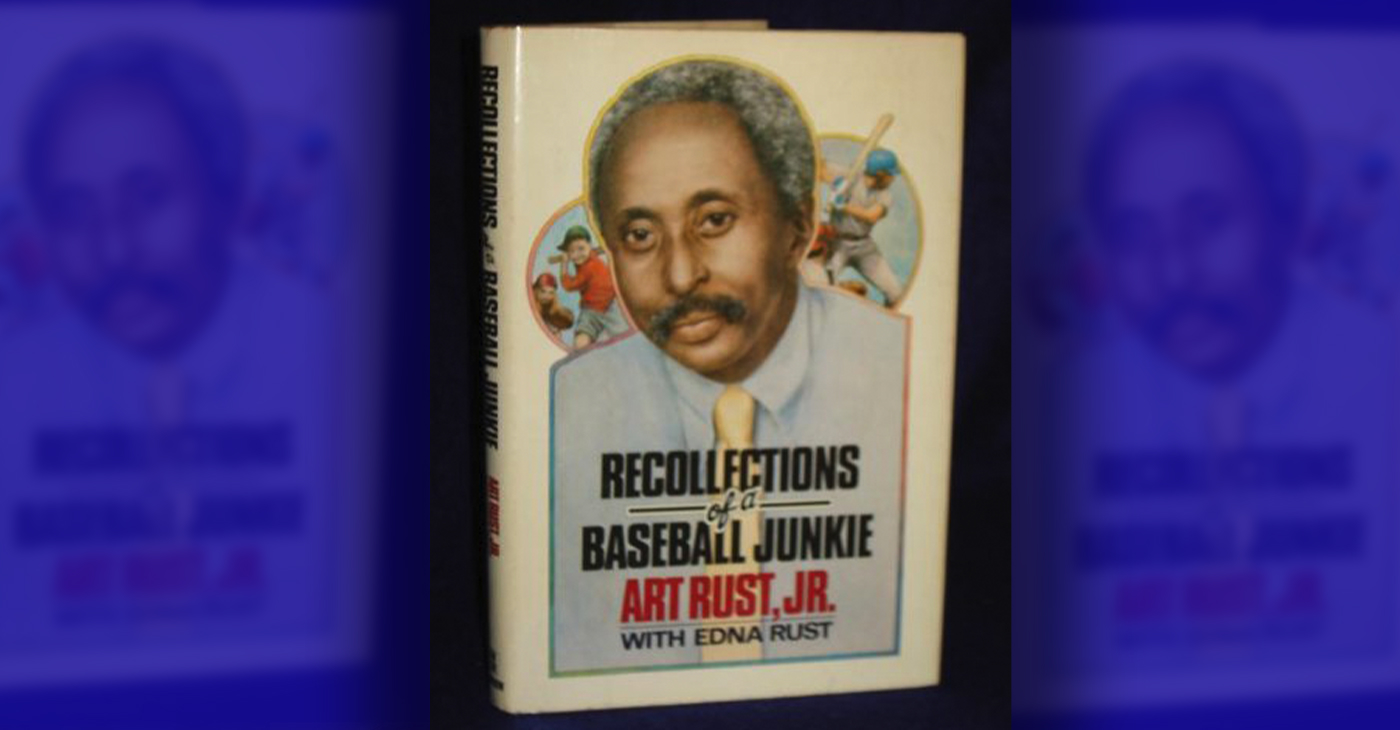
In the glitzy world of sports talk radio, where mega-contracts make headlines and charismatic hosts dominate the airwaves, there is an unsung pioneer whose name rarely echoes through the halls of fame. As Tom Brady secured an industry-leading $375 million contract with Fox Sports, surpassing his legendary playing career earnings, and Jim Rome and Stephen A. Smith rake in tens of millions annually, there’s rarely a nod to the trailblazer who laid the foundation for this now lucrative profession — Art Rust Jr. Rust was born in Harlem on October 13, 1927, and died in 2010 at 82. He was a maverick who changed the game of sports broadcasting. A graduate of Long Island University, Rust embarked on his broadcasting journey in the 1950s at New York radio station WWRL. His career included stints at WNBC, WMCA, and WINS Radio before he emerged as a pivotal figure with his groundbreaking show, “Sports Talk.”
While today’s hosts thrive on multi-million-dollar contracts and extensive coverage, Rust’s era was vastly different. Before the 1980s, sports talk radio and general sports coverage were limited to brief segments on the evening news and sporadic radio shows. Salaries barely covered the gas and tolls it took to arrive at a dusty Manhattan studio. Rust’s “Sports Talk” was a game-changer, giving fans a platform to engage in conversation for three hours every night. Not to mention, guests would include legends like Muhammad Ali, Sonny Liston, and Joe DiMaggio. The “Walking Encyclopedia of Sports” finally had his moment in the spotlight during the tumultuous 1981 player/owner strike in baseball. Initially hired to host the Yankees Pre-Game show, Rust was on air every night from 6 p.m. to 9 p.m. during the summer strike, which birthed an all-sports talk radio show that captivated disheartened baseball fans and laid the groundwork for the likes of WFAN, which emerged in 1988 with an all-white crew and not even a mention or an invitation to Rust.
“Unlike today’s Sports Radio format, ‘The Art Rust Jr. Show’ was a lot more fan-friendly,” noted Steven C. Owens in an earlier piece for Medium. Rust’s wife, Edna, was an integral part of his journey, and her sudden passing in 1986 led him to honor her memory at the end of each show with a heartfelt “Good Night, Edna Baby.” Rust’s impact remains undeniable. While Sirius XM’s Chris Russo, who got his big break at WFAN alongside Mike Francesca, and others raked in millions, Rust set the stage for their success. Steve Somers, a host at WFAN, acknowledged Rust’s role in shaping the station. “He certainly set the groundwork and the foundation for WFAN,” Somers asserted. Rust affectionately referred to left-handed pitchers as “portsiders” and Yankee Stadium as “the big ball orchard in the South Bronx.” In his 1976 book, “Get That N****r Off the Field!” he recounted experiences of being a Black man in the world of baseball, highlighting the racial challenges he faced.
Longtime listener Alex Belth recalled listening to Rust in the early 1980s, and how he tried to get up the nerves to call in and ask if Reggie Jackson would hit 500 home runs. “For years, I listened to Art Rust Jr. His voice was knowing and sure,” Belth recalled. “I felt safe in his company. Yeah, and Reggie got those 500 dingers, too.” In an era where sports talk hosts command staggering salaries, there’s little reminder of Rust, a Black man who sowed the seeds that both white and Black sportscasters are reaping. Some equate today’s hosts with baseball players who fail to recognize former St. Louis Cardinal great Curt Flood.
Flood won seven consecutive Gold Glove Awards beginning in ’63 and hit better than .300 in six of his 12 years with St. Louis. Flood was also a key contributor to the Cardinals’ 1964 and ’67 World Series championship clubs. Flood who, upon being traded to the Phillies on October 7, 1969, took a stand that would effectively end his career and change the sport forever. He penned a letter to Commissioner Bowie Kuhn in which Flood began his fight against the reserve clause, which bound a player to one team unless that club chose to trade or release that player. Free Agency didn’t exist, so Flood decided to challenge the system. After Kuhn refused to grant Flood free agency, Flood filed a lawsuit against the Commissioner and MLB, alleging a violation of antitrust laws. The case reached the U.S. Supreme Court in 1972, and justices ruled 5-3, in favor of MLB. No active players stepped out to testify—or even attend—the trial in support of Flood.
However, in 1976, the reserve clause disintegrated, and the groundwork for free agency as we know it today was laid. “The fact that Curt Flood, one of the best all-around players of his generation, was willing to risk it all for others is one of the greatest displays of personal sacrifice known to the sports world,” said Tony Clark, the executive director of the MLB Players Association, in an interview with MLB Network. Flood’s fight forever transformed baseball economics. The average salary of an MLB player in 2023 was $4.9 million, or about ten times the amount Flood made over his entire 15-year career. Art Rust Jr. is their Curt Flood for those hosting talk shows about baseball and other sports. And, like most baseball players who reap the spoils of modern economics thanks to Flood, sports talk show hosts rarely, if ever, extend a thank you to Rust.








Art
Comedy and Loss Collide in Kevonstage’s ‘Grief Sucks’ at the Pageant
ST. LOUIS AMERICAN — Comedian KevOnStage brought his one-man show “Grief Sucks” to The Pageant, offering an experience that blended humor with the raw realities of loss. The show, rooted in his personal journey after the sudden death of his brother, manager, and business partner Jason Fredericks four years ago, gave the audience permission to laugh and cry, often at the same time.

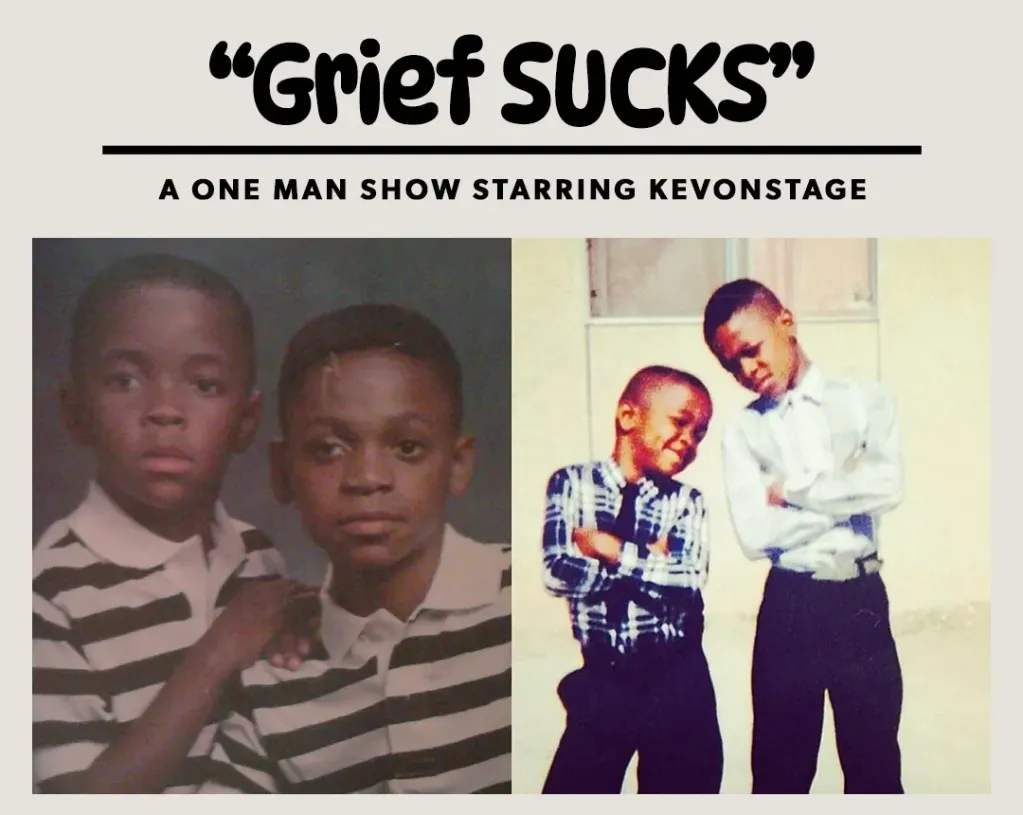
When KevOnStage took the stage at The Pageant Sunday night, his house rules let everyone know what they were in for with his one-man show “Grief Sucks.”
“Do not judge yourself. Do not judge the jokes. Just laugh,” he said.
Even within his directions, were jokes.
He gave the audience permission to cry, but quietly – because Black people have a tendency to do things at full volume.
The hour that followed provided plenty of laughter. But underneath the humor were truths that anyone who has ever lost someone could feel deep in their chest.
The show was based on his experience of losing his brother, best friend, manager and business partner Jason Fredericks. He died suddenly of a heart attack four years ago at the age of 42.
Kev warned the audience to be mindful of their social media — both the wild posts that could end up being someone’s last and the intrusive ones people make after a loved one dies. And he gave people permission to laugh at the moments that feel too outrageous to say out loud — the ones that become inside jokes for families trying to survive the worst days of their lives.
“Grief is dark humor,” he said as he walked through the story of his brother’s death — a story he jokingly blamed on Nia Long.
He found a way to give permission to laugh at the outlandish moments that often serve as inside jokes. Those who have lived through some of the worst moments of their lives and not only found a way to talk about it, but to steal a laugh in the midst.
“Grief is dark humor,” he said as he walked through the story of his brother’s death — a story he jokingly blamed on Nia Long.
“I know that sounds crazy,” he said. “It’s not her fault — but it is her responsibility.”
It was a jarring moment, but it let the audience know exactly what kind of honesty they were in for.
He said his brother’s death was “proof that she is drop‑dead gorgeous.”
“Sometimes things are funny — and sometimes things are funny because you should not be laughing,” he said.
The show moved through a series of points about grief, each one backed by a story that made the room nod in recognition. He talked about how grief can twist ordinary moments — how it can make you jealous of people with siblings or irritated by strangers having a good day.
He explained how grief can twist even the simplest moments, how it can make you jealous of people with siblings, or irritated by strangers having a good day. He brilliantly compared grief to a rock stuck in your shoe. Sometimes it’s small and manageable. Other times its jagged and unbearable – but always there.
He also talked about the unfairness of grief — how the world doesn’t stop when your loved one dies, how people still go to Raising Cane’s, still pick up their kids, still laugh. And he talked about the heartbreak of realizing his brother never got to see things he would have loved, from TV shows to cultural moments. And that he was robbed of the opportunity to engage with him about them.
“He would have loved Sinners,” Kev said. “But he never got to see it.”
At one point, he paused to show a video of his brother telling him how proud he was. The room went quiet. It wasn’t the polite kind of silence – but the kind where you can hear someone in the back sniff. The crowd assured him that it was okay for him to take a beat. His voice shook as he pushed through. Those pauses made the audience lean in even more.
Kev made grief feel communal. He made people laugh at things they didn’t think they were allowed to laugh at. And he reminded everyone in the room that grief doesn’t make sense, doesn’t follow rules, and doesn’t care about timing. And most importantly, he drove home the point that it also doesn’t have to be carried alone.
There were moments when his emotions got the best of him. There was the video he shared of his brother telling Kev how proud he was of him that compelled him to take a beat. His voice quivered as he powered through. Those pauses made the audience connect with the show all the more. Grief Sucks wasn’t just comedy. It was catharsis. It was storytelling. It was a room full of people realizing they weren’t the only ones trying to make sense of loss.
KevOnStage gave them permission to feel all of it — and to laugh anyway.
Internet personality and standup comedian KevOnStage used the sudden and unexpected loss of his brother as the foundation for a one-man show that was funny, honest and a little dark – often at the same time.
Sunday night, he brought “Grief Sucks” to The Pageant. His barometer check
KevOnStage walked onto The Pageant stage Sunday night with a promise: that the next hour would be funny, honest and a little dark. And he delivered all three — often at the same time.
His one‑man show, Grief Sucks, was as relatable as it was funny. It was the kind of performance where the audience laughed hard, then caught themselves nodding in recognition. Because beneath every punchline was a truth that anyone who has lost someone could feel in their chest.
He opened with the kind of humor that only comes from someone who has lived through the worst days of their life and somehow found a way to talk about it. He told the crowd they had permission to cry, laugh, sit still, or just breathe — but to “cry quietly,” because, as he joked, Black folks tend to do everything at full volume.
Then he went straight into the story of losing his brother — not with soft edges, but with the kind of raw honesty that made the room go still. He explained how grief can twist even the simplest moments, how it can make you jealous of people with siblings, or irritated by strangers having a good day. He compared grief to a rock stuck in your shoe: sometimes small and manageable, sometimes jagged and unbearable, but always there.
And he didn’t shy away from the intrusive thoughts that come with loss — the ones people rarely admit out loud. He shared the moment he realized he had lived longer than his older brother ever got to, and how that fact sits heavy no matter how much time passes.
Kev’s storytelling is built on the kind of humor that comes from real life — the funeral home upcharges, the family dynamics, the dark jokes that slip out at the worst possible moments. He told a story about previewing his brother’s body with his wife and grandmother, and how one unexpected comment turned into an inside joke that has carried them through four years of grief.
He also talked about the unfairness of grief — how the world doesn’t stop when your loved one dies, how people still go to Raising Cane’s, still pick up their kids, still laugh. And he talked about the heartbreak of realizing his brother never got to see things he would have loved, from TV shows to cultural moments.
The most emotional part of the night came when he recounted the day his brother died — the phone calls, the confusion, the hope, and finally the moment his nephew said, “He’s gone,” while Kev was sitting in a middle seat on a United flight. He told it plainly, without theatrics, and the room held its breath.
But even in that story, he found a way to make people laugh — not at the pain, but at the absurdity of life continuing around you when your world has just shattered.
By the end of the show, KevOnStage had done something rare: he made grief feel communal. He made people laugh at things they didn’t think they were allowed to laugh at. And he reminded everyone in the room that grief doesn’t make sense, doesn’t follow rules, and doesn’t care about timing — but it also doesn’t have to be carried alone.
Grief Sucks wasn’t just comedy. It was catharsis. It was storytelling. It was a room full of people realizing they weren’t the only ones trying to make sense of loss.
And on a Sunday night at The Pageant, KevOnStage gave them permission to feel all of it — and to laugh anyway.
Based on reporting by St. Louis American.
Black Press
OP-ED: If the ‘Cornell 7’ Were Black Men at an HBCU — America Wouldn’t Be This Sympathetic
ATLANTA DAILY WORLD — This article examines how the national conversation surrounding serious allegations against fraternity members might change if the incidents occurred at an HBCU involving Black men, rather than an Ivy League institution. It references recent high-profile cases at Cornell, Penn State, Baylor, and Stanford, prompting a re-evaluation of media scrutiny and public sympathy.
Instead of it taking place at an Ivy League school in Ithaca, New York, what would it look like if a national story concerning rape allegations from fraternity members took place on an HBCU campus in Atlanta, Washington, D.C., or Nashville?
Would President Donald Trump still feel “badly” for the alleged?
Do you think the Kappas, Sigmas, and Alphas would face the same scrutiny?
Might people use more compassionate language when discussing the case’s legalities?
We already know the answers to those questions.
Sunny Hostin from “The View” recounted a call she received from actress Cynthia Erivo, who said, ‘Sis, I know you, and I know your heart and your life’s work has been about protecting women and children. But the clip that I saw doesn’t reflect who you are.” Hostin’s initial remarks about the case focused on its legal aspects, lacking compassion for the alleged victims and other survivors who might have been affected. Hostin reflected, “Instead of leading with the law, I need to lead with empathy so that people can receive the message about the law. I was accused of defending these young men and victim-shaming, which is something I would never do since I spent the majority of my career prosecuting sex crimes.”
If you’re reading this, then you are already aware of the allegations against the “Cornell 7.” The news comes just weeks after 14 people were charged in connection with the alleged trafficking of kilos of cocaine on Penn State’s campus by members of white fraternities. A decade ago, the rape scandal at Baylor University dominated the news, which was around the same time as the Brock Turner case at Stanford.
I ask again: how would the news coverage, social media chatter, and podcast conversations differ if such incidents happened on HBCU campuses and included members of Black Greek-letter organizations?
Based on reporting by Atlanta Daily World.
Black History
Can Black Houston Create a Black Tech Corridor?
HOUSTON DEFENDER — Black professionals remain significantly underrepresented in the American technology sector, holding only 7.4% of high-tech jobs despite making up 12.7% of the U.S. workforce in 2025. This disparity is even wider for Black women, who constitute less than 3% of the tech workforce.

For years, technology has been one of America’s fastest-growing economic sectors—and one where Black professionals remain significantly underrepresented.
In 2025, Black workers made up 12.7% of the U.S. workforce, according to the U.S. Bureau of Labor Statistics, but only 7.4% of the high-tech workforce, according to the U.S. Equal Employment Opportunity Commission. Their share of high-tech employment had remained essentially stagnant since 2005. Black workers also represented just 5.7% of high-tech managers.
For Black women, the gap is even wider. A 2023 Kapor Foundation report found Black women represented less than 3% of the tech workforce, with even fewer in decision-making and ownership roles.
So, instead of waiting for the broader technology industry to solve its representation problem, could Black Houston build something of its own?
The answer: Yes—but not simply by drawing a line on a map.
Houston has the pieces
Dr. Reagan Flowers, founder of C-STEM and Education Consulting Services, believes Houston already possesses many of the building blocks needed for a Black Tech Corridor.
“What I have not seen is the intentionality to connect, capitalize, and organize assets into an ecosystem where Black Houstonians can create, own, and scale technology companies and participate meaningfully in the wealth those companies generate,” said Flowers.
She contends Houston already offers examples of what a technology ecosystem can look like.
The Texas Medical Center’s innovation infrastructure demonstrates the power of institutional partnerships, specialized facilities, and venture funding. The Ion District demonstrates how universities, corporations, entrepreneurs, real estate, and capital can converge. TXRX Labs shows the value of community-accessible maker and technical-skills infrastructure.
Flowers argues Black Houston can learn from all three without simply copying them. The goal, she said, should be a hybrid public-private-community ownership model.
Third Ward makes sense
If there is a geographic spine for such an ecosystem, Flowers points to Third Ward—particularly Emancipation Avenue. Its location is difficult to ignore.
Third Ward sits near Texas Southern University, the University of Houston, and Houston Community College, and connects to Midtown, the Ion District, and the Texas Medical Center.
UH already has a commercialization platform that takes innovations through invention, prototyping, licensing, venture creation, investor connections, and market expansion. Its Technology Bridge provides a large innovation park with laboratories, offices, and space for technology companies.
“To the west is Rice’s Ion District,” shared Flowers. “To the southwest is the Texas Medical Center and its health-tech commercialization engine.”
In other words, Black Houston would not have to build an ecosystem from scratch.
“The pieces are already on the board,” said Flowers. “They have not been organized around Black technology ownership and wealth creation.”
Is there already one?
Parts of a Black tech ecosystem clearly exist. Houston has Black technology professionals, Black-owned startups, STEM nonprofits, workforce development programs, minority business organizations, Black founders and investors, universities that produce diverse talent, and historically Black fraternities and sororities that support innovation.

But Kara Branch, founder and CEO of Black Girls Do Engineer, cautions against defining success by geography alone.
“I think the conversation needs to be bigger than creating a physical ‘corridor,’” said Branch. “A successful technology ecosystem should be measured by what it produces for the community—not simply where it is located or who occupies the space.”
Loretta Williams Gurnell, founder and CEO of SUPERGirls SHINE Foundation, agrees.
“I believe we have one, yet a successful Black tech corridor cannot simply be viewed as a geographic location. It must function as an ecosystem,” offered Gurnell.
That ecosystem would connect K-12 STEM education, colleges and universities, workforce development, entrepreneurs, startups, corporations, investors, innovation hubs, government, faith communities, and civic organizations.
The objective: Create a seamless pathway from classroom to career to entrepreneurship.
Ownership is the point
Why does Black Houston need a Black-centered technology ecosystem? Because access doesn’t automatically equal ownership.
“As AI, automation, cybersecurity, data analytics, robotics, and emerging technologies continue reshaping the economy, we must ask: Who is building the technology? Who owns the companies? Who owns the intellectual property? Who receives the investment capital? Who benefits economically?” pondered Gurnell.
Those questions matter because technology increasingly drives wealth creation.
Laolu Davies-Yemitan, founding principal of Five Woods Realty, similarly argues that participation alone is insufficient.

“If the Black community is going to capture a meaningful share of the wealth generated by the next generation of technological innovation, the pathway must increasingly include ownership—ownership of companies, intellectual property, real estate, investment capital, and the institutions that support entrepreneurial growth,”
– Laolu Davies-Yemitan, founding principal of Five Woods Realty
“If the Black community is going to capture a meaningful share of the wealth generated by the next generation of technological innovation, the pathway must increasingly include ownership—ownership of companies, intellectual property, real estate, investment capital, and the institutions that support entrepreneurial growth,” shared Davies-Yemitan.
Real barriers
Building the corridor—or innovation district—will not be easy. Capital is perhaps the biggest obstacle. Black founders receive a disproportionately small share of venture funding, making it harder to scale companies, hire workers, and conduct research.
Then there is fragmentation. Houston has organizations doing valuable work in STEM education, entrepreneurship, workforce development, and innovation, but many operate independently rather than as parts of a coordinated ecosystem.

Talent pipelines also require attention. Young people in underserved communities can face limited exposure to STEM, limited access to technology resources, mentorship, and professional networks, and limited knowledge of technology careers. Gurnell’s philosophy is straightforward: Exposure creates aspiration; information drives preparation; preparation creates access.
Digital inequity remains another challenge, including disparities in broadband access, devices, digital literacy, and training in advanced technology. And then there’s social capital.
“Deals are made through trusted relationships,” Gurnell said. “Therefore, those relationships have to be exposed, nurtured, and strengthened.”
Branch adds another warning: Houston cannot confuse activity with impact.
“There can be a lot of panels, events, programs, announcements, and conversations,” she said. “But doing the work means consistently showing up after the spotlight is gone.”
Build talent before buildings
That may be the most important lesson.
“The conversation should not begin with buildings,” said Gurnell. “It should begin with talent.”
That means investing in early STEM exposure, workforce readiness, mentorship, entrepreneurship, capital access, and collaboration among nonprofits, corporations, universities, philanthropies, government, and industry.
Branch points to Black Girls Do Engineer’s STEMXUS EdTech infrastructure as an example of building rather than merely discussing solutions.
“We don’t want a young person to simply hear that engineering, technology, or innovation are possible careers,” Branch said. “We want them to build something, solve a problem, use the technology, meet professionals, develop skills, and understand what their next step can be.”
Branch’s litmus test asks, did someone gain a skill, get a job, launch a business, discover a career, or secure capital or customers? Did a family gain access to opportunity?
From corridor to economy
Flowers suggests thinking beyond a traditional corridor and toward a Black Innovation District; one that connects Third Ward, TSU, UH, and HCC with the Ion, TMC, and Houston’s manufacturing and maker infrastructure.
Rather than competing with Houston’s existing innovation centers, it could become connective tissue between those institutions and Black Houston.
“The pieces are already on the board. They have not been organized around Black technology ownership and wealth creation.”
Dr. Reagan Flowers
Gurnell envisions additional benefits.
“The greatest opportunity before us is not simply creating a Black tech corridor,” Gurnell said. “It is creating a Black innovation economy.”
The infrastructure for such a corridor/economy exists. The question is whether Black Houston can summon the intentionality, investment, collaboration, and ownership required to make it happen.
Based on reporting by Houston Defender.
Black History
OPINION: Black Capitalism Re-Analyzed: June 5, 1971 – Huey Newton
SF BAY VIEW — Huey P. Newton, writing on June 5, 1971, reaffirmed the Black Panther Party’s foundational stance against capitalist robbery within the Black community, a position held since October 1966. While acknowledging that many have proposed Black capitalism as a solution, Newton asserted that the community’s general acceptance of the concept does not stem from an affinity for capitalism itself.
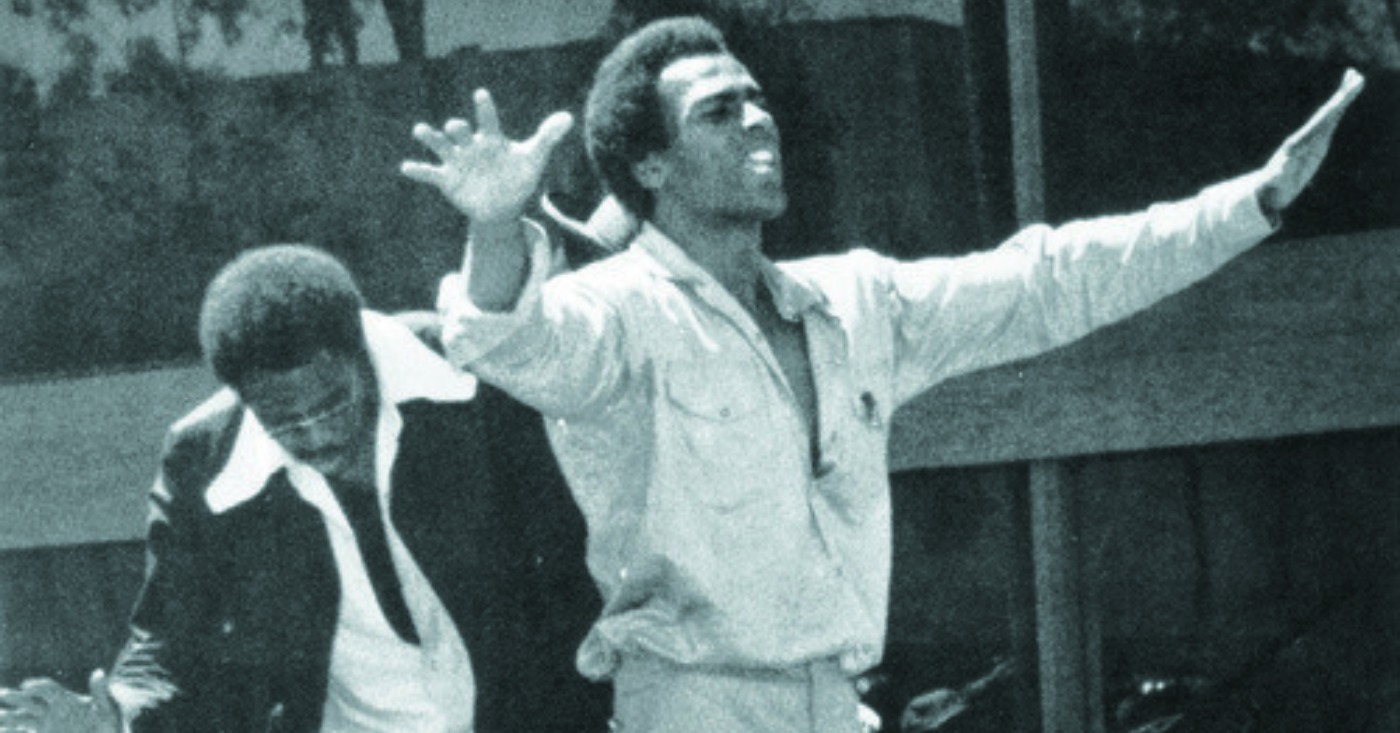
“We want an end to the robbery by the CAPITALISTS of our Black community.” That was our position in October 1966 and it is still our position … However, many people have offered the community Black capitalism as a solution to our problems. We recognize that people in the Black community have no general dislike for the concept of Black capitalism, but this is not because they are in love with capitalism. Not at all.”
The Black Panther Party, as we begin to carry out the original vision of the Party. When we coined the expression “All Power to the People,” we had in mind emphasizing the word “Power,” for we recognize that the will to power is the basic drive of man. But it is incorrect to seek power over people. We have been subjected to the dehumanizing power of exploitation and racism for hundreds of years; and the Black community has its own will to power also. What we seek, however, is not power over people, but the power to control our own destiny. For us the true definition of power is not in terms of how many people you can control. To us power is, first of all, the ability to define phenomena, and secondly the ability to make these phenomena act in a desired manner.
We see then that power has a dual character and that we cannot simply identify and define phenomena without acting, for to do so is to become an armchair philosopher. And when Bobby and I left Merritt College to organize brothers on the block, we did so because the college students were too content to sit around and analyze without acting. On the other hand, power includes action, for it is making phenomena perform in the desired manner. But action without thinking and theory is also incorrect. If the social forces at work in the community have not been correctly analyzed and defined, how can you control them in such a way that they act in a desired manner? So the Black Panther Party has always merged theory and practice in such a way as to serve the true interests of the community.

In merging theory with practice, we recognized that it was necessary to develop a theory which was valid for more than one time and place. We wanted to develop a system of thinking which was good anywhere, thus it had to be rather abstract. Yet our theory would relate to a concrete analysis of concrete conditions so that our actions would always be relevant and profitable to the people. Yet, at the same time, it had to advance their thinking so that they would move toward a transformation of their situation of exploitation and oppression. We have always insisted on good theory and good practice, but we have not always been successful in carrying this through.
‘When the Black Panther Party defected from the Black community, we became, for a while, revolutionary cultists. One of the primary characteristics of a revolutionary cultist is that he despises everyone who has not reached his level of consciousness, or the level of consciousness that he thinks he has reached, instead of acting to bring the people to that level. In that way the revolutionary cultist becomes divided from the people; he defects from the community. Instead of serving the people as a vanguard, he becomes a hero. Heroes engage in very courageous actions sometimes, and they often make great sacrifices, including the supreme sacrifice, but they are still isolated from the people. Their courageous actions and sacrifices do not lead the people to a higher level of consciousness, nor do they produce fundamental changes in the exploitation and oppression of the people. A vanguard, however, will guide the people onto higher levels of consciousness and that way bring them to the point where they will take sterner actions in their own interests and against those who continue to oppress them. As I’ve said previously, revolution is a process, not a conclusion. A true revolutionist will not only take courageous actions, he will also try to advance the people in such a manner that they will transform their situation. That I, by delivering power to the people the true revolutionist will help them define the social phenomena in their community and lead them to the point where they will seize the time and make these phenomena act in a desired manner.
Therefore, as revolutionaries we must recognize the difference between what the people can do and what they will do. They can do anything they desire to do, but they will only take those actions which are consistent with their level of consciousness and their understanding of the situation. When we raise their consciousness, they will understand even more fully what they in fact can do, and they will move on the situation in a courageous manner. This is merging your theory with your practices. Point 3 of the original Ten-Point Program of the Black Panther Party is “We want an end to the robbery by the CAPITALISTS of our Black Community.”
That was our position in October 1966 and it is still our position. We recognize that capitalism is no solution to the problems we face in our communities. Capitalist exploitation is one of the basic causes of our problem. It is the goal of the Black Panther Party to negate capitalism in our communities and in the oppressed communities throughout the world.
However, many people have offered the community Black capitalism as a solution to our problems. We recognize that people in the Black community have no general dislike for the concept of Black capitalism, but this is not because they are in love with capitalism. Not at all. The idea of Black capitalism has come to mean to many people Black control of another one of the institutions in the community. We see within this characteristic the seeds of the negation of Black capitalism and all capitalism in general. What we must do then is increase the positive qualities until they dominate the negative and therefore transform the situation.
In the past the Black Panther Party took a counter revolutionary position with our blanket condemnation of Black capitalism. Our strategy should have been to analyze the positive and negative qualities of this phenomenon before making any condemnation. Even though we recognized, and correctly so, that capitalism is no solution or answer, we did not make a truly dialectical analysis of the situation. We recognized that in order to bring the people to the level of consciousness where they would seize the time, it would be necessary to serve their interests in survival by developing programs which would help them to meet their daily needs. For a long time we have had such programs not only for survival but for organizational purposes. Now we not only have a breakfast program for schoolchildren, we have clothing programs, we have health clinics which provide free medical and dental services, we have programs for prisoners and their families, and we are opening clothing and shoe factories to provide for more of the needs of the community.In a way our new position has the simplicity and completeness of a mathematical formula.
When the Black capitalist contributes to the survival programs and makes a contribution to the community, the community will give him their support and thus strengthen his business. If he does not make any contribution to the survival of the community, the people will not support him and his enterprise will wither away because of his own negligence. By supporting the community, however, he will be helping to build the political machine that will eventually negate his exploitation of the community, but also negate his being exploited and victimized by corporate capitalism.
So we will heighten the contradiction between the Black community and corporate capitalism, while at the same time reducing the contradiction between the Black capitalist and the Black community. In this way Black capitalism will be transformed from a relationship of exploitation of the community to a relationship of service to the community, which will contribute to the survival of everyone.
Original publication: Huey P. Newton, “Black Capitalism Re-Analyzed,” The Black Panther: Intercommunal News Service, June 5, 1971 (supplement). Archival scan: https:// cdn.filepicker.io/api/file/Mum1pt7RZ6jYSUs1kh2v?fit=max
The post BLACK CAPITALISM RE-ANALYZED I: JUNE 5, 1971- HUEY NEWTON appeared first on San Francisco Bay View.
Based on reporting by SF Bay View.
Black Press
Four Tips to Help You Plan a Holiday “Staycation”
“A great staycation starts when you treat your hometown like a destination – book one ‘anchor’ experience, stay somewhere that changes your scenery, and leave room for a little spontaneity,” said Steve Orens, President of FROSCH by Chase Travel, a leading travel agency. “My favorite staycation tip is to make it easy on yourself: choose a walkable area, plan one highlight each day, and let the hotel do the heavy lifting – warm beds, quick breaks, and fewer logistics.”

Holiday travel can be exciting, but between costs, crowded airports and packed schedules, sometimes the idea of staying home can be much more appealing.
If you still want to get away without the hassle of an actual getaway, consider a holiday staycation.
By remaining close to home, you can experience your city from a fresh perspective without the stress of a long trip. Whether you book a night at a local hotel, check out a new neighborhood or just finally get around to seeing that landmark attraction that’s been on your to-do list, you can make staying at home feel like a real getaway.
Here are four tips you can use to create an amazing holiday at home this season:
1. Treat your hometown like a destination
One common theme surrounding area attractions is that they’re more likely to be packed with tourists than locals. If that popular museum, tour or other institution is always “there,” it can be easy to avoid it and say you’ll get there eventually.
A staycation provides a great opportunity to approach those kinds of places like a tourist. Start by making a short list of places or experiences you’ve always wanted to try but never seem to prioritize. You might include a museum, holiday market, historic site, restaurant or neighborhood, or you might attend a holiday-related performance that’s an annual late fall or winter tradition in your area.
“A great staycation starts when you treat your hometown like a destination – book one ‘anchor’ experience, stay somewhere that changes your scenery, and leave room for a little spontaneity,” said Steve Orens, President of FROSCH by Chase Travel, a leading travel agency. “My favorite staycation tip is to make it easy on yourself: choose a walkable area, plan one highlight each day, and let the hotel do the heavy lifting – warm beds, quick breaks, and fewer logistics.”
2. Spend the night away
A hotel stay can provide a change of scenery that makes you feel like you’re enjoying a getaway.
Consider a traditional hotel, bed and breakfast or rental property where you can walk to restaurants, shopping, entertainment or holiday activities. An upscale hotel can also be the centerpiece of your staycation, allowing you to enjoy fine dining, a fitness center, spa services or other on-site experiences.
If you want a quieter, more relaxed experience, find a hotel “off the beaten path,” but still close to home, to enjoy the rhythms and sounds of nature.
3. Be flexible
If your schedule allows, plan your staycation for a weekday or less crowded period — like the days between Christmas and New Year’s Eve — rather than a peak weekend. Hotel rates in the middle of the week tend to be cheaper, and it might be easier to grab a restaurant reservation or performance tickets. Locations might be less crowded as well during the week, making it easier to get around.
Book some experiences in advance to save money but stay open to spontaneous opportunities once you arrive. You might find some great last-minute deals.
4. Try something new
Even if you think you’ve seen everything your hometown has to offer, there’s always something new to explore or discover.
Check out a neighborhood you usually drive through and visit the local shops and other businesses. You can also try a new cuisine at a neighborhood restaurant or kitchen.
Sometimes what’s old can be new again during the holiday season, so if you want to go back to your favorite restaurants and other popular spots, do so with fresh eyes. Order from the eatery’s holiday menu or take a walk when lights, decorations and seasonal programming transform many communities.
Other helpful tips
Although staying at home can eliminate major travel costs, expenses can still add up quickly. Make a staycation budget and then consider ways to help keep costs down.
“A ‘smart’ staycation is one you can pay for comfortably: choose dates with better rates, book flexible options, and keep a small buffer for surprises,” added Orens. “The goal of a staycation is a real reset. Even if you’re close to home, give yourself permission to unplug and find moments to treat yourself – say yes to room service, a spa hour, or a new restaurant you’ve been saving for ‘someday.’”
If you have rewards points from credit cards or loyalty programs, put them toward your hotel to get a free or cheaper night’s stay. Local museums, cultural institutions and attractions often have resident discounts, reduced-price admission days or seasonal offers. Community calendars can provide information about free or low-cost events like holiday concerts, light displays, markets, park activities and other events. If a performance doesn’t normally sell out, wait until the day before or day of to buy tickets, as prices are often reduced and you can find great seats.
With a little creativity, you might find everything you’d want in a holiday vacation. You can enjoy good food, new experiences and an escape from your daily routine – all right at home.
For more financial health tips, visit https://www.chase.com/travel/guide.
For informational/educational purposes only: Views and strategies described in this article or provided via links may not be appropriate for everyone and are not intended as specific advice/recommendation for any business. Information has been obtained from sources believed to be reliable, but JPMorgan Chase & Co. or its affiliates and/or subsidiaries do not warrant its completeness or accuracy. The material is not intended to provide legal, tax, or financial advice or to indicate the availability or suitability of any JPMorgan Chase Bank, N.A. product or service. You should carefully consider your needs and objectives before making any decisions and consult the appropriate professional(s). Outlooks and past performance are not guarantees of future results. JPMorgan Chase & Co. and its affiliates are not responsible for, and do not provide or endorse third party products, services, or other content.
Deposit products provided by JPMorgan Chase Bank, N.A. Member FDIC. Equal Opportunity Lender.
© 2026 JPMorgan Chase & Co.
Black Press
Jendayi Arrest Raises Community Concerns Regarding Sheriff’s Chain of Command
Judge Sandra K. Bean ordered a legally inherited home to be taken from beneficiary Jendayi, citing “undue influence,” and gave it to Court Administrator Phillip Campbell, who Jendayi believes will quickly sell the house and pay himself more than $600,000 in court fees. The disinherited sisters will get the remainder of the proceeds of the sale.
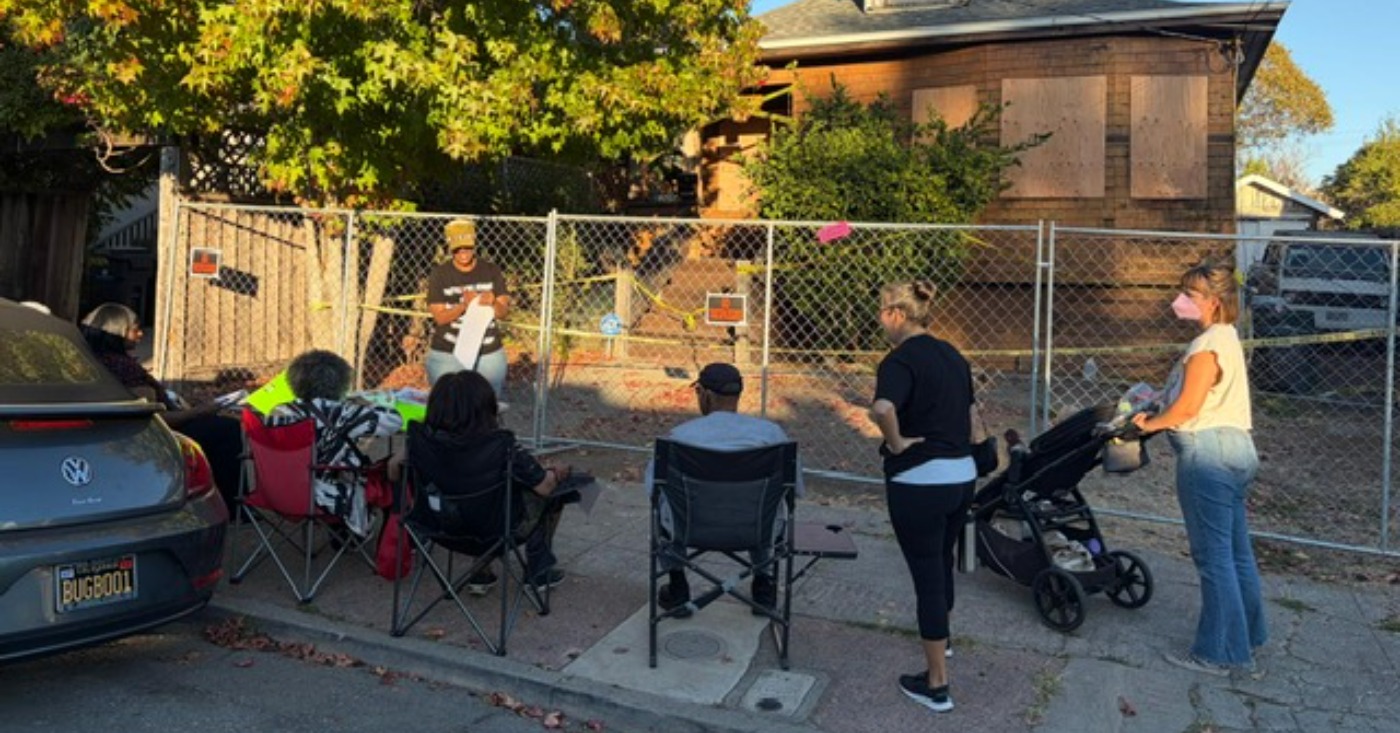
Last Thursday, Zakiya Jendayi parked on the side of the René C. Davidson Courthouse in Oakland to file an emergency stay request in what Jendayi asserts was the “legal” theft of her home of 13 years by a court administrator in her ongoing battle for her rightful inheritance in a probate battle.
But before she could fully emerge from the car at 12th and Oak streets, she was arrested by Alameda County Sheriffs for disobeying a court order and obstruction.
According to observers who have read the transcripts, the Hamlin v. Jendayi case, now in its sixth year, has resulted in what they describe as a gross miscarriage of justice.
Judge Sandra K. Bean ordered a legally inherited home to be taken from beneficiary Jendayi, citing “undue influence,” and gave it to Court Administrator Phillip Campbell, who Jendayi believes will quickly sell the house and pay himself more than $600,000 in court fees. The disinherited sisters will get the remainder of the proceeds of the sale.
Dr. Laura Dean Head named Jendayi as the beneficiary and executor over her estate after Jendayi took care of her during the last months of her life. Head’s disinherited sisters, Della Hamlin and Helaine Head, challenged the validity of Head’s will and trust, despite not being able to recognize Head in a photo during the trial, and Della stating she hadn’t spoken to her sister since 1997 or 1998 and would not have taken care of her during her hospice.
The appellate court upheld Bean’s ruling, which Jendayi asserts was based on a failure to fully consider the transcripts. “They never read the transcripts because if they had, they would have seen the truth,” Jendayi said.
Accompanied by Alameda Couty Sheriff’s Department deputies, Campbell arrived unannounced at Jendayi’s home on Oct. 1 – at the same time Jendayi was being arrested – to change the locks, board up the windows, and place a fence around the property.
Neither Jendayi, nor her supporters who had been in touch with Alameda County leadership and the Sheriff’s Department and been given the impression that nothing would happen without warning had been told Campbell was coming.
“I went to the courthouse to file an emergency stay document, and while getting out of the car, a sheriff immediately approached me and put handcuffs on me before I could stand up,” Jendayi said in recounting the events of Oct. 1. “I asked him if he had a warrant. He said ‘yes,’ and seven other officers immediately approached and surrounded me, with an additional three sheriffs standing back observing.
“I asked why it was necessary to have 10 officers to arrest me. They would not answer. I asked if the sergeant was there and asked if I could speak to him, but the sergeant refused to approach while another officer started taunting me over and over, stating, ‘I was at your house. I was at your house when you refused to surrender. We got you now.’
“The officer put the handcuffs on tight. I asked him to please loosen them. He refused and said they weren’t too tight. Then a Black, female deputy named Lewis, came over and asked him to loosen the handcuffs. Three times the white male officers were overly aggressive with me, and each time Deputy Lewis would step up and they would fall back. They said I was under arrest for refusing to surrender the house on Aug. 25.
“I asked them if I could file my paperwork, and they said, ‘No.’ Several officers asked me if I was on drugs. I felt like my life was in danger. I asked to speak to Deputy Lewis, and she came. I said, ‘Please tell my mother and Joyce Gordon that I would never kill myself.’ I did not want to end up like Sandra Bland, who was murdered by police officers in a Texas jail.”
Zendayi said they then took her to a section in the basement of the courthouse, placed her in a holding cell, and confiscated her belongings around 3 p.m. “They went through everything, took both cell phones, and asked if they could turn off my phones. I said ‘no,’ so they placed them in airplane mode.”
Then she was taken in a van to Santa Rita Jail in Dublin, which, because of traffic took almost two hours. “They asked me if I was on drugs and asked me to give a urine sample. I refused. They took a mug shot, and I was told it would be Monday before I could go to court. They put me in a cell with feces on the wall.
An hour after being detained, a deputy asked Jendayi if she knew someone who worked for the county and then asked if knew someone from the Sheriff’s Office and answered ‘no’ to both questions. He said, “You must know someone because we received orders to release you immediately. You’ll be out of here in about 40 minutes.”
“Rev. Raymond Langford of the Oakland Private Industry Council has been helping me to negotiate for more time to stay in my home,” Jendayi said. “I have an appeal with the Northern District Court of Appeals, where I’ve been promised they will review my case based on its merits. I was hoping to stay (in my home) until they reached a determination.
Rev. Langford reached out to Alameda County Supervisor Nikki Fortunata Bas and Chief Administrator David Brown, and they’ve been in contact with Sheriff Yesenia Sanchez.
“They weren’t going to give me the time I requested, but they did say that I would have time to move my belongings and would also be notified when they were coming,” Jendayi said. “None of that occurred.”
Langford said he spoke to Brown, Fortunato Bas and Sanchez right after the first attempt to evict Jendayi on Aug. 25 as well as the Alameda County Counsel and others to negotiate a time for Jendayi to move her belongings.
“There is no truth to the statement that there was no contact [with court and law enforcement officials.] There was an obvious miscommunication between Sanchez and her officers. They don’t have to inform the public of their actions, I understand that, but Zakiya and the community were concerned after they confiscated her guns.”
(Jendayi relinquished her weapons on Aug. 25 when sheriff’s deputies came to forcibly evict her while her petition for bankruptcy was still pending and should have interrupted the eviction process.)
“The Sheriffs have their own trust issues, and they need to work on that. They are not following the chain of command. David Brown, Fortunato Bas’s chief of staff, was puzzled also. He was told they would be informed when they would be returning. He was also blindsided like all of us.”
“(The Sheriffs’ Department) can come to the supervisors and get millions of dollars, but they can’t exhibit the courtesy to inform a citizen when she needs to move.”
“We, our group, ‘Friends of Zakiya,’ took a letter to Sanchez’s office citing Zakiya’s health issues, asking for more time just last week. Sanchez was a person who ran on the platform that she would not run the Sheriff’s Department on a military strategy, which they did on an African American senior in a comfortable, safe community.
“We understand they have to do their job, but we don’t want them targeting and profiling seniors. There has to be some accountability to the community,” Lankford said.
Supervisor Nikki Bas, deeply concerned with what has occurred, is joining with Supervisor Nate Miley to request a meeting with Attorney General Rob Bonta to request an independent investigation.


Black Woman Makes History at KARE 11 #shorts

Houston Black judges lead fight to save democracy

Teen Driver Mode: Essential Safety Features Explained #shorts

Dollar in Black Community: 6-Hour Myth Debunked #shorts

BLACK WOMEN, THE MIDTERMS, AND THE ISSUES AT STAKE

BLACK WOMEN, THE MIDTERMS, AND THE ISSUES AT STAKE 📱

Federal Agents Search Ilhan Omar’s Home Just 22 Days Before Election

‘We Are Ready’: NAACP Launches Voter Protection Hub Ahead of Midterms

Comedy and Loss Collide in Kevonstage’s ‘Grief Sucks’ at the Pageant

OP-ED: She’s Not Non-Compliant, She’s Hungry: Addressing Food Justice to Improve Breast Cancer Outcomes

The Youngest American Killed in the Vietnam War

Passing for White, Fighting for Black America: The Courage of Walter White

OP-ED: Haiti TPS: Have We Lost Sense of Humanity?

NFL: Week Two Recap | Jalen Hurts did not fold; Caleb Williams exits game with injury

Remembering Chauncey Bailey as Student Journalists Face Threats to Truth-Telling

Obama Urges Democrats to make AI a Priority 📱

Peter Magubane: a Camera Against Apartheid

Mayor Lee Announces $1 Million Kaiser Permanente Grant for Pilot Program to Address Homelessness, Clean Up Public Spaces throughout Oakland

OP-ED: How Head Start Also Helps Parents

Community Action Group ‘Friends of Zakiya’ Ask Sheriff for Time
Black Woman Makes History at KARE 11 #shorts
Houston Black judges lead fight to save democracy
Teen Driver Mode: Essential Safety Features Explained #shorts
Dollar in Black Community: 6-Hour Myth Debunked #shorts
BLACK WOMEN, THE MIDTERMS, AND THE ISSUES AT STAKE
BLACK WOMEN, THE MIDTERMS, AND THE ISSUES AT STAKE 📱

Dodgers Ousted by Brewers in NLCS

62 Years of Telling Our Stories: Honoring the Legacy, Celebrating the Future.

Finding Community: Minneapolis Black Experience After George Floyd #shorts

How a Nonprofit Is Building a Grassroots Movement Incubator #shorts
-
 BlackPressUSA1 week ago
Latinas Deserve Equal Pay. Unions Help Make It Happen.
-

 Black Press4 days ago
All Skinfolk Ain’t Kinfolk
-

 Black Press3 days ago
Oakland Awarded More than $14 Million in State Funding
-
 Black Press1 week ago
Should You Have to Pay to Hear the Gospel?
-

 Black Press1 week ago
Botham Jean’s Killer Granted Parole 7 Years After His Murder
-

 Black History1 week ago
Ghana’s Ministry of Foreign Affairs Publishes Global Circle’s Vatican Reparations Call in Special Edition Alongside Heads of State
