
BlackPressUSA
Proposed Legislation Wants to Turn Parking Lots into Solar Energy Farms


By Olivia Wynkoop | Bay City News Foundation
Newly proposed state legislation seeks to motivate companies to turn their parking lots into functional-use solar farms.
Senate Bill 49, announced during the first day of California’s new legislative session, would create a tax incentive for commercial building owners to build “solar canopies” — overhanging solar panel structures — above their large parking lots.
State Sen. Josh Becker, D-San Mateo, author of the legislation, hopes SB 49 will create more local clean energy in cities and suburbs by taking advantage of spaces capable of having solar panels above them, rather than seeking out rare and expensive plots of undeveloped land.
“That’s what makes the solar canopy concept so appealing, because it wouldn’t require any more land, it would just give parking lot owners an incentive to make dual use of their lots by essentially putting a miniature power plant above all those cars,” Becker said in a press release.
The bill would also prevent the need for large-consuming regions to outsource their clean power sources to rural areas, which not only requires installing expensive, lengthy transmission lines, but partly inhibits agricultural areas from using their land for food and livestock production.
In a nation hoping to wean itself off of its dependency on fossil fuels, cheap and quick clean energy is critical, which is why most solar farms across the nation are built on open, undeveloped spaces like deserts, croplands and grasslands and forests, according to a global inventory published in the science journal Nature.
Compared to building thousands of small solar farms in urban spaces, large rural energy farms are technically cheaper, easier to manage and ultimately more efficient to harvest a big quantity of energy from.
But following this summer’s strained energy grid scare, legislators are getting creative to find new ways to provide clean energy to Californians in any way possible.
In one experiment, the state is funding a $20 million project to test the effectiveness of solar canopies above unprotected irrigation canal systems, called “Project Nexus”. The hope is to simultaneously reduce water evaporation and generate clean energy.
Becker’s office estimates that creating solar canopies above 400 square miles of parking lots in the state could provide 26 gigawatts of power, which is enough energy to power 6.5 million homes. For context, the state estimates it needs 110 gigawatts of solar power in order to turn 100 percent carbon-neutral by 2045.
“This is one of the many tools we’re going to need to use to hit our targets of using 90% clean energy by 2035 and achieving 100% carbon neutrality by 2045,” Becker said. “In my view, this is relatively low-hanging fruit. We’ve got the land available — now the challenge is to make better use of it.”
Just last month, the French Senate passed a policy that requires all parking lots with more than 80 spaces to install solar canopies. The French government said this legislation has the potential to generate 10 nuclear reactors worth of energy.
And in March, Washington state allowed businesses to pay off their sales and use taxes from buying solar canopy equipment over an eight-year period.
An assigned Senate policy committee will review SB 49 in early 2023.
The post Proposed Legislation Wants to Turn Parking Lots into Solar Energy Farms first appeared on Post News Group. This article originally appeared in Post News Group.






Black Press
Oakland Latino Chamber of Commerce Hosts CHCC Convention, Generating $3 Million in Economic Impact
The Oakland Latino Chamber of Commerce recently hosted the 47th Annual California Hispanic Chambers of Commerce Statewide Convention, drawing more than 1,000 attendees to the city. The event generated an estimated $3 million economic impact, providing a significant boost to local retailers, hotels, and small businesses. Developed in partnership with Visit Oakland, the convention featured innovative initiatives like the Oakland Mercadito to showcase regional entrepreneurs and recorded workshops to support long-term professional development for members across the state. Discover how this major event strengthened local partnerships and read more.

The Oakland Latino Chamber of Commerce (OLCC) recently served as the Host Chamber for the 47th Annual California Hispanic Chambers of Commerce (CHCC) Statewide Convention, held in Oakland in August 2026.
The Convention welcomed more than 1,000 attendees from throughout California and generated an estimated $3 million economic impact for the City of Oakland, providing significant support to local hotels, restaurants, transportation providers, retailers, and small businesses.
In conjunction with Visit Oakland, OLCC brought in various local sponsors and worked closely with the California Hispanic Chamber of Commerce, to make the Oakland Convention a success.
The success of the 47th Annual CHCC Statewide Convention demonstrates what is possible when business leaders, entrepreneurs, community organizations, and public partners work together with a shared vision, said Aliza Gallo, president of the OLCC.
“By welcoming more than 1,000 attendees and generating an estimated $3 million economic impact, we not only showcased Oakland as a premier destination for business and innovation but also created lasting opportunities for local businesses and entrepreneurs,” said Gallo, who also served as co-host of the event.
She adds that the “convention elevated Oakland’s visibility, strengthened statewide and local partnerships, and reinforced the Oakland Latino Chamber of Commerce’s commitment to advancing economic prosperity for our members and our community.”
As part of its leadership role, OLCC introduced two innovative features designed to extend the convention’s impact beyond the event itself. Conference workshops were recorded and made available for continued learning and professional development.
These recordings will be shared with OLCC members and made available for broader public access, expanding educational opportunities for businesses and entrepreneurs throughout California. The workshop content will also be distributed to the 85 Latino Chambers and Affiliate Members within the CHCC network, which collectively is 135 member organizations statewide.
In addition, OLCC created and managed the Oakland Mercadito, a vibrant marketplace showcasing local Latino and Latina entrepreneurs. The Mercadito provided small business owners with an opportunity to market their products and services, connect with new customers, and gain exposure to business and community leaders from across the state.
The initiative highlighted Oakland’s entrepreneurial talent and demonstrated OLCC’s commitment to supporting small business growth and economic opportunity.
“Oakland is one of the most diverse cities in the United States” commented Peter Gamez, president & CEO of Visit Oakland. “Our city’s celebration of culture makes everyone feel they belong here and allows for truly authentic experiences.
“Our diversity is a powerful draw for groups and individual visitors. We are extremely proud of this and continue to cultivate and grow this message as we welcome conferences and conventions to The Town,” Gamez said.
For more information, see the Visit Oakland video about the CHCC Convention In Oakland: https://lnkd.in/p/eRpe2sYD
The Oakland Latino Chamber of Commerce is the source of this story.
About The Oakland Latino Chamber of Commerce
Oakland Latino Chamber of Commerce (OLCC) www.oaklandlatinochamber.com is dedicated to advancing economic opportunity, strengthening business capacity, and elevating the visibility of Latino-owned businesses throughout Oakland and the East Bay. Through advocacy, partnerships, technical assistance, and community engagement, OLCC works to ensure that Latino entrepreneurs have the resources and support necessary to thrive.
Black Press
OPINION: OUSD Kids Are Eager to Learn. Our Board Is Holding Them Back
Oakland Unified School District students are facing a literacy crisis, with fewer than one in three reading at grade level. Despite receiving significant per-pupil funding, the district is struggling with what county officials describe as a decision-making problem rather than a lack of revenue. Oakland Parents for Quality Education and the local NAACP are now sounding the alarm over fiscal instability, alleging that board leadership has failed to identify necessary budget cuts while ignoring warnings from school principals. To understand how these leadership decisions are impacting campus resources and student equity, read more.
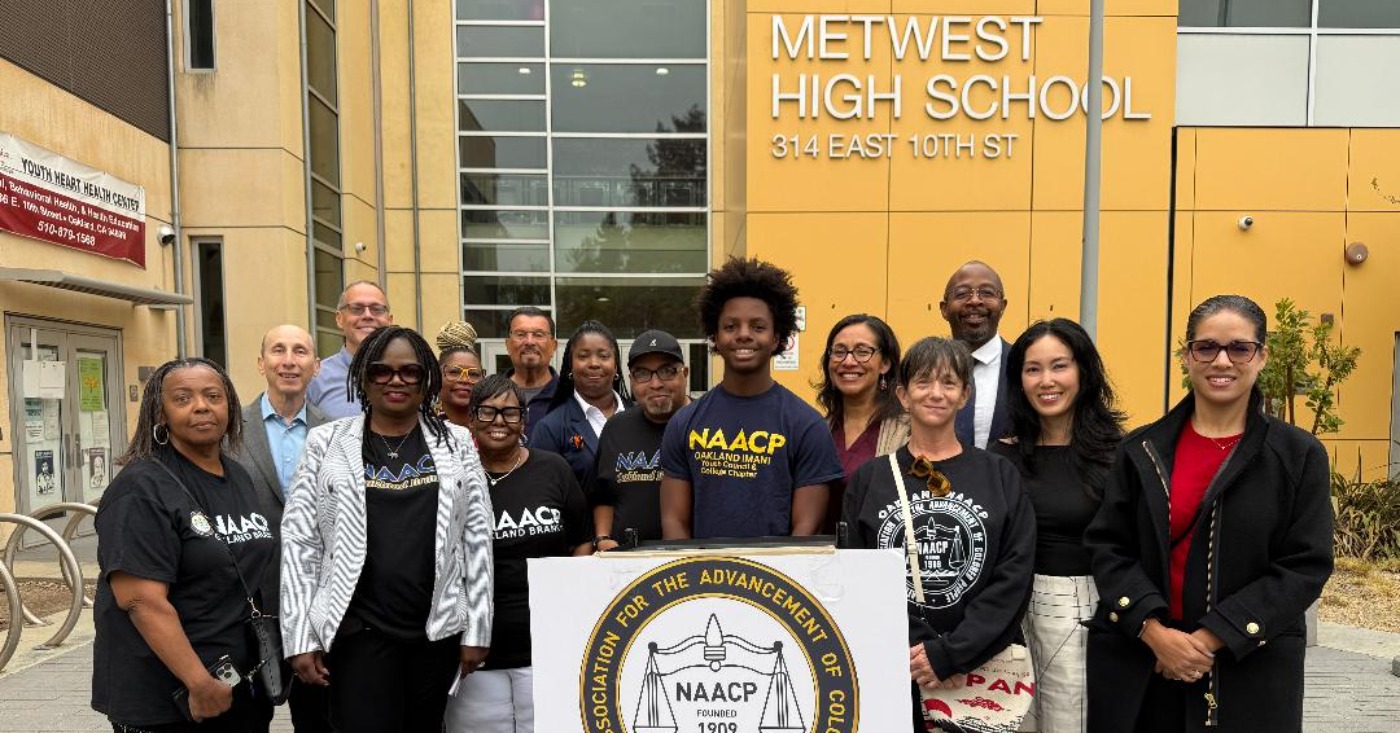
Oakland Unified students are falling behind: fewer than 1 in 3 read at grade level, and the numbers are worse for Black and Latino students. This is happening in a district that has received more per student than even the highest-funded states. As Alameda County Superintendent of Schools Alysse Castro has said, “OUSD’s biggest problem isn’t a revenue problem. It’s a decision-making problem.”
That is why Grace Park-Bradbury and I, two OUSD parents, started Oakland Parents for Quality Education, the ParentPAC. We believe our kids deserve a school board that faces hard decisions honestly. This board has not.
The county has warned them repeatedly. Earlier this year Castro said the new teachers’ contract “endangers” the district’s fiscal stability. That wasn’t because of the raises, but because the district was counting on cuts it had not identified.
Days later the board passed a budget that assumed $30 million in still-unnamed reductions. Board President Jennifer Brouhard and Vice President Valarie Bachelor voted yes. Director Mike Hutchinson voted no. The plan to name those cuts isn’t scheduled until mid-December, after the election.
The Oakland NAACP called for public forums and honest answers about the management of public funds. This fall Castro approved the budget only conditionally, noting that “a budget can be balanced but not be good for kids.”
Principals have spoken out as well. In January, 30 school leaders wrote that asking schools to do more with less “erodes the dignity of our profession” and “unconscionably compromises the quality of education our students receive.”
In April, 60 principals raised concerns that “have diminished our confidence in our current leadership,” warning that district decisions had produced “a structural deficit and cash-strapped schools.”
In June, all 15 high school principals objected to using voter-approved Measure N and H reserves for expenses already in the budget. The district did it anyway. The measures’ citizen oversight commission has demanded the money back. Auditors found the board had the legal authority, but as Castro observed, legality does not settle whether it was what voters thought they were approving.
Opponents claim we want to close schools. Our candidates do not all agree on consolidation. Hutchinson has fought closures for years, yet he also wrote the 3Rs proposal examining how many schools the district should operate.
What our candidates share is a willingness to weigh every option openly. This board told the superintendent not to even consider consolidation, and every school is being cut instead. As principals representing two-thirds of OUSD schools wrote, “the gradual starvation of our schools is also an equity issue.” Closures disrupt families, especially in Black and Brown neighborhoods. So does starving every campus.
You may have seen ads calling us a front for out-of-town billionaires. Every contribution is publicly reported, and 140 Oakland families have given. The people sounding the alarm are principals, citizen commissioners, the county superintendent, and the NAACP. None of them are billionaires. They are the people who see our schools up close.
Oakland schools are staffed by excellent principals and teachers. Our kids are like kids everywhere: eager to learn if given a real chance. They are being held back by a board that will not make hard choices.
In District 2, vote for Arielle Fleisher. In District 4, rank Kathryn Camp and Mike Hutchinson first and second. In District 6, rank Alexandra Williams and LeAna Powell first and second. Leave your third choice blank.
Vote like our children’s future depends on it. Because it does.
Edmund Chun co-founded Oakland Parents for Quality Education and is an OUSD parent.
Black History
Oakland Strong: Building Champions and Healthier Generations
Entrepreneur Mike Jenkins is revitalizing youth wellness in Oakland through Oakland Strong, a world-class strength-training facility in Jack London Square. After providing a decade of free training in Fruitvale, the program moved and rebranded while continuing to produce national and international weightlifting champions. Jenkins aims to counter community health challenges by teaching Olympic-style lifting and nutrition to children ages 8 to 18. As the program seeks new ways to sustain its free services, local partnerships are forming to support these elite young athletes. Read more.

Mike Jenkins is a serial entrepreneur with a vision to make a lasting impact in Oakland.
Raised in a military family in the Pinole area, Jenkins played basketball at Merritt College before continuing his athletic career at Sacramento State.
His lifelong interest in health and wellness led him to consider a troubling reality: as members of the Black community age, health challenges often increase. Jenkins believes investing in health is an investment in wealth, and he has made it his mission to give Oakland’s youth a stronger foundation for life.
Years ago, Jenkins invested in young people by building Speed Power Strength, a world-class strength-training facility in the Fruitvale neighborhood. For 10 years, the facility served hundreds of children, providing training entirely free of charge. Displaced by gentrification, the program eventually found a new home in Jack London Square.
That move inspired a new name: Oakland Strong, reflecting both the program’s mission and its pride in the city it represents.
“When we found the new home, I needed to put a spotlight on what we were doing– producing the strongest kids in Oakland – so I named our new location Oakland Strong,” Jenkins explained. “We are known nationally and internationally, so when we compete, our city’s name is on our chest.”
Through Olympic weightlifting, governed nationally by USA Weightlifting, the program has developed an extraordinary record. Its athletes have earned 10 national championships, a team national championship, and international titles. Today, two Oakland Strong athletes are Olympic hopefuls.
This past summer, Oakland had three athletes at the Olympic Training Center in Colorado Springs at the same time. One was Olympic figure skating champion Alysa Liu. The other two were Oakland Strong’s Robert Whitlock and Rucker Johnson, there for a weightlifting camp for Olympic hopefuls.
Whitlock, an Oakland Technical High School student, began training at age 10. Now a three-time consecutive national champion, two-time Pan American champion, and Team USA representative, Whitlock also holds an American record while maintaining straight A’s in school.
“If Oakland can’t support these kinds of kids, then what are we doing?” Jenkins asks.
Oakland Strong continues offering free training in Jack London Square to young people ages 8-18. The program welcomes girls as well as boys, with approximately 12 kids currently participating with room for 20.
With limited city support for free youth programs, Jenkins must find other ways to sustain the work.
When Carlyle Chicken Wings opened nearby, he approached the owner with an idea connecting nutrition and community investment. Because Oakland Strong teaches healthy eating alongside athletic training, they developed the Oakland Strong Bowl, a protein-focused meal. Carlyle will contribute $2 from each bowl sold to support the program.
For Jenkins, the mission extends far beyond medals and records. He wants to create generational health by teaching young people habits they can carry into adulthood and share with their families.
The strongest legacy, he believes, is not simply producing champions, but building healthier generations who understand their worth, their potential, and the importance of investing in themselves.
Black Press
COMMENTARY: Valarie Bachelor and Jennifer Brouhard are Excellent School Board Members and Deserve to Be Reelected
For the first time in 22 years, the Oakland Unified School District has successfully exited state control, marking a significant shift in local educational leadership. Board President Jennifer Brouhard and Vice President Valarie Bachelor are credited with stabilizing the district by averting teacher strikes, ensuring full classroom staffing, and prioritizing funding for student-centered programs like the Black Thriving Community Schools initiative. While the incumbents focus on preventing further school closures and improving student math and reading proficiency, wealthy opposition donors are funding a different vision for the district. Read more.
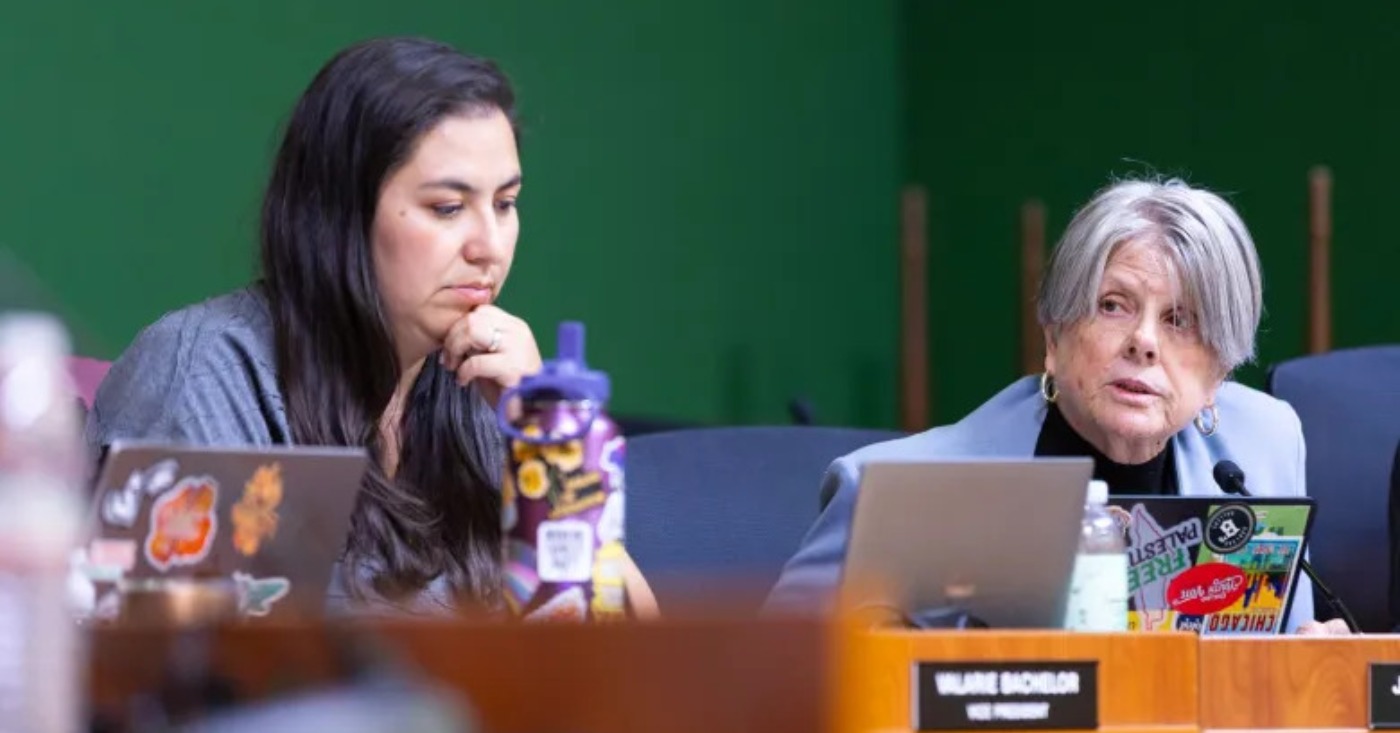
Oakland schools have excellent leadership right now. I know it’s hard to believe – because there is so much wrong with the national education picture.
This school year:
- The Oakland Unified School District escaped from state control after 22 years.
- Every classroom had a teacher at the beginning of the year, unlike past years when many classes started the year with day-to-day substitute teachers.
- Dr. Denise Saddler, an African American woman, is leading the district as Superintendent. She was an excellent choice with vast understanding of Oakland, of schools, and of educational systems.
- The school board and teachers managed to avert a teachers’ strike by strategizing, listening and compromising.
- The school board does not plan to close more schools for the first time in decades.
The two women leading the school board are excellent educators.
Board President Jennifer Brouhard (District 2) served as an Oakland teacher and was awarded a Fulbright Distinguished Award in Teaching and the U.C. Berkeley Social Science Project Teacher of the Year Award.
When Brouhard joined the board four years ago, she voted to reverse the vote of the previous board which had planned to close Brookfield, Carl B. Munck, Grass Valley, Fred T. Korematsu Discovery Academy and Horace Mann elementary. Half the students at Carl Munck and at least a third of the students at several others were African American.
She focused funding on classrooms rather than paying outside consultants. For that, she and her colleagues have incurred the wrath of real estate developers and school privatizers who want to get their hands on public property.
Board Vice President Valerie Bachelor (District 6) has worked on important facilities projects. She helped to set up the first school-based dental project at Frick United Academy of Language. She championed the Melrose Leadership Academy groundbreaking and the Skyline dining facilities.
Bachelor facilitated a balanced budget, which was pivotal in helping the district finally end state control. She also has worked to direct funding toward student-centered programs like the Black Thriving Community Schools Program.
The people financing the opposition candidates are Ryan Graciano, co-founder of Credit Karma, which made $ 2.7 billion last year; and Gagan Biyani, who says he became a millionaire at age 25.
The literature produced on behalf of the opposition supports closing schools, which harms student and could put us back under state control.
Looking at past school years, parents and educators can see how far the district has come. Oakland students and families have seen 25%-30% of educators leave their classrooms for districts with more competitive salaries.
But this year, we saw a change in those trends.
Since Jennifer and Valarie have taken office, Oakland Black student progress in reading and math is outpacing California’s state average. California School Dashboard data show that from 2023 to 2026, Black students in OUSD made greater progress toward proficiency than Black students statewide overall in both English Language Arts and math.
To read more, go to Education Week, “The Harm of School Closures Can Last a Lifetime, New Research Shows” (2024), www.edweek.org/leadership/the-harm-of-school-closures-can-last-a-lifetime-new-research-shows/2024/06
About the Authors
Dr. Kitty Kelly is a Professor of Education and Urban Studies. Dr. Kimberly Mayfield is Dean at Kalmanovitz School of Education, Saint Mary’s College of California.
Oakland Post Publisher Paul Cobb, a former Oakland school board member, contributed to this article.
Black Press
OUSD Receives State Review of District Finances; Outlines Progress Since January
The Fiscal Crisis and Management Assistance Team has released a Fiscal Health Risk Analysis for the Oakland Unified School District, labeling the district at high risk for insolvency based on January data. Despite this designation, the Alameda County Office of Education recently noted that OUSD has produced a materially stronger budget submission than in previous years. Superintendent Dr. Denise Saddler stated that the district is actively working to balance its budget and address specific state findings to ensure long-term stability. Find out more about the district’s recovery plan and the challenges facing other California schools by reading more.
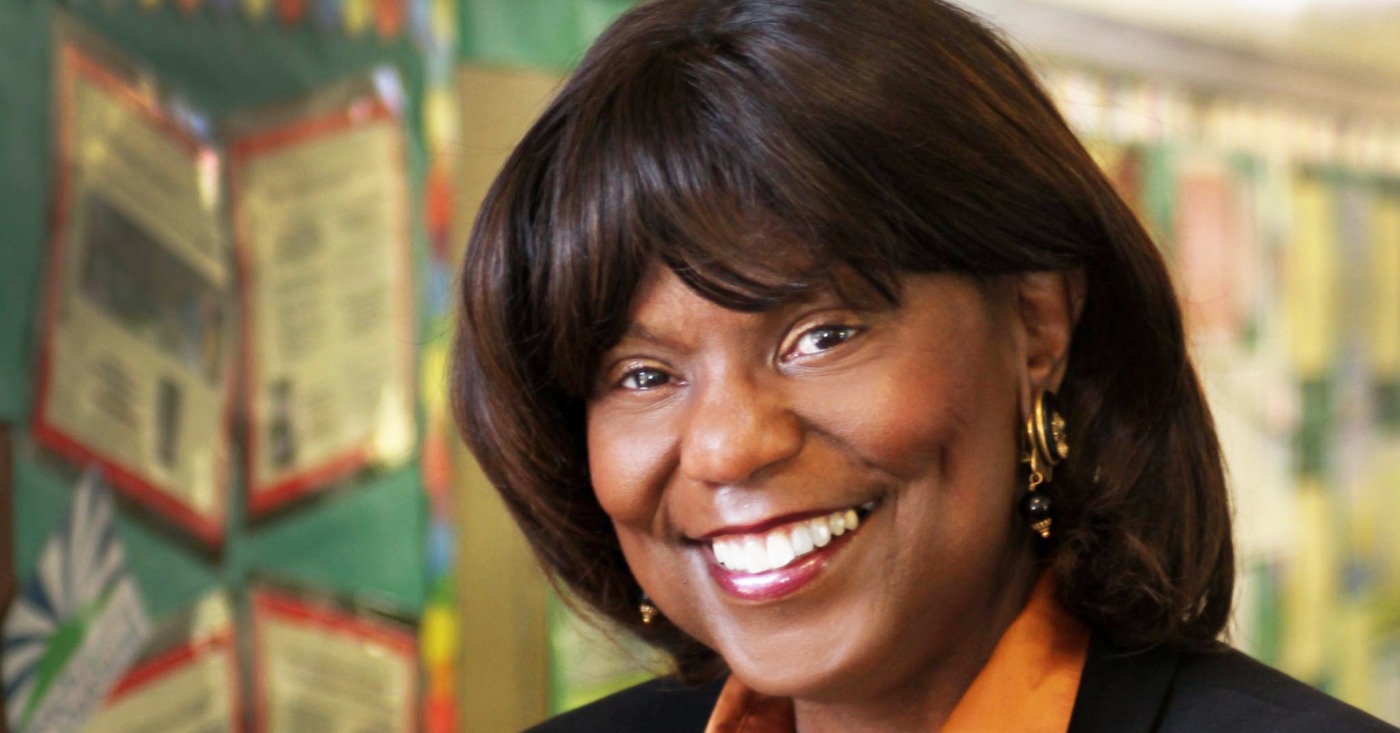
Alameda County Office of Education has called the budget ‘a materially stronger submission than the district has filed in recent years’
Caption: Dr. Denise Saddler. Courtesy photo.
The Fiscal Crisis and Management Assistance Team (FCMAT), the state-funded nonprofit in charge of advocating for budget cuts and school closures in local school districts, on Thursday released its Fiscal Health Risk Analysis (FHRA) of Oakland Unified School District.
FCMAT initiated the review after the Alameda County Superintendent of. Schools issued a ‘Notice of Going Concern’ last April. Basing its analysis on the district’s 2025-26 Second Interim Report which reflects financial data as of Jan. 31, FCMAT rated the district’s risk for fiscal insolvency as “high.”
But a later review of the district’s financial reports demonstrated faith in OUSD to turn things around. In its Sept. 15 letter conditionally approving the district’s budget, the Alameda County Office of Education called the budget “a materially stronger submission” than the district has filed in recent years.”
The County Office of Education noted that closing a structural deficit requires staff to bring forward hard choices, that the Board make them, and staff to carry them out. The county found all three appear to be happening in OUSD. The district is rebuilding the reserves it needs to remain stable, and it still has challenging work ahead.
The district’s progress reflects difficult choices by the Board of Education and staff. In June, the board adopted one plan for the district’s financial recovery and approved the 2026-27 budget.
Emphasizing how much progress the district has made in the last few years, OUSD Superintendent Dr. Denise Saddler said, “We are working to balance our budget and fund the programs that show results for our children. FCMAT’s findings are part of that work, and we will address the findings in the report.”
Oakland is not alone under state scrutiny. This year, FCMAT also rated 11 other districts, including San Francisco, Los Angeles, Antioch,
Burbank, Saddleback Valley, Petaluma, San Ysidro, Rincon Valley Union, Pleasanton, Santa Rosa, and Pacifica as high risk for fiscal insolvency.
Those districts range from a 2,600-student elementary district to the second-largest school system in the nation. Across these districts, FCMAT found many of the same pressures: compensation growing faster than revenues, rising special education costs, declining enrollment, and budgets that count on reductions not yet named.
That pattern points to the challenge facing public schools across California, and Oakland Unified intends to help lead the response, according to a district press statement.
California districts are navigating the challenges of a rapidly changing state and an evolving educational landscape. As one of California’s most diverse urban school districts, Oakland Unified faces these pressures with a distinct responsibility to the students, families, and communities it serves. While standing in solidarity with districts statewide, according to OUSD.
Oakland Unified remains steadfast in its commitment to educational equity, innovation, and student achievement, demonstrating that even in the face of significant challenges, its mission to provide every student with a high-quality education remains unwavering, the district said.
Black History
IN MEMORIAM: United Farm Workers Union Icon Dolores Huerta, 96
Dolores Huerta, the legendary labor leader and co-founder of the United Farm Workers, has passed away at age 96 due to complications from cancer. A pioneering civil rights activist, Huerta was instrumental in securing collective bargaining rights for migrant workers and popularized the rallying cry “Si se puede.” From her early days as a community organizer in Stockton to receiving the Presidential Medal of Freedom, her decades of advocacy transformed the American labor movement and inspired generations of activists to fight for social justice. Learn more about her life and legacy.

Dolores Huerta, a community organizer known most for her work to support fair wages and justice for migrant workers, passed away in her Bakersfield home on Wednesday from complications of cancer. She was 96.
Accolades poured in from across the nation.
“I cannot imagine a world without Dolores Huerta, and it is with deep sadness that I mourn the passing of my dear friend and legendary leader,” said Oakland Mayor Barbara Lee who met Huerta in the 1970s. “She understood how race, gender, poverty, and economic inequality intersect, pushing for a women’s movement inclusive of Black women and women of color. And she never separated the struggle for farmworkers from reproductive freedom and other civil rights and human rights.”
Former Berkeley mayor and current state assembly member Jesse Arreguin, who was mentored by Huerta said on Instagram that she was “always driven by a deep sense of justice and fairness, she transformed this state and this nation, changing the lives of farm workers and advancing the rights of all people.”
Former Vice President Kamala Harris called Huerta a “pioneering labor leader and legendary civil rights activist.
“Amidst the struggle of the movement, her rallying cry, ‘Si se puede,’ was a call to stay in the fight,” Harris wrote.
Organizing was a family trait. Born on April 10, 1930, in Dawson, New Mexico, Huerta was the daughter of a traveling coal miner whose reputation as a fiery union leader followed him to the New Mexico Legislature. After moving to Stockton, her mother held two jobs to support her children and went on strike with her cannery union in 1937.
After graduation from Stockton High School, Huerta attended University of the Pacific‘s Stockton College (later San Joaquin Delta College) where she received a teacher’s certificate.
But when the children of farm workers came to school hungry and needing shoes, she quit, believing she could do more for them organizing farm workers and joined the Community Service Organization (CSO).
By the late 1950s, she was organizing other CSO chapters and working as a lobbyist, speaking before the state Legislature, as well as teaching citizenship classes and supporting voter registration drives.
Over the next few years, she was part of several union efforts, co-founding the National Farm Workers’ Association (NFWA) with Cesar Chavez and Gilbert Padilla in 1962.
She became the UFW’s main negotiator, leading to favorable contract for grape workers in 1970. In the years that followed, there were successful boycotts of lettuce, wine and table grapes. In 1975, she helped ensure farm workers’ rights to collective bargaining with the California Agricultural Labor Relations Act.
In 1988, while protesting George H.W. Bush’s candidacy for president in San Francisco, Huerta was severely beaten by a police officer, leading a five-year leave of absence from UFW. She returned to work after Chavez’s death in 1993.
The recipient of numerous awards, Huerta used the $100,000 gift for receiving the Puffin/Nation Award for Creative Citizenship in 2002 to create the Dolores Huerta Foundation, which funds full-time organizers to go to neighborhoods and teach residents how to collaborate with government and community groups to exercise self-determination.
She received the Presidential Medal of Freedom in 2012 and was made a member of the Order of the Aztec Eagle, the highest award given to foreigners by the Republic of Mexico.
Huerta was married twice and is survived by seven children.
Wikipedia, the Associated Press and other online reports are the source of this story.


Oakland Latino Chamber of Commerce Hosts CHCC Convention, Generating $3 Million in Economic Impact

OPINION: OUSD Kids Are Eager to Learn. Our Board Is Holding Them Back

Oakland Strong: Building Champions and Healthier Generations

COMMENTARY: Valarie Bachelor and Jennifer Brouhard are Excellent School Board Members and Deserve to Be Reelected

OUSD Receives State Review of District Finances; Outlines Progress Since January

IN MEMORIAM: United Farm Workers Union Icon Dolores Huerta, 96

Home Nursing Visits Provide Wide-Ranging Benefits for Mothers, Young Children

Buick Enclave Safety Tech: What It Can—and Can’t—Do #shorts

ELECTION DAY 2026: Black Voter Turnout, Trump’s Clemency Controversy & a $495M Prison Deal 📱

ELECTION DAY 2026: Black Voter Turnout, Trump’s Clemency Controversy & a $495M Prison Deal

All Skinfolk Ain’t Kinfolk

Practitioners of African Traditional Spirituality Offer Ancestral Reverence Ritual Oct. 31

Latinas Deserve Equal Pay. Unions Help Make It Happen.

A $2.1 Trillion Wellness Industry Never Built a Daily Practice for Black Children. So This Atlanta Family Did.

Zakiya Jendayi Arrested, Locked Out of Home by Sheriff’s Deputies

Oakland Awarded More than $14 Million in State Funding

Tamiko Armstead | 2026 Lifetime Achiever in Education

Montclair Brewery: Brewing Culture, Community, History

Should You Have to Pay to Hear the Gospel?

Listening as a Lifeline: A Doula’s Witness to Black Maternal Health
Buick Enclave Safety Tech: What It Can—and Can’t—Do #shorts
ELECTION DAY 2026: Black Voter Turnout, Trump’s Clemency Controversy & a $495M Prison Deal 📱
ELECTION DAY 2026: Black Voter Turnout, Trump’s Clemency Controversy & a $495M Prison Deal

Trump as a Distraction…Focus on the Ballot and 2028

Kids Escape City Chaos for Camp Paradise #shorts

Don’t Name Things After Me If I Can’t Enjoy Them! #shorts

EVs Cost Less Than Half as Much to Fuel—Check Your Local Savings #shorts

Unity is Power: Building Success Against All Odds! #shorts

Cómo publicar su DBA en el condado de Kern o Los Ángeles desde su teléfono

The Buckner Family on Building Moltron Builders Together | On The Radar | Powered by JPMorganChase
-

 Art7 days ago
Capturing Black Life’s Beauty
-
 Black Press1 week ago
Secretary of State Shirley Weber Pushes Back Against DOJ Demands Over California Voter Rolls
-

 Black History7 days ago
Retirement Triggers Doctor to Pen Book for Young Audience
-

 Black History1 week ago
Oakland Honors 60 Years of the Black Panther Party at the All Power to the People Gala
-

 Black Press7 days ago
Fatigue, Bloating, and Inflammation: Spotting the Subtle Signs of MASLD
-

 Black Press7 days ago
When Your Faith Is Put to the Test
