
Health
Plan to Simplify 2015 Health Renewals May Backfire


Ricardo Alonso-Zaldivar, ASSOCIATED PRESS
WASHINGTON (AP) — If you have health insurance on your job, you probably don’t give much thought to each year’s renewal. But make the same assumption in one of the new health law plans, and it could lead to costly surprises.
Insurance exchange customers who opt for convenience by automatically renewing their coverage for 2015 are likely to receive dated and inaccurate financial aid amounts from the government, say industry officials, advocates and other experts.
If those amounts are too low, consumers could get sticker shock over their new premiums. Too high, and they’ll owe the tax man later.
Automatic renewal was supposed to make the next open-enrollment under President Barack Obama’s health care overhaul smooth for consumers.
But unless the administration changes its 2015 approach, “they’re setting people up for large and avoidable premium increases,” said researcher Caroline Pearson, who follows the health law for the market analysis firm Avalere Health.
It could be a new twist on an old public relations headache for the White House: You keep the health plan you like but get billed way more.
“It was our preference for (the administration) to have the capacity to update people’s subsidy information, but they haven’t been able to get that built,” said Brendan Buck, a spokesman for the industry trade group America’s Health Insurance Plans.
Here’s the issue, in a nutshell:
To streamline next year’s open enrollment season, the Health and Human Services Department recently proposed offering automatic renewal to 8 million consumers who are already signed up.
But the fine print of the HHS announcement said consumers who auto enroll will get the “the exact dollar amount” of financial aid they are receiving this year.
That’s likely to be a problem for a couple of reasons, not to mention inflation.
First, financial aid is partly based on premiums for a current benchmark plan in the community where the consumer lives. Because more plans are joining the market and insurers are submitting entirely new bids for 2015, the benchmark in many communities will be different.
Second, financial aid is also based on household income. If your income goes down, you are entitled to a bigger health insurance tax credit. If it goes up, you get less. The 2014 amounts could well be out of date and incorrect for many people. Financial assistance is also affected by age, family size and where people live.
And that doesn’t get into another motivation for consumers to shop around: Premiums and choices for 2015 are changing, so your current plan may no longer be a good deal.
“Just continuing in the same plan with the same credit is not going to be the optimal outcome for most people,” said Judy Solomon of the Center on Budget and Policy Priorities, which advocates for low-income people. “Your 2014 credit is going to be lower in most cases, and in some cases it could be too high.”
About 8 in 10 of those who signed up for private coverage under the health care law are getting financial aid. In the 36 states served by the federal insurance exchange, the tax credits average $264 a month, reducing the average monthly premium of $346 to just $82.
Even with such generous subsidies, about 4 in 10 who bought a health law plan say they have trouble paying their premiums, according to a poll by the nonpartisan Kaiser Family Foundation.
Open enrollment starts Nov. 15, and consumers who already have a policy will have just about a month to renew or make changes to avoid a break in coverage Jan. 1. Millions of new customers are also expected to try to sign up for the first time.
New Health and Human Services Secretary Sylvia Mathews Burwell is hoping that auto renewal will simplify things, a welcome change from this year’s website problems.
But the subsidy scheme created by Congress to keep premiums affordable has so many moving parts that it’s turning out to be difficult for the government to administer.
Administration spokesman Aaron Albright says all consumers are encouraged to contact their health insurance exchange to update any changes in personal and financial details. You can do that at any time, before the open-enrollment crunch.
However, you will have to wait until the fall to change to a new plan for next year.
Even if the financial aid amounts are off the mark, some advocates say auto renewal is still a safeguard to keep some people from falling through the cracks.
“It is not a perfect solution, but I’m not sure that there is a better solution in terms of protecting people so they don’t lose health coverage,” said Ron Pollack, executive director of Families USA, an advocacy group supporting the overhaul.
___
Online: https://www.HealthCare.gov.
Copyright 2014 The Associated Press. All rights reserved. This material may not be published, broadcast, rewritten or redistributed.
###












Black Press
Iowa’s State Black and Brown Caucus Demand Investigation into Lead Azine Detonation
The Iowa Legislative Black and Brown Caucus is demanding a full independent investigation following the U.S. Army’s controlled detonation of 10,000 pounds of degraded lead azide at the Iowa Army Ammunition Plant. Legislators expressed serious concerns regarding environmental justice and public health, questioning why the toxic material was allowed to deteriorate for decades until it became too unstable to move. The caucus is calling for transparency regarding potential lead contamination of local soil, water, and agricultural products that sustain rural and working-class communities. Read more.

Note: On Nov. 25, after court and state-requested delays, the U.S. Army completed two simultaneous controlled detonations of about 10,000 pounds of degraded lead azide which had been stored in the Army Ammunition Plant in Middletown. The detonation followed the discovery in March that the material was too unstable to move. In October, local residents were informed of the plan, and the Environmental Protection Agency approved it on Nov. 13. The Army ordered evacuations for residents within a five-mile radius. Protests ensued, and the Eighth Circuit Court paved the way for today’s detonation within a concrete bunker. The states of Illinois and Missouri are also activated monitoring and emergency coordination.
Portions of the statement by the Black and Brown Caucus of Iowa’s state legislators are below:
Lead is highly toxic, and there is no known safe level of lead exposure. The projected release of lead-containing dust raises serious concerns about the health of our children, pregnant people, agricultural workers, livestock, and anyone who may come into contact with contaminated air, soil, water, or surfaces.
Iowans deserve answers and accountability. The Army’s failure to address this material sooner has left our communities facing a dangerous situation, and at the very least, Iowans deserve full transparency, accountability, and every possible safeguard to protect our people, our land, and our future.
The consequences of this failure have been placed on the shoulders of Iowa families and communities.
The Iowa Legislative Black and Brown Caucus is calling for a full, independent
investigation into how nearly 10,000 pounds of lead azide were allowed to deteriorate at the Iowa Army Ammunition Plant for more than two decades, ultimately reaching a point where the Army claims it is too dangerous to safely move or dispose of through alternative methods.
This situation raises serious questions about environmental justice, public health, government
transparency, and the responsibility of public institutions to protect the people they serve.
For generations, Black, Latin, immigrant, rural, and working-class communities have experienced the consequences of environmental hazards and industrial pollution in Iowa. This is a matter of public health, economic security, and basic human dignity.
What happens when lead-containing particles settle on farmland, contaminate water sources, or
accumulate on crops and produce? What protections are in place for livestock, farm animals, and the people who work with, consume, and depend on these agricultural products? These are questions that deserve clear, science-based answers, not assumptions or reassurances.
Every Iowan deserves clear information, meaningful protections, and confidence that their health and safety are being prioritized. We call upon state and federal authorities to ensure:
- Timely, accessible information about the planned operation, potential exposure, and scientific evidence
- Safety advisories and emergency information reach all affected communities, including through Spanish-language and other accessible communications
- Assessment of potential impacts on farmland, crops, livestock, water sources, and agricultural operations, with clear guidance for producers and appropriate testing and remediation
- Independent air, soil, and environmental monitoring with findings made publicly available
- Prioritization of children, pregnant individuals, older adults, outdoor workers, wildlife, and households facing barriers to transportation, healthcare, or emergency services
- Clear expectations for long-term environmental testing, remediation, public health follow-up, and continued communication after the operation
- Full accounting of oversight and decision-making including a documented timeline of how hazardous materials were stored, when deterioration and associated risks were identified, what actions were considered, and how federal, state, local, and civilian personnel were notified and protected

State Rep. Ruth Ann Gaines
State Rep. Rob Johnson
State Rep. Mary Madison
State Rep. Jerome Amos
State Senator Renee Hardman
State Rep. Angel Ramirez
State Rep. Megan Srinivas
State Rep. Ross Wilburn
State Rep. Elect Vincent Collis
State Senator Elect Samy El-Baroudi
State Rep. Elect Ivette Muhammad
State Rep. Elect Shawn Olorundami
State Rep. Elect Nick Salazar
State Senator-Elect Nikhil Wagle
Former State Rep. Ako Abdul-Samad
The source for this statement is the Facebook page for the Iowa Black and Brown Caucus of State Legislators.
Black Press
Iowa’s State Black and Brown Caucus Demand Investigation into Lead Azine Detonation
The Iowa Legislative Black and Brown Caucus is demanding a full independent investigation following the U.S. Army’s controlled detonation of 10,000 pounds of degraded lead azide at the Iowa Army Ammunition Plant. Legislators expressed serious concerns regarding environmental justice and public health, questioning why the toxic material was allowed to deteriorate for decades until it became too unstable to move. The caucus is calling for transparency regarding potential lead contamination of local soil, water, and agricultural products that sustain rural and working-class communities. Read more.

Note: On Nov. 25, after court and state-requested delays, the U.S. Army completed two simultaneous controlled detonations of about 10,000 pounds of degraded lead azide which had been stored in the Army Ammunition Plant in Middletown. The detonation followed the discovery in March that the material was too unstable to move. In October, local residents were informed of the plan, and the Environmental Protection Agency approved it on Nov. 13. The Army ordered evacuations for residents within a five-mile radius. Protests ensued, and the Eighth Circuit Court paved the way for today’s detonation within a concrete bunker. The states of Illinois and Missouri are also activated monitoring and emergency coordination.
Portions of the statement by the Black and Brown Caucus of Iowa’s state legislators are below:
Lead is highly toxic, and there is no known safe level of lead exposure. The projected release of lead-containing dust raises serious concerns about the health of our children, pregnant people, agricultural workers, livestock, and anyone who may come into contact with contaminated air, soil, water, or surfaces.
Iowans deserve answers and accountability. The Army’s failure to address this material sooner has left our communities facing a dangerous situation, and at the very least, Iowans deserve full transparency, accountability, and every possible safeguard to protect our people, our land, and our future.
The consequences of this failure have been placed on the shoulders of Iowa families and communities.
The Iowa Legislative Black and Brown Caucus is calling for a full, independent
investigation into how nearly 10,000 pounds of lead azide were allowed to deteriorate at the Iowa Army Ammunition Plant for more than two decades, ultimately reaching a point where the Army claims it is too dangerous to safely move or dispose of through alternative methods.
This situation raises serious questions about environmental justice, public health, government
transparency, and the responsibility of public institutions to protect the people they serve.
For generations, Black, Latin, immigrant, rural, and working-class communities have experienced the consequences of environmental hazards and industrial pollution in Iowa. This is a matter of public health, economic security, and basic human dignity.
What happens when lead-containing particles settle on farmland, contaminate water sources, or
accumulate on crops and produce? What protections are in place for livestock, farm animals, and the people who work with, consume, and depend on these agricultural products? These are questions that deserve clear, science-based answers, not assumptions or reassurances.
Every Iowan deserves clear information, meaningful protections, and confidence that their health and safety are being prioritized. We call upon state and federal authorities to ensure:
- Timely, accessible information about the planned operation, potential exposure, and scientific evidence
- Safety advisories and emergency information reach all affected communities, including through Spanish-language and other accessible communications
- Assessment of potential impacts on farmland, crops, livestock, water sources, and agricultural operations, with clear guidance for producers and appropriate testing and remediation
- Independent air, soil, and environmental monitoring with findings made publicly available
- Prioritization of children, pregnant individuals, older adults, outdoor workers, wildlife, and households facing barriers to transportation, healthcare, or emergency services
- Clear expectations for long-term environmental testing, remediation, public health follow-up, and continued communication after the operation
- Full accounting of oversight and decision-making including a documented timeline of how hazardous materials were stored, when deterioration and associated risks were identified, what actions were considered, and how federal, state, local, and civilian personnel were notified and protected

State Rep. Ruth Ann Gaines
State Rep. Rob Johnson
State Rep. Mary Madison
State Rep. Jerome Amos
State Senator Renee Hardman
State Rep. Angel Ramirez
State Rep. Megan Srinivas
State Rep. Ross Wilburn
State Rep. Elect Vincent Collis
State Senator Elect Samy El-Baroudi
State Rep. Elect Ivette Muhammad
State Rep. Elect Shawn Olorundami
State Rep. Elect Nick Salazar
State Senator-Elect Nikhil Wagle
Former State Rep. Ako Abdul-Samad
The source for this statement is the Facebook page for the Iowa Black and Brown Caucus of State Legislators.
Black Press
OP-ED: More Sleep and Lower Blood Pressure — An Overlooked Connection
POST NEWS GROUP — High blood pressure often produces no noticeable symptoms, even while increasing the risk of heart disease and stroke. The absence of symptoms became even clearer to me at a local festival where free blood pressure screenings were offered. I spoke with a woman whose systolic pressure — the top number — was 198. She said she felt fine.

Essay: More Sleep and Lower Blood Pressure — An Overlooked Connection
Photo Caption:
By
Lack of sleep can contribute to high blood pressure, yet sleep often receives less attention than medication, diet and exercise in discussions about heart health. During sleep, blood pressure normally declines, reducing the demands placed on the heart and blood vessels. When sleep is insufficient or frequently interrupted, blood pressure can remain higher for longer periods.
For Black Americans, the connection deserves particular attention. Nearly 58% of Black adults have high blood pressure, according to the Centers for Disease Control and Prevention. A National Center for Health Statistics report found that 40.2% of Black adults experienced short sleep, compared with 28.9% of White adults.
The figures do not prove that inadequate sleep explains why Black adults have higher rates of hypertension. They do show why sleep belongs in the discussion about Black cardiovascular health.
That connection became personal for me during a routine visit to my cardiologist. My blood pressure was 143/90. I was already taking blood pressure medication, but I had not been monitoring my pressure at home. I had no warning that the reading had changed.
High blood pressure often produces no noticeable symptoms, even while increasing the risk of heart disease and stroke.
The absence of symptoms became even clearer to me at a local festival where free blood pressure screenings were offered. I spoke with a woman whose systolic pressure — the top number — was 198. She said she felt fine.
A systolic reading above 180 is considered severe hypertension and requires prompt medical attention, even without symptoms. Her reading reinforced what I had learned from my own experience: Feeling fine does not mean that blood pressure is normal.
After my cardiology appointment, I began looking at possible reasons for my elevated reading. I considered what I ate, how much I exercised and whether I was taking my medication as prescribed. Then I thought about my sleep.
I was sleeping four to five hours a night. I was not deliberately choosing to sleep less. I would become busy in the evening, move from one activity to another and go to bed later than I intended. Over time, that pattern became routine.
After researching the relationship between sleep and high blood pressure, I began going to bed earlier. I increased my sleep to seven or eight hours a night and continued monitoring my pressure. My medication remained the same.
Within weeks, my blood pressure readings moved into the normal range. One recent reading was 114/68.
I know that one change in my routine does not prove cause and effect. I had no home readings from before the cardiologist visit, so I do not know when my pressure started rising. Blood pressure also changes with stress, activity, time of day and how it is measured.
Still, my medication remained the same while I slept longer and my blood pressure readings improved.
Research has linked inadequate sleep to hypertension.
“When a person doesn’t sleep enough or doesn’t get quality sleep, it can increase their risk of hypertension,” Dr. Chandra Jackson, a senior investigator at the National Institute of Environmental Health Sciences, said in an interview published by the institute.
The American Heart Association added sleep to its Life’s Essential 8 measures of cardiovascular health in 2022. The association recommends seven to nine hours of sleep a night for most adults, which is the amount I now get.
Getting more sleep is also not simply a matter of personal discipline. Work schedules, multiple jobs, caregiving responsibilities, neighborhood noise, housing conditions and concerns about safety can make regular sleep difficult.
Dr. Girardin Jean-Louis, director of the Center on Translational Sleep and Circadian Sciences at the University of Miami, has studied racial disparities in sleep.
“Black and Latino people in the U.S. sleep around 30 to 60 minutes less per night than White people,” Jean-Louis said in an article published by the university.
Racism and discrimination also contribute to stress that can interfere with sleep.
“Things like racism and discrimination, these affect our sleep,” Dr. Dayna Johnson, a sleep epidemiologist at Emory University, said in an interview with North Carolina Public Radio.
Sleep quality matters, too. A person can spend seven or eight hours in bed and still not get restorative sleep. Sleep apnea causes breathing to stop and restart during the night and increases the risk of high blood pressure, heart attack and stroke. Warning signs include loud snoring, gasping during sleep, morning headaches and excessive daytime sleepiness. The condition is more common among Black adults than White adults.
The lesson from my experience is not that sleeping longer cured my high blood pressure. Sleeping longer does not replace medication, medical care or regular monitoring. I told my cardiologist about the change in my sleep schedule, and his concern remained whether my readings were under control.
What changed was my understanding of sleep as part of protecting my heart. I had treated sleep as the time left after I finished everything else. Going to bed earlier was a change I could make, and monitoring my pressure allowed me to see what was happening.
For me, inadequate sleep was a risk factor I had overlooked. Getting enough sleep is now part of how I manage my heart health. I did not know it mattered. Now I do.
About the Author
Joe W. Bowers Jr. is a contributing editor for California Black Media who reports on health, education and public policy. He is a graduate of Stanford University.
Black History
An HBCU Is Training Doulas to Help Combat Childbirth Risks
THE CAROLINIAN — North Carolina Central University is addressing the critical maternal health crisis in rural communities by training a new workforce of birth doulas. Through its Rural Health Hub in Enfield, the historically Black university is developing a network of trained birth workers to support mothers in Eastern North Carolina.
For many expectant mothers in rural communities, preparing for childbirth involves more than prenatal appointments and planning for a new baby. Limited access to maternity care, long travel distances, and unequal health outcomes can make pregnancy an especially difficult experience.
North Carolina Central University is working to address some of those challenges by training community-based birth doulas who can provide support to mothers before, during, and after childbirth.
Through its Rural Health Hub in Enfield, North Carolina, the historically Black university is developing a network of trained birth workers to improve maternal health outcomes in rural Eastern North Carolina, where access to maternity services remains limited.
The initiative comes at a time when Black women continue to experience disproportionately high rates of pregnancy-related deaths. According to North Carolina’s Maternal Mortality Review Committee, Black women in the state were 1.7 times more likely than white women to die from pregnancy-related causes between 2018 and 2021. The committee also found that nearly nine out of 10 pregnancy-related deaths reviewed were preventable.
The disparities are particularly concerning in rural communities, where some expectant mothers must travel an hour or more to reach hospitals offering labor and delivery services.
NCCU’s Community-Based Birth Doula Training Program, launched in December 2025, aims to address those gaps by preparing women who already live in underserved communities to support families navigating pregnancy and childbirth.
The program recruits participants from northeastern North Carolina counties, including Halifax, Northampton, Edgecombe, Nash, Bertie, Warren, and Martin.
Rather than bringing outside professionals into these communities, the university is investing in residents who understand the challenges families face and can build relationships with mothers in their own neighborhoods.
Dr. Undi Hoffler, director of the Community-Based Doula Program, emphasized the importance of developing a workforce rooted in the communities it serves.
“It’s important that our doulas come from these communities,” Hoffler said in an interview published by NCCU. “They’re building relationships with families they know. That’s how you build trust.”
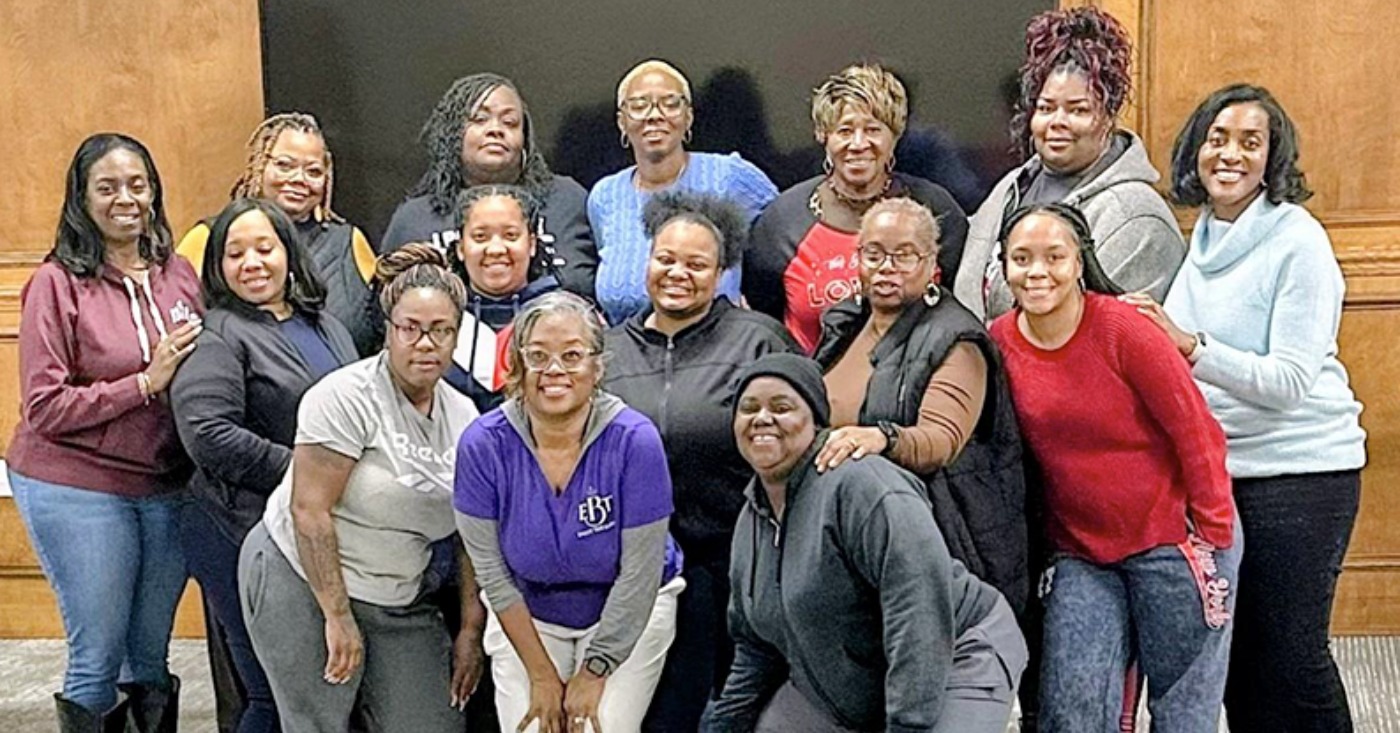
The program’s first training cohort included 12 women who completed a three-day in-person training in December 2025. Participants received scholarships covering training, certification, and materials. The university also provides continued mentorship and assistance as trainees work toward professional certification through DONA International.
The initiative continued into 2026. A training workshop held in October brought together 14 women for three days of instruction at the Rural Health Hub in Enfield, according to NC Newsline’s Nov. 16 report.
During training, participants learn about pregnancy, anatomy, labor and delivery, postpartum recovery, and how to recognize situations that require medical attention. They also receive instruction on helping mothers communicate their concerns, understand available options, and advocate for themselves during medical appointments and childbirth.
A doula is a trained professional who provides emotional, physical, and informational support throughout pregnancy, labor, and the postpartum period. Unlike physicians, nurses, and midwives, doulas do not provide medical treatment or deliver babies. Instead, they serve as an additional source of support for mothers and their families.
That distinction is important in communities where mothers may have limited access to consistent support throughout their pregnancies.
For Rose Lewis, a member of the program’s first cohort, the decision to become a doula grew out of years of working with families and recognizing gaps in maternal support.
Lewis, a Nash County resident and community health worker, said she frequently encountered families who needed assistance accessing health services and other resources. Through that work, she began noticing how much support was available after a baby arrived compared with the resources offered during pregnancy.
“I kept seeing resources for after the baby gets here,” Lewis said in an interview with NCCU. “But what about the support leading up to birth?”
Her interest in the work also became personal after a woman connected to her extended family died during childbirth and her own daughter experienced a high-risk pregnancy.
Lewis now hopes to help other mothers feel informed and supported throughout their birthing experiences.
“When you’re informed, you can advocate for yourself,” she said.
Another trainee, Taya Partin of Edgecombe County, shared an experience involving a pregnant client who expressed fear that she might not survive childbirth. Partin recalled helping the woman manage her concerns and feel more prepared for the delivery process.
The experience illustrates the emotional support doulas can provide to mothers who may feel overwhelmed or uncertain during pregnancy.
Research has associated continuous labor support with positive childbirth outcomes, including fewer cesarean deliveries and improved birth experiences. However, doulas are not substitutes for medical professionals or emergency maternity care. Their role is to complement existing healthcare services by providing consistent support and helping mothers navigate the process.
For NCCU, the program represents an opportunity to connect higher education with a public health issue affecting communities throughout North Carolina.
The university’s Rural Health Hub is also working to strengthen relationships among healthcare providers, community organizations and local families. Its broader mission focuses on improving health access, workforce development and community-centered research in underserved areas.
The long-term vision for the doula initiative is to establish a stronger network of trained birth workers throughout rural Eastern North Carolina, helping ensure that mothers have access to support regardless of where they live.
As maternal health disparities continue to affect Black women across the state, NCCU’s work demonstrates how HBCUs can contribute to solutions beyond traditional classroom instruction.
Through community-based training, mentorship and partnerships, the university is preparing women to become advocates and support systems for mothers during one of the most important periods of their lives.
For the families these doulas serve, the goal is simple: no mother should have to navigate pregnancy and childbirth feeling alone, unheard or unsupported.
Based on reporting by The Carolinian.
Black Press
5 Self-Care and Wellness Gift Ideas for the Women in Your Life
This holiday season put her well-being on the gift list. Created with guidance from Black doctors and with the unique health needs of Black women of all ages in mind, Black Girl Vitamins brings a thoughtful perspective to wellness gifting.

Sponsored by Black Girl Vitamins.
5 Self-Care and Wellness Gift Ideas for the Women in Your Life

This holiday season put her well-being on the gift list. Created with guidance from Black doctors and with the unique health needs of Black women of all ages in mind, Black Girl Vitamins brings a thoughtful perspective to wellness gifting.
From the auntie who always checks in to the sister friend who makes sure you’re good, these gift ideas offer a little care for the women who show up with love. There’s something for you, too.
For the Beauty Lover
Elevate her cherished beauty ritual with the Beauty Bundle, featuring Hair, Skin & Nails, BGV Collagen Powder and Vitamin D3. Include a handwritten note celebrating her beauty beyond the mirror.
For the Woman on the Go
Between packed calendars and personal goals, her days fill up fast. Make her well-being—not just her to-do list—the priority with the Energy Bundle, which brings together Iron, Vitamin D3 and B12.
For the Wellness Girlie
Surprise the friend who loves curating her wellness shelf with Her Balance Gummies and Chlorophyll Drops. Wrap them together for a personalized gift that speaks to her interest in everyday self-care.
For Her Next Chapter
Recognize her changing wellness needs with Peri Meno-Chill for perimenopause or Meno-Chill for menopause. Add a cooling pillowcase for a thoughtful touch that makes this gift feel personal.
For Her Wind-Down Ritual
Build this gift around an evening that belongs to her. Pair Dream Girl Sleep and Calm Girl Ashwagandhawith a simple reminder: “The rest of the list can wait.”
Because a thoughtful gift doesn’t add another obligation. It reminds her she deserves care, too.
Black Press
Native American Health Center Connects 140 Community Members to Career Opportunities During Native American Heritage Month
The Native American Health Center recently hosted its Career Connect job fair at the Flicker Building and Cultural Center in Oakland, welcoming 140 community members in honor of Native American Heritage Month. Organized through the federally funded Strong Native Workforce Program, the event aimed to promote economic stability by connecting American Indian, Alaska Native, and Native Hawaiian residents with local career pathways. A diverse group of employers from the healthcare, technology, and government sectors attended to provide attendees with information regarding job openings and professional training programs. Read more.
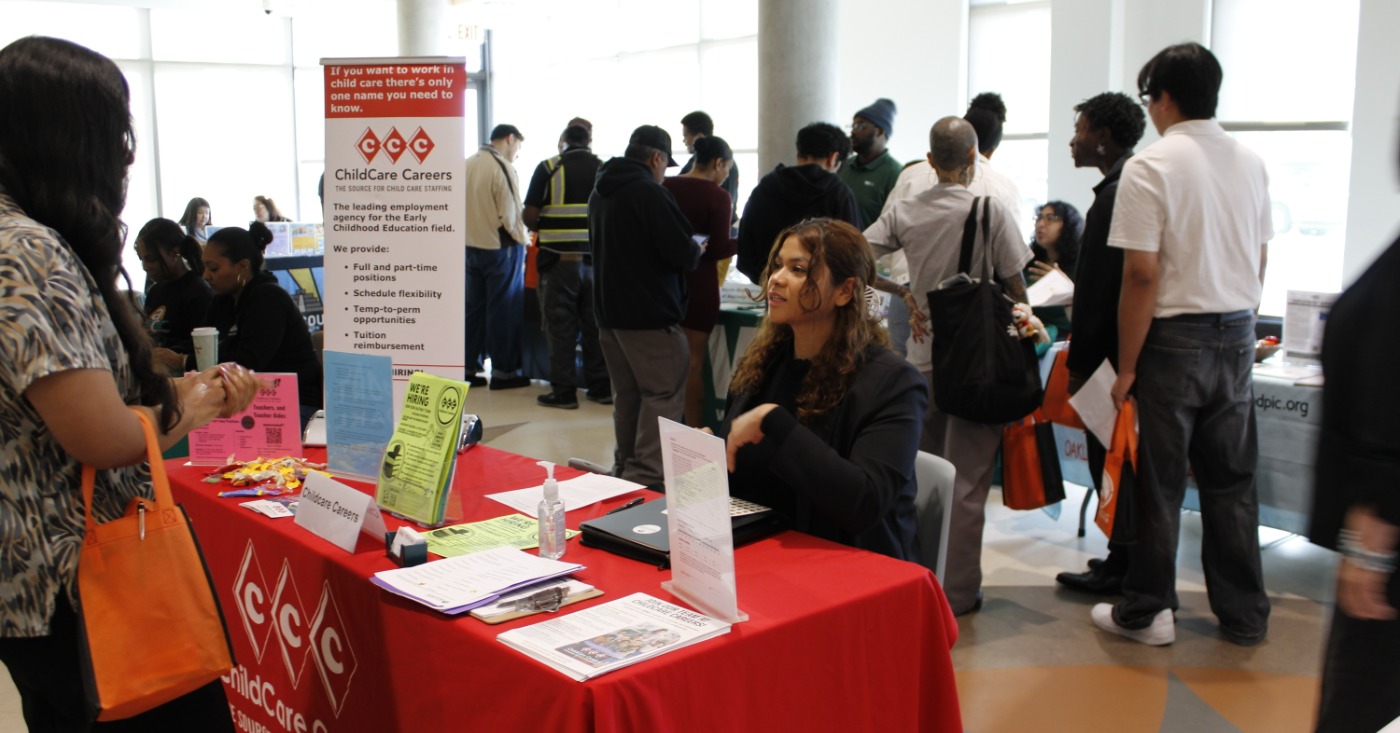
In celebration of Native American Heritage Month, the Native American Health Center (NAHC) welcomed 140 community members to its Career Connect: Community Job & Career Fair on Friday, Nov. 6.
Held at NAHC’s Flicker Building and Cultural Center in Oakland, the event connected American Indian, Alaska Native, Native Hawaiian, and other community members with employers, career pathways, workforce development programs, and family resources throughout the San Francisco Bay Area.
The event was organized through NAHC’s Strong Native Workforce Program, a federally funded initiative supported by the U.S. Department of Labor through the Workforce Innovation and Opportunity Act (WIOA). The program helps Native community members pursue meaningful employment and long-term economic stability through career counseling, job placement assistance, skills training, and supportive services.
The Career Connect Job Fair was coordinated with support from Gallo Advantage Consulting, a Native American woman-owned consulting firm specializing in strategic planning, community engagement, and workforce development. Working alongside NAHC, the firm supported employer outreach, event coordination, and partnerships with local businesses and community organizations.

“Native American Heritage Month is an opportunity to celebrate the strength, resilience, and contributions of our communities while investing in their future,” said Natalie Aguilera, CEO of NAHC. “Employment is an important part of health and well-being, providing economic stability, purpose, and opportunities for individuals and families to thrive. Through our Strong Native Workforce Program and events like Career Connect, we are helping community members build meaningful careers and create stronger futures for generations to come. We are grateful to the employers and community partners who joined us in this effort.”
The job fair featured employers across healthcare, technology, government, transportation, education, and other industries. Participating organizations included Cisco Systems, the City of Oakland, East Bay Regional Park District, Kaiser Permanente, Port of Oakland, Sutter Health, Balance Staffing, MANOS Homecare, Inc., Childcare Careers, AC Transit, Samuel Merritt University, Waste Management of Alameda County, Inc., CareBuilders at Home – East Bay, East Bay Municipal Utility District, Patelco Credit Union, and Code Tenderloin.
Workforce development and community partners who shared their resources with participants included the Oakland Private Industry Council, Lao Family Community Development, The Unity Council, West Oakland Jobs Resource Center, Friendship House Association of American Indians of San Francisco, the Washoe Tribe of Nevada and California’s Alameda County Native TANF Program, as well as NAHC’s own Community Wellness Department.
Throughout the event, attendees connected with employers, explored job openings, and learned about apprenticeships, certification programs, training opportunities, and community resources.
Held during Native American Heritage Month, Career Connect highlighted the importance of investing in Native communities through education, employment, and economic opportunity. The event demonstrated the value of bringing employers and community organizations together to support career advancement and build a stronger Native workforce.
About Native American Health Center
Founded in 1972, the Native American Health Center (NAHC) is a nonprofit community health center serving American Indians, Alaska Natives, and surrounding communities throughout the San Francisco Bay Area. NAHC provides culturally responsive healthcare, behavioral health services, and community wellness programs, including workforce development initiatives that support employment and economic opportunity. All individuals are welcome at NAHC. NAHC provides care for 15,000 members annually. NAHC employs almost 300 staff across 17 sites in three counties: Alameda, San Francisco, Contra Costa.
For more information, visit www.nativehealth.org.
About Gallo Advantage Consulting
Gallo Advantage Consulting is a Native American woman-owned consulting firm specializing in strategic planning, community engagement, workforce development, and partnership development. The firm works with public agencies, nonprofits, and community organizations to strengthen programs, build partnerships, and expand opportunities for the communities they serve.
For more information, visit www.galloadvantage.com


4 Buyer Pain Points That Make Every Deal Harder #shorts

$96,575 Tahoe: Which Extras Are Worth Paying For? #shorts

How Mentorship Turned Into Unexpected Job Offers #shorts

Networking Events That Turn Strangers Into Friends #shorts

Iowa’s State Black and Brown Caucus Demand Investigation into Lead Azine Detonation

Iowa’s State Black and Brown Caucus Demand Investigation into Lead Azine Detonation

COMMENTARY: The Judicial System Silenced Jendayi by Using the Penal Codes and Locking Her Up in Jail

PRESS ROOM: Mississippi Congressman Bennie Thompson to Speak at Oakland Post/El Mundo and Post News Group 64th Anniversary Celebration

OP-ED: More Sleep and Lower Blood Pressure — An Overlooked Connection

Harlem Neighbors Feed Neighbors, Senator Cleare’s Thanksgiving Giveaway Brings Hope to the Table

HISTORY MADE: Keisha Lance Bottoms Becomes First Black Woman Elected Governor in American History

Multi-Faith Leaders Representing 10 Million People Launch National Anti-Authoritarian Initiative

Christianity’s Racial History

Hundreds of Black Christian Leaders Arriving in Israel for Martin Luther King-Inspired Mission

Michael Shiner: The Enslaved Man Who Wrote His Way into American History

Keisha Lance Bottoms to Govern State Where Her Great-Great-Grandfather Was Enslaved

Don’t Pass the Torch. Expand the Circle.

DOJ Fights to Keep Rep. Ilhan Omar’s Search Warrant Sealed: Report

OP-ED: Closing the Next Digital Divide — Communities of Color Must Have a Voice in the AI Future

COMMENTARY: Thank You, Trump, for Making America Great Again!
4 Buyer Pain Points That Make Every Deal Harder #shorts
$96,575 Tahoe: Which Extras Are Worth Paying For? #shorts
How Mentorship Turned Into Unexpected Job Offers #shorts
Networking Events That Turn Strangers Into Friends #shorts

D’Angelos Svenkeson on Football, Faith and Building the Future of Rondo | Blacklight on Sports

Public EV Charging: Plan Your Routes Before You Buy #shorts

The Unisex Sweatshirt That Helps You Protect Your Peace #shorts

Killing Me Softly: The Story Sampling Should Remember #shorts

MC Scat Cat: Why Fans Still Remember the Iconic Character #shorts

How This Bag Business Turns Community Into Collaboration #shorts
-

 Black History1 week ago
Black Barbershops Have Long Given Neighborhood Politics a Place to Unfold.
-

 Featured1 week ago
How Sick Must America Get Before Saying Enough to RFK
-

 Black History1 week ago
OP-ED: Black voters made history. They laid the groundwork for a Third Reconstruction.
-

 Black History5 days ago
Hoodoo Heritage Month Celebrates Origins of African American Folk Medicine
-
 Featured1 week ago
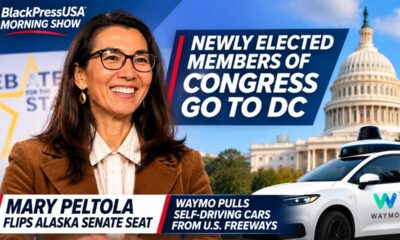
ALASKA FLIPS BLUE, WAYMO HITS THE BRAKES & CAMILLE TUCKER JOINS US! 📱
-

 Black History4 days ago
PRESS ROOM: Donalds Transition Website Now Open to All Floridians Who Want to Serve
