
Community
Original Black Panthers of Milwaukee Host 3rd Annual New Coat, Hat and Turkey Giveaway
MILWAUKEE COURIER — As the holiday season rounds the corner, parents stressing between buying a new coat for their children and funding a Thanksgiving meal could rest easy with a little help from the Original Black Panthers of Milwaukee.

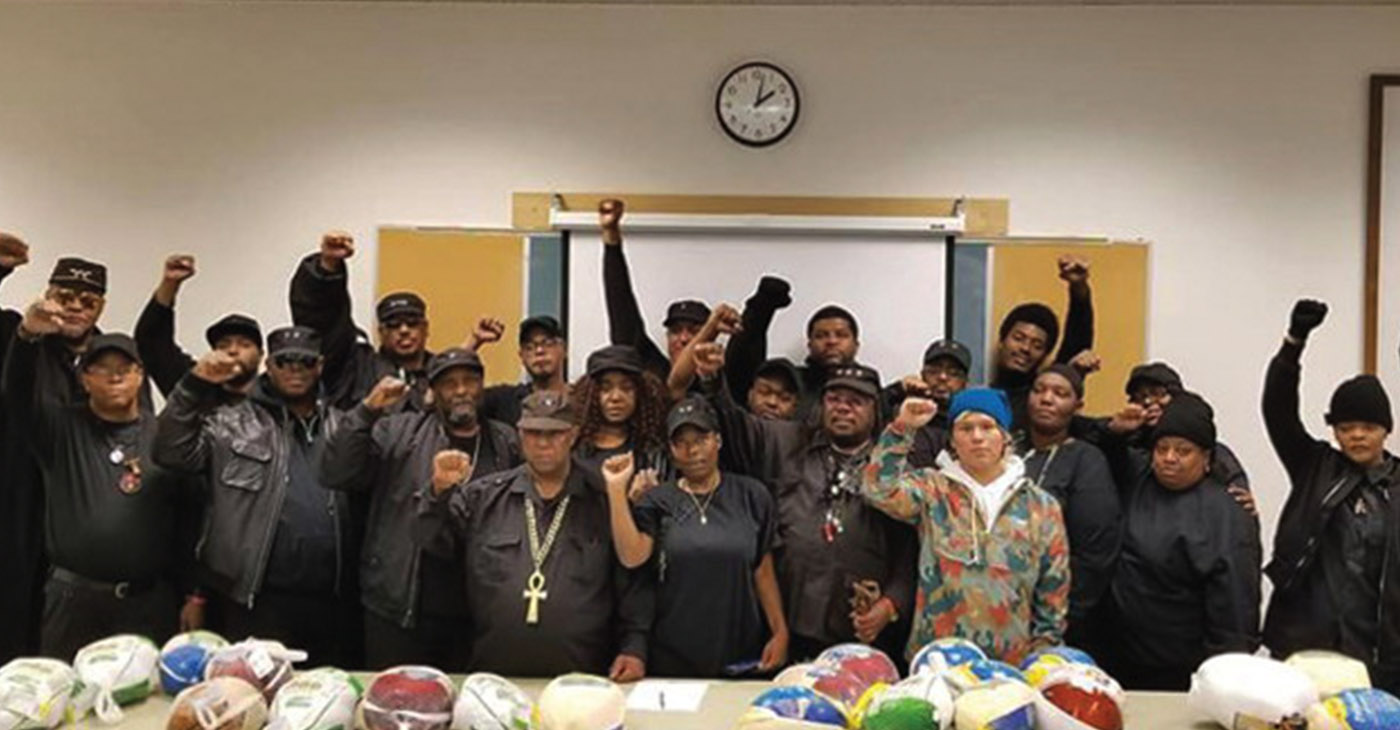
By Dylan Deprey
As the holiday season rounds the corner, parents stressing between buying a new coat for their children and funding a Thanksgiving meal could rest easy with a little help from the Original Black Panthers of Milwaukee.
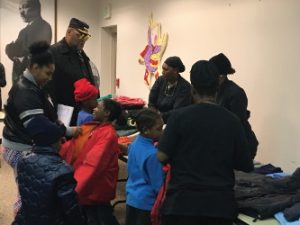
Through hustle and bustle, it’s all smiles while handing out coats. (Photo by Dylan Deprey)
The Panthers hosted their third Annual New Coat, Hat and Turkey Giveaway at the Martin Luther King Jr. Library on Saturday, Nov. 17.
“We’ve had some children tell us they never received a brand-new coat in their life, but we gave them one today,” said King Rick, Original Black Panther of Milwaukee General.
Families packed the room, as over 80 children received a new hat, coat and turkey.
Shequila Morrison has been an Original Black Panther member for three years, and said the event was the biggest giveaway they had done yet.
“You never know what you’re going to get,” Morrison said. “Sometimes it can get a little hectic or stressful, but we always have it under control.”
She worked the coat line and helped children try on their new coats and hats. She grinned as the kids flashed their new gear.
“I love giving back to the community, and seeing the smile on the kid’s faces,” Morrison said.
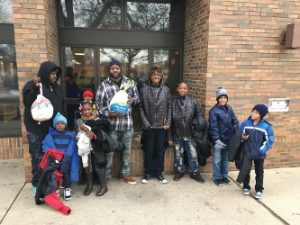
Kids sport their new coats while Dad holds on to the turkey. (Photo by Dylan Deprey)
Last year they hosted the event at the Atkinson Library. This year they chose the MLK Jr. Library in the Harambee neighborhood.
“We like to go to places in the community where we’re accessible to people because we do this to honor and respect the complete community, especially our children,” Rick said. “We see kids outside in the cold with no hats, no gloves, no nothing, and we’re here to change that.”
Lorraine Butler got a ride from her Amani neighborhood home to attend the event with her two children.
Her daughter and son both received a coat and new gloves. She said she loved the way the Original Black Panthers of Milwaukee consistently gave back to the city.
“I love the way they help the community,” Butler said. “It’s a blessing.”
This article originally appeared in the Milwaukee Courier.












Black History
OPINION: Black Capitalism Re-Analyzed: June 5, 1971 – Huey Newton
SF BAY VIEW — Huey P. Newton, writing on June 5, 1971, reaffirmed the Black Panther Party’s foundational stance against capitalist robbery within the Black community, a position held since October 1966. While acknowledging that many have proposed Black capitalism as a solution, Newton asserted that the community’s general acceptance of the concept does not stem from an affinity for capitalism itself.
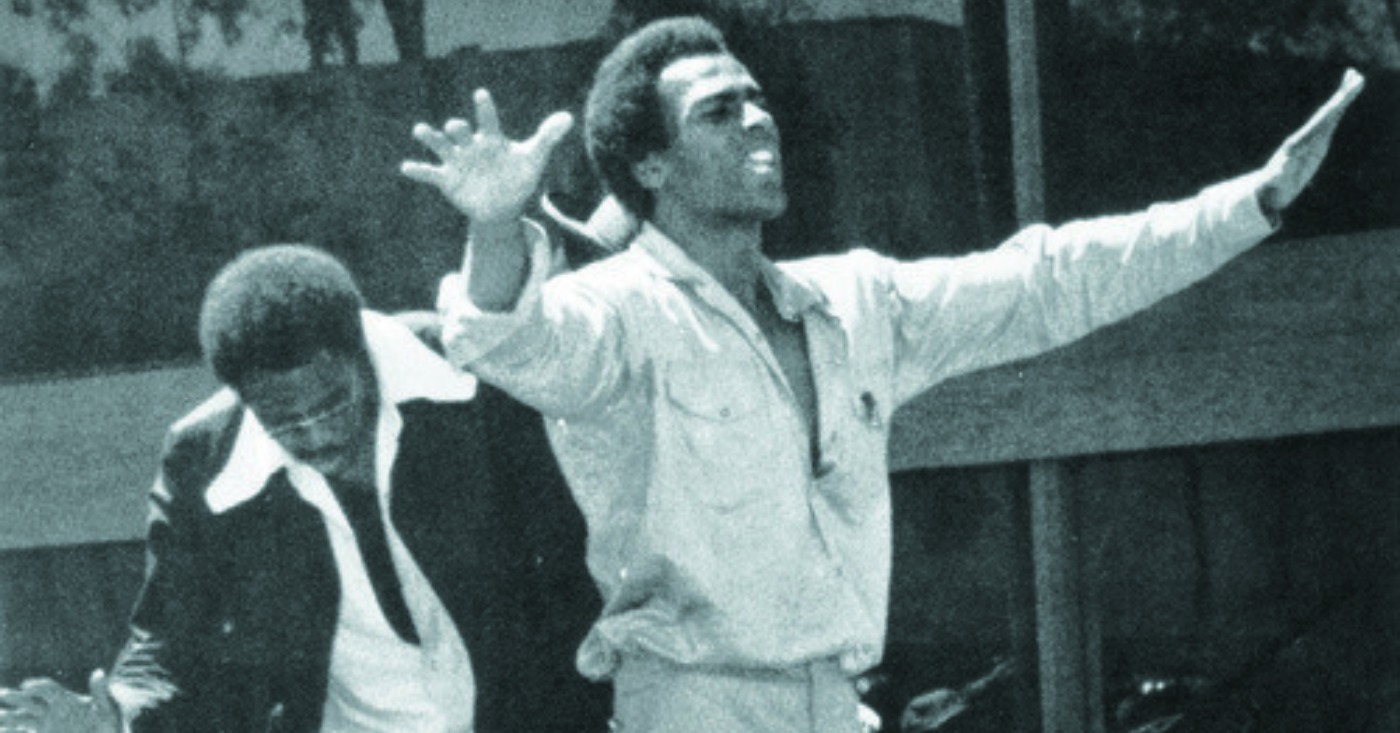
“We want an end to the robbery by the CAPITALISTS of our Black community.” That was our position in October 1966 and it is still our position … However, many people have offered the community Black capitalism as a solution to our problems. We recognize that people in the Black community have no general dislike for the concept of Black capitalism, but this is not because they are in love with capitalism. Not at all.”
The Black Panther Party, as we begin to carry out the original vision of the Party. When we coined the expression “All Power to the People,” we had in mind emphasizing the word “Power,” for we recognize that the will to power is the basic drive of man. But it is incorrect to seek power over people. We have been subjected to the dehumanizing power of exploitation and racism for hundreds of years; and the Black community has its own will to power also. What we seek, however, is not power over people, but the power to control our own destiny. For us the true definition of power is not in terms of how many people you can control. To us power is, first of all, the ability to define phenomena, and secondly the ability to make these phenomena act in a desired manner.
We see then that power has a dual character and that we cannot simply identify and define phenomena without acting, for to do so is to become an armchair philosopher. And when Bobby and I left Merritt College to organize brothers on the block, we did so because the college students were too content to sit around and analyze without acting. On the other hand, power includes action, for it is making phenomena perform in the desired manner. But action without thinking and theory is also incorrect. If the social forces at work in the community have not been correctly analyzed and defined, how can you control them in such a way that they act in a desired manner? So the Black Panther Party has always merged theory and practice in such a way as to serve the true interests of the community.

In merging theory with practice, we recognized that it was necessary to develop a theory which was valid for more than one time and place. We wanted to develop a system of thinking which was good anywhere, thus it had to be rather abstract. Yet our theory would relate to a concrete analysis of concrete conditions so that our actions would always be relevant and profitable to the people. Yet, at the same time, it had to advance their thinking so that they would move toward a transformation of their situation of exploitation and oppression. We have always insisted on good theory and good practice, but we have not always been successful in carrying this through.
‘When the Black Panther Party defected from the Black community, we became, for a while, revolutionary cultists. One of the primary characteristics of a revolutionary cultist is that he despises everyone who has not reached his level of consciousness, or the level of consciousness that he thinks he has reached, instead of acting to bring the people to that level. In that way the revolutionary cultist becomes divided from the people; he defects from the community. Instead of serving the people as a vanguard, he becomes a hero. Heroes engage in very courageous actions sometimes, and they often make great sacrifices, including the supreme sacrifice, but they are still isolated from the people. Their courageous actions and sacrifices do not lead the people to a higher level of consciousness, nor do they produce fundamental changes in the exploitation and oppression of the people. A vanguard, however, will guide the people onto higher levels of consciousness and that way bring them to the point where they will take sterner actions in their own interests and against those who continue to oppress them. As I’ve said previously, revolution is a process, not a conclusion. A true revolutionist will not only take courageous actions, he will also try to advance the people in such a manner that they will transform their situation. That I, by delivering power to the people the true revolutionist will help them define the social phenomena in their community and lead them to the point where they will seize the time and make these phenomena act in a desired manner.
Therefore, as revolutionaries we must recognize the difference between what the people can do and what they will do. They can do anything they desire to do, but they will only take those actions which are consistent with their level of consciousness and their understanding of the situation. When we raise their consciousness, they will understand even more fully what they in fact can do, and they will move on the situation in a courageous manner. This is merging your theory with your practices. Point 3 of the original Ten-Point Program of the Black Panther Party is “We want an end to the robbery by the CAPITALISTS of our Black Community.”
That was our position in October 1966 and it is still our position. We recognize that capitalism is no solution to the problems we face in our communities. Capitalist exploitation is one of the basic causes of our problem. It is the goal of the Black Panther Party to negate capitalism in our communities and in the oppressed communities throughout the world.
However, many people have offered the community Black capitalism as a solution to our problems. We recognize that people in the Black community have no general dislike for the concept of Black capitalism, but this is not because they are in love with capitalism. Not at all. The idea of Black capitalism has come to mean to many people Black control of another one of the institutions in the community. We see within this characteristic the seeds of the negation of Black capitalism and all capitalism in general. What we must do then is increase the positive qualities until they dominate the negative and therefore transform the situation.
In the past the Black Panther Party took a counter revolutionary position with our blanket condemnation of Black capitalism. Our strategy should have been to analyze the positive and negative qualities of this phenomenon before making any condemnation. Even though we recognized, and correctly so, that capitalism is no solution or answer, we did not make a truly dialectical analysis of the situation. We recognized that in order to bring the people to the level of consciousness where they would seize the time, it would be necessary to serve their interests in survival by developing programs which would help them to meet their daily needs. For a long time we have had such programs not only for survival but for organizational purposes. Now we not only have a breakfast program for schoolchildren, we have clothing programs, we have health clinics which provide free medical and dental services, we have programs for prisoners and their families, and we are opening clothing and shoe factories to provide for more of the needs of the community.In a way our new position has the simplicity and completeness of a mathematical formula.
When the Black capitalist contributes to the survival programs and makes a contribution to the community, the community will give him their support and thus strengthen his business. If he does not make any contribution to the survival of the community, the people will not support him and his enterprise will wither away because of his own negligence. By supporting the community, however, he will be helping to build the political machine that will eventually negate his exploitation of the community, but also negate his being exploited and victimized by corporate capitalism.
So we will heighten the contradiction between the Black community and corporate capitalism, while at the same time reducing the contradiction between the Black capitalist and the Black community. In this way Black capitalism will be transformed from a relationship of exploitation of the community to a relationship of service to the community, which will contribute to the survival of everyone.
Original publication: Huey P. Newton, “Black Capitalism Re-Analyzed,” The Black Panther: Intercommunal News Service, June 5, 1971 (supplement). Archival scan: https:// cdn.filepicker.io/api/file/Mum1pt7RZ6jYSUs1kh2v?fit=max
The post BLACK CAPITALISM RE-ANALYZED I: JUNE 5, 1971- HUEY NEWTON appeared first on San Francisco Bay View.
Based on reporting by SF Bay View.
Black Press
More Families to Benefit from Evidence-Based Home Visiting
BLACKPRESSUSA NEWSWIRE — The MIECHV program reaches families where services are needed most, including those who are rural, low-income, and at greater risk of poor health outcomes. Trained home visitors meet regularly with expecting mothers and families with young children. Decades of gold-standard scientific research show that voluntary home visits during pregnancy and early childhood can help prevent chronic disease and child abuse and neglect.

The Maternal, Infant, and Early Childhood Home Visiting (MIECHV) program supports voluntary, evidence-based home visiting for expectant parents and families with young children, particularly in communities facing greater barriers to positive maternal and child health outcomes.
The U.S Department of Health and Human Services’ agency Health Resources and Services Administration (HRSA) recently announced more than $525 million in fiscal year (FY) 2026 Maternal, Infant, and Early Childhood Home Visiting (MIECHV) Program awards to 56 state and jurisdiction recipients — the largest federal investment in the program’s history.
There are examples of the program success across the country. For instance, in Florida, Tracy says she gained the confidence and support to overcome challenges and achieve her goals. With the guidance of her home visitor, she strengthened her parenting skills, prioritized her well-being, and advanced her career. Today, Tracy continues to set goals for herself and her family and says, “This program has provided me with the tools to not just survive but to thrive.”
In California, Faraha said “I became pregnant and…I knew I wanted to make a difference in my life and that of my child. The home visiting program not only helped me as a mom, but also with my growth to….better myself, and now I’m in a position that I’ve always wanted to be in.” Faraha is currently employed and pursuing a master’s degree to become a licensed counselor.
HRSA Administrator Tom Engels announced the new awards in Columbus, Ohio, on Child Health Day. The awards will expand access to evidence-based home visiting services that improve maternal and child health, promote healthy child development, and connect families with the support they need during pregnancy and early childhood.
“MIECHV reflects a simple idea: supporting parents early gives children a stronger start. Parents are a child’s first and most important teacher, and by giving them the tools and support they need, we help create a strong foundation for children to thrive,” said Administrator Engels.
The MIECHV program reaches families where services are needed most, including those who are rural, low-income, and at greater risk of poor health outcomes. Trained home visitors meet regularly with expecting mothers and families with young children. Decades of gold-standard scientific research show that voluntary home visits during pregnancy and early childhood can help prevent chronic disease and child abuse and neglect, promote school readiness, and boost families’ economic self-sufficiency.
These awards include both base and matching grants. Base grants provide foundational support for evidence-based home visiting programs in every eligible state and jurisdiction, while matching grants help recipients expand services and reach more eligible families. In FY 2026, 55 of the 56 award recipients applied for and received matching grant awards, reflecting the continued commitment of our state partners to expand evidence-based home visiting services in communities across the country.
Since its reauthorization in 2022, the MIECHV program has served 15 percent more parents and children and delivered 23 percent more home visits. In FY 2025, the program provided more than 1 million home visits to more than 158,000 parents and children across one-third of all U.S. counties, helping connect families with services that support healthy pregnancies, positive parenting, child development, and family economic well-being.
As home visiting services expand, a strong and well-supported workforce is essential to meeting the needs of more families.
Black Press
WCCUSD Joins Statewide Organic School Food Purchasing Cooperative
Other districts involved include: Alameda USD, Albany USD, Berkeley USD, Capistrano USD, Cupertino Union SD, Hayward USD, Laguna Beach USD, Lagunitas Elementary SD, Mt. Diablo USD, North Monterey County USD, Pajaro Valley USD, San Leandro USD, San Ramon Valley USD, Santa Clara USD, Sausalito Marin City SD, Tahoe-Truckee USD and West Contra Costa USD.
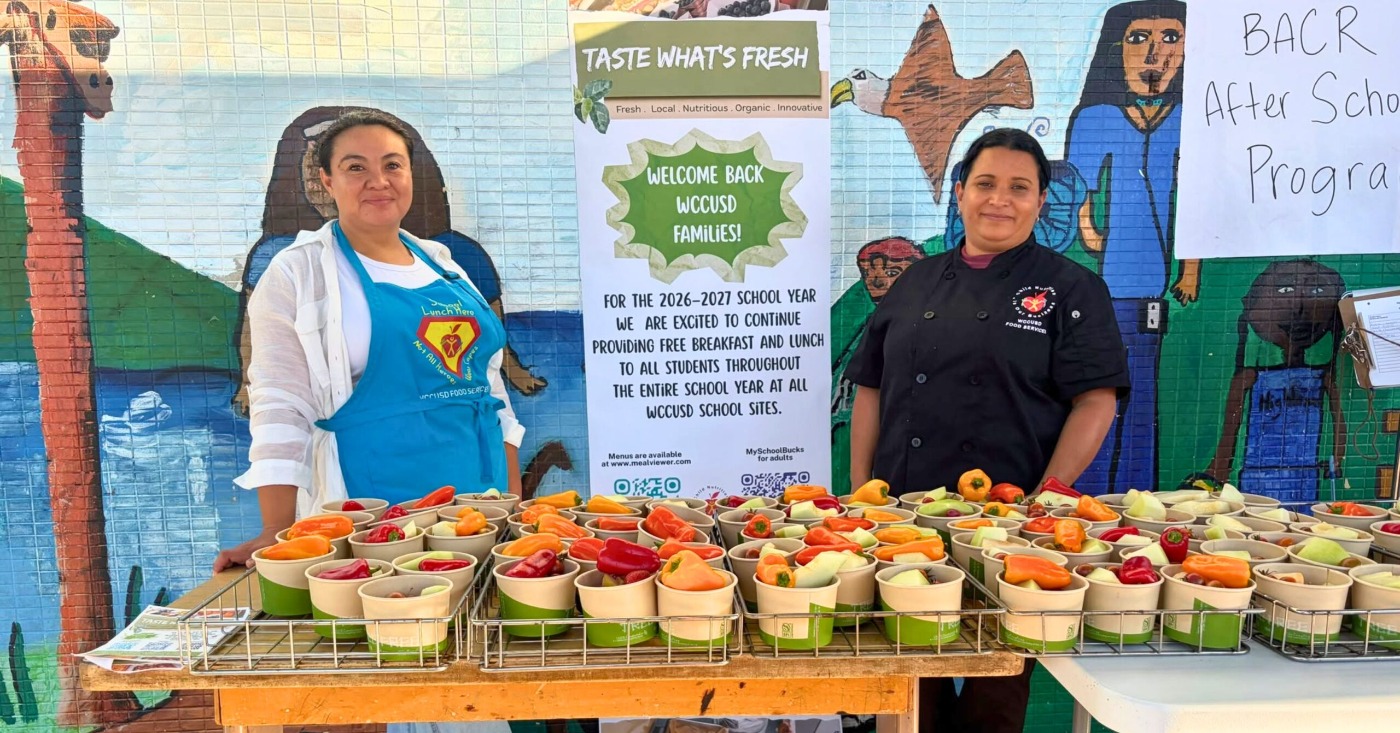
Seventeen California public school districts, including West Contra Costa Unified (WCCUSD), have joined a purchasing cooperative to pool their buying power and expand access to organic food in school meals.
The nonprofit Conscious Kitchen recently announced the launch of the Conscious Organic School Food Purchasing Cooperative. Its founding districts serve more than 300,000 students combined.
The cooperative partnered with food distributors UNFI and Sysco to expand the organic products available to participating districts. Combining schools’ purchasing demand helps distributors plan with suppliers while creating more dependable markets for organic farmers and food makers, according to Conscious Kitchen.
Other eligible California school districts can access the cooperative’s products and pricing through its existing contracts without conducting their own bids. Mt. Diablo Unified School District serves as the lead district for the cooperative’s grocery bid.
Other districts involved include: Alameda USD, Albany USD, Berkeley USD, Capistrano USD, Cupertino Union SD, Hayward USD, Laguna Beach USD, Lagunitas Elementary SD, Mt. Diablo USD, North Monterey County USD, Pajaro Valley USD, San Leandro USD, San Ramon Valley USD, Santa Clara USD, Sausalito Marin City SD, Tahoe-Truckee USD and West Contra Costa USD.
Barbara Jellison, WCCUSD’s executive director of food services, said the cooperative builds on years of work bringing fresh, organic food into school kitchens.
“The next challenge has always been how to make that possible for more districts,” Jellison said. “The Co-op gives schools a way to take what we have learned and move it to a completely different scale.”
Black Press
Democrats, Community Groups Back Measure EE to Change How Oakland Is Governed
Along with clearer executive responsibility, the Charter reform would also create new checks and balances, including an independent Budget and Legislative Analyst office, City Council confirmation of key appointments, expanded council hearing and subpoena authority, and give the council the ability to override a mayoral veto with six votes.
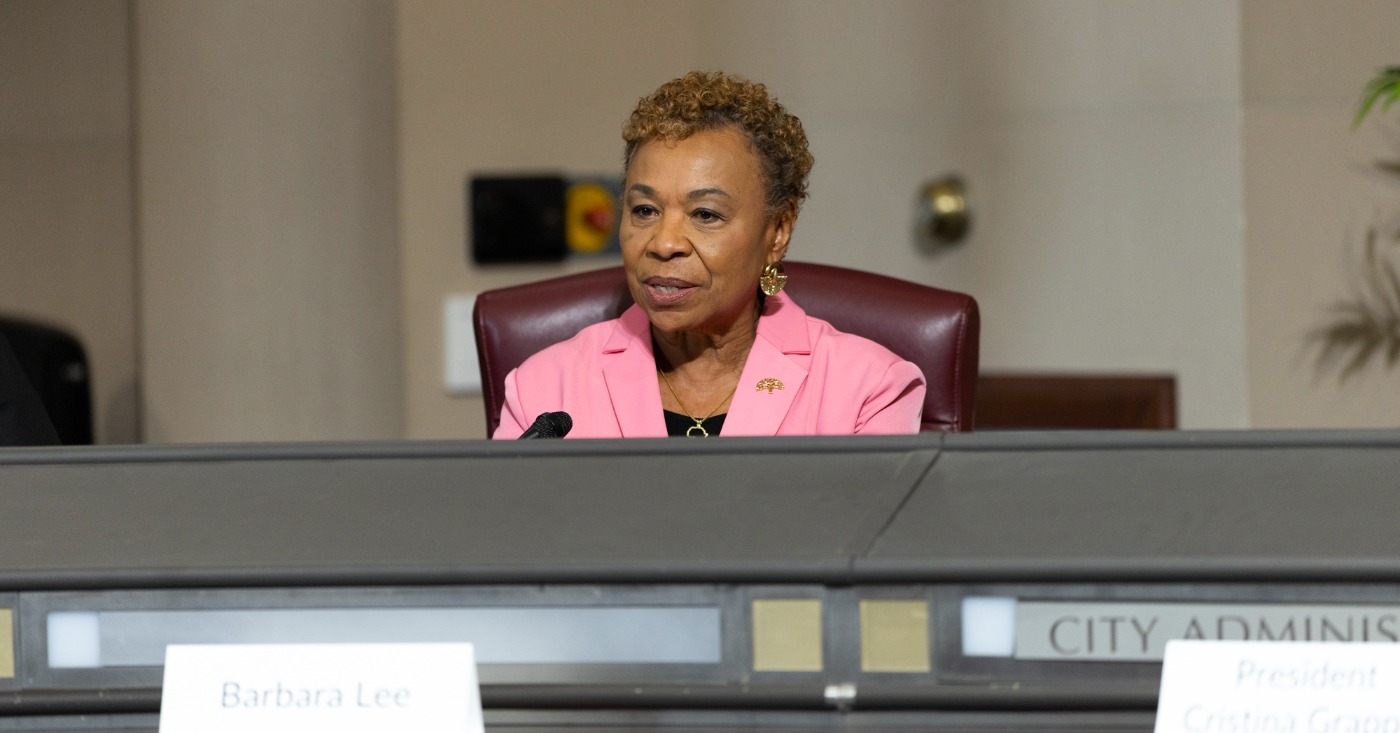
The Alameda County Democratic Party has voted to endorse Measure EE, the Oakland Charter reform measure on the November 2026 ballot. The party’s endorsement is announced alongside a broad coalition of organizations spanning labor, business, faith, and community advocacy, including Oakland Rising Action that are also supporting the measure.
Those supporters include:
- League of Women Voters of Oakland
- AFSCME Council 57
- SPUR
- Bay Area Council
- Black Women Organized for Political Action
- Faith in Action East Bay
- Oakland Chamber of Commerce
- Oakland Rising Action
- Revitalize East Bay
- Empower Oakland
Measure EE would reform Oakland’s hybrid governance system by establishing a strong-mayor structure, making the mayor the city’s chief executive, responsible for delivering effective, efficient services.
The measure would also reform and expand responsibilities of City Councilmembers.
Measure EE would create clearer lines of responsibility for the performance of city government, allowing voters to evaluate the mayor based on how effectively the city delivers services and produces results.
Along with clearer executive responsibility, the Charter reform would also create new checks and balances, including an independent Budget and Legislative Analyst office, City Council confirmation of key appointments, expanded council hearing and subpoena authority, and give the council the ability to override a mayoral veto with six votes.
“Oakland voters deserve a City Hall where they know exactly who’s responsible when something goes wrong and exactly who to credit when it gets fixed. Measure EE puts that responsibility squarely with the mayor, backed by real checks and balances, so Oakland can finally move as fast as its problems demand. That’s why the Alameda County Democratic Party is proud to stand behind it,” said Igor Tregub, chair of the Alameda County Democratic Party.
Oakland Rising Action, a collaboration of racial, economic, and environmental justice organizations, has also issued a press statement explaining its support for Measure EE.
Measure EE “represents a critical opportunity for residents to clarify the governance role of the Oakland Mayor and City Council, so we, as residents, know who to hold accountable for the execution of voter-approved and budgeted services within city departments,” the statement said.
Measure EE would reform Oakland’s Charter, which is the city’s Constitution, strengthening “the role of the mayor as the CEO of Oakland, with the city administrator being hired and managed by the mayor explicitly.”
The measure would also strengthen oversight of city departments by mandating reporting directly to the City Council and provide the mayor with veto power in approving policies and the budget.
Measure EE was placed on the ballot by the Oakland City Council in June 2026. For more than half a year, the mayor’s working group on Charter reform engaged residents and elected officials on the options for governance of Oakland, which led to Measure EE.
“Oaklanders need clarity about who is responsible for the management of our city departments, our tax dollars, and our voter-approved ballot measures,” said Pecolia Manigo, executive director of Oakland Rising.
“The average resident believes that we already have a strong mayor system,” she continued. “However, this is simply not the truth in our City Charter. It is time for us to stop talking about the Charter changes Oakland needs. This is the first of many Charter reforms that are needed to improve conditions in Oakland, especially the flatlands. It’s time all voters start paying attention to who is making decisions for Oakland. This election allows us to say how we believe Oakland should be governed.”
Black Press
Veterans Housing Project Proposed for South Richmond
According to the development team’s presentation, the project has an estimated total cost of nearly $158 million. The presentation outlines five phases encompassing entitlement and construction documents, community outreach, soil remediation and utility work, podium and building construction, solar technology integration, and interior buildouts.

A proposed mixed-use development at 338 Carlson Blvd. could bring hundreds of homes and support services for military veterans to South Richmond.
Led by the Richmond-based Veterans Resource Program in partnership with Eagle Environmental Construction & Development, the proposal covers an approximately 2.3-acre property the nonprofit acquired in 2018.
The proposal features a multi-building residential development with various apartment sizes, though city documents and developer materials cite conflicting totals ranging from 226 to 268 units.
The proposal also includes approximately 40,000 square feet of commercial and retail space, about 200 parking spaces, and an entrepreneurial training and job-development component intended to connect veterans with economic and workforce opportunities.
According to the development team’s presentation, the project has an estimated total cost of nearly $158 million. The presentation outlines five phases encompassing entitlement and construction documents, community outreach, soil remediation and utility work, podium and building construction, solar technology integration, and interior buildouts.
Founded in 2011, the Veterans Resource Program provides housing assistance and other services to veterans, including those experiencing homelessness or transitioning from incarceration.
The proposal aims to advance Richmond’s affordable housing goals while connecting veterans with housing and supportive services. Details of affordability and veteran eligibility remain to be clarified.
The Richmond City Council was scheduled to receive an informational presentation on the project at its Oct. 6 meeting, following a continuance from Sept. 22. The item does not seek project approval or city funding. Any future request for city financial assistance or other public resources would require separate consideration and approval.
Black Press
Jendayi Arrest Raises Community Concerns Regarding Sheriff’s Chain of Command
Judge Sandra K. Bean ordered a legally inherited home to be taken from beneficiary Jendayi, citing “undue influence,” and gave it to Court Administrator Phillip Campbell, who Jendayi believes will quickly sell the house and pay himself more than $600,000 in court fees. The disinherited sisters will get the remainder of the proceeds of the sale.
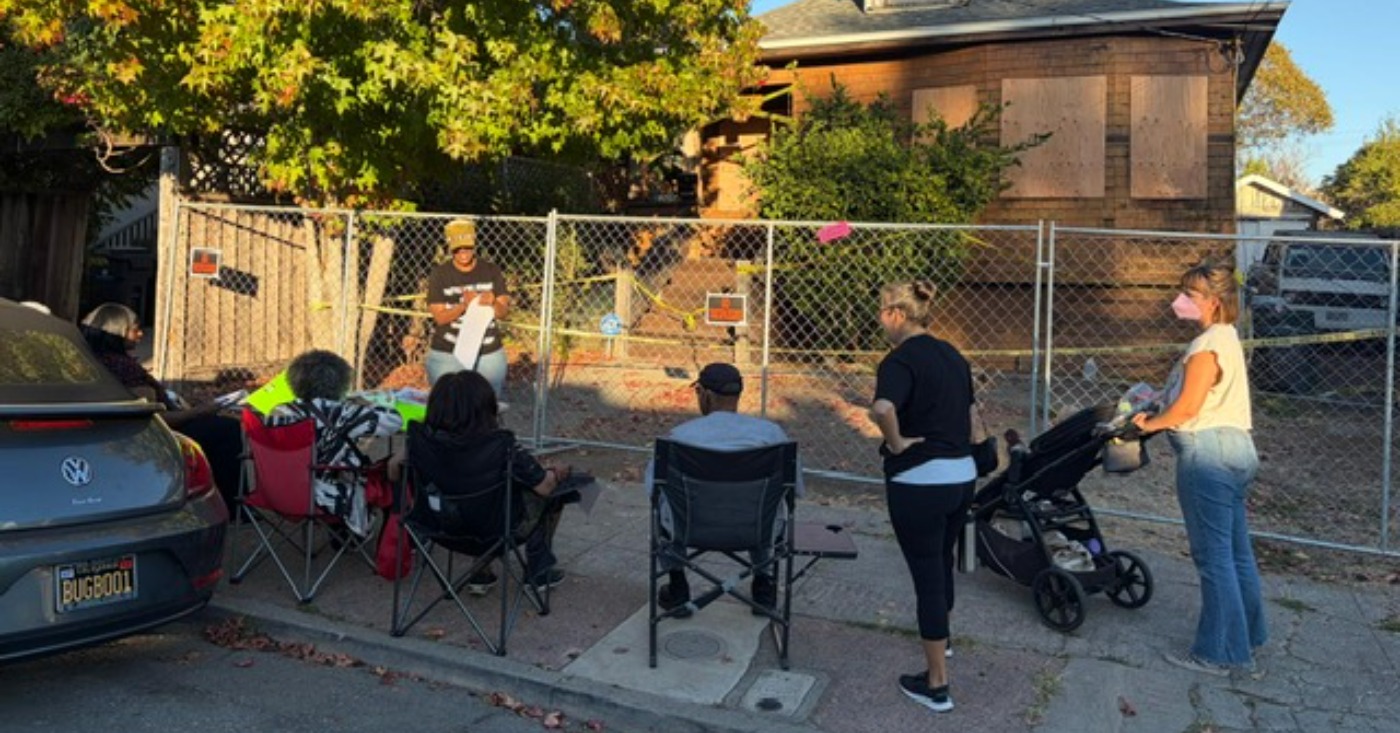
Last Thursday, Zakiya Jendayi parked on the side of the René C. Davidson Courthouse in Oakland to file an emergency stay request in what Jendayi asserts was the “legal” theft of her home of 13 years by a court administrator in her ongoing battle for her rightful inheritance in a probate battle.
But before she could fully emerge from the car at 12th and Oak streets, she was arrested by Alameda County Sheriffs for disobeying a court order and obstruction.
According to observers who have read the transcripts, the Hamlin v. Jendayi case, now in its sixth year, has resulted in what they describe as a gross miscarriage of justice.
Judge Sandra K. Bean ordered a legally inherited home to be taken from beneficiary Jendayi, citing “undue influence,” and gave it to Court Administrator Phillip Campbell, who Jendayi believes will quickly sell the house and pay himself more than $600,000 in court fees. The disinherited sisters will get the remainder of the proceeds of the sale.
Dr. Laura Dean Head named Jendayi as the beneficiary and executor over her estate after Jendayi took care of her during the last months of her life. Head’s disinherited sisters, Della Hamlin and Helaine Head, challenged the validity of Head’s will and trust, despite not being able to recognize Head in a photo during the trial, and Della stating she hadn’t spoken to her sister since 1997 or 1998 and would not have taken care of her during her hospice.
The appellate court upheld Bean’s ruling, which Jendayi asserts was based on a failure to fully consider the transcripts. “They never read the transcripts because if they had, they would have seen the truth,” Jendayi said.
Accompanied by Alameda Couty Sheriff’s Department deputies, Campbell arrived unannounced at Jendayi’s home on Oct. 1 – at the same time Jendayi was being arrested – to change the locks, board up the windows, and place a fence around the property.
Neither Jendayi, nor her supporters who had been in touch with Alameda County leadership and the Sheriff’s Department and been given the impression that nothing would happen without warning had been told Campbell was coming.
“I went to the courthouse to file an emergency stay document, and while getting out of the car, a sheriff immediately approached me and put handcuffs on me before I could stand up,” Jendayi said in recounting the events of Oct. 1. “I asked him if he had a warrant. He said ‘yes,’ and seven other officers immediately approached and surrounded me, with an additional three sheriffs standing back observing.
“I asked why it was necessary to have 10 officers to arrest me. They would not answer. I asked if the sergeant was there and asked if I could speak to him, but the sergeant refused to approach while another officer started taunting me over and over, stating, ‘I was at your house. I was at your house when you refused to surrender. We got you now.’
“The officer put the handcuffs on tight. I asked him to please loosen them. He refused and said they weren’t too tight. Then a Black, female deputy named Lewis, came over and asked him to loosen the handcuffs. Three times the white male officers were overly aggressive with me, and each time Deputy Lewis would step up and they would fall back. They said I was under arrest for refusing to surrender the house on Aug. 25.
“I asked them if I could file my paperwork, and they said, ‘No.’ Several officers asked me if I was on drugs. I felt like my life was in danger. I asked to speak to Deputy Lewis, and she came. I said, ‘Please tell my mother and Joyce Gordon that I would never kill myself.’ I did not want to end up like Sandra Bland, who was murdered by police officers in a Texas jail.”
Zendayi said they then took her to a section in the basement of the courthouse, placed her in a holding cell, and confiscated her belongings around 3 p.m. “They went through everything, took both cell phones, and asked if they could turn off my phones. I said ‘no,’ so they placed them in airplane mode.”
Then she was taken in a van to Santa Rita Jail in Dublin, which, because of traffic took almost two hours. “They asked me if I was on drugs and asked me to give a urine sample. I refused. They took a mug shot, and I was told it would be Monday before I could go to court. They put me in a cell with feces on the wall.
An hour after being detained, a deputy asked Jendayi if she knew someone who worked for the county and then asked if knew someone from the Sheriff’s Office and answered ‘no’ to both questions. He said, “You must know someone because we received orders to release you immediately. You’ll be out of here in about 40 minutes.”
“Rev. Raymond Langford of the Oakland Private Industry Council has been helping me to negotiate for more time to stay in my home,” Jendayi said. “I have an appeal with the Northern District Court of Appeals, where I’ve been promised they will review my case based on its merits. I was hoping to stay (in my home) until they reached a determination.
Rev. Langford reached out to Alameda County Supervisor Nikki Fortunata Bas and Chief Administrator David Brown, and they’ve been in contact with Sheriff Yesenia Sanchez.
“They weren’t going to give me the time I requested, but they did say that I would have time to move my belongings and would also be notified when they were coming,” Jendayi said. “None of that occurred.”
Langford said he spoke to Brown, Fortunato Bas and Sanchez right after the first attempt to evict Jendayi on Aug. 25 as well as the Alameda County Counsel and others to negotiate a time for Jendayi to move her belongings.
“There is no truth to the statement that there was no contact [with court and law enforcement officials.] There was an obvious miscommunication between Sanchez and her officers. They don’t have to inform the public of their actions, I understand that, but Zakiya and the community were concerned after they confiscated her guns.”
(Jendayi relinquished her weapons on Aug. 25 when sheriff’s deputies came to forcibly evict her while her petition for bankruptcy was still pending and should have interrupted the eviction process.)
“The Sheriffs have their own trust issues, and they need to work on that. They are not following the chain of command. David Brown, Fortunato Bas’s chief of staff, was puzzled also. He was told they would be informed when they would be returning. He was also blindsided like all of us.”
“(The Sheriffs’ Department) can come to the supervisors and get millions of dollars, but they can’t exhibit the courtesy to inform a citizen when she needs to move.”
“We, our group, ‘Friends of Zakiya,’ took a letter to Sanchez’s office citing Zakiya’s health issues, asking for more time just last week. Sanchez was a person who ran on the platform that she would not run the Sheriff’s Department on a military strategy, which they did on an African American senior in a comfortable, safe community.
“We understand they have to do their job, but we don’t want them targeting and profiling seniors. There has to be some accountability to the community,” Lankford said.
Supervisor Nikki Bas, deeply concerned with what has occurred, is joining with Supervisor Nate Miley to request a meeting with Attorney General Rob Bonta to request an independent investigation.


OPINION: Black Capitalism Re-Analyzed: June 5, 1971 – Huey Newton

More Families to Benefit from Evidence-Based Home Visiting

FTC Chair Praises Trump, NYC Calls for Target Boycott, and Jason Lee Removed as Vice Mayor 📱

FTC Chair Praises Trump, NYC Calls for Target Boycott, and Jason Lee Removed as Vice Mayor

Black History: Gladys West Mathematics Helped Make GPS Possible

Richmond’s Secret Bank: The True Reformers Story #shorts

7 USB-C Ports + Wireless Charging: Power Up Your Family #shorts

Urban League, AT&T Expand Digital Skills and Laptop Access in St. Louis

Attend a Green Line Bus Rapid Transit Open House

VIN Check: Avoid Truck Recalls Before Buying! #shorts

The Youngest American Killed in the Vietnam War

Passing for White, Fighting for Black America: The Courage of Walter White

OP-ED: Haiti TPS: Have We Lost Sense of Humanity?

OP-ED: How Does Your State Rank for Pre-K?

NFL: Week Two Recap | Jalen Hurts did not fold; Caleb Williams exits game with injury

Remembering Chauncey Bailey as Student Journalists Face Threats to Truth-Telling

Headlines and Hot Topics 📱

Peter Magubane: a Camera Against Apartheid

Obama Urges Democrats to make AI a Priority 📱

Mayor Lee Announces $1 Million Kaiser Permanente Grant for Pilot Program to Address Homelessness, Clean Up Public Spaces throughout Oakland
FTC Chair Praises Trump, NYC Calls for Target Boycott, and Jason Lee Removed as Vice Mayor 📱
FTC Chair Praises Trump, NYC Calls for Target Boycott, and Jason Lee Removed as Vice Mayor
Black History: Gladys West Mathematics Helped Make GPS Possible
Richmond’s Secret Bank: The True Reformers Story #shorts
7 USB-C Ports + Wireless Charging: Power Up Your Family #shorts
Urban League, AT&T Expand Digital Skills and Laptop Access in St. Louis
Attend a Green Line Bus Rapid Transit Open House
VIN Check: Avoid Truck Recalls Before Buying! #shorts

Defender Parking Camera & Screen Features Explained #shorts

Find Black-Owned Banks & Credit Unions Easily #shorts
-

 Black Press1 week ago
A $2.1 Trillion Wellness Industry Never Built a Daily Practice for Black Children. So This Atlanta Family Did.
-

 BlackPressUSA1 week ago
Latinas Deserve Equal Pay. Unions Help Make It Happen.
-

 Black Press3 days ago
All Skinfolk Ain’t Kinfolk
-

 Art1 week ago
Montclair Brewery: Brewing Culture, Community, History
-

 Black Press1 week ago
COMMENTARY: But God!
-

 Black Press1 week ago
Master P Encourages Norwood Elementary Students to Dream Big, Work Hard
