
Community
OP-ED: Vigils aren’t the answer to stopping crime
THE BIRMINGHAM TIMES — There was a vigil held in Bessemer on Monday night on behalf of more than 100 victims of violent crime from western Jefferson County. Those who organized the vigil were well intended and did no harm – but I wonder how much good it did. This vigil followed the form of many others with local elected officials speaking on the impact of gunfire in our communities and families talking about the never-ending pain. No disrespect to the families, but we also need to talk about the cause of violence in our communities.


By Hollis Wormsby, Jr.
There was a vigil held in Bessemer on Monday night on behalf of more than 100 victims of violent crime from western Jefferson County. Those who organized the vigil were well intended and did no harm – but I wonder how much good it did. This vigil followed the form of many others with local elected officials speaking on the impact of gunfire in our communities and families talking about the never-ending pain. No disrespect to the families, but we also need to talk about the cause of violence in our communities.
One step to reducing crime in our community begins with getting control of the kids in our own homes and my home is no exception. Yes, it is important to set standards where we live and this is something I have failed to do. So do not get the impression that I am writing from the perspective of someone who thinks he knows it all. I am writing from the perspective of someone who understands not being able to teach values that are important to young lives. What I say to myself is, “You might not be able to achieve your goal, but it is still your job to get up each day and try.”
Our kids watch more TV than any other race, are more often left unsupervised and in too many cases, including in my own home, and are not taught the values they need to succeed in the workplace. If our kids are not taught the responsibility of regular chores how are they going to understand holding down a job.
Another thing that we must teach is respect for authority. If our children are not required to show respect in our own homes how are they going to respect teachers, principals, law enforcement or others who may not care as much about them as you do.
I am a systems engineer by training so in my world the solution to any problem is a series of logical steps dedicated to a specific purpose. Yes, there are emotions some may need to share at the vigils, but if we are to really address the violence in our communities, we are going to have to own up to the root causes and work to identify strategies to address and improve those problems. Or at least that’s the way I see it.
(Hollis Wormsby has served as a featured columnist for the Birmingham Times for more than 29 years. He is the former host of Talkback on 98.7 KISS FM and of Real Talk on WAGG AM. If you would like to comment on this column you can email him at [email protected])
This article originally appeared in The Birmingham Times.













Black Press
Iowa’s State Black and Brown Caucus Demand Investigation into Lead Azine Detonation
The Iowa Legislative Black and Brown Caucus is demanding a full independent investigation following the U.S. Army’s controlled detonation of 10,000 pounds of degraded lead azide at the Iowa Army Ammunition Plant. Legislators expressed serious concerns regarding environmental justice and public health, questioning why the toxic material was allowed to deteriorate for decades until it became too unstable to move. The caucus is calling for transparency regarding potential lead contamination of local soil, water, and agricultural products that sustain rural and working-class communities. Read more.

Note: On Nov. 25, after court and state-requested delays, the U.S. Army completed two simultaneous controlled detonations of about 10,000 pounds of degraded lead azide which had been stored in the Army Ammunition Plant in Middletown. The detonation followed the discovery in March that the material was too unstable to move. In October, local residents were informed of the plan, and the Environmental Protection Agency approved it on Nov. 13. The Army ordered evacuations for residents within a five-mile radius. Protests ensued, and the Eighth Circuit Court paved the way for today’s detonation within a concrete bunker. The states of Illinois and Missouri are also activated monitoring and emergency coordination.
Portions of the statement by the Black and Brown Caucus of Iowa’s state legislators are below:
Lead is highly toxic, and there is no known safe level of lead exposure. The projected release of lead-containing dust raises serious concerns about the health of our children, pregnant people, agricultural workers, livestock, and anyone who may come into contact with contaminated air, soil, water, or surfaces.
Iowans deserve answers and accountability. The Army’s failure to address this material sooner has left our communities facing a dangerous situation, and at the very least, Iowans deserve full transparency, accountability, and every possible safeguard to protect our people, our land, and our future.
The consequences of this failure have been placed on the shoulders of Iowa families and communities.
The Iowa Legislative Black and Brown Caucus is calling for a full, independent
investigation into how nearly 10,000 pounds of lead azide were allowed to deteriorate at the Iowa Army Ammunition Plant for more than two decades, ultimately reaching a point where the Army claims it is too dangerous to safely move or dispose of through alternative methods.
This situation raises serious questions about environmental justice, public health, government
transparency, and the responsibility of public institutions to protect the people they serve.
For generations, Black, Latin, immigrant, rural, and working-class communities have experienced the consequences of environmental hazards and industrial pollution in Iowa. This is a matter of public health, economic security, and basic human dignity.
What happens when lead-containing particles settle on farmland, contaminate water sources, or
accumulate on crops and produce? What protections are in place for livestock, farm animals, and the people who work with, consume, and depend on these agricultural products? These are questions that deserve clear, science-based answers, not assumptions or reassurances.
Every Iowan deserves clear information, meaningful protections, and confidence that their health and safety are being prioritized. We call upon state and federal authorities to ensure:
- Timely, accessible information about the planned operation, potential exposure, and scientific evidence
- Safety advisories and emergency information reach all affected communities, including through Spanish-language and other accessible communications
- Assessment of potential impacts on farmland, crops, livestock, water sources, and agricultural operations, with clear guidance for producers and appropriate testing and remediation
- Independent air, soil, and environmental monitoring with findings made publicly available
- Prioritization of children, pregnant individuals, older adults, outdoor workers, wildlife, and households facing barriers to transportation, healthcare, or emergency services
- Clear expectations for long-term environmental testing, remediation, public health follow-up, and continued communication after the operation
- Full accounting of oversight and decision-making including a documented timeline of how hazardous materials were stored, when deterioration and associated risks were identified, what actions were considered, and how federal, state, local, and civilian personnel were notified and protected

State Rep. Ruth Ann Gaines
State Rep. Rob Johnson
State Rep. Mary Madison
State Rep. Jerome Amos
State Senator Renee Hardman
State Rep. Angel Ramirez
State Rep. Megan Srinivas
State Rep. Ross Wilburn
State Rep. Elect Vincent Collis
State Senator Elect Samy El-Baroudi
State Rep. Elect Ivette Muhammad
State Rep. Elect Shawn Olorundami
State Rep. Elect Nick Salazar
State Senator-Elect Nikhil Wagle
Former State Rep. Ako Abdul-Samad
The source for this statement is the Facebook page for the Iowa Black and Brown Caucus of State Legislators.
Black Press
Iowa’s State Black and Brown Caucus Demand Investigation into Lead Azine Detonation
The Iowa Legislative Black and Brown Caucus is demanding a full independent investigation following the U.S. Army’s controlled detonation of 10,000 pounds of degraded lead azide at the Iowa Army Ammunition Plant. Legislators expressed serious concerns regarding environmental justice and public health, questioning why the toxic material was allowed to deteriorate for decades until it became too unstable to move. The caucus is calling for transparency regarding potential lead contamination of local soil, water, and agricultural products that sustain rural and working-class communities. Read more.

Note: On Nov. 25, after court and state-requested delays, the U.S. Army completed two simultaneous controlled detonations of about 10,000 pounds of degraded lead azide which had been stored in the Army Ammunition Plant in Middletown. The detonation followed the discovery in March that the material was too unstable to move. In October, local residents were informed of the plan, and the Environmental Protection Agency approved it on Nov. 13. The Army ordered evacuations for residents within a five-mile radius. Protests ensued, and the Eighth Circuit Court paved the way for today’s detonation within a concrete bunker. The states of Illinois and Missouri are also activated monitoring and emergency coordination.
Portions of the statement by the Black and Brown Caucus of Iowa’s state legislators are below:
Lead is highly toxic, and there is no known safe level of lead exposure. The projected release of lead-containing dust raises serious concerns about the health of our children, pregnant people, agricultural workers, livestock, and anyone who may come into contact with contaminated air, soil, water, or surfaces.
Iowans deserve answers and accountability. The Army’s failure to address this material sooner has left our communities facing a dangerous situation, and at the very least, Iowans deserve full transparency, accountability, and every possible safeguard to protect our people, our land, and our future.
The consequences of this failure have been placed on the shoulders of Iowa families and communities.
The Iowa Legislative Black and Brown Caucus is calling for a full, independent
investigation into how nearly 10,000 pounds of lead azide were allowed to deteriorate at the Iowa Army Ammunition Plant for more than two decades, ultimately reaching a point where the Army claims it is too dangerous to safely move or dispose of through alternative methods.
This situation raises serious questions about environmental justice, public health, government
transparency, and the responsibility of public institutions to protect the people they serve.
For generations, Black, Latin, immigrant, rural, and working-class communities have experienced the consequences of environmental hazards and industrial pollution in Iowa. This is a matter of public health, economic security, and basic human dignity.
What happens when lead-containing particles settle on farmland, contaminate water sources, or
accumulate on crops and produce? What protections are in place for livestock, farm animals, and the people who work with, consume, and depend on these agricultural products? These are questions that deserve clear, science-based answers, not assumptions or reassurances.
Every Iowan deserves clear information, meaningful protections, and confidence that their health and safety are being prioritized. We call upon state and federal authorities to ensure:
- Timely, accessible information about the planned operation, potential exposure, and scientific evidence
- Safety advisories and emergency information reach all affected communities, including through Spanish-language and other accessible communications
- Assessment of potential impacts on farmland, crops, livestock, water sources, and agricultural operations, with clear guidance for producers and appropriate testing and remediation
- Independent air, soil, and environmental monitoring with findings made publicly available
- Prioritization of children, pregnant individuals, older adults, outdoor workers, wildlife, and households facing barriers to transportation, healthcare, or emergency services
- Clear expectations for long-term environmental testing, remediation, public health follow-up, and continued communication after the operation
- Full accounting of oversight and decision-making including a documented timeline of how hazardous materials were stored, when deterioration and associated risks were identified, what actions were considered, and how federal, state, local, and civilian personnel were notified and protected

State Rep. Ruth Ann Gaines
State Rep. Rob Johnson
State Rep. Mary Madison
State Rep. Jerome Amos
State Senator Renee Hardman
State Rep. Angel Ramirez
State Rep. Megan Srinivas
State Rep. Ross Wilburn
State Rep. Elect Vincent Collis
State Senator Elect Samy El-Baroudi
State Rep. Elect Ivette Muhammad
State Rep. Elect Shawn Olorundami
State Rep. Elect Nick Salazar
State Senator-Elect Nikhil Wagle
Former State Rep. Ako Abdul-Samad
The source for this statement is the Facebook page for the Iowa Black and Brown Caucus of State Legislators.
Black History
PRESS ROOM: Mississippi Congressman Bennie Thompson to Speak at Oakland Post/El Mundo and Post News Group 64th Anniversary Celebration
POST NEWS GROUP — The anniversary fundraising luncheon, to be held at Scott’s Restaurant in Jack London Square, will also celebrate the 200th anniversary of the founding of the Freedom’s Journal, the first Black newspaper, published March 16, 1827, in New York.

Mississippi Congressman Bennie G. Thompson will be the keynote speaker at the 64th Anniversary Celebration of the Oakland Post/El Mundo and the Post News Group on Feb. 12, 2027.
The anniversary fundraising luncheon, to be held at Scott’s Restaurant in Jack London Square, will also celebrate the 200th anniversary of the founding of the Freedom’s Journal, the first Black newspaper, published March 16, 1827, in New York.
More details on the anniversary celebration will be announced soon.
(The Oakland Post was founded in 1963 by Thomas L. Berkley and his wife, Velda. Paul and Gay Plair Cobb purchased the Post newspapers in 2004.)
The Cobbs’ connection to Thompson goes back decades. After a brief home libation ceremony with “Roots” writer Alex Haley and civil rights activist Beni Ivey in 1973, the Cobbs moved to the South to continue their work in the civil rights, voter education, and political development movements.
As national field director of the Southern Elections Fund (SEF), Paul Cobb helped raise funds, register voters, and politically organize with the late Julian Bond and John Lewis when Bennie Thompson ran for mayor of Bolton, Mississippi, in 1973.
After two terms as mayor, Thompson served on the Hinds County Board of Supervisors in the 1980s before being elected to represent Mississippi’s 2nd congressional district in 1993. A Democrat, he has served as chair of the Committee on Homeland Security from 2007 to 2011 and from 2019 to 2023.
Thompson was appointed chair of the Jan. 6th Congressional Committee by Nancy Pelosi in 2021 and will likely be appointed chair of the Homeland Security Committee, which oversees issues concerning immigration and ICE agents.
In an interview on NPR, Thompson praised Scott Colom’s recent Senate victory, pointing out that Colom is the first Black U.S. senator elected from Mississippi since Reconstruction.
For more information, visit: https://postnewsgroup64th.eventbrite.com
Black Press
Harlem Neighbors Feed Neighbors, Senator Cleare’s Thanksgiving Giveaway Brings Hope to the Table
HARLEM COMMUNITY NEWSPAPERS — State Senator Cordell Cleare partnered with local businesses and community activists to host her annual Turkey and Produce Giveaway on Friday, Nov. 22. Held at the Adam Clayton Powell Jr.
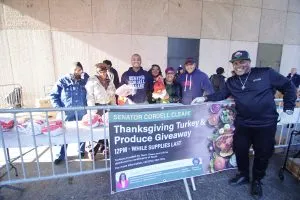
The spirit of Thanksgiving came alive in Harlem on Friday, November 20, as State Senator Cordell Cleare and community partners brought neighbors together for her annual Turkey and Produce Giveaway at the Adam Clayton Powell Jr. State Office Building Plaza.
Beginning at noon, residents visited the plaza at 163 West 125th Street to receive free food on a first-come, first-served basis. The holiday distribution included hundreds of donated turkeys and boxed meals, along with hot turkey dinners, fresh produce and traditional fixings to help families prepare for Thanksgiving.
For households working to stretch their budgets, the giveaway offered practical support during a season when grocery bills and other necessities can place added pressure on family finances.
“Times are particularly harsh economically, there is a lot of anxiety and uncertainty, and if we can help in any way, this is what we do,” Cleare said.
The senator credited local businesses, community organizations and activists with answering her office’s call for donations and assistance. Their contributions helped provide constituents of the 30th District with food for their holiday tables.
“Typically once again, we have Harlem neighbors helping fellow Harlemites,” Cleare said, highlighting the community cooperation behind the annual effort.
Beyond distributing turkeys, the event offered several forms of food assistance, including prepared meals for residents seeking an immediate dinner and produce and fixings for those planning to cook at home.
Cleare expressed gratitude for the partners who contributed, describing the gathering as an opportunity to ease financial strain while helping residents enjoy the upcoming holiday.
With neighbors leaving the plaza carrying bags of food, the giveaway reflected Harlem’s enduring tradition of mutual support. Through donated meals, shared resources and community commitment, Cleare and her partners helped bring Thanksgiving comfort to local households, demonstrating how collective generosity can make a meaningful difference for families.
Based on reporting by Harlem Community Newspapers.
Black History
Remembering Moses Newson and the Power of the Black Press During the Civil Rights Movement
ATLANTA DAILY WORLD — Moses J. Newson, a pioneering journalist who spent decades documenting the American Civil Rights Movement for the Black press, died on November 17 at his home in Baltimore at the age of 99. His daughter confirmed that he passed away from natural causes.

Moses J. Newson, a pioneering Black journalist whose reporting documented some of the most defining moments of the Civil Rights Movement, died November 17 at his Baltimore home. He was 99.
His daughter, Shawn Newson, confirmed to Journal-isms that he died of natural causes.
Throughout his career, Newson documented the struggle for racial equality from the front lines, bearing witness to events that challenged segregation and transformed American society. His work reflected the critical role of the Black press during an era when racial injustice frequently received inadequate coverage from mainstream news organizations.
Born February 5, 1927, in Fruitland Park, Florida, Newson pursued journalism after serving in the United States Navy. He studied at Storer College and Lincoln University in Missouri before beginning his newspaper career at the Tri-State Defender in Memphis in 1952.
His early assignments included coverage of school desegregation and the murder of Emmett Till in 1955, a case that helped galvanize the national Civil Rights Movement.
Newson joined the Baltimore Afro-American in 1957, covering the integration of Central High School in Little Rock, Arkansas, during his first assignment with the newspaper.
Four years later, he placed himself in considerable danger while covering the Freedom Rides, organized to challenge segregation in interstate transportation.
Newson survived the infamous attack on a Freedom Riders bus in Anniston, Alabama, in 1961. Despite the personal danger he encountered, he continued documenting the movement, providing readers with firsthand accounts of the resistance to racial integration.
His reporting also included the integration of the University of Mississippi in 1962 and the 1963 March on Washington. In 1968, he interviewed the Rev. Dr. Martin Luther King Jr. during preparations for the Poor People’s Campaign, shortly before King’s assassination.
Newson spent 21 years with the Baltimore Afro-American, rising from reporter to city editor and ultimately executive editor. He spent the final decade of his newspaper career overseeing editorial operations before transitioning into federal public affairs in 1978.
In 2014, the National Association of Black Journalists inducted Newson into its Hall of Fame, recognizing his contributions to journalism and his extraordinary record of civil rights coverage.
His experiences were also documented through the Civil Rights History Project, a collaboration between the Library of Congress and the Smithsonian Institution’s National Museum of African American History and Culture.
Newson’s family plans to honor his life with a private ceremony in February, when he would have celebrated his 100th birthday.
His death marks the loss of a journalist who witnessed history at extraordinary personal risk. His reporting remains part of the permanent record of America’s struggle for racial equality and a reminder of the indispensable role Black newspapers played in bringing that struggle to the nation’s attention.
The post Remembering Moses Newson and the Power of the Black Press During the Civil Rights Movement appeared first on Atlanta Daily World.
Based on reporting by Atlanta Daily World.
Black History
An HBCU Is Training Doulas to Help Combat Childbirth Risks
THE CAROLINIAN — North Carolina Central University is addressing the critical maternal health crisis in rural communities by training a new workforce of birth doulas. Through its Rural Health Hub in Enfield, the historically Black university is developing a network of trained birth workers to support mothers in Eastern North Carolina.
For many expectant mothers in rural communities, preparing for childbirth involves more than prenatal appointments and planning for a new baby. Limited access to maternity care, long travel distances, and unequal health outcomes can make pregnancy an especially difficult experience.
North Carolina Central University is working to address some of those challenges by training community-based birth doulas who can provide support to mothers before, during, and after childbirth.
Through its Rural Health Hub in Enfield, North Carolina, the historically Black university is developing a network of trained birth workers to improve maternal health outcomes in rural Eastern North Carolina, where access to maternity services remains limited.
The initiative comes at a time when Black women continue to experience disproportionately high rates of pregnancy-related deaths. According to North Carolina’s Maternal Mortality Review Committee, Black women in the state were 1.7 times more likely than white women to die from pregnancy-related causes between 2018 and 2021. The committee also found that nearly nine out of 10 pregnancy-related deaths reviewed were preventable.
The disparities are particularly concerning in rural communities, where some expectant mothers must travel an hour or more to reach hospitals offering labor and delivery services.
NCCU’s Community-Based Birth Doula Training Program, launched in December 2025, aims to address those gaps by preparing women who already live in underserved communities to support families navigating pregnancy and childbirth.
The program recruits participants from northeastern North Carolina counties, including Halifax, Northampton, Edgecombe, Nash, Bertie, Warren, and Martin.
Rather than bringing outside professionals into these communities, the university is investing in residents who understand the challenges families face and can build relationships with mothers in their own neighborhoods.
Dr. Undi Hoffler, director of the Community-Based Doula Program, emphasized the importance of developing a workforce rooted in the communities it serves.
“It’s important that our doulas come from these communities,” Hoffler said in an interview published by NCCU. “They’re building relationships with families they know. That’s how you build trust.”
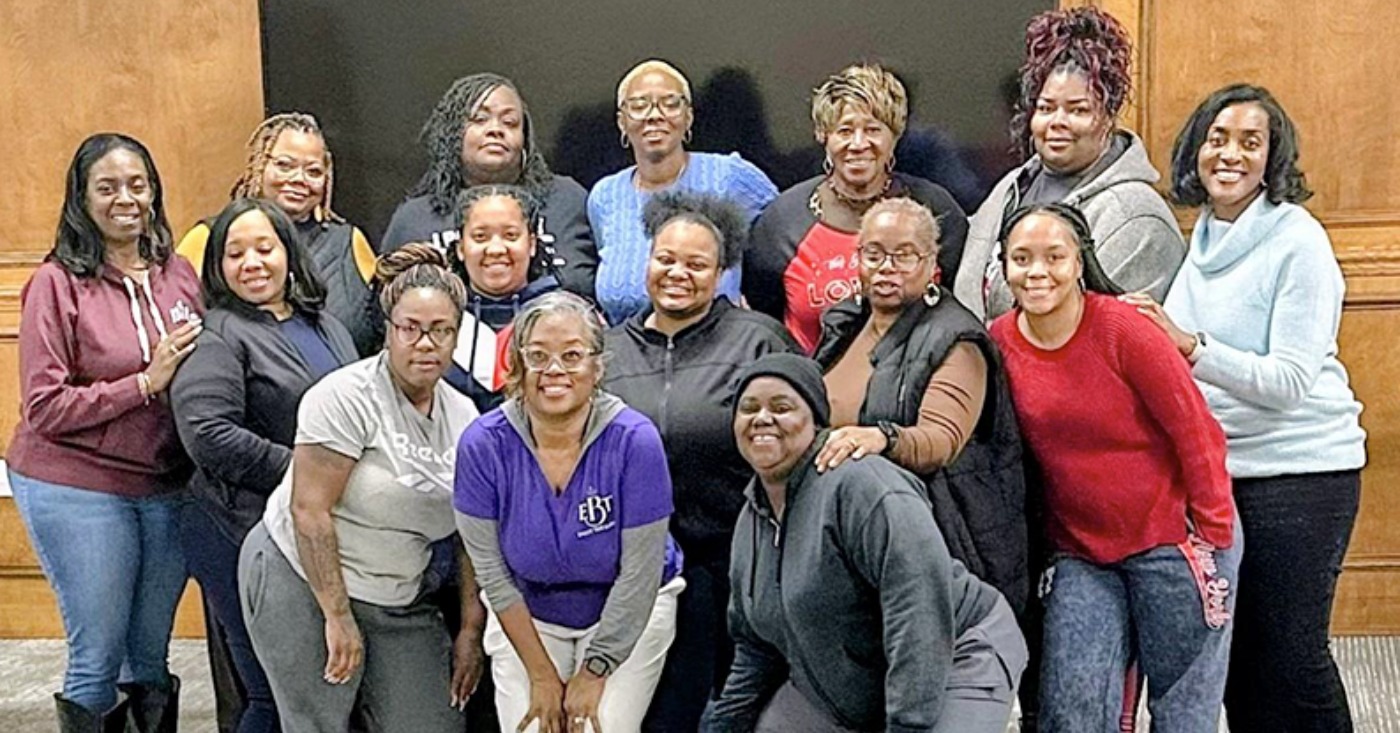
The program’s first training cohort included 12 women who completed a three-day in-person training in December 2025. Participants received scholarships covering training, certification, and materials. The university also provides continued mentorship and assistance as trainees work toward professional certification through DONA International.
The initiative continued into 2026. A training workshop held in October brought together 14 women for three days of instruction at the Rural Health Hub in Enfield, according to NC Newsline’s Nov. 16 report.
During training, participants learn about pregnancy, anatomy, labor and delivery, postpartum recovery, and how to recognize situations that require medical attention. They also receive instruction on helping mothers communicate their concerns, understand available options, and advocate for themselves during medical appointments and childbirth.
A doula is a trained professional who provides emotional, physical, and informational support throughout pregnancy, labor, and the postpartum period. Unlike physicians, nurses, and midwives, doulas do not provide medical treatment or deliver babies. Instead, they serve as an additional source of support for mothers and their families.
That distinction is important in communities where mothers may have limited access to consistent support throughout their pregnancies.
For Rose Lewis, a member of the program’s first cohort, the decision to become a doula grew out of years of working with families and recognizing gaps in maternal support.
Lewis, a Nash County resident and community health worker, said she frequently encountered families who needed assistance accessing health services and other resources. Through that work, she began noticing how much support was available after a baby arrived compared with the resources offered during pregnancy.
“I kept seeing resources for after the baby gets here,” Lewis said in an interview with NCCU. “But what about the support leading up to birth?”
Her interest in the work also became personal after a woman connected to her extended family died during childbirth and her own daughter experienced a high-risk pregnancy.
Lewis now hopes to help other mothers feel informed and supported throughout their birthing experiences.
“When you’re informed, you can advocate for yourself,” she said.
Another trainee, Taya Partin of Edgecombe County, shared an experience involving a pregnant client who expressed fear that she might not survive childbirth. Partin recalled helping the woman manage her concerns and feel more prepared for the delivery process.
The experience illustrates the emotional support doulas can provide to mothers who may feel overwhelmed or uncertain during pregnancy.
Research has associated continuous labor support with positive childbirth outcomes, including fewer cesarean deliveries and improved birth experiences. However, doulas are not substitutes for medical professionals or emergency maternity care. Their role is to complement existing healthcare services by providing consistent support and helping mothers navigate the process.
For NCCU, the program represents an opportunity to connect higher education with a public health issue affecting communities throughout North Carolina.
The university’s Rural Health Hub is also working to strengthen relationships among healthcare providers, community organizations and local families. Its broader mission focuses on improving health access, workforce development and community-centered research in underserved areas.
The long-term vision for the doula initiative is to establish a stronger network of trained birth workers throughout rural Eastern North Carolina, helping ensure that mothers have access to support regardless of where they live.
As maternal health disparities continue to affect Black women across the state, NCCU’s work demonstrates how HBCUs can contribute to solutions beyond traditional classroom instruction.
Through community-based training, mentorship and partnerships, the university is preparing women to become advocates and support systems for mothers during one of the most important periods of their lives.
For the families these doulas serve, the goal is simple: no mother should have to navigate pregnancy and childbirth feeling alone, unheard or unsupported.
Based on reporting by The Carolinian.



4 Buyer Pain Points That Make Every Deal Harder #shorts

$96,575 Tahoe: Which Extras Are Worth Paying For? #shorts

How Mentorship Turned Into Unexpected Job Offers #shorts

Networking Events That Turn Strangers Into Friends #shorts

Iowa’s State Black and Brown Caucus Demand Investigation into Lead Azine Detonation

Iowa’s State Black and Brown Caucus Demand Investigation into Lead Azine Detonation

COMMENTARY: The Judicial System Silenced Jendayi by Using the Penal Codes and Locking Her Up in Jail

PRESS ROOM: Mississippi Congressman Bennie Thompson to Speak at Oakland Post/El Mundo and Post News Group 64th Anniversary Celebration

OP-ED: More Sleep and Lower Blood Pressure — An Overlooked Connection

Harlem Neighbors Feed Neighbors, Senator Cleare’s Thanksgiving Giveaway Brings Hope to the Table

HISTORY MADE: Keisha Lance Bottoms Becomes First Black Woman Elected Governor in American History

Multi-Faith Leaders Representing 10 Million People Launch National Anti-Authoritarian Initiative

Christianity’s Racial History

Hundreds of Black Christian Leaders Arriving in Israel for Martin Luther King-Inspired Mission

Michael Shiner: The Enslaved Man Who Wrote His Way into American History

Keisha Lance Bottoms to Govern State Where Her Great-Great-Grandfather Was Enslaved

Don’t Pass the Torch. Expand the Circle.

DOJ Fights to Keep Rep. Ilhan Omar’s Search Warrant Sealed: Report

OP-ED: Closing the Next Digital Divide — Communities of Color Must Have a Voice in the AI Future

COMMENTARY: Thank You, Trump, for Making America Great Again!
4 Buyer Pain Points That Make Every Deal Harder #shorts
$96,575 Tahoe: Which Extras Are Worth Paying For? #shorts
How Mentorship Turned Into Unexpected Job Offers #shorts
Networking Events That Turn Strangers Into Friends #shorts

D’Angelos Svenkeson on Football, Faith and Building the Future of Rondo | Blacklight on Sports

Public EV Charging: Plan Your Routes Before You Buy #shorts

The Unisex Sweatshirt That Helps You Protect Your Peace #shorts

Killing Me Softly: The Story Sampling Should Remember #shorts

MC Scat Cat: Why Fans Still Remember the Iconic Character #shorts

How This Bag Business Turns Community Into Collaboration #shorts
-

 Black History1 week ago
Black Barbershops Have Long Given Neighborhood Politics a Place to Unfold.
-
 Featured1 week ago
How Sick Must America Get Before Saying Enough to RFK
-

 Black History1 week ago
OP-ED: Black voters made history. They laid the groundwork for a Third Reconstruction.
-

 Black History5 days ago
Hoodoo Heritage Month Celebrates Origins of African American Folk Medicine
-

 Featured1 week ago
ALASKA FLIPS BLUE, WAYMO HITS THE BRAKES & CAMILLE TUCKER JOINS US! 📱
-

 Black History4 days ago
PRESS ROOM: Donalds Transition Website Now Open to All Floridians Who Want to Serve
