
BlackPressUSA
OP-ED: The United States Postal Service Delivers Much More Than Mail
NNPA NEWSWIRE — And true to its roots, the revitalized United States Postal Service (USPS) knew how to make a buck. The reorganization legislation called for the phasing out of the post office’s direct government subsidies by 1983. The post office has been operating without any taxpayer money since then. In fact, as recent as the start of this century, from 2003-2006, and despite the advent of email and stiff competition from companies like UPS and FedEx, the post office reported a 9.3 billion profit.

By Ray Curry, Secretary-Treasurer, UAW
America’s Postal service has been an essential institution that has connected every one of us as Americans even before we were a nation independent of Great Britain.
The most American of traditions
Benjamin Franklin was appointed our first Postmaster General in 1775. This democratic treasure, which has proven as reliable as it has self-sufficient, was a model for how government service should work. Its rich history is America’s history of adaptability, ingenuity and grit. Franklin used the system to get mail from Congress to our armies during the Revolution. In 1823, the service started using waterways to deliver mail, then began using railroads and in 1847 saw the first issued stamps. The famous Pony Express took up the task in 1860. By 1896, the service began delivering to some rural addresses, so people did not have to go to the town post office for their mail anymore. By 1923, all houses were required to have a mail slot. And in 1963, zip codes were introduced.
Also very American, a 1970 strike by organized labor led to an even more efficient operation and the Postal Reorganization Act that established the United States Postal Service as we know it today.
And true to its roots, the revitalized United States Postal Service (USPS) knew how to make a buck. The reorganization legislation called for the phasing out of the post office’s direct government subsidies by 1983. The post office has been operating without any taxpayer money since then. In fact, as recent as the start of this century, from 2003-2006, and despite the advent of email and stiff competition from companies like UPS and FedEx, the post office reported a 9.3 billion profit.
I would say that is a pretty decent business model.
But then HR 6407 came along in 2007. The act mandated that the post office calculate its retiree pension and healthcare costs for the next 75 years, including workers to come, and set aside enough over the next 10 years to cover them. An article appearing in Business Insider put the impact of the requirement this way: “To put this in perspective, that’d be like you only working from age 18 to 28 and then expecting to live on that income until you were 103 years old.”
What would Ben Franklin say?
Needless to say, the bill and its contents have proven devastating. The long and the short of it has meant that the USPS has had to contribute about $5.6 billion a year for people who had not yet retired, in addition to the amount for current retirees.
No business is forced to operate like this, and I dare to add that no business could operate like this.
Also, the new bill took away the ability for the post office to set prices. First-class mail, marketing mail, and other post office products have all been tied to the consumer price index, and therefore the post office could not increase rates for those products above the rate of inflation. All told, the post office has incurred a loss of $78 billion from 2007 through 2019 and owes $55 billion related to its future pension and health benefit obligations. Add in lost revenue related to COVID-19 and politically charged controversies over reductions in equipment and attendant slowdowns, the USPS is now in dire straits.
Shall we really allow this most American of institutions to fail ‒ through no fault of its own? It is unthinkable for it not to survive. It is unthinkable to rely solely on private companies for such critical services. It is truly a dagger in the heart of our American heritage.
Of immediate consequence, consider the impact to mail recipients during this pandemic. The USPS handles 1.2 billion prescription drug deliveries each year. The service also transports millions of lab tests and essential medical supply shipments. It ensures that checks and payments arrive to keep small businesses operating. It helps seniors receive household items, social security and Medicare checks. And communications from family and friends from far away have been delivered on time, through as they say “rain, sleet and snow.”
Since the emergence of COVID-19, USPS workers have been on the front lines, delivering millions of personal protective equipment and vital supplies to hospitals. They’ve made sure shelters, food banks, and businesses have the supplies they need. In addition, they’ve made deliveries to home-bound, highly susceptible individuals.
Needed now more than ever
The notion to privatize the USPS is a truly un-American idea and could not come at a worse time. The recession we are experiencing due to the coronavirus is hitting Black Americans much harder than white Americans, with Blacks nearly three times more likely to be hospitalized for Covid-19 and their unemployment rate at 14.6% compared with 9.2% for whites.
The Postal Service provides the only service that guarantees delivery to every American, which makes it especially crucial for rural areas and small towns that are too costly for private companies like FedEx or UPS to deliver to. Privatizing the service would add to the expense of crucial deliveries ‒ at a time when we are more and more relying on deliveries to receive our daily needs.
Then think about the importance of the post office in ensuring that the people’s will in our democracy will be accurately and duly noted. In November, the postal service will play a crucial role in allowing Americans across our land and in foreign countries to cast their vote in our upcoming Presidential election. So many of us will be turning to the USPS to deliver our ballots safely and securely.
And please also think of the USPS and those in its employ. The postal service has delivered a solid, secure, middle class lifestyle to a more than 600,000 workers and to an especially high number of Latino and African Americans.
In the case of African Americans, when Congress passed a law ‒ just after the Civil War ‒ that ended the whites only hiring practice for postal jobs, the postal service became a haven of good jobs offering secure wages, benefits, and civil service protections. Today, African Americans make up 27% of the Postal Service ‒ a rate more than double that of the national labor force. Coupled with our government’s anti-discrimination policies, the USPS has made the American Dream possible, even when racial discrimination put up walls in other areas of work.
And privatization, I would argue, is un-American for another reason. It is yet another attempt at union busting. Both the National Association of Letter Carriers (NALC), which represents primarily non-rural letter carriers employed by USPS as well as the American Postal Workers Union (APWU), which represents postal clerks, mail processors and sorters, building and equipment maintenance, custodial workers, truck drivers and others employed by USPS, would be in serious jeopardy.
We must secure this most American of all American institutions.
Demand that we save the USPS
Fortunately, there is a way forward. The Delivery for America Act (H.R. 8015) can help make this happen. This legislation will deliver urgently needed funds to the postal service and reverse detrimental policy changes that are currently restricting postal workers’ ability to deliver mail and packages on time.
The Act has passed the House of Representatives. The Senate must follow suit immediately. Across the nation, delivery of mail has slowed dramatically due to the Postmaster General Louis DeJoy’s recent decisions. Eliminating overtime and cutting down on late trips has created massive mail backlogs, leading to late deliveries of critical prescription medications and threatening the integrity of the upcoming November election.
This bill would help address the backlog by remedying the impact of these policies and prohibiting “any change that would have the effect of delaying, deferring, or curtailing mail, allowing for the non-delivery of mail to a delivery route, or increasing the volume of undelivered mail.”
The Delivery for America Act appropriates the $25 billion that the USPS requested to sustain the level of service all Americans depend on. Efforts to shrink the postal service would disproportionately affect racial and ethnic minorities, women and veterans more than others. In addition, as of 2018, more than 100,000 military veterans are employed by the USPS.
We MUST protect postal workers’ jobs.
And we MUST ensure a safe and secure election. In the coming weeks, voters across the country will prepare to exercise their civic duty to elect their government, and Congress must do everything in its power to ensure that voters will be able to do so safely.
For our citizens, for our democracy, for our livelihoods… We must support the USPS in every way we can.







Black Press
Oakland Probate Dispute Raises Questions About Court-Ordered Property Transfer and Missing Notice
A legal dispute over an Oakland property has intensified following a tentative ruling that favored occupant Zakiya Jendayi, who claimed she was not properly notified before a judge ordered the property transferred into an estate. After the ruling, the estate’s administrator successfully challenged the presiding judge and requested the case be returned to the judge who signed the original transfer order. The First District Court of Appeal has now intervened to review the disqualification process and recent changes to the court docket. Read more.


Opinion and documentary analysis | Part 2 of 2
A tentative ruling found that Oakland property occupant Zakiya Jendayi had not received notice before a judge ordered its transfer into an estate.
The ruling was not final. Attention shifted to the assigned judge.
The estate’s special administrator, Phillip Campbell, invoked California Code of Civil Procedure Section 170.6 to disqualify Judge Stephanie Sato. The trial court granted the challenge Sept. 9, 2026.
Five days later, Campbell requested reassignment specifically to Judge Sandra Bean, who had signed the property order Jendayi sought to overturn.
The sequence raises questions about procedural fairness.
A Challenge After an Unfavorable Ruling
Sato’s Sept. 8 tentative ruling concluded that California’s notice requirement protected Jendayi as an occupant, regardless of whether Jendayi held a valid ownership interest.
Her proposed decision would have vacated Bean’s Oct. 8, 2025, order.
Section 170.6 permits challenges under certain circumstances. Whether Campbell’s challenge was timely was disputed.
On Sept. 14, Campbell sought Bean’s reassignment, citing her familiarity with related trust litigation, judicial economy and consistency. Jendayi opposed the request the following day.
The timing invites serious public scrutiny but does not establish misconduct.
The Appellate Court Intervenes
In Kaiser Foundation Hospitals v. Superior Court (1987), a California appellate court examined the danger of allowing litigants to learn a judge’s likely decision before seeking disqualification.
The decision also recognized that changed assignments and insufficient notice can affect when a challenge is permissible.
On Sept. 17, 2026, the First District Court of Appeal stayed the order granting Campbell’s challenge and requested briefing addressing Kaiser.
That intervention did not vacate Bean’s property order, restore the invalidated trust or conclusively decide whether Campbell’s challenge was improper.
It did place the reassignment dispute under appellate review.
Questions in the Docket
Two versions of the court docket present another unresolved issue.
A printout preserved through Sept. 15 lacked reassignment entries that appeared in a later version. The later docket listed reassignment to Bean and a clerk’s notice under Sept. 9.
The difference warrants an explanation of when the entries were created, entered and made publicly accessible.
It does not establish deliberate backdating.
Accountability Beyond an Order
Judges generally enjoy immunity from damages claims arising from judicial acts, even when serious error is alleged. That protection does not make their decisions immune from review.
Appellate courts can correct legal errors; California’s Commission on Judicial Performance can investigate misconduct but cannot reverse judgments.
For Jendayi, the central concern remains practical: How much litigation must an occupant undertake to enforce a notice requirement intended to protect participation before property rights are adjudicated?
The U.S. Supreme Court’s decision in Mullane v. Central Hanover Bank & Trust Co. underscores the importance of meaningful notice and an opportunity to object.
The record establishes contested filings, a tentative ruling and appellate intervention, not anyone’s private motives.
The public deserves a transparent, documented explanation of this consequential judicial process.
A judge’s signature should resolve a lawful dispute, not silence legitimate questions about how the decision was reached.
The case is Estate of Laura Dean Head, Alameda County Superior Court case RP20066047. Records are available through the court’s eCourt Public Portal.
Black Press
Secretary of State Shirley Weber Pushes Back Against DOJ Demands Over California Voter Rolls
California Secretary of State Shirley N. Weber is pushing back against U.S. Department of Justice demands to investigate voters suspected of being noncitizens shortly before the general election. Federal authorities are seeking to block mail-in ballots from approximately 20,000 registered voters, but Weber argues the request is an unlawful attempt to purge voter rolls and incite public distrust. Tensions have escalated further following a specific security dispute involving a thumb drive delivered to Los Angeles County officials. Read more for details on the state’s response.
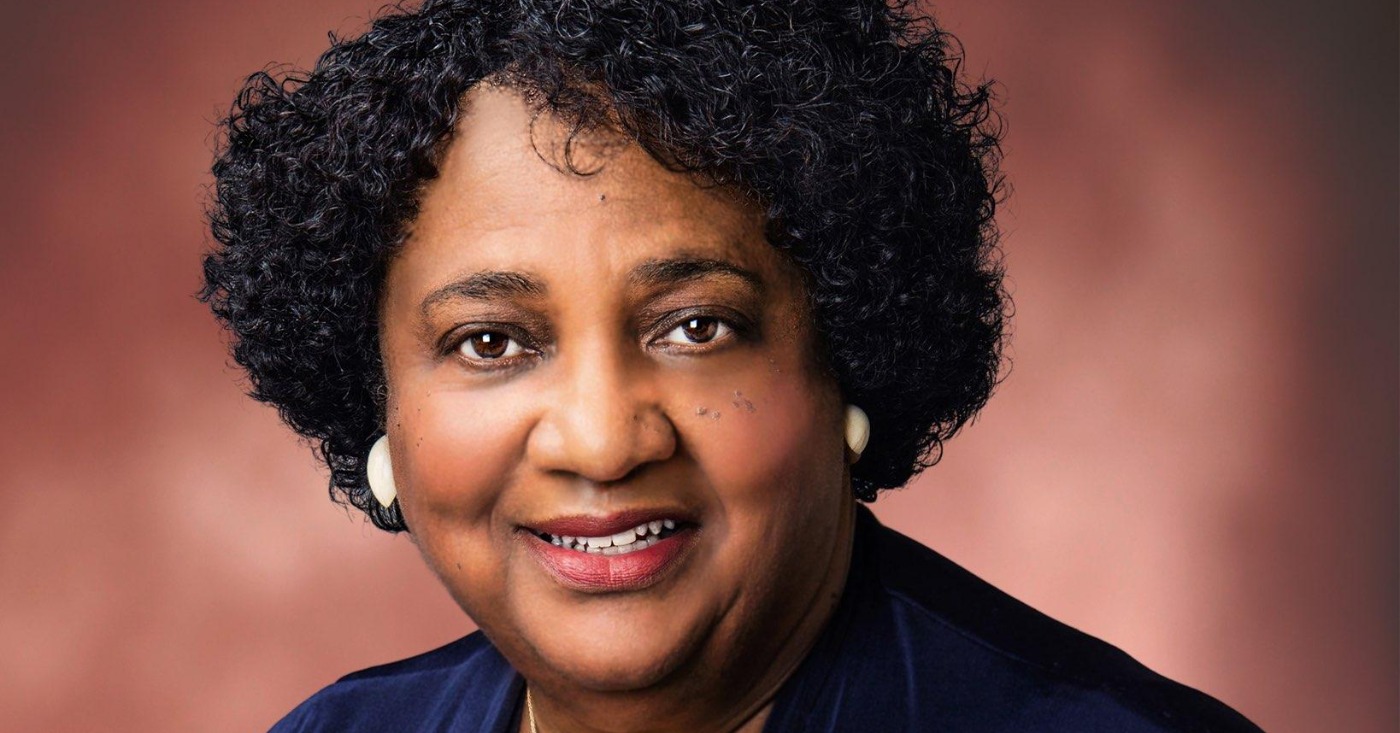
California Secretary of State Shirley N. Weber criticized the U.S. Department of Justice (DOJ)for demanding that state election officials investigate voters suspected of being noncitizens just weeks before the Nov. 3 general election.
“The U.S. DOJ’s relentless efforts to unlawfully gain access to states’ protected voter data and purge voter rolls serve only to cause chaos and fuel public distrust in our elections,” Weber said in an Oct. 14 statement.
Weber said her office received a demand to investigate an unspecified number of individuals the federal government believes are “likely noncitizens.” However, the DOJ did not provide her office with the list and gave California just 48 hours to obtain it, investigate and take action.
The demand comes as the DOJ, working with the Department of Homeland Security (DHS), seeks to block California from counting mail-in ballots from approximately 20,000 registered voters whose citizenship status the federal government has questioned.
“State-facilitated voter fraud is unacceptable in the United States of America,” said U.S. Attorney General Todd Blanche. “If found responsible in a court of law, the State of California will have seriously undermined confidence in our electoral system and violated laws that protect our nation’s representative system of government.”
According to Weber’s office, the Los Angeles County Registrar-Recorder/County Clerk received the federal government’s list on a password-protected thumb drive, with the password written on a sticky note.
Registrar-Recorder/County Clerk Dean C. Logan said his office declined to access the files because the device did not meet established security standards.
“We have not accessed the drive because doing so would conflict with established data privacy and information security protocols,” Logan said. “We do not consider the device a secure medium.”
Weber also challenged earlier federal allegations that California had 190,000 noncitizens on its voter rolls, saying the Trump administration had failed to provide evidence or explain its methodology despite requests from her office.
“California has robust state law requirements that only U.S. citizens can register to vote and that any non-eligible registrants are removed from the state’s voter rolls,” Weber said. “My office and California election officials remain committed – as always – to ensuring a fair and smooth 2026 general election.”
The DOJ’s letters to the California secretary of state and Los Angeles County election officialsoutline the federal government’s demands.
Black Press
Chase Launches Fraud & Scam Prevention Month
JPMorganChase is launching Chase Fraud & Scam Prevention Month this November to help consumers protect their personal information and finances. As the holiday season approaches, the nationwide initiative provides education on avoiding sophisticated tactics used by criminals, such as phishing and impersonation scams. The program features free workshops hosted by community managers across the lower 48 states and builds on existing financial wellness efforts that have reached over one million customers. Read more to learn how these new resources and technologies aim to stop financial crimes.

New initiative builds on Chase’s longstanding commitment to fraud and scam prevention education nationwide.
NEW YORK, Oct. 19, 2026 – Scams can happen to anyone. That’s why Chase is dedicating November to helping consumers protect themselves.
As consumers prepare for the holiday season, criminals are increasingly using sophisticated tactics to pressure people into sending money, sharing personal information and making decisions they’ll later regret.
This November, JPMorganChase is launching Chase Fraud & Scam Prevention Month, a nationwide consumer education initiative designed to help people recognize common scams, avoid in-the-moment mistakes and better protect their money and personal information during the holiday season.
The initiative builds on Chase’s longstanding efforts to help consumers navigate fraud and scams through education, awareness and community-based programming. Through its financial wellness initiatives, Chase has served more than 1 million customers and continues to host more than 1,000 fraud and scam prevention workshops annually across the country.
Throughout November, Chase Community Managers will host free educational workshops in all lower 48 states, as Chase continues to expand digital resources and consumer awareness efforts focused on helping people spot scams and take practical steps to protect themselves. Programming will address scams commonly seen during the holiday season, including impersonation scams, package delivery phishing attempts, gift card scams, fake online deals and fraudulent charity solicitations.
“Scammers are constantly adapting their tactics, making education and awareness more important than ever,” said Jennifer Roberts, CEO of Consumer Banking at Chase. “For years, JPMorganChase has invested in helping consumers recognize scams, understand warning signs and feel empowered to protect themselves. Chase Fraud & Scam Prevention Month builds on that commitment by providing practical guidance that can help people make safer decisions during the holiday season.”
Fraud and scam prevention remains a key component of Chase’s broader commitment to consumer financial wellness. Through educational workshops, local partnerships and community outreach, Chase helps communities build financial confidence and stay informed about evolving fraud and scam threats. The firm also works closely with law enforcement to share scam trends and insights and help drive more effective interventions as agencies work to combat financial crime.
Ongoing Fraud and Scam Prevention Efforts
Beyond consumer education, Chase continues to invest in technology, partnerships and customer protections designed to help prevent fraud and scams before they occur.
Scam prevention is embedded throughout the customer experience, from account opening and authentication to payments and customer service interactions. Chase continues to strengthen protections across the customer journey through targeted warnings, risk-based interventions, behavioral science-informed approaches and frontline employee training. These efforts help employees identify potential scams, recognize warning signs and better support customers who may be at risk of fraud or scams.
In addition, the firm continues to invest in next-generation security tools, including expanded use of passkeys and other authentication technologies designed to help defend against phishing, social engineering and account takeover attempts, as well as Trusted Contact Person, which allows customers to designate a trusted adult who may be notified of certain transactions to help guard against potential fraud or financial exploitation.
Earlier this year, JPMorganChase also announced nearly $14 million in philanthropic investments focused on consumer awareness, real-time prevention and victim support.
For more information about Chase’s fraud and scam prevention efforts and tips, visit Chase.com/security and attend a local fraud and scam prevention workshop.
About Chase
Chase is the U.S. consumer and commercial banking business of JPMorgan Chase & Co. (NYSE: JPM), a leading financial services firm based in the United States of America with operations worldwide, assets of $5 trillion and $375 billion in stockholders’ equity as of June 30, 2026. Chase serves more than 87 million consumers and 7.5 million small businesses with a broad range of financial services, including personal banking, credit cards, mortgages, auto financing, investment advice, small business loans and payment processing. Customers can choose how and where they want to bank: 5,100 branches in 48 states and the District of Columbia, 14,500 ATMs, mobile, online and by phone. For more information, go to chase.com.
Black Press
U.S. Rep. Simon Secures More Than $1 Million for Public Safety at Mills College at Northeastern University Oakland, Surrounding Neighborhood
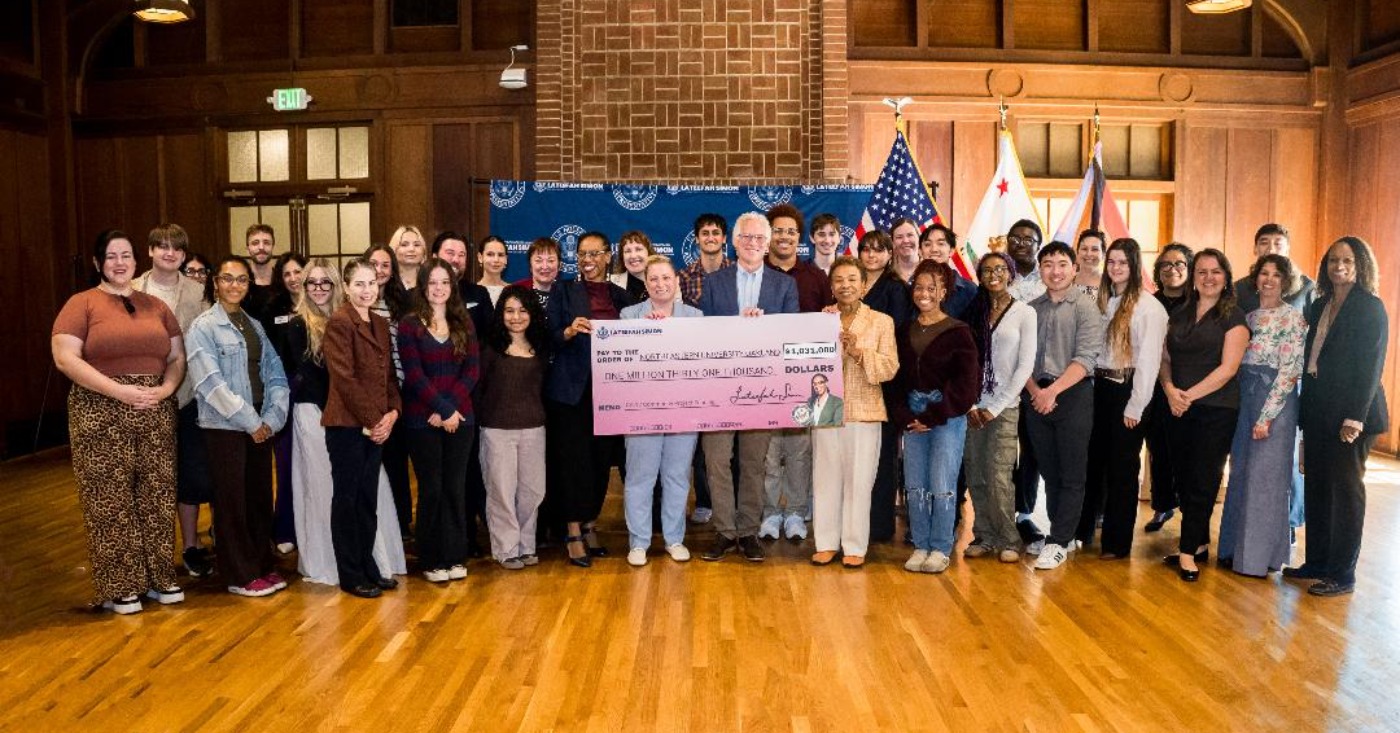
This week, Congresswoman Lateefah Simon (CA-12) announced $1,031,000 in Community Project Funding (CPF) for Mills College at Northeastern University Oakland (MCNUO). This federal funding will be used to purchase new emergency blue-light phone towers and security cameras that will help to improve public safety on campus and in the surrounding community.
Simon announced the funding alongside Oakland Mayor Barbara Lee, Dean of Northeastern University Oakland Dan Sachs, Associated Vice President for Global Site Security Regina Coppa, and other Northeastern University leadership. This federal investment is part of Simon’s commitment to bringing federal resources back to the East Bay and supporting students, educators, and educational institutions who are creating the next generation of leaders in the East Bay.
This Community Project Funding (CPF) is a part of the $11.2 million that Simon secured for 15 projects across the East Bay in Fiscal Year 2026. Each fiscal year, members of Congress can submit Community Project Funding requests for consideration with the House Committee on Appropriations.
“Mills College at Northeastern University is one of the jewels of Oakland. I came to this campus as a student and young, single mother and walked these paths with my child. I know this campus is home to far more than a university.
“It is home to the little ones at the preschool, the girls at Julia Morgan, the neighbors who swim in the pool and walk the trail, and the faculty and workers who keep it all running,” Simon said. “This funding invests in every one of them and in the simple things that make a place safe: light, open paths, updated equipment like call booths.
“NE’s leadership is committed to a campus that takes responsibility for its neighbors as much as its own. Safety is a public good, and that is exactly the kind of investment Oakland deserves. Thank you to Mayor Barbara Lee for her partnership on this funding.”
“This campus changed my life when I came here as a single mother on public assistance, and this million-dollar investment continues that legacy of support by keeping our students, families, and neighbors safe,” said Mayor Barbara Lee. “Before leaving Congress, I requested federal funding for this project, and I am deeply grateful to Congresswoman Lateefah Simon for carrying it forward so we can build the safe, thriving community Oakland deserves.”
“We’re grateful to Congresswoman Lateefah Simon for her leadership in securing this funding for our Oakland campus,” said Renee Jadushlever, vice president for Campus Administration and Strategic Initiatives at Northeastern University. “It’s a place where students learn, do research, build community, and gain real-world experience with our industry partners across the region. This investment will help maintain the safety of our campus community while we continue to welcome our neighbors and deepen our connections across Oakland.”
U.S. Rep. Lateefah Simon’s media relations office is the source of this story.
Black Press
COMMENTARY: Valarie Bachelor and Jennfier Brouhard are Excellent School Board Members and Deserve to Be Reelected
The Oakland Unified School District recently achieved a major milestone by escaping 22 years of state control and opening the school year with a teacher in every classroom. Incumbents Jennifer Brouhard and Valarie Bachelor are seeking reelection to the school board after overseeing balanced budgets, averting labor strikes, and reversing previous decisions to close local elementary schools. While the board now focuses on student-centered programs and school-based health facilities, a new wave of opposition candidates backed by wealthy tech donors has emerged. Read more about the shifting dynamics in this local election.

The Oakland schools have excellent leadership right now. I know it’s hard to believe – because there is so much wrong with the national education picture. But sometimes good things do happen locally.
This school year:
- The Oakland Unified School District escaped from state control after 22 years.
- Every classroom had a teacher at the beginning of the year, unlike past years when many classes started the year with day-to-day substitute teachers.
- Dr. Denise Saddler, an African American woman, is leading the district as superintendent now. She was an excellent choice with vast understanding of Oakland, of schools, and of educational systems locally and nationally.
- The school board and teachers managed to avert a teachers’ strike by some strategizing, listening and compromising.
- The school board does not plan to close more schools. For the first time in decades, those in charge of the district were not discussing closures.
The two women leading the school board are excellent educators themselves.
Board President Jennifer Brouhard (District 2) served as an Oakland teacher and was awarded a Fulbright Distinguished Award in Teaching and the U.C. Berkeley Social Science Project Teacher of the Year Award.
When Brouhard joined the board four years ago, she voted to reverse the decision of the previous board which had planned to close Brookfield, Carl B. Munck, Grass Valley, Fred T. Korematsu Discovery Academy and Horace Mann elementary. Half the students at Carl Munck and at least a third of the students at several others were African American.
In refusing to close schools, she pointed out that in Oakland and other districts it has been Black and Brown students who have been most affected and that closing schools does not save money.
Then, she focused funding on classrooms rather than paying outside consultants. For that, she and her colleagues have incurred the wrath of real estate developers and school privatizers who want to get their hands on public property.
Board Vice President Valerie Bachelor (District 6) has worked on important facilities projects. She helped to set up the first school-based dental project at Frick United Academy of Language, an Oakland middle school. She championed the Melrose Leadership Academy groundbreaking and the Skyline dining facilities.
Bachelor facilitated a balanced budget, which was pivotal in helping the district finally end state control. She also worked to direct funding toward student-centered programs like the Black Thriving Community Schools Program, instead of spending money on the never-ending. highly paid outside consultants.
The people financing the opposition candidates are Ryan Graciano, co-founder of Credit Karma, which made $ 2.7 billion last year; and Gagan Biyani, who says he became a millionaire at age 25.
The literature produced on behalf of the opposition supports closing schools, which harms students, and advocates expenditures that would put OUSD back under state control.
To read more, go to Education Week, “The Harm of School Closures Can Last a Lifetime, New Research Shows” (2024), www.edweek.org/leadership/the-harm-of-school-closures-can-last-a-lifetime-new-research-shows/2024/06
Dr. Kitty Kelly is a Professor of Education and Urban Studies. Dr. Kimberly Mayfield is Dean at Kalmanovitz School of Education, Saint Mary’s College of California.
Black History
Oakland Faith Leaders Gather to Revitalize the Interdenominational Ministerial Alliance of Oakland
Oakland faith leaders and civic officials recently gathered at the Church of All Faiths to revitalize the Interdenominational Ministerial Alliance of Oakland and Vicinity. Led by convener Pastor Mark Anthony Clifton, Sr., the meeting aimed to unite clergy around civic engagement and community restoration. The event featured a call to action for the upcoming election and presentations on workforce development, drawing support from prominent figures including Mayor Barbara Lee and local school officials. Organizers shared their vision for the alliance’s future as they prepare for new collaborative initiatives. read more.
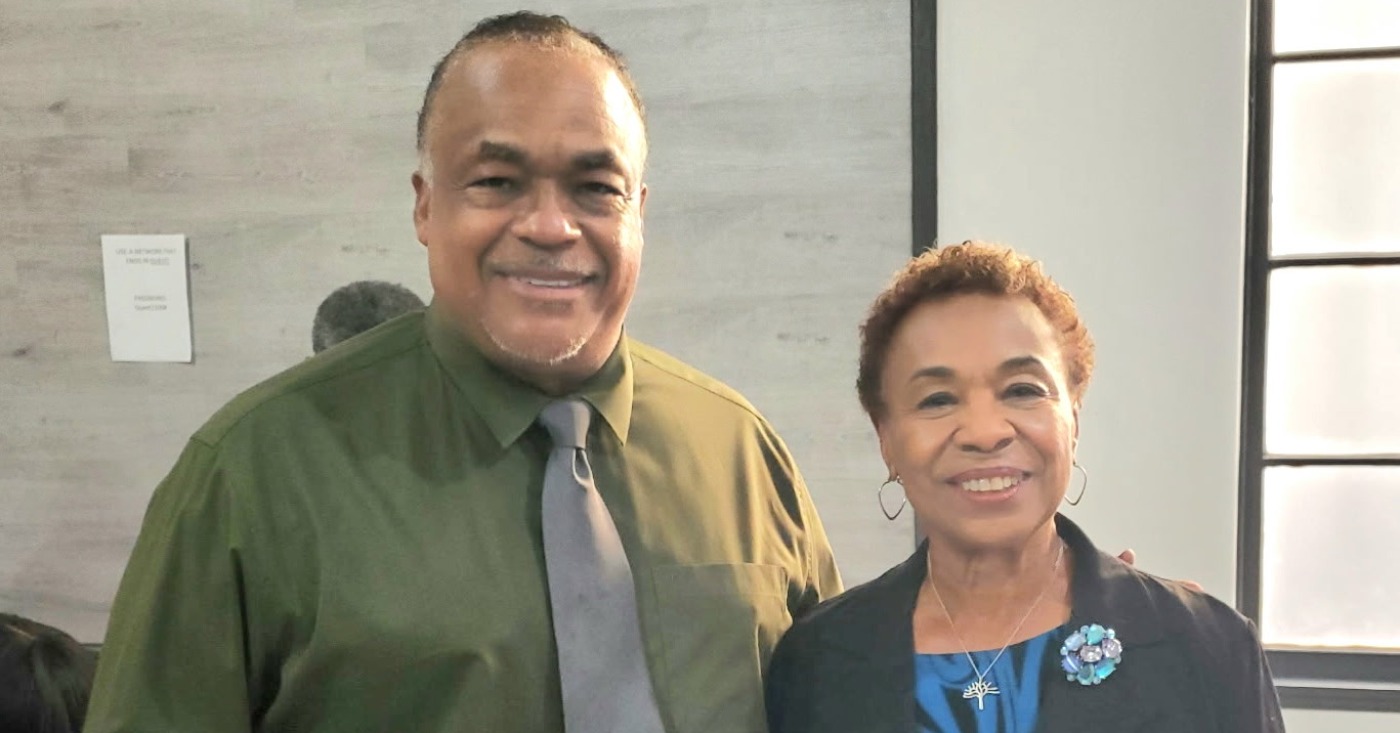
Pastors, civic leaders, and community members in the Bay Area gathered Thursday, Oct. 8, at Church of All Faiths in Oakland for a meet-and-greet marking a renewed push to revitalize the Interdenominational Ministerial Alliance (IMA) of Oakland and Vicinity.
A highlight of the evening was the “Souls to the Polls: Our Voice, Our Vote!” segment, led by Pastor Damon Owens of Genesis Church in Antioch, which urged congregations to turn out for the election. Organizers also announced a proposed joint pre-Thanksgiving worship service for Nov. 17, with the location to be announced.
Pastor Marcie Hodge of Prayer Mission Church called the program to order, and Rev. Michael Wakefield Wallace of Mt. Zion M.B. Church led the opening devotion. Pastor Cubie Finley III of Parks Chapel AME read Nehemiah 2:17-18, the passage behind the event’s rallying cry, “Let us rise up and build.”
COGIC National Evangelist Dr. Lucinda Taylor, principal of Westlake Middle School, delivered the opening welcome.
Dr. L.J. Jennings of Kingdom Builders Church gave a brief statement of purpose, explaining the alliance’s mission of ‘Voice, Vision, and Values.’ Pastor Terry Benjamin of Restoration Evangelistic Ministries then introduced the convener, Pastor Mark Anthony Clifton, Sr., who is in his 26th year leading East Oakland Church of God in Christ. Clifton has been reorganizing the alliance to unite clergy around civic engagement. He noted that IMA’s national roots in 1926 in Galveston, Texas, and honored the Oakland leaders who came before him, including his grandfather, the late Bishop Martin J. Clifton, Sr.
“The work of the IMA of Oakland is just a continuation of the work done before us. Today, working together we can continue to solve many of the issues our community faces,” said Clifton.
Members were invited to share testimonies, challenges, and ministry needs.
Other participants included Dr. Billy Dixon of At Thy Word Christian Center and Pastor Raymond Lankford, CEO of the Oakland Private Industry (OPIC) Council who shared information on the organization’s workforce development programming.
Public officials in attendance included Mayor Barbara Lee, Alameda County Supervisor Nate Miley, and Oakland Unified School District Superintendent Denise Saddler, strengthening the ties between the faith community and local government.
“We are better together and our city is stronger when we partner with our faith leaders,” said Oakland Mayor Barbara Lee.
Bishop Brondon Reems of Center of Hope Community Church provided the closing prayer and Rev. Dr. Jeffrey M. Parker, Sr., host pastor, gave final remarks and thanked attendees for coming.
“It’s an honor to serve the community and bring everyone together,” said Parker.
Dozens of pastors from Oakland, Antioch, and the greater Bay Area were recognized as supporters.
“I want our partners and attendees involved to help rebuild the city they love and this is only the beginning of a larger movement to restore our great city,” said Clifton.


OTR @ Par 365

OTR w LeBrent Speed

OTR w Terresa Moses @ Black Garnett Books

Stay Focused: Make Your Vote Count This Election

Confused by Your Ballot? Joy Reid’s Tips for Houston Voters

Confused by Your Ballot? Joy Reid’s Tips for Houston Voters

Oakland Probate Dispute Raises Questions About Court-Ordered Property Transfer and Missing Notice

‘Raising a Child Shouldn’t Break the Bank’: California Is Helping Families Save on Childcare Costs

Secretary of State Shirley Weber Pushes Back Against DOJ Demands Over California Voter Rolls

Chase Launches Fraud & Scam Prevention Month

OP-ED: Haiti TPS: Have We Lost Sense of Humanity?

Remembering Chauncey Bailey as Student Journalists Face Threats to Truth-Telling

All Skinfolk Ain’t Kinfolk

Poll: Becerra Widens His Lead Over Hilton; Californians Split on Wealth Tax

Rulings Leave Questions Lingering in Nolan Wells Case

Latinas Deserve Equal Pay. Unions Help Make It Happen.

Zakiya Jendayi Arrested, Locked Out of Home by Sheriff’s Deputies

Why Black Artists Struggle to Sell Tours

COMMENTARY: The Audacity of Joyce Beatty

A $2.1 Trillion Wellness Industry Never Built a Daily Practice for Black Children. So This Atlanta Family Did.
OTR @ Par 365
OTR w LeBrent Speed
OTR w Terresa Moses @ Black Garnett Books
Stay Focused: Make Your Vote Count This Election
Confused by Your Ballot? Joy Reid’s Tips for Houston Voters
Confused by Your Ballot? Joy Reid’s Tips for Houston Voters

Black Men for Angie Nixon

When to Quit Your Day Job for a Growing Business #shorts

Before You Buy This Crossover, Test These 3 Things #shorts

1888 Bank’s First Day: A Financial Milestone! #shorts
-

 Black History1 week ago
OP-ED: The Black Church Writes AI’s Next Chapter
-

 Featured6 days ago
Tamiko Armstead | 2026 Lifetime Achiever in Education
-

 Black History1 week ago
Practitioners of African Traditional Spirituality Offer Ancestral Reverence Ritual Oct. 31
-

 Art1 week ago
Inside 820 S. Michigan: New Book Captures the Lost World of Ebony and Jet
-

 Black Press1 week ago
OP-ED: If the ‘Cornell 7’ Were Black Men at an HBCU — America Wouldn’t Be This Sympathetic
-

 Black Press1 week ago
While Black Families Pay More for Power, Some Attorneys General Fight to Save High-Cost Coal
