
Featured
OP-ED: Black Theatre Day (September 17) is An Annual Day of Solidarity and Service
THE BURTON WIRE — Black theatres provide a public service as an educational resource. After two decades of teaching in higher education, including the past five years at Dartmouth College, I found that most students entering my theatre and cultural studies classes as well as many K-12, undergraduate and graduate theatre educators I encounter through CRAFT, have little to no knowledge of Black theatre. Regardless of background, those connected to Black theatres in their communities, like the Douglass Theatre, founded in Macon, GA in 1921, and collaborative educational programs, are better informed about Black life and culture and a broader range of Black theatre. Black Theatre Day is an opportunity for everyone to learn more about Black theatre and how to collaborate and support Black-led theatre institutions, the beneficiaries of the illustrious legacies of the African diaspora.


Historical funding patterns suggests that without intentional intervention like committing to collaborative action, significant foundational support for Black theatres will likely recede after 5 to 6 years.
By Monica White Ndounou | The Burton Wire
Black Theatre Day (September 17) is an annual day of solidarity and service, to celebrate and support 21st century Black theatres in their ongoing efforts to build sustainable, institutional wealth.
Last fall, The International Black Theatre Summit, biennially convened by The CRAFT Institute, commemorated the 200th anniversary of the African Grove Theatre’s opening night on September 17, 1821 by launching the inaugural Black Theatre Day with a day of virtual events in collaboration with The Billie Holiday Theatre. As the first known professional Black theatre company in the United States—composed of Black Americans and African-Caribbeans—the company launched the career of Ira Aldridge, who claimed to be an African prince as he toured Europe. In case you have not heard of Aldridge, he is arguably the greatest Shakespearean tragedian of all times. Currently staging a production of Carlyle Brown’s The African Company Presents Richard III, which recounts the story of their immense talent and experiences with racial bias, St. Louis Black Rep is one of many participating organizations hosting a series of such events to celebrate Black Theatre Day.
Black theatres provide a public service as an educational resource. After two decades of teaching in higher education, including the past five years at Dartmouth College, I found that most students entering my theatre and cultural studies classes as well as many K-12, undergraduate and graduate theatre educators I encounter through CRAFT, have little to no knowledge of Black theatre. Regardless of background, those connected to Black theatres in their communities, like the Douglass Theatre, founded in Macon, GA in 1921, and collaborative educational programs, are better informed about Black life and culture and a broader range of Black theatre. Black Theatre Day is an opportunity for everyone to learn more about Black theatre and how to collaborate and support Black-led theatre institutions, the beneficiaries of the illustrious legacies of the African diaspora.
Black-led theatre institutions are incubators for Black talent on stage and screen who mutually recognize their intrinsic value through various forms. Playwright, screenwriter and actress, Alice Childress, author of last season’s Broadway production of Trouble in Mind, studied at the historic American Negro Theatre which launched the careers of Sidney Poitier, Harry Belafonte, and Ruby Dee. Tony Award winner Ruben Santiago Hudson, an alum of the Negro Ensemble Company and protégé of the esteemed Broadway director and Lloyd Richards, former Dean of the Yale Drama School, also wrote, directed, and starred in his 2021 Broadway production of Lackawana Blues. This Broadway season, Samuel L. Jackson will star in August Wilson’s The Piano Lesson directed by LaTanya Richardson Jackson. Both are NEC and HBCU alums of Morehouse College and Spelman College, respectively. Playwright Lynn Nottage, who wrote the book for MJ: The Musical established her roots at The Billie Holiday Theatre, where stage and screen actor, Wendell Pierce, currently starring in the Broadway production of Death of a Salesman, serves on the board. Pierce is a native of New Orleans, the home of Black-led theatre institutions like No Dream Deferred and Ashé Cultural Arts Center. Intentional Black theatre connections and collaborations are the future.
Ongoing advocacy for greater economic equity is a necessity in order to secure Black theatre’s future. MacArthur Genius, Dominique Morisseau’s recent calls to dismantle and rebuild Broadway, a commercial enterprise, for the benefit of the field are reminiscent of legendary playwright August Wilson’s 1996 speech, “The Ground on Which I Stand,” in which he proclaimed that “Black theatre is alive, it is vibrant, it is vital…it just isn’t funded.” The Helicon Collaborative study documented these persisting disparities nearly twenty years later. Their study found out of $4 billion in philanthropic support from foundations to arts organizations “just 2 percent of all cultural institutions [all white] receive nearly 60 percent of all contributed revenue” primarily producing Eurocentric programming. The other 98 percent of arts organizations (including only 4 percent of arts organizations of color with Black theatres as a fraction of that percentage) split the remaining 40 percent.
To be sure, arts foundations and nonprofit leaders are increasingly aware of the inequities as reflected in support from the Mellon Foundation, Ford Foundation, Doris Duke Charitable Foundation and other sources for special initiatives in recent years. Still, historical funding patterns suggests that without intentional intervention like committing to collaborative action, significant foundational support for Black theatres will likely recede after 5 to 6 years.
The International Black Theatre Summit and its Black Theatre Day partners (WACO Theater Center, Project1Voice, Black Theatre Network, Black Theatre Association, The National Association of Black Theatre Building Owners, National Black Theatre Festival, the National Association of Dramatic Speech and Arts, Support Black Theatre) are encouraging everyone to donate $5, 5 hours or more and invite 5 people to #SupportBlackTheatre through Black-led theatre institutions year-round. Black Theatre Day inspires us to reimagine new possibilities!
To learn more and to obtain additional resources for Black Theatre Day visit thecraftinstitute.org.
Monica White Ndounou is an Associate Professor of Theater and affiliate faculty in African and African American Studies and Film and Media Studies at Dartmouth College. She is the Founder and Executive Director of The CRAFT Institute, Convener of The International Black Theatre Summit, the author of the award-winning book, Shaping the Future of African American Film: Color-Coded Economics and the Story Behind the Numbers (Rutgers UP 2014) and co-founder of CreateEnsemble.com. She is a Public Voices Fellow
This article originally appeared in The Burton Wire.




Featured
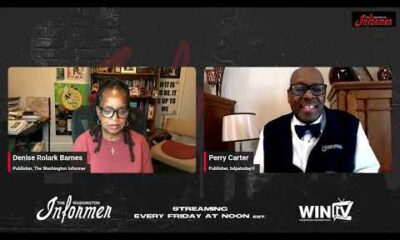
Cybersecurity Awareness Month: Staying Safe in a Digital World | Let’s Talk on WIN-TV
In honor of Cybersecurity Awareness Month, learn how to protect your digital life and discover career paths in tech with BDPA-DC’s Perry Carter.


How can individuals, families, and businesses protect themselves from growing cyber threats?
In recognition of Cybersecurity Awareness Month, Washington Informer Publisher Denise Rolark Barnes sits down with Perry Carter, President of BDPA-DC, to discuss online safety, protecting personal information, and navigating today’s digital world.
From recognizing scams to understanding cybersecurity education and career opportunities, Carter shares insights on why digital security matters to everyone.
The conversation also highlights BDPA-DC’s commitment to technology education, professional development, and opportunities for underrepresented communities.
Watch, learn, and share! Cybersecurity is everyone’s responsibility.
#CybersecurityAwarenessMonth #LetsTalkWINtv #WashingtonInformer
#PerryCarter #BDPADC #Cybersecurity #OnlineSafety #DigitalSecurity #technologyeducation
📺 Let’s Talk on WIN-TV airs Fridays at noon.
🔴 LIKE, SUBSCRIBE & SHARE
🌐 Visit Us: www.washingtoninformer.com
Host: Denise Rolark Barnes
Publisher – The Washington Informer
About The Washington Informer:
Founded in 1964 by Dr. Calvin W. Rolark, The Washington Informer is an African American, woman-owned newspaper providing positive coverage of the Black community in Washington, D.C. In March 2020, we launched WIN-TV to further amplify community voices and issues.
Production Team:
🎥 Producer: Shevry Lassiter
🎥 Asst. Producer: Ja’Mon Jackson
🎶 Theme Music by DB Bantino
Follow Us on Social Media:
📸 Instagram: @washinformer
📘 Facebook: Washington Informer
🐦 Twitter: @WashInformer
Featured
RESILIENCE Dance Company
Experience three world premieres with RESILIENCE Dance Company’s “Entry Points” at COCA, running November 6–8. Grab your tickets now for an unforgettable show.

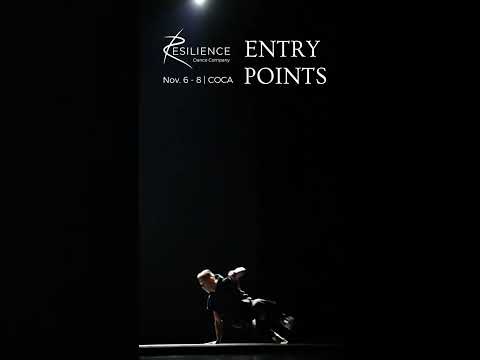
Looking for something to do this weekend? RESILIENCE Dance Company brings “Entry Points” to COCA’s Catherine B. Berges Theatre Nov. 6 through 8.
The contemporary dance program features three world premieres, with works by Faith Balderrama, Hannah Garner and FLOCK among the lineup.
Make it a night out. Get your tickets:
https://www.eventbrite.com/e/entry-points-tickets-1998456269499?aff=oddtdtcreator
Featured
War Broke Trump’s Youth Coalition
A wave of voter backlash and aggressive federal intervention has dismantled Donald Trump’s youth coalition. See how the 2026 midterms reshaped the political landscape.

The provided sources examine the 2026 U.S. midterm elections, highlighting a historic wave of Democratic victories and a significant voter backlash against President Donald Trump and the Republican party due to economic concerns and anger over the administration’s policies. Concurrently, records and reports detail controversial federal intervention tactics, including aggressive voter fraud investigations by ICE, data collection, and threats to deploy armed law enforcement to polling locations. Additionally, localized election developments in places like California demonstrate how voters weighed complex statewide propositions on issues such as voter ID and billionaire taxes amidst these broader national political tensions.
Featured
Congratulations to the Fall 2026 Citizens Academy graduates!
We’re proud to celebrate our Fall 2026 Citizens Academy graduates! Watch the highlights from their journey inside the St. Louis criminal justice system.
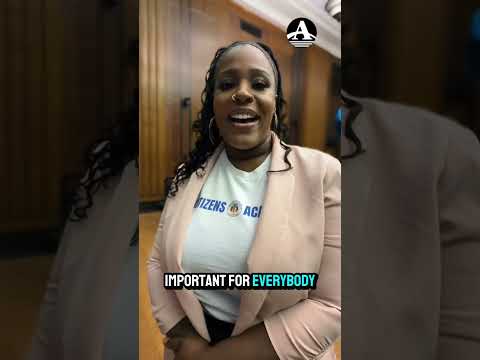
Congratulations to the Fall 2026 Citizens Academy graduates!
The St. Louis Circuit Attorney’s Office celebrated the class yesterday at Carnahan Courthouse, marking the completion of a six week program that gave residents a firsthand look at the criminal justice system and the work of local prosecutors.
Participants explored the prosecution process, met with prosecutors and victim advocates, and toured law enforcement facilities.
Featured
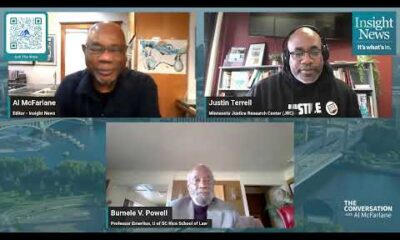
The Conversation With Al McFarlane (11/05/2026)
The dialogue deepens as we sit down with Al McFarlane for an insightful look at the issues that matter most. Catch the full conversation here.
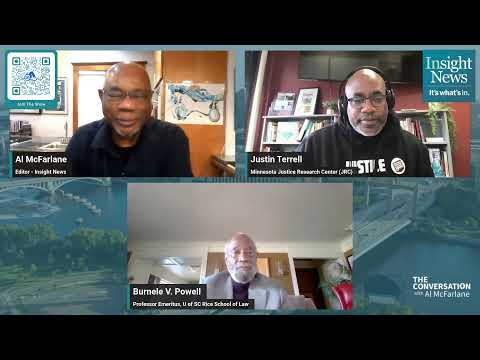
The conversation continues.
Featured
How Flava Cafe Turned a Coffee Shop Into Opportunity for Black Youth | MSR On the Radar
Discover how Flava Cafe is brewing change in St. Paul by empowering Black youth through professional development and meaningful community mentorship.

What if your neighborhood coffee shop was also building the next generation of Black leaders?
On this episode of MSR On the Radar, host Damenica Ellis sits down with Shaunie Grigsby, founder and owner of Flava Cafe in St. Paul. Grigsby opened Flava in 2022 as a social enterprise that combines great coffee with a mission: providing work experience, coaching and professional development for Black girls and gender-expansive youth.
Grigsby talks about the Atlanta coffee shop that first showed her what a Black third space could feel like, and how Queen Latifah’s Flavor magazine on “Living Single” inspired the cafe’s name. She shares how she made the leap from youth development to running a business, learning through apprenticeships at Sammy’s Avenue Eatery and Golden Thyme Cafe and accelerators through the Neighborhood Development Center.
In this episode, you’ll hear about:
Building a menu that honors Black icons like MC Lyte, bell hooks and Megan Thee Stallion
Designing a space that feels like home, inspired by “Living Single” and “Moesha”
Partnering with Black-owned businesses like Black Garnet Books and Roots and Bloom Studio
Leading with transparency through financial challenges
Free resources for aspiring entrepreneurs through NEON, MEDA and the Neighborhood Development Center
Visit Flava Cafe in St. Paul and catch open mic night with True Art Speaks every Thursday from 6 to 8 p.m.
Subscribe for new episodes of MSR On the Radar every week, spotlighting the Minnesota businesses and entrepreneurs shaping our community.

Let’s Talk- Clearing the Air Series with Mya Trujillo

Cybersecurity Awareness Month: Staying Safe in a Digital World | Let’s Talk on WIN-TV

RESILIENCE Dance Company

Compare Car Insurance Quotes and Save Money #shorts

War Broke Trump’s Youth Coalition

Congratulations to the Fall 2026 Citizens Academy graduates!

The Conversation With Al McFarlane (11/05/2026)

How Flava Cafe Turned a Coffee Shop Into Opportunity for Black Youth | MSR On the Radar

Every Vote Counts – Close Races

Every Vote Counts – Close Races

All Skinfolk Ain’t Kinfolk

Practitioners of African Traditional Spirituality Offer Ancestral Reverence Ritual Oct. 31

Latinas Deserve Equal Pay. Unions Help Make It Happen.

Oakland Awarded More than $14 Million in State Funding

Tamiko Armstead | 2026 Lifetime Achiever in Education

Should You Have to Pay to Hear the Gospel?

OP-ED: The Black Church Writes AI’s Next Chapter

2026 Voting Guide: Every Candidate and Proposition Explained!

Botham Jean’s Killer Granted Parole 7 Years After His Murder

Jendayi Arrest Raises Community Concerns Regarding Sheriff’s Chain of Command
Cybersecurity Awareness Month: Staying Safe in a Digital World | Let’s Talk on WIN-TV
RESILIENCE Dance Company
Compare Car Insurance Quotes and Save Money #shorts
War Broke Trump’s Youth Coalition
Congratulations to the Fall 2026 Citizens Academy graduates!
The Conversation With Al McFarlane (11/05/2026)
How Flava Cafe Turned a Coffee Shop Into Opportunity for Black Youth | MSR On the Radar
Every Vote Counts – Close Races
Every Vote Counts – Close Races

Every Vote Counts – Close Races
-
 Black History1 week ago
Retirement Triggers Doctor to Pen Book for Young Audience
-

 Art1 week ago
Capturing Black Life’s Beauty
-
 Black History14 hours ago
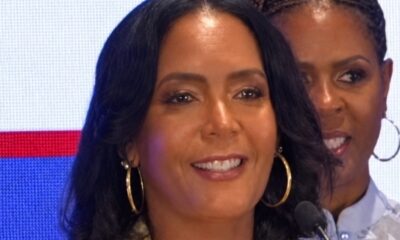
HISTORY MADE: Keisha Lance Bottoms Becomes First Black Woman Elected Governor in American History
-

 Featured3 days ago
Multi-Faith Leaders Representing 10 Million People Launch National Anti-Authoritarian Initiative
-

 Black Press1 week ago
Fatigue, Bloating, and Inflammation: Spotting the Subtle Signs of MASLD
-

 Black Press1 week ago
When Your Faith Is Put to the Test
