
Politics
Obama Hopes to Sidestep Congress to have ‘a Year of Action’


President Obama delivering 2014 State of the Union speech (White House photo).
By George E. Curry
NNPA Editor-in-Chief
WASHINGTON (NNPA) – With a largely uncooperative, highly-partisan Congress headed into a mid-term election, President Obama declared in his State of the Union speech Tuesday night that he will have ‘a year of action’ by expanding economic opportunity through executive orders and other action that do not require legislative approval.
“I’m eager to work with all of you,” Obama said in a speech that lasted a little longer than an hour. “But America does not stand still – and neither will I. So wherever and whenever I can take steps without legislation to expand opportunity for more American families, that’s what I’m going to do.”
Repeating many of the themes he sounded in his State of the Union speech a year ago – and having seen congressional inaction on most of them – a frustrated Barack Obama promised to be more aggressive in using the power of the presidency.
In glowing review of his first five years in office, Obama said, “Here are the results of your efforts: The lowest unemployment rate in over five years. A rebounding housing market. A manufacturing sector that’s adding jobs for the first time since the 1990s. More oil produced at home than we buy from the rest of the world – the first time that’s happened in nearly twenty years. Our deficits – cut by more than half. And for the first time in over a decade, business leaders around the world have declared that China is no longer the world’s number one place to invest; America is.”
He continued, “…The question for everyone in this chamber, running through every decision we make this year, is whether we are going to help or hinder this progress. For several years now, this town has been consumed by a rancorous argument over the proper size of the federal government. It’s an important debate – one that dates back to our very founding. But when that debate prevents us from carrying out even the most basic functions of our democracy – when our differences shut down government or threaten the full faith and credit of the United States – then we are not doing right by the American people.”
A major theme of the president’s speech was providing expanded opportunity for all Americans – an opportunity to get a job, to earn fair wages, to get an education and to have access to affordable health care.
“Today, after four years of economic growth, corporate profits and stock prices have rarely been higher, and those at the top have never done better. But average wages have barely budged. Inequality has deepened. Upward mobility has stalled. The cold, hard fact is that even in the midst of recovery, too many Americans are working more than ever just to get by – let alone get ahead. And too many still aren’t working at all.”
Unlike past State of the Union speeches, Obama did not call for higher tax rates on high-income earners. He also toned down his rhetoric on income inequality from a month ago when he called it “the defining challenge of our time” and referred to a “dangerous and growing inequality and lack of upward mobility.”
A recent report by Oxfam, a London-based organization that seeks to eradicate poverty, found that the wealth of 1 percent of the richest people in the world ($110 trillion) is 65 times the total wealth of the bottom half of the world’s population.
The Tax Policy Center, a joint venture of the Urban Institute and the Brookings Institution, collected data that shows the top fifth of the U.S. population receives 66 percent of tax-expenditure benefits, the middle 60 percent of the population receives slightly more than 31 percent and the bottom fifth receives just 2.8 percent of tax-expenditure benefits. The top 1 percent of the population alone receives 23.9 percent of tax-expenditure benefits.
According to a recent Pew Research Center poll, 60 percent of Americans believe the “economic system in this country unfairly favors the wealthy.” And even larger margin – 65 percent – believe the gap between the rich and everyone else has increased over the past 10 years.
But instead of getting into what his Republican critics like to call a class war, the president framed the issue Tuesday night through the lens of a lack of progress for working-class Americans.
“Let’s make this a year of action,” President Obama said. “That’s what most Americans want – for all of us in this chamber to focus on their lives, their hopes, their aspirations. And what I believe unites the people of this nation, regardless of race or region or party, young or old, rich or poor, is the simple, profound belief in opportunity for all – the notion that if you work hard and take responsibility, you can get ahead.”
In an action on Tuesday, President Obama issued an executive order raising the minimum wage for federal contract workers from $7.25 an hour to $10.10.
To raise the minimum wage beyond federal contractors, as Obama has been urging for more than a year, he will need the support of Congress. He will also need cooperation from the House and Senate to act on other issues such as immigration, extending unemployment benefits, tax reform and expanding pre-K education.
Although White House officials are predicting some progress on farm legislation and immigration, they recognize that partisan politics traditionally grow even more partisan in a mid-term election, especially during a president’s second term. Consequently, the administration is advancing a series of modest initiatives, including:
• Directing the Treasury Department to create a starter retirement savings account, called “myRA”;
• Hosting a White House summit on working families;
• Having Vice President Joe Biden lead a review of the federal job training system;
• Streamlining federal regulations covering construction of manufacturing factories that rely on natural gas and
• Convening a group of CEOs to solicit their ideas on how best to get unemployed workers back into the job market.
On CNN Tuesday night, former House Speaker Newt Gingrich criticized President Obama for taking so long to use the authority he has to issue executive orders, which are presidential directives that interpret the constitution and federal laws without needing the approval of Congress.
According to the National Archives and The American Presidency Project, President Obama has issued 168 executive orders. His 147 during his first term was the fewest by a president in more than 100 years. By contrast, in their first terms, Ronald Reagan issued 213, Bill Clinton 200 and George W. Bush 173.
Obama defenders say many of his executive orders have been far reaching, delaying enforcement of certain sections of the Affordable Care Act, federal recognition of same-sex marriages and delaying deportation of some illegal immigrants.
At a White House briefing with a small group of reporters Tuesday afternoon, a senior administration official responded to critics who contend that President Obama would be more effective if he socialized more with House Republicans. But that’s been impossible with the Tea Party wing of the GOP, the official said. “They said he should schmooze a little bit more, if he would just go play golf with them,” said the official, who spoke on condition of anonymity. “They don’t want to be seen playing golf with him. They don’t want to be seen having dinner with him. They don’t want to work with the president and they’ve told us that every way they know how.”
###



Black History
COMMENTARY: My Truth — We Can Realize the Dream Together
GARLAND JOURNAL — The 2027 Healthy Living Expo is scheduled for Monday, January 18, 2027, following the City of Dallas’ Dr. Martin Luther King, Jr. Parade.

Get ready. The 2027 Healthy Living Expo is a good way to start the new year. Complete with the Red Cross Blood Drive, workshops, health screenings, the Chitterling Cook-off and more, it’s a family affair!
The Realizing The Dream Healthy Living Expo is scheduled in observance of Dr. Martin Luther King Jr. Day and to follow the ‘City of Dallas’ Dr. Martin Luther King, Jr. Parade on Monday, January 18, 2027. The Expo is 9:00 am to 4:00 pm at the South Dallas Cultural Center.
Building on the well-attended 2026 Expo, the excitement is mounting for another day of community engagement and service. This year’s Expo, in partnership with the City of Dallas, Cr8ive Outlet, and the University of North Texas at Dallas College of Law, will continue to honor Dr. King’s vision of equality, opportunity, and improved quality of life.
The UNT Dallas College of Law is the first college or university in North Texas and the only law school in the nation to join the King family in its global campaign to use volunteer and civic engagement to bridge divides and strengthen communities.
The goal of Realize the Dream is to encourage public (and private) service and generate 100 million volunteer hours by MLK’s 100th birthday in 2029.
The Realizing the Dream Healthy Living Expo includes helping individuals and families access the knowledge, resources, and opportunities needed to lead healthier, more productive, and financially secure lives.
We realize that these are some challenging times and hopefully the 96-HOUR SPECIAL will be an incentive for those looking to join in for a wonderful day of Love as we educate, inform, inspire, challenge and entertain. The 96 hours, from November 27–30, 2026, are especially designed to help small businesses and encourage support of a worthy program. Outdoor booths for small businesses, nonprofits, and political vendors are $100 (After November 30 regular price $150).
Call 214 941 0110 so you can get in on the special.
This event is for the entire family, and the entire community. It’s an opportunity, after enjoying the parade, to continue the celebration as we remember someone who left this world in a better place.
Now, it’s up to us to do all we can. In this article:My Truth
Based on reporting by Garland Journal.
Black History
A Brief History of the San Francisco Bay View National Black Newspaper
SF BAY VIEW — Founded in 1976 by Muhammad Al-Kareem, the San Francisco Bay View National Black Newspaper began as a local effort to promote Black self-improvement and small businesses in the Bayview Hunters Point neighborhood. Originally titled The New Bay View, the publication was modeled after the Nation of Islam’s Muhammad Speaks but focused on secular community news.
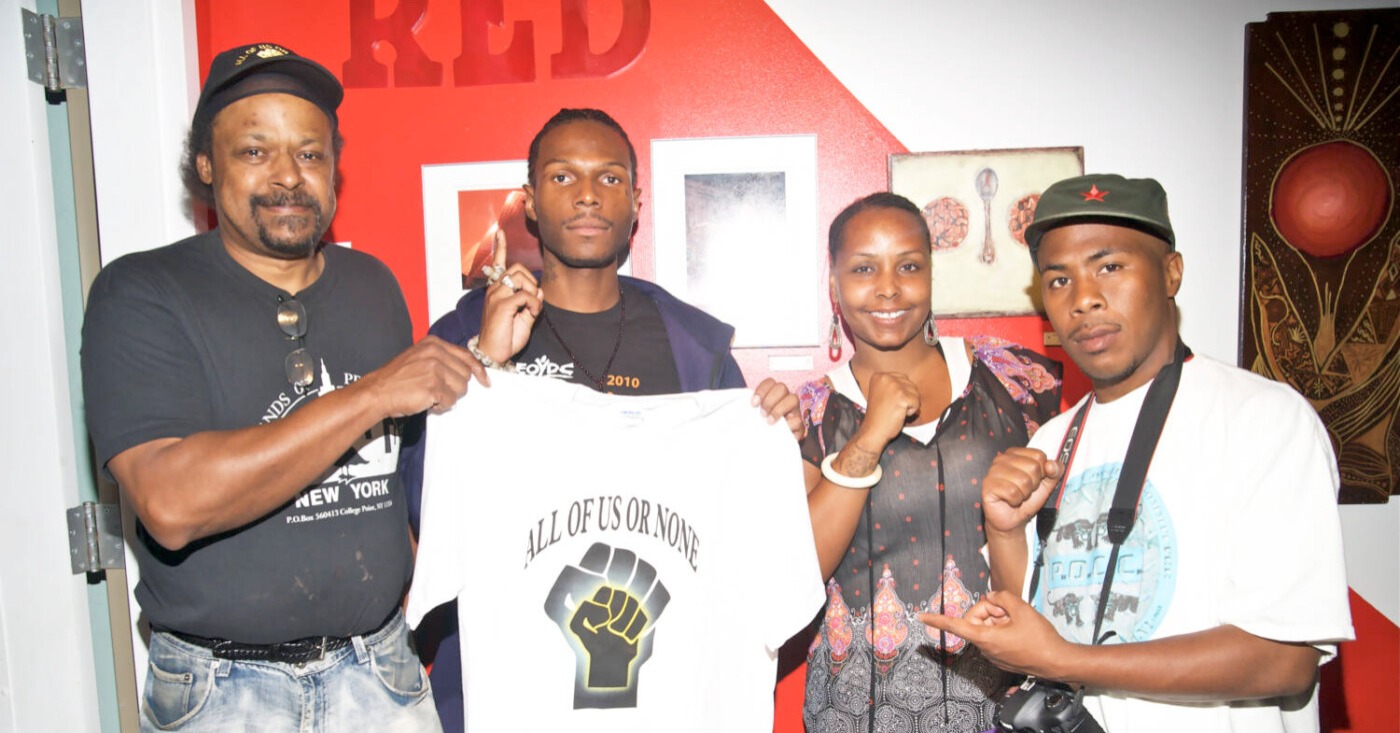
“I tell everybody that the Bay View is the successor to the Black Panther Party’s newspaper” – veteran Black Panther member and BPP archivist Billy X, aka Bill Jennings.
I’m sure that when Muhammad Al-Kareem founded The New Bay View Newspaper in 1976, he did not think that it would be celebrating its birthday a half-century later.
A member of the Nation of Islam and a resident of Bayview Hunters Point, Al-Kareem wanted to create a local version of Muhammad Speaks, which later became The Final Call. He wanted his newspaper to be a local, Black, self-improvement-driven publication without the spirituality.
He produced it sporadically, mostly covering small Black businesses up and down Third Street. In 1991, Muhammad Al-Kareem approached a biracial couple from Alaska, who had recently moved to the area, to query their interest in acquiring the newspaper.
That couple consisted of Dr. Willie and Mary Ratcliff, who had a construction company and were constantly fighting the racist, decades-old San Francisco policy of refusing to give city contracts for construction projects to Black construction companies. So when Al-Kareem offered to sell them The New Bay View, the multibillion-dollar construction industry in San Francisco and the Bay Area was at the top of their hit list.
Al-Kareem sold them the newspaper for $2,000. They changed The New Bay View’s name to The San Francisco Bay View National Black Newspaper. At this time, the paper was black, white and red. In this era, Willie Ratcliff oversaw the distribution of the newspaper, which included distributing 10,000 of the 20,000 newspapers by hand, door to door, in San Francisco.
In 1998-99, young veteran Black writers Kevin Weston and Malcolm Marshall approached the SF Bay View about getting a full page regularly for political poetry. They were in their mid-20s, yet I was being mentored by them in a San Francisco-based youth journalism program called Youth Outlook. I was intrigued by the idea of a local Black newspaper because at that time I had only seen The Final Call, the official newspaper of the Nation of Islam.
I watched what Kevin and Malcolm were doing, and I soon jumped into the fray. When I arrived, the newspaper was bustling with the writings of veteran activists like Marie Harrison, who was leading the fight against PG&E’s policy of polluting Hunters Point, and Dr. Ahimsa Sumchai, who was leading the fight against the Navy, which has refused to clean up the radioactive pollution, in Hunter’s Point, created when it participated in building, testing and disposing of material related to the atomic bombs dropped on Nagasaki and Hiroshima, Japan, in World War II. This conscious neglect effectively made the area a super-fund site, a designation as one of the most poisonous places in the country. I met Pierre Labossiere, co-founder of the Haiti Action Committee and a passionate leader in the fight to end the U.S., U.N. and other foreign occupations in Haiti, his beloved homeland.
I had already known Kiilu from working in the community, but I ran into the writings of the late Black Panther Kiilu Nyasha, who had dedicated her life to the movement to free political prisoners. She corresponded regularly with political prisoners and prisoners of war like Mumia Abu-Jamal, Hugo “Yogi” Pinell, Warren Wells, Romaine “Chip” Fitzgerald and Ruchell Magee.
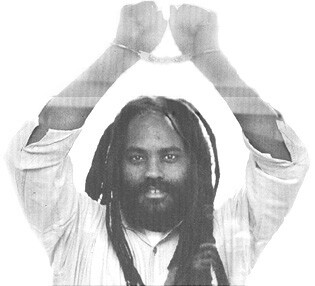
Through the pages of the Bay View, I quickly learned that being a conscious writer who shared my progressive opinion was acceptable at a beginner’s level, but the top level of “freedom-fighter reporting” required the writer to be a direct part of the organizing. The writers that I respect the most were involved in the fight, like El Hajj Malik el Shabazz aka Malcolm X, Mumia Abu Jamal, Huey P. Newton, George Jackson, Steven Biko and Winnie Mandela. The alternative form of reporting is “spectator journalism,” which colleges and universities teach and the mainstream media practices. This is where the reporter creates distance from the subject, supposedly to remain “objective.” While there is a war on Black people, remaining “objective” while our people are being murdered, enslaved, tortured and done unjustly is selling out. It is important for a journalist to understand the political, social and emotional nuance that comes with being engaged in organizing and becoming vulnerable to losing and winning battles with the people being reported on. The Bay View has always been full of freedom fighter writers since I have been around.
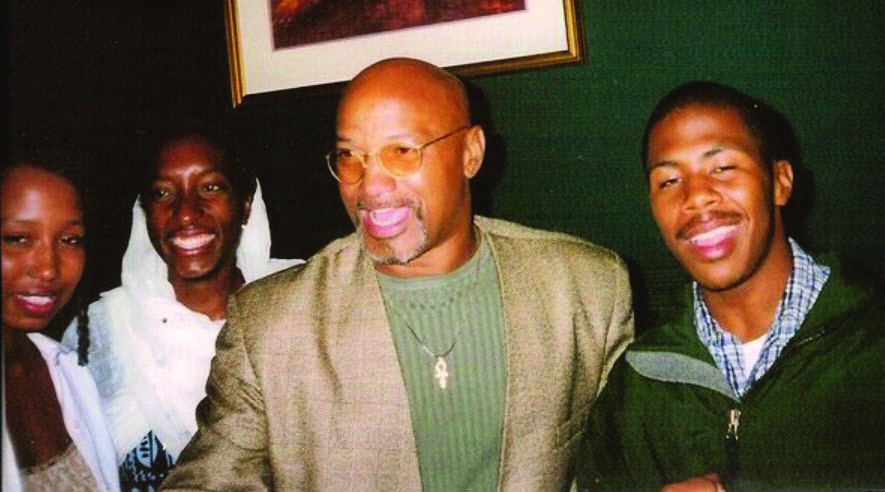
In 2003, graphic designer Terone Ward came aboard and became the creative spine of the paper. At Willie Ratcliff’s suggestion, we added the rising sun from the Black national anthem to the logo, and Terone changed the newspaper’s colors to green and yellow. This was the year that the Behind Enemy Lines section was added to the newspaper, giving incarcerated writers a section to write about their movement, struggles and lives.
This was also the year when Pierre Labossiere and the Haiti Action Committee invited me on a trip to Haiti. I had never met such a determined and resolute group of Black people who were surviving and living in crushing poverty solely because they desired to be free. That week or so I spent in Haiti that year, changed my worldview profoundly. I hadn’t been shaken up mentally like that since I had been to Cuba five years earlier. This was in 2003, and it happened to be approximately six months prior to the U.S. overthrow of the first democratically elected president, Jean-Bertrand Aristide.
Locally, I was becoming a reporter who specialized in police terrorism. Mary and Willie encouraged the hard-hitting, detail-laden, traumatic stories about Black life in the U.S. Over my career at the Bay View, I wrote about police terrorism cases like Idriss Stelley, Terrance Mearis, Laronte Studdesville, Gary King, Oscar Grant, Casper Banjo, Anita Gaye, Nadra Foster, Lovelle Mixon, Kenneth Harding, Mario Woods, Raheim Brown, Aiyana Jones, Sahleem Tindle, Mike Brown, Tamir Rice, Banko Brown and more. In the early 2000s, we were the only newspaper in the Bay Area writing from our people’s perspective – the victims’ – on this topic. And we are still the only publication consistently publishing stories about police terrorism and murder in the Black community. We have recently expanded that coverage to include ICE agents kidnapping Black immigrants and unwarranted government sponsored AI surveillance tools such as flock and axiom cameras, police drones, and data centers.
Back in this time, the internet was starting to really take off. We were the first Black newspaper in the Bay to have a website. The back cover was filled with local activists, artists and community people; we played the part in the society of social media, before social media was even invented. At one point around 2006, we were getting 2.3 million hits a month. Then we were targeted and hacked, and our internet archive up to that point was destroyed.
In 2006, I won an ethnic media award at the New America Media Awards for my coverage of refugee families migrating from Katrina affected areas to San Francisco. The Bay View was the only newspaper in the Bay to appoint a Katrina editor, who lived in the affected zone, allowing us regular access to accurate information.
In 2007, a woman in the community called me to hear how the Oakland Police were exploiting club owners in downtown Oakland. When I was leaving after interviewing her, reporter Chauncey Bailey walked in to interview her for the Oakland Post. The next day, Chauncey Bailey was dead. The Chauncey Bailey Project formed. It was a consortium of journalists from all walks of life who came together to investigate Chauncey Bailey’s murder. I was invited to the first couple of meetings, then I discovered that some of this journalism work was being used by the police to build a case. I wanted to investigate police involvement prior to the murders, which was not a road that the Chauncey Bailey Project was interested in pursuing.
Because I knew one of the suspects and the victim, the Chauncey Bailey Project editors from The Center for Investigative Journalism asked me to be an informant for them. I refused. They then utilized one of their well-known mainstream Black muppet reporters to write a hit piece on me in the Oakland Tribune. Then shortly after, a cover-story hit piece in the East Bay Express soon followed. The newspapers’ writers lied by inferring that I was somehow involved in setting Chauncey Bailey up, and they were attempting to damage my reputation and character. These two hit pieces were retaliation for refusing to play ball.
In August 2008, longtime Black KPFA broadcaster Nadra Foster got into a shouting match with a white manager at KPFA named Lois Withers. Flustered, Withers called and lied to the Berkeley police, saying that Nadra was a crazy woman who had run into the KPFA studios and refused to leave. This was a total lie; Nadra had been a broadcaster at KPFA for over a decade at that point. She was viciously beaten to the ground, kicked in the head, had her arm and vagina stomped on by police, then she was hogtied and taken to jail. Certain broadcasters saw it happen. I was not there, but within hours I received the call that the broadcasters who witnessed the ordeal were waiting on me to break the story because they feared for their jobs. I broke the story by interviewing the witnesses on air at KPFA and, days later, in the San Francisco Bay View.
KPFA tried in every way to get me off covering Nadra’s police beating at KPFA, from passive-aggressive tactics all the way down to direct peer pressure. When that did not work, Pacifica staff and the infamous and dead KPFA lawyer Dan Siegel engineered an internal complaint against me for “intimidating staff.” My real crime was not letting KPFA listeners forget how Nadra Foster was lied about, beaten, hogtied, incarcerated and how she lost her lawsuit. For years, I reported on the minute developments in Nadra’s case in the SF Bay View. The white liberals running KPFA repaid me with a lifetime ban from the station. Despite that, throughout 2024, I was part of the radio show staff and produced news pieces weekly on the Pacifica Radio network, which includes KPFA, on “Capitalism, Race, and Democracy.” They voted me off the show in my absence, after I argued against the non-Black producers wanting to put a white reporter over reporting on the Pan Afrikan revolution in Africa, being led by the Sahel States.
To my knowledge, the widely known case of Nadra Foster, a local Black woman being beaten by Berkeley police after a KPFA white liberal manager lied on her, was not reported anywhere else in the print media.
On New Year’s Day in 2009, BART police murdered Oscar Grant at a BART station in East Oakland, and rebellions followed, week after week, in downtown Oakland. I was initially involved with the street organizing, then I started reporting on the story for the SF Bay View and KPFA. I soon became a defendant after being swept up by police during the initial rebellion. I became one of over 100 defendants, known as the Oakland 100, who were arrested after fighting for the indictment of the policemen involved in murdering Grant. During my arrest, I was stripped of my camera that I used for newspaper photography. OPD refused to return it after I went to court and received a court order. The person responsible for helping me, at the police station, was “sick” or “out for an unspecified amount of time” every time I tried to retrieve my belongings. The Oakland Police Department essentially stole my camera. That was a very small price to pay, during this era, for all of the people who were awakened to police terrorism in the Black community and the lack of police accountability, because of our embedded coverage. The arson charge I faced from the rebellion was dismissed after a 13-month legal fight. The SF Bay View covered the Oscar Grant rebellions, the cases of the Oakland 100, the murder trial of Johannes Mehserle, and the police execution of Lovelle Mixon, extensively within our pages.
Around the time my case ended, I connected with the Haiti Action Committee and Walter Riley of the Haiti Emergency Relief Fund and was on a flight to Port-au-Prince for a second time. This time, Anhk Marketing, run by longtime friends of mine Kamel Bell and Tom Flannery, talked to rappers Yasiin Bey and Jay Electronica about donating $6,000 to a delegation that consisted of doctors, nurses and journalists whose job would be to document the Haitian earthquake of 2010 from the ground, as well as offer free health care to the survivors and people in general. We brought over 35 boxes of medicine donated by the medical community in the Bay Area. When we got to Haiti, the despair was on another level, almost beyond comprehension. There was rubble from fallen buildings everywhere littering the capital, and you could smell the stench of people who were crushed beneath the rubble, whose corpses could not be reached without heavy machinery. You saw armies of rats and flies infesting those areas.
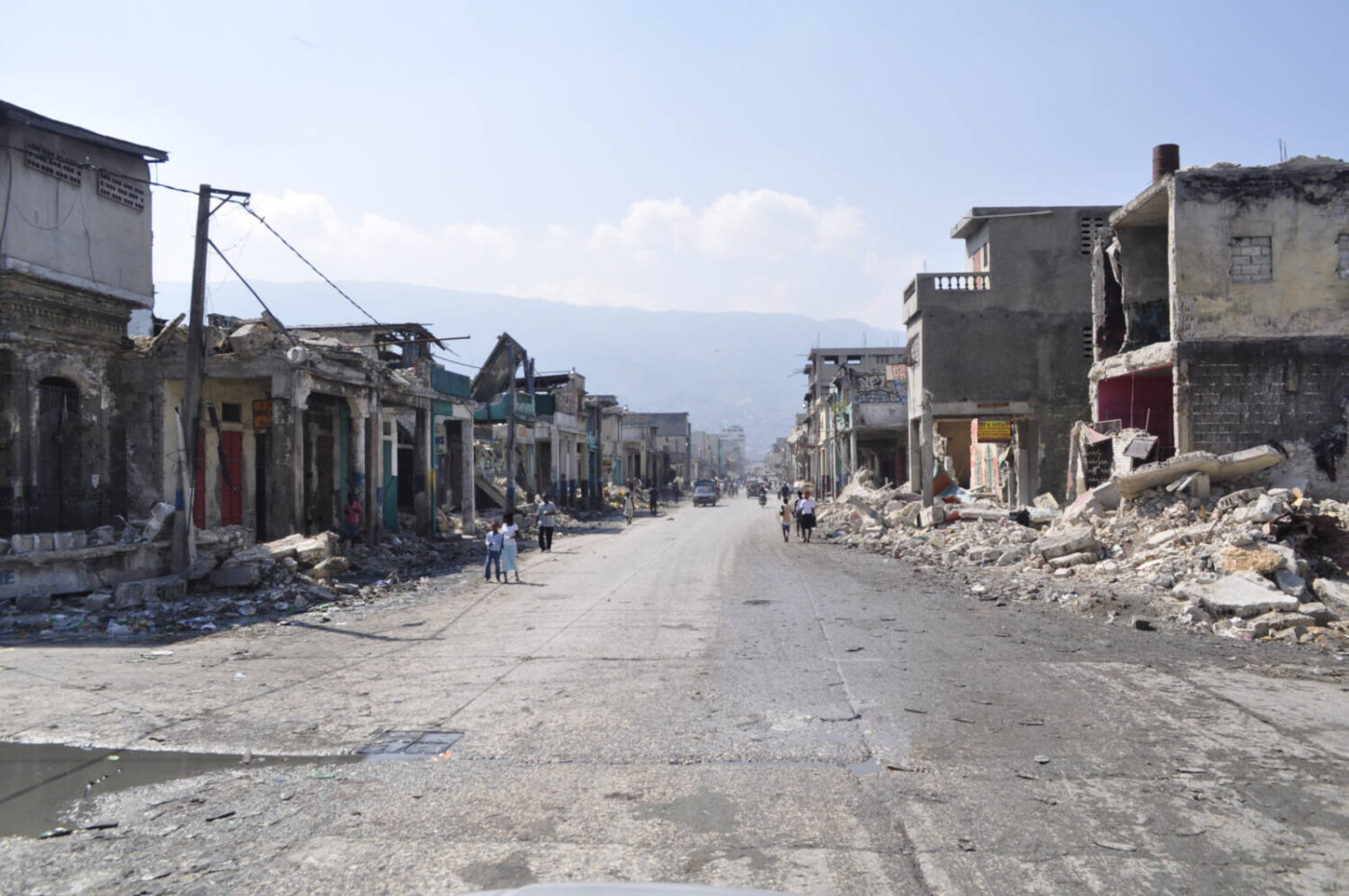
We had the opportunity to work with legendary Haitian freedom fighters and community workers like Rhea Doll and the late Jean Ristil, whom the journalists in the delegation assisted in water distribution throughout Cité Soleil, a prominent neighborhood in Port-au-Prince. We saw the unbearable desperation in the eyes of a people who are/were being robbed of everything through imperialist means. Haiti was once called the jewel of the Antilles by its French colonizers because it was the most profitable colony that France ever had. Now Haiti is considered the poorest country in the Western Hemisphere and one of the poorest in the world.
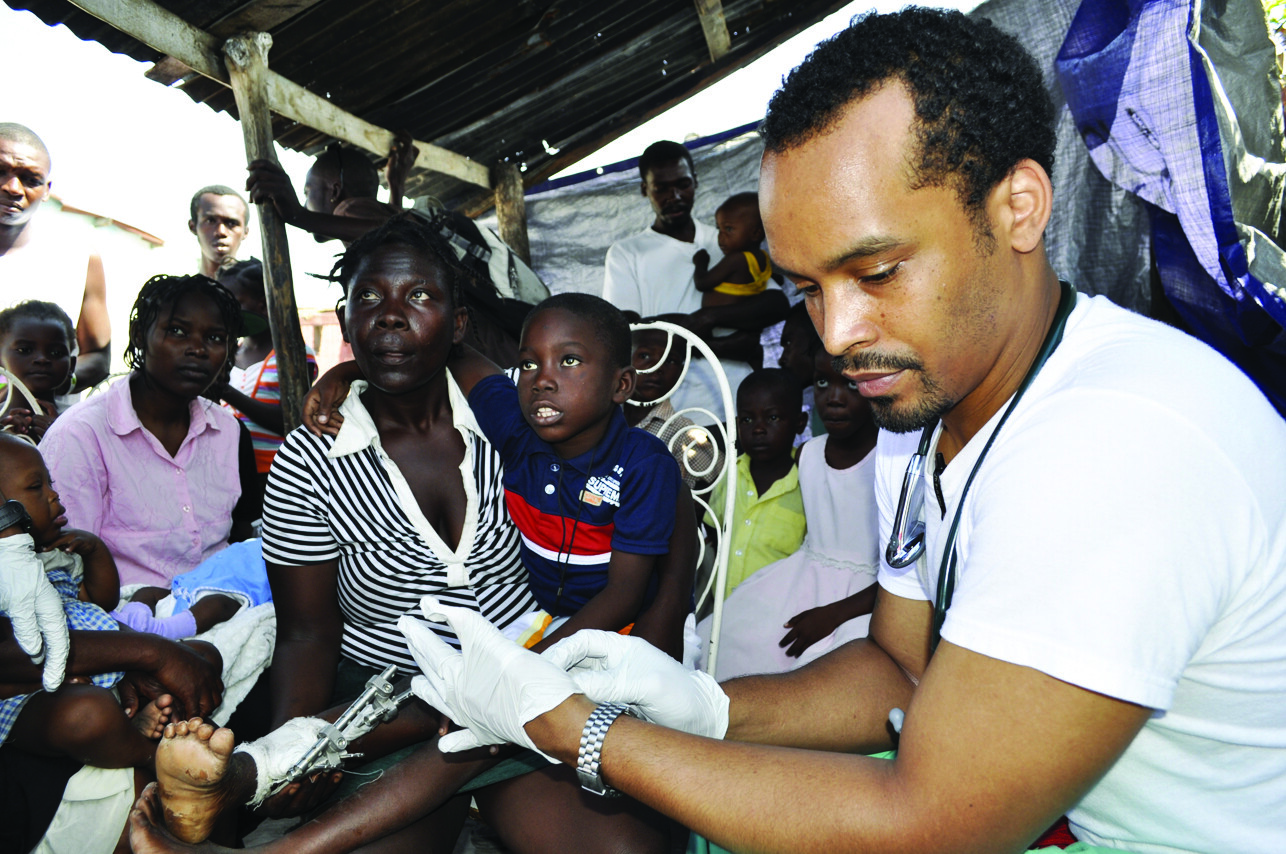
The medical half of our delegation set up a makeshift tent in the middle of a block and started offering free health care. Led by Dr. Chris Zamani, they worked on people hurt by the earthquake as well as people suffering from the physical conditions that imperialism and extreme poverty create.
It seemed as if they worked a taxing eight hours straight a day in the beaming, tropical, Caribbean sun. When it was time to leave the land of the Haitian Revolution, we all had tears in our eyes because it was difficult to say goodbye to people who had become our family and desperately needed what we could offer. Haiti for me is what Africa is for a lot of people. I felt a strong kinship with the people I met, and many times I saw my own reflection in their spirits.
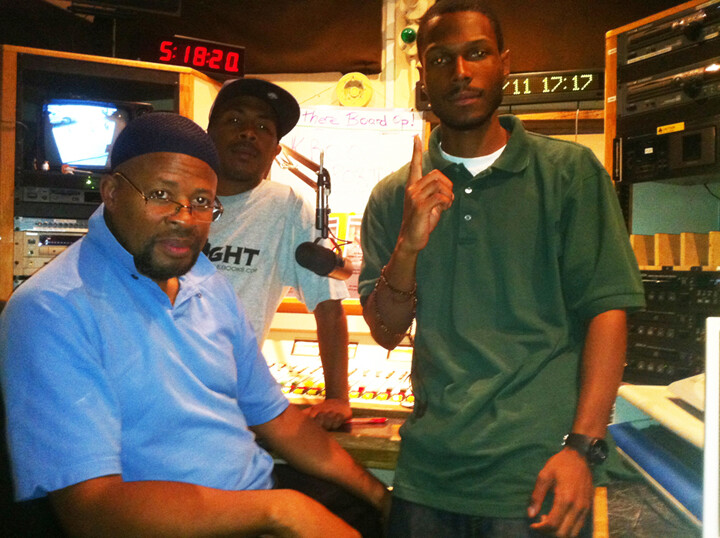
In 2006, Malcolm Shabazz, the grandson of Malcolm X, was introduced to me by the legendary Japanese activist Yuri Kochiyama. Initially, she asked me to help publish Young Malcolm’s words in the Bay View while he was incarcerated. I agreed. He ended up thanking me, then in 2010, followed up by coming to the Bay to meet my comrade Rashida and me in person. Soon after we met, he made the Bay home and never left for an extended period. While based in the Bay, Malcolm spoke at a number of masjids and community centers locally and around the nation while developing his politics and his speaking style. His work was covered extensively in the Bay View. One of the most memorable people that we met together was the late prisoner of war, veteran Panther and member of the Black Liberation Army Sekou Odinga, who was being held captive in New York for his role in liberating Assata Shakur. Our trip was made possible by community organizer and WBAI veteran radio broadcaster Dequi Kioni-Sadiki. Another memorable person we met was veteran Black Panther, political prisoner, award-winning journalist and author Mumia Abu-Jamal, who is still being held captive to this day in a concentration camp in Pennsylvania. Both of these encounters were documented in the Bay View.
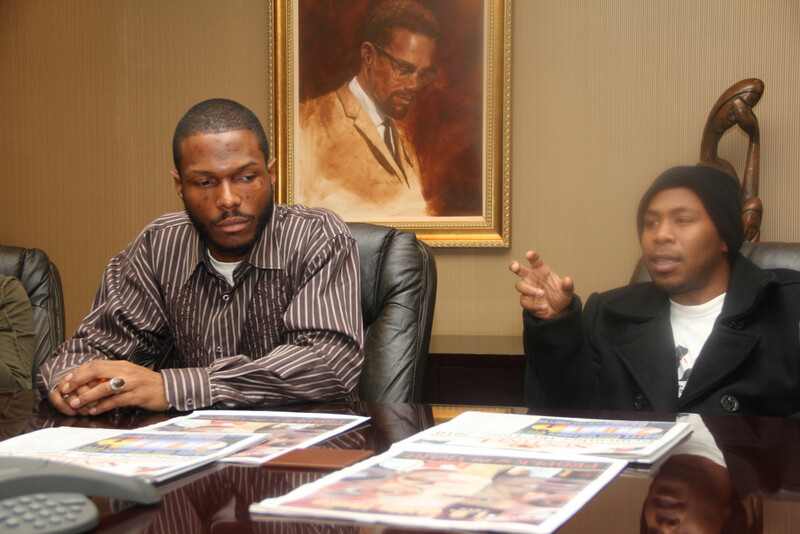
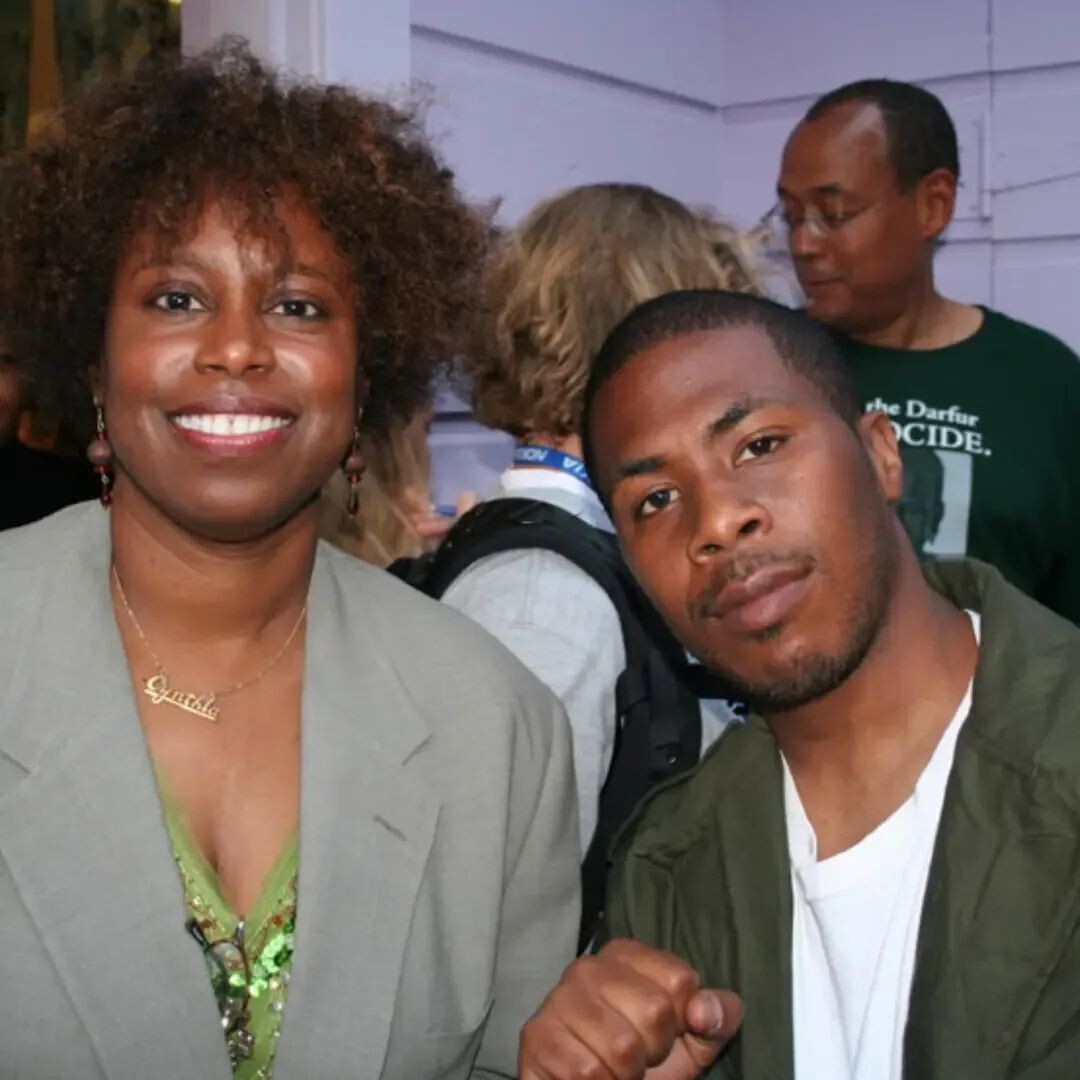
Malcolm’s Hajj to Mecca, as well as our trip with former Congresswoman and presidential candidate Dr. Cynthia McKinney to Tripoli, Libya, were major milestones in our lives, and the details were all intricately recorded in the San Francisco Bay View. When El Hajj Malcolm Latif Shabazz was assassinated in Mexico City under mysterious circumstances in 2013, the Bay View connected with Afro-Mexican activists looking for answers.
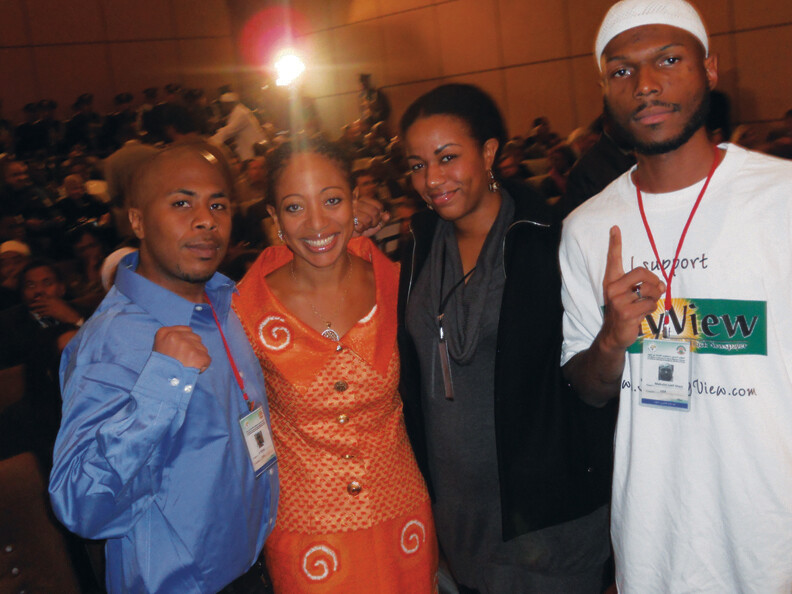
In 2015, prisoner of war Hugo “Yogi” Pinell of the San Quentin 6 was assassinated in the California concentration camp system, after more than 40 years in solitary confinement. The Bay View covered this event and the memorials that followed. No other media platform covered this event as thoroughly or as promptly as the Bay View did.
We are definitely proud to have played a part in the California Prison Strikes of 2011 and 2013, where all organized formations united to protest the hellish conditions of indefinite solitary confinement in California’s SHU program. We wrote supporting stories that included the voices of elected officials, nonprofit leaders and activists, while we also published stories from prisoners describing how important and historic these strikes were.
In 2012, I got shot in East Oakland after getting into an argument in the streets. I was down for about four to six months. After that, occasionally I would write for the newspaper, primarily for money because I was unemployed, although I was given some help from my family. For a long time, I had lost the fire to be a reporter.
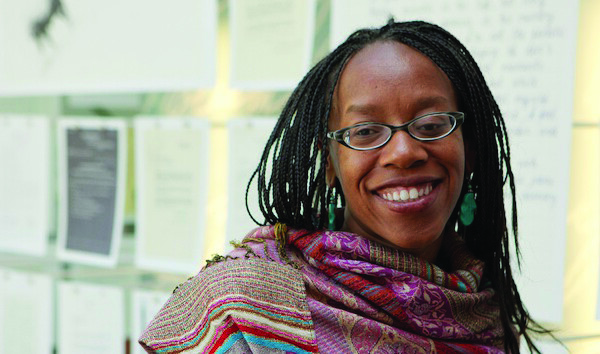
In 2023, I returned to the San Francisco Bay View after a few years’ hiatus from writing. I applied for several grants with the help of Lateefah Simon, who later became the East Bay congresswoman. The Bay View received funding to create the Mumia Abu-Jamal School of Journalism, which notably included students who became staff writers like Zaire Saunders, Robbie and Leah Harmony. I was also able to hire the very talented graphic designer Tasin Sabir, who was one of my early journalistic colleagues at Youth Radio. One of the highlights of this era for me was that my daughter Xion joined the journalism school and the staff. This was also when attorney Allyssa Victory joined the staff as our legal editor.
After six months at the head, I disagreed with the Ratcliffs on some key issues regarding the newspaper and left. Kevin Epps became the executive editor and served in that role for about a year and a half. After he was convicted in a case stemming from a 2016 incident, I returned. I was given back the job of editor in chief and started working alongside Leah Harmony and Tabari Morris, the other two components of the executive staff.
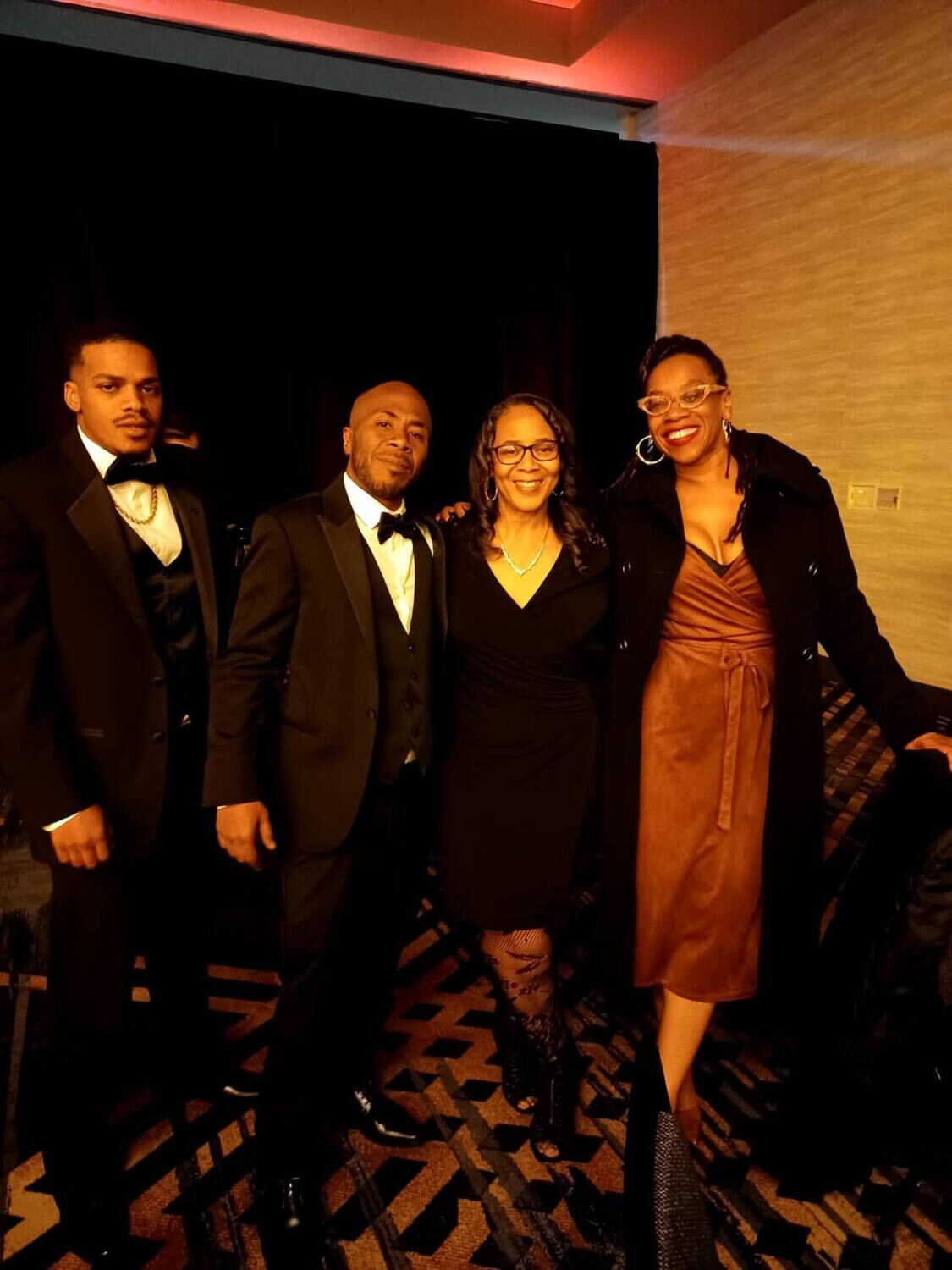
At this point, the San Francisco Bay View is rich in culture, politics and, as you read in this historical piece, experience; but advertisements are not making enough money to pay the bills. We appreciate donations, but we truly need benefactors and community sponsors who can financially help to foot the bills involved in producing a monthly community print newspaper that is free. During the most fascist period of our lives up until now, we have to decide if we will do our part to ensure that Black people have an unbought and unfiltered voice to educate ourselves and to fight the power. In the words of the late Black Panther and Black Liberation Army veteran Assata Shakur, “we don’t have nothing to lose but our chains.”
Please consider donating generously to the SF Bay View during Black Friday, Giving Tuesday and during this holiday season. Also the community is invited to attend the 50th Anniversary Party of the San Francisco Bay View Newspaper on Saturday, Dec. 5, at 6 p.m. at the Black Panther Party Museum in downtown Oakland. Don’t meet us there, beat us there. All Power to the People!
JR Valrey is a veteran journalist and Editor in Chief at the San Francisco Bay View. He can be reached at [email protected]
The post A Brief History of the San Francisco Bay View National Black Newspaper appeared first on San Francisco Bay View.
Based on reporting by SF Bay View.
Black History
IN MEMORIAM: Andrea Stewart-Cousins, New York’s First Woman Senate Leader, Dies at 76
NEW YORK AMSTERDAM NEWS — New York state Senate Majority Leader Andrea Stewart-Cousins, a trailblazing legislator who broke historical barriers as the first woman and first Black woman to lead the chamber, has died at the age of 76. Senate officials confirmed her passing occurred on November 27, noting her decades of public service representing the 35th Senate District.
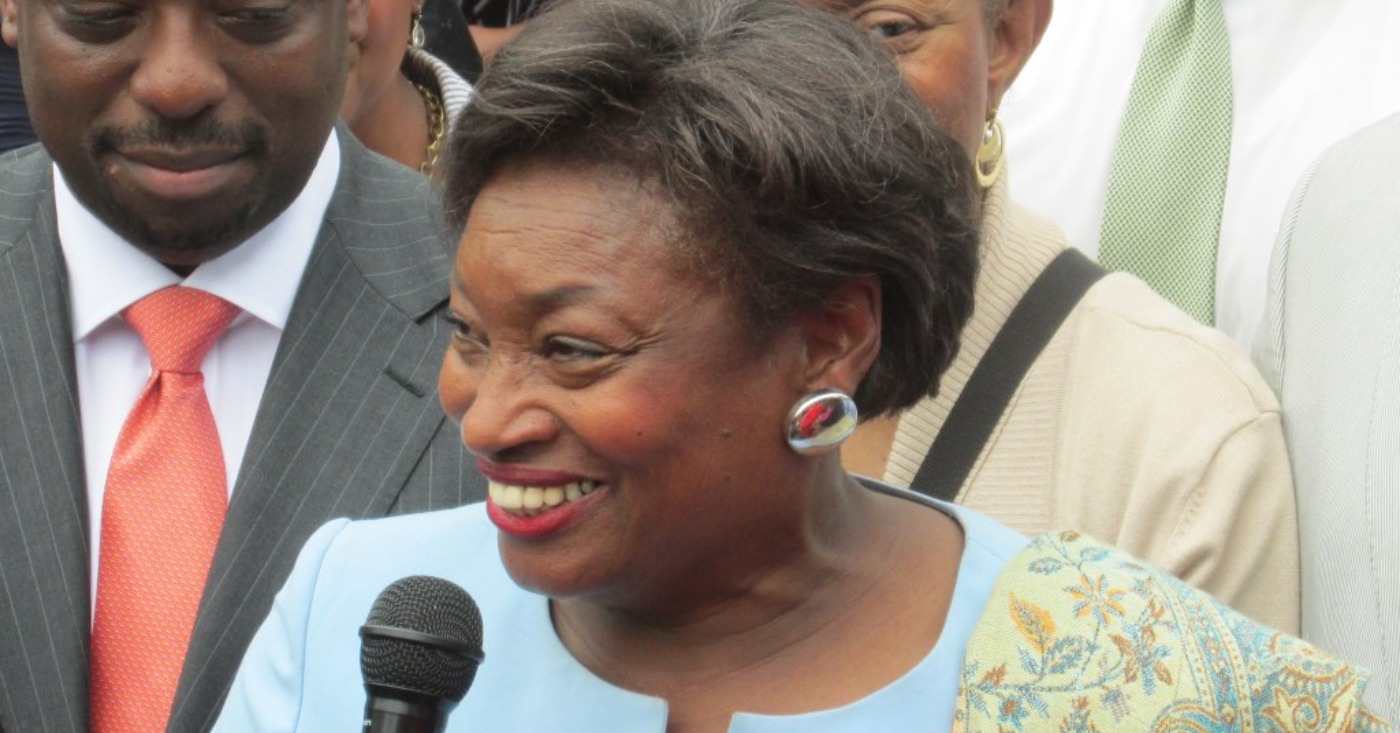
Andrea Stewart-Cousins, the longtime New York state Senate majority leader who made history as the first woman and first Black woman to lead the chamber, has died. She was 76.
Senate Majority Communications Director Mike Murphy confirmed her death in a statement released Friday:
“It is with profound sadness that I announce the passing of New York State Senate Temporary President and Majority Leader Andrea Stewart-Cousins, who died on November 27, 2026, at the age of 76.
Serving the people of the 35th Senate District was one of the greatest honors of her life. Throughout her decades in public service, Stewart-Cousins made a profound impact on the lives of New Yorkers. She was a groundbreaking leader who shattered one of New York’s highest glass ceilings, becoming the first woman to lead the New York State Senate.
She is survived by her brother Robert Stewart Jr and her three children, Kevin, Steven, and Candice, and her six grandchildren. She was preceded in death by her husband, Thomas Cousins.
We ask that you keep Majority Leader Stewart-Cousins’ family, friends, and staff in your thoughts and prayers during this difficult time. Information regarding memorial services and public tributes will be shared in the coming days. We will have further information about the legislative succession in the coming weeks.”
No cause of death has been announced. Funeral arrangements are pending.
The post Andrea Stewart-Cousins, New York’s first woman Senate leader, dies at 76 appeared first on New York Amsterdam News.
Based on reporting by New York Amsterdam News.
Black History
PRESS ROOM: Mississippi Congressman Bennie Thompson to Speak at Oakland Post/El Mundo and Post News Group 64th Anniversary Celebration
POST NEWS GROUP — The anniversary fundraising luncheon, to be held at Scott’s Restaurant in Jack London Square, will also celebrate the 200th anniversary of the founding of the Freedom’s Journal, the first Black newspaper, published March 16, 1827, in New York.
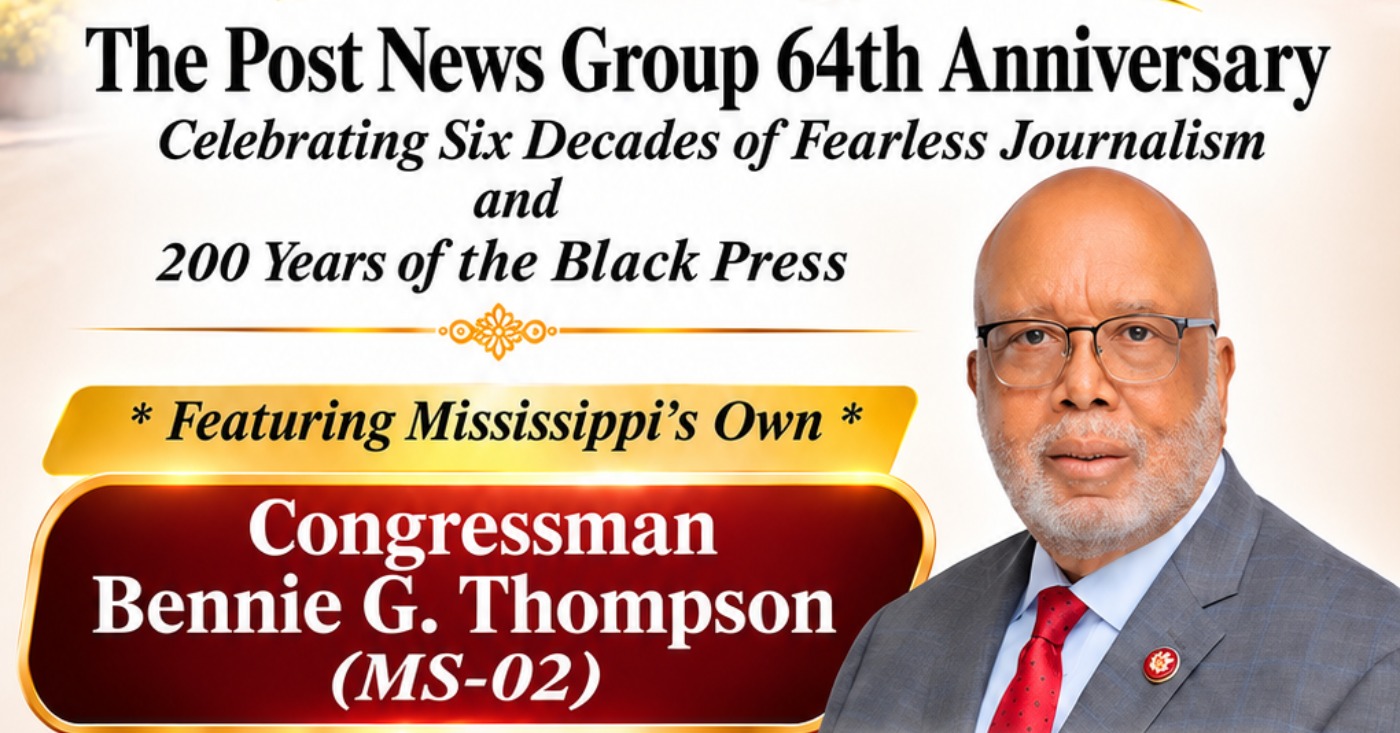
Mississippi Congressman Bennie G. Thompson will be the keynote speaker at the 64th Anniversary Celebration of the Oakland Post/El Mundo and the Post News Group on Feb. 12, 2027.
The anniversary fundraising luncheon, to be held at Scott’s Restaurant in Jack London Square, will also celebrate the 200th anniversary of the founding of the Freedom’s Journal, the first Black newspaper, published March 16, 1827, in New York.
More details on the anniversary celebration will be announced soon.
(The Oakland Post was founded in 1963 by Thomas L. Berkley and his wife, Velda. Paul and Gay Plair Cobb purchased the Post newspapers in 2004.)
The Cobbs’ connection to Thompson goes back decades. After a brief home libation ceremony with “Roots” writer Alex Haley and civil rights activist Beni Ivey in 1973, the Cobbs moved to the South to continue their work in the civil rights, voter education, and political development movements.
As national field director of the Southern Elections Fund (SEF), Paul Cobb helped raise funds, register voters, and politically organize with the late Julian Bond and John Lewis when Bennie Thompson ran for mayor of Bolton, Mississippi, in 1973.
After two terms as mayor, Thompson served on the Hinds County Board of Supervisors in the 1980s before being elected to represent Mississippi’s 2nd congressional district in 1993. A Democrat, he has served as chair of the Committee on Homeland Security from 2007 to 2011 and from 2019 to 2023.
Thompson was appointed chair of the Jan. 6th Congressional Committee by Nancy Pelosi in 2021 and will likely be appointed chair of the Homeland Security Committee, which oversees issues concerning immigration and ICE agents.
In an interview on NPR, Thompson praised Scott Colom’s recent Senate victory, pointing out that Colom is the first Black U.S. senator elected from Mississippi since Reconstruction.
For more information, visit: https://postnewsgroup64th.eventbrite.com
Black Press
Harlem Neighbors Feed Neighbors, Senator Cleare’s Thanksgiving Giveaway Brings Hope to the Table
HARLEM COMMUNITY NEWSPAPERS — State Senator Cordell Cleare partnered with local businesses and community activists to host her annual Turkey and Produce Giveaway on Friday, Nov. 22. Held at the Adam Clayton Powell Jr.
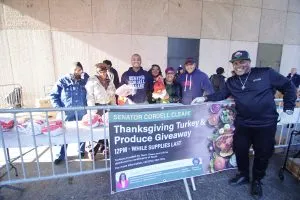
The spirit of Thanksgiving came alive in Harlem on Friday, November 20, as State Senator Cordell Cleare and community partners brought neighbors together for her annual Turkey and Produce Giveaway at the Adam Clayton Powell Jr. State Office Building Plaza.
Beginning at noon, residents visited the plaza at 163 West 125th Street to receive free food on a first-come, first-served basis. The holiday distribution included hundreds of donated turkeys and boxed meals, along with hot turkey dinners, fresh produce and traditional fixings to help families prepare for Thanksgiving.
For households working to stretch their budgets, the giveaway offered practical support during a season when grocery bills and other necessities can place added pressure on family finances.
“Times are particularly harsh economically, there is a lot of anxiety and uncertainty, and if we can help in any way, this is what we do,” Cleare said.
The senator credited local businesses, community organizations and activists with answering her office’s call for donations and assistance. Their contributions helped provide constituents of the 30th District with food for their holiday tables.
“Typically once again, we have Harlem neighbors helping fellow Harlemites,” Cleare said, highlighting the community cooperation behind the annual effort.
Beyond distributing turkeys, the event offered several forms of food assistance, including prepared meals for residents seeking an immediate dinner and produce and fixings for those planning to cook at home.
Cleare expressed gratitude for the partners who contributed, describing the gathering as an opportunity to ease financial strain while helping residents enjoy the upcoming holiday.
With neighbors leaving the plaza carrying bags of food, the giveaway reflected Harlem’s enduring tradition of mutual support. Through donated meals, shared resources and community commitment, Cleare and her partners helped bring Thanksgiving comfort to local households, demonstrating how collective generosity can make a meaningful difference for families.
Based on reporting by Harlem Community Newspapers.
Black History
Remembering Moses Newson and the Power of the Black Press During the Civil Rights Movement
ATLANTA DAILY WORLD — Moses J. Newson, a pioneering journalist who spent decades documenting the American Civil Rights Movement for the Black press, died on November 17 at his home in Baltimore at the age of 99. His daughter confirmed that he passed away from natural causes.
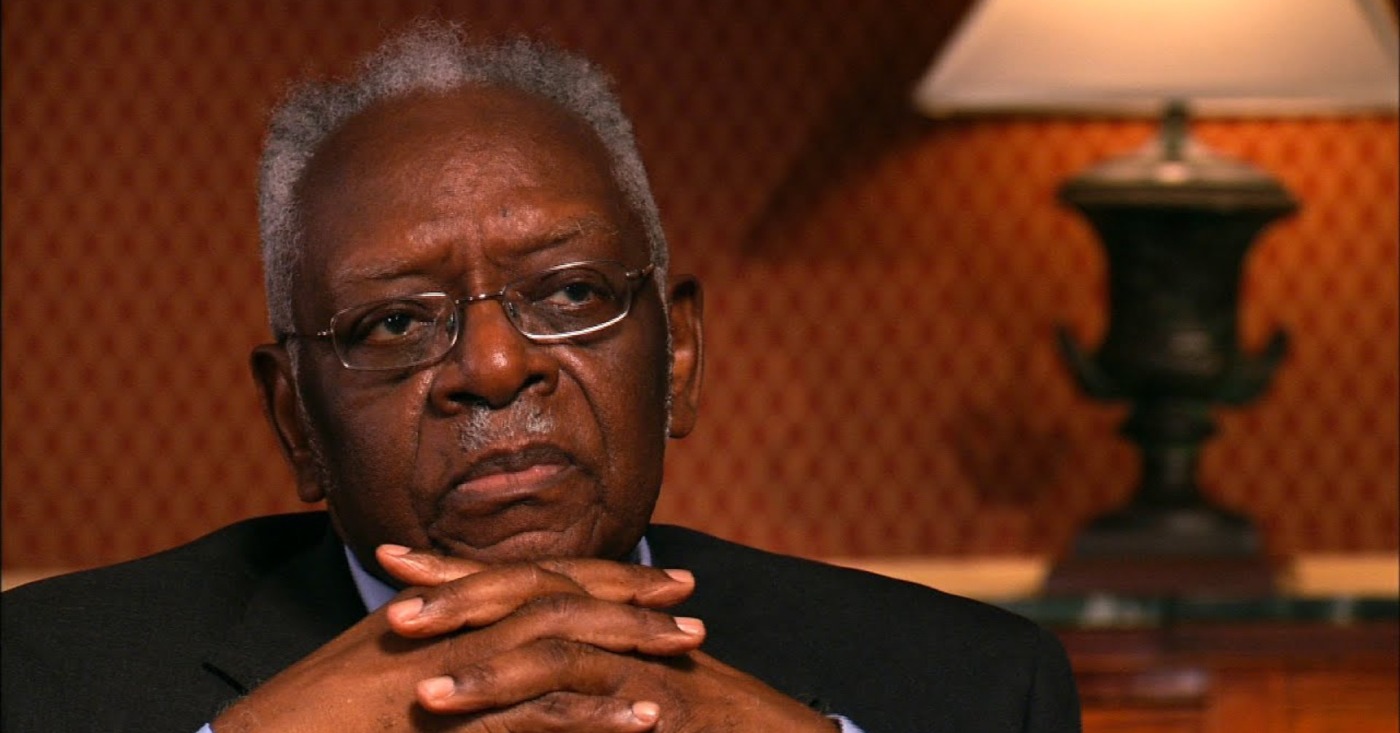
Moses J. Newson, a pioneering Black journalist whose reporting documented some of the most defining moments of the Civil Rights Movement, died November 17 at his Baltimore home. He was 99.
His daughter, Shawn Newson, confirmed to Journal-isms that he died of natural causes.
Throughout his career, Newson documented the struggle for racial equality from the front lines, bearing witness to events that challenged segregation and transformed American society. His work reflected the critical role of the Black press during an era when racial injustice frequently received inadequate coverage from mainstream news organizations.
Born February 5, 1927, in Fruitland Park, Florida, Newson pursued journalism after serving in the United States Navy. He studied at Storer College and Lincoln University in Missouri before beginning his newspaper career at the Tri-State Defender in Memphis in 1952.
His early assignments included coverage of school desegregation and the murder of Emmett Till in 1955, a case that helped galvanize the national Civil Rights Movement.
Newson joined the Baltimore Afro-American in 1957, covering the integration of Central High School in Little Rock, Arkansas, during his first assignment with the newspaper.
Four years later, he placed himself in considerable danger while covering the Freedom Rides, organized to challenge segregation in interstate transportation.
Newson survived the infamous attack on a Freedom Riders bus in Anniston, Alabama, in 1961. Despite the personal danger he encountered, he continued documenting the movement, providing readers with firsthand accounts of the resistance to racial integration.
His reporting also included the integration of the University of Mississippi in 1962 and the 1963 March on Washington. In 1968, he interviewed the Rev. Dr. Martin Luther King Jr. during preparations for the Poor People’s Campaign, shortly before King’s assassination.
Newson spent 21 years with the Baltimore Afro-American, rising from reporter to city editor and ultimately executive editor. He spent the final decade of his newspaper career overseeing editorial operations before transitioning into federal public affairs in 1978.
In 2014, the National Association of Black Journalists inducted Newson into its Hall of Fame, recognizing his contributions to journalism and his extraordinary record of civil rights coverage.
His experiences were also documented through the Civil Rights History Project, a collaboration between the Library of Congress and the Smithsonian Institution’s National Museum of African American History and Culture.
Newson’s family plans to honor his life with a private ceremony in February, when he would have celebrated his 100th birthday.
His death marks the loss of a journalist who witnessed history at extraordinary personal risk. His reporting remains part of the permanent record of America’s struggle for racial equality and a reminder of the indispensable role Black newspapers played in bringing that struggle to the nation’s attention.
The post Remembering Moses Newson and the Power of the Black Press During the Civil Rights Movement appeared first on Atlanta Daily World.
Based on reporting by Atlanta Daily World.


Cardinal Ritter is headed back to the state championship!

COMMENTARY: My Truth — We Can Realize the Dream Together

‘i Hope It Makes People Want to Be 100 Percent Themselves’

COMMENTARY: What’s the Best Meal Served During Thanksgiving?

Queen Latifah Turns Affordable Housing Mission into New Doc

Three Black Physicians Lead Women’s Health Care

COMMENTARY: Who Can Afford to Be Generous Anymore?

A Brief History of the San Francisco Bay View National Black Newspaper

Bennett College Pockets $12 Million for Aaron Douglass Harriet Tubman Painting Sale at Sotheby’s

IN MEMORIAM: Andrea Stewart-Cousins, New York’s First Woman Senate Leader, Dies at 76

HISTORY MADE: Keisha Lance Bottoms Becomes First Black Woman Elected Governor in American History

Multi-Faith Leaders Representing 10 Million People Launch National Anti-Authoritarian Initiative

Christianity’s Racial History

Hundreds of Black Christian Leaders Arriving in Israel for Martin Luther King-Inspired Mission

Michael Shiner: The Enslaved Man Who Wrote His Way into American History

Keisha Lance Bottoms to Govern State Where Her Great-Great-Grandfather Was Enslaved

Don’t Pass the Torch. Expand the Circle.

Superb Woman: Destiny B. Sadler

DOJ Fights to Keep Rep. Ilhan Omar’s Search Warrant Sealed: Report

COMMENTARY: Thank You, Trump, for Making America Great Again!
Cardinal Ritter is headed back to the state championship!

How We’ve Kept Our Events Fresh Since 2009 #shorts

How Mentorship Made Sustainable Real Estate Development Possible #shorts

The Missing Link That Brought Playprofessionals Together #shorts

Preparation: The Key to Sustaining Success #shorts

Why Strong Connections Matter in the Black Business Ecosystem #shorts

Life After Football: How I Rediscovered the Joy of Learning #shorts

Chevy Tahoe: What’s Worth Keeping—and What Isn’t? #shorts

Car Buying Takes 14 Hours—What’s Your Time Worth? #shorts

Cadillac VISTIQ Road Noise: Test This Before You Buy #shorts
-
 Black History1 week ago
Black Barbershops Have Long Given Neighborhood Politics a Place to Unfold.
-
 Featured1 week ago
How Sick Must America Get Before Saying Enough to RFK
-

 Black History6 days ago
Hoodoo Heritage Month Celebrates Origins of African American Folk Medicine
-
 Black History6 days ago
PRESS ROOM: Donalds Transition Website Now Open to All Floridians Who Want to Serve
-
 Featured6 days ago
Scott Colom’s Nike Challenge Goes National, Freshman Democrats Get a Surprise 📱
-

 Featured1 week ago
How to Rob a Bank
