
Commentary
North Carolina Attorney Says States Are “Criminalizing” Protests
NNPA NEWSWIRE — “Looking at the current administration, we are going to have an uptick in protests because the president’s policies are not only affecting African Americans and minority communities, he’s affecting women now and you have more than just one outraged community,” said North Carolina attorney Darlene Harris.


By Stacy M. Brown, NNPA Newswire Correspondent
@StacyBrownMedia
With protests growing increasingly common around the country, the movement to silence those who exercise their First Amendment Rights is fast gaining traction.
At least that’s the opinion of one North Carolina attorney who said the wave of legislation to criminalize protests has hit Charlotte where a controversial ordinance known as the “Extraordinary Event” law even led to a city councilman being charged for carrying a water bottle and a gas mask.
“That ordinace permits police to stop and search residents based on what they deem are extraordinary events, which is an exceedingly vague phrase,” said attorney Darlene Harris.
“For instance, in 2016, my client, Braxton Winston, who was attending demonstrations following the fatal police shooting of a black man, Keith Lamont Scott, was arrested for having a water bottle and a mask – items apparently prohibited by law enforcement,” she said.
“It’s one of those laws that people hardly know about and, of course, ignorance is no defense for breaking the law, but even another client of mine, Gloria Merriweather, who attended the same protest, was charged with inciting a riot for just being in attendance,” Harris said.
The charges against both Winston and Merriweather were eventually dropped but Harris said it’s because of their standing in the community and because they had a good lawyer.
“If it were a public defender and someone of little means or impoverished, they would have a difficult time fighting the charges because you think about the many days they’d need to take off from work to go to court and the loss of income,” Harris said.
Harris recently defended Rayquan Borum, whom prosecutors charged him with first-degree murder and they sought to use the theory of felony murder in convicting him.
Typically, felony murder is applied when someone is in the process of committing an inherently dangerous felony.
In North Carolina, felony murder is punishable by life without parole.
In the Borum instance, the underlying felony was rioting at the 2016 protests connected to the Scott shooting.
“Rioting was used as the underlying felony but it raises legal questions like whether all of those at the protest were engaged in a riot just because of their presence and if someone dies by means other than intentional homicide, are all the attendees responsible,” Harris said.
While Borum was convicted of second-degree murder, the jury failed to convict him on the more serious first-degree murder charge.
“It was a 9-3 split for conviction, but thank God we had four black women on that jury who just wasn’t going for that,” Harris said.
She noted that since President Donald Trump took office, protests have become even more commonplace and not just among African Americans.
“Latinos and women are becoming more involved in protests,” Harris said.
“Looking at the current administration, we are going to have an uptick in protests because the president’s policies are not only affecting African Americans and minority communities, he’s affecting women now and you have more than just one outraged community,” she said.
So, as states and municipalities attempt to criminalize or make demonstrations more difficult, Harris said it’s her job as a defense attorney to keep fighting against such laws.
“You’re seeing this strong rise in people who are dissatisfied in what’s happening,” she said.
“[Governments] are trying to keep control and when you have someone in office like Trump who is causing so much of a stir and so many issues and problems, you’re going to have mass amounts of protests because he has no plans to change his behavior.”
Harris said if legislators and police are allowed to criminalize protests, America’s democracy is imperiled.
“Had North Carolina been successful in convicting my client under the felony murder theory, it would have set a precedent that would have reverberated across the country,” she said.
“I fear the growing anti-protest sentiment coupled with deeply entrenched racism will only invalidate citizens’ First Amendment rights but will also criminalize people who choose to take a stand against injustice,” Harris said.











Black Press
COMMENTARY: Thank You, Trump, for Making America Great Again!
COURIER ECO LATINO — Mr. President, I never thought I would say these words, but here they are: Thank you, Donald Trump. Thank you for making America great again! You promised the American people you would do it. You traveled across this country wearing those red hats, standing before packed arenas, declaring that you alone could restore America’s greatness. And after the political earthquake of the 2026 midterm elections, I have to give you credit.


Thank You, Trump, for Making America Great Again!
Mr. President, I never thought I would say these words, but here they are: Thank you, Donald Trump. Thank you for making America great again!
You promised the American people you would do it. You traveled across this country wearing those red hats, standing before packed arenas, declaring that you alone could restore America’s greatness. And after the political earthquake of the 2026 midterm elections, I have to give you credit.
You said you would make America great again. You just never told us you were going to do it by waking up the very people you thought you could silence.
Mr. President, you may have accomplished what civil rights organizations, political strategists, voter registration campaigns and community activists have spent decades trying to achieve. You woke up Black America. You woke up young America. You woke up women across America. And perhaps most importantly, you reminded millions of Americans that democracy is not a spectator sport.
For years, we have begged our communities to understand the importance of voting. We organized marches, held rallies, registered voters, knocked on doors and pleaded with people to exercise the rights that our ancestors fought, bled and died to secure.
But then you came along.
You attacked diversity, equity and inclusion. You turned the word “woke” into a political insult. You challenged institutions that had worked to create opportunities for historically excluded communities. Your administration’s policies and rhetoric left many Americans wondering whether the progress of previous generations was being pushed backward.
And something remarkable happened.The people you underestimated decided they had heard enough. They didn’t just complain on social media. They didn’t just shake their heads at the evening news. They didn’t just talk about what needed to change. They went to the polls. And, Mr. President, they brought their receipts.
The Democratic victories in the House and Senate, along with the historic rise of Black elected leadership, represent something far greater than a political shift. They represent a powerful reminder that the American people still have the final word.
Consider Georgia. A state once synonymous with segregation, voter suppression and some of the most painful chapters of America’s racial history has witnessed a remarkable political transformation.
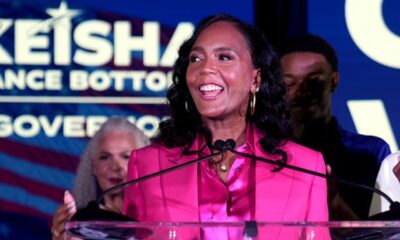
Keisha Lance Bottoms’ historic election as governor represents more than a victory for one candidate or one political party. As the first Black woman elected governor in American history, she represents generations of women who were told to wait their turn, stay in their place or lower their expectations.
And here in Columbus, state Rep. Carolyn Hugley stands poised to make history as the first Black woman to serve as speaker of the Georgia House of Representatives.
Think about that for a moment. Black women, whose political organizing, leadership and determination have so often been taken for granted, are now positioned to help shape the direction of government at its highest levels.
Across the country, Black candidates and other historically underrepresented leaders are demonstrating that political power does not belong exclusively to those who have traditionally held it.
And while you certainly cannot take credit for their qualifications, their sacrifices or their victories, Mr. President, you deserve recognition for helping create the political climate that motivated so many Americans to act.
You tried to make DEI a dirty word. The voters responded by making democracy a powerful one.
You said America needed to return to its greatness. But perhaps the greatest lesson of this election is that America’s greatness was never found in turning back the clock. It was never found in excluding people because of their race, gender, religion or background. It was never found in deciding whose history should be taught, whose voices should be heard or whose opportunities should be protected.
America’s greatness has always rested in its ability, however imperfectly, to move closer to the promise that all people are created equal. And sometimes, it takes a political backlash to remind us just how precious that promise is.
I am particularly proud of the role played by Black women, historically Black colleges and universities, the Black church and a new generation of voters who refused to allow frustration to become surrender.
They understood something that too many people had forgotten.You cannot change the direction of a country if you refuse to participate in determining who leads it.
But let me offer a word of caution. Winning an election is not the same as winning the future. The same energy that carried voters to the polls must now be directed toward holding elected officials accountable. Representation must translate into results. Historic firsts must produce meaningful progress.
We need affordable health care, quality education, economic opportunity, safe neighborhoods, fair housing and a justice system that treats every American with dignity.
We need elected officials who understand that making history is important, but improving people’s lives is even more important. And we must never confuse political victory with the completion of the struggle. The work continues.
Still, there is something wonderfully ironic about this moment in American history.
The man who built a political movement around the promise of making America great again may have helped inspire an entirely different movement — one determined to make America more inclusive, more representative and more accountable.
Mr. President, you told America you were going to bring about change. You did. You told America you were going to shake up Washington. You did. You told America you were going to make people pay attention to politics again. And, Lord knows, you did that too.
But perhaps your greatest political accomplishment was not what you intended to build. Perhaps it was the determination you awakened in those who refused to accept your vision of America.
You reminded us that elections have consequences. You reminded us that silence has a price. You reminded us that the power of the people is greater than the personality of any president. And you reminded Black America of something our ancestors have been telling us for generations:We do not have to beg for a seat at the table when we have the power to help determine who sits at the head of it.
So, Mr. President, from the bottom of my heart, thank you. Thank you for waking up the sleeping giant. Thank you for reminding us that our votes matter. Thank you for inspiring a generation that may have otherwise remained politically disengaged. And thank you for proving that no political movement, no administration and no individual is greater than the American people’s right to choose their own future.
You promised to make America great again. And in one of the greatest ironies of modern American politics, you may have helped do exactly that. Just not the way you planned.
Because, Mr. President, while you were busy trying to take America back, the American people were busy taking their country forward. And that, my friends, is what making America great really looks like.
Black Press
OPINION: Mario Juarez’s Courtroom Admissions Raise Questions About Allegations That Fueled Recall of Pamela Price
POST NEWS GROUP — Juarez’ claims became a significant part of the political narrative surrounding the recall campaign that removed me from office. Even though I denied the allegations, for two years, Juarez’s allegation was repeated across news outlets and used as political ammunition against me. His former local criminal defense attorney Ernest Castillo proclaimed Juarez’ innocence and claimed that the charges were politically motivated. Castillo is now a judge in the Alameda County Superior Co
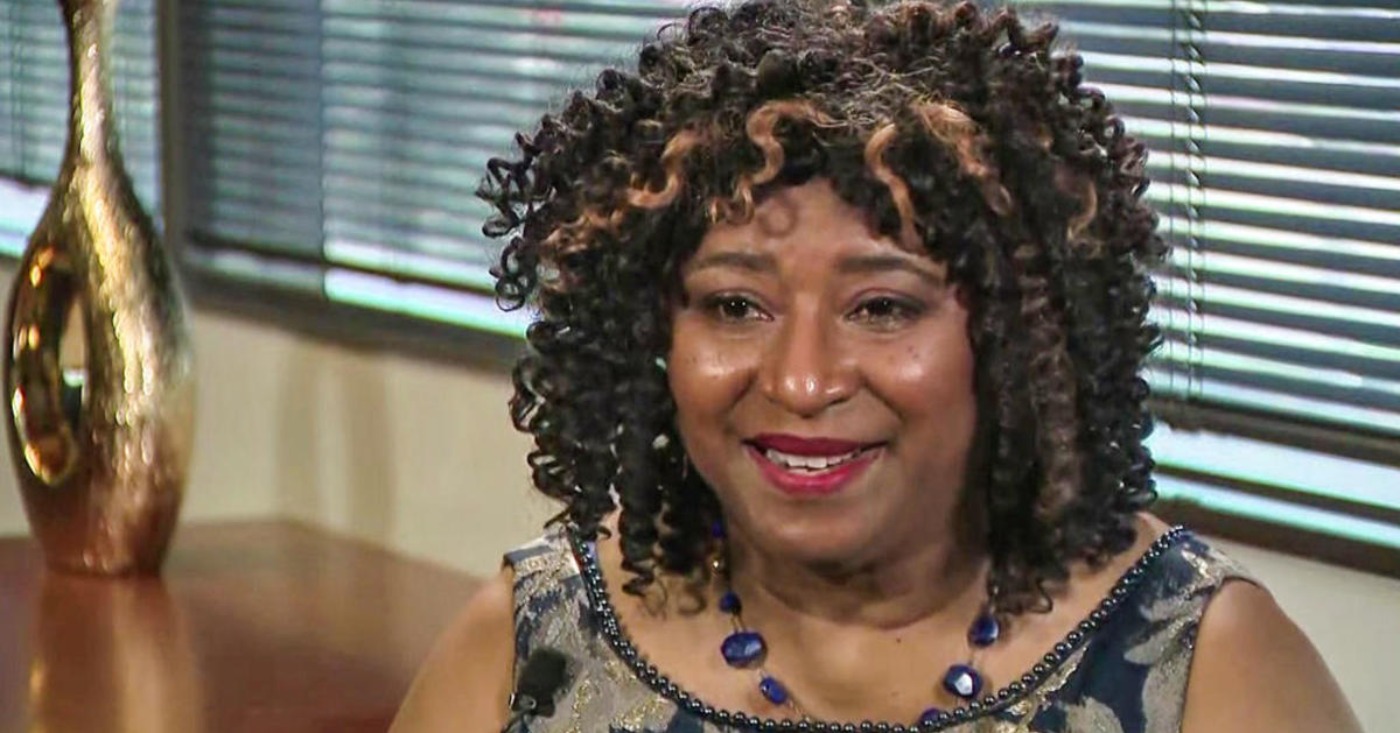
Former Alameda County District Attorney says it may take time, but ‘the truth will always catch up to the lie.’
In 2024, Mario Juarez, the U.S. government’s star witness in former Oakland Mayor Sheng Thao’s bribery case, steadfastly proclaimed his innocence of charges filed by the Alameda County District Attorney’s office under my leadership for allegedly passing tens of thousands of dollars in bad checks.
After he was charged in January 2024, Juarez fabricated a story claiming that I tried to extort $25,000 in cash from him for the anti-recall campaign.
In his recent courtroom testimony at Sheng’s trial, Juarez admitted that he knew the checks he wrote to print brokers Butterfly Direct Marketing were bad and would bounce. He also testified that he took money intended to pay the printer for himself. Juarez has a long, documented history of making false accusations and scamming business partners and acquaintances.
I denied Juarez’s allegation from the beginning. I never solicited a $25,000 payment from Juarez in exchange for dismissing criminal charges. It did not happen.
Now, in open court, the public is hearing Juarez admit that he knew the checks he wrote would bounce and that he took money intended to pay Butterfly for himself.
Juarez’ claims became a significant part of the political narrative surrounding the recall campaign that removed me from office. Even though I denied the allegations, for two years, Juarez’s allegations were repeated across news outlets and used as political ammunition against me. His former local criminal defense attorney, Ernest Castillo, proclaimed Juarez’ innocence and claimed that the charges were politically motivated. Castillo is now a judge in the Alameda County Superior Court.
Juarez’ false allegations against me had political consequences. The media and local bloggers were quick to amplify his allegations. Now they each have an obligation to give the public the same level of attention to the facts that have emerged in court. Anyone who repeated those allegations has a responsibility to revisit them now that Juarez admits he was guilty of the charges.
Juarez’s admissions also raise serious questions about why current District Attorney Ursula Jones Dickson chose to dismiss the charges against him rather than pursue accountability for the criminal conduct he has now admitted under oath. One of Jones Dickson’s first acts in February 2025 was to dismiss the charges against Juarez, despite the victim’s objections.
Political opponents should not be able to turn an unverified accusation into a public verdict. My reputation, my career, and the confidence of voters were all affected by an accusation that was never established as true.
The press should never confuse an allegation with proof and mislead the public about the veracity of a claim. And the current district attorney should not make prosecution decisions based on politics.
About Hon. Pamela Price
Pamela Price earned her B.A. from Yale College and a J.D. and M.A. from the Berkeley School of Law. She was admitted to practice law in California in 1983 and has specialized in federal civil rights litigation since 1991. She has successfully prosecuted civil and criminal cases in Bay area courts and is one of the few Black women to ever argue a case in the U.S. Supreme Court. She served as the elected District Attorney of Alameda County from 2023 to 2024.
Black Press
OP-ED: And Then What?
BLACKPRESSUSA NEWSWIRE — Last week, Democrats regained control of both houses of Congress, flipping at least 43 House seats and seven Senate seats. We flipped five governorships; 500 legislative seats took districts that have been red for a generation and turned them blue, and there are even more races left to be called.
The historic Blue Tsunami we all witnessed across this country provided a clear mandate for Democrats and a clear demonstration that Americans want our elected officials focused on fixing the real problems they face every day instead of promoting a meaningless culture war that has zero impact on our lives while corporate fat cats pick our pockets to line their own.
But, that being said, I can’t help but remember the words of Young Jeezy: And then what?
Look, I’m as blown away by the election results as anyone.
Last week, Democrats regained control of both houses of Congress, flipping at least 43 seats in the House and seven in the Senate. We flipped five governorships; 500 legislative seats took districts that have been red for a generation and turned them blue, and there are even more races left to be called.
According to The New York Times, the Black voter share grew dramatically. In Alabama, it went from 22% in 2024 to 26% in 2026. In Mississippi, it went from 30% in 2024 to 33% in 2026; in South Carolina, it went from 21% in 2024 to 24% in 2026. In Louisiana, it went from 27% in 2024 to 30% in 2026, and in Georgia, it went from 29% in 2024 to 32% in 2026.
That’s a three- to four-percent growth in all of those states, and even in states like Michigan, Illinois, and New York, where there was no measurable change, that’s compared to a presidential year, which, in and of itself, is absolutely huge.
In North Carolina, Senator-elect Roy Cooper got more votes from early voting than Michael Whatley got in total, and the same thing happened in Texas and Georgia. So, yes, I’m pretty excited.
But I’m also a realist because I know progress isn’t permanent and things can change in a heartbeat, especially if you don’t keep your eye on the ball. I know that we need to protect this electoral progress, so we can’t afford to mismanage our politics, our policies, or the promises we made on the campaign trail.
We can’t afford to mismanage the broad coalition that propelled us to a historic election night.
That’s what the Republicans did, and we see what it got them.
In 1967, Dr. King spoke at a similar moment, saying we had to choose between chaos and community, and in 2005, Young Jeezy asked the same question: “And then what?”
Our “what” is simple:
- We have to lower the cost of living.
- We have to save affordable healthcare.
- We have to hold the crooks who’ve been running this country for the past two years accountable for their crimes.
Does that mean we launch a campaign of retribution that gets us bogged down in some neverending impeachment fight? Of course not.
We stand up against corruption while working for the people because they need our help more than they need political payback.
We choose community because we know too well what chaos looks like.
It looks like skyrocketing foreclosure rates and car repossessions. It looks like more than half of Americans are forced to rely on credit cards to pay for basic needs like groceries, rent and utilities, student debt has jumped since the Trump administration reversed course on Biden repayment and forgiveness plans and an unconstitutional war that costs us record-high diesel prices and fertilizer costs, along with 16 unnecessary American deaths.
It looks like Americans are having to take out loans to pay for groceries even though they’re making six figures, and affordable housing is sitting vacant because folks still can’t afford it, particularly with the dramatic cuts to SNAP and Medicaid we saw in Trump’s “Big Ugly Bill.”
According to the Federal Reserve, the net worth of Black households is down 25%. That’s chaos.
We choose community. We choose raising the minimum wage, tackling price gouging, expanding voting rights, and putting back the subsidies that helped you pay for health insurance. We chose standing up for each other.
Young Jeezy asked the question, “And then what?” Community is the answer, and it’s time to get to work.
Black Press
OP-ED: Closing the Next Digital Divide — Communities of Color Must Have a Voice in the AI Future
As artificial intelligence reshapes the global economy, leaders are warning that communities of color risk falling behind if they lack access to critical training. Following the push to bridge the pandemic-era digital divide, new initiatives like the AI Fluency Initiative in Houston are providing practical exposure to these tools for small business owners and students. Ensuring Black and Brown communities are not the last to benefit from this technological transformation requires a combination of literacy programs and developer accountability to prepare workers for an evolving landscape. Read more.
Technology has long shaped who has access to opportunity. As artificial intelligence begins reshaping our workplaces, schools, and daily lives, we must ensure communities of color are not left catching up once again.
In 2020, the pandemic risked widening a digital divide that has put people of color at a disadvantage for years. Access to the technologies that are shaping the world should be available to all. When the internet emerged as the technology of note, children needed access for their education. Adults needed access to find work and succeed in their jobs. Increasingly, upward mobility and economic opportunity depend on having the skills to use the tools transforming our economy.
In Harris County, we worked to make sure our residents were not on the wrong side of that vast digital divide. Through the Office of Broadband, we distributed thousands of hotspots, established more than 100 public Wi-Fi locations, and invested in infrastructure to increase internet availability for under-resourced families.
Today, another divide is emerging. In 2020, the challenge was whether families could get online. Now, communities need to learn to navigate a world increasingly influenced by AI or risk being left behind. More than access, responsible AI requires thinking critically about the technology, its outputs, and the companies behind it. AI literacy builds a foundation for that reflection. We cannot allow Black and Brown communities to be the last to benefit from another technological transformation.
That is why I was proud to partner with Reverend Al Sharpton and the National Action Network (NAN) in September to bring the AI Fluency Initiative to Houston. The program seeks to provide people with practical exposure to AI and show how these tools can be used in jobs, education, small business, and more. Open to the public, programs like this give residents the knowledge to participate in a changing economy and shape the systems developing around them.
Technology companies also have a role to play in making information accessible. OpenAI partnered with NAN on AI literacy in Houston and has supported practical training across the country through OpenAI Academy. Local businesses, older adults, and educators are among the groups the company has targeted through these efforts. This kind of engagement matters. The organizations building AI tools must equip communities with the skills and confidence to use them effectively. When people understand its capabilities and limitations, AI can help them address problems they are already facing.
Entrepreneurs like Kaija Pack are already putting that potential into practice here in Texas. As she built Break Life Houston, she leveraged ChatGPT to develop business strategies and expand her customer base, ultimately growing her business enough to open a second location.
Small business owners like Kaija should understand how AI can help them compete. Workers should understand how it may change their industries. Students should learn how to use these tools responsibly. Communities should understand AI so they can have a meaningful voice when decisions about the technology affect them.
This principle has guided much of my public service. Earlier this year, Commissioner Lesley Briones and I championed Harris County’s first worker Consultation Policy because workers deserve a say in the choices that will impact their livelihoods. Those voices are amplified when we understand their means of empowerment.
AI literacy is a path to that understanding. A seat at the table is most powerful when people have the knowledge they need to advocate for themselves.
Understanding includes risks as well as opportunities. We need to learn how to use these tools safely, and developers have the responsibility to build safety into their systems. OpenAI, for example, has invested in external testing, safeguards, and publicly documented standards for model behavior. Developers should pair innovation with accountability.
Closing the AI divide will be a collaborative effort. Harris County already has networks like our Digital Navigators that connect residents with technology and digital skills. We should build on initiatives like these and make practical AI education accessible at a greater scale.
Too often, people of color have been asked to adapt to new systems after they were built and the rules were already written. With AI, we have an opportunity to be involved from the outset.
The future should not simply happen to us. We should have a hand in shaping it.
Black History
Don’t Pass the Torch. Expand the Circle.
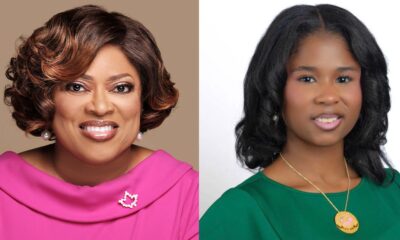
Alpha Kappa Alpha Sorority, Inc. is redefining mentorship by empowering undergraduate women to take active roles in high-level organizational governance. Instead of asking young leaders to wait their turn, the sorority is integrating students like Noah M.P. Harris into international boards and planning committees alongside seasoned veterans like Dr. Tonja L. Ringgold. This intergenerational model aims to combat professional burnout and systemic barriers by offering meaningful responsibility and guidance today, rather than in the distant future, to learn how this approach is transforming leadership. read more.
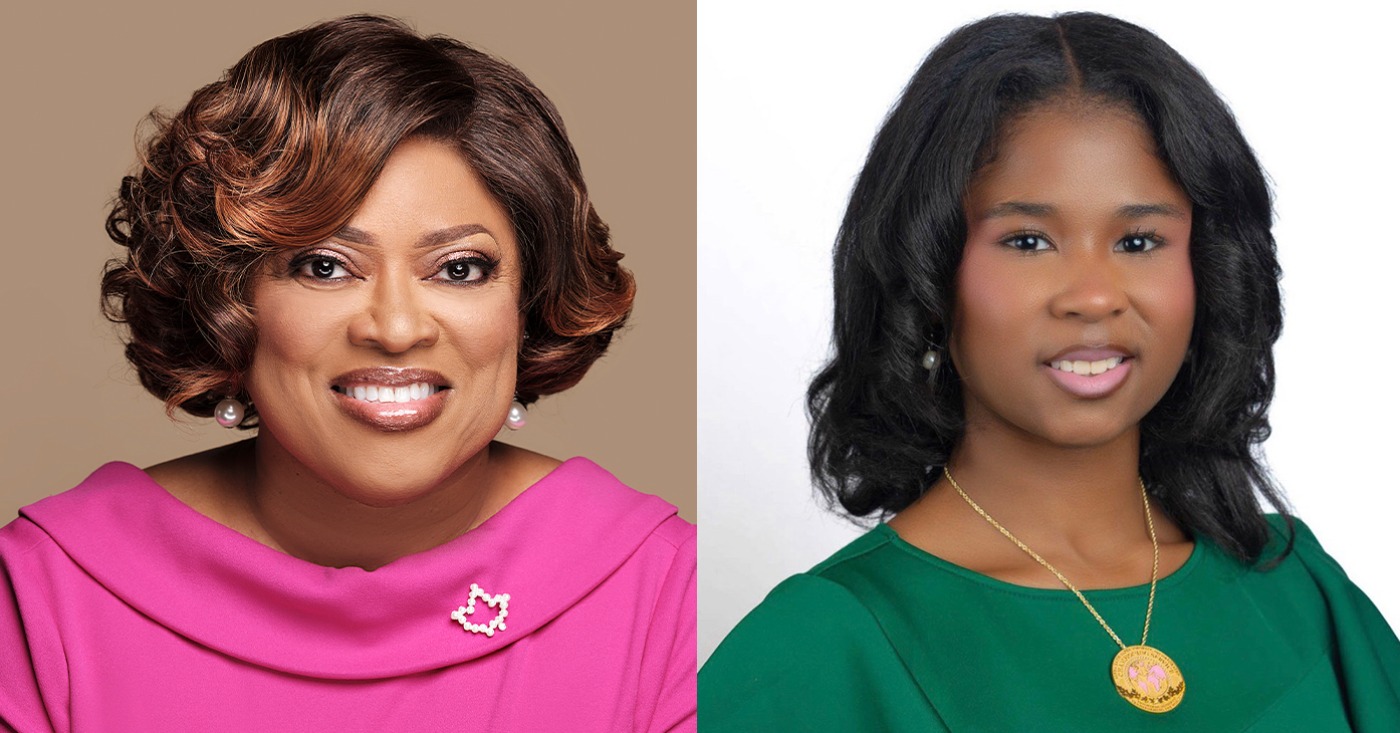
On Nov. 14, hundreds of undergraduate women gathering at Morgan State University in Baltimore for Alpha Kappa Alpha Sorority’s Undergraduate Leadership Institute will do more than listen to presentations. They will run the program. Graduate advisers will take seats in the back of the room.
This is intentional. Too many institutions invite young people to observe leadership without trusting them to exercise it. We believe the future of leadership depends not on one generation stepping aside for another, but on generations sharing responsibility now.
We have seen the difference from two vantage points.
For Dr. Ringgold, Morgan State is where that journey began. Initiated into Alpha Kappa Alpha’s Alpha Delta Chapter in 1982, she recently reunited with two sorority sisters who guided her as an undergraduate, including a former chapter president whose example still informs her leadership today. Forty-four years later, she returns as director of the sorority’s North Atlantic Region, keenly aware of what it means when someone invests in a young woman’s potential. The homecoming carries added significance: Alpha Delta, chartered in 1926, is celebrating its centennial; and the chapter that shaped her is still helping shape new leaders.
For Ms. Harris, leadership is not a distant destination. She is a Bowie State University senior and president of its Eta Chapter who, this summer, was elected Alpha Kappa Alpha’s International Second Vice President. As an undergraduate member of the sorority’s international governing board, she carries student perspectives into decisions affecting the organization. A 2025 Leadership Fellows experience encouraged her to seek that larger platform. To her, leadership is measured by the people she can serve, not simply the position she holds.
Our experiences challenge a familiar assumption: Young people must wait their turn. Founded in 1908 by Black college women, Alpha Kappa Alpha now counts more than 390,000 initiated members across more than 1,122 chapters. That reach brings a responsibility to open doors, not merely preserve tradition.
Deloitte’s 2026 global survey found that 76% of Gen Z respondents were interested in pursuing senior leadership roles eventually, although only 6% of surveyed Gen Z and millennials named leadership their primary career goal. Many cited burnout, excessive responsibility and work-life balance as concerns. Young people are not necessarily avoiding leadership. They are questioning the conditions under which it is exercised.
At a time when companies are pulling back on women’s advancement, Black women face persistent barriers. McKinsey and LeanIn.Org’s 2025 report found that among companies studied, only 60 Black women were promoted to manager for every 100 men. Telling young women to wait their turn cannot fix an unequal pathway to leadership.
Experience matters. Seasoned leaders carry institutional memory, hard-won judgment and relationships that take years to build. But experience cannot develop in a waiting room. Young leaders need meaningful assignments, honest guidance and room to make mistakes. Experienced leaders must also be prepared to reconsider familiar ways of doing things.
We see that exchange in our own relationship. Ms. Harris draws on Dr. Ringgold’s decades of sorority service and higher education experience. Dr. Ringgold listens when Ms. Harris speaks, recognizing that younger perspectives can challenge assumptions and reveal better approaches. Neither of us has all the answers. Both of us have something to contribute.
Our upcoming Undergraduate Leadership Institute will put that principle into practice. Undergraduate members will lead, with graduate members offering guidance and expertise. We’re taking the same approach in planning our 96th North Atlantic Regional Conference, scheduled for March 2027, where undergraduate counterparts will work alongside graduate vice chairs in operations, programming, social activities and logistics. They’ll help plan an event serving the entire region, not just their undergraduate peers.
That is the distinction between inclusion and influence. A seat at the table means little if the people invited cannot help determine what happens there.
Businesses, colleges, nonprofits and civic organizations can do the same. Pair mentorship with meaningful assignments. Involve emerging leaders in decisions before those decisions are final. Give them resources and room to grow. When they challenge a familiar practice, ask whether it still serves its purpose.
We should not ask experienced leaders to disappear or young leaders to wait. The goal isn’t to pass the torch and walk away. It’s to expand the circle of people empowered to lead and build stronger institutions together.
Dr. Tonja L. Ringgold is the North Atlantic Regional Director of Alpha Kappa Alpha Sorority, Incorporated. Noah M.P. Harris, a senior at Bowie State University, is the sorority’s International Second Vice President and president of its Eta Chapter.
Black History
Nixon Unbought, Unbossed and Undeterred Following U.S. Senate Defeat – Free Press of Jacksonville
Angie Nixon, who garnered over 3 million votes in her bid for the U.S. Senate, expressed disappointment after losing to Ashley Moody with a narrow margin of 50-48. Despite the defeat, she remains dedicated to holding elected officials accountable on healthcare and community issues and plans to challenge Moody again in 2028. Nixon highlighted the essential role of Black women in her campaign, noting their significant support and efforts to mobilize voters. Despite a lower voter turnout in Duval County compared to previous elections, grassroots efforts by local activists, particularly Black women, were notable. Nixon aims to inspire future generations of leaders and voters, emphasizing the importance of civic engagement.
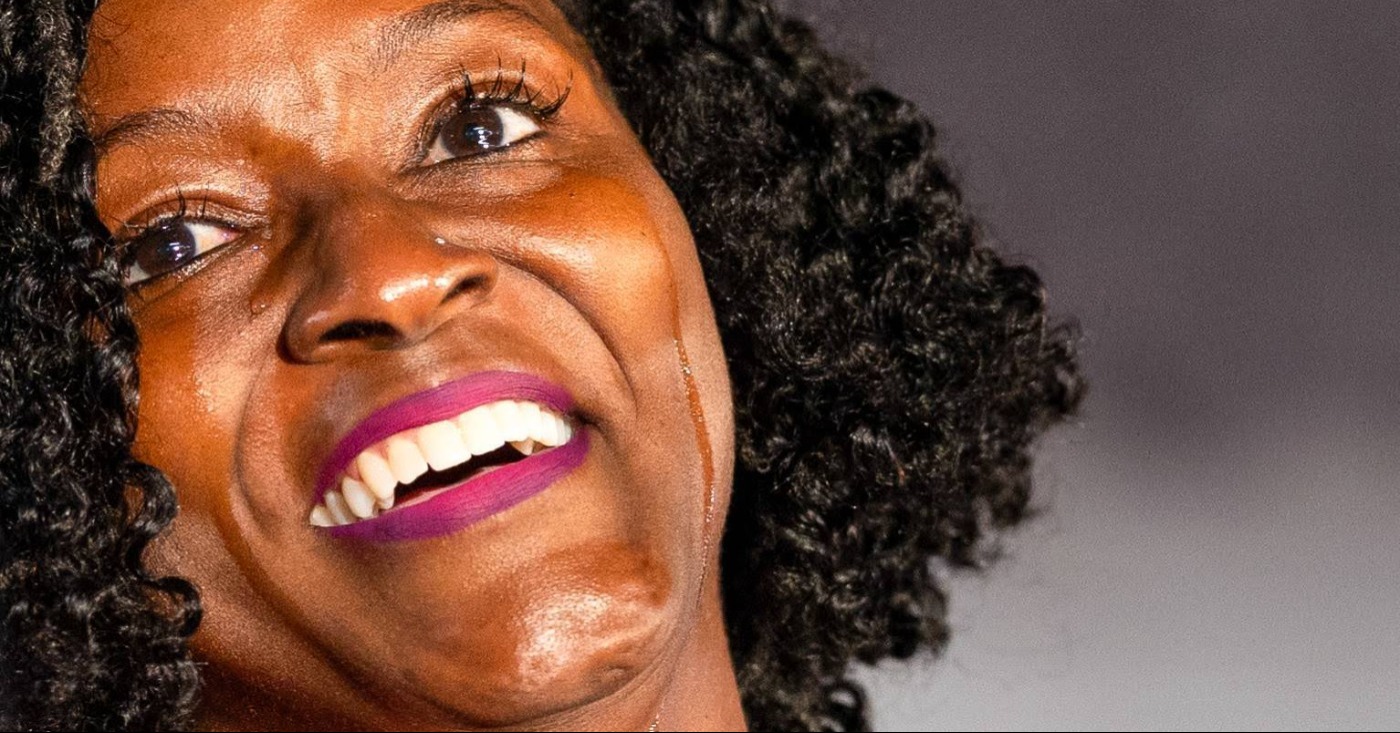
A Black woman from the heart of Moncrief earned the support of more than 3 million Floridians this election season.
Angie Nixon did not become the first Jacksonville resident to serve in the U.S. Senate since 1936.
At least not yet.
The 42-year-old organizer, small business owner, politician and mother says she will challenge Senator-elect Ashley Moody in 2028.
“I’m disappointed in the outcome, but I’m ready to get back to work – everyone is – because we’re going to make sure that Ashley Moody is held accountable for making sure that people have access to quality healthcare, a roof over their head, food on the table, and trying to lower these costs,” Nixon said on Tuesday night. “So, I’m OK. I’m not happy with the outcome, but I’m ready to get to work.”
That fact that Nixon came so close can only be attributed to the scores of Black women who supported her campaign.
Some were on staff, others volunteered, tens of thousands more voted for the former state representative who has used her bullhorn to bulldoze through staid situations in Tallahassee.
A Black woman has never won statewide office in Florida. Nixon’s 50-48 loss to Moody means it still hasn’t happened.
Not many politicians would walk onto a stage after losing a statewide race playing Bonecrusher’s “Never Scared”.
Nixon faced racist attacks from an advisor to President Donald Trump. Nazi rhetoric was used on Fox News to describe Nixon’s supporters. Yet, they traversed the state – from Marathon to Marianna; from Sarasota to South Florida – connecting with voters.
The forlorn, yet hopeful faces of so many Black women in the audience said more than their words could muster. Some were pastors, others were elected officials. One, Sandra Thompson, attended the March on Washington for Jobs and Freedom in 1963.
Thompson spent Election Day providing information to voters outside the Legends Center in Sherwood.
“It’s a very important election,” Thompson said. “We are electing our new leaders: the governor, a senator, and the House of Representatives. We need to get it right.”
If Thompson’s presence at Nixon’s campaign party was any indicator, people did not get it right.
Despite the chance to send a Jacksonville native to the U.S. Senate, hundreds of thousands of Duval County voters did not cast a ballot this year.
Preliminary data from the Duval County Supervisor of Elections shows only 55 percent of eligible voters participated this year.
Felicia Demps was not going to miss this election season. She brought five of her grandchildren with her inside the polling booth.
“They came home, and their teacher said, ‘We need to vote.’ I said, ‘Well, let’s go!”
Demps says she is a reliable Democrat who supported lowering property taxes, supported the 1-mil tax extension for Duval County Public Schools, and cares about community.
“Everyone needs to get together. Everyone wants the streets fixed until it’s time to vote,” Demps said. “The most important thing is: we want these things; but we won’t get out and vote.”
This year’s turnout is better than 2022, when Gov. Ron DeSantis won re-election for fun. But it’s lower than the 63 percent of Duval voters who turned out – many of whom hoped Andrew Gillum would become Florida’s first Black governor.
Black women were at the heart of the local effort to inform and motivate voters.
Cortina Floyd spent three hours waving signs along Moncrief Road ahead of the Northwest Classic football game between Raines and Ribault. Floyd and her Sigma Gamma Rho Sorority, Inc. sisters were among the nearly 50 people who sported Black Greek-letter organizations and informed voters last week.
“As a Black educator, I feel it’s important for me to do my civic duty,” Floyd said.
Exit polling indicates Black women in Jacksonville, in Florida and beyond, did their civic duty.
Afterward, girls of all ages danced on stage after the Associated Press called Florida’s Senate race in Moody’s favor. As they danced, they were unencumbered by the burdens and expectations that are placed on the bodies, minds, and souls of Black girls.
The organizer who lives on the Northside, in a household with multiple union members, says it was not her dream to run for the U.S. Senate. But the woman who openly invoked Shirley Chisholm and Fannie Lou Hamer on the campaign trail committed to doing what she could to help the next generation of girls.
“It’s not necessarily a dream personally. I just want to help people,” Nixon said on Tuesday night. “I wanted to make sure that we’re improving their lives. But the young people that came up to me tonight, they’re excited. They’re ready to continue to do the work and ready to, actually, build a better vision for their future. I’m all hands on deck with them, helping them grow as leaders and helping register more voters so that we can actually win.”


69th Annual GRAMMYs: See the Full List of Nominees!

Choose the Right School, Not the Biggest Name #shorts

Free Financial Coaching: Build a Plan for Your Future #shorts

Kamasi Washington at City Winery

Can Level 1 Home Charging Keep Your Bolt RS Ready? #shorts

Can We Disrupt Systemic Racism? The Ruckus Has a Plan #shorts

COMMENTARY: Thank You, Trump, for Making America Great Again!

Athletics Are a Gift, Not an Identity #shorts
Giving Black Executives What They Need

Coach of the Week – Stephen Dixon

Practitioners of African Traditional Spirituality Offer Ancestral Reverence Ritual Oct. 31

Tamiko Armstead | 2026 Lifetime Achiever in Education

HISTORY MADE: Keisha Lance Bottoms Becomes First Black Woman Elected Governor in American History

OP-ED: The Black Church Writes AI’s Next Chapter

Kickstarter CEO Everette Taylor Shares Tips on Creating and Growing a Business

BLACK MEN VOTE: Mobilizing 100,000 Black Men Ahead of the Midterms 📱

NFN live presents 🎙️ THE ROAD TO BEYOND IWDM 50: WE CANNOT STOP NOW! 8-Week Podcast

Black Household Wealth Plummeted 25% in Three Years, New Data Shows

Secretary of State Shirley Weber Pushes Back Against DOJ Demands Over California Voter Rolls

Columbus’s Oldest Businesses Still Open: 10 That Have Lasted 75+ Years
Choose the Right School, Not the Biggest Name #shorts
Free Financial Coaching: Build a Plan for Your Future #shorts
Kamasi Washington at City Winery
Can Level 1 Home Charging Keep Your Bolt RS Ready? #shorts
Can We Disrupt Systemic Racism? The Ruckus Has a Plan #shorts
Athletics Are a Gift, Not an Identity #shorts
Coach of the Week – Stephen Dixon

2027 Chevrolet Tahoe 4WD High Country Interior 360

Austin vs. Kashmere (9-10-26) | Houston High School Football

Bellaire vs. Westside (9-18-26) | Houston High School Football
-
 Black History1 week ago
Keisha Lance Bottoms to Govern State Where Her Great-Great-Grandfather Was Enslaved
-
 Black History6 days ago
Don’t Pass the Torch. Expand the Circle.
-
 Black Press2 days ago
OP-ED: Closing the Next Digital Divide — Communities of Color Must Have a Voice in the AI Future
-
 Black History1 week ago
Meet Scott Colom, the Mississippi Democrat Leading Tight Mississippi Senate Race
-
 Black Press1 week ago
Eight Black Women Win Georgia Statewide Offices
-
 Featured6 days ago
Democratic Leadership Under Fire, Maxine Waters Challenged & Tyler Perry’s New Political Role 📱
