
Featured
NNPA Announces 2018 National Leadership Awards
Nine national leaders and activists are scheduled to be honored by the National Newspaper Publishers Association when the trade organization hosts its annual National Leadership Awards ceremony at the Marriott Marquis in Washington, DC.


By Stacy M. Brown, NNPA Newswire Correspondent
@StacyBrownMedia
Nine national leaders and activists are scheduled to be honored by the National Newspaper Publishers Association when the trade organization hosts its annual National Leadership Awards ceremony at the Marriott Marquis in Washington, DC.
The 2018 honorees are Rep. James Clyburn (D-S.C.); Rep. Maxine Waters (D-Calif.); Rep. Al Green (D-Tx.); Teacher of the Year and Congressional Candidate Jahana Hayes; Capstone Development Founder Norman Jenkins; E-Commerce leader Arsha Jones; Virginia Commonwealth University Professor Dr. Wally Smith; TV Host Kellee Edwards; and legendary poll worker Laura Wooten, the longest living continuously serving poll worker in the United States.
A trade organization representing the 220 African American owned newspapers around the country with more than 22 million weekly subscribers, the NNPA began the Leadership Awards in 2014.
The awards honor individuals who are national leaders in their specific fields and whose actions have helped to improve the quality of life for African Americans and others.
The producers of the NNPA Leadership Awards Reception decided that the best time to host such an awards reception would be during the Congressional Black Caucus Foundation’s Annual Legislative Conference, a weeklong event that’s held each September.
The CBC ALC week is the largest annual gathering in the United States that features 15,000 to 20,000 African American leaders and influencers.
The underlying joint purpose of the CBC ALC and the NNPA National Leadership Awards Reception is to network, collaborate and strategize collectively for the advancement and empowerment of Black America.
[one_third]

[/media-credit] Rep. James Clyburn (D-S.C.)
[/one_third][one_third]

[/media-credit] Rep. Maxine Waters (D-Calif.)
[/one_third][one_third_last]

[/media-credit] Rep. Al Green (D-Tx.)
[/one_third_last]
[one_third]

[/media-credit] Teacher of the Year and Congressional Candidate Jahana Hayes
[/one_third][one_third]

[/media-credit] Capstone Development Founder Norman Jenkins
[/one_third][one_third_last]

[/media-credit] E-Commerce leader Arsha Jones
[/one_third_last]
[one_third]

[/media-credit] Dr. Wally Smith Florence Neal Cooper Smith Professor of SCD at Virginia Commonwealth University
[/one_third][one_third]

[/media-credit] TV Host Kellee Edwards
[/one_third][one_third_last]

[/media-credit] Legendary poll worker Laura Wooten, the longest living continuously serving poll worker in the United States
[/one_third_last]










Black Press
Fatigue, Bloating, and Inflammation: Spotting the Subtle Signs of MASLD
THE BLACK CHRONICLE — Many individuals mistakenly believe that liver disease is exclusively the result of heavy alcohol consumption, causing metabolic dysfunction-associated steatotic liver disease to frequently go undiagnosed. This condition occurs when excess fat accumulates in the liver, leading to unchecked inflammation and potential long-term damage.


Because many people falsely assume liver disease is strictly caused by heavy alcohol use, life-threatening conditions like MASLD frequently go undiagnosed until major damage occurs. When excess fat builds up in the liver, unchecked inflammation […]
Continue reading with a Black Chronicle subscription. Purchase The Black Chronicle Newspaper Subscription – Now with the All-New TBC Magazine! or The Black Chronicle Newspaper Subscription – Now with the All-New TBC Magazine!! to unlock this article and all subscriber content. Already subscribed? log in.
The post Fatigue, Bloating, And Inflammation: Spotting The Subtle Signs Of MASLD appeared first on The Black Chronicle.
Based on reporting by The Black Chronicle.
Black History
Metro Detroit Faith Leaders Call out Islamophobia in Michigan Senate Race
MICHIGAN CHRONICLE — Faith leaders from diverse religious backgrounds gathered Thursday at the downtown Detroit United Methodist Church to denounce the rise of Islamophobic rhetoric in Michigan’s U.S. Senate race. Clergy members, including representatives from Christian, Jewish, and Muslim traditions, expressed concern over religious identity being used as a weapon in the final weeks before the general election.
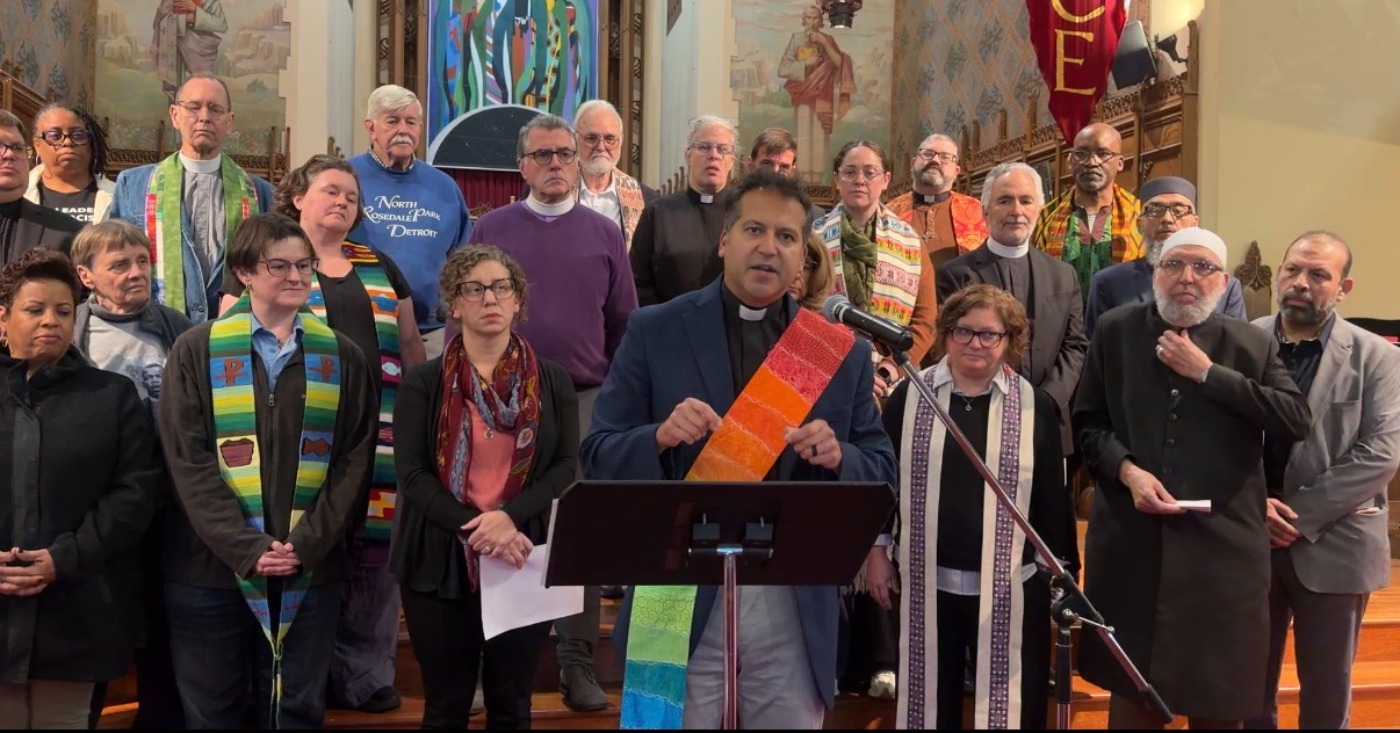
Faith leaders of different religions came together Thursday afternoon inside the downtown Detroit United Methodist Church to oppose Islamophobic rhetoric that’s ramped up ahead of the Nov. 3 general election.
“In the final weeks of Michigan’s U.S. Senate race, we have watched religious identity used as a weapon,” said Rev. Paul Perez, who leads the downtown Detroit church.
Perez and other faith leaders said at the press conference they weren’t endorsing a candidate, but compassion and understanding as Michigan voters decide who to send to the U.S. Senate.
Democratic nominee Abdul El-Sayed would be the first Muslim ever elected to the U.S. Senate. His identity is being used by supporters of Rogers’ campaign to cast doubt on his loyalty to the U.S. Constitution.
Earlier this month, El-Sayed’s Republican opponent, former U.S. Rep. Mike Rogers agreed with a social media post calling El-Sayed a terrorist.
“The charge of dual loyalty has been thrown at Jews for generations,” says Rabbi Alana Alpert, of Ferndale’s Congregation T’chiyah. “When we hear it aimed at our Muslim neighbors we recognize it. And we will not let it be used against anyone.”
At an El-Sayed event Thursday at the Wayne State Fieldhouse, an ant-Muslim activist Cam Higby interrupted his rally as El-Sayed began his remarks.
“Why do you take money from members of the Muslim Brotherhood?” Higby shouted before being escorted out of the gymnasium.
TV and digital ads echo the charge against El-Sayed that he is connected to designated terrorist organizations, which he has denied. He has disavowed and condemned Hamas, the military group controlling Gaza, and the Muslim Brotherhood, a decentralized movement with a long history in Egypt.
While tweets from his half-sister suggest she and her mother had sympathetic attitudes toward the organization, no evidence has been produced that points to El-Sayed being affiliated with the Muslim Brotherhood.
In an interview with Michigan Chronicle, Higby said he doesn’t believe Muslims belong in America. That sentiment is often found in online replies and comments from accounts run by conservative Christians.
sd Democratic voters have also expressed skepticism about El-Sayed’s faith.
Ahead of the primary election, Farmington Hills School Board member Angie Smith caused an uproar online after she told Michigan Chronicle she wasn’t sure whether El-Sayed could represent everybody.
“Don’t come out speaking only Arabic; don’t come out with your Arabic music on; represent everyone,” Smith said.
She later apologized for the comments.
At Thursday’s press conference, Imam Steve Mustapha Elturk of Warren’s Islamic Organization of North America, shared a story about how he eventually earned the trust of new neighbors who feared his congregation was bringing Sharia law when they arrived.
“When a person’s faith is treated as evidence for disloyalty, every Muslim family hears that message. Our children hear it. They come home from school and ask, ‘Are we really American?,’” Elturk said. I want to answer them today from this pulpit surrounded by our Christian and Jewish brothers and sisters, yes, we are Americans. Yes, we are Americans. Our faith is protected by the same Constitution that protects every other faith.”
Pastor Louis Forsythe II of Detroit’s Pleasant Grove Baptist Church, said that liberation of Christians, Jewish and Muslims are tied together.
“The Black church knows what it means to have our loyalty questioned,” Forsythe said. “We know what it means to be told we are less than full citizens. We are called un-American for demanding the rights of the Constitution promised us.
“Our faith carried us through that, and it was the faith of others standing beside us that helped bend this nation toward justice. Dr. Martin Luther King Jr. wrote from a Birmingham jail that injustice anywhere is a threat to justice everywhere.”
Based on reporting by Michigan Chronicle.
Black Press
Dallas Trinity FC Signs Kaiya Brewer to Academy Contract
THE DALLAS WEEKLY — Dallas Trinity FC has signed 15-year-old midfielder and forward Kaiya Brewer to an academy contract, allowing the Kansas City native to train and compete in the Gainbridge Super League while maintaining her collegiate eligibility. Brewer joins the professional club following a stint with Kansas City Current II and a successful youth career with the Utah Royals U19 ECNL.
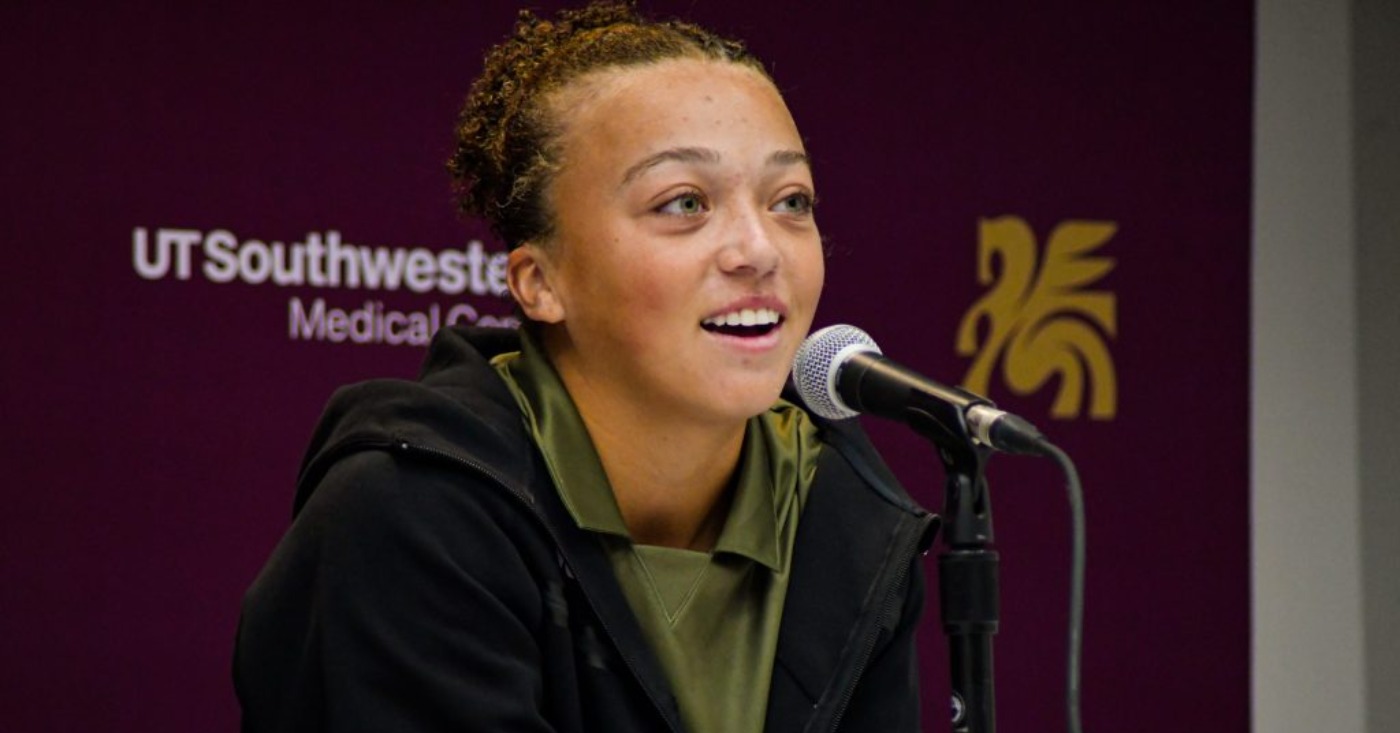
DALLAS (Oct. 21, 2026) – Dallas Trinity FC announced today that it has signed 15-year-old midfielder and forward Kaiya Brewer to an academy contract. The academy contract allows Brewer to train and compete with Dallas Trinity FC in the Gainbridge Super League while preserving her collegiate eligibility.
Brewer joins Dallas Trinity FC after competing with Kansas City Current II in the Women’s Premier Soccer League (WPSL). The Kansas City, Kansas, native also played for Utah Royals U19 ECNL, where she earned ECNL Midwest All-Conference First Team honors.
“Kaiya is an exciting young player with the opportunity to take an important next step in her development here in Dallas,” said Brian Corcoran, sporting director for Dallas Trinity FC. “Our academy pathway gives players the chance to challenge themselves in a professional environment while keeping their college options open. We look forward to supporting Kaiya as she grows within our club.”
Brewer made her first appearance for Dallas Trinity FC on Oct. 17, opening the scoring in the club’s 3-2 win over Chivas Femenil in the 2026 State Fair Clásico at Cotton Bowl Stadium. The international friendly did not count toward official league statistics.
“Kaiya brings pace, vision and a willingness to put pressure on opponents,” said Lee Nguyễn, first team manager and technical director for Dallas Trinity FC. “The Clásico was a great opportunity for her to test herself, and it was encouraging to see her take that chance and score. We’re excited to help her build on that experience and keep developing her game.”
Brewer joins her older sister, Dallas Trinity FC defender Meila Brewer, who signed with the club in September and is representing the United States at the 2026 FIFA U-17 Women’s World Cup in Morocco.
PLAYER BIO
Name: Kaiya Brewer
Pronunciation: KAY-uh BROO-er
Position: Attacker
Height: 5-7
Jersey Number: #26
Date of Birth: December 6, 2010 (15)
Hometown: Kansas City, Kansas
Nationality: United States
Previous Club: Kansas City Current II (WPSL)
TRANSACTION: Dallas Trinity FC signs midfielder and forward Kaiya Brewer to an academy contract. Terms of the transaction were not disclosed.
The post Dallas Trinity FC Signs Kaiya Brewer to Academy Contract appeared first on Dallas Weekly.
Based on reporting by The Dallas Weekly.
Black Press
Dallas Mavericks Unite Players, Legends and the Oak Cliff Community at 2026 Community Tip-Off
THE DALLAS WEEKLY — The Dallas Mavericks launched their 2026-27 season by bringing the annual Community Tip-Off directly to the residents of Southern Dallas. Held at Halperin Park in Oak Cliff, the free event attracted approximately 3,000 children and featured current stars alongside franchise legends.
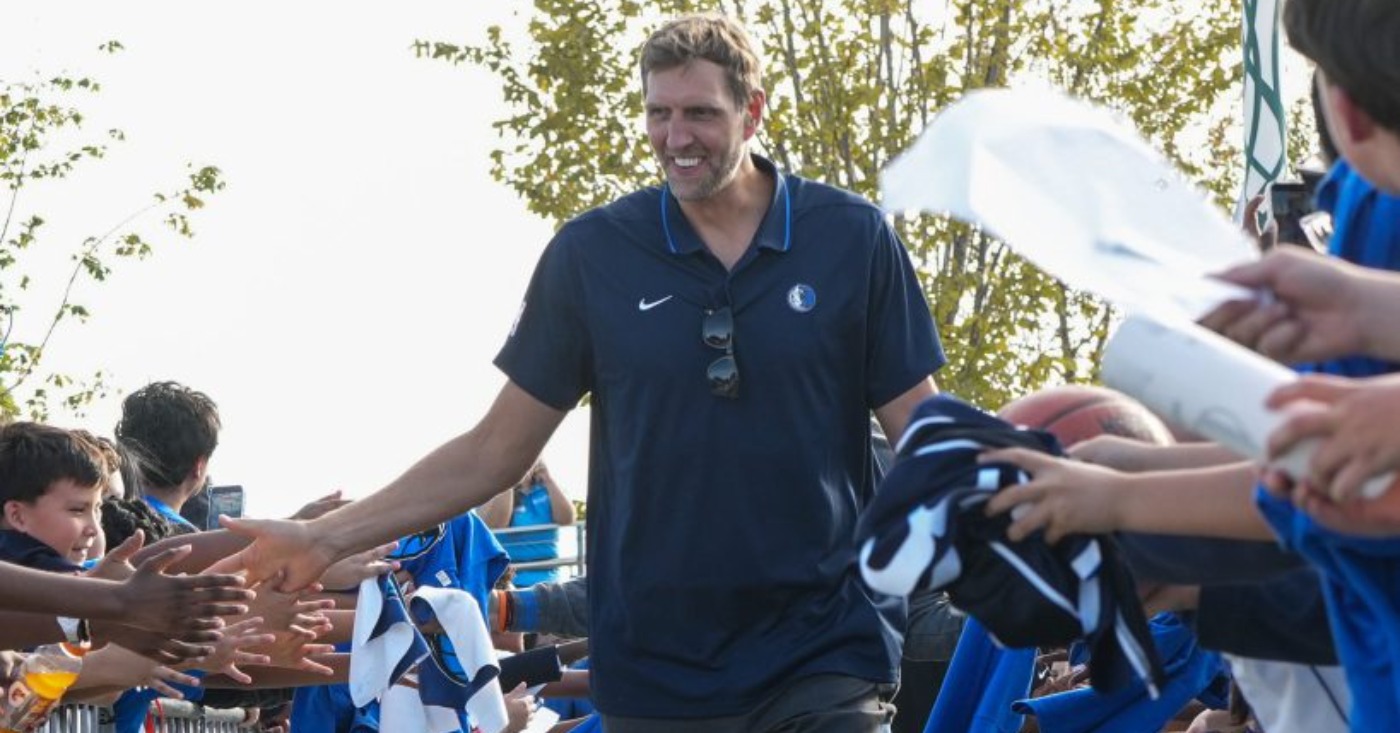
Dirk Nowitzki played 21 seasons for the Dallas Mavericks, becoming one of the most recognizable players in franchise history. However, some of the younger fans attending the team’s 2026 Community Tip-Off had a question for the Mavericks legend.
“I’m sure some of these kids didn’t know who I was because they asked,” Nowitzki said. “Some of them asked me, ‘Did you play for the Mavs?’ I think so, when your parents were around.”
It was one of many interactions that took place Monday afternoon as the Mavericks brought their 2026 Community Tip-Off directly to the people of Southern Dallas at Halperin Park in Oak Cliff.
Thousands of children had the opportunity to play basketball, enjoy festivities and spend time with their favorite Mavericks players and legends at the free community event, presented by Ticketmaster.

Mavericks president of business operations Ethan Casson spoke about the planning that went into bringing the celebration to Oak Cliff and the organization’s desire to create something different for the community.
“I think what we wanted to do for this season was really establish something that was about creating something more substantial, being very intentional with our efforts,” Casson said. “What if we showed up in a very grand way?”
That vision helped bring the Mavericks to Halperin Park, a bridge park constructed over Interstate 35E to reconnect Oak Cliff neighborhoods that had been separated by the highway for decades.
“We recognize what this park physically represents, which is connecting communities,” Casson said. “And when you’re able to visit, which we did with April and her team, the vision started to come to life.”
The park officially opened in May after years of planning, fundraising and community involvement. The Mavericks saw an opportunity to bring basketball and entertainment to a space created to strengthen relationships between neighborhoods.
April Allen, president and CEO of the Southern Gateway Public Green Foundation, appreciated the organization choosing Oak Cliff for its season-opening celebration.
“For the Mavs to come here to Oak Cliff, to spend the time, energy and resources that you see here is really a testament to their commitment to community,” Allen said. “We’re so grateful and honored that they chose us for this experience.”
The Mavs Foundation also presented a $50,000 grant to Halperin Park during the celebration, providing additional financial support for the community space.
Dallas City Manager Kimberly Bizor Tolbert attended the event and emphasized the importance of bringing celebrations and resources to Southern Dallas rather than leaving communities behind.
“We’ve got to continue to make sure that our community members are not left behind, and we’ve got to take things and be bold about going and being a part of community assets like Halperin Park,” Tolbert said.

(Roberto Hernandez/Dallas Mavericks)
The park represents an opportunity for neighborhoods to reconnect while creating a space where residents can gather and build relationships.
“I see that park as now a bridge that’s going to help us do that, even at a higher level,” Tolbert said.
Nowitzki also recognized the significance of the park and the investment that went into bringing the project to life.
“We all know what this park means to Dallas,” Nowitzki said. “Obviously, it’s been a project that’s been in the works for a long, long time.”
The Mavericks transformed Halperin Park into a gathering place filled with children playing basketball, visiting food vendors and interacting with players they had watched throughout the season.
Casson estimated approximately 3,000 children participated in the Community Tip-Off, including students from kindergarten through sixth-grade after-school programs.
Parents, teachers, local businesses and nonprofit organizations also attended, helping bring different parts of the Southern Dallas community together for the afternoon.
Approximately 200 Mavericks staff members helped organize the celebration, along with basketball operations personnel and corporate partners. Casson emphasized that bringing the entire organization together was an important part of making the event possible.
“When I say it was all hands on deck, it was all hands on deck,” Casson said. “It was really just one goal. How do we make it grand?”
Once the celebration began, the players had opportunities to interact with young fans and share messages about pursuing their dreams.
Mavericks forward Morez Johnson Jr. was among those who took the opportunity to encourage children to believe in themselves and work toward their goals.
“I think it means a lot, you know, to give these kids a lot to look up to,” Johnson said.
Johnson also reflected on messages shared with the children by his teammates, including P.J. Washington, Kyrie Irving and Cooper Flagg, about working hard and remaining focused on their dreams.
As one of the newer members of the Mavericks organization, Johnson appreciated the welcome he received and the chance to begin building relationships with the Dallas community.
“They welcomed me with open arms,” Johnson said. “I’m excited to get a chance to spend some time with these kids when I’m done with the interviews. I’m grateful to be here.”
For Casson, having players interact with children was one of the most meaningful parts of the celebration. He believes many athletes can relate to the experiences of young fans because of the coaches, teachers and mentors who helped shape their lives.
“To see your superheroes in person and know that those superheroes raised their hand and said they want to be here and be a part of it for this group is pretty special,” Casson said.
Nowitzki has experienced that relationship with Mavericks fans for more than two decades. Although some of the children were too young to remember his playing career, he appreciated the opportunity to connect with another generation.
“It’s cool to still get embraced by the city that I’ve played for for so long and now is my home,” Nowitzki said. “So definitely special. It means a lot.”
While the Community Tip-Off helped introduce the Mavericks to another generation of fans, the organization hopes to continue bringing similar celebrations to neighborhoods throughout Dallas.
Casson said the team plans to make the event an annual tradition, with future celebrations taking place in different communities.
“This is just the beginning,” Casson said. “This celebration we plan to bring to different communities, special communities throughout Dallas, year after year after year.”
The organization’s plans to visit other neighborhoods will not end its involvement in Southern Dallas. Casson emphasized that the Mavericks intend to continue supporting the community through additional programs, resources and investments.
Halperin Park was built to reconnect neighborhoods that had been separated for decades. On Monday, it also brought together generations of Mavericks fans, from those who watched Nowitzki throughout his career to children meeting him and the current team for the first time.
The Mavericks came to Oak Cliff to celebrate the beginning of the 2026-27 NBA season, but their goal extends beyond one afternoon of basketball and entertainment.
For Casson, the lasting impact of the celebration will depend on the organization’s willingness to continue showing up for the communities it serves.
“I think it’s important when you do any event, big or small, that it’s not a one-off,” Casson said. “This is about showing up again and again and again in different ways.”
The post Dallas Mavericks Unite Players, Legends and the Oak Cliff Community at 2026 Community Tip-Off appeared first on Dallas Weekly.
Based on reporting by The Dallas Weekly.
Art
Brooklyn Roots and Artistic Genius
THE POSITIVE COMMUNITY — Jean-Michel Basquiat emerged from Brooklyn to become one of the most influential artists of the late twentieth century. Born in 1960 to a Haitian father and a mother of Puerto Rican descent, his upbringing was defined by a rich blend of Caribbean cultural traditions and the linguistic diversity of New York City.

Jean-Michel Basquiat was one of the most influential artists to emerge from New York City during the late twentieth century. Born on December 22, 1960, in Brooklyn, New York, he transformed his experiences growing up in the city into a distinctive artistic language that combined painting, poetry, history, music, and social commentary. His work explored Black identity, racism, power, and the experiences of people whose stories had often been overlooked by mainstream institutions. Although his career lasted only a few years, Basquiat left a lasting mark on contemporary art.
Basquiat grew up in a family that exposed him to several cultural influences. His father, Gérard Basquiat, was born in Haiti, while his mother, Matilde Andrades, was born in New York to Puerto Rican parents. Through his parents, Jean-Michel was connected to Haitian, Puerto Rican, and broader Caribbean cultural traditions. Growing up in Brooklyn, he experienced the diversity of New York City, where different languages, communities, musical styles, and artistic expressions existed side by side. These influences would later become visible in his paintings, which frequently incorporated historical references, handwritten words, and symbols.
His mother played an important role in encouraging his early interest in art. Matilde recognized her son’s artistic ability and introduced him to museums, books, and cultural experiences. One important childhood event occurred when Basquiat was seven years old and was struck by a car while playing in the street. During his recovery, his mother gave him a copy of Gray’s Anatomy, a medical reference book that illustrated the human body in considerable detail. Its anatomical drawings influenced his lifelong interest in skeletons, skulls, and the internal structures of the human body. These images later became recurring features in his artwork.
Basquiat was one of four children born to Gérard and Matilde, although the family had experienced the loss of an older son before his birth. He had two younger sisters, Lisane and Jeanine, with whom he shared his early family life. His parents eventually separated, and his mother experienced periods of serious personal difficulties that affected the family. These circumstances formed part of a complicated childhood that included both encouragement and hardship. Although his family relationships were not always easy, his mother’s early support for his artistic interests remained an important influence on his development.
Basquiat’s upbringing was also shaped by language and cultural diversity. He grew up speaking English, French, and Spanish, reflecting the backgrounds of his parents and the environment in which he was raised. In 1974, his family moved to Puerto Rico for a period before returning to Brooklyn in 1976. These experiences exposed him to different cultural perspectives and helped establish the broad historical and cultural interests that later appeared in his work. His paintings often included words and references drawn from different languages, histories, and communities, creating a visual expression of his multicultural identity.
As a teenager, Basquiat became increasingly connected to Manhattan’s downtown art and music scenes. He eventually left home and supported himself through various activities, including selling handmade postcards and painted T-shirts. Along with his friend Al Diaz, he began creating cryptic graffiti under the name SAMO, short for “Same Old.” Their messages appeared on walls around Lower Manhattan and attracted attention for their wit, unusual phrasing, and criticism of established social and cultural conventions. This early work helped Basquiat develop a reputation as an original voice in New York’s underground creative community.
By the early 1980s, Basquiat had moved from street-based expression into the world of professional painting. His work attracted attention through exhibitions that introduced his distinctive style to collectors, critics, and fellow artists. His paintings combined bold colors, rough lines, repeated symbols, handwritten phrases, and images of human figures. Rather than following traditional expectations of polished painting, he created works that appeared energetic, fragmented, and emotionally direct. His artistic approach reflected the rhythms of New York City, where street culture, hip-hop’s emerging influence, punk music, and experimental art intersected.
A central theme in Basquiat’s work was the experience of Black people in a society shaped by racial inequality. He frequently portrayed historical figures, athletes, musicians, and other individuals whose achievements deserved recognition. Crowns appeared throughout his paintings as symbols that could suggest dignity, authority, and the importance of people who had been marginalized. His work also challenged colonialism, racism, and the unequal distribution of power. Rather than presenting history as a distant collection of events, Basquiat brought it into the present, encouraging viewers to consider whose stories were celebrated and whose were neglected.
Music was another important element of Basquiat’s creative life. He played in a band that eventually became known as Gray, exploring experimental sounds alongside his visual art. He was influenced by jazz and the broader musical culture of New York, and his paintings often possess a rhythm that resembles improvisation. Words, marks, and images seem to compete for attention while creating an overall composition. His artistic process shared something with jazz musicians who build a performance through experimentation, repetition, and unexpected changes. This connection between music and painting helped distinguish Basquiat from many of his contemporaries.
Basquiat also developed a significant relationship with Andy Warhol, one of the most recognizable artists of the twentieth century. The two artists collaborated on paintings during the 1980s, combining different approaches to imagery, color, and popular culture. Their relationship brought Basquiat into contact with an influential figure in the established art world, although it also highlighted the tensions between artistic creativity, celebrity, and commercial success. As his reputation grew, Basquiat had to navigate an industry that increasingly treated his identity and personal story as part of the appeal of his work. Nevertheless, he continued to produce paintings that expressed his individual perspective and challenged conventional ideas about art.
Despite his extraordinary success, Basquiat’s life was tragically short. He died in New York City on August 12, 1988, at just 27 years old, from an accidental drug overdose. His death ended a remarkably productive period in which he had moved from an underground artist in Brooklyn and Manhattan to an internationally recognized painter. His final years have also encouraged broader discussions about the pressures faced by young artists, the demands of celebrity, and the difficulties of maintaining personal well-being while working in a highly competitive industry. His death remains a painful reminder of the distance between public recognition and the private struggles a person may experience.
Today, Jean-Michel Basquiat’s legacy extends far beyond the galleries in which his paintings are displayed. His work is held by major museums, studied by scholars, and admired by artists across generations. His Brooklyn upbringing, Haitian and Puerto Rican heritage, family experiences, and encounters with New York’s streets all contributed to the development of an artistic vision that was unmistakably his own. Basquiat demonstrated that an artist did not need to follow traditional academic pathways to create work of lasting significance. His paintings continue to speak about identity, inequality, history, and the power of creative expression. From the streets of New York to the world’s leading museums, Basquiat remains a symbol of artistic independence and the enduring influence of Black creativity.
Based on reporting by The Positive Community.
Black Press
NCCU Snap Three – Game Losing Streak with Win over Delaware State University
NORTH CAROLINA CENTRAL UNIVERSITY – CAMPUS ECHO — North Carolina Central University snapped a three-game losing streak on Friday with a decisive 31-12 victory over Delaware State University. Despite allowing an early touchdown, the Eagles regained their composure through a strong ground game led by freshman running back Gino Addison, who recorded 214 rushing yards and two scores.
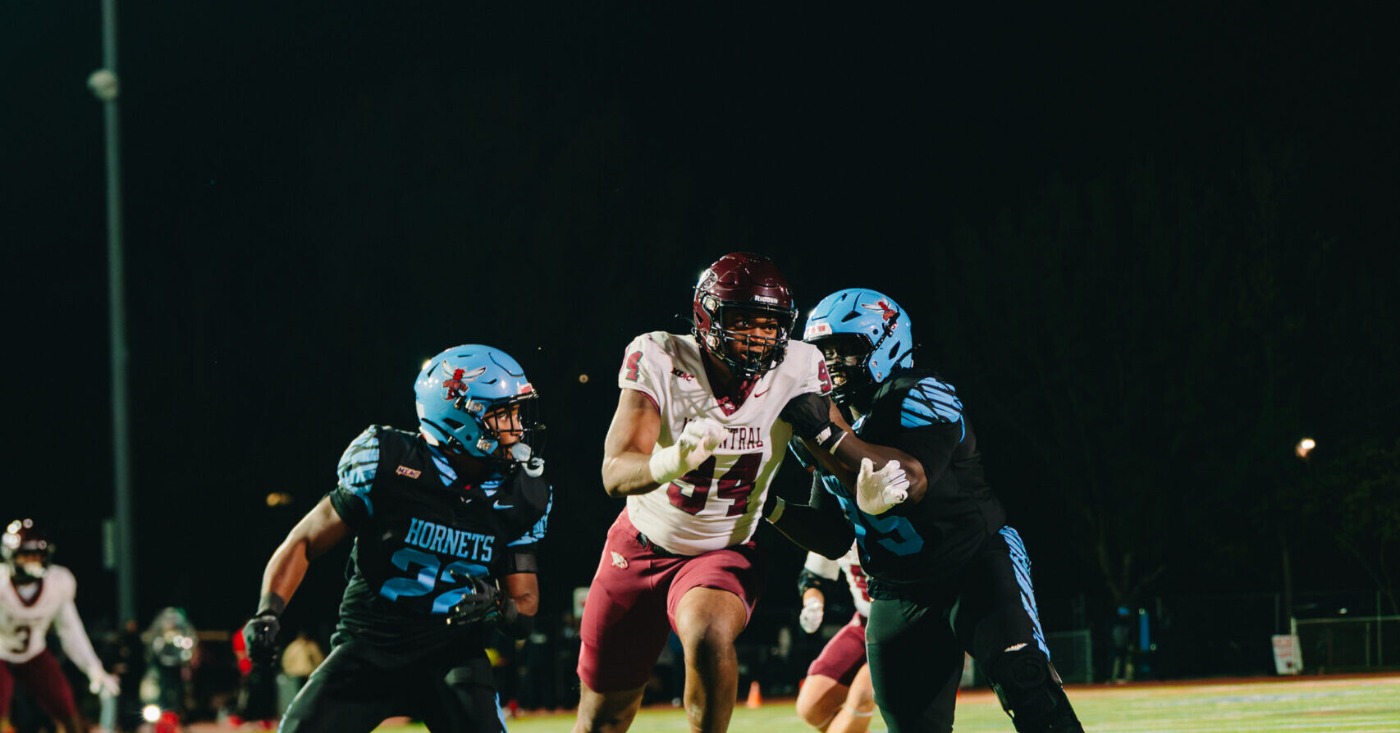
N.C. Central University snapped its three-game losing streak Friday, defeating Delaware State University 31-12.
After three consecutive losses, the Eagles entered Friday’s game determined to turn their season around. NCCU played with confidence, communicated effectively and showed greater consistency on both sides of the ball.
The Eagles’ offense struggled to maintain consistency early in the game but gradually found its rhythm, building momentum and moving the ball down the field. Despite allowing the Hornets to score an early touchdown, the Eagles remained focused and continued to fight.
Freshman running back Gino Addison recorded 214 rushing yards and two touchdowns, while sophomore running back Zion Dobson contributed 57 rushing yards and a touchdown.
Sophomore quarterback Cobey Thompkins also connected with fifth-year tight end Luke Bracey for a touchdown, adding to the Eagles’ offensive production.
Freshman specialist kicker Riley Daniels continued to deliver on extra-point attempts following touchdowns. Daniels also made an important tackle during a kickoff against the Hornets, contributing beyond his kicking duties.
The Eagles’ defense remained strong throughout the game, making it difficult for the Hornets to advance the ball and forcing them to punt multiple times.
Freshman defensive back Amari Sifford recorded two interceptions, while senior defensive lineman Zarion Walters contributed a sack to help limit Delaware State’s offensive opportunities.
The Eagles ability to maintain their composure and build momentum helped them secure the 31-12 victory over Delaware State University.
The Eagles enter next week with the record of 3-5.
NCCU will face Howard on October 31st against Howard at O’Kelly – Riddick Stadium streamed on ESPN+.
The post NCCU snap three – game losing streak with win over Delaware State University first appeared on Campus Echo Online.
Based on reporting by North Carolina Central University – Campus Echo.


Fatigue, Bloating, and Inflammation: Spotting the Subtle Signs of MASLD

Metro Detroit Faith Leaders Call out Islamophobia in Michigan Senate Race

Dallas Trinity FC Signs Kaiya Brewer to Academy Contract

Dallas Mavericks Unite Players, Legends and the Oak Cliff Community at 2026 Community Tip-Off

Brooklyn Roots and Artistic Genius

NCCU Snap Three – Game Losing Streak with Win over Delaware State University

Wala Blegay on the Future of Energy Grid Stability and Data Center Concerns

Gopher Football: Can They Rekindle 2019 Magic Or Are They Just Average? #shorts

The Conversation with Al McFarlane (10/27)

Citizen Savings Bank: Oldest Black-Owned Bank in US #shorts

OP-ED: Haiti TPS: Have We Lost Sense of Humanity?

Remembering Chauncey Bailey as Student Journalists Face Threats to Truth-Telling

All Skinfolk Ain’t Kinfolk

Poll: Becerra Widens His Lead Over Hilton; Californians Split on Wealth Tax

Rulings Leave Questions Lingering in Nolan Wells Case

Latinas Deserve Equal Pay. Unions Help Make It Happen.

Zakiya Jendayi Arrested, Locked Out of Home by Sheriff’s Deputies

Why Black Artists Struggle to Sell Tours

COMMENTARY: The Audacity of Joyce Beatty

A $2.1 Trillion Wellness Industry Never Built a Daily Practice for Black Children. So This Atlanta Family Did.
Wala Blegay on the Future of Energy Grid Stability and Data Center Concerns
Gopher Football: Can They Rekindle 2019 Magic Or Are They Just Average? #shorts
The Conversation with Al McFarlane (10/27)
Citizen Savings Bank: Oldest Black-Owned Bank in US #shorts

Running a Business With Your Partner: What 15 Years Taught Us #shorts

State Workers Strike

2027 Buick Enclave Sport Touring worth $66,550?

2027 Buick Enclave Sport Touring Interior 360 Video

FAMU Shooting Arrest, New Trump and ICE Activity Near Florida Polling Site

FAMU Shooting Arrest, New Trump and ICE Activity Near Florida Polling Site 📱
-

 Black History1 week ago
OP-ED: The Black Church Writes AI’s Next Chapter
-

 Featured1 week ago
Tamiko Armstead | 2026 Lifetime Achiever in Education
-
 Black History1 week ago
Practitioners of African Traditional Spirituality Offer Ancestral Reverence Ritual Oct. 31
-
 Art1 week ago
Kickstarter CEO Everette Taylor Shares Tips on Creating and Growing a Business
-

 Black History1 week ago
Columbus’s Oldest Businesses Still Open: 10 That Have Lasted 75+ Years
-
 Black History1 week ago
COMMENTARY: BIG MAMA SAID: Don’t Throw Away the Gift Just Because It Came Wrapped Wrong
