Ask Roosevelt right now on AutoNetwork. Click the mic or type your question and get an instant answer based on my review.
#AskRoosevelt #AutoNetwork #VolkswagenGolfGTI #GTIAutobahn
The Voice of the Black Community
Ask Roosevelt right now on AutoNetwork. Click the mic or type your question and get an instant answer based on my review.
#AskRoosevelt #AutoNetwork #VolkswagenGolfGTI #GTIAutobahn
2026 Chevrolet Silverado 1500 RST Crew 4WD — Walkaround Review
Join Roosevelt from AutoNetwork for a walkaround review of the new 2026 Silverado RST Crew Cab 4WD, finished in Sterling Gray Metallic with a Jet Black interior and powered by the TurboMax engine with an 8‑speed automatic.
This format blends a full vehicle tour with expert perspective — feature details and real takeaways for truck shoppers.
Performance & Capability
TurboMax Engine / 8‑Speed Automatic / 4WD
20″ High‑Gloss Black Wheels with All‑Terrain Tires
ChevyTec Spray‑On Bedliner / EZ Lift Tailgate
120V Power Outlets (Cab & Bed)
Front Recovery Hooks / LED Cargo Lighting
Interior & Comfort
Heated 40/20/40 Front Bench with Armrest & Storage
Dual‑Zone Climate Control / 10‑Way Power Driver Seat
Heated, Wrapped Steering Wheel with Audio Controls
Crew Cab Space / Carpeted Flooring / All‑Weather Liners
Technology
12.3″ Digital Driver Display
Wireless Apple CarPlay & Android Auto
Keyless Open & Start / Remote Start
SiriusXM‑Capable / OnStar Basic 8‑Year Plan
Safety
Chevy Safety Assist: Automatic Emergency Braking, Forward Collision Alert, Front Pedestrian Braking, Lane Keep Assist
Specs
MSRP: $54,005
Fuel Economy: 17 City / 18 Hwy / 20 Combined
Warranty: 3‑yr/36K mi Bumper‑to‑Bumper, 5‑yr/100K mi Powertrain, plus roadside assistance and first maintenance visit.
For more AutoNetwork Walkaround Reviews of 2026’s newest models, visit AutoNetwork.com and check current Silverado offers at CouponsOffersandDeals.com.
#Silverado #WalkaroundReview #Chevrolet Continue reading “2026 Chevrolet Silverado 1500 RST Crew 4WD Walkaround Review | TurboMax Power, Comfort & Capability”
Ask Roosevelt right now on AutoNetwork. Click the mic or type your question and get an instant answer based on my review.
#AskRoosevelt #AutoNetwork #VolkswagenGolfGTI #GTIAutobahn
Don’t just look at the numbers. See how much you can actually fit in this compact electric SUV’s cargo area. Perfect for groceries, luggage, camera gear, and daily errands. #AutoNetwork #SubaruEV #ElectricSUV #CargoSpace #Practicality #CarReview
Experience ultimate convenience with the 14-inch multimedia touchscreen, standard wireless Apple CarPlay and Android Auto, and dual wireless phone chargers. The perfect tech boost for daily drives. #AutoNetwork #CarTech #Infotainment #WirelessCharging #TechUpgrade
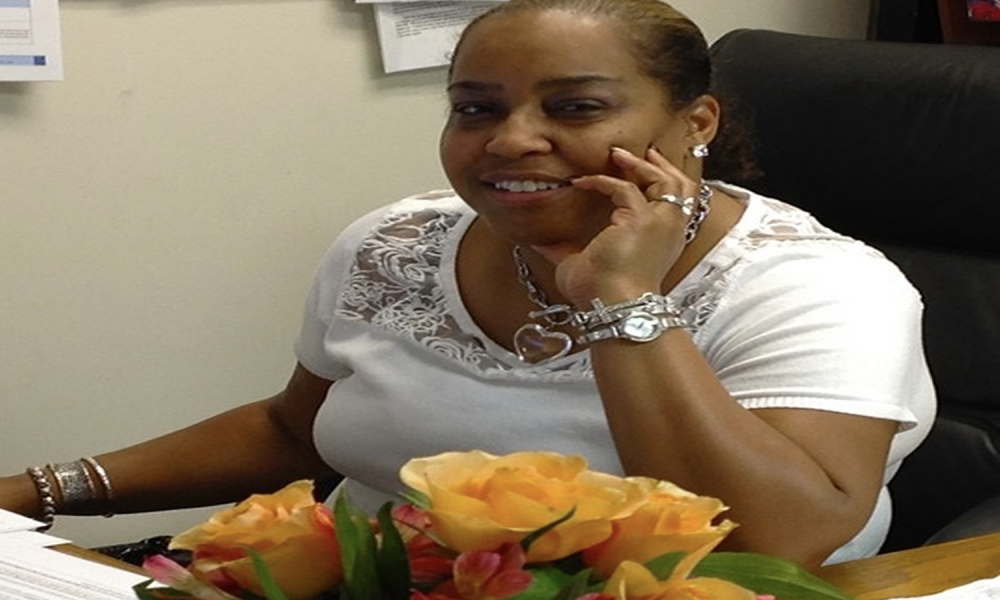
By Marcia Claggett
My name is Marcia Claggett. I reside in Calvert County, Maryland , and work at the United Planning Organization’s (UPO) Office of Early Learning in Washington, D.C. As a child at the age of 3, I was enrolled in the Head Start program located at the Southern Maryland Tri-County Community Action Committee. The year would be 1970. I completed two years of Head Start with the program and I have to add that my mother was introduced to much-needed services that assisted her in making ends meet.
Eighteen years later, I would find myself as a teenage mom/wife and was fortunate enough to have my daughter enroll in the same facility that I had once attended as a child! My daughter would have the same teacher that I once had: Mrs. Ephonia Wills. This Head Start program assisted my family in such a manner that neither my husband nor I could ever repay our gratitude. Nor do I think that they are aware of how that time of caring and instruction for our daughter enabled me to find a job and continue with training so I could obtain a better job. Most importantly, the woman I had become so fond of now had a viable part in teaching my child. She gave me such a feeling of pride and accomplishment that my husband and I were on the right track, even though things might not be easy.
However, we were to pay no attention to that! We were to strive for excellence and that meant setting goals and providing a good home for our family. Participating in home visits, parent meetings, and learning the value of early childhood education and everyday life skills was monumental in developing a firm foundation for my family and me. I would later seek assistance at that same agency in the year 2000 and join the AmeriCorps volunteer program. This program provided me with a contractual agreement for a full-time job with a stipend, free health care for myself and my children, and an education allowance for two years that greatly assisted in my obtaining a bachelor’s degree in early childhood. I enrolled immediately in night classes and I graduated early in 2003. Sixty days after I graduated, I applied for a position as a center director with the same agency in their Head Start program and obtained the position. Ninety days later, I applied for the position as center specialist under the supervision of Gail Govoni and was in charge of two counties, Calvert and St. Mary’s, overseeing the Head Start centers in both counties. I would also now be the supervisor of Mrs. Ephonia Wills—yes, my same Head Start teacher that I had in 1970! She was still gracing families and being a grandmother to all. I think the teaching was a plus. The nurturing and tender loving care that she provided to children and families was still evident as soon as she would walk into a room!
This story sounds great, but it’s not over yet! I was intrigued with the agency and wanted to be on the administrative side, so I applied and obtained a promotion working under the agency president and CEO. I would later have to resign due to health reasons in 2008—a long battle with Bell’s Palsy. It would be four and a half years later that my husband, now 26 years old, would run into Gail Govoni who eventually would become the Head Start director at Southern Maryland Tri-County Community Action Committee, Inc., and a grantee specialist for ICF. She soon thereafter became the Head Start director for United Planning Organization and sent me a message that she was looking for a regional manager. I interviewed and was offered one of the two regional positions. After three years, I am now the monitoring and compliance manager for UPO’s Office of Early Learning under the Vice President of Education, Gail Govoni.
It has been my pleasure to give the same care and nurturing to children and families that my children and I once received. Some days are hectic and there are moments filled with task lists that never seem to be completed. But it is worth it: For every child that is not hungry, is healthy, and is learning, and for every parent that realizes their struggles matter and that they are not alone. It’s also worth it for me to know that if I don’t quit, if I don’t give up, I will make a better way for me and my children and for every staff person striving for excellence, who brainstorms endlessly about what they can do to assist a child or family by asking “who can I call?” or “where can I go?”
I would not trade any of it for a million bucks! Each day, I can give thanks and count it as a blessing. Knowing that I have contributed in some small way to the betterment of children and families is priceless for me. One day, I will be a voice and policy maker assisting in creating greater opportunities for the Office of Head Start and the people it serves across the world. Thank you, Head Start!
By Dr. Benjamin F. Chavis Jr. and Rabbi Dr. Judy Schinder
On behalf of Spill the Honey, we are pleased to offer our collective experience and perspectives on the historical and contemporary context and significance of the Seder at Passover from both the Jewish American and Black American religious traditions.
As Jews gather around the Seder table and Christians move toward the sacred culmination of Easter, the convergence of these seasons calls forth one of the most enduring theological truths in human history: God is a God of liberation. The Passover Seder is not merely ritual remembrance; it is a living, breathing reenactment of divine deliverance. And within Black America, this same story has been reinterpreted, re-sung, and re-lived as a testimony of survival and struggle against oppression.
At the heart of Passover is the Exodus narrative—the story of a people enslaved, crying out, and being delivered by the hand of God. Jewish tradition insists that this is not distant history.
An essential teaching of the Haggadah (the Jewish text that guides the Passover rituals) affirms, “In every generation, one must see oneself as if one personally left Egypt.” This command transforms memory into moral responsibility. The Seder becomes an ethical summons: freedom is not complete until all are free.
Modern Jewish scholarship underscores this theological imperative. Rabbi and theologian Abraham Joshua Heschel famously declared, “In a free society, some are guilty, but all are responsible.” Though brief, this insight resonates profoundly with the Passover mandate. The liberation from Egypt is not simply a national origin story; it is a perpetual call to confront injustice wherever it exists. As contemporary Jewish reflections note, Passover is “the season of our freedom,” a celebration of both physical and spiritual redemption.
The Seder itself dramatizes this theology. The bitter herbs remind participants of suffering; the unleavened bread symbolizes both affliction and liberation; the four cups of wine celebrate stages of redemption. Each element reinforces a central claim: God acts in history on behalf of the oppressed. The Exodus is not just a miracle—it is a moral revelation.
This same revelation has profoundly shaped Black religious consciousness in America. For enslaved Africans and their descendants, the story of Moses confronting Pharaoh became a coded language of hope. Spirituals like “Go Down, Moses” were not simply songs—they were theological declarations. The God of the Hebrews was also the God of the enslaved in America.
No scholar articulated this more forcefully than Dr. James H. Cone at Union Theological Seminary, whose groundbreaking work A Black Theology of Liberation re-centered Christian theology around the experience of the oppressed. Cone wrote, “The God of the oppressed takes sides with the black community,” insisting that divine neutrality in the face of injustice is a theological impossibility. The famed theologian, Dr. Frederick Herzog at Duke University School of Divinity, joined Dr. Cone in unpacking the Judeo-Christian Tradition grounded inclusively in the global theology of liberation.
For Cone, the Exodus was not a distant Biblical episode but the foundational paradigm for understanding God’s activity in the modern world. Black theology, he argued, arises from the recognition that “God is a God of justice” who actively delivers those suffering under systems of domination. The parallels between ancient Egypt and the history of slavery, segregation, and systemic racism in the United States are not incidental—they are theological.
Within Black churches, the Passover motif has long been embedded in preaching, prayer, and protest. Theologian and visionary leader, Reverend Dr. Martin Luther King Jr., frequently invoked the Exodus in his speeches, framing the Civil Rights Movement as a journey from bondage to freedom. In his final speech, King declared, “I’ve been to the mountaintop… I’ve seen the Promised Land,” echoing Moses’ vision and linking the Biblical narrative to the struggle for racial justice in America.
The convergence of Passover and Easter deepens this theological resonance. For Christians, Easter celebrates resurrection—the triumph of life over death. Yet this victory cannot be understood apart from the Passover context in which Jesus lived and died. The Last Supper itself was a Passover meal, grounding the Christian story in the Jewish narrative of liberation.
Thus, both traditions proclaim a God who liberates in Judaism, through the Exodus; in Christianity, through the cross and resurrection. And in Black theology, these narratives are fused into a living testimony that God continues to act in history.
But the relevance of Passover today extends beyond religious observance. In a world marked by growing antisemitism, racial injustice, economic inequality, and political oppression, the question posed by the Seder remains urgent: What does it mean to be free? The Hebrew word for Egypt, Mitzrayim, connotes “narrowness” or “constraint,” suggesting that liberation is not only external but internal — a breaking free from all that diminishes human dignity.
For Black America, this question is both historical and contemporary. The legacy of slavery has given way to new forms of systemic inequality, from mass incarceration to economic disparity. The Exodus story challenges both Jews and Christians to see these realities not as inevitable, but as conditions that demand transformation.
For Jewish America, the historic fear of unsafety is no longer a dormant remnant of intergenerational trauma. The recent burning of a synagogue in Mississippi, the explosive-laden terrorist truck crashing into Temple Israel in Michigan, and the violent assaults aimed at Jews in cities across our country have become an agonizing reality.
Jewish and Black traditions alike insist that memory must lead to action. The Seder begins with the invitation, “Let all who are hungry come and eat,” signaling that liberation is incomplete if it is not shared. This ethic of solidarity aligns with the core insight of liberation theology: faith is not merely belief—it is praxis.
In this sacred season, as matzah is broken and Easter hymns are sung, America stands at a crossroads. Will these rituals remain symbolic, or will they inspire a renewed commitment to freedom, equality, justice, and safety? Today to help answer that question and others, we in Spill the Honey offer a series of film documentaries that celebrate the longstanding solidarity between Blacks and Jews in America at www.SpilltheHoney.com
Rev. Dr. Benjamin F. Chavis, Jr. is Spill the Honey Chairman, President and CEO of National Newspaper Publishers Association (NNPA), Liberation Theologian, and Senior Fellow for Divinity and Interdisciplinary Studies at Duke University School of Divinity
Rabbi Dr. Judy Schinder is Spill the Honey Executive Director, Sklut Professor of Jewish Studies at Queens University of Charlotte, and Rabbi Emerita of Temple Beth El in Charlotte.
Despite recent progress, more than 16 people die every day on U.S. roads over six months
By Adam Shapiro
Drivers struck and killed 3,024 people walking during the first half of 2025, an average of 16 per day, according to a new data analysis from the Governors Highway Safety Association(GHSA). That is an 11% decline from the same period the year before – the largest drop since GHSA began tracking pedestrian fatalities 15 years ago. While this recent safety momentum is positive, pedestrian deaths remain above the 2019 level, the last year before a steep rise in dangerous driving behaviors and traffic deaths caused by the pandemic.
An in-depth examination of original data GHSA collected from State Highway Safety Offices (SHSOs) across the country found that:
• The 10.9% drop in pedestrian deaths from 2024 to 2025 (January-June) is the largest decrease since GHSA began publishing these reports 15 years ago. This translates into 371 fewer pedestrian deaths than in the same period the prior year.
• However, this is still 2.5% higher than pre-pandemic levels (2,951 in January-June 2019).
• The pedestrian fatality rate measured per 100,000 population fell to 0.90 in 2025 – the lowest mark since 2020. Measured by vehicle miles traveled (VMT), there were 1.86 fatalities per billion VMT, the lowest since 2019.
• In addition to the lasting emotional trauma caused by a pedestrian being killed, there is a high financial cost to each death. The total financial cost of all 3,024 fatalities from January through June 2025 combines to exceed $40 billion.
Pedestrian fatalities increased in 24 states, decreased in 23 states and D.C, and remained the same in three states for January-June from 2024 to 2025. Decreases in states including Alabama, California (-32%), Maryland, New Mexico, and New York drove the nationwide count down from 2024, even though there were the same number of states (plus D.C.) that posted an increase and a decrease.
“Each pedestrian death is so much more than just a number,” said GHSA Chief Executive Officer Jonathan Adkins. “Each one is a family member, friend, or neighbor that no one will be able to hug, see, or share time with ever again. While we are pleased with the progress shown in the data, the only acceptable number of traffic deaths is zero.”
“Access to timely, high-quality data is essential to understanding and helping prevent roadway fatalities,” said Anderson Abernathy, President & COO of Michelin Mobility Intelligence. “We are encouraged by the progress reflected in this report, but the data also reinforces the need for continued collaboration across public and private sectors to improve safety for all road users, especially pedestrians. At Michelin, we believe that integrating advanced analytics with cross-sector collaboration can help identify risk patterns earlier and enable more targeted interventions. Turning insight into impact is essential to the USDOT’s Safe System Approach designed to enhance safety for all road users.”
How to Improve Pedestrian Safety and Save Lives
Methods to improve pedestrian safety include minimizing pedestrians’ exposure to vehicles (particularly on high-speed roadways), prioritizing visibility between drivers and pedestrians, managing speed and enforcing speed limits, using new technology and data to identify and address challenges, promoting safe road use through education and enforcement, and improving post-crash care. Using both traditional crash databases and innovative new data sources to learn from fatalities and injuries can also inform safety plans, countermeasures, and policy.
GHSA’s report provides a first look at the pedestrian fatality trends well before the National Highway Traffic Safety Administration’s (NHTSA) Fatality Analysis Reporting System (FARS) data are available. It presents individual data for all states as well as projected pedestrian fatality rates per population— at both state and national levels — and per vehicle miles traveled at the national level.
Later this year, GHSA will publish the full-year 2025 pedestrian fatality projections based on state data, which will also include an analysis of the 2024 national FARS data. FARS provides additional insights on why, where, and how drivers strike and kill people walking. This forthcoming report will also summarize promising state and local approaches to protect pedestrians on U.S. roadways.
Steve Jackson and Paula Raymond of toXcel conducted the data analysis and authored the report. Michelin Mobility Intelligence provided financial support for the report’s production but did not provide editorial direction or review content.
By Candace A. Gray | Tri-State Defender
The tulips gleefully greet those who enter the gates at the Dixon Gallery & Gardens on an almost spring day. More than 650,000 bulbs of various hues are currently on display. And they are truly breathtaking.
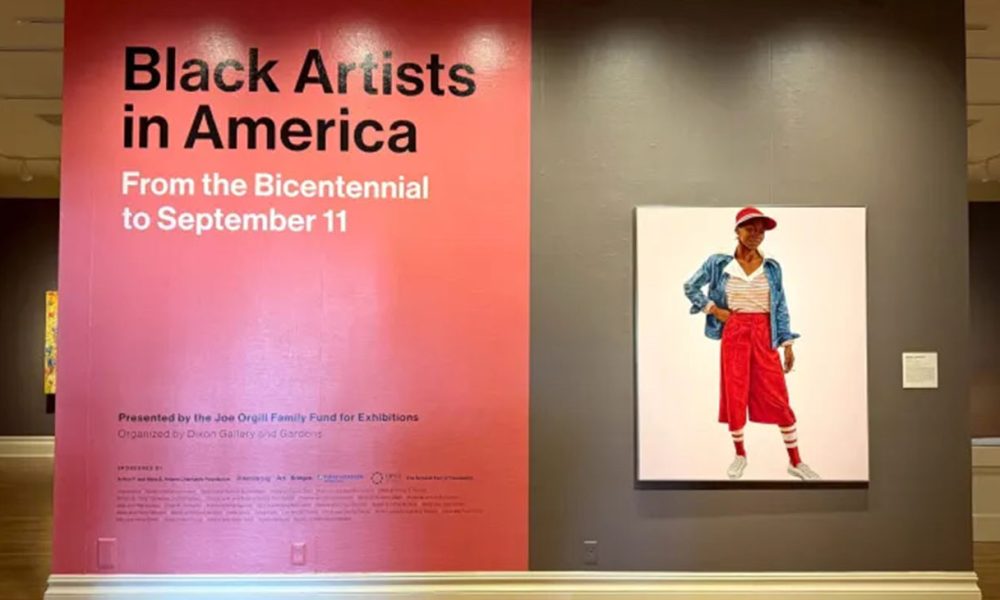
Inside the gallery, and equally as breathtaking, is the “Black Artists in America, From the Bicentennial to September 11” exhibit, which runs through Sunday, March 29. This is the third installment of a three-part series that started years ago and illustrates part of the Black experience through visual arts in the 20th century.
“This story picks up where part two left off,’’ said Kevin Sharp, the Linda W. and S. Herbert Rhea director for the Dixon. “This era is when we really start to see the emergence of these important Black artists’ agency and freedom shine through. They start to say and express what they want to, and it was a really beautiful time.”
With 50+ paintings, sculptures and assemblages, the exhibit features artists like Varnette Honeywood from Los Angeles, whose pieces appeared in Bill Coby’s private collection (before they were auctioned off) and on “The Cosby Show.” Also included are works by Alonzo Davis, another Los Angeles artist who opened one of the first galleries there where Black Artists could exhibit.
“Though [Davis] was from LA, he actually lived in Memphis for a decade,” said Sharp. “He was a dean at Memphis College of Art, and later opened the first gallery in New York owned and operated by black curators.”
Another featured artist is former NFL player, Ernie Barnes. His work is distinctive. Where have you seen one of his most popular paintings, Sugar Shack? On the end scene and credits of the hit show “Good Times.” His piece Saturday Night, Durham, North Carolina, 1974 is in this collection.
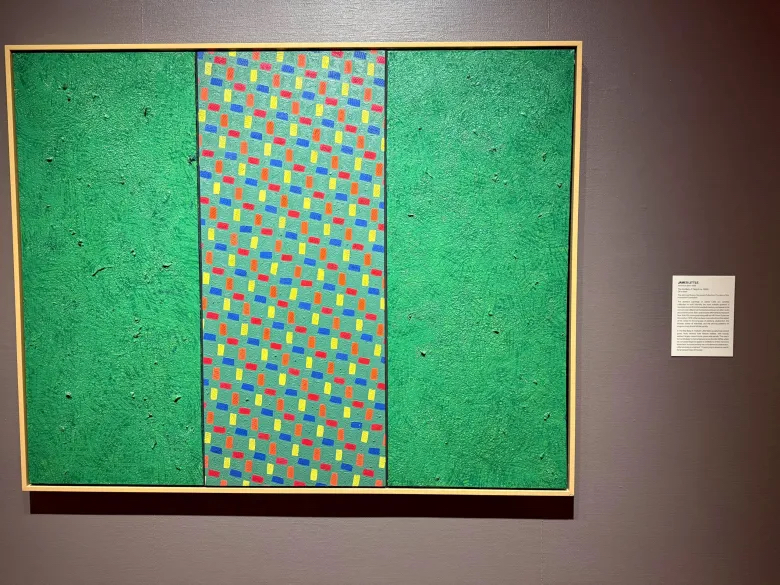
The exhibit features other artists with Memphis ties, including abstract painter James Little, who was raised in a segregated Memphis and attended Memphis Academy of Art (before it was Memphis College of Art). He later moved to New York, became a teacher and an internationally acclaimed fixture in the art world in 2022 when he was named a Whitney Biennial selected artist at the Whitney Museum of American Art in New York.
Other artists like Romare Bearden, who had a Southern experience but lived up North, were featured in all three installments.
“During this period of time, he was a major figure,” said Sharp. “He wrote one of the first books on the history of African American art during a time when there were more Black academics, art teachers, more Black everything!”
Speaking of Black educators, Sharp said the head curator behind this tri-part series and Dixon’s partner in the arts is Earnestine Jenkins, Ph.D., an art history professor at the University of Memphis, who also earned a Master of Arts degree from Memphis State University (now UofM). “We began working with Dr. Jenkins in 2018,” he said.
Sharp explained that it takes a team of curators, registrars, counterparts at other museums, and more, about three years to assemble an exhibit like this. It came together quite seamlessly, he added. Each room conjured up more jaw-dropping “wows” than the one before it. Each piece worked with the others to tell the story of Black people and their collective experience during this time period.
One of the last artists about whom Sharp shared information was Bettye Saar, who will turn 100 years old this year. She’s been working in Los Angeles for 80 years and is finally getting her due. Her medium is collages or assemblages, and an incredible work of hers is on display. She’s married to an artist and has two daughters, also artists.
The exhibit catalogue bears some of these artists’ stories, among other scholarly information.
The exhibit, presented by the Joe Orgill Family Fund for Exhibitions, is culturally and colorfully rich. It is a must see and admission to the Dixon is free.
Visit https://www.dixon.org/ to learn more.
Fun Facts: An original James Little design lives in the flooring of the basketball court at Tom Lee Park, and he makes and mixes his own paint colors.
By Jennifer Porter Gore | Word-In-Black | San Diego Voice and Viewpoint
In 2024, the number of U.S. mothers who died as a result of pregnancy or childbirth dropped compared to 2023. But while slightly fewer Black mothers died that year, they still had three times the mortality rate of white women.
South Carolina’s rates of maternal deaths outpaced even the national rates. In fact, the state’s overall rate of maternal deaths between 2019 and 2023 was higher than all but eight states and the District of Columbia.
Last month healthcare leaders, birth workers, and community members gathered to honor the legacy of Charleston native Dr. Janell Green Smith, a nurse-midwife and doctor of nursing practice who died in January from childbirth complications. She had participated in more than 300 births and specialized in helping Black women give birth safely.
Her death shocked the community and her colleagues who are determined to address concerns about Black maternal health. The event also covered the importance of protecting mental health during grief and of men’s role in solving the maternal health crisis.
As both a therapist and a father, Lawrence Lovell, a licensed professional counselor and founder of Breakthrough Solutions, discussed ways the event’s attendees could process their grief over Green Smith’s death. He also shared ways male partners can advocate for women’s maternal health during pregnancy and childbirth.
Lovell spoke not just as a therapist but also as a father whose own family had briefly crossed paths with Green Smith. The event, he said, emerged organically from a moment of collective mourning.
Despite the grief, “it was still, like, a really beautiful event, a much-needed event, and it almost felt like we were all giving each other a collective family hug,” says Lovell.
His connection to Green Smith, Lovell says, was brief but meaningful during his wife’s pregnancy with their second child. Green Smith was practicing at the same birthing center where they had their child. She began practicing in Greenville a short time later.Even that short connection carried significance for Lovell, given the small number of Black maternal health professionals.
Lovell did not initially plan to become a mental health practitioner; he chose the career path after graduating from college, when someone suggested he consider psychology. His interest deepened when he noticed how few Black men work in mental health.
“Being Black man and playing football in college, there weren’t a lot of people that look like me talking about mental health,” says Lovell. “[I wanted] to give people that look like me an opportunity to work with someone that looks like them.”
Working with Expectant and New Parents
Lovell often counsels couples preparing for parenthood by, helping partners understand what a successful pregnancy, childbirth, and postpartum recovery look like. That often means helping women manage postpartum depression.
As a man, Lovell says, it’s “humbling” that a woman “just trusts me enough to work with me through their pregnancy or their postpartum recovery.”
In his work, Lovell has noticed how few men understand pregnancy before they experience it with their partner. Because early pregnancy symptoms are often invisible, he says, men may underestimate how much support a mom-to-be actually needs.
“Sometimes they may not realize they don’t know much about pregnancy and what to expect in those three trimesters,” Lovell says. “I tell a lot of the men that just because you can’t see [she’s pregnant] doesn’t mean that she won’t appreciate your intense support in that first trimester.”
Education about pregnancy and postpartum recovery, he says, can change how men support their partners.
Teaching Advocacy in the Delivery Room
Another major focus of Lovell’s counseling is preparing men to advocate for mothers during labor.
“Helping men understand what pregnancy looks like: what delivery is going to look like, and what are the realistic expectations that I should have of myself in postpartum,” he says.
Lovell encourages partners to be honest about their expectations for what will happen during delivery. He helps them prepare for the big day by discussing the birth plan and knowing how to quickly recognize problems. Clear communication, he says, prevents misunderstandings.
He regularly trains men to ask their partners detailed questions about their expectations during and after pregnancy. Advocacy in medical settings can be especially important and requires attention to details the mother may not be able to address.
“It’s always important to fine-tune things and truly understand what helps your partner feel most supported,” Lovell says. “Instead of guessing, you should ask.”
Lovell recalls a moment during the birth of his first child when he had to take that role.
During the delivery, “I felt like something wasn’t as sanitary as I’d like it to be,” he says. “I asked, ‘Hey, can you switch those out? Can you change your gloves?’”
Lovell has a succinct but powerful message he regularly shares with clients’ families, and he shared it with attendees at last month’s event.
“Just to believe women,” he says. “I’ve worked with different couples, and sometimes I’m not really sure that there’s enough empathy from the men.”
That includes how women express pain.
“If a woman says, ‘my pain is at a nine,’ just because how you would express yourself at a nine is different than how she’s expressing herself at [that level] doesn’t mean you shouldn’t believe her,” he says.
Empathy, he says, can change outcomes far beyond the delivery room.
“We’ve got to believe women when they’re talking about their experiences and their feelings and their pain,” he says. “I think there’s a lot that we can prevent if we empathize better.”
Jacksonville Free Press
Plans to establish a long-awaited Black history museum in Florida are once again on hold after legislation needed to advance the project failed to clear the state House for a second consecutive year, despite repeated approval in the Senate.
A proposal sponsored by Tom Leek, a Republican from Ormond Beach, has now passed the Senate in back-to-back legislative sessions. But the House version, filed by Kiyan Michael, a Jacksonville Republican, did not receive final approval in either year, effectively stalling the effort.
Under Florida law, identical or similar bills must pass both chambers before heading to the governor’s desk. Without House approval, the legislation has been unable to move forward, leaving the project in limbo. Long journey, contested location.
The proposed museum, formally known as the Florida Museum of Black History, has been years in the making, with lawmakers and community leaders framing it as a long-overdue institution to preserve and showcase the state’s African American heritage .A central point of contention has been the museum’s location. St. Augustine — widely recognized as the nation’s oldest city and a site deeply tied to both slavery and early Black history — emerged as the leading contender. Supporters argue the city’s historical significance makes it a natural home for the museum. However, competing interests and regional considerations have fueled debate, slowing consensus among lawmakers.
While the Senate-backed measure has consistently advanced, the lack of alignment in the House has underscored ongoing divisions about how and where the project should take shape.
The holdup in the Florida House appears to be less about opposition to the museum itself and more about a combination of procedural bottlenecks, unresolved structural issues, and lingering disagreements over how the project should be formalized and governed.
Despite the legislative setbacks, Republican Gov. Ron DeSantis has publicly voiced support for the museum. Speaking last month during the unveiling of a statue of abolitionist Frederick Douglass in St. Augustine, DeSantis said the project would move forward “one way or another,” signaling an intent to see the museum built regardless of legislative hurdles.
The anticipated museum has already cleared several hurdles. St. Johns County signed an agreement last year with Florida Memorial University to use the land that once housed its campus last year’s legislative session netted $1 million in funding for St. Johns County to work on planning and design for the museum. However, its anticipated that a million $3 million is needed.
Still, without statutory approval to finalize key components — including governance, funding mechanisms and site selection — the project remains largely conceptual.
With the House bill failing again, the timeline for the museum’s development is unclear. Lawmakers could revisit the proposal in the next legislative session, but any further delays risk pushing the project back several more years. Advocates warn that continued inaction could stall momentum for a museum many see as critical to telling a fuller, more accurate story of Florida’s past. For now, the effort remains paused — caught between political support at the top and legislative gridlock within the Capitol.
By CityHealth, an initiative of the de Beaumont Foundation and Kaiser Permanente, and the National Institute for Early Education Research (NIEER)
While the evidence is clear that pre-K makes a meaningful difference for children in the short and long term, children need access to high-quality programs to experience these benefits. Access, however, remains unequal, particularly to programs that provide high-quality experiences.“An Updated Look at Pre-K in Large American Cities,” research findings include:
• Participation in high-quality pre-K has been found to have a positive, direct impact on children’s health through avenues such as access to nutritious meals and health screenings, and a positive, indirect impact through reducing parental stress and supporting mental health. For example, a study of New York City’s pre-K program found pre-K enrollment increased the probability that a child was diagnosed with asthma or vision problems, received treatment for hearing or vision issues, and had a screening or immunization during the pre-K year. In addition, a recent Tulsa, Oklahoma, study found that children who enroll in pre-K earlier than their peers (i.e., at age 3 instead of 4) are more likely to experience earlier identification of health problems such as eczema or vision concerns, which can lead to earlier treatment.
• Enrollment in pre-K can help close long-standing opportunity gaps in education and academic achievement for historically marginalized groups. For example, research suggests that low-income children may be up to 12 months behind their more advantaged peers when they start kindergarten; however, a high-quality, universal pre-K program could reduce achievement gaps by 27% in math and 41% in reading.
• Dual language learnersBy CityHealth, an initiative of the de Beaumont Foundation and Kaiser Permanente, and National Institute for Early Education Research (NIEER)
While the evidence is clear that pre-K makes a meaningful difference for children in the short and long term, children need access to high-quality programs to experience these benefits. Access, however, remains unequal, particularly to programs that provide high-quality experiences.“An Updated Look at Pre-K in Large American Cities,” research findings include:
• Participation in high-quality pre-K has been found to have a positive, direct impact on children’s health through avenues such as access to nutritious meals and health screenings and a positive, indirect impact through reducing parental stress and supporting mental health. For example, a study of New York City’s pre-K program found pre-K enrollment increased the probability a child was diagnosed with asthma or vision problems, received treatment for hearing or vision issues, and had a screening or immunization during the pre-K year. In addition, a recent Tulsa, Oklahoma, study found that children who enroll in pre-K earlier than their peers (i.e., at age 3 instead of 4) are more likely to experience earlier identification of health problems such as eczema or vision concerns, which can lead to earlier treatment.
• Enrollment in pre-K can help close long-standing opportunity gaps in education and academic achievement for historically marginalized groups. For example, research suggests that low-income children may be up to 12 months behind their more advantaged peers when they start kindergarten; however, a high-quality, universal pre-K program could reduce achievement gaps by 27% in math and 41% in reading.
• Dual language learners (DLLs) may uniquely benefit from pre-K attendance, particularly if they start early. For instance, one study of DLL children who enrolled in full-day pre-K before age 4 showed at least 90% of these children scored at least one level higher on an English proficiency test than their peers who did not enroll early.
• There are long-term benefits to pre-K participation, even if benefits may vary for different groups of children. Evidence from long-term studies of Head Start and intensive, small-scale interventions shows long-term benefits such as higher high school graduation rates and years of education completed, and lower rates of teenage pregnancy and crime.
• Pre-K attendance has been shown to have a positive impact on children’s executive functioning skills, such that children who attend pre-K begin kindergarten with better executive functioning skills than children who did not attend kindergarten.
• Children who attend pre-K are less likely to be chronically absent in later school years and more likely to take more challenging coursework in high school. Not only were pre-K attenders less likely to be chronically absent, but they also had better attendance overall compared to non-attenders.
Decades of research show that high-quality early learning programs can positively impact children’s learning, development, and health. Therefore, we strongly believe that access to a high-quality early learning program is one of the best investments a city can make. With funding from the de Beaumont Foundation and Kaiser Permanente, CityHealth provides cities with evidence-based policy solutions and practical tools to improve the health and well-being of their residents. CityHealth provides a framework for advancing policies using a medal rating system to assess their progress and encourage improvement in public health outcomes.
Since 2017, CityHealth has partnered with the National Institute for Early Education Research (NIEER), a nonpartisan research center, to conduct research on prekindergarten (pre-K) efforts operated at the city level, to promote its High-Quality, Accessible Pre-K policy solution.
(DLLs) may uniquely benefit from pre-K attendance, particularly if they start early. For instance, one study of DLL children who enrolled in full-day pre-K before age 4 showed at least 90% of these children scored at least one level higher on an English proficiency test than their peers who did not enroll early.
• There are long-term benefits to pre-K participation, even if benefits may vary for different groups of children. Evidence from long-term studies of Head Start and intensive, small-scale interventions shows long-term benefits such as higher high school graduation rates and years of education completed, and lower rates of teenage pregnancy and crime.
• Pre-K attendance has been shown to have a positive impact on children’s executive functioning skills, such that children who attend pre-K begin kindergarten with better executive functioning skills than children who did not attend kindergarten.
• Children who attend pre-K are less likely to be chronically absent in later school years and more likely to take more challenging coursework in high school. Not only were pre-K attenders less likely to be chronically absent, but they also had better attendance overall compared to non-attenders.
Decades of research show that high-quality early learning programs can positively impact children’s learning, development, and health. Therefore, we strongly believe that access to a high-quality early learning program is one of the best investments a city can make. With funding from the de Beaumont Foundation and Kaiser Permanente, CityHealth provides cities with evidence-based policy solutions and practical tools to improve the health and well-being of their residents. CityHealth provides a framework for advancing policies using a medal rating system to assess their progress and encourage improvement in public health outcomes.
Since 2017, CityHealth has partnered with the National Institute for Early Education Research (NIEER), a nonpartisan research center, to conduct research on prekindergarten (pre-K) efforts operated at the city level, to promote its High-Quality, Accessible Pre-K policy solution.
Birmingham Times
Students at South Hampton K-8 School have placed among the top 10 national finalists for Samsung’s 2025-2026 “Solve for Tomorrow” competition.
Samsung’s “Solve for Tomorrow” competition gives students in grades 6-12 the opportunity to work together and explore how science, technology, engineering and math can be used to create change in their communities.
“We believe that technology should protect people,” said James Speights, a South Hampton K-8 7th grader.
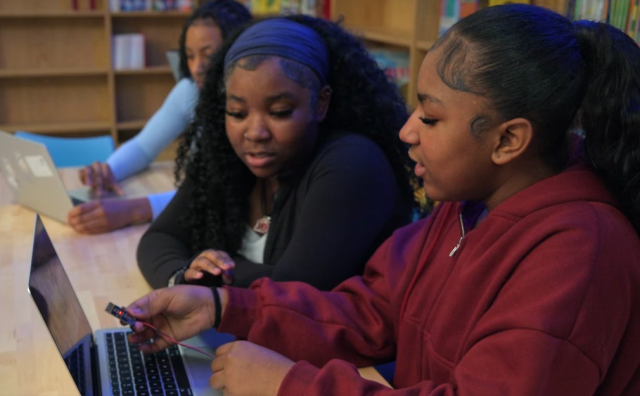
Details on South Hampton’s project can be found here. For this project, the Birmingham City Schools students focused on tornado preparedness, developing a solar-powered and sensor-based tornado monitoring and alert system.
Their project, Storm Sentinels, would use Raspberry Pi technology to send out early warning text messages to over 1,000 families in a tornado’s path. The plan would add valuable time for people to take shelter.
“We can’t stop the storms, but we can prevent tragedy,” said Areille Judkins, an 8th grader. “We are proud to be a part of solutions that can help strengthen communities and save lives,” she added.
Voting is now open for the Community Choice Award on Samsung’s competition website.
South Hampton K-8 student Jason Walton, an 8th grader, talks about their “Solve for Tomorrow” project. (Samsung)
Samsung “Solve for Tomorrow” is open to public school students in grades 6-12. Only schools that are at least 50% publicly funded are eligible to compete. Students work together to come up with a project plan, and teachers submit the team’s application.
New York Carib News
The government of Cuba has firmly rejected any suggestion that its political leadership or governing system could be subject to negotiation in ongoing discussions with the United States, as tensions between the two nations intensify.
Deputy Foreign Minister Carlos Fernandez de Cossio delivered the government’s position unequivocally during a press conference on Friday, stating, “I can categorically confirm that the political system of Cuba is not up for negotiation, and of course neither the president nor the position of any official in Cuba is subject to negotiation with the United States.”
His remarks follow reports that the administration of U.S. President Donald J. Trump was exploring proposals that could involve removing Cuban President Miguel Díaz-Canel as part of a broader diplomatic arrangement.
The developments come amid a deepening economic crisis in Cuba, exacerbated by U.S. restrictions on oil supplies that have triggered widespread energy shortages and hardship across the island. Despite these pressures, Cuban officials have maintained that sovereignty remains non-negotiable.
While Havana confirmed last week that talks with Washington are underway, Díaz-Canel has struck an increasingly defiant tone. Addressing a group of international activists delivering humanitarian aid, he warned of potential escalation, stating, “We’re not just crossing our arms… there could be aggression against Cuba.”
He reinforced that stance in a separate message, declaring, “Any external aggressor will face an impenetrable resistance.”
Media reports in the United States have suggested that Washington is considering a deal that could ease trade restrictions while facilitating political change in Havana. However, Cuban officials have dismissed such proposals as interference in domestic affairs.
Historically, Cuban leadership has maintained that dialogue with the United States is only acceptable under conditions of equality and mutual respect. That position has remained consistent even as economic pressures mount and international aid efforts expand to support the island’s struggling population.
De Cossio acknowledged that there are areas of mutual interest between the two countries, including trade and longstanding financial claims. However, he declined to provide specifics about the timing or structure of current discussions.
The standoff underscores a broader geopolitical tension, as both nations navigate a complex mix of diplomacy, economic pressure, and ideological differences. With Cuba facing one of its most severe crises in decades, the outcome of these talks could have far-reaching implications—not only for bilateral relations but for stability across the wider Caribbean region.
New York Carib News
The renowned Brooklyn Academy of Music (BAM) has announced the appointment of Jamaican-born cultural executive Tamara McCaw as its new president, marking a historic leadership transition for one of the United States’ most influential performing arts institutions.
McCaw, whose career spans arts administration, philanthropy, and international cultural development, becomes one of the few Caribbean-born leaders to helm a major American arts organization. Her appointment signals BAM’s renewed commitment to global storytelling, diversity, and community engagement in an evolving cultural landscape.
In a statement accompanying the announcement, McCaw said, “This is a deeply meaningful moment for me, both professionally and personally. As someone shaped by Jamaica’s rich cultural heritage, I am honored to lead an institution that has long been a beacon for artistic innovation and inclusion.”
Founded in 1861, BAM has built a global reputation for presenting groundbreaking work across theater, dance, music, and film. The institution has also played a central role in Brooklyn’s cultural revitalization, attracting artists and audiences from around the world.
Board members highlighted McCaw’s strategic vision and leadership track record as key factors in her selection. A spokesperson noted that her experience in fostering cross-cultural partnerships and expanding access to the arts aligns with BAM’s long-term priorities.
“Tamara brings a dynamic blend of creative insight and executive leadership,” the board said in a statement. “Her global perspective and commitment to equity will help guide BAM into its next chapter.”
Born and raised in Jamaica, McCaw has frequently credited her upbringing with shaping her appreciation for the arts as a vehicle for storytelling and social connection. Throughout her career, she has championed initiatives that elevate underrepresented voices and bridge cultural divides.
Her appointment comes at a time when arts institutions across the United States are reimagining their roles in society, balancing financial sustainability with broader mandates around accessibility and representation.
Looking ahead, McCaw emphasized the importance of community-centered programming and global collaboration. “The future of the arts depends on our ability to connect across cultures and create spaces where every voice can be heard,” she said. “BAM has always been a place where bold ideas thrive, and i look forward to building on that legacy.”
The announcement has been met with enthusiasm from both the arts community and members of the Caribbean diaspora, many of whom view McCaw’s appointment as a significant milestone for representation at the highest levels of cultural leadership.
As she prepares to assume the role in the coming months, all eyes will be on how McCaw shapes the next era of BAM, an institution long celebrated for pushing artistic boundaries and redefining the cultural conversation in New York and beyond.
New York Carib News
The U.S. Embassy Port of Spain has introduced a new WhatsApp-based communication channel to strengthen outreach to American nationals residing in or visiting Trinidad and Tobago.
The initiative, led by the Embassy’s American Citizens Services (ACS) Unit, is designed to deliver real-time updates on safety, security, and emergency situations. Operating under the title “U.S. Citizen Consular Information: Trinidad and Tobago,” the channel will provide alerts on travel advisories, potential risks, and crisis developments affecting U.S. citizens in the country.
Officials emphasized that the service is voluntary and will complement the Smart Traveler Enrollment Program (STEP), which currently sends alerts via email to registered users. Unlike traditional messaging platforms, subscribers to the WhatsApp channel will not be able to respond or post comments, though they can engage with updates using emoji reactions.
Access to the channel is available through a direct subscription link, allowing users to receive notifications instantly on their mobile devices.
U.S. Embassy Chargé d’Affaires Jenifer Neidhart de Ortiz highlighted the strategic importance of the initiative, stating, “through this new communication channel, the United States, as a leader in leveraging technology, will be better serving Americans abroad.”
She added, “this milestone brings embassy in Port of Spain in line with a State Department priority, and I encourage all American citizens to subscribe.”
The launch reflects broader efforts by the U.S. State Department to modernize communication channels and enhance responsiveness during emergencies, particularly in regions where timely information can be critical for traveler safety.
With increasing reliance on mobile platforms for real-time updates, the Embassy’s move signals a shift toward more accessible and immediate engagement with U.S. citizens across the Caribbean.
Taylor discusses why AI conversations must include environmental impact, data use, bias, and ethics — not just speed or …
Howard Jean shares his perspective on how AI, crypto, and blockchain can create new opportunities for ownership, residual …
Marlon Avery explains how AI agents could change ownership, income, and the future of work by allowing individuals to take their …
Join us for a lively conversation on Friday, January 23, 2026 at noon when our publisher and managing editor will host our …
Join us for a lively conversation on Friday, January 23, 2026 at noon when our publisher and managing editor will host our …
Artificial intelligence is no longer theoretical. It is already reshaping workplaces, communities, and public decision-making. This is …
As artificial intelligence becomes more embedded in everyday life, questions of responsibility, accountability, and community …
Students from Howard University mobilized for their “ICE OUT” protest, marching through Washington, D.C., toward the White …
An excerpt from Season 7, Episode 4 – Kick-off Black History Month #mlkday #shorts.