
Birmingham Times
Majella Hamilton: Preserving City’s African American History
BIRMINGHAM TIMES —

By Erica Wright
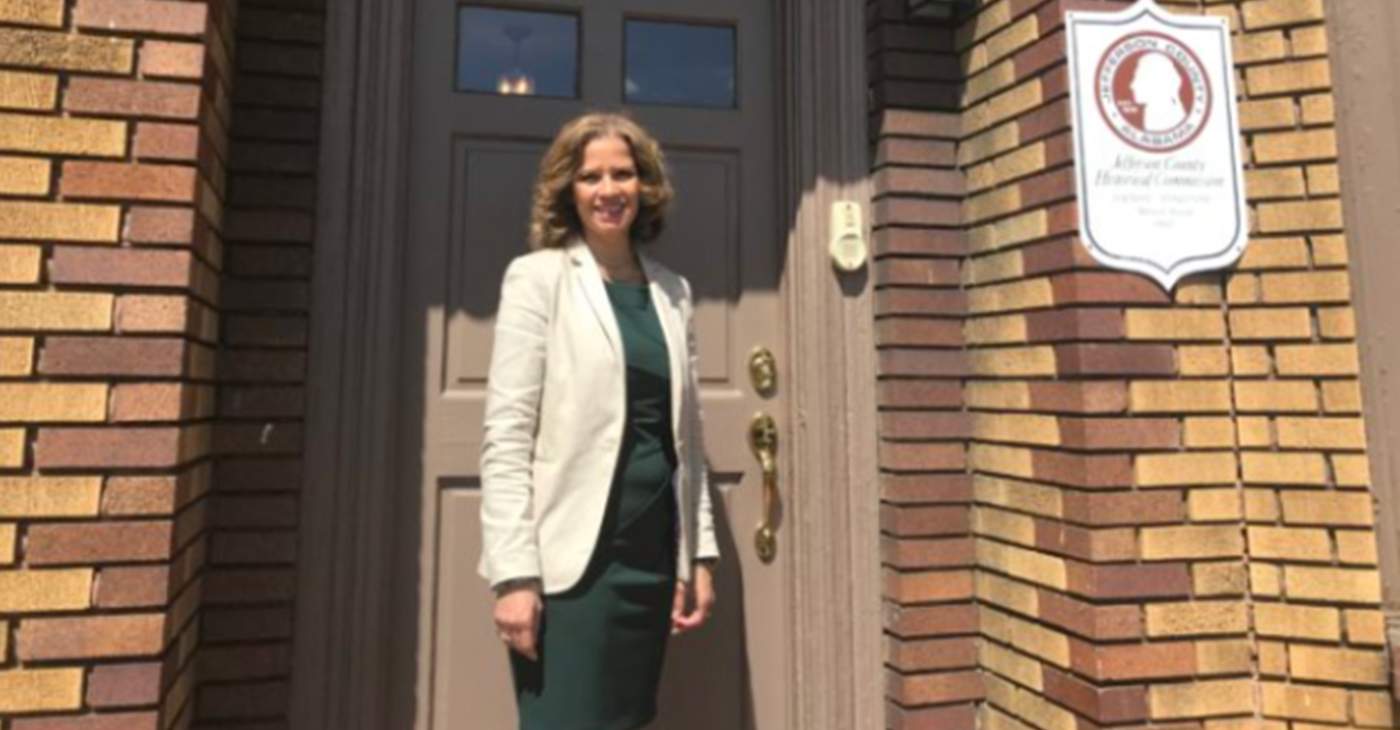
As an avid student of race and culture with a passion for telling stories, Majella Chube Hamilton wakes up and goes to sleep with a love for history. That’s why her work as executive director of the Ballard House Project Inc. is so important.
“We research, document, preserve, and share the information we uncover regarding the African American experience in Birmingham,” said Hamilton. “We host oral-history sessions, community conversations, and temporary exhibits, and we’re [also] working on permanent exhibits.”
The Ballard House Project Inc., part of the downtown Birmingham Civil Rights District, is a 501(c)(3) charitable organization dedicated to disseminating the history of the African American experience among children and adults within the community, across the state, and beyond.
The building, named after renowned Birmingham physician Edward H. Ballard, MD, was constructed in the first half of the 20th century as a medical office and residence for the doctor’s family; it is one of the few surviving live-work structures in the Magic City.
The Ballard home served as a meeting place for African American organizations barred from gathering in other areas of the city and hosted noted physicians, including Dodson Curry, MD, Herschell Hamilton, MD, and Ross Gardner, MD.
Hamilton and her team focus on and feature not only specifics about what happened in the Ballard House but also the innovative contributions, educators, business owners, and women who lived together and created amazing networks throughout Birmingham.
“We have some resources we’ve gathered that are part of our exhibits, some of which are from the early 1900s,” Hamilton said. “We have information we’ve been sharing about the African American experience in Birmingham, … what was going on here and what we think is important for the community to know.”
Shared Experiences
The Ballard House Project, which received its nonprofit status in 2010, began with community conversations, collective-memory sessions, and oral history.
“We have been working for more than 10 years to gather the shared experiences of [Birmingham’s] African American community. We started having community conversations and gatherings of individuals to learn about their shared experiences and also individual oral histories,” said Hamilton, who has long been interested in learning the back story of a particular initiative or why things are the way they are.
“I recognized early on that there were aspects of this community that had been marginalized, had been ignored, and we weren’t talking about it,” she said. “People talk about their culture and their families and their extended families and their neighborhoods, usually within their own circles. I felt through all of my community activism that some aspects were not being discussed and engaged.
“It’s important to uncover and discover rich, historical information not to dwell on the past but to connect what happened yesterday with what is currently happening in our community today,” Hamilton said.
“In order to move forward, we feel that we’ve got to reach back and find out about what happened in the past so we can empower each other,” she continued. “I’d like to see children, adults, all of us be empowered by this information. … I’d also like to make sure that this is the history of not just Birmingham’s African American communities but all of Birmingham’s communities, which are part of the history of this nation. It is universally important.”
“Culturally Rich”
Hamilton, who is in her early 50s, spent most of her childhood in Franklin, La., a small town outside of New Orleans. When she was 12 years old, her family moved to Gary, Ind.
“My childhood was culturally rich,” she said. “My parents were dedicated to the community in which they lived, and they worked all of their lives to uplift the small community we lived in. I have one brother and two sisters, and we all learned the importance of hard work, giving back to our communities, and using the opportunities we received in ways that would be beneficial for others.”
Both of Hamilton’s parents, O’Neal and Merion, were educators and community activists.
“They were Civil Rights activists in the sense that they broke down barriers in their community, as well as worked to unify their community,” she said. “[In Franklin], there is a street named after my dad and … a library named after my mom. In that community, my mother was the first African American librarian … and my dad was one of the first African American principals.”
When the family moved to Indiana, Hamilton’s parents were retired. They moved so her father could help his brother, who was a family physician, with his medical practice.
Hamilton finished high school in Gary and went on to Howard University in Washington, D.C., where she majored in public relations.
“I did several internships in that career and decided I wanted to stop after three years in school for a period of time to work in D.C.,” she said. “I started an internship and really liked it, so I was like, ‘Hey, this is cool. I want to do this.’ I decided to really get my feet wet and see if I really liked what I was doing. I worked for close to year and then I decided to finish my studies at DePaul University in Chicago, [Ill.]”
Hamilton earned a Bachelor of Arts degree in communications with an emphasis on public relations and journalism. While living in Chicago, she worked in several different fields and was engaged to be married to her college sweetheart, Herschell, who she met at Howard. The Hamiltons, who have been married since the early 1990s, have two children, Jillian and Herschell O’Neal, called Neal. Jillian is a Howard University graduate currently pursuing a PhD in psychology at the University of Oregon, and Neal is a student at Howard.
The Magic City
Hamilton accepted a position with Macy’s and took part in the company’s executive training program, which is how she ultimately landed in Birmingham. After living in Atlanta, Ga., she and her husband relocated to the Magic City, where Hamilton moved into a corporate position with the locally based Parisian department store chain (now known as Belk).
“Eventually, I became the public information director for the city of Birmingham and worked for Mayor Richard Arrington and his administration for a little more than five years,” she said. “In that role, I created and opened the Office of Public Information to inform, engage, and be responsive to the questions and needs residents had about their city.”
From there, Hamilton started her own strategic communications business.
“I did project management and worked on a number of different special projects, including editing magazines and conducting special-event initiatives,” she said. “[I also videotaped] projects, managing and coordinating … many that dealt with community, culture, and history.”
Hamilton put her business to the side for a time to work for Southern Living magazine, covering areas such as interior design and architecture. What she enjoyed most, however, was doing features that enabled her to chronicle the stories of prominent African Americans in society.
“I did stories on people like Children’s Defense Fund founder Marian Wright Edelman and the quilters of Gee’s Bend,” she said. “I also did a story on Haley Farms, the farm outside Knoxville, Tenn., that [“Roots” author] Alex Haley purchased prior to his death.”
During her magazine stint, Hamilton was also able to cover the African American experience: “I saw a gap was there,” she said. “[There were so many] individuals and aspects of our community that had contributed so much but not very many people knew about them, so that was an opportunity I loved.”
After leaving Southern Living, Hamilton returned to being a businessowner, establishing Enclave Communication Strategies, where she created strategic plans for projects in the community. She spent her free time on efforts designed to raise awareness about history, art, and culture, and along with her husband and others started working on the Ballard House Project.
“Quietly and methodically, we started to pull back the layers on the Ballard House and began stripping things away and restoring what was here,” said Hamilton, who is currently enrolled in a PhD program in history with an emphasis on race and culture at Howard University.
“We realized how important this aspect of history in the community is to the entire history of the area, so we started making plans to do what we’re doing now—telling those stories and highlighting the voices and experiences of the African American community in Birmingham.”
Talking Circles
This summer, the Ballard House Project started hosting a new series, entitled “Talking Circles: The Impact of Jim Crow Then and Now.”
“We cover every facet of the impact of Jim Crow, [including] culture, health, education, business, housing, voting, traumatic violence, and everything as it relates to race and the laws, customs, and ordinances [under] Jim Crow in Birmingham,” said Hamilton.
“We didn’t know exactly how we were going to focus on it, but it was a wonderful opportunity because we focus on dialogic engagement. Through dialogue [among those attending the Talking Circle], we were able to determine the specific topics or facets of community impact we wanted to focus on. We’re inviting different individuals and community leaders who have some expertise on the different topics … to lead this initiative.”
So far, there have been three Talking Circles at the Ballard House and other locations. They are held on the second and fourth Saturday of each month; starting in October, they will be held on the second and third Saturday of each month. Among the myriad topics discussed are genealogy, migration, and the African diaspora. At the next event, scheduled for October 12, Greg Townsend of the Jefferson County Department of Health will discuss the impact of Jim Crow on health and health care in the African American community.
Ongoing Restoration
Currently, the Ballard House Project is conducting a $1 million capital campaign to raise funds to restore the building.
“We want to fully restore the building,” Hamilton said. “[We’ve been making improvements] little by little throughout the years as needed, but we know full restoration of this building is critical. We also have already started on the development of a master community garden, which … will be in the lot next door. This plan also includes infrastructure for permanent exhibits, … [both] interior and exterior.”
In addition to the special events and Talking Circles series, the organization hosts community conversations and collaborates with other groups.
“We’ve hosted community conversations, … most of which are in different parts of the city, as well as sometimes here at the Ballard House and at several [local] libraries,” Hamilton said. “We’ve also hosted temporary exhibits, whether here or somewhere else, including one at the Taste of 4th Avenue Jazz Festival, where we’ve hosted exhibits [that enable] people to come learn more about their history.”
The Ballard House also does presentations at schools for students and adults.
“We want this to be a community initiative. That’s our focus,” Hamilton said. “We’re doing more than just unveiling what happened. This is a collaborative process with members of the community.”
This article originally appeared in The Birmingham Times.










#BuyBlack
Naila Jackson Helps Greater-Birmingham Entrepreneurs Navigate Business Resources
BIRMINGHAM TIMES — Throughout the year Network Navigator hosts entrepreneur-focused workshops, networking events, and roundtables, as well as community conversations that help entrepreneurs understand policies, systems, and opportunities that impact their businesses. Additionally, through the CORE Program, entrepreneurs can get hands-on business support for marketing and branding, human resources, bookkeeping, and more.

By Javacia Harris Bowser | The Birmingham Times
In May 2024, Naila Jackson launched Network Navigator as a one-day event designed to connect Greater Birmingham-based small business owners with the resources they needed to grow their companies. But she couldn’t stop there. Today, Network Navigator is an independent nonprofit organization serving local entrepreneurs year-round with an online platform of resources and a variety of educational programming.
“I am really hyper-focused on access,” Jackson said, explaining the mission of her nonprofit. “I think access is where our biggest gap is. People think it’s funding, but it’s actually access, so that’s my goal. Network Navigator is the access point for entrepreneurs.”
Network Navigator Small Business Week
Right now, Jackson is gearing up for Network Navigator Small Business Week. For more than 60 years, the U.S. Small Business Administration has celebrated National Small Business Week to recognize the contributions of entrepreneurs and small business owners. Network Navigator Small Business Week will coincide with the national observance, which is set for May 3-9.
The week will begin Sunday, May 3, at 5 p.m. at The Fennec with the Network Navigator Small Business Awards, which will recognize local business leaders shaping the city’s economic future. A portion of proceeds will support the launch of the Navigator Startup Fund, which will provide early-stage financial assistance to individuals entering entrepreneurship after a layoff or other financial disruption.
“I want to make sure that these people, who are going to have to pour the last that they have into something, start off right and start off strong,” Jackson said.
On Tuesday, May 5, Network Navigator will partner with the Birmingham Public Library to launch the NavigateBHM Kiosk, an initiative designed to embed business resources within the city’s public library system.
On Wednesday, May 6, Network Navigator Day will return for its third year at the Auburn University Urban Studio in downtown Birmingham. With the theme “Tech Meets Main Street,” the free all-day summit will feature hands-on workshops, live demonstrations, industry roundtables and opportunities to connect directly with capital providers and technical assistance organizations.
“Network Navigator Day gets bigger and bigger every year,” Jackson said.
A key component of this year’s event is Capital Connect, an initiative designed to address barriers to funding. The program will match entrepreneurs with capital providers for focused 10- to 15-minute sessions, offering real-time feedback on funding readiness, introductions to lending and investment opportunities and guidance on next steps.
“My goal is for everybody to walk away with something so that they’ve moved the needle in some way in their business,” Jackson said. “They walk away with new ideas, new resources, new tools, something so they can say, ‘I came today and it was worth my time.’”
Resources and Understanding
Network Navigator was born out of an idea Jackson had in 2020 during the height of the COVID-19 pandemic.
“It was birthed out of Covid and just witnessing what it looked like for our culture and our people to struggle with the world shutting down,” she recalled. “A lot of them didn’t have their businesses legalized. They didn’t understand what it meant or how important it was to actually have federal documentation, state documentation, business bank accounts. They didn’t understand the importance of the structure.”
And they couldn’t apply for federal funding or other resources being allocated to small businesses in need. At first, Jackson wanted to create a directory of Black-owned small businesses. But she realized that entrepreneurs needed more.
“I started to understand more about the needs for the resources and understanding,” said Jackson, who previously worked for the Birmingham Business Alliance.
Initially supported by a grant from the City of Birmingham, Network Navigator was incubated at Prosper, a nonprofit dedicated to building the most inclusive and thriving economy in the Southeast. In January 2026, Network Navigator became an independent nonprofit that powers an online resource platform for entrepreneurs across Birmingham and the Greater Metropolitan Area and hosts a variety of programming.
Throughout the year Network Navigator hosts entrepreneur-focused workshops, networking events, and roundtables, as well as community conversations that help entrepreneurs understand policies, systems, and opportunities that impact their businesses. Additionally, through the CORE Program, entrepreneurs can get hands-on business support for marketing and branding, human resources, bookkeeping, and more.
Servant Leaders
The only child of Robert and Clara Jackson, Naila Jackson says she was raised in a “God-fearing household” of servant leaders.
Her mother worked for the social security administration for 43 years and her father worked in sales. Through the years they both kept busy serving at church – first at New Hope Baptist Church and later at The Worship Center.
“It was their goal to make sure that if it was your very first time, or if you had chosen this church, that you were going to feel welcome, there was something there for you and there was somebody there for you,” Jackson said of her parents. “They were always available and accessible.”
Jackson’s mother passed away in 2017, and she can still recall the touching comments from the funeral.
“Several people at her service came up to me and said, ‘Your mom was my mom. She was my second mom. She was my work mom. She was my champion.’ That really made me feel good that she left a legacy with other people.”
Jackson feels her passion for helping others is in her blood. At first, she thought she’d do this as an educator. After graduating from Midfield High School, she went to Alabama State University to study education. But instead, she’s teaching a different kind of student.
“I feel like I was called to serve entrepreneurs,” she said.
Collaboration Over Competition
One thing she hopes to teach entrepreneurs is the power of collaboration.
“I think people don’t understand the value and the power in collaboration and partnering with someone else who’s in your industry,” she said. “I think people are not aware that there’s enough for everyone.”
Jackson wants more Black entrepreneurs to consider taking over already established businesses.
“I wish our people would look more into mergers and acquisitions,” she said. “There’s no shame in just taking over where somebody else left off because the dollar is still green, and you may actually start off with more green dollars than you would if you were starting from scratch.”
She also wants entrepreneurs to let go of fear.
“Fear of not being enough, not measuring up, because there’s so much out here that makes you believe that you should be a certain way, look a certain way, have a certain thing, and so people feel like they won’t be accepted,” Jackson said. “So, they stay out of the circle of where that information might be or where that access might come from.”
All Eyes on Birmingham
Jackson believes now is a great time to build a business and build a life in Birmingham.
“Everybody’s eyes are on Birmingham right now,” she said. “Birmingham is a hot market, so it’s a beautiful place to be.”
When she’s not working, Jackson loves taking advantage of all the live music Birmingham has to offer. “I feel like I’ve been to every single concert we’ve had this year,” she said. She also enjoys spending time with her sons – Khalil, 24, and Jason, 10. And she loves to travel. But there’s no place like home.
“The beauty of Birmingham is its culture and its community,” she said. “And I think it’s just a beautiful place to be because there’s so much that’s happening here. There’s so much growth here, and there’s so much opportunity.”
Learn more at www.navigatebhm.com. To register for Network Navigator Day, visit www.networknavigatorday.com.
Birmingham Times
‘I Was Confident in Myself and Her Answer. I Knew She Would Say Yes … We Had Spent a Lot of Time Together’
BIRMINGHAM TIMES —Andrea and Jamal McCaskey’s love story began at a church service in 1991, leading to a 1992 wedding and a lifetime of shared experiences.

By Mia Watkins | The Birmingham Times
Andrea & Jamal McCaskey
Live: Irondale
Married: September 25, 1992
Met: Meeting each other almost didn’t happen for the McCaskeys. The two met entirely by chance at a special Fifth Sunday service at Sixth Avenue Baptist Church.
“It was a Sunday that I almost didn’t go,” said Jamal. “I’d been out partying all night. I decided to get up and go to church, and she just happened to come in and sit next to me. I noticed she was a visitor, and we struck up a conversation. After church, I saw her in the parking lot, and we talked some more and exchanged numbers.”
Andrea remembers it a little differently.
“He gave you the short version,” she laughed. “It was Fifth Sunday in August 1991. On Fifth Sunday, the male chorus sings, and so every female in Birmingham and all the surrounding counties came to church that day. By the time I got there, I had to park in the neighborhood somewhere. I walked into the church and ended up sitting in the back. He came and sat by me; I did not sit by him. He did notice that I had a visitor card. After church, he said, ‘Hey, I notice you have a visitor card. I usually go to some restaurant to eat. Would you like to eat?’ I was like, ‘Yeah, I would love to, but I have family at home. I’m not able to go this Sunday. Thank you for asking.’ He leaves.’”
Andrea said she was actually visiting the church to meet someone else.
“The reason I even came to church that Sunday was because a student that I’d been working with said, ‘Hey, I have someone I want you to meet.’ I go to church and wait for my student to show up so that he can introduce me to whoever this is that he wants me to meet. Well, I waited for about 10 minutes, and he never showed up. So, I got out into the parking lot and ran into Jamal again, and Mayor Arrington was there campaigning, so we struck up a conversation ‘Hey, are you going to vote for Mayor Arrington.’ ‘No, I don’t live in the city limits, what about you?’ ‘I don’t live in the city limits either.’ Well, we learned that we lived about a half mile from each other on 280. We exchanged numbers, and he called me the next Tuesday. He always says he wanted to make me wait a couple of days.”
First date: The two don’t remember the details of their first date besides eating at Ruby Tuesday’s, but they remember what led up to the date and how they felt about each other.
“The Tuesday that he called, he asked me what I was doing, and I had just moved to Birmingham the month before,” she recalled. “When they hooked up my washer, they installed the hot water to the cold water and the cold water to the hot water. I was trying to use some tool that wasn’t the correct tool to make the change. He said, ‘Oh, I have the tool that you need. I’ve got a meeting to go to, but I can drop the tool off.’ He came and dropped the wrench or whatever it was, and that was the first time we saw each other after church.
Andrea remembers finding Jamal intriguing.
“The things I remember about him are that he was someone who was interesting to talk to,” she said. “He could talk about current events, he could talk about himself and things that he liked. He had a job. He had a car and he had his own place to live. All of those things were important.”
Jamal remembers finding Andrea intriguing too.
“She seemed very professional,” he said. “She kind of struck me as a person who I would want to get to know more about.”
The turn: Jamal remembers telling his brother that Andrea was the one.
“We used to joke about ‘this is the one, this is the one,” he said. “One day, I said to him that she might be the one.”
Andrea said it didn’t take her long to realize Jamal was her person.
“I probably knew pretty quickly,” she said. “Both of us were a little older. We were both 29 at the time. I had dated my fair share of knuckleheads, and I could tell he was not a knucklehead. I was probably all in from the beginning. One thing that I’ll always remember is that most of my friends who came from Nashville to visit me or called from Nashville would spend more time talking to him than they would talk to me. He was always able to just be a good friend to all my friends.”
Jamal said he could tell a lot about Andrea from her friend group.
“I’ve always heard that you look at people’s friends, you could tell a lot about them,” he said. “I could tell that her friends liked her a lot and were the kind of people I want to be around, too. That was a plus in my book.”
Jamal said his favorite thing about Andrea is her conviction.
“She speaks her mind, she says what she believes and she doesn’t tell you one thing and mean something else,” he said.
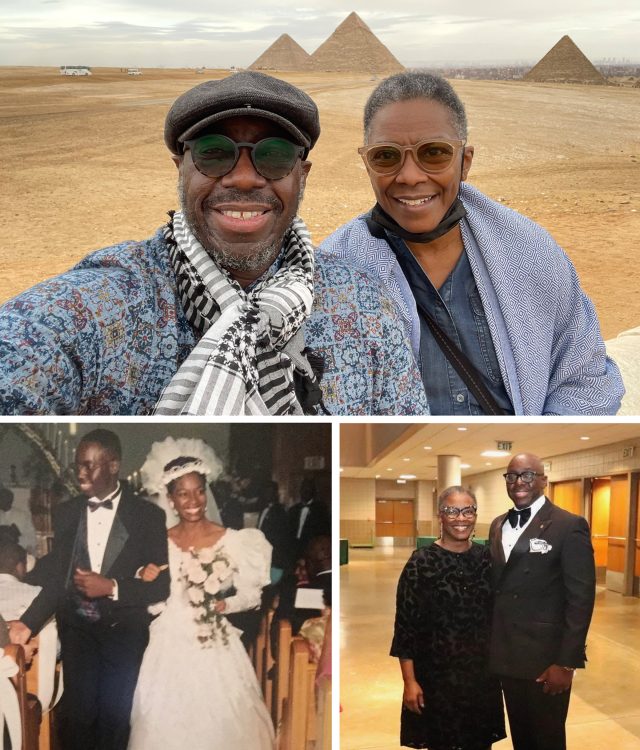
Andrea and Jamal McCaskey met at a special Fifth Sunday service at Sixth Avenue Baptist Church. The couple married in 1992. (Provided)
Andrea and Jamal McCaskey met at a special Fifth Sunday service at Sixth Avenue Baptist Church. The couple married in 1992. (Provided)
The proposal: The two got engaged in January of 1992 on MLK Day.
“He had been out chopping wood, I don’t even know why he was out cutting down wood,” she remembered. The apartment I was in had a wood-burning fireplace, so he brought some wood to me for the fireplace. After he came in, he said, ‘Hey, what would you say if I asked you to marry me?’ I said, ‘Don’t play with me because I ain’t to be played with with that question.’ I told him, ‘If you’re serious, then, yes, I will marry you.’”
Jamal said he doesn’t remember chopping wood, but he does remember not being nervous to propose.
“I don’t remember bringing wood, and I certainly don’t remember chopping,” he said. “That was the day I decided that this was the one, and it was time to make a move. I was confident in myself and her answer. I knew she would say yes. I don’t mean sound conceited, but we had spent a lot of time together during that time period.”
The wedding: The wedding took place at Andreas’s home church in Nashville. It was presided over by Dr. Clement Fugh and her childhood pastor, Reverend Reed, who travelled from Indianapolis to marry the McCaskeys.
Their colors were peach, cream and a medium shade of blue. The church was filled with loved ones from both their life in Birmingham and from her hometown of Nashville.
“The church was full, and it was just a beautiful ceremony,” she said. “It was just a beautiful time.
Andrea said the memory from that day that she still carries is what Jamal said when she reached him at the altar.
“When I got down the aisle and got to where he was, he said, ‘You look so beautiful,’” she said. “I have remembered that all these years.
Jamal just remembers it being a happy day.
“I remember winking at her mom,” he said. “I remember smiling when Andrea came down the aisle. I remember a spring in my step the whole day. It was just a great day.”
The honeymoon: The two went on a cruise to the Bahamas for their honeymoon, a trip they are about to recreate.
“We did a ballroom dancing class, that’s the one thing I remember about it,” Andrea said.
Jamal said they met other married couples who shared pearls of wisdom.
They brought back a memento, a Lladro figurine of a Black bride and groom, to remember the occasion.
Words of wisdom: Andrea said that newer couples should keep in mind that love is an action.
“Love is more than a feeling,” she said. “Yes, there are days when we disagree and days when we just like, ’Who are you and what have you done with the person I married?’ And you continue to work. Do the work, put in the work and remember what it is that’s important.”
Jamal agreed.
“Keep the main thing the main thing,” he said. “You’ve got to find somebody who’s a friend, not just feeling butterflies in your stomach. You need somebody you can match you.”
Happily ever after: The McCaskeys have two adult children: a 29-year-old son who lives in Grayson Valley with his wife of two years, and a 27-year-old daughter who lives in Brooklyn, New York. Andrea is a retired HR professional who worked for the Inroads and Momentum programs. Jamal is a retired Deputy Chief of the Birmingham Police Department. He now works in real estate.
“You Had Me at Hello’’ highlights married couples and the love that binds them. If you would like to be considered for a future “Hello’’ column, or know someone, please send nominations to [email protected]. Include the couple’s name, contact number(s) and what makes their love story unique.
Birmingham Times
Midweek Magic: How Sloss Furnaces Brings History to Life for Students
BIRMINGHAM TIMES — Sloss Furnaces offers immersive Wednesday field trips for students to learn Birmingham’s history, from industrial science to the people behind the iron industry.
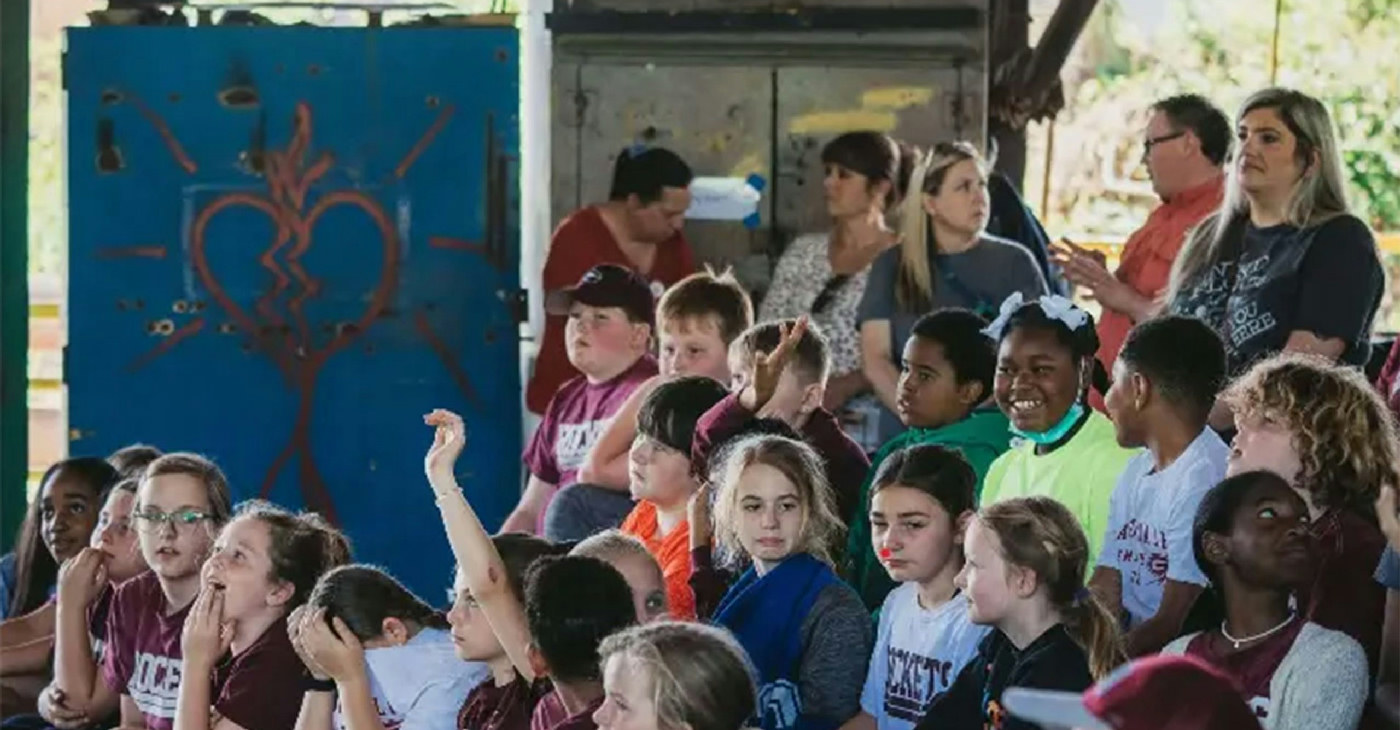
If you think Sloss Furnaces is only a place to visit on special occasions, here’s a little insider knowledge: Every Wednesday, the historic site comes alive with the energy of students discovering Birmingham’s roots in a hands-on, unforgettable way.
Learning Where It Actually Happened
There’s something powerful about standing in the very place where history unfolded. For students visiting Sloss Furnaces on field trips, this isn’t just another lesson from a textbook, it’s a full-on experience.
They walk beneath towering iron structures, see the massive furnaces up close, and learn how raw materials were transformed into the iron that helped build a city. It’s immersive, a little gritty, and way more memorable than reading about it in class.
Why Wednesdays Matter
Wednesdays at Sloss are dedicated to education. School groups from across the region come through the gates to explore everything from industrial science to local history. Guided tours break down complex processes like how blast furnaces worked into engaging, easy-to-understand stories.
And it’s not just about machinery. Students also learn about the people behind the industry, the workers, the challenges they faced, and the role Sloss played in shaping Birmingham’s identity.
More Than a Field Trip
What makes these visits special is how they connect the past to the present. Kids don’t just hear about Birmingham becoming the “Magic City”—they see why it happened.
Students watch as talented metal artists pour their artwork in molten iron and prepare it for students to take home the same day. For many students, it’s their first time realizing that history isn’t distant or abstract. It’s local. It’s tangible. It’s right here.
While weekends and events often get the spotlight, these midweek field trips are a reminder that Sloss Furnaces is an active learning space year-round. It’s not just preserved history. It is a place where new generations come to understand and appreciate it.
So next time you’re nearby on a Wednesday, don’t be surprised to see groups of students exploring, asking questions, and maybe even imagining what it was like when the furnaces first roared to life.

A metal artist pours molten iron during a demonstration for students at Sloss Furnaces.
A Hidden Gem in Action
While weekends and events often get the spotlight, these midweek field trips are a reminder that Sloss Furnaces is an active learning space year-round. It’s not just preserved history. It is a place where new generations come to understand and appreciate it.
So next time you’re nearby on a Wednesday, don’t be surprised to see groups of students exploring, asking questions, and maybe even imagining what it was like when the furnaces first roared to life.
Home schools, Private schools, and Public schools groups are welcome. Tours and Pours are free for Birmingham City Schools. Educators, email Sloss Furnaces Historian, Ty Malugani to schedule your school tour.
Birmingham Times
South Hampton K-8 Students Among Top 10 Finalists for Samsung’s ‘Solve for Tomorrow’ Competition
BIRMINGHAM TIMES — Samsung’s “Solve for Tomorrow” competition gives students in grades 6-12 the opportunity to work together and explore how science, technology, engineering and math can be used to create change in their communities.
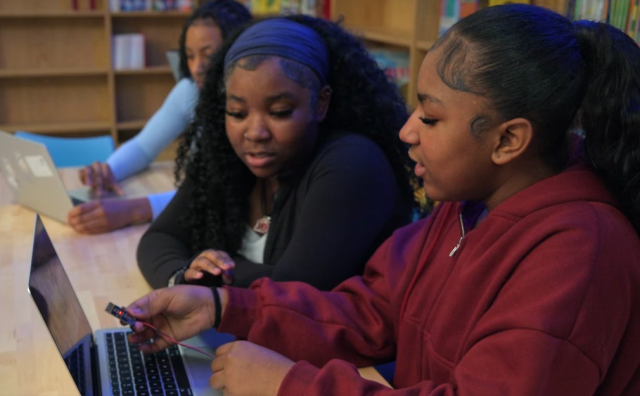
Birmingham Times
Students at South Hampton K-8 School have placed among the top 10 national finalists for Samsung’s 2025-2026 “Solve for Tomorrow” competition.
Samsung’s “Solve for Tomorrow” competition gives students in grades 6-12 the opportunity to work together and explore how science, technology, engineering and math can be used to create change in their communities.
“We believe that technology should protect people,” said James Speights, a South Hampton K-8 7th grader.
Details on South Hampton’s project can be found here. For this project, the Birmingham City Schools students focused on tornado preparedness, developing a solar-powered and sensor-based tornado monitoring and alert system.
Their project, Storm Sentinels, would use Raspberry Pi technology to send out early warning text messages to over 1,000 families in a tornado’s path. The plan would add valuable time for people to take shelter.
“We can’t stop the storms, but we can prevent tragedy,” said Areille Judkins, an 8th grader. “We are proud to be a part of solutions that can help strengthen communities and save lives,” she added.
Voting is now open for the Community Choice Award on Samsung’s competition website.
South Hampton K-8 student Jason Walton, an 8th grader, talks about their “Solve for Tomorrow” project. (Samsung)
Samsung “Solve for Tomorrow” is open to public school students in grades 6-12. Only schools that are at least 50% publicly funded are eligible to compete. Students work together to come up with a project plan, and teachers submit the team’s application.
Birmingham Times
Mayor Randall Woodfin Criticizes Central Alabama Water After 135 Employees Unexpectedly Laid Off
THE BIRMINGHAM TIMES — “The water works as a utility is not a private sector company. How we treat our employees, how we treat working class people should always be paramount in any decision making,” said Mayor Randall Woodfin. “I’m not sure if thought went into these actions.”

The Birmingham Times
Randall Woodfin is speaking out after Central Alabama Water laid off 135 employees, raising concerns about how the decision impacts both workers and the community.
At a Friday press conference, Woodfin shared a personal story about a recent interaction with an employee who had lost her job. The woman, a mother whose child attends the same school as his son, told the mayor that she and her husband worked for the water board and were both laid off.
“The water works as a utility is not a private sector company. How we treat our employees, how we treat working class people should always be paramount in any decision making,” said Woodfin. “I’m not sure if thought went into these actions.”
The mayor said the conversation stuck with him.
“I personally met and saw the pain, saw the genuine fear in her own eyes of how she and her husband are going to simply take care of their family,” he said.
According to Woodfin, the woman worked in customer service, and nearly her entire department was let go. He said that raises concerns about how residents, especially older adults in Birmingham, will access services, such as paying their water bills in person.
“This public organization — it doesn’t seem they have to answer to anybody,” said Woodfin. “They should be answering to the customers.”
Woodfin also criticized how the layoffs were handled, saying “shame on you” to CAW and questioning whether enough thought was given to the broader impact on both employees and customers.
He went on to raise concerns about water quality, noting that some of the employees responsible for monitoring it were among those laid off.
“If you get rid of the team that’s responsible for managing that, verifying that every day, what are we left with?” asks Woodfin.
Birmingham Times
Pete Buttigieg to Join Mayor Randall Woodfin for Community Town Hall in Birmingham
THE BIRMINGHAM TIMES — “Secretary Buttigieg has been one of the leading voices in the country on infrastructure investment, economic development, and the future of American communities,” Blueprint Alabama stated in a Facebook announcement. “We are proud to welcome him to Birmingham for this important conversation alongside Mayor Woodfin.”
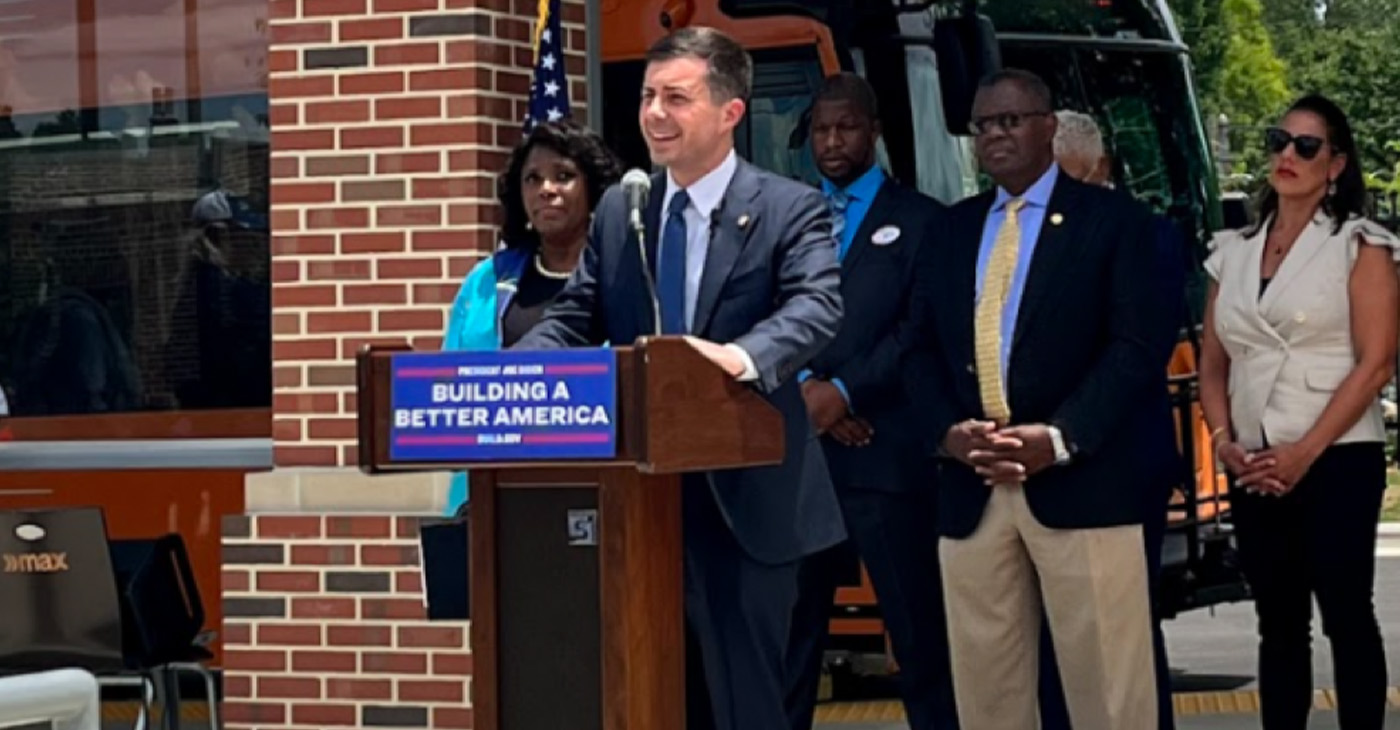
The Birmingham Times
Former U.S. Transportation Secretary Pete Buttigieg will join Birmingham Mayor Randall L. Woodfin for a community conversation on Monday, March 9, at 11 a.m. at the historic Carver Theatre.
The event, organized by Blueprint Alabama, will cover a range of topics including economic opportunity, infrastructure, neighborhood priorities, and the current political climate.
“Secretary Buttigieg has been one of the leading voices in the country on infrastructure investment, economic development, and the future of American communities,” Blueprint Alabama stated in a Facebook announcement. “We are proud to welcome him to Birmingham for this important conversation alongside Mayor Woodfin.”
Admission is free, but reservations are required. Doors open at 10:30 a.m.
This won’t be Buttigieg’s first visit to the Magic City. When the Biden-Harris Administration awarded more than $21.6 million to pay for street infrastructure in Birmingham’s Civil Rights District, Buttigieg came to deliver the news. In 2024, Buttigieg returned to Birmingham to further discuss ways street improvements could strengthen the community.
Blueprint Alabama hopes the listening session will bring together residents, advocates, students, and community leaders from across Alabama.
Event Details
Location: Carver Theatre, Birmingham, Alabama
Date: Monday, March 9
Doors Open: 10:30 AM
Program Begins: 11:00 AM
Admission: Free (RSVP required)

NFN live presents Beyond IWDM 50 Podcast
The Hidden Cost of Insurance Loyalty

Retrospectro Talks Viral Videos, Lean Squad, Music & More | Interview

CBCF’s ALC 55 Recap | September 2026

The Washington Informer Celebrates 62 Years | Recap

Heated Seats & Sliding Window: Ultimate Truck Comfort #shorts

Test Subaru’s 11.6-Inch Screen in REAL Daylight #shorts

EV Range Anxiety? Your Daily Commute Needs Just One Overnight Charge #shorts

Headline: FAMU Homecoming Injuries, Discarded Ballots & Rising Holiday Costs 📱

Headline: FAMU Homecoming Injuries, Discarded Ballots & Rising Holiday Costs

OP-ED: Haiti TPS: Have We Lost Sense of Humanity?

Remembering Chauncey Bailey as Student Journalists Face Threats to Truth-Telling

All Skinfolk Ain’t Kinfolk

Poll: Becerra Widens His Lead Over Hilton; Californians Split on Wealth Tax

Rulings Leave Questions Lingering in Nolan Wells Case

Latinas Deserve Equal Pay. Unions Help Make It Happen.

Zakiya Jendayi Arrested, Locked Out of Home by Sheriff’s Deputies

Why Black Artists Struggle to Sell Tours

COMMENTARY: The Audacity of Joyce Beatty

A $2.1 Trillion Wellness Industry Never Built a Daily Practice for Black Children. So This Atlanta Family Did.
Retrospectro Talks Viral Videos, Lean Squad, Music & More | Interview
CBCF’s ALC 55 Recap | September 2026
The Washington Informer Celebrates 62 Years | Recap
Heated Seats & Sliding Window: Ultimate Truck Comfort #shorts
Test Subaru’s 11.6-Inch Screen in REAL Daylight #shorts
EV Range Anxiety? Your Daily Commute Needs Just One Overnight Charge #shorts
Headline: FAMU Homecoming Injuries, Discarded Ballots & Rising Holiday Costs 📱
Headline: FAMU Homecoming Injuries, Discarded Ballots & Rising Holiday Costs

OTR @ Par 365

OTR w LeBrent Speed
-

 Black History1 week ago
OP-ED: The Black Church Writes AI’s Next Chapter
-

 Featured6 days ago
Tamiko Armstead | 2026 Lifetime Achiever in Education
-
 Black History1 week ago
Practitioners of African Traditional Spirituality Offer Ancestral Reverence Ritual Oct. 31
-
 Art1 week ago
Kickstarter CEO Everette Taylor Shares Tips on Creating and Growing a Business
-
 Black History1 week ago
Columbus’s Oldest Businesses Still Open: 10 That Have Lasted 75+ Years
-

 Black History1 week ago
COMMENTARY: BIG MAMA SAID: Don’t Throw Away the Gift Just Because It Came Wrapped Wrong
