
Benjamin F. Chavis Jr.
Los Angeles’s Historic Black Community Devastated by Eaton Canyon Fires
NNPA NEWSWIRE — The unincorporated community in the San Gabriel Valley, home to 42,000 residents, has long stood as a beacon of Black homeownership and middle-class stability. With 18% of its population identifying as Black, Altadena also hosts a diverse community that includes Latino and Asian American residents. Tragically, the Eaton Fire alone destroyed over 1,000 structures, killed at least five residents in Altadena and displaced thousands.


By Stacy M. Brown, NNPA Newswire Senior National Correspondent
@StacyBrownMedia
As flames tore through the picturesque foothills of Altadena and Pasadena on January 7, 2025, the Eaton Canyon fires left a historic Black community—rooted in the Civil Rights Movement—nearly wiped out. Among the hardest-hit areas in Los Angeles County, Altadena has seen its many Black-owned homes, churches, businesses, and landmarks reduced to ashes.
The unincorporated community in the San Gabriel Valley, home to 42,000 residents, has long stood as a beacon of Black homeownership and middle-class stability. With 18% of its population identifying as Black, Altadena also hosts a diverse community that includes Latino and Asian American residents. Tragically, the Eaton Fire alone destroyed over 1,000 structures, killed at least five residents in Altadena and displaced thousands.
“Obviously, it’s been a tough couple of days, but our family is making it through,” said Danny Bakewell Jr., president of the Bakewell Company which owns the Los Angeles Sentinel. “Both my girlfriend and my son lost their homes and the devastation is unreal for so many families – a lot of Black folks.”
Jamal-Dominique Hopkins, a native of Altadena, lost his beloved childhood home on Loma Alta Drive to the blaze. His mother, Ruthie Hopkins, 81, and his son, Joshua, narrowly escaped thanks to the swift actions of Hopkins’ older brother, who evacuated them to safety.
Hopkins described the devastation in a GoFundMe post, writing, “This isn’t just a loss for our family; it’s a loss for a community that has thrived despite challenges.”
Ruthie Hopkins, the former editor and co-owner of The Pasadena Journal, a Black-owned newspaper, has been a cornerstone of the community for decades. The newspaper is part of the National Newspaper Publishers Association (NNPA), which represents the Black Press of America and is celebrating its 198th anniversary in March.
The fire also destroyed the family’s SUV, which was vital for Ruthie’s medical appointments. Now, she and Joshua are left with only the clothes they wore when escaping.
A Legacy Reduced to Ashes
Altadena’s Black community flourished during the Civil Rights Movement, growing from 4% of the population in 1960 to 27% by 1970, following the passage of the Fair Housing Act in 1968. It became a haven for Black families seeking to escape discrimination elsewhere, offering homeownership opportunities unavailable in most parts of the country.
Before the fire, Altadena boasted a Black homeownership rate of 81.5%, nearly double the national average for African Americans. Families like Kenneth Snowden’s embodied this legacy. Snowden’s family purchased their first Altadena home in 1962, and nearly 20 years ago, Snowden bought his own home in the area. Both properties were destroyed in the fire.
“Your $40 million home is no different than my $2 million home,” Snowden told reporters. “Give us the ability to rebuild, restart our lives. If you can spend billions of dollars fighting a war, you can spend a billion dollars to help us get back where we were at.”
Shawn Brown, founder of Pasadena Rosebud Academy, lost her home and the public charter school she built to serve the community’s children. Brown is working to raise funds to rebuild the school while seeking temporary locations in local churches—though some churches, like Altadena Baptist Church, have also burned.
Only the bell tower remains at Altadena Baptist. The Rev. George Van Alstine is helping church members navigate the challenges of insurance claims and federal aid. He fears the destruction will lead to gentrification, pushing out long-standing Black residents.
“We’re seeing families who may have to leave because rebuilding here will be too expensive,” he said.
Brown urged her fellow Black homeowners to hold onto their properties despite developers’ offers. “Stand strong, rebuild, and continue the generational progress of African Americans,” she said.
Widespread Loss and Displacement
The destruction in Altadena mirrors the broader devastation caused by the wildfires sweeping Los Angeles County. Across the region, more than 12,300 structures have been destroyed, and at least 24 lives have been lost. Economic losses are estimated between $250 billion and $275 billion, making this disaster one of the costliest in U.S. history.
Much of the media coverage has focused on celebrity mansions and wealthy neighborhoods, but Altadena’s plight highlights the profound impact on middle-class communities of color. Residents returned to find homes passed down through generations reduced to rubble.
Even the Mountain View Cemetery, where pioneering Black science fiction novelist Octavia E. Butler is buried, caught fire. Butler’s novel Parable of the Sower chillingly predicted wildfires caused by climate change, starting on February 1, 2025. Her legacy and connection to the community remain a stark reminder of the fragility of Altadena’s history.
Mobilizing Support
The community and its allies have rallied to provide relief in response to the devastation. James Bryant, a partner at the Cochran Firm, organized a GoFundMe campaign with support from Ivie McNeil Wyatt Purcell and Diggs, the Prince Hall Masons, and community advocate Jasmyne Cannick. The campaign has raised nearly $100,000 to assist Black residents of Pasadena and Altadena.
“The loss of a home is about more than property. It’s the loss of memories, mementos, and generational pride,” Bryant said.
Another GoFundMe campaign created by Hopkins aims to help his mother and son rebuild their lives, covering temporary housing, medical supplies, clothing, and other necessities.
The Spill App has also compiled a comprehensive list of African American families and individuals affected by the fires, helping coordinate donations and relief efforts.
NNPA President and CEO Dr. Benjamin F. Chavis Jr. has maintained close contact with NNPA-member newspapers and media companies in Southern California, including David Miller of Our Weekly, Kenneth Miller of Inglewood Today and Pluria Marshall of the Los Angeles Wave. Both Miller and Marshall confirmed their staff are safe but noted the community’s urgent need for support.
A Historic Challenge
The road to recovery remains daunting as the Eaton Fire continues to burn, with containment still at 0%. Fierce Santa Ana winds and dry conditions threaten to worsen the situation, while evacuation orders remain in effect for over 105,000 residents.
“This fire has changed our lives forever,” Hopkins wrote. “Your support means the world to us as we work to restore some sense of normalcy after this unimaginable loss.”
Chavis added, “The NNPA stands is solidarity with our member publishers in Los Angeles County and beyond. The devastating wildfires must be met with resolve, compassion, and resiliency.”
Donations to Hopkins’ campaign can be made via GoFundMe. Supplies, including clothing, toiletries, and blankets, can be dropped off at Prince Hall, 9027 S. Figueroa St., Los Angeles, CA.






Benjamin F. Chavis Jr.
Leadership Matters: Congressman Troy Carter & Microsoft’s Fred Humphries | Two Exclusive Interviews

In this special episode of Leadership Matters, host Dr. Benjamin F. Chavis Jr. presents two powerful, in-depth interviews with leaders making an impact across public service and the technology sector: Congressman Troy Carter and Fred Humphries, Corporate Vice President at Microsoft.
🔹 Segment 1: Congressman Troy Carter
Dr. Chavis sits down with Congressman Carter to discuss leadership in Congress, advancing economic opportunity, and addressing key issues affecting communities nationwide. Carter shares insights on public service, advocacy, and creating meaningful change through policy and civic engagement.
🔹 Segment 2: Fred Humphries, Microsoft
In a separate conversation, Fred Humphries provides a global business perspective on leadership within the technology industry. He discusses innovation, digital equity, and Microsoft’s role in expanding access to technology, workforce development, and economic inclusion in underserved communities.
Together, these two conversations explore:
Leadership across government and the technology sector
Expanding economic opportunity and digital inclusion
The role of innovation in shaping the future
Building pathways for workforce development and growth
Strengthening communities through collaboration and purpose-driven leadership
Leadership Matters is a dynamic video series that highlights visionary leaders working to create a more just, equitable, and prosperous future.
👉 Don’t forget to like, comment, and subscribe for more inspiring conversations with today’s leading voices.
#LeadershipMatters #BenjaminChavis #TroyCarter #FredHumphries #Microsoft #BlackLeadership #PublicPolicy #TechLeadership #DigitalEquity #EconomicOpportunity #Innovation #Leadership
Benjamin F. Chavis Jr.
Leadership Matters: Rep. James E. Clyburn & AmeriHealth’s Rhonda Mims | Two Exclusive Interviews
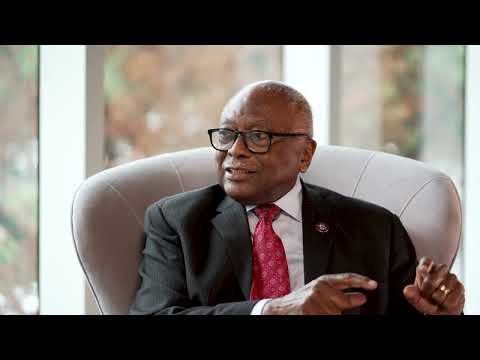
In this impactful episode of Leadership Matters, host Dr. Benjamin F. Chavis Jr. presents two in-depth interviews with leaders shaping the future of public policy and healthcare: U.S. Representative James E. Clyburn of South Carolina and Rhonda Mims, Executive Vice President at AmeriHealth Caritas.
🔹 Segment 1: Rep. James E. Clyburn (South Carolina)
Dr. Chavis engages Congressman Clyburn in a powerful discussion on leadership in Congress, the ongoing fight for civil rights, and advancing equity through public policy. As one of the most influential voices in American politics, Clyburn shares insights on governance, social justice, and the importance of sustained civic engagement.
🔹 Segment 2: Rhonda Mims, AmeriHealth Caritas
In a separate interview, Rhonda Mims offers a compelling perspective on leadership in the healthcare sector. She discusses innovation, public affairs, and the importance of expanding access to quality care while addressing health disparities across underserved communities.
Together, these two conversations explore:
Leadership across government and healthcare sectors
Advancing equity through policy and innovation
The importance of access, inclusion, and community impact
The future of healthcare and public service leadership
Building stronger, healthier communities through collaboration
Leadership Matters is a dynamic video series dedicated to highlighting visionary leaders who are driving meaningful change across industries and communities.
👉 Don’t forget to like, comment, and subscribe for more inspiring conversations with today’s most impactful leaders.
#LeadershipMatters #BenjaminChavis #JamesClyburn #RhondaMims #AmeriHealth #HealthcareLeadership #PublicPolicy #BlackLeadership #HealthEquity #CivilRights #CommunityImpact #leadershipinspiration
Benjamin F. Chavis Jr.
Leadership Matters: Gov. Wes Moore on Service, Leadership & Economic Opportunity

In this inspiring episode of Leadership Matters, host Dr. Benjamin F. Chavis Jr. sits down with Maryland Governor Wes Moore, a visionary leader dedicated to expanding opportunity, advancing equity, and strengthening communities across the state.
Governor Moore shares insights from his journey of leadership—from military service and business to public office—and reflects on the responsibility of leadership in addressing today’s most pressing challenges. The conversation highlights his commitment to economic development, education, workforce opportunity, and creating pathways for success for all residents.
In this engaging discussion, Governor Moore addresses:
Leadership rooted in service, accountability, and purpose
Expanding economic opportunity and workforce development
Advancing equity in education and public policy
The importance of civic engagement and community leadership
Building a stronger, more inclusive future for Maryland and beyond
Leadership Matters is a powerful video series that showcases influential leaders who are shaping the future through vision, innovation, and a commitment to justice and progress.
👉 Don’t forget to like, comment, and subscribe for more conversations with today’s most impactful leaders.
#LeadershipMatters #BenjaminChavis #WesMoore #GovernorMoore #Maryland #Leadership #PublicPolicy #EconomicOpportunity #BlackLeadership #CommunityImpact #WorkforceDevelopment #Equity
Benjamin F. Chavis Jr.
Leadership Matters: Rep. Gabe Amo & Dr. Yasmine Wahdan on Policy, Innovation & Global Health
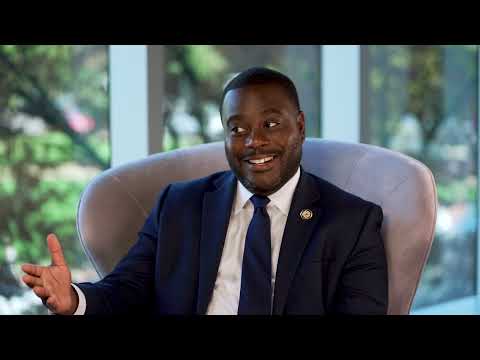
In this compelling episode of Leadership Matters, host Dr. Benjamin F. Chavis Jr. features two in-depth interviews with leaders shaping the future of public policy and global healthcare: U.S. Representative Gabe Amo of Rhode Island and Dr. Yasmine Wahdan of Bayer, a global pharmaceutical company.
🔹 Segment 1: Rep. Gabe Amo (Rhode Island)
Dr. Chavis speaks with Congressman Amo about his leadership in Washington, his commitment to public service, and his work advancing policies that promote economic opportunity, equity, and community development. Amo shares his perspective on civic engagement, representation, and the evolving role of government in addressing today’s challenges.
🔹 Segment 2: Dr. Yasmine Wahdan, Bayer
In a separate interview, Dr. Wahdan offers a global perspective on leadership in the pharmaceutical industry, discussing innovation, healthcare access, and the role of scientific advancement in improving lives worldwide. She highlights the importance of collaboration, research, and equitable access to healthcare solutions.
Together, these two conversations explore:
Leadership in government and global healthcare
Advancing equity through policy and innovation
The future of public health and medical advancement
Building inclusive opportunities across sectors
The power of leadership to create lasting impact
Leadership Matters is a dynamic series showcasing visionary leaders who are driving change across industries and communities worldwide.
👉 Be sure to like, comment, and subscribe for more inspiring conversations with today’s most impactful leaders.
#LeadershipMatters #BenjaminChavis #GabeAmo #YasmineWahdan #Bayer #PublicPolicy #HealthcareInnovation #GlobalHealth #BlackLeadership #PharmaceuticalIndustry #EconomicEquity #Leadership
#BuyBlack
NNPA Fund Hosts Black Press Day 2026 At Howard University, Celebrating the Past and Looking Ahead to the Future
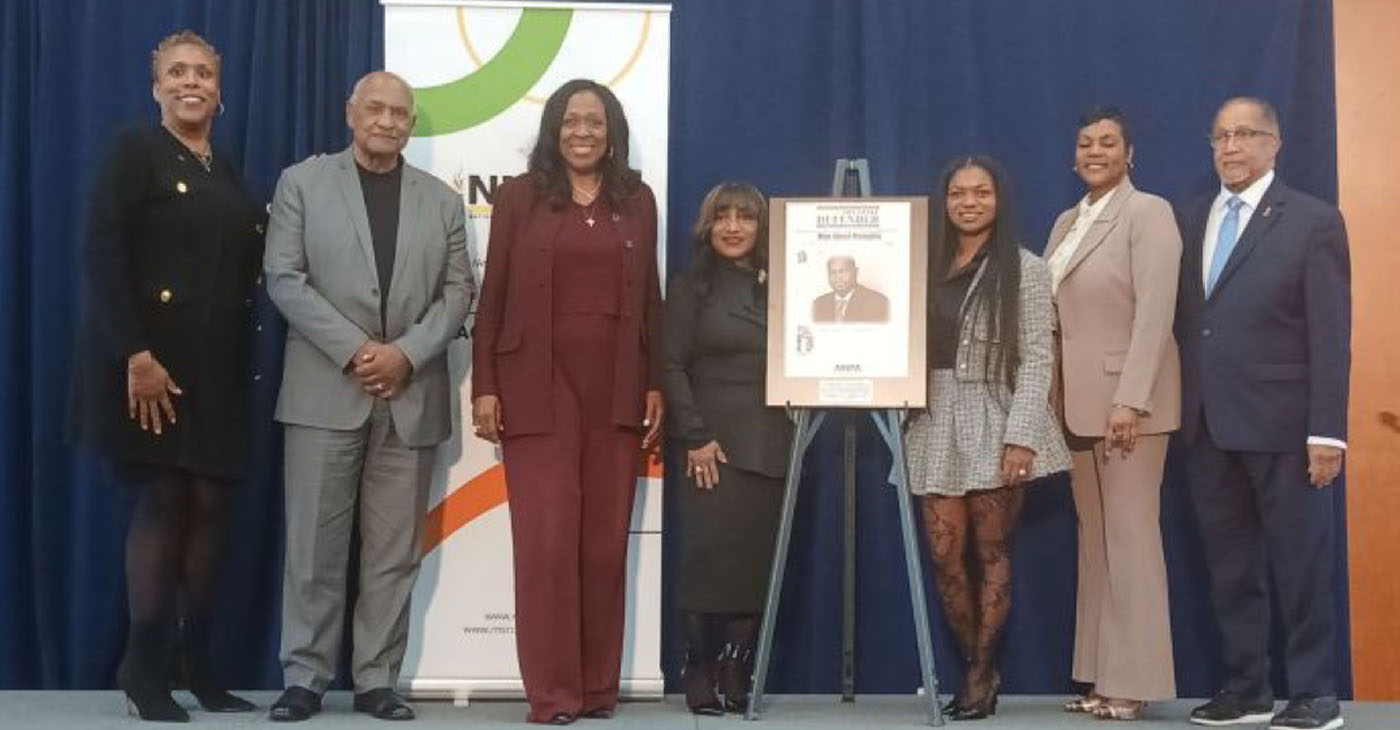
THE AFRO — As in years past, the most sacred part of the reception was the enshrinement presentation and plaque acceptance led by Karen Carter Richards, NNPA Fund chair, which celebrated the life of Bernal E. Smith II, who, prior to his death in 2017 at the age of 45, had been instrumental in restoring local ownership of The New Tri-State Defender in Memphis, Tenn., as its president and publisher.
By D. Kevin McNeir | Special to The AFRO
Nearly 100 members of the Black Press – some still honing their skills as journalists in college classrooms along with seasoned veterans representing Black publications from across the U.S.; and both friends of and corporate sponsors of the Black Press, gathered on the campus of Howard University (HU) on March, 18 for this year’s Black Press Week Reception.
The program, hosted by the National Newspaper Publishers Association (NNPA) Fund, now in its 50th year and led by Executive Director Kelly Hodges, was held in the HU Blackburn Center. Highlights from the reception included a State of the Black Press address delivered by NNPA President and CEO Dr. Benjamin Chavis Jr., musical selections from the Howard University Community Choir, an AI-themed fireside chat, and remarks from various speakers who updated the audience on recent initiatives related to the survival and growth of the Black Press.
As in years past, the most sacred part of the reception was the enshrinement presentation and plaque acceptance led by Karen Carter Richards, NNPA Fund chair, which celebrated the life of Bernal E. Smith II, who, prior to his death in 2017 at the age of 45, had been instrumental in restoring local ownership of The New Tri-State Defender in Memphis, Tenn., as its president and publisher.
Hodges described Smith as a visionary, a dynamic leader, and one of the NNPA’s most widely regarded voices representing the next generation of Black Press publishers.
“He was known for his commitment to community empowerment, social justice, and innovative media leadership,” Hodges said. “We chose to enshrine him into the NNPA Fund of Distinguished Black Publishers this year at Howard University where he will forever be recognized for his lasting contributions to African American journalism and the legacy of the Black Press.”
The Black Press Week 2026 reception opened with a welcome address from Karen Carter Richards, NNPA Fund chair and publisher of the Houston Forward Times, who invited the audience to join her in “celebrating the excellent legacy of those who have powered the Black Press over the past 199 years.”
John Warren, NNPA Fund board member, publisher of The San Diego Voice & Viewpoint and chair of the NNPA, delivered opening remarks that emphasized his decades-long connection and commitment to Howard University.
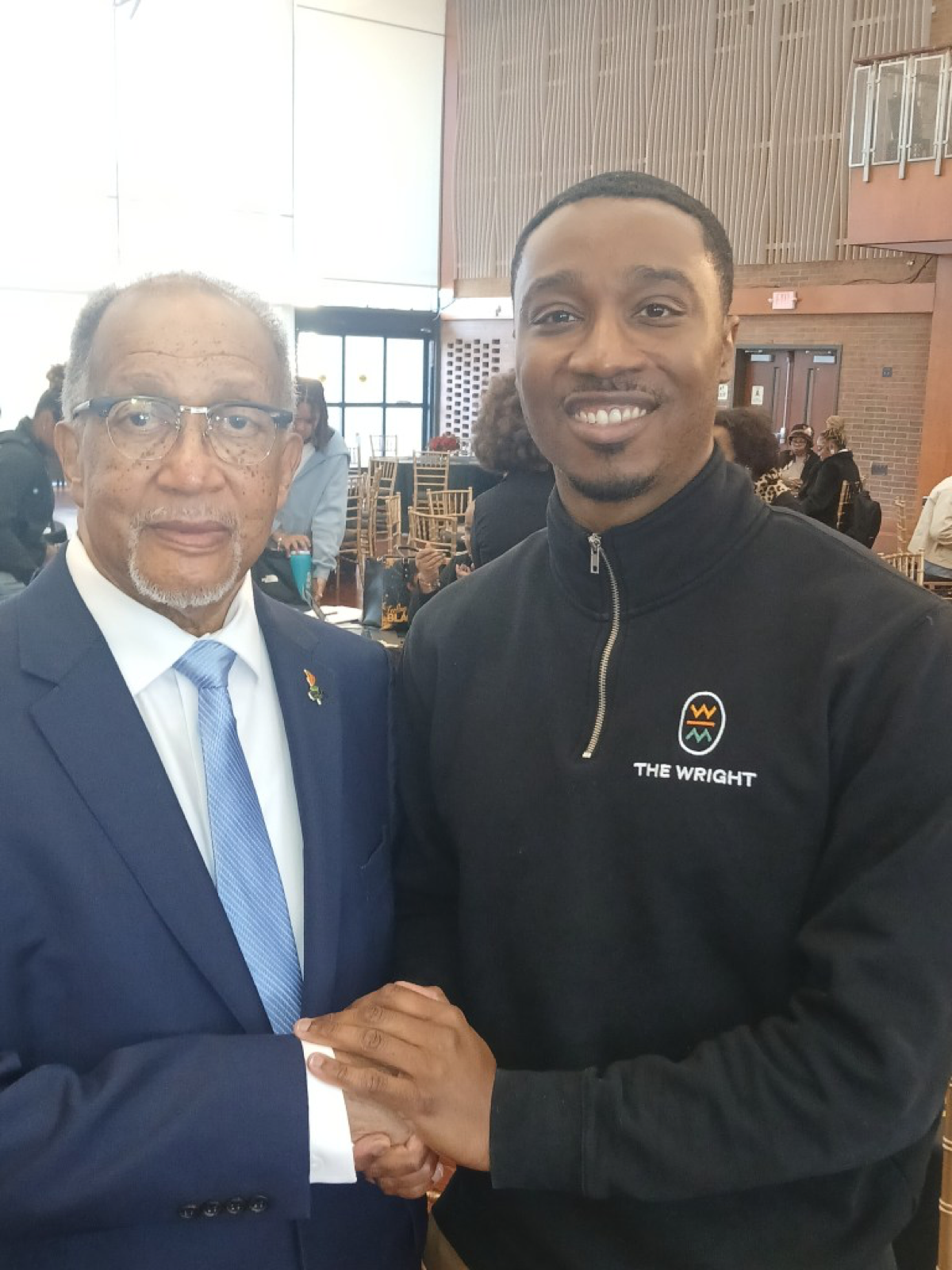
During Black Press Day 2026, held on the campus of Howard University on March 18, one recurring theme shared by featured speakers was the importance of providing more opportunities for intergenerational conversations among members of the Black Press. Pictured is Dr. Benjamin F. Chavis Jr., president and CEO, NNPA, an icon from the Civil Rights Movement, and Phil Lewis, Washington Association of Black Journalists, president, who moderated a fireside chat about the essential integration of AI in Black Press newsrooms during the program and who represents the cadre of young Black journalists who are making their way in the industry. Credit: AFRO Photo/D. Kevin McNeir.
“I’m a two-time graduate and of Howard who completed law school 42 years ago and I am excited to be back on this campus,” Warren said. “We have weathered some tough times but always survived because of powerful presidents who shepherded us through the storms. Howard University represents a vast and impressive history – stories that without the Black Press may have never been documented and would have been lost to future generations.”
Chavis, who chose as the theme for his address, “Legacy, Struggle, Innovation, and the Road Ahead,” said while the nation prepares to celebrate its 250th anniversary, Blacks must remember that our history did not begin in 1776 but rather thousands of years earlier on the African continent.
“Even in the face of unprecedented inhumanity, torture, rape, violence, lynchings, and the racist discrimination and enslavement of African people in America before and after 1776, we not only survived but held on to our sense of dignity, purpose, struggle, mission, and vision,” Chavis said. “Now, as we prepare for the 200th anniversary of the Black Press, we must consider what truths are we passing on to the next generation?
“What truths are we holding onto that shatter the sinful and hateful stereotypes that work to sustain our oppression rather than to ensure our liberation? We represent a sacred tradition of truth telling as members of the Black Press. However, it has never just been about the news – it has always been about freedom, justice, dignity, and self-determination,” said Chavis who added that the Black Press must continue to serve as a prophetic voice in the wilderness of American democracy as it challenges various forms of injustice.
As the Black Press continues its commitment to digitizing photographs and publications dating back to its founding in the early 19th century, Howard University serves as the home for archives that continue to grow and are housed on Howard’s campus under the auspices of the Moorland Spingarn Research Center (MSRC). Reports from two representatives of the NNPA’s ongoing digitization efforts, Brandon Nightingale, senior project manager, and Sijan Shrestha, MSRC scholar, provided critical information about the NNPA’s efforts to ensure that its past works remain available for future generations.
Chavis challenged his colleagues to ready themselves for the digital transformation which is sweeping across America and the world and to recognize that the shift from print to digital publishing is far from optional but is instead essential for those who wish to survive.
“This moment demands strategic resilience, intergenerational leadership to secure the future, and the ability to move forward as innovators who understand the benefits of emerging technologies like artificial intelligence and who are not afraid of the changes that it will inevitably bring to our industry,” he said. “But changes notwithstanding, our mission remains urgent and that cause first voiced in 1827 by the publishers of Freedom’s Journal which journeyed throughout two centuries of struggle and triumph, is still before us.
“The role of the Black Press is more vital today than ever before,” he continued. “As we honor the legacy of those like Frederick Douglass and Ida B. Wells, we must accept as our task the preparation of a new generation who will be called upon to carry the torch.”
Benjamin F. Chavis Jr.
OP-ED: Black America’s 2026 Urban Challenges: Mayor Mamdani Case Study
NNPA NEWSWIRE — We are the Black Press of America. For the past 199 years, since the first publication of Freedom’s Journal in New York City in 1827, we have had to call out those who pretended to be our political allies. Accountability from those we help to elect is A fair and just demand.


By Dr. Benjamin F. Chavis Jr.
Today, across the United States of America, in some of the largest urban cities, Black Americans are having renewed nightmares about being taken for granted, ignored, and being erased in history and in the public square.
Ethnic cleansing is an insidious form of systematic racism. In response to the increasing “Browning of America,” concerns are raised about the unfulfillment of prior commitments intended to ensure racial equality in municipal politics, economics, and urban revitalization.
New York City is the nation’s largest city. The presence and contributions of African Americans to the city’s centuries-long development and evolution are rarely highlighted or saluted. The election of Zohran Mamdani would not have been possible without the huge turnout of African American and Latino voters. Yet the interests of Black America in the nation’s largest metropolis appear to be triaged routinely by the Mamdani Administration.
We are the Black Press of America. For the past 199 years, since the first publication of Freedom’s Journal in New York City in 1827, we have had to call out those who pretended to be our political allies. Accountability by those we help to elect is a fair and just demand.
Voters of color – both Black and Latino New Yorkers – backed Andrew Cuomo heavily in the primary, but then ultimately decided to give Zohran Mamdani a chance: overcoming their skepticism on housing, transit, and public safety, and reportedly moved by his affordability agenda.
This trust, on the part of Black voters in particular, may have been misplaced. Why? Several troubling early signs that the new mayor is disregarding New Yorkers of color and treating them like Ralph Ellison’s iconic Invisible Man.
Thus far Mayor Mamdani has appointed no Black deputy mayors. This is a glaring signal to Black voters who voted for Mamdani on the promise of racial equity in the city’s administration. Does Mamdani value our insights, lived experiences, or our voices in crafting critical policies in City Hall?
Mamdani was forced to apologize to Black New Yorkers for overlooking the historical contributions of enslaved and indigenous people to building the city when he talked about a city “built by immigrants” in his inauguration speech.
The Mamdani administration is holding a series of “Rental Ripoff” hearings, spearheaded by Cea Weaver, the director of his Office to Protect Tenants, who called homeownership a form of white supremacy. The mayor is reaching out to help private landlords rather than prioritizing fixing public housing (NYCHA), which has a dismal track record of poor conditions (no heat, year-plus waits for repairs, rampant pests and mold).
90 percent of the more than 511,000 NYCHA residents are Black and Latino, which is part of a larger trend in which 95 percent of Black households in New York State live in highly segregated buildings and/or neighborhoods. NYCHA is the largest landlord in NYC, so the Mamdani administration telling residents to wait even longer for a solution to their long-standing sub-standard living conditions has to be challenged.
The unfolding case study of Mayor Mamdani in New York City reveals that we must keep voting, with record voter turnout. But after the elections, we must hold mayors and other elected officials accountable. Mamdani still has time to ensure greater equity in NYC. But will he do the right thing at the right time?
Rev. Dr. Benjamin F. Chavis, Jr. is President and CEO of the National Newspaper Publishers Association (NNPA) and can be reached at [email protected]


Golf for Beginners: Making the Game Welcoming and Fun #shorts

Clem Haskins: The Legend They Forgot #shorts

Defender Daily Life: Does It Fit YOUR Routine? #shorts

James Talarico at TSU

Minimum Viable Product: Grow Your Business Without Burning Out #shorts

Minnesota Sports Talk: Vince Wright’s “Sports Done Wright” Podcast #shorts

November 3 Election: A Test Run for 2028

Tre and Shawn Lemons – A Community Service Love Story

Defender Coach of the Week – Tre Perro

Defender Athlete of the Week – Larry Dorsey.

OP-ED: Haiti TPS: Have We Lost Sense of Humanity?

Remembering Chauncey Bailey as Student Journalists Face Threats to Truth-Telling

All Skinfolk Ain’t Kinfolk

Poll: Becerra Widens His Lead Over Hilton; Californians Split on Wealth Tax

Rulings Leave Questions Lingering in Nolan Wells Case

Latinas Deserve Equal Pay. Unions Help Make It Happen.

Zakiya Jendayi Arrested, Locked Out of Home by Sheriff’s Deputies

Why Black Artists Struggle to Sell Tours

COMMENTARY: The Audacity of Joyce Beatty

A $2.1 Trillion Wellness Industry Never Built a Daily Practice for Black Children. So This Atlanta Family Did.
Golf for Beginners: Making the Game Welcoming and Fun #shorts
Clem Haskins: The Legend They Forgot #shorts
Defender Daily Life: Does It Fit YOUR Routine? #shorts
James Talarico at TSU
Minimum Viable Product: Grow Your Business Without Burning Out #shorts
Minnesota Sports Talk: Vince Wright’s “Sports Done Wright” Podcast #shorts
November 3 Election: A Test Run for 2028
Tre and Shawn Lemons – A Community Service Love Story
Defender Coach of the Week – Tre Perro
Defender Athlete of the Week – Larry Dorsey.
-

 Black History7 days ago
OP-ED: The Black Church Writes AI’s Next Chapter
-

 Featured5 days ago
Tamiko Armstead | 2026 Lifetime Achiever in Education
-

 Art1 week ago
Inside 820 S. Michigan: New Book Captures the Lost World of Ebony and Jet
-

 Black Press1 week ago
While Black Families Pay More for Power, Some Attorneys General Fight to Save High-Cost Coal
-

 Black Press1 week ago
OP-ED: If the ‘Cornell 7’ Were Black Men at an HBCU — America Wouldn’t Be This Sympathetic
-
 Black History6 days ago
Practitioners of African Traditional Spirituality Offer Ancestral Reverence Ritual Oct. 31
