
Environment
Local AME Churches Join Forces to Aid the Bahamas
JACKSONVILLE FREE PRESS — The devastation in the wake of hurricane Dorian has left over 70,000 homeless on the island of the Bahamas. More than twenty African-Methodist Episcopal (AME) Churches in Duval County came together to send aid to the people of the Bahamas, specifically in Freeport and Abaco Islands. Last week the leadership of the 11th Episcopal District called a meeting to take up a “call to action” for all of the district churches and over 450 churches heeding the call.


By The Jacksonville Free Press
The devastation in the wake of hurricane Dorian has left over 70,000 homeless on the island of the Bahamas.
More than twenty African-Methodist Episcopal (AME) Churches in Duval County came together to send aid to the people of the Bahamas, specifically in Freeport and Abaco Islands. Last week the leadership of the 11th Episcopal District called a meeting to take up a “call to action” for all of the district churches and over 450 churches heeding the call.
For two full days, area AME churches collected much-needed supplies filling trucks with items that will be transported to a sister church in Coconut grove-Miami. The church has access to sea plans and has already delivered supplies to the Bahamas. Shown are volunteers loading up the trucks. “For two days we’ve collected supplies and worked with the AME churches in our city and the state of Florida. We have to help our brethren and AME church in Bahamas. This is devastating and we want to help now. There’s no time to waste. God is a healer and his words will ring true to help the survivors,” said Rev. Dr. Marvin C. Zanders of St. Paul AME.
This article originally appeared in the Jacksonville Free Press.








Black Press
Iowa’s State Black and Brown Caucus Demand Investigation into Lead Azine Detonation
The Iowa Legislative Black and Brown Caucus is demanding a full independent investigation following the U.S. Army’s controlled detonation of 10,000 pounds of degraded lead azide at the Iowa Army Ammunition Plant. Legislators expressed serious concerns regarding environmental justice and public health, questioning why the toxic material was allowed to deteriorate for decades until it became too unstable to move. The caucus is calling for transparency regarding potential lead contamination of local soil, water, and agricultural products that sustain rural and working-class communities. Read more.

Note: On Nov. 25, after court and state-requested delays, the U.S. Army completed two simultaneous controlled detonations of about 10,000 pounds of degraded lead azide which had been stored in the Army Ammunition Plant in Middletown. The detonation followed the discovery in March that the material was too unstable to move. In October, local residents were informed of the plan, and the Environmental Protection Agency approved it on Nov. 13. The Army ordered evacuations for residents within a five-mile radius. Protests ensued, and the Eighth Circuit Court paved the way for today’s detonation within a concrete bunker. The states of Illinois and Missouri are also activated monitoring and emergency coordination.
Portions of the statement by the Black and Brown Caucus of Iowa’s state legislators are below:
Lead is highly toxic, and there is no known safe level of lead exposure. The projected release of lead-containing dust raises serious concerns about the health of our children, pregnant people, agricultural workers, livestock, and anyone who may come into contact with contaminated air, soil, water, or surfaces.
Iowans deserve answers and accountability. The Army’s failure to address this material sooner has left our communities facing a dangerous situation, and at the very least, Iowans deserve full transparency, accountability, and every possible safeguard to protect our people, our land, and our future.
The consequences of this failure have been placed on the shoulders of Iowa families and communities.
The Iowa Legislative Black and Brown Caucus is calling for a full, independent
investigation into how nearly 10,000 pounds of lead azide were allowed to deteriorate at the Iowa Army Ammunition Plant for more than two decades, ultimately reaching a point where the Army claims it is too dangerous to safely move or dispose of through alternative methods.
This situation raises serious questions about environmental justice, public health, government
transparency, and the responsibility of public institutions to protect the people they serve.
For generations, Black, Latin, immigrant, rural, and working-class communities have experienced the consequences of environmental hazards and industrial pollution in Iowa. This is a matter of public health, economic security, and basic human dignity.
What happens when lead-containing particles settle on farmland, contaminate water sources, or
accumulate on crops and produce? What protections are in place for livestock, farm animals, and the people who work with, consume, and depend on these agricultural products? These are questions that deserve clear, science-based answers, not assumptions or reassurances.
Every Iowan deserves clear information, meaningful protections, and confidence that their health and safety are being prioritized. We call upon state and federal authorities to ensure:
- Timely, accessible information about the planned operation, potential exposure, and scientific evidence
- Safety advisories and emergency information reach all affected communities, including through Spanish-language and other accessible communications
- Assessment of potential impacts on farmland, crops, livestock, water sources, and agricultural operations, with clear guidance for producers and appropriate testing and remediation
- Independent air, soil, and environmental monitoring with findings made publicly available
- Prioritization of children, pregnant individuals, older adults, outdoor workers, wildlife, and households facing barriers to transportation, healthcare, or emergency services
- Clear expectations for long-term environmental testing, remediation, public health follow-up, and continued communication after the operation
- Full accounting of oversight and decision-making including a documented timeline of how hazardous materials were stored, when deterioration and associated risks were identified, what actions were considered, and how federal, state, local, and civilian personnel were notified and protected

State Rep. Ruth Ann Gaines
State Rep. Rob Johnson
State Rep. Mary Madison
State Rep. Jerome Amos
State Senator Renee Hardman
State Rep. Angel Ramirez
State Rep. Megan Srinivas
State Rep. Ross Wilburn
State Rep. Elect Vincent Collis
State Senator Elect Samy El-Baroudi
State Rep. Elect Ivette Muhammad
State Rep. Elect Shawn Olorundami
State Rep. Elect Nick Salazar
State Senator-Elect Nikhil Wagle
Former State Rep. Ako Abdul-Samad
The source for this statement is the Facebook page for the Iowa Black and Brown Caucus of State Legislators.
Black Press
Iowa’s State Black and Brown Caucus Demand Investigation into Lead Azine Detonation
The Iowa Legislative Black and Brown Caucus is demanding a full independent investigation following the U.S. Army’s controlled detonation of 10,000 pounds of degraded lead azide at the Iowa Army Ammunition Plant. Legislators expressed serious concerns regarding environmental justice and public health, questioning why the toxic material was allowed to deteriorate for decades until it became too unstable to move. The caucus is calling for transparency regarding potential lead contamination of local soil, water, and agricultural products that sustain rural and working-class communities. Read more.

Note: On Nov. 25, after court and state-requested delays, the U.S. Army completed two simultaneous controlled detonations of about 10,000 pounds of degraded lead azide which had been stored in the Army Ammunition Plant in Middletown. The detonation followed the discovery in March that the material was too unstable to move. In October, local residents were informed of the plan, and the Environmental Protection Agency approved it on Nov. 13. The Army ordered evacuations for residents within a five-mile radius. Protests ensued, and the Eighth Circuit Court paved the way for today’s detonation within a concrete bunker. The states of Illinois and Missouri are also activated monitoring and emergency coordination.
Portions of the statement by the Black and Brown Caucus of Iowa’s state legislators are below:
Lead is highly toxic, and there is no known safe level of lead exposure. The projected release of lead-containing dust raises serious concerns about the health of our children, pregnant people, agricultural workers, livestock, and anyone who may come into contact with contaminated air, soil, water, or surfaces.
Iowans deserve answers and accountability. The Army’s failure to address this material sooner has left our communities facing a dangerous situation, and at the very least, Iowans deserve full transparency, accountability, and every possible safeguard to protect our people, our land, and our future.
The consequences of this failure have been placed on the shoulders of Iowa families and communities.
The Iowa Legislative Black and Brown Caucus is calling for a full, independent
investigation into how nearly 10,000 pounds of lead azide were allowed to deteriorate at the Iowa Army Ammunition Plant for more than two decades, ultimately reaching a point where the Army claims it is too dangerous to safely move or dispose of through alternative methods.
This situation raises serious questions about environmental justice, public health, government
transparency, and the responsibility of public institutions to protect the people they serve.
For generations, Black, Latin, immigrant, rural, and working-class communities have experienced the consequences of environmental hazards and industrial pollution in Iowa. This is a matter of public health, economic security, and basic human dignity.
What happens when lead-containing particles settle on farmland, contaminate water sources, or
accumulate on crops and produce? What protections are in place for livestock, farm animals, and the people who work with, consume, and depend on these agricultural products? These are questions that deserve clear, science-based answers, not assumptions or reassurances.
Every Iowan deserves clear information, meaningful protections, and confidence that their health and safety are being prioritized. We call upon state and federal authorities to ensure:
- Timely, accessible information about the planned operation, potential exposure, and scientific evidence
- Safety advisories and emergency information reach all affected communities, including through Spanish-language and other accessible communications
- Assessment of potential impacts on farmland, crops, livestock, water sources, and agricultural operations, with clear guidance for producers and appropriate testing and remediation
- Independent air, soil, and environmental monitoring with findings made publicly available
- Prioritization of children, pregnant individuals, older adults, outdoor workers, wildlife, and households facing barriers to transportation, healthcare, or emergency services
- Clear expectations for long-term environmental testing, remediation, public health follow-up, and continued communication after the operation
- Full accounting of oversight and decision-making including a documented timeline of how hazardous materials were stored, when deterioration and associated risks were identified, what actions were considered, and how federal, state, local, and civilian personnel were notified and protected

State Rep. Ruth Ann Gaines
State Rep. Rob Johnson
State Rep. Mary Madison
State Rep. Jerome Amos
State Senator Renee Hardman
State Rep. Angel Ramirez
State Rep. Megan Srinivas
State Rep. Ross Wilburn
State Rep. Elect Vincent Collis
State Senator Elect Samy El-Baroudi
State Rep. Elect Ivette Muhammad
State Rep. Elect Shawn Olorundami
State Rep. Elect Nick Salazar
State Senator-Elect Nikhil Wagle
Former State Rep. Ako Abdul-Samad
The source for this statement is the Facebook page for the Iowa Black and Brown Caucus of State Legislators.
Black Press
Marin City Is Especially Vulnerable to El Niño High Tides, Strong Winds, Flooding and Power Outages
Marin City faces significant risks as extreme El Niño weather conditions threaten the community with high tides, flooding, and power outages. Local advocates warn that the neighborhood’s single access point and history of limited emergency response leave vulnerable residents, including those with life-threatening illnesses, at risk of isolation. While the county has allocated millions for weather preparedness, local organizers say Marin City has not received direct funding for its specific needs. Community leaders are now mobilizing to provide emergency supplies and specialized training to protect their neighbors. Read more.

Marin City Climate Resilience (MCCR) focuses on support for most vulnerable residents
Marin City, along with other communities in Marin County, is preparing for the predicted high tides, strong winds and flooding that are expected in coming months due to extreme El Niño weather conditions.
Marin City has a history of residents who are at-risk due to multiple hazards, i.e. environmental contaminations, racism, economic disparities which have existed for decades. These issues become even more critical in times of crisis.
One of the major concerns during torrential rains, high tides, high winds and flooding is power failures. This is especially of concern for residents with life-threatening illnesses who depend on electricity to sustain life or prevent medical deterioration. Residents who require electricity for bed and chair assistance and who are isolated are left vulnerable.
Marin City has a long history of the fire and sheriff departments not being available to Marin City residents in emergencies because of their extensive responsibilities in southern Marin.
The community is prone to intense flooding because of its location at the base of Highway 101. Additionally, Marin City has only one way in and out, so when flooding and high tides occur, residents face the possibility of being isolated and cut off from outside emergency medical assistance. At-risk residents would not be able to leave to go to specialty doctors for dialysis, heart and lung issues and unexpected emergency health situations.

All of these potential conditions create stress and anxiety among residents.
Mobilizing disaster preparedness for this community, Marin City Climate Resilience (MCCR) and other community organizations and advocates are working intensely to support local residents.
MCCR is working specifically to provide services to the most vulnerable with access and functional needs, including seniors; people with disabilities; pregnant women; and infants and small children who may need additional assistance before, during, and after an emergency, disaster, or public health event.
MCCR preparedness plans include providing education and training and most importantly teams of residents (Climate Care Ambassadors) to assist vulnerable community members. Ambassadors will receive training in adult and pediatric first aid as well as how to respond to breathing and cardiac emergencies, injuries and sudden illness.
Over $5 million has been allocated in county funds for El Niño, but Marin City has not received any funding to provide direct services to its residents.
MCCR is seeking Bay Area-wide donations to provide at least 300 vulnerable residents with emergency survival supplies and services. These donations will be utilized for “Go Bags,” or grocery carts, that contain: blankets, clothing, health and personal items, radios, flashlights, phone chargers, food, and other basic necessities.
Each Go Bag will cost about $150 to prepare. The entire project is estimated to cost $100,000.
“This project shines a light on the many ways this community has been neglected and harmed by a lack of investment resulting in a 20-year difference in life expectancy, and it shows the ability of the community, as it has done in the past, to come together to support each other, especially in these emergency situations,” said Terrie Green, CEO of Marin City Climate Resilience.
Because folks have expressed concern about the issues facing Marin City, the Post will be covering these issues on a regular basis.
Due to the emergency situation, donations are especially critical right now. To make a donation, contact: Terrie Harris Green, [email protected], (415) 336-6421.
Black Press
Staying Ready: What Every Californian Should Know About Preparing for El Niño
BLACKPRESSUSA NEWSWIRE — “California is heading into a winter shaped by one of the strongest El Niño patterns on record,” said Matt Notley, Cal OES’ deputy director. “But the state has been preparing since last summer and our efforts now are about making sure our preparedness message reaches every community.”
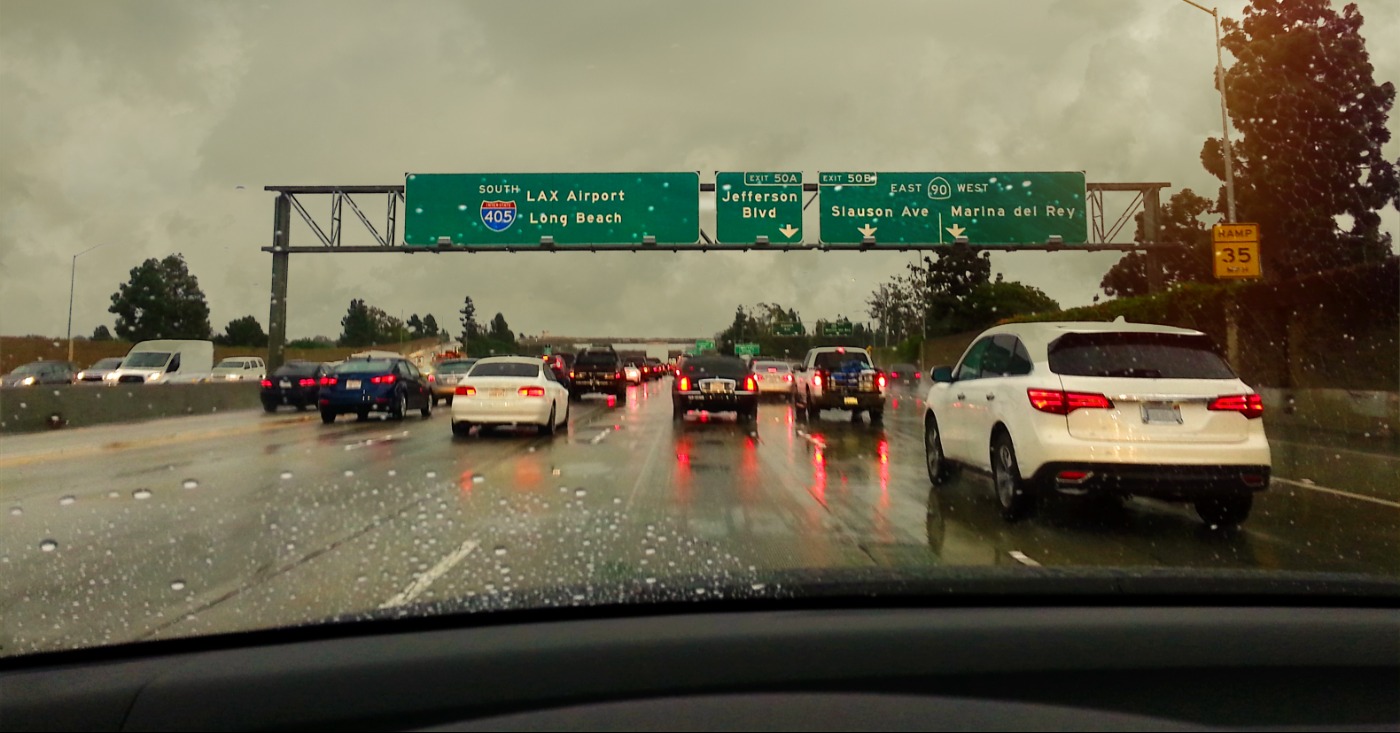
Recent storms soaked parts of Northern and Southern California, brought heavy snow to the mountains and coincided with king tides that contributed to hazardous surfing conditions along sections of the coast.
As more storms are expected this winter, state and local officials are sharing resources to help Californians prepare.
At an online briefing hosted Nov. 13 by California Black Media (CBM), American Community Media (ACoM) and the California Governor’s Office of Emergency Services (Cal OES), officials discussed how residents can prepare.
“California is heading into a winter shaped by one of the strongest El Niño patterns on record,” said Matt Notley, Cal OES’ deputy director. “But the state has been preparing since last summer and our efforts now are about making sure our preparedness message reaches every community.”
El Niño is a climate pattern marked by warmer-than-average ocean temperatures in the tropical eastern Pacific. It can shift weather patterns and increase the odds of a wetter winter in California, though it does not guarantee severe storms in every area. NOAA says a strong to very strong El Niño is likely through January to March 2027.
Michael Anderson, the California Department of Water Resources’ climatologist, said elevated ocean levels can “amplify” flooding during king tides. Californians typically experience king tides in late fall and winter. Anderson said residents can expect rain to arrive in bursts lasting two to three days.
“Timing, pace, and scale of the storms drive the impacts. Storm size and time between the storms are really important,” said Anderson. “Coastal impacts have already started. They will amplify as the season evolves. So, if you are along the coast, please be careful.”
Understanding weather patterns is one part of preparing. Gov. Gavin Newsom proclaimed a state of emergency on Sept. 21 because of the developing 2026-27 El Niño, an early step to prepare for potential severe weather, according to Brian Ferguson, Cal OES’ chief deputy director of policy.
The Ready California website offers disaster alerts, preparation guidance and printable materials, including flip books and fact sheets, in multiple languages.
Among its recommendations, Ready California advises residents to check whether their home or workplace is in a flood-prone area; clear gutters and storm drains; fix roof leaks; trim trees; and get sandbags early. Residents should also sign up for local emergency alerts, prepare a Go Bag with medications and important documents, keep flashlights and charged phones nearby, and follow evacuation orders. This is a partial list of tips.
“We’re really trying to start early by talking to folks, getting the word out, and also how do we support communities on the front end so we can ultimately keep as many folks safe as possible,” said Ferguson. “Taken together, these actions help reduce the risk that we face and also improve public safety before the storms arrive.”
The California Water Watch website lets users check precipitation and other water conditions by address or ZIP code. Anderson said California should see short periods of stormy weather “every couple of weeks.”
The state is encouraging residents to prepare now. Cal OES and the governor’s office have emphasized the importance of having an emergency plan.
For more information, visit the Ready California website,sign up for emergency alerts, find disaster help or read preparedness materials and make a plan.
Black Press
20 Years of California Climate Law: Gov. Newsom and Former Gov. Schwarzenegger Lead Milestone Celebration
Gov. Gavin Newsom and former Gov. Arnold Schwarzenegger recently gathered at the California Economic Summit to mark the 20th anniversary of the Global Warming Solutions Act. The bipartisan celebration highlighted how the landmark law established a framework for reducing greenhouse gas emissions through the state’s cap-and-invest program. While the governors credited these policies with fostering clean-energy innovation and driving economic growth, critics continue to raise concerns regarding the impact of environmental regulations on energy affordability for residents. Read more to learn about the state’s climate milestones.

California Gov. Gavin Newsom and former Gov. Arnold Schwarzenegger celebrated two decades of the state’s landmark climate law on Wednesday, Oct. 14, highlighting California’s efforts to reduce greenhouse gas emissions while growing its economy and expanding clean-energy investment.
The Democratic governor and Republican former governor appeared together at the 15th annual California Economic Summit in Long Beach to mark the 20th anniversary of Assembly Bill 32, the Global Warming Solutions Act, which Schwarzenegger signed in September 2006. The law established a framework for reducing California’s greenhouse gas emissions and helped lay the groundwork for the state’s cap-and-invest program.
“We’ve shown the world what a state can accomplish,” Schwarzenegger said, highlighting California’s climate leadership.
Newsom credited Schwarzenegger’s decision to sign AB 32 with helping create the state’s cap-and-invest program, which requires companies to reduce their emissions, purchase allowances, or fund projects that offset pollution. Revenue from the program supports climate initiatives, affordable housing and transportation projects, as well as electricity bill credits for residents.
Newsom said California has reinvested $16 billion to offset residents’ electricity costs since the program began and expects to receive another $8 billion over the next four years.
He also argued that predictable climate policies encourage businesses to invest in California’s clean-energy economy, pointing to Tesla as an example of the opportunities the state’s regulatory framework created.
“There’s no Elon Musk without what Gov. Schwarzenegger did because there would be no Tesla,” Newsom said.
Schwarzenegger agreed that long-term policy certainty helps attract investment, arguing that California’s climate initiatives demonstrate that environmental protections and economic development can advance together.
The state extended its cap-and-invest program through 2045 last year, giving businesses a longer-term framework for planning investments and meeting emissions requirements.
However, California’s approach continues to face criticism over energy affordability and regulatory costs. Wayne Winegarden, a senior fellow at the Pacific Research Institute, argued that assessments of the state’s climate policies should better account for the high energy costs Californians face. Critics have also questioned how much of the state’s economic growth can be directly attributed to its environmental regulations.
The governors’ joint appearance underscored their shared support for climate action despite their political differences. Schwarzenegger has criticized Newsom’s support for Proposition 50, the 2025 redistricting measure that temporarily allowed California lawmakers to redraw congressional districts.
The anniversary comes as California continues to pursue emissions reductions and clean-energy investment while facing questions about the cost of its climate policies for households and businesses.
Black Press
Oakland Coal Terminal Backed by Trump Would Be Bigger, Dirtier Than Promised, Says Report
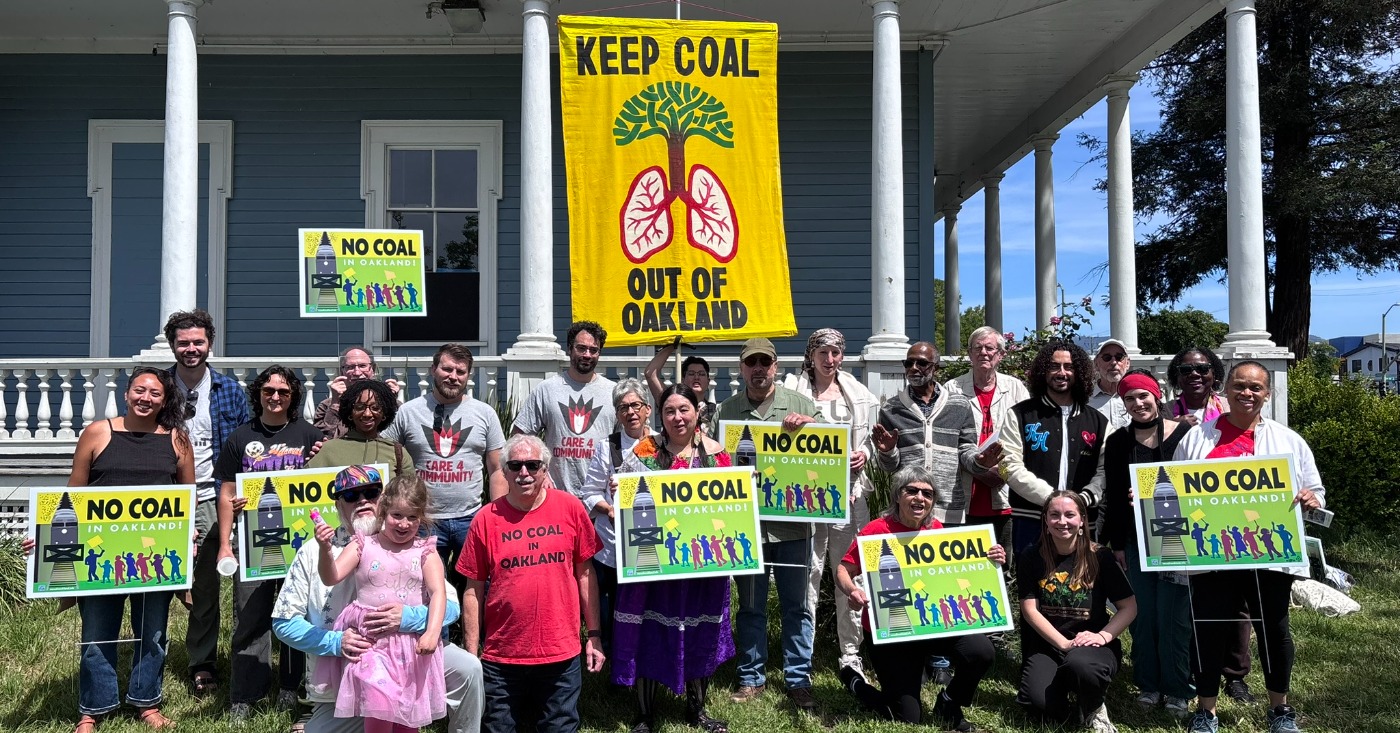
A recent feasibility study commissioned by potential investors says an Oakland coal terminal backed by President Donald Trump could export 13 million tons a year — three times the amount estimated in an earlier environmental review.
Surprisingly, the report also contradicts developers’ and project advocates’ repeated pledges that the coal would be stored in a covered terminal. Instead, the millions of tons of coal shipped annually from inland states to the West Gateway terminal in Oakland would be stored in “two open-air bunkers,” with about 150,000 tons of coal per stockpile, before being sent overseas, according to the recent report cited by the L.A. Times. (https://ruic.utah.gov/wp-content/uploads/2026/09/Port-Study-RUIC-Bulk-Commodity-Ocean-Terminals-Study.pdf)
Residents and clean air advocates have long expressed concerns that coal dust would worsen pollution in West Oakland and throughout the East Bay.
The proposed site of the Oakland Bulk and Oversized Terminal (OBOT) is located at the former Army base near the Port of Oakland, which developer Phil Tagami has been trying for years to turn into a shipping terminal despite determined community opposition.
Trump announced a $75-million investment in the project in June, about a third of its estimated cost. The new terminal would be the largest coal export site on the West Coast, transporting coal to Japan, South Korea, Taiwan, Vietnam and Malaysia, according to the Trump administration.
Opponents say a new terminal would undermine years of progress cleaning up the air in West Oakland, which has a history of disproportionate pollution and high asthma rates due to its proximity to the port and other industry.
According to No Coal in Oakland organizer Ted Franklin, who has been active for 11 years in the fight to stop the coal terminal, the report indicates that investors may be looking for a cheaper way to build the terminal.
“We were shocked but not surprised” by the report, Franklin said. “Basically, it seems that the plan now is to store open piles of coal, which is a less expensive project than creating a completely enclosed facility.”
The threats that the project poses are real, but it faces a lot of economic and legal hurdles, he said.
Coal production is in permanent decline worldwide, he said, wondering who was going to “invest money in an industry that has no future.”
Further, the project has not yet attracted big investors. “There’s no bank, no financing, no financial institution backing this,” he continued.
A major legal hurdle facing the project is the passage of Assemblymember Mia Bonta’s bill, AB 40, the Community-First Coal Review Act, signed into law by Gov. Gavin Newsom on Sept. 30.
The law requires developers of large-volume bulk coal facilities to complete a full Environmental Impact Report (EIR) under the California Environmental Quality Act (CEQA) before they can operate.
The law was specifically designed to block or delay the coal terminal project.
The report to potential developers was produced by consulting groups Norda Stelo and Wood Mackenzie in July and released this month. It was commissioned by the Rural Utah Infrastructure Coalition, made up of eight Utah counties that are considering investing about $43 million into the terminal to receive Utah coal.
The consultants produced their findings after visiting Oakland, examining engineering documents and holding discussions with Savage Cos., a Utah-based transport and logistics company selected to operate the facility
Research has shown that coal terminal operations can be dangerous to public health. The ports of Los Angeles and Long Beach moved away from open-air coal and petroleum coke storage three decades ago.
The report says that the site could process 12 million metric tons, or 13.2 million tons, of coal each year, three times more than the terminal’s approved environmental impact report from 2002 and its 2012 addendum. Neither document mentions coal specifically, but rather bulk commodities.
The coal arriving in Oakland could also be dirtier then had been previously stated, according to the report. Project officials previously said the terminal would handle only high-grade western bituminous coal from Utah, but the recent report says it will also handle Powder River Basin coal from Wyoming and Montana, known to be much dustier.
Nor does the report mention plans to cover the rail cars to prevent pollution, though project officials previously promised they would only utilize coal transported in covered rail cars.
“It appears the developers want to build something much bigger and more polluting than anything they previously revealed, either in court or to the West Oakland community,” said Colin O’Brien, deputy managing attorney at the nonprofit Earthjustice, speaking to the L.A. Times.
The report indicates that the project may be much more expensive and take longer to complete than anticipated. The Energy Department estimates the terminal will cost about $231 million, but the report places the price at between $430 million and $625 million.
The terminal will take 53 months to complete according to the report, significantly longer than Trump’s promise of exports beginning in 2028.
Ted Franklin’s column, “Utah Study Blesses Investment in Oakland Coal Terminal but Leaves Key Questions Unanswered” is available at https://nocoalinoakland.info/utah-study-blesses-investment-in-oakland/



Cadillac VISTIQ Road Noise: Test This Before You Buy #shorts

Family and Friends Honor Billy Rabun with Birthday Balloon Release After Deadly Midtown Shooting

Football Blocking Drill: The Moment He Proved Himself #shorts

Build a Business That Lasts: Stay True, Adapt, Grow #shorts

Community Transformation Takes a Lifetime of Commitment #shorts

New to the Twin Cities? Find Your Community with PlayProfessionals #shorts

4 Buyer Pain Points That Make Every Deal Harder #shorts

$96,575 Tahoe: Which Extras Are Worth Paying For? #shorts

How Mentorship Turned Into Unexpected Job Offers #shorts

Networking Events That Turn Strangers Into Friends #shorts

HISTORY MADE: Keisha Lance Bottoms Becomes First Black Woman Elected Governor in American History

Multi-Faith Leaders Representing 10 Million People Launch National Anti-Authoritarian Initiative

Christianity’s Racial History

Hundreds of Black Christian Leaders Arriving in Israel for Martin Luther King-Inspired Mission

Michael Shiner: The Enslaved Man Who Wrote His Way into American History

Keisha Lance Bottoms to Govern State Where Her Great-Great-Grandfather Was Enslaved

Don’t Pass the Torch. Expand the Circle.

Superb Woman: Destiny B. Sadler

DOJ Fights to Keep Rep. Ilhan Omar’s Search Warrant Sealed: Report

OP-ED: Closing the Next Digital Divide — Communities of Color Must Have a Voice in the AI Future
Cadillac VISTIQ Road Noise: Test This Before You Buy #shorts
Family and Friends Honor Billy Rabun with Birthday Balloon Release After Deadly Midtown Shooting
Football Blocking Drill: The Moment He Proved Himself #shorts
Build a Business That Lasts: Stay True, Adapt, Grow #shorts
Community Transformation Takes a Lifetime of Commitment #shorts
New to the Twin Cities? Find Your Community with PlayProfessionals #shorts
4 Buyer Pain Points That Make Every Deal Harder #shorts
$96,575 Tahoe: Which Extras Are Worth Paying For? #shorts
How Mentorship Turned Into Unexpected Job Offers #shorts
Networking Events That Turn Strangers Into Friends #shorts
-

 Black History1 week ago
Black Barbershops Have Long Given Neighborhood Politics a Place to Unfold.
-

 Black History1 week ago
OP-ED: Black voters made history. They laid the groundwork for a Third Reconstruction.
-

 Featured1 week ago
How Sick Must America Get Before Saying Enough to RFK
-

 Black History5 days ago
Hoodoo Heritage Month Celebrates Origins of African American Folk Medicine
-

 Black History5 days ago
PRESS ROOM: Donalds Transition Website Now Open to All Floridians Who Want to Serve
-

 Featured7 days ago
How to Rob a Bank
