
Voting
Latino Leaders Back Jealous for Md. Governor
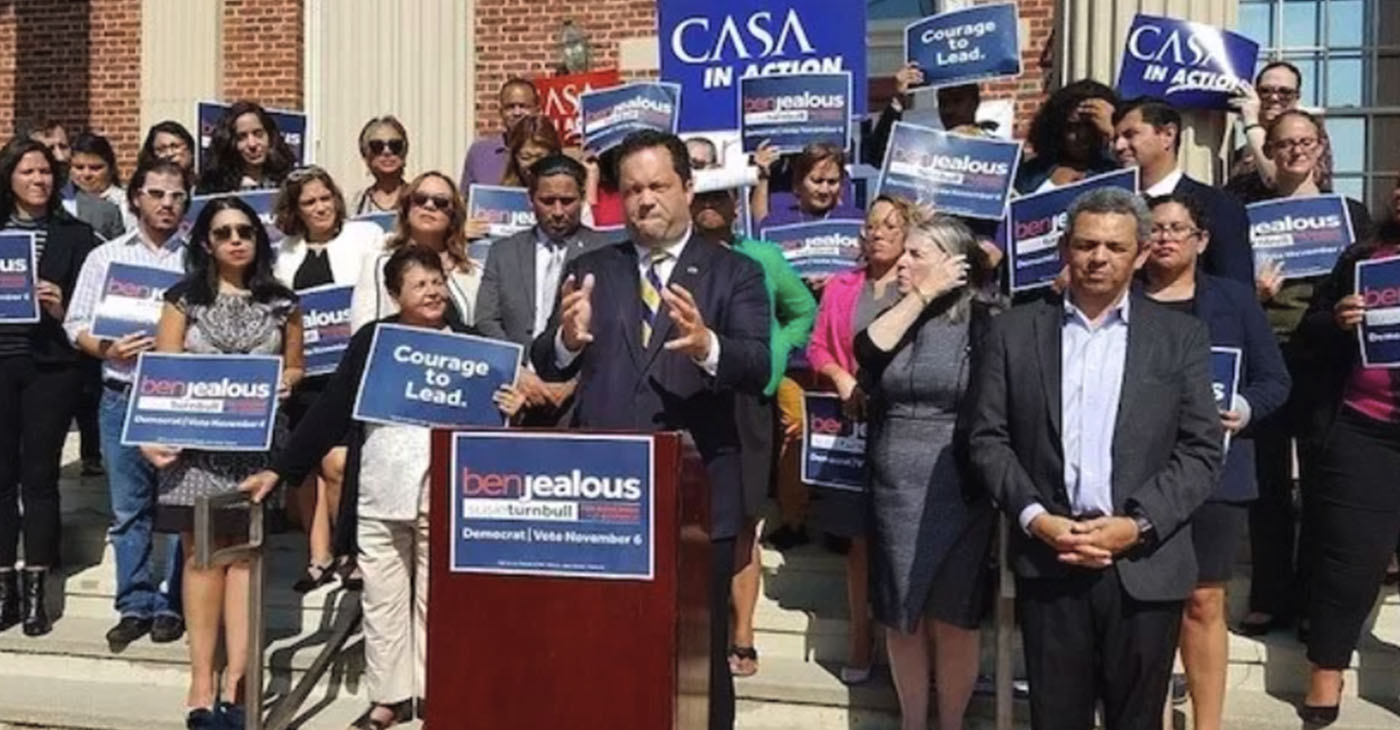
WASHINGTON INFORMER — On the same day Ben Jealous received a formal endorsement from former President Barack Obama, the Maryland gubernatorial hopeful stood Monday alongside Latino leaders to launch a statewide effort to galvanize more than one million Democratic voters to support his bid.

By William J. Ford
On the same day Ben Jealous received a formal endorsement from former President Barack Obama, the Maryland gubernatorial hopeful stood Monday alongside Latino leaders to launch a statewide effort to galvanize more than one million Democratic voters to support his bid.
Gustavo Torres, president of the advocacy group CASA in Action, said the state has about 140,000 registered Latino voters, with the majority in Prince George’s and Montgomery counties.
“We are knocking [on] doors. We are making calls. We are doing whatever we have to do to make sure we elect our next governor,” Torres said outside CASE de Maryland’s Multicultural Center in Langley Park.
Some of the Latino leaders spoke in English and Spanish and outlined their support for Jealous against Republican Gov. Larry Hogan. The announcement comes during Hispanic Heritage Month that began Sept. 15 and runs through Oct. 15.
The Latino leaders railed against Hogan’s contention last year that it is “absurd” to not allow local enforcement to assist federal authorities — particularly the oft-criticized U.S. Immigration and Customs Enforcement — in detaining illegal immigrants.
Jealous supports the Maryland Trust Act, which supporters say would increase trust between police and immigrant communities to prevent authorities from asking about immigration status, as well as help safely harbor those admitted in hospitals and going to school.
As many of Monday’s speakers pointed out, some fearful of deportation refuse to speak with law enforcement to report crimes.
“We are in the middle of a moral crisis,” said Delegate Maricé Morales of Montgomery County. “Civil liberties should be at the forefront [and] should protect our communities regardless of your immigration status.”
With 36 days until the Nov. 6 general election, three independent polls show Hogan with a double-digit lead.
The Jealous campaign, however, expressed optimism from part of the polls.
For instance, the second part of Goucher College poll released Sept. 19 showed Jealous with 48 percent of support from Democrats, versus 38 percent for Hogan.
The Mason poll showed the lead for Jealous among fellow Democrats grew from 57 percent compared to 32 percent for Hogan.
Mason conducted its review between Sept. 24-26, after Jealous and Hogan held the lone debate in the gubernatorial race and after Jealous released new campaign television ads.
On Monday, Jealous said Hogan’s immigration policies connect with President Donald Trump.
“When I’m governor, we will make sure that everybody in Maryland is included in our education system and our economy and is well-served by public safety regardless of what their immigration status may be,” he said. “We will restore Maryland to its place as a great refuge for the great talent around the world and that is how we will build Maryland.”
This article originally appeared in the Washington Informer.









Black Press
Leaders to Gather at African American History Museum for Voting Rights Call to Action
BLACKPRESSUSA—Rep. Jonathan L. Jackson, Bishop William J. Barber II, and a coalition of congressional, faith, and civil rights leaders gather Tuesday outside the National Museum of African American History and Culture, days after founding director Lonnie G. Bunch III announced his retirement. March On for Freedom 2026 National GOTV Bus Tour launches ahead of the 2026 midterms.


Black Press
OP-ED:There’s a Storm Coming
BLACKPRESSUSA OP ED—” Our people did not stumble into the voting booth. We marched there. We prayed there. We bled there.” Drawing on a lifetime of civil rights experience, Rev. Peter Johnson warns of a gathering storm around election security, urging Black voters to stay vigilant, organized, and engaged.
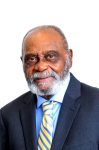

by Rev. Peter Johnson
I grew up in Plaquemine, Louisiana, where the older folks could tell you it was going to rain before there was a cloud in the sky. As a little boy, I would hear one of them say, “A storm is coming.” I would run outside, look up at a bright blue sky, and come back convinced they were wrong. “There’s not a cloud out there,” I would say.
They would smile and answer, “Baby, you haven’t lived long enough yet.” Before the day was over, the wind would shift. The air would get heavy. Dark clouds would gather, and the rain would come pouring down. Back then, I thought they had some kind of magic.
Now I understand. They had experience. They had survived enough storms to recognize the signs before anyone else could.
Well, I am one of the older people now, and I feel a storm coming. It is gathering around something called election integrity.
Let me be clear. I believe elections should be secure. Every lawful vote should be protected, every voting system should be trustworthy, and every American should have confidence in the process. But Black folks have heard the language of “election integrity” before.
We have heard words like “order,” “protection,” and “security” used to justify poll taxes, literacy tests, intimidation, and exclusion. We know that sometimes the words sound reasonable while the results fall hardest on our communities.
That is why we must pay attention not only to what is being said, but to what is being done.
President Donald Trump says he wants stronger election security. But at the same time, his administration has taken actions that critics say weaken independent election oversight, reduce confidence in federal election institutions and place greater pressure on the systems that help protect fair elections.
That contradiction should trouble us. You cannot claim to strengthen the roof while removing the beams that hold it up.
The bipartisan U.S. Election Assistance Commission was created after the disputed 2000 presidential election to help states improve election administration, certify voting systems and assist local officials. When the leadership of such an agency is weakened, every citizen should ask whether public confidence is being protected or endangered.
Black Americans, especially, cannot afford to be casual about that question. Our people did not stumble into the voting booth. We marched there. We prayed there. We bled there. We buried people on the road there.
I remember men and women standing in courthouse lines knowing they could lose their jobs, be threatened, humiliated, or turned away. Some dressed in their Sunday clothes because they believed registering to vote was sacred work.
They were not only fighting for the right to cast a ballot. They were fighting for the right to trust that the ballot would count. That trust is fragile.
Once people lose faith in elections, every defeat becomes fraud, every victory becomes suspicious, and every political opponent becomes an enemy. Democracy cannot survive long under those conditions.
As a minister, I learned that accountability strengthens trust. Pastors should not count the offering alone. Finance committees review the books. Trustees examine expenditures. Auditors ask hard questions. That does not weaken the church. It protects the church.
The same is true for elections. Independent oversight is not the enemy of election integrity. It is part of election integrity.
Black voters should also be cautious when politicians raise fears about widespread voter fraud without producing evidence that matches the alarm. History tells us that imaginary threats have often been used to create very real barriers.
We have seen laws presented as neutral that made it harder for elderly people, students, working families and communities of color to vote. That is why this moment requires wisdom, not panic.
We should register. We should verify our registration. We should learn the laws. We should vote early when possible. We should help our elders reach the polls. We should watch local election boards, state legislatures, and federal agencies. Most of all, we should refuse to surrender our trust blindly to any politician or political party.
The old folks in Plaquemine taught me to pay attention before the rain started. They noticed the wind. They felt the pressure change. They recognized what others ignored.
I hope I am wrong about this storm. I pray that our elections remain free, fair and trusted. But I have lived long enough to know that rights can be weakened while people are distracted, and institutions can be damaged while leaders insist they are being protected.
Black America must not be caught without an umbrella. Our ancestors paid too much for the ballot. Our children have too much at stake. This is the hour to stay awake, stay informed, stay organized, and keep voting.
The clouds may not be visible yet. But the wind is already changing. There’s a storm coming.
BlackPressUSA
An Ousted Clayton County Judge Is Suing to Throw Out 25,000 Votes—and Declare Himself the Winner
BLACKPRESSUSA – After losing by nine points, Clayton County Judge Aaron Mason sued to throw out 25,000 votes and declare himself the winner. The public can’t read the case.
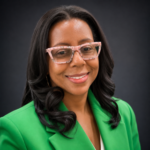

By Danielle Bess
Danielle Bess is a trial attorney based in the Clayton Judicial Circuit of Georgia.
Three days after Clayton County voters removed Judge Aaron Mason from the Superior Court bench in a nine-point loss, he filed a lawsuit asking a court to disqualify the winner, Judge-elect Deitra Burney-Butler, and to throw out the more than 25,000 votes cast for her and declare him the winner instead.
He filed it in the Superior Court of Clayton County, where Judge Mason presides.
Over the past ten weeks, no news outlet has reported that the case exists.
That points to a second problem, one that affects anyone who uses Georgia courts. The Petition, the only document that explains what the case is about, has never been publicly viewable. It appears on re: SearchGA, Georgia’s statewide court-records portal, but that listing shows only the lawyers’ entries of appearance, even though later filings in the same case were promptly posted.
To get a copy, I went to the Clayton County Superior Court Clerk’s office in person. The clerk could not find the Petition; a search for the paper file came up empty. Only after a supervisor stepped in did a clerk locate the case in an internal system and print a copy, minus the exhibits it references. No one explained to me why I couldn’t have it or why it wasn’t online.
“Weird” is how Bryan Sells, an Atlanta election law attorney who has practiced in this field for 28 years and litigated candidate-eligibility cases, described the Petition’s absence from the public docket.
A judge’s lawsuit, filed from a judge’s chambers
The Petition to Contest Election was filed pro se by Judge Mason on May 22, 2026. It lists his address as 9151 Tara Boulevard, the Clayton County Judicial Complex, where he keeps his chambers. The email address on the filing is his official judicial email. And the sworn verification at the back was notarized by an employee of the Clayton County court administration office. Records produced by the Secretary of State show the same court administration employee also notarized Judge Mason’s own qualifying paperwork when he entered the race back in March.
Mason has been a judge for 16 years. He was appointed to the State Court of Clayton County in 2010 by Governor Sonny Perdue, a milestone his campaign website says made him “the first African American to serve on that bench.” In December 2016, Governor Nathan Deal elevated him to the Superior Court, where he ran unopposed in 2018 and 2022. May 19, 2026, was the first time Clayton County voters were ever offered a choice about Judge Aaron Mason.
They chose someone else.
Deitra Burney-Butler spent 14 years on the Clayton County juvenile court bench and, before that, prosecuted cases in the Clayton County District Attorney’s and Solicitor’s offices. In 2023, Judge Robert Mack rescinded her reappointment, ending her tenure. Reporting at the time said the rescission cited concerns about her ability to serve. Burney-Butler has received no public discipline by the State Bar or the Judicial Qualifications Commission. Eight months after her removal, she challenged Judge Mack at the polls and lost. She came back in 2026, ran against Judge Mason, and won 25,414 votes to his 20,948.
Judge Robert Mack, who now serves as Chief Judge, will be the only man on the Clayton County Superior Court bench if the election results stand.
The theory: Her State Bar Status
The Petition alleges that Burney-Butler was never qualified to run at all. Georgia law, at O.C.G.A. § 15-6-4(a), requires that a Superior Court judge “is a member in good standing with the State Bar of Georgia.” According to the Petition, at the time of her candidacy, the State Bar directory listed Burney-Butler as an “Inactive Member in Good Standing,” a status that does not permit the practice of law. From there, the Petition reasons: she could not practice, so she was ineligible; her candidacy affidavit was false; the votes cast for her were void; and because Mason was the only other candidate on the ballot, he received the only legal votes and should be declared the winner.
For that last step, Mason cites Haynes v. Wells, a 2000 Georgia Supreme Court case that itself originated in Clayton County, holding that votes cast for an ineligible candidate are “void and ineffective.”
“Usually, people challenge during the qualification period,” Sells told me. Georgia law gives any constituent a window of roughly 10 days after qualifying to challenge a candidate’s eligibility. Waiting until after the election, he said, is unusual but not unheard of.
The bigger problem, in Sells’s view, is the theory itself. “I don’t see any requirement in the qualification statute that someone be an active member,” he said. The statute requires good standing, and as Sells put it, “there is no dispute that she is in good standing.” The difference between active and inactive status, Sells explained, largely comes down to dues and continuing education: inactive members pay less, skip the CLE requirements, and cannot practice law. Returning to active status requires little more than filing a form with the State Bar and paying fees.
The State Bar’s own rules back that up. The Bar officially publishes counts of “inactive members in good standing” as a category, and Bar Rule 1-204 defines good standing in terms of being current on fees and free of suspension or disbarment, not by whether a member is actively practicing.
A check of the Georgia State Bar directory on August 5, 2026, shows Deitra Burney-Butler as an Active Member in Good Standing.
What the affidavit actually says
I have now read the affidavit that Judge Mason’s lawsuit condemns as false. The Secretary of State produced it in response to my open records request, and it never mentions the State Bar at all. The sworn Notice of Candidacy and Affidavit Burney-Butler signed on March 5, 2026, is a standard state form. It attests to her name, residence, citizenship, the absence of disqualifying convictions and tax defaults, and to one general statement: “I am eligible to hold such office.” There is no line about bar membership, active status, or good standing. Her occupation is disclosed in her handwriting: “Hearing Officer.”
Whether a general oath of eligibility can be “false” when the State Bar itself classified her as a member in good standing is precisely the question Mason’s theory must survive.
‘He started too soon, a race against time
Mason brought his case under O.C.G.A. § 21-2-524(a), which gives a defeated candidate five days to file, beginning after the election results are certified.
Mason did not wait for the clock to start, and records from the Secretary of State laid out his morning, timestamp by timestamp. At 10:37 a.m. on May 22, Mason submitted his own open records request to the Secretary of State, asking for Burney-Butler’s Notice of Candidacy, affidavit, and complete qualifying file. At 11:45 a.m., 68 minutes later, his Petition was stamped in at the Clayton County Clerk’s office. The Petition promises to supplement with the affidavit itself “upon receipt.” Ten weeks later, nothing in the accessible court record shows that the supplement was ever filed. And at 5:30 that evening, the Board of Elections convened to certify the election results that Mason was already contesting.
The government’s own inboxes also document the afternoon as part of the same open records response. A copy of the Petition bearing a second stamp shows it reached the county elections office at 1:21 p.m. Three minutes later, Clayton County Elections Director Shauna Dozier sent it to Blake Evans, the Elections Director for the Georgia Secretary of State. Evans asked when the county planned to certify. “We are set to certify today at 5:30 PM,” Dozier replied. At 1:36 p.m., Evans forwarded the petition to the Secretary of State’s general counsel with his read: because a Superior Court judgeship is a state-level office, Mason “needs to wait until after state certification” to file a contest, a certification even further away than the county vote scheduled for that evening.
At 6:58 that night, about an hour and a half after Clayton certified, General Counsel Charlene McGowan responded. “I believe you are correct that this is premature,” she wrote. But because Mason had not named the Secretary of State as a respondent, there was “nothing for us to do at this point.” The state’s top election lawyer identified a possible defect the day the case was filed, concluded it was not the state’s problem, and moved on. Nothing in the records suggests anyone ever told Judge Mason or the court.
The contest statute is built for speed: the clerk is directed to issue process immediately, the defendant must answer within days of service, and the State Election Board must be notified. Mason did prepare that certificate. The elections office’s copy of the Petition includes a certificate of service addressed to the State Election Board’s chairman and recites that a copy was mailed to Burney-Butler. But that page was not in the copy of the court file the clerk’s office produced to me, and nothing in the accessible court record shows it was ever filed. More than 10 weeks after the filing, the accessible court file reflects that essentially nothing has happened.
“I would have expected it to be done by now. It should be done,” Sells said.
When I returned to the clerk’s office for a second look at the file, the answers got stranger. The “-99” now attached to the case number, a deputy clerk explained in a recorded conversation, is “just the judge code”: every judge of the Clayton Judicial Circuit had recused. Mason is their colleague; Chief Judge Mack removed Burney-Butler from her judgeship, and she challenged him just two years ago. The case now awaits a judge of the Sixth Judicial Administrative District, one who, as far as the public record shows, has not been appointed. “It’s not, like, one of our normal cases,” she told me.
Then I asked for the rest of the file: a sheriff’s entry of service, exhibits, certificates of service, anything beyond the petition, and the three entries of appearance. There was nothing else they could provide, I was told. When I pressed, the deputy clerk offered an explanation: “Certain things are sealed. And when it’s sealed, we are unable to see certain stuff.”
But “sealed” is a legal term with specific implications. It means a judge held a hearing and signed an order. So I asked to see the sealing order, and to the staff’s credit, they corrected themselves. There is no order. What they meant, they explained, is that when a case goes to the Sixth District after a bench-wide recusal, it is “automatically under lock and key under administration.” Even the clerk’s own staff can see only “the bare minimum”: party names, attorneys, and what appears online.
The court file in an active election contest, which seeks to overturn the votes of more than 25,000 Clayton County citizens, is locked away not by any judge’s order but automatically by administrative default, so thoroughly that the office legally responsible for maintaining the record cannot open it. Despite asking, I was not told what policy supports this process. As of this reporting, the most important document in this case cannot be read on any website, and the file cannot be inspected at any courthouse counter in Clayton County.
This administrative rule appears to contradict Georgia law. Under the Uniform Superior Court Rules, every court record is presumed public, and access can be restricted only by a judge’s order after a hearing, supported by written findings that privacy clearly outweighs the public’s interest. The clerks confirmed that no such order was issued in this case. No judge has entered any publicly available order. Indeed, based on the public record, no judge has even been assigned. Sells said a delay in designating a judge when a full bench recuses is normal. “But that shouldn’t explain all this.”
County residents weigh in
Clayton County voters have had no way of knowing about the lawsuit except through rumors circulating in the community. I spoke to Clayton County resident Timothy Vondell Jefferson, who calls himself ‘Mr. Clayton County’ and describes himself as a supporter of Judge Mason. He had heard a rumor that someone was contesting an election, but he did not know who it was or any of the details. “Voters in Clayton County should know about this lawsuit,” Jefferson said.
When asked if he agreed with Judge Mason trying to have Burney-Butler disqualified and himself declared the winner, he stated, “If there is a valid reason, she should be removed, but if it’s just throwing mud against the wall hoping it will stick, I don’t agree with that, or if he is coming from a sore loser’s point of view, I don’t agree with none of that.”
Other members of the community expressed disappointment that Judge Mason filed a lawsuit. “It’s really disappointing that he would file a lawsuit to get a position back that he was clearly voted out of,” said Attania Jean-Funny, a Clayton County resident and former candidate for county commission. She described the inability to access this lawsuit as the “type of underhanded things we are trying to get out of our political system.”
When I described the petition to another Clayton County voter who asked to be identified only by her last name, Chambers, her reaction was to first process it. “We want people to operate within a process,” she said. “The process allowed for questions about her eligibility at the very beginning. It would be different if there were no other avenue—but there was.” Mason waited until three days after he lost. Chambers suspects she knows why: “He probably operated from some degree of arrogance—to think this woman could not unseat you.”
Chambers expressed concern that this case could affect voters’ willingness to engage in the electoral process in the future. “Voters served their civic responsibility,” she said, “and to now make it seem like that’s all for naught—it just concerns me about the precedent it sets,” particularly with midterm elections approaching and particularly in a predominantly Black county whose votes are the ones a court is being asked to void.
Chambers summed up her feelings in one sentence, “Don’t have me as a voter go through this whole process, and then with the stroke of a pen, you call it into question—when you didn’t do that in the beginning.”
The lawyers arrive
The docket does reveal some movement. A lawyer for Burney-Butler, Aryka Moore, entered an appearance on July 2. Then, on July 28, with an updated filing on July 30, Judge Mason went from pro se to retaining Ronald Freeman and Patrise Perkins-Hooker. Perkins-Hooker is a former president of the State Bar of Georgia. To argue about what State Bar membership means, Judge Mason has hired the woman who once ran the State Bar.
Moore said her client had no comment at this time. Attorneys for Judge Mason did not respond to detailed written questions by the deadline. Neither did Clerk of Superior Court Chanae Q. Clemons, who received written questions about the handling of the file. This story will be updated if they do.
The clock is running
Judge-elect Burney-Butler’s term begins January 1. Litigation may yet answer the question of whether an attorney who is an Inactive Member in Good Standing can be elected to the Superior Court bench in Georgia. But somewhere between Jonesboro and McDonough sits a case with no assigned judge, no hearing date, and no public paper trail, a case that was supposed to be decided in days but has now drifted for months, waiting to determine whether the choice made by more than 25,000 Clayton County voters will stand.
The statute’s clock was designed to run in days. It has been running since May.
Black History
OP-ED: Built in a Moment Like This: The Divine Nine and the Fight After Callais
BLACKPRESSUSA OP-ED: Nearly 27,000 AKA members gathered in Las Vegas as Black political power filled the room. Three months after the Supreme Court hollowed out Section 2 of the Voting Rights Act, the Divine Nine were reminded that they were built for exactly this kind of storm.

Taking the fight where the voters are
By Danielle Bess
Las Vegas was awash in pink and green during the week of July 18, 2026, as Alpha Kappa Alpha Sorority, Incorporated, and nearly 27,000 of its members and their families arrived for the sorority’s biennial Boule.
The women of Alpha Kappa Alpha were not the only notable arrivals. Black political power showed up, too. Congresswoman Lauren Underwood moderated a conversation with attorney and political commentator Bakari Sellers at a workshop titled “Soaring to the Polls: Mastering the Midterm Journey.” Aaron Ford, Nevada’s Attorney General and the Democratic nominee for Governor, addressed the workshop participants, while Congresswoman Emilia Sykes sat in the audience. And at the organization’s public meeting, Maryland Governor Wes Moore received a community award and delivered a rousing speech that sounded less like an acceptance and more like a precursor to a run for President.
Politicians go where power is. But these politicians were not mere visitors. All of the politicians are members of Divine Nine organizations. And three months after the Supreme Court neutered Section 2 of the Voting Rights Act, the power in that convention hall mattered more than it had in sixty years.
AKA, and all of the Divine Nine organizations—the historically Black Greek-letter fraternities and sororities—are a natural stop for any politician who wants to raise their profile or launch a bid for elected office. The organizations collectively have more than 4 million members who are educated and civically engaged in their communities.
While the organizations are all nonpartisan, they are able to engage in voter education, policy advocacy, and get-out-the-vote efforts. Congresswoman Underwood, an AKA herself, described the mission from the stage: “We are not telling them who to vote for, but as we soar to the polls, we have a lot of ground to cover to lay the foundation for what issues are on the ballot, who’s running, how to participate in this election.”
And for their collective 120-year history, they have done that. The NAACP was cofounded by W.E.B. Du Bois, a member of Alpha Phi Alpha fraternity. Many civil rights icons were members of the Divine Nine, including Martin Luther King, Jr., who was also an Alpha. Today, more than half the current members of the Congressional Black Caucus are members of one of the Divine Nine organizations.
With the gutting of Section 2 of the Voting Rights Act, Black political representation in Congress is at risk. Governor Moore, a member of Alpha Phi Alpha, accepting the sorority’s community award, rejected the notion that the question is whether AKA is ready. “When there’s ever a question about whether the AKAs are built for a moment like this, let’s be clear: the AKAs were built in a moment like this,” he said. “Let’s not pretend like 1908 was easy. Let’s not pretend like 1908 was simple. Let’s not forget in 1908, you had the Springfield race riot. In 1908, you had the oppressive peak of Jim Crow.”
Moore’s history was precise. Alpha Kappa Alpha was founded at Howard University in January 1908. That August, a white mob rampaged through Springfield, Illinois — the riot that spurred the founding of the NAACP the following year. The Divine Nine were not built in calm waters. They were built in the storm.
Sellers told the workshop what this storm looks like. In April, the Supreme Court ruled in Louisiana v. Callais that voting rights plaintiffs must now show a strong inference that a state intentionally discriminated — a standard Justice Elena Kagan described as rendering the VRA “all but a dead letter”. Within weeks, Southern states began dismantling majority-Black congressional districts.
“In Alabama, in Mississippi, in Georgia, in Arkansas, in Texas, and in Florida, we had Black elected officials because we could go out and vote for people who we believed shared our same lived experiences and that represented our interests,” Sellers said. “When you wake up in November, that no longer will be the case. No matter if we win, lose, or draw, no matter if Hakeem Jeffries is the Speaker of the House we will have less Black Caucus members than we’ve had before. And in two years, we’ll have even less.”
Sellers knows the cost of this fight in his bones. His father, Cleveland Sellers, was an early member of the Student Nonviolent Coordinating Committee. “When my dad and Stokely and everybody were going around yelling Black Power, they weren’t trying to shoot you,” he told the room. “They were talking about Black economic power and Black political power. So when they were in the depths of Mississippi, that’s what Black Power actually meant.”
Governor Moore offered Maryland as proof that the storm can be answered. With the support of the AKAs, he said, the state passed its own voting rights act, and he has called the legislature into special session rather than, in his words, “sit on our hands while we’re being punched in the face.” He cited more than $1.3 billion in state investments in HBCUs, “unapologetically,” and legislation confronting book bans: “You will not ban books inside the state of Maryland.”
Congresswoman Underwood was practical about what comes next. She urged the members to take the mobilization where the voters are — online — “creating content that is engaging and informative on the issues that matter: issues like the high cost of living and how we can take action in this election to lower housing costs, health care costs.” Sellers pressed the same point about the message. When Southern states refuse to expand Medicaid, he said, rural hospitals close—”and when your rural hospital closes, it’s not just the fact that you don’t have access to care. It’s your largest employer in the county.” Then came the workshop’s bluntest warning, aimed at his own party: “We cannot over the next 107 days simply believe that saying ‘I’m not Donald Trump’ is enough to win an election.”
The Divine Nine organizations were all founded before the passage of the Voting Rights Act, and they have now outlived its full protection. They were built between 1906 and 1922—the decades after Black representation had been driven out of Congress and the ballot stripped away across the South—as infrastructure for a people the law had abandoned. Their mission of racial uplift has not changed.
Sellers told the women what he believed their assignment was. “I’m talking to you all as apostles,” he said. “I’m not trying to teach you something. I’m trying to give you something to go out and share.”
Governor Moore reached for the same idea through the ancestors. “It’s not a recognition of what we’ve done already. It’s a standard for what we’re still yet to get done,” he said, closing with the words every member in the hall knew by heart, from the hymn James Weldon Johnson — himself a member of Phi Beta Sigma — gave to Black America: “Facing the rising sun of our new day begun, let us march on till victory is won.”
Nearly 27,000 women left Las Vegas at the week’s end and carried that assignment home across the country — members of an organization that predates the Voting Rights Act, now asked to repair its gutting.
BlackPressUSA
Young Candidate Hopes to Make History in South Carolina’s 4th Congressional District
BLACKPRESSUSA – Courtney McClain is challenging Rep. William Timmons in South Carolina’s reliably Republican 4th Congressional District, campaigning on affordability, health care, and voter engagement.
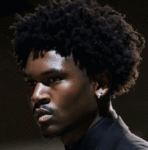

By Dominic Boston II
(Updated Jul 31)
GREENVILLE, S.C. — Before Courtney McClain became one of the youngest candidates running for Congress, she was simply someone who enjoyed spending time learning, reading, and understanding the world around her.
Outside of politics, McClain describes herself as someone who enjoys visiting the library and spending time with books. She says she is currently reading Invisible Man and The Count of Monte Cristo, along with other books she has wanted to return to when she has more time. That curiosity and commitment to learning have become a major part of who she is as she campaigns for a seat in the United States House of Representatives.
Now, McClain is hoping to make history in South Carolina politics. If elected in November, she would become the first Black woman ever elected to represent South Carolina in the United States Congress.

However, McClain says the importance of her campaign goes beyond becoming the first.
“Making history is probably going to be the easiest thing. The hardest thing is to actually create a legacy from that history,” McClain said. “There are a lot of firsts who run to get the title of the first, but after that it’s about what you’ve done with that title.”
McClain is challenging Republican incumbent Congressman William Timmons in South Carolina’s 4th Congressional District, which includes Greenville, Spartanburg, and surrounding Upstate communities. The district has historically leaned Republican, making her campaign a difficult challenge.
As one of the youngest candidates in the race, McClain has faced questions about whether her age and experience are enough to prepare her for Congress. She has also faced doubts from some voters about whether a Black woman can win in a district that has consistently supported Republican candidates.
Instead of allowing those challenges to discourage her, McClain says they motivate her.
“I like the challenge. I know what’s coming. I’ve been in this game so long that it doesn’t push me back,” she said.
McClain says adversity has always been part of her journey. Rather than seeing criticism as something that holds her back, she believes those experiences have helped prepare her for leadership.
Throughout her campaign, McClain has focused on building relationships with voters across the district. She has attended community events, visited neighborhoods, spoken with residents, and listened to concerns about issues such as affordable health care, housing costs, education, job opportunities, and the rising cost of living.
For McClain, connecting with voters is one of the most important parts of leadership.
“I can’t represent people if I don’t listen to them first,” she said.
That message of accessibility has become one of the main themes of her campaign. McClain believes elected officials should be present in the communities they represent and willing to have direct conversations with voters.
That belief has also become part of her criticism of Congressman William Timmons. McClain has challenged Timmons to participate in a public debate, arguing that voters deserve the opportunity to hear directly from both candidates. She says Timmons has not participated in a debate since 2024 and has not held traditional public town halls with constituents in recent years.
“If you are someone who wants to represent the people, how are you supposed to understand if you don’t understand the issues that need to be solved and the needs of your people as a whole?” McClain said.
Timmons has failed to show up for debates and state activities for the people. This has led to billboards and websites questioning his absence and why he doesn’t show up for the community he hopes to represent. His absence shows a lack of leadership.
While both candidates say they want what is best for South Carolina’s 4th Congressional District, their approaches differ.
McClain has focused her campaign on lowering costs for working families, improving access to health care, strengthening public education, protecting voting rights, and investing in local communities.
She says the government should focus on the everyday challenges families face and create opportunities for future generations.
Another major focus of McClain’s campaign has been encouraging young people to participate in elections. She says many young voters feel disconnected from politics because they believe their voices do not matter.
When speaking with students and young voters, McClain emphasizes the importance of using their power at the ballot box.
“Your vote is your power,” McClain said. “Do you want to give that power to an older generation that doesn’t understand the needs we are currently facing, or would you rather use that power yourself?”
She says connecting with younger voters has encouraged people to volunteer and register to vote for the first time.
“We’re letting students know they have someone from their generation who understands their problems and will fight for real solutions.”
McClain believes representation matters because many young people have never seen someone who looks like them in positions of power. She hopes her campaign shows future generations that leadership is possible regardless of background or age.
“I want young people to see that they belong in these spaces, especially young Black girls and boys who may not have seen someone who looks like them in positions like this,” she said.
Political experts say McClain faces an uphill battle because of the district’s voting history. However, supporters believe increased voter participation, changing demographics, and growing interest among younger generations could make the race more competitive.
For McClain, the campaign is not only about winning an election. It is about giving people hope and encouraging more individuals to believe they can create change.
“I hope people vote for someone, not just against someone,” McClain said. “I want people to have hope when they cast their ballots.”
She believes her campaign can inspire others to step into leadership roles and challenge what many believe is impossible.
“If it can happen in South Carolina, it can happen anywhere,” McClain said.
As Election Day approaches, voters will decide whether they want to continue with experienced leadership or embrace a new generation of representation. Regardless of the outcome, McClain says her goal is to leave behind more than a historic title.
She wants to create a legacy.
Black Press
OP-ED: By Disappearing Districts: How Racial Gerrymandering is Hollowing Out the Black Electorate
BLACKPRESSUSA NEWSWIRE — American democracy is entering a dangerous stage of decline. While coverage focuses largely on the most recognizable signs of democratic backsliding, such as attacks on free speech and the use of state force against peaceful protesters, a quieter crisis is reshaping the foundation of representation itself.


By: Jaidyn McKinnie, Joint Center Research Intern and UCLA Student
American democracy is entering a dangerous stage of decline. While coverage focuses largely on the most recognizable signs of democratic backsliding, such as attacks on free speech and the use of state force against peaceful protesters, a quieter crisis is reshaping the foundation of representation itself.
The second Trump administration is advancing a national policy infrastructure aimed at reshaping the democratic system from within, not by suppressing votes directly, but by manipulating the structures that determine who gets represented at all. Across the country, redistricting battles are being used to minimize the influence of Black voters and weaken the power and electability of Black legislators who represent them. These maps fracture diverse districts, erase majority-Black constituencies, and recast racial gerrymandering as a partisan strategy.
Gerrymandering is the process of drawing legislative maps to favor one group over another. Partisan gerrymandering exists in both parties, but the distinction between partisan and racial gerrymandering is crucial. The latter targets voters based on race, undermining equal protection and silencing political voices that have historically been excluded. Today, partisan gerrymandering often serves as a facade for racial redistricting, allowing maps that weaken Black and brown representation while appearing procedurally neutral.
The result is a democracy that technically counts every vote, but ensures that some count for less.
These efforts to reshape representation operate through coordinated pressure on state and federal institutions. Republican-controlled legislatures in Texas, Missouri, North Carolina, Ohio, and Florida have advanced or are seeking to advance maps that fracture diverse districts and erase Black-performing seats to manufacture partisan strongholds.
In Texas, the 2021 maps, already among the most gerrymandered in the nation, were challenged by the Department of Justice and civil rights groups for intentionally weakening minority voting power, marginalizing the very communities largely responsible for Texas’s growth. The latest maps, under Trump’s order, have only deepened the imbalance, entrenching partisan and racial control.
This September, Governor Kehoe of Missouri approved new maps that work to unseat Representative Emanuel Cleaver, one of the state’s two Black congressmembers. His district, once a Black stronghold centered in Kansas City, is being divided among three predominantly white districts, reducing the concentration of Black voters and weakening their collective influence. Similar redistricting patterns in Florida and Texas, where the districts of Representatives Al Lawson, Marc Veasey, and Al Green were dismantled, follow the same logic.
These efforts reveal a shift from engaging voters to reshaping the systems that define their representation.
Now, all eyes are on California, where the passage of Proposition 50 has become the first major test of how far states can go in countering gerrymandered maps. The measure introduces new electoral mechanisms for redrawing maps and is expected to offer an example of how other states approach redistricting and opposition efforts ahead of the Midterms. While Black-centered organizations such as the NAACP have invested heavily in the measure, its potential impact on Black voting power remains uncertain, though analysts suggest it may strengthen Latino representation. Still, its outcome will shape national discourse on representation and determine whether state-level reforms can meaningfully alter the balance of power.
While some states experiment with expanding representation, the federal landscape is moving in the opposite direction by dismantling DEI programs, eliminating race-conscious hiring, and purging staff in agencies that oversee civil rights enforcement. These measures reflect a broader effort to weaken the institutions that sustain equitable representation and to undermine the legitimacy of a multiracial democracy.
Despite this, the Congressional Black Caucus is the largest it has ever been, reflecting decades of organizing and civic engagement that expanded voting access. But this progress is increasingly fragile. Gerrymandered maps that fracture Black communities and eliminate majority-Black districts weaken not only the ability of Black legislators to hold their seats but also the capacity of Black voters to shape outcomes. When predominantly Black constituencies are divided across multiple districts, disguised as routine political realignment, it functions as a racialized control that suppresses minority ballot strength.
Voting power determines not just who wins elections, but whose communities receive investment, whose schools are funded, and whose voices are heard in policy debates that shape everyday life. When Black voters are packed into a few districts or split among many, their concerted voting strength is diluted, muting the political voice that has driven social and economic advancement for generations.
The threat facing the United States is not only that democracy could fail, but that it could survive in form while dying in function. Ongoing efforts to manipulate representation risk creating a government that looks democratic but operates as a controlled system of exclusion. To protect multiracial democracy, the nation must confront not only the authoritarianism of power, but the quiet redrawing of the lines that decide who holds it.


Together Building Back Better

Homecoming Ends in Gunfire Outside FAMU: 12 Hurt, Six of Them Children
COMMENTARY: Bring on the Positive Calvary

Retirement Triggers Doctor to Pen Book for Young Audience

Fatigue, Bloating, and Inflammation: Spotting the Subtle Signs of MASLD

Metro Detroit Faith Leaders Call out Islamophobia in Michigan Senate Race

Dallas Trinity FC Signs Kaiya Brewer to Academy Contract

Dallas Mavericks Unite Players, Legends and the Oak Cliff Community at 2026 Community Tip-Off

Brooklyn Roots and Artistic Genius

NCCU Snap Three – Game Losing Streak with Win over Delaware State University

OP-ED: Haiti TPS: Have We Lost Sense of Humanity?

Remembering Chauncey Bailey as Student Journalists Face Threats to Truth-Telling

All Skinfolk Ain’t Kinfolk

Poll: Becerra Widens His Lead Over Hilton; Californians Split on Wealth Tax

Rulings Leave Questions Lingering in Nolan Wells Case

Latinas Deserve Equal Pay. Unions Help Make It Happen.

Why Black Artists Struggle to Sell Tours

Zakiya Jendayi Arrested, Locked Out of Home by Sheriff’s Deputies

COMMENTARY: The Audacity of Joyce Beatty

A $2.1 Trillion Wellness Industry Never Built a Daily Practice for Black Children. So This Atlanta Family Did.

East Side Shoutout! Sports Talk & Guest Invite! #shorts

Black Girl Walk in the Rain at George Floyd Square | Protect Your Peace | MSR

Stop Overpaying for Car Insurance: Compare 3–5 Quotes #shorts

A $50K SUV Becomes $66K—Are the Options Worth It? #shorts

Dr. Charles Drew – Blood Banking and Preservation

15 Years Together: The Surprising Joy of Discovering Your Partner #shorts

Wala Blegay on the Future of Energy Grid Stability and Data Center Concerns

Gopher Football: Can They Rekindle 2019 Magic Or Are They Just Average? #shorts

The Conversation with Al McFarlane (10/27)

Citizen Savings Bank: Oldest Black-Owned Bank in US #shorts
-

 Featured1 week ago
Tamiko Armstead | 2026 Lifetime Achiever in Education
-

 Black History1 week ago
OP-ED: The Black Church Writes AI’s Next Chapter
-
 Black History1 week ago
Practitioners of African Traditional Spirituality Offer Ancestral Reverence Ritual Oct. 31
-
 Art1 week ago
Kickstarter CEO Everette Taylor Shares Tips on Creating and Growing a Business
-

 Black History1 week ago
Columbus’s Oldest Businesses Still Open: 10 That Have Lasted 75+ Years
-

 Black History1 week ago
COMMENTARY: BIG MAMA SAID: Don’t Throw Away the Gift Just Because It Came Wrapped Wrong
