Featured
Lady Pub: The Legacy of Reverend Jesse Jackson
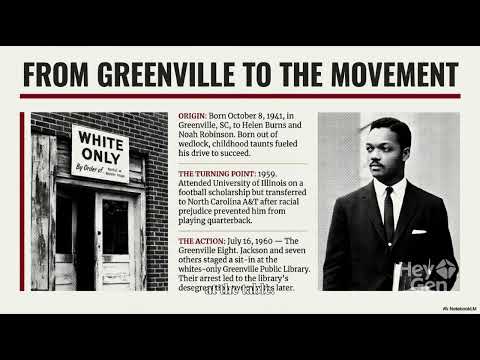
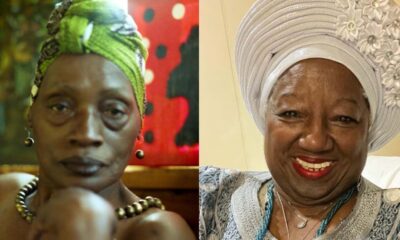
Reverend Jesse Jackson’s legacy lives on through his powerful slogans. “Keep hope alive” and “I am somebody” continue to inspire us to fight for justice and recognize our inherent worth.
Reverend Jesse Jackson, has gone on to glory, a life well spent and remembered. However his slogans remain forever as inspirations in our daily living and interactions. “Keep hope alive” became the rallying cry for his 1984 and 1988 campaigns encapsulating his message of perseverance, social justice, and the belief that systemic change is possible. It’s been used many times in campaign songs and speeches to energize freedom loving people to never give up. “I am somebody” Jesse told us, to remind us that we are all apart of God’s perfect image and divine purpose. These iconic slogans will forever reign true, May Rev. Jesse Jackson rest in peace as we pick up his mantle and carry the torch of freedom forward.
Featured
Beyond Beasts: Black Athletes’ Brilliance & Divine Intelligence #shorts
Beyond the athletic prowess, discover how Gary Green II’s book reclaims the humanity of Black athletes by highlighting their divine intelligence and challenging dehumanizing sports language.
Gary Green II’s book ‘Playing the Game’ reveals how sports language dehumanizes Black athletes. It challenges these narratives by emphasizing their intelligence and divine essence, reclaiming their humanity. #SportsEthics #RacialJustice #AthleteVoice #EmbodiedBrilliance
Featured
From Loss to Legacy: Forever Remain Motivated #shorts
From loss to legacy: discover how a personal motto born from tragedy became a thriving brand and supportive wellness community. #ForeverRemainMotivated #Resilience
Witness a powerful journey of resilience. After facing gun violence and losing a loved one, the ‘Forever Remain Motivated’ mantra was born. What started as a personal motto transformed into a thriving clothing brand and a full wellness community. #ForeverRemainMotivated #Resilience #Motivation #Community #WellnessJourney
Featured
Sister Spokesman AI Era Recap + Join Us October 3 | Cancer Has No Gender
Sister Spokesman’s AI Era recap is in! Join us Oct 3 for a vital discussion: cancer has no gender. Get tickets now!
Sister Spokesman and the Minnesota CHILL Foundation just wrapped The AI Era event. Next up: a vital conversation on breast, prostate and colon cancer at LifeSource in Minneapolis on October 3.
Saturday, October 3 | Noon to 3 PM LifeSource | 2225 West River Road North, Minneapolis, MN 55411 Tickets: $10
Get tickets: https://tix.spokesman-recorder.com/e/sister-spokesman-cancer-has-no-gender/tickets
Subscribe for more from the Minnesota Spokesman-Recorder.
Featured
Elijah Moore on Financial Literacy, Emergency Funds and Building Generational Wealth
Elijah Moore discusses financial literacy, emergency funds, and generational wealth. He’s not chasing rich, but comfort and freedom from financial worry.
Elijah Moore is not chasing rich. He is chasing comfortable. The freedom to travel when he wants, eat where he wants and quiet the voice in the back of his mind that constantly worries about money. In this Youth Financial Education Series video from the Minnesota Spokesman-Recorder, Elijah shares where he is on his financial literacy journey and why it matters beyond just his own household.
Elijah grew up without financial literacy in his home or the homes around him. Nobody taught him how to manage money, how to save or how to invest. That absence, he says, has real consequences in communities where financial knowledge is missing.
“Lack of financial knowledge creates burdens and issues. If you don’t know how to manage money, you’re not spending wisely. If you don’t have money to spend, you’re going to go get some money to spend.”
He believes financial literacy being taught in communities would decrease crime rates, ease depression and address mental health struggles that often trace back to financial stress.
The most valuable thing Elijah has learned so far is the emergency fund. Taking a little out of each check, building it consistently and knowing it is there when something goes wrong. A car repair. An unexpected bill. The emergencies that grow in cost the longer you live and the more you build.
His ultimate goal goes beyond his own comfort. He wants to build generational wealth. To be present in his family’s financial future even after he is gone, by teaching his children and their children how to manage, save and grow money.
“I want to be here when I’m no longer here. I want to bring financial literacy into my home and teach my children and their children.”
This video is part of MSR’s Youth Financial Education Series, sponsored by JPMorganChase.
Full story at msr.media.
Black History
COMMENTARY: Battling Black Voter Distrust
HOUSTON DEFENDER — Black voters have long been a reliable base for the Democratic Party, but political strategists and voters indicate that years of inconsistent engagement and unfulfilled expectations have created a trust gap.
Black voters have been among the Democratic Party’s most dependable supporters for generations. But loyalty and trust are not the same thing.
With less than a month to go before the midterm elections, Black voters and political strategists say years of inconsistent engagement and unmet expectations have left some voters questioning whether the party has earned their continued support. The challenge now is bigger than winning votes. It’s convincing distrustful voters that staying politically engaged is worth it.

Communications strategist Ashley Etienne argues that Democrats have spent years taking one of their most reliable voting blocs for granted, creating a widening trust gap that threatens the party’s long-term prospects in Texas and nationally.
“Trust is the currency of persuasion,” she said. “We’re seeing distrust at an all-time high, especially with Black voters … distrust of the media, institutions, the Democratic Party, self-agreement. Campaigns don’t lose because they fail to talk to voters. They lose because they fail to listen.”
Etienne, who served as a senior adviser to Presidents Barack Obama and Joe Biden and communications director for Vice President Kamala Harris, said repairing that relationship requires something considerably more difficult than another campaign advertisement. It requires listening.
Black support remains strong, but not absolute
Recent polling suggests Democrats continue to hold a substantial advantage among Black voters heading into November, but that support isn’t universal.
A July 2026 Pew Research Center survey found 68% of Black registered voters said they would support the Democratic candidate for U.S. House in their district, compared with 8% who favored the Republican. Another 25% said they were either unsure or would support another candidate.

That uncertainty follows some erosion in Democratic support among Black voters in the 2024 presidential election. A Pew analysis of validated voters found 83% of Black voters supported Kamala Harris in 2024, compared with 92% who supported Joe Biden in 2020.
Pew found that shift was driven less by individual voters switching from one party to another than by differences in who turned out to vote.
The findings don’t suggest Black voters have abandoned Democrats. They do raise questions about whether longstanding party loyalty is enough to guarantee participation.
“We’ve been making that same argument decade after decade,” Etienne said. “Those are becoming less persuasive arguments.”
Why is trust disappearing?
The distrust isn’t necessarily about one candidate or one election. For some Black voters, frustration comes from feeling heavily courted during election season without seeing enough progress afterward on the issues affecting their daily lives.
Housing costs remain a concern. So do education, economic opportunity, neighborhood investment, and the cost of everyday necessities.
That creates a difficult dynamic for campaigns: Asking voters to participate in a political system that some believe has not delivered enough for them.
It also raises a separate question. What happens when frustration with political parties becomes disengagement from the political process altogether?
What happens when voters stay home?
The answer can become particularly consequential in local elections, where races can be decided by hundreds of votes rather than thousands.
Harris County Democratic Party Chair Traci Gibson has pointed to several 2024 judicial races decided by narrow margins. District judge candidate Elaine Palmer lost by 304 votes, while Jeralynn Manor lost by 647 votes.
Gibson also warned about voters who begin Harris County’s lengthy ballot but don’t finish it.
“If you go into these polls and you vote for the first five people and then you leave, that’s how we get Elaine Palmer losing by about 300 votes,” Gibson said.
The larger issue extends beyond any candidate or political party. Judges are elected. School boards make decisions affecting students and families. City and county officials determine how public dollars are spent. State lawmakers decide which bills become state law.
Those decisions are made regardless of how many eligible voters participate.
“We have to have strategies, we have to have plans, we have to have a mechanism in place for people to feel they are heard.”
Karla West
For voters distrustful of political parties or government institutions, political participation also doesn’t have to mean unquestioning loyalty to either party.
Voters can research candidates individually, compare their positions, attend or watch candidate forums and examine an incumbent’s record against previous campaign promises. They can also learn what the often-overlooked offices farther down the ballot actually control.
In that sense, distrust can become a reason for greater scrutiny rather than disengagement.
Candidates have work to do, too
Responsibility for rebuilding participation doesn’t fall solely on voters.
At a recent Third Ward town hall hosted by state Rep. Jolanda “Jo” Jones, Harris County Precinct 7 Constable James “Smokie” Phillips and Houston Black American Democrats, voters and political strategists called for more sustained campaign engagement.
“Investment drives outcomes. If you don’t invest in it, it doesn’t work,” Etienne said.
She argued that campaigns spend heavily on polling, consultants and advertising while directing too little money toward Black-led political infrastructure and organizations with established relationships in Black communities.
Shamier Bouie, chair of Houston Black American Democrats, said organizing cannot begin a few months before Election Day.
“It’s all about year-round organizing, and increased investment in Black voter outreach … more funding for Black-led organizations that have relationships, infrastructure, and experience in effectively engaging Black communities,” Bouie said.
The question of investment also surfaced in July when Democratic U.S. Senate candidate James Talarico pledged $25 million toward Black voter outreach. Some voters wanted specifics about where and how that money would be spent.
“We still need our kids, we still need our schools equitably funded,” said Augie Cahee, vice president of marketing web delivery at JPMorgan Chase & Co. “So, we want to know what you’re going to do with the money. Don’t stand up and tell me $25 million and you don’t have a plan.”
The exchange illustrated the larger trust problem: Voters aren’t simply asking candidates to talk to them. They want to know what happens after the conversation.
From distrust to accountability
Karla West, a precinct chair for downtown’s Precinct 16, said responsibility ultimately belongs on both sides.
“We fell asleep at the wheel,” West said of voter turnout.
But she also challenged political leaders.
“The Democratic Party did not say what they would do for you,” West said. “We haven’t heard a plan for years. I’m sick of it. We have to have strategies, we have to have plans, we have to have a mechanism in place for people to feel they are heard.”
Defender Reporter Tannistha Sinha contributed to this report.
Based on reporting by Houston Defender.
Black History
Why Black Artists Struggle to Sell Tours
HOUSTON DEFENDER — Recent industry reports and artist comments indicate that Black artists are struggling to sell concert tickets, highlighting a larger crisis in the touring business. This trend, dubbed “blue dot fever,” refers to empty seats at venues and has led to major touring acts canceling or postponing shows since spring 2026.
The internet chatter about Black artists struggling to sell concert tickets points to a much larger crisis reshaping the touring business, according to recent industry reporting and artists’ own comments.
Since spring 2026, a wave of major touring acts across genres have canceled or postponed shows due to sluggish ticket sales, a trend some in the industry have dubbed “blue dot fever,” a reference to the blue markers that indicate empty seats on Ticketmaster’s venue maps.
The phenomenon is not limited to Black performers, but several recent examples involving Black artists have fueled online conversation about whether Black touring acts face extra hurdles. For a market like Houston, home to a large hip-hop and R&B fan base and a steady stream of major tour stops, the debate carries added weight.
Here are five reasons the touring business has gotten tougher for artists trying to fill seats.
Blue dot fever is spreading industrywide
Black hip-hop megastars like Ludacris, T.I., Rick Ross, and BigXThaPlug felt the impact of Blue Dot Fever after struggling to sell tickets. Industry watchers say many artists are being booked into venues too large for their current draw, leaving sections visibly empty, discouraging last-minute buyers. The trend cuts across genres, but it has compounded challenges already facing some Black touring artists this year.
Fans keep comparing every artist to music’s biggest superstars
Grammy-winning singer Melanie Fiona recently weighed in on the online conversation about canceled shows and slow sales, explaining that most artists do not have the resources or reach of music’s top-tier headliners. The trade outlet Ticket News has made a similar point, noting that few artists can match the pricing structure or demand generated by superstar-level tours. When any artist falls short of that bar, fans and social media users are quick to call it a flop, even when the artist is still performing at a healthy level for their career stage.
Stadium bookings are outpacing actual demand
A hip-hop stadium concert set to take place in Louisville in October 2026, featuring Ludacris, T.I., Rick Ross, and BigXThaPlug, reportedly had nearly 47,000 seats still available as showtime approached. The example illustrates a broader booking problem. Venues sized for arena or stadium crowds do not always match the number of fans willing or able to buy tickets, regardless of an artist’s streaming numbers or name recognition. Some promoters are now facing pressure to book smaller, more intimate venues that better match an act’s current draw.
Rising costs are squeezing fans’ entertainment budgets
Housing, groceries, and everyday expenses have climbed for many households, and live music is often one of the first expenses fans cut. Older or legacy acts leaning on nostalgia appear to be hit hardest, since higher ticket and fee prices make attending a bigger financial decision than it once was. Newer or lower-profile Black artists competing for the same limited entertainment dollars face an uphill climb, especially when fans have to choose between one or two shows a year instead of several.
Social media shape who gets mainstream exposure
Does TikTok Dominate the music industry.
Black artists in hip-hop and R&B often compete for airplay and playlist placement within genre-specific categories rather than mainstream ones, which can limit the crossover exposure that turns streaming success into ticket sales. Artists working outside those two genres, including gospel, jazz, and Afrobeats-influenced acts, face a similar challenge in reaching audiences beyond their dedicated fan bases. Whether that structural gap is driving today’s sales slump remains an open question that industry analysts and artists are actively debating.
Based on reporting by Houston Defender.
-
Black History1 week agoPassing for White, Fighting for Black America: The Courage of Walter White
-
Black History1 week agoThe Youngest American Killed in the Vietnam War
-
Black Press1 week agoMayor Lee Announces $1 Million Kaiser Permanente Grant for Pilot Program to Address Homelessness, Clean Up Public Spaces throughout Oakland
-
Black History3 days agoRemembering Chauncey Bailey as Student Journalists Face Threats to Truth-Telling
-
Black Press1 week agoOP-ED: How Head Start Also Helps Parents
-
Art1 week agoPeter Magubane: a Camera Against Apartheid