
Health
I Went 30 Days Without Using Coconut Oil & Shea Butter In My Hair And Here’s What Happened


Over 5,000 people joined the #30DayHairDetox challenge. [BlackDoctor.org]
When I wrote the article on the “7 Reasons Why You Need To Stop Using Coconut Oil & Shea Butter On Your Hair” a lot of you were were skeptical. Some of you even thought that this was crazy talk from some white man (check my bio, I’ve been a Black woman for over 30 years) trying to get you to buy my “products.” Others thought that I was just some rambling know-it- all sharing my opinion on natural hair care. However, not only did I drop some valuable hair care information I even invited you guys to join me for a challenge that involved not using the aforementioned products. The challenge was simple: a #30DayHairDetox that involved participants not using coconut oil, shea butter, castor oil and Eco Styler gel.
For 30 days participants took part in our hair detox while learning simple techniques leading them to proper hydration. The underlying theme of the #30DayHairDetox is really just wash your darn hair. With shampoo. And use simple conditioning and styling products with water-based and water soluble ingredients.
Over 5,000 people joined us for this revolutionary curl changing challenge and the feedback from participants has been absolutely phenomenal.
I thought it would be awesome to share the experiences of five completely different women who joined us in an effort to get the best curls of their lives.
Finish reading the story at BlackDoctor.org.







Black Press
OP-ED: She’s Not Non-Compliant, She’s Hungry: Addressing Food Justice to Improve Breast Cancer Outcomes
CHICAGO DEFENDER — Food insecurity in Chicago’s South Side and surrounding suburbs disproportionately affects Black women with breast cancer, impacting their treatment and recovery.
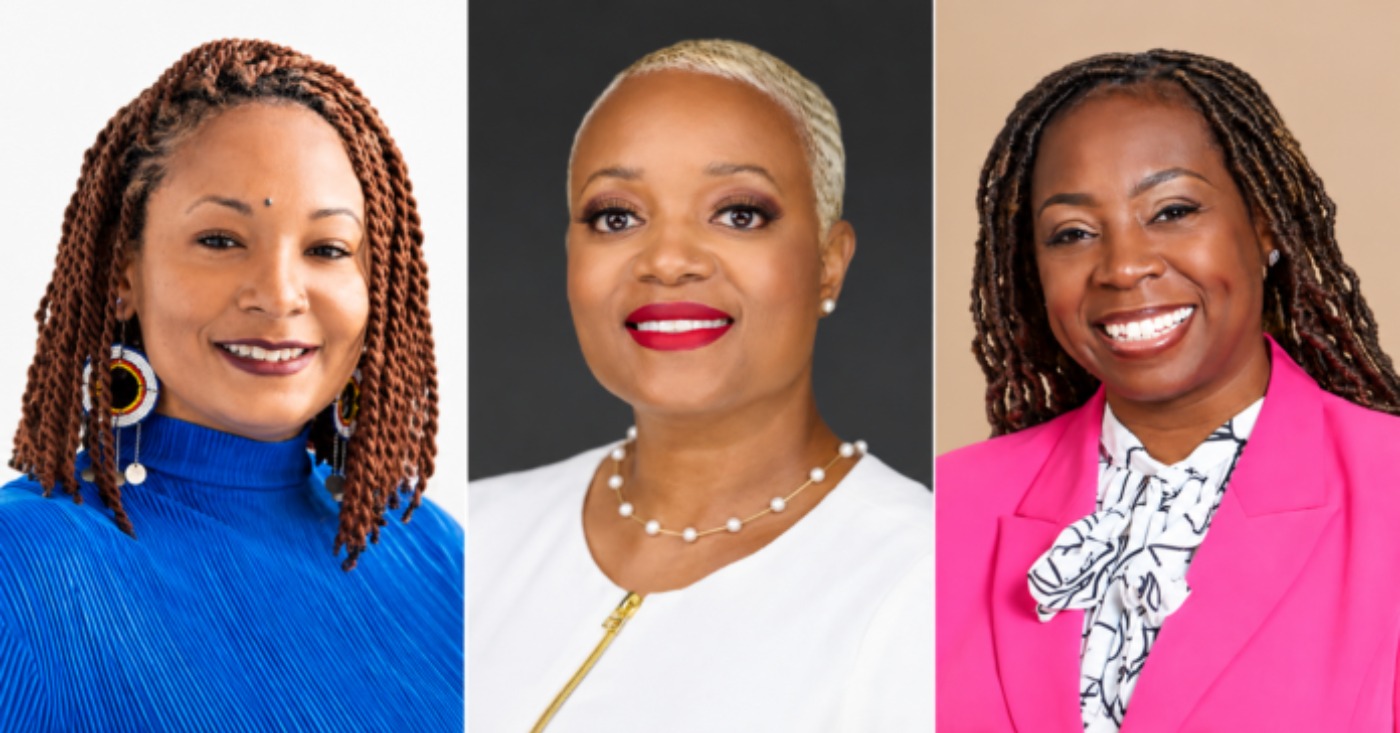
Here’s a transformational idea: everyone should have access to safe, healthy and affordable food.
If this idea doesn’t feel radical to you, then perhaps you haven’t spent much time in the Southside of Chicago and its adjoining suburbs.
Food insecurity is rampant in our neighborhoods. If you live in Washington Heights, you are practically guaranteed to experience lower food access than the average Chicagoan – with similar circumstances in the South Shore, West Englewood or West Pullman.
It has been clearly documented that “Food is Medicine.” In fact, according to countless scientific studies, good nutrition is critical during cancer treatment. It empowers your body to maintain muscle, rebuild damaged tissues and better withstand aggressive radiation or chemotherapy. A patient with access to nutritious food will experience fewer side effects, like fatigue and nausea, and will have less need for extra medicines. In short, good food improves a patient’s daily life.
Instead, though, a Black woman with breast cancer in our South Side neighborhoods or suburbs has the opposite experience. In fact, if “food is medicine,” then we are inarguably in a crisis, and it is disproportionately affecting Black women with breast cancer.
As co-authors of the Pinkprint and members of the Chicago Better Together Breast Cancer Disparities Think Tank, an initiative launched to address the disproportionate impact of breast cancer mortality on Black women in Chicago’s South Side and South Suburbs, we know that by combining data-informed strategies with community-driven advocacy and leadership, we will create equitable, sustainable outcomes for those most affected by breast cancer and the lack of access to nutritious foods in their communities.
Solutions start as local initiatives. We must pilot community-driven solutions in areas with the highest breast cancer mortality rates and limited access to nutritious food.
Existing local programs – food pantries, community fridges and even hospital-run delivery systems – are a critical piece of this local infrastructure. They are just a component, though, of the robust nutrition infrastructure the South Side lacks. In the long-term, our neighborhoods need clean, well-stocked grocery stores – and we must demand that our elected officials do everything they can to attract and retain these food corporations to invest in our communities.
This is just one item on their to-do list. Long-term solutions will include policy changes and targeted incentives at the city, state and federal levels. Just this spring, over 150,000 people in Illinois lost SNAP benefits, a devastating cut with ripple effects across families into entire neighborhoods. These cuts disproportionately affect people in the South Side of Chicago – not to mention, overwhelm food banks and other centers that serve as part of our social safety net. The Families Receiving Emergency Support for Hunger (FRESH) program in Illinois provides a one-time, automatic $400 cash payment per eligible household member to residents who lost their SNAP food benefits. This will help ease the immediate negative effects of these cuts and is much appreciated. But it is not a long-term solution.
When we started conversations in work groups about this project, we started with the idea that Black women deserve equitable access to quality breast cancer care. Any conversation about breast cancer care and goals for improved outcomes, must include a conversation about nutrition justice.
Nutrition justice is not just a transformational ideal: it is an idea that will literally transform our neighborhoods and the quality of life of every single person living in them. It will put grocery stores in empty storefronts; it will deliver food to a breast cancer patient going through chemotherapy.
Nutrition justice will help improve breast cancer outcomes for Black women on Chicago’s South Side. And Black women should not have to wait.
This op-ed is the second in a series focusing on eliminating breast cancer mortality in Black women on Chicago’s Southside. The authors are part of the Chicago Better Together Breast Cancer Disparities Think Tank, an initiative launched to address the disproportionate impact of breast cancer mortality on Black women in Chicago’s Southside and South Suburbs. Together with other community leaders, they have co-authored the Pinkprint, a strategic multistep plan and call-to-action on this critical issue.
The post She’s Not Non-compliant, She’s Hungry: Addressing Food Justice to Improve Breast Cancer Outcomes appeared first on Chicago Defender.
Based on reporting by Chicago Defender.
Black History
Cash for Moms: As Medicaid Cuts Loom, Cities Test a New Approach to Black Maternal Health
LOUISIANA WEEKLY — WORD IN BLACK — A maternal health crisis continues to disproportionately impact the Black community, with Black mothers experiencing significantly higher mortality rates during childbirth and their infants facing increased risks of prematurity and death. Data indicates Black moms die at three times the rate of white moms, and Black infants are about twice as likely to die as white infants in some states.

By now, there’s little question that a maternal health crisis is rocking the Black community. The data tells the story: Black moms are dying during childbirth at three times the rate of white moms, a disproportionately high percentage of Black children are born prematurely, and Black infants are about twice as likely to die as white infants in states like Louisiana.
But new data from a handful of pilot projects also suggests a potential solution that could significantly improve outcomes for Black mothers and their babies: cash payments, no strings attached.
Studies show the unrestricted money led to fewer preterm births, higher newborn birth weights, and fewer critical-care infant hospitalizations. It also reduced stress among new moms who would otherwise struggle to attend prenatal check-ups, pay for food and formula, or keep a roof over their heads.
“This makes so much sense to me,” says Tamara Mason, an official with the nonprofit March of Dimes who worked on an Atlanta project distributing money to low-income pregnant women. “Why isn’t everyone doing this?”
Sen. Cory Booker, a New Jersey Democrat, is among several sponsors of legislation that would provide direct financial aid to new mothers, similar to the expanded child tax credit in 2021. The credit sent monthly payments of up to $300 per child straight to most families’ bank accounts; experts credit it with lifting millions of children out of poverty.
When it expired, child poverty rose again.
“I believe that we need to, for moms, flood resources to them through things like the child tax credit,” Booker said during an August press briefing on the Black Maternal Health Momnibus Act. “We were able to cut child poverty virtually in half for our communities, and that actually does affect child outcomes.”
Those positive outcomes in part spurred the March of Dimes to launch trial programs providing universal basic income, or UBI, to pregnant women and new moms in two cities: Atlanta, which Bloomberg ranked as the most economically unequal large city in the country, and New Orleans, which March of Dimes gave an F grade.
No strings attached
In Atlanta, the Guaranteed Basic Income Program gave each participant $1,000 a month during pregnancy and her baby’s first year. Women most likely to live in poverty in that city are Black women of reproductive age; 25 pregnant women in two of the area’s highest-need ZIP codes received the cash.
March of Dimes ran the pilot through an Atlanta collective-impact partnership known as the collaborative. It is modeled on San Francisco’s Abundant Birth Project and, organizers say, rooted in an idea the Rev. Martin Luther King Jr. championed decades ago.
Funders Skeptical at First – Then All In
Mason said she spent months pitching foundations on the idea, which some considered outside her organization’s lane.
“I was honestly surprised that a couple of foundations,” Mason says. “Funders were like, ‘Why is March of Dimes in this space? You all are the birth defects people. You’re the preterm birth people.’”
The Community Foundation for Greater Atlanta signed on as the primary funder. The Liz Blake Giving Fund and the Jesse Parker Williams Foundation funded data gathering and evaluation Emory University conducted.
The nonprofit Center for Black Women’s Wellness handled recruitment, and more than 110 women applied for the 25 spots, Mason said. Applicants had to live in one of the two ZIP codes, earn no more than 200 percent of the federal poverty level, and be 12 to 28 weeks pregnant.
Cash, Diapers and a Network
Stipends were paid through a prepaid card, letting evaluators track spending without restricting it. Helping Mamas, a nonprofit focused on diaper insecurity, supplied 300 diapers and eight packs of wipes a month, plus a car seat and other essentials. The Georgia Black Doula Network encouraged, but didn’t require, participants to hire doulas.
Early results from Emory’s evaluation, as described by Mason, show a 20 percent decrease in financial stress and a 66 percent decrease in hopelessness, a figure she called striking. Prenatal outcomes trended better than average.
Mason was careful not to oversell what $1,000 a month can fix. Several participants lost housing; one or two dealt with domestic violence.
Even though GBI reduced financial stress, “it still is one piece of the puzzle,” Mason said.
New Orleans: Overcoming Crisis
March of Dimes runs a similar program in New Orleans, GBI Rx, offering pregnant patients in their first or second trimester $12,000, as a lump sum or $1,000 a month. Two partner medical clinics enroll patients for healthcare, and the payment card blocks cash withdrawals and spending on liquor and gambling.
In Louisiana, “we have a maternal and infant health crisis – specifically, a Black maternal and infant health crisis,” said Robin Gruenfeld, director of collective impact for March of Dimes in New Orleans. ”And it’s been that way for a long time.”
Black infants there died at about twice the rate of white infants from 2021 to 2023. Gruenfeld said Orleans Parish has the state’s lowest prenatal care utilization rate.
Gruenfeld said the program’s city seed money, federal pandemic relief funds, and foundation funding were “zeroed out” without notice. Most funds were later restored at a lower level, forcing organizers to scale down to 94 participants instead of the 100 planned. They also enrolled on a first-come, first-served basis.
Recipients spent lump sums on housing, cars and insurance. But spending priorities for the participants changed when the federal government stopped paying out SNAP food benefits during last fall’s federal shutdown.
“During that time, more than a quarter of the funds that we gave folks was going to groceries,” Gruenfeld said.
Several New Orleans city government officials are now weighing a program modeled on Michigan’s Rx Kids, which a study credits with nearly halving neonatal deaths in Flint, one of the poorest cities in the state.
“We are seeing policies pushed by the political will of predominantly Black women come into effect, and then also the backlash,” says Danielle Atkinson of Mothering Justice Action Fund, a nonprofit advocacy organization. “In Michigan, we have Rx Kids, which is extremely popular [and] the data on the impact is undeniable.”
But recent changes are endangering the success of such programs, particularly amid President Donald Trump’s hostility towards programs focused on diversity, equity and inclusion.
“We’re getting this pushback around identifying race and parental status as systemic areas of oppression,” Atkinson says. It remains to be seen, she says, “whether or not we are going to be able to prevail with the political power and the popular will of these issues, or the rhetoric and the history of racism in our country.”
Washington Looks Elsewhere
That includes the Republican-controlled Congress, which has shown little appetite for cash aid tied to pregnancy.
The Black Maternal Health Momnibus Act, which Booker reintroduced along with Democratic Reps. Lauren Underwood of Illinois and Alma Adams of North Carolina, bundles 14 bills on housing, nutrition, WIC and the perinatal workforce, but not direct cash.
Still, signs suggest the issue – providing cash aid to low-income mothers and their babies – may stay on the front burner as the midterm elections approach in November.
This month, former Vice President Kamala Harris and Michigan Senate nominee Abdul El-Sayed, both Democrats, hosted a Black maternal health roundtable in Detroit. Danielle Atkinson of Mothering Justice took part.
“Black mamas deserve access to quality healthcare that sees us, listens to us, and understands us at every step of the way,” Atkinson said afterward. “The responsibilities we carry do not end at pregnancy, nor do they disappear when we give birth and want to spend time with our newborn. They stay with us throughout all that we experience.”
Based on reporting by Louisiana Weekly.
Black Press
More Families to Benefit from Evidence-Based Home Visiting
BLACKPRESSUSA NEWSWIRE — The MIECHV program reaches families where services are needed most, including those who are rural, low-income, and at greater risk of poor health outcomes. Trained home visitors meet regularly with expecting mothers and families with young children. Decades of gold-standard scientific research show that voluntary home visits during pregnancy and early childhood can help prevent chronic disease and child abuse and neglect.

The Maternal, Infant, and Early Childhood Home Visiting (MIECHV) program supports voluntary, evidence-based home visiting for expectant parents and families with young children, particularly in communities facing greater barriers to positive maternal and child health outcomes.
The U.S Department of Health and Human Services’ agency Health Resources and Services Administration (HRSA) recently announced more than $525 million in fiscal year (FY) 2026 Maternal, Infant, and Early Childhood Home Visiting (MIECHV) Program awards to 56 state and jurisdiction recipients — the largest federal investment in the program’s history.
There are examples of the program success across the country. For instance, in Florida, Tracy says she gained the confidence and support to overcome challenges and achieve her goals. With the guidance of her home visitor, she strengthened her parenting skills, prioritized her well-being, and advanced her career. Today, Tracy continues to set goals for herself and her family and says, “This program has provided me with the tools to not just survive but to thrive.”
In California, Faraha said “I became pregnant and…I knew I wanted to make a difference in my life and that of my child. The home visiting program not only helped me as a mom, but also with my growth to….better myself, and now I’m in a position that I’ve always wanted to be in.” Faraha is currently employed and pursuing a master’s degree to become a licensed counselor.
HRSA Administrator Tom Engels announced the new awards in Columbus, Ohio, on Child Health Day. The awards will expand access to evidence-based home visiting services that improve maternal and child health, promote healthy child development, and connect families with the support they need during pregnancy and early childhood.
“MIECHV reflects a simple idea: supporting parents early gives children a stronger start. Parents are a child’s first and most important teacher, and by giving them the tools and support they need, we help create a strong foundation for children to thrive,” said Administrator Engels.
The MIECHV program reaches families where services are needed most, including those who are rural, low-income, and at greater risk of poor health outcomes. Trained home visitors meet regularly with expecting mothers and families with young children. Decades of gold-standard scientific research show that voluntary home visits during pregnancy and early childhood can help prevent chronic disease and child abuse and neglect, promote school readiness, and boost families’ economic self-sufficiency.
These awards include both base and matching grants. Base grants provide foundational support for evidence-based home visiting programs in every eligible state and jurisdiction, while matching grants help recipients expand services and reach more eligible families. In FY 2026, 55 of the 56 award recipients applied for and received matching grant awards, reflecting the continued commitment of our state partners to expand evidence-based home visiting services in communities across the country.
Since its reauthorization in 2022, the MIECHV program has served 15 percent more parents and children and delivered 23 percent more home visits. In FY 2025, the program provided more than 1 million home visits to more than 158,000 parents and children across one-third of all U.S. counties, helping connect families with services that support healthy pregnancies, positive parenting, child development, and family economic well-being.
As home visiting services expand, a strong and well-supported workforce is essential to meeting the needs of more families.
Black Press
Allen Temple Baptist Church Hosts Free Prostate Cancer Screenings on Oct. 17
The summit’s mission is to reduce the impact of prostate cancer through education, early detection, research, and support. It is presented in partnership with The Oakland Institute of Health, Inc., SCAN, Brotherhood of Elders Network, UCSF Helen Diller Family Comprehensive Cancer Center, Alameda County Public Health Department, Stanford Medicine Cancer Center, Impact Oakland Now, Bay Area Umoja Health, Bay Area Black Nurses Association, Inc., and 100 Black Men of the Bay Area, Inc.
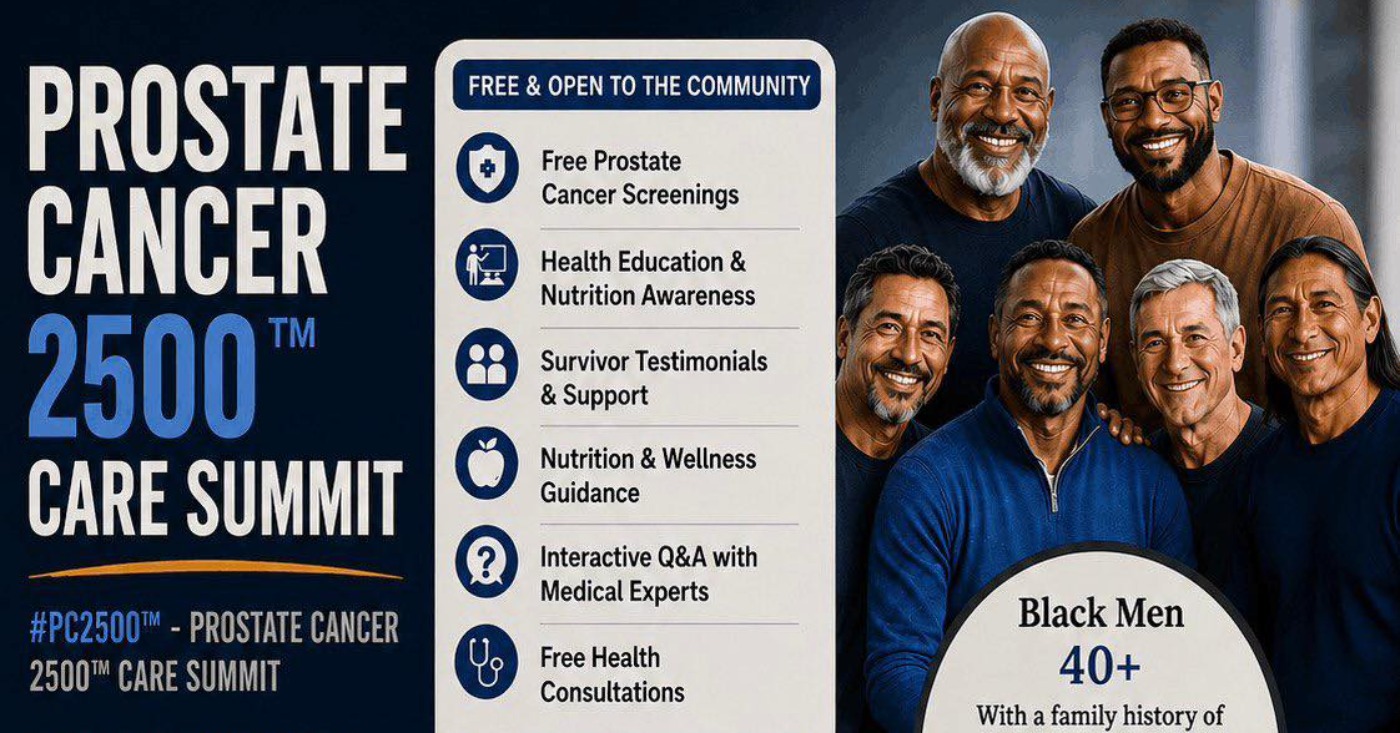
The Prostate Cancer 2500™ Care Summit brings together health systems, community organizations, and survivors to put early detection within reach
Black men in America are diagnosed with prostate cancer more often than other men and are about twice as likely to die from it. Early detection changes that outcome.
On Saturday, Oct. 17 from 10 a.m. to 2 p.m., Allen Temple Baptist Church will host the Prostate Cancer 2500™ Care Summit (#PC2500), a free event open to the entire community.
. Attendees can receive prostate cancer screenings and health consultations on site, learn about prevention and nutrition, ask medical experts questions in an interactive Q&A, and hear from survivors who will share their stories and offer support.
Screening is recommended beginning at age 45, and at age 40 for Black men with a family history of prostate cancer. All men are welcome, and families are encouraged to attend.
The summit’s mission is to reduce the impact of prostate cancer through education, early detection, research, and support. It is presented in partnership with The Oakland Institute of Health, Inc., SCAN, Brotherhood of Elders Network, UCSF Helen Diller Family Comprehensive Cancer Center, Alameda County Public Health Department, Stanford Medicine Cancer Center, Impact Oakland Now, Bay Area Umoja Health, Bay Area Black Nurses Association, Inc., and 100 Black Men of the Bay Area, Inc.
For more information prior to the event, reach out to Rev. Charlotte Y. Williams at (510) 604-5242 | [email protected]
For more information on the day of the event, reach out to Deacon Dwight Williams (510) 501-1650 [email protected]. The church is located at 8501 International Blvd., Oakland, CA 94621 The service is free and free parking and refreshments will be provided. The site is accessible to persons with disabilities. To pre-register, go to Allen-Temple.org
Allen Temple Baptist Church was organized in 1919 in Oakland. For 107 years, ATBC has served as a bright beacon of faith, hope, and love beyond its’ four walls. Allen Temple is committed to sharing the love of God and the message of Good News throughout the world. We welcome people of all ages and cultural backgrounds as we joyfully celebrate worship and fellowship, and carry out ministries of evangelism, discipleship, education, community outreach, and global missions. Allen Temple’s holistic, prophetic and social justice ministries address the needs of the whole person as well as the whole community. Dr. Jacqueline A. Thompson.
Rev. Charlotte Y. Williams is the minister and director of Communications at Allen Temple Baptist Church.
Art
Houston’s ‘call Me Mother’ Exhibit Opens Today, Spotlighting Black Maternal Health
AFRICAN-AMERICAN NEWS AND ISSUES – DALLAS — The Health Museum in Houston today opens “The Call Me Mother Experience,” an exhibition spotlighting Black maternal health through art and personal storytelling. Curated by Houston’s first Black poet laureate, Deborah D.E.E.P. Mouton, the project originated from her own poem written during a miscarriage.

HOUSTON — A new exhibition opening Sunday, Oct. 4, at The Health Museum is bringing Black maternal health into public view through art and personal storytelling.
The Call Me Mother Experience will be on display through Feb. 28, 2027. The museum lists a preview reception today from 3 to 5 p.m. at 1515 Hermann Drive, with tickets priced at $5 for members and $15 for nonmembers.
A personal story becomes a community conversation
According to the museum, founder, curator and lead artist Deborah D.E.E.P. Mouton developed the project from a poem she wrote during a miscarriage. The installation combines films, recorded interviews, visual artwork and contributions created with community members.
Mouton, Houston’s first Black poet laureate, discussed the exhibition and her connection to its subject in an Oct. 1 appearance on KPRC’s Houston Life. The station described the project as addressing the unequal burden of pregnancy-related illness and death faced by Black women in Harris County.
An announcement distributed by the Call Me Mother Experience says the initiative will also reach community locations and faith-based organizations across Greater Houston. Those additional settings are intended to extend the conversation beyond a museum visit.
What visitors can expect
The museum says reception guests can explore the exhibit, hear the curator and meet participating artists. Reception admission includes general museum entry; refreshments are available while supplies last.
The featured image accompanying this article is an original illustrative concept, not a photograph of the exhibition or its artwork.
Sources and visitor information:The Health Museum exhibition listing; preview reception details and tickets; KPRC Houston Life; organizer announcement.
The post Houston’s ‘Call Me Mother’ Exhibit Opens Today, Spotlighting Black Maternal Health appeared first on African American News and Issues.
Based on reporting by African-American News and Issues – Dallas.
Black History
Morehouse School of Medicine Fall Convocation Has Strong Ties to Nashville
TENNESSEE TRIBUNE — Morehouse School of Medicine recently held its 42nd Fall Convocation and White Coat and Pinning Ceremony, which highlighted strong connections to Nashville. Dr. Valerie Montgomery Rice, in her 12th year as president and CEO, leads the institution, which welcomed 355 new students.
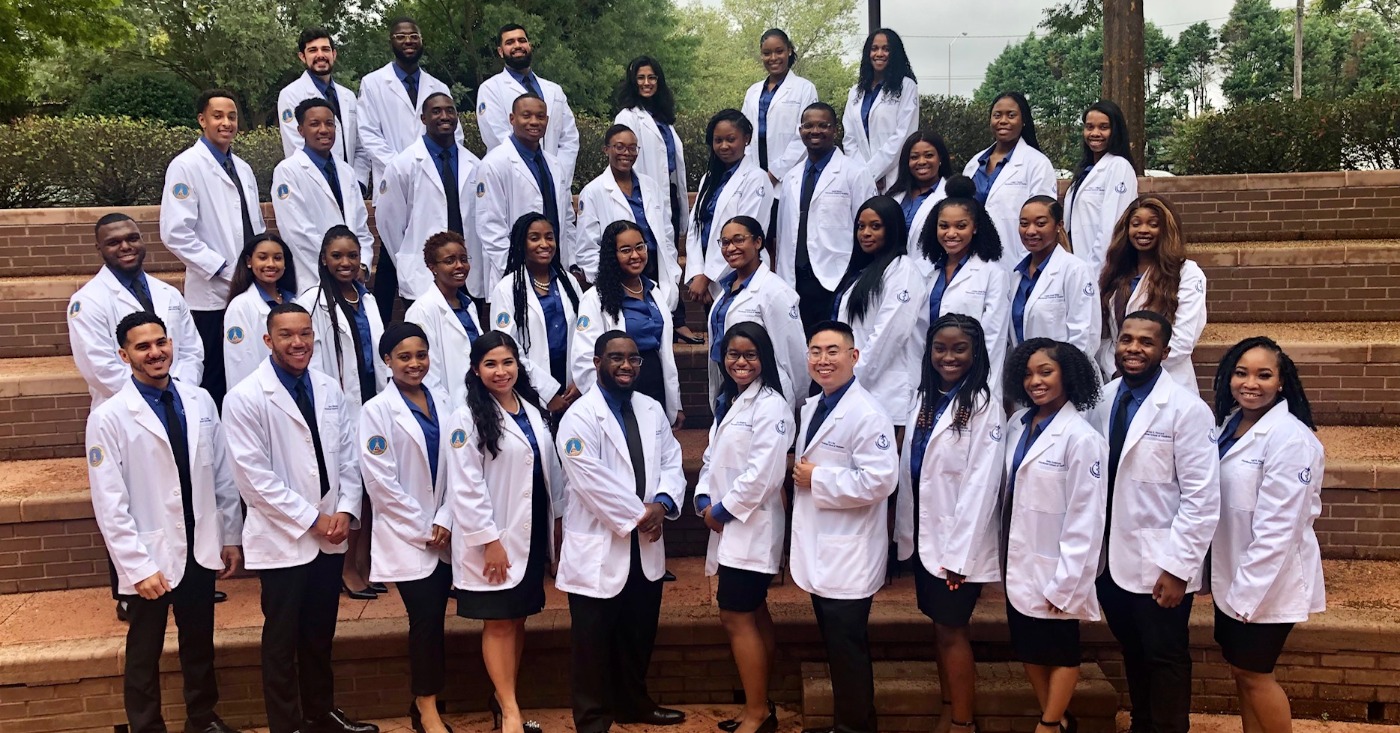
Morehouse School of Medicine held its 42nd Fall Convocation and White Coat and Pinning Ceremony on September 18, and it featured strong ties to Nashville. Dr. Valerie Montgomery Rice is completing her 12th year as president and CEO of Morehouse School of Medicine (MSM). The school boasts 355 students seeking degrees and certificates in the medical field.
“This entering class represents the future of medicine, science, public health and health care leadership,” said Valerie Montgomery Rice, MD, and FACOG. “As these students begin their journeys at Morehouse School of Medicine, they join a community grounded in excellence, service and our shared commitment to advancing health equity. We look forward to supporting their development as leaders who will transform the health and well-being of the communities they serve.”
Infectious diseases physician and scientist Dr. Barney S. Graham, MD, and PhD, served as the keynote speaker. He serves as the director of the David Satcher Global Health Equity Institute, professor of Medicine and Microbiology, Biochemistry and Immunology at Morehouse School of Medicine. He is an inventor of vaccines and monoclonal antibodies approved for human use to prevent or treat RSV, COVID-19 and Ebola. He joined MSM in 2022. He served in various positions at Vanderbilt University for 21 years.
Dr. Graham told the audience to “Embrace the Unseen” and focused on three points: Do the Best You can with what’s in front of you, Do what makes you come alive and Do the right thing even when no one is looking. He added, “Anything you do to improve mental and physical wellness and promote disease prevention will reduce health disparity by reducing the resources needed for treatment.”
His remarks commanded a roaring applause from the audience, which included his wife, Dr. Cynthia Turner Graham, and the former First Lady of Tennessee State University, Mrs. Edwina Hefner, a close friend to the family.
Based on reporting by Tennessee Tribune.


Black Woman Makes History at KARE 11 #shorts

Houston Black judges lead fight to save democracy

Teen Driver Mode: Essential Safety Features Explained #shorts

Dollar in Black Community: 6-Hour Myth Debunked #shorts

BLACK WOMEN, THE MIDTERMS, AND THE ISSUES AT STAKE

BLACK WOMEN, THE MIDTERMS, AND THE ISSUES AT STAKE 📱

Federal Agents Search Ilhan Omar’s Home Just 22 Days Before Election

‘We Are Ready’: NAACP Launches Voter Protection Hub Ahead of Midterms

Comedy and Loss Collide in Kevonstage’s ‘Grief Sucks’ at the Pageant

OP-ED: She’s Not Non-Compliant, She’s Hungry: Addressing Food Justice to Improve Breast Cancer Outcomes

The Youngest American Killed in the Vietnam War

Passing for White, Fighting for Black America: The Courage of Walter White

OP-ED: Haiti TPS: Have We Lost Sense of Humanity?

NFL: Week Two Recap | Jalen Hurts did not fold; Caleb Williams exits game with injury

Remembering Chauncey Bailey as Student Journalists Face Threats to Truth-Telling

Obama Urges Democrats to make AI a Priority 📱

Peter Magubane: a Camera Against Apartheid

Mayor Lee Announces $1 Million Kaiser Permanente Grant for Pilot Program to Address Homelessness, Clean Up Public Spaces throughout Oakland

OP-ED: How Head Start Also Helps Parents

Community Action Group ‘Friends of Zakiya’ Ask Sheriff for Time
Black Woman Makes History at KARE 11 #shorts
Houston Black judges lead fight to save democracy
Teen Driver Mode: Essential Safety Features Explained #shorts
Dollar in Black Community: 6-Hour Myth Debunked #shorts
BLACK WOMEN, THE MIDTERMS, AND THE ISSUES AT STAKE
BLACK WOMEN, THE MIDTERMS, AND THE ISSUES AT STAKE 📱

Dodgers Ousted by Brewers in NLCS

62 Years of Telling Our Stories: Honoring the Legacy, Celebrating the Future.

Finding Community: Minneapolis Black Experience After George Floyd #shorts

How a Nonprofit Is Building a Grassroots Movement Incubator #shorts
-

 BlackPressUSA1 week ago
Latinas Deserve Equal Pay. Unions Help Make It Happen.
-

 Black Press4 days ago
All Skinfolk Ain’t Kinfolk
-

 Black Press3 days ago
Oakland Awarded More than $14 Million in State Funding
-

 Black Press1 week ago
Should You Have to Pay to Hear the Gospel?
-

 Black Press1 week ago
Botham Jean’s Killer Granted Parole 7 Years After His Murder
-

 Black History1 week ago
Ghana’s Ministry of Foreign Affairs Publishes Global Circle’s Vatican Reparations Call in Special Edition Alongside Heads of State
