
Chicago Defender
Groundbreaking Initiative Shows Pathway to Propel Black Homeownership
CHICAGO DEFENDER — While statistics may paint a grim picture of Black homeownership, a recent event in Baltimore laid out a clear path for turning those numbers around across the country. Anyone questioning whether the Black community is primed to join the ranks of homeowners need only look to an innovative event in Baltimore that took place June 22. Nearly 700 people came away with the inspiration, education and motivation to make the goal of homeownership a reality when HomeFree-USA launched its Step Into Your Power: Prepare for Success Through Homeownership initiative to an enthusiastic audience of African American homebuyers in Baltimore City.


By The Chicago Defender
While statistics may paint a grim picture of Black homeownership, a recent event in Baltimore laid out a clear path for turning those numbers around across the country.
Anyone questioning whether the Black community is primed to join the ranks of homeowners need only look to an innovative event in Baltimore that took place June 22. Nearly 700 people came away with the inspiration, education and motivation to make the goal of homeownership a reality when HomeFree-USA launched its Step Into Your Power: Prepare for Success Through Homeownership initiative to an enthusiastic audience of African American homebuyers in Baltimore City.
More than 500 homebuyers participated in a live event at the Reginald Lewis Museum, while an additional 166 participated via live stream and a second event that was held to accommodate the overflow crowd.
Homeownership is the number one wealth indicator and accounts for 92 percent of Black wealth. Yet, the Great Recession of 2008 wiped out 48 percent of that homeownership wealth and African-Americans are continuing to fall even further behind in homeownership compared to other segments. In fact, the Black homeownership rate has fallen to the lowest level ever as of the first quarter of 2019, according to Census data.
With Black Americans making up 63.3 percent of Baltimore’s population, the decline in Black homeownership poses a particular threat to Charm City. Step Into Your Power is a groundbreaking way to turn those homeownership numbers around and the kickoff event showed that many Baltimore residents agree.
HomeFree-USA Founder Marcia Griffin welcomed attendees and talked candidly about the crisis in the Black community around the wealth gap, sharing how homeownership can help Black Americans improve their financial standing. HomeFree-USA also shared that homebuyers may be able to take advantage of up to $42,000 in financial assistance.
Some attendees pointed to the gentrification that has taken place inWashington, DC in the last few years and expressed their belief that Baltimore may realize the same fate. As a result, several attendees saw buying in Baltimore as an opportunity to both stop gentrification from pushing people from the city they love and a chance to be a homeowner in the city where they were born
and raised.
Other attendees expressed their desire to buy a home so they can pass it down to their children and grandchildren.
Attendees also learned that organizations like HomeFree-USA can provide them with the financial education and the know-how to make their dream of homeownership a reality.
HomeFree-USA will host a series of Step Into Your Power events in Baltimore over the next 5 months designed to guide, educate, and coach first-time Baltimore City homebuyers to mortgage-readiness, default resistance and homeownership. Upon success in Baltimore, the initiative will be launched in other cities with a significant number of African American residents. One goal of the Step Into Your Power program is to get 10,000 African American families mortgage-ready around the country by the end of 2020.
Entrepreneur and educator Stedman Graham, author of the recently released book, Identity Leadership, delivered the keynote address in Baltimore and spoke about how one must learn to lead oneself before one can lead others. Graham has been teaching self-actualization principles that help people discover who they can be, and he brought those insights to energize Baltimore residents as they prepare for success.
Strong partnerships underscore the strength of the initiative and were highlighted at the event.
“Step into Your Power: prepare for success through homeownership is a terrific example of working together to make a positive impact toward boosting Baltimore City homeownership,” said Lisa Thomlinson, program manager with Wells Fargo Housing Philanthropy.
Wells Fargo showed its commitment to Baltimore by offering qualified homebuyers up to $15,000 for down payment and closing costs through a program called NeighborhoodLIFT. “Just as in many communities across the country, far too many families struggle with housing affordability in Baltimore,” Thomlinson says. “That’s why Wells Fargo teamed-up with HomeFree-USA and Stedman Graham to make a concerted effort to bring our business expertise forward and combine it with available resources including NeighborhoodLIFT Home Ownership Counseling grants for interested homebuyers.”
Freddie Mac is also providing financial support to ensure that Step Into Your Power reaches as many potential homebuyers as possible. Step Into Your Power is a means for increasing the homeownership rate among African Americans and reducing the wealth gap in America. It also is designed to help Black Americans break the cycle of renting and begin to make homeownership an achievement that is passed down from generation to generation.
“This event marks the revival of the spirit to buy in Baltimore,” says Milan Griffin, Vice President of Marketing and Outreach for HomeFree-USA. “Thanks to Step Into Your Power, Baltimore residents see the opportunity homeownership presents and have a pathway to get there.”
This article originally appeared in the Chicago Defender.












Black History
2025 Annual Rainbow PUSH/CEF Global Automotive Summit: Diversity at the Heart of Innovation and Growth
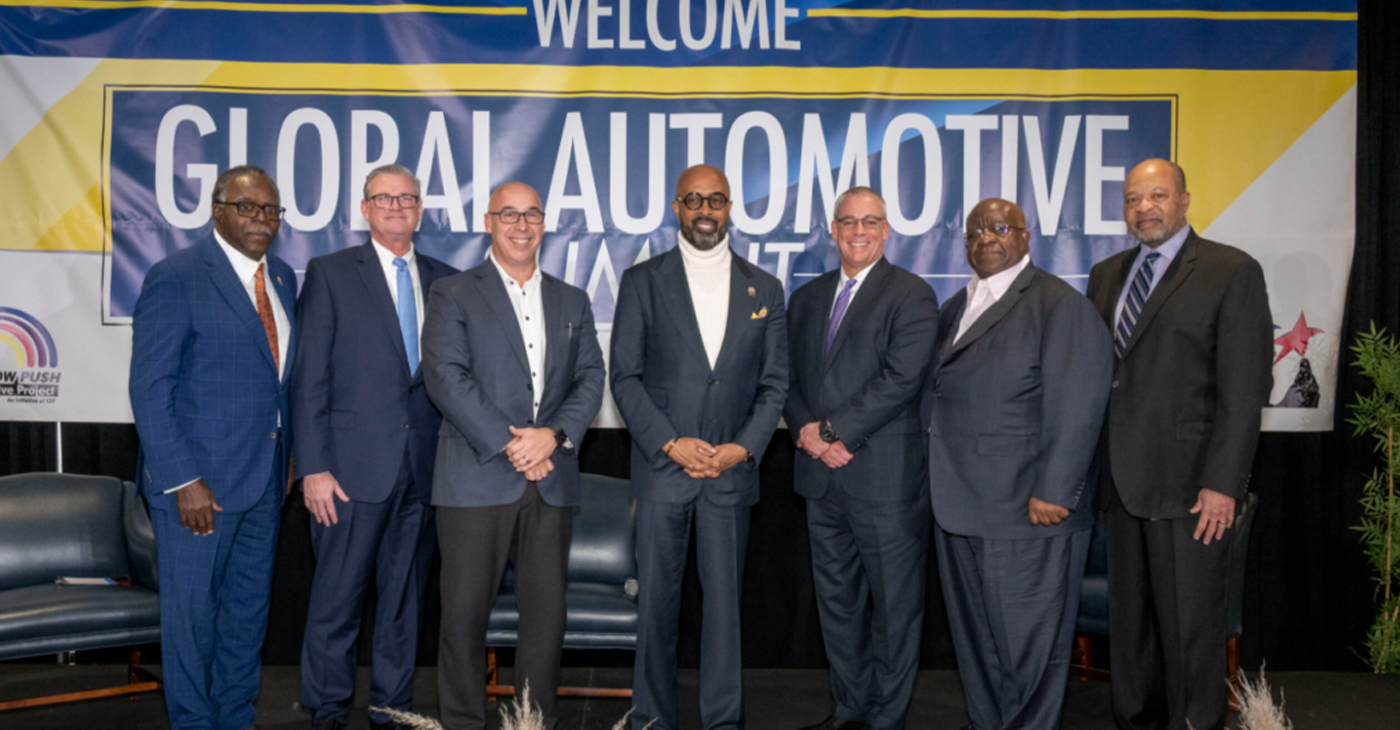
CHICAGO DEFENDER — On Oct. 15, 2025, leaders from across the industry will converge at the Motor City Casino Hotel & Conference Center in Detroit for a day of insightful discussions, strategy sessions, and collaborative networking opportunities.

By Jeremy Allen
Executive Editor, Chicago Defender
As the automotive industry faces unprecedented challenges and transformative change, the 2025 Annual Rainbow PUSH/CEF Global Automotive Summit returns to Detroit with a renewed focus on diversity, equity, and inclusion. This year marks the 26th anniversary of the event, a gathering that has long been recognized as a critical platform for advancing diverse supply chains and strengthening minority dealership networks within the global automotive sector.
On Oct. 15, 2025, leaders from across the industry will converge at the Motor City Casino Hotel & Conference Center in Detroit for a day of insightful discussions, strategy sessions, and collaborative networking opportunities. From 8:15 a.m. to 2:45 p.m., stakeholders representing automakers, suppliers, dealerships, and industry experts will share their perspectives on key trends shaping the future of the automotive landscape. In the context of an evolving global economy, the summit offers an opportunity for organizations to align on actionable strategies for fostering inclusive growth.
The year’s summit brings together a lineup of sessions aimed at tackling the most pressing issues facing the industry today. One of the morning’s key sessions, “State of the Automotive Industry,” will set the tone for the event, offering an overview of both current challenges and opportunities for automakers and their supply chain partners. This session will provide attendees with insights into the evolving market conditions that are influencing business decisions at all levels.
A particularly notable session will be focused on minority dealerships. Perry Watson IV, President of the National Association of Minority Automotive Dealers (NAMAD), will lead a discussion on the ongoing efforts to increase the number of minority-owned dealerships and the impact this growth has on the industry. As diversity within dealership networks becomes more critical, Watson’s session is expected to delve into the tangible benefits of expanding these networks, not only for the bottom line but for the communities they serve.
In another segment, “Ethnic Minorities and Vehicle Purchases,” Marc Bland, Chief Diversity Officer at S&P Global Mobility, will present data-driven insights on consumer purchasing trends. With ethnic minorities representing an increasingly significant portion of the automotive consumer base, Bland’s discussion will examine how automakers can better connect with these key demographics and what steps must be taken to ensure that vehicle offerings reflect the diverse needs of the market.
At 10:15 a.m., a panel on “Strengthening Supplier Partnerships” will explore the strategies needed to build stronger, more resilient partnerships between automotive manufacturers and their suppliers. With the industry’s shift toward electrification, sustainability, and innovative technologies, establishing these robust partnerships is more important than ever. Panelists include Ryan Grimm, Group VP of Purchasing & Supplier Development at Toyota Motor North America, and Marvin Washington, VP of Global Purchasing & Supply Chain Management at Stellantis North America. Together, they will provide attendees with a roadmap for fostering innovation and driving shared success in a rapidly changing global landscape.
The lunch keynote will feature a fireside chat with Elizabeth Krear, President and CEO of the Center for Automotive Research. As an influential leader in automotive research, Krear’s conversation will center on the industry’s evolving workforce and the critical role that diversity and innovation play in shaping its future. As the sector continues to embrace new technologies, Krear’s insights will help attendees understand how investing in diverse talent pipelines will be essential for ensuring long-term growth.
The afternoon session, “Developing Tomorrow’s Workforce,” will focus on addressing the industry’s ongoing talent gap. With a particular emphasis on the need for skilled engineers and repair technicians, this panel will discuss the growing challenges that automotive employers face when trying to build a qualified workforce. The conversation will center on how educational institutions, training programs, and the automotive industry can collaborate to create a more inclusive, highly skilled workforce capable of meeting the demands of tomorrow.
One of the summit’s most anticipated moments will be the unveiling of the 2025 Brand Equity Index, a revamped version of the Automotive Diversity Scorecard that has been a hallmark of the event since 2012. This revised index, developed in partnership with S&P Global, will provide an updated look at multicultural and non-multicultural consumer volumes, gender distributions, and dealer information provided by NAMAD. As the industry continues its efforts to build a more equitable and inclusive ecosystem, the Brand Equity Index has been a powerful tool for tracking progress and highlighting areas that need further attention from automotive manufacturers.
For a full agenda, complete with speakers, awardees, and companies that will be in attendance, visit https://automotiveproject.org/2025-global-automotive-summit/.
Black Press
Planned Parenthood of Illinois Vows to Stay Open After Trump Defunding Bill
CHICAGO DEFENDER — Almost 30,000 PPIL patients rely on Medicaid for birth control, cancer screenings, STI testing and treatment, prenatal services, gender-affirming care, and abortion. Tonya Tucker, Planned Parenthood of Illinois’ interim president and CEO, said those services will continue “with little to no disruption” in the months ahead.

The Chicago Defender
Planned Parenthood of Illinois (PPIL) promised Friday that no patient would be turned away, even after President Donald Trump signed a sweeping measure that cuts federal support for the organization and slashes Medicaid funding nationwide.
Almost 30,000 PPIL patients rely on Medicaid for birth control, cancer screenings, STI testing and treatment, prenatal services, gender-affirming care, and abortion. Tonya Tucker, PPIL’s interim president and CEO, said those services will continue “with little to no disruption” in the months ahead.
“We refuse to stop providing care to our patients, especially those who are the most vulnerable,” Tucker said. “We are grateful that our state government and supporters understand that health care is a human right for everybody. Our doors remain open, and we are doing everything in our power to ensure our patients continue to receive the care they need and deserve for as long as we can.”
PPIL has served Illinois residents for a century and is the state’s largest provider of sexual and reproductive health care. In the last fiscal year alone, the organization:
- Treated more than 66,000 patients
- Logged nearly 30,000 contraception visits
- Performed over 100,000 STI tests
The organization’s leaders have been working with state officials and private donors on contingency plans to offset the loss of federal dollars. While the exact timeline for funding reductions is still being finalized in Washington, Tucker stressed that patients should keep their appointments and expect regular service.
PPIL’s position underscores Illinois’s unique role in the Midwest’s reproductive health landscape. With neighboring states rolling back access, Illinois clinics have become a regional hub—one reason, advocates say, that maintaining Medicaid coverage is crucial.
For now, PPIL staffers are focused on business as usual. Clinics across the state remained open Friday, fielding calls from patients worried their insurance cards might suddenly decline.
Founded in 1923, PPIL offers comprehensive, inclusive, medically accurate care regardless of income, immigration status, or ZIP code. That mission, Tucker insisted, will not change.
About The Chicago Defender
The Chicago Defender is a multimedia news and information provider that offers marketing solutions, strategic partnerships, and custom events for the African American market. Our platform equips us to leverage audience influence to reach, connect, and impact the Black Community with culturally relevant content not often serviced by mainstream media.
Founded in 1905, The Chicago Defender will celebrate its 120th Anniversary on May 5, 2025. Nielson and Essence Survey 2014 recognized it nationally as the second most widely read and best African American Newspaper. In July 2019, the Chicago Defender transitioned from a printed newspaper into a digitally focused, high-traffic content platform dedicated to online editorials, premiere events, sponsored advertising, custom publishing, and archival merchandising. We distribute relevant and engaging news and information via multiple platforms daily.
Black Press
Cancer’s Shifting Threat: Key Findings from the 2025 ACS Report
NNPA NEWSWIRE — Black Americans face double the death rate of white Americans for prostate, stomach, and uterine cancers. For breast cancer, Black women are more likely to die despite lower incidence.

By Tacuma Roeback, Managing Editor | Chicago Defender
This isn’t breaking news, but cancer remains a scourge in this country. The latest report from the American Cancer Society delivers some sobering truths but also offers some findings that signal hopeful progress.
ACS officials met with the media earlier this week to unveil the annual Cancer Statistics 2025 report, revealing the challenges ahead and the strides made in the fight against this disease.
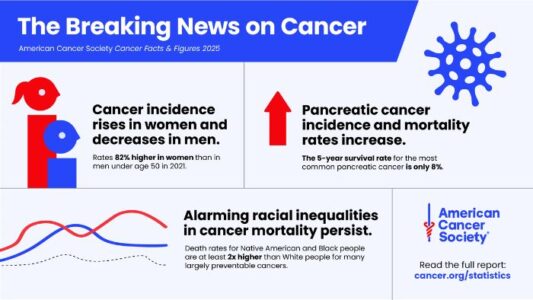
Graphic courtesy of the American Cancer Society.
The Fight Against Cancer: Gains and New Battles
Cancer mortality has dropped by an impressive 34% since 1991, saving an estimated 4.5 million lives. Yet, the report highlighted a troubling rise in cancer diagnoses among women and younger adults.
- Women and Cancer: Women under 65 now face a higher likelihood of cancer than men in the same age group. Among women under 50, the gap is stark—82% higher than men, compared to 51% in 2002.
- Pancreatic Cancer’s Grim Reality: Pancreatic cancer continues to rise. It’s now the third leading cause of cancer death, with survival rates stubbornly stuck at just 8%.
“Continued reductions in cancer mortality because of drops in smoking, better treatment, and earlier detection is certainly great news,” said Rebecca Siegel, senior scientific director of surveillance research at the American Cancer Society and lead author of the report. “However, this progress is tempered by rising incidence in young and middle-aged women, who are often the family caregivers, and a shifting cancer burden from men to women, harkening back to the early 1900s when cancer was more common in women.”
Clear Trends, Tough Realities
Dr. William Dahut, chief scientific officer at the American Cancer Society, outlined critical trends that demand action:
Lung Cancer and Gender: Women under 65 now have higher lung cancer rates than men, a shift tied to smoking habits and the rise of non-smoking-related lung cancer.
Age and Diagnosis: Though age remains the most significant risk factor, diagnoses among those over 65 are decreasing. Meanwhile, cancer is rising in adults aged 50-64 and those under 50.
Unequal Burdens
- The battle against cancer is far from equitable:
Racial Disparities: Black Americans face double the death rate of white Americans for prostate, stomach, and uterine cancers. For breast cancer, Black women are more likely to die despite lower incidence.
“Cancer care disparities remain a glaring problem,” said Dr. Ahmedin Jemal, ACS’s senior vice president of health equity science. “Ending these inequalities is critical to saving lives.”
A Path Forward
The ACS calls for individual and systemic action:
- Know your family history to guide screenings.
- Maintain a healthy diet and stay active.
- Avoid tobacco and limit alcohol consumption.
- Get vaccinated, especially against HPV.
At the same time, the ACS urges greater investment in equitable screening programs and research.
“This report underscores the need to increase investment in both cancer treatment and care, including equitable screening programs, especially for underserved groups of patients and survivors. Screening programs are a critical component of early detection, and expanding access to these services will save countless lives,” said Dr. Wayne A. I. Frederick, interim chief executive officer of the American Cancer Society and the American Cancer Society Cancer Action Network (ACS CAN).
Call to Action
Cancer will touch over 2 million lives in 2025, with more than 618,000 deaths projected and remains the second leading cause of death in America.
The overall message from the briefing is that more work needs to be done.
“As the largest non-government, non-profit funding source of cancer research in the U.S., we are currently financing more than $450 million in grants to scientists,” Dr. Frederick said.
“Our goal is to find answers that help save lives.”
These important findings are published today in CA: A Cancer Journal for Clinicians, alongside its consumer-friendly companion, Cancer Facts & Figures 2025, available on cancer.org.
Black History
100 Black Men of Chicago to Host 26th Annual Holiday Toy Drive on Dec. 14
CHICAGO DEFENDER — Now in its 26th year, the toy drive has become a marquee holiday event in Chicago, underscoring the 100 BMC’s commitment to uplifting those in need. A number of sponsors have joined the 100 BMC this year in supporting this important cause including title sponsor Enterprise Rental Car who have pledged to donate funds and 3,000 gifts; MolsonCoors, FedEx, Blue Cross Blue Shield of Illinois, BMOA, Wal-Mart and CIBC are among sponsors that are partnering to support to those most in need, furthering the organization’s mission to foster positive change within the community.

Staff Report | Chicago Defender
The 100 Black Men of Chicago, Inc., a non-profit organization, will host their 26th Annual Holiday Toy Drive on Saturday, Dec. 14, 2024, from 6 p.m. to 12 a.m. at the Hyatt Regency Grand Ballroom, located at 151 E. Wacker Drive, Chicago, IL 60601. Tickets are available via Ticket Falcon.
Each year, the 100 BMC’s Holiday Toy Drive provides necessities and gifts for women and children in homeless shelters and community centers across the Chicagoland area. This charitable initiative has collectively amassed over a million dollars in donations, resources, and gifts, with thousands of attendees gathering annually to support the event. More than thirty organizations have been supported in the past; this year’s organizations include WECAN, La Rabida Hospital, By the Hand Club for Kids, Moving Everest, and St. James Community Church.
Media personalities Michelle Relerford (NBC5) and Bionce Foxx (V103) are co-hosting the charity event, with a live performance by the House of Chi, a premier live music show. Attendees, who are to be at least 21 years of age, will be served complimentary food and beverages. Some of the organizations that have benefited in the past include Woodlawn East & Community Neighbor, Clara’s House, Grand Families, PLCCA, Lighthouse Youth Center, Near North Health Service Corporation, Pacific Garden Mission, Ronald McDonald Children House, South Suburban PADS, and Windows of Opportunity.
Now in its 26th year, the toy drive has become a marquee holiday event in Chicago, underscoring the 100 BMC’s commitment to uplifting those in need. Several sponsors have joined the 100 BMC this year in supporting this important cause, including title sponsor Enterprise Rental Car, who have pledged to donate funds and 3,000 gifts; MolsonCoors, FedEx, Blue Cross Blue Shield of Illinois, BMOA, Wal-Mart, and CIBC are among sponsors that are partnering to support to those most in need, furthering the organization’s mission to foster positive change within the community.
Funds raised to support this act of community kindness and engagement will be used to purchase additional gifts and personal items for homeless shelters and community outreach organizations.
The 100 Black Men of Chicago, Inc., established in 1994, is a not-for-profit organization whose mission is to help improve the quality of life and enhance educational opportunities for young students throughout the Greater Chicago area. Their mission is achieved through mentoring programs focusing on their “Four for the Future” community outreach initiative, which comprises education, health and wellness, and economic development.
2019 NNPA DTU Journalism Fellowship
Mayor Harold Washington’s Enduring Legacy Honored at Annual Wreath-Laying Ceremony
CHICAGO DEFENDER — Members of the Mayor Harold Washington Legacy Committee present a wreath at the former mayor’s gravesite at Oak Woods Cemetery (Photo Credit: Tacuma R. Roeback). On a cool, mostly overcast morning at Oak Woods Cemetery on Chicago’s South Side, friends, colleagues and admirers gathered to honor Harold Washington — Chicago’s first Black mayor — and his lasting and incalculable impact on the city and country.

By Tacuma Roeback, Managing Editor, Chicago Defender
On a cool, mostly overcast morning at Oak Woods Cemetery on Chicago’s South Side, friends, colleagues and admirers gathered to honor Harold Washington—Chicago’s first Black mayor—and his lasting and incalculable impact on the city and country.
The Mayor Harold Washington Legacy Committee hosted the annual wreath-laying ceremony, a tradition that brings together those who knew Washington, worked with him or were inspired by his leadership. Speakers shared memories of a man who led with dignity in the face of adversity and shaped Chicago’s political landscape.

Ald. Desmon Yancy (5th) gave remarks at the wreath-laying ceremony (Photo Credit: Tacuma R. Roeback).
“There was a sense of pride that ran through the Black community as we watched our dear Mayor Washington lead with dignity in the face of adversity,” Ald. Desmon Yancy (5th) recalled.
“Bold, Black and eloquent and usually the smartest person in the room, I believe that no one was better at linking Black liberation and politics than Harold.”
The Master of Ceremony for the event was Andrea Smith of the MHWLC.
Among the guest speakers were former State Rep. Mary E. Flowers, State Sen. Mattie Hunter, Rev. Dr. Janette Wilson, Dr. Barbara J. Norman, and 12-year-old King Hutchinson, a student at Burnside Scholastic Academy. Also present were former Ald. David H. Moore (17th) and former Ald. Dorothy Wright Tillman, both of whom had worked with Washington or were deeply influenced by his leadership.

Devorah Crable, one of the MHWLC’s founding members at the wreath-laying ceremony (Photo Credit: Tacuma R. Roeback).
Born in Chicago in 1922, Washington’s journey from DuSable High School to the U.S. Air Force and later to Roosevelt University and Northwestern University’s School of Law set the foundation for his political career.
That career began in earnest when he served in the Illinois State House and Senate before being elected to Congress in 1981.
In 1983, Washington was elected the 42nd mayor of Chicago, a historic achievement that would change local politics. He was reelected in 1987 before his sudden death later that year.

Rev. Dr. Janette Wilson delivers her remarks at the wreath-laying ceremony (Photo Credit: Tacuma R. Roeback).
Monday’s wreath-laying ceremony marked 37 years since Washington’s death. His passing left a gap in local and national politics, and still lingers today, particularly in the leadership of figures like Barack Obama, who often credit Washington for helping to shape their progressive political views.
Decades before diversity, equity and inclusion became a thing, Washington imparted that approach during his administration.

Dr. Barbara J. Norman, expounding on the legacy of Mayor Washington with Andrea Smith (Photo Credit: Tacuma R. Roeback).
“Mayor Washington implemented bold and progressive measures to ensure that all members of Chicago society, women in particular, were provided a fair and equitable opportunity to be elected into office and occupy high-level positions in all areas of government,” said Devorah Crable, one of the MHWLC’s founding members.

12-year-old King Hutchinson, a student at Burnside Scholastic Academy, delivers remarks at the wreath-laying ceremony (Photo Credit: Tacuma R. Roeback).
The wreath-laying ceremony also sparked conversations about bringing to bear Washington’s legacy to impact the future of local and national politics. Hutchinson, born after Washington’s time as mayor, spoke to the next generation’s role in carrying his legacy forward.

Members of Mayor Harold Washington’s police detail carry a wreath to be placed on his grave Wednesday at Oak Woods Cemetery on Monday (Photo Credit: Tacuma R. Roeback).
“I wasn’t born when Harold Washington was elected mayor, but I know that he made history as the first African American mayor of Chicago. I wasn’t born when Barack Obama became the first African American president of the United States, but I’m aware that Mayor Washington’s leadership paved the way for that historic moment,” said Hutchinson.
Members of the former mayor’s security detail presented the wreath at the stately, gray stone mausoleum that is Washington’s final resting place, accompanied by the sound of bugle taps. As the sun broke through the clouds, attendees gathered for photos, reflecting on Washington’s legacy and the work still to be done.

Photo Credit: Tacuma R. Roeback
State Sen. Hunter unveiled plans for a new statue of Harold Washington to be placed at the Illinois State Capitol in Springfield. Rev. Dr. Wilson reminded the crowd that honoring Washington’s memory was not enough.
“We’re going to be holding elected officials accountable in 2025, and we’re going to take back the Congress and the Senate in 2026,” she said. Of the wreath-laying ceremony, Rev. Dr. Wilson added, “It’s not just to celebrate his memory, we must remember to embrace his legacy.”

Photo Credit: Tacuma R. Roeback.
Ben Jealous
COMMENTARY: The Story of the Orcas and the Salmon, on the Endangered Species Act’s 50th Birthday
CHICAGO DEFENDER — Significantly, many of the orcas captured – including the famed Shamu – came from a small population of orcas whose trusting nature made them easy to catch. Southern Resident orcas, which historically spent the summer and fall months in Washington’s Puget Sound, are down to only 75 left in existence. Designated as “endangered” as of 2005, the Southern Residents remain one of the most critically endangered marine mammals in the United States.
By Ben Jealous
Thanks to 20th century aquariums and marine theme parks, orcas – also known as killer whales – are the most iconic whales in America.
When the public learned their captivity involved torture, orca shows disappeared from those parks, as they should have. Now there are signs that certain groups of orcas could disappear entirely.
Significantly, many of the orcas captured – including the famed Shamu – came from a small population of orcas whose trusting nature made them easy to catch. Southern Resident orcas, which historically spent the summer and fall months in Washington’s Puget Sound, are down to only 75 left in existence. Designated as “endangered” as of 2005, the Southern Residents remain one of the most critically endangered marine mammals in the United States.
But it’s a different human activity that is now making it hard for these creatures to survive.
Dams that were constructed decades ago along the Columbia and Snake Rivers have greatly disrupted the populations of sockeye salmon – also now listed as an endangered species – that the Southern Residents depend on as a primary food source.
The impact of the loss of salmon has been devastating not only to the orcas, but to the Indigenous peoples of the Columbia River Basin whose culture and livelihoods were closely tied to the fish, and to ecosystems from Idaho to the Pacific Ocean.
Four of the dams on the Lower Snake River are among the most harmful to the salmon. The removal – or breaching – of the Ice Harbor, Lower Monumental, Little Goose, and Lower Granite dams could bring back the fish and, in turn, give the Southern Resident orcas their best shot at a thriving future and growing numbers.
One of the fiercest leaders on Capitol Hill in the fight to get rid of these dams is Republican Representative Mike Simpson of Idaho. For nearly three years, Simpson has been pushing his Columbia Basin Initiative as a framework for salmon recovery and the restoration of the Lower Snake River to a natural, free-flowing river.
In today’s hyper-partisan political environment, people might be surprised that a Republican is leading the charge to protect endangered wildlife. But 50 years ago this month, it was a Republican president, Richard Nixon, who signed the Endangered Species Act (ESA).
Both Rep. Simpson’s tenacity and the ESA’s 50th anniversary serve as reminders that environmental stewardship and conservation wasn’t always assumed to be a partisan issue. In 1973, the US Senate passed the ESA unanimously; the House passed it by a vote of 355-4. Can you imagine any piece of legislation getting near-universal bipartisan support in Congress today?
When he signed the bill into law, President Nixon said the law would preserve an “irreplaceable part of our national heritage – threatened wildlife.” Those words have proven prescient.
It’s estimated that, in its first 50 years, the Endangered Species Act has saved 99 percent of all the species listed as endangered under the Act from permanent extinction. These include the bald eagle – our national symbol – as well as the humpback whale, the grizzly bear, and the American alligator.
And it’s likely a testament to the effectiveness of the ESA that the Southern Resident orcas are still with us too. But it’s going to take both the strength of the ESA and shutting down the dams to save these whales.
Many of us might recall that in 2018 a female member of the Southern Resident clan made national news after her newborn calf died. The orca, known as J35, spent 17 days pushing the body of her baby through the water along a 1,000-mile stretch off the coast of British Columbia. It was a clear act of mourning – known behavior of orcas. But the length of time the mother pushed her calf and the dramatic nature of the display almost seemed intentionally aimed at getting the attention of humans – which it did.
It’s no wonder that people – myself included – feel an intense connection to these animals. The Lummi Nation, who has lived and fished alongside Southern Residents since time immemorial, call them “qwe lhol mechen”, which roughly translates to “our relations beneath the waves.” And a fish, that people love to eat but might not recognize as important to the survival of other lifeforms, is the key to saving this community of orcas, among the most majestic and intelligent creatures in all of God’s creation.
The story of the orcas and the salmon shows the interconnectivity of species in our natural ecosystems. It further illustrates the dire need to combat the extinction crisis and protect endangered species. And it shows the importance of protecting laws like the Endangered Species Act and passing more of them – as well as shutting down the damn dams.
Ben Jealous is the Executive Director of the Sierra Club and a Professor of Practice at the University of Pennsylvania.
The post The Story of the Orcas and the Salmon, on the Endangered Species Act’s 50th Birthday appeared first on Chicago Defender.

San Diego’s State Workers Demand Better Pay in Major Strike

Unscripted Sports Talk: Featuring Local Media Stars! #shorts

Par 365: Making Indoor Golf More Accessible in Minnesota #shorts

Honoring Clem Haskins: A Basketball Legend’s Legacy at UMN #shorts
NFN live presents Beyond IWDM 50 Podcast
The Hidden Cost of Insurance Loyalty

Retrospectro Talks Viral Videos, Lean Squad, Music & More | Interview

CBCF’s ALC 55 Recap | September 2026

The Washington Informer Celebrates 62 Years | Recap

Heated Seats & Sliding Window: Ultimate Truck Comfort #shorts

OP-ED: Haiti TPS: Have We Lost Sense of Humanity?

Remembering Chauncey Bailey as Student Journalists Face Threats to Truth-Telling

All Skinfolk Ain’t Kinfolk

Poll: Becerra Widens His Lead Over Hilton; Californians Split on Wealth Tax

Rulings Leave Questions Lingering in Nolan Wells Case

Latinas Deserve Equal Pay. Unions Help Make It Happen.

Zakiya Jendayi Arrested, Locked Out of Home by Sheriff’s Deputies

Why Black Artists Struggle to Sell Tours

COMMENTARY: The Audacity of Joyce Beatty

A $2.1 Trillion Wellness Industry Never Built a Daily Practice for Black Children. So This Atlanta Family Did.
San Diego’s State Workers Demand Better Pay in Major Strike
Unscripted Sports Talk: Featuring Local Media Stars! #shorts
Par 365: Making Indoor Golf More Accessible in Minnesota #shorts
Honoring Clem Haskins: A Basketball Legend’s Legacy at UMN #shorts
Retrospectro Talks Viral Videos, Lean Squad, Music & More | Interview
CBCF’s ALC 55 Recap | September 2026
The Washington Informer Celebrates 62 Years | Recap
Heated Seats & Sliding Window: Ultimate Truck Comfort #shorts

Test Subaru’s 11.6-Inch Screen in REAL Daylight #shorts

EV Range Anxiety? Your Daily Commute Needs Just One Overnight Charge #shorts
-

 Black History1 week ago
OP-ED: The Black Church Writes AI’s Next Chapter
-

 Featured6 days ago
Tamiko Armstead | 2026 Lifetime Achiever in Education
-
 Black History1 week ago
Practitioners of African Traditional Spirituality Offer Ancestral Reverence Ritual Oct. 31
-
 Art1 week ago
Kickstarter CEO Everette Taylor Shares Tips on Creating and Growing a Business
-

 Black History1 week ago
Columbus’s Oldest Businesses Still Open: 10 That Have Lasted 75+ Years
-
 Black History1 week ago
COMMENTARY: BIG MAMA SAID: Don’t Throw Away the Gift Just Because It Came Wrapped Wrong
