
World
France Deploys Riot Police to Bolster Calais Security


A car of the security society of Eurotunnel follows a group of migrants, in Calais, northern France, Wednesday, July 29, 2015. About 2,100 migrants tried to storm the area surrounding the Eurotunnel early Tuesday before being repelled by police, an official in the northern French port of Calais said. (AP Photo/Thibault Camus)
ELAINE GANLEY, Associated Press
LORI HINNANT, Associated Press
CALAIS, France (AP) — France deployed more than 100 riot police to Calais on Wednesday to bolster security as hundreds of migrants have been trying night after night to rush the railway tunnel leading to England — at times with fatal consequences.
One migrant was crushed to death and another was critically injured after being electrocuted in Paris amid tens of thousands of attempts to breach security that have fueled a growing sense of crisis on the Channel this year. Undeterred, dozens of men and women kept coming as night fell, some hiding their faces beneath bandannas as they walked single file to sneak over a bent fence along the tracks.
The 50-kilometer (30-mile) Channel Tunnel, often referred to as the Chunnel, is used by passenger trains and freight services to connect France and Britain.
Migrants pressing northward toward both countries are fleeing war, dictatorship and poverty in Africa and the Middle East. They tend to spend as little time as possible in their southern European landing spots, like Italy, where two ships unloaded on Wednesday, one carrying 435 passengers and 14 bodies and another with 692 migrants.
British officials have increasingly sounded the alarm over a potential influx of foreigners. French officials, meanwhile, are concerned about the roughly 3,000 migrants in encampments called “the jungle” by the inhabitants of the largely lawless sites scattered haphazardly in the area.
It’s not clear how many ever reach Britain, although at least a few succeeded this week in stowing aboard trains to make the 35-minute trip. Others were led away in the darkness, including a small group retrieved from a ditch by a single watchman wielding little more than a flashlight.
France dispatched 120 riot police immediately to Calais to bolster security that British authorities complain has been lax. France’s government, meanwhile, called on Eurotunnel, the company that operates the tunnel, to step up its protection of the sensitive site.
By Wednesday night, a police helicopter hovered overhead and gendarmes in flak jackets turned back about two dozen.
Those caught on the French side are generally immediately freed to return to the camps and try again. Those caught on the in British side may be detained while their applications for asylum are considered. But many stay hidden aboard trucks as they roll off the trains until they stop for fuel, then hop off and vanish.
“Smugglers sell migrants the notion that Britain is the only El Dorado for a better life,” said Emmanuel Agrius, the deputy mayor of Calais.
Eurotunnel defended its efforts, saying Wednesday it had blocked more than 37,000 attempts since January. Nine people have died trying since June, including the man crushed by a truck. An Egyptian trying to leap from a train roof and board the Eurostar at Paris’ Gare du Nord train station was in critical condition after being electrocuted.
There were wildly conflicting totals of people involved in Wednesday’s rush for the tunnel, ranging from 150 to as many as 1,200. But French authorities and the company agreed there had been about 2,000 attempts on each of two successive nights. British Home Secretary Theresa May said “a number” of migrants made it through overnight.
Attempts have been increasing exponentially as has the sense of crisis in recent weeks, spurred by new barriers around the Eurotunnel site, lack of access to the Calais port, labor strife that turned the rails into protest sites for striking workers, and an influx of desperate migrants.
“This exceptional migrant situation has dramatic human consequences,” French Interior Minister Bernard Cazeneuve said. “Calais is a mirror of conflicts tearing up regions of the world.”
About 25 migrants were seen getting off a public bus in Calais on Wednesday with a police officer who left them by the side of the road. Several said they were returning from a night of trying to cross the Channel.
“(We) come from train here and tomorrow, inshallah, try again in the train,” said an Eritrean, using the Arabic expression for “God willing,” who would not give his name as he planned further attempts to reach England.
The man killed overnight, believed to be a Sudanese man in his mid-20s, was crushed by a truck as he tried to stow away, Gilles Debove, a police union official told The Associated Press.
The delays caused mayhem for truckers on both sides of the Channel. Cargo trucks were backed up overnight in Calais for several kilometers (miles) leading to the loading zone, some of them stuck on a highway overpass above one of the many makeshift migrant camps. British police, meanwhile, turned parts of a highway near the British end of the tunnel into a giant parking lot. Passenger service was also delayed.
Eurotunnel called for help from both the French and British governments to protect the site and its 23-kilometer (14-mile) perimeter, which is far more dangerous for migrants than the now locked-down port had been, with small hills, basins of water and electrified shuttles for the trucks that can strike stowaways.
“It’s become a phenomenon which is beyond our means,” Eurotunnel spokesman John Keefe said. “We’re just a small transport company operating in a little corner of Europe.”
Keefe said attacks on the fences are organized.
“This is very clearly criminal gangs or human traffickers who coordinate attacks on the fences,” he said.
British Prime Minister David Cameron, speaking during his visit to Singapore, described the crisis as “very concerning,” but that there was no point in “pointing fingers of blame.” Other British officials blamed the government in France, where officials said Eurotunnel also needed to do more.
The British government has agreed to provide an extra 7 million pounds ($11 million) of funding for measures to improve security at Calais. Until Wednesday, 60 French police covered the site, along with Eurotunnel security crews. The new arrivals, Debove said, would be a “burst of oxygen” to protecting the site, but he expected attempts to continue.
The Conservative Party lawmaker for Folkestone in southern England, Damian Collins, said French authorities needed to better secure their side.
“They have allowed people willingly to break into the Channel Tunnel site. I can’t believe they would be that lax in protecting an airport or another sensitive facility,” Collins said. “But that has happened constantly throughout the summer.”
Many of the migrants disembarking in Italy on Wednesday were families, said Giovanna De Benedetto, spokeswoman for Save the Children in the port of Messina.
“Most of them (are) Syrians, who are traveling with their families so they have escaped from four years of conflict, children who simply want to play, to have a future, a dignified life in Europe as millions of children their age have.”
May, the home secretary, said Britain was pressing for a bigger fence around the Calais railhead to stop people reaching the French end of the tunnel. She said Britain and France would work together to return people to their home countries and crack down on smugglers.
Ultimately, May added, “the answer to this problem is to ensure we are reducing the number of migrants who are trying to come from Africa across into Europe, that we break that link between making that dangerous journey, as it often is for people, and coming to settle in Europe.”
___
Lori Hinnant reported from Paris. Maggy Donaldson in Paris, Chris Den Hond in Calais, Danica Kirka and Jill Lawless in London, and Patricia Thomas in Messina, Italy, contributed.
Copyright 2015 The Associated Press. All rights reserved. This material may not be published, broadcast, rewritten or redistributed.








Black Press
Cuban President Vows to Defend the Country Against US Invasion
NEW YORK CARIB NEWS — The remarks come amid heightened rhetoric from U.S. President Donald Trump, whose administration has increased pressure on the communist-led nation. Trump recently suggested that a “takeover” of Cuba, potentially unfriendly, remains a possibility, while senior officials, including Secretary of State Marco Rubio, have called for political change on the island.


New York Carib News
Cuban President Miguel Díaz-Canel has declared that the island will defend itself against any potential military action by the United States, warning of serious regional consequences if tensions escalate further.
In an interview conducted in Havana with NBC’s Kristen Welker, Díaz-Canel emphasized that there is “no justification” for U.S. aggression against Cuba, while stressing that any invasion would provoke resistance. “If that happens, there will be fighting, and there will be a struggle, and we will defend ourselves,” he said, underscoring Cuba’s readiness to protect its sovereignty.
The remarks come amid heightened rhetoric from U.S. President Donald Trump, whose administration has increased pressure on the communist-led nation. Trump recently suggested that a “takeover” of Cuba, potentially unfriendly, remains a possibility, while senior officials, including Secretary of State Marco Rubio, have called for political change on the island.
Despite the rising tensions, Díaz-Canel insisted that Cuba’s position remains defensive, not aggressive. He reiterated a willingness to engage in dialogue but rejected U.S. demands related to political reforms, including multiparty elections and the release of individuals described internationally as political prisoners. Cuban authorities, however, deny holding such prisoners and argue that these claims are part of efforts to discredit the revolution.
The decades-old U.S. embargo remains a central point of contention. First imposed in 1962 following the Cuban Revolution led by Fidel Castro, the policy continues to shape Cuba’s economic challenges, including fuel shortages, power outages, and limited access to essential goods. Díaz-Canel described the embargo as “cruel” and a major factor behind the country’s ongoing hardships.
At the same time, the Cuban leader signaled openness to economic engagement, including potential foreign investment in the island’s energy sector, an area currently restricted for U.S. companies under existing sanctions laws.
While both Washington and Havana have acknowledged preliminary talks, deep mistrust persists. Díaz-Canel pointed to past U.S. actions in other regions as a source of skepticism, warning that negotiations conducted alongside military pressure undermine confidence.
As geopolitical tensions continue to rise, Cuba’s leadership is positioning itself firmly against external intervention while leaving the door open, albeit cautiously, to diplomatic engagement.
Black Press
Cuba: No Negotiation with US on the President or Political System
NEW YORK CARIB NEWS — While Havana confirmed last week that talks with Washington are underway, Cuban President Miguel Díaz-Canel has struck an increasingly defiant tone. Addressing a group of international activists delivering humanitarian aid, he warned of potential escalation, stating, “we’re not just crossing our arms… there could be aggression against Cuba.”

New York Carib News
The government of Cuba has firmly rejected any suggestion that its political leadership or governing system could be subject to negotiation in ongoing discussions with the United States, as tensions between the two nations intensify.
Deputy Foreign Minister Carlos Fernandez de Cossio delivered the government’s position unequivocally during a press conference on Friday, stating, “I can categorically confirm that the political system of Cuba is not up for negotiation, and of course neither the president nor the position of any official in Cuba is subject to negotiation with the United States.”
His remarks follow reports that the administration of U.S. President Donald J. Trump was exploring proposals that could involve removing Cuban President Miguel Díaz-Canel as part of a broader diplomatic arrangement.
The developments come amid a deepening economic crisis in Cuba, exacerbated by U.S. restrictions on oil supplies that have triggered widespread energy shortages and hardship across the island. Despite these pressures, Cuban officials have maintained that sovereignty remains non-negotiable.
While Havana confirmed last week that talks with Washington are underway, Díaz-Canel has struck an increasingly defiant tone. Addressing a group of international activists delivering humanitarian aid, he warned of potential escalation, stating, “We’re not just crossing our arms… there could be aggression against Cuba.”
He reinforced that stance in a separate message, declaring, “Any external aggressor will face an impenetrable resistance.”
Media reports in the United States have suggested that Washington is considering a deal that could ease trade restrictions while facilitating political change in Havana. However, Cuban officials have dismissed such proposals as interference in domestic affairs.
Historically, Cuban leadership has maintained that dialogue with the United States is only acceptable under conditions of equality and mutual respect. That position has remained consistent even as economic pressures mount and international aid efforts expand to support the island’s struggling population.
De Cossio acknowledged that there are areas of mutual interest between the two countries, including trade and longstanding financial claims. However, he declined to provide specifics about the timing or structure of current discussions.
The standoff underscores a broader geopolitical tension, as both nations navigate a complex mix of diplomacy, economic pressure, and ideological differences. With Cuba facing one of its most severe crises in decades, the outcome of these talks could have far-reaching implications—not only for bilateral relations but for stability across the wider Caribbean region.
Black Press
COMMENTARY: Regime Change and The Roots Of U.S. Hostility With Iran
SAN DIEGO VOICE & VIEWPOINT — Those who are serious in their study of history are clear that the Cold War was a propaganda campaign to position communism and socialism as a “boogeyman” in order to justify Americans’ desire for geopolitical domination of the world. Additionally, Mosaddegh’s policy of nationalizing the oil wealth of the country was disruptive to Western oil companies that wanted unfettered access to Iran’s oil reserves.
By Dayvon Love | San Diego Voice and Viewpoint
Director of Public Policy, Leaders of a Beautiful Struggle
In 1953, the United States and other Western forces collaborated to overthrow the democratically elected president, Mohammad Mosaddegh, of Iran.
The stated rationale for pursuing regime change was based on the Cold War logic that Mosaddegh was aligning with an evil communist sphere of influence anchored by the former Union of Soviet Socialist Republics (USSR/Russia).
Those who are serious in their study of history are clear that the Cold War was a propaganda campaign to position communism and socialism as a “boogeyman” in order to justify Americans’ desire for geopolitical domination of the world. Additionally, Mosaddegh’s policy of nationalizing the oil wealth of the country was disruptive to Western oil companies that wanted unfettered access to Iran’s oil reserves.
After the overthrow of Mosaddegh, the United States installed the Shah of Iran to lead the country, which was a brutal, autocratic regime that lasted for a couple of decades. The 1979 revolution in Iran that resulted in the overthrow of the Shah and the taking of American hostages is often narrated as an act of anti-American aggression instead of a response to the U.S. imposition of a brutal regime on the people of Iran. In other words, the 1979 Iranian revolution and the anti-American sentiments expressed over the years by Iranian leadership is a response to U.S. imperialist aggression toward the sovereignty of the Iranian people and the larger Muslim world.
U.S. Secretary of State Marco Rubio gave a speech a few weeks ago in Munich, Germany, which provides a clear underlying logic for U.S. military strikes against Iran. He said:
“…For five centuries, before the end of the Second World War, the West had been expanding – its missionaries, its pilgrims, its soldiers, its explorers pouring out from its shores to cross oceans, settle new continents, build vast empires extending out across the globe,” Rubio said. “But in 1945, for the first time since the age of Columbus, it was contracting. Europe was in ruins. Half of it lived behind an Iron Curtain and the rest looked like it would soon follow. The great Western empires had entered into terminal decline, accelerated by godless communist revolutions and by anti-colonial uprisings that would transform the world and drape the red hammer and sickle across vast swaths of the map in the years to come … .”
The luxuries and quality of life that Western civilization enjoys are based on the colonial relationship it has with the so-called Third World, which is largely non-White and poor. People who are self-respecting will rise up to challenge the social order that causes its own degradation.
Additionally, in a November 1979 interview with journalist Mike Wallace, the Ayatollah Khomeini (leader of Iran) committed to (and delivered on this commitment) releasing Black and women hostages. His rationale for releasing Black hostages was that we are an oppressed group in America and not responsible for the aggression toward their people. This is a recognition of the global system of domination that bolsters White political and economic domination of the world.
It is also important to acknowledge the role that Israel has played in encouraging U.S. military aggression toward Iran.
Israel considers itself to be a cultural descendant of Western civilization. The state of Israel serves as a proxy for maintaining U.S. geopolitical domination of the muslim world and the Palestinian people have been casualties of U.S. maintenance and support of the settler colonial project of the state of Israel. Israel has been urging the U.S. to take a more aggressive stance toward Iran to advance its own military domination of the region.
The current administration’s capitulation to Israeli political leadership’s urging to enact regime change in Iran is a further acknowledgement of how important Israel is as an instrument of American imperialism. This current military strikes against Iran by the Trump administration is another example of the White nationalist political agenda of the Republican Party.
What must be acknowledged is that the military-industrial complex that funds both political parties must be directly confronted and ultimately dismantled. America currently invests $1 trillion a year of our tax dollars to maintain America’s role as the policeman of the world.
Democrats in the upcoming midterms need to be forced to engage in a radical change in American foreign policy that does not legitimize military aggression toward people defending their sovereignty. Democrats need to be forced to pursue a policy that divests from the $1 trillion military budget and puts those resources in the hands of the masses of people in this society who have been victimized by the global system of White supremacy.
Dayvon Love serves as director of public policy for Leaders of a Beautiful Struggle (LBS), a Baltimore-based grassroots think-tank.
Black History
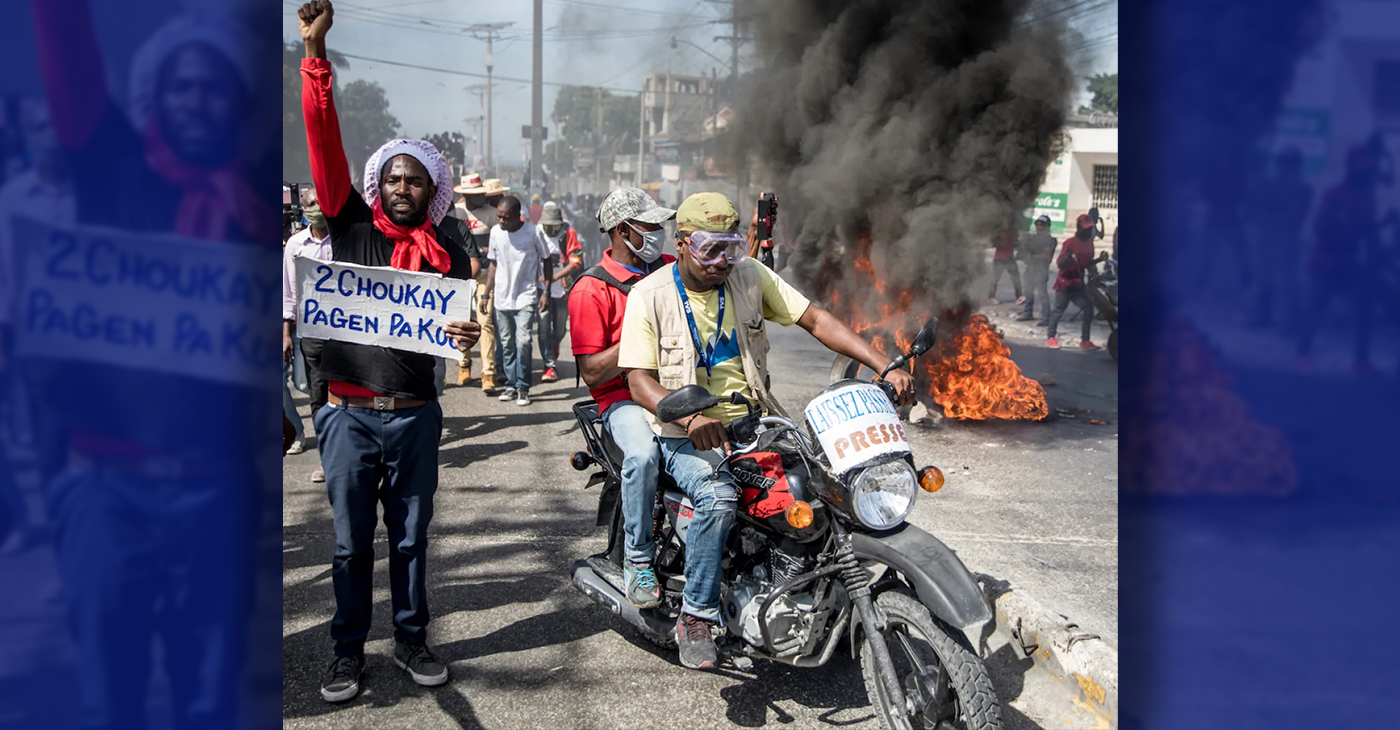
Haiti – US Warns It Will Act if Political Moves Destabilize the Country
NEW YORK CARIB NEWS — In a statement posted on X late Wednesday, the US Embassy in Haiti said Washington would view any attempt to alter the current governing arrangement as a serious threat to national stability, particularly if such moves benefit criminal gangs.
New York Carib News
The United States has issued a firm warning to Haiti’s Transitional Presidential Council, cautioning against any political actions that could further destabilize the country as international pressure mounts for long-delayed elections.
In a statement posted on X late Wednesday, the U.S. Embassy in Haiti said Washington would view any attempt to alter the current governing arrangement as a serious threat to national stability, particularly if such moves benefit criminal gangs.
“The United States would consider that any person who supports such a destabilizing initiative, which favors the gangs, would be acting against the interests of the United States, the region, and the Haitian people, and will take appropriate measures accordingly,” the embassy stated.
The U.S. warned that any such maneuver would undermine efforts to establish a minimum level of security and stability in Haiti, where gang violence continues to escalate, and economic hardship is deepening.
The statement comes amid reports of internal divisions within the Transitional Presidential Council, with some members reportedly at odds with Prime Minister Alix Didier Fils Aimé. The precise cause of the disagreement remains unclear, but the council met behind closed doors earlier on Wednesday.
A spokesperson for the prime minister’s office said he could not comment on the situation, while the council’s seven voting members did not respond to requests for comment.
Council chairman Laurent Saint Cyr later issued a statement opposing any effort to weaken government stability at this critical juncture. He emphasized that Haiti is approaching major institutional deadlines, including February 7, when the transitional council is provisionally scheduled to step down.
“As major institutional deadlines for the nation approach, any initiative likely to fuel instability, confusion, or a breakdown of trust carries serious risks for the country,” Saint Cyr said.
He warned that unilateral decisions or short sighted political calculations could jeopardize the continuity of the state and further burden an already suffering population.
“Haiti cannot afford to make unilateral decisions or engage in short sighted political calculations that would compromise the stability and continuity of the state, as well as the well being of the already sorely tested population,” he added.
Haiti remains under intense international scrutiny as calls grow for elections to be held for the first time in nearly a decade, even as persistent violence and political uncertainty continue to complicate the path toward democratic governance.
Black Press
COMMENTARY: Structural Inequality Undermines Jamaica’s Schools
THE AFRO — Many educational institutions remain under-resourced, lacking adequate infrastructure, teaching materials and technological support. This resource gap disproportionately impacts students from marginalized communities as well as schools located in marginalized areas, thus perpetuating the cycle of inequality.
By Wayne Campbell, The AFRO
Despite strong teacher appraisals, Jamaica’s education system remains crippled by deep structural failures. According to the Jamaica Teachers’ Association, 93 percent of the nation’s teachers are rated satisfactory or above in their appraisals, yet, Jamaica’s education system continues to face significant challenges.
In many societies, classroom teachers are not accorded the respect they deserve within the education system. Unfortunately, this pervasive culture of disrespect often extends to other stakeholders. Ultimately, students’ outcomes suffer as a result of an education system steeped in the legacies of colonialism, with a central axis of underperformance driven by an over-reliance on external educational practices. The problems in Jamaica’s education system are rooted in deep structural issues: under-resourced schools, unequal access, poor working conditions, ineffective oversight mechanisms such as the school boards, weak and biased school leadership, the absence of fair and balanced opportunities for teacher promotion, inadequate parental guidance, curriculum reform, low literacy and numeracy outcomes. Unfortunately, teacher appraisal continues to be used as a masking agent for the systemic challenges in the education system.
Resource inequalities
Many educational institutions remain under-resourced, lacking adequate infrastructure, teaching materials and technological support. This resource gap disproportionately impacts students from marginalized communities as well as schools located in marginalized areas, thus perpetuating the cycle of inequality. This area of concern ultimately fosters a culture of unequal access. In a recent interview, Linvern Wright, president of the Jamaica Association of Principals of Secondary Schools noted that high school administrators continue to struggle to operate on an annual allocation of approximately $17,000 per student. He pointed out that this figure has remained unchanged for nearly a decade. Undoubtedly, this one size approach regarding funding cannot adequately address the unique circumstances of each school and must be revisited.
Unequal access
The United Nations states that despite modest improvements in literacy, hundreds of millions of people remain illiterate and women are disproportionately affected. Access to education remains uneven across the region and socioeconomic groups. Disturbing regional disparities exist in early childhood development, and sub-Saharan Africa is at a particular disadvantage. Sadly, schools in rural areas tend to struggle more with teacher shortages in the STEM (science, technology, engineering and mathematics) areas. On the other hand, urban schools are often overcrowded where unequal access is still a problem.
Weak oversight mechanisms
Oversight bodies, such as school boards, frequently lack the human capacity, skills and impartiality to enforce accountability within the education system. This area of concern is both intentional and by design. As a result, ineffective governance contributes greatly to weak institutional performance and serves as a barrier to reform.
Leadership deficits
Too often we discount the role and impact of school leadership. Sadly, many of our schools suffer from a lack of transformational, instructional, ethical and compassionate leadership.
School leadership is often characterized by biased and weak management practices. This culture of leadership deficits undermines teacher morale, reduces trust in the system, negatively impacts students’ outcomes and compromises the implementation of effective educational strategies.
Parental involvement
Parental guidance and engagement remains inconsistent. Education is a partnership and without the strong support of parents and guardians students will face additional barriers to achieving mastery and proficiency in their academic pursuits. Too many parents have abandoned their roles in the hope that the school will fill the void. Global education systems must revisit how to re-engage parents so as to create a culture of stakeholder involvement which is necessary to predict a better educational outcome for all.
Curriculum implementation leadership
Carmel Roofe, professor of curriculum studies at the University of the West Indies has repeatedly called for reform regarding curriculum implementation in the education system. She stressed that those who are tasked to lead the process of curriculum implementation must demonstrate a number of key transformative curriculum skills. Among these are: knowledge of curriculum stages and models, intimate knowledge of the people, place and orality of specific context where the new curriculum is being implemented, basic research skills especially as it relates to previously implemented curricula and knowledgeable implementation leadership and practices.
Professor Roofe argues that orality is central to the lived curriculum. She added that Caribbean orality speaks to the everyday knowledge, language, actions and the Caribbean’s geopolitical context. Professor Roofe is of the view that curriculum implementation leadership underpinned by orality will encourage education stakeholders to move away from a one-size fit approach in implementing curriculum reform. It is quite evident that school leadership must be intentional and strategic in their selection regarding who is tasked to carry out the process of curriculum implementation in our schools.
Society should not be alarmed that curriculum implementation leadership is problematic across all layers of the education system. This duality concerning Jamaica’s education system is also transferred to the Curriculum Implementation Leadership. Those who are tasked with implementing curriculum leadership must be passionate to begin with. Those individuals must also be intimately familiar with the National Standards Curriculum (NSC) as well as other alternative pathways. Regrettably, in a significant number of times curriculum implementation leadership is grounded in a culture of preferential treatment. In order for curriculum implementation leadership to be successful, the stakeholders must share the collective vision and purpose.
Misuse of teacher appraisal
Teacher appraisal mechanisms are often punitive and subjective. Such mechanisms often are used as superficial solutions, masking deeper structural problems. The continuation along this pathway is problematic and does more harm to the human resources in the education system.
The way forward
Addressing Jamaica’s educational challenges requires political will as well as comprehensive reform that goes beyond teacher appraisal. Undoubtedly, there is a leadership crisis in the education system. So while society celebrates the achievements of a significant number of our students, we are mindful of the inequities within the education system. Professor Orlando Patterson, chair of the Jamaica Education Transformation Commission (JETC), characterized the Jamaican education system through a fundamental duality: a deep-seated structural divide between a high-performing elite tier and a vastly under-resourced public tier. All hands are required to truly build an inclusive education system.
Education remains a critical enabler for sustainable development. Inclusive, equitable and quality education for all speaks to the United Nations Sustainable Development Goal #4, and as such governments must put in more effort to attain this. Without a doubt, more investments in resources, stronger governance mechanisms, leadership development including curriculum implementation leadership and parental involvement are essential ingredients to improving literacy and numeracy outcomes.
The opinions expressed in this commentary are those of the writer and not necessarily those of the AFRO or the National Newspaper Publishers Association.
Black Press
Trump Says He Is Saving Nigerian Christians. History Knows This Story Well.
NNPA NEWSWIRE — From 2020 through 2025, more Muslims than Christians were killed in religiously targeted attacks. Armed groups such as Boko Haram and ISIS–West Africa primarily kill Muslims who resist them, alongside Christians and others. The deadliest Christian losses have largely occurred in Nigeria’s Middle Belt, not in the northern regions struck by U.S. bombs.

By Stacy M. Brown
NNPA Newswire Senior National Correspondent
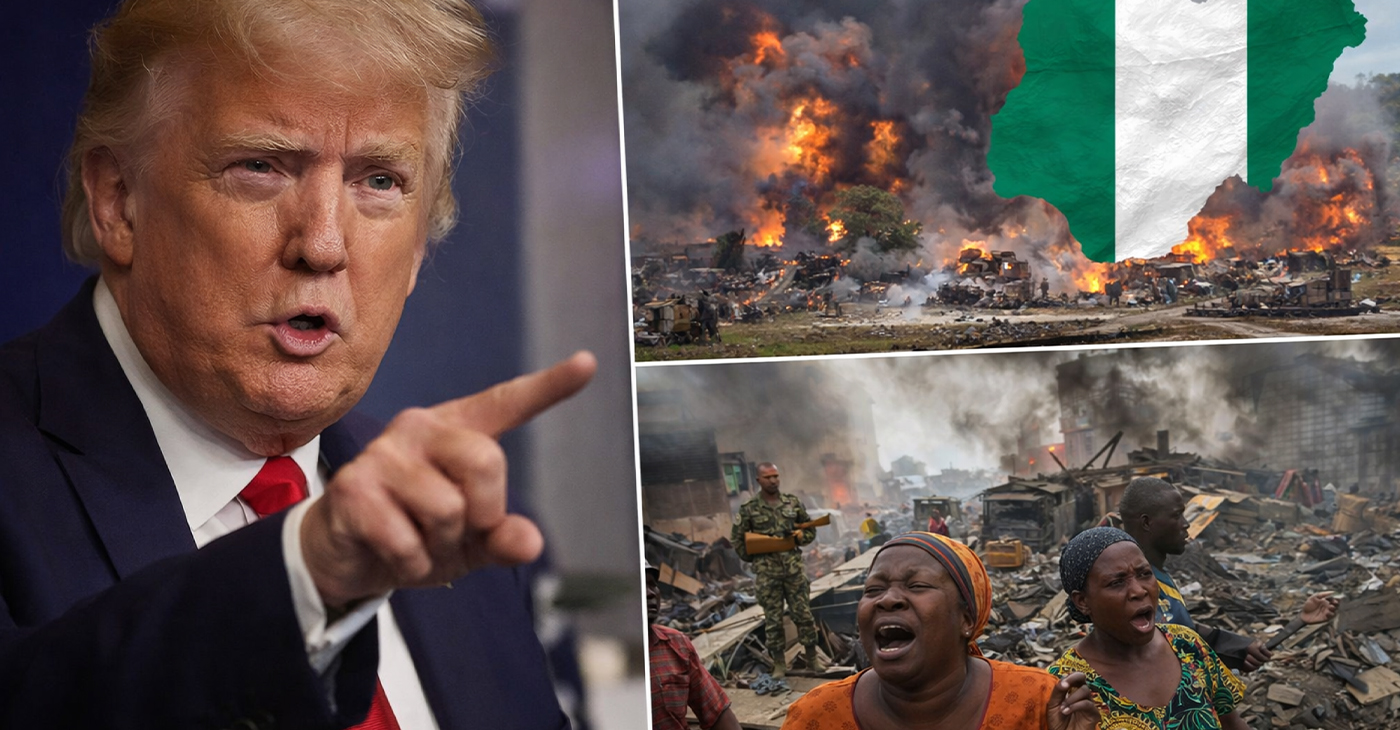
Donald Trump says U.S. bombs fell on Nigeria to protect Christians. That explanation does not survive memory, geography, or fact.
On Christmas Day, American missiles struck northern Nigeria. The administration said the targets were terrorists killing Christians. But the same administration had already stripped away humanitarian aid, dismantled U.S. Agency for International Development (USAID) programs, shut asylum doors, and blocked visas for Nigerians fleeing violence. The hand that claimed salvation had already withdrawn food, medicine, and refuge.
Nigeria is not a parable. It is a place where Muslims and Christians live side by side, where violence grows from drought, land loss, criminal networks, and borders carved by European powers to guarantee friction long after independence. The bloodshed there is not governed by scripture. It is governed by scarcity and power.
Professor Uju Anya named the contradiction without decoration. “Trump says he’s protecting Nigerian Christians,” Anya said. “Trump shuts down USAID and kills Nigerian Christians. Trump bans asylum for Nigerian Christians. Trump bans visas for Nigerian Christians. Trump bombs Nigeria, causing more misery, insecurity, and instability for Nigerian Christians.”
That misery was predictable.
When USAID was dismantled, clinics closed and food support vanished. More than a quarter-million people in Nigeria relied directly on U.S.-backed assistance. Those lives were weighed and dismissed before the first missile was launched.
Then came the strikes.
Witnesses described missiles tearing into farmland and open fields. Anti-war journalist Dave DeCamp reported that multiple U.S. missiles failed to detonate, sinking into the ground. The operation cost nearly $30 million. No evidence was released tying the bombed areas to the killings Trump cited.
At the same time, the administration also bombed Somalia. By DeCamp’s count, U.S. Africa Command has carried out at least 127 airstrikes in Somalia this year alone, more than double the previous annual record. AFRICOM has largely stopped responding to press inquiries.
The facts on Nigeria further unravel the story being told.
From 2020 through 2025, more Muslims than Christians were killed in religiously targeted attacks. Armed groups such as Boko Haram and ISIS–West Africa primarily kill Muslims who resist them, alongside Christians and others. The deadliest Christian losses have largely occurred in Nigeria’s Middle Belt, not in the northern regions struck by U.S. bombs.
If the goal were protection, the map would not look like this.
Northern Nigeria sits beneath Niger and alongside Mali and Burkina Faso, members of the Sahel alliance that expelled Western military forces and reclaimed control over gold, gas, uranium, and other strategic minerals. Niger is one of the world’s leading suppliers of uranium. Mali and Burkina Faso sit atop vast gold reserves. Nigeria remains Africa’s largest oil producer and holds significant rare earth deposits.
This pattern is not new.
In a social media post, human rights lawyer Chief Malcolm Emokiniovon Omirhobo described the strikes as part of a broader design. “The United States of America is not interested in the lives of Black Christians in Northern Nigeria,” Omirhobo said. “The real interest of the U.S. is geostrategic control.”
He said Nigeria is being positioned as a military launchpad for pressure and potential regime-change operations against Niger, Mali, and Burkina Faso. “This has nothing to do with Christianity,” Omirhobo said. “This has everything to do with resources, power, and influence.”
The selective outrage has been noticed.
Former MSNBC host Keith Olbermann questioned why Trump claimed moral urgency over Christians in Nigeria while remaining silent about Christians killed during Russia’s war in Ukraine.
Members of Congress have also raised alarms. Texas Democratic Rep. Jasmine Crockett warned against normalizing evidence-free violence. “None of this should be normalized,” Crockett said, noting that Trump has bombed Iran, Iraq, Syria, Somalia, Nigeria, Yemen, and targets in the Caribbean and Eastern Pacific this year alone.
Nigeria is left with the consequences.
President Bola Ahmed Tinubu now governs a country pulled deeper into proxy conflict, religious polarization, and regional instability. History offers no reassurance. From Libya to Iraq to Afghanistan, U.S. bombs have never stayed to rebuild what they destroyed.
“When the dust settles,” Omirhobo warned. “The U.S. will leave just as it left Afghanistan, Iraq, and Libya, and Nigeria will be left to deal with the blowback: deeper insecurity, ethnic tension, religious polarization, and a weakened sovereignty.”


Black History Fun Fact: Dr. Patricia Bath invented a laser device that helped improve cataract

Building Wealth, Inspiring Hope & Celebrating Our Legacy

Style Takes Center Stage at the 39th Annual Salute to Excellence in Education

Car Review: Seat Comfort & Dashboard Glare Issues #shorts

134 Black-Owned Banks Founded: See How Many Remain Today! #shorts

Dr. Earleen Patterson’s 30 Year Legacy of Education and Service at SIUE

Latinas Deserve Equal Pay. Unions Help Make It Happen.

Defender ONE-on-ONE: U.S. Rep. Christian Menefee

Unlock Your Best Auto Loan: Ask These Questions! #shorts

News Observer Weekly — October 7, 2026 | Top 5 Stories of the Week

Latest Massacre in Haiti Reveals Cruelty U.S. Deportations

The Youngest American Killed in the Vietnam War

Booked and Unbound: The Legacy of Black Women’s Literary Circles

OPINION: Nolan Wells’ Death One of Several Signifying Racial Terror Lives on in U.S. South

Passing for White, Fighting for Black America: The Courage of Walter White

Prostate Cancer is Twice as Likely to Kill Black Men. Talking to Your Doctor Could Help Save Your Life

OP-ED: Haiti TPS: Have We Lost Sense of Humanity?

OP-ED: If AI Is the New Language of Power, Then NAN Wants Black Communities Fluent

OP-ED: How Does Your State Rank for Pre-K?

Henry O. Flipper: A Trailblazer at West Point and Beyond
Black History Fun Fact: Dr. Patricia Bath invented a laser device that helped improve cataract
Building Wealth, Inspiring Hope & Celebrating Our Legacy
Style Takes Center Stage at the 39th Annual Salute to Excellence in Education
Car Review: Seat Comfort & Dashboard Glare Issues #shorts
134 Black-Owned Banks Founded: See How Many Remain Today! #shorts
Dr. Earleen Patterson’s 30 Year Legacy of Education and Service at SIUE
Defender ONE-on-ONE: U.S. Rep. Christian Menefee
Unlock Your Best Auto Loan: Ask These Questions! #shorts
News Observer Weekly — October 7, 2026 | Top 5 Stories of the Week

Atlas Family Comfort: Worth the Extra Cash? #shorts
-
 Black Press1 week ago
OP-ED: Haiti TPS: Have We Lost Sense of Humanity?
-

 Black History1 week ago
Why Black Artists Struggle to Sell Tours
-

 Auto1 week ago
Consumers and States Awarded $694 Million After Predatory Auto Lender Settles Lawsuit
-

 Black Press1 week ago
TILGHMAN: Why Parents of Children with IEPs Should Know Their School Bus Driver
-

 Art1 week ago
From Ma Rainey to AI: New Technology Amplifies an Old Fight over Artist Control
-
 Black Press1 week ago
COMMENTARY: Property Is Power! What Is a Gift of Equity and What Could It Mean for Black America?
