
Crime
Former City Councilmember Wilson Riles Jr. Knocked Down and Arrested While Visiting the City Zoning Office
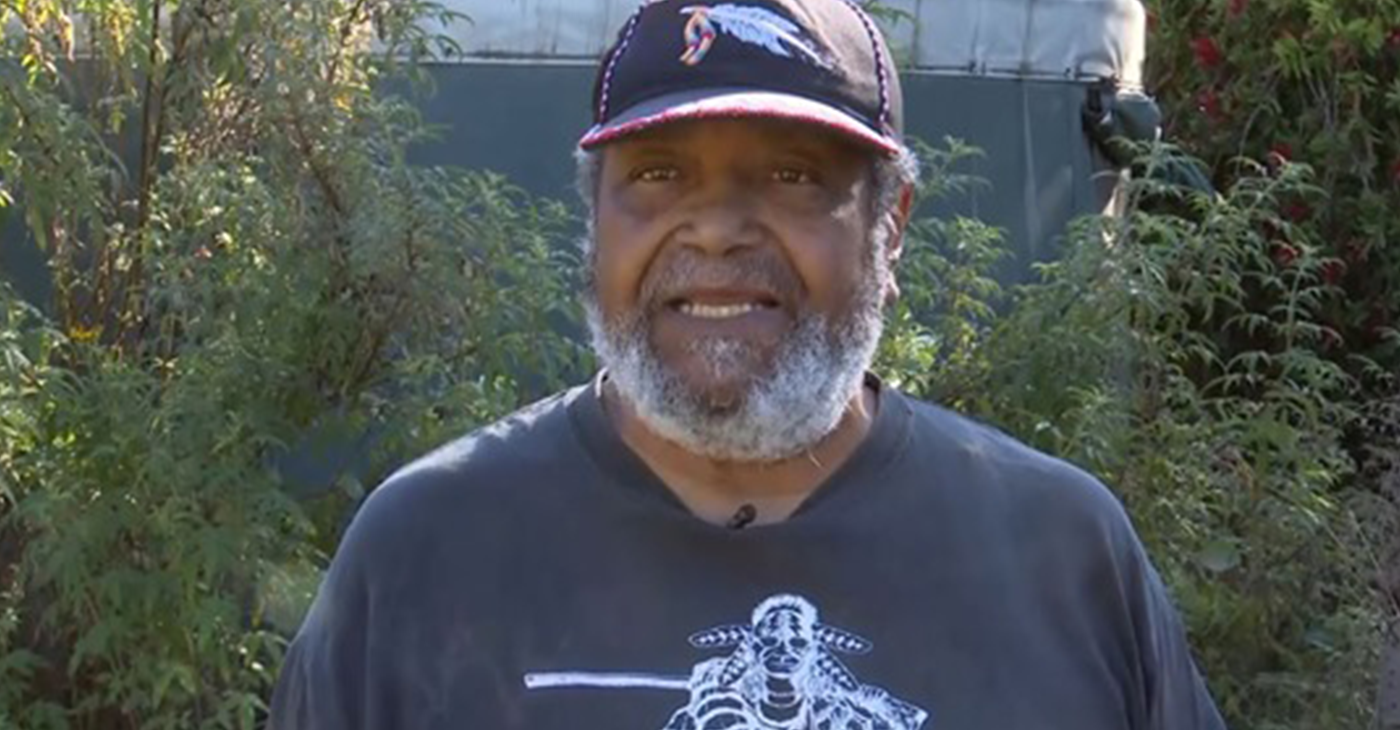
OAKLAND POST — People across Oakland are reacting with shock and anger this week as news spreads that highly respected community elder Wilson Riles Jr. had been tripped to the ground, injured and arrested by police when he went to the City to deal with an ongoing zoning dispute he had with the city’s Planning (Zoning) and Building Department. A number of people went to the City Council’s Public Safety Committee meeting Tuesday evening to raise their concerns about his arrest.

By Ken Epstein
People across Oakland are reacting with shock and anger this week as news spreads that highly respected community elder Wilson Riles Jr. had been tripped to the ground, injured and arrested by police when he went to the City to deal with an ongoing zoning dispute he had with the city’s Planning (Zoning) and Building Department.
A number of people went to the City Council’s Public Safety Committee meeting Tuesday evening to raise their concerns about his arrest.
Rlles, who is 73 years old and served on the Oakland City Council from 1979 to 1992, had gone to the city zoning office a little after 8 a.m. last Thursday morning. He was arrested and taken to Santa Rita for battery on a police officer at about 9 a.m. after a staff member called 911 Santa Rita. He was released at about 11:30 p.m. after posting a $20,000 bond, according to KPIX Channel 5.
Riles told the Oakland Post that he had received a call Monday afternoon from OPD Chief Anne Kirkpatrick, who told him that she had talked to the District Attorney and that all charges against him were being dropped. The chief has ordered an internal affairs investigation into the incident, according to the City.
Riles said he was planning to file a complaint with the Police Commission and is being represented by Civil Rights Attorney Walter Riley.
“We are definitely going to follow up on this,” he said. “I’ve been working on this issue of police accountability for 50 years, both before and after the 13 years I was on the City Council. This is unacceptable and unjust. I am bruised and sore but, more than that, I am mad that our City, our Zoning (Planning) Department, and our Police Department could remain so prejudiced and brutally callous in its treatment of any Oakland resident.”
Riles sees his arrest as related to the city bureaucracy’s willingness to uncritically throw its weight behind gentrifiers’ complaints against the spiritual center he has created in his backyard. These actions are similar to the complaints that led to the BBQing While Black protests at Lake Merritt and the City attempt several years ago to shut down evening choir practice at a church in West Oakland, which led to a “Make a Joyful Noise” protest and celebration.
“This is an additional harassment tactic after four years of struggle over what me and my family and friends do in my own backyard: pray, seek sustainability, and grow fruits and vegetables,” he said.
He said the arrest occurred while he was leaving the city office after a frustrating meeting with city staff. He was talking to a staff member in the office, and followed him through an open door into the back room where he asked to speak to a supervisor. He and the supervisor walked out of the back room where he had an unsatisfactory discussion in the office and he decided to leave. At that point, he was confronted by four police officers who blocked his way. He was not told he was under arrest. When he attempted to get by one officer who blocked his way in the hall, he was tripped to the ground, handcuffed and arrested.
Riles and his family have been embroiled in a zoning dispute with the city for the past four years over neighbors’ complaints about a vegetable garden, temporary structures and a sweat lodge on his Laurel District property for Native American spiritual practices. Dealing with all the city obstacles has cost him about $7,000, he told the Post, but he eventually cleared all the hurdles and was approved by the Planning Commission. An attempt to overturn that approval was rejected by the City Council.
However, once again City staff was throwing up new objections.
“I had gone to the Zoning (Planning) Department to talk to Michael Legault, Specialty Combination Inspector of the Bureau of Building Inspections & Code Enforcement,” Riles said in a written statement. “He was threatening to require me to get a permit for something that the City codes do not require one to get a permit for, and he refused to look at the City codes.
“I insisted on speaking to his supervisor. Eventually, a supervisor, Rich Fielding, showed up and we sat down to discuss the issue, unsatisfactorily. Mr. Fielding indicated that he would look at a document that does not deal with this issue and that he would get back to me after I left the office.
“As I got up to go, four or five police officers arrived and blocked my way, never indicating to me that they were arresting me for anything. I continued to try to leave, and they grabbed me, attempted to twist my arms behind me, and tripped me, throwing me to the floor. These officers made no attempt to deescalate the situation. Handcuffed, I was hustled out of the building into a waiting police cruiser.
“Around 11:30 a.m., I was switched into a paddy wagon and driven to Santa Rita Jail to be booked.”
In a statement released by the City, spokesperson Karen Boyd said the City has to balance protecting Black residents and the need to protect employees against workplace violence.
“We recognize the arrest of former Councilmember Wilson Riles … raises deep community concerns.” Calling it an “unfortunate incident,” she said the city had to deal with “two disturbing national realities … the use of force by police against Black men as well as a heightened fear of workplace violence.”
Contrary to what Riles said had happened, she wrote that “Mr. Riles was detained following a 911 call regarding a city employee who reported a hostile man had chased a city inspector into the restricted staff-only area. Mr. Riles was later arrested on suspicion of battery on a police officer.”
Riles said that, unfortunately, this response of blaming and tainting the victims of police violence happens in Oakland just as it does in every other part of the country. “There was no physical threat from me toward any city staff person,” he said.
“After reviewing incident reports and Personal Digital Recording Device footage from the involved officers, Chief Anne Kirkpatrick has ordered a thorough Internal Affairs Investigation of the incident, as well as encouraged Oakland’s Community Police Review Agency to conduct an independent investigation.” Boyd wrote. “In order to not compromise the integrity of these critical investigations, the City of Oakland will not be releasing further information about this incident until these investigations are sufficiently complete.”
Reacting to the city’s statement, several community members told the Post that they are outraged that the police would knock down and arrest an elder – not even telling him he was under arrest. “Why would the police arrest an angry and frustrated client in the lobby of a city department – without even attempting to mediate or deescalate the dispute?” said one community member.
Others said they found the city’s explanation shocking. “Justifying battery on a Black man by some supposed ‘fear of workplace violence’ is the same rationalization Black people have faced for 400 years. Is the planning department frightened of violence when they are visited by developers?”
Some also said that the statement signals Black residents that they should stay away from the most important department of the city, Economic Development, because an employee can declare himself “afraid” at any moment.
This article originally appeared in Oakland Post.







Black Press
Botham Jean’s Killer Granted Parole 7 Years After His Murder
MICHIGAN CHRONICLE — Former Dallas police officer Amber Guyger has been granted parole, seven years after her conviction for murdering Botham Jean inside his Dallas apartment. The Texas Board of Pardons and Paroles approved her release on October 1, seven years to the day after her murder conviction. Guyger was convicted in 2019 and sentenced to 10 years in prison for Jean’s 2018 death.
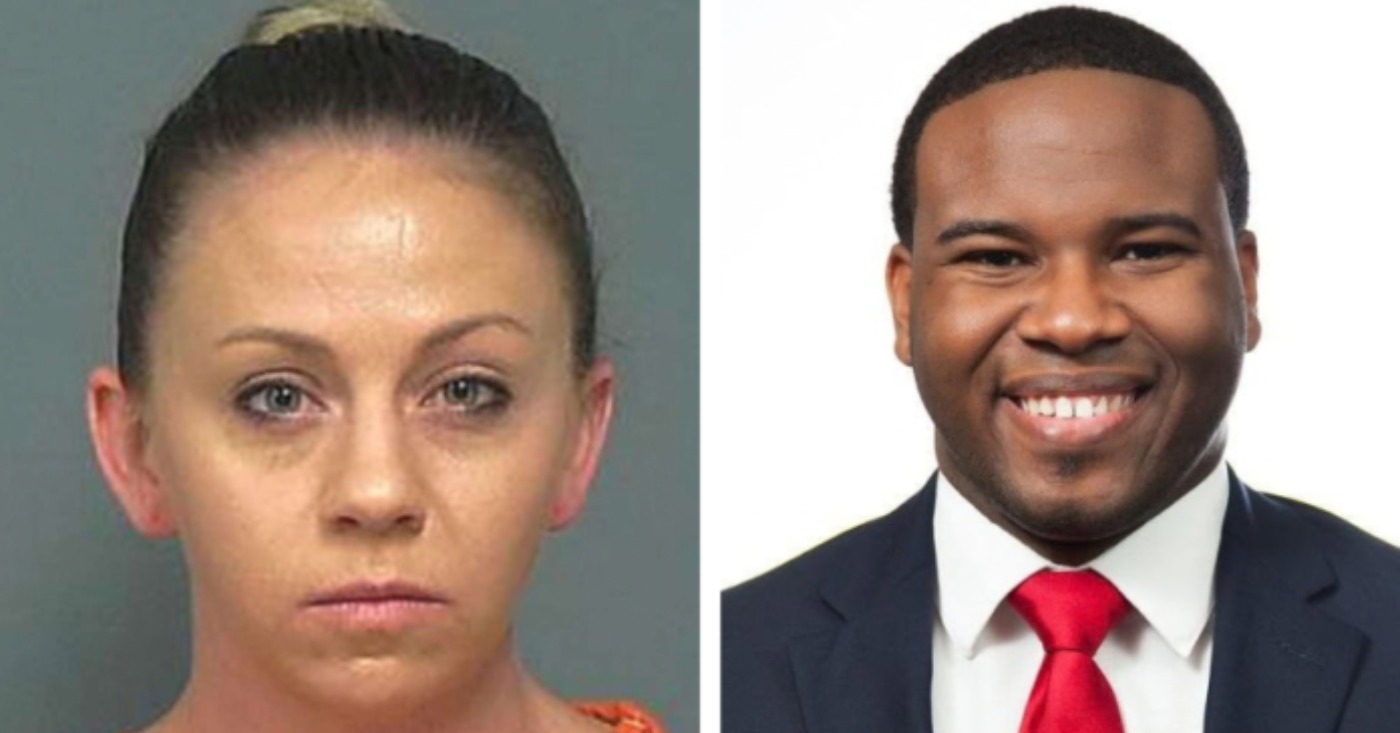
Former Dallas police officerAmber Guyger has been granted parole seven years after she was convicted of murdering her neighbor,Botham Jean, inside his Dallas apartment.
The Texas Board of Pardons and Paroles approved Guyger’s release Thursday (October 1), seven years to the day after Guyger was convicted of Jean’s murder, according to NBC News.
In 2019, a jury convicted Guyger of murder and she was sentenced to 10 years in prison for Jean’s 2018 death. Her conviction and 10-year sentence were upheld on appeal in 2022.
Geyger’s first parole request was denied in 2024, NBC Dallas-Fort Worth reported.
The Dallas Police Department fired her after the shooting. During her trial, Guyger testified that she mistakenly entered Jean’s apartment after returning home from work, believing it was her own apartment one floor below.
She said she saw Jean inside and fired her weapon because she believed he was an intruder, according to NBC News.
Jean was a 26-year-old Black man from St. Lucia who worked as an accountant. He was inside his home eating ice cream when Guyger entered and shot him, NBC DFW reported.
The parole board cited Guyger’s prison record in approving her release. According to NBC DFW, officials said she did not have a documented pattern of violent or assaultive arrests or convictions, maintained a satisfactory adjustment while incarcerated, and completed programs intended to help her obtain and maintain employment.
Jean’s family opposed the parole decision and had asked that Guyger serve her full 10-year sentence, according to NBC DFW.
Civil rights attorney Lee Merritt, who represents the family, told NBC DFW that the decision was deeply disappointing.
“They stood up again and again to ask that the full sentence be served,” Merritt said.
The Dallas Police Department told NBC DFW that the parole decision was outside its authority and that the department had no role in determining whether Guyger would be released. The department said its thoughts remained with Jean’s family and others affected by his death.
Guyger’s conviction and 10-year sentence were upheld on appeal in 2022.
A civil jury ordered Guyger to pay Jean’s family $98.6 million in damages in 2024, according to NBC DFW.
Guyger’s release date has not been announced. NBC News reported that the Texas Department of Criminal Justice will determine when she is released.
The Black Information Network is your source for Black News! Get the latest news 24/7 on The Black Information Network. Listen now on the iHeartRadio app or click HEREto tune in live.
Based on reporting by Michigan Chronicle.
Black Press
New York Prosecutors Reopen Alleged Cornell University Gang Rape Case
NEW YORK BEACON — Prosecutors in Tompkins County, New York, have reopened an alleged gang rape case from 2024 involving Cornell University. The decision follows a civil lawsuit filed by the alleged victim, Jane Doe, against several fraternity members. District Attorney Matthew Van Houten confirmed his office is examining conflicting claims and intends to present the case to a grand jury.

Cornell University is at the center of a developing matter involving an alleged gang rape case that took place in 2024. Prosecutors are reopening the matter after the alleged victim filed a civil lawsuit against a group of fraternity members at Cornell University.
ABC News reports that prosecutors in Tompkins County in Central New York State are examining the claims made by a Jane Doe, the alleged victim of the assault. According to Tompkins County District Attorney Matthew Van Houten, his office is examining whether or not to bring charges but did share that there are two conflicting claims at the heart of the matter.
“It’s our intention to present the case to the Tompkins County grand jury with Jane Doe’s cooperation,” Van Houten told the outlet. “We want to reexamine whether there’s additional evidence that we were not aware of in November of 2024, that exists now that would change our assessment of the case and would result in the grand jury finding that there was criminal conduct.”
Back in 2024, the Jane Doe and former student accused seven current and former members of the Chi Phi fraternity of assaulting her, leading to the chapter’s expulsion from Cornell University. The school conducted an investigation, and initially, Doe did not say she was drugged and forced into acts. Doe’s lawsuit is now alleging the fraternity members drugged and assaulted her.
“She never says that she was drugged without her knowledge. She admits to taking drugs and alcohol voluntarily and with knowledge. She does not allege that she was forced to engage in any acts. She does not say that she was physically helpless or unconscious or incapacitated at any point during the time at the fraternity house,” Van Houten added.
Based on reporting by New York Beacon.
Black Press
Safety Concerns at Southern University
SOUTHERN UNIVERSITY – SOUTHERNDIGEST — Students at Southern University express growing concerns about safety after dark due to poor lighting conditions across campus. Areas such as walking paths, the street near the bandroom, and streets by dorms are described as “terrifyingly pitch black” due to dying or non-existent lights.
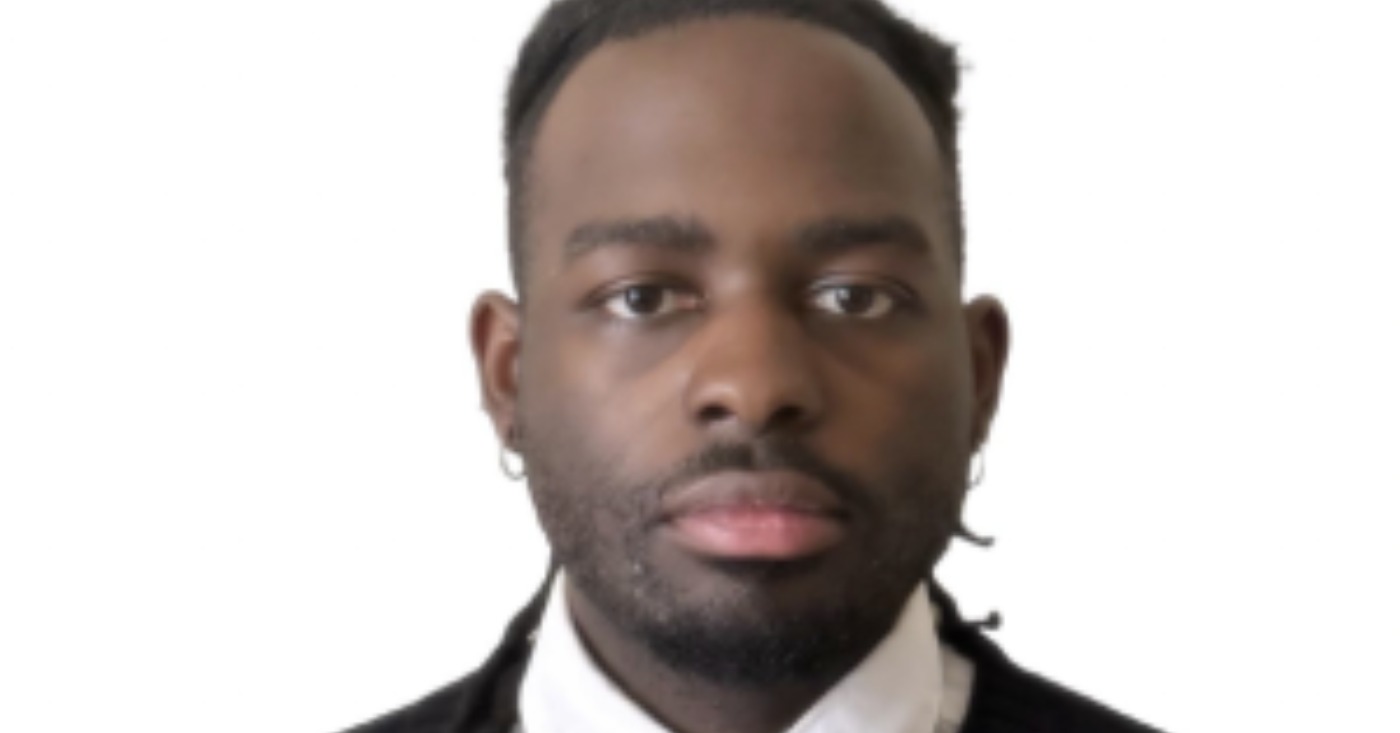
Spending time across Southern University’s campus during the day, you feel the rich history and great energy that make the Bluff special. But once the sun goes down, that feeling shifts into a familiar sense of unease.
Returning home from a late-night study session in the library or walking back from your dorm can often feel like a game of avoiding the darkness. There are areas across campus that are terrifyingly pitch black with dying or non-existent lights posted along walking paths meant for students to walk alone. If you find yourself constantly having to squint to see while walking around campus, you can see why safety is such a big issue in students’ minds. The darkest parts of campus are the street where the bandroom is and the streets by dorms. I was driving back to my apartment on campus late one night when suddenly there was someone walking near the road. If my bright headlights weren’t on, I might not have seen them soon enough, and it could have caused an unsafe situation.
The darkness creates daily hazards that go far beyond a simple lack of visibility. Pedestrians are forced to walk directly in the street because sidewalks fade into pitch-black shadows, dodging cars while barely being able to see where they are stepping. At the same time, people are flying by on electric scooters moving through the dark, completely invisible to drivers and walkers because many of their rides lack proper headlights or reflectors. Nagging worry in the back of your mind about whether your car is even going to be in the parking lot or if it’s going to be stolen by morning, and campus life after dark feels entirely too stressful.
When looking at how Southern ranks for safety among HBCUs, Southern often lands in the lower tiers on various college safety and crime-reporting databases, frequently penalized for property concerns and lacking resources. According to PlainCampus, using the U.S. Department of Education Clery data, ranked Southern #1,287 out of 2,072 institutions based on its 2024 reported crime rate, with burglary identified as its largest reported criminal offense category.
A dark campus isn’t just an inconvenience; it’s a hazard that puts students at risk every single night. We shouldn’t have to dodge silent scooters in the middle of the road or cross our fingers every time we look toward the parking lot. It is time for the administration to step up, fix the lights, and make student safety a visible priority.
Based on reporting by Southern University – SouthernDIGEST.
Black Press
New Shoes, Stronger Steps: Milwaukee Initiative Takes Aim at Gun Violence
MILWAUKEE TIMES WEEKLY — The “Stompin’ Out Gun Violence” initiative is using sought-after sneakers to engage young people with a message about preventing gun violence. Led by the Latroy V. Harris Initiative, “I Will Not Die to Gun Violence,” the program provides free shoes in Milwaukee while fostering conversations aimed at a safer future.
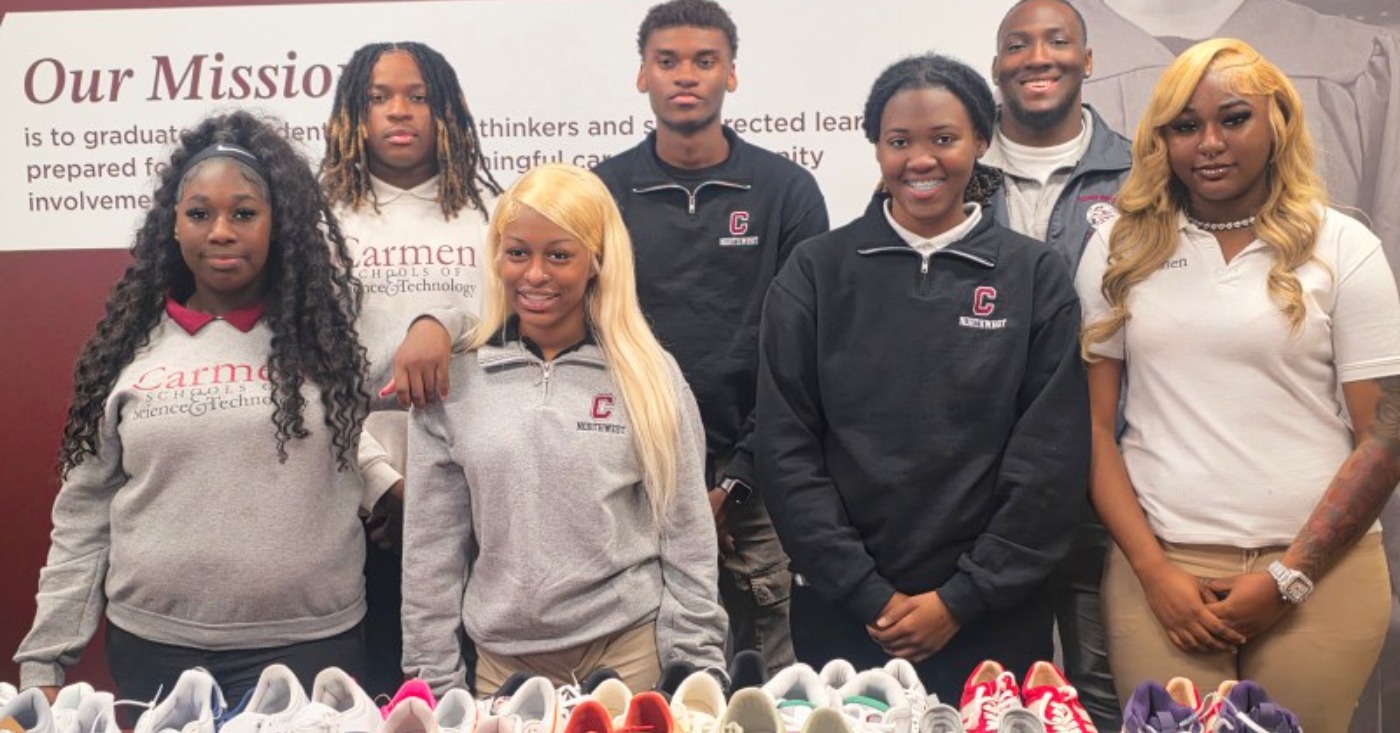
“Stompin’ Out Gun Violence” uses sought-after sneakers to open the door to a life-saving message for young people.
A new pair of shoes can do more than complete an outfit—it can help a young person step toward a safer future. That is the idea behind “Stompin’ Out Gun Violence,” a traveling shoe giveaway led by the Latroy V. Harris Initiative, “I Will Not Die to Gun Violence.”
Founder Monte Mabra says the work comes with no paycheck. Its reward is measured instead in smiles, gratitude, and the chance to turn a potentially negative outcome into a positive one. By pairing free shoes with conversations about gun violence, organizers hope to reach young people with a message that stays with them long after the event ends.
“I like what Monte is doing to change the course of violent crime,” said Michael F. Hupy of personal injury law firm Hupy and Abraham, S.C. and leading sponsor “The shoes carry them in the door, and the message follows them out.”
Students at Carmen School of Science and Technology, 3215 Dr. Martin Luther King Jr. Drive, received Nike, Adidas, and Jordans. Principal Miller said she looks forward to next year and to continuing to build a relationship with the Latroy V. Harris Initiative.
The initiative honors Latroy V. Harris, who was lost to gun violence on Dec. 15, 2025. His family and loved ones are keeping his memory alive by working to prevent other families from experiencing the same loss.
The campaign’s next stop is Bruce Elementary School on Sept. 30. Organizers plan to give away shoes, gun- and domestic-violence awareness and prevention coloring books, and educational books.
For the young people reached by the initiative, each pair of shoes carries more than a brand name. It carries a reminder: their lives matter, their futures are worth protecting, and every step away from violence counts.


Based on reporting by Milwaukee Times Weekly.
Black History
Rulings Leave Questions Lingering in Nolan Wells Case
CHICAGO CRUSADER — The Crusader’s ongoing “Lynchings By Suicide” investigation began after Demartravion “Trey” Reed, a 21-year-old Delta State University student, was found hanging from a tree on the Cleveland, Miss., campus on Sept. 15, 2025. The state medical examiner ruled Reed’s death a suicide within days, a finding his family continues to dispute.

A grand jury declines charges in the Nolan Wells case, a Jackson man pleads not guilty in Tasia Fortune’s hanging death, and a Maryland suicide ruling lands on raw nerves.
A Mississippi grand jury has declined to charge anyone in the death of Nolan Xavier Wells, the 18-year-old Black college football player who disappeared during a July Fourth boat trip with a group of white friends and was found dead two days later off Horn Island. His parents rejected the decision on Sept. 22, telling reporters they do not believe their son simply drowned and vowing to keep fighting for answers.
The grand jury’s report was made public late on Sept. 21, the same week a Jackson man pleaded not guilty to murder in the hanging death of Tasia Fortune and Maryland officials ruled that a Black man found hanging from a tree in Prince George’s County died by suicide.
All three cases now join the Crusader’s ongoing “Lynchings By Suicide” investigation, which began after Demartravion “Trey” Reed, a 21-year-old Delta State University student, was found hanging from a tree on the Cleveland, Miss., campus on Sept. 15, 2025. The state medical examiner ruled Reed’s death a suicide within days, a finding his family continues to dispute.
Nolan Wells: ‘We’ll Never Stop’
Wells, a wide receiver at Southwest Mississippi Community College, went to Horn Island, a barrier island reachable only by boat, with high school friends on July 4. When the group returned to the mainland that afternoon, Wells was not with them. A park ranger found his body in the water off the island on July 6.
Investigators have long said Wells chose to stay behind. His family never believed it, and an independent autopsy that attorney Ben Crump released in July at the NAACP National Convention in Chicago found an unexplained area of discoloration at the back of Wells’ head and ruled the cause of death undetermined.
The grand jury, which heard from 43 witnesses, found Wells’ death “consistent with drowning.” Jackson County District Attorney Angel Myers McIlrath said there is “absolutely no evidence” that race played a role, according to NBC News. The state medical examiner, however, also ruled the cause and manner of death undetermined.
“Elmore and I do not believe that Nolan simply and accidentally drowned,” Christine Wonsley, Wells’ mother, said, according to CNN. His father, Elmore Wonsley, reminded supporters that his son is “not a hashtag, he’s our son.”
Crump said the district attorney wants the public to accept “We’ll never know,” while the family answers, “We’ll never stop.” The family is asking the U.S. Department of Justice to investigate and demanding release of the full case file and the state’s autopsy report. Mississippi has no statute of limitations on homicide.
Tasia Fortune: An Arrest, Not an Ending
Fortune, a 29-year-old mother of four, was found Aug. 3 hanging from a tree behind a vacant house on Road of Remembrance in west Jackson. From the start, her family insisted she did not take her own life.
After the state medical examiner ruled her death a homicide on Sept.10, Jackson police arrested Jarques “Jock” Ratliff, 51, the next day as he walked along Capitol Street and charged him with murder. Ratliff is African American, as was Fortune, according to Mississippi Today. Police said the two knew each other but have not said how.
Ratliff pleaded not guilty on Sept. 14 and was denied bond as a flight risk. His attorney, Toney Baldwin, called him “a pillar of the community” and said his client made no confession.
Jackson Police Chief RaShall Brackney called the arrest “not the conclusion” and said more arrests are expected. “We understand this case is being viewed through a broader lens, a global lens,” Brackney said, according to ABC News.
Christy Spivey, Fortune’s mother, said that when police told her about the arrest, “I just started crying and told them ‘thank you, thank you, thank you.’”
Activists want more. Byron Brumfield of Medgar Evers Reloaded: A Mission and a Movement said Ratliff “should be charged with a hate crime also, just like anybody else,” according to WLOX. Ward 3 Jackson City Councilman Kenneth Stokes has asked U.S. Attorney Baxter Kruger’s office for federal assistance.
Prince George’s County: A Ruling in Hours
In Upper Marlboro, Md., a Black man was found hanging from a tree outside a business on D’Arcy Road on the morning of Sept. 20. Within hours, the state medical examiner ruled his death a suicide with no other signs of trauma. He has not been publicly identified.
Police Chief George Nader said the man’s family agrees with the ruling. Relatives asked that his name be withheld and said the public attention had made his death “more unbearable,” according to the Maryland Daily Record.
County Executive Aisha Braveboy urged residents not to share images or spread speculation online. “This is a tragedy. A person is dead,” Braveboy said, according to WUSA9.
A Pattern the Crusader HasTracked
Mississippi is where Emmett Till, a 14-year-old Chicago boy, was abducted and murdered in 1955, and where Mack Charles Parker was dragged from a Poplarville jail and lynched in 1959.
In February, JULIAN, the civil rights organization founded by attorney Jill Collen Jefferson, released “A Crimson Record,” a report documenting more than 70 suspected modern-day lynchings across seven Southern states since 2000. The report calls the federal Emmett Till Anti-Lynching Act, signed in 2022, “toothless.”
The Wells family is pressing for a federal investigation. Jackson police have promised more arrests in Fortune’s killing, and activists are calling for hate crime charges. More than a year after Trey Reed was found on the Delta State campus, his family is still waiting on answers of its own.
Across these cases, families and advocates have made the same demand: release the grand jury findings, the autopsy reports and the evidence behind every ruling.
Based on reporting by Chicago Crusader.
Black Press
St. Louis Officials Form Pro Bono Task Force to Fight Fraud Against Tornado Survivors
ST. LOUIS AMERICAN — St. Louis Mayor Cara Spencer has announced the formation of a pro bono task force aimed at combating contractor fraud against victims of last year’s May tornado. This initiative expands the city’s legal aid efforts for residents in the tornado zone, which saw an EF3 tornado damage and destroy thousands of homes in the city’s north and west.
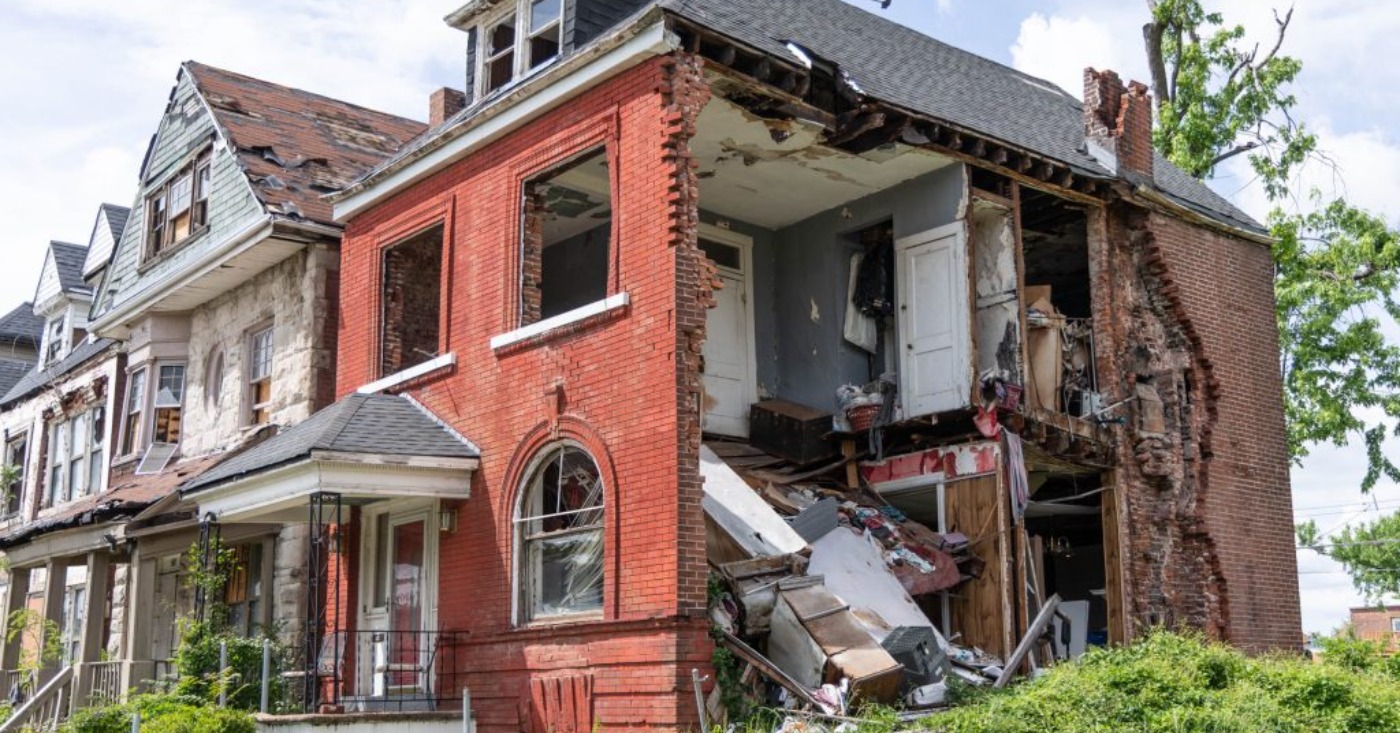
A volunteer-led task force of St. Louis-based lawyers will go after contractors who take advantage of victims of last year’s May tornado.
Mayor Cara Spencer announced the creation of the task force on Thursday as an expansion of the city’s effort to provide legal aid to victims in the tornado zone. The EF3 tornado damaged and destroyed thousands of homes in the north and west parts of the city.
The task force will be composed of area lawyers and Legal Services of Eastern Missouri, a legal aid group that often works with the city on housing and other legal issues.
Together, the litigators will provide free legal expertise and representation to eligible homeowners who believe they were defrauded by a contractor, including by receiving shoddy or partial work.
Spencer said she hopes the task force sends a “clear and unambiguous message” to fraudsters looking to victimize homeowners impacted by the tornado.
“I’ve just heard over and over again some truly heartbreaking stories of folks that have been taken advantage of by contractors, some of which are local,” Spencer said.
In May, a High Ridge contractor was charged with defrauding victims of the tornado by Missouri Attorney General Catherine Hanaway’s office.
Homeowners seeking legal aid will go through a two-stage screening process to evaluate their claims. Then, if selected, an attorney will be matched with the homeowners. The intake form can be found here.
Celeste Vossmeyer, an attorney who has worked with Spencer’s administration on several other projects, helped assemble the task force. She said the city’s north and west sides need extra eyes while recovery efforts continue.
“We’re hoping that this is also going to be a deterrent as other money flows into the tornado disaster area and to other scammers that may try to take advantage of these individual homeowners,” she said.
Spencer said the city will also partner with the attorney general’s consumer protection office. The office will forward complaints from homeowners in the tornado zone to the task force.
Spencer said that without the help of the volunteers, Legal Services of Eastern Missouri and the attorney general, the city could not offer this type of help.
Shawn Caruso, a senior attorney at Legal Services of Eastern Missouri, called on other lawyers in the area to consider joining the pro bono team.
“Every lawyer who volunteers expands our ability and our capacity to provide more free legal aid to our residents,” Caruso said.
Published with permission as part of a content partnership between The St. Louis American and St. Louis Public Radio. Click here to view original story.
The post St. Louis officials form pro bono task force to fight fraud against tornado survivors appeared first on St. Louis American.
Based on reporting by St. Louis American.


FTC Chair Praises Trump, NYC Calls for Target Boycott, and Jason Lee Removed as Vice Mayor 📱

FTC Chair Praises Trump, NYC Calls for Target Boycott, and Jason Lee Removed as Vice Mayor

Black History: Gladys West Mathematics Helped Make GPS Possible

Richmond’s Secret Bank: The True Reformers Story #shorts

7 USB-C Ports + Wireless Charging: Power Up Your Family #shorts

Urban League, AT&T Expand Digital Skills and Laptop Access in St. Louis

Attend a Green Line Bus Rapid Transit Open House

VIN Check: Avoid Truck Recalls Before Buying! #shorts

Defender Parking Camera & Screen Features Explained #shorts

Find Black-Owned Banks & Credit Unions Easily #shorts

The Youngest American Killed in the Vietnam War

Passing for White, Fighting for Black America: The Courage of Walter White

OP-ED: Haiti TPS: Have We Lost Sense of Humanity?

OP-ED: How Does Your State Rank for Pre-K?

NFL: Week Two Recap | Jalen Hurts did not fold; Caleb Williams exits game with injury

Remembering Chauncey Bailey as Student Journalists Face Threats to Truth-Telling

Headlines and Hot Topics 📱

Peter Magubane: a Camera Against Apartheid

Obama Urges Democrats to make AI a Priority 📱

The Conversation with Al McFarlane 📱
FTC Chair Praises Trump, NYC Calls for Target Boycott, and Jason Lee Removed as Vice Mayor 📱
FTC Chair Praises Trump, NYC Calls for Target Boycott, and Jason Lee Removed as Vice Mayor
Black History: Gladys West Mathematics Helped Make GPS Possible
Richmond’s Secret Bank: The True Reformers Story #shorts
7 USB-C Ports + Wireless Charging: Power Up Your Family #shorts
Urban League, AT&T Expand Digital Skills and Laptop Access in St. Louis
Attend a Green Line Bus Rapid Transit Open House
VIN Check: Avoid Truck Recalls Before Buying! #shorts
Defender Parking Camera & Screen Features Explained #shorts
Find Black-Owned Banks & Credit Unions Easily #shorts
-

 Black Press1 week ago
A $2.1 Trillion Wellness Industry Never Built a Daily Practice for Black Children. So This Atlanta Family Did.
-
 BlackPressUSA1 week ago
Latinas Deserve Equal Pay. Unions Help Make It Happen.
-

 Art1 week ago
Montclair Brewery: Brewing Culture, Community, History
-

 Black Press3 days ago
All Skinfolk Ain’t Kinfolk
-

 Black Press1 week ago
COMMENTARY: But God!
-

 Black Press1 week ago
Safety Concerns at Southern University
