
Louisiana Weekly
Facebook told about hate speech in secret groups for years
LOUISIANA WEEKLY — Facebook says its standards apply just as much in private groups as public posts, prohibiting most slurs and threats based on national origin, sex, race and immigration status. But dozens of hateful posts in a secret Facebook group for current and former Border Patrol agents raise questions about how well if at all the company is policing disturbing postings and comments made outside of public view.


By Ariana Tobin, ProPublica
Facebook says its standards apply just as much in private groups as public posts, prohibiting most slurs and threats based on national origin, sex, race and immigration status.
But dozens of hateful posts in a secret Facebook group for current and former Border Patrol agents raise questions about how well if at all the company is policing disturbing postings and comments made outside of public view.
Many of the posts ProPublica obtained from the 9,500-member “I’m 10-15” group (10-15 is Border Patrol code for “alien in custody”) include violent or dehumanizing speech that appears to violate Facebook’s standards. For example, a thread of comments before a visit to a troubled Border Patrol facility in Texas by Democratic Reps. Alexandria Ocasio-Cortez, of New York, and Veronica Escobar, of Texas, included “fuck the hoes” and “No mames [fist].” Another post encouraged Border Patrol agents to respond to the Latina lawmakers visit by hurling a “burrito at these bitches.” And yet another mocked a video of a migrant man trying to carry a child through a rushing river in a plastic bag. A commenter joked, “At least it’s already in a trash bag” — all probable violations of the rules.
Facebook, citing an open federal investigation into the group’s activities, declined to answer questions about whether any posts in the 10-15 group violated its terms of service or had been removed, or whether the company had begun scrutinizing the group’s postings since ProPublica’s story was published. It also refused to say whether it had previously flagged posts by group members or had received complaints.
Facebook’s only response, emailed by a spokeswoman who refused to let ProPublica use her name, was: “We want everyone using Facebook to feel safe. Our Community Standards apply across Facebook, including in secret Groups. We’re cooperating with federal authorities in their investigation.”
Since April, the company has been calling community groups “the center of Facebook.” It has put new emphasis on group activity in the newsfeed and has encouraged companies, communities and news organizations to shift resources into private messaging. These forums can give members a protected space to discuss painful topics like domestic violence, or to share a passion for cookbooks. Groups can be either private, which means they can be found in search results, or secret, which means they are hidden unless you have an invitation.
This is part of an intentional “pivot toward privacy.” In a March blog post, Facebook CEO Mark Zuckerberg wrote, “Privacy gives people the freedom to be themselves and connect more naturally, which is why we build social networks.”
But this pivot also fosters hidden forums where people can share offensive, potentially inflammatory viewpoints. “Secret” groups such as 10-15 are completely hidden from non-members. Would-be participants need an invitation to even find the landing page, and administrators of the groups have full jurisdiction to remove a person’s access at any time.
When such groups operate out of sight, like 10-15, the public has a more limited view into how people are using, or misusing, the platform. In a secret group, only members can flag or report content that might be in violation of Facebook’s policies. The administrators of the group can set stricter policies for members’ internal conversations. They cannot, however, relax broader Facebook standards. They also can’t support terrorist organizations, hate groups, murderers, criminals, sell drugs or attack individuals.
Civil rights groups say they have been noticing and raising the issue of hateful posts in hidden forums for years — with limited response from Facebook.
Henry Fernandez, senior fellow at the Center for American Progress, a liberal think tank, and a member of Change the Terms, a coalition of civil rights groups pushing for better content moderation on Facebook, said the platform keeps creating features without “without vetting them for their implications for the use by hate groups or, in this case, Border Patrol agents acting in hateful ways.”
Posts in hidden groups have incited incidents of violence in the real world, most famously against Rohingya Muslims in Myanmar and at the 2017 white supremacist march in Charlottesville, Virginia. The military launched an investigation of a secret Facebook group in 2017 after Marines shared naked pictures of female service members. Facebook has acknowledged the problem and has made some efforts to address it with new initiatives, such as a proposed independent review board and consultations with a group of 90 organizations, most focusing on civil rights.
ProPublica’s Border Patrol story came out the day after Facebook released an audit of civil rights issues on the platform. Recommendations included strengthening hate speech policies around national origin, enforcing a stricter ban on the promotion of white supremacy and removing an exemption that had allowed humorous posts that contained offensive content.
Facebook did not say whether it will make all of the recommended changes. But in a blog post, COO Sheryl Sandberg wrote, “We will continue listening to feedback from the civil rights community and address the important issues they’ve raised so Facebook can better protect and promote the civil rights of everyone who uses our services.”
Jessica Gonzalez, vice president of strategy and senior counsel at Free Press and co-founder of Change the Terms, said that even after the back and forth with auditors, she was not surprised that the hateful posts in 10-15 were not flagged.
“What Facebook released on Sunday is an improvement,” she said, “but I think Facebook has engaged in this all along in an appeasement strategy. They’ll do what they need to do to get the bad publicity off [their] backs.”
The civil rights audit also called for better transparency about civil rights issues on Facebook’s advertising portal, which became a priority for the company after multiple ProPublica investigations and lawsuits by civil rights groups.
Bhaskar Chakravorti, dean of global business at Tufts’ Fletcher School of Business, said the new emphasis on privacy is part of Facebook’s attempt to keep users on the platform, while reassuring investors.
So to the extent that Facebook provides shelter to groups of all kinds — whether they are people who are sharing hateful messages or messages for the good of the world — it benefits their business model.”
Since we published our story, more people have gotten in touch to tell us about other secret groups that may warrant closer scrutiny.
We know there are members of groups who don’t agree with everything that is said in these forums. We need your guidance to do more reporting. We’d like to hear about what’s happening in your communities particularly from those of you who are concerned public servants. Fill out our questionnaire, or send an email [email protected].
ProPublica is a nonprofit newsroom that investigates abuses of power.
This article originally appeared in the Louisiana Weekly.











By Stacy M. Brown
Contributing Writer
(NNPA Newswire) — Howard University, the renowned historically Black college in Northwest, D.C., finds itself in esteemed company alongside institutions such as the Abbey Road Institute in London, the Berklee College of Music in Boston and Spain, and the Liverpool Institute for the Performing Arts in Liverpool, England. These distinguished higher education establishments have earned a spot on Billboard’s prestigious list of the best schools for music business degrees.
Billboard’s selection process, which refrains from ranking the institutions, is based on a comprehensive evaluation that includes executive recommendations, alum feedback, information furnished by each school, and a decade’s worth of reporting on music business programs. Publishers said the decision not to rank the schools stems from Billboard’s acknowledgment of widespread criticism surrounding conventional college ranking practices. American University, also located in Northwest, D.C., secured its place on the list, emphasizing Washington’s significance in music education.
Of note, Howard University is one of only two historically Black colleges and universities recognized on the list, the other being Tennessee State University in Nashville. Howard’s remarkable achievement is underpinned by the establishment of the Warner Music/Blavatnik Center for Music Business in 2021, made possible by a generous $4.9 million donation. Billboard highlights the center’s one-year fellowship program, which offers invaluable coaching, mentorship, and real-world industry exposure through collaborations with partner organizations. The program is specifically designed to combat the underrepresentation of Black executives and professionals within the music and entertainment sectors.
According to Billboard, one of Howard’s standout offerings is the course “The History of the American Music Industry: What Isn’t Black Music.” This unique perspective aims to give students a comprehensive understanding of the industry’s roots and evolution.
Billboard’s methodology emphasizes more accessible public colleges and universities, focusing beyond the traditional music capitals of New York, Los Angeles, and Nashville. The publication underscores that attendees of these top music business schools are primed for success in an increasingly intricate music industry landscape.
“The schools listed are selected through executive recommendations, alumni information provided by honorees from our multiple power lists, information requested from each school, and a decade of reporting on these programs,” the Billboard publishers explained. Notably, the publishers said students could find robust curricula in cities such as Philadelphia, Memphis, and New Orleans, as well as in Syracuse, N.Y.; Kennesaw, Ga.; Stillwater, Okla.; and Cleveland, Miss.
This extensive list encompasses the Valencia, Spain, campus of Boston’s renowned Berklee College of Music, the esteemed BRIT School located outside London, LIPA, and the BIMM Institute, the largest provider of contemporary music education in Europe.
“By any measure, the colleges and universities here offer impressive opportunities for students seeking an edge in music-industry careers – running campus record labels, devising business plans, volunteering at top festivals, traveling to major music industry events, and meeting with leading artists and executives,” Billboard affirmed, while also solidifying Howard University’s place among the foremost institutions in the field of music business education.
This article originally published in the October 23, 2023 print edition of The Louisiana Weekly newspaper.
This article originally appeared in The Louisiana Weekly.
Black History
Arkansas Ed. Dept withdraws credit for AP African American Studies
LOUISIANA WEEKLY — “Arkansas law contains provisions regarding prohibited topics,” Mundell told local station KHBS, referring to state education restrictions. “Without clarity, we cannot approve a pilot that may unintentionally put a teacher at risk of violating Arkansas law.” As several states undertake concerted efforts to circumscribe the boundaries of what educators can impart concerning race, gender, and sexuality, Arkansas has emerged as a new focal point in this ongoing dialogue.


By Stacy M. Brown
Contributing Writer
(NNPA Newswire) — The Arkansas Education Department has opted to strip course credit from the Advanced Placement (AP) African American Studies course, just a few months after Gov. Sarah Huckabee Sanders inked legislative measures curbing the scope of public school educators’ pedagogical offerings.
The AP African American Studies course, a beacon of educational diversity and cultural enlightenment, will not be eligible for early college credit during the upcoming school year.
“The department encourages the teaching of all American history and supports rigorous courses not based on opinions or indoctrination,” Kimberly Mundell, the Education Department’s communications director, said in a statement.
“Arkansas law contains provisions regarding prohibited topics,” Mundell told local station KHBS, referring to state education restrictions.
“Without clarity, we cannot approve a pilot that may unintentionally put a teacher at risk of violating Arkansas law.”
As several states undertake concerted efforts to circumscribe the boundaries of what educators can impart concerning race, gender, and sexuality, Arkansas has emerged as a new focal point in this ongoing dialogue.
NBC News reported that Sanders had earlier championed limits on education in the state.
The outlet noted that she signed the LEARNS Act into law in March, restricting classroom lessons about gender identity and sexual orientation.
In January, the Republican governor signed an executive order banning “indoctrination and critical race theory” in schools.
The assault on critical race theory, which isn’t taught in grade schools, has been among the most controversial GOP initiatives across the country.
In Florida, Gov. Ron DeSantis spearheaded initiatives to exert an overarching influence over academic viewpoints and curricula.
His HB 999 has caused consternation throughout the academic community, epitomizing an audacious stride toward dictating the contours of education.
HB 999 says that all colleges and universities must not spend money on education programs or other things that support diversity, equity, and inclusion.
“This bill is a road map for wrecking one of our great state systems of higher education,” University of Michigan Law Professor Julian Davis Mortenson tweeted.
The bill eliminates Women’s and Gender Studies as a major or minor at state colleges and universities.
It dictates that there can’t be a major or minor “based on the Critical Race Theory belief system.”
According to the bill’s text, the university president or board would do all faculty hiring. It asserts that they “may not delegate” any aspect of any hiring decision or hiring authority to any group or faculty, however constituted.
Further, the bill asserts that they are “not required to consider the recommendations or opinions of faculty.”
Jeremy C. Young, Pen America’s senior manager of Free Expression and Education, called the bill “terrifying.”
Pen America is a non-profit group that protects and promotes free speech worldwide by promoting literature and human rights.
“Florida HB 999 would enact the most Draconian and censorious restrictions on higher education in the history of this country,” Young stated.
“The bill would make tenure and faculty hiring committees meaningless, ban diversity statements, and centralize control of core curricula and mission statements in the hands of political appointees,” Young said.
“Unexpectedly, it would also ban gender studies majors.”
This article was originally published in the August 21, 2023 print edition of The Louisiana Weekly newspaper.
This article originally appeared in The Louisiana Weekly.
Black History
A Cold Case Investigation: The Fatal Shooting of Milton X Scott, 50 Years Later: Scott’s Family, FBI Agents Talk About the Emotional Toll
LOUISIANA WEEKLY — They had been sent to arrest Scott, a Black Muslim, who charged the officers after they kicked in the front door of his home. During the struggle, Hahn shot Scott twice when he thought Scott had taken Wood’s gun only to learn afterward that Scott had picked up Hahn’s blackjack.


By Myracle Lewis, Amelia Gabor and Birdie O’Connell
Contributing Writers, Louisiana Weekly
Editor’s Note: This is the second of a two-part series.
(LSU Manship School News Service) — Beverly Shabazz did not have a job and was seven months pregnant with her second child when her husband, Milton X Scott, was shot and killed outside their home in 1973 by FBI agents attempting to arrest him.
“I was thinking I have these two kids to raise,” she said. “I don’t have any help from their father, and it was a while before I could adjust to the situation.”
Shabazz depended on Social Security benefits for their children and then went back to school so she could work as both a cosmetologist and an elementary school teacher. As they grew up, the children hardly saw her, and they missed the emotional support and stability that their father could have provided.
It was a loss compounded by the fact that the shooting arose from a case of mistaken identity. The FBI agents had thought Scott was an Army deserter, and the fatal battle outside his door would not have happened if they had known he had never been in the Army.
“The toughest day of my life happened before I was even born,” his son, Milton Scott Jr., said recently.
When he was little, Scott said, none of the other children believed him when he said that his father was killed by the FBI before he was born. The mockery so traumatized him that he kept quiet about it until George Floyd was murdered in police custody in 2020, intensifying concerns about Black men killed by law-enforcement officers and the impact on their families.
“I didn’t get to grow up with either parent because my mom always had two jobs, and she was in college,” Shabazz’s daughter, Andrea Grant, said.
Grant, now 52 and a college admissions coordinator, said she and her brother, a businessman in Atlanta, were largely raised by their grandparents.
“I regret that my father never got to meet his grandkids,” Grant said, and “the fact that he will never be able to see all that Milton and I have accomplished.”
Floyd’s death, along with the deaths of others like Tamir Rice, Michael Brown, Alton Sterling and Daunte Wright, show how in the years since Scott’s death, officer-involved shootings have continued to haunt Black communities and rupture families.
While some of these cases resulted in discipline or convictions for officers, others – like Scott’s – ended in the officers’ actions being deemed justifiable. Experts say that regardless of the legal outcome, families have to deal with the agony of losing a loved one and often a loss of income, which can compound the pain.
According to Russell Jones, an emeritus professor at Southern University Law Center, these incidents also escalate a distrust of law enforcement and induce resentment.
“The common thread within all of these incidents is that we don’t have that same right that the white society has to protect our homes,” Jones said.
Former FBI agents Delbert Hahn and William Wood also struggled with the aftermath of Scott’s death.
They had been sent to arrest Scott, a Black Muslim, who charged the officers after they kicked in the front door of his home. During the struggle, Hahn shot Scott twice when he thought Scott had taken Wood’s gun only to learn afterward that Scott had picked up Hahn’s blackjack.
Wood recently said that Scott’s shooting caused him to suffer from post-traumatic stress disorder.
Twenty years after the shooting, Wood taught a PTSD class at the FBI’s training academy in Quantico, Virginia, and invited Hahn, believing he would benefit from it.
“It became personal for me,” Hahn said in an interview with the LSU Cold Case Project. He said the FBI “stuck me in a position where something awful happened, and they didn’t have to do that.”
Hahn said the workshop helped him because he and Wood had never had an in-depth conversation with each other about the incident.
Multiple investigations
Hours after the shooting, the FBI realized that Scott’s identity had been stolen and found the thief, Calvin Wallace, in prison in California. Wallace had juggled at least five stolen aliases in committing various misdemeanors and felonies.
Wallace told the FBI that he had met Scott when Scott was on a trip to California in the early 1970s. Wallace pried into Scott’s background and learned his date of birth, the name of his parents and his Social Security number. Wallace was able to recite the number to agents, missing only one digit.
Wallace lived a transient life. When a childhood acquaintance, Robert King, saw him more than 20 years ago in San Diego, he said Wallace showed signs of heroin addiction. Wallace, then 82, died last October in a San Diego nursing home.
Black leaders demanded investigations into Scott’s death, which came just eight months after an East Baton Rouge sheriff’s deputy had killed two Black students at Southern University.
Emmett Douglas, then the president of the Louisiana NAACP, questioned how two trained FBI agents could not subdue a man weighing less than 180 pounds without shooting him.
Neither of the agents was suspended as federal and state authorities looked into what happened.
J. Stanley Pottinger, then the assistant U.S. general attorney for civil rights, instructed the FBI to conduct a preliminary civil rights investigation.
FBI documents say that the bureau did not request an interview with Shabazz shortly after the shooting because she had seemed hostile.
“Well, I was upset because of the way they treated him. I wanted to tell my story, but I never got the chance to,” Shabazz said recently.
The FBI chose not to talk to many neighbors since the area, bureau documents said, was frequented by Nation of Islam members. Authorities feared that would worsen racial tensions and lead to more confrontations like one on North Boulevard 19 months earlier that led to the death of two police officers and two Black men.
A city sanitation worker gave the FBI a signed statement saying he saw a Black man pushing two white men off the porch of Scott’s house before a car blocked his vision of the fight. Seconds later he heard two shots fired.
Two other sanitation workers and one of Scott’s neighbors only noticed what was happening after the shots rang out, and bureau investigators determined that the agents had shot Scott in self-defense.
On Nov. 19, 1973, an East Baton Rouge Parish grand jury also chose not to bring charges against the agents.
One of the jurors, Baton Rouge native George Kilcrease, still believes the agents acted in good faith.
“In hindsight, maybe they could have approached it a little differently, he said, but “all the facts of the case led the jury to conclude that they acted reasonably. If Mr. Scott would’ve been white or Black, I don’t think that played into the FBI’s actions of that day.”
Shabazz’s legal struggles
Shabazz also sought redress in a civil case.
In May 1974, she hired Baton Rouge attorney Walter Dumas, who filed a $1 million lawsuit against the FBI under the Federal Tort Claims Act, claiming that Scott’s death was a “direct and proximate result of the negligence, carelessness, and unlawful conduct.”
Dumas did not respond to a request for comment. Shabazz also hired other lawyers, but the case was eventually dismissed by U.S. District Judge Gordon West, who noted that her complaints continually gave the impression that the FBI agents shot and killed the wrong man.
“This is not so,” he wrote. “They shot and killed the man they intended to shoot and kill. They did not shoot the man because he was a deserter from the Army but because he physically attacked and attempted to destroy the two FBI agents.”
Justice Department officials spoke with Scott’s family in 2020 after Congress encouraged the department to investigate a wider range of cold cases from the civil rights era. But the case was closed again in September 2021.
With the grand jury’s decision not to indict, the failure of Shabazz’s lawsuits in civil court and the FBI’s decision to close its new investigation, the family finds memories of Scott and the opportunity to tell his story as the best way to honor him today.
Shabazz later remarried and still lives in Baton Rouge. Now 75, she said Scott had made her “proud to be Black” and “proud to be a Black woman. I was proud of my Black husband.”
‘I’m sorry for her and her family’
On the day of Scott’s death, FBI agents Hahn and Wood were treated at the hospital for minor injuries. When Hahn returned home, he did not tell his wife anything.
“I remember I had blood on the suit, mostly mine,” he said. “I took it off and stuffed it under the bed. It was there for a year.”
Retired FBI agent Theodore “Ted” Jackson, a Black agent who had investigated the shooting at Southern University months before the Scott shooting, said it is important for law-enforcement officers to talk things out after troubling events, especially a fatal shooting.
They never know what the day will bring, but “they all want to go home to their families” after work, Jackson said.
Hahn, now 89, said he believes the bureau should have performed a thorough background check before assigning the deserter case to him. In fact, the FBI, which had earlier quit checking fingerprints of deserters, quickly returned to that practice after Scott was killed.
Hahn said that the force used on Scott was justified. But he does wish there had been more time for negotiation.
In a recent interview, Wood, Hahn’s partner that day, said: “I still have PTSD from a number of incidents. This is one of the main ones.”
Hahn still lives in Baton Rouge. But he said he is not interested in a sit-down or attempt at reconciliation with the Scott family since it would not change what happened. He also doubts that it would bring Shabazz peace.
“I wasn’t happy that Milton Leon Scott was dead,” Hahn said. “I’m sorry for her and her family. I understand they probably don’t like me. That doesn’t bother me; I don’t expect them to. I’d feel the same way if somebody shot my husband or my father.”
This story was written by Myracle Lewis and reported by Lewis, Amelia Gabor, Birdie O’Connell, McKinley Cobb, Brooke Couvillon, Hannah Rehm and MacKenzie Wallace. A companion video by Maria Pham is available at:
.
This article originally appeared in The Louisiana Weekly.
Black History
Gov. Edwards Issues a State Apology for 1972 Fatal Shootings at Southern
NNPA NEWSWIRE — “To the extent that the state of Louisiana can try to make this right, that’s what we’re gonna try to do,” Edwards said at an event at the Old State Capitol building to commemorate the 50th anniversary of the shooting.
By Drew Hawkins and Claire Sullivan, Contributing Writers | Louisiana Weekly
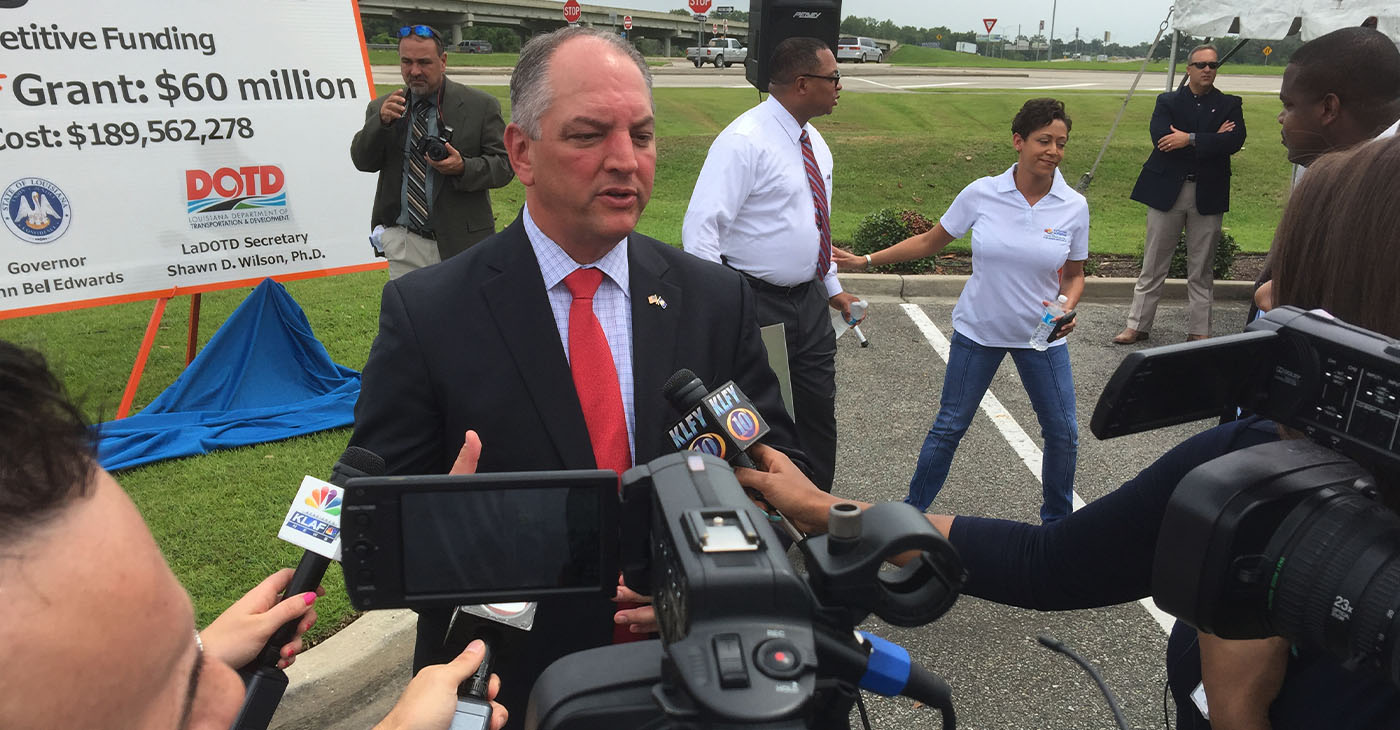
(LSU Manship School News Service) — Gov. John Bel Edwards apologized on behalf of the state to former Southern University protest leaders and the families of two Southern students who were killed by an unidentified sheriff’s deputy 50 years ago.
“To the extent that the state of Louisiana can try to make this right, that’s what we’re gonna try to do,” Edwards said at an event at the Old State Capitol building to commemorate the 50th anniversary of the shooting.
Edwards said that on the morning of the shooting, students “bravely and peacefully gathered to protest the disparities of educational opportunities in Louisiana.”
He said the nine protest leaders who were banned from Southern’s campus following the protests were “unjustly punished.” He said he wanted “to make amends to those who were victims to injustices perpetrated by the state,” including the families of Leonard Brown and Denver Smith, the two 20-year-old students who were shot and killed.
He said wished to “recognize the lost potential of the lives” of the two young men.
The governor then signed a proclamation formalizing the apology.
Southern President Dennis Shields also spoke at the event. “Today marks a significant and sorrowful day in the history of Southern University and A&M college,” he said.
“We sincerely welcome you back,” Shields said, referencing the recent decision by Southern’s board to lift bans on the protest leaders returning to the campus.
Some of the protest leaders also met with Shields privately right before the commemoration event.
Some of the former protest leaders echoed concerns they demonstrated for 50 years ago, including current funding disparities between Southern and other public universities, like LSU and Louisiana Tech, and called for the formation of a board of representatives at Southern that included student members to hear and address student concerns.
They also called for the Smith and Brown families to be compensated for the loss of their loved ones.
Some of them said Shields listened to their concerns and seemed sincere in his commitment to work with them to help find a resolution.
“It’s not the end of the conversation,” Shields said. “It’s the beginning of the conversation that will continue past today.”
Denver Smith was a junior from New Roads who was studying computer science, and Leonard Douglas Brown was an agricultural education major from Gilbert, Louisiana.
The commemoration was organized by Southern Law Center professor Angela Allen-Bell and the Louisiana State NAACP Conference.
A recent four-part series by the LSU Cold Case Project, that was featured in this newspaper, explored the events that led up to the shooting, the day of the shooting itself and the aftermath.
Referring to the stories, Gov. Edwards said in an interview that much of “what I knew about this came from you all. It wasn’t something that I knew very much about. I knew there had been unrest, and I knew there were some issues at Southern’s campus. I never knew the names. I never knew the specifics.”
“It’s the best we can do,” he said, referring to the apology. “It’s maybe not a whole lot, but it’s the best we can do.”
The shooting occurred after several weeks of protests in 1972 over what student leaders at Southern saw as poor funding, dilapidated buildings and little response to their concerns.
Smith and Brown had not been involved with the protest movement and were In a large gathering outside of the school’s administration office. Protest leaders were demanding that the university’s then-president, George Leon Netterville, assist with the release of four student protest leaders who had been arrested for disrupting classes.
Officers from the Louisiana State Police and the East Baton Rouge Parish Sheriff’s Office responded and ordered students to leave the building, deploying tear gas when the students refused. When the gas clouds cleared, Smith and Brown’s bodies lay on the sidewalk.
A commission appointed by then-Gov. Edwin Edwards found no evidence that any of the students was armed. The report also found that the fatal shot came from an area where sheriff’s deputies were positioned.
A state grand jury spent four months considering the shooting in 1973 but failed to identify the shooter. A federal grand jury also was unable to determine who fired the shot.
Students from LSU’s Manship School of Mass Communication and the Southern Law Center studied nearly 2,700 pages of FBI documents and conducting dozens of interviews.
They found that Southern officials had frantically requested law enforcement assistance and that most of the sheriff’s deputies did not have any crowd control training.
The series also revealed how the FBI quickly narrowed its search for the shooter to a handful of deputies based on the angle from which the fatal shot came,
But given all the tear gas and that most of the deputies were wearing helmets with visors that obscured their faces, there was no eyewitness who could identify the shooter. The investigation also faced serious roadblocks when key deputies refused to take polygraph exams about what they knew.
This article originally appeared in The Louisiana Weekly.
BlackPressUSA
White Teacher Fired After Telling Students His Race Was ‘Superior’
NNPA NEWSWIRE — In the video, the unidentified white middle school teacher was captured saying, “Deep down in my heart, I’m ethnocentric, which means I think my race is the superior one.” It’s unclear what led to the controversial conversation inside a classroom at Bohls Middle School.

(Defender News Service) — A teacher in the Pflugerville Independent School District which is located in Austin, Texas, is no longer employed by the district after a video surfaced of him saying he believes white people are “the superior” race.
In the video, the unidentified white middle school teacher was captured saying, “Deep down in my heart, I’m ethnocentric, which means I think my race is the superior one.”
It’s unclear what led to the controversial conversation inside a classroom at Bohls Middle School.
Rapper Southside’s son is in that class and they put the video on social media, which quickly went viral. The video shows the students’ quick reaction to the statement, which prompted one student to ask, “So white is better than all?”
The teacher then asks the students to let him finish speaking before adding, “I think everybody thinks they’re just not honest about it.”
Several students then appear to confront the teacher about his bold claim, asking him if he just openly admitted to being racist.
“I think everybody is a racist at that level,” the teacher responded.
When asked a second time if he just said he is racist, the teacher said, “I did. I did. If I’m going to be honest with you.”
In a statement released on November 14, Pflugerville ISD Superintendent Dr. Douglas Killian said that the teacher “is no longer employed” by the district and that the district “is actively looking for a replacement.”
Dr. Killian acknowledged that the incident “has prompted local and national media attention” and issued an apology to “any parents whose students have been included in the video without their knowledge.”
The full statement from Dr. Killian is below:
Last Friday, Nov. 11, Pflugerville ISD officials were made aware of an inappropriate conversation a teacher at Bohls Middle School had with students during an advisory class. As of Monday morning, Nov. 14, the teacher in question is no longer employed by Pflugerville ISD and we are actively looking for a replacement.
In addition to providing this video to our administrators, the video was shared on social media by some in the class and has prompted local and national media attention. We apologize to any parents whose students have been included in the video without their knowledge.
We want to reiterate that this conversation does not align with our core beliefs and is not a reflection of our district or our culture at Bohls Middle School. Pflugerville ISD and Bohls MS staff work together to create an inclusive and welcoming environment for all of our students. The advisory discussion was inappropriate, inaccurate, and unacceptable; and this type of interaction will not be tolerated in any PfISD schools.
We apologize to our students and families at Bohls Middle School for the undue stress or concern this has caused. We have counselors and administrators available for any of our students and families who want to discuss this situation further.
We always do our best to ensure the safety of all students; we encourage them to be self-advocates and let an adult know when something is wrong, as they did in this situation. If you see something, say something.
As always, we appreciate the support of our Bohls Middle School families and entire PfISD community.
Initial statement released on incident:
When the incident first came to light on November 11, Dr. Killian released the following statement:
We are aware of an inappropriate conversation a teacher at Bohls Middle School had with students this week during an advisory class. This interaction does not align with our core beliefs as a district. The video of the conversation includes statements that we find wholly inappropriate. The teacher has been placed on administrative leave while Human Resources conducts an investigation.
Pflugerville ISD and Bohls MS work together to create an inclusive and welcoming environment for our students. The advisory activity was inappropriate, inaccurate, and unacceptable. This type of interaction will not be tolerated in PfISD schools.
Staff checked in with students today. Our counselors and administrators are always available if your student wants to discuss this situation further.
We always do our best to ensure the safety of all students; we encourage them to be self-advocates and let an adult know when something is wrong, as they did in this situation; this could be to a parent, a teacher, or a counselor. If you see something, say something. We apologize for any undue stress or concern this has caused. As always, we appreciate the support of our families and community.
This article originally appeared in The Louisiana Weekly.
BlackPressUSA
WHO wants name change for ‘Monkeypox’ virus, calling it ‘discriminatory and stigmatizing’
NNPA NEWSWIRE — A public narrative persists in suggesting the current outbreak is linked to Africa, West Africa or Nigeria, noted a group of 29 biologists and other researchers. That builds on an existing stigma, although the virus has been detected without a clear link to Africa. However, the majority – 84 percent—of confirmed cases are from the European region, followed by the Americas, Africa, Eastern Mediterranean region and Western Pacific region.

Louisiana Weekly
(TriceEdneyWire.com/Global Information Network) — The World Health Organization (WHO) has announced plans to find a new name for the viral disease informally known as ‘monkeypox’ which, says the world body, is “discriminatory and stigmatizing.”
WHO Director-General Tedros Adhanom Ghebreyesus, in a briefing on the matter, said the virus is no longer behaving as it did in the past and therefore should be renamed.
But a public narrative persists in suggesting the current outbreak is linked to Africa, West Africa or Nigeria, noted a group of 29 biologists and other researchers. That builds on an existing stigma, although the virus has been detected without a clear link to Africa.
The majority – 84 percent—of confirmed cases are from the European region, followed by the Americas, Africa, Eastern Mediterranean region and Western Pacific region.
“The most obvious manifestation of this is the use of photos of African patients to depict the pox lesions in mainstream media in the global north,” the researchers said.
Ahmed Ogwell, deputy director of the Africa Centers for Disease Control and Prevention, and more than a dozen infectious disease experts in the U.S. and Europe are soliciting suggestions for a new name using the website virological.org.
“We are removing the distinction between endemic and non-endemic countries, reporting on countries together where possible, to reflect the unified response that is needed,” the WHO said in its outbreak situation update sent out on July 23.
As for what the virus should be called, the scientists suggest starting with hMPXV, to denote the human version of the monkeypox virus. Rather than geographic locations, they say, letters and numbers should be used, based on order of discovery. In that system, the lineage behind the current international outbreak would be dubbed B.1.
It has been reported in 39 countries so far in 2022, and most of them are having their first-ever cases of the disease, according to the WHO. Worldwide, it says, there are around 3,100 confirmed or suspected cases, including 72 deaths. The normal initial symptoms include a high fever, swollen lymph nodes and a blistery chickenpox-like rash.
Between January 1 and June 15, 2,103 confirmed cases, a probable case and one death have been reported to the WHO in 42 countries, it said.
Global Information Network creates and distributes news and feature articles on current affairs in Africa.
This article originally appeared in The Louisiana Weekly.


Black History: Gladys West Mathematics Helped Make GPS Possible

Richmond’s Secret Bank: The True Reformers Story #shorts

7 USB-C Ports + Wireless Charging: Power Up Your Family #shorts

Urban League, AT&T Expand Digital Skills and Laptop Access in St. Louis

Attend a Green Line Bus Rapid Transit Open House

VIN Check: Avoid Truck Recalls Before Buying! #shorts

Defender Parking Camera & Screen Features Explained #shorts

Find Black-Owned Banks & Credit Unions Easily #shorts

HBCU Homecoming: A never-miss annual tradition

News Observer Weekly — October 14, 2026 | Top 5 Stories of the Week

The Youngest American Killed in the Vietnam War

Passing for White, Fighting for Black America: The Courage of Walter White

OP-ED: Haiti TPS: Have We Lost Sense of Humanity?

OP-ED: How Does Your State Rank for Pre-K?

NFL: Week Two Recap | Jalen Hurts did not fold; Caleb Williams exits game with injury

Remembering Chauncey Bailey as Student Journalists Face Threats to Truth-Telling

Headlines and Hot Topics 📱

NEWSOM, KAMALA & 2028: THE POLITICAL CALCULUS BEGINS 📱

Peter Magubane: a Camera Against Apartheid

Obama Urges Democrats to make AI a Priority 📱
Black History: Gladys West Mathematics Helped Make GPS Possible
Richmond’s Secret Bank: The True Reformers Story #shorts
7 USB-C Ports + Wireless Charging: Power Up Your Family #shorts
Urban League, AT&T Expand Digital Skills and Laptop Access in St. Louis
Attend a Green Line Bus Rapid Transit Open House
VIN Check: Avoid Truck Recalls Before Buying! #shorts
Defender Parking Camera & Screen Features Explained #shorts
Find Black-Owned Banks & Credit Unions Easily #shorts
HBCU Homecoming: A never-miss annual tradition
News Observer Weekly — October 14, 2026 | Top 5 Stories of the Week
-

 Black Press1 week ago
A $2.1 Trillion Wellness Industry Never Built a Daily Practice for Black Children. So This Atlanta Family Did.
-
 BlackPressUSA7 days ago
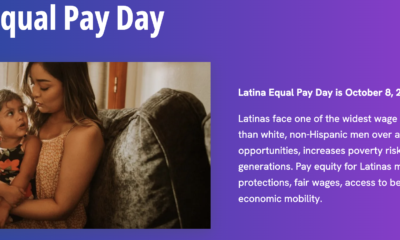
Latinas Deserve Equal Pay. Unions Help Make It Happen.
-

 Art1 week ago
Montclair Brewery: Brewing Culture, Community, History
-
 Black Press3 days ago
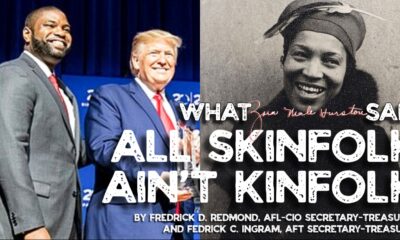
All Skinfolk Ain’t Kinfolk
-

 Black Press1 week ago
COMMENTARY: But God!
-
 Black Press1 week ago
Safety Concerns at Southern University
