
Technology
F.C.C. Net Neutrality Rules Clear Hurdle as Republicans Concede to Obama


This July 1, 2013 file photo shows Sen. John Thune, R-S.D. speaking with reporters on Capitol Hill in Washington. (AP Photo/J. Scott Applewhite, File)
WASHINGTON (New York Times) — Senior Republicans conceded on Tuesday that the grueling fight with President Obama over the regulation of Internet service appears over, with the president and an army of Internet activists victorious.
The Federal Communications Commission is expected on Thursday to approve regulating Internet service like a public utility, prohibiting companies from paying for faster lanes on the Internet. While the two Democratic commissioners are negotiating over technical details, they are widely expected to side with the Democratic chairman, Tom Wheeler, against the two Republican commissioners.
And Republicans on Capitol Hill, who once criticized the plan as “Obamacare for the Internet,” now say they are unlikely to pass a legislative response that would undo perhaps the biggest policy shift since the Internet became a reality.
“We’re not going to get a signed bill that doesn’t have Democrats’ support,” said Senator John Thune, Republican of South Dakota and chairman of the Senate Commerce Committee. “This is an issue that needs to have bipartisan support.”










Advertising
PRESS ROOM: AutoNetwork.com Launches a Free Auto Section for Newspapers, Credit Unions, Banks, Churches, Schools and Nonprofits
BLACKPRESSUSA NEWSWIRE — Right now, someone who reads your paper, banks with you, sits in your pews, or attends your school is signing a car deal. Too often, they leave with a high-cost loan, old trade-in debt rolled into a new one, add-ons they never asked for, or a repair bill they didn’t understand. Most of those losses happen because no one gave them the facts first.

One line of code puts free, sourced car-buying and car-repair lessons in front of the people you serve. No cost. No contract. No staff needed.
AutoNetwork.com, which has served car buyers since 1986, today launched the Auto Section: a free, ready-made car-money education section that any organization can add to its website by pasting one line of code. Its message is simple: Know Before You Go To A Dealer.
The people you serve are paying for what no one told them
Right now, someone who reads your paper, banks with you, sits in your pews, or attends your school is signing a car deal. Too often, they leave with a high-cost loan, old trade-in debt rolled into a new one, add-ons they never asked for, or a repair bill they didn’t understand. Most of those losses happen because no one gave them the facts first.
Every organization on this list exists to look out for its people. The facts are now free and take minutes to add. Not sharing them means letting the next family learn the hard way, at the dealer’s desk or the repair counter.
One Auto Section, five ways to serve
- Newspapers: a reader-service section you don’t have to staff, write or pay for. You keep 100% of the ad space around it and 100% of any sponsor line you sell, such as “Auto Section sponsored by…” on your own page.
- Credit unions and banks: member education that reaches people before they sit down in the dealer’s finance office, where the loan terms get decided.
- Churches: a stewardship and money ministry for families. A car is one of the biggest purchases most households make.
- HBCUs and schools: first-car, first-loan and first-repair lessons for students and their families.
- Nonprofits: a ready-made addition to financial-empowerment programs, with no added cost or staff.
- What your people learn
- Financing: leasing vs. buying, who should lease, mileage limits, wear charges and GAP coverage.
- Trade-in debt: how owing more than a car is worth happens, and how to get out.
- Depreciation: how fast a car can lose value, with a free calculator.
- Add-ons and fees: what to get in writing before signing.
- Warranties: what the factory covers, and when extended coverage may not pay off.
- Credit: rights and steps for buyers with low or no credit, plus a first-time buyer guide.
- Service costs: how to choose a repair shop, ask for a written estimate, know your rights and spot a padded bill, plus factory maintenance schedules and estimated ownership costs so routine service is never a surprise.
- Plus: Ask AI Roosevelt for answers to car questions, and new-model walkaround videos.
Every guide links to its sources. The Auto Section teaches what to ask and what is normal; it never quotes local shop prices or sells repairs.
Built to be safe, simple, and yours
- Easy: copy one line from the free setup page, paste it where you want the section, and you’re done. New guides and videos appear by themselves.
- Safe: it runs in a sealed frame that cannot read or change your site, your logins or your ad accounts. It collects no reader names or emails.
- Clean: only AutoNetwork.com education appears inside the section. No outside ads. Guides and videos open inside it, so readers stay on your page.
- No strings: no cost and no contract. Delete the line, and it’s gone.
A word from the founder
“For forty years I’ve watched good people pay too much for cars and repairs simply because nobody told them what to ask,” said Roosevelt Gist, founder of AutoNetwork.com. “The organizations people already trust are the best messengers. We built the Auto Section so they can share the facts without spending a dime or hiring anyone.”
The next car deal or repair bill in your community is happening now. Add the free Auto Section today and make sure your people walk in knowing the facts:
https://autonetwork.com/autosection?src=press-release
If you can paste a link into your website, you can install it. Questions? Email [email protected].
About AutoNetwork.com
AutoNetwork.com has served car buyers since 1986 with free, sourced consumer education, vehicle reviews, and the free AutoNetwork.com app. The Auto Section is general education, not legal or financial advice. Learn more at autonetwork.com.
Black History
Alabama HBCU Founders Win Nearly $20,000 at 2026 HBCU Business Pitch Competition
BIRMINGHAM TIMES — The Alabama Collective and Digitalundivided recently awarded $20,000 in cash prizes to student and alumni founders during the 2026 HBCU Business Pitch Competition. Held at Topgolf Birmingham during Magic City Classic week, the event featured 51 participants representing 10 different Alabama institutions.

Bryson Hannah celebrates his first-place finish in the 2026 HBCU Business Pitch Competition in Birmingham, earning $5,000 for Internably LLC, his networking platform connecting college interns across the country. (Alabama A&M) ” data-large-file=”https://www.birminghamtimes.com/wp-content/uploads/2026/11/pitchbryson1edit-1024×685.jpg” />
Special to the Times
The Alabama Collective and co-host Digitalundivided awarded $20,000 in cash prizes to HBCU student and alumni founders at the 2026 HBCU Business Pitch Competition, held Thursday, October 29, at Topgolf Birmingham as part of Magic City Classic week.
Fifty-one founders representing 10 Alabama institutions competed in a booth-style format, delivering three-minute pitches with no slides or audiovisual aids, followed by three minutes of questions from a panel of industry judges. Top scorers at each booth earned $1,000 and advanced to a live Pitch Finale.
Internably, LLC, founded by Bryson Hannah of Alabama A&M University, took first place and $4,000. Internably is a networking platform that connects college students, interns, and early career professionals by company, school, city, and career interests.
“I was blown away by these innovative business ideas and the go-to-market strategies,” says Modupe Rouse, Digitalundivided Chair and Pitch Finale Judge. “These student founders took the START program skills and leveled up. I cannot wait for the economic impact of their businesses in Alabama,” added Rouse.
“What we witnessed at this year’s competition was a powerful reminder of the incredible talent, creativity, and entrepreneurial potential emerging from Alabama’s HBCUs,” said Charisse Stokes, Executive Director of The Alabama Collective. “These 51 founders didn’t just show up with ideas — they showed up with vision, determination, and the confidence to turn those ideas into businesses. We’re especially proud that this year’s partnership with Digitalundivided allowed us to expand beyond the competition itself, equipping entrepreneurs with business skills to launch their businesses, coaching, and connections that will serve them long after the prizes are awarded. Our goal is not simply to celebrate great pitches, but to help build the next generation of successful entrepreneurs and business owners across Alabama.”
“Digitalundivided is delighted to partner with TAC in its work with Alabama HBCUs and in supporting the innovation and talent of students here,” says Leah D. Williams, CEO of Digitalundivided. “These student founders are the business leaders of tomorrow. We are excited to add the Digitalundivided network lifting them up as they climb towards their future achievements.”
2026 Pitch Finale Winners
First Place, $4,000: Internably, LLC — Alabama A&M University
Second Place, $3,000: FuelTrip — Alabama A&M University
Third Place, $2,000: NexU — Alabama A&M University
Top-Scoring Booth Winners, $1,000 each
• VARA — Talladega College
• Yardly — Alabama State University
• AccessBelt — Alabama State University
• Nightshift — Talladega College
• FuelTrip — Alabama A&M University
• NexU — Alabama A&M University
• Internably, LLC — Alabama A&M University
• Mobile Therapy Office/Unlimited Potential — Alabama State University
• BeVerified — Alabama State University
• The Vent Avengers — Trenholm State Community College
A New Path to the Stage
The 2026 competition introduced two entry tracks. Members of The Alabama Collective community were invited to apply to START, Digitalundivided’s flagship pre-revenue incubator, a three-week virtual program grounded in Lean Startup methodology. Selected participants built a working Business Model Canvas, earned an automatic slot in the Round 1 pitch booths, and received a $250 completion stipend on event day. Alabama HBCU students, recent graduates, faculty and staff filled the remaining booths and brought in founders new to the organization.
Alongside the competition, the day included entrepreneurship training, small group mentoring with industry leaders, and a Lunch and Learn fireside chat.
The 2026 competition was supported by JPMorgan Chase, HBCU CARES and NEBIUS.
About The Alabama Collective
The Alabama Collective is a statewide nonprofit organization dedicated to elevating tech talent and entrepreneurs across Alabama. Through partnerships with HBCUs, industry leaders, and innovation hubs, The Alabama Collective builds programs that expose, educate, engage, and empower underrepresented communities in tech, entrepreneurship, and innovation.
About Digitalundivided
For over a decade, Digitalundivided has increased visibility and access for founders. Beginning with groundbreaking research and expanding into founder-centric training programs, strategic partnerships, and a vibrant founder community, Digitalundivided champions an equitable entrepreneurial landscape and provides founders at every stage with the space to improvise and innovate.
Based on reporting by Birmingham Times.
Black History
New Computer Lab Adds to MLK Catholic Student Center’s Sense of Home
SOUTHERN UNIVERSITY – SOUTHERNDIGEST — The Martin Luther King Jr. Catholic Student Center at Southern University has opened a new computer lab to provide students with essential academic resources and a sense of community. The project, which began in August 2023 and opened in October, was funded by an anonymous private benefactor.
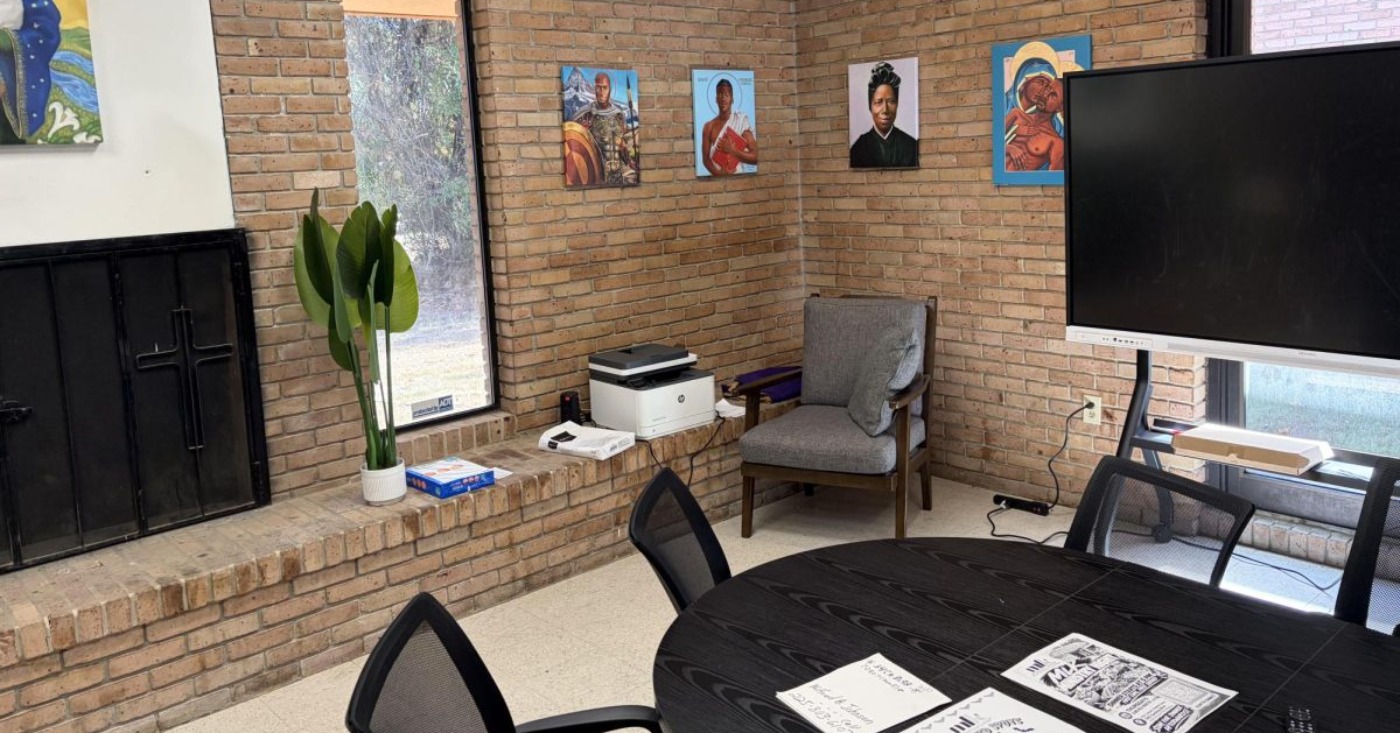
Madison Holmes wanted to leave Southern University. Now, she calls the Martin Luther King Jr. Catholic Student Center home.
The center’s new computer lab has become one of the places where Holmes feels calm, supported and connected to campus life. Holmes said she struggled with being away from her support system in Pass Christian, Mississippi, while also managing difficult classes. At the time, transferring closer to home seemed like a better option.
She recalled going to the library one day to print a lab report and finding a long line at the printer. “I was like, ‘Oh, wait. I know where I can go,’” Holmes said. “So, I came here and printed out my lab report, and then I took it to class.” Her experience is one example of how the center provides students with a place to turn when they need support.
The computer lab opened in October after the project began in August 2026. An anonymous private benefactor provided funding that helped pay for the lab and other improvements throughout the building.
The Rev. Thomas F. Clark, chaplain of the Martin Luther King Jr. Catholic Student Center, said the center aims to support students as they adjust to college life away from home. “You realize that when you’re away from home for the first time, you’re trying to make your way,” Clark said.
According to Clark, students often expressed the need for additional study space. Others shared concerns about unreliable laptops or computer crashes, concerns that ultimately helped shape the decision to add a computer lab.
The lab is one of several resources available to students. The center also provides Wi-Fi, study space and approximately 50 meals every Thursday at 5 p.m. Located across from Bethune Hall, the Martin Luther King Jr. Catholic Student Center has served Southern University students for decades.
According to the Roman Catholic Diocese of Baton Rouge, Father Rawlin B. Enette advocated for a stronger Catholic presence at Southern in the late 1960s. Construction on the center began in 1969 after land was donated by a university official.
Originally known as the Newman Center, the building was later renamed the Martin Luther King Jr. Catholic Student Center. Southern University art professor Frank Hayden also created religious artwork for the facility.
While the center provides practical resources, it also offers students a place to slow down, reflect and feel supported. For Holmes, Clark is part of that support system. “I do think that Father Clark is a safe space and a person I could go to,” Holmes said.
That sense of availability is intentional. Clark said students sometimes stop by with personal concerns or during times of stress. They talk and, in some cases, pray together as he helps students navigate the semester.
“We just feel that we can add to that support by being available and providing a warm and friendly place,” Clark said. As students navigate the challenges of college life, the Martin Luther King Jr. Catholic Student Center continues to offer a place of support, community and encouragement. For Holmes, it has become a home away from home.
Gallery • 3 Photos Brianna Meeks Interior shots of the newly create computer lab.
Based on reporting by Southern University – SouthernDIGEST.
Black Press
Check out These Smart Ways Tech Companies Can Speed up Project Timelines Today
CONTENTMANAGERIO — Tech companies face significant pressure to meet software development deadlines, as research from firm ZS indicates that early launch performance is often highly volatile. To mitigate the risk of delays and ensure products are ready for market on time, firms are increasingly turning to strategic process improvements.

Smart ways tech companies can speed up timelines for developing software include automating repetitive tasks to free up time and using AI-powered tools to accelerate development and decision-making. They can also improve team collaboration with centralized project management platforms and adopt continuous integration and delivery to reduce deployment delays.
Management consulting and technology firm ZS found that early launch performance is highly volatile, so it’s important that you have your products ready and launched on time.
Developing software is easier said than done, though, and it’s common to experience delays. Speed things up and streamline operations, so you launch as planned.
Can You Automate Repetitive Tasks to Free Up Time for High-Value Work?
Many project bottlenecks come from repetitive tasks that pile up, and in reality, these don’t need much human judgment. It’s much better to automate these tasks so that human workers can focus on high-value work instead.
Things you can automate include:
- Testing
- Code deployment
- Report generation
- Routine data entry
Automating these tasks also ensures better consistency and accuracy. Just make sure to only automate work where processes are already well-defined.
Use AI-Powered Tools to Accelerate Development and Decision-Making
Agile development should involve AI, as it can reduce the time spent on coding, research, documentation, and troubleshooting. With analytic tools, you can analyze large amounts of data to find key issues such as bottlenecks and tasks that may fall behind schedule.
Do note that these outputs will still need human review. Without it, you may be following erroneous reports, and this can put your project even further behind.
Improve Team Collaboration With Centralized Project Management Platforms
Engineering efficiency hugely depends on good communication, and this can be difficult when there are these stakeholders:
- Developers
- Designers
- Product managers
You may even need staff augmentation in software development to help in areas where you have a lack of people, and this adds to the chaos.
The best way to handle communication is to use centralized project management platforms. Your teams can easily see which tasks need to be done, as well as which ones are already complete. The platforms will also show what dependencies there are and who’s responsible for which tasks.
In addition, you can take it a step further and integrate these platforms with development tools and communication platforms.
Should You Adopt Continuous Integration and Delivery to Reduce Deployment Delays?
Continuous integration and continuous delivery (CI/CD) practices are vital if you want to speed up your timelines. They can reduce the risks that come with large and infrequent releases, as well as reduce the manual work required.
Implementing these practices can shorten feedback loops, as you can catch defects earlier. As a result, software delivery will be more efficient and faster.
Stay on Track When Developing Software
Developing software can be a monumental task, especially when you have multiple people on the job. If you stay organized, though, and use the right tools, you’ll be able to deliver a quality product exactly when you want to.
Check out more of our pages now to find additional informative articles.
Content provided through ContentManagerIO.
Black Press
What It Actually Takes to Convert Potential Customers Quickly and Consistently
CONTENTMANAGERIO — Converting potential customers into paying clients frequently depends on the efficiency of the business’s response after an initial inquiry. Many small businesses lose promising leads not due to a lack of interest, but because messages sit unaddressed in crowded inboxes or on social media platforms.
Turning potential customers into paying clients often comes down to what happens after the first inquiry. Fast responses, clear ownership, and consistent follow-up keep promising leads from slipping through the cracks.
How many leads slipped away last month because nobody called them back in time?
A contact form comes in on a Tuesday night, the message sits in an inbox until Thursday, and by then the customer has booked with someone else.
Most small businesses get plenty of interest. After someone reaches out, their inquiry lands in one of a dozen places: email, text messages, social media DMs, a sticky note on the desk. Closing more of those leads comes down to a few habits and the right tools to hold them in place.
How Do You Show Customers Your Value Right Away?
A potential customer decides within a few seconds whether your business deserves a reply. Your website headline, your first email, and the greeting on your voicemail all need to answer one question: what does this person get by choosing you?
Here’s what a strong first response covers:
- The specific problem you solve: Name it in the customer’s own words
- The result they can expect: Point to an outcome, such as a monthly savings figure
- What happens next: Give one clear action, like booking a call or requesting a quote
How Quickly Should You Respond to a New Lead?
A lead who just filled out a form is still thinking about the problem that sent them looking. Calling back within the hour catches them while they’re comparing options, and a same-day reply puts your business at the top of a short list.
Lead management software sends an automatic text or email the moment a request comes in, confirming you received it and telling the customer when to expect a call. A brief acknowledgment keeps them from clicking on the next search result.
Use Social Proof to Reduce Hesitation
In a digital world full of scams, it’s understandable that prospects would be skeptical about your business. Proof from real customers answers those doubts better than any claim you make about yourself.
Here are a few places to put that proof to work:
- Google reviews:Ask happy customers for a review
- Before-and-after photos: Show finished work on your website and social pages
- Short testimonials: Add a customer quote to your quote replies and follow-up emails
Remove Friction From the Buying Process
Every extra step between a customer’s yes and their payment gives them a chance to reconsider. A quote form with 12 fields, a booking process that needs a phone call during business hours, or a price they have to ask for all slow the decision down.
Trim your forms to a name, contact details, and a short description of the job. Let customers book appointments online, sign estimates from their phone, and pay by card or digital wallet.
Walk through your own process as a first-time customer would, and count how many times you’d have to wait on someone else.
Converting Potential Customers Starts With the Next Inquiry
Potential customers who fill out your contact form already want what you sell. What happens in the hour after they hit submit decides whether they buy from you or sign with a competitor.
Read more informative business content on our website.
Content provided through ContentManagerIO.
Black Press
Check out These Smart Ways Tech Companies Can Speed up Project Timelines Today
CONTENTMANAGERIO — Technology companies facing pressure to meet software development deadlines are increasingly turning to automation and artificial intelligence to streamline their operations. According to findings from management consulting firm ZS, early launch performance is often volatile, making it critical for businesses to ensure their products are ready for the market on time.

Smart ways tech companies can speed up timelines for developing software include automating repetitive tasks to free up time and using AI-powered tools to accelerate development and decision-making. They can also improve team collaboration with centralized project management platforms and adopt continuous integration and delivery to reduce deployment delays.
Management consulting and technology firm ZS found that early launch performance is highly volatile, so it’s important that you have your products ready and launched on time.
Developing software is easier said than done, though, and it’s common to experience delays. Speed things up and streamline operations, so you launch as planned.
Can You Automate Repetitive Tasks to Free Up Time for High-Value Work?
Many project bottlenecks come from repetitive tasks that pile up, and in reality, these don’t need much human judgment. It’s much better to automate these tasks so that human workers can focus on high-value work instead.
Things you can automate include:
- Testing
- Code deployment
- Report generation
- Routine data entry
Automating these tasks also ensures better consistency and accuracy. Just make sure to only automate work where processes are already well-defined.
Use AI-Powered Tools to Accelerate Development and Decision-Making
Agile development should involve AI, as it can reduce the time spent on coding, research, documentation, and troubleshooting. With analytic tools, you can analyze large amounts of data to find key issues such as bottlenecks and tasks that may fall behind schedule.
Do note that these outputs will still need human review. Without it, you may be following erroneous reports, and this can put your project even further behind.
Improve Team Collaboration With Centralized Project Management Platforms
Engineering efficiency hugely depends on good communication, and this can be difficult when there are these stakeholders:
- Developers
- Designers
- Product managers
You may even need staff augmentation in software development to help in areas where you have a lack of people, and this adds to the chaos.
The best way to handle communication is to use centralized project management platforms. Your teams can easily see which tasks need to be done, as well as which ones are already complete. The platforms will also show what dependencies there are and who’s responsible for which tasks.
In addition, you can take it a step further and integrate these platforms with development tools and communication platforms.
Should You Adopt Continuous Integration and Delivery to Reduce Deployment Delays?
Continuous integration and continuous delivery (CI/CD) practices are vital if you want to speed up your timelines. They can reduce the risks that come with large and infrequent releases, as well as reduce the manual work required.
Implementing these practices can shorten feedback loops, as you can catch defects earlier. As a result, software delivery will be more efficient and faster.
Stay on Track When Developing Software
Developing software can be a monumental task, especially when you have multiple people on the job. If you stay organized, though, and use the right tools, you’ll be able to deliver a quality product exactly when you want to.
Check out more of our pages now to find additional informative articles.
Content provided through ContentManagerIO.


A Career Path That Took an Unexpected Turn #shorts

Black Families: Compare Auto Insurance Quotes Every Year #shorts

Black Media in Minnesota: The Community That Kept Us Going #shorts

The Conversation With Al McFarlane: (11/10/2026)

Don’t Pass the Torch. Expand the Circle.

Kids on Campus: Success in Learning Together

Nixon Unbought, Unbossed and Undeterred Following U.S. Senate Defeat – Free Press of Jacksonville

PRESS ROOM: AutoNetwork.com Launches a Free Auto Section for Newspapers, Credit Unions, Banks, Churches, Schools and Nonprofits
The Workforce Is Changing — Get Ready Now!

The Power of Transparency in Car Buying

All Skinfolk Ain’t Kinfolk

Practitioners of African Traditional Spirituality Offer Ancestral Reverence Ritual Oct. 31

Tamiko Armstead | 2026 Lifetime Achiever in Education

Oakland Awarded More than $14 Million in State Funding

HISTORY MADE: Keisha Lance Bottoms Becomes First Black Woman Elected Governor in American History

OP-ED: The Black Church Writes AI’s Next Chapter

Inside 820 S. Michigan: New Book Captures the Lost World of Ebony and Jet

Jendayi Arrest Raises Community Concerns Regarding Sheriff’s Chain of Command

OP-ED: If the ‘Cornell 7’ Were Black Men at an HBCU — America Wouldn’t Be This Sympathetic

Kickstarter CEO Everette Taylor Shares Tips on Creating and Growing a Business
A Career Path That Took an Unexpected Turn #shorts
Black Families: Compare Auto Insurance Quotes Every Year #shorts
Black Media in Minnesota: The Community That Kept Us Going #shorts
The Conversation With Al McFarlane: (11/10/2026)
The Power of Transparency in Car Buying

The Chevy Bolt Handles Rough Roads—But How Noisy Is the Cabin? #shorts

Democratic Leadership Under Fire, Maxine Waters Challenged & Tyler Perry’s New Political Role 📱

Democratic Leadership Under Fire, Maxine Waters Challenged & Tyler Perry’s New Political Role

San Diego Supervisors’ Power Grab & Discretionary Funds

How Restaurant Apprenticeships Taught Me to Run a Business #shorts
-
 Black History5 days ago
HISTORY MADE: Keisha Lance Bottoms Becomes First Black Woman Elected Governor in American History
-

 Featured1 week ago
Multi-Faith Leaders Representing 10 Million People Launch National Anti-Authoritarian Initiative
-

 Black History1 week ago
Christianity’s Racial History
-

 Black History1 week ago
Michael Shiner: The Enslaved Man Who Wrote His Way into American History
-

 Black History1 week ago
Five Hospitals Said No! Who Will Help Annette Henry Recover?
-

 Black History6 days ago
Hundreds of Black Christian Leaders Arriving in Israel for Martin Luther King-Inspired Mission
