
Black History
Estevanico: The Man The Myth, The Legend
NNPA NEWSWIRE — Sometimes called “Mustafa Zemmouri,” “Black Stephen,” “Esteban the Moor” or “Steven Dorantes” (after his owner Andres Dorantes, a Spanish nobleman), Estevanico was a member of the Panfilo de Narvaez 300-man Spanish expedition which arrived in April 1528 near present-day Tampa Bay, Fla. The expedition was largely doomed from the start.


The first Black person in the New World
By Merdies Hayes, Editor | Our Weekly
The history of slavery in the Western Hemisphere has, of course, been well documented but there is one name that is often overlooked in within the posterity of Black people in the New World: Estevanico.
Sometimes called “Mustafa Zemmouri,” “Black Stephen,” “Esteban the Moor” or “Steven Dorantes” (after his owner Andres Dorantes, a Spanish nobleman), Estevanico was a member of the Panfilo de Narvaez 300-man Spanish expedition which arrived in April 1528 near present-day Tampa Bay, Fla. The expedition was largely doomed from the start. This was not uncommon among the list of Spanish conquistadors who ventured to the New World seeking fertile land and untold riches imagined from the artful tales of Giovanni Verrazano who explored the northeast, Cabeza de Vaca in the Gulf of Mexico, Hernando Cortes in Mexico, Hernando de Soto near present-day Florida, and Francisco Pizarro far south in Peru.
Who was Estevanico?
Chroniclers from the 16th Century, who were contemporaries of Estevanico, considered him a Negro. However, modern historians claim he was descended from the Hamites who were White residents of North Africa. According to this theory, Estevanico could not have been Black. Historian Caroll L. Riley has asserted that Estevanico was “Black in the sense that we would use the word in modern America. Actually, in modern generic terms I suspect that Estevanico was very mixed.”
Riley also explained that if Estevanico was considered a “Negro,” his mixture must have been mainly Black. Estevanico in 1513 was sold into slavery to the Portuguese in the town of Azemmour, a Portuguese enclave on Morocco’s Atlantic coast. More contemporary accounts have referred to him as an “Arabized Black” or Moor, the latter term often used for Berber natives. History primarily refers to him as a Black African. A Spaniard, Diego de Guzman, reportedly saw Estevanico in 1536 and described him as “brown.”
Estevanico was reared as a Muslim—with some accounts of him converting to Roman Catholicism—but there is little historical account of his religious conversion.
The natives of one tiny island off the mainland coast (Galveston Island near Texas), encountered a strange sight in 1528: A band of emaciated White men lying naked and near dead on the beach. This group, in large part, was what was left from Narvaez’ expedition with de Vaca serving as its treasurer. Narvaez dreamed of riches when he reached the Florida coast and after finding mere traces of gold, he split the group and dispatched the ships toward the River of Palms (today’s Rio Grande) and took the land force toward a reportedly “rich” city brimming with gold and silver called Apalachen (near Tallahassee, Fla.).
A doomed expedition
Instead of finding their heart’s desire in wealth, the only things encountered in the Florida Panhandle were naked Native Indians, low supplies of food and even less game. The 260-man party lasted two weeks in this region, and eventually set out on makeshift boats with sails made from clothing. This was a fateful mistake. There was practically no food left or fresh water to drink. After constantly bailing water from their rickety crafts (and forced to drink salt water), only a few people survived and made it to shore. Narvaez was lost at sea.
Cortes, for his part, had listened faithfully to these “tales of riches” but found neither a queen called “Califia” nor gold and pearls along the west coast. He did, however, step ashore onto what he believed to be an island (Baja California) finding neither riches or fertile land, but would claim the land for the Spanish crown.
Cabeza de Vaca eventually made it to Mexico with only three men, among them Estevanico. There they recounted the horrors of slavery, starvation, cannibalism and disease which took the lives of 90 men. They reportedly posed as shamans, crossing the land curing sick Indians and attracting quite a following in being labeled “children of the sun” because of their long journey from the east. By the spring of 1529, those four men had traveled on foot along the Texas coast to the environs of Matagorda Bay (about 80 miles northeast of Corpus Christi) only to be captured and enslaved by the Coahuiltecan Indians. Six years later the four men managed to escape their bondage and entered Mexico.
Arriving in Texas
Estevanico was assuredly the first African to traverse Texas. In fact, historians believe he was the first African to visit the indigenous people of Mexico and may have reminded the inhabitants of the ancient sculptures of the Olmec civilization in Mesoamerica (1200-900 B.C.) which depicted persons with Black facial features. Estevanico, by extension, may have been considered by the native population as a descendant of the gods. Some writers have claimed that the Olmecs were related to the peoples of Africa, based primarily on their interpretations of said facial features, even contending that epigraphical and osteological evidence may support their claims. Further, some researchers have claimed that the Mesoamerican writing systems are related to African script. To date, however, genetic and immunological studies over the decades have failed to yield evidence of precolumbian African contributions to the indigenous populations of the Americas.
By 1539, Dorantes had either sold or loaned Estevanico to Viceroy Antonio de Mendoza, who later assigned him to the company of Fray Marcos de Niza, the latter charged with leading a follow-up trip to the region of the failed Narvaez expedition. In a strange coincidence, Estevanico and others were surprised to encounter de Vaca near present-day San Antonio, Texas. By then, de Vaca had been working as a trader among the various Native Indian tribes. They resided in that region for about four years with Estevanico working as a shaman or medicine man versed in several Native Indian languages and also demonstrating his prowess as a seasoned explorer.
Estevanico must have been a strange sight to the native peoples. He rode around with a special gourd trimmed with owl feathers that signified his status. He reportedly had an entourage of some 300 natives, kept two Castillian greyhounds as pets, and possessed a special “medicine” wand with bells affixed to it said to ward off (and supposedly cure) various diseases. He also carried with him special plates made of turquoise specifically for his meals. He even had a special lodging constructed fit for a man of his stature.
Dreams of untold riches
Like the others before him, Estevanico was consumed by discovering the Seven Cities of Gold. His ultimate goal was to reach one of the seven famed cities of Cibola (near modern Zuni, NM) which was said to have streets paved with gold. When Estevanico and his entourage arrived at Hawikuh, a Zuni pueblo made of stone buildings several stories high, he expected to be treated as the man of stature he’d become accustomed to.
But the Zuni’s didn’t trust him. They especially disapproved of his gourd covered with owl feathers which were a symbol of death to that tribe. Also, his rather unusual stories about great White kings from far away further drew suspicion among the Zuni tribal leaders. There are two general accounts surrounding the fate of Estevanico. In one scenario, the Zuni people decided he was a spy (or simply a fraud) and killed him. Some accounts contend that he offended the Zuni people so much that they staged three executions eventually cutting up his body into little pieces. A second theory is that the Zunis didn’t kill him and that Estevanico staged his own death with the help of his allies, therefore finally gaining his freedom from slavery. The latter theory is supported by the fact that his body was never found.
His mysterious demise
The Zunis were asked why they killed Estevanico and they said that he claimed a huge army was following him with weapons meant to kill their tribe. Several of his Native Indian escorts reportedly escaped from the Zunis and returned to Mexico to inform Fray Marcos that Estevanico was dead. In his report to Viceroy Mendoza, Marcos said that he continued to travel north to at last enter Cibola (or Hawikuh) and upon arrival he witnessed a chief with Estevanico’s turquoise dinner plates, his two greyhound dogs, and his famed “medicine” bells.
Irrespective of his demise, Estevanico is one of many historical figures of color who manipulated their situation to move between cultures and transcend their humble beginnings. His is a true story of transformation from a slave to a man of legend evidenced by the Zunis memorializing him in a black ogre kachina (a doll measuring about a foot high with protruding teeth, a black goatee and black facial paint) which they called Chakwaina.
A legendary adventure
The tale of Estevanico is more than a story told in the oral tradition. Often, the history and contributions to society by Black persons prior to European settlement in the New World are considered less authentic and reliable in terms of literary content because it was believed Blacks did not ascribe to a written language. Estevanico did not write a diary or narrative of his exploits.
However, two small thin volumes of literature provide a wealth of information about this early explorer. John Upton Terrell published “Estevanico The Black” in 1968 and at only 115 pages, it ranks as one of the most informative books about an extraordinary figure who doesn’t always receive due attention in secondary education. In 1974, “Estebanico” was issued by Helen Rand Parish. Even smaller than Terrell’s book at 128 pages, she wrote that Estevanico could be considered “new historical history” particularly for young readers.
Also, “The Moor’s Account” by Laila Lalami (2015) provides a more fictional account of Estevanico. The author created her own back story about the events that led up to his enslavement and then fills in gaps of what we know about the Narvaez expedition that would eventually place Estevancio’s name in the history books.
No one knows where Estevanico is buried. Hawikuh no longer exists, having been abandoned in 1670 following a series of wars the Zunis fought against the Spaniards and the Apache. But Estevanico’s story, recorded in colorful detail by his fellow explorers Cabeza de Vaca, Fray Marcos, Coronado, and Pedro de Casteneda, endures as one of the great adventures in American lore.







Black History
HISTORY MADE: Keisha Lance Bottoms Becomes First Black Woman Elected Governor in American History
ATLANTA DAILY WORLD — History has been made in Georgia. Keisha Lance Bottoms, the former mayor of Atlanta, has been elected governor of Georgia, becoming the first Black woman in American history to win the highest executive office in any state.

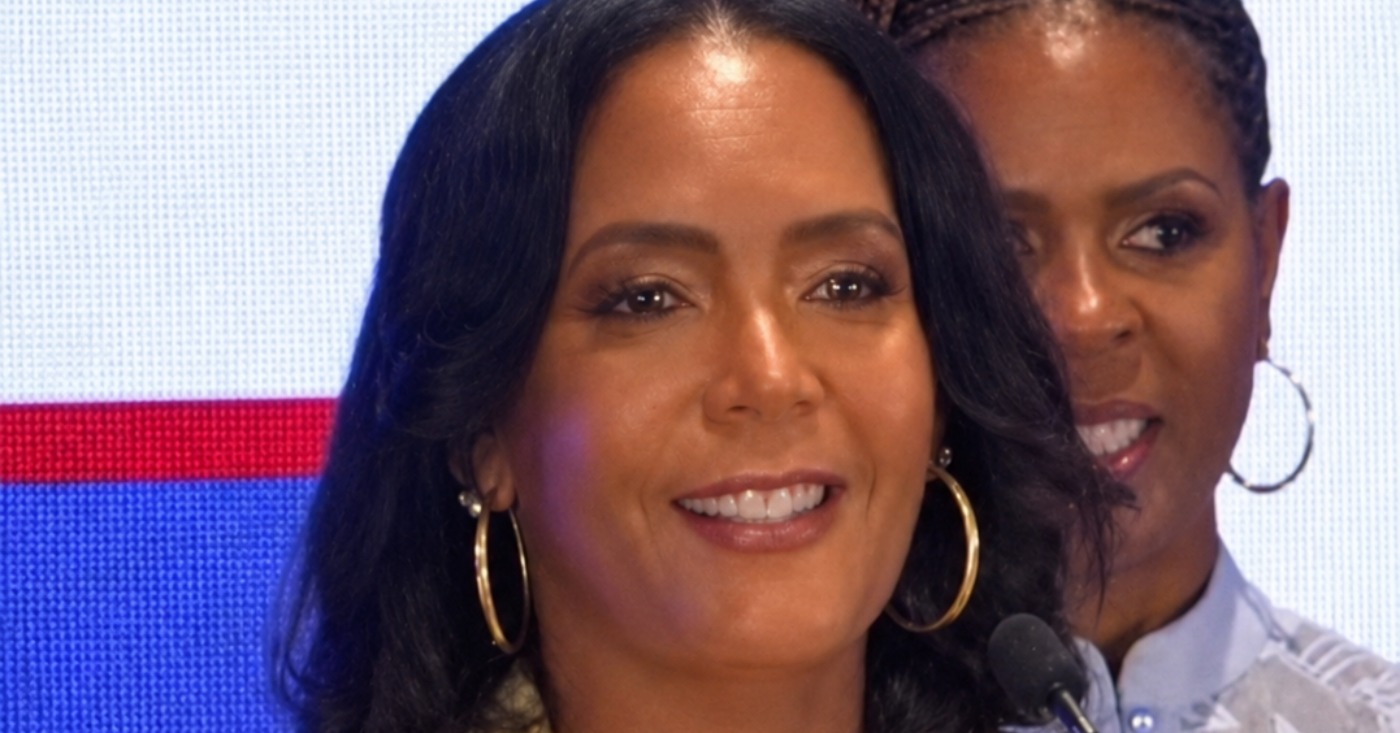
History has been made in Georgia. Keisha Lance Bottoms, the former mayor of Atlanta, has been elected governor of Georgia, becoming the first Black woman in American history to win the highest executive office in any state.
Bottoms’ victory over Republican businessman Rick Jackson represents a defining moment in American politics, breaking a barrier that has stood since the nation’s founding and placing Georgia at the center of a historic political transformation.
For generations, Black women have played a critical role in American democracy, organizing communities, leading movements, mobilizing voters and shaping public policy. Yet despite their contributions, no Black woman had ever been elected governor of a U.S. state.
Until now.
Bottoms’ election also makes her the first woman and first Black person elected governor of Georgia, a state whose political history has been deeply shaped by slavery, segregation, the civil rights movement and the long struggle for equal representation.
Her victory carries particular significance in a state where Black women have been among the most influential forces in voter registration, political organizing and Democratic electoral success.
A fifth-generation Georgian, Bottoms previously served as Atlanta’s 60th mayor from 2018 to 2022. During her administration, she led the city through the COVID-19 pandemic, nationwide protests over racial injustice and a period of significant economic and population growth.
Following her time as mayor, Bottoms served as a senior adviser in President Joe Biden’s administration before returning to Georgia politics to pursue the governorship.
Her campaign focused on expanding access to health care, strengthening public education, increasing wages and addressing the rising cost of living. She also advocated for expanding Medicaid, raising Georgia’s minimum wage to $15 an hour and increasing compensation for teachers and other public employees.
Bottoms faced Jackson, a wealthy health care executive who invested heavily in his campaign and positioned himself as a political outsider. The contest drew national attention as Democrats sought to reclaim the Georgia governor’s office after more than two decades of Republican control.
The historic nature of Bottoms’ victory extends well beyond party politics.
Georgia, once at the center of some of America’s most consequential civil rights battles, has now elected a Black woman to lead its state government. It is a milestone that reflects generations of political participation, organizing and leadership by Black Georgians.
For Atlanta, the moment is especially significant. A former mayor of the city that helped shape the modern civil rights movement will now lead the entire state.
Bottoms’ election opens a new chapter in Georgia’s political history and establishes a milestone that will be remembered far beyond the 2026 election.
For continuing election coverage and results, visit AtlantaDailyWorld.com/election26.
Black History
Hundreds of Black Christian Leaders Arriving in Israel for Martin Luther King-Inspired Mission
Hundreds of African American and African Christian leaders are visiting Israel for the ‘Unfinished Business Pilgrimage,’ inspired by Dr. Martin Luther King’s plans for a pilgrimage in 1967 that was canceled due to the Six Day War. The event aims to promote pro-Israel sentiments amidst rising antisemitism and will expand to thousands of participants in 2027. Pastor Dumisani Washington emphasizes the importance of Black Americans recognizing their role in supporting Israel. Pilgrimage leaders are also delivering gifts to victims of recent violence, reiterating the historical bond between Jewish and Black communities in advocating for justice. Pastor Michael A. Stevens highlights the need for education against antisemitism while suggesting that Israel should be more attuned to issues affecting Black lives.
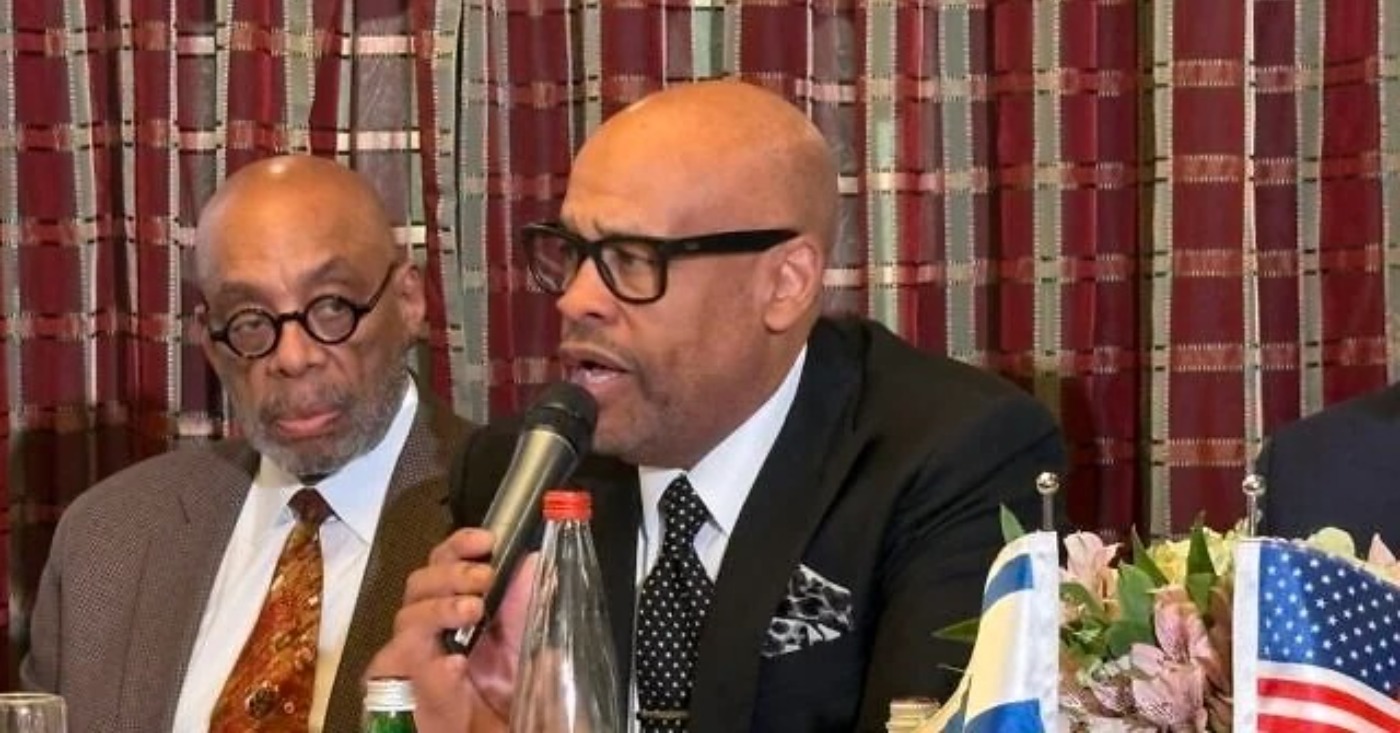
As support for Israel declines precipitously in the US, hundreds of African-American and African pastors and Christian leaders are arriving in Israel this week for a mission inspired by the slain US civil rights leader Rev. Dr. Martin Luther King.
King planned to bring thousands of pilgrims to Israel and Jordan in 1967, but that trip was postponed because of the Six Day War and the political implications of such a trip. He said he would look into coming the next year, but was assassinated in April 1968.
“There were no mass pilgrimages” back then, says Pastor Dumisani Washington, a pro-Israel activist, at a press conference in Jerusalem. “We as Black Americans recognize that Black Americans were about to start something that no one else was doing.”
The “Unfinished Business Pilgrimage” will expand to thousands of participants next year, say organizers, to mark 60 years since King’s planned visit.
“We felt a burden in our heart,” Washington continues. “We see the rising antisemitism on the right and on the left.”
There is a “mountain of support rising from the Black church,” says Pastor Michael A. Stevens, Sr.
The leaders of the pilgrimage present gifts to victims of the Hamas-led October 7, 2023, massacre, including freed hostage Elkana Bohbot; Hila Abir, whose brother Lotan was murdered at the Nova music festival; and Daniel Lischinsky, whose son Yaron was murdered alongside his fiancée Sarah Milgrim at an Israeli embassy event in Washington, DC.
Ther rest of the participants arrive tomorrow, and will visit biblical sites across the country, as well as the site of the Nova massacre.
Steven says that Jewish and Black Americans had a tradition of coming together to “establish what was right, and to set the tone for the nation and for the world.”
“If anyone should stand with our Jewish brothers and sisters, it ought to be African-Americans, it ought to be Africans,” he continues.
Though rates of antisemitism have risen among people of color, Stevens tells The Times of Israel, “I still think we are the lowest-hanging fruit to educate and to learn.” He says, “The African-American Church is still the most influential institution in all of America, in fact, at least in the Black community.”
Stevens says one of the objectives of the mission is to spread awareness that “we cannot have antisemitism in our culture, period.”
At the same time, he says that Israel could improve its approach to Black America: “I believe Israel could be more attentive to the fact that a lot of the loss of lives that we see looks like us. Whether it’s in Gaza, whether it’s Ethiopians and racism.”
Reverend Dr. Benjamin F. Chavis. Jr. is on this delegation representing the Black Press of America and Spill the Honey as a present-day fulfillment of the dream and prior plan of Reverend Dr. Martin Luther King, Jr in 1967 to lead a 5000 Black Clergy Pilgrimage to Israel.
Black History
Christianity’s Racial History
THE POSITIVE COMMUNITY — Historian and author Jemar Tisby is challenging the traditional narratives of American religious history through his acclaimed work, The Color of Compromise. His research provides a comprehensive examination of how Christian institutions have historically participated in, accommodated, or resisted racial injustice from the colonial era to the present day.
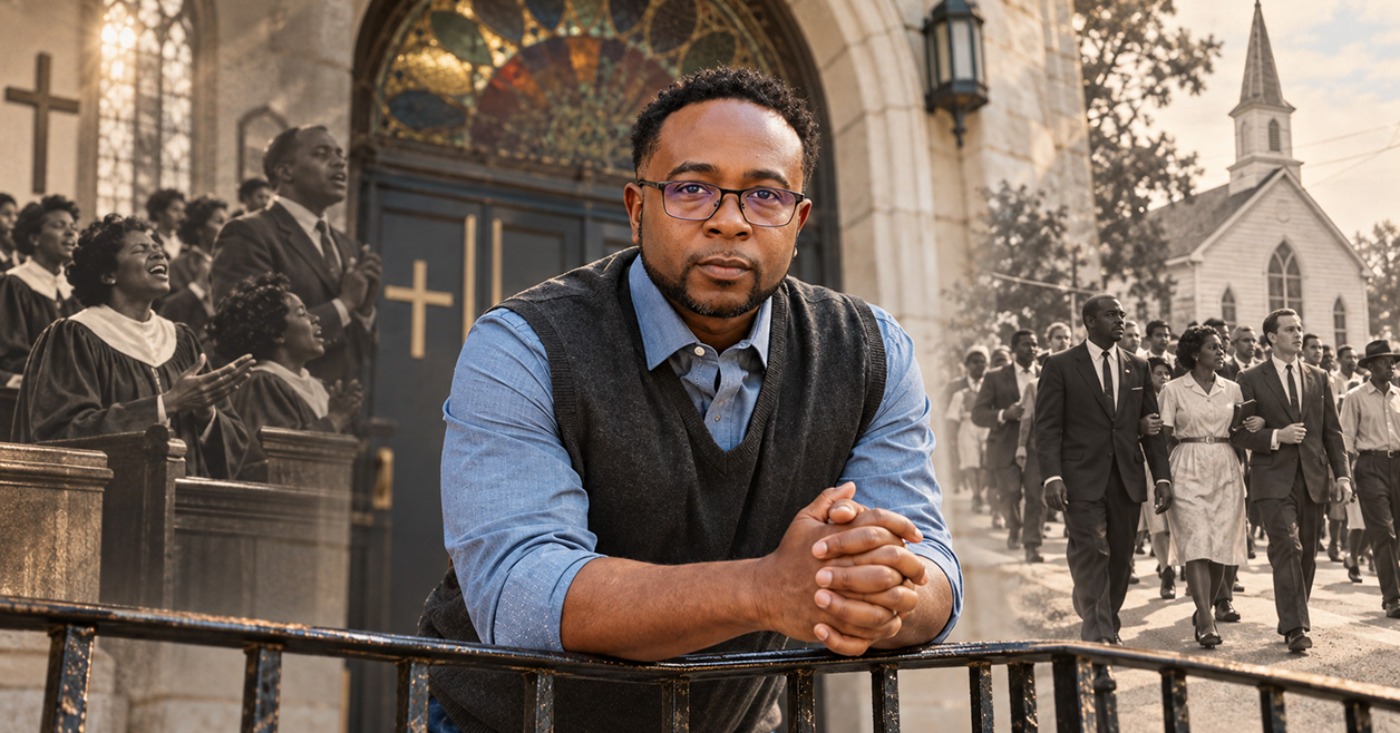
Jemar Tisby is a historian, author, and public speaker whose work examines the relationship between Christianity, racism, and American history. Through his writing, he challenges readers to reconsider the role religious institutions have played in shaping racial attitudes and social structures. His widely recognized book, The Color of Compromise: The Truth About the American Church’s Complicity in Racism, explores how Christian churches have participated in, accommodated, and sometimes resisted racial injustice throughout American history. Tisby’s work encourages readers to examine the past honestly and consider what meaningful change requires today.
One of the central arguments in The Color of Compromise is that racism in America cannot be understood without examining the influence of religious institutions. Christianity has often been associated with messages of love, justice, compassion, and equality. Yet churches and Christian leaders have sometimes supported systems that denied African Americans their freedom and dignity. Tisby examines this contradiction, demonstrating how religious beliefs and institutions could be used to justify racial oppression rather than challenge it.
The book takes readers back to the era of European colonization and slavery, when religious arguments were frequently used to defend the enslavement of Africans. Some Christian leaders claimed that slavery was compatible with biblical teachings, while others used Christianity to encourage resistance to the institution. Enslaved Africans developed their own spiritual traditions, drawing strength from their faith while enduring violence, separation from family, and the denial of basic human rights. Tisby highlights the importance of understanding how Christianity became intertwined with the development of American slavery.
Tisby also explores the role of churches during the Civil War and Reconstruction. Although emancipation ended legal slavery, it did not eliminate racial prejudice or the struggle for equal citizenship. Some religious communities supported efforts to educate formerly enslaved people and establish independent Black institutions. Others tolerated or defended segregation and white supremacy. The period demonstrates how Christian institutions faced a choice between challenging racial injustice and preserving existing social arrangements.
Another important subject in the book is the relationship between Christianity and Jim Crow segregation. During the late nineteenth and early twentieth centuries, racial segregation became deeply embedded in American society. Many churches reflected the same divisions, maintaining separate congregations and unequal opportunities for worship and leadership. Tisby argues that compromise occurred not only when Christians openly defended racism but also when they remained silent or accepted discriminatory practices to avoid conflict. This distinction is essential to understanding the book’s central message.
The civil rights movement provides another significant chapter in this history. Black churches played a vital role in organizing demonstrations, supporting community leadership, and providing spiritual encouragement to people fighting racial discrimination. Figures such as the Reverend Dr. Martin Luther King Jr. drew upon Christian teachings to challenge segregation and demand equal rights. However, not all white Christian congregations supported the movement. Tisby examines the difference between those who actively opposed racism and those who hesitated to challenge the racial status quo.
A major strength of Tisby’s writing is his attention to the difference between individual prejudice and institutional racism. A person may believe in treating others fairly while participating in organizations or traditions that produce unequal outcomes. Similarly, a church may preach love and acceptance while failing to confront discriminatory practices within its own community. Tisby encourages Christians to look beyond personal intentions and examine the consequences of their actions, their institutional policies, and their willingness to address injustice.
The book also challenges contemporary Christians to consider how the legacy of racial compromise continues to affect American religious life. Questions about church leadership, worship communities, racial representation, education, and public policy remain important. Tisby argues that acknowledging historical wrongdoing is not about assigning personal guilt to every modern Christian. Rather, it is about understanding how past decisions shaped the present and recognizing the responsibility to pursue greater fairness, accountability, and inclusion.
Tisby’s work has become an important contribution to conversations about race and religion because it asks readers to move beyond comfortable narratives about American Christianity. His historical approach encourages people to examine uncomfortable evidence, listen to the experiences of African Americans, and recognize the difference between professing moral principles and practicing them. The book also raises questions about what genuine reconciliation requires, emphasizing that meaningful progress involves more than expressions of goodwill. It requires a willingness to confront injustice and make changes that reflect the values Christians claim to uphold.
Ultimately, The Color of Compromise is a call for historical honesty, moral reflection, and meaningful action. Jemar Tisby challenges churches and individual believers to understand how Christianity has been used both to support oppression and to inspire resistance against it. His message is especially relevant in a society still wrestling with racial inequality and the consequences of its history. By examining the past with courage and integrity, readers can better understand the responsibilities of faith in the present. The book reminds us that the true test of religious conviction is not simply what people profess to believe, but whether their actions reflect justice, compassion, and respect for the dignity of every human being.
Based on reporting by The Positive Community.
Black History
Learn Black History and Win Your Next Game Night
INDIANAPOLIS RECORDER — Dr. Maxine Bryant, a culture keeper and professor, is combatting book bans and historical inaccuracies through the launch of GriotSpeaks: The Game. The new board game is designed to celebrate the African diaspora by incorporating elements of geography, literature, music, and the Gullah Geechee culture.
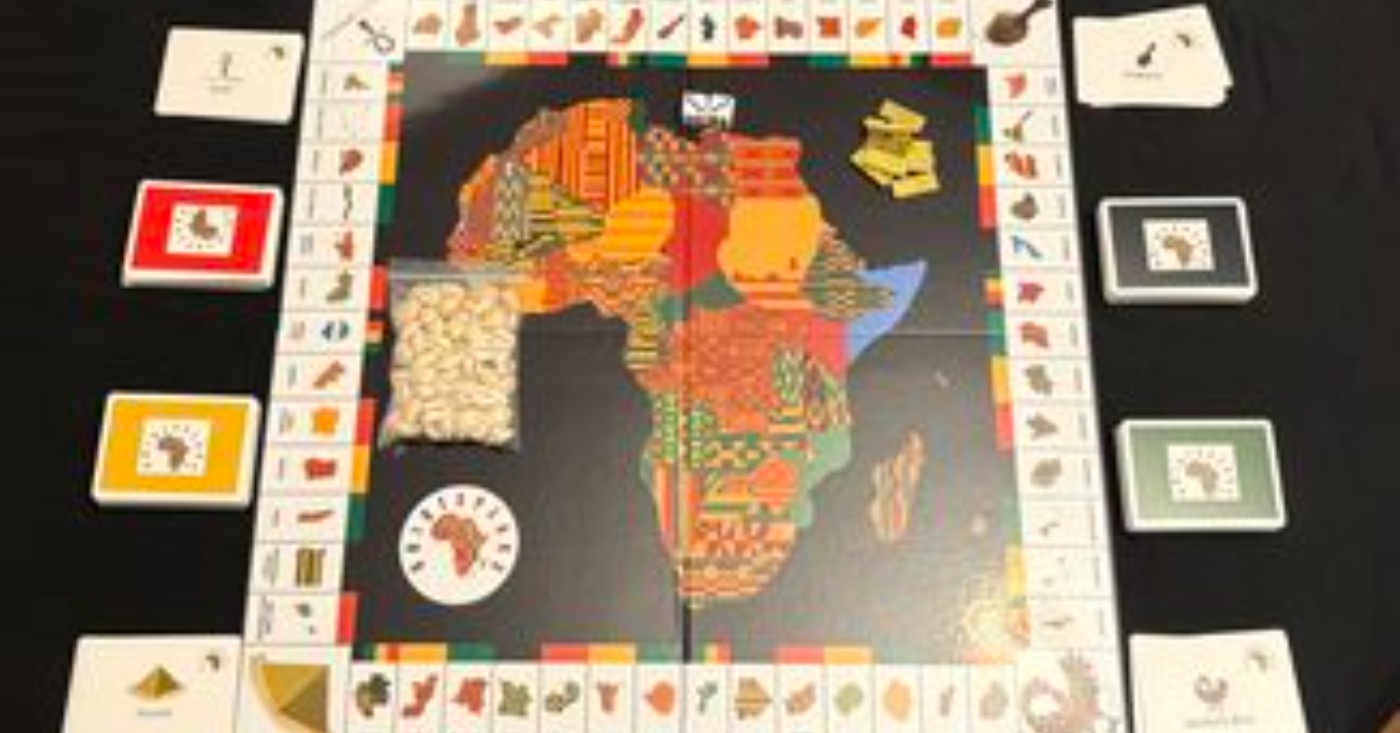
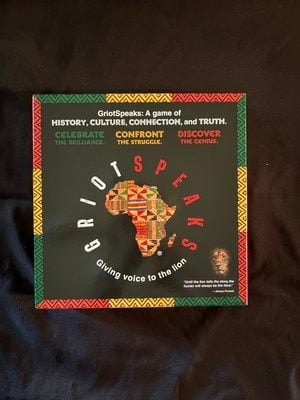
Maxine Bryant, Ph.D., creator and founder GriotSpeaks, is sharing the history of the African diaspora through her new board game.
Bryant often quotes the African proverb: “Until the lion tells the story, the hunter will always be the hero.” She said for the hunter has been telling the story of the African diaspora for “far too long.”
The game is based in African culture. The spaces on the board feature the countries of the African diaspora and it uses gold bars and cowrie shells as currency while special game spaces showcase symbols such as the Sankofa bird, a pyramid and an Ankh.
Bryant, a culture keeper and educator, created the game to add a bit of fun to her ongoing mission of dispelling myths and sharing accurate history. She used the history lessons she taught over the years as the foundation for the game’s trivia questions. Bryant said she is even more motivated to correct the inaccurate narratives due to recent book bans and efforts to minimize or omit the contributions of Black people.
“We can’t tell our story if we don’t know our story,” Bryant said.
History buffs may start the game with a slight advantage, but even players with limited knowledge have a chance to win with some strategic play. During one game demonstration, she said, an 11-year-old beat her with the clever use of one of the game’s wild cards.
Bryant’s goal is for people to learn new information while having a good time with one another. She sat down with the Recorder to share her inspiration for the game and how she hopes it will influence the culture.
This interview has been edited for length and clarity.
What was the inspiration for creating a game?

Maxine Bryant: In all honesty, God gave me the vision for the game.
I put that board game together the way God showed me in in this vision, if you will, it was to be educational, informative, and entertaining. And so, I knew I wanted it to encompass all of the diaspora and with the educational part of it. Since I am a professor, it needed to encompass the critical areas of our history.
So, it’s geography; it’s the resistance, the protest — all of that. It’s … literature, music, the Gullah Geechee culture, storytelling, the whole gamut, and then Black people.
What are some of the things people are surprised to finally learn while playing the game?
Bryant: The genius of Black people.
Many people know Madam C.J. Walker, although I’m finding out that not everybody does. But one of the questions (asks about) who invented the hot comb? Everybody thinks Madam C.J. Walker, but no, that was not her thing. Her thing was hair care and strengthening hair. It was a man (Walter H. Sammons) who created the hot comb. So, people are amazed at what they’re learning.
How do you hope that this new knowledge helps people see the world?
Bryant: So, what I hope people learn is our true history, the history of our struggle, and our resistance, the history of our greatness, and information about our culture. That positions us then to be able to stand tall in knowledge of self.
One of the things I wholeheartedly believe in is that little Black boys and little Black girls who grow up with the message that you are nothing because you are Black … it’s easy for me to take you out. But if I look at you and I know that you’re great and I’m great, I may just have a different kind of level of respect for you.
I think that having a sense of self can impact how I look at myself and how I look at people who look like me.
Is there anything else you want to share?
Bryant: In my mind, this game is a must-have. It is so unique. Now, within the culture, we have trivia games and usually they’re trivia about sports or about entertainment and some about history, right? And usually, it pertains to people in the United States or events in the United States, culture in the United States.
This game contains movement around a physical board like Monopoly, but it also encompasses the entire African diaspora so it’s not just the United States. People who played this game tell me … they’ve never seen anything like it.
GriotSpeaks: The Game is best suited for players 17 and older. The game is available for purchase through Amazon or at the GriotSpeaks website.
Contact Editor-in-Chief Camike Jones at 317-762-7850.
The post Learn Black history and win your next game night appeared first on Indianapolis Recorder.
Based on reporting by Indianapolis Recorder.
Black History
Five Hospitals Said No! Who Will Help Annette Henry Recover?
Annette Henry, a 67-year-old Oakland woman, is struggling to access essential medical care after a devastating stroke left her with a rare neuropathic pain syndrome. Despite medical documentation confirming her need for inpatient rehabilitation, five different Bay Area hospitals have denied her admission, often citing her inability to meet rigid therapy thresholds. Her family’s efforts to seek intervention from state and federal lawmakers have yielded no results, leaving Henry at home without a clear path to recovery. To see how these systemic failures are impacting her health, read more.
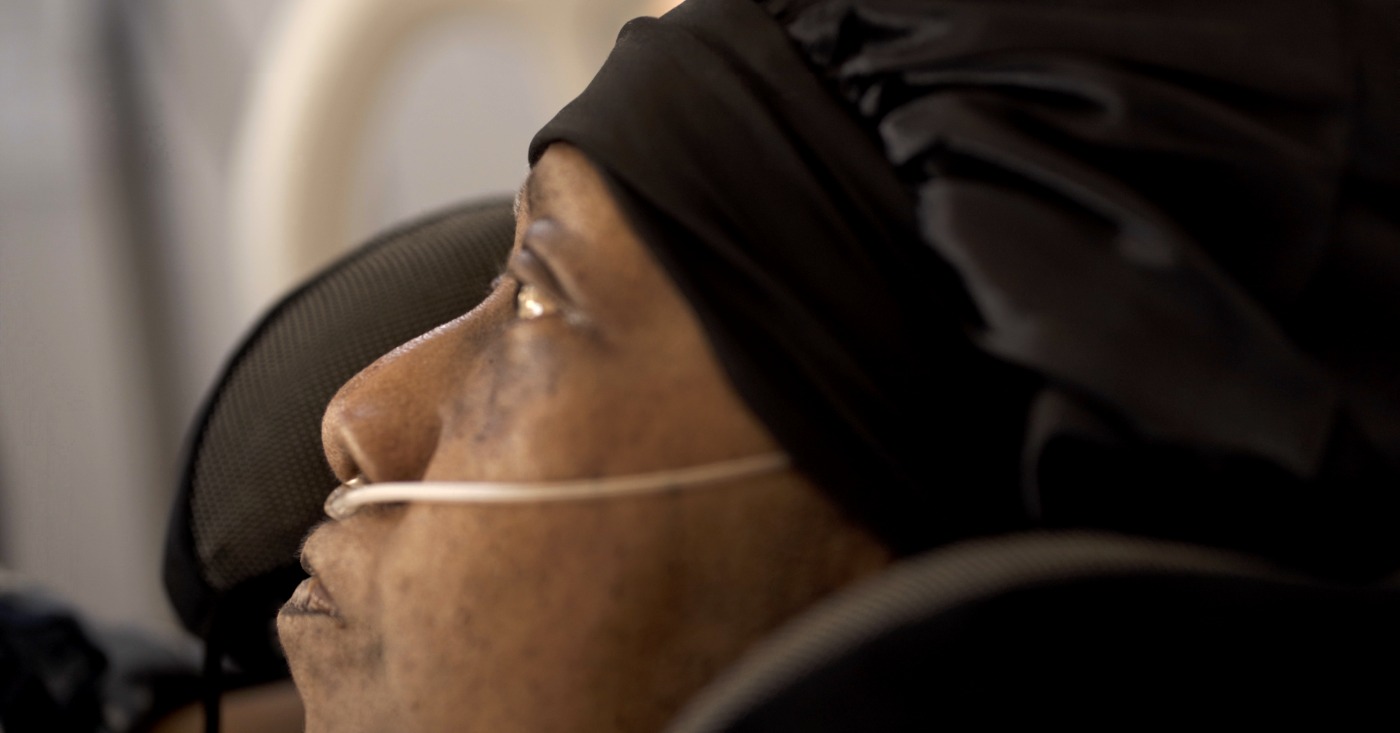
A tangle of red tape and contradictions between health providers and Medicare rules have impeded an Oakland woman’s ability to recover from a stroke she had last year.
Her family – who are her caretakers – have reached out to various professionals and state and federal lawmakers for help to no avail.
At 67, Annette Henry needs inpatient stroke rehabilitation after a devastating stroke in May 2025. Since then, multiple Bay Area hospitals have denied it. She was accepted into a rehabilitation facility in June 2025 but discharged prematurely in July, in essentially the same condition.
Three hospitals where she was a patient pushed skilled nursing over inpatient rehabilitation. Two more declined referrals.
Now at home, Henry is caught in a system that measures her need for treatment against the limitations treatment should address.
Medical professionals have documented her need for a higher level of care.
In August 2025, a Medicare Quality Improvement Organization (QIO) overturned Henry’s discharge from an inpatient rehabilitation facility (IRF).
The QIO’s independent physician reviewer found she had not received the “intensive therapy program outlined on admission,” according to the Aug. 30, 2025, determination letter. Yet the decision did not secure her readmission or guarantee continued rehabilitation.
Henry has central post-stroke pain, a rare neuropathic pain syndrome that can make movement and touch intensely painful. Her pain specialist recommended inpatient rehabilitation alongside pain management.
Nevertheless, facilities have cited her inability to tolerate three hours of daily therapy as a reason to deny inpatient rehabilitation.
That practice raises questions about Medicare coverage policy. In Hooper v. Sullivan, No. H-80-99 (D. Conn. 1989), the court recorded the parties’ agreement that denials based on numerical utilization screens, diagnostic screens, treatment norms, the “three-hour rule,” or other “rules of thumb” were not appropriate.
CMS subsequently cited Hooper in its Aug. 7, 2009, final rule (74 Fed. Reg. 39762, 39794). The policy is also addressed in the Medicare Benefit Policy Manual, Chapter 1, Section 110, and CMS’s June 1 Review Choice Demonstration for IRF Services: Operational Guide.
These authorities underscore the need for individualized assessments rather than rigid numerical thresholds.
The central contradiction is stark: the pain and disability that make rehabilitation necessary have been cited as reasons to deny it. UCSF Stanyan’s April 7 discharge summary for Henry states that acute rehabilitation unit (ARU) placement was declined for “inability to tolerate three hours of therapy daily.” Without appropriate treatment, Henry risks further decline.
Her records document complications associated with prolonged immobility.
Orthopedics documented flexion contractures of the small and ring fingers on March 19.
Chest imaging on April 1 showed bibasilar dependent atelectasis, a condition involving reduced inflation of the lower portions of both lungs. These concerns can be examined through her medical records and photographs.
“What does a ‘not reasonable’ discharge look like?” her family asks. For them, it looks like an appeal decision recognizing a problem without ensuring a remedy: repeated referrals, denials and a patient still without the rehabilitation her treating professionals have recommended.
The family has sought help from the California Department of Public Health and the federal Office for Civil Rights to no avail. They contacted U.S. Rep. Lateefah Simon in June 2025, while Henry was in rehabilitation; Senator Alex Padilla in May 2026; and Senator Adam Schiff in September 2026.
DeCuir says the family received no meaningful assistance and was redirected to the QIO or advised working with a social worker after Henry had already been discharged.
The consequences extend beyond rehabilitation. The family reports that Henry has struggled to attend in-person specialist or any appointments and needs in-person evaluation and treatment for complications, recommended evaluations, health screenings and preventive care.
Her mobility limitations have become barriers to broader medical care. Every office tells her their office is not set up to accommodate her. This has happened with specialty care, out-patient services, screenings and physical therapy.
Henry is a Black woman on Medicare, and her family believes her experience raises concerns about unequal access to intensive rehabilitation. Research has documented disparities in discharge to inpatient rehabilitation rather than skilled nursing, underscoring the importance of individualized review.
CMS, state regulators and healthcare providers should examine Henry’s records, assess her needs on their clinical merits and explain how the applicable coverage standards were applied, and whether they are being enforced.
Rehabilitation is not a reward for patients who can already tolerate treatment. It is care intended to help people recover function. Henry’s case asks whether a system designed to support recovery can leave a patient without a path to it.
Black History
From Backyard Grilling to Jack London Square: Jamale Carlyle’s Chicken Wing Success Story
Jamale Carlyle turned a backyard hobby into a flourishing business after using grilling to cope with the loss of his mother and sister. The former corporate executive and CPA transitioned from a twenty-year career in the power industry to selling chicken wings at farmers’ markets in Tracy and Oakland. Following immediate success and viral social media attention, Carlyle opened two permanent storefronts and established a charitable partnership to support local youth. His journey highlights a unique path from internal auditing to community entrepreneurship. Read more.
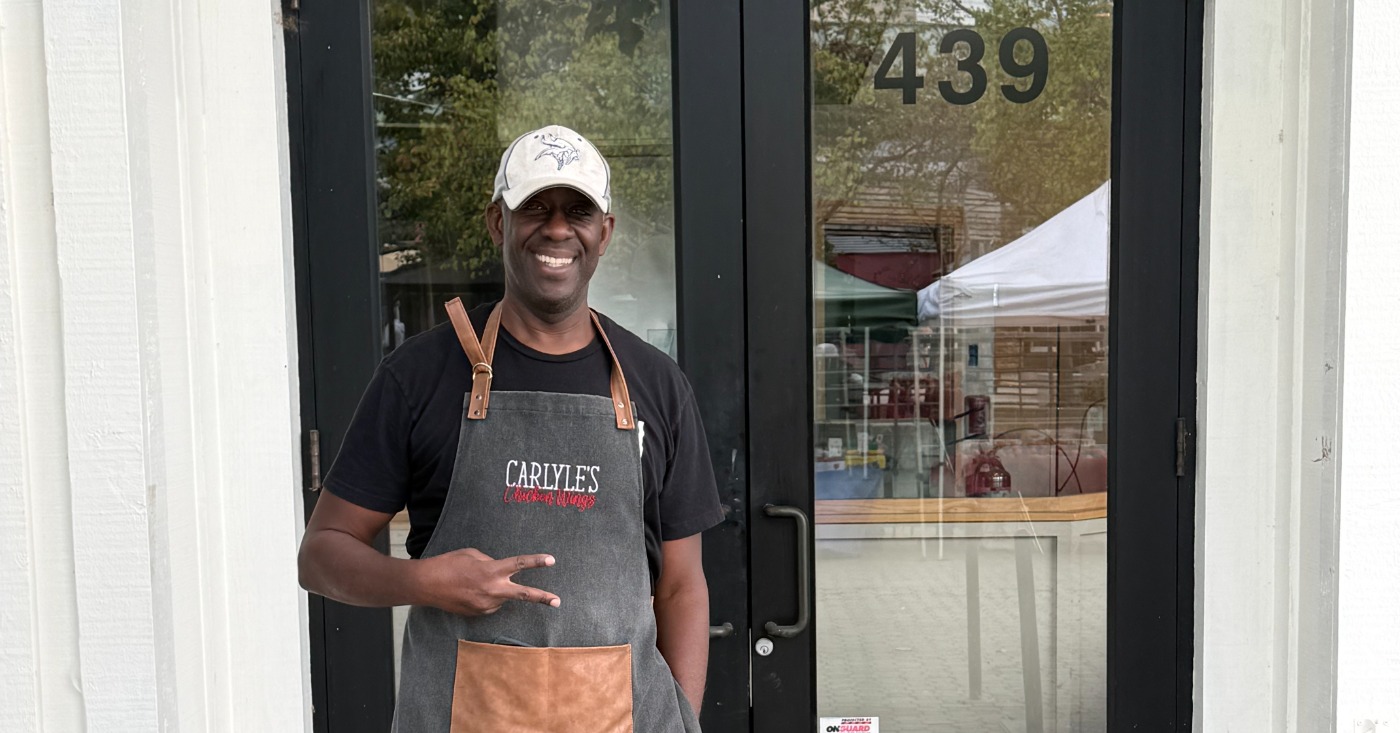
For Jamale Carlyle, what began as a way to cope with personal loss has grown into a thriving chicken wing business with locations in Tracy and Oakland’s Jack London Square.
Raised in Los Angeles, Carlyle remains a southern kid at heart, guided by the values and principles instilled in him growing up. In 2020, he lost his sister, and two months later, his mother passed away. The losses left him grieving half of his immediate family and searching for a way forward.
He turned to God, and to two favorite pastimes: grilling chicken wings and deep sea fishing. Friends who gathered in his backyard encouraged him to turn his chicken wings into a business.
Carlyle had built a successful corporate career before becoming an entrepreneur. An economics graduate of the University of California, Irvine, he earned a master’s degree in accounting from the University of Southern California and became a certified public accountant (CPA).
He spent more than 20 years in the power industry, including working for Edison International in Los Angeles and Boston. He later joined JP Energy Partners in Dallas, helping its team take the company public.
After moving to San Francisco in 2016, Carlyle spent 10 years with Pattern Energy, a wind energy company, where he served as vice president of Internal Audit and took on numerous corporate responsibilities.
But in 2025, grilling became more than a hobby. Carlyle began selling his wings at farmers’ markets, initially dedicating four hours every Saturday. Nervous about his first outing in Tracy, he wondered whether his friends had simply been encouraging. Instead, he sold out on opening day.
He later brought his business to Jack London Square’s Farmers Market, where he again sold out on his first day. As demand grew, he expanded into catering before opening his Tracy storefront in May 2026 and his Jack London Square location in July.
Social media helped fuel the momentum. In Tracy, enthusiastic reviews on the community’s Rants and Raves Facebook page brought customers through the door. His Jack London Square debut also gained traction online, generating approximately 100,000 views on social media on his on opening day.
Still processing the rapid growth, Carlyle describes the business as something that began in his backyard as a stress reliever and became an unexpected calling, and a way of giving back.
“Giving back” has led to a partnership with Mike Jenkins, owner of Oakland Strong, a nonprofit gym known for Olympic style weight lifting and developing national and international champions. After Jenkins visited Carlyle’s store with members of his team, Carlyle returned the visit, and the two began discussing ways to partner to support the community.
“I’m really big on charity. I believe in giving back to the community,” Carlyle said. “I knew before I opened my store, I’d be doing something like this, this is what God wants me to do.”
Their collaboration will introduce the “Oakland Strong Bowl,” featuring 10 dry-rub Cajun wings and a vegetable-rice bowl for $17.99, with $2 from each purchase donated to the Oakland Strong Foundation. The initiative is expected to launch in early November.
“This builds community in Oakland and Jack London Square,” Carlyle said.
Looking ahead, Carlyle plans to expand the menu with chicken thighs, chicken tacos and additional sides. He is also pursuing a liquor license to create a destination where customers can enjoy wings while watching sports.
For now, he is focused on growing his two locations. But with customers embracing his food and his commitment to giving back, Carlyle sees the possibility of bringing his chicken wings to more communities throughout the Bay Area.

Let’s Talk- Clearing the Air Series with Mya Trujillo

Cybersecurity Awareness Month: Staying Safe in a Digital World | Let’s Talk on WIN-TV

RESILIENCE Dance Company

Compare Car Insurance Quotes and Save Money #shorts

War Broke Trump’s Youth Coalition

Congratulations to the Fall 2026 Citizens Academy graduates!

The Conversation With Al McFarlane (11/05/2026)

How Flava Cafe Turned a Coffee Shop Into Opportunity for Black Youth | MSR On the Radar

Every Vote Counts – Close Races

Every Vote Counts – Close Races

All Skinfolk Ain’t Kinfolk

Practitioners of African Traditional Spirituality Offer Ancestral Reverence Ritual Oct. 31

Latinas Deserve Equal Pay. Unions Help Make It Happen.

Tamiko Armstead | 2026 Lifetime Achiever in Education

Oakland Awarded More than $14 Million in State Funding

Should You Have to Pay to Hear the Gospel?

OP-ED: The Black Church Writes AI’s Next Chapter

2026 Voting Guide: Every Candidate and Proposition Explained!

Botham Jean’s Killer Granted Parole 7 Years After His Murder

Jendayi Arrest Raises Community Concerns Regarding Sheriff’s Chain of Command
Cybersecurity Awareness Month: Staying Safe in a Digital World | Let’s Talk on WIN-TV
RESILIENCE Dance Company
Compare Car Insurance Quotes and Save Money #shorts
War Broke Trump’s Youth Coalition
Congratulations to the Fall 2026 Citizens Academy graduates!
The Conversation With Al McFarlane (11/05/2026)
How Flava Cafe Turned a Coffee Shop Into Opportunity for Black Youth | MSR On the Radar
Every Vote Counts – Close Races
Every Vote Counts – Close Races

Every Vote Counts – Close Races
-
 Black History1 week ago
Retirement Triggers Doctor to Pen Book for Young Audience
-

 Art1 week ago
Capturing Black Life’s Beauty
-

 Black History15 hours ago
HISTORY MADE: Keisha Lance Bottoms Becomes First Black Woman Elected Governor in American History
-

 Featured3 days ago
Multi-Faith Leaders Representing 10 Million People Launch National Anti-Authoritarian Initiative
-

 Black Press1 week ago
Fatigue, Bloating, and Inflammation: Spotting the Subtle Signs of MASLD
-

 Black Press1 week ago
When Your Faith Is Put to the Test

