
Health
Ebola: How it Spreads


This undated photo made available by the Antwerp Institute of Tropical Medicine in Antwerp, Belgium, shows the Ebola virus viewed through an electron microscope. (AP Photo/Antwerp Institute of Tropical Medicine)
The Associated Press
Here are some facts about how Ebola spreads:
WHEN IS EBOLA CONTAGIOUS?
Only when someone is showing symptoms, which can start with vague symptoms including a fever, flu-like body aches and abdominal pain, and then vomiting and diarrhea.
HOW DOES EBOLA SPREAD?
Through close contact with a symptomatic person’s bodily fluids, such as blood, sweat, vomit, feces, urine, saliva or semen. Those fluids must have an entry point, like a cut or scrape or someone touching the nose, mouth or eyes with contaminated hands, or being splashed. That’s why health care workers wear protective gloves and other equipment.
The World Health Organization says blood, feces and vomit are the most infectious fluids, while the virus is found in saliva mostly once patients are severely ill and the whole live virus has never been culled from sweat.
WHAT ABOUT MORE CASUAL CONTACT?
Ebola isn’t airborne. Dr. Tom Frieden, director of the Centers for Disease Control and Prevention, has said people don’t get exposed by sitting next to someone on the bus.
“This is not like flu. It’s not like measles, not like the common cold. It’s not as spreadable, it’s not as infectious as those conditions,” he added.
CAN DOGS SPREAD IT?
No one knows. Authorities euthanized the pet dog of a Spanish nursing assistant who caught Ebola while caring for a patient there. No case of Ebola spreading between dogs and people has ever been documented. But at least one study suggests dogs may be able to get Ebola without showing symptoms.
WHO GETS TESTED WHEN EBOLA IS SUSPECTED?
Hospitals with a suspected case call their health department or the CDC to go through a checklist to determine the person’s level of risk. Among the questions are whether the person reports a risky contact with a known Ebola patient, how sick they are and whether an alternative diagnosis is more likely. Most initially suspicious cases in the U.S. haven’t met the criteria for testing.
HOW IS IT CLEANED UP?
The CDC says bleach and other hospital disinfectants kill Ebola. Dried virus on surfaces survives only for several hours.
Copyright 2014 The Associated Press. All rights reserved. This material may not be published, broadcast, rewritten or redistributed.











Black History
Five Hospitals Said No! Who Will Help Annette Henry Recover?
Annette Henry, a 67-year-old Oakland woman, is struggling to access essential medical care after a devastating stroke left her with a rare neuropathic pain syndrome. Despite medical documentation confirming her need for inpatient rehabilitation, five different Bay Area hospitals have denied her admission, often citing her inability to meet rigid therapy thresholds. Her family’s efforts to seek intervention from state and federal lawmakers have yielded no results, leaving Henry at home without a clear path to recovery. To see how these systemic failures are impacting her health, read more.

A tangle of red tape and contradictions between health providers and Medicare rules have impeded an Oakland woman’s ability to recover from a stroke she had last year.
Her family – who are her caretakers – have reached out to various professionals and state and federal lawmakers for help to no avail.
At 67, Annette Henry needs inpatient stroke rehabilitation after a devastating stroke in May 2025. Since then, multiple Bay Area hospitals have denied it. She was accepted into a rehabilitation facility in June 2025 but discharged prematurely in July, in essentially the same condition.
Three hospitals where she was a patient pushed skilled nursing over inpatient rehabilitation. Two more declined referrals.
Now at home, Henry is caught in a system that measures her need for treatment against the limitations treatment should address.
Medical professionals have documented her need for a higher level of care.
In August 2025, a Medicare Quality Improvement Organization (QIO) overturned Henry’s discharge from an inpatient rehabilitation facility (IRF).
The QIO’s independent physician reviewer found she had not received the “intensive therapy program outlined on admission,” according to the Aug. 30, 2025, determination letter. Yet the decision did not secure her readmission or guarantee continued rehabilitation.
Henry has central post-stroke pain, a rare neuropathic pain syndrome that can make movement and touch intensely painful. Her pain specialist recommended inpatient rehabilitation alongside pain management.
Nevertheless, facilities have cited her inability to tolerate three hours of daily therapy as a reason to deny inpatient rehabilitation.
That practice raises questions about Medicare coverage policy. In Hooper v. Sullivan, No. H-80-99 (D. Conn. 1989), the court recorded the parties’ agreement that denials based on numerical utilization screens, diagnostic screens, treatment norms, the “three-hour rule,” or other “rules of thumb” were not appropriate.
CMS subsequently cited Hooper in its Aug. 7, 2009, final rule (74 Fed. Reg. 39762, 39794). The policy is also addressed in the Medicare Benefit Policy Manual, Chapter 1, Section 110, and CMS’s June 1 Review Choice Demonstration for IRF Services: Operational Guide.
These authorities underscore the need for individualized assessments rather than rigid numerical thresholds.
The central contradiction is stark: the pain and disability that make rehabilitation necessary have been cited as reasons to deny it. UCSF Stanyan’s April 7 discharge summary for Henry states that acute rehabilitation unit (ARU) placement was declined for “inability to tolerate three hours of therapy daily.” Without appropriate treatment, Henry risks further decline.
Her records document complications associated with prolonged immobility.
Orthopedics documented flexion contractures of the small and ring fingers on March 19.
Chest imaging on April 1 showed bibasilar dependent atelectasis, a condition involving reduced inflation of the lower portions of both lungs. These concerns can be examined through her medical records and photographs.
“What does a ‘not reasonable’ discharge look like?” her family asks. For them, it looks like an appeal decision recognizing a problem without ensuring a remedy: repeated referrals, denials and a patient still without the rehabilitation her treating professionals have recommended.
The family has sought help from the California Department of Public Health and the federal Office for Civil Rights to no avail. They contacted U.S. Rep. Lateefah Simon in June 2025, while Henry was in rehabilitation; Senator Alex Padilla in May 2026; and Senator Adam Schiff in September 2026.
DeCuir says the family received no meaningful assistance and was redirected to the QIO or advised working with a social worker after Henry had already been discharged.
The consequences extend beyond rehabilitation. The family reports that Henry has struggled to attend in-person specialist or any appointments and needs in-person evaluation and treatment for complications, recommended evaluations, health screenings and preventive care.
Her mobility limitations have become barriers to broader medical care. Every office tells her their office is not set up to accommodate her. This has happened with specialty care, out-patient services, screenings and physical therapy.
Henry is a Black woman on Medicare, and her family believes her experience raises concerns about unequal access to intensive rehabilitation. Research has documented disparities in discharge to inpatient rehabilitation rather than skilled nursing, underscoring the importance of individualized review.
CMS, state regulators and healthcare providers should examine Henry’s records, assess her needs on their clinical merits and explain how the applicable coverage standards were applied, and whether they are being enforced.
Rehabilitation is not a reward for patients who can already tolerate treatment. It is care intended to help people recover function. Henry’s case asks whether a system designed to support recovery can leave a patient without a path to it.
Black Press
SEIU Local 1000 and State of California Will Continue to Negotiate New Labor Contract
Thousands of California state employees represented by SEIU Local 1000 recently staged a one-day walkout to protest stalled contract negotiations with Governor Gavin Newsom’s administration. The union, which represents approximately 100,000 public workers, is demanding a 20% wage increase over three years and an end to mandatory four-day in-person work requirements. While the initial strike has concluded, union leadership warns that further demonstrations are likely if the state continues to reject their demands for better pay and telework flexibility. Negotiations are expected to continue as both sides seek a resolution. Read more.
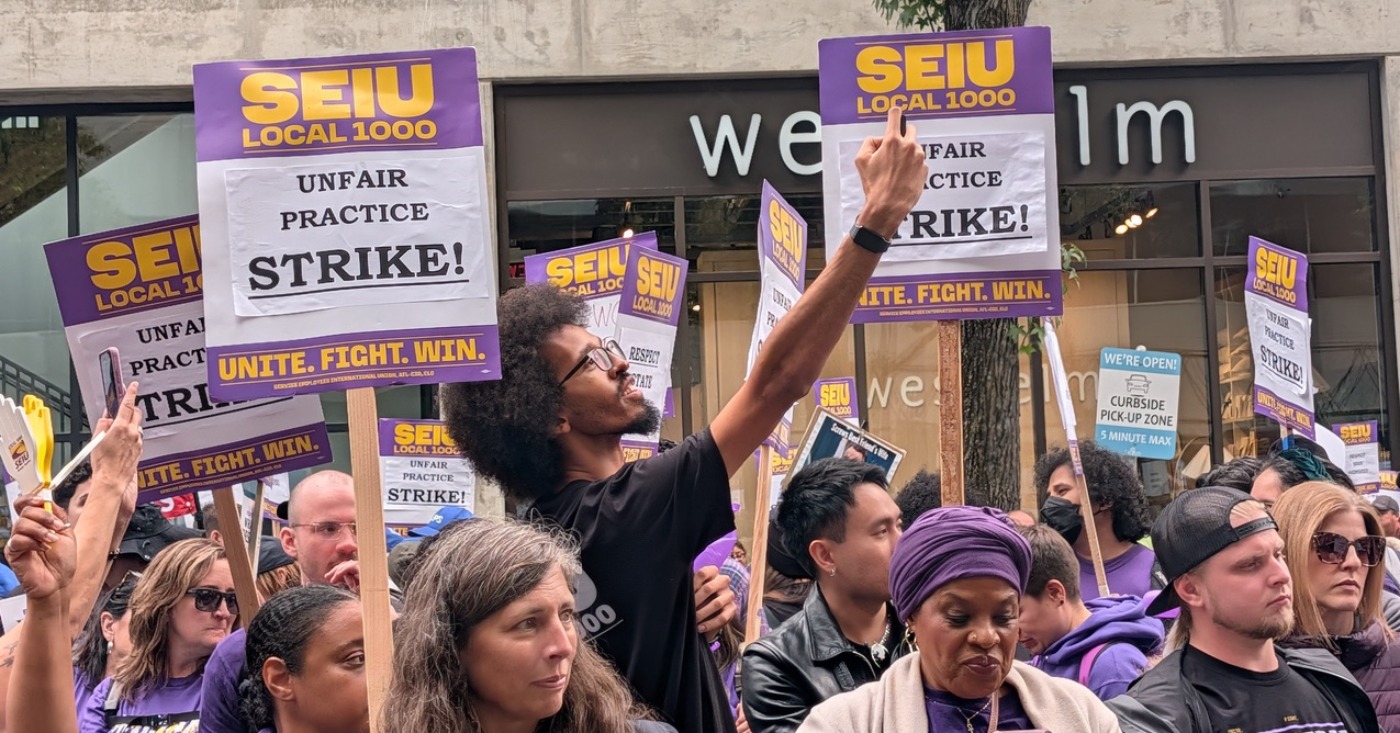
After the Service Employees International Union (SEIU) Local 1000 labor contract expired June 30 and talks with Gov. Gavin Newsom’s administration stalled, the union stepped up its efforts to secure a new agreement, saying its demands had gone unheeded.
On Oct. 21, thousands of state employees represented by SEIU Local 1000 staged a one-day walkout to protest alleged unfair labor practices during negotiations with Gov. Gavin Newsom’s administration.
Although the strike has ended, SEIU Local 1000 President Anica Walls said further demonstrations or an expanded strike are highly likely if contract negotiations remain stalled. The union represents approximately 100,000 public employees statewide.
“We are out here because our jobs matter,” Wells said. “If they continue to refuse to bargain with us in good faith, we are prepared to escalate.”
Sen. Lola Smallwood-Cuevas (D-Los Angeles) expressed support for SEIU Local 1000’s labor action in an Instagram post, emphasizing the importance of fair treatment for workers.
“I stand in complete solidarity with SEIU Local 1000,” Smallwood-Cuevas stated. “More than 100,000 state workers they represent are on strike today fighting for good-faith bargaining, fair treatment, and a contract that reflects the value of the essential public services they provide every day—all things that should be a given for the workers our state relies on the most.”
Smallwood-Cuevas, a member of the California Legislative Black Caucus (CLBC) added, “When California’s workers hold the line, the whole nation pays attention.”
According to union representatives, SEIU Local 1000 is seeking a contract that addresses rising living costs and provides greater workplace flexibility. The union is demanding a 20% wage increase over three years and an end to Gov. Gavin Newsom’s requirement that state employees work in person four days a week.
The union is also seeking increased state contributions toward employee health care benefits to reduce workers’ out-of-pocket costs.
On Sept. 18, Newsom vetoed Assembly Bill 1729, authored by Assemblymember Alex Lee (D-San Jose), which sought to expand telework opportunities for state employees.
The bill would have required state agencies to offer telework options or provide written justifications for requiring employees to work in person. Supporters argued that telework could save taxpayers approximately $225 million annually by reducing office space and parking costs while lowering vehicle emissions and improving employee retention.
Newsom said the legislation would limit state departments’ flexibility to manage their workforces and evaluate telework exemptions individually. He has also emphasized the benefits of in-person collaboration.
“I want people to come back to work, reengage, rediscover, collaborate, coordinate, develop relationships, friendships, and fall in love,” Newsom said in July. “You get three-day weekends. Four years ago, that would’ve been a triumph. Now it’s a burden.”
Union organizers described the Oct. 21 walkout as a one-day unfair labor practice strike, rather than an indefinite work stoppage. The action was intended to demonstrate solidarity and increase pressure on the state during negotiations.
SEIU Local 1000 has been without a contract since its previous three-year agreement expired June 30. Negotiations are expected to resume.
Responding to the statewide walkout, the California Department of Human Resources (CalHR) said it “remains focused on achieving a fair and responsible agreement with SEIU Local 1000 and continues to be available at the bargaining table.”
Black History
Oakland Strong: Building Champions and Healthier Generations
Entrepreneur Mike Jenkins is revitalizing youth wellness in Oakland through Oakland Strong, a world-class strength-training facility in Jack London Square. After providing a decade of free training in Fruitvale, the program moved and rebranded while continuing to produce national and international weightlifting champions. Jenkins aims to counter community health challenges by teaching Olympic-style lifting and nutrition to children ages 8 to 18. As the program seeks new ways to sustain its free services, local partnerships are forming to support these elite young athletes. Read more.

Mike Jenkins is a serial entrepreneur with a vision to make a lasting impact in Oakland.
Raised in a military family in the Pinole area, Jenkins played basketball at Merritt College before continuing his athletic career at Sacramento State.
His lifelong interest in health and wellness led him to consider a troubling reality: as members of the Black community age, health challenges often increase. Jenkins believes investing in health is an investment in wealth, and he has made it his mission to give Oakland’s youth a stronger foundation for life.
Years ago, Jenkins invested in young people by building Speed Power Strength, a world-class strength-training facility in the Fruitvale neighborhood. For 10 years, the facility served hundreds of children, providing training entirely free of charge. Displaced by gentrification, the program eventually found a new home in Jack London Square.
That move inspired a new name: Oakland Strong, reflecting both the program’s mission and its pride in the city it represents.
“When we found the new home, I needed to put a spotlight on what we were doing– producing the strongest kids in Oakland – so I named our new location Oakland Strong,” Jenkins explained. “We are known nationally and internationally, so when we compete, our city’s name is on our chest.”
Through Olympic weightlifting, governed nationally by USA Weightlifting, the program has developed an extraordinary record. Its athletes have earned 10 national championships, a team national championship, and international titles. Today, two Oakland Strong athletes are Olympic hopefuls.
This past summer, Oakland had three athletes at the Olympic Training Center in Colorado Springs at the same time. One was Olympic figure skating champion Alysa Liu. The other two were Oakland Strong’s Robert Whitlock and Rucker Johnson, there for a weightlifting camp for Olympic hopefuls.
Whitlock, an Oakland Technical High School student, began training at age 10. Now a three-time consecutive national champion, two-time Pan American champion, and Team USA representative, Whitlock also holds an American record while maintaining straight A’s in school.
“If Oakland can’t support these kinds of kids, then what are we doing?” Jenkins asks.
Oakland Strong continues offering free training in Jack London Square to young people ages 8-18. The program welcomes girls as well as boys, with approximately 12 kids currently participating with room for 20.
With limited city support for free youth programs, Jenkins must find other ways to sustain the work.
When Carlyle Chicken Wings opened nearby, he approached the owner with an idea connecting nutrition and community investment. Because Oakland Strong teaches healthy eating alongside athletic training, they developed the Oakland Strong Bowl, a protein-focused meal. Carlyle will contribute $2 from each bowl sold to support the program.
For Jenkins, the mission extends far beyond medals and records. He wants to create generational health by teaching young people habits they can carry into adulthood and share with their families.
The strongest legacy, he believes, is not simply producing champions, but building healthier generations who understand their worth, their potential, and the importance of investing in themselves.
Black Press
Home Nursing Visits Provide Wide-Ranging Benefits for Mothers, Young Children
Researchers at the University of Chicago led by Nobel Laureate James Heckman found that the Nurse-Family Partnership program significantly improves the lives of first-time mothers with limited incomes. By utilizing registered nurses for home visits from pregnancy until age 2, the program fosters stronger social, emotional, and academic development in children while reducing maternal anxiety. A long-term analysis of 1,138 participants reveals lasting cognitive benefits and healthier home environments for families. Discover how these early interventions impact specific developmental milestones as children reach adolescence and read more.
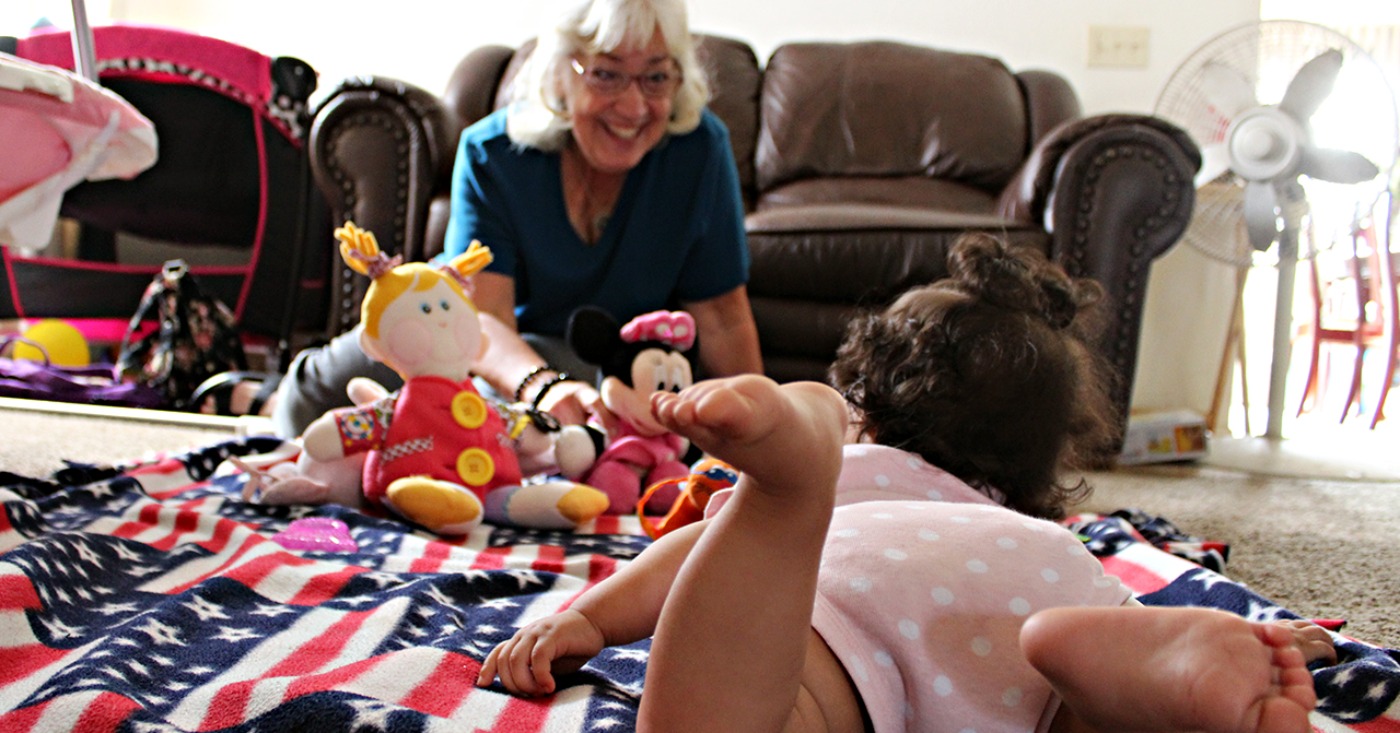
This story was originally published by EdSource.
Children born to first-time mothers with limited incomes who received home nursing visits showed increased mental health, stronger social and emotional development and academic gains, according to researchers who analyzed the impact of the Nurse-Family Partnership program, one of the largest home visiting programs in the country.
Researchers also found the program reduces anxiety and improves the parenting skills of mothers. It also has a positive impact on home environments and behavior skills in children, researchers found. Researchers said the benefits of the program “warrant continued and increased investment.”
The Nurse-Family Partnership program utilizes trained registered nurses who work closely with families during pregnancy and up to age 2. The nurses teach them to maintain proper health, develop parenting skills and establish work and family goals.
The research team that conducted the analysis was led by James Heckman, a Nobel Laureate in economics and professor and director of the Center for Economics of Human Development at the University of Chicago. The study was titled “Nurse-Family Partnership: Parental education and early health result in better child outcomes.”
“This study of Nurse-Family Partnership (NFP) shows that parenting early in life very much matters, and that voluntary programs that work closely with parents to strengthen parenting skills and provide early health can make a difference,” the study states. Researchers analyzed information on the health and well-being of mothers and children from pregnancy up to age 12. The study includes a sample size of 1,138 participants. The study analyzed outcomes for children who participated in the program, compared to children who were not part of the program but received some services at the same ages.
A family’s participation in the Nurse-Family Partnership program ends when a child turns 2 but the study found long-term benefits. For instance, the study found that young boys who participated in the program scored higher than peers that did not participate in the program on reading and math assessments, as 12-year-olds, the age when they were last assessed. Researchers said this academic achievement could be attributed, in large part, to the program’s impact — seen as early as age 6 — on cognitive skills, such as a child’s ability to understand, reason, learn and remember.
While the study found the program improved cognitive skills for both boys and girls at age 6, it did not find any significant effect on reading and math achievement for 12-year-old girls who participated in the program. Researchers did not directly address reasons for this in the study.
During home visits, nurses help to promote healthy eating, prenatal care and eliminating the use of tobacco, alcohol and illegal drugs, the study states. After delivery, nurses help to foster strong parenting skills and show new moms how to interact with their children. For example, parents are encouraged to read to their children. Mothers are also given advice on goal setting in areas such as work, school and family planning.
The study divided its analysis into five categories: child health, family environments, child cognition (thinking, learning, understanding), social and emotional development (behaviors and attitudes) and achievement scores on math and reading. For example, The Peabody Picture Vocabulary Test, which measures what experts in the field call English receptive language skills. That refers to words young children can identify and understand when they hear them.
Other key findings in the study include:
- Improved birth weight for infant boys. Boys were healthier at the time of delivery. If left untreated, low birth weight is associated with developmental problems that can persist as a child grows.
- Healthier home environments, parenting attitudes and maternal mental health “significantly improved” among participating mothers for boys and girls by age 2. Mothers of young girls specifically experienced less anxiety, more self-control, higher self-esteem and greater emotional stability, the study states. Under the same categories for boys, results show “mixed.”
- Girls showed more improvement in social and emotional skills, the ability to manage and understand emotions. They specifically improved in areas such as warmth and sensitivity.
- By age 6, both boys and girls who participated in the program showed better cognitive skills, such as thinking, reading, memory and learning.
- Long-term benefits of the program were more evident for boys than girls. For example, by age 12 boys outperformed peers who were not a part of the program in reading and math achievement. Study states “much weaker long-term effects” for girls.
- Positive effects overall were associated with the program’s impact on mothers’ health and early investment in young children.
Black History
Retirement Triggers Doctor to Pen Book for Young Audience
THE CHAMPION NEWSPAPER — After more than 35 years as a pediatric surgeon, Dr. Deborah Burton has transitioned from the operating room to the world of young adult literature. Writing under the pen name MD Burton, the retired Marietta physician recently released her debut sci-fi fantasy mystery novel, Invisible Cages: The Alynthia Quest.

After more than 35 years as a pediatric surgeon, Deborah Burton retired but didn’t give up one of the most rewarding aspects of her career—connecting with young people.
Burton used writing and her imagination to create a young adult sci-fi fantasy mystery novel, Invisible Cages: The Alynthia Quest, under the pen name MD Burton. Her debut novel launched in early October, and Burton said she’s been delighted with the responses so far.
The novel follows Jade Babington who leads a team of resourceful friends as they join an elite organization to crack a spy network and embark on a high-tech adventure to find answers. Her quest is complicated by powers that surge through her body, and to be successful, she needs to understand her family roots, embrace her emerging talents, and step into her legacy, according to a press release.
Through the book, readers are introduced to a range of characters who work in STEM and healthcare careers which Burton hopes will inspire readers to consider pursuing careers in some of those areas.
Burton moved to Dunwoody in 1995 and ran a successful pediatric ear, nose, and throat practice in Marietta. She retired in 2021 but missed the educational moments she shared with her young patients.
“I talk to kids all the time,” said Burton, adding that she likes to share insight into the many career paths in healthcare. “I love to educate and empower.”
She said she worked on the book for five years, researching coding, microchips, and satellites.
“It was a learning journey,” she remarked.
The book explores themes of self-acceptance, girl empowerment through strong female characters, the importance of family, and STEM exposure, states the press release. Set on a fictional health complex, the novel introduces readers to healthcare careers, as well as engineering and computer science.
The author also had to delve into unique aspects of her main character.
“Jade has powers and sees auras,” she explained. “So I spent a good amount of time learning about auras, telepathy and magical realism.”
In addition, to providing insight to STEM and healthcare careers, Burton hopes the books help her teen female readers dealing with insecurities to better understand and appreciate what makes them unique and the power they possess. She also hopes it will build self-confidence.
“You have to accept who you are,” she said. “Whatever your differences are, everybody’s got them, embrace them.”
Burton said she originally planned the book to be a seven-part series but on the advice of her edit changed it to four parts.
“I know what my end goal is,” said Burton noting that she’s included Easter eggs in the first book to entice readers throughout the reading process and has a completed outline for the other books in the series. After completing an audiobook of Invisible Cages: The Alynthia Quest by the end of the year, Burton plans to start writing the next book in 2027.
On Nov. 15, a book signing is scheduled at the Politan Row food hall in Dunwoody.
The self-published book is available in eBook, paperback, and hardback formats, on Amazon, Barnes & Noble, and other online retailers.
3 total views
Based on reporting by The Champion Newspaper.
Black Press
Fatigue, Bloating, and Inflammation: Spotting the Subtle Signs of MASLD
THE BLACK CHRONICLE — Many individuals mistakenly believe that liver disease is exclusively the result of heavy alcohol consumption, causing metabolic dysfunction-associated steatotic liver disease to frequently go undiagnosed. This condition occurs when excess fat accumulates in the liver, leading to unchecked inflammation and potential long-term damage.

Because many people falsely assume liver disease is strictly caused by heavy alcohol use, life-threatening conditions like MASLD frequently go undiagnosed until major damage occurs. When excess fat builds up in the liver, unchecked inflammation […]
Continue reading with a Black Chronicle subscription. Purchase The Black Chronicle Newspaper Subscription – Now with the All-New TBC Magazine! or The Black Chronicle Newspaper Subscription – Now with the All-New TBC Magazine!! to unlock this article and all subscriber content. Already subscribed? log in.
The post Fatigue, Bloating, And Inflammation: Spotting The Subtle Signs Of MASLD appeared first on The Black Chronicle.
Based on reporting by The Black Chronicle.


Christianity’s Racial History

Learn Black History and Win Your Next Game Night

DOJ Fights to Keep Rep. Ilhan Omar’s Search Warrant Sealed: Report

Five Hospitals Said No! Who Will Help Annette Henry Recover?

Oakland NAACP, BWOPA Speak Out Against Alleged Harassment of Black Women Political Leaders

COMMENTARY: Oakland’s Black Students Have Gained Ground: We Shouldn’t Stop Now

From Backyard Grilling to Jack London Square: Jamale Carlyle’s Chicken Wing Success Story

SEIU Local 1000 and State of California Will Continue to Negotiate New Labor Contract

TCWAM: Get Out And VOTE (11/03/2026)

OPINION: We Can Restore Checks and Balances on Trump

All Skinfolk Ain’t Kinfolk

Practitioners of African Traditional Spirituality Offer Ancestral Reverence Ritual Oct. 31

Latinas Deserve Equal Pay. Unions Help Make It Happen.

A $2.1 Trillion Wellness Industry Never Built a Daily Practice for Black Children. So This Atlanta Family Did.

Oakland Awarded More than $14 Million in State Funding

Tamiko Armstead | 2026 Lifetime Achiever in Education

Should You Have to Pay to Hear the Gospel?

Montclair Brewery: Brewing Culture, Community, History

Master P Encourages Norwood Elementary Students to Dream Big, Work Hard

OP-ED: The Black Church Writes AI’s Next Chapter
TCWAM: Get Out And VOTE (11/03/2026)

Test Buick’s Head-Up Display, Wireless Charger & Bose Audio #shorts

Maintenance As A Money Move

Buick Enclave Safety Tech: What It Can—and Can’t—Do #shorts

ELECTION DAY 2026: Black Voter Turnout, Trump’s Clemency Controversy & a $495M Prison Deal 📱

ELECTION DAY 2026: Black Voter Turnout, Trump’s Clemency Controversy & a $495M Prison Deal

Trump as a Distraction…Focus on the Ballot and 2028

Kids Escape City Chaos for Camp Paradise #shorts

Don’t Name Things After Me If I Can’t Enjoy Them! #shorts

EVs Cost Less Than Half as Much to Fuel—Check Your Local Savings #shorts
-
 Black Press1 week ago
Secretary of State Shirley Weber Pushes Back Against DOJ Demands Over California Voter Rolls
-

 Art1 week ago
Capturing Black Life’s Beauty
-
 Black History7 days ago
Retirement Triggers Doctor to Pen Book for Young Audience
-

 Black History1 week ago
Oakland Honors 60 Years of the Black Panther Party at the All Power to the People Gala
-

 Featured23 hours ago
Multi-Faith Leaders Representing 10 Million People Launch National Anti-Authoritarian Initiative
-

 Black Press7 days ago
Fatigue, Bloating, and Inflammation: Spotting the Subtle Signs of MASLD
