
Education
Dr. Ceeon Quiett Smith Selected For National Program That Prepares Leaders
NEW ORLEANS DATA NEWS WEEKLY — Benedict College is pleased to announce that Ceeon Quiett Smith, PhD (left) is one of 20 Senior College Administrators selected by the Council of Independent Colleges (CIC) to participate in the year-long Presidential Vocation and Institutional Mission Program for Prospective College and University Presidents. The seminar-based program is designed to help individuals with the potential to serve as college and university presidents to clarify the alignment between their personal and professional values and goals and the missions of institutions that they might lead in the future.


 By Data News Staff
COLUMBIA, SC – April 25, 2019 – Benedict College is pleased to announce that Ceeon Quiett Smith, PhD (left) is one of 20 Senior College Administrators selected by the Council of Independent Colleges (CIC) to participate in the year-long Presidential Vocation and Institutional Mission Program for Prospective College and University Presidents. The seminar-based program is designed to help individuals with the potential to serve as college and university presidents to clarify the alignment between their personal and professional values and goals and the missions of institutions that they might lead in the future. With a wave of retirements of university presidents on the horizon, it is especially important that individuals who become new presidents are well suited to the culture of the institution. The program aims to produce presidencies that are highly effective, long lasting, and satisfying to both the individual and the institution.
Participants, including Quiett Smith, will engage in two seminars, participate in consultations with experienced facilitators, and undertake a series of readings about the vocation of college presidents and the role of vision and mission in institutional leadership.
“The alignment of personal vocation and institutional mission emphasized in this program addresses a common pitfall of presidencies,” said CIC President Richard Ekman. “The program aims to help participants achieve great things for their institutions and to avoid being ‘the right person in the wrong place.’”
Smith has a unique combination of private and public executive experience coupled with academic leadership experience. Her research area involves a mixed method approach to investigating federal policies and new technology applications in crisis and risk matters. She has juried papers and conference presentations in Crisis Communication and Framing Narratives. Smith has taught courses in Homeland Security, Emergency Management and Crisis Communication. Smith is the first African-American to earn a PhD from the Walter Cronkite School of Mass Communication at Arizona State University in Phoenix, Arizona. She has served in executive leadership experience in the City of Detroit and City of New Orleans (response to hurricanes Katrina and Rita); liaison for the U.S. State Department during the U.S. Donor Infrastructure Conference (Haiti earthquakes); and consultant to BP during the Deepwater Horizon Oil Spill. As Chief of Staff for Benedict College, her portfolio includes Facilities Management, HR, IT, Communications and the Business Development Center.
“Dr. Smith is an integral part of Benedict’s Executive Leadership Team. Her knowledge, skill and experience make her an ideal candidate for this development opportunity, and I am confident that when the time is right, a higher education institution will be very fortunate to have her as its President or Chancellor.” said Dr. Roslyn Clark Artis, President and CEO, Benedict College.
The CIC Program’s approach to the preparation of new presidents has proven highly successful in the period that the program has been operating. Since 2005, 60 program participants (33 percent) have been named to college presidencies—a very high rate of advancement among Leadership Development Programs.
The program is directed by Frederik Ohles, Nebraska Wesleyan University President and CIC Senior Advisor.









Black Press
Eight Black Women Win Georgia Statewide Offices
COMMUNITY VOICE (KS) — Georgia voters made history on Nov. 3 by electing eight Democratic women to statewide offices, securing seven of the state’s eight major executive positions. Among the victors, Penny Brown Reynolds defeated her Republican opponent to become the first Black woman elected as Georgia’s secretary of state.
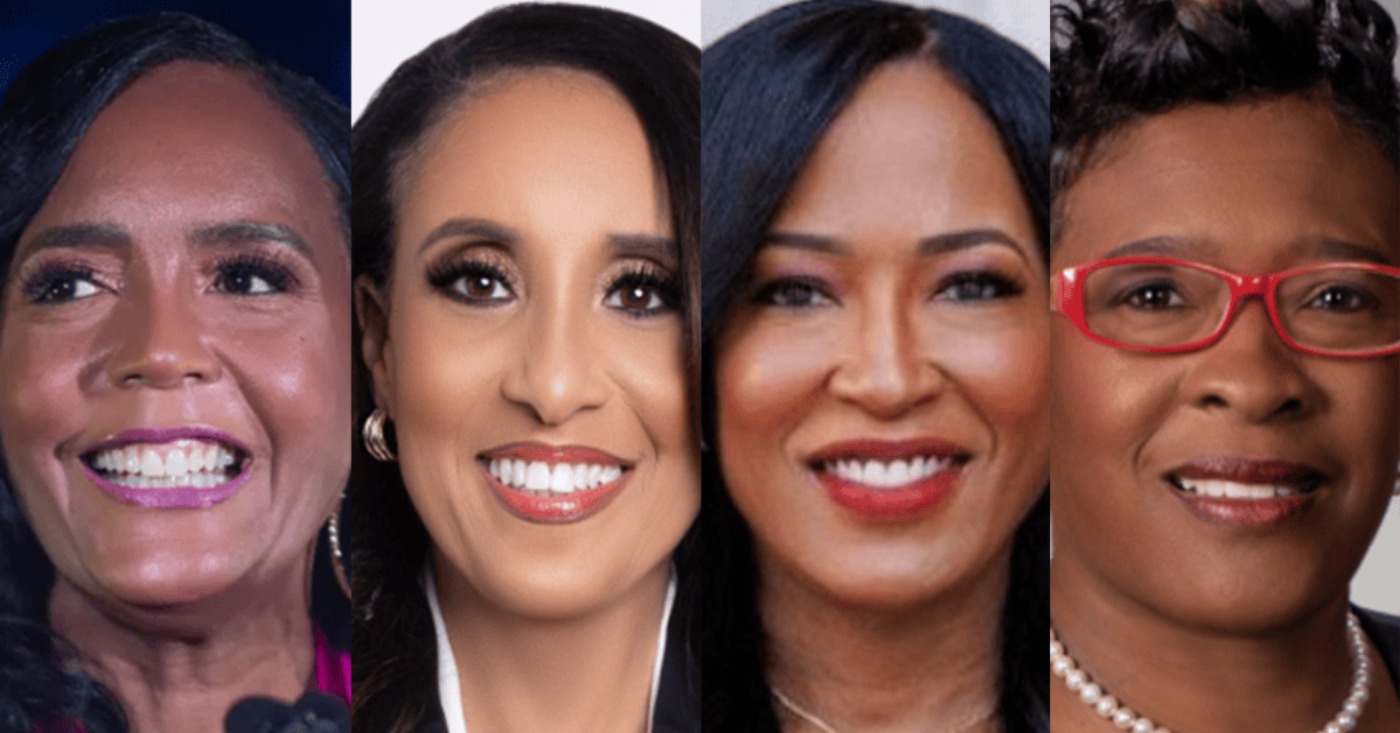
Georgia voters elected eight Democratic women to statewide offices Nov. 3, giving women seven of the state’s eight major executive positions and a seat on its utility regulatory commission.
The winners are:
- Keisha Lance Bottoms: Governor
- Penny Brown Reynolds: Secretary of state
- Tanya Miller: Attorney general
- Keisha Sean Waites: Insurance and safety fire commissioner
- Nikki Porcher: Labor commissioner
- Katherine Juhan-Arnold: Agriculture commissioner
- Lydia Powell: State school superintendent
- Shelia Edwards: Public Service Commission, District 5.
Brown Reynolds, a lawyer and former Fulton County judge, defeated Republican Tim Fleming to become the first Black woman elected Georgia secretary of state. She succeeds Republican Brad Raffensperger, who ran unsuccessfully for governor. The office gained national attention after Donald Trump pressured Raffensperger in a January 2021 phone call to “find 11,780 votes” to overturn his Georgia defeat. Raffensperger refused. Brown Reynolds will now serve as the state’s top elections official.
Miller, a state representative and former federal and county prosecutor, defeated Republican Brian Strickland to become Georgia’s first Black female attorney general. Waites, a former Atlanta city councilor and state representative, unseated Republican Insurance Commissioner John King.
The post Eight Black Women Win Georgia Statewide Offices appeared first on The Community Voice.
Based on reporting by Community Voice (KS).
Black History
New Computer Lab Adds to MLK Catholic Student Center’s Sense of Home
SOUTHERN UNIVERSITY – SOUTHERNDIGEST — The Martin Luther King Jr. Catholic Student Center at Southern University has opened a new computer lab to provide students with essential academic resources and a sense of community. The project, which began in August 2023 and opened in October, was funded by an anonymous private benefactor.
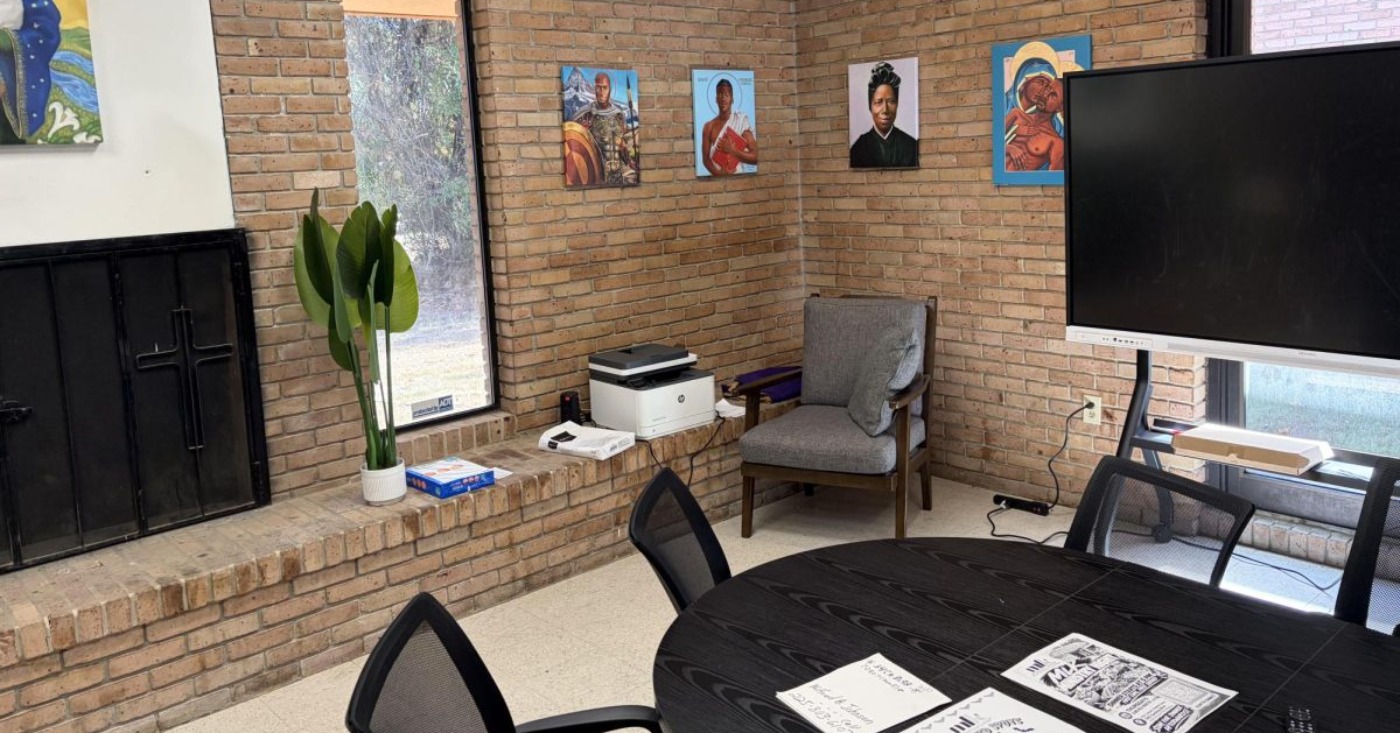
Madison Holmes wanted to leave Southern University. Now, she calls the Martin Luther King Jr. Catholic Student Center home.
The center’s new computer lab has become one of the places where Holmes feels calm, supported and connected to campus life. Holmes said she struggled with being away from her support system in Pass Christian, Mississippi, while also managing difficult classes. At the time, transferring closer to home seemed like a better option.
She recalled going to the library one day to print a lab report and finding a long line at the printer. “I was like, ‘Oh, wait. I know where I can go,’” Holmes said. “So, I came here and printed out my lab report, and then I took it to class.” Her experience is one example of how the center provides students with a place to turn when they need support.
The computer lab opened in October after the project began in August 2026. An anonymous private benefactor provided funding that helped pay for the lab and other improvements throughout the building.
The Rev. Thomas F. Clark, chaplain of the Martin Luther King Jr. Catholic Student Center, said the center aims to support students as they adjust to college life away from home. “You realize that when you’re away from home for the first time, you’re trying to make your way,” Clark said.
According to Clark, students often expressed the need for additional study space. Others shared concerns about unreliable laptops or computer crashes, concerns that ultimately helped shape the decision to add a computer lab.
The lab is one of several resources available to students. The center also provides Wi-Fi, study space and approximately 50 meals every Thursday at 5 p.m. Located across from Bethune Hall, the Martin Luther King Jr. Catholic Student Center has served Southern University students for decades.
According to the Roman Catholic Diocese of Baton Rouge, Father Rawlin B. Enette advocated for a stronger Catholic presence at Southern in the late 1960s. Construction on the center began in 1969 after land was donated by a university official.
Originally known as the Newman Center, the building was later renamed the Martin Luther King Jr. Catholic Student Center. Southern University art professor Frank Hayden also created religious artwork for the facility.
While the center provides practical resources, it also offers students a place to slow down, reflect and feel supported. For Holmes, Clark is part of that support system. “I do think that Father Clark is a safe space and a person I could go to,” Holmes said.
That sense of availability is intentional. Clark said students sometimes stop by with personal concerns or during times of stress. They talk and, in some cases, pray together as he helps students navigate the semester.
“We just feel that we can add to that support by being available and providing a warm and friendly place,” Clark said. As students navigate the challenges of college life, the Martin Luther King Jr. Catholic Student Center continues to offer a place of support, community and encouragement. For Holmes, it has become a home away from home.
Gallery • 3 Photos Brianna Meeks Interior shots of the newly create computer lab.
Based on reporting by Southern University – SouthernDIGEST.
Black History
A Command Through the Culture
SOUTHERN UNIVERSITY – SOUTHERNDIGEST — Southern University and A&M College recently held its annual Second Line to the Polls event, transforming a historic Louisiana cultural tradition into a powerful mobilization effort. On Tuesday, Oct. 27, busloads of students traveled from the Baton Rouge campus to the Louisiana Art & Science Museum, where they were met with a high-energy atmosphere of unity and school spirit.
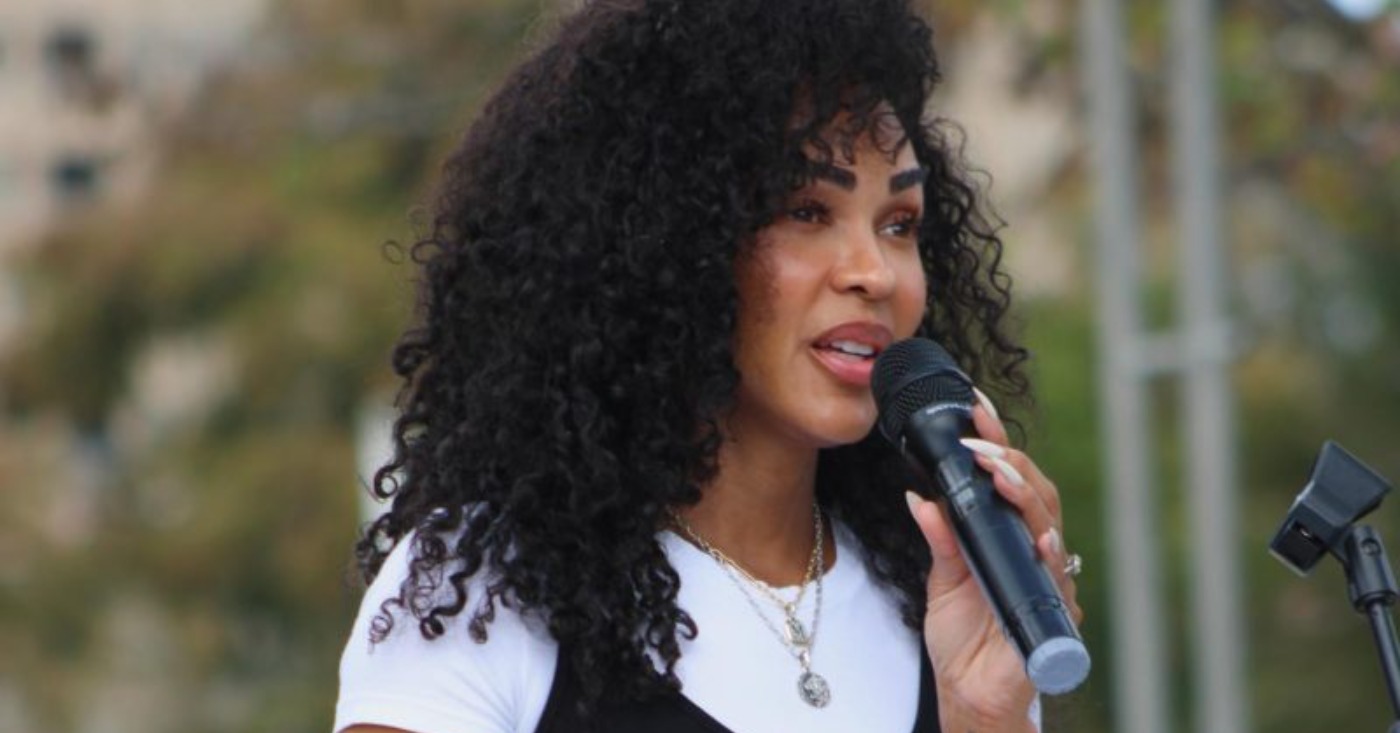
The moment you become a student at Southern University and A&M College, you step through the doors of endless possibilities, equipped with the power to write your own chapter in history. Every person is born with the mental, physical and vocal ability to walk the paths they choose. Yet as a Jaguar, you are called to do more than follow a path. You are empowered to create one. Jaguars have the ability to break new ground and build what is needed, for change, for dreams, for legacy and for the culture.
On Tuesday, Oct. 27., Southern University and A&M College hosted its annual Second Line to the Polls event, encouraging students not only to vote, but also to educate and be educated. As busloads of students traveled from campus to the Louisiana Art & Science Museum in downtown Baton Rouge, the mission became crystal clear, and the blue and gold spirit shined even brighter.
Southern University’s Student Government Association, the Human Jukebox, the NAACP, Collegiate 100, Omega Tau Pi, Alpha Phi Alpha, Alpha Kappa Alpha, Kappa Alpha Psi, Phi Beta Sigma and Sigma Gamma Rho came together in solidarity, leading the way as students marched from the museum to Baton Rouge City Hall to exercise their right to vote in true South Louisiana fashion.
Historically, a second line in Louisiana has served as a powerful expression of celebration, unity and community. To witness a second line is to witness resilience, joy, freedom and an electrifying spirit that brings people together through culture. Thanks to the leadership of SGA President Bryman Williams and Jaden York, this year’s event reflected those values and more.
Attorney Vernon Wesley Thomas, a Southern University Law Center graduate and current candidate for judge in Louisiana’s 19th Judicial District Court, reflected on the significance of the event and the student turnout. “ You cut me, I bleed blue and gold. Seeing all the young people carry this energy and this will to come out and vote is amazing. I love seeing the youth like this; I love the unity…The youth is the future.” His remarks proved that this event carried out more than what was visible on the surface. It carried civil respect rooted not only in deep-rooted culture, but also in deep-rooted legacy and love.
Gallery • 5 Photos Rhyanna Burks Actress and producer, Meagan Good, supporting Southern University students and the city of Baton Rouge at the Secondline to the Polls event hosted by Jaden York, Southern alum and student organizations at Southern University on Tuesday October 27.
Actress Meagan Good Majors came to support the event out of pure love and a pure heart for the youthful drive and determination shown by Southern University students.
The Second Line to the Polls shined harmony through freedom, painted a picture of power and showcased the elegance of the youthful heart. Southern University used culture to call and command. Our culture is our color, our footsteps in history and our freedom brought to life.
Our vote is our voice, our future, our story and our rights. Southern University lit fire of them both, strengthening our reality, our identity, our legacy and our history.
Go Vote, Jags!
Based on reporting by Southern University – SouthernDIGEST.
Black Press
Check out These Smart Ways Tech Companies Can Speed up Project Timelines Today
CONTENTMANAGERIO — Technology companies facing pressure to meet software development deadlines are increasingly turning to automation and artificial intelligence to streamline their operations. According to findings from management consulting firm ZS, early launch performance is often volatile, making it critical for businesses to ensure their products are ready for the market on time.

Smart ways tech companies can speed up timelines for developing software include automating repetitive tasks to free up time and using AI-powered tools to accelerate development and decision-making. They can also improve team collaboration with centralized project management platforms and adopt continuous integration and delivery to reduce deployment delays.
Management consulting and technology firm ZS found that early launch performance is highly volatile, so it’s important that you have your products ready and launched on time.
Developing software is easier said than done, though, and it’s common to experience delays. Speed things up and streamline operations, so you launch as planned.
Can You Automate Repetitive Tasks to Free Up Time for High-Value Work?
Many project bottlenecks come from repetitive tasks that pile up, and in reality, these don’t need much human judgment. It’s much better to automate these tasks so that human workers can focus on high-value work instead.
Things you can automate include:
- Testing
- Code deployment
- Report generation
- Routine data entry
Automating these tasks also ensures better consistency and accuracy. Just make sure to only automate work where processes are already well-defined.
Use AI-Powered Tools to Accelerate Development and Decision-Making
Agile development should involve AI, as it can reduce the time spent on coding, research, documentation, and troubleshooting. With analytic tools, you can analyze large amounts of data to find key issues such as bottlenecks and tasks that may fall behind schedule.
Do note that these outputs will still need human review. Without it, you may be following erroneous reports, and this can put your project even further behind.
Improve Team Collaboration With Centralized Project Management Platforms
Engineering efficiency hugely depends on good communication, and this can be difficult when there are these stakeholders:
- Developers
- Designers
- Product managers
You may even need staff augmentation in software development to help in areas where you have a lack of people, and this adds to the chaos.
The best way to handle communication is to use centralized project management platforms. Your teams can easily see which tasks need to be done, as well as which ones are already complete. The platforms will also show what dependencies there are and who’s responsible for which tasks.
In addition, you can take it a step further and integrate these platforms with development tools and communication platforms.
Should You Adopt Continuous Integration and Delivery to Reduce Deployment Delays?
Continuous integration and continuous delivery (CI/CD) practices are vital if you want to speed up your timelines. They can reduce the risks that come with large and infrequent releases, as well as reduce the manual work required.
Implementing these practices can shorten feedback loops, as you can catch defects earlier. As a result, software delivery will be more efficient and faster.
Stay on Track When Developing Software
Developing software can be a monumental task, especially when you have multiple people on the job. If you stay organized, though, and use the right tools, you’ll be able to deliver a quality product exactly when you want to.
Check out more of our pages now to find additional informative articles.
Content provided through ContentManagerIO.
Black Press
As Progressive Democrats Celebrate ‘Blue Tsunami,’ Oakland Counts Victories
As national Democrats celebrate a significant shift in the midterm elections, local leaders in Oakland are tracking early results from the Alameda County Registrar of Voters. While Mayor Barbara Lee and several City Council incumbents have secured decisive victories, attention remains fixed on high-stakes school board contests. Progressive candidates currently face strong challenges from opponents backed by corporate funding and local political organizations. With many ballots still uncounted, the final composition of the board and several regional transit measures remain in the balance. Read more.
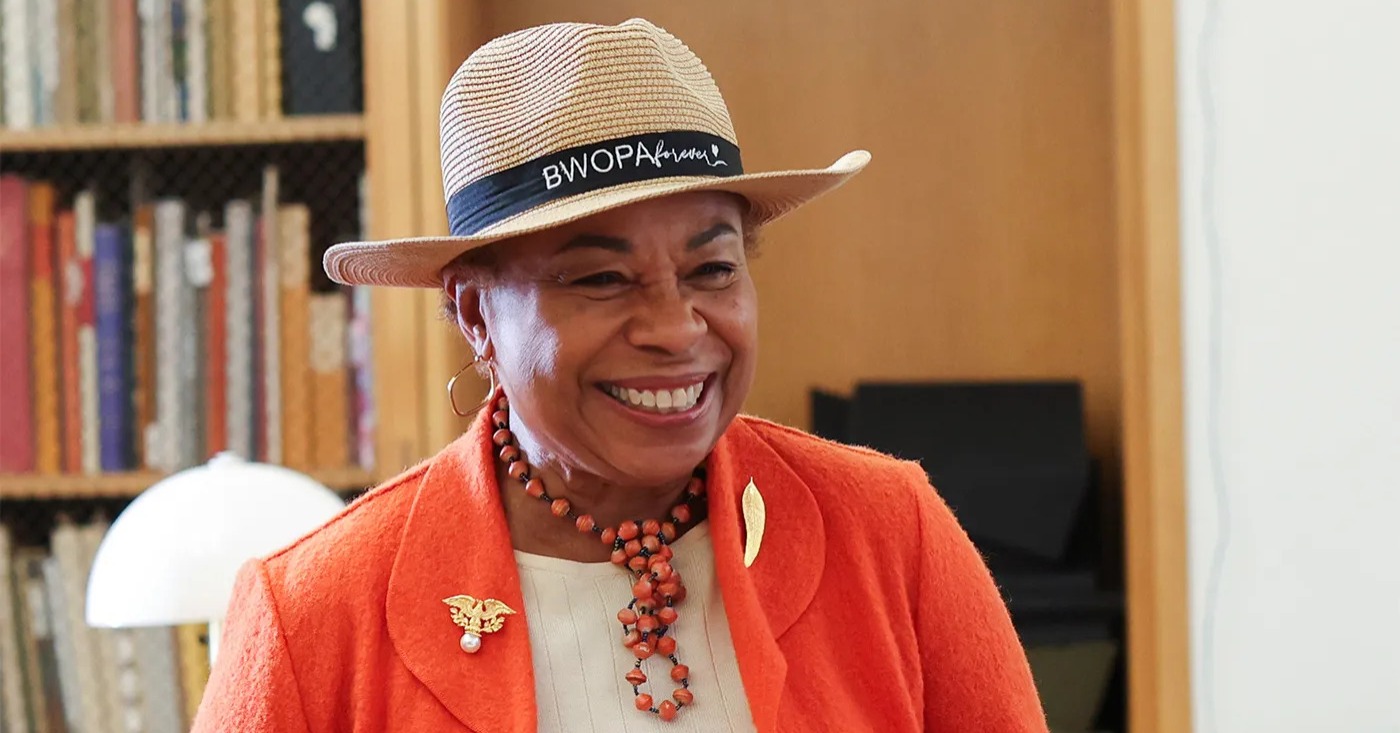
Concerns remain over school board races as ‘moderates’ lead progressives
The Alameda County Registrar of Voters has released the first round of election results, though many ballots remain uncounted and results are still incomplete.
Nationally, Democrats, liberals and progressives celebrated Tuesday evening as President Donald Trump was dealt a devastating blow in the midterm election. The Republican Party lost control of the Senate and the House as “Maga” candidates were swept away not just by a ‘blue wave,’ but a ‘blue tsunami.’
In Oakland, incumbent Mayor Barbara Lee, who served two years and ran for a full four-year term, won decisively.
A proposal backed by Lee, Measure EE, also won. The Charter amendment will create a strong mayor system of government while providing the City Council with new checks and balances on mayoral power.
District 2 Councilmember Charlene Wang is leading with 65.62% of the vote. Opponent Nate Adams trails with 34.38%.
District 4 Councilmember Janani Ramachandran, ran unopposed for reelection, receiving 14,029 votes.
District 6 Councilmember Kevin Jenkins bested opponent Nancy Sidebotham and District 2’s Charlene Wang also won reelection.
City Auditor Michael Houston is running unopposed for reelection and won 60,773 votes.
Progressive school board members, Jennifer Brouhard (D2) and Valarie Bachelor (D6), supported by teachers and school activists, face serious challenges from candidates backed by pro-corporate funders and the political organization, Empower Oakland.
Arielle Fleisher leads Brouhard 53.49% to 46.51%.
In District 6 with three contending candidates, Alexandra Williams leads with 38.06% of the vote. Incumbent Bachelor has 36.89%, and Leana Powell is trailing with 25.04%.
In District 4, incumbent Mike Hutchinson is narrowly leading a field of three candidates. He received 40.87% of the vote, while Kathryn Camp has 39.92%, and Sylvia Pfeiffer Williams has 19.21%.
In the races for AC Transit Board, Director Joel Young (Ward 3) leads with 53.11% of the vote, Sarah Syed (Ward 4) is ahead with 78.37% of the vote, and Murphy McCalley (Ward 5) leads with 63.07%.
Regional Transit Measure RTM, which would increase sales taxes in five Bay Area counties to shore up BART and other regional transit, was leading in five counties by a combined 62% of the vote.
Black History
Christianity’s Racial History
THE POSITIVE COMMUNITY — Historian and author Jemar Tisby is challenging the traditional narratives of American religious history through his acclaimed work, The Color of Compromise. His research provides a comprehensive examination of how Christian institutions have historically participated in, accommodated, or resisted racial injustice from the colonial era to the present day.
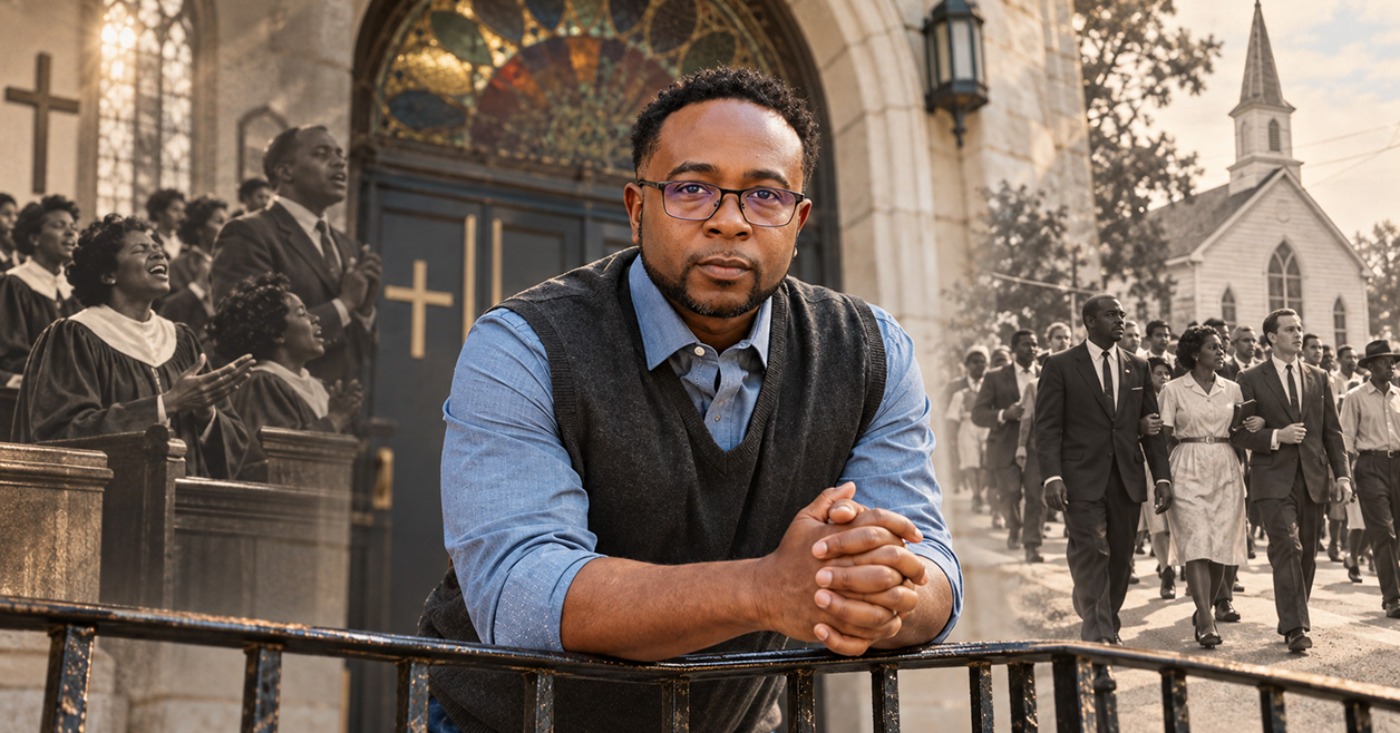
Jemar Tisby is a historian, author, and public speaker whose work examines the relationship between Christianity, racism, and American history. Through his writing, he challenges readers to reconsider the role religious institutions have played in shaping racial attitudes and social structures. His widely recognized book, The Color of Compromise: The Truth About the American Church’s Complicity in Racism, explores how Christian churches have participated in, accommodated, and sometimes resisted racial injustice throughout American history. Tisby’s work encourages readers to examine the past honestly and consider what meaningful change requires today.
One of the central arguments in The Color of Compromise is that racism in America cannot be understood without examining the influence of religious institutions. Christianity has often been associated with messages of love, justice, compassion, and equality. Yet churches and Christian leaders have sometimes supported systems that denied African Americans their freedom and dignity. Tisby examines this contradiction, demonstrating how religious beliefs and institutions could be used to justify racial oppression rather than challenge it.
The book takes readers back to the era of European colonization and slavery, when religious arguments were frequently used to defend the enslavement of Africans. Some Christian leaders claimed that slavery was compatible with biblical teachings, while others used Christianity to encourage resistance to the institution. Enslaved Africans developed their own spiritual traditions, drawing strength from their faith while enduring violence, separation from family, and the denial of basic human rights. Tisby highlights the importance of understanding how Christianity became intertwined with the development of American slavery.
Tisby also explores the role of churches during the Civil War and Reconstruction. Although emancipation ended legal slavery, it did not eliminate racial prejudice or the struggle for equal citizenship. Some religious communities supported efforts to educate formerly enslaved people and establish independent Black institutions. Others tolerated or defended segregation and white supremacy. The period demonstrates how Christian institutions faced a choice between challenging racial injustice and preserving existing social arrangements.
Another important subject in the book is the relationship between Christianity and Jim Crow segregation. During the late nineteenth and early twentieth centuries, racial segregation became deeply embedded in American society. Many churches reflected the same divisions, maintaining separate congregations and unequal opportunities for worship and leadership. Tisby argues that compromise occurred not only when Christians openly defended racism but also when they remained silent or accepted discriminatory practices to avoid conflict. This distinction is essential to understanding the book’s central message.
The civil rights movement provides another significant chapter in this history. Black churches played a vital role in organizing demonstrations, supporting community leadership, and providing spiritual encouragement to people fighting racial discrimination. Figures such as the Reverend Dr. Martin Luther King Jr. drew upon Christian teachings to challenge segregation and demand equal rights. However, not all white Christian congregations supported the movement. Tisby examines the difference between those who actively opposed racism and those who hesitated to challenge the racial status quo.
A major strength of Tisby’s writing is his attention to the difference between individual prejudice and institutional racism. A person may believe in treating others fairly while participating in organizations or traditions that produce unequal outcomes. Similarly, a church may preach love and acceptance while failing to confront discriminatory practices within its own community. Tisby encourages Christians to look beyond personal intentions and examine the consequences of their actions, their institutional policies, and their willingness to address injustice.
The book also challenges contemporary Christians to consider how the legacy of racial compromise continues to affect American religious life. Questions about church leadership, worship communities, racial representation, education, and public policy remain important. Tisby argues that acknowledging historical wrongdoing is not about assigning personal guilt to every modern Christian. Rather, it is about understanding how past decisions shaped the present and recognizing the responsibility to pursue greater fairness, accountability, and inclusion.
Tisby’s work has become an important contribution to conversations about race and religion because it asks readers to move beyond comfortable narratives about American Christianity. His historical approach encourages people to examine uncomfortable evidence, listen to the experiences of African Americans, and recognize the difference between professing moral principles and practicing them. The book also raises questions about what genuine reconciliation requires, emphasizing that meaningful progress involves more than expressions of goodwill. It requires a willingness to confront injustice and make changes that reflect the values Christians claim to uphold.
Ultimately, The Color of Compromise is a call for historical honesty, moral reflection, and meaningful action. Jemar Tisby challenges churches and individual believers to understand how Christianity has been used both to support oppression and to inspire resistance against it. His message is especially relevant in a society still wrestling with racial inequality and the consequences of its history. By examining the past with courage and integrity, readers can better understand the responsibilities of faith in the present. The book reminds us that the true test of religious conviction is not simply what people profess to believe, but whether their actions reflect justice, compassion, and respect for the dignity of every human being.
Based on reporting by The Positive Community.


Houston needs affordable housing – Can churches fill the gap

Black Women’s Voting Power Is Changing Georgia and America

Business Transparency: How Honest Communication Builds Community #shorts

Why I’m Proud to Be a Black Journalist #shorts

2027 Chevrolet Bolt RS Is This $38,940 EV Right for You?

Save on Car Insurance With These Common Discounts #shorts

Minnesota’s Black Cable Radio: A Community Built on Culture #shorts

How Black-Owned Businesses Build Stronger Communities #shorts

From Rattler Grad to Retail Guru

COMMENTARY: We’ve Got Some Difficult Days Ahead

All Skinfolk Ain’t Kinfolk

Practitioners of African Traditional Spirituality Offer Ancestral Reverence Ritual Oct. 31

Tamiko Armstead | 2026 Lifetime Achiever in Education

Oakland Awarded More than $14 Million in State Funding

OP-ED: The Black Church Writes AI’s Next Chapter

HISTORY MADE: Keisha Lance Bottoms Becomes First Black Woman Elected Governor in American History

Inside 820 S. Michigan: New Book Captures the Lost World of Ebony and Jet

Jendayi Arrest Raises Community Concerns Regarding Sheriff’s Chain of Command

OP-ED: If the ‘Cornell 7’ Were Black Men at an HBCU — America Wouldn’t Be This Sympathetic

Kickstarter CEO Everette Taylor Shares Tips on Creating and Growing a Business
Houston needs affordable housing – Can churches fill the gap
Black Women’s Voting Power Is Changing Georgia and America
Business Transparency: How Honest Communication Builds Community #shorts
Why I’m Proud to Be a Black Journalist #shorts
2027 Chevrolet Bolt RS Is This $38,940 EV Right for You?
Save on Car Insurance With These Common Discounts #shorts
Minnesota’s Black Cable Radio: A Community Built on Culture #shorts
How Black-Owned Businesses Build Stronger Communities #shorts
From Rattler Grad to Retail Guru

Why Recognizing Artists Matters More Than Awards #shorts
-
 Black History4 days ago
HISTORY MADE: Keisha Lance Bottoms Becomes First Black Woman Elected Governor in American History
-

 Featured6 days ago
Multi-Faith Leaders Representing 10 Million People Launch National Anti-Authoritarian Initiative
-
 Black History6 days ago
Christianity’s Racial History
-
 Black History6 days ago
Michael Shiner: The Enslaved Man Who Wrote His Way into American History
-

 Black History6 days ago
Five Hospitals Said No! Who Will Help Annette Henry Recover?
-

 Black History5 days ago
Hundreds of Black Christian Leaders Arriving in Israel for Martin Luther King-Inspired Mission
