WASHINGTON INFORMER — The chair of the House Ways and Means Committee filed a lawsuit Tuesday against the IRS and the Treasury Department to gain access to President Donald Trump’s tax returns.
The chair of the House Ways and Means Committee filed a lawsuit Tuesday against the IRS and the Treasury Department to gain access to President Donald Trump’s tax returns.
The suit, which was filed by Rep. Richard Neal (D-Mass.) and now heads to federal courts, comes after an initial request in April to Treasury Secretary Steven Mnuchin and the IRS over the tax records.
Trump claims has claimed since the 2016 presidential campaign that he cannot release his returns publicly because he is currently under audit by the IRS.
Mnuchin told Neal in a letter last month that the request for the president’s tax returns “lacks a legitimate legislative purpose.”
‘It’s as if He Doesn’t Exist’: In Mississippi, People Jailed Months Without Formal Charges
TEXAS METRO NEWS — In the capital city of Jackson, Mississippi, hundreds of defendants remain behind bars for months or even years without being formally charged with a crime. A new investigative analysis has revealed a systemic crisis in Hinds County, where individuals are often stuck in an indefinite legal limbo known as “unindicted” status.
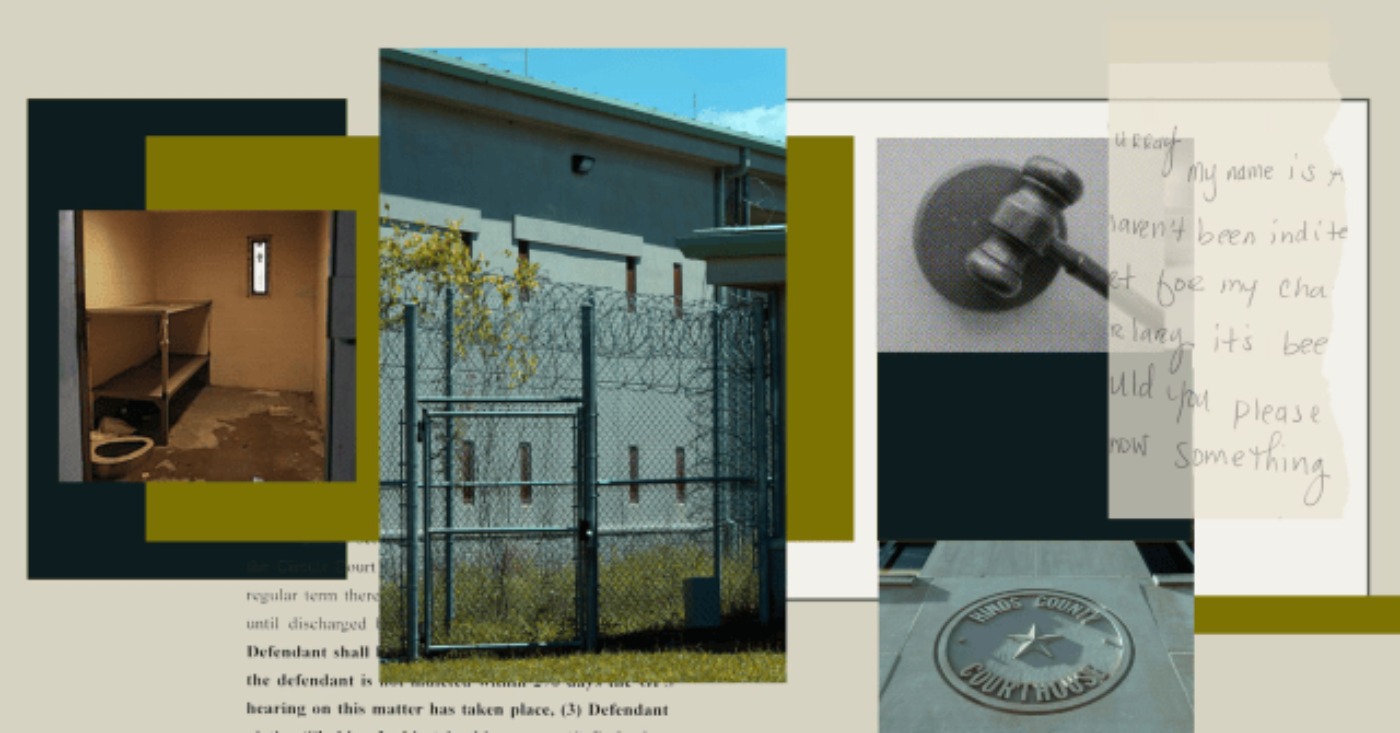
Photo collage by Celina Fang. Photo components by Rory Doyle for The Marshall Project and Getty Images. — collage by Celina Fang. Photo components by Rory Doyle for The Marshall Project and Getty Images
In the capital city, hundreds of defendants wait in jail for an indictment, sometimes as long as a year or more.
When Vicki Sands learned that her son, Carson, was in a county jail near Jackson, Mississippi, more than 600 miles away from her home in North Carolina, she felt, at first, a strange kind of relief.
Months before his arrest, he left Asheville, launching on a road trip with a new acquaintance he had met in the mountain city’s street-life scene. The journey had ended with a falling out in the Deep South that left Carson homeless.
“I was glad he was off the streets,” said Vicki Sands in an interview with The Marshall Project. “I was glad he was out of the woods.”
ADVERTISEMENT
That feeling didn’t last long.
Since an initial appearance before a judge on Nov. 3, just days after his Halloween night arrest last year, Carson Sands has not been inside a courtroom again. No attorney has requested a preliminary hearing or filed a motion to reduce his $300,000 bond on charges stemming from an alleged gas station robbery. There’s been no routine status conference where a judge might probe the reason for delays and prod prosecutors to move things along. He has not been indicted, convicted, or sentenced — but is stuck in an indefinite legal limbo.
“It’s as if he doesn’t exist,” his mother said.
As of June 30 of this year, Sands was one of 131 people being held for more than six months without an indictment: 56 of whom had been held for more than a year, an analysis by The Marshall Project found.
This article was published in partnership with The Howard Center for Investigative Journalism, an investigative reporting unit and early-career journalism training program based at the University of Maryland Philip Merrill College of Journalism, which is supported by the Scripps Howard Foundation.
ADVERTISEMENT
Such long periods of pre-trial incarceration with no formal charges from a prosecutor are almost unheard of in many other parts of the country, where prosecutors are given a limited amount of time to indict before a defendant must be released — 40 days in Florida, 60 days in Louisiana. In fact, Mississippi is one of only six states with no limits at all, according to a 2023 law review analysis.
In all, almost half of the people in custody at the end of June who had been held for at least 30 days on felony charges were not indicted, the analysis found.
State and local officials have argued and deflected blame about slow-moving criminal cases, backlogs and people literally getting lost in jail for years. A labyrinth of record systems, and questions about their accuracy, has often stymied those conversations. The Marshall Project’s findings are the first of their kind to be released publicly.
Critics say the analysis raises serious questions about whether the court system is depriving individuals of their constitutional right to due process before taking away their liberty.
Those critics include Brad McCullouch, a Hinds County assistant district attorney who was promoted to interim officeholder in July by the state’s governor.
ADVERTISEMENT
He went so far as to compare time spent in jail by some Hinds County prisoners to detention practices seen under authoritarian governments.
“This is not what we do as a country,” McCullouch said. “It’s not based on constitutional principles.”
McCullough touted his efforts to put more resources toward the grand jury process and to help secure the release of people from custody where he thinks appropriate. But he can’t run in next Tuesday’s special election because he doesn’t live in Hinds County, and is in office at most about six more weeks.
One of the five people running to replace McCullouch will help determine whether anything changes. Several have promised reforms, while others have not made it a central focus of their campaign.
Meanwhile, for Carson and others, the wait continues.
ADVERTISEMENT
“Lost in the System”
Carson Sands’ journey into legal purgatory began on Halloween night 2025, when he walked into a Jackson gas station near LeFleur’s Bluff State Park. Far from home, he’d marked his 31st birthday just days earlier, on the streets and huddled in the woods.
Sands placed a water, an energy drink, and a Cayman Jack beverage on the counter. The clerk told him he couldn’t use an EBT card for the alcohol, according to a police report written later. In a scene captured on security video, police said Sands pulled a can of bear spray from a backpack he was wearing. He put the items into the backpack, threatened to rifle through the cash register, and then displayed a knife on his way out of the store with the drinks.
A Capitol Police officer found Sands and arrested him not far away, in some woods near a baseball field.
An arrest like this is only the beginning of a criminal case. In most jurisdictions, a prosecutor must next consider the charges lodged by law enforcement and then decide whether to pursue formal charges in court. In Mississippi, district attorneys must obtain an indictment from a grand jury to prosecute someone for a felony.
During Sands’ initial — and only — court appearance, on Nov. 3, the judge ruled that he would need to post a secured bond of $300,000 to be released from jail while waiting for the next steps in his case. Using a bondsman, that would typically require a cash payment of about $30,000 — a sum he doesn’t have the means to pay.
The inability to pay does not necessarily lead to indefinite detention in many other states. Instead, after a certain amount of time, people in these states can ask a judge to reduce their bond or to outright release them from jail without having to pay any cash.
In Texas, after 90 days, Carson Sands could have asked for a lower bond or to be released without paying any money at all by the end of January.
There are constitutional reasons that many states put time limits on pre-trial detention, but also practical considerations. When a case stalls waiting for an indictment, victims must wait for resolution to their cases. Evidence can go stale or even be missing, making it harder for prosecutors to win a once solid case or for the accused to defend themselves. Defendants with few financial resources, like Sands, are forced to sit out the long wait times in a dangerous jail, while defendants with greater financial means get to spend that time at home.
This gray zone of detention without legal limits sits at the intersection of multiple dysfunctional systems stretched beyond their limits in Hinds County — including a decrepit and deadly jail under federal receivership and a public defender’s office still reeling from a staffing and caseload crisis.
But it’s the district attorney’s office — rocked by recent scandals — that is responsible for taking cases to the grand jury to seek an indictment. It’s also the office most subject to immediate oversight by voters, through next week’s special election. The office has been operating under an interim leader since July, when the previous prosecutor, Jody Owens, resigned as part of a plea deal in a federal corruption case.
Amid this tangle, Vicki Sands has found it very difficult to determine basic facts about her son’s detention, or to discern how to help. She considered trying to file a habeas corpus petition — which can be used to challenge the basis for someone’s detention — but doesn’t even know how to start.
“Carson is simply lost in the system,” said his mother. “He hasn’t been convicted, and yet he is detained going on a year with no end in sight.”
One Day in Court
Over the course of this year, as The Marshall Project conducted its analysis, a reporter spent several days in the county court. The reporter saw a series of unindicted defendants appear before a judge for a thicket of initial appearances, preliminary hearings, bond reductions and status hearings.
Felony cases in Mississippi must move through a series of different courts that don’t always intersect. In Hinds County, the county court is a frequent venue where attorneys bring motions and arguments on behalf of defendants without indictments. But with only a single judge hearing these cases, this is a major chokepoint.
As of April 15, Carson Sands had already been jailed for almost six months. His mother worried he was deteriorating within a dangerous and overwhelming environment. The lights in the jail were always on. A TV blared. She couldn’t mail him books, which had long been a source of calm to him. She sent meditation guides and other reading material through the jail messaging system, but some of her messages were blocked.
“He does not belong in prison,” Vicki had written around this time to a reporter with The Marshall Project. “He needs behavioral health treatment. He needs support for his psychiatric needs. Instead, he is in an environment that is crushing and traumatizing him.”
Carson — yet again — did not make it onto Judge Johnnie McDaniels’ slate of felony cases that day.
But several other people did, people just like him –– arrested, jailed, and simply waiting. Court officials called the case of LaShanti Esco. She’d been arrested last August on serious charges — armed carjacking and armed robbery. She faced a $1 million bond.
As the case was called, Wendy Wilson White, an assistant district attorney, said that the proceedings were moot — the case had finally been indicted, she said, paving the way for a formal arraignment in a higher court.
But Judge McDaniels saw a problem as he flipped through the papers in front of him. He’d heard this claim before.
“It is April,” he said. “The same representation was made in January. Why wasn’t an indictment that occurred in January filed by now? What would be the explanation?”
That can sometimes happen when law enforcement can’t locate a defendant to serve the papers. But Esco had been in the county’s custody the entire time.
“I don’t know that I have an explanation,” White said.
Ultimately, the indictment wasn’t served on Esco until about five days after the hearing, according to court records. It had only been signed by a grand jury that month, not in January.
White is one of five candidates now running in a special election to be the next district attorney in Hinds County.
White told The Marshall Project last week that she will never knowingly misrepresent a case to a judge and emphasized that when handling a case in court, she sometimes has limited information immediately available to her.
“I’m representing the state, and I have to take accountability when there are shortcomings in a case,” White said.
Next up was Jeremy Jordan, arrested in August 2025 on a drug possession charge. Jordan was held without bond due to prior charges from 2022 and 2023 that were still open and not indicted.
That meant, his attorney said, that Jordan had been in jail for 237 days with three criminal charges and not a single indictment on any of them.
In at least some of the cases, the defense attorney said, prosecutors were waiting on results from the state crime lab.
“We know the issues with the state crime lab,” McDaniels said. “Surely three or four years is enough time to get something back?”
McDaniels set a secured bond for $75,000 for Jordan — still a high bond. Jordan stayed in jail for months more, and in June submitted his own motions to dismiss the case for violation of due process.
The cases continued. Adetdrick Burton had been held almost a year on a murder charge and a $1 million bond, with no indictment.
“This case has not been presented to a grand jury,” said White, the assistant district attorney. “The DA’s office is not in possession of the file. The DA’s office requires, or prefers, to have the completed investigative file.”
In response to a question from the judge, White could not say whether the file had been requested from law enforcement by the DA’s office.
“A case is not solved just because an arrest is made,” said McDaniels. “When I’m being told more than a year later that you don’t know what stage a case is at, that should be troubling to us all.”
Next up was Justin Porter, held 609 days without an indictment on home burglary charges. White acknowledged the long delay in securing an indictment, but urged caution, alleging that the burglary in question had been carried out, she claimed, as “an attempt to terrorize the victims.”
“Surely there is an explanation why a defendant charged with attempted burglary of a dwelling has been detained for 609 days without being indicted,” McDaniels asked White. “There has to be an explanation.”
“That’s definitely a good question,” White said. “I don’t know that the state is prepared to offer an explanation that would be satisfactory.”
When cases stall like this, there are several possible reasons in play. Sometimes law enforcement makes an arrest but, as White suggested in court, simply does not turn over the file to the prosecutors, leaving those prosecutors without evidence to present to a grand jury. Sometimes the case has been forgotten, and the district attorney’s office simply hasn’t asked for it. Other times, the investigation may still be ongoing, even after an arrest has been made, or officers are waiting on forensic tests or other evidence.
But even when prosecutors don’t have an explanation at hand, or when defense attorneys haven’t given a case much attention, an area’s senior circuit judge has a responsibility under the state’s rules of criminal court: They must monitor the circumstances and release conditions of people detained in the local jail.
Senior Circuit Judge Winston Kidd and McDaniels, whom Kidd has designated to oversee felony cases before an indictment, did not respond to questions from The Marshall Project about how they handle review of the jail lists.
This requirement was written to prevent people from falling through the cracks, said William Waller Jr., a retired chief justice of the Mississippi Supreme Court who helped write the state’s rules of criminal procedure.
“That was the whole purpose for it,” said Waller. “It was supposed to be a safety net to catch cases.”
A Maze of Faulty Data
A month before Carson Sands was arrested, a jail operations consultant based in Maryland named Wendell France took over management of Hinds County’s Raymond Detention Center on the order of a federal judge.
That followed a decade of litigation brought by the U.S. Department of Justice over unending constitutional violations inside the county’s jail — widespread brutality, deaths and beatings at the hands of other prisoners, rampant contraband, open sewage, and poor or nonexistent medical care.
Once France began to examine the roster of detainees, he noticed something that alarmed him: Significant numbers of people in the jail were held only based on an arrest charge, with no indictment.
He dispatched a letter to local justice system officials, including Owens, who was then the DA. A former civil rights litigator, Owens ran for office in 2019, promising to be a “decarceral prosecutor.”
“I am writing to formally request your office’s immediate attention to the status of pre-trial detainees who have been held without indictment for extended periods,” France wrote to Owens in an Oct. 10, 2025 letter. “These are not merely administrative concerns but fundamental constitutional violations that expose the county to significant legal liability.”
As he had done before when similar concerns had surfaced, Owens responded by pointing out that jail rosters supplied by local jail administration are often riddled with errors.
“I am committed to reducing the delays for criminal detainees wherever possible, but caution you that the conclusions you have drawn in your correspondence are based on inaccurate data,” Owens wrote.
Owens also warned that law enforcement agencies, and not his office, often drive delays by failing to complete investigations promptly, even after an arrest has been made. Those agencies, Owens said, do not quickly turn over files to the DA’s office and sometimes do not even notify the office of cases that are open or arrests that have been made.
Nine months later, Owens resigned as part of a plea deal with federal prosecutors on conspiracy charges involving a bribery scheme.
Not long after these letters were dispatched, an assistant district attorney was also sounding the alarm, claiming that management of the grand jury process had fallen into near complete disarray.
“Cases are lost, defendants are lost, indictments have errors, hundreds of cases have been presented to the Grand Jury but never turned in,” wrote Gwen Agho in December 2025, according to an email she provided.
Agho is also now running for district attorney in Hinds County.
Locally, the accuracy of jail and court records has been a flashpoint in long-running clashes over jail crowding and case delays. Money from the state flowed into Hinds County beginning in 2022 to help reduce a pandemic-linked backlog, but local officials could not reach consensus about where the backlog was. This disagreement was driven, in part, by jail systems, court records, and case management that don’t talk to each other, said State Public Defender André de Gruy.
He identified unindicted cases as a key problem, but acknowledged he was dealing with jail lists widely known to be faulty, with errors in case numbers and indictment status. He didn’t have the resources to laboriously correct and verify those lists line by line.
But that’s exactly what The Marshall Project did.
The news organization started with a list provided by the county of the 848 people in custody on June 30 and then excluded people who had been there for less than 30 days — which is within detention norms nationwide — as well as people held on suspected or confirmed probation violations or other kinds of post-sentencing matters. The analysis also excluded people likely being held on misdemeanor charges and those under the age of 18 when they were arrested. That left 628 held in custody while facing criminal charges.
The Marshall Project examined several thousand pages of public court records, obtained through the Mississippi Electronic Courts portal, including dockets and filings, to match public indictments or circuit court cases to people detained at the jail. Almost half did not have any.
Even those who were indicted while in jail had often waited months for it to finally happen. More than two-thirds of the people who were still waiting for an indictment on June 30, or who had been indicted while held, had gone three months or more without an indictment.
How long had people in the Hinds County jail waited for an indictment?
Hundreds of people who were in jail in Hinds County, Miss., on June 30 of this year had waited more than 30 days in custody without receiving an indictment. Most of them waited more than 90 days.
McCullouch said The Marshall Project’s analysis reached findings similar to those his staff conducted after he took over the office in July.
In a letter to France in September, he touted the role of his office in securing release for 59 people held on non-violent charges. By October, McCullouch told the county’s Board of Supervisors that number had risen to 74.
He called this the “low-hanging fruit” that needed to happen quickly to relieve pressure on the jail before a more careful sifting of cases with violent charges follows. That work will take longer, he said, because of the potential stakes for broader public safety.
But the maze of often-faulty data doesn’t help either, said McCullouch.
Justice system officials should have access to reliable, current data of the sort that it took The Marshall Project weeks to produce, said Andrew Davies, research director with the Deason Criminal Justice Reform Center at Southern Methodist University.
“Hinds County urgently needs better systems for tracking this information,” Davies said. “Without them, courts and jails lack the tools they need to deliver justice and treat people with dignity.”
The interlocking nature of the problem, cutting across different systems and different branches of government, means it’s hard to identify one point of failure that can be easily fixed. But it also means that there are several people empowered to push solutions or force the issue onto the agenda — including judges, legislators, and the local district attorney.
And that’s where, McCullouch said, regardless of what judges or police detectives do, or how faulty the jail data happens to be, a prosecutor has power — if they will use it.
Sometimes, he said, that means taking a case with no file to the grand jury, expecting the grand jury to decline an indictment.
So what happens next for Sands?
Earlier this month, The Marshall Project asked McCullouch about the status of the case and why there’d been such a long delay in securing an indictment.
McCullouch turned around in his chair and faced his computer — “You said Sands?” he asked, double-checking as he typed — opening the system prosecutors use to track case files submitted by law enforcement agencies.
There was nothing for Carson’s case. Just an empty screen. McCullouch told The Marshall Project he’d never heard of the case until the news outlet asked. He said his office would try to find out more and take some action.
Capitol Police turned the case file over to prosecutors the next day, according to a spokesperson for the agency.
Alameda County Supervisor Miley to Propose Illegal Dumping Ordinance
POST NEWS GROUP — The proposed ordinance would add Chapter 6.121 to the County’s General Ordinance Code, establishing an administrative enforcement process that would allow the County to hold more parties accountable without relying solely on criminal prosecution.
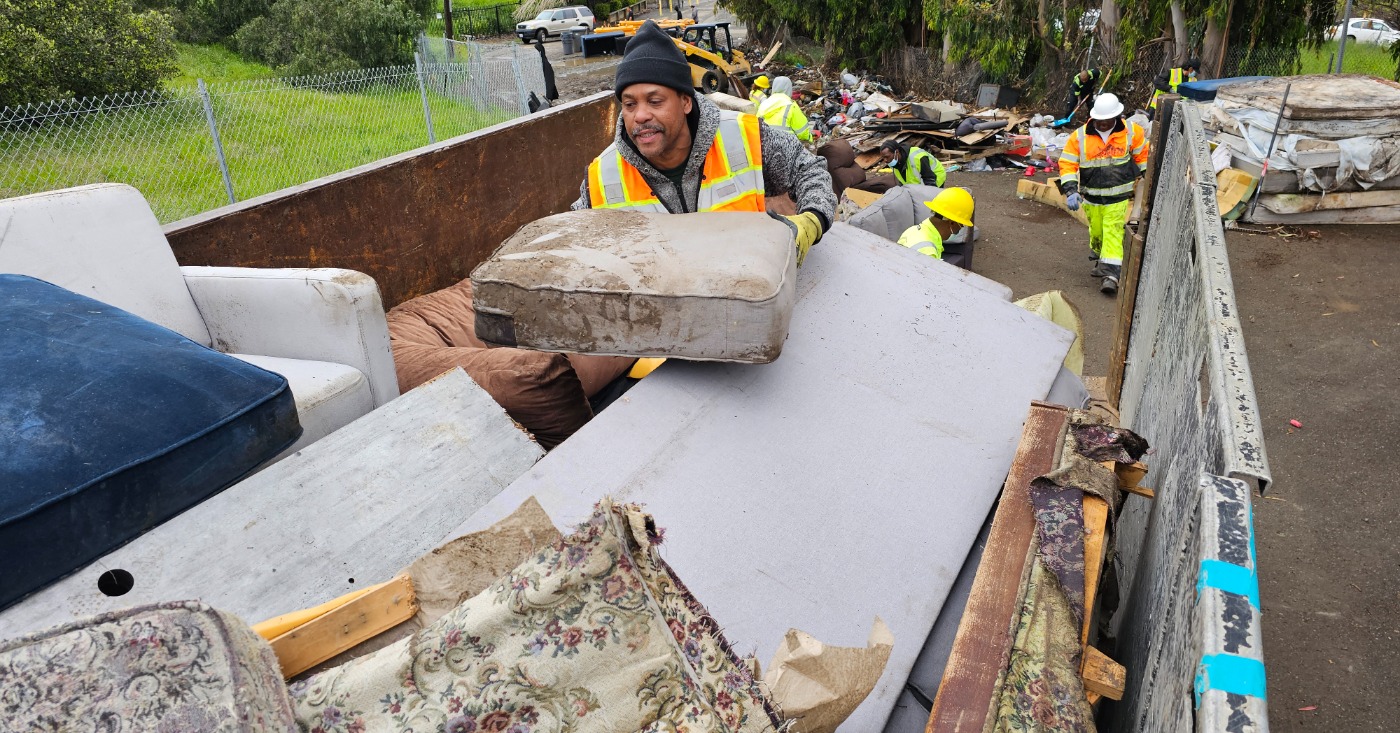
At an unincorporated area cleanup in 2022, 10 tons of illegal dumping removed. Courtesy photo.
By Paul Sanftner, Special to The Post
Proposal expands accountability, establishes administrative penalties, and ties fines to cleanup costs
On Tuesday, Nov. 17, the Alameda County Board of Supervisors is scheduled to consider the first reading of an ordinance proposed by Supervisor Nate Miley to strengthen enforcement against illegal dumping in unincorporated Alameda County, including Ashland, Cherryland, Castro Valley, San Lorenzo and Fairview.
Illegal dumping places a significant financial burden on residents and taxpayers. In 2024, Alameda County spent $3.8 million addressing 1,483 illegal dumping incidents, an average of approximately $2,562 per incident. Yet no illegal dumping cases from the unincorporated county were charged that year.
The proposed ordinance would add Chapter 6.121 to the County’s General Ordinance Code, establishing an administrative enforcement process that would allow the County to hold more parties accountable without relying solely on criminal prosecution.
Key provisions include:
Expanded accountability: Penalties could apply to individuals who dump waste, those who provide waste to unlicensed haulers who illegally dispose of it, and vehicle owners who knowingly consent to their vehicles being used for illegal dumping.
Administrative enforcement: Authorized County personnel could issue penalties and abatement orders, with opportunities for administrative hearings and judicial review.
Penalties tied to cleanup costs: Fines would start at $2,500 for a first violation, increase to $5,000 for a second and $10,000 for a third. Enhanced penalties of up to $10,000 per violation could apply to large-scale dumping, hazardous waste, or dumping near sensitive locations such as creeks, schools and storm drains.
The ordinance includes safeguards for people acting in good faith. Residents and businesses using licensed haulers would be exempt from waste-generator liability, while vehicle owners whose vehicles were used without their consent and property owners unaware of dumping on their land would also be protected.
Cited individuals could request community service in lieu of penalties, with ability to pay among the factors considered. The proposal would also allow property owners, business improvement districts and community groups to pursue recovery of cleanup costs and authorize the Board to establish a reward fund for tips identifying illegal dumpers.
“Every mattress and every truckload of construction debris dumped in Ashland, Cherryland and Castro Valley gets paid for by the people who live there, and right now the people responsible almost never face a consequence,” Miley said. “This ordinance closes the loopholes that let people hand off their waste and walk away. It gives the County a fair and swift way to hold dumpers accountable, protects people who do the right thing, and makes the penalty match what it costs us to clean up after them.”
Modeled on Santa Cruz County’s illegal dumping ordinance, which took effect in July 2025, the proposal was recommended for approval by the Board’s Unincorporated Services Committee.
Miley is also urging cities and counties throughout the region to adopt similar standards. His office has released a Model Illegal Dumping Enforcement Ordinance developed through the Alameda County Illegal Dumping (ACID) Task Force to support coordinated regional enforcement.
If the Board conducts the first reading on Nov. 17, the ordinance will return for adoption at a subsequent meeting and take effect 30 days after adoption.
Paul Sanftner is the director of communications and special projects for the office of Alameda County Supervisor Nate Miley.
OPINION: Mario Juarez’s Courtroom Admissions Raise Questions About Allegations That Fueled Recall of Pamela Price
POST NEWS GROUP — Juarez’ claims became a significant part of the political narrative surrounding the recall campaign that removed me from office. Even though I denied the allegations, for two years, Juarez’s allegation was repeated across news outlets and used as political ammunition against me. His former local criminal defense attorney Ernest Castillo proclaimed Juarez’ innocence and claimed that the charges were politically motivated. Castillo is now a judge in the Alameda County Superior Co
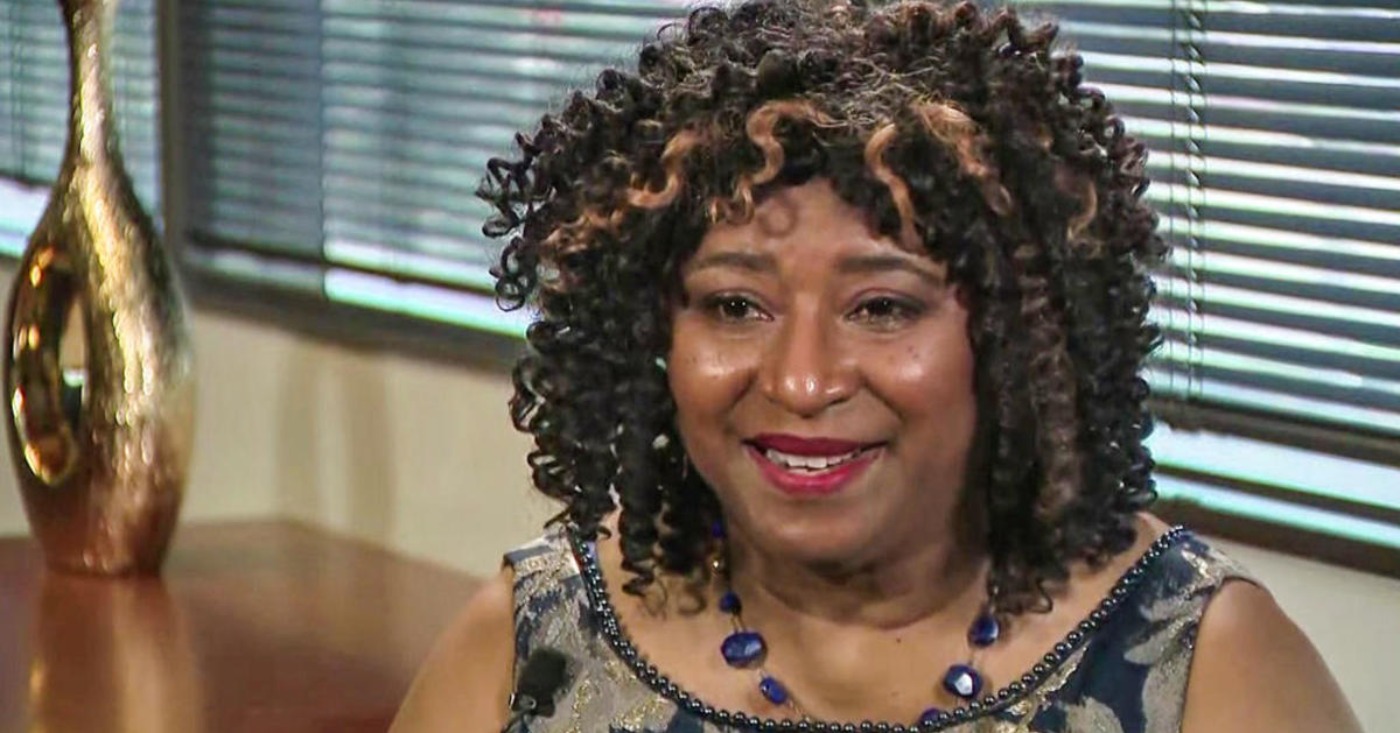
Pamela Price served as Alameda County District Attorney from 2023 to 2024. Courtesy photo.
By Pamela Price
Former Alameda County District Attorney says it may take time, but ‘the truth will always catch up to the lie.’
In 2024, Mario Juarez, the U.S. government’s star witness in former Oakland Mayor Sheng Thao’s bribery case, steadfastly proclaimed his innocence of charges filed by the Alameda County District Attorney’s office under my leadership for allegedly passing tens of thousands of dollars in bad checks.
After he was charged in January 2024, Juarez fabricated a story claiming that I tried to extort $25,000 in cash from him for the anti-recall campaign.
In his recent courtroom testimony at Sheng’s trial, Juarez admitted that he knew the checks he wrote to print brokers Butterfly Direct Marketing were bad and would bounce. He also testified that he took money intended to pay the printer for himself. Juarez has a long, documented history of making false accusations and scamming business partners and acquaintances.
I denied Juarez’s allegation from the beginning. I never solicited a $25,000 payment from Juarez in exchange for dismissing criminal charges. It did not happen.
Now, in open court, the public is hearing Juarez admit that he knew the checks he wrote would bounce and that he took money intended to pay Butterfly for himself.
Juarez’ claims became a significant part of the political narrative surrounding the recall campaign that removed me from office. Even though I denied the allegations, for two years, Juarez’s allegations were repeated across news outlets and used as political ammunition against me. His former local criminal defense attorney, Ernest Castillo, proclaimed Juarez’ innocence and claimed that the charges were politically motivated. Castillo is now a judge in the Alameda County Superior Court.
Juarez’ false allegations against me had political consequences. The media and local bloggers were quick to amplify his allegations. Now they each have an obligation to give the public the same level of attention to the facts that have emerged in court. Anyone who repeated those allegations has a responsibility to revisit them now that Juarez admits he was guilty of the charges.
Juarez’s admissions also raise serious questions about why current District Attorney Ursula Jones Dickson chose to dismiss the charges against him rather than pursue accountability for the criminal conduct he has now admitted under oath. One of Jones Dickson’s first acts in February 2025 was to dismiss the charges against Juarez, despite the victim’s objections.
Political opponents should not be able to turn an unverified accusation into a public verdict. My reputation, my career, and the confidence of voters were all affected by an accusation that was never established as true.
The press should never confuse an allegation with proof and mislead the public about the veracity of a claim. And the current district attorney should not make prosecution decisions based on politics.
About Hon. Pamela Price
Pamela Price earned her B.A. from Yale College and a J.D. and M.A. from the Berkeley School of Law. She was admitted to practice law in California in 1983 and has specialized in federal civil rights litigation since 1991. She has successfully prosecuted civil and criminal cases in Bay area courts and is one of the few Black women to ever argue a case in the U.S. Supreme Court. She served as the elected District Attorney of Alameda County from 2023 to 2024.
“Blue Tsunami” Sweeps Georgia, Bottoms Makes History
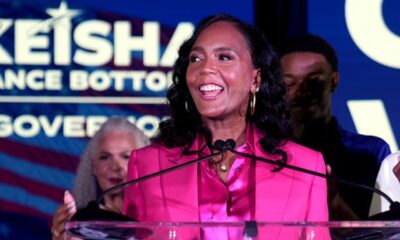
MOREHOUSE COLLEGE – THE MAROON TIGER — A political shift described as a “Blue Tsunami” has transformed the landscape of Georgia leadership following the recent election. Keisha Lance Bottoms made history when the race was called on Nov. 3, becoming the first woman and the first Black person elected as governor of Georgia.
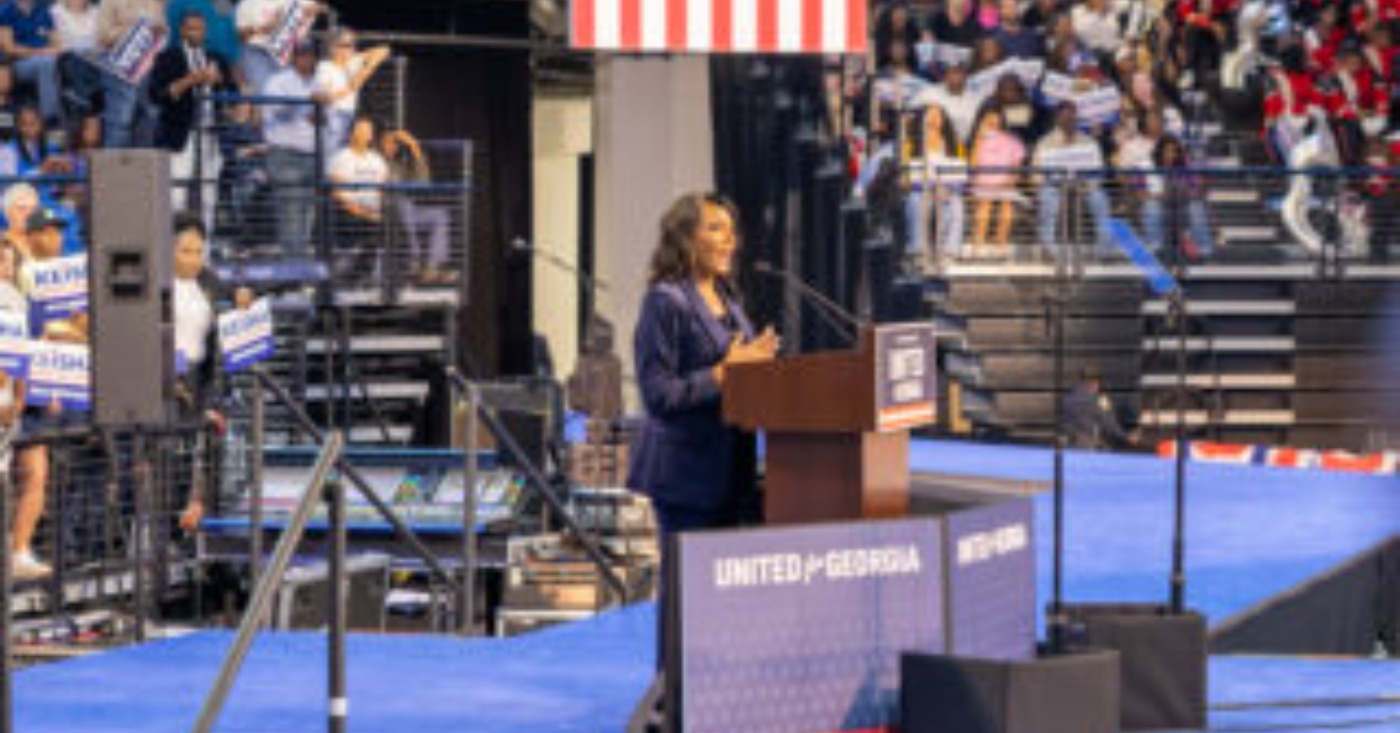
Credit: Che Harmon-Williams — Abbey Cutrer via AJC
The race was called on Nov. 3 at 9:24 p.m., which is much earlier than most elections. The atmosphere of the Marriott Marquis located in downtown Atlanta was only a mere sample of the excitement statewide. The event hall could barely hold the guests as the line for access passes extended across the entire lobby floor. Everyone came in some of their best attire, sporting unmistakable blue diamond pins with the words, “Keisha Lance Bottoms for governor.”
Now, Bottoms will become Georgia’s first woman and first Black governor when she takes office in January, making her the first Black woman to serve as governor of any U.S. state.
She described her campaign as reaching every corner of the state, “from the red hills of Georgia to the Blue Ridge Mountains of the Piedmont,” as cameras crowded in to capture the moment.
Joining her onstage were her mother, her children and her husband, Derek Bottoms, whom she met while attending Georgia State University College of Law and married in October 1994.
Supporters who had campaigned alongside Bottoms for 578 days shed tears of joy at her election watch party. Among those near the stage were U.S. Sen. Raphael Warnock ‘91, D-Ga., the senior pastor of Ebenezer Baptist Church, and the Rev. Jamal Harrison Bryant ‘94, the senior pastor of New Birth Missionary Baptist Church.
Eight Black women, many firsts
In 2025, Black women experienced disproportionate employment losses as the Trump administration implemented federal workforce cuts and rolled back diversity, equity and inclusion initiatives.
The losses disproportionately affected Black women across the country. In 2026, Georgia voters elected eight Black women to statewide office, marking a historic shift in the state’s political leadership. The South had something to say.
Georgia’s eight major statewide executive offices are the governor, lieutenant governor, attorney general, secretary of state, agriculture commissioner, insurance commissioner, labor commissioner and state school superintendent.
When the newly elected officials take office in January, Black women will hold seven of Georgia’s eight statewide executive offices, a first for the state, with Lt. Gov.-elect Josh McLaurin holding the eighth seat.
Several broke barriers of their own. Tanya Miller will become Georgia’s first elected woman attorney general. Penny Brown Reynolds, a former Fulton County judge, will become the first Black person elected Georgia secretary of state. Keisha Sean Waites, a former Atlanta City Council member, will become Georgia’s first Black woman insurance commissioner. Educator Lydia Powell will become its first Black woman state school superintendent, while Nikki Porcher will become its first Black woman labor commissioner.
Agriculture Commissioner-elect Katherine Juhan-Arnold founded Baby Katie’s Pharm & Kitchen, a nonprofit farm that provides fresh produce and agricultural education to underserved communities. Shelia Edwards, who won the District 5 race, will join Alicia Johnson as one of only two Black women on the Georgia Public Service Commission. Johnson became the first Black woman elected to a statewide partisan office outside the judiciary in Georgia after winning her commission seat in 2025.
“Georgia chose competence,” Brown Reynolds told The 19th. “We were not selected because we were Black women. I believe that we were selected because all of us bring something that Georgia desperately needs.”
Andra Gillespie, a political science professor at Emory University, told USA Today that the number of Black women elected to leadership positions in Georgia is unprecedented.
“Black women have definitely reached a point where they can not only run and be taken seriously for leadership positions in major parties,” she said.
The wins reached Congress too. State Rep. Jasmine Clark, D-Ga, became the first Black woman with a doctorate in science elected to Congress, winning Georgia’s 13th Congressional District seat, while U.S. Reps. Lucy McBath and Nikema Williams won reelection.
“Georgia has shown up”
Warnock said Georgia voters showed the power of organizing this election cycle and pledged to keep fighting for historically Black colleges and universities.
“I’m proud of Georgia. Georgia has shown up,” Warnock said. “Some 3 million of them early voted.”
He said churches played a key role in that turnout.
“What we saw, among other things, in this election cycle is the power of organizing, and the faith community has always been an important part of that,” he said.
When asked about the legislative priorities he plans to pursue with Keisha Lance Bottoms, Warnock highlighted his efforts to secure federal funding for historically Black colleges and universities.
Warnock pointed to a recent $97.1 million federal award supporting STEM programs at 10 historically Black colleges and universities and other minority-serving institutions, including Clark Atlanta University. His office has also reported securing more than $17 billion for HBCUs nationwide since he began his full Senate term.
With Governor-Elect Bottoms being an HBCU graduate of Florida A&M University, Georgia will have two HBCU alumni representing the people of the state.
“My own life is a testament to how these schools perform way above their weight,” he said. “And so I’ll continue to fight for them.”
His advice for current students was simple: “Morehouse gave me everything I needed to get ready,” he said. “I want the students to look at someone like me, and many others in various fields, and know that we sat in those same desks that they sit in. And so the sky is the limit.”
“Money doesn’t make you a success; character does”
Bryant said the win was personal, crediting Black men and Black churches for helping elect Bottoms.
“Super excited to know history was made, and to know that Black men supported a Black woman to get to this place,” he said.
The biggest hurdle, Bryant said, was getting Black churches involved and engaged, which he described as a return to the church’s tradition from the civil rights movement.
His advice for young men at Morehouse and across Georgia was direct.
“The takeaway lesson for all of us is money doesn’t make you a success,” Bryant said. “Character does.”
When the officials-elect take office in January, Black women will lead nearly every corner of Georgia’s executive branch. Bottoms announced her transition team Friday, Nov. 6. She and the seven other statewide officials-elect will be sworn in in January.
Campus Accountability: Universities Must Do More to Address Sexual Assault
SOUTHERN UNIVERSITY – SOUTHERNDIGEST — Colleges and universities are meant to be safe environments for learning and personal growth, yet recurring reports of sexual assault continue to challenge the effectiveness of institutional protections.
College campuses are supposed to be places where students can learn, grow and feel safe. However, reports of sexual assault at universities across the country continue to raise questions about whether institutions are doing enough to protect their students and hold individuals accountable.
From Louisiana State University to Harvard University and Cornell University, campus sexual assault cases have brought renewed attention to how colleges investigate allegations, discipline students and support survivors. For many, the concern is not only the actions of students accused of sexual misconduct but also how university administrators respond when these situations occur.
At LSU, recent reporting has raised questions about the effectiveness of the university’s Title IX process. According to WBRZ, more than 300 sexual assault reports were made through LSU’s Title IX process between 2022 and 2025, with three resulting in disciplinary action. Although not every report results in a finding of responsibility, the numbers raise important questions about how institutions communicate outcomes and address reports of misconduct.
Cornell University has also faced scrutiny following allegations involving seven students and an alleged sexual assault at a fraternity house in 2024. The university’s investigation resulted in different disciplinary actions, including expulsions and suspensions. However, questions about one student’s return to campus and housing arrangements have continued to draw criticism.
These cases highlight a larger issue: University accountability cannot stop at having a Title IX office or publishing policies in a student handbook.
Title IX prohibits sex-based discrimination in federally funded education programs and addresses sexual harassment and sexual violence. Universities must have procedures for responding to complaints, conducting investigations and providing supportive measures. However, having policies in place means little if students do not understand them or believe reports will be handled appropriately.
Students who are found responsible for sexual misconduct should face consequences that reflect the seriousness of their actions. Universities should also examine whether their investigative procedures are timely, whether survivors receive adequate support and whether disciplinary decisions are consistently enforced.
Accountability must also include university administrators. Institutions should be transparent about their procedures, provide clear reporting options and regularly review whether their policies are working.
At the same time, every student involved in a disciplinary proceeding deserves a fair investigation and an opportunity to respond to allegations. Protecting survivors and respecting due process should not be treated as competing priorities.
Ultimately, universities have a responsibility that extends beyond academics and athletics. Students deserve to know that their safety matters and that misconduct will be taken seriously. A university’s commitment to student safety should be measured not only by the policies it publishes but also by the actions it takes when those policies are tested.















 Written By
 ADVERTISEMENT