
Commentary
COMMENTARY: The 2019 Legislative Session is Over. What Bills Did Gov. Abbott Sign into Law that YOU Must Know About?
HOUSTON FORWARD TIMES — Every two years, the Texas State Legislature convenes to introduce bills that they hope will eventually come out of their respective committees, get argued on both the House and Senate floor, gain passage by both chambers, and then come before the Governor of Texas to be signed into law. Every biennial session, tons of bills get introduced, but a select few get signed into law.


Hey, Texans!
Every two years, the Texas State Legislature convenes to introduce bills that they hope will eventually come out of their respective committees, get argued on both the House and Senate floor, gain passage by both chambers, and then come before the Governor of Texas to be signed into law. Every biennial session, tons of bills get introduced, but a select few get signed into law.
Although 2019 was no exception, there were several important bills that were signed into law and were vetoed by the governor that everyone in Texas should be keenly aware of, especially members of the African American community.
The Forward Times wants to share some of the key bills that Governor Greg Abbott (R-TX) signed into law that will affect everyone in Texas related to education, flooding, school safety and other important areas, as well as some of the bills that were vetoed by the governor.
Let’s first talk about some of the key bills that were signed into law and will take effect soon.
One of the much-talked about issues coming into this year’s legislative session was the desire of Gov. Abbott to be able to sign into law a major property tax reform bill to deal with rising property taxes that have significantly impacted residents all across the state of Texas.
Senate Bill 2, or the Texas Property Tax Reform and Transparency Act as it has been called, was signed into law by Gov. Abbott on June 12th. This bill will require school districts, cities, counties and all other taxing entities to go to their respective voters to gain approval before they can raise taxes above a certain percentage more than it was the previous year. As the current law stands, if any taxing entity wants to raise property taxes by 8%, residents can petition that entity to hold an election to roll back the increase, often referred to as the “roll back rate.”
Now, as a result of this bill being signed into law, voter approval will be required when any taxing entity wants to increase their property tax revenues by more than 3.5%, and for select taxing entities, the increase is limited to 2.5% before voter approval is required. The taxing entities impacted by this bill include cities, counties, school districts, community colleges and all other types of local entities that collect property taxes from residents and set a local tax rate.
Gov. Abbott released a statement prior to signing the bill into law, saying:
“For far too long, Texans have seen their property taxes skyrocket as they are reduced to tenants of their own land…The Texas legislature took a meaningful step in reinforcing private property rights by reining in the power of local taxing entities, providing more transparency to the property tax process, and enacting long awaited appraisal reforms.”
It is important to note that this new bill does not cut or reduce property taxes in any way. It does, however, make it extremely challenging for these taxing entities to raise taxes above a certain percentage for any reason without getting voter approval first.
House Bill 3 was signed into law that and the members of the state legislature, as well as the governor, finally decided to address the problematic issue known as Texas public school finance.
As a result of this new bill being signed into law on June 11th, per-student base funding will be increased by roughly 20%; school districts will be allowed to give pay raises to veteran teachers, between $3,000 to $12,000; school districts like Houston Independent School District (HISD) and other wealthy districts across the state, had the amount of money they were required to give back to the state because of the recapture legislation, also known as the “Robin Hood” tax that was passed by the state legislature in 1993 in order to subsidize poorer districts throughout the state, significantly lowered; and money was allotted to provide free full-day pre-K for eligible 4-year-olds across the state.
One bill that has been signed into law, is sure to have a positive impact on many members of the African American community who have suffered the negative impacts of the controversial and systemically oppressive Driver Responsibility Program in Texas.
For those who were unaware, groups like the ACLU of Texas, Equal Justice Under Law and others, have fought for years to end the Driver Responsibility Program, which was particularly impactful on poor and low-to-moderate income people, mostly who were people of color.
As a result of this bill now becoming law, the ACLU of Texas states that more than 630,000 people will immediately be eligible to have their driver’s licenses reinstated, because they have no fees or suspensions that stem from something other than the DRP. They also state that approximately 350,000 people will be able to get their licenses back after paying a reinstatement fee and roughly 400,000 will be able to drive legally if they can resolve their non-DRP-related suspensions. According to the ACLU of Texas, any remaining surcharges that are owed by Texas drivers that were forced to enroll in the program will be wiped out on September 1, 2019, which is the effective date the bill becomes the law in Texas.
Another fee-related bill has been signed into law and it has many Texans relieved. The use of red-light cameras as a means of traffic control and monitoring across the state of Texas is no more, effective immediately, although entities who currently have contracts with red-light camera companies must honor those contracts, but are unable to renew those contracts.
Flooding continues to be a huge issue across certain parts of Texas, especially across the Greater Houston area. On June 13th, Gov. Abbott signed Senate Bill 7 into law, which establishes two funds that will provide grants and loans for flood control and mitigation projects in areas that are impacted by flooding across the state and will draw $1.7 billion from the state’s “rainy day fund” to help pay for it.
In the wake of the shooting at Santa Fe High School last year, Gov. Abbott signed Senate Bill 11 into law, which will strengthen mental health initiatives in schools, and will require classrooms to have access to a telephone or other electronic communication, as well as create teams that identify potentially dangerous students.
There are many other bills that have been signed into law, such as raising the legal age to buy tobacco products from 18 to 21, except for military personnel; increasing the amount of time that victims of certain types of sexual abuse are given to sue abusers or entities, from 15 years to 30 years after a victim turns 18; a prohibition on state and local governments from partnering with agencies that perform abortions, even if they contract for services not related to the procedure; and many more.
Now that we have heard about several of the bills that were signed into law, it is important to note that 58 other bills that passed the House and Senate this legislative session were vetoed by Gov. Abbott. Those 58 bills are is the most he has vetoed since being first elected to the governor’s office in 2015 (44 vetoes in 2015 and 51 vetoes in 2017, respectively).
Two bills vetoed by Gov. Abbott that received a lot of bipartisan support on both sides of the aisle were House Bill 448, which was authored by state Rep. Chris Turner (D-Grand Prairie) and House Bill 3490, which was authored by freshman state Rep. Sheryl Cole (D-Austin).
H.B. 448, which would have required children under the age of 2 to be secured in a rear-facing car seat while traveling in any moving vehicle, as strongly recommended by the American Academy of Pediatrics. According to Gov. Abbott, signing this bill into law would have been “an unnecessary invasion of parental rights and an unfortunate example of over-criminalization.”
Gov. Abbott went on to say that “Texas already compels drivers to use a car seat for a child under eight years of age…It is not necessary to micromanage the parenting process to such a great extent, much less to criminalize different parenting decisions by Texans.”
Relative to H.B. 3490, which would have made it a criminal act to use any form of social media to harass and torment someone. The bill would have made the people convicted of this form of harassment, also known as “cyber-bullying” for those who have been following this issue, subjected to higher penalties if they caused someone underage to commit suicide or physically harm themselves. According to Gov. Abbot, he felt that while “cyber-bullying is a very real problem,” he felt that “the language used in the bill was overbroad and would sweep in conduct that legislators did not intend to criminalize, such as repeated criticisms of elected officials on Internet websites.” Gov. Abbott did appear to be interested to working on this issue during the next legislative session, as he stated that he wanted “to forcefully counter cyberbullying in ways that can be upheld constitutionally.”
It is extremely important that all Texas residents and businesses know and understand the various bills that impact them on a day-to-day basis, including the ones that will have gone into effect already or will go into effect on Sept. 1st or at the beginning of next year.
The Forward Times will delve deeper into some of the key bills introduced by many of our local lawmakers that came through during this year’s Legislative Session and see what success stories came as a result of their hard work and legislative efforts this year.
In the meantime, if you are interested in finding out more about the 86th Legislative Session and what occurred, please visit Gov. Abbott’s Legislative news page at https://gov.texas.gov/news/category/legislative.
This article originally appeared in the Houston Forward Times.











By Fred Redmond
Everywhere you look, everything costs too much. Families are stretching every paycheck to cover soaring grocery bills. Too many are struggling to make rent. Child care, health care and gas bills continue to strain household budgets. Working people are doing everything right, yet too many are still falling behind.
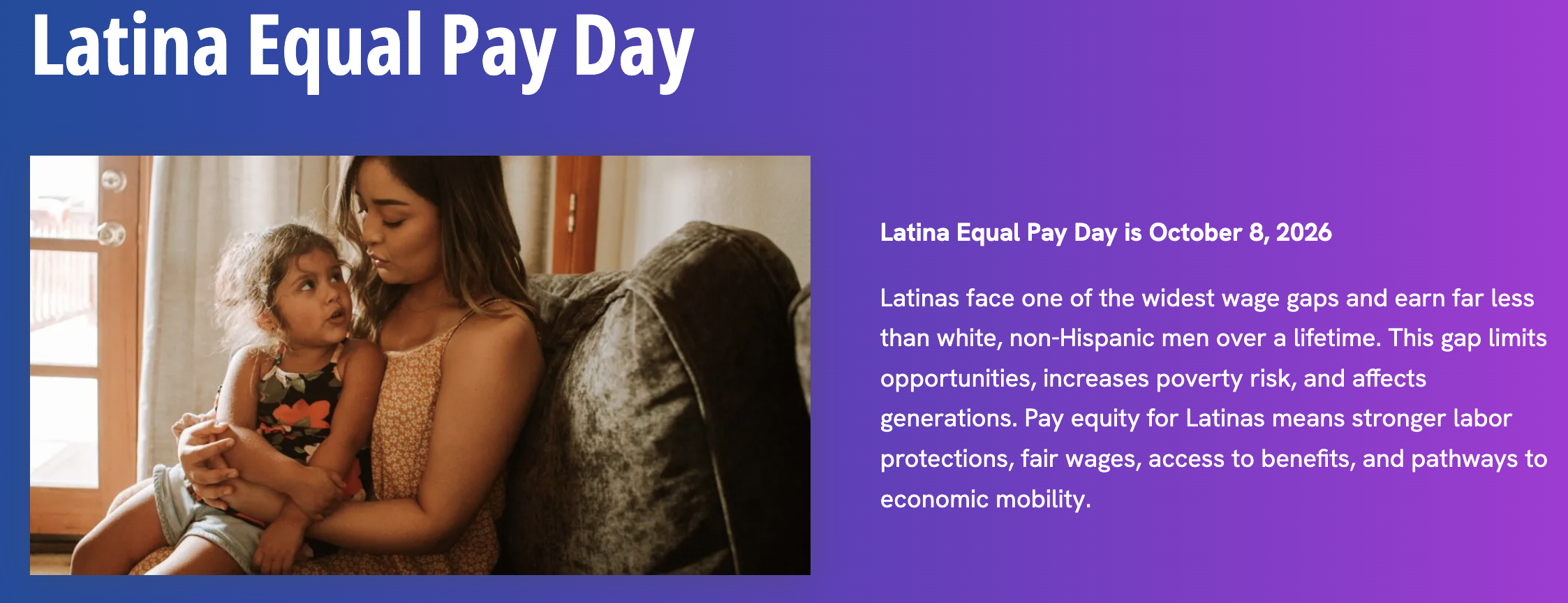
For Latina workers, this crisis is compounded by a persistent and unjust pay gap. That’s why we observe Latina Equal Pay Day on Oct. 8 this year. It brings attention to the fact that among full-time, year-round workers, Latinas earned just 60 cents in 2025 for every dollar earned by white men. That wage gap isn’t just a statistic—it means smaller paychecks, fewer opportunities to build wealth, less financial security and harder choices about how to provide for their families.
Latinas deserve equal pay for equal work. Full stop. Anything less hurts working families and weakens our economy. A union contract can help level the playing field.
The evidence is clear. Hispanic workers overall receive a large wage boost from union membership, with a 16.4% wage premium compared with nonunion Latino workers. Latinas in a union earn about $15,288 more per year than Latinas who are not in a union. Most importantly, union contracts also help narrow the gender pay gap: Women working full time in union jobs earn 86.2 cents for every dollar earned by men who are union members—a significantly smaller gap than among nonunion workers.
Negotiated contracts replace arbitrary decisions with clear wage scales, transparent pay systems and enforceable workplace standards. Instead of leaving pay to bias or favoritism, union contracts establish fair standards that workers can enforce.
A report from the Economic Policy Institute finds that strengthening workers’ rights to organize and increasing union density would significantly reduce racial wage gaps while strengthening our economy and our democracy. Communities with higher union membership invest more in public education, are more likely to expand access to health care and provide stronger unemployment protections when people lose their jobs.
Our labor movement has always understood that civil rights and workers’ rights are inseparable. Dr. Martin Luther King Jr. recognized that truth when he stood with striking sanitation workers in Memphis, Tennessee. Today, we carry that legacy forward by fighting for workplaces where every worker is respected, protected and paid fairly.
Latina Equal Pay Day should not simply remind us how far we still have to go. It should remind us that we already know how to make progress. Progress happens when workers organize. It happens when we bargain together. And it happens when we stand in solidarity with one another. That’s why we must elect leaders who will fight to protect workers’ rights, strengthen unions and defend our democracy.
We must recommit ourselves to building an economy where every worker is valued, every paycheck reflects the dignity of work and every Latina receives the equal pay she has long deserved. Because when Latinas are paid fairly, every family can afford to build a better future.
Fred Redmond, the highest-ranking African American labor official in history, is the secretary-treasurer of the AFL-CIO, the nation’s largest labor federation representing 65 unions and nearly 15 million workers.
Black Press
Should You Have to Pay to Hear the Gospel?
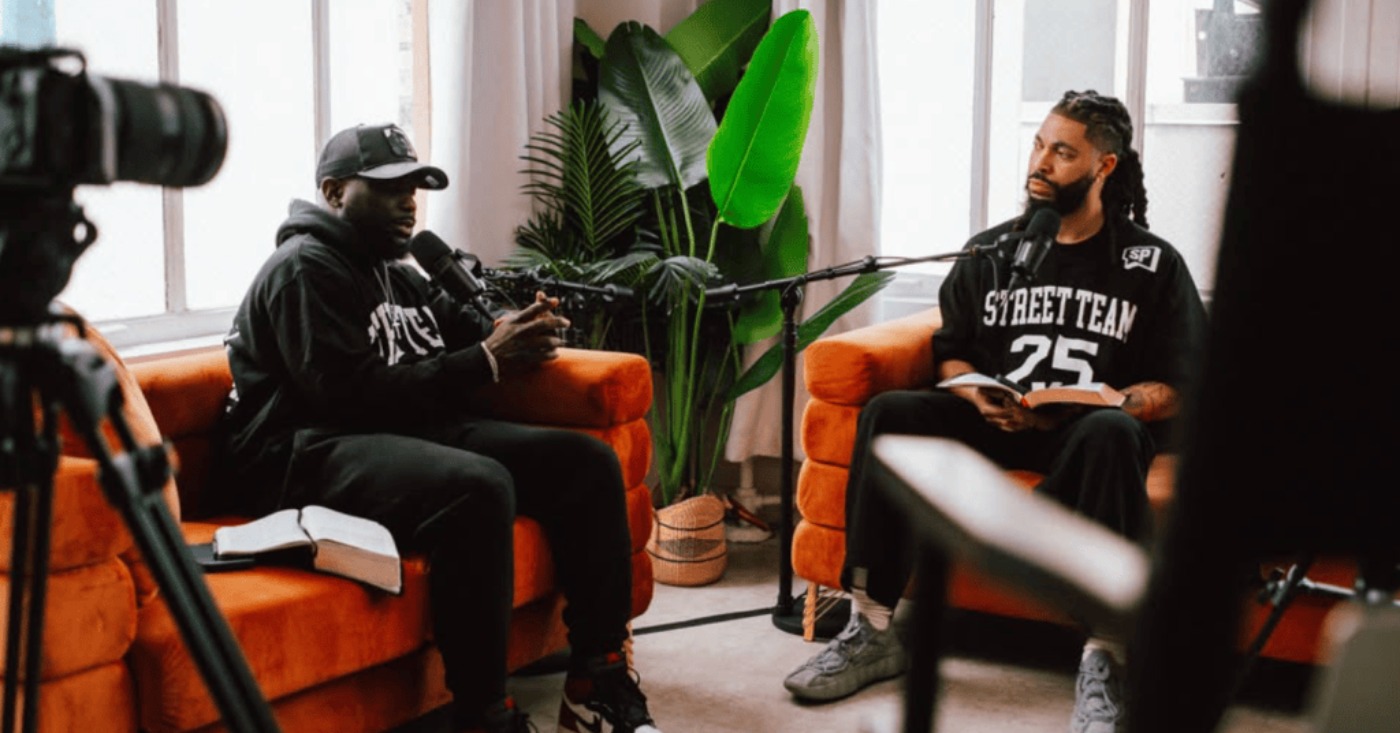
ST. LOUIS AMERICAN — Pastor Philip Anthony Mitchell of Atlanta’s 2819 CHURCH and Tim Timberlake of Celebration Church in Jacksonville, Florida, are at the center of a social media debate. The controversy stems from ticket prices for their “Street Preachers” podcast tour, with general admission tickets reportedly costing around $60 and VIP options up to $200.
For generations, the Black church has passed the offering plate to keep the lights on, pay the preacher, help the poor and carry the Gospel beyond its walls. But what happens when the preacher leaves the sanctuary, takes a popular Christian podcast on tour — and charges admission?
That question has placed Pastor Philip Anthony Mitchell, founder and lead pastor of Atlanta’s fast-growing 2819 CHURCH, at the center of a heated social media debate.
Mitchell and Tim Timberlake, senior pastor of Celebration Church in Jacksonville, Florida, host “Street Preachers,” which its official website describes as a “raw, unfiltered podcast” committed to spreading the Gospel.
‘A brood of vipers’
The controversy began after ticket prices for the podcast’s 2026 tour circulated online. General admission tickets reportedly cost about $60 before fees, with premium options, including a VIP meet-and-greet package, priced at $200. Critics questioned whether ministers should charge people to hear the Gospel.
Others defended the pastors, arguing that Christian events require venues, transportation, security, equipment and staff.
Mitchell answered critics from the pulpit last month, calling them “a brood of vipers.” He said the podcast is a separate, personal project and that neither his church nor Timberlake’s is bankrolling it.
“Now we have decided to go on a tour to take the gospel to cities, and because that’s not funded by 2819, and it’s not funded by Celebration Church, Tim and I gotta do that with our own pockets,” Mitchell said. “It’s why there is tickets. We have to pay for venues and security and productions and staff from our own pockets.”
Mitchell called some critics “ignorant” and said they did not know that a child was healed through faith during one of the events.
“And you want to complain about a 60 ticket?” he said. “So hate on!”
Worship service vs. media event
Mitchell maintains that “Street Preachers” is an independently produced podcast tour, not a worship service, and that ticket revenue helps cover production costs.
Yet the presence of pastors, Scripture and Gospel language makes the distinction less clear to some believers.
The official tour website lists all eight 2026 stops as sold out. Promotional material announcing additional dates promised, “Better ticket options. Same Gospel. Same move of God.”
Corporate prayer gathering
The language gets to the heart of the dispute. Some Christians argue that no one should be kept outside because they cannot afford a ticket. Others say the Gospel remains free even when people pay for the venue and experience surrounding its presentation.
The paid podcast tour, however, is not Mitchell’s only large-scale gathering. On Oct. 10, 2819 CHURCH will host “ACCESS — That Powerful Hour of Prayer” at AT&T Stadium in Arlington, Texas. Admission is free.
2819 CHURCH has said 80,000 free tickets were claimed before registration reopened.
The contrast raises another question: What makes one Gospel-centered event a ministry supported by donors and another a production supported by customers?
Unfiltered preaching, youth appeal
Mitchell’s congregation, composed largely of young Black adults, grew from fewer than 200 weekly worshippers in 2023 to about 6,000, according to the church. Some worshippers arrive before sunrise to secure a place inside.
His appeal rests partly in an intense, vulnerable and raw preaching style.
“I’m preaching without watering that down, without filtering out things that we think might be too controversial,” Mitchell told The Associated Press.
That visibility has also brought scrutiny of his theology, associations, travel, security and the businesses surrounding his ministry.
But the controversy reaches beyond Mitchell and Timberlake. Christian music concerts charge admission. Seminaries charge tuition. Religious publishers sell Bibles, books and devotionals. Churches pay musicians, media teams and guest preachers. Money becomes particularly uncomfortable, however, when an event is presented simultaneously as ministry and entertainment.
Ministry vs. entertainment
Supporters should not assume every dollar collected becomes personal profit. Critics, however, question whether lower-cost seats, sponsored tickets or free admission for people who cannot pay should be part of a Gospel-centered event.
The Black church always has required resources for ministry. It also has carried a sacred responsibility to make room for people with little or nothing to give.
The sold-out “Street Preachers” tour shows people are willing to pay to attend. The free ACCESS gathering offers a different model. The challenge is preserving that open door as Christian ministry increasingly adopts the machinery — and economics — of popular entertainment.
The post Should you have to pay to hear the Gospel? appeared first on St. Louis American.
Based on reporting by St. Louis American.
Black Press
NCCU Ramping up for the 89th Ultimate Homecoming Experience
NORTH CAROLINA CENTRAL UNIVERSITY – CAMPUS ECHO — N.C. Central University is preparing for its 89th Ultimate Homecoming Experience, a week-long celebration. Thousands of students, family, friends, and alumni are expected to gather on campus for festivities including the Homecoming Countdown, parade, Miss and Mister NCCU Coronation, concerts, and the football game.
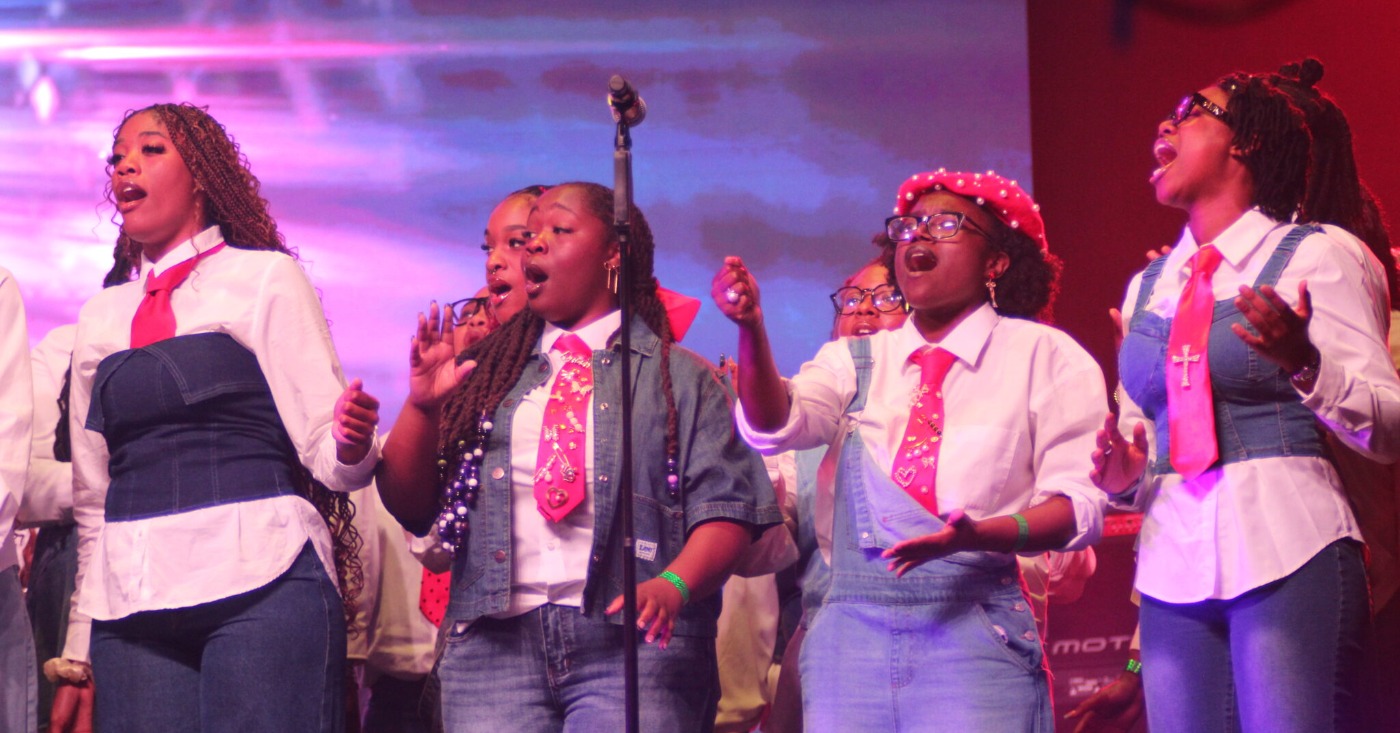
This Saturday N.C. Central University will kick off its 89th Ultimate Homecoming Experience — a week-long celebration bringing thousands of students, family, friends and alumni to campus.
This year’s festivities include the Homecoming Countdown, parade, Miss and Mister NCCU Coronation, concerts and the football game.
The number of visitors to the football game on Saturday, Oct. 10 is expected to reach at least 10,000 — O’Kelly Riddick Stadium’s capacity, with NCCU’s recent enrollment increase of more than 10,000 students.
The Eagles will face William & Mary after playing against the Campbell University’s Fighting Camels on Oct 3.
Students are already expressing excitement for the upcoming festivities.
“I’m excited for homecoming because I can meet alumni and go outside and party with my fellow eagles,” Digital Filmmaking junior Rhese Gardner said. “I’m also really looking forward to the Greek Bowl because there’s a lot going on.”
He added that even though he’s disappointed this semester’s Oil Spill was canceled, he’s still excited for the other events like the parade and concerts.
Here is a list of the week’s on-campus events:
- Oct. 3 – Homecoming Countdown
- Oct. 4 – Gospel Concert
- Oct. 5 – Coronation of Miss and Mister NCCU
- Oct. 6 – 10:40 Break
- Oct. 6 – Homecoming Experience Showcase
- Oct. 7 – Fried Chicken Wednesday
- Oct. 7 – Festival Block Party
- Oct. 7 – Late Night Breakfast
- Oct. 8 – Back to the Nest Young Alumni Mixer
- Oct. 8 – Old School Greek Stroll Off
- Oct. 8 – Hip-Hop Concert
- Oct. 9 – Step Show
- Oct. 10 – Football Game
The post NCCU ramping up for the 89th Ultimate Homecoming Experience first appeared on Campus Echo Online.
Based on reporting by North Carolina Central University – Campus Echo.
Black History
Ghana’s Ministry of Foreign Affairs Publishes Global Circle’s Vatican Reparations Call in Special Edition Alongside Heads of State
GLOBAL CIRCLE FOR REPARATIONS AND HEALING — Ghana’s Ministry of Foreign Affairs has published the Global Circle for Reparations and Healing’s submission, “From Accra to the Vatican,” in a special edition of The Ghanaian Envoy. This marks the first time a sovereign state has incorporated the Reparations Presentment to the Holy See into its official record. The 175-page edition, titled “Creating A New World,” also documents Ghana’s campaign that led to UN Resolution A/RES/80/250, which recognized the trafficking and enslavement of Africans as the gravest crime against humanity.

“From Accra to the Vatican” appears in The Ghanaian Envoy Special Edition on UN Resolution A/RES/80/250 — the first time a sovereign state has carried the Reparations Presentment to the Holy See into its official record
ACCRA, Ghana / CHICAGO, Illinois — October 7, 2026 — The Global Circle for Reparations and Healing today announced that its submission to Ghana’s Ministry of Foreign Affairs, “From Accra to the Vatican: A Call for a Global Plan of Action on Catholic Church Redress”, has been published in the Special Edition of The Ghanaian Envoy, the official newsletter of the Ministry of Foreign Affairs of the Republic of Ghana. The 175-page edition, titled “Creating A New World,” documents the Ghana-led campaign that culminated on March 25, 2026, in United Nations General Assembly Resolution A/RES/80/250, which declared the trafficking of enslaved Africans and the racialized chattel enslavement of Africans the gravest crime against humanity.
The Global Circle’s submission, authored by Co-Convener Kamm Howard, appears in Part V of the edition, “What Repair Must Now Mean,” at page 161. It shares the volume with statements by President John Dramani Mahama of Ghana, President Joseph Nyuma Boakai Sr. of Liberia, President Netumbo Nandi-Ndaitwah of Namibia, President Bassirou Diomaye Diakhar Faye of Senegal, President Carlos Manuel Vila Nova of São Tomé and Príncipe, President Emmanuel Macron of France, Prime Minister Mia Amor Mottley of Barbados, United Nations Secretary-General António Guterres, Foreign Minister Samuel Okudzeto Ablakwa, African Union Commissioner Amma Twum-Amoah, CARICOM Reparations Commission Chair Sir Hilary Beckles, Nobel Laureate Wole Soyinka, Dr. Julius Garvey, and Congressional Black Caucus Executive Director Vincent Evans, among others.
The submission traces the Global Circle’s delivery of the Reparations Presentment to the Holy See in Vatican City on July 18, 2022, the document’s subsequent use by the former Vice President of Costa Rica and the Vice President of Colombia in their engagements with Pope Francis, and the partial response contained in Pope Leo XIV’s May 2026 encyclical Magnifica Humanitas. It argues that while three of the Presentment’s seven demands have entered the Church’s official language in diluted form, four remain wholly unmet: rescission of the papal bulls that authorized African enslavement, the Church’s call upon other offending Western nations to make redress, the establishment of a joint Vatican–African Diaspora–African Papal Commission on Reparations and Healing, and a substantial financial commitment to repair. The submission asks Ghana to adopt the Presentment as the reference instrument for a Vatican track within the Accra Next Steps Commitments and to convene a first meeting of Global African reparationists toward a collective response.
“For four years the Presentment has been a civil society document carried by civil society hands,” said Kamm Howard, Co-Convener of the Global Circle and Commissioner of the National African American Reparations Commission. “Ghana has now placed it in the official record of a sovereign state, in a volume that opens with a President’s address to the General Assembly and closes by asking what repair must mean. That is not a courtesy. It is a signal to every government, every reparations commission, and every African Catholic that the claim against the Holy See belongs on the state agenda, and that the state which broke the deadlock at the United Nations is prepared to see it there.”
The significance of the publication extends beyond the Vatican file. The Presentment was created as a legal claims instrument by Howard in 2014 and first delivered to corporations and institutions in the United States, where it secured significant concessions. Its appearance in a foreign ministry’s official publication, translated and distributed in English, French, Portuguese, Spanish, and Italian, establishes the reparations presentment as a recognized instrument of international reparatory diplomacy, one that other states and descendant communities can adopt without drafting a new framework of their own. The Global Circle has described this catalytic potential as the “N’namba Effect,” after the Evanston, Illinois, reparations initiative – led by N’nanba Robin Rue Simmons – that gave municipalities across the United States the model, permission, and courage to act.
“The Vatican told us in 2022 that it moves in fifteen-year increments,” Howard added. “Ghana has just demonstrated at the United Nations that a determined state can compress that timeline to a single vote. We are asking Ghana to do for the Church what it did for the General Assembly, and we are asking Global Africa to organize behind that ask with one document, one voice, and one set of demands.”
The Global Circle has written to President Mahama and Foreign Minister Ablakwa to express its gratitude and to propose that its Vatican and Interreligious Actors Working Group lead the first meeting on a collective Vatican response under the auspices of the Government of Ghana. The Global Circle has also formally advised the Congressional Black Caucus of the publication in connection with its pending request that the Caucus recognize the Presentment as the foundational document for reparations engagement with the Roman Catholic Church and join the Government of Ghana in this global call to action.
###
About the Global Circle for Reparations and Healing
The Global Circle for Reparations and Healing was convened in 2022 to help build united global reparations front across Africa and its worldwide diaspora. In July 2022 the Global Circle delivered the Reparations Presentment to the Holy See in Vatican City. It co-organized Accra Summit I in August 2022 with the Government of Ghana and the Africa Transitional Justice Legacy Fund, and led the organization of Accra Summit II: Centering Healing Across Global Africa in March 2025 in partnership with the African Union. The Reparations Presentment to the Holy See is available in English, French, Italian, Portuguese, and Spanish at gcrh.org.
Media Contact
Global Circle for Reparations and Healing
Kamm Howard, Co-Convenor
[email protected] 773 520 0369
gcrh.org
Black Press
OP-ED: Proposition 44 Would Put a Price on Trust
The danger in Proposition 44 is not only its 90 percent figure. It is that the meaning of “qualifying” spending will be worked out later. A clinic preparing a budget today may not know whether a navigator, health educator, transportation program, outreach worker, technology upgrade, or other patient-support service will be counted the way it expects. Yet the financial consequence of getting it wrong could be immediate.

Black Press
OP-ED: Proposition 40: It’s Time to Play Chess, Not Checkers
Proposition 40 would impose a one-time 5 percent tax on the wealth of Californians with more than $1 billion in assets. Most of that money would go toward health care, with the remainder supporting food assistance and education-related programs.



Nearly 1 in 4 Third Ward voters in ‘suspense.’ Here’s why you can still vote

HBCU Homecoming: A never-miss annual tradition

Jamika Phillips, Founder of Shades The Nail Bar

What is up with the Black male vote?

Should Parents Charge their Children Rent?

Resilience & Opportunity: Banking Explained Simply #shorts

Defender 130X: Your Ultimate Family Off-Road SUV? #shorts

NFN Live ON BEYOND IWDM50 PODCAST: FEATURING IMAM OMAR SHAKIR! Join us TONIGHT for Week 6

Uncle Luke Joins BlackPressUSA | Trump Responds to Nolan Wells Case 📱

Uncle Luke Joins BlackPressUSA | Trump Responds to Nolan Wells Case

The Youngest American Killed in the Vietnam War

Latest Massacre in Haiti Reveals Cruelty U.S. Deportations

OPINION: Nolan Wells’ Death One of Several Signifying Racial Terror Lives on in U.S. South

Passing for White, Fighting for Black America: The Courage of Walter White

OP-ED: Haiti TPS: Have We Lost Sense of Humanity?

OP-ED: If AI Is the New Language of Power, Then NAN Wants Black Communities Fluent

OP-ED: How Does Your State Rank for Pre-K?

Henry O. Flipper: A Trailblazer at West Point and Beyond

NBA All-Star Damian Lillard Returns Home for 15th Annual Backpack Giveaway

Asm. Smallwood-Cuevas’s Bill Repealing ‘Racist’ CalWORKs ‘Man-in-the-House’ Rule Clears Legislature
Nearly 1 in 4 Third Ward voters in ‘suspense.’ Here’s why you can still vote
HBCU Homecoming: A never-miss annual tradition
Jamika Phillips, Founder of Shades The Nail Bar
What is up with the Black male vote?
Should Parents Charge their Children Rent?
Resilience & Opportunity: Banking Explained Simply #shorts
Defender 130X: Your Ultimate Family Off-Road SUV? #shorts
NFN Live ON BEYOND IWDM50 PODCAST: FEATURING IMAM OMAR SHAKIR! Join us TONIGHT for Week 6
Uncle Luke Joins BlackPressUSA | Trump Responds to Nolan Wells Case 📱
Uncle Luke Joins BlackPressUSA | Trump Responds to Nolan Wells Case
-

 Black Press1 week ago
Zakiya Jendayi Arrested, Locked Out of Home by Sheriff’s Deputies
-

 Black Press6 days ago
A $2.1 Trillion Wellness Industry Never Built a Daily Practice for Black Children. So This Atlanta Family Did.
-

 Art6 days ago
Montclair Brewery: Brewing Culture, Community, History
-
 BlackPressUSA4 days ago
Latinas Deserve Equal Pay. Unions Help Make It Happen.
-

 Black History1 week ago
Listening as a Lifeline: A Doula’s Witness to Black Maternal Health
-

 Black Press6 days ago
COMMENTARY: But God!
