
BlackPressUSA
COMMENTARY: A Letter to the Church — Are you living in vain?
NNPA NEWSWIRE — As I witness you celebrating the overturning of Roe v. Wade, I want to challenge you. I want you to really consider the way you are currently supporting women and children in your congregation. I hope that you will also embrace the young women who are single mothers without judgment and that your church has a ministry that caters to their needs offering both financial and emotional support beyond just the spiritual.


“Faithful Utterances”
Dr. Froswa Booker-Drew | Texas Metro News
Dear Body of Christ,
This isn’t for all of you. I want to commend those of you who step up to the plate daily supplying the support that our communities need. This is for those who are focused on dealing with certain people because it’s easy and comfortable.
As I witness you celebrating the overturning of Roe v. Wade, I want to challenge you. I want you to really consider the way you are currently supporting women and children in your congregation.
I hope that you will also embrace the young women who are single mothers without judgment and that your church has a ministry that caters to their needs offering both financial and emotional support beyond just the spiritual.
As churches, I hope that you are taking the time to address the needs of those who you are called to serve instead of just teaching them without the practical application of what they are hearing on Sundays and Wednesday nights.
I hope that you are talking to those young men in your congregation about what it means to be a man — that it is more than the ability to create babies but to be accountable and responsible for your actions.
My prayer is that you will show them what it means to be in a loving, committed relationship that supports your partner to fulfill their God-given purpose, too.
I hope that instead of allowing the women to carry the responsibility of parenthood — since their conception was not a solo act — that you will hold the men in your congregation to a standard of being involved, even if they are not with the mother of their child/children.
Church, if human life is so important to you then it must go beyond conception and pregnancy to life outside the womb. How do we care for the unborn but not their mothers or fathers?
We do not fight for universal health insurance, livable wage jobs, housing, and other necessities so that children can come into the world healthy, safe and provided for.
We do not question infant mortality and the rates of Black women who die in childbirth and after the birth of their babies. If babies are really important to you, you would be concerned about their educational opportunities.
They would have quality childcare centers with teachers that are trained and paid well. We would care about their safety — children and their families would be protected from violence that exists in the home and outside of the home.
They could be free to shop in grocery stores, go to the movies, attend parades or even go to school without the fear of being massacred in places that are supposed to be safe.
Just as Jesus listed several issues with the Pharisees, those same issues exist today within the Church. Matthew 23:14-36 lists seven woes to the Pharisees which are relevant today:
- Teaching about God but not genuinely loving God (claiming you love God who you’ve never seen but hate your brothers and sisters you see every day (1 John 4:20)).
- Preaching about God but you don’t live out what you are teaching.
- Confusing what’s sacred and what is not.
- Teaching the Bible but not practicing justice, mercy, and faithfulness to God. Getting caught up in the minuscule but not paying attention to what’s major.
- Appearing to be righteous but filled with a heart of greed and self-promotion.
- Speaking about your love for Jesus but if He were alive today, many of you would condemn Him as well.
I hope that in your moments of celebration, there is time for true reflection and change. Without it, our witness to the world is filled with hypocrisy—like the Pharisees.
Dr. Froswa’ Booker-Drew is the President of Soulstice Consultancy, LLC. To learn more about her, visit drfroswabooker.com.





Black Press
SEIU Local 1000 and State of California Will Continue to Negotiate New Labor Contract
Thousands of California state employees represented by SEIU Local 1000 recently staged a one-day walkout to protest stalled contract negotiations with Governor Gavin Newsom’s administration. The union, which represents approximately 100,000 public workers, is demanding a 20% wage increase over three years and an end to mandatory four-day in-person work requirements. While the initial strike has concluded, union leadership warns that further demonstrations are likely if the state continues to reject their demands for better pay and telework flexibility. Negotiations are expected to continue as both sides seek a resolution. Read more.

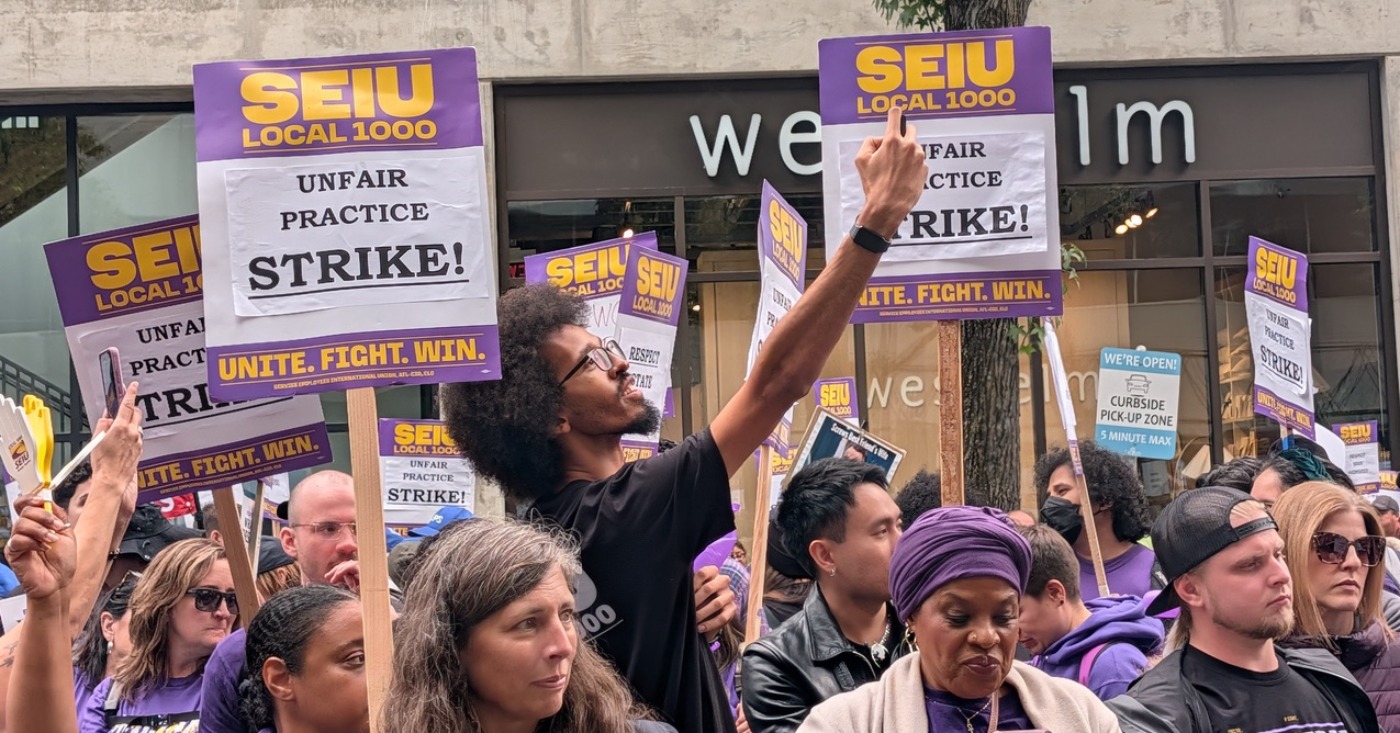
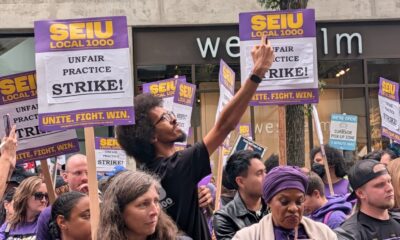
After the Service Employees International Union (SEIU) Local 1000 labor contract expired June 30 and talks with Gov. Gavin Newsom’s administration stalled, the union stepped up its efforts to secure a new agreement, saying its demands had gone unheeded.
On Oct. 21, thousands of state employees represented by SEIU Local 1000 staged a one-day walkout to protest alleged unfair labor practices during negotiations with Gov. Gavin Newsom’s administration.
Although the strike has ended, SEIU Local 1000 President Anica Walls said further demonstrations or an expanded strike are highly likely if contract negotiations remain stalled. The union represents approximately 100,000 public employees statewide.
“We are out here because our jobs matter,” Wells said. “If they continue to refuse to bargain with us in good faith, we are prepared to escalate.”
Sen. Lola Smallwood-Cuevas (D-Los Angeles) expressed support for SEIU Local 1000’s labor action in an Instagram post, emphasizing the importance of fair treatment for workers.
“I stand in complete solidarity with SEIU Local 1000,” Smallwood-Cuevas stated. “More than 100,000 state workers they represent are on strike today fighting for good-faith bargaining, fair treatment, and a contract that reflects the value of the essential public services they provide every day—all things that should be a given for the workers our state relies on the most.”
Smallwood-Cuevas, a member of the California Legislative Black Caucus (CLBC) added, “When California’s workers hold the line, the whole nation pays attention.”
According to union representatives, SEIU Local 1000 is seeking a contract that addresses rising living costs and provides greater workplace flexibility. The union is demanding a 20% wage increase over three years and an end to Gov. Gavin Newsom’s requirement that state employees work in person four days a week.
The union is also seeking increased state contributions toward employee health care benefits to reduce workers’ out-of-pocket costs.
On Sept. 18, Newsom vetoed Assembly Bill 1729, authored by Assemblymember Alex Lee (D-San Jose), which sought to expand telework opportunities for state employees.
The bill would have required state agencies to offer telework options or provide written justifications for requiring employees to work in person. Supporters argued that telework could save taxpayers approximately $225 million annually by reducing office space and parking costs while lowering vehicle emissions and improving employee retention.
Newsom said the legislation would limit state departments’ flexibility to manage their workforces and evaluate telework exemptions individually. He has also emphasized the benefits of in-person collaboration.
“I want people to come back to work, reengage, rediscover, collaborate, coordinate, develop relationships, friendships, and fall in love,” Newsom said in July. “You get three-day weekends. Four years ago, that would’ve been a triumph. Now it’s a burden.”
Union organizers described the Oct. 21 walkout as a one-day unfair labor practice strike, rather than an indefinite work stoppage. The action was intended to demonstrate solidarity and increase pressure on the state during negotiations.
SEIU Local 1000 has been without a contract since its previous three-year agreement expired June 30. Negotiations are expected to resume.
Responding to the statewide walkout, the California Department of Human Resources (CalHR) said it “remains focused on achieving a fair and responsible agreement with SEIU Local 1000 and continues to be available at the bargaining table.”
Black Press
OPINION: We Can Restore Checks and Balances on Trump
With the presidential administration facing criticism over its handling of healthcare, inflation, and government spending, political observers are shifting their focus toward the upcoming congressional elections to restore institutional checks and balances. Recent data suggests Democrats are within reach of the 218 seats needed for a House majority, while specific Senate races in states like Texas and Michigan remain pivotal. The outcome of these contests will determine the legislative branch’s ability to challenge executive policies on tariffs, taxes, and military engagement. Click to read more.
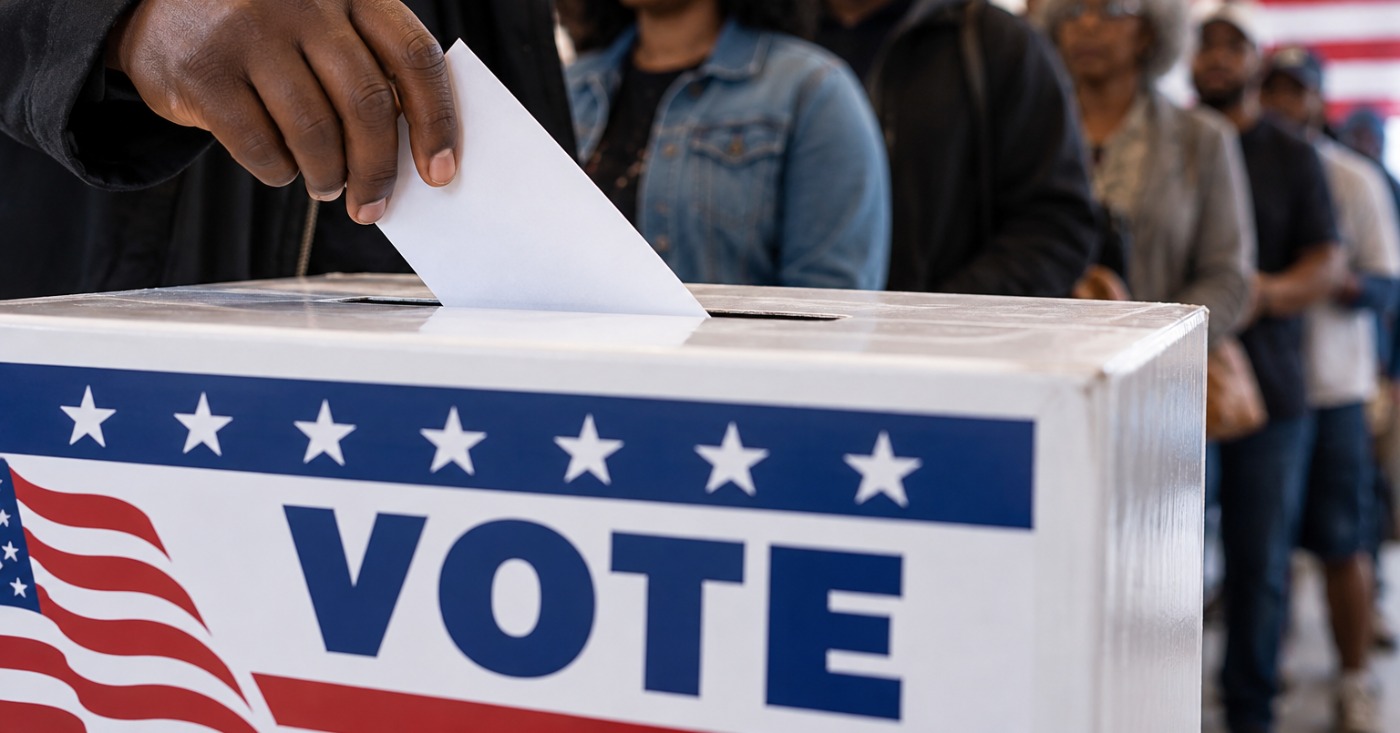
Rapper Nikki Minaj is the latest high profile political tool of Donald Trump. The president recently remarked on the Afro-Trinidadian singer’s backside, praising her “beautiful ass.”
Is this what passes as an appeal for the Black vote? But Trump is an equal opportunity offender.
At recent rallies, Trump made homo-erotic comments about Republican men and their butts, like when he referred to Ohio Senator John Husted’s as a “pile of muscle.” But shouldn’t Trump be talking about the real issues?
Gas prices are now higher than they were under former President Joe Biden. Inflation is higher than when Trump took office, while he has redecorated the White House and already spent over $200 million on gold filigree. At least 3 million people have been kicked off of Medicaid or Obamacare because of Trump-backed legislation in Congress.
The country needs a change in how Trump does business. We need a strong independent Congress in both the House and Senate that will be our voice to stand up to ideas like a ‘forever war.’ Or tariffs against friend and foe.
This is the important math of the day: Democrats need 218 seats for a majority. Four more needed than their current 214. The latest Cook Report shows Democrats could gain 12-22 House seats.
But you still need the Senate, where Republicans have 53 members and the Dems have 47.
To have control, Dems would need to beat the tie breaker vote cast by VP J.D. Vance. Democrats need to get to 51 and that means four Senate victories on Nov. 3.
Of the key states politicos are watching, North Carolina and Georgia look blue. Can they get two more from toss-up states like Alaska (Mary Peltola?), Maine (Troy Jackson?), or Ohio (Sherrod Brown)? Observers are talking about two races in particular: Texas and Michigan.
In Texas the Talarico/Paxton race is fascinating. State legislator James Talarico is a choir boy compared to Texas Attorney General Ken Paxton—whose rhetoric and record suggest he would be more amoral than Trump.
Then there’s Michigan, where Abdul El-Sayed is running against Mike Rogers.
The Black vote has wavered there, with some high-level Black pols coming out against El-Sayed on Fox News. Trump has also called El-Sayed a “jihadist and a terrorist.”
Born in the U.S., El-Sayed is a highly educated Rhodes Scholar, and a physician. The “model minority” is a terrorist? But like all people of color, he gets othered. Assumptions get made. His skin color and his religion make him a terrorist.
What about local issues like the billionaire tax in California. Prop. 40? I hate direct legislation by propositions because the proposals are usually flawed and can’t be worked out easily—like if legislators actually did their job in the state house.
But taxing billionaires more has to happen on the state and federal level. Prop 40 is a start. Even if it’s one time and goes mostly to health care. It’s a start toward fairness.
Whatever you say. Just vote. Now. Early. Don’t wait.
About the Author
Emil Amok Guillermo is a journalist, commentator and comic monologist. See him on his micro talk show: YouTube.com/@emilamok1
Black Press
AG Bonta Announces Action on Cryptocurrency, Sextortion Fraud – Increasingly Targeting Gen-Z
California Attorney General Rob Bonta is warning residents about a surge in cryptocurrency fraud and online sextortion schemes that increasingly target Gen Z through social media platforms. With internet-based scams costing Americans nearly $21 billion in 2023, Bonta highlighted how artificial intelligence and deepfakes allow criminals to impersonate loved ones and promote fraudulent investment groups. The Attorney General’s Office has already shut down over 100 fraudulent websites and is now utilizing new legislative tools to recover assets for victims. Read more.

California Attorney General Rob Bonta warned residents about rising cryptocurrency fraud and online sextortion scams, urging Californians to recognize warning signs and protect themselves as scammers increasingly target younger people through social media.
Speaking at a news conference on Oct. 19, Bonta said Americans lost $20.9 billion to internet-based scams in 2025, including $11.4 billion to cryptocurrency scams. He said artificial intelligence, deepfakes, and malicious smart contracts have made fraud easier to carry out and more difficult to detect and prevent.
While older Californians remain targets, Bonta said his office has seen a sharp rise in reports of Gen Z consumers being targeted on platforms such as Twitch, TikTok, and Instagram.
One growing scheme involves so-called rug-pull scams, in which fraudsters promote low-priced stocks or volatile cryptocurrencies through online investment groups and streaming communities. After generating interest and driving up prices, scammers sell their holdings, causing values to collapse and leaving investors with losses.
Bonta also warned about sextortion, in which scammers trick or coerce victims into sharing explicit images before threatening to distribute them to friends and family unless they pay. He advised victims not to give in to demands, saying scammers often do not release the images when victims refuse to pay. Instead, he recommended ignoring and blocking the perpetrators.
Another scheme, known as recovery fraud, targets people who have already lost money to cryptocurrency scams. Fraudsters impersonate blockchain recovery specialists or law enforcement officials and demand additional payments while promising to recover stolen assets.
Bonta urged Californians to be skeptical of promises of large returns on small investments, fake cryptocurrencies resembling established ones, and celebrity endorsements that may have been generated using artificial intelligence. He also warned that scammers can use AI to impersonate loved ones through manipulated video and audio.
“Never use a crypto ATM,” Bonta said, emphasizing that transactions can be difficult to trace and reverse and that the machines lack adequate consumer protections.
His office has shut down more than 100 fraudulent websites over the past two years that collectively scammed victims out of at least $8.3 million, he said.
Bonta also highlighted Senate Bill 1208, which he said was recently signed into law. The measure allows law enforcement to petition a court to return seized cryptocurrency to victims, including when alleged perpetrators are outside U.S. jurisdiction.
Residents who have fallen victim to scams can report them to the California Department of Justice at oag.ca.gov/report.
Bonta also urged victims not to feel embarrassed, stressing that scammers are responsible for the harm they cause.
Black Press
21st Annual Taste of Soul: California’s Largest Black Street Festival Comes Alive With Culture, Music and Connections
The 21st annual Taste of Soul Family Festival drew over 300,000 attendees to South Los Angeles for a massive celebration of Black culture, food, and music. Spanning the Crenshaw Boulevard corridor, the free event featured roughly 350 vendors, offering everything from Southern cuisine to professional health services and job recruitment opportunities. While headlining musical acts performed across three stages, the festival also served as a vital platform for small business entrepreneurs to reach a vast audience. Organizers are now addressing reports regarding several incidents that occurred during the festivities. Read more.

The 21st annual Taste of Soul Family Festival brought hundreds of thousands to Crenshaw Boulevard in South Los Angeles on Oct. 17 for food, music and a celebration of Black culture. Visitors could shop with small businesses, enjoy live music performances, speak with health professionals and learn about job opportunities.
Presented by Bakewell Media and the Los Angeles Sentinel, the free festival stretched along the corridor from Stocker Street to Obama Boulevard. The Sentinel estimated attendance at more than 300,000. The day also marked founder Danny J. Bakewell Sr.’s 80th birthday.
“We call it a party with a purpose,” Pam Bakewell, the founder’s sister and a longtime festival organizer, told California Black Media (CBM).
The enticing aromas of barbecue, fried chicken and catfish filled the air as food vendors served up a tempting array of Southern favorites, including cobbler and other desserts. Vendors also offered clothing, jewelry, books and beauty products. About 350 vendors and sponsors participated, including approximately 80 food vendors, Bakewell said. Businesses came from across Southern California and as far away as Chicago and Atlanta.
“In one day, an entrepreneur has the opportunity to showcase their business to hundreds of thousands of people,” Danny J. Bakewell Jr., president of the Sentinel.
Chase offered vendors training in marketing and financial management, followed by a reception.
Experienced vendors also helped newcomers. Pam Bakewell cited Cobbler King, a longtime participant who shares lessons from his early festivals about preparing for crowds and building a business.
“We want everybody to be successful,” she said. “We can’t guarantee that, but we give you the crowd.”
Kaiser Permanente served as the festival’s main medical provider. St. John’s Community Health sponsored Children’s World, where children played games while families received preventive care and information about follow-up services.
St. John’s provided flu shots, fluoride treatments for children and clinic sign-ups for physical examinations. It also reported distributing more than 10,400 bags of diapers.
CBM hosted a booth as part of its California Black Health Journalism Project, a yearlong, solutions-oriented reporting initiative to advance health equity for Black Californians.
Dr. Deidra Beckles, who practices family and internal medicine, and Adriana Westby-Trent, Ph.D., a licensed clinical psychologist, held “Ask the Doc” conversations. Both are with Divinely Restored Health & Wellness. The booth drew steady traffic as they answered attendees’ health questions. Visitors received a “Your Wellness Matters” T-shirt.
The Sentinel promoted a developing jobs platform, inviting attendees to post resumes and connect with employers. Bakewell said about 350 people signed up along the boulevard.
Three stages offered music for different generations. The Bakewell Media Sounds of the Soul Stage featured Thelma Houston, Switch and headliner Midnight Star. Tony Cornelius, son of “Soul Train” creator Don Cornelius, introduced Midnight Star and appeared with eight veteran dancers from the television show.
The Radio Free KJLH Music Stage featured Lucky Daye, Alex Isley, Allen Stone and Terisa Griffin. On the Brenda Marsh-Mitchell Gospel Stage, MAJOR. served as host and performer. The lineup included Deitrick Haddon, local choirs and a youth performing arts ensemble.
During the festivities, ABC7 reported two stabbings and an hours long Los Angeles Police Department citywide tactical alert.
Pam Bakewell said police told organizers the incidents occurred outside the festival boundaries. She said organizers are reviewing safety measures with security personnel and police.
Black History
Michael Shiner: The Enslaved Man Who Wrote His Way into American History
Born into slavery in 1805, Michael G. Shiner became an essential eyewitness to 19th-century America by documenting over five decades of history in a private journal. Working at the Washington Navy Yard, Shiner recorded monumental events ranging from the British invasion during the War of 1812 to the complexities of labor and racial discrimination. His writings offer a rare, first-person perspective on the nation’s transformation from the eyes of a man who navigated both bondage and liberty. Read more to learn how Shiner secured his legacy.
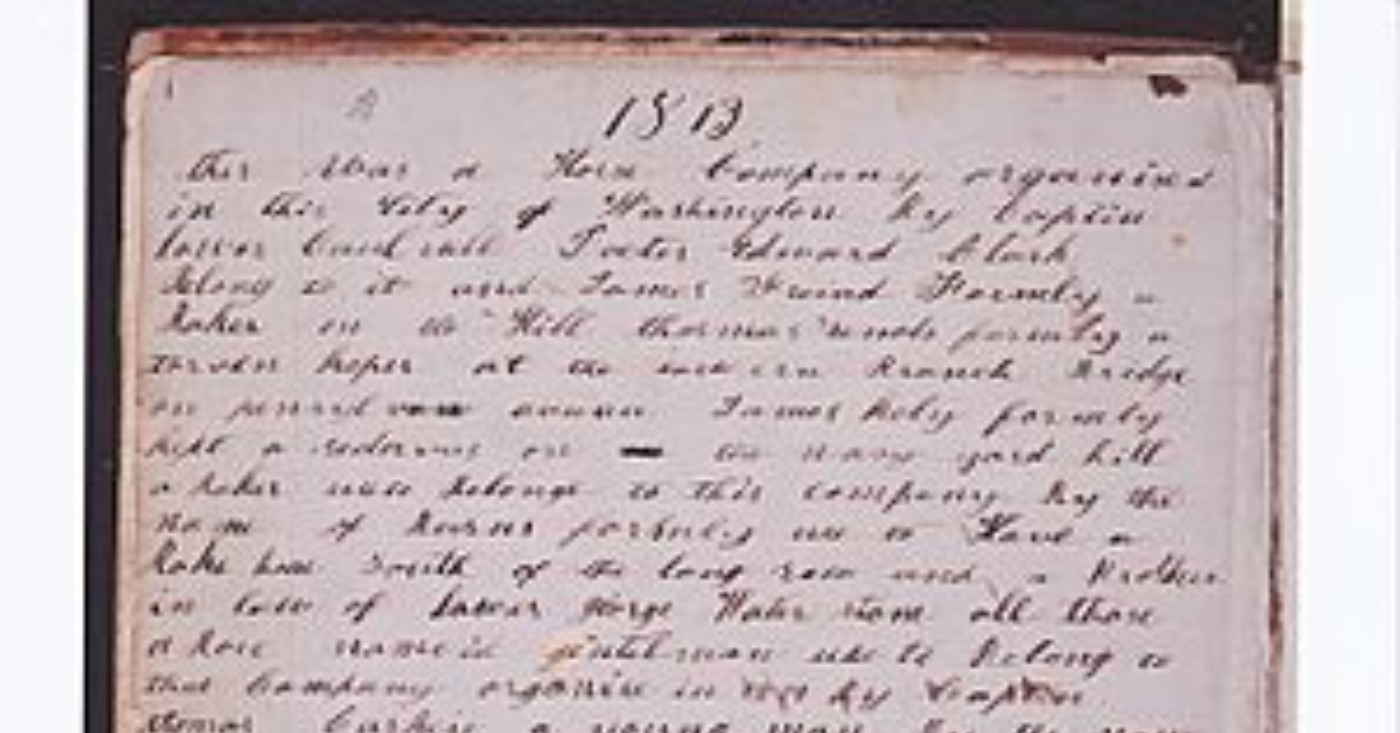
Long before African Americans could freely tell their stories, Michael G. Shiner was quietly documenting history.
Born into slavery in 1805 in Piscataway, Maryland, Shiner became one of the most remarkable eyewitness chroniclers of nineteenth-century America. His writings preserved more than five decades of Washington, D.C., history, providing an extraordinary perspective on slavery, freedom, labor, and the nation’s transformation.
He was born to William Pumphrey Jr., whose family owned property in Maryland and Washington, D.C. Around 1812, Shiner was brought to the nation’s capital, where he eventually worked at the Washington Navy Yard. Although denied the educational opportunities available to White Americans, he learned to read and write, likely through religious instruction at Washington’s First Presbyterian Church.
His literacy became a powerful instrument of historical preservation. Beginning with recollections of events in 1813, Shiner recorded significant happenings in a handwritten journal he called his “book.” His observations included the British invasion of Washington during the War of 1812, particularly the burning of the Capitol and other government buildings in August 1814. His descriptions captured the fear, destruction, and confusion surrounding one of America’s most devastating wartime attacks.
However, his writings extended far beyond military events.
In 1828, Thomas Howard, chief clerk of the Washington Navy Yard, acquired Shiner and hired out his labor. He worked in the Navy Yard’s paint shop, observing the everyday experiences of enslaved and free workers. His diary documented ship launches, workplace accidents, labor disputes, racial discrimination, and political developments.
One of his most heartbreaking experiences occurred in 1833 when slave traders threatened to separate his family. His wife, Phillis, and their children faced the possibility of being sold away. Through determined intervention and assistance from influential individuals, Shiner obtained their release from enslavement.
He petitioned for his own freedom in 1836 and subsequently lived as a free man. By 1850, census records identified him as free, living with his second wife, Jane, and their children.
His writings continued through the Civil War, documenting the changing political landscape and the struggle for African American freedom. His manuscript also revered the Emancipation Proclamation, demonstrating the importance of this historic declaration to someone who had personally experienced enslavement.
Following the Civil War, he became active in Republican politics and advocated for African American rights. His remarkable memory and detailed observations made him a respected figure throughout Washington.
Shiner died of smallpox on January 16, 1880, at approximately seventy-five years old.
Today, his 186-page manuscript, The Diary of Michael Shiner Relating to the History of the Washington Navy Yard, 1813–1869, is preserved at the Library of Congress.
What makes his achievement extraordinary is that an African American laborer, once considered property under American law, became an invaluable recorder of the nation’s history.
Shiner never achieved fame during his lifetime as a writer. Yet his determination to document the world around him ensured that future generations could understand American history through the eyes of someone who experienced both slavery and freedom.
Black Press
COMMENTARY: Your California Living Trust Could Be Next: When Evidence Isn’t Enough
A recent California appellate ruling in the case of the Laura Dean Head Living Trust serves as a sobering warning for property owners relying on estate planning. Despite Dr. Head’s express written wishes to disinherit her estranged sisters and name a longtime friend as beneficiary, the court invalidated the trust based on undue influence. This decision highlights how documented intentions and supporting testimony from legal and medical professionals may still face successful legal challenges from disinherited relatives. Read more to see how this precedent impacts California homeowners.

You put your home in a living trust. You choose who inherits. You expressly disinherit relatives. An attorney prepares the documents. You expect your wishes to survive you.
Dr. Laura Dean Head’s trust did not.
California property owners should examine Laura Dean Head Living Trust, Alameda County Superior Court, Oakland, Case No. RP20061734, and Hamlin v. Jendayi, California Court of Appeal, First Appellate District, Division Three, Case No. A167695.
The case delivers a sobering warning: a living trust can face a successful challenge even when its chosen beneficiary presents evidence supporting the person’s stated wishes.
Head, a San Francisco State University professor, named Zakiya Jendayi as successor trustee and primary beneficiary. They had known each other for 28 years. Seven years after Dr. Head’s death, her estranged sisters contested the trust. Jendayi alleges that they consulted various probate attorneys while forum shopping before pursuing the challenge. Judge Sandra K. Bean in Dept. 103 invalidated the trust based on undue influence.
Jendayi’s compilation, “The Truth Is in the Transcriptions,” places disputed findings beside testimony and medical records. She argues that the evidence tells a different story.
Estate planning attorney Elaine Lee testified that she reviewed the trust privately with Head, behind a closed door. Lee’s testimony, reproduced in the compilation, attributes the beneficiary choices to Head and describes her insistence that her sisters receive nothing.
Hospice social worker Jenna Noe confirmed that Head told her she wanted to leave her belongings to Jendayi. Noe also testified that Head made her own decisions in their conversations.
The court described complete dependence on Jendayi. The compilation points to paid caregivers, hospice professionals and frequent visits from friends. When the judge asked nurse Dolly Woodson whether she had witnessed Jendayi abusing Head, Woodson answered no.
Jendayi also challenges the court’s treatment of her conditional power of attorney and alleges omissions and unequal treatment of evidence.
Yet the appellate court affirmed the judgment. It found substantial evidence supporting undue influence, rejected the judicial-bias claims and deemed any deficiencies in the statement of decision harmless. The published portion held that disinherited potential intestate heirs had standing to contest the trust.
That ruling endangers Californians who have properties held in a trust. Disinheritance did not prevent this challenge, and evidence supporting Head’s intentions did not secure the outcome Jendayi sought.
For homeowners relying on a living trust, the question is urgent: how well will your documented choices withstand a contested courtroom narrative?
Read the decision at https://law.justia.com/cases/california/court-of-appeal/2024/a167695m.html
Examine the testimony. Consider what happened when a woman’s written wishes and the evidence offered to defend them were still not enough.
Sources: Hamlin v. Jendayi (2024) 105 Cal.App.5th 1064, opinion filed Oct. 17, 2024, modified Nov. 12, 2024; Jendayi’s supplied compilation of transcript excerpts and exhibits. Claims of error reflect Jendayi’s position.


SEIU Local 1000 and State of California Will Continue to Negotiate New Labor Contract

OPINION: We Can Restore Checks and Balances on Trump

AG Bonta Announces Action on Cryptocurrency, Sextortion Fraud – Increasingly Targeting Gen-Z

21st Annual Taste of Soul: California’s Largest Black Street Festival Comes Alive With Culture, Music and Connections

Michael Shiner: The Enslaved Man Who Wrote His Way into American History

COMMENTARY: Your California Living Trust Could Be Next: When Evidence Isn’t Enough

Loop Capital’s James Reynolds Keynotes the OAACC 23rd Annual Business Awards Luncheon

Post News Group Nov. 3 Election Endorsements

Oakland Latino Chamber of Commerce Hosts CHCC Convention, Generating $3 Million in Economic Impact

Maintenance As A Money Move

All Skinfolk Ain’t Kinfolk

Practitioners of African Traditional Spirituality Offer Ancestral Reverence Ritual Oct. 31

Latinas Deserve Equal Pay. Unions Help Make It Happen.

A $2.1 Trillion Wellness Industry Never Built a Daily Practice for Black Children. So This Atlanta Family Did.

Zakiya Jendayi Arrested, Locked Out of Home by Sheriff’s Deputies

Oakland Awarded More than $14 Million in State Funding

Tamiko Armstead | 2026 Lifetime Achiever in Education

Montclair Brewery: Brewing Culture, Community, History

Should You Have to Pay to Hear the Gospel?

Listening as a Lifeline: A Doula’s Witness to Black Maternal Health
Maintenance As A Money Move

Buick Enclave Safety Tech: What It Can—and Can’t—Do #shorts

ELECTION DAY 2026: Black Voter Turnout, Trump’s Clemency Controversy & a $495M Prison Deal 📱

ELECTION DAY 2026: Black Voter Turnout, Trump’s Clemency Controversy & a $495M Prison Deal

Trump as a Distraction…Focus on the Ballot and 2028

Kids Escape City Chaos for Camp Paradise #shorts

Don’t Name Things After Me If I Can’t Enjoy Them! #shorts

EVs Cost Less Than Half as Much to Fuel—Check Your Local Savings #shorts

Unity is Power: Building Success Against All Odds! #shorts

Cómo publicar su DBA en el condado de Kern o Los Ángeles desde su teléfono
-
 Black Press1 week ago
Secretary of State Shirley Weber Pushes Back Against DOJ Demands Over California Voter Rolls
-

 Art1 week ago
Capturing Black Life’s Beauty
-

 Black History7 days ago
Retirement Triggers Doctor to Pen Book for Young Audience
-

 Black History1 week ago
Oakland Honors 60 Years of the Black Panther Party at the All Power to the People Gala
-

 Black Press7 days ago
Fatigue, Bloating, and Inflammation: Spotting the Subtle Signs of MASLD
-

 Black Press1 week ago
When Your Faith Is Put to the Test
