
Atlanta Voice
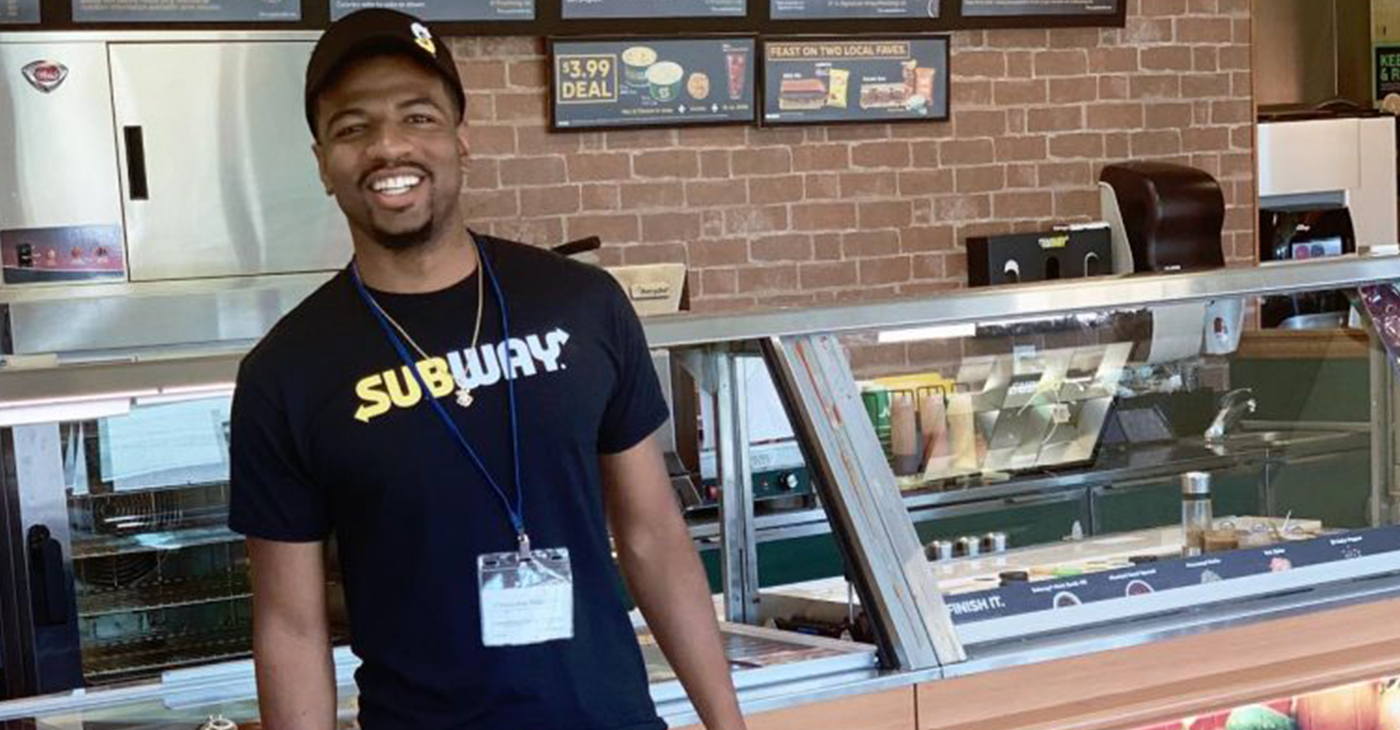
Chicago native Chris Williams becomes the youngest black Subway franchise owner in Georgia
ATLANTA VOICE — Chris Williams II is a young entrepreneur and a recently sought after business guru hailing from Chicago’s South Side. After Williams discharged from the Army National Guard and finished a program at the Phoenix-based Automotive Dealership Institute in January 2018, he found himself homeless and jobless at the age of 25. Determined to figure life out on his own, he didn’t let being homeless deter him from pursuing his goals.

By Marshall A. Latimore and Miana Massey
Chris Williams II is a young entrepreneur and a recently sought after business guru hailing from Chicago’s South Side.
After Williams discharged from the Army National Guard and finished a program at the Phoenix-based Automotive Dealership Institute in January 2018, he found himself homeless and jobless at the age of 25. Determined to figure life out on his own, he didn’t let being homeless deter him from pursuing his goals.
Williams said he opted out of returning to the comfort of his parents’ home in Chicago to figure life out on his own. While holding true to that personal commitment, things became incredibly tough for Wiliams financially to the extent of sleeping in his rental car, taking showers in local gyms and washing clothes via the cleaners.
Even though this was his circumstance, Williams said he would still read books and study in his car at night. Eventually, Williams’ sacrifices paid off—as now, a year later, he is poised to be one of the youngest black Subway franchisees in the country. He is still a few weeks away from announcing his store location here in Metro Atlanta, but he’s gone through franchisee training and is excited to share his store with the world.
In between speaking on a few panels during this year’s Essence Music Festival in New Orleans to traveling to Subway’s international headquarters, Williams sat down with The Atlanta Voice to share his story.
The Atlanta Voice: What can you share with us about your background?
Williams: I’m from the south side of Chicago where I grew up with an amazing family. We weren’t the poorest family, but we also weren’t the richest at all. We grew up in Inglewood, which was probably one of the roughest—if not the roughest area—on the South Side. I grew up in the same neighborhood that Derek Rose, Anthony Davis, and Jabari Parker were from. We were surrounded by gang violence, drugs, poverty, all of the above.
I got to a point in 2017 where I decided that I didn’t want to have that be my reality anymore and I wanted to get out and help other people get out in the only way for me to do that was to take a risk. So I sold my car and I ended up moving to Phoenix, Arizona for finance school. I got through finance school. After I finished, I literally traveled across the nation applying for jobs.
I ended up getting hired in south Florida to work as a finance manager.
By the time I started in this role, I’d run out of my reserve, so I only had enough money to pay for, uh, either a rental car or apartment. So I decided that I needed to get around within south Florida. It’s pretty long, the state of Florida. So I chose to get a car. I got the rental car and I figured that I would use my commission money to pay for an apartment. Well, I didn’t make a commission at all for a few months. So I ended up going from one month in the car to two months to, uh, three a total. So it was brutal. It was tough. Uh, you, if you know anything about South Florida is very humid and hot.
The Atlanta Voice: What was it like to experience homelessness in Atlanta?
Williams: At night I would try to let the windows down and I remember many nights waking up having to roll the windows up because it was raining in Florida. Yeah. I remember sleeping in the parking lot at Walmart and trying to find somewhere to sleep near lighting so that I would be safe while I was sleeping. And I remember the security guards knocking on the window and saying, “Hey, you can’t sleep here. No overnight parking.”
And I would just cry like this. It was, it was a rough period. It’s cute now, looking back at things; but, at the time, it was, it was brutal. I would just want it to get out of the car. Long story short, I ended up getting a job offer. I’m now making six figures in Atlanta since last June. So I moved here, took the job offer so that I printed out the car and I’m in the process.
I would study, even while I was sleeping in the car—even the was repossessed and moving and stuff, I would still study business concepts. I would look up a Harvard Harvard’s syllabus and I would buy books that were taught at Harvard University and I would teach myself, no self teach myself or those concepts, told myself, accounting, things like that in the process of me trying to build my reserve to try to become an entrepreneur. Okay. In the process of doing that the opportunity presented itself for me to be able to apply to become a subway franchise owner.
The Atlanta Voice: So how does one become a franchise owner? Or, rather, how did you actually obtain that franchise?
Williams: So each franchise has a certain process in a certain structure that someone has to go through in order to become what they call a “franchisee.” The “franchisor” is the individual who provides the opportunity for you to become a franchisee. So, the franchisee is the individual who basically has received permission from the franchisor to license their name, their products, their designs in their store for a profit. And what happens is during that process, the franchisor receives a percentage of those profits, which are called royalties.
The process ended up being highly detailed. They want to scrutinize the potential franchisee’s finances. They want to know what’s going on with your finance. How is that? They look at the franchisee’s background, to make sure you know, um, you are, you don’t want an integral person and doesn’t necessarily mean that a person who has a felony or misdemeanor may be disqualified, but it’s ultimately up to that particular franchise or who they are applying with.
There’s usually an orientation to introduce the franchisee to the history of the company—their perspectives, their brand, and their policies—whatever company the franchisee applies with. From there on, you will likely be sent to the franchise’s headquarters. They determine whether they feel like the franchisee is a good fit for their brand, basically.
I wanted to own a Subway for the last few years. I felt like it had a strong brand and a strong name — it had stood the test of time. So I felt like because of that, owning a Subway was something that I wanted to be a part of because I felt like with my perspectives as a young millennial, I could also help them as well.
The Atlanta Voice: So tell us a little more about becoming one of the first black Subway franchise owners.
Williams: As it pertains to that, it’s been crazy. So, initially, to be perfectly honest with you, I posted the picture of me signing the documents with the owner prematurely and I almost I got myself in deep trouble because we hadn’t closed the deal yet. So, the photo went viral and there were like four or five million people that saw the post but, I shouldn’t have posted it. So it was a lesson. Ultimately, I had to make amends for that.
But outside of that, you can’t stop a store if you’re going by ruins. People who’ve seen your face, they’ve seen it. So, yeah, it’s been amazing the reception and stuff that I’ve received from just going through the process; it’s been amazing and I’ve enjoyed every minute of it. Just seeing the people that have been inspired.
I’ve had people from Europe send me pictures of their application for their brand and they’re like, “Hey, we are applying to own a Subway because you’re doing it, you did it.” I’ve had people from the islands like, “Hey, I’m about to buy my first subway now.” You know, people have hit me up like, “Hey, we were homeless and we didn’t think any of that was possible and now you’ve made that possible for us. Now we’re getting ready to pursue, you know, entrepreneurship.”
So, these conversations have happened. And it has inspired me. For me, I want to be the type of person who not only gets through an open door but also holds the door open for others to walk through.
And there’s not a lot of that, particularly within the black community when someone becomes successful. When black people become successful, they brag on everything they have and they showcase it. But they don’t show others how to succeed as they did.
So that’s one of the things that I want to do differently. I want to show others how I have succeeded, which is why I’m also launching a series of e-courses to teach others about entrepreneurship and how they can attain it for themselves.
The Atlanta Voice: What advice do you have for other young people interested in entrepreneurship?
Williams: I was filming this weekend and one of the things that I actually mentioned in the film was that in order for a person to take or start a business, they have to take a risk. Risk is associated with business and entrepreneurship 100 percent of the time.
There’s not one time that you won’t start something that you won’t be taking risks; risks, if calculated, correctly can be minimized. But you cannot be afraid of risks. But this is what I said exactly. I said, “As it pertains to risks, on the other side of it is the reward.”
So on the other side of risks and sacrifice is the reward. If I sacrifice today and I sleep in the car today, I’ll wait and work hard for a commission check, so I can keep saving my money to purchase a store.
And on the other side of me doing this is the opportunity for me to become an entrepreneur. And this is just an example, even my story.
The Atlanta Voice: So, is it better to take more risk now rather than later?
Williams: One of the things that I wanted for myself was that I didn’t want to retire old. A lot of times the, we have been painted this American Dream that basically states, “Hey, I’ll get a high school diploma and if you get a high school diploma, you qualify for this amount of money. And then if you get a college degree, you will qualify for this amount of money. If you get a master’s degree, you qualify for that amount of money.”
In reality, they basically are conditioning us to be employees for the rest of our life. I have friends that graduated college recently and they now have tons of student debt, but they’re delivering sodas for Pepsi even though that’s not what they went to school for. So, for me, one of the things that I understand is that in order for me to end, it goes back to what I said before.
In order for us as young millennials to be able to break the mold that has been set for us by society, we have to start investing young. I also had another venture where I raised a lot of money from investors and the majority of them were millennials.
There are plenty of studies that allege that millennials are broke or that they don’t have enough savings. But there are millennials who are actually investing in stuff — they’re buying properties, they’re buying houses, they’re buying rental properties, they’re buying franchises. So, um, one of the things that I would still, someone is to start young.
The Atlanta Voice: What is some advice on how more people of color can get access to the resources they need to start businesses?
Williams: I would say one is to surround yourself around individuals who are doing what it is that you want to do. If I know individuals who, and it doesn’t matter, they could be young, they can be old, doesn’t matter the age group, what you want to get you around someone who is doing what you’re doing on a greater scale or what you want to do on a greater scale.
You’ve got to surround yourself around individuals who are doing what you’re doing or, or better. And then also you want to read books, you want to study, you want to take courses, you want to do whatever it takes to prepare yourself for your next step. It has been proven that going to college is not the only way to prepare for entrepreneurship.
The Atlanta Voice: So what’s next for you? What else are you involved in right now?
Williams: I have a few things that are coming up in the works. But right now, of course, we’re getting ready to announce the actual grand reopening of the Subway store I am franchising. So we’re gonna do a special announcement sharing the location and more details in the coming weeks.
Then, there’s also the e-course that I’ve launched that is going to teach individuals how to raise capital and understanding the proven steps and the methods to be able to do that.
This article originally appeared in The Atlanta Voice.







#BuyBlack
Amy Sherald Comes Home: “American Sublime” Opens at the High Museum
THE ATLANTA VOICE — Amy Sherald’s mid-career retrospective, “American Sublime,” opens at the High Museum of Art, showcasing over 35 paintings and her unique vision of Black American life.


By Noah Washington | The Atlanta Voice
Standing before an Amy Sherald painting is an exercise in aspiration. Her canvases, saturated with soft pastels and bold chromatic contrasts, construct an American landscape where Black subjects exist not at the margins of the imagination, but squarely at its center.
On May 15, the High Museum of Art opens “Amy Sherald: American Sublime,” a mid-career retrospective featuring more than 35 paintings made between 2007 and 2024. It is the largest exhibition of Sherald’s work to date, and Atlanta is its final stop.
The road to the High was anything but straightforward. The exhibition, organized by the San Francisco Museum of Modern Art, was originally slated to close its national tour at the National Portrait Gallery in Washington, D.C. That changed after the Trump administration signed an executive order directing Smithsonian institutions to remove what it called “un-American content” from their exhibitions and programming.
“Amy was concerned that her work could potentially be censored,” said Angelica Arbelaez, assistant curator of modern and contemporary art at the High, “and that, for her, was something that she did not want for this exhibition.”
Sherald made the difficult decision to cancel the D.C. stop. Museums across the country moved quickly to fill the vacancy, and the High secured the fourth and final slot following the Baltimore Museum of Art. The announcement came in September 2024 at the museum’s Driskell Gala, where High Director Rand Suffolk made it official. What followed was roughly six months of coordination between the High, SFMOMA, Sherald’s studio, and her gallery, Hauser & Wirth.
Atlanta’s connection to Sherald runs deep. She was born in Columbus, Georgia, and attended Clark Atlanta University, earning her BFA in 1997. The High has honored her before, awarding her the David C. Driskell Prize in African American Art and Art History in 2018. Her portrait of former First Lady Michelle Obama appeared at the museum as part of the 2022 Obama Portraits Tour, and a diptych of two motorcyclists was included in the 2024 “Giants” exhibition drawn from the collection of Alicia Keys and Swizz Beatz.
“American Sublime” brings that history into focus. The exhibition presents the Michelle Obama portrait alongside dozens of other works, many featuring ordinary Black Americans rendered with the same gravity and care typically reserved for heads of state. The show is organized into five thematic sections tracing Sherald’s development as an artist, from her early explorations of identity and performance to her most monumental, large-scale works and also includes a film showcasing her process.
“I grew up in a world that was very black and white,” Sherald said during a public conversation at the High. “It wasn’t until I moved back here for five or six years to take care of family that I realized a great part of my personality had been shaped by performance, that assimilation was something I felt very comfortable with, making people feel comfortable with my presence. And I think that found its way into the work early on.”
Among the exhibition’s most significant works is Sherald’s Vanity Fair portrait of Breonna Taylor, a commission she approached with painstaking care. She met Taylor’s family, watched videos to hear her laugh, and composed the work deliberately to counter the rapid, often dehumanizing circulation of Taylor’s image following her 2020 death at the hands of Louisville police. It was the first time Sherald had painted someone who was not alive and present before her.

Breonna Taylor, 2020, Oil on Linen, by Amy Sherald. Photo by Noah Washington/The Atlanta Voice.
“We decided not to have Taylor isolated and sort of memorialized,” Arbelaez said, “but to have her among friends, among her peers, and to just acknowledge that in spite of the tragedy that fell upon her, she was just an ordinary girl before all of that.”
The dress Taylor wears in the portrait was designed by Jasmine Elder, an Atlanta-based designer. A small ring on Taylor’s hand was included to honor her relationship with her partner, who had intended to propose to her before her death.
Also on view is “For Love, and for Country,” which reimagines Alfred Eisenstaedt’s iconic V-J Day photograph with Black subjects at the center, and Sherald’s first triptych, “Ecclesia (The Meeting of Inheritance and Horizons),” created specifically for this exhibition.
Sherald has spoken about her work as an act of historical reclamation, describing the process of making paintings as one that reaches across time. “As Black artists, making work, we’re almost quantum leaping,” she said. “Every time I make a painting, I’m constantly reaching back from the past, but we have to be simultaneously in each era, present with the now and in the past, while also trying to expand into something greater for the future.”
“American Sublime” runs May 15 through Sept. 27 at the High Museum of Art.
“I hope visitors will walk away understanding how Amy developed as an artist, how she has been thinking about the way images work, how they create meaning, how they circulate in the world,” Arbelaez said. “She has a very deep and incredible commitment to rendering Black American life with joy, dignity, and confidence.”

Michelle LaVaughn Robinson Obama, 2018 Oil on Linen. Photo by Noah Washington/The Atlanta Voice.
Atlanta Voice
‘This Is a Series’: Atlanta Hawks Lose Game 3 to Knicks, Head to NY for Crucial Game
THE ATLANTA VOICE — The New York Knicks tied their playoff series with the Atlanta Hawks at 2-2 after a 114-98 win. The Hawks look to rebound in upcoming games.

By Donnell Suggs | The Atlanta Voice
The “Let’s Go Knicks” chants grew louder as the game clock wound down on Saturday night. The New York Knicks, with their backs against the wall after losing game three of their first-round playoff series with the Atlanta Hawks, tied the series following a 114-98 win. For the Atlanta Hawks, there will be another home game, Thursday, April 30, but the chance to take a commanding lead in this series is now gone.
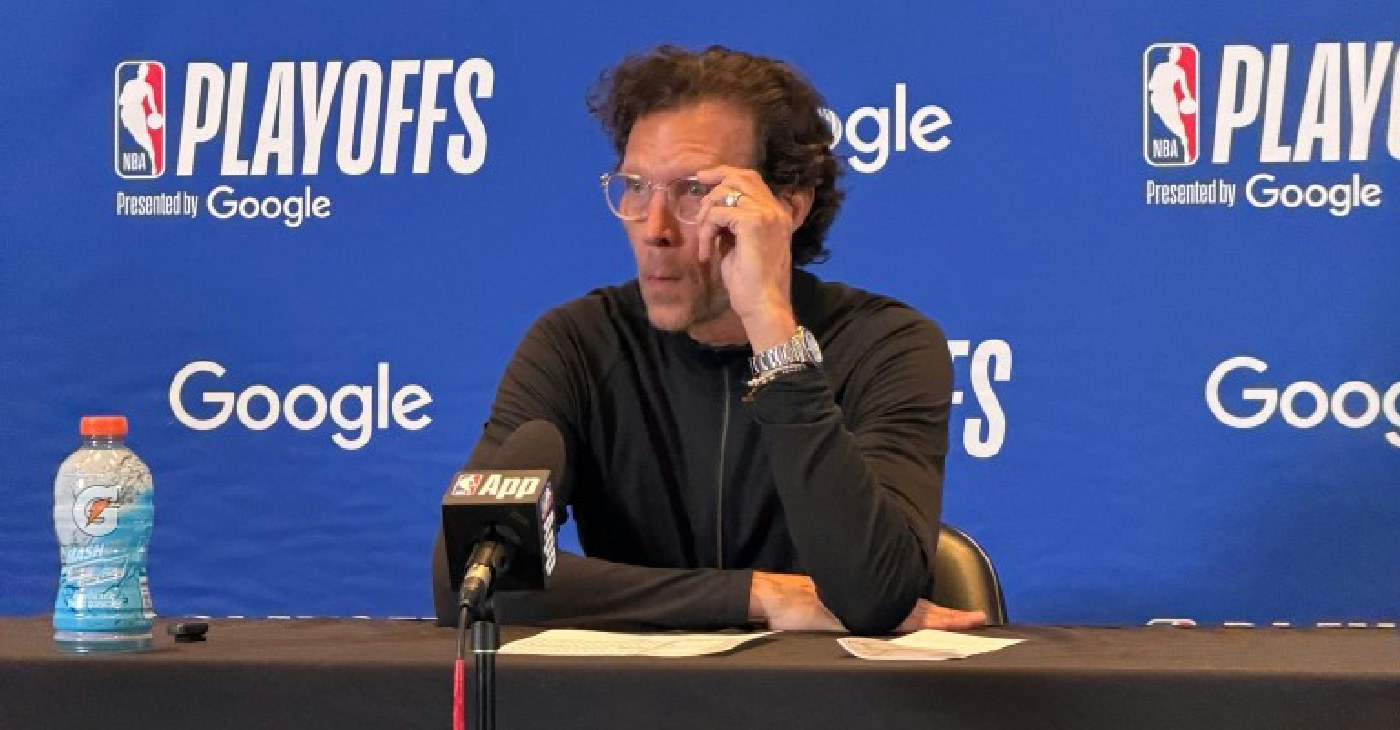
“We didn’t do the things we needed to do to have success against them. We’ve got to do better,” said Atlanta Hawks head coach Quin Snyder after the game.
The Knicks got a big game from Karl-Anthony Towns, who had a team-high 10 assists on his way to a triple-double: 20 points, 10 rebounds, 10 assists, and two steals. Both Towns and OG Anunoby (22 points) had 10 rebounds, and Josh Hart (10 points, three assists, two steals) grabbed nine rebounds en route to winning the overall rebounding battle 43-38.
The Hawks’ last lead in the game came when they went ahead 14-13 after CJ McCollum (team-high 17 points on 8-15 shooting) hit a three-pointer with 6:56 remaining in the first quarter. The Knicks led 27020 after the first quarter and by 14 at halftime.
Game six of this series will be back at State Farm Arena on Thursday. Photo by Donnell Suggs/The Atlanta Voice
“This is a series,” said Snyder. “You can’t get too high or too low.”
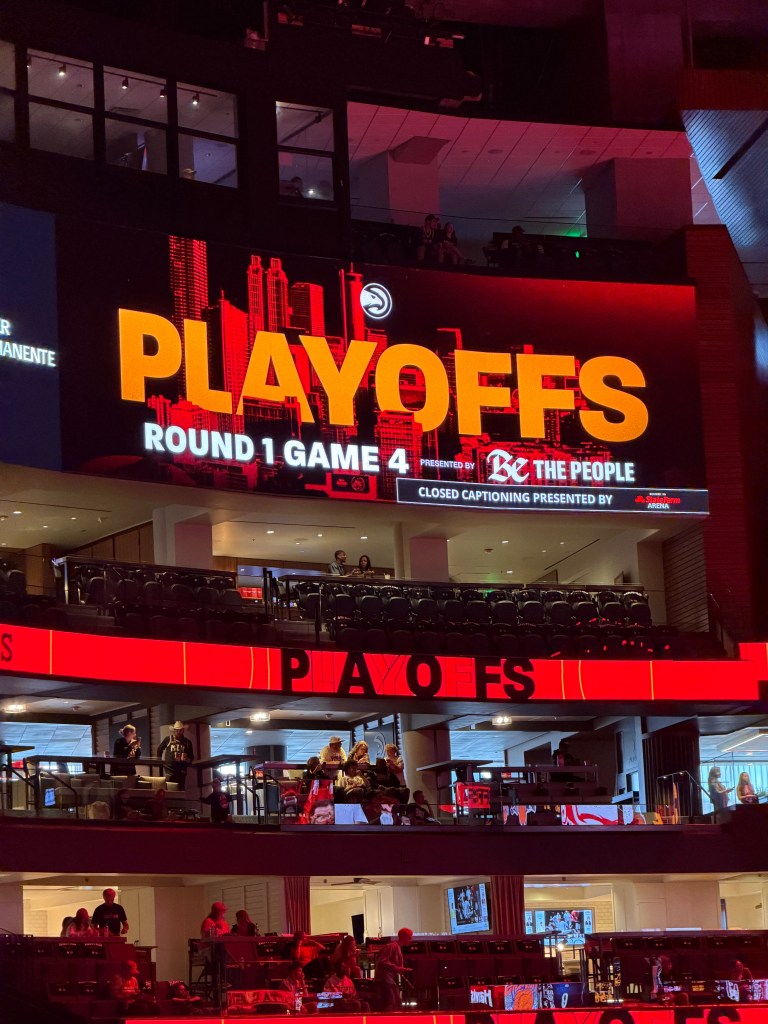
Game six of this series will be back at State Farm Arena on Thursday. Photo by Donnell Suggs/The Atlanta Voice
Game five of the series will take place in Madison Square Garden on Tuesday night. Game 6 will be in Atlanta on Thursday. And if necessary, a game seven will be back in New York City on Saturday, May 2. If the Hawks are going to be able to win in New York next week, they are going to have to shoot better from three. Atlanta was 10-41 from beyond the arc. Five of those three-pointers came from the newly minted Most Improved Player award winner, first-year guard Nickeil Alexander-Walker (15 points, six turnovers). A key to the Hawks’ midseason resurgence this season, Alexander-Walker, has not had a bad series, but he hasn’t had a great individual game yet either. Another Hawks star that hasn’t been at his best is All-Star forward Jalen Johnson (14 points, three rebounds, and five assists). Johnson was 4-12 from the field on Saturday night and at times looked like the moment was too big for him.
Atlanta did get 10 points each from guard Gabe Vincent and forward Jonathan Kuminga, and that helps extend Snyder’s rotation as this series continues. The same could be said for the Knicks and their first-year head coach, Mike Brown. The Knicks got 35 points from their bench, including six points from former Georgia Tech point guard Jose Alvarado. The key to Alvarado’s impact was his three steals over nearly 14 minutes on the court.
Knicks All-Star guard Jalen Brunson, the latest face of the franchise, came into the game averaging just under 28 points per game this series. Brunson finished the game with 19 points on 7-18 shooting from the field. He had six turnovers, never made a scoring run like he did in game one and late in game three, and looked like he was uninterested in the game at times. There was a moment when he and his father, a former McDonald’s All-American, Temple University star, and NBA guard, Rick Brunson, an assistant coach on Brown’s staff, got into a verbal disagreement.
Brunson wasn’t on Snyder’s mind after the game, though. He credited Josh Hart’s defensive efforts. “He guarded everybody,” Snyder said.
#BuyBlack
Latryce Marie Golliday Debuts Solo Exhibition “Redemption” at Historic Candler Hotel
THE ATLANTA VOICE — Latryce Marie Golliday, a Michigan native who relocated to Atlanta roughly a decade ago, has spent the past two years building a full-time artistic practice after treating painting as a hobby for years. The exhibition, held in one of downtown Atlanta’s landmark spaces, marks a significant milestone in that transition.

By Donnell Suggs | Atlanta Voice
On Friday, March 20, the Candler Hotel in downtown Atlanta hosted a solo exhibition of Latryce Marie Golliday’s gallery, “Redemption,” bringing together nearly 30 works of sculpture, photography, and painting.
Golliday, a Michigan native who relocated to Atlanta roughly a decade ago, has spent the past two years building a full-time artistic practice after treating painting as a hobby for years. The exhibition, held in one of downtown Atlanta’s landmark spaces, marks a significant milestone in that transition.
The name “Redemption,” she said, reflects a deliberate emotional choice.

Transformation, acrylic on canvas. Photo by Noah Washington/The Atlanta Voice
“I think I was feeling a lot of rage, and I think that rage sometimes will make you go into the mode of revenge,” Golliday said. “And to me, I had to grab hold of that emotion and turn it into something that is powerful and transformative. Redemption is the underdog story.”
That story is rooted in hardship. In 2022, a kidney illness led to the full removal of her left kidney. During her recovery, while still working in real estate, a friend encouraged her to channel her downtime into creating art for her home. It proved to be a turning point.
“I lost my kidney, but on the other side, I became an artist,” Golliday said. “I think that’s the story of redemption, all in itself, taking your negative experiences and making something beautiful.”

Down for The Ride. 30×13, Mixed Media, 2025. Photo by Noah Washington/The Atlanta Voice
Golliday began painting 10 years ago after hosting a sip-and-paint event following the birth of her son. When a friend purchased her first painting, the moment sparked something she said she couldn’t ignore. She stepped fully into her artistic identity two years ago.
Among the exhibition’s works is the key art piece “Transformation,” which originated as a small self-portrait Golliday had gifted away to a friend. After a child tore the painting in half, she asked to have it returned and reworked it into a larger, more elaborate composition. She described the original as a reflection of the physical and emotional scars from her surgeries.

Head of Goliath. 18x 23.5, oil, oil pastel, acrylic on canvas, 2026. Photo by Noah Washington/The Atlanta Voice
“That piece was a self-portrait, and it was a reflection of the scars that I have from my surgeries and things that I’ve gone through,” she said. “To see it ripped in half, it kind of just tore me apart. But I ended up asking if I could have it back so that I can rework the piece, and it turned into that incredible, elaborate piece.”
Another piece, “The 1st Will Be Last and the Last Will Be 1st,” was created while Golliday watched a multi-part documentary series, “Whited Out, exploring what she described as the erasure of Black history. She said she hopes the work resonates beyond any single community.
“I think the truth needs to be just universal,” she said. “We’re the human race. We’re all one people, and that’s where we should be right now.”

Peach and Overflow. Photo by Noah Washington/The Atlanta Voice
One piece in the exhibition draws from an unexpected source. While out on a morning workout, Golliday said she came across a downtown protest hosted by the Knights of Columbus, a Catholic service organization, and briefly joined in. The encounter, centered on themes of defending life, found its way into her work.
Another piece reinterprets the biblical story of David and Goliath, with Golliday casting herself as David. She described it as a meditation on spiritual resistance rather than physical confrontation, inspired in part by the Gil Scott-Heron poem “The Revolution Will Not Be Televised.”
“To me, it means it’s more of a spiritual revolution that’s going to happen,” she said. “I think that God will handle everything and balance everything out.”
Beyond her art, Golliday is the founder of Atlanta Art Club for Kids, a monthly meetup group that takes children to cultural experiences across the city. The group’s inaugural outing was to the High Museum of Art. She said the initiative grew from a desire to give children the kind of exposure she wished she had growing up in Benton Harbor, Michigan
Golliday said her aim with the exhibition is straightforward: to make people feel something beyond the grind of daily life.
“We’re all in this rat race of survival mode, hustle and bustle, just on the go,” she said. “I just want people to feel good and to feel magical. Like when I work, and I paint, I feel like I’m in heaven.”
#BuyBlack
From Brooklyn to Butner Road: Brandon Fulton Has Plans For His Land and Horses
THE ATLANTA VOICE — Dubbed the “Urban Cowboy” for riding horses through Atlanta’s streets, Brandon Fulton shared that his love of horses started with his grandfather, who would periodically take him riding at an academy in Jamaica Bay. As a kid, it was a means of escape and one of his only outlets, but because it was on the other side of Brooklyn, the riding academy was hardly accessible to him without taking the bus and walking.
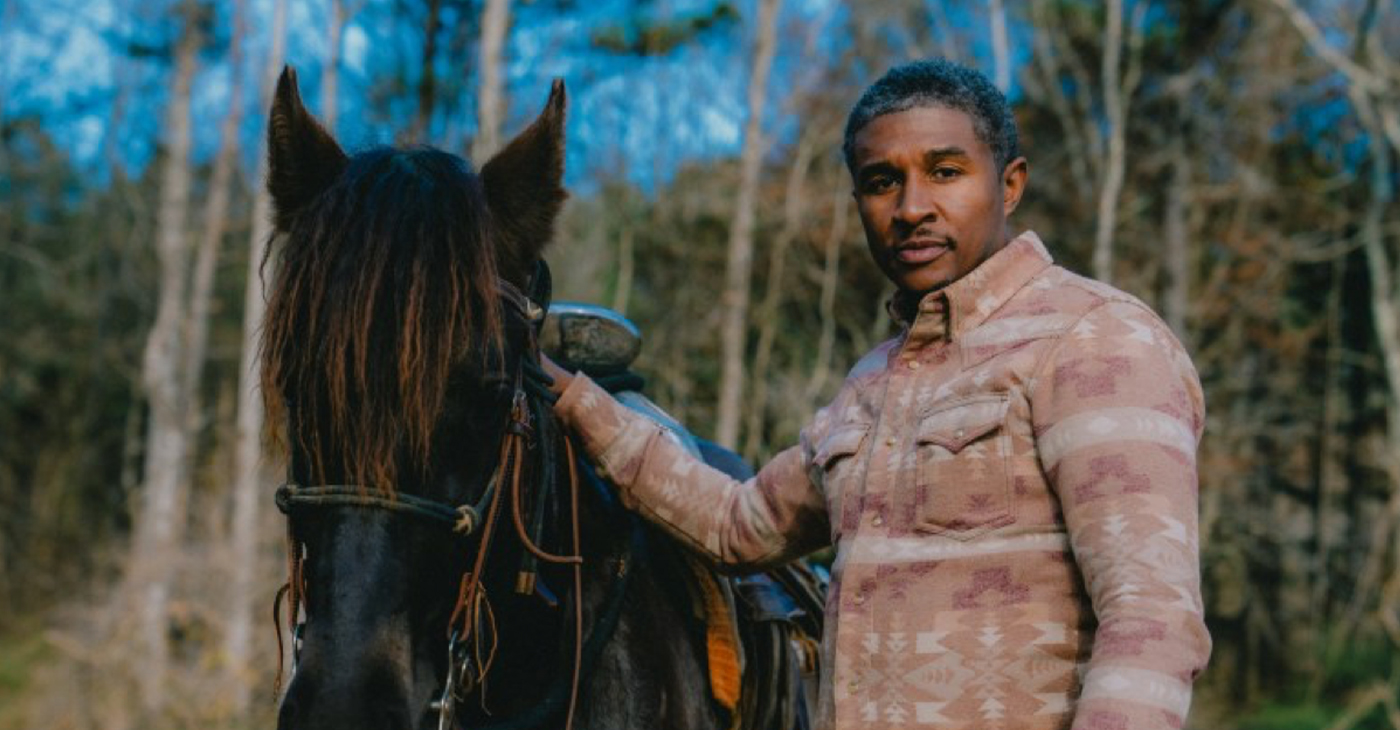
By Laura Nwogu | The Atlanta Voice
Red clay soil, wet from a day of rain, seeped into Brandon “Brannu” Fulton’s boots as he held the reins of an eye-catching Perilino horse he’d purchased three days prior. As the horse, with its ivory body and its gold mane, trotted along beside him past buildings under construction and steel containers, it was as if they were following a cadence only they knew. On Fulton’s 27 acres of land, poised for a dream and tucked away on the corner of Butner Road and Camp Creek Parkway, man and horse were right at home.
For the 44-year-old horseman and Clark Atlanta University graduate born in Brownsville, Brooklyn — long deemed one of New York’s most dangerous neighborhoods — it’s what dreams are made of. Dubbed the “Urban Cowboy” for riding horses through Atlanta’s streets, Fulton shared that his love of horses started with his grandfather, who would periodically take him riding at an academy in Jamaica Bay. As a kid, it was a means of escape and one of his only outlets, but because it was on the other side of Brooklyn, the riding academy was hardly accessible to him without taking the bus and walking.
“It was something I knew I’d enjoy, and I felt it. But when you’re still finding yourself and you’re a boy, it’s hard. We all have the ability to feel something, but we just don’t know how to identify it,” Fulton said. “And if you don’t have that environment or influence around you to drive that interest, then it kind of falls to the side.”
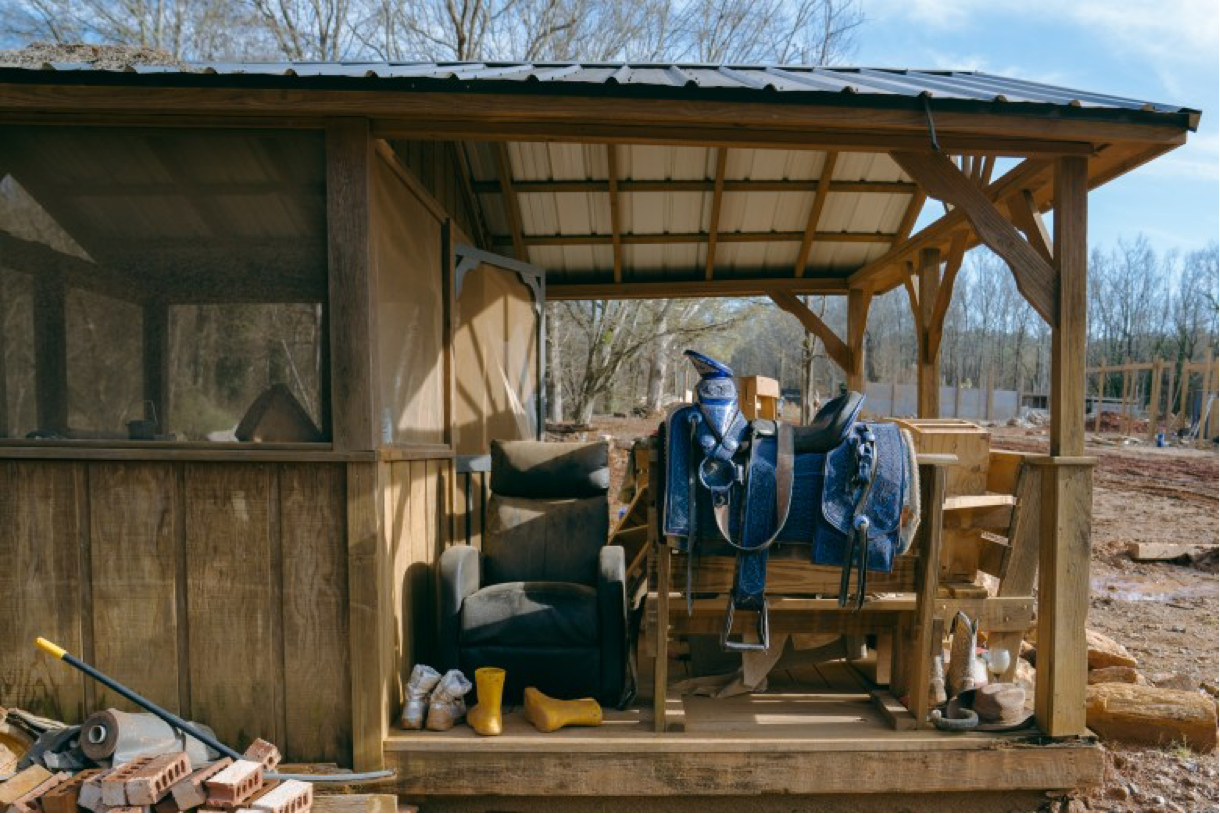
Fulton is currently battling Fulton County, years after charges of animal cruelty against him were dropped and his horses were seized. He still hasn’t been compensated for the seizure. Photo by Tabius McCoy/The Atlanta Voice
Dream Deferred
The reigns were soon tucked away, and the turntables came out, as Fulton explored a life of professional DJing. It took him everywhere, from spinning at college parties and touring across the U.S. to entertaining big celebrity parties and becoming the DJ for hip-hop artists such as St. Louis rapper J-Kwon. From the outside looking in, Fulton was living life. But the reality was that he felt lost. The fight to fit in, from the designer clothes to perming his hair and navigating the politics of the business, became unenjoyable.
“My spirit was starting to become stronger versus reality, and I just became depressed. I got so depressed, I wanted to commit suicide — I tried to. Because I felt like I didn’t know anything else. Horses were so out of my realm of thinking. I was like, “What am I gonna do?”
When he wrote the question, “Who are you?” On a piece of paper, the answer wasn’t that he wanted to sell out stadiums, own a diamond chain, have a platinum record, or drive a Ferrari. “It said, I just want to be happy. Be in a beach island environment, have a Jeep Wrangler with no doors, rusted. Have a simple little boat. Be around good music and ride horses.”

Photo by Tabius McCoy/The Atlamta Voice
Believe Kingdom
An unfulfilled dream was calling him. When Fulton encountered a horseman in Tijuana, Mexico, he realized that his dream wasn’t so out of reach — that it didn’t have to look a certain way and that he didn’t have to be wealthy to pursue his dream. The image of the unassuming man owning a bunch of horses resonated with him so much that he vowed to go all in once he left the life of DJing.
What started in a Brooklyn neighborhood soon began to flourish in Atlanta’s metro area. Fulton didn’t have any land or horses; all he had was an idea. He knew he still loved music and making people dance, so he incorporated that into his dream called Believe Kingdom, a place where the horses would become his records. His vision was to create a riding academy with American Paint horses, a breed known for its beautiful coat patterns.
“One of my hitting gems in the paint Academy was that it’s gonna be like a school, but the school will use horses as instrumental tools. I chose Paint Horses because I was drawn to them. When people looked at that Paint Horse, it didn’t matter if the horse was white, brown, or black; you just saw the horse for what it was. And the message would be to the kids that it doesn’t matter if you’re white, brown or Black, just be pure and healthy.”
After he bought his first American Paint, which he named Spinderella, Fulton found a facility in Loganville that housed horses. Soon, the duo began being booked for kids’ parties, entertaining crowds with tricks and spins. As his knowledge of horses grew, so did his number of horses, with names such as Hip-Hop, Rhythm and Blues, and NeoSoul. He later became a stunt coordinator for films, which allowed him to purchase his 27 acres of land for $150,000 in January 2016.
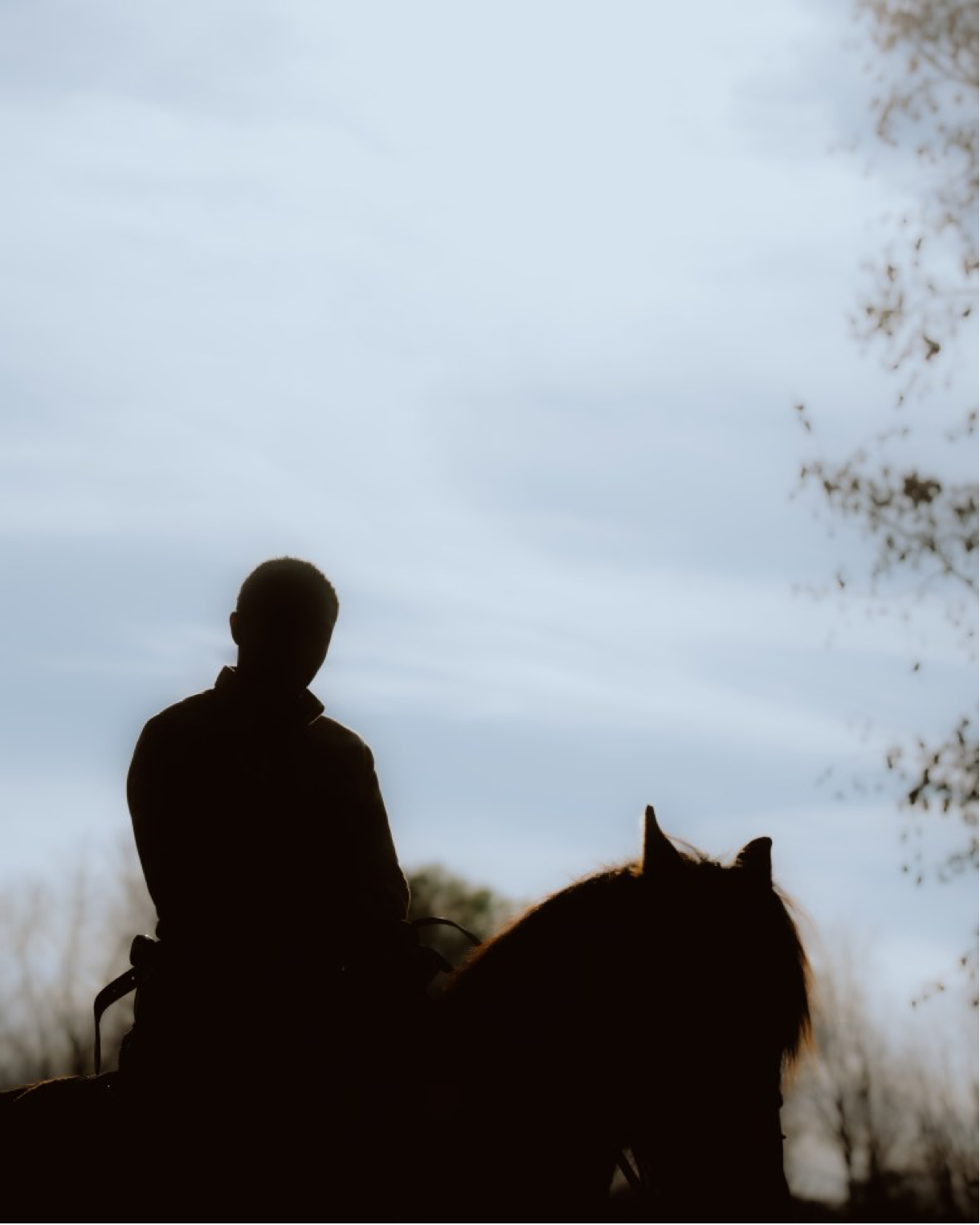
Photo by Tabius McCoy/The Atlanta Voice
Legal Troubles
However, his vision was halted a year later. In 2017, Fulton was charged with twelve counts of animal cruelty after complaints were called in. Fulton County later arrested him and seized seven of his prized horses. While he was cleared of animal cruelty charges a few months later, Fulton’s horses were never returned to him. He is now battling the county, suing directly under the Fifth Amendment’s Takings Clause, which states that, “nor shall private property be taken for public use, without just compensation.”
Fulton said it was never about the horses, but about him owning the land and the desires of outside developers.
“There are gatekeepers in everything, and I didn’t know that. I’m not perfect, but I have heart. I didn’t have a criminal record until I came to Atlanta. I’ve never been arrested in New York City; never been in any gang.
“Here, I realized that everything has an expectation of how it should look based on how people are programmed to circumstances. And for me, being here, there are a large group of people who don’t have the ability to see the beauty in what I’m doing the way I’m doing it, because to them, they haven’t been taught that that’s beautiful. I’m over here, walking through mud, dealing with the weather to keep them alive, to keep myself alive. It looks like a mess to you, but I’m trying to create something. And to create something, especially when you’re one person, it’s not as easy.”
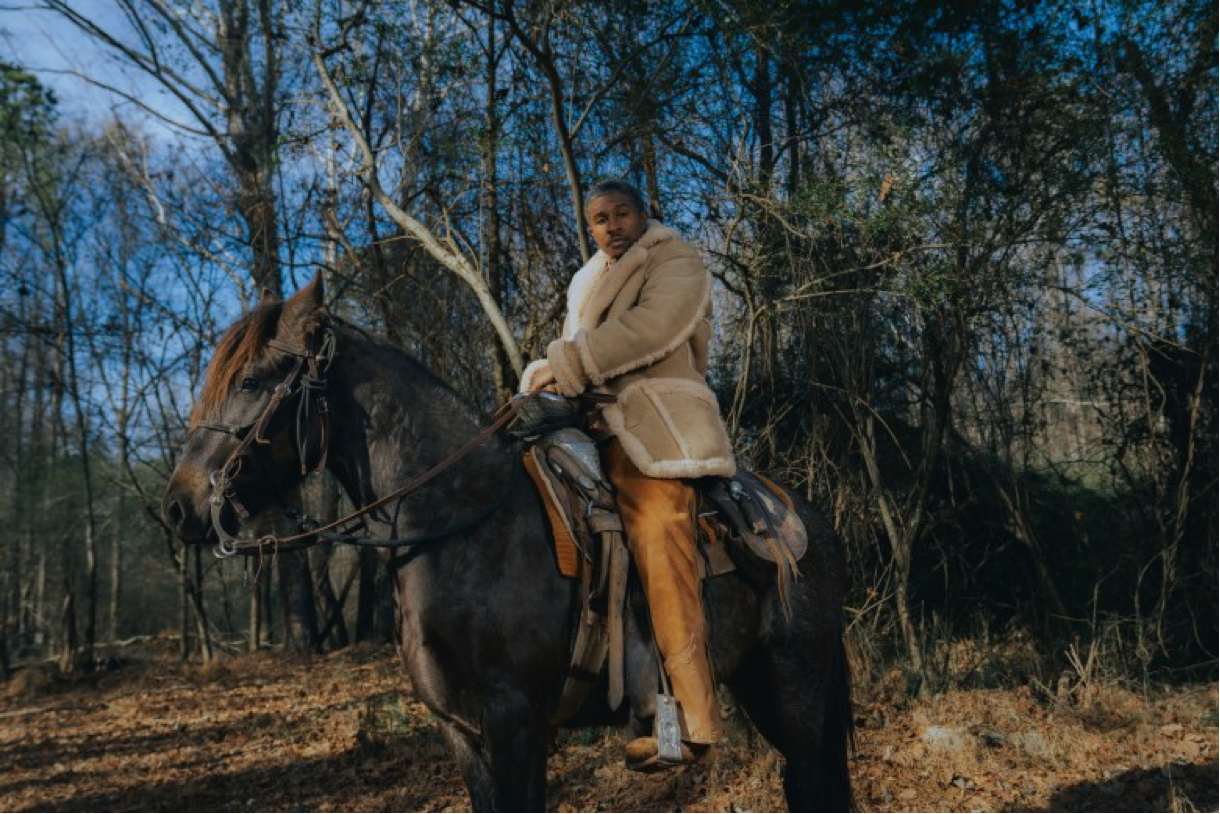
Photo by Tabius McCoy/The Atlanta Voice
The Dream Lives On
However, the one-man army that is Fulton hasn’t let his troubles deter his vision. He still plans to create a safe community for children who want to ride or learn about horses but don’t readily have access to them.
He enthusiastically stood between his land and the stream of Camp Creek that runs through it, an area he’s named Brooke. He outlined his plans for different parts of Believe Kingdom, including picnic tables and hammocks, a barn for staging the horses, cabins, and a souvenir shop. He also plans to incorporate a race track, a natural trail, and an area where wellness, music, and arts are the focus.
“I guess I’ve been chosen to be the person or the energy to create opportunities so other people won’t find themselves stuck at a job that they hate, and say, ‘Man, I wish I could have…’ For some reason, I was instilled with a spirit that’s given me the strength to go through all of this, because I was once the one deprived of it. So my story and everything they put me through actually helped me. Everything they put me through didn’t deter me from the goal.”
Fulton’s journey and the obstacles he’s had to jump over are now highlighted in a documentary directed by Adelin Gasana and produced by Julia Griggs.
‘The whole thing with me is showing that as long as you stay in your lane, you’ll make it no matter what you are. But you’ve got to go through some pain. You’ve got to be willing to take a few blows.”
Atlanta Voice
Dolo’s Pizza is Underground Atlanta’s Hidden Gem of Pizza Reimagined
THE ATLANTA VOICE — From ripe plantains and juicy jerk chicken topped on pizzas to charcoal pesto spread on dough and sprinkled with a bit of “magic,” co-founders Yusef Walker and Alyson Williams are creating a slice of pizza heaven.

By Laura Nwogo
The Atlanta Voice
Underground Atlanta is experiencing a revitalization, and feeding that resurgence is Dolo’s Pizza, a hidden gem tucked away on the second floor of the historical landmark. Caribbean flavors meet NYC-style pizza in a dimly-lit pizzeria where creativity and experimentation flow freely. From ripe plantains and juicy jerk chicken topped on pizzas to charcoal pesto spread on dough and sprinkled with a bit of “magic,” co-founders Yusef Walker and Alyson Williams are creating a slice of pizza heaven.
The concept of Dolo’s began to form during the COVID-19 pandemic. Walker had been strolling around his downtown neighborhood when he came across a vacant pizzeria. The Queens, New York, native was no stranger to the delights of pizza and was certainly not new to the restaurant business; along with his brother, Walker opened Negril ATL and Ms. Icey’s Kitchen and Bar. However, the uncertainty of the restaurant industry during the pandemic helped the restaurateur and chef realize that he wanted to venture out and start his own project.

Photo by Tabius McCoy/The Atlanta Voice
Walker knew he wanted to create a concept that was mainly takeout, and that vacant pizzeria sparked an idea within him. After receiving advice from his family, Walker didn’t have to search hard for a partner to tackle this new venture with. He instantly recognized Williams — who had been his neighbor, worked with Walker at Negril, and also had experience working in every part of a restaurant — as the best candidate.
As an Atlanta native, Williams knew the city and its food scene in and out. Paired with what Walker called “unconventional ideas” when it came to a restaurant growth concept, the friends-turned-business partners began to do pop-ups around the city and metro area. When a vendor program for The Underground launched in 2022, offering six months of free rent, they decided to set up shop, which led to a permanent restaurant later that year. Nearly five years later, the friends-turned-business partners are slinging dough for all of Atlanta.
“Being from New York, pizzas were the thing that resonated, and I was inspired by the pizzerias there,” Walker said. “We didn’t necessarily know what we were doing, but we had an idea of what we wanted to do. We just shook hands and said we’re going to figure this out together. We’ve been figuring out how since then.”

Dolo’s Pizza (above) infuses Caribbean flavors into its recipes, creating unique pies. Photo by Tabius McCoy The Atlanta Voice
Williams added that although there was a learning curve in starting a business, the journey has been a fun experience.
“Pizza is such a fun dish. Everybody loves pizza. You can get as creative as you want with it. I think that’s good for someone creative like Yusef, and you can expand on it. It’s yours; you can do whatever you want with it. We can decide to make taco pizzas tomorrow, so that’s the beauty of it,” Williams said. “It feels super accomplishing to see something come to fruition that started out of nothing. It’s super exciting.”
During the early stages of menu curation, Williams was the main taste tester of the recipes they’d cook up; Walker was a strict vegetarian. The first set of pizzas included a Chorizo creation, a garlic crema pizza with goat cheese and balsamic drizzle called Blanco, and the OG — a simple pie with marinara and mozzarella. Initially, Walker had no intention of infusing his Caribbean culture into the food. But paying homage to his parents’ Jamaican roots was something that came naturally to him, and it quickly shone through with pizzas such as the Matey with jerk chicken and honey; the Hot & Sweet topped with plantains and jalapenos; and the Black Pizza, a black pesto creation which has a recipe breakdown printed on a t-shirt hanging from the ceiling. Through it all, customers are served a pizza dough that’s light, crispy, and the perfect carriage for their inspired recipes.

Dolo’s Pizza (above) infuses Caribbean flavors into its recipes, creating unique pies. Photo by Tabius McCoy The Atlanta Voice
The pizzeria began as a pop-up that bloomed into a storefront at Underground Atlanta.
“I never really intended to put a Caribbean spin on it. I just think I can’t help it. But really, I wanted to recreate the New York essence of pizza. So in anything we make, we try to keep it pizza at its core,” Walker said. “I think some people try to do too much. I did want it to be structurally sound. I like technical things, so we have a very technical dough. That feeds that part of my soul where I get to interact with puzzles and figure things out and that.”
Everything about the way the pizzeria is set up is intentional, from the size of the pizzas and the limited seating to the fact that they don’t sell slices. They wanted to be able to continue doing popups and also make sure they had a business plan that was “pandemic-proof;” if anything significant were to happen in the world today, they wanted to know they would still be able to sell takeout pizza.
“We don’t have huge ovens. As a traveling pizzeria, it’s extremely hard to travel with a huge oven. So, everything had to be personal. Everything about this pizza, and when people get it, is very personal. Everyone’s name goes on their box. I ask everyone how to spell their name, because this is a very personal pizza to you. It’s what you asked for. That’s very important to me, and I appreciate the personality and personal touch of the pizza. So, that has a lot to do with shaping the size and the menu,” Williams shared.
The duo said that, in the future, they hope to add a few more things to the menu and also expand above-ground into a larger and more exposed space that will give them greater visibility to customers. Walker and Williams have created a formula that’s unique to them, and despite the name of the restaurant, they’re doing it together. With every pie, they’re melding Caribbean, New York, and Atlanta culture into one.
“Dolo’s is special because of the creativity, the uniqueness, and its consistency. This pizza tastes like this every single day. It looks like this. I don’t know of any other places in Atlanta that are doing this with pizza,” Williams said. “It’s a New York-style pizza, but I like to say it’s like a New York, Atlanta-style pizza.”

Photo by Tabius McCoy/The Atlanta Voice



First Black Woman Manager at KARE 11: My Journey #shorts

Building a Flexible, Community-Led Space for Protest Support #shorts

Beyond the Job Search: DC Black MBA Invests in Helping Black Women Reclaim Their Next Chapter

Can Black Houston Create a Black Tech Corridor?

OPINION: Black Capitalism Re-Analyzed: June 5, 1971 – Huey Newton

Called to Do This: Overcoming Doubt and Finding Family #shorts

Black-Owned Banks: Community Lending is Our Business #shorts

LeBrent Speed on Building the B3 Project | MSR On the Radar

Towing Assistance Features on This Truck Explained #shorts

Keg House Commons: Black Ownership Brings New Life to the Historic Schmidt Keg House in St. Paul

The Youngest American Killed in the Vietnam War

Passing for White, Fighting for Black America: The Courage of Walter White

OP-ED: Haiti TPS: Have We Lost Sense of Humanity?

OP-ED: How Does Your State Rank for Pre-K?

NFL: Week Two Recap | Jalen Hurts did not fold; Caleb Williams exits game with injury

Remembering Chauncey Bailey as Student Journalists Face Threats to Truth-Telling

Headlines and Hot Topics 📱

Obama Urges Democrats to make AI a Priority 📱

Peter Magubane: a Camera Against Apartheid

Mayor Lee Announces $1 Million Kaiser Permanente Grant for Pilot Program to Address Homelessness, Clean Up Public Spaces throughout Oakland
First Black Woman Manager at KARE 11: My Journey #shorts
Building a Flexible, Community-Led Space for Protest Support #shorts
Called to Do This: Overcoming Doubt and Finding Family #shorts
Black-Owned Banks: Community Lending is Our Business #shorts
LeBrent Speed on Building the B3 Project | MSR On the Radar
Towing Assistance Features on This Truck Explained #shorts
Keg House Commons: Black Ownership Brings New Life to the Historic Schmidt Keg House in St. Paul

Reggie Wilson & Alexis Rogers on Faith, Layoffs and I Speak People | Blacklight on Sports

FTC Chair Praises Trump, NYC Calls for Target Boycott, and Jason Lee Removed as Vice Mayor 📱

FTC Chair Praises Trump, NYC Calls for Target Boycott, and Jason Lee Removed as Vice Mayor
-
 Black Press1 week ago
A $2.1 Trillion Wellness Industry Never Built a Daily Practice for Black Children. So This Atlanta Family Did.
-
 BlackPressUSA1 week ago
Latinas Deserve Equal Pay. Unions Help Make It Happen.
-
 Black Press3 days ago
All Skinfolk Ain’t Kinfolk
-
 Art1 week ago
Montclair Brewery: Brewing Culture, Community, History
-
 Black Press1 week ago
COMMENTARY: But God!
-
 Black Press1 week ago
Master P Encourages Norwood Elementary Students to Dream Big, Work Hard
