
Politics
Chicago Mayor Rahm Emanuel Wins 2nd Term in Runoff Victory


Chicago Mayor Rahm Emanuel celebrates a victorious election night at Plumbers Local 130 Union Hall, Tuesday, April 7, 2015, in Chicago. Emanuel won re-election Tuesday as voters in Chicagos first mayoral runoff decided that, despite his brusque management style, the former White House chief of staff was best equipped to deal with the dire financial challenges facing the nations third-largest city. (AP Photo/Nam Y. Huh)
SOPHIA TAREEN, Associated Press
SARA BURNETT, Associated Press
CHICAGO (AP) — Rahm Emanuel won re-election Tuesday as voters in Chicago’s first mayoral runoff decided that, despite his brusque management style, the former White House chief of staff was best equipped to deal with the many dire challenges facing the nation’s third-largest city.
Emanuel was forced to campaign furiously across the city to beat Cook County Commissioner Jesus “Chuy” Garcia after failing to capture a majority against four other candidates in a February election. The mayoral runoff was the first since the city changed the way it conducts elections about 20 years ago.
“To all the voters I want to thank you for putting me through my paces,” Emanuel told supporters Tuesday night. “I will be a better mayor because of that. I will carry your voices, your concerns into … the mayor’s office.”
With nearly all voting precincts reporting results, Emanuel had about 56 percent of the vote compared to around 44 percent for Garcia.
“We didn’t lose today, we tried,” Garcia told supporters gathered at the University of Illinois at Chicago. “We fought hard for what we believed in. You don’t succeed at this or anything else unless you try.”
The incumbent highlighted tough decisions he’s made since succeeding former Mayor Richard M. Daley in 2011, but admitted that his management approach too often rubbed city residents the wrong way. He portrayed Garcia as too inexperienced to handle the city’s financial crunch.
Many of those heading to the polls Tuesday said the election should be a signal.
“Hopefully he (Emanuel) takes heed of the runoff when he should have been a shoo-in,” said Richard Rowe, a 50-year-old, who planned to vote for the incumbent.
Jesus Fernandez, a 44-year-old window washer who voted for Garcia, had the same view.
“If he (Garcia) gets close, we might push Rahm to do something,” Fernandez said. “At least we push him a little bit.”
Emanuel raised far more money than Garcia, plastered the airwaves with ads and had support from his former boss, President Barack Obama, who cast an early ballot for him from Washington.
The mayor faces huge obstacles in his second term, from fixing the worst-funded pension systems of any big U.S. city to stemming stubborn violence and confronting labor unions that just spent millions trying to defeat him.
Chicago’s four pension systems are about $20 billion in debt, and the fund for Chicago Public Schools teachers is short about $7 billion of what’s needed to pay benefits as promised.
If Emanuel can’t work a deal with labor unions or get the Illinois Legislature to approve relief, the city is on the hook for an additional $550 million payment to the retirement accounts, bringing the total payment to about $1 billion. He’s said that would be roughly equal to the annual cost of having 4,300 police officers on the street or raising property taxes by 150 percent.
Emanuel also must deal with ongoing concerns about crime, one of the areas Garcia hit him on repeatedly during the election. After a spike in homicides early in his first term, the number fell to the lowest level in a half-century though the number of shootings has climbed 12 percent.
“I’m proud of what we’ve accomplished in these past four years, but I understand the challenges we face will require me to approach them differently and to work in a different fashion,” Emanuel said. “The only way to meet these challenges is to bridge the gaps between the things that divide us and start focusing on the things that unite us and bring us together.”
Garcia, a former community organizer, alderman and state lawmaker, ran a campaign focused on the city’s neighborhoods, with support from teachers and unions upset with Emanuel. He accused the mayor of being out of touch with voters and blamed him for the fiscal problems, while playing up the mayor’s push to close about 50 schools and a gang violence problem that spiked during Emanuel’s first term.
He also vowed to end Chicago’s troubled red-light camera system, which some residents believe is discriminatory and focuses more on revenue than safety.
Election officials said more than 142,300 Chicago voters cast early ballots for the runoff, far outpacing early voting turnout in February and four years ago. Estimates Tuesday afternoon showed light voter turnout at roughly 28 percent, but election officials later predicted the final number would hover closer to 40 percent once all ballots were counted.
___
Follow Sophia Tareen at https://twitter.com/sophiatareen and Sara Burnett athttps://twitter.com/sara_burnett .
Copyright 2015 The Associated Press. All rights reserved. This material may not be published, broadcast, rewritten or redistributed.











Black Press
Botham Jean’s Killer Granted Parole 7 Years After His Murder
MICHIGAN CHRONICLE — Former Dallas police officer Amber Guyger has been granted parole, seven years after her conviction for murdering Botham Jean inside his Dallas apartment. The Texas Board of Pardons and Paroles approved her release on October 1, seven years to the day after her murder conviction. Guyger was convicted in 2019 and sentenced to 10 years in prison for Jean’s 2018 death.
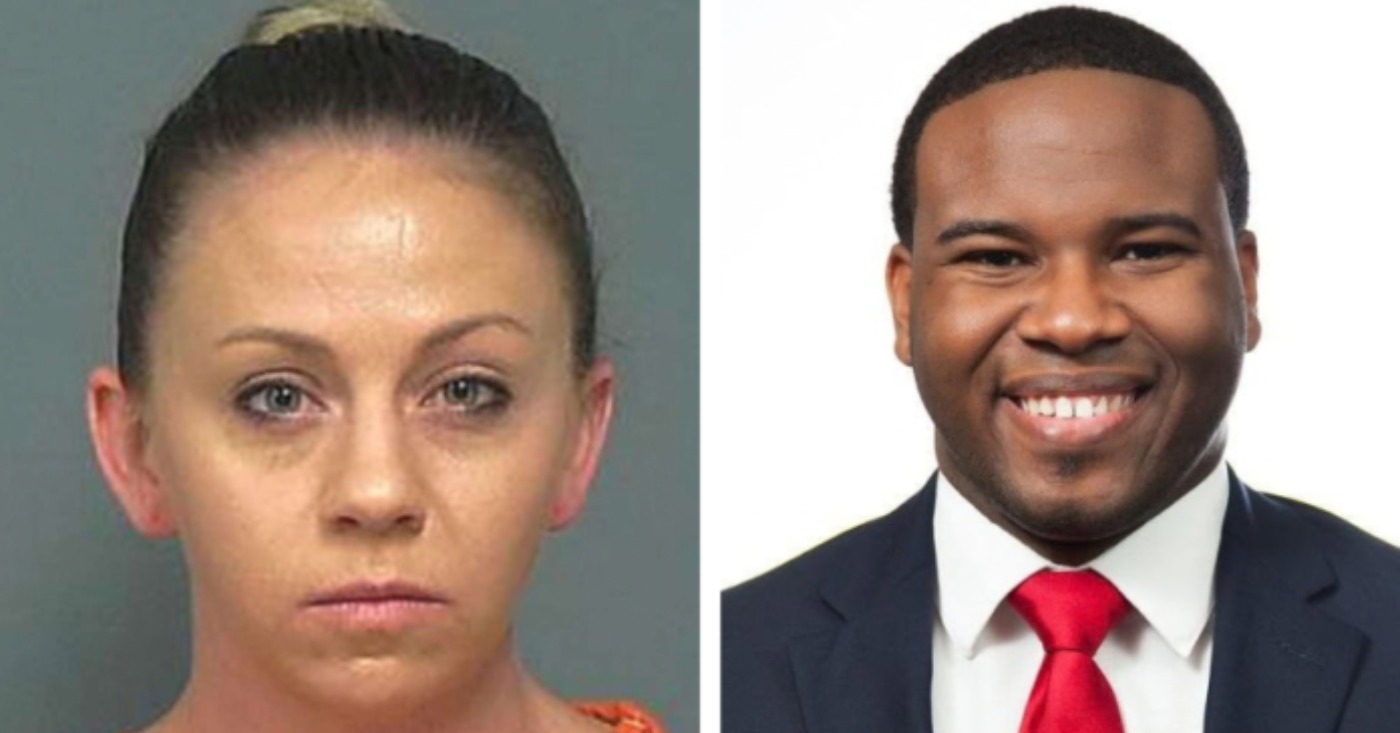
Former Dallas police officerAmber Guyger has been granted parole seven years after she was convicted of murdering her neighbor,Botham Jean, inside his Dallas apartment.
The Texas Board of Pardons and Paroles approved Guyger’s release Thursday (October 1), seven years to the day after Guyger was convicted of Jean’s murder, according to NBC News.
In 2019, a jury convicted Guyger of murder and she was sentenced to 10 years in prison for Jean’s 2018 death. Her conviction and 10-year sentence were upheld on appeal in 2022.
Geyger’s first parole request was denied in 2024, NBC Dallas-Fort Worth reported.
The Dallas Police Department fired her after the shooting. During her trial, Guyger testified that she mistakenly entered Jean’s apartment after returning home from work, believing it was her own apartment one floor below.
She said she saw Jean inside and fired her weapon because she believed he was an intruder, according to NBC News.
Jean was a 26-year-old Black man from St. Lucia who worked as an accountant. He was inside his home eating ice cream when Guyger entered and shot him, NBC DFW reported.
The parole board cited Guyger’s prison record in approving her release. According to NBC DFW, officials said she did not have a documented pattern of violent or assaultive arrests or convictions, maintained a satisfactory adjustment while incarcerated, and completed programs intended to help her obtain and maintain employment.
Jean’s family opposed the parole decision and had asked that Guyger serve her full 10-year sentence, according to NBC DFW.
Civil rights attorney Lee Merritt, who represents the family, told NBC DFW that the decision was deeply disappointing.
“They stood up again and again to ask that the full sentence be served,” Merritt said.
The Dallas Police Department told NBC DFW that the parole decision was outside its authority and that the department had no role in determining whether Guyger would be released. The department said its thoughts remained with Jean’s family and others affected by his death.
Guyger’s conviction and 10-year sentence were upheld on appeal in 2022.
A civil jury ordered Guyger to pay Jean’s family $98.6 million in damages in 2024, according to NBC DFW.
Guyger’s release date has not been announced. NBC News reported that the Texas Department of Criminal Justice will determine when she is released.
The Black Information Network is your source for Black News! Get the latest news 24/7 on The Black Information Network. Listen now on the iHeartRadio app or click HEREto tune in live.
Based on reporting by Michigan Chronicle.
Black Press
OP-ED: Proposition 44 Would Put a Price on Trust
The danger in Proposition 44 is not only its 90 percent figure. It is that the meaning of “qualifying” spending will be worked out later. A clinic preparing a budget today may not know whether a navigator, health educator, transportation program, outreach worker, technology upgrade, or other patient-support service will be counted the way it expects. Yet the financial consequence of getting it wrong could be immediate.

Black Press
OP-ED: Proposition 40: It’s Time to Play Chess, Not Checkers
Proposition 40 would impose a one-time 5 percent tax on the wealth of Californians with more than $1 billion in assets. Most of that money would go toward health care, with the remainder supporting food assistance and education-related programs.

Black Press
OP-ED: How One State Invests in Fast-Track Training to Overcome Childcare Worker Shortages, Center Closures
BLACKPRESSUSA NEWSWIRE — “If North Carolina is going to produce the qualified workforce necessary to meet the demand for high-quality childcare services in a timely manner, the state must lean less heavily on higher education to train and prepare early childhood professionals and more heavily on strategies that are more accessible, affordable, flexible, and expeditious,” the report’s authors wrote.
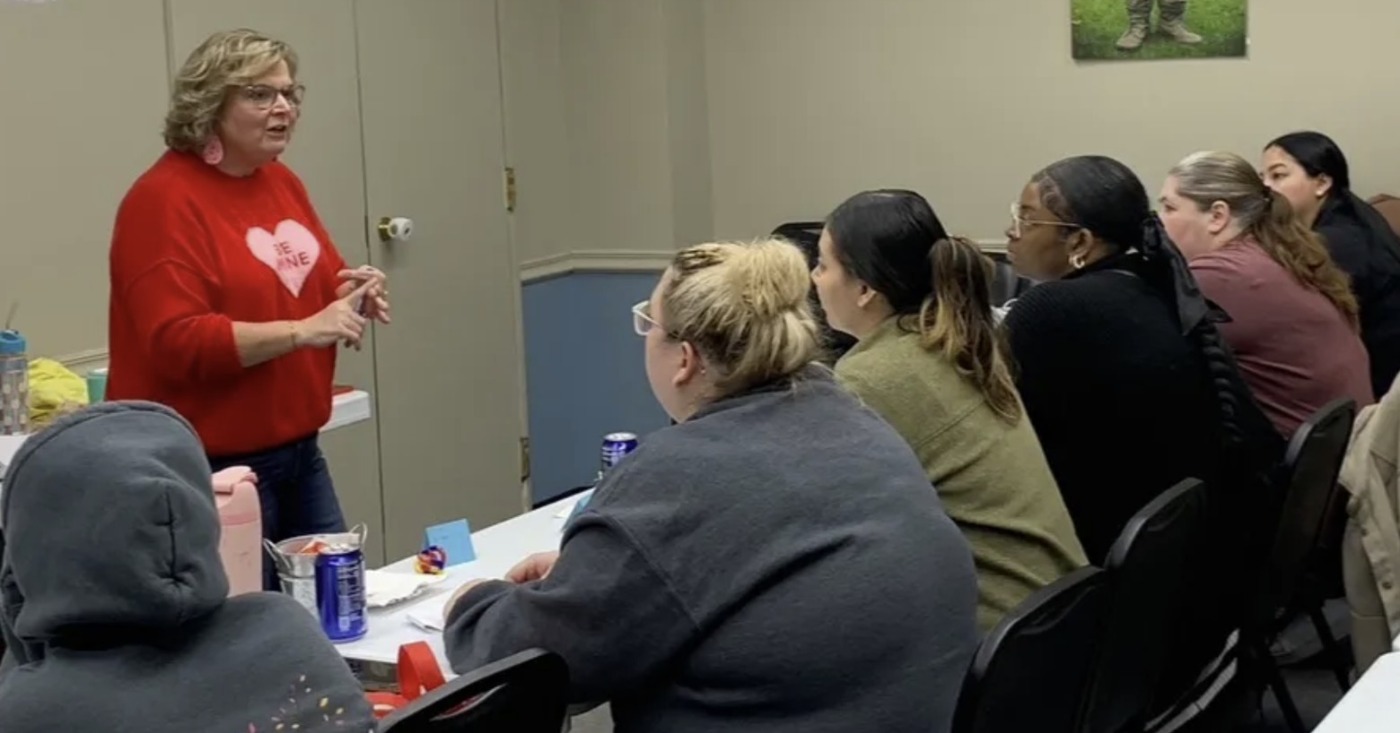
About a week after finishing the Early Childhood Workforce Ready Academy in Wayne County, North Carolina, Dominque McBride walked into Little Bulldogs Academy in Goldsboro.
She carried a packet filled with certifications — such as CPR, first aid, playground safety — that she earned while undergoing intensive training during the two-week academy in February 2024.
At the end of the interview, McBride walked out with a job.
Typically, that type of training can take months to a year to complete, said Shelly Willis, director of program coordination and evaluation with Partnership for Children of Wayne County, which offers the academy.
On top of that, students would have had to pay for the various certifications and classes and squeeze them in between jobs and their lives at home.
But McBride and more than 100 other people got the training for free over the past two years, thanks to grants from the Camber Foundation, according to Valerie Wallace, executive director of the Partnership for Children of Wayne County. She said the organization, which supports community projects in 41 eastern North Carolina counties, has pumped $145,000 into the childcare academies in Wayne and Johnston counties.
McBride said the academy prepared her for her first job in childcare, and made it easy to get all the required certifications and training in one place, in a short time.
“If I had to do it on my own, I think I would have been overwhelmed,” McBride told NC Health News.
Now, state legislators want to take that model and expand it across the state. They included $1.5 million in one-time funding in the state budget passed in July. The training support is part of a slate of efforts added to this year’s budget to tackle staffing shortages and long waitlists for childcare in North Carolina.
From March 2018 to June 2026, North Carolina has lost a net 1,072 childcare sites, according to the NC Early Care and Learning dashboard. Enrollment dropped by 28,183 children — or 11.5% — during that same time.
The NC Chamber touted such academies as a way to address chronic staffing shortages driving those closures in a February 2025 report.
“If North Carolina is going to produce the qualified workforce necessary to meet the demand for high-quality childcare services in a timely manner, the state must lean less heavily on higher education to train and prepare early childhood professionals and more heavily on strategies that are more accessible, affordable, flexible, and expeditious,” the report’s authors wrote.
‘At a crossroads’
The National Conference of State Legislatures also recently highlighted such academies for quick training to alleviate workforce shortages.
The recommendation is included in the report “Childcare at a Crossroads: A State Legislative Framework for Strengthening Childcare Systems,” released on July 27. The report was developed by a bipartisan work group of 13 state legislators from across the country that included North Carolina state Sen. Jim Burgin, R-Harnett.
The legislators wrote that childcare has become “one of the most urgent and complex challenges facing states.”
“It affects children’s development and well-being, parents’ ability to work, employers’ access to a stable workforce and the economic vitality of communities large and small,” they said in the report. “Rural and urban. Red and blue. No state is unaffected, and no ideology holds all the answers.
“As costs rise, workforce shortages persist and demand remains strong, state policymakers face important decisions,” the report’s authors continued. “The childcare system is at a crossroads, and decisions made now will shape how well systems meet the needs of families and economies in the years ahead.”
North Carolina has struggled to meet the need. Lack of childcare costs the state $5.65 billion every year in economic activity, according to a 2024 report from the U.S. Chamber of Commerce Foundation, the NC Chamber Foundation, and advocacy organization NC Child.
Since 2018, childcare employment in the state rose by just 1%, or 419 people, even as the state’s population grew by around a million people.
Where that growth has occurred has been uneven.
Small centers and family childcare homes make up most of the closures, according to research shared July 9 by Afton Partners, an Illinois-based consultant firm that specializes in several areas, including early education. The group presented the findings earlier in the year to members of the North Carolina Task Force on Child Care and Early Education.
Meanwhile, more large centers have opened, mainly in urban areas, according to the Afton research.
Many counties, including Wayne, have lost workers and childcare slots from 2018 to 2026.
In Wayne County, state data shows there are nine fewer childcare facilities than in 2018. Average monthly enrollment dropped by more than 1,000 kids during that same time. And average monthly employment is down by 420 workers.
The state faces a double whammy: demand for more childcare slots and a lack of workers.
The biggest problem in childcare is having qualified teachers, Burgin said as part of a panel discussion on the “Childcare at a Crossroads” report at the National Conference of State Legislatures conference in Chicago last month.
“We’ve made the restrictions so high that by the time that they get enough qualified people on board, those people will go find other jobs, usually in the school system,” he said.
He told the audience that North Carolina directed millions of dollars to tackling the childcare workforce issue in the state’s latest budget.
The bipartisan work group’s report highlighted North Carolina’s childcare academies, like the program in Wayne County.
Other efforts in the report included a high school student training program in South Dakota, scholarships and stipends for people pursuing childcare degrees in Delaware, and a pilot program in New Mexico that gives stipends to people in workforce training for childcare.
In West Virginia and Rhode Island, there are also apprenticeships that target the childcare work force.
Like some other states, North Carolina included in its recent budget stipends for graduates who stay with an employer for at least a year.
‘A huge step forward’
The N.C. Child Fatality Task Force has been recommending since 2024 that North Carolina support efforts to improve the childcare system, including increasing subsidies to childcare centers, especially in the wake of additional federal childcare stabilization grants that sunsetted as the COVID pandemic wound down.
Childcare funding was one of the four task force recommendations for this year.
In July, the General Assembly passed a budget with $97 million in federal funding to increase reimbursement rates to providers of subsidized childcare and to create a much-welcomed floor rate. The budget also transfers $16.8 million from the federal Temporary Assistance for Needy Families block grant to the state’s childcare subsidy program.
Creating a rate floor means that, for the first time, all facilities will get at least the statewide average for subsidized care. Without that base rate, subsidies have ranged widely across the state, which has made it difficult for some facilities to survive.
The state’s childcare subsidy program uses state and federal money to help pay for childcare for low- to moderate-income families who qualify. Families still have to cover a co-pay. The subsidy can be used for children through age 12, or up to age 18 for children with special needs.
While the state doesn’t set salaries for childcare workers, increasing the subsidy gives providers the flexibility to pay workers more.
Low pay has been an issue in attracting and maintaining childcare workers. Starting median hourly wages for childcare teachers in 2023 was $14 per hour, according to the 2023 North Carolina Child Care Workforce Study by Early Years (formerly Child Care Services Association.) That’s the same or less than entry-level jobs at retail stores such as Target and Walmart and fast food restaurants such as Five Guys and Whataburger.
“With our current economic situation and the prices of everything increasing, it is very difficult to stay in the field of childcare and make ends meet with the average pay offered,” McBride said in an email.
“It’s not only about attracting people to the field, but encouraging them to stay,” she added.
To quickly train childcare workers, legislators funneled $1.5 million in one-time funding to replicate childcare academies modeled after the program in Wayne County across the state. Two-thirds of that funding will cover tuition costs. The remaining $500,000 will pay for stipends of $500 for every student hired within three months of graduating and who stays employed for at least one year at the same childcare program.
“This funding for child care is a huge step forward in helping to stabilize North Carolina’s child care system,” Kella Hatcher, executive director of the Child Fatality Task Force, said in an email.
A model program
In Wayne County, Wallace and Willis with the Partnership for Children are hoping the increased subsidy rate, along with a new rate floor, will ease high turnover while the academies help train new childcare workers more quickly.
They’ve had about a dozen people sign up for each session, the most recent of which ran from Aug. 3 through Aug. 14. It was the first of three planned for this year under the Camber grant.
“Those may not seem like high numbers, but if you can put that many people to work, it makes a huge difference in a childcare,” said Wallace. “Our numbers are going to be fewer, but they’re mighty if we give these folks the necessary training that they need.”
Wallace said they’ve tweaked their academy a little bit every year to make it stronger and attract more people.
“We’ve learned with each academy that we’ve done, and last year we worked with the North Carolina Partnership for Children to try to get this to be aligned,” in anticipation of the state creating a pilot program, Wallace said. “So if people were doing it across the state, everybody was doing the same curriculum, and it was going to be consistent with what people were coming out of the academies with.”
They’re not sure if they’ll add more academy classes this year based on what was passed in the state budget. It depends on whether their program is considered aligned with the state plan. They could add up to three more sessions later in the fiscal year based on that state plan, Wallace said.
The training allows students like McBride to be hired immediately.
McBride, 29, was working for the Wayne County Department of Social Services when her mother saw a notice in 2024 about the free training to become a childcare worker. It came at a perfect time for McBride, who was disillusioned with the paperwork involved in her DSS job.
And she always wanted to teach and work with children, she said. In her now-former job at Little Bulldogs, she worked with the 2-year-olds.
“It can be very chaotic,” she said, describing children that age as wanting to be more autonomous but not quite ready for that. “But I enjoyed every bit of it.”
Every day, she saw the need for more childcare workers.
“We weren’t getting enough childcare teachers as much as we were getting kids,” McBride said. “We couldn’t keep up.”
Her work at Little Bulldogs inspired McBride to go back to school for a degree in early childhood education with a focus on special education. She now works with children on the autism spectrum at Action Behavior Center in Clayton.
She’s grateful for Wayne County’s childcare academy.
“It definitely helps you prepare,” she said. “The one thing that can deter you is feeling like you’re not equipped to do it.”
This article first appeared on North Carolina Health News and is republished here under a Creative Commons Attribution-NoDerivatives 4.0 International License.
Black History
Annika Ashton First Black Woman and Jamaican Broward County Attorney
SOUTH FLORIDA TIMES — Annika E. Ashton is the new Broward County Attorney, becoming the first Black woman and Jamaican American to hold the position. Ashton, 42, was sworn in last month, replacing Andrew Meyers who retired after eight years.
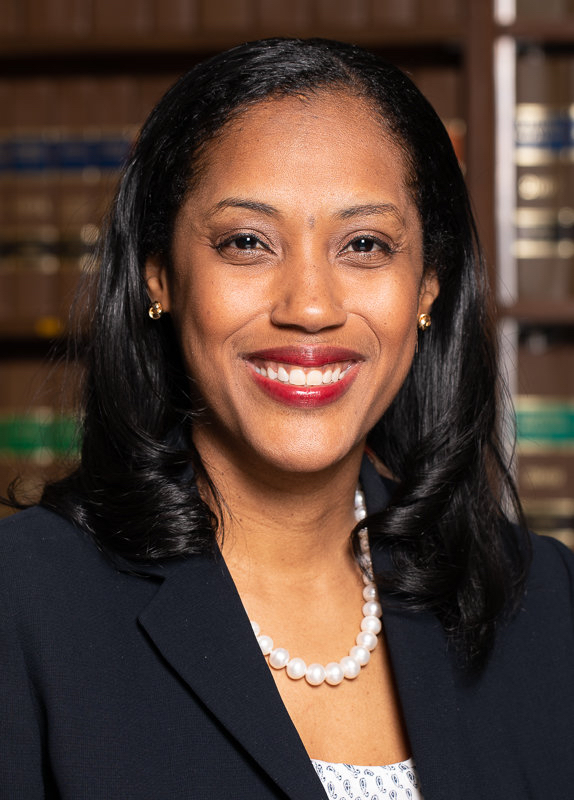
FORT LAUDERDALE, Fla. – Annika E. Ashton is the new Broward County Attorney, becoming the first Black woman and Jamaican American to assume the role.
Ashton, 42, was sworn in last month to replace Andrew Meyers who retired after eight years at the helm.
The Broward County Commission unanimously appointed Ashton, who was the Deputy Broward County attorney, in April 2026 and she took over on September 10, 2026 the official last day of Meyers’ tenure.
She will oversee more than 50 attorneys and a support staff.
Ashton’s appointment reflects overcoming racial and gender barriers to become the chief legal advisor for the county.
The Coral Springs resident thanked the commission and Broward County legal department for their support.
“I’m very excited to work with a really great office of people and have the support of the Broward County Commission,” Ashton said.
Broward County Commissioner Nan Rich called Ashton “the most qualified person to lead the County Attorney’s Office,” noting the county attorney position is one of only three the board is responsible for appointing
Ashton has worked for Broward County since 2014, starting as an assistant county attorney and rose to senior assistant county attorney before becoming deputy county attorney in 2019.
She graduated from Princeton University and Columbia Law School and clerked for the Hon. Adalberto Jordan on the U.S. District Court for the Southern District of Florida and the U.S. Court of Appeals for the Eleventh Circuit.
Ashton’s county work has included litigating federal court cases, drafting ordinances and contributing to the $1 billion expansion of the Broward County Convention Center in Fort Lauderdale.
She previously did private practice in New York and Miami.
According to her bio, Ashton was born in Spanish Town, Jamaica and raised with deepy family roots in Clarendon, particularly Palmer Cross.
She migrated to the U.S. and graduated from Ft. Lauderdale Boyd Anderson High School, earned her bachelor’s degree from Princeton University and law degree from Columbia Law School.
As the new chief attorney for Broward County, Ashton will provide legal counsel for commissioners and administrators, represent the county in litigation, drafting legal documents including preparing ordinances, government contracts and oversight of zoning issues.
Ashton will also advise commissioners on legal aspects of county projects, developments and public services, including environmental, transportation, and consumer protection issues in Broward County.
She is also a Past President of the Caribbean Bar Association.
Ashton credits her Jamaican upbringing for a stellar legal career.
She said women leadership in Jamaica helped her thrive, studying successful women in business and public service, as well as community figures like Cathy Levy, founder of the iconic Little People and Teen Players Club, who has been a stalwart of youth arts education in Jamaica for decades.
These early influences, along with the cultural ethos of resilience captured in the popular Jamaican refrain, “Wi likkle but wi tallawah,” she notes, helped shape her ambition and belief that she could make a meaningful impact on the world around her.
The post Annika Ashton first Black woman and Jamaican Broward County Attorney appeared first on South Florida Times.
Based on reporting by South Florida Times.
Black History
National Civil Rights Museum Freedom Award Honors the Relentless Fight for Equality
TRI-STATE DEFENDER — The National Civil Rights Museum’s 35th annual Freedom Award ceremony, held on Thursday, October 1, at the Orpheum Theatre, recognized a diverse group of civil rights leaders. Honorees included Fred Gray Sr., a legal strategist who represented Dr. Martin Luther King Jr.
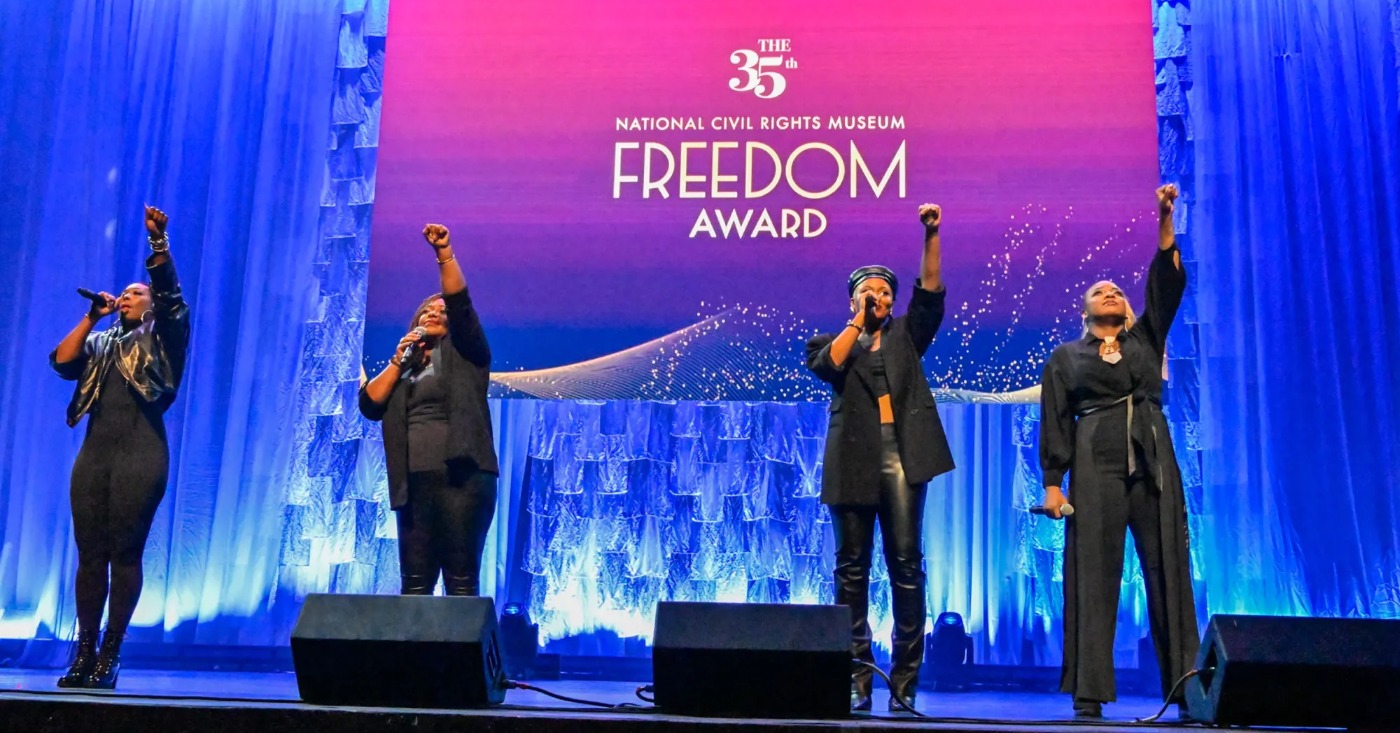
The honorees at the National Civil Rights Museum’s 35th annual Freedom Award ceremony held at the Orpheum Theatre on Thursday, Oct. 1, reflected a changing era of civil rights leadership.
Fred Gray Sr., one of the last surviving legal strategists of the Civil Rights Movement, helped dismantle segregation in America as the lawyer who represented Dr. Martin Luther King Jr. and Rosa Parks. Gray’s pioneering legacy now rests with the generations he helped empower, including fellow award recipients Rev. Shavon Arline-Bradley, Nneka Ogwumike and Bakari Sellers.
Arline-Bradley, an ordained minister, public health advocate, and president and CEO of the National Council of Negro Women since 2023, credits the women and civil rights legends who preceded her and built the organizations she now leads with making her work possible.
Nneka Ogwumike, WNBA champion and four-term president of the league’s players association, and Bakari Sellers, a lawyer, author, CNN political correspondent and former South Carolina legislator, represent a younger generation of human and civil rights activists. They are taking the fight into new arenas, from women’s sports and economic opportunity to voting rights, education and social justice.
Together, their stories shaped the event’s overall theme and mood, which celebrated the courage of freedom fighters of the past while embracing what civil rights leadership looks like now — and what it may become.
Before the ceremony, hundreds of guests gathered for photographs and interviews on the red carpet and hors d’oeuvres at the Halloran Centre for Performing Arts & Education next door to the Orpheum. Actor Larenz Tate hosted the event for the second consecutive year. Grammy Award-winning gospel artist Tamela Mann brought the audience to its feet with her performance of the hit song “Take Me to the King.” And local artist Garry Goin and the Freedom Award House Band performed a mix of R&B and liberation songs.
-

Fred Gray Jr. accepted the Freedom Award on behalf of his father, civil rights attorney Fred Gray Sr., who was unable to attend the ceremony. (Gary S. Whitlow/Tri-State Defender) -

Rev. Shavon Arline-Bradley, president and CEO of the National Council of Negro Women, was among the honorees at the National Civil Rights Museum’s 35th annual Freedom Award. (Gary S. Whitlow/Tri-State Defender) -

Nneka Ogwumike, WNBA champion and four-term president of the league’s players association, was honored at the National Civil Rights Museum’s 35th annual Freedom Award. (Gary S. Whitlow/Tri-State Defender) -

Bakari Sellers, lawyer, author, CNN political correspondent and former South Carolina legislator, was honored at the National Civil Rights Museum’s 35th annual Freedom Award. (Gary S. Whitlow/Tri-State Defender)
Taking the stage to accept the first award was Arline-Bradley, who reflected on the legacy that shaped her path to leadership.
“This honor means more to me than you can ever imagine,” Arline-Bradley said, describing the moment as the culmination of what she believes God had in store for her.
She paid tribute to Dorothy Height, whose leadership helped secure the headquarters for the women’s advocacy nonprofit on Pennsylvania Avenue in Washington, D.C. Arline-Bradley described the building, located on the same street as the White House, as a representation of Black women’s history, power and resilience.
“NCNW stands as the only Black and women-owned building on Pennsylvania Ave,” she continued.
During her speech, Arline-Bradley outlined what she believes it will take to achieve freedom and equality today.
“If America wants to get her healing, we’ve got to climb to the rooftop of justice,” she said.
And justice includes using Black economic power to support companies with compatible values, she continued.
Fred Gray Jr. accepted the award on behalf of his father, who was unable to attend the ceremony. Gray, who practices law alongside his father and brother, recalled his father’s decision to become a lawyer and return to Montgomery, Alabama, determined to challenge segregation.

Gray connected his father’s legal work to Memphis’ sanitation workers, whose 1968 strike became a defining moment in the city’s civil rights history. “At 95, if he was here, he would say to you, ‘I have done what I can do. The rest is up to you,’” Gray Jr. said.
Ogwumike used her acceptance speech to connect the growing visibility of women’s sports to a broader conversation about opportunity and equality.
“In this moment, there are greater and more opportunities for girls and women in sports,” Ogwumike said, pointing to the example provided by the WNBA’s professional athletes who serve as role models for young girls.
She also addressed what she described as threats to women’s rights and access, including debates surrounding Title IX, voting rights, reproductive healthcare and gender violence. “We refuse to be bullied and we refuse to be silenced and made to disappear,” Ogwumike said.
Her remarks were followed by a surprise video message from former Vice President Kamala Harris, who thanked Ogwumike for “being a fighter for the people” and congratulated the evening’s other honorees.
The final honoree, Bakari Sellers, has family ties to Memphis. His mother grew up in the city. His grandfather, the Rev. E.W. Williamson, once served as pastor of Middle Baptist Church and Olivet Baptist Church.

Sellers wrapped his remarks in light humor as he reflected on his conversations with other advocates and his own social justice journey. At one point, he paused, overcome with emotion, as he recalled visiting the National Civil Rights Museum earlier in the day and standing on the balcony where Dr. Martin Luther King Jr. was assassinated on April 4, 1968.
“The victories they won are being torn down all around us,” Sellers said.
To illustrate the cost and cruelty of social injustice, he asked the audience to imagine a 10-year-old student who might one day cure cancer but is struggling in school because of hunger.
“Somewhere we have forgotten that we come from a people of dreamers,” Sellers said. “We have forgotten the price that was paid.
“I am only 42 years old. I don’t really deserve this thing,” Sellers said. “But I will promise you this: Tomorrow I will work harder than I did yesterday.”
A video montage at the black-tie ceremony paid tribute to influential figures who died this year, including civil rights organizer Bernard Lafayette, a leader in the Nashville Movement, Freedom Rides and the Selma voting rights campaign; Rev. Jesse Jackson, the civil rights icon, minister and founder of Operation PUS;, Memphis civil rights activist Clara Ester; feminist leader and journalist Gloria Steinem; and country music legend and philanthropist Dolly Parton.
Museum President Russ Wigginton commented ahead of the program on the generational evolution of Freedom Award honorees. He noted that earlier generations of civil rights leaders often could measure progress through changes in laws, court decisions and government policy. Marches, sit-ins and other forms of direct action helped produce the landmark legal changes achieved during the Civil Rights era of the 1950s and 1960s.
But today, he said, the work can be more difficult to measure because much of it involves changing hearts and minds, increasing empathy and encouraging people to understand cultural differences.
“It is a delicate balancing act that requires patience and commitment,” Wigginton said.
He added, however, the fundamental goal remains unchanged: equal rights for everyone.
Based on reporting by Tri-State Defender.


Mastering the Used Car Market ep11

2026 Defender 130 X Is It Worth $110,110 for Your Family?

“Money, Power, and Respect,” (SEIU) President April Verrett

Car Takeoff Hesitation? Daylight Test Drive Guide #shorts

Your Vote Matters…Protect Your Freedoms!

The Black Bank That Survived the 1893 Panic #shorts

Why A Black Bank Started From A House #shorts

Defender ONE-on-ONE: U.S. Rep. Christian Menefee

How To Manage Conflict at Work

How To Overcome Financial Setbacks and Win

Latest Massacre in Haiti Reveals Cruelty U.S. Deportations

The Youngest American Killed in the Vietnam War

Booked and Unbound: The Legacy of Black Women’s Literary Circles

Passing for White, Fighting for Black America: The Courage of Walter White

OPINION: Nolan Wells’ Death One of Several Signifying Racial Terror Lives on in U.S. South

OP-ED: Haiti TPS: Have We Lost Sense of Humanity?

OP-ED: If AI Is the New Language of Power, Then NAN Wants Black Communities Fluent

OP-ED: How Does Your State Rank for Pre-K?

Henry O. Flipper: A Trailblazer at West Point and Beyond

NFL: NFC Preview | The Rams will NOT make the Super Bowl
Mastering the Used Car Market ep11
2026 Defender 130 X Is It Worth $110,110 for Your Family?
“Money, Power, and Respect,” (SEIU) President April Verrett
Car Takeoff Hesitation? Daylight Test Drive Guide #shorts
Your Vote Matters…Protect Your Freedoms!
The Black Bank That Survived the 1893 Panic #shorts
Why A Black Bank Started From A House #shorts
Defender ONE-on-ONE: U.S. Rep. Christian Menefee
How To Manage Conflict at Work
How To Overcome Financial Setbacks and Win
-

 Black Press5 days ago
A $2.1 Trillion Wellness Industry Never Built a Daily Practice for Black Children. So This Atlanta Family Did.
-

 Black Press7 days ago
Zakiya Jendayi Arrested, Locked Out of Home by Sheriff’s Deputies
-

 Black History7 days ago
Listening as a Lifeline: A Doula’s Witness to Black Maternal Health
-
 BlackPressUSA3 days ago
Latinas Deserve Equal Pay. Unions Help Make It Happen.
-

 Black Press5 days ago
COMMENTARY: But God!
-

 Black Press7 days ago
‘We Don’t Talk Trash — We Pick Up Trash!’
