
The AFRO American Newspaper
Bowser Vetoes Decriminalization of Metro Fare Evasion
THE AFRO — In a rare move, District of Columbia Mayor Muriel Bowser vetoed the D.C. Council’s decision to decriminalize metro fare evasion.


By Micha Green
In a rare move, District of Columbia Mayor Muriel Bowser vetoed the D.C. Council’s decision to decriminalize metro fare evasion. Her second time issuing a veto, the mayor decided to send the bill back to the council in concerns that decriminalizing the act will exacerbate the metro fare evasion issue- losing several million dollars for the city.
The bill, was approved 10-2 by the District of Columbia Council, and is now being sent back for an override vote. Council Chairman Phil Mendelson and Metro Board Chairman and Council member Jack Evans (D- Ward 2) were the two Council members to initially oppose the bill. Despite the mayor’s veto, if the Council approves the same bill, it will meet the requirements for the two-thirds threshold to inherently become law.
Last year the city made major strides for metro when it decided to provide $500 million of dedicated funding to the transit system. Metro fare evasion, on the other hand, sets the city back financially, costing $25 million to $50 million per year.
“I am concerned that [the decriminalization bill] would exacerbate the problem,” Bowser said, according to The Washington Post.
An estimated $25 million of lost revenue is from bus fare evasion alone, as Metrobus operators have to record every instance where a passenger doesn’t pay. Metrorail, on the other hand, is harder to track as there is no reliable system to notate when fare is evaded.
The loss of money is a critical issue to the mayor, and one that she believes should have real consequences.
“While I understand that [the] Council intended to change fare evasion to a civil offense, it is important to note that the bill simply removes criminal penalties while failing to set up a new civil adjudicative process,” Bowser wrote. “This leaves [Metro] without any meaningful tools to enforce the payment of fares and will encourage fare evasion, which will result in additional lost revenue for the Metro system.”
Currently there are fines up to $300 and up to 10 days in jail for metro fare evasion, penalties that advocates say are too harsh for the crime.
Proponents of the bill contend that decriminalizing metro fare evasion is a social justice issue- as many of those arrested for the crime are disproportionately African American.
Council members Charles Allen (D-6), Robert C. White (D-At Large) and Trayon White (D-8) championed the bill because of the fairness issue, pointing out a study by the Washington Lawyers’ Committee for Civil Rights and Urban Affairs, which found 91 percent of fare evasion penalties from January 2016 to February 2018 were issued to Black people.
“That is a problem,” Council member White Jr. said. “I’m sad that’s Metro’s losing money, but I’m more sad about what’s happening to Black people,” he said according to a Washington Post article about the original bill.
Council member Allen pointed out the larger implications of criminalizing the metro fare evasion. “The collateral consequences are numerous and devastating and they are vastly disproportionate to not paying the $2 fare,” Allen said last year. His office released a statement saying it hoped to override the veto. “I will be moving to override the Mayor’s veto of this important criminal justice reform and working with my colleagues to ensure the will of the Council is upheld.”
Despite the civil rights argument being attached to decriminalization, Metro applauded the mayor’s decision to veto the bill.
“We truly appreciate Mayor Bowser’s leadership on this issue and stand ready to work with the Council to develop solutions that address their stated goal of making Metro accessible to people of limited means, while maintaining safety and fairness for the customers we serve,” Metro spokesman Dan Stessel said.
This article originally appeared in The Afro.











Black History
Thousands Celebrate Culture with ‘Around the World Embassy Tour’
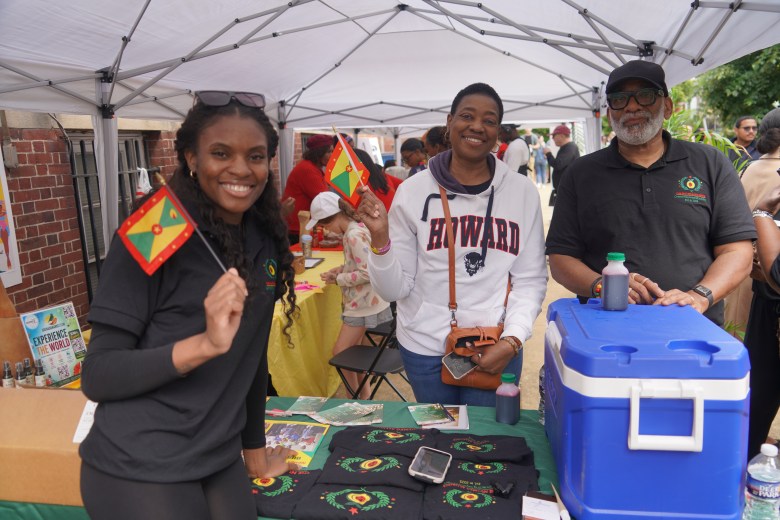
THE AFRO — The 19th annual Around the World Embassy Tour in Washington, D.C. showcased diverse cultures with over 69 embassies participating and 50,000 attendees.

By Patricia McDougall | Special to the AFRO
On May 2 the 19th annual Around the World Embassy Tour was held in Washington, D.C., with over 69 Embassies welcoming over 50,000 people. The University District of Columbia (UDC), a historically Black institution, hosted several of the embassies.
The Embassy Tour is one of the biggest events in D.C. with music, live performance, dancers, singers, cultural food, vendors and more. People lined the streets to tour inside of the embassies. Each year, visitors come from all around the world to take part in the event.
[imagely id=”1″]
#BuyBlack
Baltimore Residents Press for New Investments at Taxpayers’ Night on FY2027 Budget
THE AFRO — Baltimore residents voiced concerns and funding requests for Mayor Scott’s FY27 budget at Taxpayers’ Night, focusing on senior center repairs, grassroots organizations, and worker cooperatives.
By Megan Sayles | AFRO Staff [email protected]
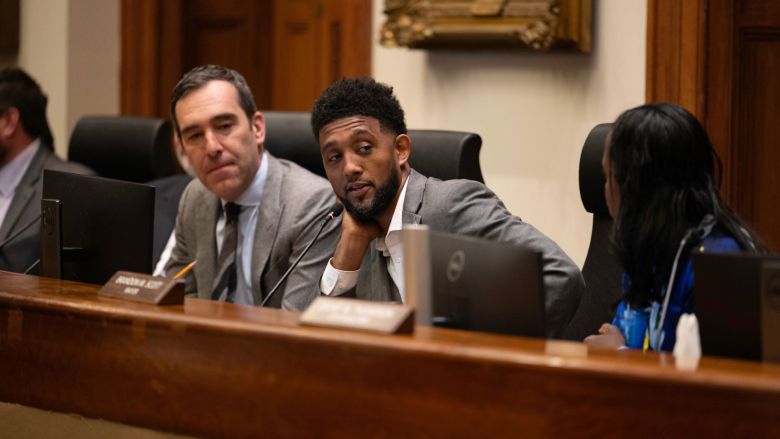
The Baltimore City Board of Estimates hosted Taxpayers’ Night on April 22, giving residents the opportunity to weigh in on Mayor Brandon M. Scott’s preliminary fiscal year 2027 budget and outline their needs. The $4.98 billion spending plan includes $1.06 billion in capital spending and $3.91 billion for the operating budget.
At the hearing, several Baltimoreans requested funding to repair the Forest Park Senior Center, which suffers from a deteriorating roof.
“That building has been severely ignored by everyone,” said Kim Trueheart.
Trueheart leads the Liberty Village Project, a community organization that supports children, families and older adults in West Baltimore. She said she’s pulled from her own pockets to start the renovations.
With greater investment from the city, Trueheart believes the roof could be transformed into a space for youth to play sports.
“I’ve got a tremendous amount of support, I just need your support,” said Trueheart. “I need funding to bring that building back to life.”
Fellow resident Tessa Hill-Aston echoed Trueheart’s calls for capital. The pair have teamed up to draw more support for long-needed improvements to the building. Hill-Aston noted that her husband, Joseph L. Aston—former president of the Harbor Bank of Maryland—spends time at the senior center.
“The sicker my husband gets, the madder I get,” said Hill-Aston. “I’m not going to stop until Forest Park Senior Center gets some help.”
Resident Adrian Muldrow emphasized that with targeted funding, the Forest Park Senior Center could function as an anchor for older adults while also providing essential services for entrepreneurs, returning citizens and other local residents.
“I’m asking for funding for administrative help, as it not only helps seniors but also has the potential to serve as a hub for community services, business development and reentry,” said Muldrow.
Baltimore resident Christina Flowers testifies during the Board of Estimate’s Taxpayers’ Night on April 22. Flowers called for greater investment in grassroots organizations that are addressing homelessness in the city. Credit: Photo by J.J. McQueen
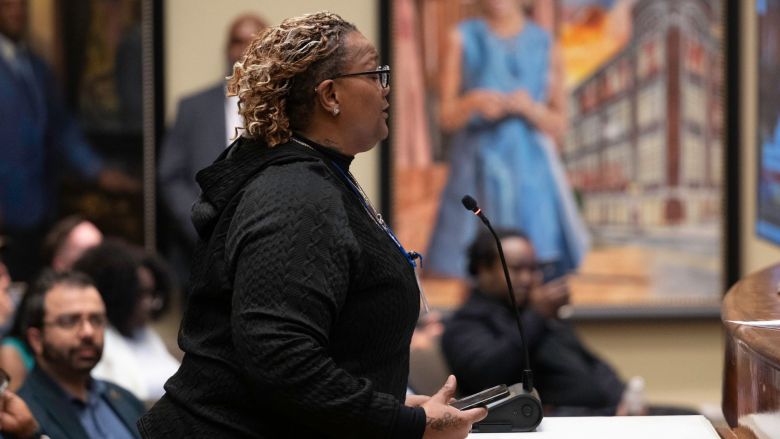
Baltimore resident Christina Flowers testifies during the Board of Estimate’s Taxpayers’ Night on April 22. Flowers called for greater investment in grassroots organizations that are addressing homelessness in the city. Credit: Photo by J.J. McQueen
Baltimoreans also appealed for greater support for grassroots organizations in the budget.
Resident Christina Flowers raised this need as it relates to addressing homelessness in the city.
She stressed the critical role community-based organizations play in trauma response during interventions with unhoused populations.
“When it comes to real solutions, I would like you to consider in this budget the work that we do on these streets when it comes to engaging and navigating,” said Flowers. “The Mayor’s Office of Homeless Services can’t do it alone.”
Taxpayer Kai Singleton called for investments in worker cooperatives, or businesses that are owned and controlled by employees. He specifically highlighted the Baltimore Roundtable for Economic Democracy (BRED), a coalition that supports worker-owned cooperatives, and Korner Boyz Enterprises, a Black-owned business created by former squeegee workers who transitioned to selling their own branded water bottles.
“Worker cooperatives deserve a place in Baltimore. They could benefit the entrepreneurial spirit of the city and community investment in Baltimore,” said Singleton. “Support for workers cooperatives demonstrates support for workers who have a vote in their workplace.”
Rita Crews, president of the Belair-Edison Community Association, thanked the mayor for sustaining funding for Clean Corps, an initiative initially funded by American Rescue Plan Act (ARPA) dollars that hires unemployed residents to maintain vacant lots, alleys and sidewalks.
However, Crews also requested funding to build a community center in her neighborhood.
“There’s a renaissance going on, but not in Belair-Edison. My historic family-friendly, close-knitted community with tree-line affordable housing is in need of a renaissance,” said Crews. “We need a community center in Belair-Edison.”
The next Taxpayers’ Night, which will be hosted by the Baltimore City Council, will take place at City Hall on May 14.
Black Press
Major D.C. Mayoral and Congressional Delegate Debates Set for May 2 at George Washington University
THE AFRO — Washington, D.C. voters will get an opportunity to see candidates face off in a debate setting during DCision 2026: D.C. Delegate and Mayoral Debate on Saturday, May 2, 2026.

By DC Dems | The AFRO
WASHINGTON, D.C.—Washington, D.C. voters will get an opportunity to see candidates face off in a debate setting when qualified contenders for Mayor and D.C. Congressional Delegate take the stage for DCision 2026: D.C. Delegate and Mayoral Debate on Saturday, May 2, 2026, for a full afternoon of debates at Jack Morton Auditorium on the campus of George Washington University.
Voters in Washington, D.C. will have a chance to hear directly from candidates for mayor and congressional delegate during the DCision 2026 debates on May 2 at George Washington University. Hosted by a coalition of civic and media organizations, the event will spotlight key issues including public safety, housing, economic recovery, education, and D.C.’s push for full congressional representation. Credit: Unsplash / Markus Winkler
DCision 2026: D.C. Delegate and Mayoral Debate will be hosted by the Washington Informer, the Greater Washington D.C. Black Chamber of Commerce, the DC Democratic Party, and the Washington Association of Black Journalists.
Sign up for our Daily eBlast to get coverage on Black communities from the media company who has been doing it right for over 133 years.
The event marks a key moment as Washingtonians weigh leadership on issues ranging from public safety and housing to economic recovery, education, and the city’s ongoing fight for full representation in Congress.
With the mayor’s office and the District’s lone congressional seat at stake, the outcomes of these races will shape the city’s policy direction and national advocacy for years to come.
Candidates for mayor and congressional delegate will participate in the DCision 2026 debates at Jack Morton Auditorium on the campus of George Washington University in Washington, D.C., on May 2. Credit: Courtesy image
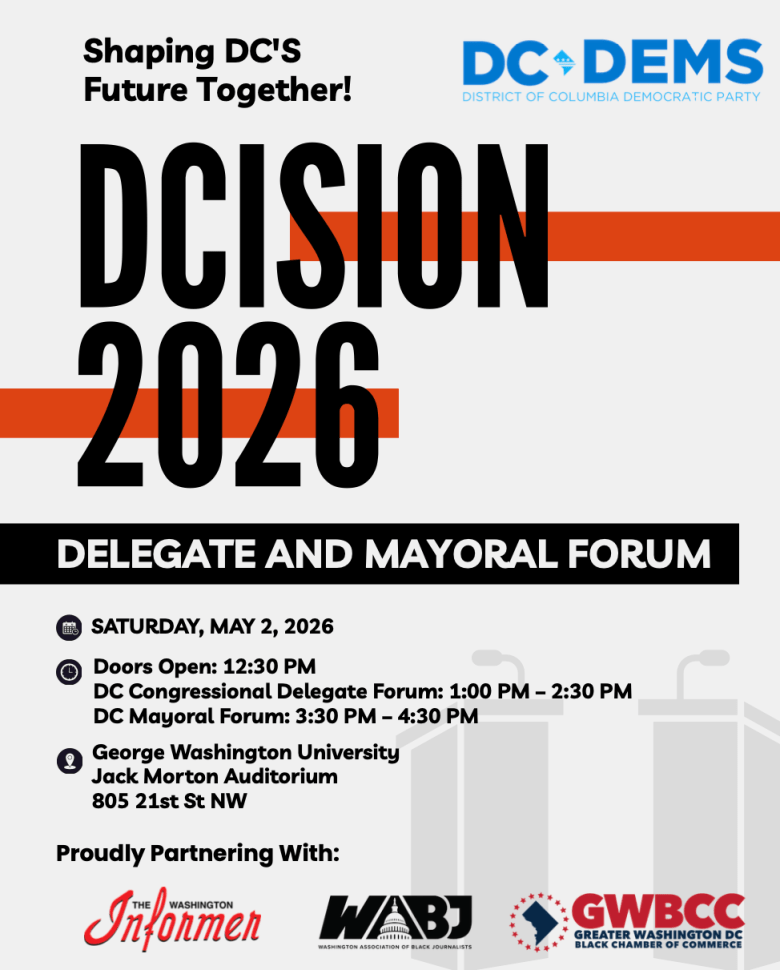
Candidates for mayor and congressional delegate will participate in the DCision 2026 debates at Jack Morton Auditorium on the campus of George Washington University in Washington, D.C., on May 2. Credit: Courtesy image
“This forum is a cornerstone of our commitment to transparent, accountable, and engaged democracy,” the event’s organizers state. “Whether it is managing the complexities of our local economy or fiercely advocating for our rightful autonomy in the halls of Congress, the leaders we elect this year will shape the trajectory of the District. DCision 2026 ensures our voters are equipped to make an informed choice.”
Debate Day Schedule● 1:00 – 2:15 PM: D.C. Congressional Delegate Debate● 2:15 – 2:25 PM: Break / Production Reset● 2:25 – 3:30 PM: Intermission / Candidate Arrival● 3:30 – 4:45 PM: D.C. Mayoral Debate
Each 75-minute debate will feature opening statements, moderated rounds with rebuttals, a rapid-response lightning round, and closing statements.
All participating candidates have met established qualification criteria and have confirmed their participation.
Black Press
DC Voters Fill the Seats at ‘Ask a D.C. Candidate Mayoral Forum’
THE AFRO — Six candidates for the 2026 Washington, D.C. mayoral race recently participated in a forum, addressing critical issues like affordable housing, high utility bills, and childcare costs.
DC Voters Fill the Seats at ‘Ask a D.C. Candidate Mayoral Forum’
By D. Kevin McNeirSpecial to The AFRO
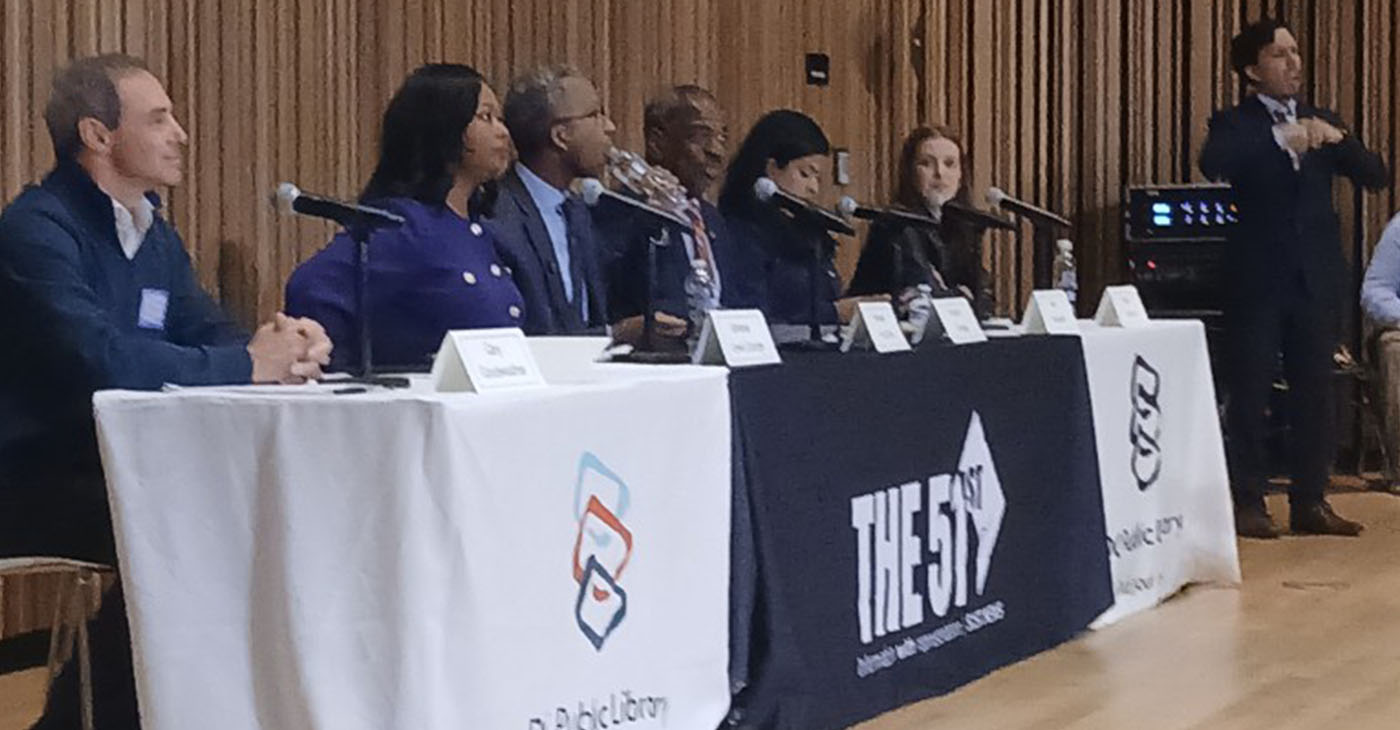
Six candidates for the 2026 Washington, D.C. mayoral race answered questions on topics ranging from affordable housing, high utility bills and childcare costs, to the budget and working with the federal government, during a recent two-hour forum – and voters showed up in force.
More than 300 people attended the event held in the auditorium of the Martin Luther King Jr. Memorial Library in downtown Washington on April 20.
Candidates who participated in the forum included three current or former D.C. Council members, Janesse Lewis George, Kenyan McDuffie and Vincent Orange, as well as three others, Gary Goodweather, Rini Sampath and Hope Solomon. Ernest Johnson, who has declared his candidacy for D.C. mayor, did not attend.

An eye-catching logo provides information about a mayoral forum featuring seven candidates on April 20 at the MLK Memorial Library in Washington, D.C. (AFRO Photo / D. Kevin McNeir)
On the question of creating greater revenue for the District in a political season in which the federal government has slashed budgets, Goodweather, a seasoned business executive and military veteran, encouraged voters to review his campaign agenda.
“If D.C. is going to survive and remain a leading U.S. city in the future, we must consider new ways to reduce costs and increase revenue,” he said. “One of those ways is to look at the clean energy industry, especially given the huge bills people are now facing from companies like Pepco.
“We often hear residents express the need for more affordable housing. Again, when we can generate more community capital, we can afford to build more housing for those who face financial challenges,” he continued. “In some cases, it costs more to build and maintain affordable housing than it does for market-priced housing. So, D.C. needs a mayor who can think creatively and knows the business terrain.”
McDuffie said he’s concerned about the cost of childcare, and he has good reason to be.
Six candidates vying for Washington, D.C., mayor answer questions about their plans for the city during a mayoral forum co-sponsored by The 51st, The Washington Informer, SpotlightDC and the DC Public Library. (AFRO Photo / D. Kevin McNeir)

More than 300 people attend a mostly civil mayoral candidate forum at the MLK Memorial Library in Washington, D.C. on April 20. (AFRO Photo / D. Kevin McNeir)
According to a 2025 report published by the Economic Policy Institute, the average cost of infant care in the District is $28,356 – that’s $2,363 per month. A minimum wage worker in D.C. would need to work full time for 41 weeks, or from January to October, just to pay for childcare for one infant. In other words, a median child care worker in Washington, D.C. would have to spend 73.7% of their earnings to put their own child in infant care. (epi.org/child-care-costs-in-the-united-states/#/DC)
“A lot of folk want to raise taxes to pay for the services we know are necessary for D.C. residents,” he said. “And childcare costs can be overwhelming with some families paying more for child care than their mortgage. D.C. already has universal pre-K, which was one of the benefits my wife and I took advantage of with our own children.
“But I want to create a childcare center which I believe – by placing services under one roof – would allow us to reduce the barriers to entry for those who want to provide child care services. And with the amount of unused property which is sitting vacant in downtown D.C., there are buildings in which new childcare agencies could be placed.”
Lewis George said the funds which D.C. receives for its budget must be managed with greater efficiency.
“As mayor, I would close the tax loopholes and stop federal budget waste,” she said. “D.C. has not done its best at leveraging all of our federal dollars. When I look at our neighbors like the state of Maryland, I see where they’ve taken full advantage of federal dollars and that has benefited all of their citizens. We can’t just wait for federal dollars. D.C. has to grow its economy.”
More than 300 people attend a mostly civil mayoral candidate forum at the MLK Memorial Library in Washington, D.C. on April 20. (AFRO Photo / D. Kevin McNeir)
Meanwhile Orange, who repeatedly emphasized his stellar business acumen and ability to work within the limits of any budget, was highly critical of the Bowser administration.
“Residents want to feel safe in their homes and when they move about the city – and they should feel safe,” he said. “This stuff that’s going on at National Harbor among youth, and in other parts of the city, could be resolved with a full police force. We’re taking far too long to make decisions. When a person is bleeding you need to stop the blood flow first. Then you can look to longtime solutions.
“The Council bought into the trend of defunding the police movement and now we’re down 1,400 officers, so we’re paying exorbitant amounts of money for overtime. In turn, that limits our ability to provide resources that are needed elsewhere. D.C. has the revenue but it’s not being used efficiently because we have a management problem.”
Some readers may recall a fiery exchange that took place between candidates Lewis George and McDuffie earlier this year during a Free D.C. candidates forum as reported in the AFRO. But on the evening of April 20, all the forum participants remained civil.
However, when the question on how candidates would work with the president and the federal government was posed, candidates had a wide range of answers. Some of the candidates even became more animated as they gave their replies.
More than 300 people attend a mostly civil mayoral candidate forum at the MLK Memorial Library in Washington, D.C. on April 20. (AFRO Photo / D. Kevin McNeir)
Lewis George said she would seek to build better relationships with Congress and the president.
“I was speaking to someone in Congress who said from what they could recall, I was the first person from the D.C. government who they’d ever seen in the halls,” she said.
“Compromise is possible and sometimes the only way to resolve issues. That’s why D.C. must do better in establishing and maintaining more positive relationships with the president and members of Congress, no matter who’s in office.”
Near the conclusion of the forum, McDuffie seemed to segue into political rally form with words that he’s shared along the campaign trail.
“I believe in hands-on accountability and listening to residents so that I’m better informed,” he said. “Believe me, I know what we need in Washington, D.C., and I know how to get it done because I deliver.”
Whether residents vote in this year’s primary election by mail, through early voting (June 8 – 14), or in person on Election Day, June 16, they will need to be prepared to follow a new voting procedure: ranked-choice voting.
And because of the large number of seats in city government that are open for reelection, voters should request a sample ballot so they know the layout, as well as the views and plans of the candidates so they can make better-informed choices.
#BuyBlack
Revolve Fund to Provide $20,000 to Support Food Access Efforts in Alabama Black Belt
THE AFRO — “Revolve Fund complements its core mission of improving capital access for entrepreneurs by partnering with leading organizations that are addressing critical community needs,” said James Wahls, founder and managing director of Revolve Fund. “Like BBCF, Revolve understands at the most fundamental level, everyone should have access to healthy food.”

By Revolve Fund | The AFRO
SELMA – As over 40 million Americans grappled with the reality of not being able to feed themselves or their families due to SNAP delays, Revolve Fund is seeking to help. Revolve Fund has announced a $20,000 community grant to the Black Belt Community Foundation as part of the duo’s continued partnership. The grant will increase the foundation’s capacity to execute programs and fundraise to support food access efforts in the Alabama Black Belt region.
“Revolve Fund complements its core mission of improving capital access for entrepreneurs by partnering with leading organizations that are addressing critical community needs,” said James Wahls, founder and managing director of Revolve Fund. “Like BBCF, Revolve understands at the most fundamental level, everyone should have access to healthy food.”
“BBCF is deeply grateful for the Revolve Fund’s grant to underwrite direct food support in the Black Belt during the current disruption of SNAP benefits, continuing high food costs and unprecedented strain on our local food banks,” said Christopher Spencer, president and CEO, Black Belt Community Foundation. “As BBCF mobilizes resources and community partners during this time, Revolve is one of the first philanthropic organizations to step forward to support our Food for Families in the Black Belt Campaign. We look ahead to our productive, continued partnership with them to positively impact and transform the Black Belt region of Alabama.”
“While our communities need and deserve so much more, we hope our contribution will support the foundation’s ability to work with other philanthropic partners, individual donors, charities, and public partners,” Wahls added.
#BuyBlack
Black Press Celebrates Ties to Black Church in Annual Sunday Service
THE AFRO — The Black Press has sustained itself, keeping the mission alive even when faced with a variety of weapons formed against it. Early Black media professionals faced intimidation, sabotage and even death for the words and images they printed. The AFRO, for example, was founded August 13,1892 just months after The Free Speech and Headlight, a publication co-owned by teacher and activist Ida B. Wells, was burned to the ground on May 27, 1892.
By Alexis Taylor, AFRO Managing Editor
Emerging on March 16, 1827, with the debut of “Freedom’s Journal,” the Black Press was started by the intellect, hard work, and courage of John Russworm and Rev. Samuel Cornish.
Though Russworm was born in Jamaica in 1799 and Cornish was a free man born to free parents in Delaware in 1795, the two began their endeavor with one top goal in mind.
Sign up for our Daily eBlast to get coverage on Black communities from the media company that has been doing it right for over 133 years.
“We wish to plead our own cause,” they proclaimed together, in the first edition of the publication. “Too long have others spoken for us. Too long has the public been deceived by misrepresentations, in things which concern us dearly…”

Shown here is a copy of the first Black newspaper, “Freedom’s Journal.” The four-column offering, created in New York City by John Russwurm and Samuel Cornish, was first published on March 16, 1827. Credit: Image courtesy of the Library of Congress.
The Black Press has sustained itself, keeping the mission alive even when faced with a variety of weapons formed against it. Early Black media professionals faced intimidation, sabotage, and even death for the words and images they printed. The AFRO, for example, was founded on August 13, 1892, just months after The Free Speech and Headlight, a publication co-owned by teacher and activist Ida B. Wells, was burned to the ground on May 27, 1892.
In the 1940’s, dozens of Black papers, including The Baltimore AFRO, were surveilled by FBI Director J. Edgar Hoover, who desperately wanted to charge members of the Black Press with sedition or anything he could for informing and organizing Black people to make change.
Now, 199 years later, journalists, editors, publishers, photographers, and media professionals at large fight daily on behalf of Black communities for justice and equality, record Black history, entertain the masses, and moderate policy and social discussions focused on change. Today’s Black newspapers are working to keep up with consumer trends and integrate technology as it evolves. Though many things have changed for the Black Press, some– like government-sanctioned divestment–have remained the same.

Dr. Frances “Toni” Draper, AFRO News Publisher and CEO, shares a moment on Black Press Sunday with Dorothy Gilliam, the first Black reporter at The Washington Post. Credit: AFRO Photo / Alexis Taylor.
“The issues of today really have not changed. They’ve changed in how we report, but we are still dealing with inequities. We’re still dealing with racism. We’re still dealing with a higher proportion of certain diseases impacting our community,” said Dr. Frances “Toni” Draper, AFRO News Publisher and CEO. “We’re still dealing not only with the miseducation of the Negro– but the undereducation, as people seek to pull out books and other things from schools.”
“Those things are important, and it’s important to advocate,” said Draper. “The economic issues are still there. The inequities are everywhere.”
In 2026, Draper said members of the Black Press are tasked with covering local, national, and international news with a Black angle that matters to the Black community.
“Black consumers have some unique interests and unique challenges that you don’t expect the mainstream press to cover–they can’t–that’s why it’s important to have Black-owned press,” said Draper.
Washington Informer Publisher Denise Rolark Barnes said those who take up the fight for the Black Press today can draw strength from those who overcame the challenges of the past.
“They’ve basically laid a road map for us. We just have to stay strong, committed, and dedicated to make sure that we are passing the baton along to others who understand and appreciate the value that we give to our community,” said Barnes. “As long as we don’t forget the mission and we keep reflecting on our ancestors and the work that they did, I think going forward is not as heavy a burden as we feel that it might be today.”
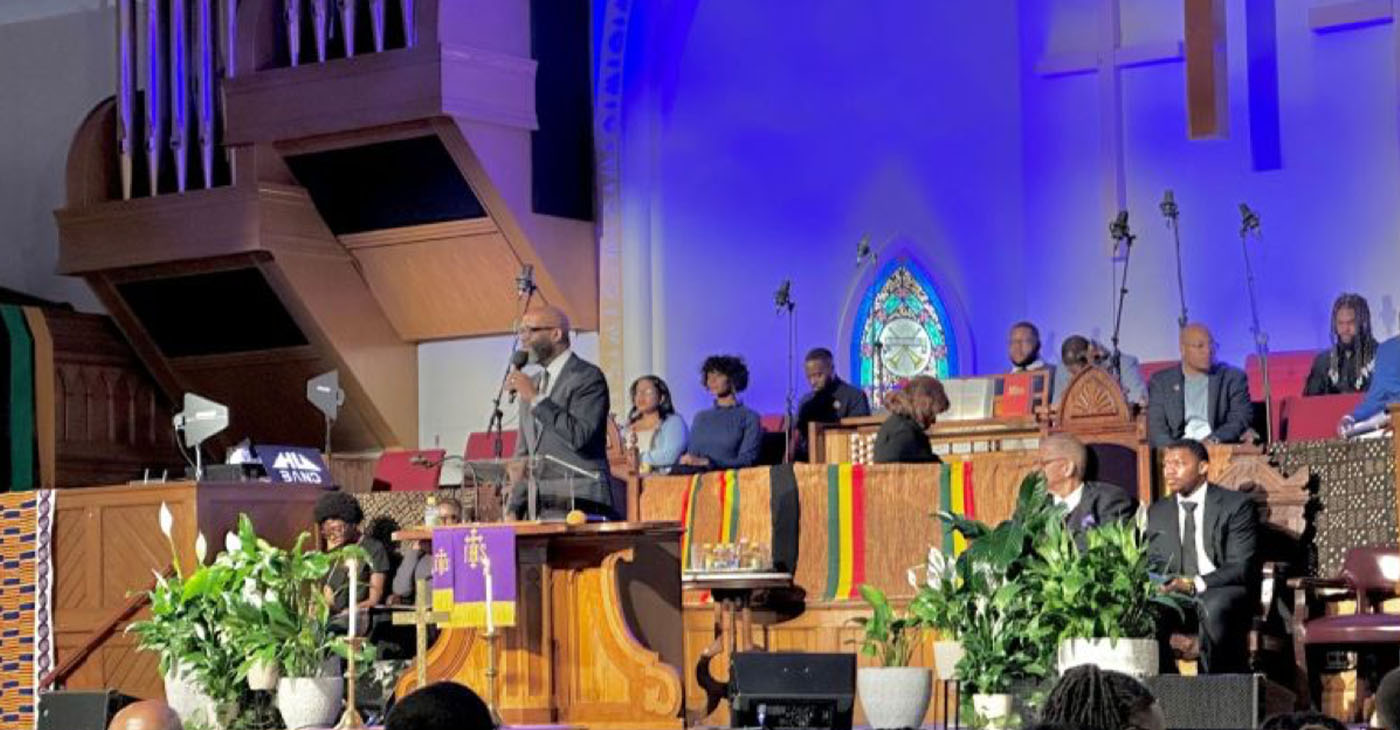
The two publishers came together almost 199 years to the day of the Black Press’ founding for Black Press Sunday, which preceded the Black Press Week celebration held from March 16 to March 20. The service was held in Washington, D.C., on March 15 at Metropolitan AME Church. Each year, the occasion represents the strong tie between the Black Church and the publications that worked hand in hand with faith institutions to inform and uplift the Black community.

Members of the Black Press come together for Black Press Sunday in Washington, D.C. Credit: Courtesy photo.
“There is a symbiotic relationship between the Black Press and the Black Church because everything the Black Church has done–for good or for ill– the Black Press has reported,” said Rev. William H. Lamar IV, Metropolitan AME pastor. “They have shared where we have been at our best, fighting for justice, equity, inclusion, beauty, and they have shared what we’ve been at our worst. And all of it has to be recorded.”
“The Black Press also helped to move us ahead politically when the radical Black folks were saying, ‘Y’all need to do what’s right, or we’re going to burn this down,’ and the more moderate people were saying, ‘We will play within the confines of the system.’ The Black Press held us together ideologically, politically, and socially. There is no healthy Black Church without a healthy Black Press, because both are called to the vocation of truth-telling.”
This year, the sermon focused on how Biblical Prophet Elijah prepared his successor, Elisha, to step into his shoes. Lamar encouraged Black media professionals to train up the next generation so well that they can proudly step up and carry on the Black Press no matter what comes their way.
Philip Lewis, president of the Washington Association of Black Journalists (WABJ), said he was heartened by the message.
“I know we’re on the right path by making sure that students are doing what they need to do to become the next journalists. I’m excited about it,” said Philip Lewis, president of the Washington Association of Black Journalists (WABJ). ”WABJ is in a unique position, especially in the nation’s capital, to advocate and support our journalists and continue to grow.”
“The Black Press is just as important today as it was 199 years ago,” he continued. “And even in the most extremely fractured time…I think it’s important that we have our own spaces where we can focus on stories that we care about. It’s important for us to be able to plead our own cause.”
As the Black Press Sunday festivities came to a close, Draper reflected on what her own ancestors would say if they could see the Black Press at 199 years.
“I think our ancestors, first of all, would say, ‘Wow, 199 years. That’s a long time.’ We celebrate the 1827 founding of Freedom’s Journal, and while it didn’t last but a few years or so, the impact was immeasurable,” she said. “I think the ancestors would say, ‘Look what has survived with a few resources.’
“If they could do it with a few resources, I think they would tell us, ‘Don’t complain about what you don’t have–use what you do. You might not be able to tell every story, but whatever story you tell, tell it well, make sure that it has an impact and that you’re doing something to really uplift and inform the community.’”


Style Takes Center Stage at the 39th Annual Salute to Excellence in Education

Car Review: Seat Comfort & Dashboard Glare Issues #shorts

134 Black-Owned Banks Founded: See How Many Remain Today! #shorts

Dr. Earleen Patterson’s 30 Year Legacy of Education and Service at SIUE

Latinas Deserve Equal Pay. Unions Help Make It Happen.

Defender ONE-on-ONE: U.S. Rep. Christian Menefee

Unlock Your Best Auto Loan: Ask These Questions! #shorts

News Observer Weekly — October 7, 2026 | Top 5 Stories of the Week

Atlas Family Comfort: Worth the Extra Cash? #shorts

Antron Brown Takes His Impact Beyond the Racetrack

Latest Massacre in Haiti Reveals Cruelty U.S. Deportations

The Youngest American Killed in the Vietnam War

Booked and Unbound: The Legacy of Black Women’s Literary Circles

Passing for White, Fighting for Black America: The Courage of Walter White

OPINION: Nolan Wells’ Death One of Several Signifying Racial Terror Lives on in U.S. South

Prostate Cancer is Twice as Likely to Kill Black Men. Talking to Your Doctor Could Help Save Your Life

OP-ED: Haiti TPS: Have We Lost Sense of Humanity?

OP-ED: If AI Is the New Language of Power, Then NAN Wants Black Communities Fluent

OP-ED: How Does Your State Rank for Pre-K?

Henry O. Flipper: A Trailblazer at West Point and Beyond
Style Takes Center Stage at the 39th Annual Salute to Excellence in Education
Car Review: Seat Comfort & Dashboard Glare Issues #shorts
134 Black-Owned Banks Founded: See How Many Remain Today! #shorts
Dr. Earleen Patterson’s 30 Year Legacy of Education and Service at SIUE
Defender ONE-on-ONE: U.S. Rep. Christian Menefee
Unlock Your Best Auto Loan: Ask These Questions! #shorts
News Observer Weekly — October 7, 2026 | Top 5 Stories of the Week
Atlas Family Comfort: Worth the Extra Cash? #shorts
Antron Brown Takes His Impact Beyond the Racetrack

Headlines and Hot Topics with Rodney Perry
-
 Black Press1 week ago
OP-ED: Haiti TPS: Have We Lost Sense of Humanity?
-

 Black History1 week ago
Rulings Leave Questions Lingering in Nolan Wells Case
-
 Black History1 week ago
Baptist Minister Says Black Church Champions for Civil Rights to Reign but Hesitates to Let Black Women Lead
-

 Black History1 week ago
Why Black Artists Struggle to Sell Tours
-

 Auto1 week ago
Consumers and States Awarded $694 Million After Predatory Auto Lender Settles Lawsuit
-

 Black Press1 week ago
A Viral Moment with Purpose: Keep Your Head Up Gives Back
