
Featured
Black Women, Democrat Doug Jones Win Alabama Senate Race


By Stacy M. Brown (NNPA Newswire Contributor)
A heavy African American turnout in Alabama’s special election propelled underdog Democratic candidate Doug Jones to victory, in a hotly-contested race against the flawed, yet heavily-favored, Republican candidate Roy Moore.
The New York Times reported that Jones defeated Moore 49.9 percent to 48.4 percent for Attorney General Jeff Sessions’ vacated United States Senate seat.
According to CNN exit polling, 68 percent of White voters, including 72 percent of White men voters and 63 percent of White women voters, supported Moore, an alleged child predator.
Meanwhile, 96 percent of Black voters supported Jones, including 93 percent of Black men voters and 98 percent of Black women voters.
Blacks accounted for a 29 percent share of all voters in the special election in Alabama.
Black voter turnout played a key role in getting Jones elected as Alabama voters were forced to choose between a Republican who’s perceived as a racist and accused of child abuse and a Democrat who has earned his chops prosecuting the Ku Klux Klan.
The contest also was viewed, by many, as a test of racial progress in the Deep South, and the power of President Donald Trump’s rhetoric to sway voters.
Trump campaigned hard for Moore, recording a robocall for the former judge, and convincing the Republican National Committee (RNC) to back the man who was possibly banned from the local mall in Gadsen for badgering young women, according to “The New Yorker.”
On the day of the special election, #RoyMoore trended all day on Twitter with some straight-forward and emotional posts.
“That White Supremacist #RoyMoore rode in on a horse to vote. Kudos to him,” tweeted Greg Carr, chair of Howard University’s Department of Afro-American studies and frequent guest on “NewsOne Now” on TV One. “As White Supremacy dies, this is what it looks like. It won’t go without a fight. Bannon. Trump. Moore. All of their comrades and enablers. They’re daring humanity to respond.”
One of Wisconsin Representative Gwen Moore’s posts was retweeted more than 30,000 times:
Another #RoyMoore supporter just called my office posing as an @AP reporter.
Once their cover was blown they started screaming & called me & my staff the n-word & other racial slurs.
I won’t be intimidated.
I won’t stop speaking out.
You will not shut me down.
Believe it.
— Rep. Gwen Moore (@RepGwenMoore) December 12, 2017
Already facing numerous accusations of sexual misconduct with children, Moore, in recent weeks, further aligned himself with the old South with his racially insensitive comments.
When asked by a reporter to explain the last time America was great, Moore didn’t hesitate to respond with stunning clarity with an answer that seemed to out-Trump the president’s comments when he was on the campaign trail.
“I think it was great at the time when families were united—even though we had slavery. They cared for one another,” Moore said. “People were strong in the families. Our families were strong. Our country had a direction.”
Later, he added: “The greatness I see was in our culture, not in all our policies. There were problems. We had slavery; we’ve overcome slavery. We’ve had prejudice; we still have prejudice, but we’ve turned the tide on civil rights. We’ve done a lot of things to bring this country around, and I think we can still make it better.”
Moore’s wife, Kayla, even got into the controversial fray.
One day before the election, Kayla Moore argued that her husband isn’t a bigot.
“One of our attorneys is a Jew,” she said. “Fake news would tell you that we don’t care for Jews. And I tell you all this, because I’ve seen it and I just want to set the record straight, while they’re here,” she said gesturing to mainstream media outlets that were in the room. “One of our attorneys is a Jew. We have very close friends that are Jewish, and rabbis, and we also fellowship with them.”
Moore has never been one to stay above controversy.
Even before the allegations that he pursued sexual relationships with teens, Moore was the most controversial major-party U.S. Senate nominee in recent memory, according to CNN.
He was booted off the Alabama Supreme Court bench when he served as chief justice for refusing to remove a two-ton statue of the Ten Commandments that he’d ordered placed on state property. He was elected back to the job, but ousted again in 2016 for refusing to abide by the U.S. Supreme Court’s decision legalizing same-sex marriage.
Moore said that homosexual activity should be illegal and argued against removing segregationist language from the state constitution.
One of Moore’s accusers said he molested her when she was 14; another said that he tried to rape her and she fought him off. Still, Trump and the RNC threw their support behind him.
Fifty percent of voters said the allegations against Moore were definitely or probably true, while 44 percent saw them as definitely or probably false, according to preliminary exit poll results reported by ABC News.
A majority of voters (54 percent) said the allegations were a minor factor or not a factor at all.
Chris Cillizza wrote that, “Jones’ victory means that for now Democrats are only two seats away from the majority—Vice President Mike Pence casts the tie-breaking vote when it is 50-50. While a Democratic move into the majority still looks like a long shot, it’s now not out of the question.”
Jones, an attorney and prosecutor, served as U.S. Attorney for the Northern District of Alabama, and won acclaim for prosecuting the remaining Klansmen responsible for the 16th Street Baptist Church bombing that killed four African American girls in 1963.
Shortly after mainstream news outlets predicted that Jones had won the special election, he took to Twitter to celebrate the victory.
Thank you ALABAMA!!
— Doug Jones (@GDouglasJones) December 13, 2017
In a statement about the Alabama Senate race, Reverend Jesse Jackson, Sr., the founder of the Rainbow PUSH Coalition, said that a coalition of Black and White voters spared Alabama from international shame and disgrace by electing Jones to be the state’s next United States Senator.
“The coalition that pushed Jones over the finish line can win and redeem the whole South,” said Jackson. “It is a stinging repudiation of the divisive politics of Moore, President Donald Trump and strategist Steven Bannon and bodes well for Democrats looking at House and Senate congressional races in 2018.”
Freddie Allen contributed reporting for this story.












Featured
62 Years of Telling Our Stories: Honoring the Legacy, Celebrating the Future.
Celebrate 62 years of The Washington Informer! Join Denise Rolark Barnes on Let’s Talk to honor legacy and explore the future of community storytelling.


Join Denise Rolark Barnes for a special anniversary edition of Let’s Talk on WIN-TV, celebrating 62 years of The Washington Informer!
This milestone program honors the legacy of founder Dr. Calvin Rolark and the newspaper’s enduring commitment to informing, empowering and amplifying the voices of the community.
Media producer Alvin Jones shares memories of working with Dr. Rolark on Soundoff at WYCB. Lukas Umana of the DowntownDC Business Improvement District discusses downtown programming, public spaces and cultural experiences bringing Washington, D.C., together. Nicola Charles, curator at Gallery 11, explores the power of photography and the gallery hosting the newspaper’s anniversary exhibition and reception.
Denise also reflects on the unexpected passing of Talib Karim, Director at MORCa.
Celebrate history, legacy, culture and community with us!
Watch Friday, October 16, 2026, at noon on WIN-TV!
The Washington Informer: 62 Years of Telling Our Stories.
Featured
Finding Community: Minneapolis Black Experience After George Floyd #shorts
Building community in Minneapolis presents a unique challenge. Discover the journey of finding connection in a city known for its politeness and seclusion.

Experiencing the unique challenge of building community in Minneapolis, where directions are easy but invitations are rare. Discover the journey of finding connection in a city known for its politeness and seclusion. #MinneapolisCommunity #SocialIntegration #BuildingBridges #MinnesotaLife
Featured
How a Nonprofit Is Building a Grassroots Movement Incubator #shorts
See how one nonprofit became a powerhouse for 14 grassroots groups, fostering missions, branding, and funding. They’re building a movement incubator, one community at a time.
Discover how a nonprofit evolved into a fiscal sponsor, empowering 14 grassroots organizations. Learn how they foster community missions, branding, grant applications, and legal support. #Nonprofit #CommunityDevelopment #Grassroots #SocialImpact #Incubator
Featured
First Black Woman Manager at KARE 11: My Journey #shorts
First Black woman manager at KARE 11 shares her journey from anchor to accidental trailblazer. Discover her story of ambition, leadership, and community.

From anchor to accidental trailblazer. Discover the journey of the first Black woman manager at KARE 11, a story of ambition, unexpected leadership, and community building. #BreakingBarriers #NewsAnchor #LeadershipJourney #KARE11 #DiversityInMedia
Featured
Building a Flexible, Community-Led Space for Protest Support #shorts
Abolitionist work requires flexibility and adaptability to navigate challenges. Build a community-led space that prioritizes safety and support for protest organizers.
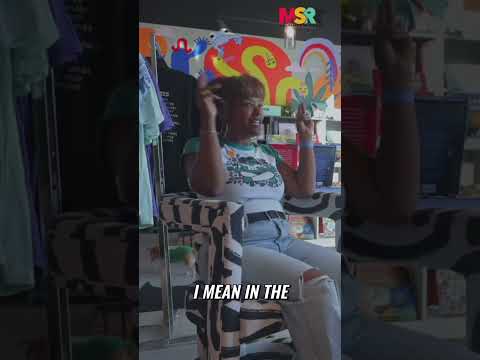
Abolitionist social justice work demands flexibility. Be ready to shift culture, manage unexpected departures, and prioritize safety, knowing your community supports you. #Abolitionist #SocialJustice #Flexibility #Adaptability #CommunitySupport
Black History
Beyond the Job Search: DC Black MBA Invests in Helping Black Women Reclaim Their Next Chapter
WASHINGTON INFORMER — Black women in the Washington metropolitan region are facing employment challenges, with revised data showing approximately 251,000 job losses between January and August 2025. This accounts for over half of all female employment losses during that period, despite Black women making up only 14.1% of the female workforce.
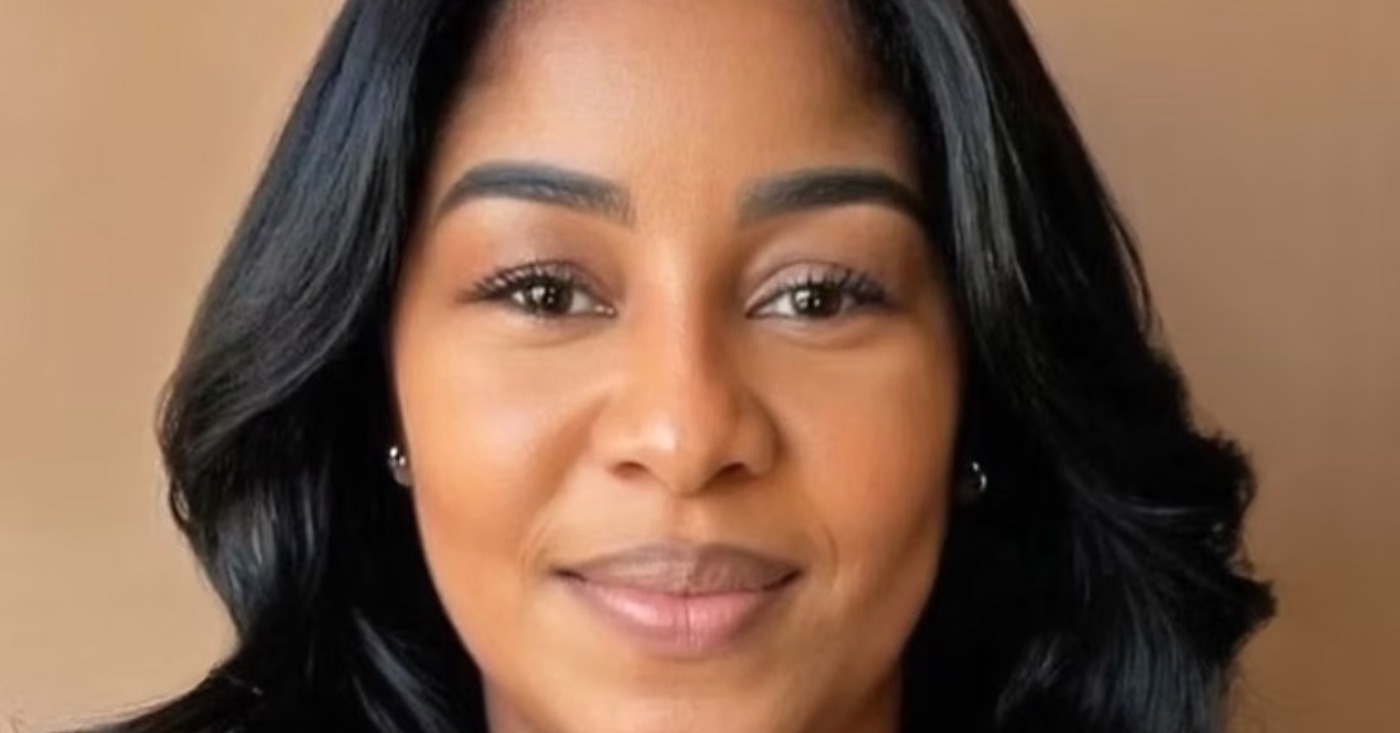
For Black women across the Washington metropolitan region, the changing employment landscape is about more than a paycheck. It can mean reassessing a career, redefining success and deciding what comes next.
The numbers underscore the challenge. Revised employment data show that approximately 251,000 Black women lost jobs between January and August 2025, accounting for more than half of the employment losses among women during that period, despite Black women representing just 14.1% of the female workforce. By the end of 2025, there were 113,000 fewer Black women employed than at the beginning of the year.
The impact has been particularly significant in the DMV, where federal employment has long provided economic stability and career opportunities for Black professionals. Maryland alone lost approximately 25,000 federal jobs in 2025, according to state employment data.
For DC Black MBA, those realities call for support that extends beyond helping women find their next job.
“I am focused on doing more and providing as many opportunities as possible for Black women to invest in themselves both professionally and personally,” said Dr. Carletta S. Hurt, president of the DC Black MBA. “We know that when Black women proceed and prosper, everyone benefits.”
That commitment is behind Leading with Intention by Investing in Self, a three-part, in-person workshop series hosted by DC Black MBA in partnership with Blu Topaz Inc. Educational Consulting.
The series builds on the chapter’s August Women’s Symposium, MastHERpiece: Designing a Life with Intention, which challenged women to see themselves as architects of their careers, wealth, wellness and impact. The new workshops take that conversation a step further, asking women to consider where they can work next and who they want to become next.
The series opens Oct. 22 with “Recalibrating Your Compass,” led by Geraldine P. White, Founder and CEO of Identity & Impact. White will guide participants through questions of identity, direction and purpose.
“You can be proud of what you’ve built and ready for something different. Both can be true,” White said. “Investing in yourself includes giving yourself permission to revisit an earlier definition of success and consider what you want your next chapter to make possible.”

On Oct. 29, Tonya Camille, creator of Me in the Making and Unstuck & Inspired, will lead “Successful, But Stuck: How High-Achieving Professionals Reconnect, Realign & Move Forward.”
Her interactive workshop will help women identify fears, limiting beliefs and recurring patterns that may prevent them from moving forward, while developing a concrete next step. “You can’t change what you won’t acknowledge, and you can’t transform what you’re unwilling to confront,” Camille said.
The series concludes Nov. 5 with nonprofit leader, author and consultant Tokiwa T. Smith leading “Rest is Revolutionary.”Her session challenges a familiar expectation placed upon Black women: that achievement and service to others must come at the expense of themselves.

Smith said Black women must recognize that prioritizing themselves, setting boundaries and making room for joy are not signs of diminished ambition. “I believe we thrive when we engage in self-care and community care,” Smith said.
For Hurt, the goal is to create space for Black women to move beyond reacting to an uncertain economy and begin intentionally determining what comes next.
A job loss can require a new résumé. A changing workplace may demand new skills. However, a life transition can also become an invitation to reconsider purpose, boundaries, entrepreneurship, leadership, rest and the meaning of success itself.
For more information, visit the DC Black MBA website (www.dcblackmbaa.org)/.
Based on reporting by Washington Informer.


62 Years of Telling Our Stories: Honoring the Legacy, Celebrating the Future.

Finding Community: Minneapolis Black Experience After George Floyd #shorts

How a Nonprofit Is Building a Grassroots Movement Incubator #shorts

First Black Woman Manager at KARE 11: My Journey #shorts

Building a Flexible, Community-Led Space for Protest Support #shorts

Beyond the Job Search: DC Black MBA Invests in Helping Black Women Reclaim Their Next Chapter

Can Black Houston Create a Black Tech Corridor?

OPINION: Black Capitalism Re-Analyzed: June 5, 1971 – Huey Newton

Called to Do This: Overcoming Doubt and Finding Family #shorts

Black-Owned Banks: Community Lending is Our Business #shorts

The Youngest American Killed in the Vietnam War

Passing for White, Fighting for Black America: The Courage of Walter White

OP-ED: Haiti TPS: Have We Lost Sense of Humanity?

OP-ED: How Does Your State Rank for Pre-K?

NFL: Week Two Recap | Jalen Hurts did not fold; Caleb Williams exits game with injury

Remembering Chauncey Bailey as Student Journalists Face Threats to Truth-Telling

Headlines and Hot Topics 📱

Obama Urges Democrats to make AI a Priority 📱

Peter Magubane: a Camera Against Apartheid

Mayor Lee Announces $1 Million Kaiser Permanente Grant for Pilot Program to Address Homelessness, Clean Up Public Spaces throughout Oakland
62 Years of Telling Our Stories: Honoring the Legacy, Celebrating the Future.
Finding Community: Minneapolis Black Experience After George Floyd #shorts
How a Nonprofit Is Building a Grassroots Movement Incubator #shorts
First Black Woman Manager at KARE 11: My Journey #shorts
Building a Flexible, Community-Led Space for Protest Support #shorts
Called to Do This: Overcoming Doubt and Finding Family #shorts
Black-Owned Banks: Community Lending is Our Business #shorts

LeBrent Speed on Building the B3 Project | MSR On the Radar

Towing Assistance Features on This Truck Explained #shorts

Keg House Commons: Black Ownership Brings New Life to the Historic Schmidt Keg House in St. Paul
-
 Black Press1 week ago
A $2.1 Trillion Wellness Industry Never Built a Daily Practice for Black Children. So This Atlanta Family Did.
-
 BlackPressUSA1 week ago
Latinas Deserve Equal Pay. Unions Help Make It Happen.
-

 Black Press4 days ago
All Skinfolk Ain’t Kinfolk
-

 Art1 week ago
Montclair Brewery: Brewing Culture, Community, History
-

 Black Press1 week ago
COMMENTARY: But God!
-

 Black Press1 week ago
Master P Encourages Norwood Elementary Students to Dream Big, Work Hard
