
Black History
Black Maternal Health: a 360-Degree Look at Black Midwives
CHICAGO DEFENDER — ATLANTA DAILY WORLD — Dr. Kaytura Felix, a physician and researcher at Johns Hopkins Bloomberg School of Public Health, is leading the Black Birthing Futures study. This multi-city research project investigates how Black midwives address the maternal health crisis through community-based care.


Black midwives are going beyond the limits of conventional care to help communities confront the maternal healthcare crisis.
The persistent U.S. maternal healthcare crisis is increasingly putting midwives in the spotlight as being part of the all-hands-on-deck approach to reducing the number of women having pregnancy related complications that too often include death.
Dr. Kaytura Felix spent more than two decades studying minority health, structural racism and the inequities that have left Black Americans with some of the nation’s worst health outcomes. But as the Black maternal mortality crisis deepened, the Johns Hopkins Bloomberg School of Public Health physician and researcher began asking a different question: What was the Black community already doing to save Black mothers?
That search led her to Black midwives.
Now, Felix is leading the Black Birthing Futures study, a multi-city research project examining how Black midwives are addressing the maternal health crisis through community-based care that extends beyond pregnancy to families, neighborhoods and the social conditions that shape health. Her work also explores how poverty, racism and climate change intersect to influence maternal outcomes — and what policymakers can learn from the people already doing the work.
The findings arrive as the United States continues to grapple with persistently high maternal mortality rates, particularly among Black women.
According to the American Midwifery Certification Board’s 2024 report, just over 14,500 certified midwives were active as of January 2024. More than 8 in 10 identified themselves as white and almost all of them listed English as their primary language. The average age was around 48,, with nearly 15% age 65 or older. The number of new midwives has increased since 2020 but fewer than 10% are Black.
The most commonly cited barriers to entering the field were the direct cost of midwifery education, systemic and experienced racism within the profession, and the cost of related expenses. But a vast majority of midwives said they chose the profession to help address the need for culturally sensitive care and help reduce race-based health disparities.
There’s strong evidence that Black midwives are more likely to adopt community-based approaches that institution-driven medical care, like hospitals and traditional obstetrics, tends to overlook.
Felix is a Distinguished Scholar at the Johns Hopkins Bloomberg School of Public Health in the Department of Health Policy and Management.
The following has been edited for length and clarity.
WIB: How did Black maternal health become the focus of your practice?
Kaytura Felix: I’ve focused on minority health, health disparities, and structural racism for more than 20 years. In 2023, I shifted my attention from medical racism itself to what the community was doing about it. My simple question was: what is the Black community doing about the Black maternal health crisis?
I spoke to 70 experts, just picking up the telephone. Person after person said, ‘Look to Black community midwives.’ I’m a Black mother and a physician — I had never thought much about midwifery. I thought it was something from another era, something our forebears did because they had no choice. Then one Black midwife offered to let me shadow her postpartum visits, and what I saw changed everything.
The 10-day postpartum visit took place entirely in the new mother’s bedroom. The midwife came to her — not the other way around — because postpartum is an extraordinarily sensitive time and everything needs to wrap around the mother. The eight-week visit had a different energy: it was about reentry into the world. We started in the backyard, went for a 10-minute walk, then came back inside. Three settings, one visit.
What struck me was that the midwife’s role extended beyond stabilizing mother and baby. She had her eyes on the whole family — and we know the majority of maternal deaths occur during the postpartum period.
WIB: How did your observations affect your research?
Kaytura Felix: My team designed a study to understand the Black midwife’s experience: what they do, the impact they have on families and communities, and what supports or hinders their practice. We interviewed midwives, clients, families, and collaborators across five cities — Jacksonville, Florida; Philadelphia, Pennsylvania; Kansas City, Missouri; Los Angeles; and Honolulu, Hawaii.
One consistent finding: Black midwives provide restorative, holistic care — not just for the pregnant person, but for the entire family. Conventional Western care centers the individual; these midwives operate from the premise that pregnancy is a family event.
WIB: What issues are driving the maternal healthcare crisis in the U.S., and what does it mean to approach fixing it from a community perspective, as opposed to an institution-driven perspective?
Kaytura Felix: Science is beginning to understand that pregnancy is a stress test. Many Black Americans live in historically underinvested communities — more pollution, financial precarity, limited transportation and education. We enter pregnancy already weathered. Weathering is when the body runs on overdrive to stabilize itself against constant challenge — an acceleration of aging. The body is at capacity before the pregnancy even begins.
WIB: What is actually saving the lives of Black mothers right now?
Felix: Two things. First, doulas in hospitals — where most U.S. births happen. Doulas reduce stress on the mother, distribute the load, and help catch complications early. Research shows they increase satisfaction with care and reduce C-section rates.
Second, community birth — in birth centers and at home. In the first episode of Deep Care, we meet a nurse named Brittany Murray who had two traumatic hospital births. Through a Facebook group, someone connected her with a midwife who said, ‘I will take this journey with you.’ The midwife worked with a maternal-fetal specialist, addressed Brittany’s overall health, and supported a home birth after two cesarean sections. Two traumatic births — and she had a joyful, triumphant one. You can meet Brittany in episode one of the Deep Care podcast on Spotify.
WIB: Did your research identify the impact of issues such as mental health, specifically postpartum depression or other potential complications that arise during the postpartum period?
Felix: Pregnancy is a massive life transition — biologically and emotionally — and our society provides very little support for it. Employment discrimination, financial stress, the hormonal drop after delivery: these pile onto a body already under strain. What I found is that midwives understand the postpartum period deeply, but their response is not to medicalize it. Their response is to provide love and support.
Shafia Monroe — a longtime midwife — wrote a book on African American postpartum traditions titled Mothering the Mother. That title captures the philosophy: just as the mother is mothering the baby, the extended family and community need to mother the mother. Research confirms this — the mind is not separate from the body. A subset of people will need medical care, but that shouldn’t be the starting point. I named my podcast Deep Care to signal that what these midwives offer is fundamentally different from the 15-minute transactional visits I was trained in — and that so many Black mothers describe when they say nobody listens to them.
Felix: In our research, clients said one of the most valued aspects of care from their Black midwives was education on diet, nutrition, and physical health. These midwives understood that pregnancy is a pivotal window — a chance to shift the trajectory. Research confirms this: how a woman’s body responds to pregnancy can predict her health at 50 and 60. Gestational diabetes and high blood pressure don’t disappear after delivery; they signal that the body was already at capacity.
WIB: Can you talk to me about what you found with the different certifications, and how those are carried out, and what the benefits are vis-à-vis conventional medicine?
Felix: In the United States, there are several paths. The Certified Nurse Midwife holds a graduate degree and primarily practices in hospitals. The Certified Professional Midwife completes two to three years of community-based training and holds a national certification recognized in roughly 37 to 38 states — compared to nursing, which is recognized in all 50. Out of the community tradition, some midwives train through apprenticeship under a senior midwife and become either a certified midwife or a lay midwife. Despite different training paths, the model is consistent: pregnancy as a physiological process, with the whole family at the center. There’s now a movement to harmonize these tracks.
WIB: Let’s talk about that a little bit. Even knowing it’s a developing story — the fact that it is developing indicates something is making people recognize these two groups shouldn’t be in competition. Is that also being affected by the policy proposals on the table to change midwifery?
Kaytura Felix Doulas are gaining traction, and people are recognizing that fragmentation within midwifery hurts the field and families. A funder told me directly: ‘These midwives need to get their act together. Come back to me when they do.’ That infighting is showing up as legislative battles — in some states, Certified Nurse Midwives or certified midwives are advancing bills that Certified Professional Midwives believe will harm them. That needs to stop.
WIB: Why did you create the Deep Care podcast, and what are your goals for it?
Felix: We named it Deep Care to signal that this is not about run-of-the-mill care.
Black women need to know all their birthing options. These clients slay dragons to get to midwifery care. The barriers were financial, but also the stigma within the Black community around midwifery. The Deep Care podcast addresses that — to raise awareness, but also to correct misinformation. Midwives are trained, they are educated, they are competent. And Black women — we’re healthy enough to have home births and community births. These midwives are educating us about our health and helping us transform our health.
The statistics need to energize us to act. That’s the point of the statistic — to get us off our seats. And there are solutions in the community, there are places we can begin. We can support the pregnant people in our communities. We can fund community-based birth. We can fund the training of doulas and midwives. We can advocate for policies that are friendly to midwives — not just in the community, but also in hospitals. We can advocate for hospitals to follow more of the midwifery model of care, which is about support for the entire family during pregnancy.
What needs to happen: we need a bigger footprint for midwifery in this country. We need better transitions from community midwifery care to hospital care. We need to dispel the myths and change the narrative about Black midwifery and Black birth. Yes, we need to talk about the challenges, but we also need to talk about the solutions — because it’s irresponsible to talk about the challenges without also advancing the solutions. We’ve only begun to scratch the surface.
The post Black Maternal Health: A 360-Degree Look at Black Midwives appeared first on Chicago Defender.
Based on reporting by Chicago Defender.





Black History
Insurance redlining means two identical drivers pay different prices
BLACKPRESSUSA NEWSWIRE — In the 1930s, federal housing maps drew red lines around Black neighborhoods and branded them “hazardous.” This is what insurance redlining is. For decades, insurers and banks used these maps to deny coverage and loans. This practice was outlawed by the Fair Housing Act of 1968. Modern insurance redlining wears a different disguise. An agent will be happy to sell you coverage regardless of race. By the time the quote reaches you, the higher price looks like just another number.


By Amy Kang
Insurance redlining happens when the address on your policy shapes your rate more than your record behind the wheel. Companies build prices from personal details like your neighborhood and credit, not just your driving history. The result: two drivers with identical records can pay far different premiums, and the steeper bill usually falls on Black neighborhoods.
State regulators are starting to back up what drivers have suspected for years. A 2024 study by the D.C. Department of Insurance, Securities and Banking found that Black drivers pay 46% more than white drivers on average – $1,031 a year compared to $705. Even after researchers accounted for age, claims history, and driving records, this gap persisted.
Gaps this large are no coincidence. They come from pricing formulas that lean on credit scores, homeownership, and neighborhood lines shaped by decades of housing discrimination. The old red ink is gone from the maps, yet its outline still lives in the algorithms that set your premium.
What Is Redlining in Insurance?
In the 1930s, federal housing maps drew red lines around Black neighborhoods and branded them “hazardous.” This is what insurance redlining is. For decades, insurers and banks used these maps to deny coverage and loans. This practice was outlawed by the Fair Housing Act of 1968.
Modern insurance redlining wears a different disguise. An agent will be happy to sell you coverage regardless of race. By the time the quote reaches you, the higher price looks like just another number.
These models measure where you live and what you own, not how well you drive. Advocates say the pricing pattern lands almost exactly where the old red lines sat. Even with a flawless record, a driver in a majority-Black area often pays hundreds more than a twin driver a few miles away.
Why Do Auto Insurance Premiums Vary by ZIP Code?
Insurance companies frame ZIP-based pricing as basic risk math. More crashes, more theft, and pricier repairs in an area should mean higher rates, they say. The explanation sounds fair until you look at how narrowly the map gets sliced.
ZIP codes are only one piece of the formula. Insurers also rely on non-driving rating factors, including:
- Credit history
- Education level
- Occupation
- Marital status
- Homeownership
Each of these inputs sits entirely outside driving skill, and each can still shift auto insurance premiums by hundreds of dollars a year.
The same pattern shows up outside auto coverage. The Consumer Federation of America documented a racial premium gap in home insurance as well, with predominantly Black neighborhoods paying roughly 16% more, about $500 extra each year, for the same coverage.
What Are Regulators Doing About Insurance Redlining?
State watchdogs are finally looking inside the pricing machinery. Colorado has moved first, with a rule that requires insurers to hunt down bias in their own models and correct it.
Under the state’s expanded regulation, which took effect in October 2025, auto insurers that use outside consumer data must prove their tools avoid unfair discrimination in insurance practices. The requirements are direct:
- Test pricing models for racial bias
- Report the results to state officials
- Fix any model that fails
This makes Colorado the first state to require measurable evidence of fair pricing from auto insurers rather than taking their word for it.
What Can Drivers Do About High Rates and Claim Denials?
The formula is out of your hands, but the first quote is not. Shopping around remains a driver’s best weapon, since every company weighs the same inputs differently.
Start with these steps:
- Compare quotes from at least three insurers
- Ask which discounts apply to you
- Recheck your rate at every renewal
- Save copies of quotes and letters
The same coverage can cost hundreds of dollars less at the next company, and finding out takes minutes.
Unfair pricing is only one side of the problem. After a crash, drivers can also run into:
- Dragged-out investigations
- Lowball offers
- Flat claim denials
Insurers bet that most people will take the outcome quietly.
Bringing in legal help rewrites that equation. Experienced personal injury attorneys can:
- Review a denied claim
- Deal with the insurance company directly
- Fight for the full compensation a policy promises
Frequently Asked Questions
Is Insurance Redlining Illegal?
Charging higher rates based on race is illegal in every state. Pricing based on ZIP code, credit, and other non-driving rating factors remains legal in most places, even when the results fall along racial lines. That gap between what the law bans and what the data shows is exactly what regulators are now examining.
Does My Credit Score Affect My Car Insurance Rate?
Most states let insurers use credit-based insurance scores, and a weak score can raise your premium more than a speeding ticket does. California, Hawaii, and Massachusetts ban the practice for auto policies entirely. Improving your credit can lower your rate everywhere else, often within one or two renewal cycles.
Can I Find Out Why My Rate Went Up?
Federal law requires an adverse action notice whenever your credit information raises your rate or limits your coverage. You can also ask your agent in writing for the specific reasons behind any increase. The answer may reveal a factor you can change before the next renewal.
How Do I File a Complaint About Unfair Insurance Pricing?
Every state insurance department accepts consumer complaints online at no cost. Include your policy number, the quotes you received, and any letters from the insurer. Regulators track complaint patterns, so each filing helps build the case for stricter rules.
Can Usage-Based Insurance Lower My Premium?
Usage-based programs track real habits through an app or plug-in device, then price the policy on braking, speed, and mileage. Safe drivers in high-priced ZIP codes often save 10% to 30% this way. Read the terms first, since some programs can raise rates for risky driving.
Fair Prices Should Follow the Driver, Not the Map
Insurance redlining works best when nobody notices it. It lives inside an algorithm, a credit check, or a boundary drawn decades ago, and it leaves careful drivers in Black neighborhoods paying more for identical protection.
State testing rules and skeptical consumers are moving the needle. Until your record matters more than your address, the best defense is to shop, document, and object. Subscribe to our newsletter for the latest updates delivered straight to your inbox.
Black History
Michael Jackson Would Have Turned 68. In Las Vegas, His Music Is Filling the Room Again
BLACKPRESSUSA—Fueled by the record-breaking success of the biopic Michael, fans across generations are converging on Las Vegas to mark Michael Jackson’s 68th birthday with special events and a high-tech refresh of Cirque du Soleil’s Michael Jackson ONE.
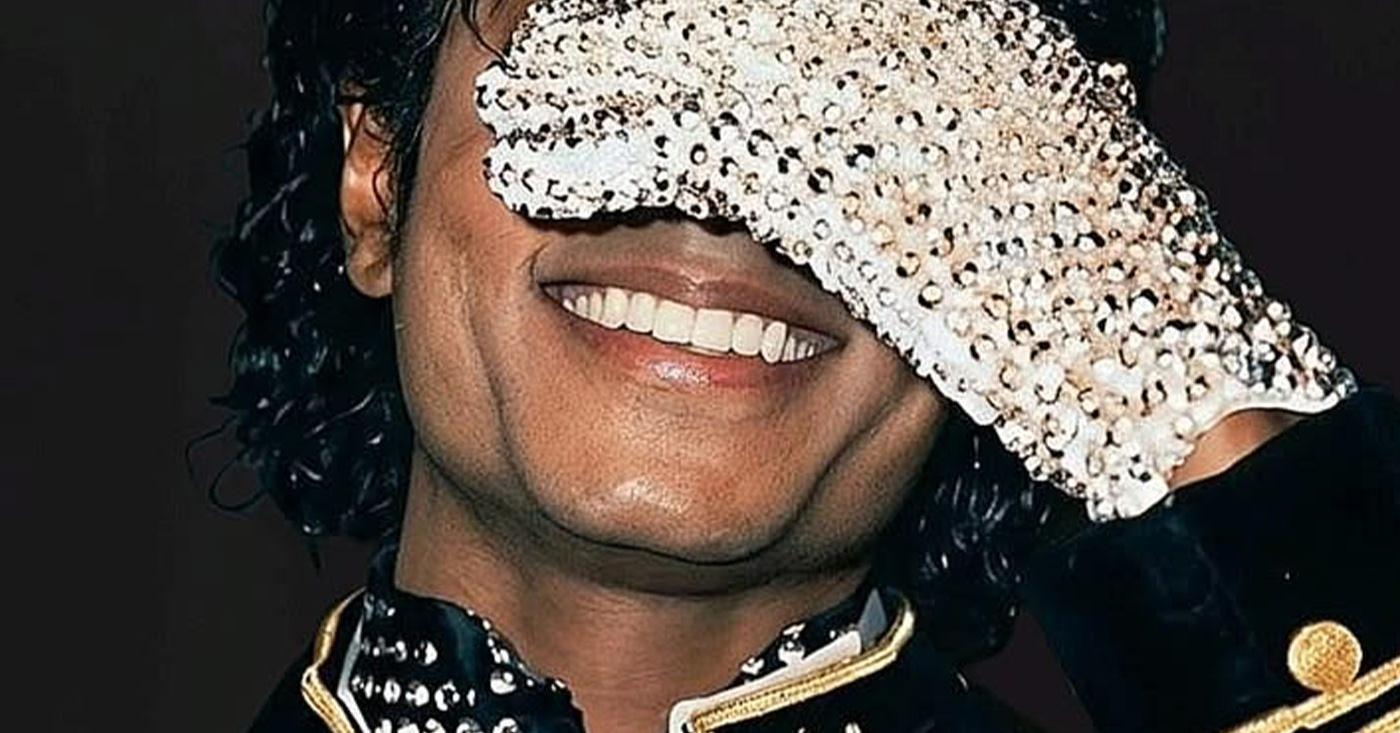
Las Vegas turns up the music to celebrate Michael Jackson’s birthday.
The lights go out, the theater goes dark, and then that unmistakable voice fills the room, even before the song begins.
Suddenly, Michael Jackson feels larger than life once more.
His image appears above the Las Vegas stage while dancers perform moves inspired by him, acrobats spin through the air, and his decades-old music fills a theater designed for it. Now, 64 drones fly overhead, and nine new LED panels light up the room with images.
Jackson died 17 years ago. He would have turned 68 on August 29. At Mandalay Bay Resort and Casino, the Estate of Michael Jackson and Cirque du Soleil are planning a birthday celebration at a special time: Michael Jackson is having another big year.

Cirque and the Estate for all Black-owned newspapers
The biographical film Michael, directed by Antoine Fuqua and starring Jackson’s nephew Jaafar Jackson, has made over $1 billion worldwide. It is now the highest-grossing biopic and music biopic ever and the biggest film in Lionsgate’s history. The movie opened in late April with $97 million in the U.S. and $217 million worldwide, making it the largest global debut for a musical biopic.
Alana Clapp, general manager of Michael Jackson ONE, thinks the movie’s success is bringing longtime Jackson fans back with new excitement and introducing him to a new generation who never saw him perform.
“We’re seeing such a wonderful movement right now with Michael Jackson and old fans that are coming together to celebrate his legacy and his stature in pop culture,” Clapp told The Black Press. “I think a lot of that is obviously driven by the success of the biopic that’s come out recently.”
That energy is making this year’s birthday celebration feel different.
“We’re lucky enough in Las Vegas to have a show that can continue to celebrate everything that he has done as a performer and as an entertainer in today’s world,” Clapp said.
A one-time birthday surprise
The Aug. 29 celebration begins at 12:30 p.m. with the sixth annual fan reception in the lobby of the Michael Jackson ONE Theater for ticketholders to either the 6:30 or 9 p.m. show.
At 2 p.m., the theater opens to everyone. A question-and-answer session with special guests chosen by Jackson’s Estate starts at 2:30 p.m., followed by a surprise that Clapp is keeping secret.
“The Q&A portion will culminate with a performance, a unique, one-time-only special performance by the cast of Michael Jackson ONE, where you will only be able to see it this one time,” she said.
“The cast and crew have worked incredibly hard on bringing something new and fun and different than anything that you’ve seen on our stages before.”
Organizers plan to live-stream the Q&A for fans worldwide. Michael Bush, Jackson’s longtime costume designer, will hold his annual book signing near the Michael Jackson ONE Boutique, followed by pre-show meet-and-greets with Estate representatives, special guests, and members of the ONE creative team.
Cupcakes will be served, too.
After all, it is Michael Jackson’s birthday.
Michael without an impersonator
The celebration centers on a show facing a clear challenge: its star can’t step onto the stage.
Cirque doesn’t try to solve this by hiring an impersonator.
For Clapp, this is key to what makes ONE special.
“This is the only show where you get to see Michael Jackson,” she said. “It’s not an impersonator or somebody who’s playing tribute to Michael. It is Michael Jackson.”
Jackson is seen through his original recordings and films, sometimes shown on a huge scale. His choreography, costumes, and images are the base, while Cirque’s dancers and acrobats perform live around him.

Cirque and the Estate for all Black-owned newspapers
His voice fills the theater as performers move above the audience. Dancers strike poses that fans instantly recognize. Sometimes, the acrobatics fade, and Jackson’s image takes over, making it feel like a concert—until you remember he’s been gone since 2009.
Michael Jackson ONE just marked its 13th anniversary and, as Clapp describes, has had a “massive refresh” with new music, costumes, and technology. A striking addition may be flying above the seats: 64 drones will move above the crowd.
“This is one of the first times that’s being done in an indoor space,” Clapp said, “and we’re really proud of that.”
Nine new LED panels add even more visuals, and a new Diabolo act set to “Wanna Be Startin’ Somethin’” has performers tossing spinning objects high into the air as Jackson’s 1983 hit plays.
Clapp thinks Jackson, who always pushed the limits of concert technology and showmanship, would like these updates.
“I would hope that he would be very proud of what the team has done,” she said. “Especially with the refresh, bringing some of these new technological elements.”
A new generation finds Michael
You can sometimes see the renewed excitement for Jackson even before the show starts.
More fans are showing up in Jackson-inspired outfits. Military jackets, black leather, buckles, glitter, and fedoras fill the lobby, creating a living timeline of his career, where his style is almost as famous as his music.
Some remember when those looks were new.
Others weren’t alive to see them.
Michael’s billion-dollar movie has opened a new door for younger fans. They can see Jaafar Jackson play his uncle, then look back and discover Motown 25, the moonwalk, Thriller, “Billie Jean,” Bad, “Smooth Criminal,” and concert clips of Jackson standing still while crowds went wild.
Then, they can visit Las Vegas, where the actor steps aside.
Jackson’s real voice and images are still there, with Cirque performers bringing his recordings to life on stage.
That mix of generations will be clear on August 29, when fans who remember the Jackson 5 sit alongside people whose first real experience with Michael Jackson was the 2026 movie.
By the end of the night, the special guests will have taken the stage, Bush will have signed books, the unique performance will be over, and most of the cupcakes will be gone.
Then the doors will close.
The dancers and acrobats will get ready. Nine LED panels will sit in the dark. Sixty-four drones will wait to take off.
No one knows how Michael Jackson would have sounded at 68, or what he might have done with today’s technology.
Las Vegas can’t answer that question.
But it can dim the lights and let his original voice fill the room.
“That is what makes this show so unique and unlike anything else in the world,” Clapp said. “Seeing it live with the human performance element and with Michael himself is an experience that you will never forget.”
Black History
The Reverse Great Migration is the Biggest Black Relocation in Decades
BLACKPRESSUSA NEWSWIRE — The reverse Great Migration is the ongoing movement of many Black Americans from Northern, Midwestern, and Western states back to the South. This started in the late 20th century and is continuing today. Black Americans moved during the Great Migration because they wanted to escape segregation and find industrial work, but today’s movement is for different reasons. It reflects a broader mix of economic, social, and cultural factors.

By Stephanie Heron
The reverse Great Migration is the influx of Black Americans moving back to the South from Northern, Midwestern, and Western states. It’s happening because Southern economies are appealing and the cost of living is lower.
According to the Pew Research Center, the USA’s Black population has grown from 36.2 million in 2000 to 49.2 million in 2024. What’s interesting is that the numbers have increased fastest in states that historically have not had many Black residents.
Another surprising thing is that there’s the reverse Great Migration. Migration patterns are changing for Black Americans, and this is why.
What Is the Reverse Migration of African Americans?
The reverse Great Migration is the ongoing movement of many Black Americans from Northern, Midwestern, and Western states back to the South. This started in the late 20th century and is continuing today.
Black Americans moved during the Great Migration because they wanted to escape segregation and find industrial work, but today’s movement is for different reasons. It reflects a broader mix of economic, social, and cultural factors.
Many people are relocating to metropolitan areas with expanding industries, diverse employment opportunities, and growing Black middle-class communities. This trend is a demographic shift that’s reshaping where Black Americans live, work, and build wealth, while also influencing political representation, housing markets, and regional economic growth.
Why Is Reverse Migration Happening?
Black Americans are moving to the South because of several factors. The first is that many Northern and Midwestern cities experienced manufacturing declines and slower job growth after the late 29th century, while Southern metropolitan areas attracted businesses in healthcare, technology, logistics, finance, and professional services.
Housing affordability has also played an important role, with many Southern cities offering lower home prices and living costs than places like New York, Chicago, or Los Angeles. Many people take advantage of a nationwide moving network as part of their relocation planning to cut down on costs and save up for their dream homes in the South.
Other factors that further influence relocation decisions include:
- Climate preferences
- Retirement
- Opportunity to live closer to extended family
Improved civil rights protections compared with the early 20th century have also made many Southern communities more attractive than they were during the original Great Migration.
How Reverse Migration Is Changing Southern Communities
The return of Black Americans has contributed to significant changes across many Southern cities and suburbs. Growing populations have supported the expansion of Black-owned businesses, as well as professional organizations, cultural institutions, and civic leadership.
Many metropolitan areas have seen increased demand for housing, schools, and public infrastructure as populations grow. Reverse migration has also strengthened political influence in some regions, and this affects local elections and community advocacy.
At the same time, rapid growth has introduced new challenges. They include:
- Rising housing costs
- Suburban expansion
- Concerns about displacement in some neighborhoods
The trend demonstrates that migration isn’t simply about changing addresses; it also shapes local economies, cultural life, entrepreneurship, and long-term community development.
How Reverse Migration Is Influencing Black Wealth and Homeownership
One of the less-discussed effects of reverse migration is its connection to wealth building and homeownership. Several Southern metropolitan areas have historically offered lower entry prices for housing than major Northern coastal cities, and this allows some families to purchase homes earlier or buy larger properties.
For households moving from high-cost regions, selling a home or relocating with accumulated savings can provide additional financial flexibility. This has contributed to a growth in Black homeownership in certain Southern suburbs and emerging metropolitan corridors.
This may also support intergenerational wealth transfer, as property ownership can create assets that are passed to children and grandchildren.
The outcome isn’t uniform everywhere, though. Rising demand in some fast-growing cities has led to increasing home prices, making affordability a continuing challenge for many new residents.
Where Are Black People Moving To?
Many Black Americans are migrating to:
- Atlanta
- Houston
- Dallas
- Charlotte
- Raleigh
- Nashville
- Orlando
- Washington, DC
This is because there are expanding job markets, as well as relatively lower housing costs than in several coastal cities. Plus, there are growing Black professional communities in these areas.
Some people are also moving to suburban areas rather than traditional urban neighborhoods since they’re looking for larger homes, better schools, or more affordable living.
Frequently Asked Questions (FAQs)
How Many Black People Moved During the Great Migration?
According to the National Archives, around 6 million Black people moved from the American South to Northern, Midwestern, and Western states during the Great Migration, which was between 1910 and 1970. The first wave happened between 1910 and 1940, and around 1.6 million people relocated.
The second wave occurred between 1940 and 1970, and roughly 5 million more people moved. Major destinations included:
- Chicago
- Detroit
- New York
- Philadelphia
- Cleveland
- Los Angeles
- Oakland
This migration reshaped the demographic, economic, and political landscape of the US.
Why Did African Americans Move to the North?
African Americans moved to the North during the Great Migration for a combination of economic opportunity and personal safety. Northern factories needed workers, especially during WWI and WWII, and many employers actively recruited Southern Black laborers.
Many families also wanted to escape Jim Crow segregation, as well as racial violence, voter suppression, and limited educational opportunities. In addition, moving north offered the possibility of:
- Better wages
- Greater political participation
- Access to expanding urban communities
Why Did So Many Black People Stay in the South?
Family ties were one of the strongest reasons why so many Black people stayed in the South. Many people chose to stay close to relatives, community networks, churches, and land that had been in their families for generations.
Some Black farmers and business owners had established livelihoods they didn’t want to abandon, while others lacked the financial resources needed to relocate.
Over time, legal segregation ended, educational opportunities expanded, and Southern cities developed stronger communities. This made remaining in the region a more attractive option.
Reverse Great Migration Is Driving Black Americans Back to Familiar Places
A reverse Great Migration is happening, and it’s creating some major shifts in many areas. Not only is it changing demographics, but it’s also shaping new political and economic trends.
Keep reading our website if you want to find more informative articles.
Black History
OP-ED: From Selma to South Los Angeles: An Unsung Voting Rights Foot Soldier Says the Fight Isn’t Over
BLACKPRESSUSA OP-ED : Leatha Davis was a teenager when she marched in Selma, survived violent attacks and testified in a federal case that helped clear the way for the Selma-to-Montgomery march. Now 81, she says the fight for voting rights is not over, and neither is the responsibility to vote.


More than 60 years after marching for voting rights, Leatha Davis says the sacrifices of Selma still carry a warning for a generation at risk of disengaging.
By Stephen Oduntan
(Updated Jul 31)
More than six decades after risking her life in the fight for voting rights, 81-year-old Leatha Davis still remembers the sound of billy clubs striking peaceful demonstrators, the screams of marchers under attack, and the sacrifices that defined the Civil Rights Movement.
Today, as recent Supreme Court decisions have narrowed key protections under the Voting Rights Act and battles over congressional redistricting continue, Davis believes the struggle she joined as a teenager is far from over. But she worries the greatest threat is not only the legal battles over voting rights—it is also the growing number of people who choose not to exercise them.
“It makes me really angry when I think about we did all of that and people stay at home and don’t try to vote,” Davis said. “Every vote counts.”
For Davis, those debates are deeply personal.
She joined the movement in the days surrounding Bloody Sunday, when Alabama state troopers brutally attacked peaceful demonstrators attempting to cross the Edmund Pettus Bridge in Selma with billy clubs, tear gas, cattle prods, and attack dogs.
“We thought John Lewis was dead,” Davis recalled. “They beat him to the ground. And if you ran to help him, they cracked you upside the head too. It was horrific.”
Days later, Davis marched carrying a sign reading “One Man, One Vote.” During the demonstrations, she said she was struck with a cattle prod. She later testified under her maiden name, Leatha Mae Stover, in the landmark federal case Williams v. Wallace, describing before U.S. District Judge Frank M. Johnson Jr. the violence peaceful demonstrators had endured. Johnson’s ruling allowed the Selma-to-Montgomery march to proceed.
The trauma of those days has never left her. Davis said she still has nightmares about Bloody Sunday and hopes to walk across the Edmund Pettus Bridge one more time before she dies. “I’m going to walk across that bridge one day before I die,” she said.
“We were the foot soldiers,” Davis said.
“And we’ve been forgotten.”
Born into a sharecropping family in rural Alabama, Davis said she was picking cotton from sunrise to sunset by the age of five. After months of labor, her father would haul the family’s harvest to the white landowner.
“He’d tell my father he only broke even,” Davis recalled. “For all the work we did, he only gave my father three dollars and a one-gallon bucket of syrup.”
Watching her father remain trapped in poverty convinced Davis there was no future in sharecropping.
But economic exploitation was only part of life under Jim Crow. Black residents were expected to lower their eyes, answer “yes sir” and “no sir,” and accept humiliation as a way of life. Refusing, Davis said, could invite violence—or worse.
Davis said the lessons that shaped her activism began even earlier, listening to her grandmother describe life just after slavery.
“My grandmother used to say she was born the third year after slavery ended,” Davis recalled. “That’s how she told her age.”
Those experiences taught her that the struggle for voting rights was never just about casting a ballot.
It was about dignity.
It was about freedom.
“When I marched,” Davis said, “I wasn’t just marching so I could vote. I was marching because I wanted to be free.”
As the Selma-to-Montgomery march approached, Davis wanted her younger brother to march beside her and asked her father for permission.
“No,” he said. “One is enough.”
Only years later did she understand why.
“That means he didn’t know whether I would come back or not,” she said.
Today, Davis worries many younger Americans have never been taught those stories or the sacrifices behind the right to vote.
“We have lost a generation of people who don’t care because they were never told,” Davis said. “What they did to us was unspeakable. We lost some lives. It hurt.”
Voting rights advocates say Davis’ concern reflects a challenge they encounter across the country.
Eric Hall, co-founder of Black Lives Matter Birmingham and a voting rights organizer in Alabama, said many younger Black voters question whether voting still makes a difference.
“We don’t have a voter registration problem,” Hall said. “We have a voter participation problem.”
Hall said many young people believe the political system no longer works for them, but organizers remind them that “the sacrifice of the people was about getting those rights. Today it’s about keeping those rights.”
Hall said organizers across Alabama are working to reconnect younger voters with the stories of civil rights foot soldiers like Davis, arguing that understanding those sacrifices is essential to protecting voting rights today.
The Rev. Dr. James M. Thomas, president of the NAACP San Fernando Valley Branch, said younger Americans often see the sacrifices of the Civil Rights Movement through a different lens.
“I don’t think they do,” Thomas said when asked whether younger generations understand what civil rights foot soldiers endured. “They’re looking at older generations and asking, ‘What have you done with the vote?’ That’s the question young people ask.”
Still, Thomas urged people not to disengage.
“Vote in the name of your ancestors,” Thomas said. “Even if you feel like you have nobody to vote for, still vote. Someone your ancestors knew died because they wanted to give you the right to vote.”
For Davis, preserving those stories is as important as preserving the vote itself. She believes thousands of ordinary people helped build the Civil Rights Movement, even if history rarely remembers their names.
“We were the foot soldiers,” Davis said.
“And we’ve been forgotten.”
Professor Marcus Hunter, a sociologist at UCLA, said Davis’ story demonstrates why ordinary people like her remain central to understanding the Civil Rights Movement.
“History often remembers the microphone and forgets the multitude,” Hunter said. “Dr. King and John Lewis were essential leaders, but movements are built by thousands of people whose names never appear in textbooks. Preserving the stories of foot soldiers restores the true architecture of social change and reminds us that democracy is made by participation, not spectatorship.”
More than six decades after Selma, Davis remains convinced that change begins with ordinary people willing to act.
“I can’t change the world,” she said. “But I can make a difference where I stand. And I’ve done that.”
Black History
OP-ED: Built in a Moment Like This: The Divine Nine and the Fight After Callais
BLACKPRESSUSA OP-ED: Nearly 27,000 AKA members gathered in Las Vegas as Black political power filled the room. Three months after the Supreme Court hollowed out Section 2 of the Voting Rights Act, the Divine Nine were reminded that they were built for exactly this kind of storm.
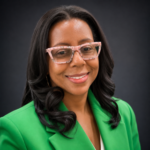

Taking the fight where the voters are
By Danielle Bess
Las Vegas was awash in pink and green during the week of July 18, 2026, as Alpha Kappa Alpha Sorority, Incorporated, and nearly 27,000 of its members and their families arrived for the sorority’s biennial Boule.
The women of Alpha Kappa Alpha were not the only notable arrivals. Black political power showed up, too. Congresswoman Lauren Underwood moderated a conversation with attorney and political commentator Bakari Sellers at a workshop titled “Soaring to the Polls: Mastering the Midterm Journey.” Aaron Ford, Nevada’s Attorney General and the Democratic nominee for Governor, addressed the workshop participants, while Congresswoman Emilia Sykes sat in the audience. And at the organization’s public meeting, Maryland Governor Wes Moore received a community award and delivered a rousing speech that sounded less like an acceptance and more like a precursor to a run for President.
Politicians go where power is. But these politicians were not mere visitors. All of the politicians are members of Divine Nine organizations. And three months after the Supreme Court neutered Section 2 of the Voting Rights Act, the power in that convention hall mattered more than it had in sixty years.
AKA, and all of the Divine Nine organizations—the historically Black Greek-letter fraternities and sororities—are a natural stop for any politician who wants to raise their profile or launch a bid for elected office. The organizations collectively have more than 4 million members who are educated and civically engaged in their communities.
While the organizations are all nonpartisan, they are able to engage in voter education, policy advocacy, and get-out-the-vote efforts. Congresswoman Underwood, an AKA herself, described the mission from the stage: “We are not telling them who to vote for, but as we soar to the polls, we have a lot of ground to cover to lay the foundation for what issues are on the ballot, who’s running, how to participate in this election.”
And for their collective 120-year history, they have done that. The NAACP was cofounded by W.E.B. Du Bois, a member of Alpha Phi Alpha fraternity. Many civil rights icons were members of the Divine Nine, including Martin Luther King, Jr., who was also an Alpha. Today, more than half the current members of the Congressional Black Caucus are members of one of the Divine Nine organizations.
With the gutting of Section 2 of the Voting Rights Act, Black political representation in Congress is at risk. Governor Moore, a member of Alpha Phi Alpha, accepting the sorority’s community award, rejected the notion that the question is whether AKA is ready. “When there’s ever a question about whether the AKAs are built for a moment like this, let’s be clear: the AKAs were built in a moment like this,” he said. “Let’s not pretend like 1908 was easy. Let’s not pretend like 1908 was simple. Let’s not forget in 1908, you had the Springfield race riot. In 1908, you had the oppressive peak of Jim Crow.”
Moore’s history was precise. Alpha Kappa Alpha was founded at Howard University in January 1908. That August, a white mob rampaged through Springfield, Illinois — the riot that spurred the founding of the NAACP the following year. The Divine Nine were not built in calm waters. They were built in the storm.
Sellers told the workshop what this storm looks like. In April, the Supreme Court ruled in Louisiana v. Callais that voting rights plaintiffs must now show a strong inference that a state intentionally discriminated — a standard Justice Elena Kagan described as rendering the VRA “all but a dead letter”. Within weeks, Southern states began dismantling majority-Black congressional districts.
“In Alabama, in Mississippi, in Georgia, in Arkansas, in Texas, and in Florida, we had Black elected officials because we could go out and vote for people who we believed shared our same lived experiences and that represented our interests,” Sellers said. “When you wake up in November, that no longer will be the case. No matter if we win, lose, or draw, no matter if Hakeem Jeffries is the Speaker of the House we will have less Black Caucus members than we’ve had before. And in two years, we’ll have even less.”
Sellers knows the cost of this fight in his bones. His father, Cleveland Sellers, was an early member of the Student Nonviolent Coordinating Committee. “When my dad and Stokely and everybody were going around yelling Black Power, they weren’t trying to shoot you,” he told the room. “They were talking about Black economic power and Black political power. So when they were in the depths of Mississippi, that’s what Black Power actually meant.”
Governor Moore offered Maryland as proof that the storm can be answered. With the support of the AKAs, he said, the state passed its own voting rights act, and he has called the legislature into special session rather than, in his words, “sit on our hands while we’re being punched in the face.” He cited more than $1.3 billion in state investments in HBCUs, “unapologetically,” and legislation confronting book bans: “You will not ban books inside the state of Maryland.”
Congresswoman Underwood was practical about what comes next. She urged the members to take the mobilization where the voters are — online — “creating content that is engaging and informative on the issues that matter: issues like the high cost of living and how we can take action in this election to lower housing costs, health care costs.” Sellers pressed the same point about the message. When Southern states refuse to expand Medicaid, he said, rural hospitals close—”and when your rural hospital closes, it’s not just the fact that you don’t have access to care. It’s your largest employer in the county.” Then came the workshop’s bluntest warning, aimed at his own party: “We cannot over the next 107 days simply believe that saying ‘I’m not Donald Trump’ is enough to win an election.”
The Divine Nine organizations were all founded before the passage of the Voting Rights Act, and they have now outlived its full protection. They were built between 1906 and 1922—the decades after Black representation had been driven out of Congress and the ballot stripped away across the South—as infrastructure for a people the law had abandoned. Their mission of racial uplift has not changed.
Sellers told the women what he believed their assignment was. “I’m talking to you all as apostles,” he said. “I’m not trying to teach you something. I’m trying to give you something to go out and share.”
Governor Moore reached for the same idea through the ancestors. “It’s not a recognition of what we’ve done already. It’s a standard for what we’re still yet to get done,” he said, closing with the words every member in the hall knew by heart, from the hymn James Weldon Johnson — himself a member of Phi Beta Sigma — gave to Black America: “Facing the rising sun of our new day begun, let us march on till victory is won.”
Nearly 27,000 women left Las Vegas at the week’s end and carried that assignment home across the country — members of an organization that predates the Voting Rights Act, now asked to repair its gutting.
Black History
OP-ED: Why LeBron James and Jaylen Brown will make the Philadelphia 76ers Bigger than Basketball
BLACKPRESSUSA NEWSWIRE: LeBron James picked Philadelphia to close out his career, and pairing with Jaylen Brown makes the 76ers instant contenders. But the bigger story is what the two of them do once the game ends: foundations, schools, voter mobilization, and a refusal to stay quiet.


By: A.R. Shaw
LeBron James’ decision to join the Philadelphia 76ers instantly made his new team title contenders on the court. But with Jaylen Brown as his teammate, it will be a win for Black initiatives off the court.
After several weeks of contemplating his new destination, James bypassed the Golden State Warriors, Miami Heat, and Cleveland Cavs to finish his illustrious career in Philly, a city with a significant Black community and culture.
James, 41, will join a 76ers team that features former MVP Joel Embiid, Tyrese Maxey, VJ Edgecomb, and Brown, who made his way to Philly one month ago via a trade from the Boston Celtics.
If Embiid can minimize his days missed due to injuries, the 76ers will be in prime position to challenge for an NBA championship.
Beyond the basketball court, James and Brown have both embraced leadership roles. In an era when many athletes are encouraged to “shut up and dribble” rather than speak out against injustice or invest in their communities, James and Brown have taken the opposite path, dedicating themselves to empowering the communities they represent.
To this generation, James and Brown are what Muhammad Ali and Kareem Abdul-Jabbar were to theirs.
Since 2004, James and the LeBron James Foundation have created tangible initiatives that continue to serve the community. The I Promise school, located in his hometown of Akron, Ohio, provides education and mentorship for over 1,200 students. James also opened a Starbucks Community Store blocks away from the I Promise school, where workers earned a salary and job-training certificates for the hospitality industry. And in 2017, the NAACP awarded James with the Jackie Robinson Sports Award for his “contributions in the pursuit of social justice, civil rights and community involvement.”
Through his 7uice Foundation, Brown launched The Bridge Program, an initiative that equips young people with skills in science, technology, and innovation. Hosted at MIT’s Media Lab, the week-long program immerses students in hands-on learning focused on robotics, artificial intelligence, climate change, food insecurity, and data visualization.
“There’s fascinating research in early childhood development showing that exposing children to new sounds and experiences helps strengthen brain development,” Brown shared during a recent keynote speech at The Gathering Spot in Atlanta. “Those new experiences stimulate neuroplasticity, strengthen neural pathways, and support cognitive development during the years when the brain is growing most rapidly…For me, that’s community. It’s investing in the next generation.”
During his keynote address, Brown also discussed the importance of integrity and revealed why so many prominent figures are incapable of speaking out against injustices.
“I’ve turned down opportunities worth millions of dollars—not because I don’t like money or don’t need it, but because I understood what came attached to those deals,” Brown shared. “A lot of people only look at the number; I look at the fine print. Many contracts with major corporations don’t just pay you. They also dictate what you can say, how you use your platform, and what opinions you’re allowed to express. Sometimes there’s language that says if you say something considered controversial—or something that could affect the company’s image—they can terminate the agreement. That’s why so many public figures stay silent. It’s not always because they don’t care. Sometimes it’s because speaking honestly could cost them their career, their endorsements, or their income.”
Brown and James have remained vocal on social issues, disregarding any pushback that may follow. In an effort to mobilize Black voters and fight voter suppression, James helped to establish “More Than Vote” and was a staunch supporter of President Barack Obama. He also took a stand following the deaths of Eric Garner and Trayvon Martin, leading teammates to wear “I can’t breathe” shirts in honor of Garner and hoodies for Martin.
During the 2020 protests following the murder of George Floyd, Brown drove 15 hours from Boston to his hometown Atlanta to participate in a march.
“I drove 15 hours to get to Georgia, my community,” Brown shared during a live stream at the march. “This is a peaceful protest. Being a celebrity, being an NBA player don’t exclude me from no conversations at all. First and foremost I’m a black man and I’m a member of this community… We’re raising awareness for some of the injustices that we’ve been seeing. It’s not OK.”
Brown has also spoken out against environmental justice. While speaking at MIT, Brown said, “We’re here to talk about something that affects us all, climate change. Today marks a very pivotal moment in time. The decisions that we make now will have an impact on future generations. Climate change isn’t just an environmental issue. It’s a social justice issue. It’s an economic issue, and it’s also a moral imperative. As someone who prides himself on influence and responsibility, what an honor it is to talk about this topic.”
James and Brown will put in hours of work on the court in an effort to lead the 76ers to an NBA championship. But once they get an opportunity to sit down together, share resources, and implement plans to improve Black communities, their impact will be immense.
“No matter where my career goes, my integrity has to walk through the door before I do,” Brown shared during his recent keynote in Atlanta. “So when opportunities come along, I ask one question: ‘Will this allow me to remain authentic?’ If the answer is no, then I respectfully walk away. Because I’d rather keep my voice than sell it.”

NFN live presents Beyond IWDM 50 Podcast
The Hidden Cost of Insurance Loyalty

Retrospectro Talks Viral Videos, Lean Squad, Music & More | Interview

CBCF’s ALC 55 Recap | September 2026

The Washington Informer Celebrates 62 Years | Recap

Heated Seats & Sliding Window: Ultimate Truck Comfort #shorts

Test Subaru’s 11.6-Inch Screen in REAL Daylight #shorts

EV Range Anxiety? Your Daily Commute Needs Just One Overnight Charge #shorts

Headline: FAMU Homecoming Injuries, Discarded Ballots & Rising Holiday Costs 📱

Headline: FAMU Homecoming Injuries, Discarded Ballots & Rising Holiday Costs

OP-ED: Haiti TPS: Have We Lost Sense of Humanity?

Remembering Chauncey Bailey as Student Journalists Face Threats to Truth-Telling

All Skinfolk Ain’t Kinfolk

Poll: Becerra Widens His Lead Over Hilton; Californians Split on Wealth Tax

Rulings Leave Questions Lingering in Nolan Wells Case

Latinas Deserve Equal Pay. Unions Help Make It Happen.

Zakiya Jendayi Arrested, Locked Out of Home by Sheriff’s Deputies

Why Black Artists Struggle to Sell Tours

COMMENTARY: The Audacity of Joyce Beatty

A $2.1 Trillion Wellness Industry Never Built a Daily Practice for Black Children. So This Atlanta Family Did.
Retrospectro Talks Viral Videos, Lean Squad, Music & More | Interview
CBCF’s ALC 55 Recap | September 2026
The Washington Informer Celebrates 62 Years | Recap
Heated Seats & Sliding Window: Ultimate Truck Comfort #shorts
Test Subaru’s 11.6-Inch Screen in REAL Daylight #shorts
EV Range Anxiety? Your Daily Commute Needs Just One Overnight Charge #shorts
Headline: FAMU Homecoming Injuries, Discarded Ballots & Rising Holiday Costs 📱
Headline: FAMU Homecoming Injuries, Discarded Ballots & Rising Holiday Costs

OTR @ Par 365

OTR w LeBrent Speed
-

 Black History1 week ago
OP-ED: The Black Church Writes AI’s Next Chapter
-

 Featured6 days ago
Tamiko Armstead | 2026 Lifetime Achiever in Education
-
 Black History1 week ago
Practitioners of African Traditional Spirituality Offer Ancestral Reverence Ritual Oct. 31
-
 Art1 week ago
Kickstarter CEO Everette Taylor Shares Tips on Creating and Growing a Business
-
 Black History1 week ago
Columbus’s Oldest Businesses Still Open: 10 That Have Lasted 75+ Years
-
 Black History1 week ago
COMMENTARY: BIG MAMA SAID: Don’t Throw Away the Gift Just Because It Came Wrapped Wrong
