
Books
‘Behind the Seen’ Book Release Draws Big Crowds
LOS ANGELES SENTINEL — Hundreds of people obtained autographed copies of “Behind the Seen” by Pastor Frederick K. Price, Jr., at the book release receptions on Sept. 6 and Sept. 8, at Crenshaw Christian Center in Los Angeles. Making his debut as an author, Price Jr. sub-titled the book “Angels, Demons and the Battle for the Human Soul” and he dedicated it to “truth-seekers, deep researchers, and those who know that behind the veil lie the answers to life’s most staggering questions. May the Lord continue to open your eyes to the mysteries that are ever-present in the pages of His Word.”


By Cora Jackson-Fossett
Hundreds of people obtained autographed copies of “Behind the Seen” by Pastor Frederick K. Price, Jr., at the book release receptions on Sept. 6 and Sept. 8, at Crenshaw Christian Center in Los Angeles.
Making his debut as an author, Price Jr. sub-titled the book “Angels, Demons and the Battle for the Human Soul” and he dedicated it to “truth-seekers, deep researchers, and those who know that behind the veil lie the answers to life’s most staggering questions. May the Lord continue to open your eyes to the mysteries that are ever-present in the pages of His Word.”
“I have been desiring to write something for a while. Now that the book has manifested, I guarantee that you will be intrigued,” said Price, who added that his intent is to “create dialogue” and “separate the realities from the misconceptions.”
Using the Bible as his primary source, Price Jr. said he devoted 15 years to researching and preparing to write “Behind the Seen.” According to the book’s introduction, his aim is to “draw us more deeply in God’s truth about spiritual realms and their effects on our lives and on eternity…and equip you to prevail in this life and the next.”
During the receptions, Price Jr. read the book’s forward written by his father, Apostle Frederick K.C. Price and greeted scores of well-wishers including Kitty Davis, Union Rescue Mission director of public relations, and the Rev. Andy Bales, executive director of URM. In addition, attendees purchased more than 600 copies of the book.
“Behind the Seen” is also available online at thematrixoftruth.com.
This article originally appeared in The Los Angeles Sentinel.









Black History
Michael Shiner: The Enslaved Man Who Wrote His Way into American History
Born into slavery in 1805, Michael G. Shiner became an essential eyewitness to 19th-century America by documenting over five decades of history in a private journal. Working at the Washington Navy Yard, Shiner recorded monumental events ranging from the British invasion during the War of 1812 to the complexities of labor and racial discrimination. His writings offer a rare, first-person perspective on the nation’s transformation from the eyes of a man who navigated both bondage and liberty. Read more to learn how Shiner secured his legacy.

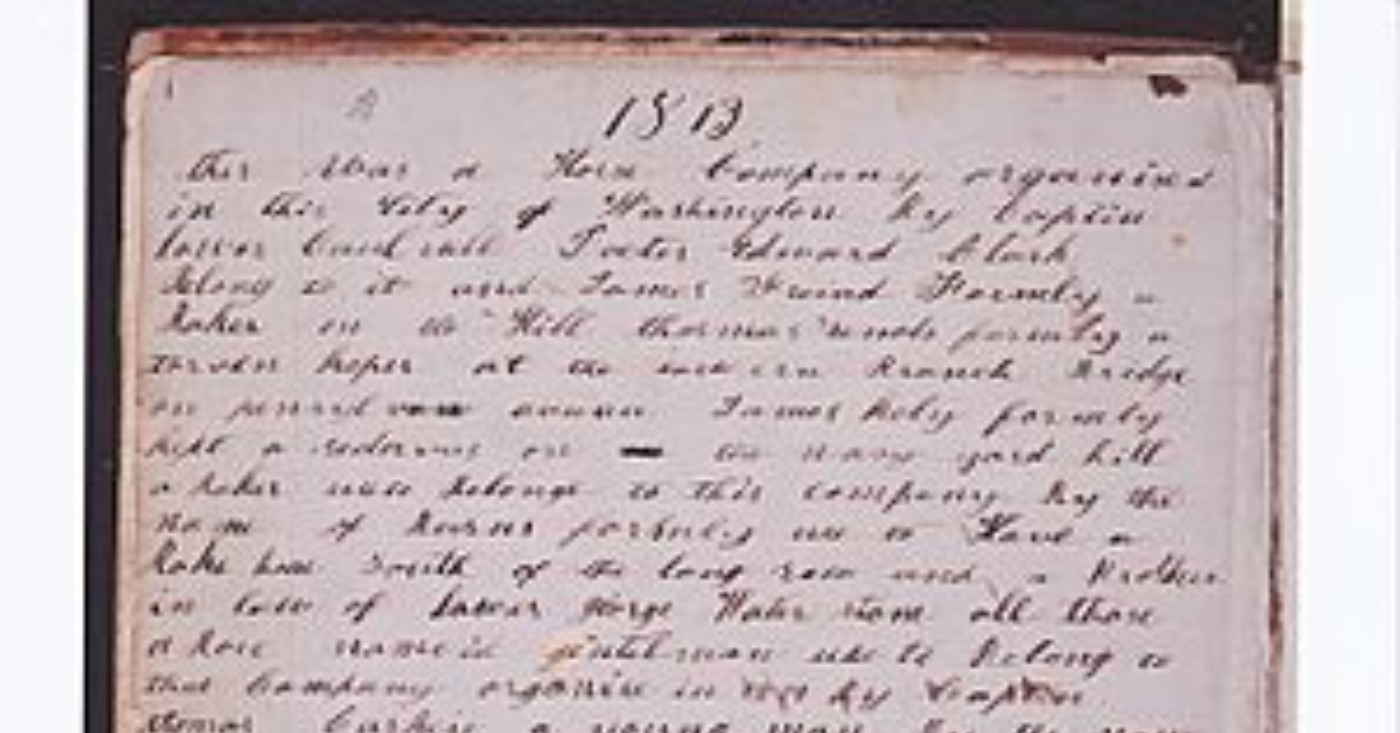
Long before African Americans could freely tell their stories, Michael G. Shiner was quietly documenting history.
Born into slavery in 1805 in Piscataway, Maryland, Shiner became one of the most remarkable eyewitness chroniclers of nineteenth-century America. His writings preserved more than five decades of Washington, D.C., history, providing an extraordinary perspective on slavery, freedom, labor, and the nation’s transformation.
He was born to William Pumphrey Jr., whose family owned property in Maryland and Washington, D.C. Around 1812, Shiner was brought to the nation’s capital, where he eventually worked at the Washington Navy Yard. Although denied the educational opportunities available to White Americans, he learned to read and write, likely through religious instruction at Washington’s First Presbyterian Church.
His literacy became a powerful instrument of historical preservation. Beginning with recollections of events in 1813, Shiner recorded significant happenings in a handwritten journal he called his “book.” His observations included the British invasion of Washington during the War of 1812, particularly the burning of the Capitol and other government buildings in August 1814. His descriptions captured the fear, destruction, and confusion surrounding one of America’s most devastating wartime attacks.
However, his writings extended far beyond military events.
In 1828, Thomas Howard, chief clerk of the Washington Navy Yard, acquired Shiner and hired out his labor. He worked in the Navy Yard’s paint shop, observing the everyday experiences of enslaved and free workers. His diary documented ship launches, workplace accidents, labor disputes, racial discrimination, and political developments.
One of his most heartbreaking experiences occurred in 1833 when slave traders threatened to separate his family. His wife, Phillis, and their children faced the possibility of being sold away. Through determined intervention and assistance from influential individuals, Shiner obtained their release from enslavement.
He petitioned for his own freedom in 1836 and subsequently lived as a free man. By 1850, census records identified him as free, living with his second wife, Jane, and their children.
His writings continued through the Civil War, documenting the changing political landscape and the struggle for African American freedom. His manuscript also revered the Emancipation Proclamation, demonstrating the importance of this historic declaration to someone who had personally experienced enslavement.
Following the Civil War, he became active in Republican politics and advocated for African American rights. His remarkable memory and detailed observations made him a respected figure throughout Washington.
Shiner died of smallpox on January 16, 1880, at approximately seventy-five years old.
Today, his 186-page manuscript, The Diary of Michael Shiner Relating to the History of the Washington Navy Yard, 1813–1869, is preserved at the Library of Congress.
What makes his achievement extraordinary is that an African American laborer, once considered property under American law, became an invaluable recorder of the nation’s history.
Shiner never achieved fame during his lifetime as a writer. Yet his determination to document the world around him ensured that future generations could understand American history through the eyes of someone who experienced both slavery and freedom.
Black History
Retirement Triggers Doctor to Pen Book for Young Audience
THE CHAMPION NEWSPAPER — After more than 35 years as a pediatric surgeon, Dr. Deborah Burton has transitioned from the operating room to the world of young adult literature. Writing under the pen name MD Burton, the retired Marietta physician recently released her debut sci-fi fantasy mystery novel, Invisible Cages: The Alynthia Quest.

After more than 35 years as a pediatric surgeon, Deborah Burton retired but didn’t give up one of the most rewarding aspects of her career—connecting with young people.
Burton used writing and her imagination to create a young adult sci-fi fantasy mystery novel, Invisible Cages: The Alynthia Quest, under the pen name MD Burton. Her debut novel launched in early October, and Burton said she’s been delighted with the responses so far.
The novel follows Jade Babington who leads a team of resourceful friends as they join an elite organization to crack a spy network and embark on a high-tech adventure to find answers. Her quest is complicated by powers that surge through her body, and to be successful, she needs to understand her family roots, embrace her emerging talents, and step into her legacy, according to a press release.
Through the book, readers are introduced to a range of characters who work in STEM and healthcare careers which Burton hopes will inspire readers to consider pursuing careers in some of those areas.
Burton moved to Dunwoody in 1995 and ran a successful pediatric ear, nose, and throat practice in Marietta. She retired in 2021 but missed the educational moments she shared with her young patients.
“I talk to kids all the time,” said Burton, adding that she likes to share insight into the many career paths in healthcare. “I love to educate and empower.”
She said she worked on the book for five years, researching coding, microchips, and satellites.
“It was a learning journey,” she remarked.
The book explores themes of self-acceptance, girl empowerment through strong female characters, the importance of family, and STEM exposure, states the press release. Set on a fictional health complex, the novel introduces readers to healthcare careers, as well as engineering and computer science.
The author also had to delve into unique aspects of her main character.
“Jade has powers and sees auras,” she explained. “So I spent a good amount of time learning about auras, telepathy and magical realism.”
In addition, to providing insight to STEM and healthcare careers, Burton hopes the books help her teen female readers dealing with insecurities to better understand and appreciate what makes them unique and the power they possess. She also hopes it will build self-confidence.
“You have to accept who you are,” she said. “Whatever your differences are, everybody’s got them, embrace them.”
Burton said she originally planned the book to be a seven-part series but on the advice of her edit changed it to four parts.
“I know what my end goal is,” said Burton noting that she’s included Easter eggs in the first book to entice readers throughout the reading process and has a completed outline for the other books in the series. After completing an audiobook of Invisible Cages: The Alynthia Quest by the end of the year, Burton plans to start writing the next book in 2027.
On Nov. 15, a book signing is scheduled at the Politan Row food hall in Dunwoody.
The self-published book is available in eBook, paperback, and hardback formats, on Amazon, Barnes & Noble, and other online retailers.
3 total views
Based on reporting by The Champion Newspaper.
Art
Inside 820 S. Michigan: New Book Captures the Lost World of Ebony and Jet
CHICAGO DEFENDER — A new photography book offers a rare look inside the former Johnson Publishing Company headquarters at 820 S. Michigan Ave., the longtime home of Ebony and Jet magazines. Titled 820 Ebony/Jet: Visions of the Johnson Publishing Company, an American Icon, the book features photographs by Barbara Karant documenting the building’s interiors.

A new photography book is giving readers a rare look inside one of the most important buildings in Black media history.
820 Ebony/Jet: Visions of the Johnson Publishing Company, an American Icon, published Tuesday by MW Editions, features photographs by Chicago photographer Barbara Karant documenting the former Johnson Publishing Company headquarters at 820 S. Michigan Ave., the longtime home of Ebony and Jet magazines. Pasted markdown
The 240-page book preserves the building’s striking interiors, many of which no longer exist in their original form, while also examining the larger cultural legacy of Johnson Publishing Company and its influence on Black media, design, photography and American culture.
Designed by architect John W. Moutoussamy and completed in 1972, the building was the first, and remains the only, high-rise in downtown Chicago designed by an African American architect. Built for publisher John H. Johnson, the headquarters became a physical expression of the ambition and influence of one of the nation’s most important Black-owned media companies.
While the building’s exterior reflected Moutoussamy’s restrained modernist style, the inside told a very different story.
Designers Arthur Elrod and William Raiser filled the headquarters with bold colors, geometric patterns, mirrored surfaces, rich textures and dramatic materials across 11 floors. The result was a workplace that looked unlike the traditional corporate offices of its era. Pasted markdown
Karant began photographing the building after Johnson Publishing sold the property in 2010 and relocated in 2012. Between 2013 and 2015, and again in 2018, she documented the largely vacant interiors after employees and much of the furniture had been removed.
What remained were the colors, patterns and architectural details that had helped define the company’s visual identity.
Her photographs capture spaces ranging from the cafeteria’s orange, purple and gold designs to Eunice Johnson’s cream-and-honey office, mirrored dressing rooms and the executive floor’s expansive views of Lake Michigan and Grant Park. Pasted markdown
Among the building’s most memorable spaces was the famed Ebony Test Kitchen.
Known for its vivid colors, psychedelic patterns and distinctive cabinetry, the kitchen became a visual reflection of Ebony magazine’s influence on food, lifestyle and Black culture. Karant photographed the kitchen as part of the larger architectural story of the headquarters. Pasted markdown
“The building was almost like a portrait of Johnson Publishing Company itself,” Karant said. “Even after the people and furnishings were gone, the colors, patterns, textures and spaces still conveyed the creativity, confidence and extraordinary cultural presence of the company.”
The photographs have taken on even greater significance because much of what Karant documented has since disappeared.
Following the building’s conversion, substantial portions of the original interiors were removed. The Ebony Test Kitchen was dismantled and preserved separately, making Karant’s images one of the most extensive visual records of how the headquarters looked during Johnson Publishing Company’s decades on Michigan Avenue. Pasted markdown
The book also includes photographs of sculptor Richard Hunt’s Expansive Construction, a work commissioned for the building’s lobby, as well as images of the company’s in-house photography studio and archival views of the original interiors.
But 820 Ebony/Jet goes beyond architecture.
The book includes a foreword by photography historian Deborah Willis, six scholarly essays and personal reflections from former Johnson Publishing Company employees. Together, the contributions explore the company’s role in Black visual representation, media, photography, art and design, while offering firsthand accounts of what it was like to work inside the building. Pasted markdown
For generations, Ebony and Jet helped shape how Black America saw itself and how the country saw Black America.
The magazines documented everything from politics and the civil rights movement to fashion, entertainment, family life and culture. Johnson Publishing Company also became an influential force in photography, beauty, design and popular culture.
That legacy extended well beyond the pages of its magazines.
The new book examines Johnson Publishing Company’s continuing influence on artists including Theaster Gates, Hank Willis Thomas, Kwame Brathwaite, Lorna Simpson, Martine Syms and David Hartt. Pasted markdown
For Chicago, the book serves as both an architectural record and a cultural archive. It preserves a place where Black entrepreneurship, media, art and design converged at a scale rarely seen before or since.
820 Ebony/Jet: Visions of the Johnson Publishing Company, an American Icon is available now from MW Editions. The hardcover volume includes 150 photographs and is priced at $65. Pasted markdown
Karant is also scheduled to present the book during Modernism Week at the Palm Springs Art Museum on Feb. 15, 2027, where she will discuss the connection between the Johnson Publishing Company headquarters and the design legacy of Arthur Elrod and William Raiser.
The post Inside 820 S. Michigan: New Book Captures the Lost World of Ebony and Jet appeared first on Chicago Defender.
Based on reporting by Chicago Defender.
Black Press
Master P Encourages Norwood Elementary Students to Dream Big, Work Hard
BIRMINGHAM TIMES — Music mogul Percy Miller, known as Master P, visited Norwood Elementary School on Friday alongside his mascot sidekick, Captain Ace. Teachers and students, dressed in school colors, welcomed Miller, who shared lessons on education, consistency, networking, and the importance of not letting circumstances define one’s future.

Music mogul Percy Miller, better known as Master P, visited Norwood Elementary School on Friday with his mascot sidekick, Captain Ace. (Birmingham City Schools) ”
The sounds of students singing filled Norwood Elementary School Friday morning as teachers dressed in camouflage and students wearing their school colors of green welcomed a special guest whose career has been built on music, entrepreneurship and perseverance.
Before taking the stage at the Birmingham-Jefferson Convention Complex (BJCC) Friday night, music mogul and entrepreneur Percy “Master P” Miller spent the morning with Birmingham students, sharing lessons about education, consistency, networking and the importance of refusing to let circumstances determine their futures.
Miller was joined by Captain Ace, the blue-dog mascot and educational character associated with his school visits and assemblies. Together, they turned the celebrity appearance into a lesson centered on positive choices, learning, and believing in one’s potential.
The visit also brought together Birmingham city and school leaders, including Mayor Randall L. Woodfin, Birmingham City Schools Superintendent Dr. Mark Sullivan and members of the school system’s staff and leadership.
At the conclusion of the assembly, Woodfin and Sullivan presented Miller with a proclamation honoring his visit to Norwood Elementary.
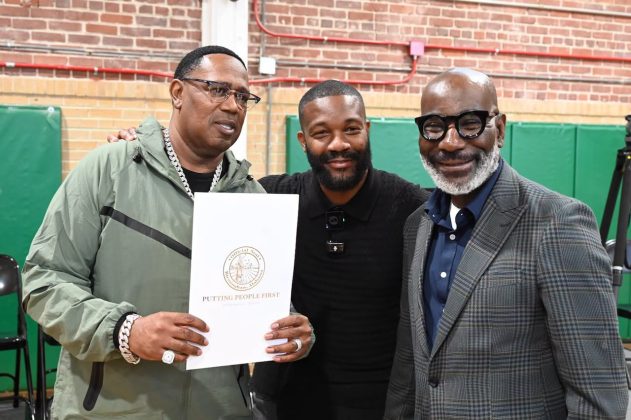
For Miller, however, the morning was less about recognition and more about the children sitting in front of him.
“I love the kids,” Miller told the students. “Even though I got a show, I’m like, no, I got to come and touch the kids because that’s the future.”
Miller said his focus is on what he described as “saving the next generation” and educating young people so they can recognize their potential.
“I want these kids to know that they can fly over all this negative,” he said.
That message became personal when Miller reflected on his own childhood.
He told students he grew up living with his grandparents, who had 12 children. His family lived in a three-bedroom housing project, but Miller said he refused to allow his circumstances to define what was possible for him.
“I didn’t let my condition stop me, and I don’t want you guys to let your condition stop you,” he told the students.
Miller repeatedly returned to the idea that dreams require action.
“There’s no limit to your dreams,” he said, emphasizing that success requires work and that students cannot “cheat the game of life.”
He then asked the students how many of them wanted to be successful. The room responded.
Miller used a familiar example to explain one of his central lessons: McDonald’s.
After asking students what the restaurant sells, he shifted the conversation from hamburgers to consistency.
“McDonald’s is selling consistency,” Miller said.
He explained that a Big Mac is expected to taste the same wherever it is purchased, using that familiarity as an analogy for persistence.
“Keep doing something, not giving up,” he told the students. “Keep chasing your dreams, doing something every day to get that, even when it don’t look like it’s gonna happen.”

“Somebody’s gonna make it big.”
Miller also challenged the students to think about the relationships they are building now. He asked whether they understood what networking means before explaining that the people sitting beside them today could become important figures in their lives tomorrow.
Miller shared a story about a girl he knew when he was in school — someone he said other people did not like or treated negatively. Years later, she became a bank president. When Miller needed a loan, he said, she remembered how kind he had been to her when they were younger.
“You never know who’s gonna be what in here,” Miller said.
He encouraged students to introduce themselves to others, learn their names and treat people well.
“That’s networking,” he said.
For Miller, the lesson went beyond professional connections. He encouraged students to recognize the possibility within one another.
“Who’s gonna be a doctor? Who’s gonna be a lawyer? Who gonna be a teacher?” he asked. “Who gonna be the president of the bank? Who gonna be the mayor? Who gonna be the superintendent?”
Miller said students cannot know where their classmates will end up, which makes how they treat one another today important.
“Somebody’s gonna make it big,” he said. “And it could be all you guys.”

Moments of Celebration
The visit was also filled with moments of celebration. Before Miller addressed the students, Norwood teachers and scholars welcomed him with a robust singalong to “The Affirmation Song,” creating an energetic introduction to the morning’s message.
The appearance of Captain Ace added another layer to the program. The character is part of Miller’s educational work with children, with school assemblies and musical programs addressing topics including anti-bullying, stranger danger and mental health awareness.
Miller said he has spent years making time for young people because he sees them as the future.
The message aligned with the presence of Birmingham’s education and civic leadership throughout the morning. Woodfin and Birmingham City Schools leadership have increasingly emphasized connecting children with educational, enrichment and career opportunities across the city. Earlier this year, the city announced its Children and Youth Commission’s Cradle-to-Career Roadmap, a strategy designed to connect the systems and resources influencing children from early education through adulthood.
For Norwood students, however, the morning offered a more immediate lesson: the opportunity to see someone who built a career from a childhood that did not necessarily predict the future he ultimately created.
As Miller prepared to leave, he encouraged students to keep working, keep learning and keep believing in themselves.
“I kept going,” he told them, reflecting on the people who once told him he would not succeed. “That’s what I want you guys to do. Keep going, no matter what your conditions is. No matter what your environment is.”
Based on reporting by Birmingham Times.
Black Press
Author Kristen Amundson Explains ‘The Grandparent Effect’ and How It’s Helping Children Thrive Through Love, Support, and Connection
Author Kristen Amundson’s new book, “The Grandparent Effect,” explores the evolving role of grandparents in children’s lives. Amundson, former president and CEO of the National Association of State Boards of Education, highlights how longer lifespans and changing family dynamics make grandparents increasingly important for support, connection, and boosting children’s confidence. Her work details how involved grandparents experience health benefits and have adapted to recent challenges, including pandemic support. The book also addresses potential challenges like respecting parental boundaries. Read more to learn about the valuable insights for 21st-century grandparents.

Kristen Amundson has devoted her professional life to supporting students and parents throughout the education system. Previously, she authored “81 Questions for Parents” and “Unfinished Learning: Parents, Schools, and COVID School Closures.”
Amundson, the former president and CEO of the National Association of State Boards of Education, is now turning her attention to grandparents. Her new book is titled “The Grandparent Effect: Helping Children Thrive Through Love, Support, and Connection,” and is published by Bloomsbury.
Amundson explains that grandparents have become increasingly important in children’s lives due to longer lifespans and changing family dynamics. Originally, grandparents were important for children’s survival, particularly at a time when families were large and mothers needed extra caregiving support. Because mothers often turned to their mothers for this help, the positive impact on children was often called the “Grandmother Effect.”
Today, many more grandfathers are involved with their grandchildren. Amundson prefers to talk about the “Grandparent Effect” and notes that these caregivers also support reading and writing, boost confidence, and encourage grandchildren’s interests. She notes that those involved grandparents experience health benefits themselves (“if you have to get on the ground with an infant and take a child to the park, you are moving around and that’s good exercise!”).

The book provides an overview of how the role of grandparents has evolved over time, explaining that until the 19th century grandparents often lived close to their grandchildren and worked together on farms. She describes how the Industrial Revolution led to families splitting up, with children moving to cities for factory work while grandparents remained on farms, resulting in grandparents becoming poorer over time.
“There are many examples of how grandparents have adapted during recent challenges, including providing support during the pandemic through in-person care when possible or using technology like FaceTime and Zoom when physically distant, and taking on roles like ‘granny nannies’ to help with childcare and education needs,” she says.
Amundson tells the story of a grandmother who took the time to become certified in dyslexia training and taught her family members, including her granddaughter and grandson.
But with these added roles come some possible hiccups along the way. She emphasizes that grandparents need to remember they are no longer in charge like they were with their own children, and parents have the right to set rules that grandparents should respect. Amundson illustrates this point with examples about discipline and food choices, noting that grandparents should follow the parents’ guidelines rather than overruling them (except for maybe allowing an extra cookie).
“I know of a situation where grandparents crossing boundaries affected family dynamics when they took their grandchild to the emergency room without involving the parents, which later led to a temporary timeout for the grandparents.”
Amundson’s book also includes examples of ways grandparents advocate for the next generation, such as Texas grandmothers who speak out on state legislation.
Other grandparents participate in a self-help group supporting custodial grandparents who care for children whose parents are dealing with substance use issues or are incarcerated. The group provides practical support including educational seminars, college application assistance, and simple activities like Halloween decorations to help children feel included.
Amundson’s book is a valuable and enjoyable resource for grandparents who are navigating the excitement and joy of their senior status in the 21st century.
Black Press
America’s Reading Crisis Demands More Than Concern. It Demands Action.
JACKSON ADVOCATE — A national literacy crisis is emerging as reading achievement continues to decline across the United States. Nearly 40% of fourth graders read below the basic level, and roughly one-third of eighth graders are below basic, marking the highest share ever recorded.

By Marc H. Morial
National Urban League President & CEO
New York City’s troubling decline in reading scores, despite one of the most ambitious literacy reform efforts in the nation, is a wakeup call for the entire nation.
Across the country, reading achievement continues to decline. Nearly 40 percent of fourth graders read below the basic level and roughly a third of eighth graders are reading below basic, the highest share ever recorded.
Taken together, these numbers reveal a national literacy crisis that threatens economic opportunity, educational equity, and our nation’s future competitiveness.
Reading is not merely another subject in school. Reading is the foundation upon which all learning rests. A child who struggles to read struggles to learn history, science, mathematics, and civics. A young person who cannot effectively read and analyze complex information faces barriers to college completion, workforce success, and informed participation in our democracy.
That is why the growing literacy crisis is fundamentally an opportunity crisis. Behind every percentage point is a child whose future opportunities hang in the balance. Persistent achievement gaps mean that Black and Latino students continue to bear a disproportionate share of the consequences when reading instruction falls short. If we are serious about economic mobility and educational justice, literacy must be at the center of the conversation.
For more than two decades, many schools embraced Balanced Literacy approaches that sought to cultivate a love of reading by putting books in students’ hands and encouraging independent reading. The approach was well-intentioned, but too often foundational skills instruction, particularly phonics and decoding, suffered.
The evidence is increasingly clear that explicit, systematic instruction helps more children become successful readers. States and school districts that are embracing these principles deserve credit for moving in the right direction. But millions of students are already in middle school, high school, and even college struggling to read complicated texts, analyze difficult arguments, and complete entire books.
What is our plan for them?
Too many students arrive in high school lacking the reading stamina necessary to engage deeply with literature, history, or complex informational texts. College professors increasingly describe students who struggle with lengthy assignments that previous generations navigated more comfortably.
To be clear, Balanced Literacy alone cannot explain these trends. Increased screen time, constant digital distractions, shortened attention spans, and the dominance of algorithm-driven content all influence students’ reading habits and learning experiences.
Yet recognizing these factors cannot become an excuse for inaction.
Instead, it should compel us to think more broadly about literacy.
The challenge before us is not simply helping children sound out words. It is helping them develop the capacity to wrestle with complex ideas, sustain attention, evaluate evidence, and build knowledge through reading. It is helping them become informed citizens and lifelong learners.
And that requires a comprehensive, systemic strategy.
We need high-quality literacy instruction beginning in early childhood settings and extending throughout elementary school. We need to strengthen early intervention so that struggling readers receive support before learning gaps become entrenched. We must carefully examine the quality and effectiveness of programs serving our youngest learners, including Head Start and other early childhood initiatives.
At the same time, we need a national commitment to literacy recovery for older students. Districts and states should be developing evidence-based strategies that help adolescents strengthen comprehension, vocabulary, knowledge-building, and engagement with complex texts. Students who fell behind during the pandemic and those who continue to struggle deserve intensive support, not lowered expectations.
We should also have serious conversations about the role of technology in children’s lives. Restricting unnecessary screen exposure, particularly in the early grades, should be part of a broader effort to rebuild reading habits and attention spans that support learning.
More concerning than the decline in reading scores is the absence of a clear, large-scale strategy to address the growing crisis. Every year that a struggling reader falls further behind increases the likelihood that they will face lifelong educational and economic disadvantages.
The recent reading results from New York City are a warning. The national NAEP results are an even louder one. Together, they tell us that incremental change is not enough.
We know more about how children learn to read than ever before. We know that literacy is the gateway to opportunity. What remains to be seen is whether we have the collective will to act with the urgency this moment demands.
Our children cannot afford for us to wait.
Based on reporting by Jackson Advocate.


Five Hospitals Said No! Who Will Help Annette Henry Recover?

Oakland NAACP, BWOPA Speak Out Against Alleged Harassment of Black Women Political Leaders

COMMENTARY: Oakland’s Black Students Have Gained Ground: We Shouldn’t Stop Now

From Backyard Grilling to Jack London Square: Jamale Carlyle’s Chicken Wing Success Story

SEIU Local 1000 and State of California Will Continue to Negotiate New Labor Contract

OPINION: We Can Restore Checks and Balances on Trump

AG Bonta Announces Action on Cryptocurrency, Sextortion Fraud – Increasingly Targeting Gen-Z

21st Annual Taste of Soul: California’s Largest Black Street Festival Comes Alive With Culture, Music and Connections

Michael Shiner: The Enslaved Man Who Wrote His Way into American History

COMMENTARY: Your California Living Trust Could Be Next: When Evidence Isn’t Enough

All Skinfolk Ain’t Kinfolk

Practitioners of African Traditional Spirituality Offer Ancestral Reverence Ritual Oct. 31

Latinas Deserve Equal Pay. Unions Help Make It Happen.

A $2.1 Trillion Wellness Industry Never Built a Daily Practice for Black Children. So This Atlanta Family Did.

Zakiya Jendayi Arrested, Locked Out of Home by Sheriff’s Deputies

Oakland Awarded More than $14 Million in State Funding

Tamiko Armstead | 2026 Lifetime Achiever in Education

Montclair Brewery: Brewing Culture, Community, History

Should You Have to Pay to Hear the Gospel?

Listening as a Lifeline: A Doula’s Witness to Black Maternal Health

Test Buick’s Head-Up Display, Wireless Charger & Bose Audio #shorts

Maintenance As A Money Move

Buick Enclave Safety Tech: What It Can—and Can’t—Do #shorts

ELECTION DAY 2026: Black Voter Turnout, Trump’s Clemency Controversy & a $495M Prison Deal 📱

ELECTION DAY 2026: Black Voter Turnout, Trump’s Clemency Controversy & a $495M Prison Deal

Trump as a Distraction…Focus on the Ballot and 2028

Kids Escape City Chaos for Camp Paradise #shorts

Don’t Name Things After Me If I Can’t Enjoy Them! #shorts

EVs Cost Less Than Half as Much to Fuel—Check Your Local Savings #shorts

Unity is Power: Building Success Against All Odds! #shorts
-
 Black Press1 week ago
Secretary of State Shirley Weber Pushes Back Against DOJ Demands Over California Voter Rolls
-

 Art1 week ago
Capturing Black Life’s Beauty
-
 Black History7 days ago
Retirement Triggers Doctor to Pen Book for Young Audience
-

 Black History1 week ago
Oakland Honors 60 Years of the Black Panther Party at the All Power to the People Gala
-

 Black Press7 days ago
Fatigue, Bloating, and Inflammation: Spotting the Subtle Signs of MASLD
-

 Black Press1 week ago
When Your Faith Is Put to the Test
