
Health
Artificial Pancreas Can Help Track Blood Sugar


(The Times-Gazette) – A recent study shows that an implantable artificial pancreas is able to help patients with diabetes control blood sugar. Constant monitoring of the level of blood sugar is needed as well as injecting insulin each day, when someone suffers from Type 1 diabetes. However, scientists have reported that they have developed an implantable artificial pancreas that can continuously measure the blood sugar and glucose level of an individual. The device can also release insulin automatically when needed.
The disorder Type 1 diabetes develops when a person’s immune system attacks its own pancreas cells, which are the makers of insulin, a hormone that is able to convert the body’s blood sugar to insulin.
To compensate for insulin production loss, patients have to inject insulin each day. The current methods of delivery of insulin include injections each day or an insulin pump, but both require users to be actively tracking his or her glucose and to calculate the dose of insulin needed for each insulin injection.














Black History
COMMENTARY: My Truth — We Can Realize the Dream Together
GARLAND JOURNAL — The 2027 Healthy Living Expo is scheduled for Monday, January 18, 2027, following the City of Dallas’ Dr. Martin Luther King, Jr. Parade.

Get ready. The 2027 Healthy Living Expo is a good way to start the new year. Complete with the Red Cross Blood Drive, workshops, health screenings, the Chitterling Cook-off and more, it’s a family affair!
The Realizing The Dream Healthy Living Expo is scheduled in observance of Dr. Martin Luther King Jr. Day and to follow the ‘City of Dallas’ Dr. Martin Luther King, Jr. Parade on Monday, January 18, 2027. The Expo is 9:00 am to 4:00 pm at the South Dallas Cultural Center.
Building on the well-attended 2026 Expo, the excitement is mounting for another day of community engagement and service. This year’s Expo, in partnership with the City of Dallas, Cr8ive Outlet, and the University of North Texas at Dallas College of Law, will continue to honor Dr. King’s vision of equality, opportunity, and improved quality of life.
The UNT Dallas College of Law is the first college or university in North Texas and the only law school in the nation to join the King family in its global campaign to use volunteer and civic engagement to bridge divides and strengthen communities.
The goal of Realize the Dream is to encourage public (and private) service and generate 100 million volunteer hours by MLK’s 100th birthday in 2029.
The Realizing the Dream Healthy Living Expo includes helping individuals and families access the knowledge, resources, and opportunities needed to lead healthier, more productive, and financially secure lives.
We realize that these are some challenging times and hopefully the 96-HOUR SPECIAL will be an incentive for those looking to join in for a wonderful day of Love as we educate, inform, inspire, challenge and entertain. The 96 hours, from November 27–30, 2026, are especially designed to help small businesses and encourage support of a worthy program. Outdoor booths for small businesses, nonprofits, and political vendors are $100 (After November 30 regular price $150).
Call 214 941 0110 so you can get in on the special.
This event is for the entire family, and the entire community. It’s an opportunity, after enjoying the parade, to continue the celebration as we remember someone who left this world in a better place.
Now, it’s up to us to do all we can. In this article:My Truth
Based on reporting by Garland Journal.
Black History
Three Black Physicians Lead Women’s Health Care
ST. LOUIS AMERICAN — Three Black women now lead the obstetrics and gynecology departments at major medical institutions across St. Louis, bringing extensive expertise in clinical care, public health, and research to their roles. Dr.

Three Black women chair obstetrics and gynecology departments at major St. Louis medical institutions, bringing experience in patient care, public health, research and medical education to their roles.
Dr. Monique V. Swain chairs the Department of Obstetrics, Gynecology and Women’s Health at Saint Louis University School of Medicine and SSM Health SLUCare Physician Group. Dr. Dineo Khabele chairs the Department of Obstetrics & Gynecology at Washington University School of Medicine. Dr. Jade James-Halbert chairs the Department of Obstetrics and Gynecology at SSM Health DePaul Hospital in Bridgeton.
Their leadership is particularly significant in Missouri, where Black women were 2.5 times more likely than White women to die from pregnancy-related causes from 2019 to 2023, according to the Missouri Department of Health and Senior Services. The state’s Pregnancy-Associated Mortality Review Board determined that 79% of pregnancy-related deaths were preventable.
A 2023 St. Louis County Department of Public Health report found that Black women experienced pregnancy-associated deaths at 2.4 times the rate of White women in the county from 2017 to 2021.
Dr. Kanika A. Cunningham, director of the St. Louis County Department of Public Health, said having Black women in OB/Gyn leadership positions can help influence hospital policies and reduce discriminatory treatment.
“Thinking about the disparities that we see among our Black moms and babies in St. Louis County and even in the city — having a Black OB/Gyn chair means they’re going to advocate and make sure when women go into labor and delivery units they receive fair access to treatment,” Cunningham said.
Swain, who became chair in September, said she was drawn to SSM Health and SLU because of their “genuine commitment to closing health inequities and understanding the social factors that affect care.”
A specialist in breast health and cancer genetics, Swain previously directed Henry Ford Hospital’s obstetrics and gynecology residency program in Michigan. At SLU, she oversees clinical, research and educational programs and nearly 50 faculty members across six subspecialties.
Swain described her position as “more than a title but rather a responsibility to ensure cultural humility, enforce equitable and quality care of all patients, and support the professional development of those that come behind me.”
Her priorities include improving care for aging women through collaboration with specialists treating cardiovascular disease, cancer, osteoporosis and menopause.
“I became a physician to help people and make sure every patient has access to equitable, high-quality care,” Swain said. “I look forward to working with our multidisciplinary teams and communities to improve maternal outcomes, strengthen breast cancer screening, and build a women’s health program that supports patients throughout their lives.”
Khabele is a physician-scientist whose ovarian cancer research explores chemotherapy resistance and how new treatments might overcome it.
She made history in 2020 as the first Black department chair at Washington University School of Medicine.
Khabele previously told The St. Louis American about efforts to diversify the medical workforce, improve training on health disparities and help patients overcome barriers to treatment, including transportation problems.
“I am deeply committed to driving institutional change, conducting research that improves care, training the next generation, and advancing OBGYN and women’s health care in St. Louis and across the region,” she said.
In a 2023 interview with Curiosus, a publication of Barnes-Jewish Hospital and Washington University School of Medicine, she discussed training OB/Gyn specialists to provide “compassionate, culturally sensitive and leading-edge care.”
“That mission aligns with my personal motivation,” Khabele said. “I want to make a difference. The job I have makes it possible for me to help instigate change. I think we have a unique opportunity in St. Louis to lead the nation in developing new ways to address disparities in health care.”
James-Halbert brings more than two decades of experience in women’s health and community medicine to DePaul.
A St. Louis native, James-Halbert attended two historically Black institutions — Fisk University and Meharry Medical College. Her early influences included her childhood pediatrician, Dr. Helen Nash, a pioneer among Black physicians in St. Louis.
James-Halbert spent several years caring for women at Betty Jean Kerr People’s Health Centers and Myrtle Hilliard Davis Comprehensive Health Centers.
She joined SSM Health in 2011 as an OB/Gyn hospitalist, caring for pregnant women and supervising residents and medical students. She chaired DePaul’s obstetrics and gynecology department from 2013 to 2015 and returned to the position in January 2023.
James-Halbert earned a master’s degree in public health from Saint Louis University and later served as director of research and medical services for the St. Louis County health department.
A past president of the Mound City Medical Forum, an organization of Black physicians, James-Halbert has advocated for patients through her involvement with the St. Louis Regional Health Commission.
In an interview published through the commission’s partnership with Humans of St. Louis, she discussed why she pursued public health.
“As much as I love taking care of patients, you do it one patient at a time,” James-Halbert said. “I bumped my head enough to realize we need systems change. The system is what helps more people.”
Sylvester Brown Jr. is the Deaconess Foundation Community Advocacy Fellow.
The post Three Black physicians lead women’s health care appeared first on St. Louis American.
Based on reporting by St. Louis American.
Black Press
COMMENTARY: Who Can Afford to Be Generous Anymore?
CHICAGO DEFENDER — Generosity has long been a cornerstone of life for Black Chicagoans, serving as a vital support system when traditional resources are scarce. From neighbors shoveling snow for the elderly to grandmothers stretching grocery budgets to feed grandchildren, these acts of kindness are ingrained in the city’s culture.
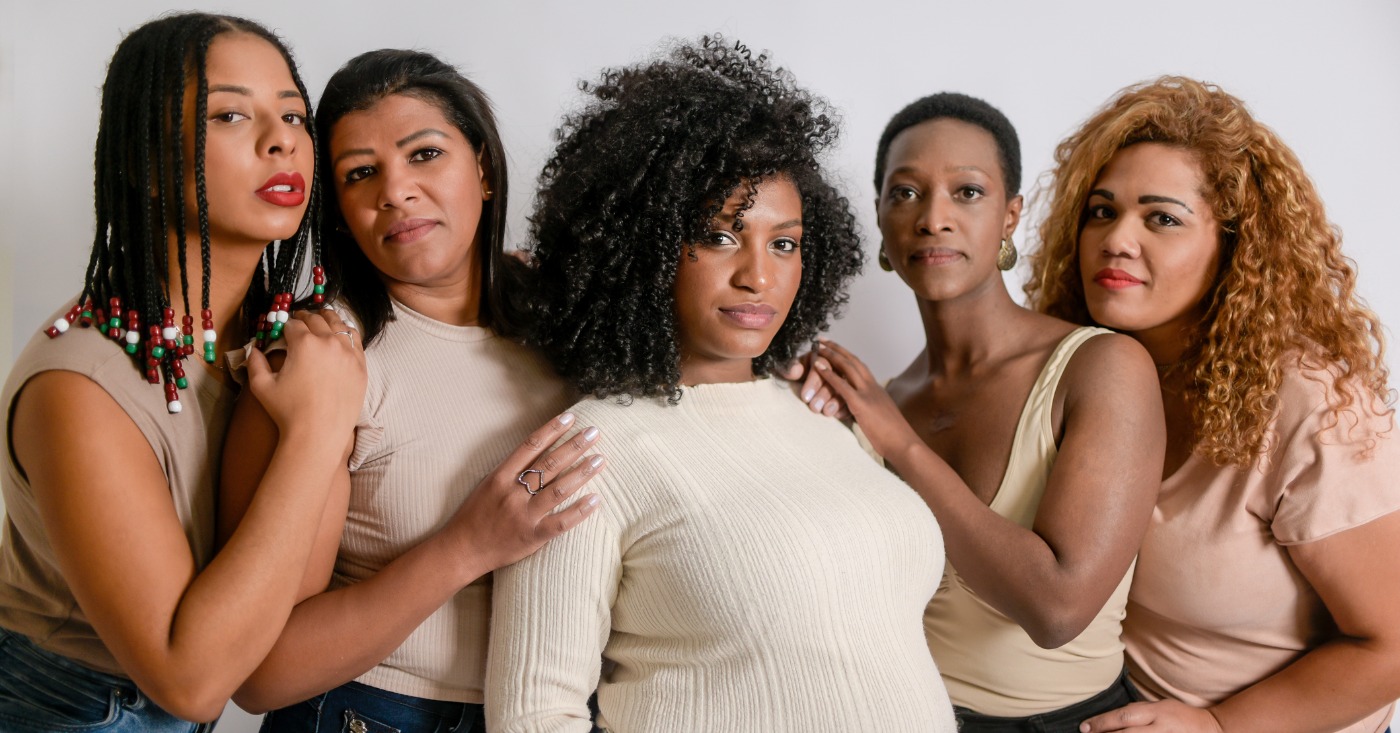
As Chicagoans struggle to make ends meet, those who have always shown up for others are wondering who will show up for them.
Monique Newburn, a special education teacher in Chicago, had been paying someone else’s rent and utilities to help them get back on their feet.
Eventually, the person returned to work. But the requests for money didn’t stop. Three months later, Newburn was still being asked to help.
By then, she had begun looking at her own bank account differently. She was giving away money she needed to cover her rent, car payment and insurance. If something happened to her income, she wouldn’t have enough saved to get through two months.
Then came another call.
“Absolutely not,” she told the person.
Newburn had spent years being the person people could depend on. Helping wasn’t something she thought twice about. Her family had always cooked for others, opened their doors and shown up when someone needed something.
But what happens when the person everyone calls for help needs some herself?
In Chicago, generosity shows up as love.
It’s supporting a Black-owned business, even if it means driving farther or paying a little more.
It’s a parent sharing information about getting a child into one of the city’s top-performing schools.
It’s the barber giving a young man a free haircut before a job interview, the neighbor shoveling an elderly resident’s sidewalk after a snowstorm or the grandmother stretching her grocery budget to make sure her grandchildren have something to eat. It’s somebody slipping a friend $20 to get through the week, knowing they might be a little short themselves.
For generations, Black Chicagoans have leaned on one another, sharing what they had and finding ways to make things work when resources were scarce.
That practice is reflected in research from the Financial Health Network. Its 2022 Financial Health Pulse Chicago Report found that approximately 56% of Black households in Cook County had provided financial assistance to friends or family members outside their household in the preceding 12 months.
The 2025 Financial Health Pulse Chicago Trends Report found that 33% of Black Cook County residents were financially vulnerable, down from 39% in 2022.
There’s a difference between wanting to help someone and feeling responsible for them. And sometimes the person being asked to give is barely getting by, too.
When Being Helpful Becomes Who You Are
La’Keisha Gray-Sewell, an author, community liberator and founder of the Girls Like Me Project NFP, has spent years connecting people with resources and responding when she sees a need.
“Seeing a need and responding to it, making sure things are in order. That’s my superpower,” she said.
She remembers discovering that ability as a little girl. Helping others brought her attention, affection and a sense of being appreciated. Without it, she sometimes questioned whether she mattered.
“I became a person who got used to giving as a way to receive love, affection, attention, recognition,” Gray-Sewell said.
Her desire to help was genuine, but giving also became a way for her to connect with people.
She compares it to a lighthouse: When you keep signaling that you’re available, people come toward you. And when you make it look easy, they may not see the effort involved.
“Generosity has a price tag,” she said.
“Generosity is not free for anyone.”
Sometimes the cost is obvious: money for someone’s bills, groceries or a donation.
Other times, it’s gas to drive across town, time spent coordinating resources or showing up for an event when you’ve already got a full day of responsibilities.
Gray-Sewell said people don’t always consider what it costs someone to give, particularly when that person has always been available.
“You just cannot show up. You just cannot hit that link anymore. You cannot be the answer and the solution,” she said.
When that happens, she said, people sometimes become resentful or move on to the next person who can help.
“Very, very seldom do people take the time to say, ‘How can I give to you? What do you need?’” she said.
Jennifer Beckham understands the pressure of being the dependable one. A licensed clinical social worker and therapist, Beckham has spent much of her life helping others. There was a time when she struggled to tell people no, even when saying yes meant putting her own needs aside.
She’s learned to set boundaries. But being the strong friend can still be lonely.
“Sometimes I don’t want to be the strong, reliable friend. Sometimes, I want to be the friend who can come to them in my time of need,” Beckham said.
She’s also learned that stepping away from people doesn’t necessarily mean there’s a problem between them. Sometimes she just needs space.
“My silence isn’t anger; it’s self-preservation,” she said.
And she has a request for the people who reach out when they need something.
“Before asking me for something, check on me!”
The People Who Didn’t Show Up
Newburn knows what that feels like.
Her mother died three years ago. In their family, cooking for people and bringing everyone together had been part of life. Her mother was the best cook, Newburn said.
After her mother died, Newburn found herself needing the kind of support she had given others.
She made calls, sent text messages and asked for help. Some people never responded. Others attended the funeral services but left before the repast.
She remembers that period as the point when her willingness to say no began to change.
Then, earlier this year, her house caught fire.
People she’d helped over the years didn’t offer her a coat, socks or shoes, she said. Some directed her to her insurance instead. One friend she’d known for more than 40 years took nine days to call.
When Newburn didn’t want to share every detail of what had happened, the friend accused her of acting differently, she recalled.
“Now I’m not acting weird. I’m acting accordingly. You’re just not my person,” she said.
Months later, some tried calling again with the same kinds of requests.
She let the calls go to voicemail. Her phone doesn’t ring as much these days.
“My peace is priceless,” she said.
Newburn said she has developed stronger relationships with people who showed up for her after the fire.
Still, she hasn’t stopped believing in generosity.
“It will never change my heart posture to be a giver,” she said.
What has changed is whom she chooses to help.
A Different Way to Say No
For Iya Pilar Audain, setting boundaries doesn’t mean abandoning the responsibility to look out for one another.
A Chicago community organizer, wellness coach and executive director of Truth, Racial Healing and Transformation (TRHT Greater Chicago), Audain has spent years creating spaces for women to gather.
She grew up in a West Indian family where giving was simply part of life. Her grandmother always had food for people. They didn’t have a lot of money, Audain remembers, but they made sure there was something to share.
That example still shapes how she lives. Audain gives financially when she can. She helps connect people with resources. She’s organized gatherings for women for more than two decades, sometimes without having a budget dedicated to the work.
Over the years, people have come to expect those things from her. When she’s had to miss gatherings or couldn’t provide what people expected, some expressed disappointment.
“I can be a help to you. I just can’t do it all,” she said.
Audain said she could use stronger boundaries herself. But she doesn’t believe every no has to end the conversation. Sometimes, she says, the answer is to find another way to help.
She remembers a man who used to come into a shop she owned. He would stand around without buying anything, making some customers uncomfortable. Other business owners in the area were frustrated by similar visits.
Audain decided to talk to him. She asked what he was looking for.
Incense, he told her. He wanted some but didn’t always have the money. So Audain offered him a deal. Every Monday, he could come in for a dollar’s worth of incense.
For months, he’d knock on the glass, collect his incense and leave. Audain could keep her business operating without turning the man away empty-handed.
“Sometimes we have to teach people how to treat us. We have to teach people what we’re able to do,” she said.
Audain believes that even when people need boundaries, they still have a responsibility to contribute what they can. She has given when she wanted to. She’s also given because people expect it. Sometimes, she admits, it’s both.
What Happens After the Turkey Giveaway?
With Thanksgiving approaching, the familiar efforts are underway across Chicago. Churches are collecting donations. Community organizations are preparing meals. Families are planning to feed relatives, friends and anyone else who might need a plate.
Beckham plans to spend Friday morning volunteering to serve people experiencing homelessness.
According to the Greater Chicago Food Depository’s 2026 Hunger in Chicago report, released in September, an estimated 36% of Chicago households were experiencing food insecurity as of June 2026.
For Gray-Sewell, the holiday brings another concern.
“What will be here long after the turkey giveaway?” she asked.
She isn’t criticizing the people or organizations providing meals. She understands the need. She’s participated in mutual aid efforts herself. But she wants people to consider what happens after the food is gone.
“What happens next Thursday?” she asked.
For Gray-Sewell, the concerns extend beyond whether a family will have enough food the following week. There are also needs involving clothing, transportation, utilities and mental health services.
She believes organizations could do more by working together instead of responding to one need at a time.
She remembers Thanksgiving 2020, when she, her sister and a neighbor helped a family whose circumstances went far beyond not having enough food. The mother was unemployed and the family was struggling with basic household needs. The home lacked essential furniture.
The women visited the family and asked the mother what she needed. She gave them a list.
Within days, they helped furnish the home, obtain groceries and laptops, arrange personal care for the family, and connect them with employment and educational resources. They also made sure the family had a Thanksgiving meal.
Gray-Sewell had always planned to return to school, but that Thanksgiving experience helped her decide what she wanted to study: social work.
The family needed dinner. But the problems they were facing wouldn’t disappear after Thanksgiving.
Gray-Sewell remembers a time when someone could go next door for a cup of sugar or turn to a church, a school or a neighbor for support. Now, she sees people facing financial hardship alongside isolation and mental health struggles.
“When we have to depend on the generosity for our basic needs, it becomes complicated,” she said.
She would like to see more room for another kind of giving: bringing someone flowers because they crossed your mind, offering a compliment or sitting down for tea.
Spending time with somebody without needing to solve a problem.
The post Who Can Afford to Be Generous Anymore? appeared first on Chicago Defender.
Based on reporting by Chicago Defender.
Black Press
Iowa’s State Black and Brown Caucus Demand Investigation into Lead Azine Detonation
The Iowa Legislative Black and Brown Caucus is demanding a full independent investigation following the U.S. Army’s controlled detonation of 10,000 pounds of degraded lead azide at the Iowa Army Ammunition Plant. Legislators expressed serious concerns regarding environmental justice and public health, questioning why the toxic material was allowed to deteriorate for decades until it became too unstable to move. The caucus is calling for transparency regarding potential lead contamination of local soil, water, and agricultural products that sustain rural and working-class communities. Read more.

Note: On Nov. 25, after court and state-requested delays, the U.S. Army completed two simultaneous controlled detonations of about 10,000 pounds of degraded lead azide which had been stored in the Army Ammunition Plant in Middletown. The detonation followed the discovery in March that the material was too unstable to move. In October, local residents were informed of the plan, and the Environmental Protection Agency approved it on Nov. 13. The Army ordered evacuations for residents within a five-mile radius. Protests ensued, and the Eighth Circuit Court paved the way for today’s detonation within a concrete bunker. The states of Illinois and Missouri are also activated monitoring and emergency coordination.
Portions of the statement by the Black and Brown Caucus of Iowa’s state legislators are below:
Lead is highly toxic, and there is no known safe level of lead exposure. The projected release of lead-containing dust raises serious concerns about the health of our children, pregnant people, agricultural workers, livestock, and anyone who may come into contact with contaminated air, soil, water, or surfaces.
Iowans deserve answers and accountability. The Army’s failure to address this material sooner has left our communities facing a dangerous situation, and at the very least, Iowans deserve full transparency, accountability, and every possible safeguard to protect our people, our land, and our future.
The consequences of this failure have been placed on the shoulders of Iowa families and communities.
The Iowa Legislative Black and Brown Caucus is calling for a full, independent
investigation into how nearly 10,000 pounds of lead azide were allowed to deteriorate at the Iowa Army Ammunition Plant for more than two decades, ultimately reaching a point where the Army claims it is too dangerous to safely move or dispose of through alternative methods.
This situation raises serious questions about environmental justice, public health, government
transparency, and the responsibility of public institutions to protect the people they serve.
For generations, Black, Latin, immigrant, rural, and working-class communities have experienced the consequences of environmental hazards and industrial pollution in Iowa. This is a matter of public health, economic security, and basic human dignity.
What happens when lead-containing particles settle on farmland, contaminate water sources, or
accumulate on crops and produce? What protections are in place for livestock, farm animals, and the people who work with, consume, and depend on these agricultural products? These are questions that deserve clear, science-based answers, not assumptions or reassurances.
Every Iowan deserves clear information, meaningful protections, and confidence that their health and safety are being prioritized. We call upon state and federal authorities to ensure:
- Timely, accessible information about the planned operation, potential exposure, and scientific evidence
- Safety advisories and emergency information reach all affected communities, including through Spanish-language and other accessible communications
- Assessment of potential impacts on farmland, crops, livestock, water sources, and agricultural operations, with clear guidance for producers and appropriate testing and remediation
- Independent air, soil, and environmental monitoring with findings made publicly available
- Prioritization of children, pregnant individuals, older adults, outdoor workers, wildlife, and households facing barriers to transportation, healthcare, or emergency services
- Clear expectations for long-term environmental testing, remediation, public health follow-up, and continued communication after the operation
- Full accounting of oversight and decision-making including a documented timeline of how hazardous materials were stored, when deterioration and associated risks were identified, what actions were considered, and how federal, state, local, and civilian personnel were notified and protected

State Rep. Ruth Ann Gaines
State Rep. Rob Johnson
State Rep. Mary Madison
State Rep. Jerome Amos
State Senator Renee Hardman
State Rep. Angel Ramirez
State Rep. Megan Srinivas
State Rep. Ross Wilburn
State Rep. Elect Vincent Collis
State Senator Elect Samy El-Baroudi
State Rep. Elect Ivette Muhammad
State Rep. Elect Shawn Olorundami
State Rep. Elect Nick Salazar
State Senator-Elect Nikhil Wagle
Former State Rep. Ako Abdul-Samad
The source for this statement is the Facebook page for the Iowa Black and Brown Caucus of State Legislators.
Black Press
Iowa’s State Black and Brown Caucus Demand Investigation into Lead Azine Detonation
The Iowa Legislative Black and Brown Caucus is demanding a full independent investigation following the U.S. Army’s controlled detonation of 10,000 pounds of degraded lead azide at the Iowa Army Ammunition Plant. Legislators expressed serious concerns regarding environmental justice and public health, questioning why the toxic material was allowed to deteriorate for decades until it became too unstable to move. The caucus is calling for transparency regarding potential lead contamination of local soil, water, and agricultural products that sustain rural and working-class communities. Read more.

Note: On Nov. 25, after court and state-requested delays, the U.S. Army completed two simultaneous controlled detonations of about 10,000 pounds of degraded lead azide which had been stored in the Army Ammunition Plant in Middletown. The detonation followed the discovery in March that the material was too unstable to move. In October, local residents were informed of the plan, and the Environmental Protection Agency approved it on Nov. 13. The Army ordered evacuations for residents within a five-mile radius. Protests ensued, and the Eighth Circuit Court paved the way for today’s detonation within a concrete bunker. The states of Illinois and Missouri are also activated monitoring and emergency coordination.
Portions of the statement by the Black and Brown Caucus of Iowa’s state legislators are below:
Lead is highly toxic, and there is no known safe level of lead exposure. The projected release of lead-containing dust raises serious concerns about the health of our children, pregnant people, agricultural workers, livestock, and anyone who may come into contact with contaminated air, soil, water, or surfaces.
Iowans deserve answers and accountability. The Army’s failure to address this material sooner has left our communities facing a dangerous situation, and at the very least, Iowans deserve full transparency, accountability, and every possible safeguard to protect our people, our land, and our future.
The consequences of this failure have been placed on the shoulders of Iowa families and communities.
The Iowa Legislative Black and Brown Caucus is calling for a full, independent
investigation into how nearly 10,000 pounds of lead azide were allowed to deteriorate at the Iowa Army Ammunition Plant for more than two decades, ultimately reaching a point where the Army claims it is too dangerous to safely move or dispose of through alternative methods.
This situation raises serious questions about environmental justice, public health, government
transparency, and the responsibility of public institutions to protect the people they serve.
For generations, Black, Latin, immigrant, rural, and working-class communities have experienced the consequences of environmental hazards and industrial pollution in Iowa. This is a matter of public health, economic security, and basic human dignity.
What happens when lead-containing particles settle on farmland, contaminate water sources, or
accumulate on crops and produce? What protections are in place for livestock, farm animals, and the people who work with, consume, and depend on these agricultural products? These are questions that deserve clear, science-based answers, not assumptions or reassurances.
Every Iowan deserves clear information, meaningful protections, and confidence that their health and safety are being prioritized. We call upon state and federal authorities to ensure:
- Timely, accessible information about the planned operation, potential exposure, and scientific evidence
- Safety advisories and emergency information reach all affected communities, including through Spanish-language and other accessible communications
- Assessment of potential impacts on farmland, crops, livestock, water sources, and agricultural operations, with clear guidance for producers and appropriate testing and remediation
- Independent air, soil, and environmental monitoring with findings made publicly available
- Prioritization of children, pregnant individuals, older adults, outdoor workers, wildlife, and households facing barriers to transportation, healthcare, or emergency services
- Clear expectations for long-term environmental testing, remediation, public health follow-up, and continued communication after the operation
- Full accounting of oversight and decision-making including a documented timeline of how hazardous materials were stored, when deterioration and associated risks were identified, what actions were considered, and how federal, state, local, and civilian personnel were notified and protected

State Rep. Ruth Ann Gaines
State Rep. Rob Johnson
State Rep. Mary Madison
State Rep. Jerome Amos
State Senator Renee Hardman
State Rep. Angel Ramirez
State Rep. Megan Srinivas
State Rep. Ross Wilburn
State Rep. Elect Vincent Collis
State Senator Elect Samy El-Baroudi
State Rep. Elect Ivette Muhammad
State Rep. Elect Shawn Olorundami
State Rep. Elect Nick Salazar
State Senator-Elect Nikhil Wagle
Former State Rep. Ako Abdul-Samad
The source for this statement is the Facebook page for the Iowa Black and Brown Caucus of State Legislators.
Black Press
OP-ED: More Sleep and Lower Blood Pressure — An Overlooked Connection
POST NEWS GROUP — High blood pressure often produces no noticeable symptoms, even while increasing the risk of heart disease and stroke. The absence of symptoms became even clearer to me at a local festival where free blood pressure screenings were offered. I spoke with a woman whose systolic pressure — the top number — was 198. She said she felt fine.

Essay: More Sleep and Lower Blood Pressure — An Overlooked Connection
Photo Caption:
By
Lack of sleep can contribute to high blood pressure, yet sleep often receives less attention than medication, diet and exercise in discussions about heart health. During sleep, blood pressure normally declines, reducing the demands placed on the heart and blood vessels. When sleep is insufficient or frequently interrupted, blood pressure can remain higher for longer periods.
For Black Americans, the connection deserves particular attention. Nearly 58% of Black adults have high blood pressure, according to the Centers for Disease Control and Prevention. A National Center for Health Statistics report found that 40.2% of Black adults experienced short sleep, compared with 28.9% of White adults.
The figures do not prove that inadequate sleep explains why Black adults have higher rates of hypertension. They do show why sleep belongs in the discussion about Black cardiovascular health.
That connection became personal for me during a routine visit to my cardiologist. My blood pressure was 143/90. I was already taking blood pressure medication, but I had not been monitoring my pressure at home. I had no warning that the reading had changed.
High blood pressure often produces no noticeable symptoms, even while increasing the risk of heart disease and stroke.
The absence of symptoms became even clearer to me at a local festival where free blood pressure screenings were offered. I spoke with a woman whose systolic pressure — the top number — was 198. She said she felt fine.
A systolic reading above 180 is considered severe hypertension and requires prompt medical attention, even without symptoms. Her reading reinforced what I had learned from my own experience: Feeling fine does not mean that blood pressure is normal.
After my cardiology appointment, I began looking at possible reasons for my elevated reading. I considered what I ate, how much I exercised and whether I was taking my medication as prescribed. Then I thought about my sleep.
I was sleeping four to five hours a night. I was not deliberately choosing to sleep less. I would become busy in the evening, move from one activity to another and go to bed later than I intended. Over time, that pattern became routine.
After researching the relationship between sleep and high blood pressure, I began going to bed earlier. I increased my sleep to seven or eight hours a night and continued monitoring my pressure. My medication remained the same.
Within weeks, my blood pressure readings moved into the normal range. One recent reading was 114/68.
I know that one change in my routine does not prove cause and effect. I had no home readings from before the cardiologist visit, so I do not know when my pressure started rising. Blood pressure also changes with stress, activity, time of day and how it is measured.
Still, my medication remained the same while I slept longer and my blood pressure readings improved.
Research has linked inadequate sleep to hypertension.
“When a person doesn’t sleep enough or doesn’t get quality sleep, it can increase their risk of hypertension,” Dr. Chandra Jackson, a senior investigator at the National Institute of Environmental Health Sciences, said in an interview published by the institute.
The American Heart Association added sleep to its Life’s Essential 8 measures of cardiovascular health in 2022. The association recommends seven to nine hours of sleep a night for most adults, which is the amount I now get.
Getting more sleep is also not simply a matter of personal discipline. Work schedules, multiple jobs, caregiving responsibilities, neighborhood noise, housing conditions and concerns about safety can make regular sleep difficult.
Dr. Girardin Jean-Louis, director of the Center on Translational Sleep and Circadian Sciences at the University of Miami, has studied racial disparities in sleep.
“Black and Latino people in the U.S. sleep around 30 to 60 minutes less per night than White people,” Jean-Louis said in an article published by the university.
Racism and discrimination also contribute to stress that can interfere with sleep.
“Things like racism and discrimination, these affect our sleep,” Dr. Dayna Johnson, a sleep epidemiologist at Emory University, said in an interview with North Carolina Public Radio.
Sleep quality matters, too. A person can spend seven or eight hours in bed and still not get restorative sleep. Sleep apnea causes breathing to stop and restart during the night and increases the risk of high blood pressure, heart attack and stroke. Warning signs include loud snoring, gasping during sleep, morning headaches and excessive daytime sleepiness. The condition is more common among Black adults than White adults.
The lesson from my experience is not that sleeping longer cured my high blood pressure. Sleeping longer does not replace medication, medical care or regular monitoring. I told my cardiologist about the change in my sleep schedule, and his concern remained whether my readings were under control.
What changed was my understanding of sleep as part of protecting my heart. I had treated sleep as the time left after I finished everything else. Going to bed earlier was a change I could make, and monitoring my pressure allowed me to see what was happening.
For me, inadequate sleep was a risk factor I had overlooked. Getting enough sleep is now part of how I manage my heart health. I did not know it mattered. Now I do.
About the Author
Joe W. Bowers Jr. is a contributing editor for California Black Media who reports on health, education and public policy. He is a graduate of Stanford University.


Cardinal Ritter is headed back to the state championship!

COMMENTARY: My Truth — We Can Realize the Dream Together

‘i Hope It Makes People Want to Be 100 Percent Themselves’

COMMENTARY: What’s the Best Meal Served During Thanksgiving?

Queen Latifah Turns Affordable Housing Mission into New Doc

Three Black Physicians Lead Women’s Health Care

COMMENTARY: Who Can Afford to Be Generous Anymore?

A Brief History of the San Francisco Bay View National Black Newspaper

Bennett College Pockets $12 Million for Aaron Douglass Harriet Tubman Painting Sale at Sotheby’s

IN MEMORIAM: Andrea Stewart-Cousins, New York’s First Woman Senate Leader, Dies at 76

HISTORY MADE: Keisha Lance Bottoms Becomes First Black Woman Elected Governor in American History

Multi-Faith Leaders Representing 10 Million People Launch National Anti-Authoritarian Initiative

Christianity’s Racial History

Hundreds of Black Christian Leaders Arriving in Israel for Martin Luther King-Inspired Mission

Michael Shiner: The Enslaved Man Who Wrote His Way into American History

Keisha Lance Bottoms to Govern State Where Her Great-Great-Grandfather Was Enslaved

Don’t Pass the Torch. Expand the Circle.

Superb Woman: Destiny B. Sadler

DOJ Fights to Keep Rep. Ilhan Omar’s Search Warrant Sealed: Report

COMMENTARY: Thank You, Trump, for Making America Great Again!
Cardinal Ritter is headed back to the state championship!

How We’ve Kept Our Events Fresh Since 2009 #shorts

How Mentorship Made Sustainable Real Estate Development Possible #shorts

The Missing Link That Brought Playprofessionals Together #shorts

Preparation: The Key to Sustaining Success #shorts

Why Strong Connections Matter in the Black Business Ecosystem #shorts

Life After Football: How I Rediscovered the Joy of Learning #shorts

Chevy Tahoe: What’s Worth Keeping—and What Isn’t? #shorts

Car Buying Takes 14 Hours—What’s Your Time Worth? #shorts

Cadillac VISTIQ Road Noise: Test This Before You Buy #shorts
-

 Black History1 week ago
Black Barbershops Have Long Given Neighborhood Politics a Place to Unfold.
-

 Featured1 week ago
How Sick Must America Get Before Saying Enough to RFK
-

 Black History6 days ago
Hoodoo Heritage Month Celebrates Origins of African American Folk Medicine
-

 Black History6 days ago
PRESS ROOM: Donalds Transition Website Now Open to All Floridians Who Want to Serve
-

 Featured6 days ago
Scott Colom’s Nike Challenge Goes National, Freshman Democrats Get a Surprise 📱
-

 Featured1 week ago
How to Rob a Bank
