
Community
A CLOSER LOOK AT: Jim Strickland: ‘More Memphians have hope now than four years ago’
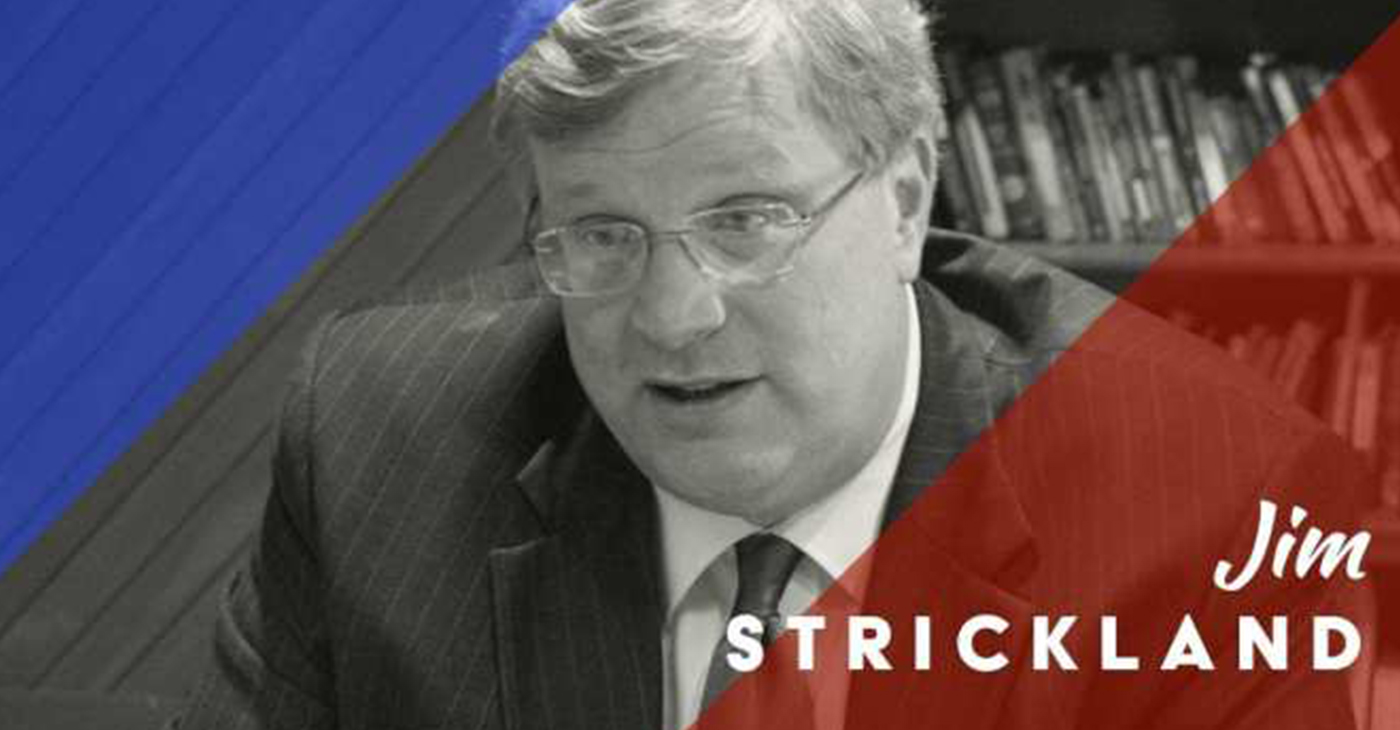
NEW TRI-STATE DEFENDER — Memphis Mayor Jim Strickland is optimistic. With the October 3 election less than a month away, the incumbent, who is completing his first term as mayor, believes the city’s voters will choose “results over rhetoric” to re-elect him.

By Erica R. Williams
Updated: Profiles of all three of the leading candidates for Memphis Mayor are now live online. Excellent reporting and writing by Erica R. Williams. Click to access the candidate of your choice:
Memphis Mayor Jim Strickland is optimistic. With the October 3 election less than a month away, the incumbent, who is completing his first term as mayor, believes the city’s voters will choose “results over rhetoric” to re-elect him.
“We have more progress to make, but the city has come a long way and we have seen results,” he said. “We’re now moving in the right direction.”
Adamant that the city has moved forward since he took office, Strickland isn’t taking all the credit, attributing the growth to combined efforts from city, county and state government.
Assessing his accomplishments and those of his administration, Strickland touted growth in economic development, universal Pre-K funding, police recruitment, and an increase in revenue for minority and women-owned businesses.
“The challenges that Memphis has had for decades are not solvable in three-and-a-half years,” he said. “I’d like another four years to tackle those issues.”
A stark proponent of growing minority and women-owned businesses, Strickland credits former city councilman and businessman Fred L. Davis for exposing him to some sobering statistics before he became mayor.
“I’ll never forget when he told me, ‘If I added up all the business transactions in the city of Memphis, one percent is spent with African Americans,” Strickland recalled. “That’s wrong on so many levels in a city that is predominately African American. If you want to grow the city, you have to grow black wealth.”
As mayor, Strickland and his team began focusing on growing minority and women-owned businesses. Since then, Black Enterprise magazine has named Memphis the #1 city for black-owned businesses. Leaders in other cities, said Strickland, have inquired about using Memphis’ model to grow their minority-owned businesses efforts.
The city’s Office of Diversity and Compliance has increased its contracts with minority-owned and women businesses to 20 percent. It was at 12 percent before Strickland took office.
Shelby County Commissioner Tami Sawyer, who is also running for mayor, has asked for the number to be re-calculated after Strickland and his team admitted that there was an error in the reporting earlier this year. In January during his State of the City address, Strickland said that spending was up to 24 percent, but it was later found to be 18 percent at the time. Strickland and his team said they’re confident that the current number is accurate.
Last year, the city launched The 800 Initiative, with a goal of growing the revenue of 800 minority-owned businesses by $50 million by 2023. And recently, city leaders declared that $50 million-plus is being spent with minority-owned businesses in the Cook Convention Center renovation project.
“This campaign needs to be about results and not rhetoric,” Strickland said. “My opponents talk about this, but they don’t have the record to support their rhetoric. (Former Mayor Dr. Willie W.) Herenton only increased it by 8 or 9 percent when he was in office. He says he has unfinished business; well, you need to be able get it done in 18 years.”
Strickland also referenced Sawyer and what he noted as her lack of success with minority-owned businesses.
“Commissioner Sawyer and the county’s MWBE (minority and women-owned business enterprises) business is only at 3 percent,” he said.
With Sawyer calling it “morally wrong” that the city does not allot any funding to Shelby County Schools, Strickland pushed back.
“Unless you are going to cut back on police services and fire services or raise taxes, it’s not going to be done,” Strickland said. “But we are giving back to education in other ways.”
Through a city and county partnership, Strickland was able to invest in universal Pre-K with no new taxes. The plan’s goal is to ensure that Pre-K is accessible to all eligible by the year 2020.
Fielding Herenton’s criticism that Strickland is weak on crime, the incumbent shot back that Memphis was listed as the leading U.S. city for crime in 2006, which fell during Herenton’s mayoral watch.
Earlier his year, the Tennessee Bureau of Investigation released a report that cited “significant drops” in crime in Memphis, including decreases in robberies, property crimes, burglaries and domestic violence. However, homicide rates spiked to 14.5 percent.
“The data says that we are making progress and I believe that we would have made more progress if we would have had more police,” Strickland said.
His public safety plan consists of building the police force, increasing penalties for violent crimes, investing in youth through mentorship, jobs and programing, and expanding workforce re-entry programs.
The police department has hired close to 500 new officers since Strickland took office. He emphasizes that his approach to combating crime differs from his opponents.
“One says we don’t need police officers, which most residents will disagree with,” Strickland said of Sawyer.
“When my other opponent (Herenton) was mayor we had the highest crime rate in the country. And he’s also been quoted saying that there is nothing any mayor can do about crime. And I disagree with that.”
While he supports criminal justice reform as it relates to nonviolent offenders, Strickland said, “But we have to be tough on those who commit violent crimes.”
Overall, the city has momentum and is headed in the right direction, said Strickland, pointing to more than 24,000 Memphians who have gotten jobs since he became mayor.
“I am personally inserting myself in economic development,” he said. “I’ve been recognized for keeping ServiceMaster in Memphis, the St. Jude expansion that resulted in an additional 1600 jobs and the recent printing company Mimeo relocating its headquarters to Memphis.”
He’s expecting more opportunities to come to the city, putting more Memphians to work at livable wages.
“I raised the minimum wage that we incentivize to $13 an hour, which is a livable wage in Memphis,” he said. “But many of the jobs pay $16 an hour.”
The livable wage calculator issued by the Massachusetts Institute of Technology concluded that in Shelby County, $11 is a livable wage for an adult with no children. That number increases to $22, if there is a child in the household.
Strickland said that despite the challenges still evident, he’s optimistic about the future, if he’s re-elected.
“I guarantee more Memphians have hope now than four years ago,” he declared confidently. “We are ready to roll up our sleeves and tackle these challenges, but we also have to celebrate the good things.”
This article originally appeared in the New Tri-State Defender







Black History
Christianity’s Racial History
THE POSITIVE COMMUNITY — Historian and author Jemar Tisby is challenging the traditional narratives of American religious history through his acclaimed work, The Color of Compromise. His research provides a comprehensive examination of how Christian institutions have historically participated in, accommodated, or resisted racial injustice from the colonial era to the present day.

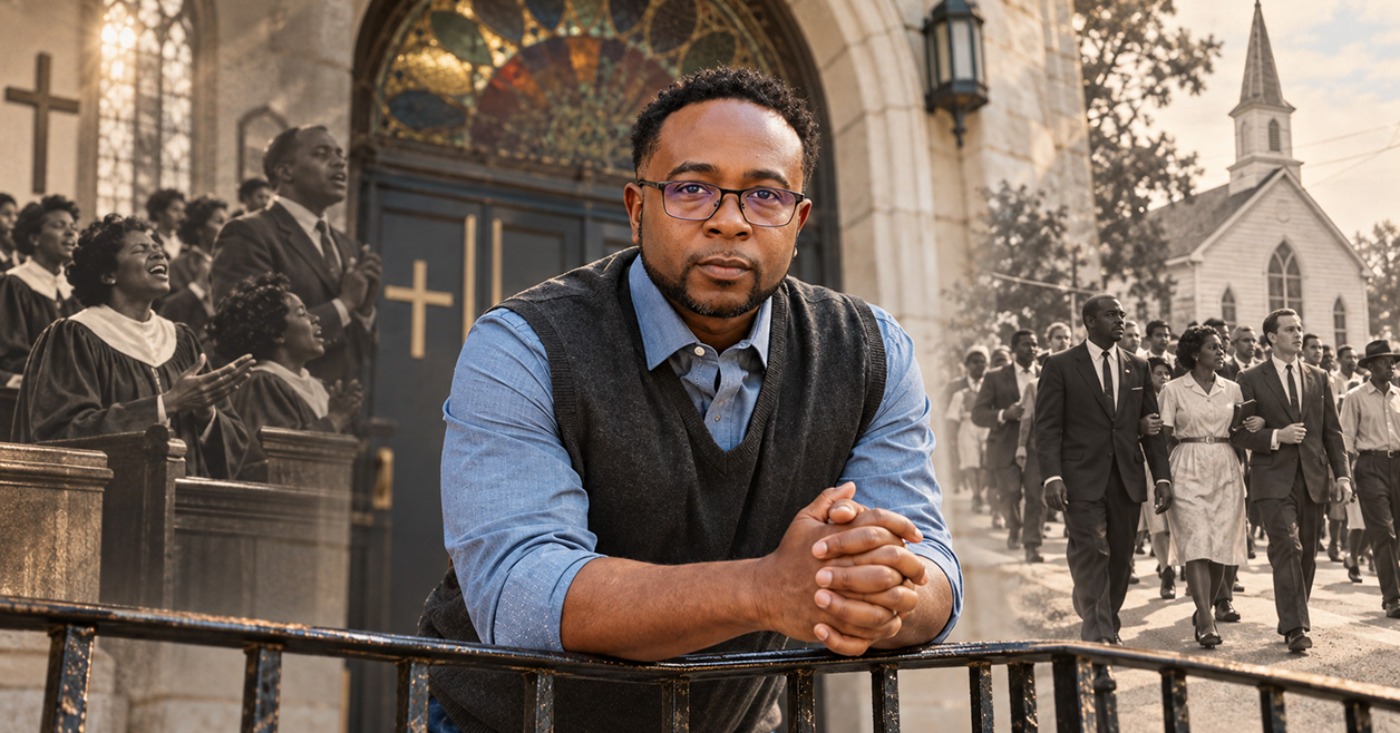
Jemar Tisby is a historian, author, and public speaker whose work examines the relationship between Christianity, racism, and American history. Through his writing, he challenges readers to reconsider the role religious institutions have played in shaping racial attitudes and social structures. His widely recognized book, The Color of Compromise: The Truth About the American Church’s Complicity in Racism, explores how Christian churches have participated in, accommodated, and sometimes resisted racial injustice throughout American history. Tisby’s work encourages readers to examine the past honestly and consider what meaningful change requires today.
One of the central arguments in The Color of Compromise is that racism in America cannot be understood without examining the influence of religious institutions. Christianity has often been associated with messages of love, justice, compassion, and equality. Yet churches and Christian leaders have sometimes supported systems that denied African Americans their freedom and dignity. Tisby examines this contradiction, demonstrating how religious beliefs and institutions could be used to justify racial oppression rather than challenge it.
The book takes readers back to the era of European colonization and slavery, when religious arguments were frequently used to defend the enslavement of Africans. Some Christian leaders claimed that slavery was compatible with biblical teachings, while others used Christianity to encourage resistance to the institution. Enslaved Africans developed their own spiritual traditions, drawing strength from their faith while enduring violence, separation from family, and the denial of basic human rights. Tisby highlights the importance of understanding how Christianity became intertwined with the development of American slavery.
Tisby also explores the role of churches during the Civil War and Reconstruction. Although emancipation ended legal slavery, it did not eliminate racial prejudice or the struggle for equal citizenship. Some religious communities supported efforts to educate formerly enslaved people and establish independent Black institutions. Others tolerated or defended segregation and white supremacy. The period demonstrates how Christian institutions faced a choice between challenging racial injustice and preserving existing social arrangements.
Another important subject in the book is the relationship between Christianity and Jim Crow segregation. During the late nineteenth and early twentieth centuries, racial segregation became deeply embedded in American society. Many churches reflected the same divisions, maintaining separate congregations and unequal opportunities for worship and leadership. Tisby argues that compromise occurred not only when Christians openly defended racism but also when they remained silent or accepted discriminatory practices to avoid conflict. This distinction is essential to understanding the book’s central message.
The civil rights movement provides another significant chapter in this history. Black churches played a vital role in organizing demonstrations, supporting community leadership, and providing spiritual encouragement to people fighting racial discrimination. Figures such as the Reverend Dr. Martin Luther King Jr. drew upon Christian teachings to challenge segregation and demand equal rights. However, not all white Christian congregations supported the movement. Tisby examines the difference between those who actively opposed racism and those who hesitated to challenge the racial status quo.
A major strength of Tisby’s writing is his attention to the difference between individual prejudice and institutional racism. A person may believe in treating others fairly while participating in organizations or traditions that produce unequal outcomes. Similarly, a church may preach love and acceptance while failing to confront discriminatory practices within its own community. Tisby encourages Christians to look beyond personal intentions and examine the consequences of their actions, their institutional policies, and their willingness to address injustice.
The book also challenges contemporary Christians to consider how the legacy of racial compromise continues to affect American religious life. Questions about church leadership, worship communities, racial representation, education, and public policy remain important. Tisby argues that acknowledging historical wrongdoing is not about assigning personal guilt to every modern Christian. Rather, it is about understanding how past decisions shaped the present and recognizing the responsibility to pursue greater fairness, accountability, and inclusion.
Tisby’s work has become an important contribution to conversations about race and religion because it asks readers to move beyond comfortable narratives about American Christianity. His historical approach encourages people to examine uncomfortable evidence, listen to the experiences of African Americans, and recognize the difference between professing moral principles and practicing them. The book also raises questions about what genuine reconciliation requires, emphasizing that meaningful progress involves more than expressions of goodwill. It requires a willingness to confront injustice and make changes that reflect the values Christians claim to uphold.
Ultimately, The Color of Compromise is a call for historical honesty, moral reflection, and meaningful action. Jemar Tisby challenges churches and individual believers to understand how Christianity has been used both to support oppression and to inspire resistance against it. His message is especially relevant in a society still wrestling with racial inequality and the consequences of its history. By examining the past with courage and integrity, readers can better understand the responsibilities of faith in the present. The book reminds us that the true test of religious conviction is not simply what people profess to believe, but whether their actions reflect justice, compassion, and respect for the dignity of every human being.
Based on reporting by The Positive Community.
Black History
Learn Black History and Win Your Next Game Night
INDIANAPOLIS RECORDER — Dr. Maxine Bryant, a culture keeper and professor, is combatting book bans and historical inaccuracies through the launch of GriotSpeaks: The Game. The new board game is designed to celebrate the African diaspora by incorporating elements of geography, literature, music, and the Gullah Geechee culture.

Maxine Bryant, Ph.D., creator and founder GriotSpeaks, is sharing the history of the African diaspora through her new board game.
Bryant often quotes the African proverb: “Until the lion tells the story, the hunter will always be the hero.” She said for the hunter has been telling the story of the African diaspora for “far too long.”
The game is based in African culture. The spaces on the board feature the countries of the African diaspora and it uses gold bars and cowrie shells as currency while special game spaces showcase symbols such as the Sankofa bird, a pyramid and an Ankh.
Bryant, a culture keeper and educator, created the game to add a bit of fun to her ongoing mission of dispelling myths and sharing accurate history. She used the history lessons she taught over the years as the foundation for the game’s trivia questions. Bryant said she is even more motivated to correct the inaccurate narratives due to recent book bans and efforts to minimize or omit the contributions of Black people.
“We can’t tell our story if we don’t know our story,” Bryant said.
History buffs may start the game with a slight advantage, but even players with limited knowledge have a chance to win with some strategic play. During one game demonstration, she said, an 11-year-old beat her with the clever use of one of the game’s wild cards.
Bryant’s goal is for people to learn new information while having a good time with one another. She sat down with the Recorder to share her inspiration for the game and how she hopes it will influence the culture.
This interview has been edited for length and clarity.
What was the inspiration for creating a game?

Maxine Bryant: In all honesty, God gave me the vision for the game.
I put that board game together the way God showed me in in this vision, if you will, it was to be educational, informative, and entertaining. And so, I knew I wanted it to encompass all of the diaspora and with the educational part of it. Since I am a professor, it needed to encompass the critical areas of our history.
So, it’s geography; it’s the resistance, the protest — all of that. It’s … literature, music, the Gullah Geechee culture, storytelling, the whole gamut, and then Black people.
What are some of the things people are surprised to finally learn while playing the game?
Bryant: The genius of Black people.
Many people know Madam C.J. Walker, although I’m finding out that not everybody does. But one of the questions (asks about) who invented the hot comb? Everybody thinks Madam C.J. Walker, but no, that was not her thing. Her thing was hair care and strengthening hair. It was a man (Walter H. Sammons) who created the hot comb. So, people are amazed at what they’re learning.
How do you hope that this new knowledge helps people see the world?
Bryant: So, what I hope people learn is our true history, the history of our struggle, and our resistance, the history of our greatness, and information about our culture. That positions us then to be able to stand tall in knowledge of self.

One of the things I wholeheartedly believe in is that little Black boys and little Black girls who grow up with the message that you are nothing because you are Black … it’s easy for me to take you out. But if I look at you and I know that you’re great and I’m great, I may just have a different kind of level of respect for you.
I think that having a sense of self can impact how I look at myself and how I look at people who look like me.
Is there anything else you want to share?
Bryant: In my mind, this game is a must-have. It is so unique. Now, within the culture, we have trivia games and usually they’re trivia about sports or about entertainment and some about history, right? And usually, it pertains to people in the United States or events in the United States, culture in the United States.
This game contains movement around a physical board like Monopoly, but it also encompasses the entire African diaspora so it’s not just the United States. People who played this game tell me … they’ve never seen anything like it.
GriotSpeaks: The Game is best suited for players 17 and older. The game is available for purchase through Amazon or at the GriotSpeaks website.
Contact Editor-in-Chief Camike Jones at 317-762-7850.
The post Learn Black history and win your next game night appeared first on Indianapolis Recorder.
Based on reporting by Indianapolis Recorder.
Black Press
Oakland NAACP, BWOPA Speak Out Against Alleged Harassment of Black Women Political Leaders
The Oakland NAACP and the Oakland/Berkeley chapter of Black Women Organized for Political Action have issued a joint statement condemning a pattern of harassment, intimidation, and discrimination directed at Black women in politics. Leadership from both organizations noted that these concerns reflect a rise in online hostility and political attacks against public servants. The allegations emerged amid a contentious race for the Oakland Unified School District Board of Education, prompting a public debate over accountability and political conduct. Read more to learn how the involved parties have responded.

The Oakland branch of the NAACP and the Oakland/Berkeley chapter of Black Women Organized for Political Action (BWOPA) have issued a joint statement condemning what they describe as harassment, intimidation and discrimination targeting Black women in politics.
Founded in 1968, BWOPA is a California-based nonprofit advocacy and membership organization that is focused on increasing Black women’s participation and influence in the political process.
Danielle Motley-Lewis, president of BWOPA’s Oakland/Berkeley chapter, told California Black Media (CBM) that the statement reflects growing concerns about online hostility and political attacks directed at Black women candidates, elected officials and public servants.
“These allegations deserve serious attention and should not be dismissed as ordinary political disagreements,” the organizations said in their statement.
The concerns have surfaced amid a contentious race for the Oakland Unified School District (OUSD) Board of Education’s District 6 seat, where candidate LeAna Powell has reported experiencing harassment during her campaign.
Powell is running against Alexandra Williams and incumbent Valarie Bachelor, the school board’s vice president. All three candidates are Black women.
Motley-Lewis said the organizations’ statement addresses concerns extending beyond the school board contest, although Powell’s experiences helped bring the issue into focus.
“I could only speak to what I witnessed on social media. There were various types of harassment online,” Motley-Lewis said of the back-and-forth about the candidates online.
“It was unnerving.”
Powell, a former aide to former Oakland Mayor Sheng Thao, previously filed an informal complaint with the Oakland Public Ethics Commission alleging that Thao, then a City Council member, pressured city employees to work on her mayoral campaign.
Thao was recalled in November 2024 and left office Dec. 17 of that year. She subsequently faced federal charges related to an alleged bribery scheme. The criminal proceedings are separate from the dispute involving Powell’s school board campaign.
Powell also filed a complaint with the NAACP concerning what she described as harassment during her campaign.
Among those publicly criticizing Powell is Brandon Harami, a former Oakland mayoral staffer and LGBTQ+ advocate who said he previously worked with Powell in Thao’s office.
In a Sept. 27 Facebook post, Harami questioned Powell’s qualifications, judgment and political associations.
“District 6 candidate for School Board LeAna Powell does not have the maturity nor spine required to be on the school board,” Harami wrote.
Motley-Lewis said the organizations had documented or witnessed conduct they considered troubling, although she emphasized that their concerns were not limited to Harami or Powell.
Harami has denied the allegations and accused the organizations of misrepresenting his conduct.
In an Oct. 11 Instagram post, he called the joint statement a political smear and demanded that BWOPA and the Oakland NAACP retract it.
He argued that the organizations’ characterization of his actions unfairly portrayed him as having a history of harassment and discrimination. He also contended that the allegations were being used to silence LGBTQ+ voices.
Motley-Lewis said she declined Harami’s request for a retraction because the statement addressed a broader pattern of conduct affecting Black women in politics.
“I was open to brokering that conversation. However, (Harami) was unwilling,” Motley-Lewis said. “He did reach out to BWOP to retract our statement, and I advised him that I would not be doing that. The statement that he was included in (addressed) a broader problem that is experienced by various women.”
Black Press
COMMENTARY: Oakland’s Black Students Have Gained Ground: We Shouldn’t Stop Now
New state data reveals that Black students in the Oakland Unified School District are making academic gains in reading and math at rates significantly faster than their peers statewide. These improvements follow a 2023 decision by board leadership to cancel school closures and instead invest in the Black Thriving Community Schools program. While the district continues to address budget challenges, proponents argue that maintaining these targeted resources is essential to narrowing long-standing achievement gaps. Read more about the specific policies driving these results.
Oakland’s Black students are making faster gains in reading and math than Black students statewide, according to state data released Oct. 15.
Those gains followed decisions by school board President Jennifer Brouhard and Vice President Valarie Bachelor to keep schools open, invest in Black students and support teachers.
Since 2023, Black students in Oakland Unified School District have gained about 31 points in English and math on the California School Dashboard — roughly three times the statewide English gain and more than twice the math gain. Our students still trail their statewide peers, but they have narrowed that gap by about a third.
In 2022, the previous board voted to close or reduce grades at 11 schools, mostly serving Black and Brown families. A state civil rights investigation later found the plan would have unlawfully discriminated against Black, low-income and disabled students. Brouhard and Bachelor opposed those closures and, after winning election, voted to cancel remaining plans in January 2023.
The board then expanded support through Black Thriving Community Schools, providing additional resources where Black enrollment exceeds 40%, and funded teachers dedicated to Black students and families. Its reparations policy requires schools to develop plans for Black student achievement.
Meanwhile, the district reduced a $100 million budget shortfall to about $30 million without closing schools, cut central office positions and approved its first balanced budget in 22 years. More than 99% of teaching positions were filled when this school year began.
These investments must grow. Black Thriving Community Schools still reach only some students who need them. Every Oakland child deserves a safe, racially just neighborhood school staffed by qualified teachers who can afford to stay.
The opposing slate argues closures should remain an option to address budget pressures. But a Stanford study found closures do not improve district finances because departing families take student funding with them. Other research links closures to lower college attendance and adult earnings. Majority-Black schools nationally are more than three times as likely to close.
Oakland knows the consequences. There is another path. Brouhard and Bachelor have begun moving Oakland in that direction, protecting classroom investments while confronting financial pressures.
Progress deserves continued public support. We cannot afford to reverse course.
About the Author
Walter Riley is a civil rights attorney and longtime community organizer in Oakland.
Black History
From Backyard Grilling to Jack London Square: Jamale Carlyle’s Chicken Wing Success Story
Jamale Carlyle turned a backyard hobby into a flourishing business after using grilling to cope with the loss of his mother and sister. The former corporate executive and CPA transitioned from a twenty-year career in the power industry to selling chicken wings at farmers’ markets in Tracy and Oakland. Following immediate success and viral social media attention, Carlyle opened two permanent storefronts and established a charitable partnership to support local youth. His journey highlights a unique path from internal auditing to community entrepreneurship. Read more.
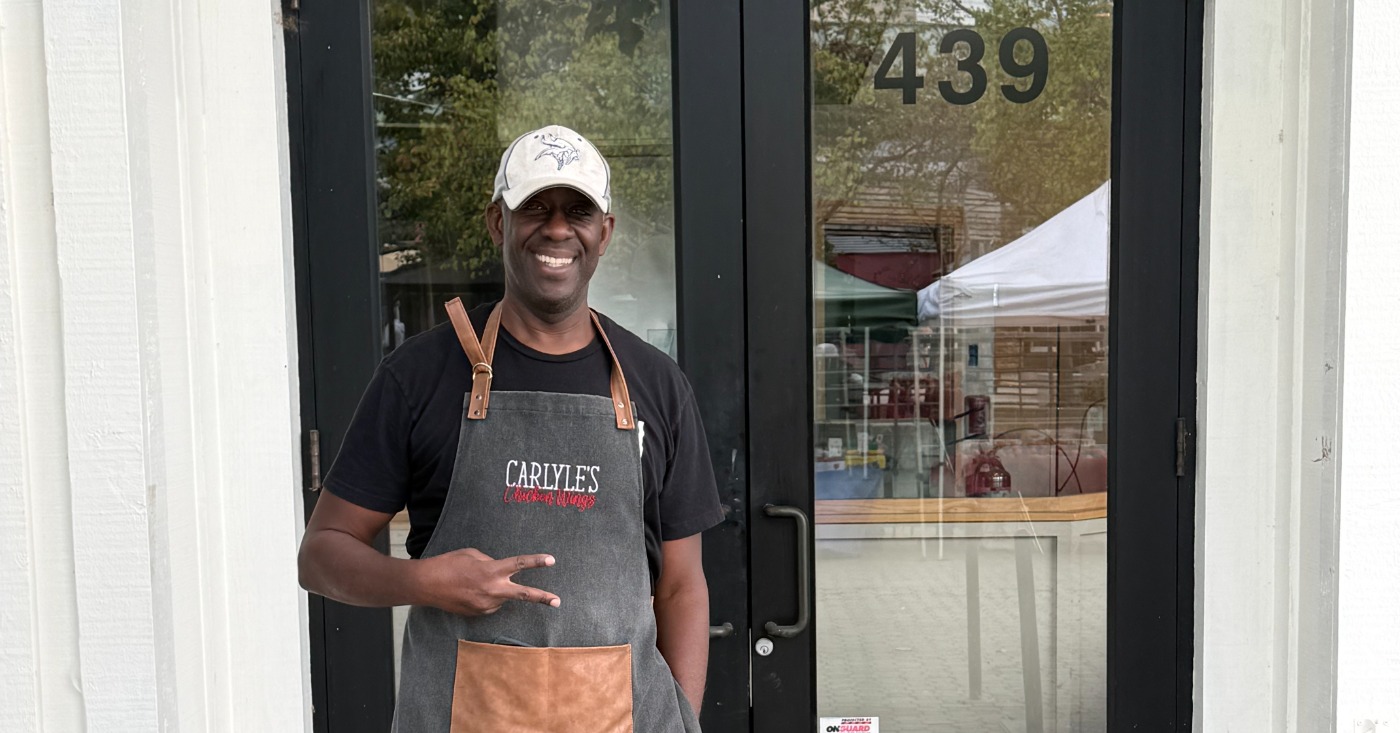
For Jamale Carlyle, what began as a way to cope with personal loss has grown into a thriving chicken wing business with locations in Tracy and Oakland’s Jack London Square.
Raised in Los Angeles, Carlyle remains a southern kid at heart, guided by the values and principles instilled in him growing up. In 2020, he lost his sister, and two months later, his mother passed away. The losses left him grieving half of his immediate family and searching for a way forward.
He turned to God, and to two favorite pastimes: grilling chicken wings and deep sea fishing. Friends who gathered in his backyard encouraged him to turn his chicken wings into a business.
Carlyle had built a successful corporate career before becoming an entrepreneur. An economics graduate of the University of California, Irvine, he earned a master’s degree in accounting from the University of Southern California and became a certified public accountant (CPA).
He spent more than 20 years in the power industry, including working for Edison International in Los Angeles and Boston. He later joined JP Energy Partners in Dallas, helping its team take the company public.
After moving to San Francisco in 2016, Carlyle spent 10 years with Pattern Energy, a wind energy company, where he served as vice president of Internal Audit and took on numerous corporate responsibilities.
But in 2025, grilling became more than a hobby. Carlyle began selling his wings at farmers’ markets, initially dedicating four hours every Saturday. Nervous about his first outing in Tracy, he wondered whether his friends had simply been encouraging. Instead, he sold out on opening day.
He later brought his business to Jack London Square’s Farmers Market, where he again sold out on his first day. As demand grew, he expanded into catering before opening his Tracy storefront in May 2026 and his Jack London Square location in July.
Social media helped fuel the momentum. In Tracy, enthusiastic reviews on the community’s Rants and Raves Facebook page brought customers through the door. His Jack London Square debut also gained traction online, generating approximately 100,000 views on social media on his on opening day.
Still processing the rapid growth, Carlyle describes the business as something that began in his backyard as a stress reliever and became an unexpected calling, and a way of giving back.
“Giving back” has led to a partnership with Mike Jenkins, owner of Oakland Strong, a nonprofit gym known for Olympic style weight lifting and developing national and international champions. After Jenkins visited Carlyle’s store with members of his team, Carlyle returned the visit, and the two began discussing ways to partner to support the community.
“I’m really big on charity. I believe in giving back to the community,” Carlyle said. “I knew before I opened my store, I’d be doing something like this, this is what God wants me to do.”
Their collaboration will introduce the “Oakland Strong Bowl,” featuring 10 dry-rub Cajun wings and a vegetable-rice bowl for $17.99, with $2 from each purchase donated to the Oakland Strong Foundation. The initiative is expected to launch in early November.
“This builds community in Oakland and Jack London Square,” Carlyle said.
Looking ahead, Carlyle plans to expand the menu with chicken thighs, chicken tacos and additional sides. He is also pursuing a liquor license to create a destination where customers can enjoy wings while watching sports.
For now, he is focused on growing his two locations. But with customers embracing his food and his commitment to giving back, Carlyle sees the possibility of bringing his chicken wings to more communities throughout the Bay Area.
Black Press
SEIU Local 1000 and State of California Will Continue to Negotiate New Labor Contract
Thousands of California state employees represented by SEIU Local 1000 recently staged a one-day walkout to protest stalled contract negotiations with Governor Gavin Newsom’s administration. The union, which represents approximately 100,000 public workers, is demanding a 20% wage increase over three years and an end to mandatory four-day in-person work requirements. While the initial strike has concluded, union leadership warns that further demonstrations are likely if the state continues to reject their demands for better pay and telework flexibility. Negotiations are expected to continue as both sides seek a resolution. Read more.
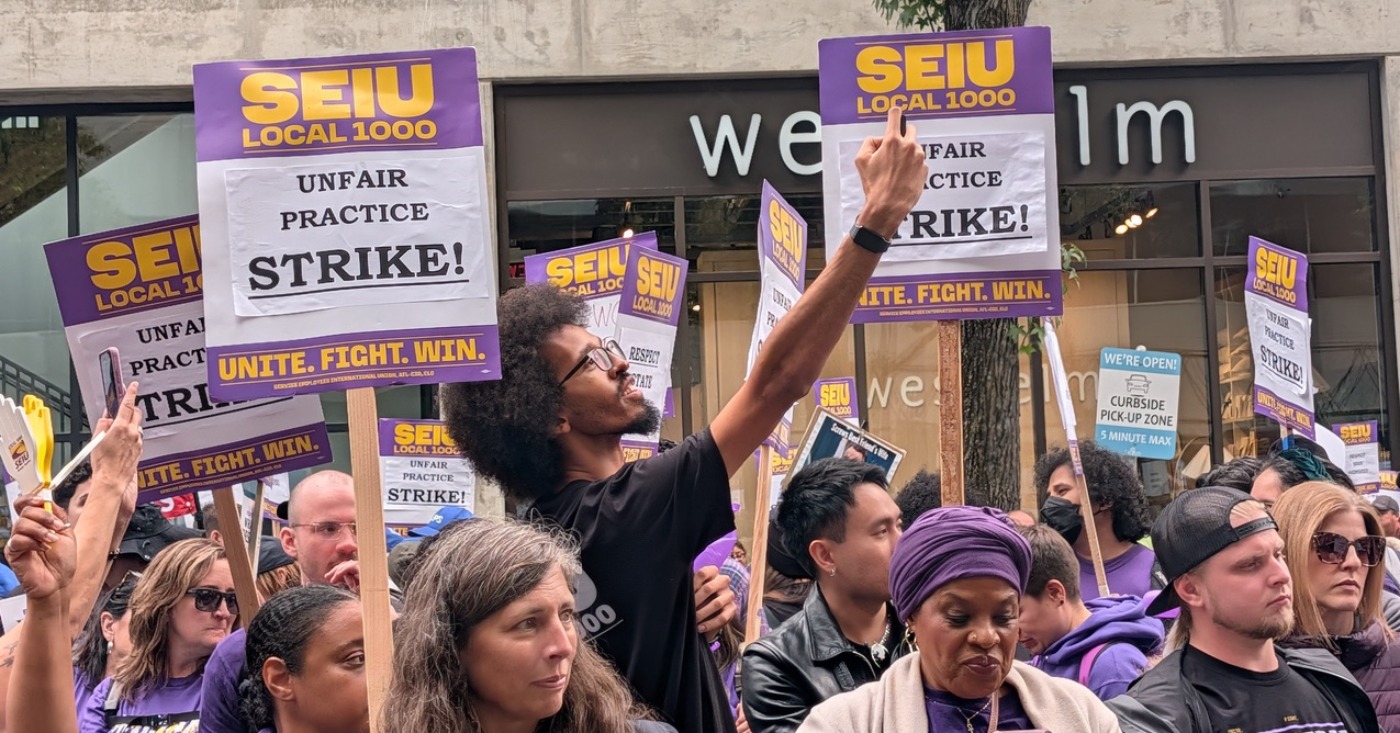
After the Service Employees International Union (SEIU) Local 1000 labor contract expired June 30 and talks with Gov. Gavin Newsom’s administration stalled, the union stepped up its efforts to secure a new agreement, saying its demands had gone unheeded.
On Oct. 21, thousands of state employees represented by SEIU Local 1000 staged a one-day walkout to protest alleged unfair labor practices during negotiations with Gov. Gavin Newsom’s administration.
Although the strike has ended, SEIU Local 1000 President Anica Walls said further demonstrations or an expanded strike are highly likely if contract negotiations remain stalled. The union represents approximately 100,000 public employees statewide.
“We are out here because our jobs matter,” Wells said. “If they continue to refuse to bargain with us in good faith, we are prepared to escalate.”
Sen. Lola Smallwood-Cuevas (D-Los Angeles) expressed support for SEIU Local 1000’s labor action in an Instagram post, emphasizing the importance of fair treatment for workers.
“I stand in complete solidarity with SEIU Local 1000,” Smallwood-Cuevas stated. “More than 100,000 state workers they represent are on strike today fighting for good-faith bargaining, fair treatment, and a contract that reflects the value of the essential public services they provide every day—all things that should be a given for the workers our state relies on the most.”
Smallwood-Cuevas, a member of the California Legislative Black Caucus (CLBC) added, “When California’s workers hold the line, the whole nation pays attention.”
According to union representatives, SEIU Local 1000 is seeking a contract that addresses rising living costs and provides greater workplace flexibility. The union is demanding a 20% wage increase over three years and an end to Gov. Gavin Newsom’s requirement that state employees work in person four days a week.
The union is also seeking increased state contributions toward employee health care benefits to reduce workers’ out-of-pocket costs.
On Sept. 18, Newsom vetoed Assembly Bill 1729, authored by Assemblymember Alex Lee (D-San Jose), which sought to expand telework opportunities for state employees.
The bill would have required state agencies to offer telework options or provide written justifications for requiring employees to work in person. Supporters argued that telework could save taxpayers approximately $225 million annually by reducing office space and parking costs while lowering vehicle emissions and improving employee retention.
Newsom said the legislation would limit state departments’ flexibility to manage their workforces and evaluate telework exemptions individually. He has also emphasized the benefits of in-person collaboration.
“I want people to come back to work, reengage, rediscover, collaborate, coordinate, develop relationships, friendships, and fall in love,” Newsom said in July. “You get three-day weekends. Four years ago, that would’ve been a triumph. Now it’s a burden.”
Union organizers described the Oct. 21 walkout as a one-day unfair labor practice strike, rather than an indefinite work stoppage. The action was intended to demonstrate solidarity and increase pressure on the state during negotiations.
SEIU Local 1000 has been without a contract since its previous three-year agreement expired June 30. Negotiations are expected to resume.
Responding to the statewide walkout, the California Department of Human Resources (CalHR) said it “remains focused on achieving a fair and responsible agreement with SEIU Local 1000 and continues to be available at the bargaining table.”


Christianity’s Racial History

Learn Black History and Win Your Next Game Night

DOJ Fights to Keep Rep. Ilhan Omar’s Search Warrant Sealed: Report

Five Hospitals Said No! Who Will Help Annette Henry Recover?

Oakland NAACP, BWOPA Speak Out Against Alleged Harassment of Black Women Political Leaders

COMMENTARY: Oakland’s Black Students Have Gained Ground: We Shouldn’t Stop Now

From Backyard Grilling to Jack London Square: Jamale Carlyle’s Chicken Wing Success Story

SEIU Local 1000 and State of California Will Continue to Negotiate New Labor Contract

TCWAM: Get Out And VOTE (11/03/2026)

OPINION: We Can Restore Checks and Balances on Trump

All Skinfolk Ain’t Kinfolk

Practitioners of African Traditional Spirituality Offer Ancestral Reverence Ritual Oct. 31

Latinas Deserve Equal Pay. Unions Help Make It Happen.

A $2.1 Trillion Wellness Industry Never Built a Daily Practice for Black Children. So This Atlanta Family Did.

Zakiya Jendayi Arrested, Locked Out of Home by Sheriff’s Deputies

Oakland Awarded More than $14 Million in State Funding

Tamiko Armstead | 2026 Lifetime Achiever in Education

Montclair Brewery: Brewing Culture, Community, History

Should You Have to Pay to Hear the Gospel?

Listening as a Lifeline: A Doula’s Witness to Black Maternal Health
TCWAM: Get Out And VOTE (11/03/2026)

Test Buick’s Head-Up Display, Wireless Charger & Bose Audio #shorts

Maintenance As A Money Move

Buick Enclave Safety Tech: What It Can—and Can’t—Do #shorts

ELECTION DAY 2026: Black Voter Turnout, Trump’s Clemency Controversy & a $495M Prison Deal 📱

ELECTION DAY 2026: Black Voter Turnout, Trump’s Clemency Controversy & a $495M Prison Deal

Trump as a Distraction…Focus on the Ballot and 2028

Kids Escape City Chaos for Camp Paradise #shorts

Don’t Name Things After Me If I Can’t Enjoy Them! #shorts

EVs Cost Less Than Half as Much to Fuel—Check Your Local Savings #shorts
-
 Black Press1 week ago
Secretary of State Shirley Weber Pushes Back Against DOJ Demands Over California Voter Rolls
-

 Art1 week ago
Capturing Black Life’s Beauty
-

 Black History7 days ago
Retirement Triggers Doctor to Pen Book for Young Audience
-

 Black History1 week ago
Oakland Honors 60 Years of the Black Panther Party at the All Power to the People Gala
-

 Black Press7 days ago
Fatigue, Bloating, and Inflammation: Spotting the Subtle Signs of MASLD
-

 Featured22 hours ago
Multi-Faith Leaders Representing 10 Million People Launch National Anti-Authoritarian Initiative
