
BlackPressUSA
OP-ED: The United States Postal Service Delivers Much More Than Mail
NNPA NEWSWIRE — And true to its roots, the revitalized United States Postal Service (USPS) knew how to make a buck. The reorganization legislation called for the phasing out of the post office’s direct government subsidies by 1983. The post office has been operating without any taxpayer money since then. In fact, as recent as the start of this century, from 2003-2006, and despite the advent of email and stiff competition from companies like UPS and FedEx, the post office reported a 9.3 billion profit.

By Ray Curry, Secretary-Treasurer, UAW
America’s Postal service has been an essential institution that has connected every one of us as Americans even before we were a nation independent of Great Britain.
The most American of traditions
Benjamin Franklin was appointed our first Postmaster General in 1775. This democratic treasure, which has proven as reliable as it has self-sufficient, was a model for how government service should work. Its rich history is America’s history of adaptability, ingenuity and grit. Franklin used the system to get mail from Congress to our armies during the Revolution. In 1823, the service started using waterways to deliver mail, then began using railroads and in 1847 saw the first issued stamps. The famous Pony Express took up the task in 1860. By 1896, the service began delivering to some rural addresses, so people did not have to go to the town post office for their mail anymore. By 1923, all houses were required to have a mail slot. And in 1963, zip codes were introduced.
Also very American, a 1970 strike by organized labor led to an even more efficient operation and the Postal Reorganization Act that established the United States Postal Service as we know it today.
And true to its roots, the revitalized United States Postal Service (USPS) knew how to make a buck. The reorganization legislation called for the phasing out of the post office’s direct government subsidies by 1983. The post office has been operating without any taxpayer money since then. In fact, as recent as the start of this century, from 2003-2006, and despite the advent of email and stiff competition from companies like UPS and FedEx, the post office reported a 9.3 billion profit.
I would say that is a pretty decent business model.
But then HR 6407 came along in 2007. The act mandated that the post office calculate its retiree pension and healthcare costs for the next 75 years, including workers to come, and set aside enough over the next 10 years to cover them. An article appearing in Business Insider put the impact of the requirement this way: “To put this in perspective, that’d be like you only working from age 18 to 28 and then expecting to live on that income until you were 103 years old.”
What would Ben Franklin say?
Needless to say, the bill and its contents have proven devastating. The long and the short of it has meant that the USPS has had to contribute about $5.6 billion a year for people who had not yet retired, in addition to the amount for current retirees.
No business is forced to operate like this, and I dare to add that no business could operate like this.
Also, the new bill took away the ability for the post office to set prices. First-class mail, marketing mail, and other post office products have all been tied to the consumer price index, and therefore the post office could not increase rates for those products above the rate of inflation. All told, the post office has incurred a loss of $78 billion from 2007 through 2019 and owes $55 billion related to its future pension and health benefit obligations. Add in lost revenue related to COVID-19 and politically charged controversies over reductions in equipment and attendant slowdowns, the USPS is now in dire straits.
Shall we really allow this most American of institutions to fail ‒ through no fault of its own? It is unthinkable for it not to survive. It is unthinkable to rely solely on private companies for such critical services. It is truly a dagger in the heart of our American heritage.
Of immediate consequence, consider the impact to mail recipients during this pandemic. The USPS handles 1.2 billion prescription drug deliveries each year. The service also transports millions of lab tests and essential medical supply shipments. It ensures that checks and payments arrive to keep small businesses operating. It helps seniors receive household items, social security and Medicare checks. And communications from family and friends from far away have been delivered on time, through as they say “rain, sleet and snow.”
Since the emergence of COVID-19, USPS workers have been on the front lines, delivering millions of personal protective equipment and vital supplies to hospitals. They’ve made sure shelters, food banks, and businesses have the supplies they need. In addition, they’ve made deliveries to home-bound, highly susceptible individuals.
Needed now more than ever
The notion to privatize the USPS is a truly un-American idea and could not come at a worse time. The recession we are experiencing due to the coronavirus is hitting Black Americans much harder than white Americans, with Blacks nearly three times more likely to be hospitalized for Covid-19 and their unemployment rate at 14.6% compared with 9.2% for whites.
The Postal Service provides the only service that guarantees delivery to every American, which makes it especially crucial for rural areas and small towns that are too costly for private companies like FedEx or UPS to deliver to. Privatizing the service would add to the expense of crucial deliveries ‒ at a time when we are more and more relying on deliveries to receive our daily needs.
Then think about the importance of the post office in ensuring that the people’s will in our democracy will be accurately and duly noted. In November, the postal service will play a crucial role in allowing Americans across our land and in foreign countries to cast their vote in our upcoming Presidential election. So many of us will be turning to the USPS to deliver our ballots safely and securely.
And please also think of the USPS and those in its employ. The postal service has delivered a solid, secure, middle class lifestyle to a more than 600,000 workers and to an especially high number of Latino and African Americans.
In the case of African Americans, when Congress passed a law ‒ just after the Civil War ‒ that ended the whites only hiring practice for postal jobs, the postal service became a haven of good jobs offering secure wages, benefits, and civil service protections. Today, African Americans make up 27% of the Postal Service ‒ a rate more than double that of the national labor force. Coupled with our government’s anti-discrimination policies, the USPS has made the American Dream possible, even when racial discrimination put up walls in other areas of work.
And privatization, I would argue, is un-American for another reason. It is yet another attempt at union busting. Both the National Association of Letter Carriers (NALC), which represents primarily non-rural letter carriers employed by USPS as well as the American Postal Workers Union (APWU), which represents postal clerks, mail processors and sorters, building and equipment maintenance, custodial workers, truck drivers and others employed by USPS, would be in serious jeopardy.
We must secure this most American of all American institutions.
Demand that we save the USPS
Fortunately, there is a way forward. The Delivery for America Act (H.R. 8015) can help make this happen. This legislation will deliver urgently needed funds to the postal service and reverse detrimental policy changes that are currently restricting postal workers’ ability to deliver mail and packages on time.
The Act has passed the House of Representatives. The Senate must follow suit immediately. Across the nation, delivery of mail has slowed dramatically due to the Postmaster General Louis DeJoy’s recent decisions. Eliminating overtime and cutting down on late trips has created massive mail backlogs, leading to late deliveries of critical prescription medications and threatening the integrity of the upcoming November election.
This bill would help address the backlog by remedying the impact of these policies and prohibiting “any change that would have the effect of delaying, deferring, or curtailing mail, allowing for the non-delivery of mail to a delivery route, or increasing the volume of undelivered mail.”
The Delivery for America Act appropriates the $25 billion that the USPS requested to sustain the level of service all Americans depend on. Efforts to shrink the postal service would disproportionately affect racial and ethnic minorities, women and veterans more than others. In addition, as of 2018, more than 100,000 military veterans are employed by the USPS.
We MUST protect postal workers’ jobs.
And we MUST ensure a safe and secure election. In the coming weeks, voters across the country will prepare to exercise their civic duty to elect their government, and Congress must do everything in its power to ensure that voters will be able to do so safely.
For our citizens, for our democracy, for our livelihoods… We must support the USPS in every way we can.






Black Press
A $2.1 Trillion Wellness Industry Never Built a Daily Practice for Black Children. So This Atlanta Family Did.
BLACKPRESSUSA NEWSWIRE — As Black parents strive to raise resilient, confident, brilliant children within systems that too often underestimate them, an Atlanta-based company launches an app that delivers a five-minute daily wellness practice, backed by forty years of research, to help build the identity, confidence and self-worth their children carry into every room.

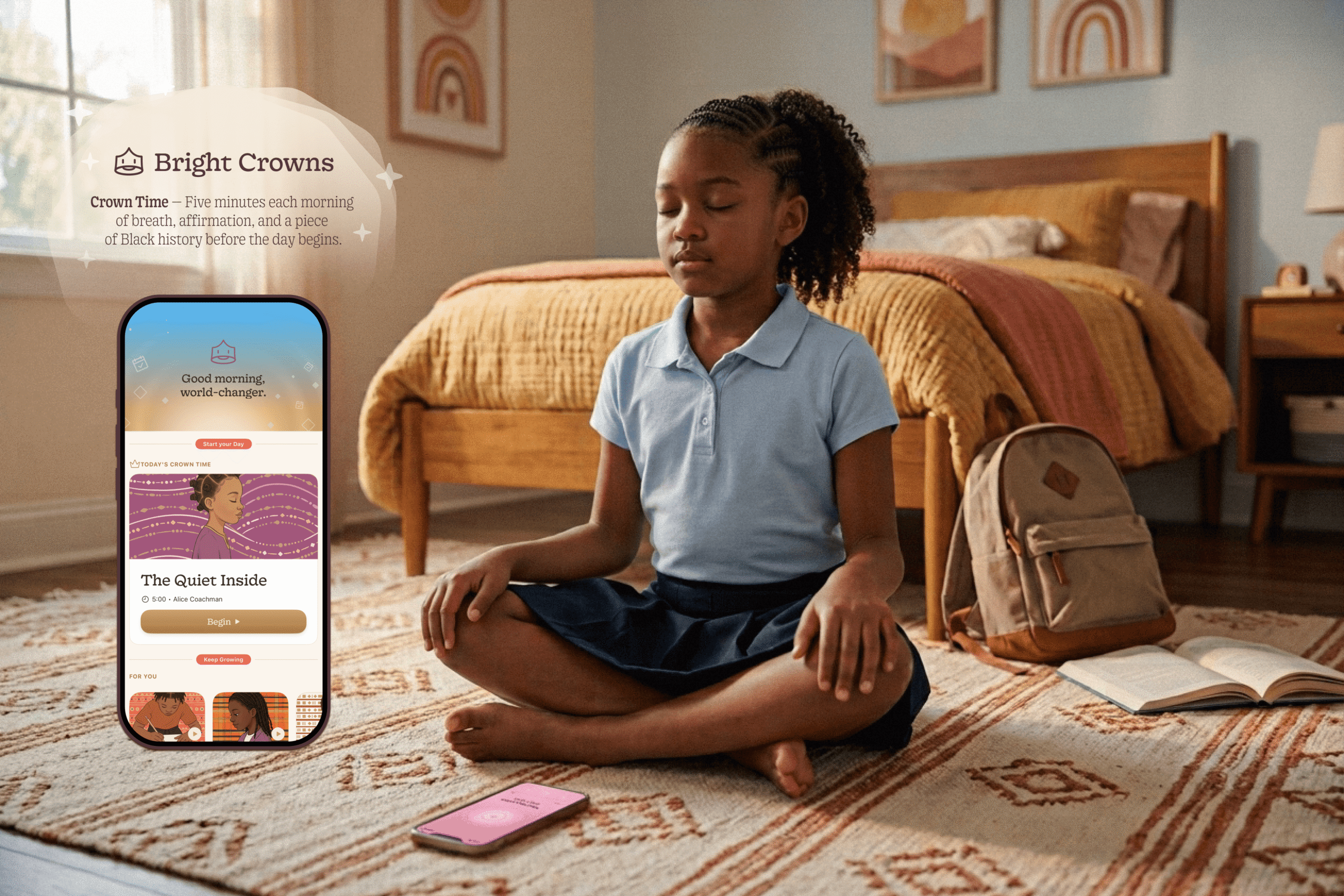
As Black parents strive to raise resilient, confident, brilliant children within systems that too often underestimate them, an Atlanta-based company launches an app that delivers a five-minute daily wellness practice, backed by forty years of research, to help build the identity, confidence, and self-worth their children carry into every room.
ATLANTA — October 6, 2026 — Every morning, Black children walk into classrooms and spaces that weren’t designed with them in mind. They carry a quiet, daily weight most adults never see. There is no shortage of national conversation about the challenges they face; there has been far less discussion about what actually helps. Yet the research has pointed to answers for decades: a grounded sense of who they are, the steadying power of breath, and the pride that comes from knowing their history and their own worth. What was missing was a way to deliver those answers to Black children, consistently and easily, every single day. Until now.
Bright Crowns, the first daily wellness practice built specifically for Black children, launched and is available now on the Apple App Store. The morning practice takes just five minutes and fits easily into a busy day.
“As much as we’d like to, we can’t always lighten the load our children carry each day,” said co-founder and CEO Tia Harley. “But we can help make them strong enough to carry it — with their heads held high.”
Here is what the Bright Crowns wellness practice delivers. Each morning, a child opens the app and hears a voice that sounds like home. The breath comes first, to help them settle and notice what they’re feeling. Then an affirmation that names who they are and the people they come from. Then the story of someone from Black history whose life is proof of the strength being built in them that day. A new figure every day, all year long, not just in February. Not a history lesson, but evidence of what they already carry inside. They start each day steady, certain, and ready for whatever it holds.
The arc is deliberate: Breathe. Belong. Become. That five-minute morning session is called Crown Time, and Bright Crowns doesn’t stop there. Its practices carry a child through the whole day. Crown Ready steadies a child before a hard test or a game. Crown Reset meets a big feeling the moment it rises. Crown Together is a weekend reflection a parent reads aloud. And Bedtime Crown carries them into sleep with folktales from the African diaspora. Instead of points or badges, children earn crowns drawn from real African kingdoms — an inheritance, not a reward. A badge says good job; a crown says this was always yours.
“Bright Crowns isn’t about making a child feel better for five minutes,” said Tia Harley. “It’s about giving them tools that compound: steadiness, identity, and resilience they carry long after the session ends, into the classroom, under pressure, and into rooms where they may be the only one.”
Built on joy. Backed by forty years of science. Husband-and-wife team David and Tia Harley built Bright Crowns out of love for their own children. Then they discovered that every piece of what they had built had already been supported by research. A landmark study in the journal Science found that a brief, culturally grounded practice measurably narrowed the racial achievement gap for Black students, without any change to the school itself. Research has since identified ethnic-racial identity as a key protective factor for Black youth mental health in the Annual Review of Clinical Psychology, and a meta-analysis of 76 mindfulness programs for young people found significant improvements in stress, attention, emotional regulation, and academic engagement. Psychologists have a name for what these build together: hardiness, the inner architecture that lets a person meet difficulty without breaking. It has been studied since 1979, when psychologist Suzanne Kobasa first identified it, and the research is clear that it is teachable, built through brief, consistent daily practice. “The research showed that while the school didn’t change,” Tia Harley said, “what those children carried into it did.”
A category built, not borrowed. Wellness has grown into one of the largest industries in the world, worth roughly $2.1 trillion in the U.S. alone, with apps for sleep, focus, breathing, and meditation. Yet when the Harleys went looking for a daily wellness practice built for their own Black children, they found none. What existed was generic: polished and useful, but spoken in voices and settings that never felt like home, and asking a Black child to set part of themselves aside just to belong there. “A Black child’s identity isn’t separate from their wellness. It’s part of it,” said Tia Harley. Bright Crowns wasn’t adapted for Black children after the fact. It was built with them in mind from the very beginning, the first of its kind, and one this community has long deserved.
David Harley, an award-winning creative director, began building a morning wellness routine at their family’s kitchen table, and he and Tia joined forces to grow it into what Bright Crowns is today. The two brought professional rigor to a labor of love: David, with two decades leading multicultural campaigns for major brands, and Tia, who led business development and partnerships at Google. They built Bright Crowns to a standard they’d trust with their own children. Then they used it with their two kids every morning for more than a year before it reached anyone else. “We built it for our children first,” Tia Harley said. “We watched them change: quicker to recover from tough moments, more willing to try hard things, holding their heads a little higher. Then we realized every Black family we knew needed the same thing.” The launch arrives as Black families across the country are thinking hard about how to prepare and educate their children in schools and spaces that weren’t always designed with them in mind. Bright Crowns speaks to the part that travels with a child into any classroom: the certainty of who they are.
Availability. Bright Crowns is available now on the Apple App Store with a free 7-day trial. Families who join by December 31, 2026 lock in the Founding Family rate of $69.99 for the first year; one subscription includes every child in the home. Learn more and download at hellobrightcrowns.com.
“Our children are already brilliant,” said co-founder and chief product officer David Harley. “We don’t teach them to survive. We teach them they were born to thrive. Their crowns are already on — we just help them remember.”
###
About Bright Crowns
Bright Crowns is a five-minute daily wellness practice built for Black children, available now on the Apple App Store. It is the first daily practice of its kind, grounded in decades of research on identity, mindfulness, and resilience. Founded by husband-and-wife team David and Tia Harley, parents of two, Bright Crowns pairs deep cultural fluency with the quality families expect and deserve. It helps Black children feel steady in themselves, certain of who they are, and ready to show the world what they’re made of. Learn more at hellobrightcrowns.com.
Media Contact
Tia Harley, Co-Founder
[email protected]
(404) 491-9637
Digital Press Kit: hellobrightcrowns.com/press
hellobrightcrowns.com
Black History
Listening as a Lifeline: A Doula’s Witness to Black Maternal Health
OAKLAND POST — Maternal mortality and pregnancy-related mortality use different time frames and methods and are not interchangeable. Finalized 2024 CDC data recorded 649 maternal deaths nationally. The overall rate was 17.9 deaths per 100,000 live births, but for non-Hispanic Black women it was 44.8, compared with 14.2 for White women and 12.1 for Hispanic women.

Word Count: 1058
Note: Client A, B & C, names are withheld for privacy; these accounts reflect my recollections as theirDoula.
Client A rocked her hips on a birthing ball, surrounded by pale wood and warm textiles in a softly lit Scandinavian-style office. I was her doula through a Southern California maternal health company combining nurse-led care, technology, and wraparound support.
She was a healthy Black woman in her thirties. Her baby girl was doing well; her partner took notes as we discussed labor and advocacy.
Then we turned to their chosen hospital. I knew it well—and remembered a phrase from another client’s experience: “Policy of Sovereignty.”
Client B had been told she needed a repeat cesarean as a precaution, though the reasoning was unclear. Her obstetrician, who performed her first cesarean two years earlier, had assured her throughout pregnancy that she was healthy, healed, and ready for a vaginal birth. We asked staff to review her chart, consult her obstetrician, and reconsider immediate surgery. Instead, they invoked the “Policy of Sovereignty.”
The physician on duty, we were told, had final authority, regardless of her established care plan. I asked whether an ultrasound or reassessing the baby’s position could offer clarity. Cesareans can be lifesaving. But were Client B’s history, informed consent, and circumstances guiding this decision—or was routine overriding individualized care? We kept asking for her obstetrician. Beneath every request was a deeper question: Was she being heard?
The Numbers Behind the Stories
Statistics arrive in clean columns. The experiences behind them do not.
Maternal mortality and pregnancy-related mortality use different time frames and methods and are not interchangeable. Finalized 2024 CDC data recorded 649 maternal deaths nationally. The overall rate was 17.9 deaths per 100,000 live births, but for non-Hispanic Black women it was 44.8, compared with 14.2 for White women and 12.1 for Hispanic women.
In California, Black birthing people experienced 56.5 pregnancy-related deaths per 100,000 live births during 2020–2022—3.8 times the White rate and four times the Asian rate.
As a doula serving Los Angeles and San Bernardino Counties, I see faces behind those numbers. I remember concerns raised softly, then firmly, then desperately. I am tired of watching Black families enter spaces meant to protect them, only to discover they must defend themselves while laboring, bleeding, trembling, or recovering.
Returning to Client A
Client A’s labor stretched nearly 48 hours. As her condition worsened, she, her partner, and I asked whether a cesarean should happen sooner. A provider questioned my place as a doula, then said she was next.
Six more hours passed.
She entered surgery visibly ill with a serious uterine infection, her baby malpositioned and stuck. Her partner later recalled the provider saying, “This baby would never have made it through the birth canal.”
Those words landed like a blow. Our urgency had been treated as ignorance. With Client B, we questioned why surgery was inevitable. With Client A, why it was delayed. Doula advocacy is not about one kind of birth. It is about informed consent, individualized care, and timely action. Hospital routine should never outweigh the person carrying the risk.
Survival Cannot Be the Standard
The Black maternal health crisis includes unequal care, untreated conditions, racial bias, delayed referrals, poor communication, and inadequate postpartum support. It is about birth plans respected only until a hospital becomes less busy and postpartum care that asks whether a mother survived, not whether she has what she needs to recover.
Survival cannot be the standard. Technology can support care, but it cannot replace human connection. An algorithm cannot detect fear in a patient’s eyes, and a mission statement alone cannot ensure adequate staffing or culturally responsive care.
The Story of Client C
Before I arrived, I heard the chaos through Client C’s phone. Staff struggled to locate her baby’s heartbeat on an external monitor as her fear and blood pressure rose. I pleaded for an internal electrode before surgery.
“There’s not enough time,” a nurse said.
“I would like to wait for my doula,” Client C called out.
But she was medicated, hurried through consent, and wheeled away while I listened.
In the operating room, after a shift change, another nurse placed an internal electrode and said, “The previous monitor wasn’t working.”
No one responded.
According to her father, the obstetrician avoided eye contact: “We need to move forward.”
Surgery may still have been necessary; that was not mine to determine. But if faulty equipment helped create the emergency, the family deserved acknowledgment and explanation—not silence. No family should have to wonder whether major surgery followed an unavoidable crisis or a machine failure no one recognized in time.
From Prevention to Accountability
After supporting nearly 100 families, I have learned that danger often begins before admission. I have urged clients to seek care—and heard why they feared returning: dismissed pain, harsh words, shame for asking questions.
Care cannot be holistic where Black families do not feel safe enough to speak or return. Representation matters, but providers of color cannot repair inequity alone. They need adequate staffing, mentorship, culturally responsive training, reliable equipment, and colleagues that are reflective of all the aforementioned. It’s not the Black providers job to care for just the Black patients, everyone should have the same goal.
The Momnibus Act, California’s Medi-Cal doula benefit, the Transforming Maternal Health Model and the Perinatal Equity Initiative require more than promises; they need sustained funding, reliable reimbursement and accountable implementation.
Birth should be sacred. Yet too many Black birthing people arrive carrying the burden of proving their pain is real. A doula can listen, educate, comfort, and advocate—but cannot repair a system that refuses to listen. The true measure of progress is what happens when a Black birthing person says, “Something is wrong.”
Are they believed? When equipment fails, is that failure acknowledged? Do families leave not merely alive, but safe, respected, supported, and whole?
Until those answers are consistently yes, California’s maternal health success story remains unfinished.
About the Author
Antoinette Stewart-Eneh is a mother of two, holistic maternal wellness advocate, and birth and postpartum doula who has supported families since 2019. She serves as program operations coordinator for Frontline Doulas, a volunteer client coordinator with the Joy in Birthing Foundation and a childbirth educator in South Los Angeles. She is studying to become a midwife and lactation educator.
Black Press
New Protections for Ticket Buyers: Gov. Newsom Signs Assemblymember Isaac Bryan’s Bill
OAKLAND POST — Assembly Bill 1349 expands state regulation of original ticket sellers, resellers and online resale marketplaces. The law targets deceptive sales practices, ticket-buying software and speculative listings — tickets advertised for sale by sellers who do not possess them or have authorization to sell them.
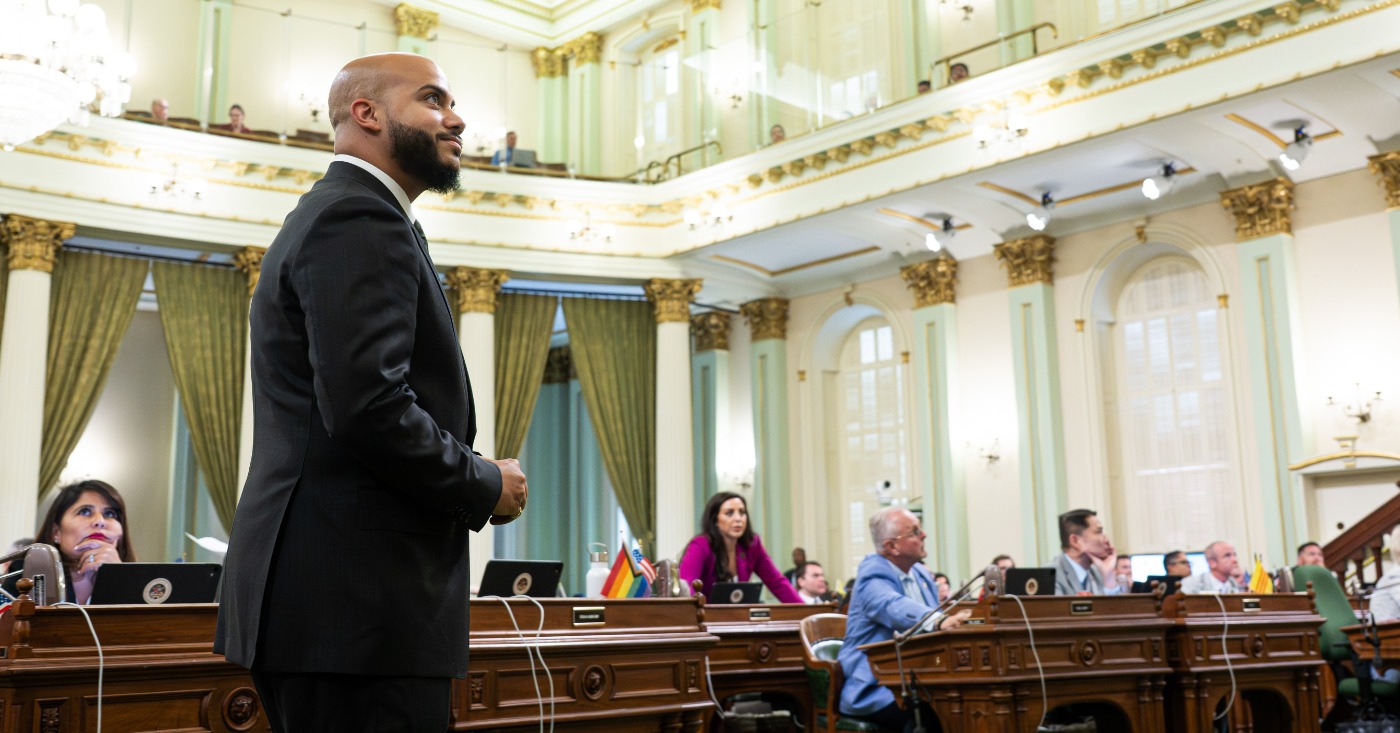
Gov. Gavin Newsom signed legislation on Sept. 27 authored by Assemblymember Isaac Bryan (D-Ladera Heights) that strengthens consumer protections for Californians purchasing tickets to concerts, sporting events and other live entertainment.
Assembly Bill 1349 expands state regulation of original ticket sellers, resellers and online resale marketplaces. The law targets deceptive sales practices, ticket-buying software and speculative listings — tickets advertised for sale by sellers who do not possess them or have authorization to sell them.
“Buying a ticket shouldn’t come with hidden risks or unfair practices,” Newsom wrote on social media after signing the measure.
Under AB 1349, ticket sellers are prohibited from listing tickets before they have been officially released unless they have authorization or a legally enforceable right to receive them. Online marketplaces must also take reasonable steps to prevent speculative ticket sales on their platforms.
The law prohibits sellers from using bots, multiple accounts, email addresses or internet protocol addresses to circumvent ticket limits, presale restrictions, electronic queues and other controls. It also bans websites and advertisements designed to mislead buyers into believing they are purchasing tickets from an authorized seller, venue or event organizer.
Sellers who violate certain provisions and fail to provide a promised ticket may be held liable for twice the ticket’s contracted price. Buyers may also recover nonrefundable expenses incurred while attempting to attend an event, along with reasonable attorney’s fees and court costs.
Pastor Tecoy Porter Sr., president of the National Action Network’s Sacramento chapter, said the law establishes needed accountability.
“Buying a ticket to a concert or show shouldn’t mean entering a marketplace where the rules are stacked against you. This year, we worked with a coalition of consumers, civil rights advocates, community groups, and businesses to make AB 1349 stronger. Consumers deserve enforceable rules that protect them. We thank Assemblymember Bryan for his leadership, and we will keep working to make ticketing fair for every Californian.”
Jose L. Barrera, national vice president for the Far West Region of the League of United Latin American Citizens, also praised the measure.
“Californian families deserve certain protections when they buy tickets. Assemblymember Bryan listened to communities across California and delivered a bill that puts fans first. We thank him and Governor Newsom for making it law.”
Black Press
‘We Don’t Talk Trash — We Pick Up Trash!’
OAKLAND POST — Following the cleanup, Jones talked with Richard Johnson, CEO of Formerly Incarcerated Giving Back (FIGB). Johnson said he wanted to bring formerly incarcerated nonprofits together not only to help clean up the city, but also to bring youth with them to mentor the next generation.
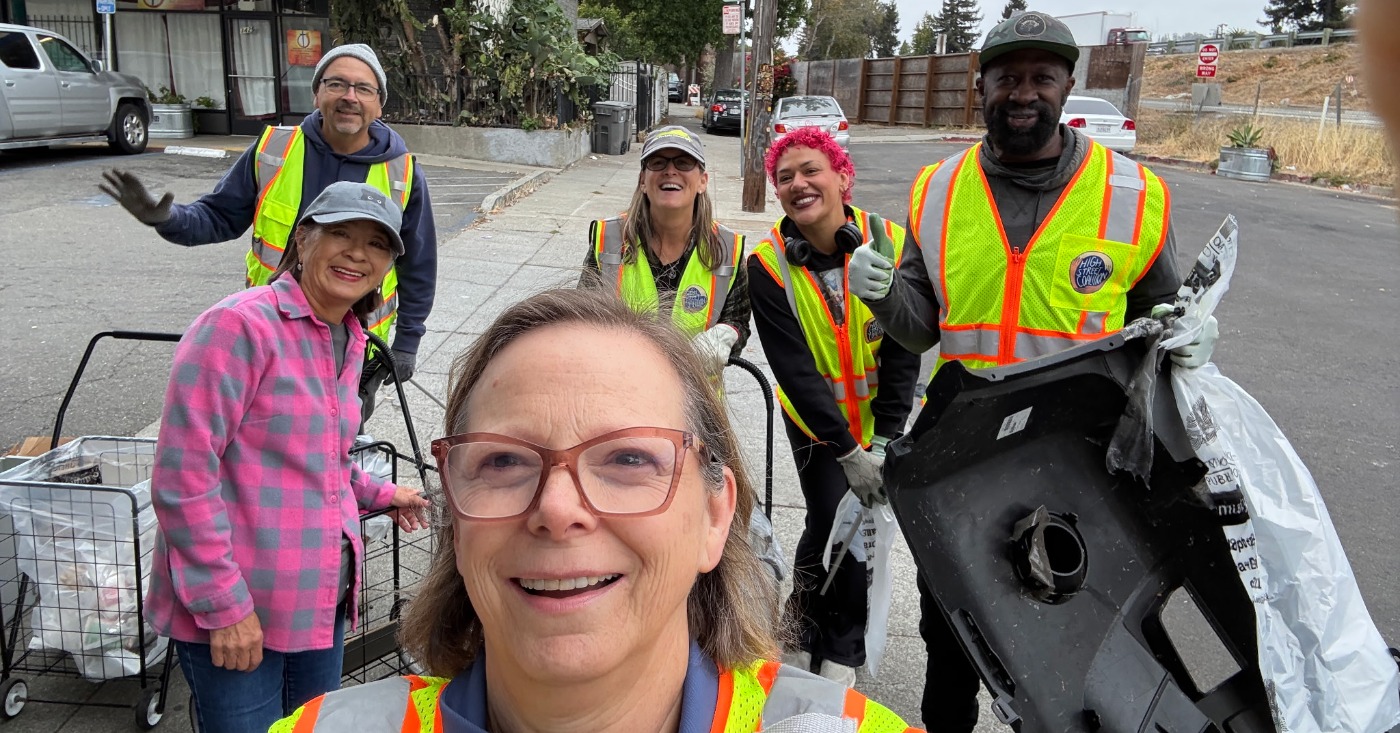
When community activist Jonathan “Fitness” Jones heard concerns from senior residents in East Oakland about illegal dumping, recurring trash issues and the health hazards they created, he decided that watching the problem was not enough.
Jones, a member of the African American Sports and Entertainment Group (AASEG) and an Oakland Private Industry Council board member, learned that seniors were frustrated by the recurrence of illegal dumping even when trash has been cleared. Recurring trash can contribute to unsanitary conditions, attract rodents and leave residents feeling that their neighborhoods are being overlooked.
On Saturday, Sept. 26, Mr. Jones joined High Street Coalition volunteers at Dick’s Donuts near High Street and Quigley Street, spending the morning picking up trash and helping beautify the surrounding neighborhood.
High Street Coalition volunteers organize community cleanups on the second and fourth Saturdays of each month.
Following the cleanup, Jones talked with Richard Johnson, CEO of Formerly Incarcerated Giving Back (FIGB). Johnson said he wanted to bring formerly incarcerated nonprofits together not only to help clean up the city, but also to bring youth with them to mentor the next generation.
Jones and Johnson discussed developing a community model that brings formerly incarcerated individuals, Oakland youth and nonprofit organizations together to clean and beautify the city.
The vision is to create opportunities for formerly incarcerated adults to take leadership roles while mentoring young people through hands-on community service. The program could also provide youth with opportunities to develop leadership skills, learn teamwork and responsibility, and potentially gain employment experience.
The goal is bigger than removing trash from the streets. It is about restoring neighborhoods while building relationships between generations and creating opportunities for people with lived experience to give back to their communities.
Jones believes the message is simple:
“We don’t talk trash, we pick up trash.”
The proposed collaboration seeks to bring Oakland nonprofits, formerly incarcerated leaders, youth, residents, businesses and community organizations together around a shared purpose — cleaning the town, beautifying Oakland and building a stronger community together.
Black Press
Zakiya Jendayi Arrested, Locked Out of Home by Sheriff’s Deputies
OALAND POST — On Tuesday, deputies followed Jendayi as she left her residence of 13 years to file documents in her case at the Appellate Court. Deputies arrested her upon arrival and transported her to Santa Rita Jail.

Yesterday, more than 10 Alameda County Sheriff’s deputies arrived to take possession of Zakiya Jendayi’s home on behalf of a court-appointed administrator. Jendayi was arrested at the courthouse and transported to Santa Rita Jail around the same time.
Jendayi, who has been embroiled in a probate court battle to retain the inheritance bestowed on her by a longtime friend and colleague who passed away in 2013, had received a notice of eviction last month.
With help from neighbors, friends and clergy, she was able to fend off the eviction from 3614 Randolph Ave. in Oakland and even obtained a reprieve when her bid to file bankruptcy was approved by a county court.
But Philip Campbell, the court-appointed administrator, had already placed Jendayi’s home in his name in October 2025.
On Tuesday, deputies followed Jendayi when she left her residence of 13 years to go to the Appellate Court to file documents in her case. Deputies arrested her upon arrival and transported her to Santa Rita jail.
Undersheriff April Luckett-Fahini said Jendayi was arrested for “safety reasons.” At this time, it is unknown what charges were used for the arrest.
In Jendayi’s absence, Campbell came to her residence accompanied by deputies, had the property taped off with yellow crime tape, and had the locks changed.
Afterward, Campbell requested a police escort to his car amid several angry neighbors who had been advocating that officials pause the eviction pending Jendayi’s appeal.
“Zakiya Jendayi is a respected Black elder in our community,” said Alameda County Supervisor Nikki Fortunato Bas, who has been working with Jendayi to prevent her eviction. “It’s outrageous that she was arrested. There needs to be more justice and equity in our probate system.”
Black Press
CalAIM Helped Alfred Flores Rebuild His Life. Why Can’t More Californians Access Its Benefits?
BAKERSFIELD NEWS OBSERVER — “Under CalAIM, there has been this incredible ability to pay for certain things that are helpful to anyone experiencing homelessness,” said Margot Kushel, Professor of Medicine, UCSF Director of UCSF Benioff Homelessness and Housing Initiative. “We can pay for things like street medicine. We can pay for enhanced case management, housing tenancy support services to keep people in their housing, and things like first and last month’s rent to help people.”
CalAIM offers housing and health care support through Medi-Cal, but fragmented health-plan rules, administrative barriers and limited awareness can make those benefits difficult for vulnerable Californians to access.
Marion Apio reported this story while participating in the USC Annenberg Center for Health Journalism’s 2026 California Health Equity Fellowship.
By Marion Apio | California Local News Fellow
California’s largest Medi-Cal transformation—California Advancing and Innovating Medi-Cal, or CalAIM—was designed to connect residents experiencing homelessness, trauma, and chronic illness directly to health care and social services. The statewide initiative allows healthcare providers to bill Medi-Cal for intensive, field-based care coordination, bringing doctors, social workers, and housing navigators directly to unsheltered residents where they live.
Yet despite CalAIM’s ambitious promise to fund care outside clinic walls, health care providers say many unhoused Angelenos still face steep barriers to accessing these services. Health plans have not always been aligned on which services to offer, creating a patchwork of coverage across the state. For patients, those differences can mean delays in approvals, changes in available services or additional paperwork before care or housing assistance can move forward.
“Under CalAIM, there has been this incredible ability to pay for certain things that are helpful to anyone experiencing homelessness,” said Margot Kushel, Professor of Medicine, UCSF Director of UCSF Benioff Homelessness and Housing Initiative. “We can pay for things like street medicine. We can pay for enhanced case management, housing tenancy support services to keep people in their housing, and things like first and last month’s rent to help people.”
“Pathways to housing are highly effective, she added, “but we need more of them. The problem is not so much that it doesn’t work for the people it’s serving; it’s that it’s under-resourced for the people it’s serving, and most people don’t get it.”
Across Los Angeles County, community organizations and street medicine teams report spending significant hours navigating complex enrollment portals and billing hurdles that delay care for residents in critical need.
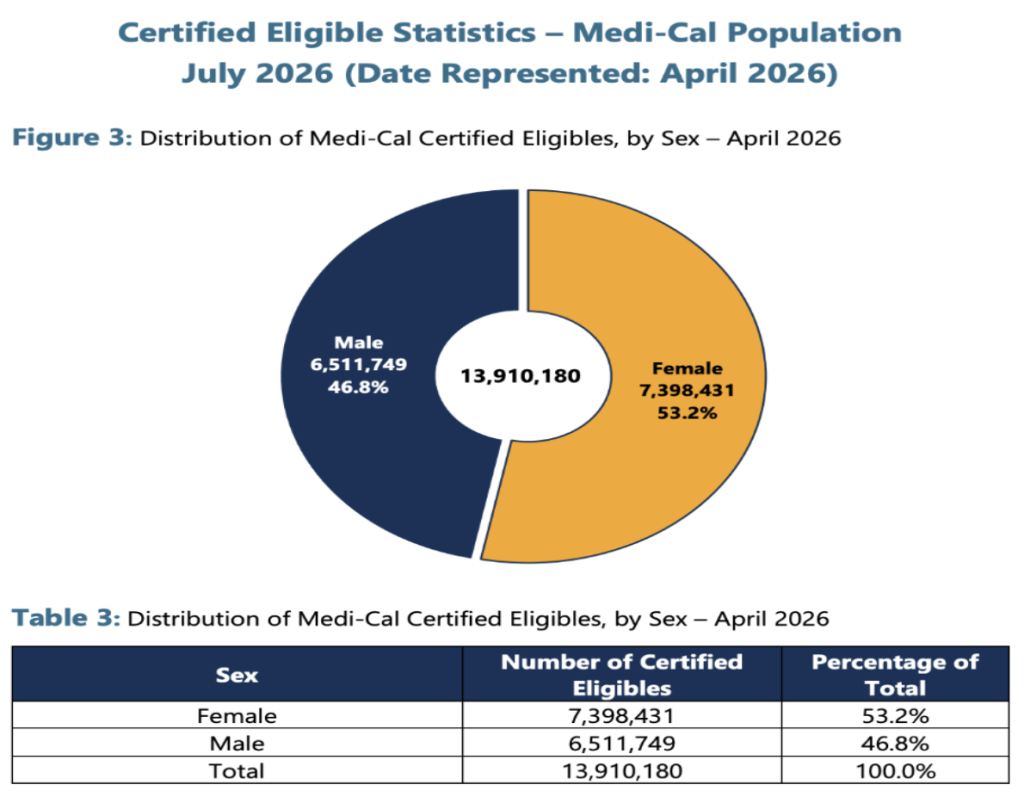
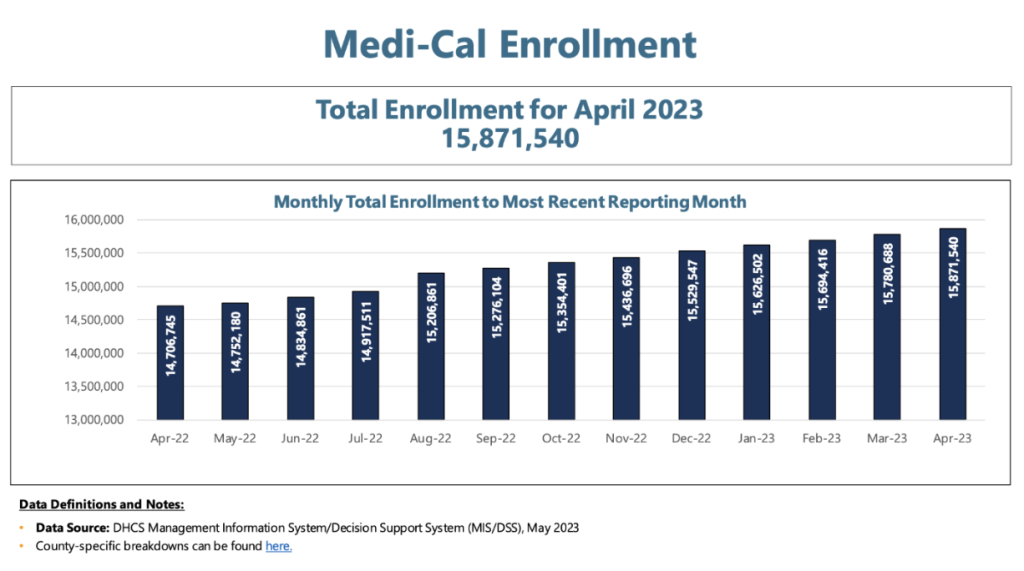
More than four years after California launched CalAIM to use Medi-Cal funding for nonmedical needs such as housing, food and case management, overall Medi-Cal enrollment has declined from about 15 million in 2023 to 13,910,180 in April 2026, according to the California Department of Health Care Services. CalAIM is not a separate insurance program and does not have its own enrollment or withdrawal process; people enroll in Medi-Cal and may qualify for CalAIM services based on their needs.
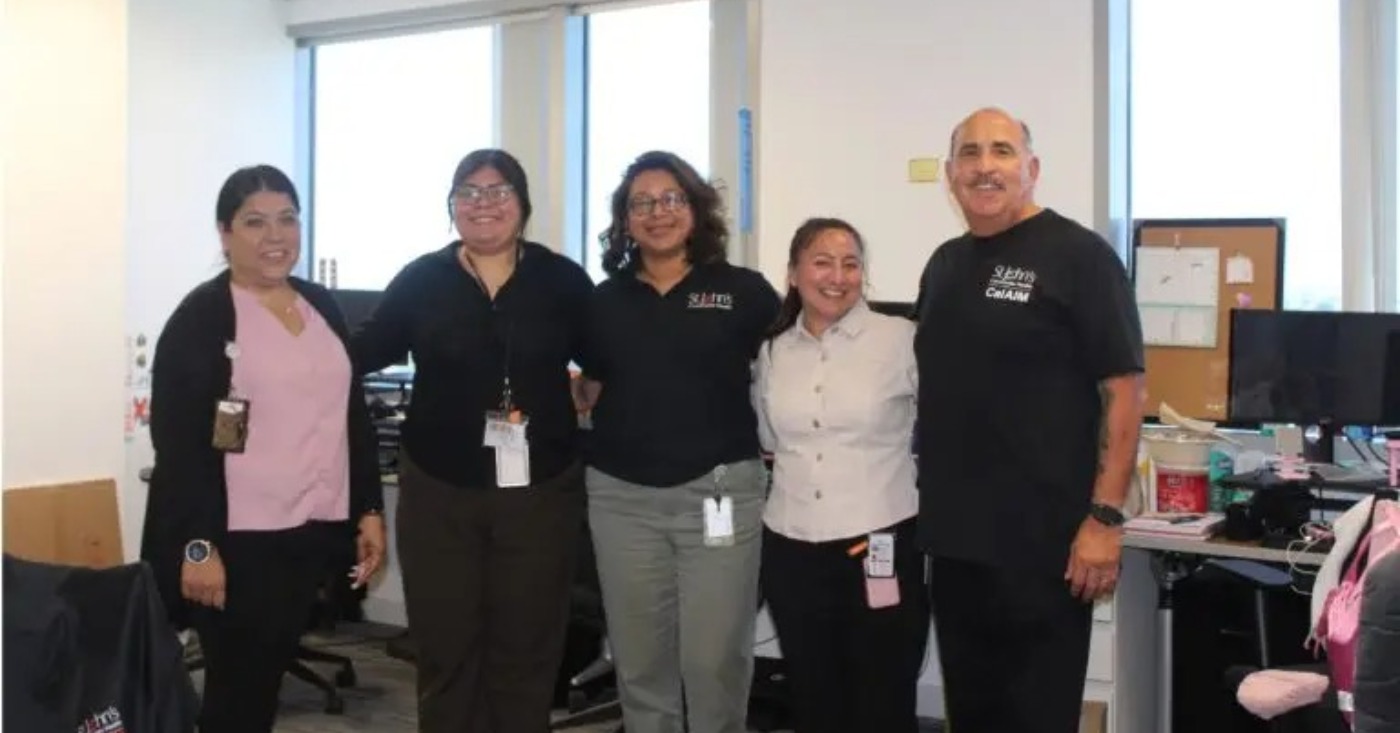
For 53-year-old Alfred Flores, connecting with a CalAIM-funded street medicine team along the Los Angeles River proved transformative.
Flores was only 17 when he first entered California’s prison system as an adult.
Raised around family members involved in gang life and without financial resources for a private legal defense, the young Flores cycled through juvenile halls and state prisons, including the California Institution for Men in Chino and a correctional facility in Delano.
“I was tried as an adult and we didn’t have any lawyers or nothing,” Flores said. “So, yeah, I was misjudged, you know. But it is what it is.”
Decades after his release, the consequences of incarceration lingered. Diagnosed with severe post-traumatic stress disorder, Flores struggled to navigate crowded public spaces and complex social service systems. Unhoused and contending with uncontrolled diabetes, his health rapidly deteriorated.
Flores’ path changed when he met Artie Vasquez, a community health worker and case manager with St. John’s Community Health. Vasquez helped Flores navigate and access medical care through case management services provided under CalAIM’s Enhanced Care Management benefit — and, just as importantly, helped him secure an apartment in Inglewood using Medi-Cal dollars.
Enhanced Care Management (ECM) — a Medi-Cal benefit that provides intensive, individualized care coordination for members with complex needs — pairs members with a care manager who coordinates physical, behavioral and social services, while Community Supports address needs such as housing instability, nutrition and chronic-condition management.
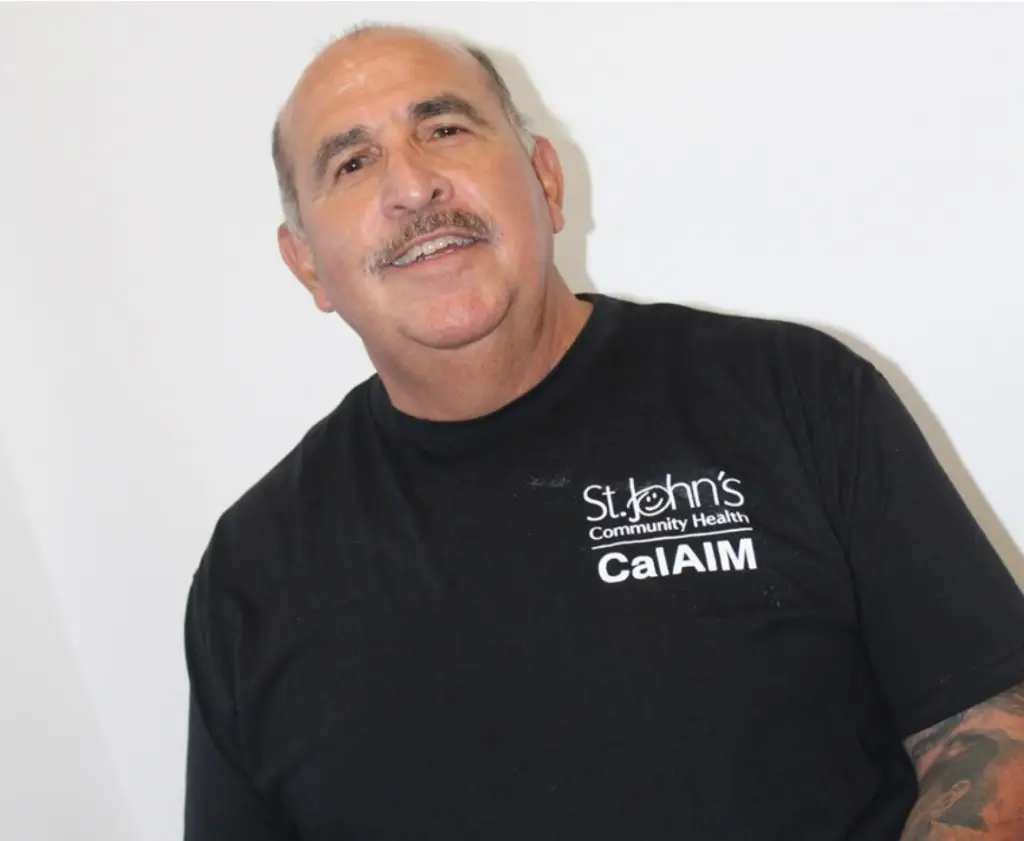
“I can go in and out of my house. I can shower whenever I want. Use the restroom whenever I want. It’s my house, you know,” Flores said.
Artie Vasquez, who overcame similar life challenges before becoming a case manager, said the program provides the scaffolding needed for individuals leaving incarceration to successfully transition back into society.
Medi-Cal covers close to 14 million residents statewide. In Los Angeles County, where over 70,000 people experience homelessness on any given night, connecting high-need populations to social safety nets remains an operational challenge.
CalAIM addresses these challenges through Community Supports, or non-medical interventions, such as move-in security deposits, housing navigation, and modifications to make housing accessible.
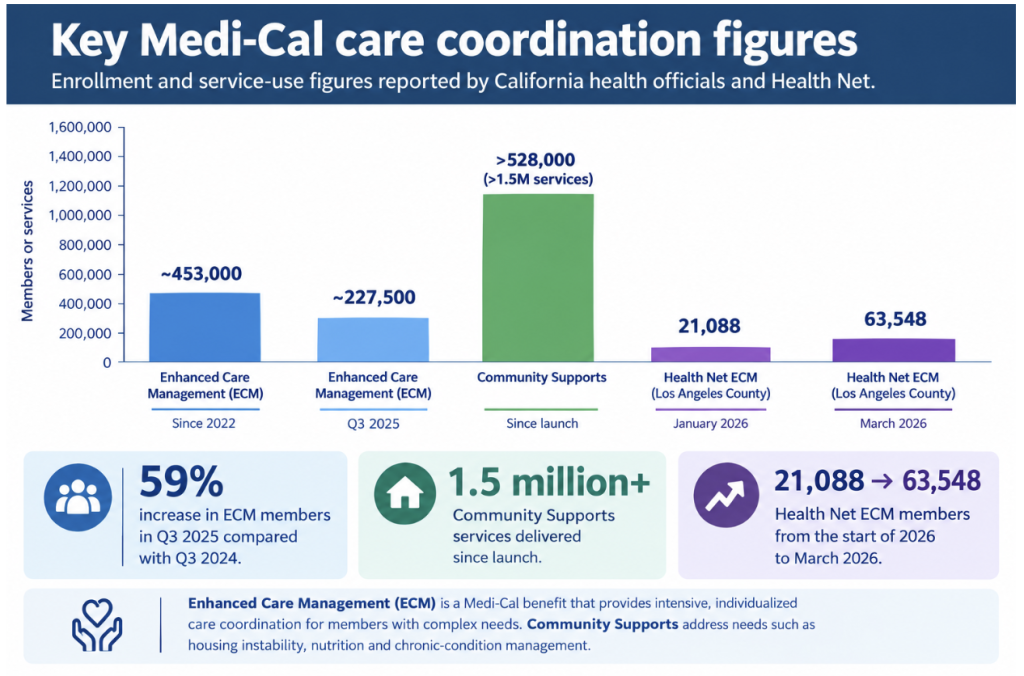
For frontline clinics, the growth in such services represents a massive shift in how care is delivered.
Christina Guevara, an Enhanced Care Management program manager at St. John’s Community Health has watched this safety-net infrastructure expand over six years.
In just the past three years, St. John’s CalAIM caseload has surged from under 1,000 patients to nearly 1,600, serving a community that is roughly 55% Latinos and White as well as 26% Black, according to Monica Cotom, director of CalAIM at St. John’s Community Health.
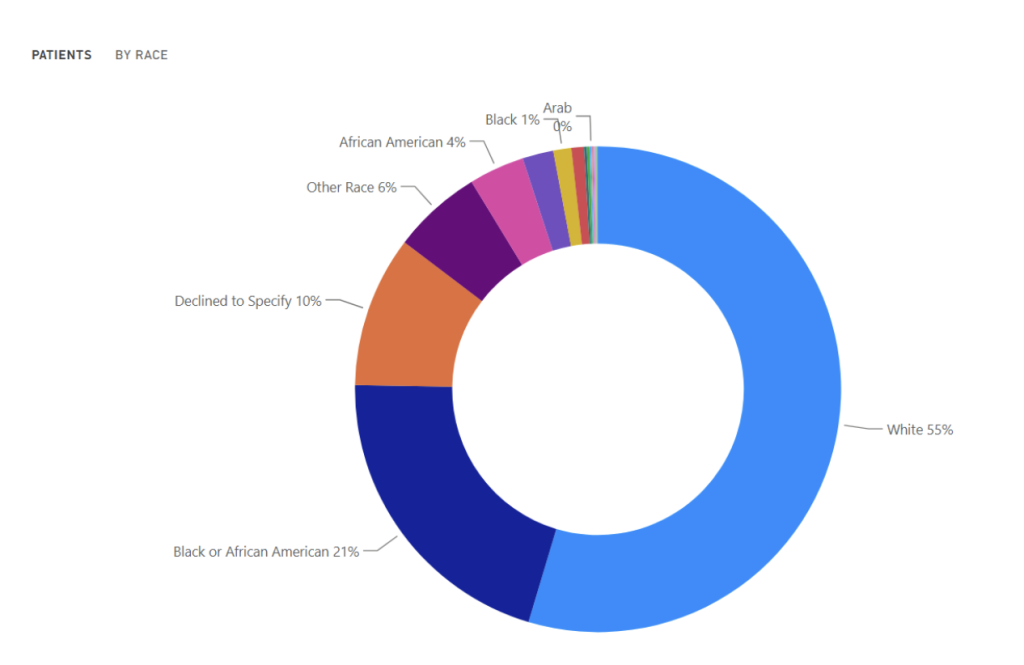
Guevara noted that language barriers, low health literacy, and a lack of support systems frequently cause low-income patients to drop out of care. She said that is especially true for older patients who may struggle to navigate complex medical instructions or question a doctor’s diagnosis.
In one instance, St. John’s case managers worked with an unhoused domestic violence survivor living in a shelter who avoided medical visits out of fear of being located by an abuser. Through biweekly phone calls, virtual support groups, and accompanied clinic visits, case managers helped the survivor secure permanent housing and reduce his hemoglobin A1C level from a dangerous 14% down to 7% over an 18-month period.
Yet, administrative breakdowns regularly interrupt patient care.
“The health plans have never been quite aligned for this program across the board, and so that’s been the barrier,” said Cotom. “We have to fluctuate with whatever the health plans need, and so that makes it hard.”
Because each Medi-Cal managed care plan operates with its own documentation requirements, billing systems, and approval rules, caseworkers must constantly adapt to conflicting administrative processes. For unhoused patients, these hurdles translate directly into real-world delays. For unhoused clients, bureaucratic errors can pause housing placements for months.
In Inglewood, city officials acknowledge that awareness remains a barrier.
Roberto Chavez, HUD programs manager for the City of Inglewood, called CalAIM an “untapped resource,” and noted that municipal governments currently lack public education campaigns to connect eligible residents with the state program.
“Not too many people are aware of that,” Chavez said. “Again, that requires some education of the residents and people experiencing homelessness, as well as any staff that’s in charge of identifying resources.”
When asked what the city is doing to publicize CalAIM to unhoused residents, Chavez said the city relies on partner non-profits rather than municipal outreach.
“Nothing at the current moment,” Chavez said. “But we direct folks to the St. Margaret’s Center, and they make folks aware of the CalAIM program, as well as the South Bay Cities Council of Governments.”
Addressing why local agencies struggle to roll out CalAIM seamlessly, Kushel called it a nearly impossible task.
“When you’re frantically trying to plug up holes from 50 years of failed policies at every level of government in a wildly unequal country where there’s rampant income inequality … it’s also really an impossible task,” Kushel said, adding that local authorities are “trying to put fingers into sort of a leaking bucket, and it’s very hard to do that.”
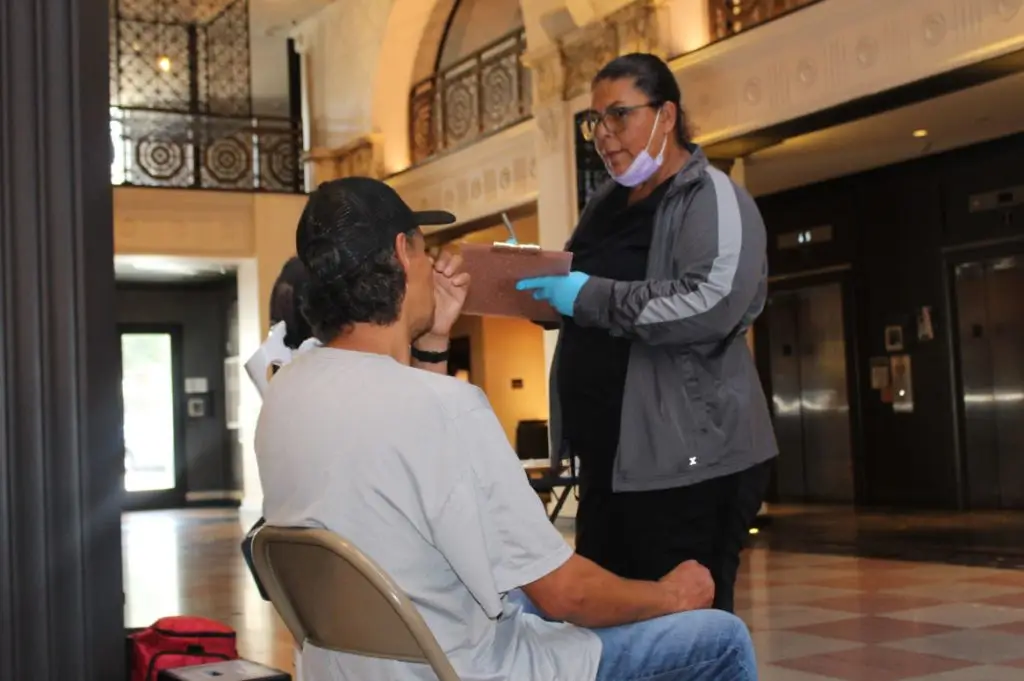
Ashley Watson was offered CalAIM services in June 2025 while living in her car in Los Angeles. Working with Stephanie Ortiz, a case manager, Watson secured several jobs to raise her monthly rental budget from $1,200 to $2,000. When bad credit led to apartment rental rejections, Ortiz assisted in securing a guarantor.
However, during the application process, an administrative error caused Watson’s Medi-Cal coverage to terminate unexpectedly. It took nearly a month of staff effort to restore her coverage before security deposit and move-in funding could be released. Watson moved into her apartment in November 2025 and officially graduated from the program in June 2026.
Mary Vargas, Community Supports program manager at St. John’s, said administrative gaps leave the most vulnerable clients behind.
“A lot of people don’t understand why and feel powerless in their own care,” Vargas said. “If you’re powerless, have a chronic condition, and are alone with no support, your health significantly declines.”
Guevara reported that rising fears around immigration status and potential scams have led members to decline home visits or ignore phone calls from case managers. To support clients facing these anxieties, St. John’s transitioned many in-person check-ins to virtual appointments.
DHCS acknowledged that some immigrant families are experiencing fear about data-sharing with federal agencies that might use the information in enforcement actions. The department said it does not track whether people decline CalAIM services because of those concerns, but encouraged eligible Medi-Cal members to maintain their coverage and continue seeking care.
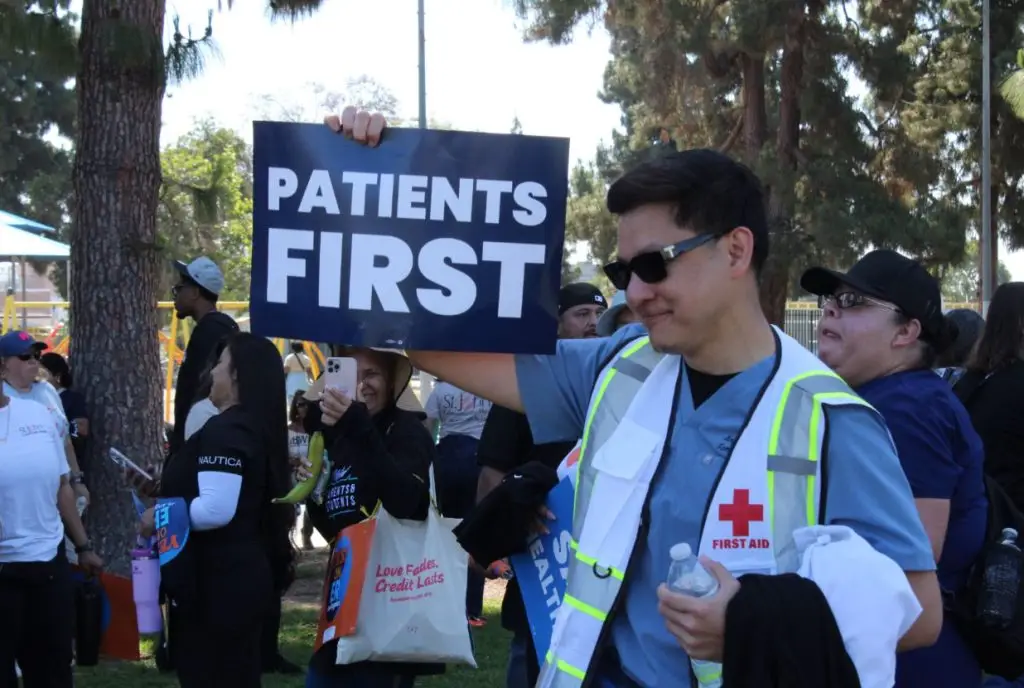
Vasquez noted that individuals released from state prisons face delays of 30 to 90 days before their active Medi-Cal status is reinstated.
Those delays force clinics to rely on sliding-scale fees based on income –which many newly released participants do not have –while unhoused individuals without physical addresses often rely on family members’ addresses to keep their mail delivered and avoid losing coverage.
But for those who get past the hurdles and receive services, the results can be life changing.
Flores is now enrolled in online business and culinary arts classes through Coastline College, working toward his long-term goal of financial independence.
“Before, I didn’t know how to go about things, but now with my medication, my doctors, and my case manager who always calls to see if I’m doing okay, it has helped me a lot—and I can trust the system,” Flores said.


A $2.1 Trillion Wellness Industry Never Built a Daily Practice for Black Children. So This Atlanta Family Did.

Find Black-Owned Banks & Auto Loan Pre-Approval Easily #shorts

Car Warranty Explained: Powertrain, Basic & Roadside! #shorts

NFN present Tonight: Inaugural Beyond IWDM50 Podcast – Northeast Sectional Focus

Defender Athlete of the Week – Elicia Hunt

Houston confronts the toll of gun violence on youth

Last Chance: Nominate for Best of the DMV #washingtoninformer #shorts

Training Journalists for Digital Storytelling and Substack #washingtoninformer #shorts

A pastor s story how the podcast helped ministry #washingtoninformer #shorts

Appointing a clinical czar to coordinate Black health research #washingtoninformer #shorts

Latest Massacre in Haiti Reveals Cruelty U.S. Deportations

Black Americans Have Doubts About the U.S. Food System

When Praises Go Up: SUGC Nominated for Prestigious Stellar Award.

Booked and Unbound: The Legacy of Black Women’s Literary Circles

The Youngest American Killed in the Vietnam War

U.S. Sole Nation to Oppose U.N. Resolution Correcting Africa’s Size on World Maps

COMMENTARY: Big Mama Said ‘Don’t Let Grief Break the Bank’

Prostate Cancer is Twice as Likely to Kill Black Men. Talking to Your Doctor Could Help Save Your Life

U.S. Open Influencers Spark Backlash over Ring Lights, Filming as Gauff and Osaka Speak Out

Passing for White, Fighting for Black America: The Courage of Walter White
Find Black-Owned Banks & Auto Loan Pre-Approval Easily #shorts
Car Warranty Explained: Powertrain, Basic & Roadside! #shorts
NFN present Tonight: Inaugural Beyond IWDM50 Podcast – Northeast Sectional Focus
Defender Athlete of the Week – Elicia Hunt
Houston confronts the toll of gun violence on youth
Last Chance: Nominate for Best of the DMV #washingtoninformer #shorts
Training Journalists for Digital Storytelling and Substack #washingtoninformer #shorts
A pastor s story how the podcast helped ministry #washingtoninformer #shorts
Appointing a clinical czar to coordinate Black health research #washingtoninformer #shorts

How churches can act now to help women with breast cancer #washingtoninformer #shorts
-

 Black Press5 days ago
OP-ED: Haiti TPS: Have We Lost Sense of Humanity?
-
 Black History1 week ago
Remembering Chauncey Bailey as Student Journalists Face Threats to Truth-Telling
-

 Black Press1 week ago
Poll: Becerra Widens His Lead Over Hilton; Californians Split on Wealth Tax
-
 Black History1 week ago
COMMENTARY: The Audacity of Joyce Beatty
-

 Black History1 week ago
Rulings Leave Questions Lingering in Nolan Wells Case
-
 Black History1 week ago
Baptist Minister Says Black Church Champions for Civil Rights to Reign but Hesitates to Let Black Women Lead
