
Featured
US House hears testimony on voter discrimination
LOUISIANA WEEKLY — Since the Democrats took control of the U.S. House last November, their efforts to restore the Voting Rights Act (VRA) — gutted by the U.S. Supreme Court in its 2013 Shelby County v. Holder decision — have continued despite entrenched Republican opposition. On Sept. 10, the House Judiciary’s Subcommittee on the Constitution, Civil Rights, and Civil Liberties once again focused the nation’s attention on the VRA with a hearing titled “Evidence of Current and Ongoing Voting Discrimination.”


By Benjamin Barber
(Special from Facing South) — Since the Democrats took control of the U.S. House last November, their efforts to restore the Voting Rights Act (VRA) — gutted by the U.S. Supreme Court in its 2013 Shelby County v. Holder decision — have continued despite entrenched Republican opposition.
On Sept. 10, the House Judiciary’s Subcommittee on the Constitution, Civil Rights, and Civil Liberties once again focused the nation’s attention on the VRA with a hearing titled “Evidence of Current and Ongoing Voting Discrimination.”
Witnesses included several prominent civil rights leaders: Derrick Johnson, NAACP president; Vanita Gupta, president and CEO of the Leadership Conference on Civil and Human Rights; Dale Ho, director of the American Civil Liberties’ Voting Rights Project; Myrna Perez, director of the Brennan Center for Justice’s Voting Rights and Elections Program, and Natalie A. Landreth, senior staff attorney at the Native American Rights Fund.
Also on the panel was J. Christian Adams, president and general counsel of the conservative Public Interest Legal Foundation and a former member of the Justice Department under the Bush administration. Adams has been known to spread false and exaggerated claims about voter fraud.
The witnesses began by reporting their findings of ongoing voter discrimination at the state and local level.
After the Supreme Court effectively struck down the Section 5 of the VRA that required states and counties with a history of voting discrimination — most of them in the South — to get federal preclearance for election law changes, Republican state lawmakers began promoting restrictive voting laws that explicitly targeted voters of color. Of the 13 Southern states, 11 adopted such laws in Shelby’s wake. Among them are states that were covered in whole by the preclearance requirement, including Alabama, Georgia, Mississippi, South Carolina, Texas, and Virginia, as well as those covered in part, such as North Carolina.
“Justice Ruth Bader Ginsburg famously warned about the Supreme Court’s decision striking down a part of the voting rights act was like, quote, throwing away your umbrella in a rainstorm, and sure enough, after the decision a downpour came with a wave of discriminatory voting laws,” said the ACLU’s Ho. Among them were measures that required voter ID, scaled back early voting periods, cut polling locations, restricted absentee ballots, and limited voter registration.
Gupta, who previously led the Obama Justice Department’s Civil Rights Division, emphasized the impact of polling place closures on voter turnout. She referenced a report recently released by The Leadership Conference that examined polling places in 750 counties once covered by Section 5. It found that 1,688 polling places were closed between 2012 and 2018, largely in Black communities. Polling place closures often lead to long lines, voter confusion, and transportation challenges.
“Without preclearance, states are under no obligation to evaluate the discriminatory impacts and potential harms of polling place closures,” said Gupta.
The NAACP’s Johnson pointed out that without preclearance and a responsive Justice Department the burden of combating voting discrimination has fallen on legal organizations and voting rights activists. “Our branches and members are asked to do what used to be the job of the federal government — protect the right to vote,” he said. “To be clear, we’re fighting back wherever and whenever we can. This is not sustainable. Congress must step up to combat this nation’s epidemic.”
Noting that prior to Shelby jurisdictions had to clear changes to their purge practices with the Justice Department, the Brennan Center’s Perez reported that almost 16 million people were removed from the voting rolls between 2014 and 2016. “It’s difficult to address the effects of bad purges until it is too late,” she said. “That’s why Section 5’s preclearance process is well tailored to address not only voter discrimination and other forms but the purge problem specifically”
Landreth focused on how losing preclearance protections has affected Native American voters. In the first election after Shelby in formerly preclearance-covered Arizona, for example, Maricopa County reduced the number of polling places from hundreds down to about 60 in 2016, resulting in voters standing in line for as long as six hours to cast a ballot. The voters were forced to sue to get polling places reopened.
“Why do these voters have to sue to not wait in a four- to six-hour line?” asked Landreth. “Because preclearance is gone.”
Besides detailing problems, the hearing also considered solutions — and all of the witnesses agreed that restoring Section 5 of the VRA was critical. There are currently several bills in Congress that would restore the VRA, all of them stalled in the legislative process because of inaction by Republican leaders.
“Make no mistake — Congress has ample evidence [of the need] to restore the Voting Rights Act to its full strength,” said Johnson. “No one can deny the strong record that supports immediate passage.”
This article originally appeared in the online magazine of the Institute for Southern Studies, www.southernstudies.org. The Institute for Southern Studies is a nonprofit research and media center that exposes injustice, strengthens democracy and builds a community for change in the South.
This article originally published in the September 16, 2019 print edition of The Louisiana Weekly newspaper.
This article originally appeared in The Louisiana Weekly.





Featured
Stacey Abrams Talks Democracy, Voting and Leadership at Harris Stowe State University
Stacey Abrams visited Harris-Stowe State University to discuss civic engagement, democracy, and leadership with local students and community leaders.

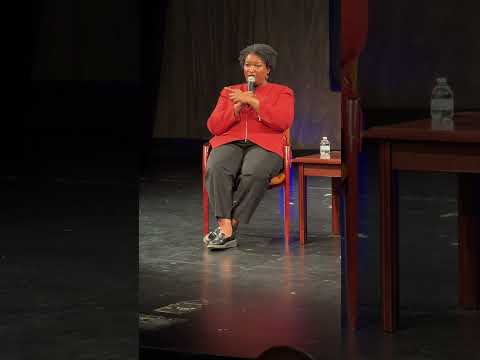
Stacey Abrams visited Harris Stowe State University on Wednesday for a conversation centered on democracy, civic engagement and leadership ahead of the upcoming elections.
Abrams was joined by HSSU President Dr. LaTonia Collins Smith, Congressman Wesley Bell and Missouri State Rep. Ray Reed for a discussion with students and the St. Louis community.
📸 Video by Lawrence Bryant / St. Louis American
#stlamerican #HarrisStowe #StaceyAbrams #StLouis
Featured
Brett Buckner on North Commons and Community | Blacklight on Sports
Brett Buckner joins Blacklight on Sports to discuss the long-awaited North Commons Park fieldhouse and his vision for the future of community-anchored sports.

Brett Buckner does not call himself an activist. He calls himself a servant, and he says the work is the daily, unglamorous effort of making the north side better for the people who live there.
Buckner joins host Charles Hallman on Blacklight on Sports to talk about the North Commons Park fieldhouse, which took more than 12 years to reach groundbreaking and secured federal, state and local funding together. He explains how the project was built so the community center could keep operating, why nearly 12,000 children within a mile make the park a regional opportunity, and how he hopes suburban teams will start traveling to the north side to compete.
He also shares his vision for a mixed-use campus built to anchor women’s professional sports, a concept he is developing with the Minnesota Vixen, and his call for the Timberwolves, Lynx, Vikings and Twins to invest in the north side in sustained ways. The conversation covers the $3.5 billion Blue Line extension, voter protection work with Common Cause Minnesota, how Minnesotans responded when ICE came to the north side, and what arriving at Hampton University, an HBCU, taught him about Black leadership.
Watch the full conversation.
Featured
From Ministry Mistakes to a Resonant Message #shorts
Don’t let past mistakes disqualify your future. Your story carries weight, and your voice deserves to be heard.
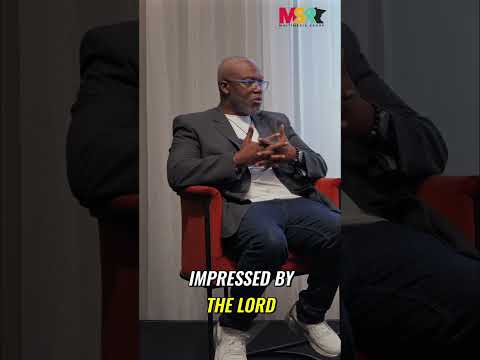
After hitting rock bottom, it is easy to count yourself out. But past mistakes do not disqualify your purpose. Your story still carries weight, and your voice deserves to be heard regardless of your history. #PersonalGrowth #FindingPurpose #OvercomingFailure #Inspiration #SelfWorth
Featured
LaBrent Speed on Building B3 and Serve Before You Sell | On The Radar | MSR
LaBrent Speed shares his journey of building B3, the power of intentional networking, and the mission behind his new book, The Transformation Code.
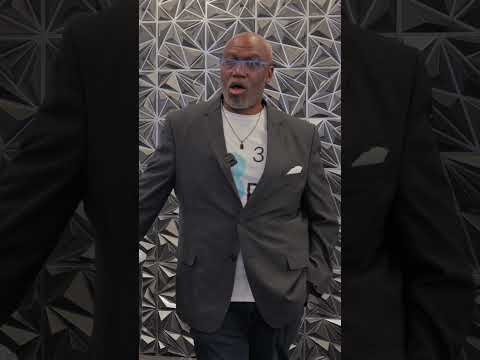
LaBrent Speed, founder of The Better Black Business Project and BNI’s first Black regional director, talks about intentional networking for Black entrepreneurs, his nonprofit B3I and his new book The Transformation Code.
Full story at msr.media.
Subscribe for more On the Radar from the Minnesota Spokesman-Recorder.
Featured
LaBrent Speed on Building B3, Serve Before You Sell and The Transformation Code | On The Radar | MSR
LaBrent Speed joins On the Radar to discuss building B3 and his mission to transform Black entrepreneurship through a “serve before you sell” philosophy.
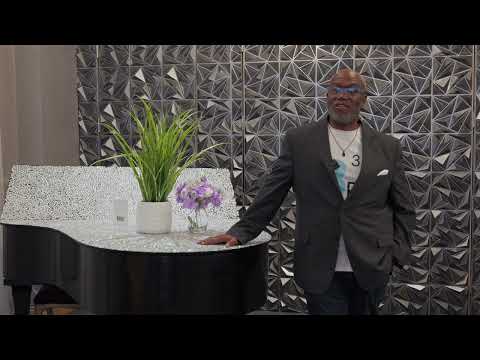
LaBrent Speed spent 30 years in sales, served as chapter president of a BNI chapter and became BNI’s first Black regional director, traveling and teaching across Minnesota. And the whole time, he kept noticing something that bothered him.
When he attended Black networking events, there was no intentionality. No structure. No mechanism to actually build business together. Just cards and pitches and socializing.
In this On the Radar episode, host Damenica Ellis sits down with Speed to talk about what he did about it, what he has built, and the personal journey that shaped all of it.
Speed founded The Better Black Business Project, or B3, on one foundational principle: serve before you sell. The organization is a professional networking community for Black entrepreneurs and authentic allies, built around what Speed calls the intentional pursuit of impactful relationships. In just over two years, B3 has grown to more than 100 members who have passed millions of dollars in referral business to one another. The organization is now expanding virtually into markets like Atlanta ahead of in-person launches.
“I wanted to create an intentional community of people coming together, building each other up and doing business with one another.”
Speed also runs B3I, The Better Black Business Initiative, a nonprofit that trains Black youth, next-generation allies and justice-impacted people to become entrepreneurs.
On September 11, Speed released his first book, The Transformation Code: 5 Keys to Transforming Your Life and Impacting the World. He says the book grew out of one of the lowest periods of his life, before B3 existed, when he was going through personal upheaval and actively studying what it actually takes to change.
“I was severely overweight. I was going through my third divorce, and life just didn’t look good. I wanted to know, how do I actually change from where I am to where I want to go?”
The principles he discovered on that journey are the same ones that run through B3: serve first, build genuine relationships, prioritize community alongside commerce and stay anchored in your why.
“Community without commerce is nice, but it’s broke. And commerce without community is transactional. We don’t want either one of those.”
Full story at msr.media.
Featured
North Commons Park: A Regional Destination for Community #shorts
North Commons is transforming into a world-class destination for Minneapolis youth, offering 12,000 local kids a premier space to play, connect, and grow.

North Commons is evolving into a world-class park for Minneapolis youth. By upgrading facilities near North High and local community centers, the project gives 12,000 neighborhood kids a first-rate space to play, compete, and connect locally. #CommunityDevelopment #MinneapolisParks #YouthSports #UrbanPlanning


Stacey Abrams Talks Democracy, Voting and Leadership at Harris Stowe State University

Brett Buckner on North Commons and Community | Blacklight on Sports

From Ministry Mistakes to a Resonant Message #shorts

LaBrent Speed on Building B3 and Serve Before You Sell | On The Radar | MSR

LaBrent Speed on Building B3, Serve Before You Sell and The Transformation Code | On The Radar | MSR

North Commons Park: A Regional Destination for Community #shorts

62 Years of the Washington Informer: Our Origin and Mission #washingtoninformer #shorts

From Christies to Bali: The Birth of 11Eleven gallery #washingtoninformer #shorts

Nicola Charles on 11 Providing a Space for Artistic Expression and Cultural Engagement | Let’s Talk

Thomas Jackson on Building Par365 | MSR On the Radar

The Youngest American Killed in the Vietnam War

Passing for White, Fighting for Black America: The Courage of Walter White

OP-ED: Haiti TPS: Have We Lost Sense of Humanity?

Remembering Chauncey Bailey as Student Journalists Face Threats to Truth-Telling

Peter Magubane: a Camera Against Apartheid

Mayor Lee Announces $1 Million Kaiser Permanente Grant for Pilot Program to Address Homelessness, Clean Up Public Spaces throughout Oakland

OP-ED: How Head Start Also Helps Parents

All Skinfolk Ain’t Kinfolk

Poll: Becerra Widens His Lead Over Hilton; Californians Split on Wealth Tax

Rulings Leave Questions Lingering in Nolan Wells Case
Stacey Abrams Talks Democracy, Voting and Leadership at Harris Stowe State University
Brett Buckner on North Commons and Community | Blacklight on Sports
From Ministry Mistakes to a Resonant Message #shorts
LaBrent Speed on Building B3 and Serve Before You Sell | On The Radar | MSR
LaBrent Speed on Building B3, Serve Before You Sell and The Transformation Code | On The Radar | MSR
North Commons Park: A Regional Destination for Community #shorts
62 Years of the Washington Informer: Our Origin and Mission #washingtoninformer #shorts
From Christies to Bali: The Birth of 11Eleven gallery #washingtoninformer #shorts
Nicola Charles on 11 Providing a Space for Artistic Expression and Cultural Engagement | Let’s Talk
Thomas Jackson on Building Par365 | MSR On the Radar
-
 Black Press1 week ago
All Skinfolk Ain’t Kinfolk
-
 Black Press1 week ago
Oakland Awarded More than $14 Million in State Funding
-
 African American News and Issues7 days ago
Black History: Gladys West Mathematics Helped Make GPS Possible
-
 Black Press1 week ago
Jendayi Arrest Raises Community Concerns Regarding Sheriff’s Chain of Command
-

 Black History4 days ago
OP-ED: The Black Church Writes AI’s Next Chapter
-
 Black Press1 week ago
Democrats, Community Groups Back Measure EE to Change How Oakland Is Governed
