
Education
HBCU Students “Discover The Unexpected” with the Black Press

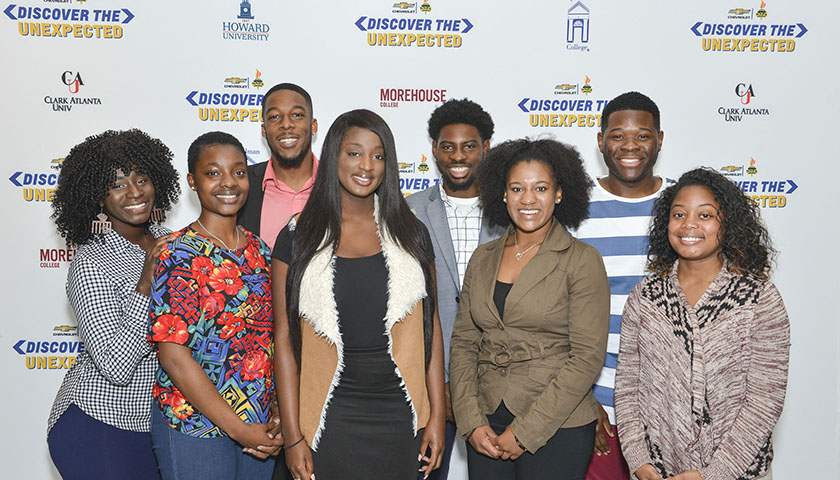
By Noni Marshall and Alexa Imani Spencer (NNPA/DTU Journalism Fellows)
The National Newspaper Publishers Association (NNPA) kicked off the second year of the “Discover The Unexpected” (DTU) Journalism Fellowship program with an “Immersion” event in Detroit, Mich. Chevrolet, the sponsor of the program, hosted the student scholars and a handful of NNPA publishers and editors for an interactive experience designed to prepare the fellows for a summer of working with the Black Press.
The 2017 DTU journalism fellows are: Alexa Imani Spencer and Noni Marshall from Howard University; Kelsey Jones and Taylor Burris from Spelman College; Jordan Fisher and Tiana Hunt from Clark Atlanta University; and Ayron Lewallen and Darrell Williams from Morehouse College.
The trip commenced with a welcome ceremony at a repurposed firehouse that serves as the commercial studio of Ed Welburn, the former vice president of Global Design at General Motors (GM). Representatives from GM and the NNPA greeted the fellows. The all-new 2018 Chevrolet Equinox was parked at the entrance.
Chevrolet sent an all-new Equinox to each of the participating NNPA member publications for the DTU fellows to use for a month during the program.
After a joyous welcome from the program’s team, Dr. Benjamin F. Chavis, Jr., the president and CEO of the NNPA and Michelle Alexander, the diversity marketing manager for Chevrolet, delivered remarks. Serving as this year’s Road Trip Navigator, Jamilah Lemieux, the vice president of News and Men’s Programming for Interactive One’s, expressed the importance of Black media.
“I am firm believer in the urgency of protecting the future of Black media, of making sure that we have ample opportunity to not just tell our stories well, because we’ve always been able to tell our stories well, but to amplify them,” Lemieux said.
After Lemieux’s poignant remarks, the scholars were led outside of the firehouse where one bright red and three splashy orange Chevrolet Equinoxes awaited them. The DTU fellows in teams of two, accompanied by Chevrolet staffers and coordinators from the program, piled into the four SUVs ready to explore Detroit. Scavenger hunt clues rang clearly through the speakers of the Equinox and they were off to navigate the city. The clues led the teams to four, distinct locations: Dilla’s Delights, Detroit vs. Everybody, N’Namdi Center for Contemporary Art, and the Charles H. Wright Museum of African American History.
At each stop, the students interviewed the shop owners, clerks, curators, and museum guides, documenting their visits for their first assignments as DTU fellows. Burris said that speaking to the clerk at Detroit vs. Everybody, a boutique clothing store, was her favorite part of the scavenger hunt.
“It was obvious that Sade, the clerk, was very knowledgeable about what their brand means and how it is continuously uplifting the community and defying the odds,” said Burris, who will partner with Ayron Lewallen at The Carolinian this summer.
The scavenger hunt ended with a tour of the Charles H. Wright Museum of African American History. Ken Barrett, the chief diversity officer for GM, gave brief remarks about the importance of the program and the role of journalists in society.
The final day of the Detroit immersion event included an inspirational speech from Dr. Chavis at GM headquarters. The DTU fellows sat quietly around a conference room table, focused closely on his words, as he reminded them that they represented an emerging generation of journalists.
Chavis also noted that this year marks the 190th anniversary of the Black Press in America.
“This is an opportunity not just to reaffirm [our] 190 year legacy, but to represent that legacy in new and more profound ways that match the challenges and opportunities we face in our communities,” Chavis said.
The DTU fellows were given the opportunity to meet with representatives from the NNPA member newspapers, where they will work this summer; Shalon Bell from The Atlanta Voice; Adria Jervay of The Carolinian, based in Raleigh, N.C.; David Baker of The Louisiana Weekly, based in New Orleans; and Kevin McNeir from The Washington Informer, based in Washington, D.C.
In these breakout sessions, the senior newspaper staffers shared their expectations with their new writers. Anxious to get started, the fellows asked questions and marveled at the history of the newspapers they were soon to join. There was a fresh excitement in the air after the student scholars connected with the editors and representatives from the NNPA member publications.
Next on the schedule, was a trip to the Content Studio, an organization within GM, that develops communications resources for the brand and improves how the company operates efficiently, strategically, and consistently within the public social web. There, the fellows were able to see how the marketing side of Chevrolet has expanded, technologically, by partnering with many different agencies in order to have a worldwide impact.
According to Alexander, the NNPA/DTU journalism program is an extension of the partnerships that Chevrolet holds in high esteem.
“As a brand, [Discover The Unexpected], ties into our philosophy of finding new roads and ingenuity,” Alexander said. “We, as a brand, feel like this is something important that we are committed to.”
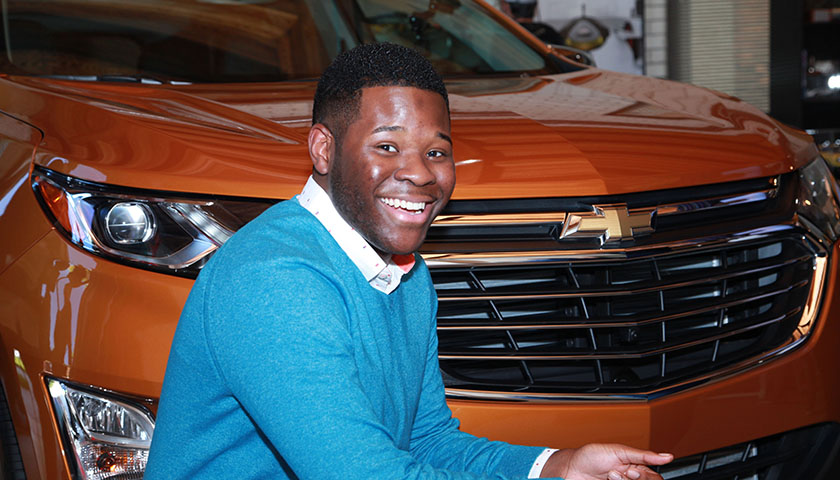
Jordan Fisher, a 2017 NNPA DTU Journalism Fellow and student at Clark Atlanta University, poses for a photo with the 2018 Chevrolet Equinox. (Chevrolet)
As the trip came to an end, the DTU fellows shared final hugs and goodbyes. For some of them, the Detroit Immersion event was a life-changing experience; most of them had never been exposed to the Motor City’s rich history.
For all of them, one thing was true: “Discover The Unexpected” was far more than just a program. It’s a family.
“I was impressed by the immense love we have received from the whole General Motors staff, NNPA, and the fellows,” said Jordan Fisher, who will join Kelsey Jones at The Atlanta Voice. “I don’t take that for granted. It’s refreshing to see that and feel it.”
To learn more about NNPA “Discover The Unexpected” Journalism Fellowship program, visit www.nnpa.org/dtu.
Alexa Spencer and Noni Marshall are 2017 DTU Journalism Fellows and Howard University students, who are creating content for The Washington Informer this summer. Follow Alexa on Twitter @alexaimani. Follow Noni on Twitter @noni_nnpadtu.








Black History
COMMENTARY: Battling Black Voter Distrust
HOUSTON DEFENDER — Black voters have long been a reliable base for the Democratic Party, but political strategists and voters indicate that years of inconsistent engagement and unfulfilled expectations have created a trust gap.
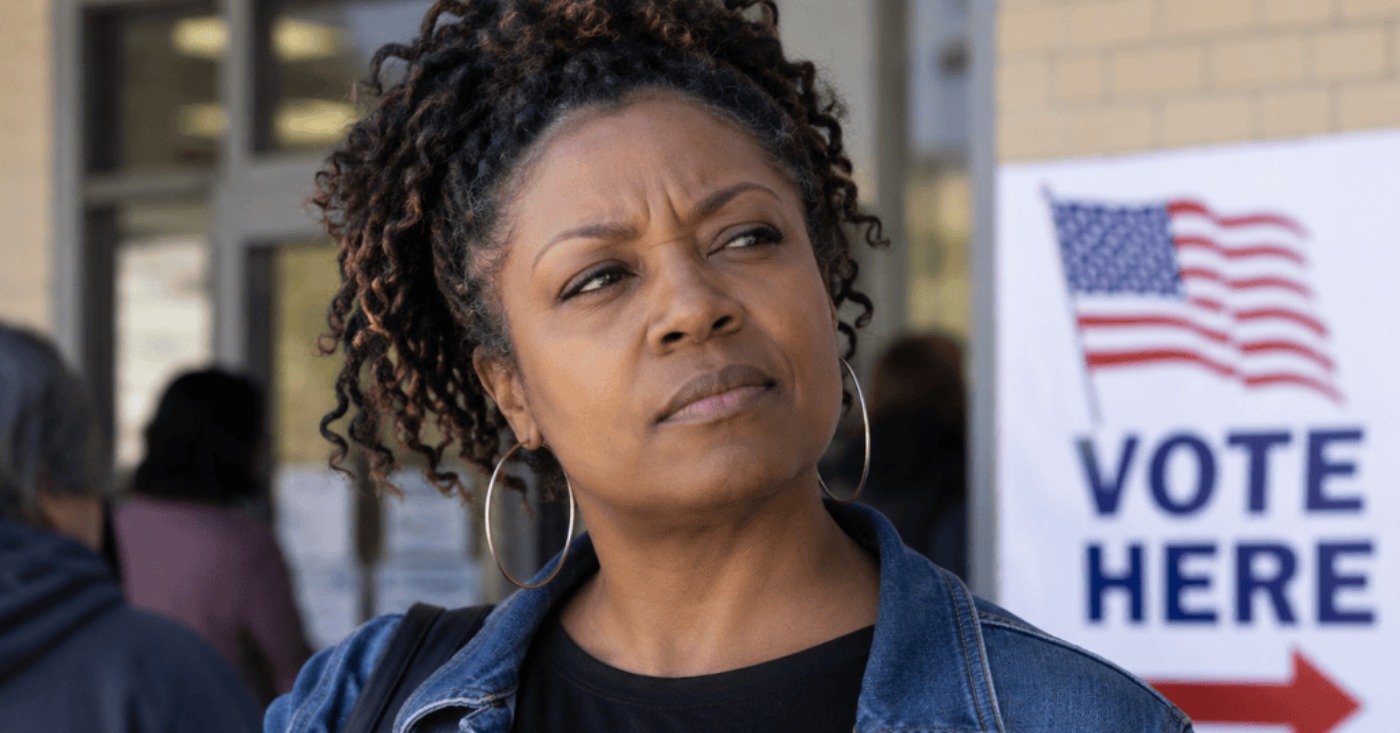
Black voters have been among the Democratic Party’s most dependable supporters for generations. But loyalty and trust are not the same thing.
With less than a month to go before the midterm elections, Black voters and political strategists say years of inconsistent engagement and unmet expectations have left some voters questioning whether the party has earned their continued support. The challenge now is bigger than winning votes. It’s convincing distrustful voters that staying politically engaged is worth it.

Communications strategist Ashley Etienne argues that Democrats have spent years taking one of their most reliable voting blocs for granted, creating a widening trust gap that threatens the party’s long-term prospects in Texas and nationally.
“Trust is the currency of persuasion,” she said. “We’re seeing distrust at an all-time high, especially with Black voters … distrust of the media, institutions, the Democratic Party, self-agreement. Campaigns don’t lose because they fail to talk to voters. They lose because they fail to listen.”
Etienne, who served as a senior adviser to Presidents Barack Obama and Joe Biden and communications director for Vice President Kamala Harris, said repairing that relationship requires something considerably more difficult than another campaign advertisement. It requires listening.
Black support remains strong, but not absolute
Recent polling suggests Democrats continue to hold a substantial advantage among Black voters heading into November, but that support isn’t universal.
A July 2026 Pew Research Center survey found 68% of Black registered voters said they would support the Democratic candidate for U.S. House in their district, compared with 8% who favored the Republican. Another 25% said they were either unsure or would support another candidate.

That uncertainty follows some erosion in Democratic support among Black voters in the 2024 presidential election. A Pew analysis of validated voters found 83% of Black voters supported Kamala Harris in 2024, compared with 92% who supported Joe Biden in 2020.
Pew found that shift was driven less by individual voters switching from one party to another than by differences in who turned out to vote.
The findings don’t suggest Black voters have abandoned Democrats. They do raise questions about whether longstanding party loyalty is enough to guarantee participation.
“We’ve been making that same argument decade after decade,” Etienne said. “Those are becoming less persuasive arguments.”
Why is trust disappearing?
The distrust isn’t necessarily about one candidate or one election. For some Black voters, frustration comes from feeling heavily courted during election season without seeing enough progress afterward on the issues affecting their daily lives.
Housing costs remain a concern. So do education, economic opportunity, neighborhood investment, and the cost of everyday necessities.
That creates a difficult dynamic for campaigns: Asking voters to participate in a political system that some believe has not delivered enough for them.
It also raises a separate question. What happens when frustration with political parties becomes disengagement from the political process altogether?
What happens when voters stay home?
The answer can become particularly consequential in local elections, where races can be decided by hundreds of votes rather than thousands.
Harris County Democratic Party Chair Traci Gibson has pointed to several 2024 judicial races decided by narrow margins. District judge candidate Elaine Palmer lost by 304 votes, while Jeralynn Manor lost by 647 votes.
Gibson also warned about voters who begin Harris County’s lengthy ballot but don’t finish it.
“If you go into these polls and you vote for the first five people and then you leave, that’s how we get Elaine Palmer losing by about 300 votes,” Gibson said.
The larger issue extends beyond any candidate or political party. Judges are elected. School boards make decisions affecting students and families. City and county officials determine how public dollars are spent. State lawmakers decide which bills become state law.
Those decisions are made regardless of how many eligible voters participate.
“We have to have strategies, we have to have plans, we have to have a mechanism in place for people to feel they are heard.”
Karla West
For voters distrustful of political parties or government institutions, political participation also doesn’t have to mean unquestioning loyalty to either party.
Voters can research candidates individually, compare their positions, attend or watch candidate forums and examine an incumbent’s record against previous campaign promises. They can also learn what the often-overlooked offices farther down the ballot actually control.
In that sense, distrust can become a reason for greater scrutiny rather than disengagement.
Candidates have work to do, too
Responsibility for rebuilding participation doesn’t fall solely on voters.
At a recent Third Ward town hall hosted by state Rep. Jolanda “Jo” Jones, Harris County Precinct 7 Constable James “Smokie” Phillips and Houston Black American Democrats, voters and political strategists called for more sustained campaign engagement.
“Investment drives outcomes. If you don’t invest in it, it doesn’t work,” Etienne said.
She argued that campaigns spend heavily on polling, consultants and advertising while directing too little money toward Black-led political infrastructure and organizations with established relationships in Black communities.
Shamier Bouie, chair of Houston Black American Democrats, said organizing cannot begin a few months before Election Day.
“It’s all about year-round organizing, and increased investment in Black voter outreach … more funding for Black-led organizations that have relationships, infrastructure, and experience in effectively engaging Black communities,” Bouie said.
The question of investment also surfaced in July when Democratic U.S. Senate candidate James Talarico pledged $25 million toward Black voter outreach. Some voters wanted specifics about where and how that money would be spent.
“We still need our kids, we still need our schools equitably funded,” said Augie Cahee, vice president of marketing web delivery at JPMorgan Chase & Co. “So, we want to know what you’re going to do with the money. Don’t stand up and tell me $25 million and you don’t have a plan.”
The exchange illustrated the larger trust problem: Voters aren’t simply asking candidates to talk to them. They want to know what happens after the conversation.
From distrust to accountability
Karla West, a precinct chair for downtown’s Precinct 16, said responsibility ultimately belongs on both sides.
“We fell asleep at the wheel,” West said of voter turnout.
But she also challenged political leaders.
“The Democratic Party did not say what they would do for you,” West said. “We haven’t heard a plan for years. I’m sick of it. We have to have strategies, we have to have plans, we have to have a mechanism in place for people to feel they are heard.”
Defender Reporter Tannistha Sinha contributed to this report.
Based on reporting by Houston Defender.
Black Press
TILGHMAN: Why Parents of Children with IEPs Should Know Their School Bus Driver
WASHINGTON INFORMER — Parents of children with Individualized Education Programs (IEPs) often face unique considerations regarding their child’s school transportation. Ensuring consistency and understanding their child’s needs on the bus can be a significant concern.

As the father of a young daughter with autism, I have learned that getting your child to school is not always as simple as putting them on the bus and waiting for them to come home.
When your child has an Individualized Education Program, you pay attention to things other parents may never have to think about.
Who is working with my child today? Does this person understand her needs? What happens if her routine suddenly changes? If something goes wrong and she cannot fully explain it to me, who will be able to tell me what happened?
Those questions do not stop at the schoolhouse door. They follow our children onto the school bus.
That is why one of the simplest pieces of advice I can give another parent of a child with an IEP is this: Get to know your child’s bus driver and attendant.
Learn their names. Introduce yourself. Say good morning. Ask how your child is doing on the ride.
Those few minutes can matter more than we realize.
For some children with disabilities, consistency is incredibly important. The same bus, the same driver, the same seat and the same routine can provide a sense of comfort before the school day even begins.
Then one morning, something changes.
The bus is late. There is a substitute driver. The route changes. The bus does not arrive when expected.
For many families, that is an inconvenience. For some of our children, it can change the entire morning.
As parents, we also know that our children may not always come home and tell us exactly what happened during the ride. That makes the adults who interact with them even more important.
A bus driver may notice that your child suddenly does not want to get on the bus. An attendant may notice that your child seems upset at the same point along the route every day.
They may notice a change in behavior, a problem with another student, or simply that something seems different.
That information can be valuable to a parent.
But relationships work both ways.
Parents can also help transportation staff understand our children. You do not have to share every detail of your child’s disability or educational record. But appropriate information about communication, behavior, safety or transitions can help the adults responsible for transporting your child better understand how to support them.
And when a transportation problem occurs, you are no longer starting the conversation with a complete stranger.
That does not mean parents should be responsible for fixing school transportation. We shouldn’t.
School systems remain responsible for providing required transportation services, including services identified in a student’s IEP. When buses are repeatedly late, accommodations are not being followed or transportation problems interfere with a child’s education, parents should document those concerns and raise them with the appropriate school and transportation officials.
Building a relationship with a driver should complement accountability, not replace it.
That distinction is important.
As a father navigating special education, I have learned that advocacy is not only about what happens during an IEP meeting.
Advocacy happens in the hallway. It happens at pickup. It happens through an email to a teacher. And sometimes it happens at the bus stop at 7 o’clock in the morning.
Our children’s educational experience begins before they enter the classroom and continues after they leave it.
Think about the person behind the wheel.
For some children, their bus driver is the first school employee they see every morning and the last one they see every afternoon.
That person is part of your child’s school experience.
So tomorrow morning, if you haven’t already, introduce yourself.
Learn the driver’s name.
Let them learn your child’s name — and, when appropriate, a little about what helps your child succeed.
It won’t prevent every late bus, substitute driver or transportation problem.
But if there is one thing I continue to learn as both a father and an advocate, it is that relationships matter.
And for children with IEPs, one more adult who knows, understands, and cares about your child can make a difference.
Based on reporting by Washington Informer.
Black Press
Author Kristen Amundson Explains ‘The Grandparent Effect’ and How It’s Helping Children Thrive Through Love, Support, and Connection
Author Kristen Amundson’s new book, “The Grandparent Effect,” explores the evolving role of grandparents in children’s lives. Amundson, former president and CEO of the National Association of State Boards of Education, highlights how longer lifespans and changing family dynamics make grandparents increasingly important for support, connection, and boosting children’s confidence. Her work details how involved grandparents experience health benefits and have adapted to recent challenges, including pandemic support. The book also addresses potential challenges like respecting parental boundaries. Read more to learn about the valuable insights for 21st-century grandparents.

Kristen Amundson has devoted her professional life to supporting students and parents throughout the education system. Previously, she authored “81 Questions for Parents” and “Unfinished Learning: Parents, Schools, and COVID School Closures.”
Amundson, the former president and CEO of the National Association of State Boards of Education, is now turning her attention to grandparents. Her new book is titled “The Grandparent Effect: Helping Children Thrive Through Love, Support, and Connection,” and is published by Bloomsbury.
Amundson explains that grandparents have become increasingly important in children’s lives due to longer lifespans and changing family dynamics. Originally, grandparents were important for children’s survival, particularly at a time when families were large and mothers needed extra caregiving support. Because mothers often turned to their mothers for this help, the positive impact on children was often called the “Grandmother Effect.”
Today, many more grandfathers are involved with their grandchildren. Amundson prefers to talk about the “Grandparent Effect” and notes that these caregivers also support reading and writing, boost confidence, and encourage grandchildren’s interests. She notes that those involved grandparents experience health benefits themselves (“if you have to get on the ground with an infant and take a child to the park, you are moving around and that’s good exercise!”).

The book provides an overview of how the role of grandparents has evolved over time, explaining that until the 19th century grandparents often lived close to their grandchildren and worked together on farms. She describes how the Industrial Revolution led to families splitting up, with children moving to cities for factory work while grandparents remained on farms, resulting in grandparents becoming poorer over time.
“There are many examples of how grandparents have adapted during recent challenges, including providing support during the pandemic through in-person care when possible or using technology like FaceTime and Zoom when physically distant, and taking on roles like ‘granny nannies’ to help with childcare and education needs,” she says.
Amundson tells the story of a grandmother who took the time to become certified in dyslexia training and taught her family members, including her granddaughter and grandson.
But with these added roles come some possible hiccups along the way. She emphasizes that grandparents need to remember they are no longer in charge like they were with their own children, and parents have the right to set rules that grandparents should respect. Amundson illustrates this point with examples about discipline and food choices, noting that grandparents should follow the parents’ guidelines rather than overruling them (except for maybe allowing an extra cookie).
“I know of a situation where grandparents crossing boundaries affected family dynamics when they took their grandchild to the emergency room without involving the parents, which later led to a temporary timeout for the grandparents.”
Amundson’s book also includes examples of ways grandparents advocate for the next generation, such as Texas grandmothers who speak out on state legislation.
Other grandparents participate in a self-help group supporting custodial grandparents who care for children whose parents are dealing with substance use issues or are incarcerated. The group provides practical support including educational seminars, college application assistance, and simple activities like Halloween decorations to help children feel included.
Amundson’s book is a valuable and enjoyable resource for grandparents who are navigating the excitement and joy of their senior status in the 21st century.
Black Press
A Viral Moment with Purpose: Keep Your Head Up Gives Back
JACKSONVILLE FREE PRESS — An encouraging exchange between Jacksonville Editor Lynn Jones and Jaguars Coach Liam Coen quickly went viral, gaining national and international attention. The Jacksonville Free Press transformed this moment into an opportunity, creating “Keep Your Head Up” T-shirts.
What began as a few encouraging words to Jacksonville Jaguars Head Coach Liam Coen has grown into a community message – and a way to help nurture the next generation of journalists.
Earlier this year, Jacksonville Editor Lynn Jones offered spontaneous encouragement, telling him to ‘keep your head up’ and ‘keep it going.’ The exchange quickly went viral, gaining national and international attention across television sports programs, podcasts, social media and online video platforms.
The Jacksonville Free Press turned the unexpected attention into an opportunity to give back, creating “Keep Your Head Up” T-shirts inspired by Jones’ words. Hundreds of shirts have since been sold, with proceeds benefiting the Jacksonville Free Press Journalism Fund, which supports efforts to nurture, encourage and develop future journalists.
For Hammock and Bolden, the words extend beyond football. They said the message also serves as a reminder to their families to remain positive and keep moving forward through life’s victories and setbacks.
The shirts have allowed a fleeting viral moment to produce a more lasting impact. Proceeds from sales are helping support a fund focused on creating opportunities for aspiring journalists and encouraging young people to learn the importance of storytelling, community news and documenting history.
Based on reporting by Jacksonville Free Press.
Black Press
New Shoes, Stronger Steps: Milwaukee Initiative Takes Aim at Gun Violence
MILWAUKEE TIMES WEEKLY — The “Stompin’ Out Gun Violence” initiative is using sought-after sneakers to engage young people with a message about preventing gun violence. Led by the Latroy V. Harris Initiative, “I Will Not Die to Gun Violence,” the program provides free shoes in Milwaukee while fostering conversations aimed at a safer future.
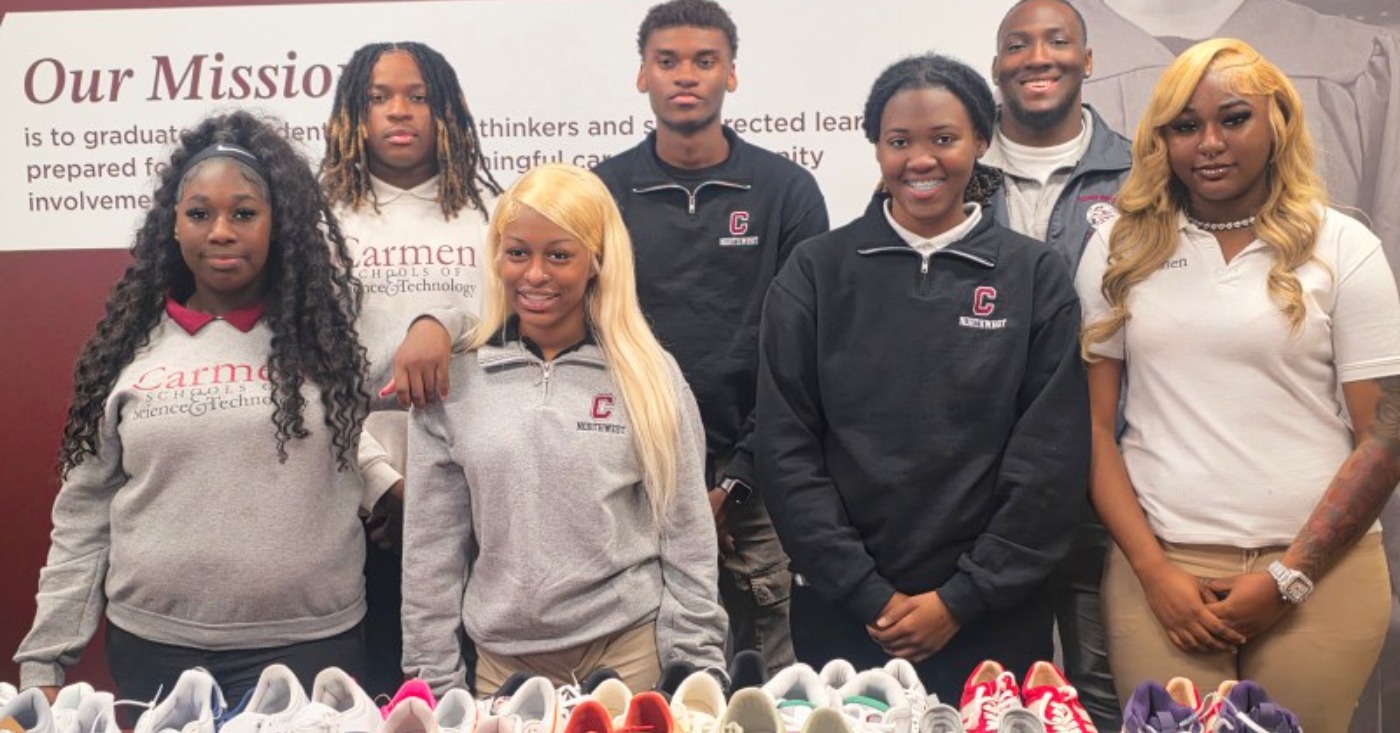
“Stompin’ Out Gun Violence” uses sought-after sneakers to open the door to a life-saving message for young people.
A new pair of shoes can do more than complete an outfit—it can help a young person step toward a safer future. That is the idea behind “Stompin’ Out Gun Violence,” a traveling shoe giveaway led by the Latroy V. Harris Initiative, “I Will Not Die to Gun Violence.”
Founder Monte Mabra says the work comes with no paycheck. Its reward is measured instead in smiles, gratitude, and the chance to turn a potentially negative outcome into a positive one. By pairing free shoes with conversations about gun violence, organizers hope to reach young people with a message that stays with them long after the event ends.
“I like what Monte is doing to change the course of violent crime,” said Michael F. Hupy of personal injury law firm Hupy and Abraham, S.C. and leading sponsor “The shoes carry them in the door, and the message follows them out.”
Students at Carmen School of Science and Technology, 3215 Dr. Martin Luther King Jr. Drive, received Nike, Adidas, and Jordans. Principal Miller said she looks forward to next year and to continuing to build a relationship with the Latroy V. Harris Initiative.
The initiative honors Latroy V. Harris, who was lost to gun violence on Dec. 15, 2025. His family and loved ones are keeping his memory alive by working to prevent other families from experiencing the same loss.
The campaign’s next stop is Bruce Elementary School on Sept. 30. Organizers plan to give away shoes, gun- and domestic-violence awareness and prevention coloring books, and educational books.
For the young people reached by the initiative, each pair of shoes carries more than a brand name. It carries a reminder: their lives matter, their futures are worth protecting, and every step away from violence counts.


Based on reporting by Milwaukee Times Weekly.
Black Press
Partnership Helps Patients Prepare for Medicaid Rules
ST. LOUIS AMERICAN — Affinia Healthcare and Employment Connection have partnered to assist patients in securing employment, training, or volunteer opportunities. This collaboration comes as new Medicaid work requirements are set to begin on January 1, 2027. These requirements will mandate certain adults to meet work, education, or community service criteria to maintain their coverage, though some exemptions may apply.
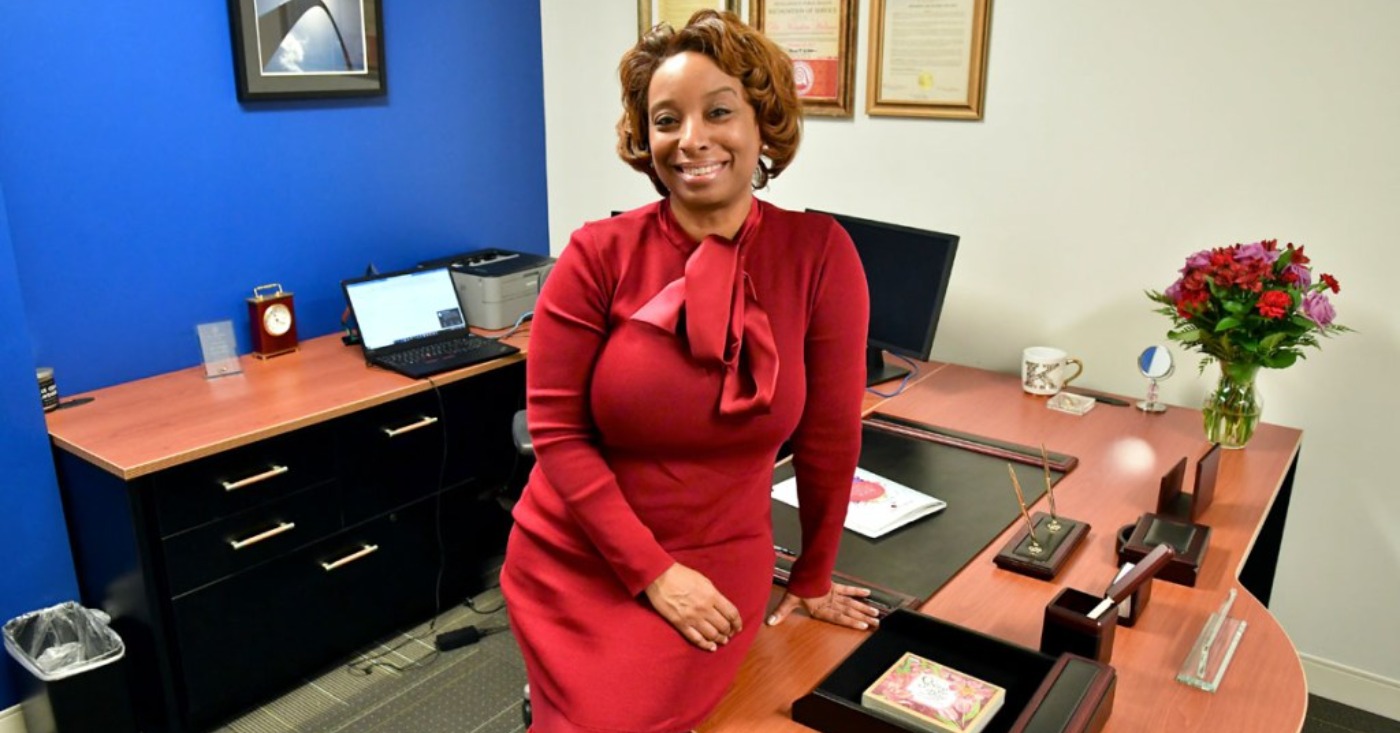
Affinia Healthcare and Employment Connection are teaming up to help patients find jobs, training or volunteer opportunities as new Medicaid work requirements approach.
Beginning Jan. 1, 2027, certain adults will have to meet work, education or community service requirements to keep their coverage. Some patients may qualify for exemptions.
Patients seeking assistance can call Affinia Healthcare at 314-814-8700 and ask about the partnership. Affinia’s outreach team can help connect them with Employment Connection.
The post Partnership helps patients prepare for Medicaid rules appeared first on St. Louis American.
Based on reporting by St. Louis American.


Listening as a Lifeline: A Doula’s Witness to Black Maternal Health

New Protections for Ticket Buyers: Gov. Newsom Signs Assemblymember Isaac Bryan’s Bill

‘We Don’t Talk Trash — We Pick Up Trash!’

Zakiya Jendayi Arrested, Locked Out of Home by Sheriff’s Deputies

2027 Chevy Bolt EV: Is It Worth Under $30K? #shorts

Leading the Way in HBCU Research

Smooth Ride! Car Suspension & Comfort Tested #shorts

61 years since Selma, Houston leaders say the bridge remains to be crossed

Here is what you need to know about finding unique white elephant gift ideas that everyone wants to steal

Check out these proven ways to increase property value for commercial business locations

Latest Massacre in Haiti Reveals Cruelty U.S. Deportations

Black Americans Have Doubts About the U.S. Food System

When Praises Go Up: SUGC Nominated for Prestigious Stellar Award.

Booked and Unbound: The Legacy of Black Women’s Literary Circles

U.S. Sole Nation to Oppose U.N. Resolution Correcting Africa’s Size on World Maps

The Youngest American Killed in the Vietnam War

COMMENTARY: Big Mama Said ‘Don’t Let Grief Break the Bank’

U.S. Open Influencers Spark Backlash over Ring Lights, Filming as Gauff and Osaka Speak Out

Prostate Cancer is Twice as Likely to Kill Black Men. Talking to Your Doctor Could Help Save Your Life

Outnumbered: Elbert Cox’s Equation for Greatness
2027 Chevy Bolt EV: Is It Worth Under $30K? #shorts
Leading the Way in HBCU Research
Smooth Ride! Car Suspension & Comfort Tested #shorts
61 years since Selma, Houston leaders say the bridge remains to be crossed

Lutheran North Celebrates Homecoming With 40 to 19 Win Over Westminster Christian

Luxury Car Features: Harman Kardon & More! #shorts

Tuskegee Airmen Field Reopens in The Ville, Giving St. Louis Youth a Place to Grow

2027 Chevy Bolt: Worth $29,990? Hidden Flaws Revealed! #shorts

Kia Seltos Luxury Car Tech: Prestige Package Features Explained! #shorts

Serena Williams: The Beast Narrative & Black Womanhood #shorts
-
 Black History1 week ago
Remembering Chauncey Bailey as Student Journalists Face Threats to Truth-Telling
-

 Black Press4 days ago
OP-ED: Haiti TPS: Have We Lost Sense of Humanity?
-

 Black Press1 week ago
Poll: Becerra Widens His Lead Over Hilton; Californians Split on Wealth Tax
-
 Black History7 days ago
COMMENTARY: The Audacity of Joyce Beatty
-

 Black History6 days ago
Rulings Leave Questions Lingering in Nolan Wells Case
-

 Black History6 days ago
Baptist Minister Says Black Church Champions for Civil Rights to Reign but Hesitates to Let Black Women Lead
