
Health
African-American Women in Charge Speak About Natural Hair

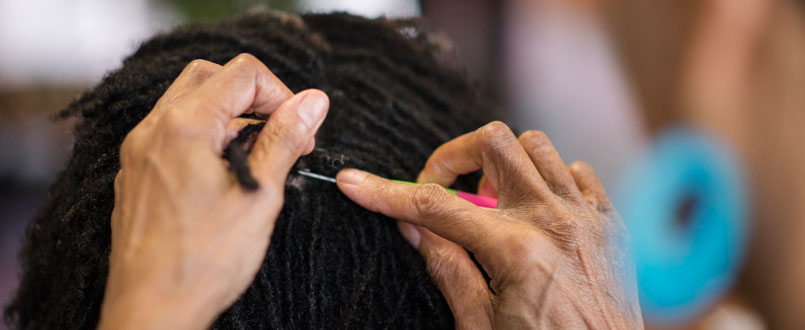
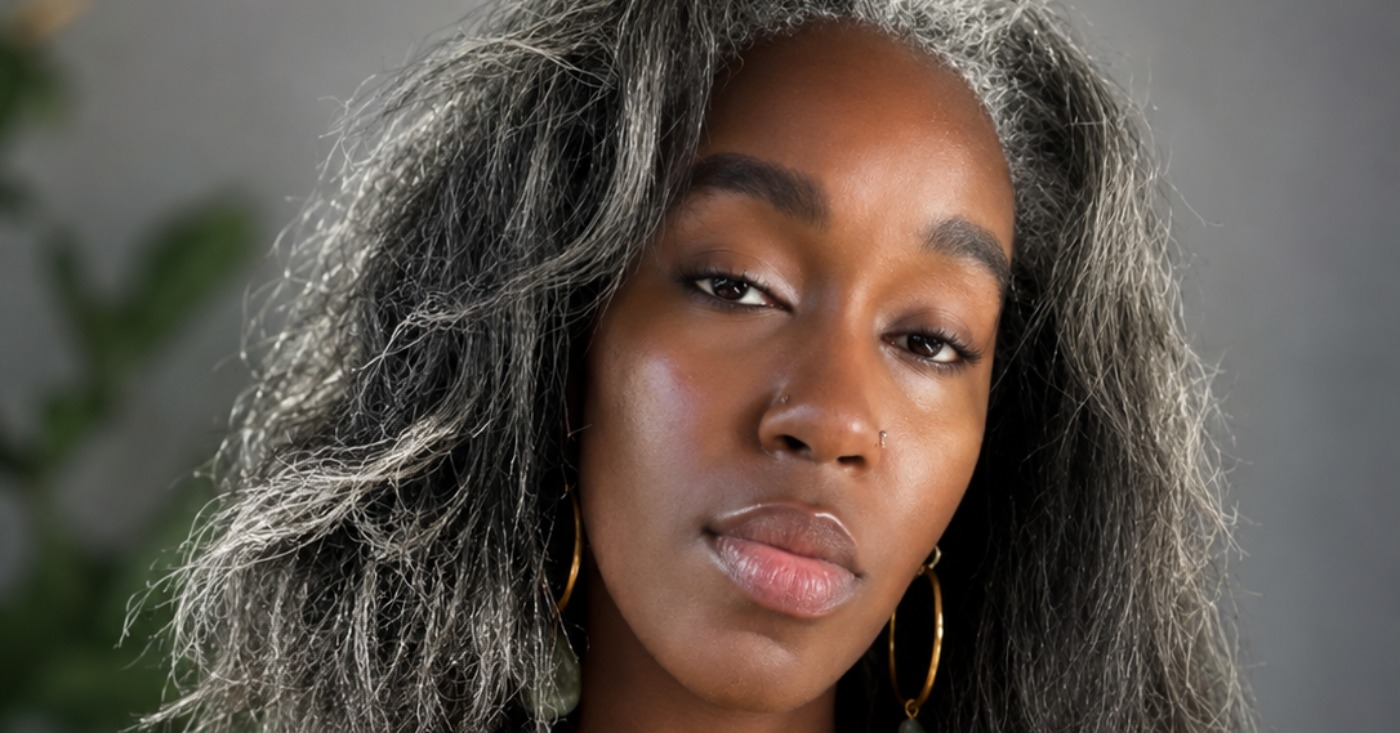
Ayana Hardin creates natural hair twists. (Erin Mizelle/Winston-Salem Chronicle)
By Felecia Piggott-Long, Ph. D.
Special to the NNPA from The Winston-Salem Chronicle
Today, it is not surprising to see women sporting kinky twists, locks, Nubian Knots, braids, afro puffs and even afros in the workplace.
What’s striking is that many of the black women wearing the natural styles are women in charge.
Following are a few such women in the Winston-Salem Triad area:
Sylvia Sprinkle-Hamlin, library director for Forsyth County Public Library System and Executive Producer of the National Black Theatre Festival, has had many hairstyles.
She has had perms, worn wigs, sew-ins, short cuts and long styles.
Having grown up in Tobaccoville, she also wore her natural hair in the 1960s, ’70s, ’80s and ’90s.
Ayana Harding of Ayana’s Glory Locs maintains Sprinkle-Hamlin’s locs.
“Natural hair is easy to maintain, and there are so many styles that can be created with natural hair, Sprinkle-Hamlin said. “Hair doesn’t determine whether you are professional or not. It should always be neat and clean. Wigs, weaves and sew-ins are up to the individual. Whatever makes one feel beautiful.”
Bennett College President Rosalind Fuse-Hall received her first perm in 1977, but her inspiration to go natural came from her bout with lymphoma when she was 25 years old.
She was at Rutgers School of Law at that time in 1983 when she received her first diagnosis.
She studied Criminal Justice at the University of North Carolina at Chapel Hill, where she wore her hair in a perm, in curls, an Afro, cornrows and a curly perm.
Her radiation treatments did not affect her hair loss, but her second bout with the illness and the chemotherapy treatments caused her hair to fall out.
For six months, she had to wear a wig because she was bald.
When her hair grew back, it was “fine like baby hair, and I wore my hair in a short natural. … I felt very empowered about going natural. Even though I am no longer sick, it is a conscious decision, and I feel comfortable. I get lots of compliments on my natural hair. I have determined for myself that it is part of my beauty,” Fuse-Hall said. “I came of age during the Black Power Movement of the 1970s. Angela Davis was positive affirmation for me. Dr. Johnetta B. Cole, Dr. Julianne Malveaux, Viola Davis, Thadious Davis, Alice Walker, Dr. Trudier Harris and Dr. Sonya Stone. These are all beautiful women.”
Dr. Trudier Harris was J. Carlyle Sitterson Distinguished Professor of English and Comparative Literature at the University of North Carolina at Chapel Hill when she retired from UNC-Chapel Hill in 2009 and became professor of English at the University of Alabama in 2012.
In April 2015, she was appointed University Distinguished Research Professor at the University of Alabama.
She wrote a book titled “Summer Snow: Reflections from a Black Daughter of the South,” published in 2007.
Harris says, “My natural hair, obviously, has not in any way been a hindrance to my career.”
Harris has only had one perm, in 1982.
“I let it stay for a couple of weeks before trying desperately to get rid of it. I didn’t like the way it felt or the maintenance required,” Harris said. “I started out in graduate school with an Afro, which, over the years, I alternated with a Jheri Curl … I had locks from 1993-1996. I finally settled into a short Afro, which I like very much.”
Harris recalls that a woman approached her in Atlanta and praised her for her beautiful locs.
Harris’ goal is to avoid “self-negation,” whether women choose to wear wigs or weaves for convenience.
“Some African-American women are risking their health for the sake of their hair. They refuse to exercise because it would make them sweat, and they don’t want to sweat out those expensive perms or run the risk of displacing their weaves.” Harris said. “Some high-profile African-American women seem not to be convinced that their publics will accept them as they truly are, which means that hair politics remain rooted in the racism that undergirds just about everything in America – and throughout the world.”
Two women with high-profile positions at Winston-Salem State University are RaVonda Dalton-Rann, executive assistant to the chancellor and secretary of the University, and Dr. Brenda Allen, provost and vice chancellor for academic affairs, and chief academic and budget officer.
Dalton-Rann has held her position for 20 years.
Although Dalton-Rann had processed hair while growing up for 20 years, she has been a natural-hair woman for 40 years.
She has always believed that natural hair is professional.
Joel Cudworth, a white male who styled hair for the Ebony Fashion Fair, styled her first natural.
Cudworth also taught cosmetology at Dudley’s Beauty School in Greensboro for several years.
He still owns a shop in Greensboro.
Dalton-Rann’s greatest cheerleader for her being a natural woman is her husband of 30 years, Emery Rann III. She was natural when they first met.
“He tells me all the time that my choice was one of the things that attracted it to him. He knew immediately what it meant and he still understands that it is a political statement,” Dalton -Rann said. “It allows me to be who I am without even opening my mouth. It is a political statement, and it is also who I am. Role models such as Angela Davis, Nikki Giovanni and Toni Morrison have inspired my choice.”
Allen wore her hair permed for most of her adult life with a few stints with braids during her 30s. She has only been natural for three years.
“All of the women in my family converted to natural hair during their 50s. It was just a family trend that I followed. In its current state, my hair reflects the diverse beauty of hair texture inherited by black women throughout the Diaspora,” Allen said. “Older women in my family have beautiful natural styles. I have just returned to my roots and family tradition.”
Allen does not ever plan to have her hair permed again because she is very satisfied with her professional, natural styles.
“Professional has many looks. In the world of work, being well-groomed is important. … We never talk about natural for someone not of African descent. Every other woman who is not black or whose hair texture is not curly/kinky is never questioned about the acceptance of their natural state,” Allen said. “Whether you port a fro or locks and twists, I don’t think you will defy professional if your hair is well-groomed. When someone says your ‘natural’ look is not professional, we must understand that as code for a different conversation.”
“Women are returning to natural hair for many personal reasons. For some, it is the style of today. People without naturally curly hair are buying or processing toward the look,” Allen said. “For others, it might be about ease of grooming, especially as fitness has become important.”
Allen said she has never been criticized for her natural style, only praised.
“My natural is not a political statement. In the words of India Arie, ‘I am not my hair.’ I feel no different when my hair is curly or straight.”
Another public figure is Kenyatta Richmond, the Basileus of the Phi Omega Chapter of Alpha Kappa Alpha Sorority Inc.
In the workplace, she is the coordinator of community outreach and engagement at Family Services, where she conducts workshops and training sessions on the issues of domestic and sexual violence.
She received her first relaxer when she was 9 years old.
She kept the relaxer until she was 42.
“For the most part, the relaxer was OK for me, until I got older and started to lose hair due to medications and the chemicals I was putting in my hair. I did the big chop in December of 2013. I loved my hair from the first day that I cut it off,” Richmond said. “I decided to go natural because of the breakage and damage to my hair. I got tired of trying to cover it up and allowing my hair to dictate how I felt on any one particular day. Wearing my hair natural made me feel free. I didn’t feel tied to a stereotype of what beauty is supposed to be. I felt good about embracing my natural God-given beauty from root to tip,” Richmond said. “Some men do not like the natural state, especially when it was shorter. They felt like it wasn’t feminine enough for them.”
Brandy Rowland is a personal banker at Wells Fargo Bank.
She is currently studying for a business administration/finance degree from Salem College.
She had a perm from the age of 9 until she was 26, when she and her husband, Jamarius, had a set of twins, Tamera and Tatiana.
Her husband loves her new look.
“It fits her. I love the color and the flexibility of it. It works for her and me,” he said. “When I met her, she had long hair hanging down her back, but when she came back from the stylist with her new look, it was a pleasant surprise.”
She has been praised and criticized for her natural look.
She has been married for six years.
“I have two 5-year-old daughters. I am currently teaching them to love their hair and to be one with their hair,” Rowland said.
JaMonica Barson is a licensed mental health counselor for DayMark Recovery Services in Wentworth, N.C.
She has had a perm periodically but stopped getting them because of the rising costs.
She loved color with her perms, and the combination created breakage.
She now wears a brush cut that is very closely cropped.
“I get tons of compliments at work, never any criticisms. Most of my criticisms have come from older generations. My friends love my natural hairstyles,” Barton said. “My mate did not like my natural. I think it has a lot to do with conditioning. If you are conditioned to think that European is the better standard of beauty, then you are not going to like natural hair,” Barson said. “Natural hair definitely makes me feel empowered. I feel like I can do anything and feel like it lets others know that I’m confident in who I am.”
Purity Njoui Waithanji-Ruchugo is an ordained minister, businesswoman and the founder of Sister2Sister International Outreach Ministry Inc.
Her shop, called Umoja African Crafts, is on North Trade Street in downtown Winston-Salem.
She has been natural for 10 years.
Sister2Sister International Outreach Ministry Inc. is empowering women through training in entrepreneurial skills, and is working with over 100 orphans in Kenya.
Ruchugo’s short Afro is easier to manage while traveling back and forth from Kenya to the United States.












Art
Houston’s ‘call Me Mother’ Exhibit Opens Today, Spotlighting Black Maternal Health
AFRICAN-AMERICAN NEWS AND ISSUES – DALLAS — The Health Museum in Houston today opens “The Call Me Mother Experience,” an exhibition spotlighting Black maternal health through art and personal storytelling. Curated by Houston’s first Black poet laureate, Deborah D.E.E.P. Mouton, the project originated from her own poem written during a miscarriage.
HOUSTON — A new exhibition opening Sunday, Oct. 4, at The Health Museum is bringing Black maternal health into public view through art and personal storytelling.
The Call Me Mother Experience will be on display through Feb. 28, 2027. The museum lists a preview reception today from 3 to 5 p.m. at 1515 Hermann Drive, with tickets priced at $5 for members and $15 for nonmembers.
A personal story becomes a community conversation
According to the museum, founder, curator and lead artist Deborah D.E.E.P. Mouton developed the project from a poem she wrote during a miscarriage. The installation combines films, recorded interviews, visual artwork and contributions created with community members.
Mouton, Houston’s first Black poet laureate, discussed the exhibition and her connection to its subject in an Oct. 1 appearance on KPRC’s Houston Life. The station described the project as addressing the unequal burden of pregnancy-related illness and death faced by Black women in Harris County.
An announcement distributed by the Call Me Mother Experience says the initiative will also reach community locations and faith-based organizations across Greater Houston. Those additional settings are intended to extend the conversation beyond a museum visit.
What visitors can expect
The museum says reception guests can explore the exhibit, hear the curator and meet participating artists. Reception admission includes general museum entry; refreshments are available while supplies last.
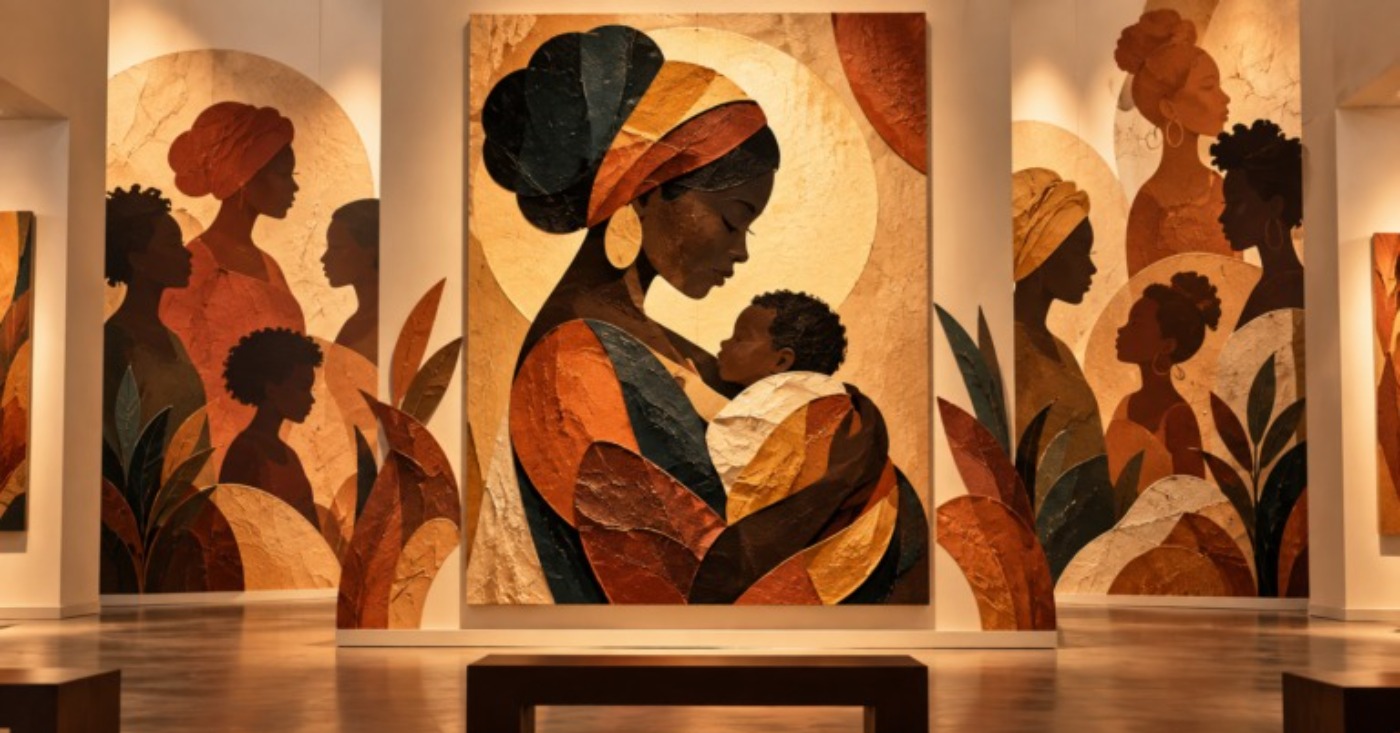
The featured image accompanying this article is an original illustrative concept, not a photograph of the exhibition or its artwork.
Sources and visitor information:The Health Museum exhibition listing; preview reception details and tickets; KPRC Houston Life; organizer announcement.
The post Houston’s ‘Call Me Mother’ Exhibit Opens Today, Spotlighting Black Maternal Health appeared first on African American News and Issues.
Based on reporting by African-American News and Issues – Dallas.
Black History
Morehouse School of Medicine Fall Convocation Has Strong Ties to Nashville
TENNESSEE TRIBUNE — Morehouse School of Medicine recently held its 42nd Fall Convocation and White Coat and Pinning Ceremony, which highlighted strong connections to Nashville. Dr. Valerie Montgomery Rice, in her 12th year as president and CEO, leads the institution, which welcomed 355 new students.
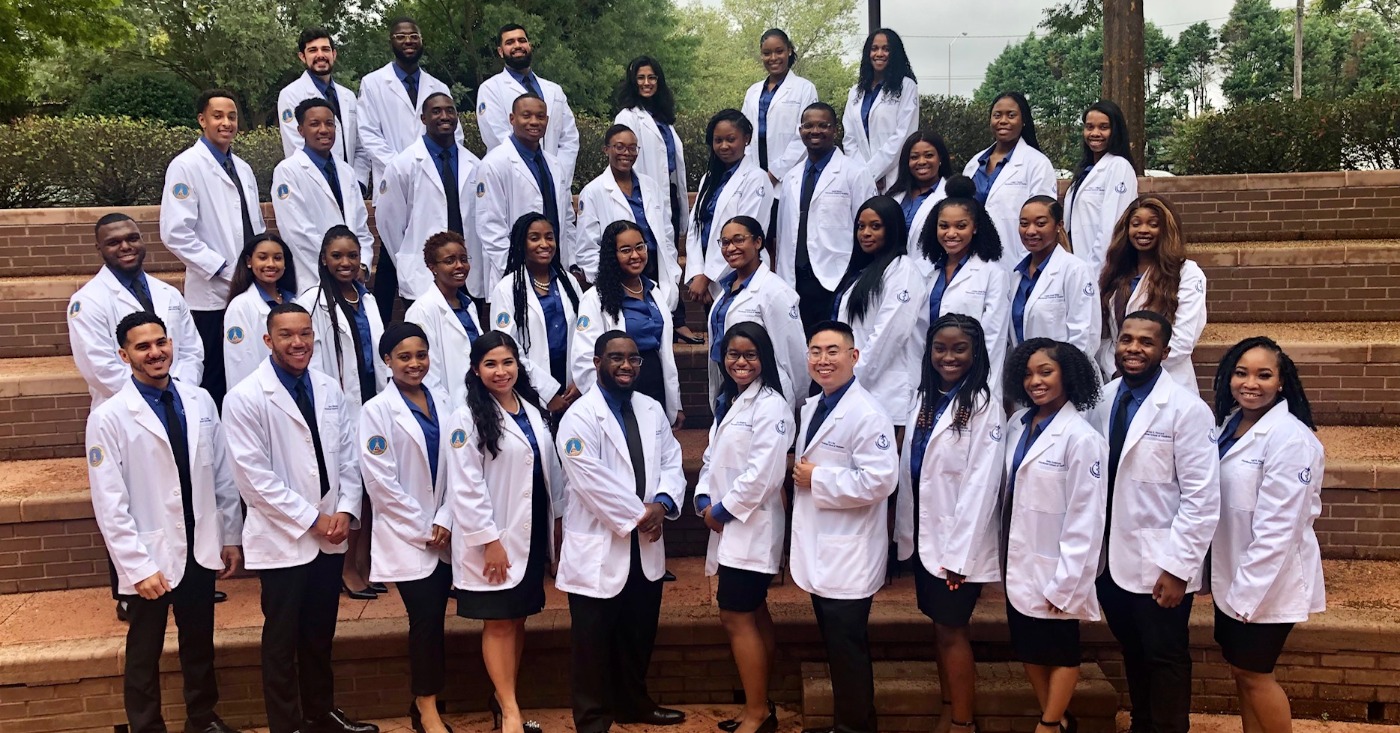
Morehouse School of Medicine held its 42nd Fall Convocation and White Coat and Pinning Ceremony on September 18, and it featured strong ties to Nashville. Dr. Valerie Montgomery Rice is completing her 12th year as president and CEO of Morehouse School of Medicine (MSM). The school boasts 355 students seeking degrees and certificates in the medical field.
“This entering class represents the future of medicine, science, public health and health care leadership,” said Valerie Montgomery Rice, MD, and FACOG. “As these students begin their journeys at Morehouse School of Medicine, they join a community grounded in excellence, service and our shared commitment to advancing health equity. We look forward to supporting their development as leaders who will transform the health and well-being of the communities they serve.”
Infectious diseases physician and scientist Dr. Barney S. Graham, MD, and PhD, served as the keynote speaker. He serves as the director of the David Satcher Global Health Equity Institute, professor of Medicine and Microbiology, Biochemistry and Immunology at Morehouse School of Medicine. He is an inventor of vaccines and monoclonal antibodies approved for human use to prevent or treat RSV, COVID-19 and Ebola. He joined MSM in 2022. He served in various positions at Vanderbilt University for 21 years.
Dr. Graham told the audience to “Embrace the Unseen” and focused on three points: Do the Best You can with what’s in front of you, Do what makes you come alive and Do the right thing even when no one is looking. He added, “Anything you do to improve mental and physical wellness and promote disease prevention will reduce health disparity by reducing the resources needed for treatment.”
His remarks commanded a roaring applause from the audience, which included his wife, Dr. Cynthia Turner Graham, and the former First Lady of Tennessee State University, Mrs. Edwina Hefner, a close friend to the family.
Based on reporting by Tennessee Tribune.
Black Press
OP-ED: Proposition 44 Would Put a Price on Trust
The danger in Proposition 44 is not only its 90 percent figure. It is that the meaning of “qualifying” spending will be worked out later. A clinic preparing a budget today may not know whether a navigator, health educator, transportation program, outreach worker, technology upgrade, or other patient-support service will be counted the way it expects. Yet the financial consequence of getting it wrong could be immediate.
Black History
Cuts and Conversations Turns Barber Chairs into Space for Lifesaving Dialogue
ALABAMA STATE UNIVERSITY – THE HORNET TRIBUNE — Alabama State University recently hosted “Cuts and Conversations,” an event that transformed barber chairs into a venue for vital dialogue about prostate cancer, a disease disproportionately affecting Black men.
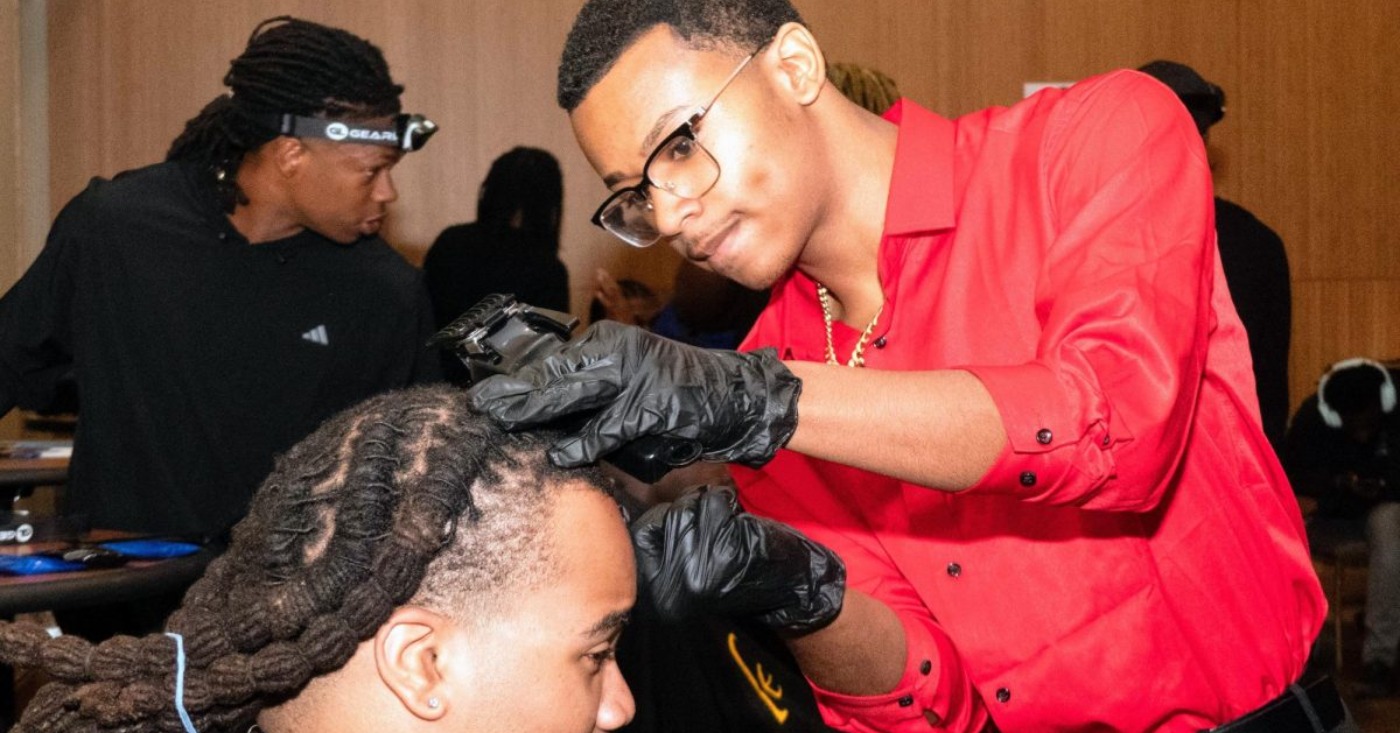
The sound of clippers buzzed with a different kind of conversation Monday at 11 a.m. as Alabama State University students and staff listened to barbers, cancer survivors and health professionals discuss a disease that disproportionately affects Black men.
Cuts and Conversations, held Sept. 28 in the John Garrick Hardy Center Ballroom, used free haircuts and the familiarity of the barbershop to open conversations about prostate cancer, early detection, family history and men’s health.
Tanjula Petty, Ed.D., vice president for Institutional Effectiveness, Strategic Initiatives and Transformation, and Willie S. Rockward, Ph.D., dean of the College of Science, Technology, Engineering and Mathematics, opened the forum and welcomed those in attendance.
For Petty, the message came from experience.
“I’m not just speaking to you based on research,” she said. “I’m talking to you from a place of experience.”
Petty said she exercised regularly, ate well and considered herself healthy when a doctor told her she had cancer. She challenged students to take what they learned back to their fathers, grandfathers and uncles.
“It’s not all about genetics; you may be the first in your family to experience it,” Petty said. “People ask me all the time, ‘Who in your family was diagnosed?’ Nobody. I’m the first.”
According to the Centers for Disease Control and Prevention, Black men are more likely to develop prostate cancer than other men and are more than twice as likely to die from the disease. The American Cancer Society recommends that Black men begin discussing prostate cancer screening with a health care provider at age 45 or at 40 for men at higher risk because of family history.
Three prostate cancer survivors were recognized during the event: Andy Maxwell, Leroy Huffman and Dandrea Evans Sr. Evans and Huffman shared their experiences with those in attendance.
Evans was 44 when a routine doctor’s visit led to his prostate cancer diagnosis. He had no symptoms.
“Initially it was the worst news you could ever hear because I didn’t feel like I had cancer. I felt great,” he said.
Evans said he turned to his faith and made the decision “to trust God through the process and to live.” Four years later, he said he is cancer-free.
“The more you know, the more you’ll be prepared to deal with it and understand it a little bit better,” Evans said.
The five-year survival rate is greater than 99% for prostate cancer diagnosed at a localized or regional stage, according to the American Cancer Society. That rate falls to 38% when the cancer has spread to distant parts of the body.
Huffman has worked at Heritage Barber & Style Shop for about 26 years, has cut hair for 63 years.
“Awareness about prostate cancer is the best thing that Black men should do,” Huffman said.
His advice was simple.
“Age is not the key here. Life is,” Huffman said.
Dawna Nelson, Ph.D., an associate professor of social work, licensed master social worker, and principal investigator for the Cuts and Conversations research project, said the project grew from years of community health work and conversations with Heritage about the role barbershops already play in Black communities. When funding became available, the partnership trained barbers to speak with clients about prostate cancer, early detection, and family history.
Heritage owner Vladimir “Boo Man” Averett said the shop wanted to be part of that work, particularly because of Huffman’s experience.
“He gives conversation all the time to us younger barbers as well as our clients about get checked, get checked, get checked,” Averett said.
For Averett, the message comes down to five words.
“It’s not about wealth. It’s about health,” Averett said.
The partnership extended to student barbers.
Brittany Hollins, planning and evaluation specialist in the Office of Institutional Effectiveness, Strategic Initiatives, and Transformation, said organizers worked with Student Life and athletics to identify student barbers who were trained at Heritage to carry those conversations to their peers.
“They’re cutting hair, and they’re having these conversations,” Hollins said. “And so it’s Cuts and Conversations today.”
Hollins’ grandfather died a little more than a year ago after his prostate cancer progressed to Stage 4.
“It is not an easy task to have that loved one at home on hospice, and you are being tasked to give them that last dose of morphine, and then you realize there’s no pulse,” Hollins said.
Beyond the personal stories, the event connected students with cancer research and health resources.
Manoj K. Mishra, Ph.D., director of the university’s Cancer Research Center and professor of biology, said the center supports cancer research, trains students, and works to increase cancer awareness in the community.
Pastor Lee B. Walker Jr. and Terrance “Wolfgang” Baldwin hosted a live recording of the “Off the Cuff” podcast, continuing the discussion about prostate cancer awareness and Black men’s health.
Five Horizons Health Services, the Alabama Department of Public Health, the university’s Cancer Research Center and Health Services were represented. Five Horizons also provided free HIV and sexually transmitted infection testing.
For the students in the barber chairs, the conversations made the message immediate.
Freshman Jonathan Alexandre said events such as Cuts and Conversations can make it easier for young Black men to begin talking about their health.
Freshman Elijah Kidd, a computer engineering major from Pensacola, Florida, said cancer has already touched his family through his uncle.
“Really just cherish every moment you have, because you never know when it might end,” Kidd said.
Senior Xavier Moore, a double major in music education and music performance, said the setting allowed younger and older Black men to learn from one another.
“Your health comes first,” Moore said.
Student barber Mark Coaxum II, a biology major who plans to become a doctor, brought the message back to action.
“Knowing the probability is good, but getting tested is best, because whether you’re probable or not, you never know,” Coaxum said. “It could be you.”
Nelson said she hopes those conversations continue long after the barber chairs are gone.
“The barbershop is where these conversations start, but then the next day they’re in the gym, and then the day after that on the golf course, and in the boardroom, and most importantly, at a family dinner table amongst the father and the son,” Nelson said.
For students who may think prostate cancer is years away, Nelson left them with a reason to start talking now.
“You are a son. You are a nephew. You are a grandson,” she said. “And if you take the time to talk to your fathers and your uncles and all of the men in your life about this, you are potentially saving their life, and you’re also at the same time empowering yourself so that when your time does come, you have all the information you need to be able to make good health choices.”
Based on reporting by Alabama State University – The Hornet Tribune.
Black Press
A $2.1 Trillion Wellness Industry Never Built a Daily Practice for Black Children. So This Atlanta Family Did.
BLACKPRESSUSA NEWSWIRE — As Black parents strive to raise resilient, confident, brilliant children within systems that too often underestimate them, an Atlanta-based company launches an app that delivers a five-minute daily wellness practice, backed by forty years of research, to help build the identity, confidence and self-worth their children carry into every room.
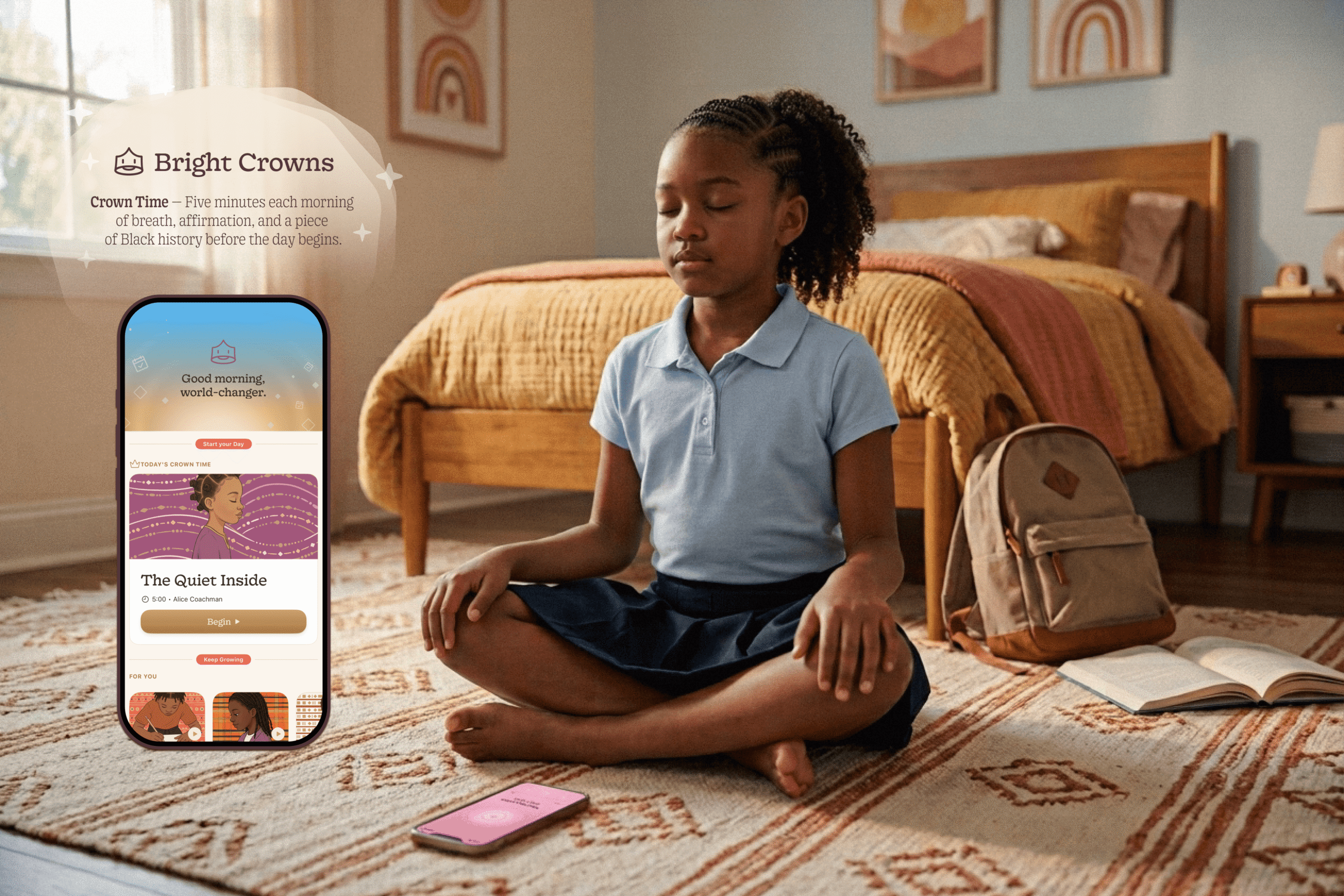
As Black parents strive to raise resilient, confident, brilliant children within systems that too often underestimate them, an Atlanta-based company launches an app that delivers a five-minute daily wellness practice, backed by forty years of research, to help build the identity, confidence, and self-worth their children carry into every room.
ATLANTA — October 6, 2026 — Every morning, Black children walk into classrooms and spaces that weren’t designed with them in mind. They carry a quiet, daily weight most adults never see. There is no shortage of national conversation about the challenges they face; there has been far less discussion about what actually helps. Yet the research has pointed to answers for decades: a grounded sense of who they are, the steadying power of breath, and the pride that comes from knowing their history and their own worth. What was missing was a way to deliver those answers to Black children, consistently and easily, every single day. Until now.
Bright Crowns, the first daily wellness practice built specifically for Black children, launched and is available now on the Apple App Store. The morning practice takes just five minutes and fits easily into a busy day.
“As much as we’d like to, we can’t always lighten the load our children carry each day,” said co-founder and CEO Tia Harley. “But we can help make them strong enough to carry it — with their heads held high.”
Here is what the Bright Crowns wellness practice delivers. Each morning, a child opens the app and hears a voice that sounds like home. The breath comes first, to help them settle and notice what they’re feeling. Then an affirmation that names who they are and the people they come from. Then the story of someone from Black history whose life is proof of the strength being built in them that day. A new figure every day, all year long, not just in February. Not a history lesson, but evidence of what they already carry inside. They start each day steady, certain, and ready for whatever it holds.
The arc is deliberate: Breathe. Belong. Become. That five-minute morning session is called Crown Time, and Bright Crowns doesn’t stop there. Its practices carry a child through the whole day. Crown Ready steadies a child before a hard test or a game. Crown Reset meets a big feeling the moment it rises. Crown Together is a weekend reflection a parent reads aloud. And Bedtime Crown carries them into sleep with folktales from the African diaspora. Instead of points or badges, children earn crowns drawn from real African kingdoms — an inheritance, not a reward. A badge says good job; a crown says this was always yours.
“Bright Crowns isn’t about making a child feel better for five minutes,” said Tia Harley. “It’s about giving them tools that compound: steadiness, identity, and resilience they carry long after the session ends, into the classroom, under pressure, and into rooms where they may be the only one.”
Built on joy. Backed by forty years of science. Husband-and-wife team David and Tia Harley built Bright Crowns out of love for their own children. Then they discovered that every piece of what they had built had already been supported by research. A landmark study in the journal Science found that a brief, culturally grounded practice measurably narrowed the racial achievement gap for Black students, without any change to the school itself. Research has since identified ethnic-racial identity as a key protective factor for Black youth mental health in the Annual Review of Clinical Psychology, and a meta-analysis of 76 mindfulness programs for young people found significant improvements in stress, attention, emotional regulation, and academic engagement. Psychologists have a name for what these build together: hardiness, the inner architecture that lets a person meet difficulty without breaking. It has been studied since 1979, when psychologist Suzanne Kobasa first identified it, and the research is clear that it is teachable, built through brief, consistent daily practice. “The research showed that while the school didn’t change,” Tia Harley said, “what those children carried into it did.”
A category built, not borrowed. Wellness has grown into one of the largest industries in the world, worth roughly $2.1 trillion in the U.S. alone, with apps for sleep, focus, breathing, and meditation. Yet when the Harleys went looking for a daily wellness practice built for their own Black children, they found none. What existed was generic: polished and useful, but spoken in voices and settings that never felt like home, and asking a Black child to set part of themselves aside just to belong there. “A Black child’s identity isn’t separate from their wellness. It’s part of it,” said Tia Harley. Bright Crowns wasn’t adapted for Black children after the fact. It was built with them in mind from the very beginning, the first of its kind, and one this community has long deserved.
David Harley, an award-winning creative director, began building a morning wellness routine at their family’s kitchen table, and he and Tia joined forces to grow it into what Bright Crowns is today. The two brought professional rigor to a labor of love: David, with two decades leading multicultural campaigns for major brands, and Tia, who led business development and partnerships at Google. They built Bright Crowns to a standard they’d trust with their own children. Then they used it with their two kids every morning for more than a year before it reached anyone else. “We built it for our children first,” Tia Harley said. “We watched them change: quicker to recover from tough moments, more willing to try hard things, holding their heads a little higher. Then we realized every Black family we knew needed the same thing.” The launch arrives as Black families across the country are thinking hard about how to prepare and educate their children in schools and spaces that weren’t always designed with them in mind. Bright Crowns speaks to the part that travels with a child into any classroom: the certainty of who they are.
Availability. Bright Crowns is available now on the Apple App Store with a free 7-day trial. Families who join by December 31, 2026 lock in the Founding Family rate of $69.99 for the first year; one subscription includes every child in the home. Learn more and download at hellobrightcrowns.com.
“Our children are already brilliant,” said co-founder and chief product officer David Harley. “We don’t teach them to survive. We teach them they were born to thrive. Their crowns are already on — we just help them remember.”
###
About Bright Crowns
Bright Crowns is a five-minute daily wellness practice built for Black children, available now on the Apple App Store. It is the first daily practice of its kind, grounded in decades of research on identity, mindfulness, and resilience. Founded by husband-and-wife team David and Tia Harley, parents of two, Bright Crowns pairs deep cultural fluency with the quality families expect and deserve. It helps Black children feel steady in themselves, certain of who they are, and ready to show the world what they’re made of. Learn more at hellobrightcrowns.com.
Media Contact
Tia Harley, Co-Founder
[email protected]
(404) 491-9637
Digital Press Kit: hellobrightcrowns.com/press
hellobrightcrowns.com
Black History
Listening as a Lifeline: A Doula’s Witness to Black Maternal Health
OAKLAND POST — Maternal mortality and pregnancy-related mortality use different time frames and methods and are not interchangeable. Finalized 2024 CDC data recorded 649 maternal deaths nationally. The overall rate was 17.9 deaths per 100,000 live births, but for non-Hispanic Black women it was 44.8, compared with 14.2 for White women and 12.1 for Hispanic women.
Word Count: 1058
Note: Client A, B & C, names are withheld for privacy; these accounts reflect my recollections as theirDoula.
Client A rocked her hips on a birthing ball, surrounded by pale wood and warm textiles in a softly lit Scandinavian-style office. I was her doula through a Southern California maternal health company combining nurse-led care, technology, and wraparound support.
She was a healthy Black woman in her thirties. Her baby girl was doing well; her partner took notes as we discussed labor and advocacy.
Then we turned to their chosen hospital. I knew it well—and remembered a phrase from another client’s experience: “Policy of Sovereignty.”
Client B had been told she needed a repeat cesarean as a precaution, though the reasoning was unclear. Her obstetrician, who performed her first cesarean two years earlier, had assured her throughout pregnancy that she was healthy, healed, and ready for a vaginal birth. We asked staff to review her chart, consult her obstetrician, and reconsider immediate surgery. Instead, they invoked the “Policy of Sovereignty.”
The physician on duty, we were told, had final authority, regardless of her established care plan. I asked whether an ultrasound or reassessing the baby’s position could offer clarity. Cesareans can be lifesaving. But were Client B’s history, informed consent, and circumstances guiding this decision—or was routine overriding individualized care? We kept asking for her obstetrician. Beneath every request was a deeper question: Was she being heard?
The Numbers Behind the Stories
Statistics arrive in clean columns. The experiences behind them do not.
Maternal mortality and pregnancy-related mortality use different time frames and methods and are not interchangeable. Finalized 2024 CDC data recorded 649 maternal deaths nationally. The overall rate was 17.9 deaths per 100,000 live births, but for non-Hispanic Black women it was 44.8, compared with 14.2 for White women and 12.1 for Hispanic women.
In California, Black birthing people experienced 56.5 pregnancy-related deaths per 100,000 live births during 2020–2022—3.8 times the White rate and four times the Asian rate.
As a doula serving Los Angeles and San Bernardino Counties, I see faces behind those numbers. I remember concerns raised softly, then firmly, then desperately. I am tired of watching Black families enter spaces meant to protect them, only to discover they must defend themselves while laboring, bleeding, trembling, or recovering.
Returning to Client A
Client A’s labor stretched nearly 48 hours. As her condition worsened, she, her partner, and I asked whether a cesarean should happen sooner. A provider questioned my place as a doula, then said she was next.
Six more hours passed.
She entered surgery visibly ill with a serious uterine infection, her baby malpositioned and stuck. Her partner later recalled the provider saying, “This baby would never have made it through the birth canal.”
Those words landed like a blow. Our urgency had been treated as ignorance. With Client B, we questioned why surgery was inevitable. With Client A, why it was delayed. Doula advocacy is not about one kind of birth. It is about informed consent, individualized care, and timely action. Hospital routine should never outweigh the person carrying the risk.
Survival Cannot Be the Standard
The Black maternal health crisis includes unequal care, untreated conditions, racial bias, delayed referrals, poor communication, and inadequate postpartum support. It is about birth plans respected only until a hospital becomes less busy and postpartum care that asks whether a mother survived, not whether she has what she needs to recover.
Survival cannot be the standard. Technology can support care, but it cannot replace human connection. An algorithm cannot detect fear in a patient’s eyes, and a mission statement alone cannot ensure adequate staffing or culturally responsive care.
The Story of Client C
Before I arrived, I heard the chaos through Client C’s phone. Staff struggled to locate her baby’s heartbeat on an external monitor as her fear and blood pressure rose. I pleaded for an internal electrode before surgery.
“There’s not enough time,” a nurse said.
“I would like to wait for my doula,” Client C called out.
But she was medicated, hurried through consent, and wheeled away while I listened.
In the operating room, after a shift change, another nurse placed an internal electrode and said, “The previous monitor wasn’t working.”
No one responded.
According to her father, the obstetrician avoided eye contact: “We need to move forward.”
Surgery may still have been necessary; that was not mine to determine. But if faulty equipment helped create the emergency, the family deserved acknowledgment and explanation—not silence. No family should have to wonder whether major surgery followed an unavoidable crisis or a machine failure no one recognized in time.
From Prevention to Accountability
After supporting nearly 100 families, I have learned that danger often begins before admission. I have urged clients to seek care—and heard why they feared returning: dismissed pain, harsh words, shame for asking questions.
Care cannot be holistic where Black families do not feel safe enough to speak or return. Representation matters, but providers of color cannot repair inequity alone. They need adequate staffing, mentorship, culturally responsive training, reliable equipment, and colleagues that are reflective of all the aforementioned. It’s not the Black providers job to care for just the Black patients, everyone should have the same goal.
The Momnibus Act, California’s Medi-Cal doula benefit, the Transforming Maternal Health Model and the Perinatal Equity Initiative require more than promises; they need sustained funding, reliable reimbursement and accountable implementation.
Birth should be sacred. Yet too many Black birthing people arrive carrying the burden of proving their pain is real. A doula can listen, educate, comfort, and advocate—but cannot repair a system that refuses to listen. The true measure of progress is what happens when a Black birthing person says, “Something is wrong.”
Are they believed? When equipment fails, is that failure acknowledged? Do families leave not merely alive, but safe, respected, supported, and whole?
Until those answers are consistently yes, California’s maternal health success story remains unfinished.
About the Author
Antoinette Stewart-Eneh is a mother of two, holistic maternal wellness advocate, and birth and postpartum doula who has supported families since 2019. She serves as program operations coordinator for Frontline Doulas, a volunteer client coordinator with the Joy in Birthing Foundation and a childbirth educator in South Los Angeles. She is studying to become a midwife and lactation educator.


FDIC Study: Minority Banks & Lending for Communities #shorts

Car Seat Access: Test Your Third Row Layout! #shorts

CeCe Winans and friends turn Chaifetz Arena into a house of praise

Unitarian Universalist Congregation of Montclair | Preacher: Rev. Mark Thompson 10.11.26

Black-Owned Banks: FDIC Data Reveals Shocking Truth #shorts

2026 Defender 130X: Is The $110k SUV Worth It? #shorts

Mastering the Used Car Market ep11

2026 Defender 130 X Is It Worth $110,110 for Your Family?

“Money, Power, and Respect,” (SEIU) President April Verrett

Car Takeoff Hesitation? Daylight Test Drive Guide #shorts

Latest Massacre in Haiti Reveals Cruelty U.S. Deportations

The Youngest American Killed in the Vietnam War

OPINION: Nolan Wells’ Death One of Several Signifying Racial Terror Lives on in U.S. South

Passing for White, Fighting for Black America: The Courage of Walter White

OP-ED: Haiti TPS: Have We Lost Sense of Humanity?

OP-ED: If AI Is the New Language of Power, Then NAN Wants Black Communities Fluent

OP-ED: How Does Your State Rank for Pre-K?

Henry O. Flipper: A Trailblazer at West Point and Beyond

NFL: NFC Preview | The Rams will NOT make the Super Bowl

Asm. Smallwood-Cuevas’s Bill Repealing ‘Racist’ CalWORKs ‘Man-in-the-House’ Rule Clears Legislature
FDIC Study: Minority Banks & Lending for Communities #shorts
Car Seat Access: Test Your Third Row Layout! #shorts
CeCe Winans and friends turn Chaifetz Arena into a house of praise
Unitarian Universalist Congregation of Montclair | Preacher: Rev. Mark Thompson 10.11.26
Black-Owned Banks: FDIC Data Reveals Shocking Truth #shorts
2026 Defender 130X: Is The $110k SUV Worth It? #shorts
Mastering the Used Car Market ep11
2026 Defender 130 X Is It Worth $110,110 for Your Family?
“Money, Power, and Respect,” (SEIU) President April Verrett
Car Takeoff Hesitation? Daylight Test Drive Guide #shorts
-

 Black Press1 week ago
Zakiya Jendayi Arrested, Locked Out of Home by Sheriff’s Deputies
-

 Black Press6 days ago
A $2.1 Trillion Wellness Industry Never Built a Daily Practice for Black Children. So This Atlanta Family Did.
-

 Art5 days ago
Montclair Brewery: Brewing Culture, Community, History
-
 Black History1 week ago
Listening as a Lifeline: A Doula’s Witness to Black Maternal Health
-

 BlackPressUSA4 days ago
Latinas Deserve Equal Pay. Unions Help Make It Happen.
-

 Black Press5 days ago
COMMENTARY: But God!
