
Entertainment
New Orleans A City of Traditions
NEW ORLEANS DATA NEWS WEEKLY — Carnival 2019 is in full gear and Mardi Gras Day is steadily creeping upon us.

By Data Staff Edited Report
It’s Carnival Time
Carnival 2019 is in full gear and Mardi Gras Day is steadily creeping upon us. It is a time where a city steeped in the spirit of festiveness is taking it to a higher level. There are Mardi Gras Balls and Parades going on throughout the city; for it is an amazing spectacle for all to see.
Additionally, much of the festivities come from a rich and vibrant history; much of which come from the Black Cultural Heritage of New Orleans. It is often thought of as the secret ingredient that gives the city its unique flavor. Data News Weekly, in its role of telling the story of the Black contributions to the city and being a window into the most international, city is featuring four groups that are part of the great tradition of New Orleans Carnival Culture.
ZULU SOCIAL AID AND PLEASURE CLUB
For over a century, the Zulu Social Aid and Pleasure Club has been at the forefront as one of the preeminent Mardi Clubs where their throws are coveted by many most notably their hand decorated Coconuts. In addition to their annual ball that is a must go to event.
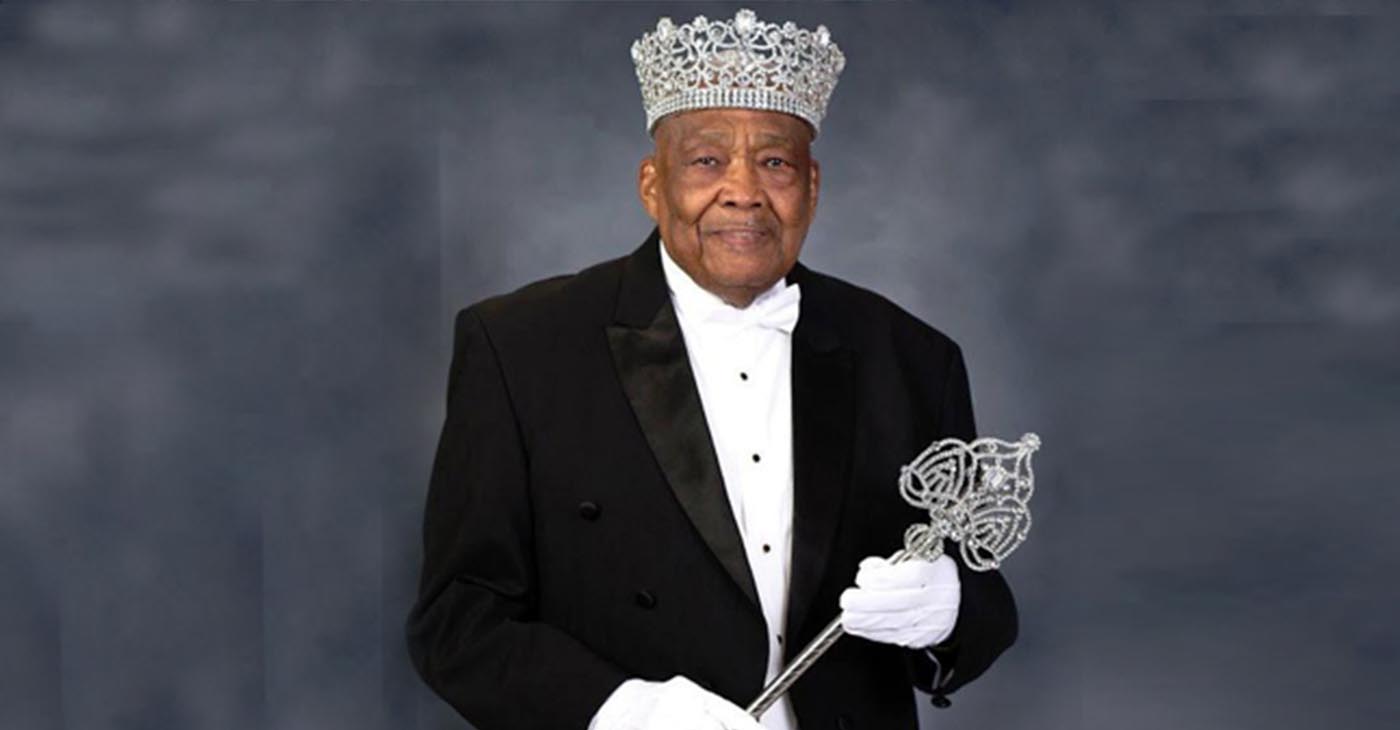
KING ZULU 2019 GEORGE RAINEY
This year is a special year as longtime club member, joining in 1972, George Rainey is the reigning King of Zulu.
He is a man with so much history in the organization and in the City of New Orleans.
He was part of the first graduating class of Booker T. Washington in 1949. He also is part of the great culinary history of the City as the owner of Rainey’s Restaurant and Catering, one of the premiere African American-owned eateries in the city for five decades.
In 1978, Mr. Rainey earned the title “Zulu Big Shot.” In addition, he secured Zulu its first corporate sponsorship – the largest donation of any corporate sponsor. Mr. Rainey has secured more than 40 sponsors under his leadership.
He served as a Zulu Board Member from 1978 to 1993. He served as Vice-President from 1991-1996. Again, reelected as a board member from 1996-2007. Mr. Rainey has received many awards during his days. He was recognized by President George W. Bush and The Jefferson Award Foundation for his community services.
In 1983, Mr. Rainey spearheaded the production of Zulu’s 1st Poster Series. In 1993, Mr. Rainey founded New Orleans’ world re-known Zulu Lundi Gras Festival!
He is also a great humanitarian. In 2005, when Hurricane Katrina hit the city, many families had no place to get food. Led by his Pastor, Bishop James Nelson Brown of Fisher Community Church, along with the 82nd Airborne Division cooks, Mr. Rainey returned home to serve and feed over one thousand people for 2 months daily and for free. But his services to the community don’t end there. In 2006, Mardi Gras was in jeopardy. Mr. Rainey co-authored a speech before the New Orleans’ City Council that saved Mardi Gras.
A dedicated family man, Mr. Rainey has three daughters, one son, six grandchildren, and four great-grandchildren. Mr. Rainey would like to thank the City of New Orleans and the supporters that helped him become Zulu King 2019. Last but, certainly not least, a very special Thanks to, his son, Oscar Rainey, and friend, Larry Hammond for organizing a ‘Great Committee’.
ZULU QUEEN
This year’s Zulu Queen is Kailyn Lilly Rainey was born on the 8th of March in 1999 to Michelle Patterson and Oscar Rainey. She is the beautiful granddaughter of Leontine Winding Dennis and the late Herman L. Dennis and George V. Rainey, King Zulu Elect 2019 and the late Jeanne Robinson Rainey. She had one sister, Kelsey La’ Jeanne Rainey. Kailyn is the stepdaughter of Joan Cooper-Rainey.
Kailyn graduated from St. Katharine Drexel Preparatory School in 2017 with honors and was included in the top 5 of her class. During her time at Prep she served on both the Principal’s Honor Roll and the Presidential Honor Roll. She was also the President of the St. Katharine Drexel Kiwanis International Key Club, a member of the National Honor Society, Student Council, Co-Captain of the Tall Flag Marching Unit, Student Ambassador, Editor- in-Chief of the Yearbook, and a member of Bee Legacy. While being active in her school’s community, Kailyn completed 20 credit hours as a dual enrollment student at Delgado Community College.
Presently, Kailyn is a sophomore at Louisiana State University where she studies Finance. There is an abundance of goals that she wishes to accomplish prior to graduating from LSU. Besides being a full-time student, Kailyn is an active member in LSU’s Chapter of the National Association of Black Accountants. Growing up in a family filled with entrepreneurs, Kailyn was inspired early on to one day have a successful business of her own. Post-graduation, Kailyn would like to get a Master’s in Business Administration and possibly attend Law School. She has spent the last 3 summers as a student worker in the Chambers of the Honorable Judge Edwin Lombard and Judge Paula Brown in the Louisiana Fourth Circuit Court of Appeal.
“To the girls of New Orleans, don’t let what you’ve been through, determine where you are going and don’t let anyone try to stop you from achieving your dreams. You can do anything. I never would have thought in a million years that I would be crowned Queen Zulu at only 19 years old,” Kailyn said in a press statement.
Kailyn would like to give special thanks to her grandfather, George V. Rainey, King Zulu Elect 2019 and the members of the Zulu Social Aid and Pleasure Club, Inc. for giving her an experience of a lifetime. She plans to continue honoring the Zulu traditions as she reigns as Queen Zulu 2019.
Mystic Krewe of Femme Fatale
Founded by Ms. Gwendolyn Rainey, in 2013 the Mystic Krewe of Femme Fatale continues in the spirit that the ladies of MKFF, “will always empower, encourage and uplift,” according to the krewe’s President, Mrs. Sharlayne Prevost.
This year they are planning another amazing extravaganza with an imaginative wonderland filled with mystery, fantasy and fun. The Mystic Krewe of Femme Fatale will celebrate its sixth year of incorporation on Friday, February 22, 2019 in the La Nouvelle Orleans Ballroom of the New Orleans Ernest N. Morial Convention Center with the theme, “MysticKrewe of Femme Fatale Presents Story Time.” They will also have their parade that rolls on the traditional uptown route on Sunday, February 24th.
This year’s queen is Mrs. Pamela Prout Foxworth-Carter, daughter of the late Mr. Clifford Prout and Mrs. Jeraldine Prout. The queen has one son James Cardriche, III, and two grandchildren, James IV and Ireyan.
A native New Orleanian, Mrs. Pamela Prout Foxworth-Carter is married to her life partner, Karen Foxworth-Carter, and she has always loved her city. Pamela grew up in the Upper Ninth Ward and graduated from George Washington Carver Senior High School and, later, Southern University at New Orleans. She is currently employed as a Project Manager with the Housing Authority of New Orleans.
Maids to the royal court are Mrs. Karen Foxworth-Carter, Mrs. Vonda Rhea Copes Dunn, Miss Ruth Hayes and Mrs. Trellis Thompson-Stevenson.
The 2019 Grand Marshals are Grammy Award Winner R&B and Blues Recording Artist Irma Thomas, and Gina Charbonnet, a New Orleans native and Essence Festival Empowerment Executive Producer.
Young Men Illinois
Founded on March 23, 1926 by a few Black male workers of the Illinois Central Railroad.
The Young Men Illinois Club, Inc. (YMI) was formed in 1926 to present eligible young ladies to society during New Orleans’s Carnival Season.
Mission of members is to promote closer social relationship among its members and enable them to perfect any movement that will be for the mutual benefit of the community in general.
YMI’s Ball varies from year-to-year but its ball date is always in close proximity to Mardi Gras; usually on the Friday 1-2 weeks prior to Fat Tuesday. This year’s ball was held on Friday, February 15, 2019 at the Hyatt Regency New Orleans, Empire Ballroom.
Ronald Vigee, a member of the organization, whose daughter Taylor Nicole Vigee, was the ball’s 2018 Queen. “Our organization, YMI, gives young ladies the opportunity to showcase their successes to their family and community. The debs participate in various activities that builds their social character as well as the awareness and importance of giving back to the community.”
Ravi Bates echoes some of these same thoughts regarding YMI and its mission, “For me it helps to showcase and present to the world young African-American women and all their achievements before they take a step into adulthood. As a father of two girls I can’t think of a better way to help empower them. I also enjoy the camaraderie amongst all the brothers in the group who also have daughters and share similar interests.”
Bunch Club
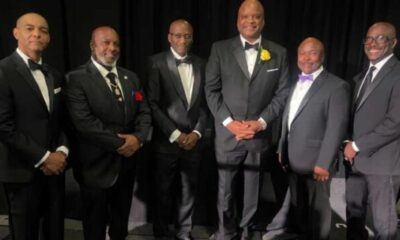
Established in 1917 the Bunch Club is one of New Orleans oldest Carnival Clubs in the City. Unlike others it is less of a Carnival Krewe and more of a Fraternal Organization. But it has come to be known for the Bunch Club Carnival Dance. Held on the Friday before Mardi Gras, the members of the Bunch Club and their guests celebrate the carnival season with music, dancing, refreshments, and revelry.
At the stroke of midnight, they escort their wives or sweethearts in a Grand March. Clad in tuxedos, crimson capes, plumed hats, white gloves, and club medallions, the Bunch Club’s members reenact a Mardi Gras Tradition that has lasted nearly a century. The music and libation start promptly at 10:00 pm and lasts well into the morning.
The club members represent educators, university presidents, bankers, government workers, notable attorneys, doctors, writers and entrepreneurs whose professions keep them involved in the well-being of the city. The Bunch Club was among the first clubs to boycott Mardi Gras during the integration crisis of the 1960s. Unlike many other Mardi Gras affairs, the Bunch Club does not present debutantes.
Black Mardi Gras and Celebrating the Culture of New Orleans
Mardi Gras is a wonderful time for the city as people from around the country come to re-unite with relatives or simply engage in the amazing culture of New Orleans. There are so many more traditions that exist in our beautiful city. Not just during Mardi Gras, but year-round. We at Data News Weekly asks of our citizens and those who love New Orleans to go out and enjoy this beautiful city and all it has to offer.










Black Press
New Protections for Ticket Buyers: Gov. Newsom Signs Assemblymember Isaac Bryan’s Bill
OAKLAND POST — Assembly Bill 1349 expands state regulation of original ticket sellers, resellers and online resale marketplaces. The law targets deceptive sales practices, ticket-buying software and speculative listings — tickets advertised for sale by sellers who do not possess them or have authorization to sell them.
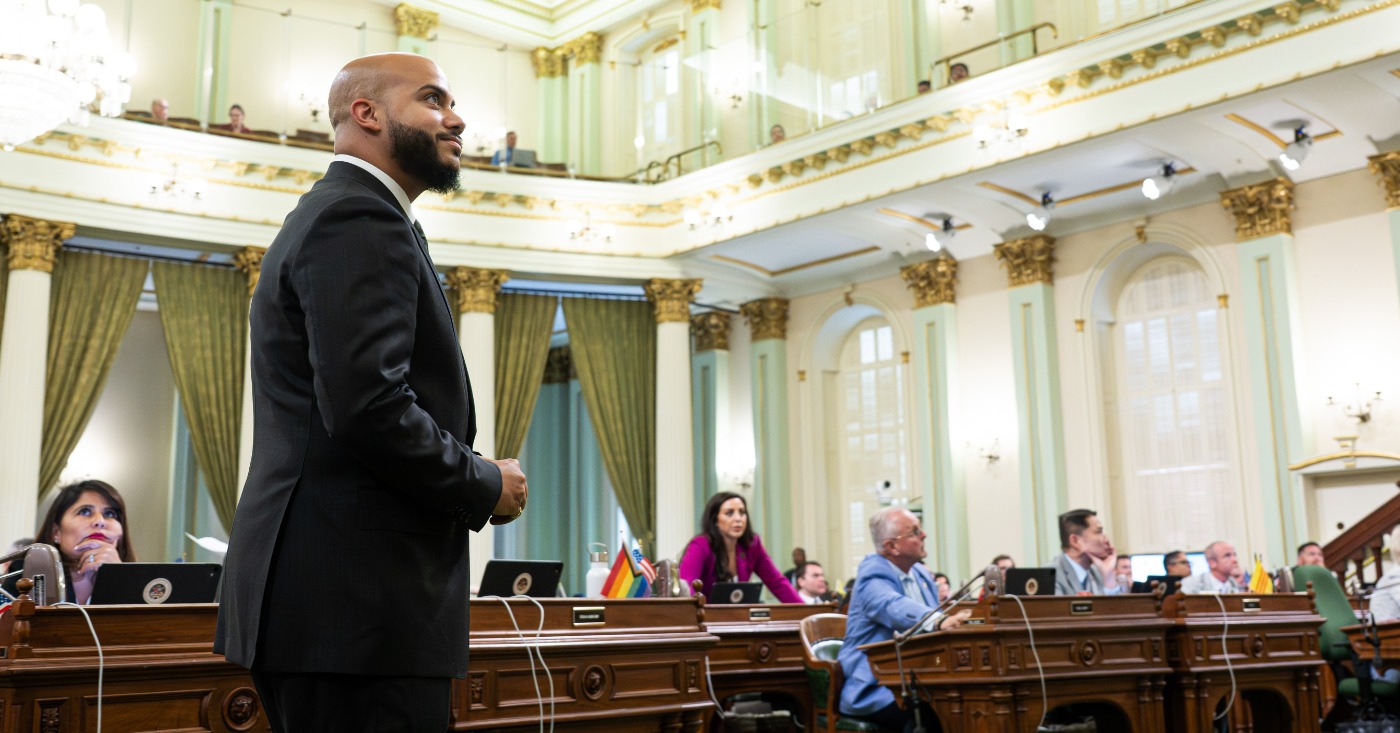
Gov. Gavin Newsom signed legislation on Sept. 27 authored by Assemblymember Isaac Bryan (D-Ladera Heights) that strengthens consumer protections for Californians purchasing tickets to concerts, sporting events and other live entertainment.
Assembly Bill 1349 expands state regulation of original ticket sellers, resellers and online resale marketplaces. The law targets deceptive sales practices, ticket-buying software and speculative listings — tickets advertised for sale by sellers who do not possess them or have authorization to sell them.
“Buying a ticket shouldn’t come with hidden risks or unfair practices,” Newsom wrote on social media after signing the measure.
Under AB 1349, ticket sellers are prohibited from listing tickets before they have been officially released unless they have authorization or a legally enforceable right to receive them. Online marketplaces must also take reasonable steps to prevent speculative ticket sales on their platforms.
The law prohibits sellers from using bots, multiple accounts, email addresses or internet protocol addresses to circumvent ticket limits, presale restrictions, electronic queues and other controls. It also bans websites and advertisements designed to mislead buyers into believing they are purchasing tickets from an authorized seller, venue or event organizer.
Sellers who violate certain provisions and fail to provide a promised ticket may be held liable for twice the ticket’s contracted price. Buyers may also recover nonrefundable expenses incurred while attempting to attend an event, along with reasonable attorney’s fees and court costs.
Pastor Tecoy Porter Sr., president of the National Action Network’s Sacramento chapter, said the law establishes needed accountability.
“Buying a ticket to a concert or show shouldn’t mean entering a marketplace where the rules are stacked against you. This year, we worked with a coalition of consumers, civil rights advocates, community groups, and businesses to make AB 1349 stronger. Consumers deserve enforceable rules that protect them. We thank Assemblymember Bryan for his leadership, and we will keep working to make ticketing fair for every Californian.”
Jose L. Barrera, national vice president for the Far West Region of the League of United Latin American Citizens, also praised the measure.
“Californian families deserve certain protections when they buy tickets. Assemblymember Bryan listened to communities across California and delivered a bill that puts fans first. We thank him and Governor Newsom for making it law.”
Black History
Why Black Artists Struggle to Sell Tours
HOUSTON DEFENDER — Recent industry reports and artist comments indicate that Black artists are struggling to sell concert tickets, highlighting a larger crisis in the touring business. This trend, dubbed “blue dot fever,” refers to empty seats at venues and has led to major touring acts canceling or postponing shows since spring 2026.
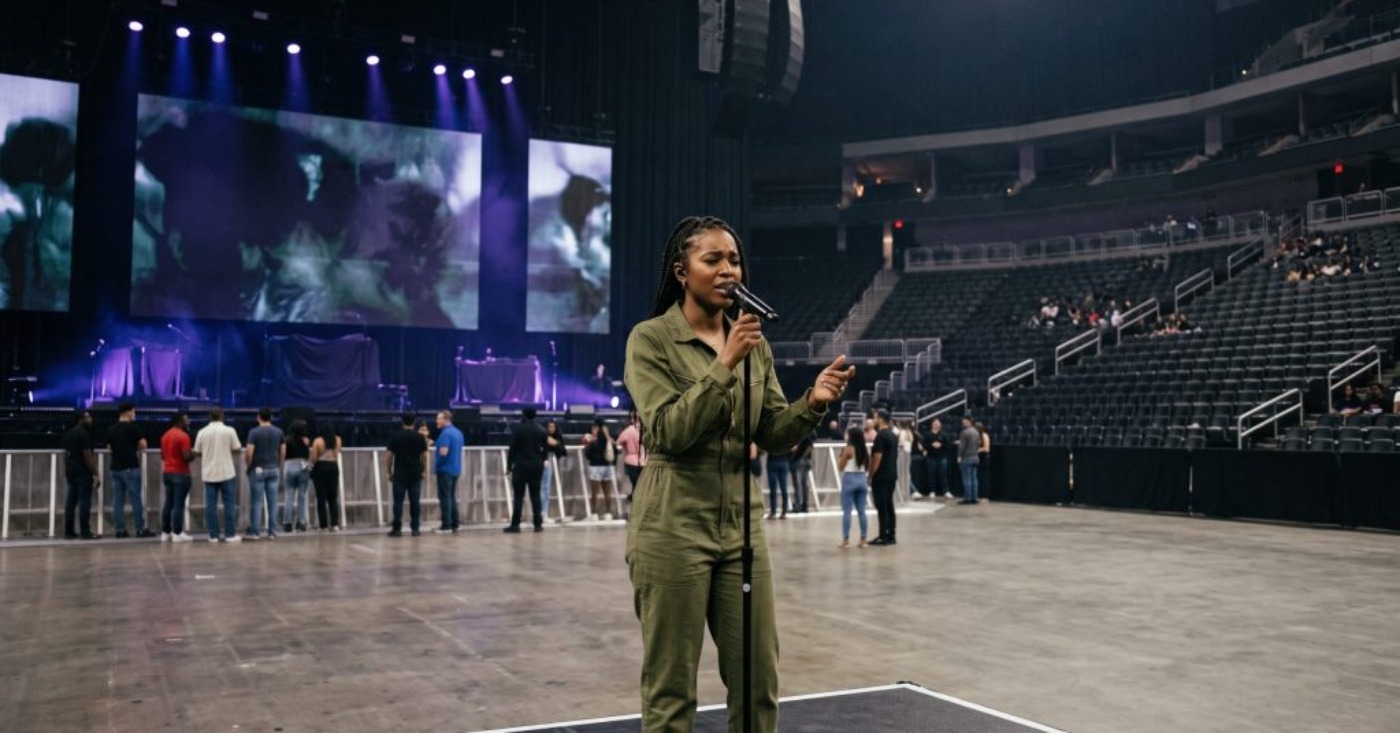
The internet chatter about Black artists struggling to sell concert tickets points to a much larger crisis reshaping the touring business, according to recent industry reporting and artists’ own comments.
Since spring 2026, a wave of major touring acts across genres have canceled or postponed shows due to sluggish ticket sales, a trend some in the industry have dubbed “blue dot fever,” a reference to the blue markers that indicate empty seats on Ticketmaster’s venue maps.
The phenomenon is not limited to Black performers, but several recent examples involving Black artists have fueled online conversation about whether Black touring acts face extra hurdles. For a market like Houston, home to a large hip-hop and R&B fan base and a steady stream of major tour stops, the debate carries added weight.
Here are five reasons the touring business has gotten tougher for artists trying to fill seats.
Blue dot fever is spreading industrywide
Black hip-hop megastars like Ludacris, T.I., Rick Ross, and BigXThaPlug felt the impact of Blue Dot Fever after struggling to sell tickets. Industry watchers say many artists are being booked into venues too large for their current draw, leaving sections visibly empty, discouraging last-minute buyers. The trend cuts across genres, but it has compounded challenges already facing some Black touring artists this year.
Fans keep comparing every artist to music’s biggest superstars
Grammy-winning singer Melanie Fiona recently weighed in on the online conversation about canceled shows and slow sales, explaining that most artists do not have the resources or reach of music’s top-tier headliners. The trade outlet Ticket News has made a similar point, noting that few artists can match the pricing structure or demand generated by superstar-level tours. When any artist falls short of that bar, fans and social media users are quick to call it a flop, even when the artist is still performing at a healthy level for their career stage.
Stadium bookings are outpacing actual demand
A hip-hop stadium concert set to take place in Louisville in October 2026, featuring Ludacris, T.I., Rick Ross, and BigXThaPlug, reportedly had nearly 47,000 seats still available as showtime approached. The example illustrates a broader booking problem. Venues sized for arena or stadium crowds do not always match the number of fans willing or able to buy tickets, regardless of an artist’s streaming numbers or name recognition. Some promoters are now facing pressure to book smaller, more intimate venues that better match an act’s current draw.
Rising costs are squeezing fans’ entertainment budgets
Housing, groceries, and everyday expenses have climbed for many households, and live music is often one of the first expenses fans cut. Older or legacy acts leaning on nostalgia appear to be hit hardest, since higher ticket and fee prices make attending a bigger financial decision than it once was. Newer or lower-profile Black artists competing for the same limited entertainment dollars face an uphill climb, especially when fans have to choose between one or two shows a year instead of several.
Social media shape who gets mainstream exposure
Does TikTok Dominate the music industry.
Black artists in hip-hop and R&B often compete for airplay and playlist placement within genre-specific categories rather than mainstream ones, which can limit the crossover exposure that turns streaming success into ticket sales. Artists working outside those two genres, including gospel, jazz, and Afrobeats-influenced acts, face a similar challenge in reaching audiences beyond their dedicated fan bases. Whether that structural gap is driving today’s sales slump remains an open question that industry analysts and artists are actively debating.
Based on reporting by Houston Defender.
Art
From Ma Rainey to AI: New Technology Amplifies an Old Fight over Artist Control
HOWARD UNIVERSITY NEWS SERVICE — August Wilson’s “Ma Rainey’s Black Bottom” explores Ma Rainey’s struggle for control over her music during a 1920s recording session, highlighting conflicts over art, money, and power dynamics between musicians and business interests. Round House Theatre’s production, running through October 18 in Bethesda, Maryland, stages this historical fight, drawing parallels to contemporary issues.
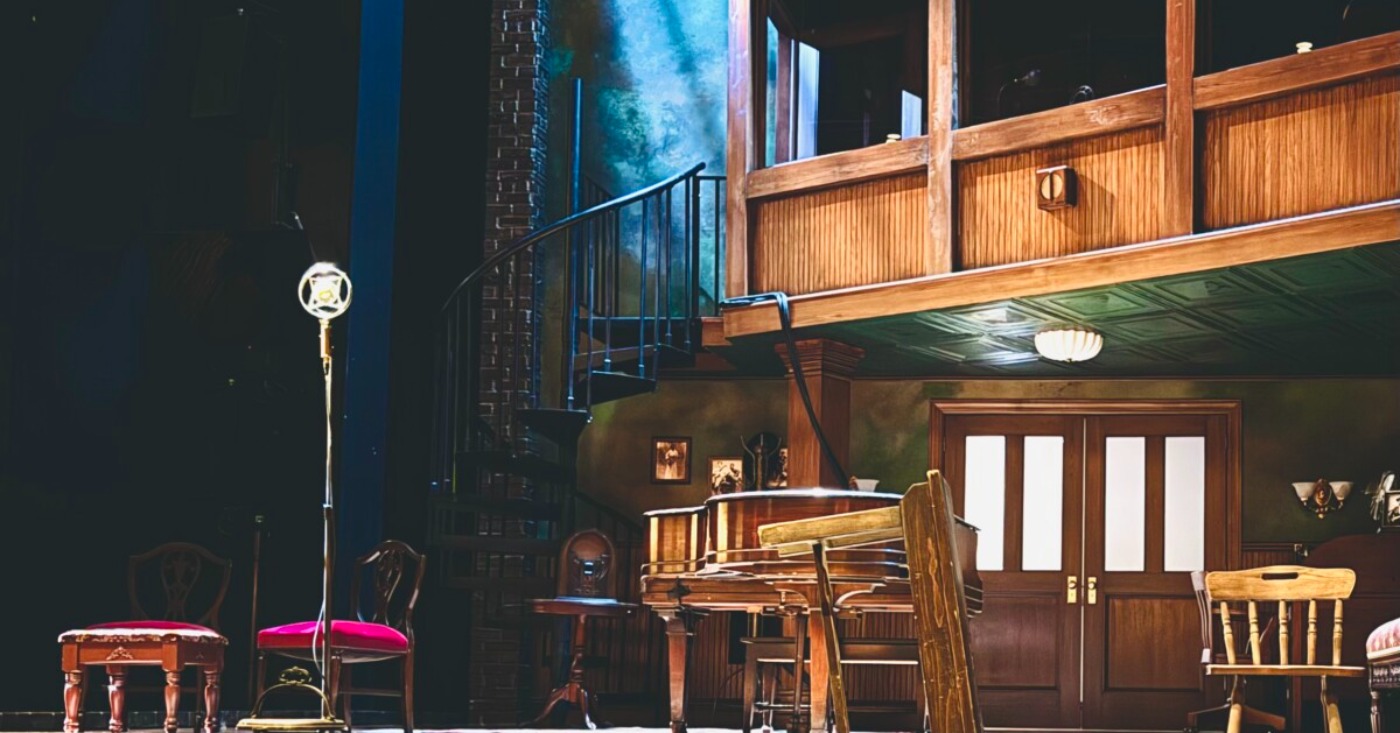
In August Wilson’s “Ma Rainey’s Black Bottom,” Ma Rainey fights to control what happens to her music once she enters the recording studio. Today, musicians are confronting a new question: What happens when artificial intelligence can profit from the identity attached to their music?
Round House Theatre’s production of “Ma Rainey’s Black Bottom,” which runs through Oct. 18 in Bethesda, Maryland, brings an older struggle over artistic control to the stage. Set during a recording session in 1920s Chicago, Wilson’s play follows Ma and her band as conflicts over art, money and control expose the imbalance between the musicians creating the work and the people conducting the business around it. That same question of who can profit from an artist’s value is now being tested in a very different setting nearly a century later.
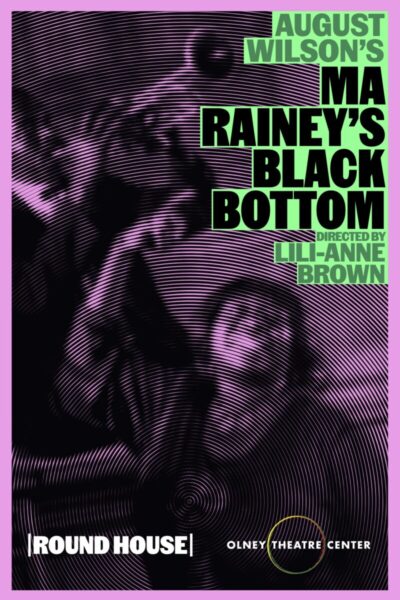
Musicians Jason Isbell, David Lowery, Guy Forsyth and Eduardo Calle filed a class-action lawsuit on Aug. 31 against AI music company Suno. They allege that the company commercially exploits artists through an AI system capable of generating music imitating artists’ identities and styles without permission. Suno disputes the allegations.
The U.S. Copyright Office has also studied AI-generated digital replicas and recommended federal legislation to address gaps in protections against unauthorized replicas of a person’s voice or appearance. Its broader AI inquiry received more than 10,000 public comments.
For Nicole Michelle Haskins, who portrays Ma Rainey in the Round House production, the struggle over power begins with understanding Ma as more than a demanding recording star.
“She is the only advocate she has,” Haskins said. “The choices presented to her are to surrender or fight. Ma chooses to fight.”
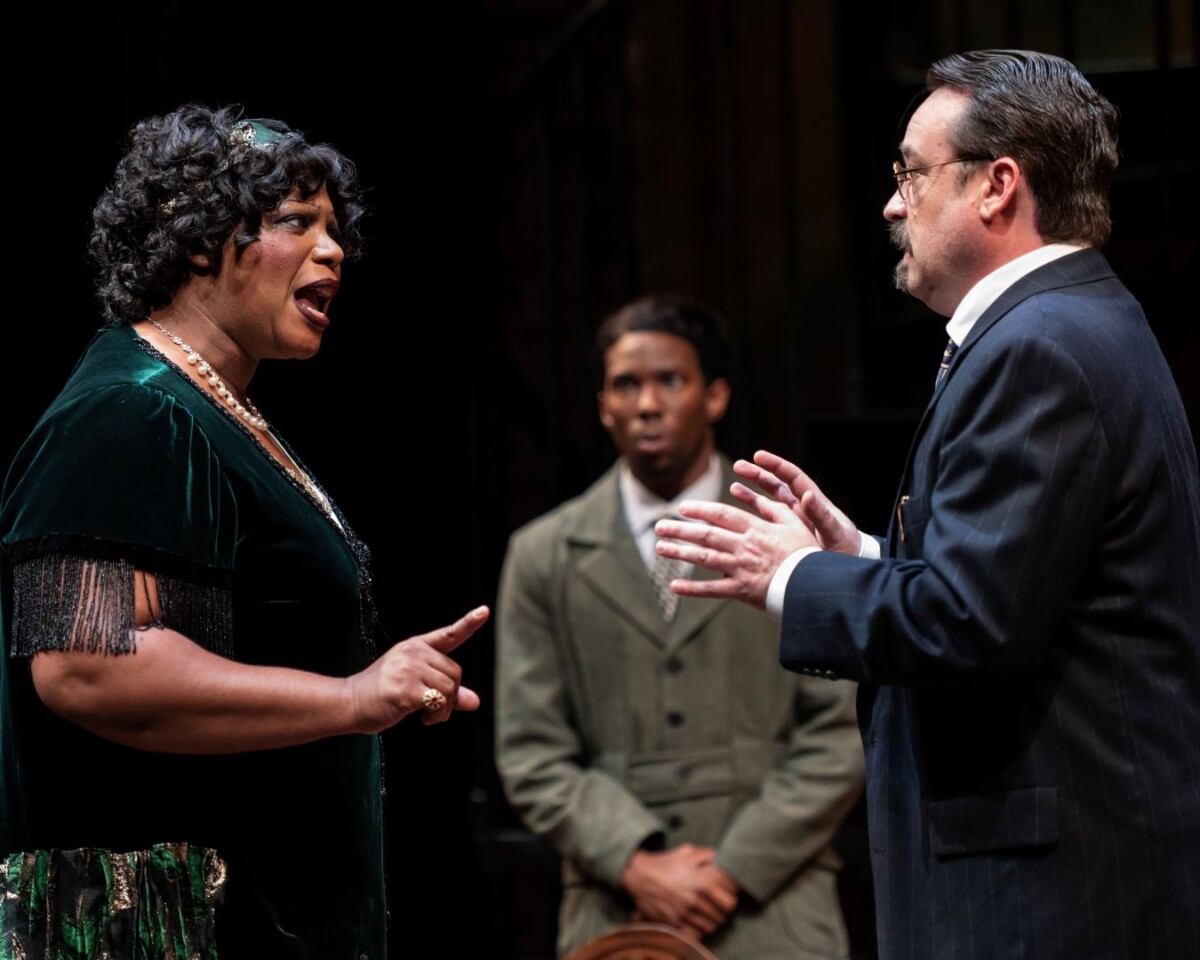
Haskins said Ma enters the recording studio knowing the value that she brings, even as the people around her repeatedly challenge her decisions. She exercises her leverage and pushes back when others attempt to dictate how the session will proceed.
The real Gertrude “Ma” Rainey was one of the earliest Black women to record blues commercially. Between 1923 and 1928, she made more than 100 recordings for Paramount Records, according to the Smithsonian.
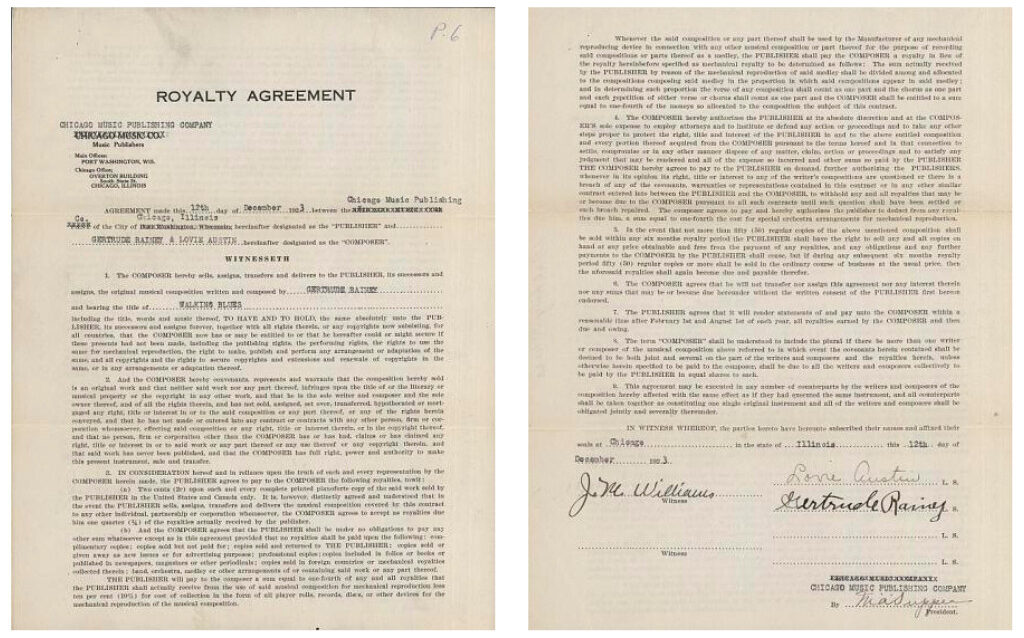
One surviving agreement shows how at least part of that business worked. A Dec. 12, 1923, royalty agreement for “Walking Blues,” signed by Rainey and composer Lovie Austin, provided them two cents for each printed piano copy sold in the United States and Canada. They were also entitled to one-fourth of the royalties the publisher received from mechanical reproductions, minus a 10% collection cost.
For Haskins, portraying a character negotiating those relationships does not feel entirely removed from being an artist today.
“The life that I live as an artist is not that dissimilar from the world that August Wilson has written,” Haskins said.
The technology surrounding artists, however, has changed dramatically.
The scale of AI-generated music has grown quickly. In July, streaming service Deezer said it was receiving about 90,000 fully AI-generated tracks a day, more than half of its daily uploads. Those tracks accounted for less than 3% of all streams.
The lawsuit against Suno is not primarily a traditional copyright case about whether an AI-generated song copied a particular recording. Instead, the musicians rely largely on state right-of-publicity laws, which concern the commercial use of a person’s identity.
According to the complaint, users can enter musicians’ names and use them as a retrieval key for AI-generated music drawing on characteristics associated with those artists. The plaintiffs argue that an output does not have to copy a specific song or perfectly reproduce an artist’s voice for the artist’s commercial identity to be exploited.
Suno disputes that characterization of its technology. The company has said it does not use artists’ names as training metadata and does not permit users to prompt its system for specific artists. Suno says references to artists are filtered and redirected toward descriptions of musical characteristics. Its own prompting guide, for example, encourages users to describe features such as tempo, vocals and instrumentation, using phrases like “bright pop track,” “110 BPM,” “female vocals” and a “big synth hook.”
The Suno dispute centers on more than ownership of a particular song or recording. It raises the question of whether an artist’s name, likeness and other identifying characteristics can be used commercially to generate new music without permission.
Haskins resists describing that underlying conflict as merely contemporary.
“I don’t think they feel contemporary,” Haskins said of Ma’s concerns. “I think they feel worldly.”
For Haskins, AI is one setting for a larger struggle over who has power over creative work. She said the problem of Black people being separated from control of things they created has existed far longer than the technology now raising those questions. The Library of Congress notes that early record companies sometimes used white performers to record music associated with Black artists rather than hire the Black performers themselves, while Black musicians remained rare on early commercial recordings.
“It just hasn’t stopped happening,” she said.
That interpretation shapes the way Haskins portrays Ma’s fight for control. She pointed to a brief moment in the second act when Ma’s manager attempts to steer her toward a different song. Ma refuses and proceeds with the recording she intends to make.
Haskins said the moment stands out precisely because Ma does not need a dramatic confrontation to establish who has the final say.
“She’s not demanding control. She’s not asserting control,” Haskins said. “She is simply positioning herself in correct order.”
La Tetra Metts-Owens is a reporter forHUNewsService.com. She covers Prince George’s County and theater.
Based on reporting by Howard University News Service.
Art
Mothership Sirius B: Atlanta’s Immersive Afrofuturist Art Exhibit Decodes The Past and Future for Black Americans

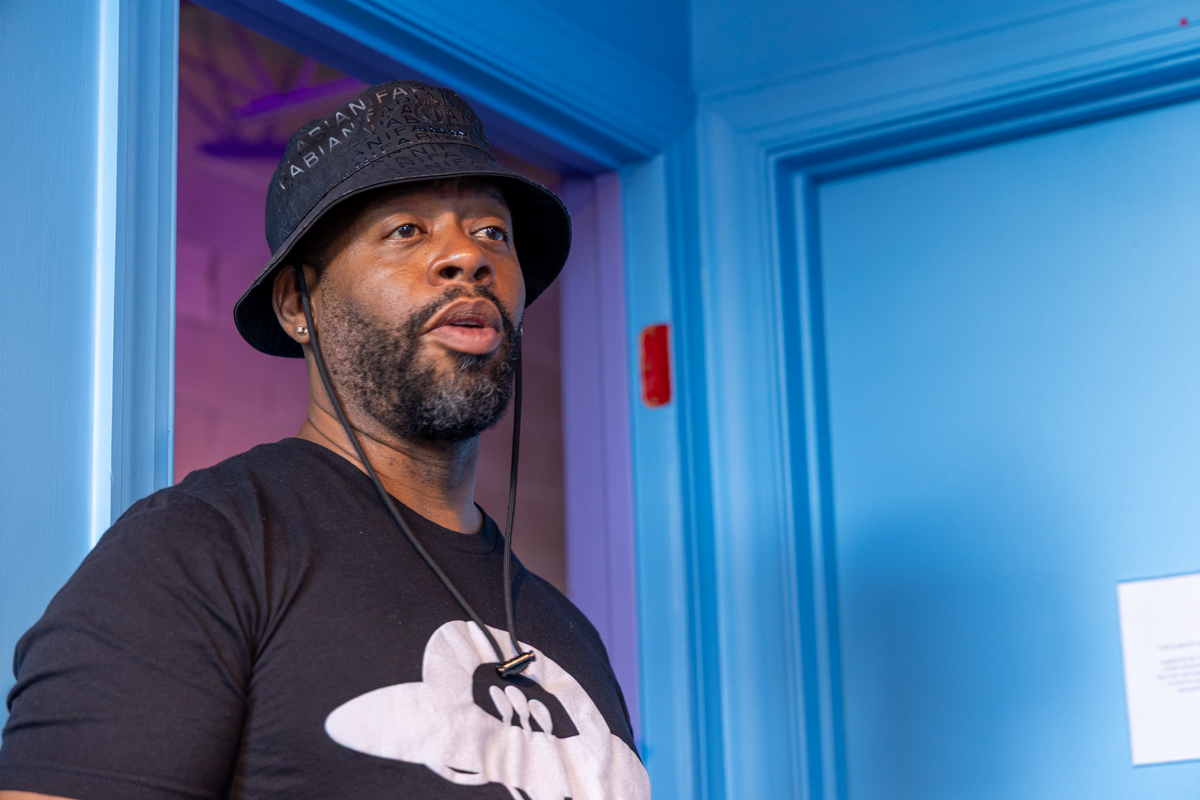
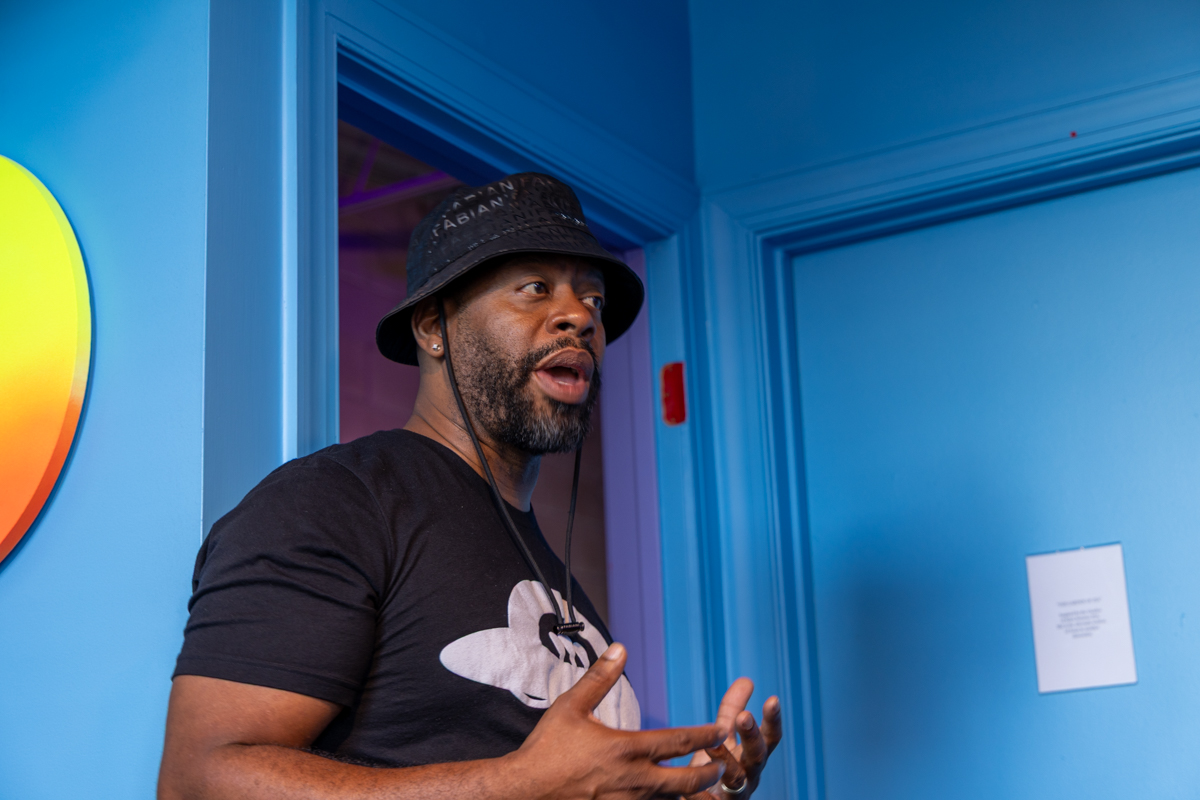
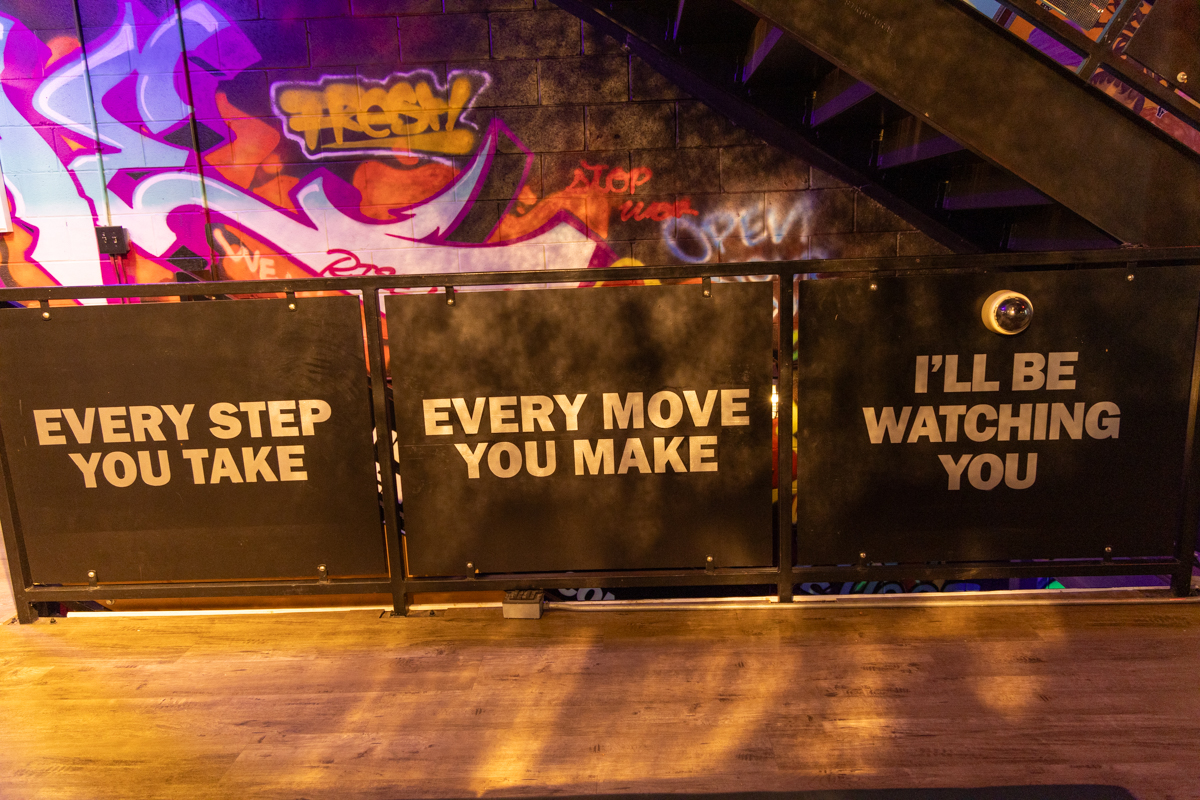
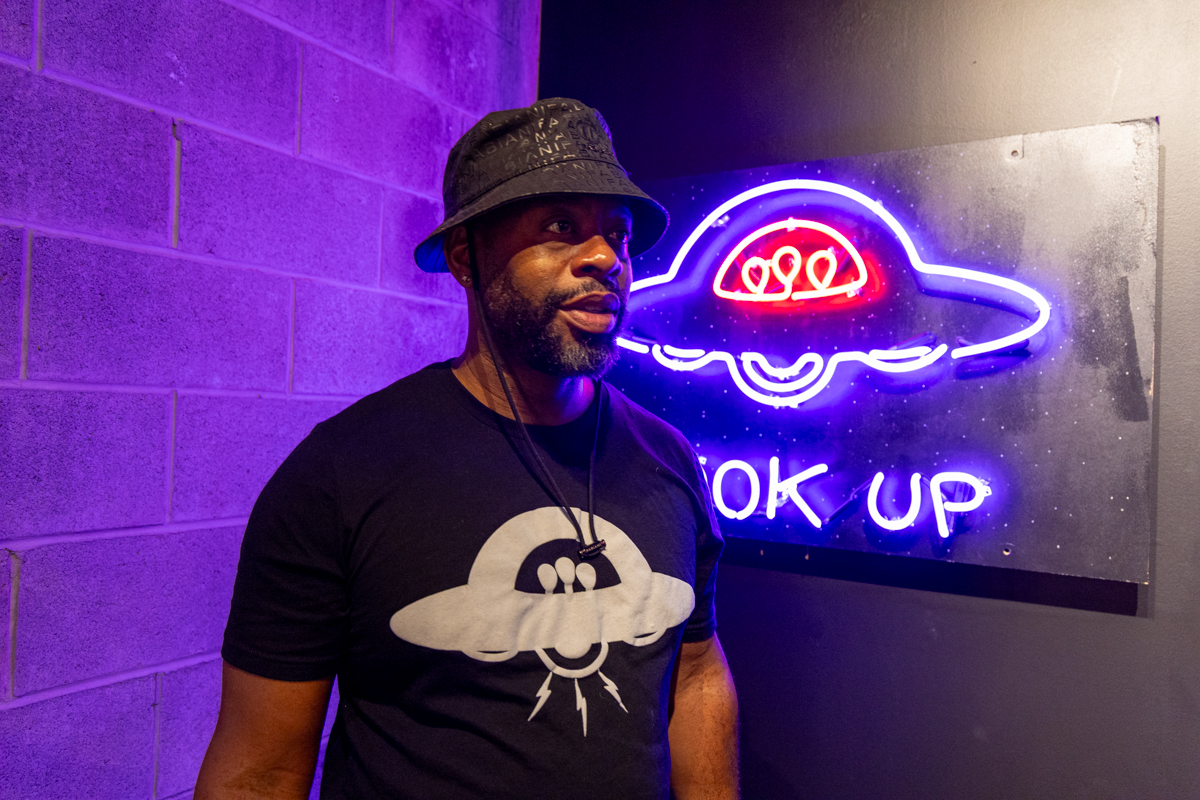
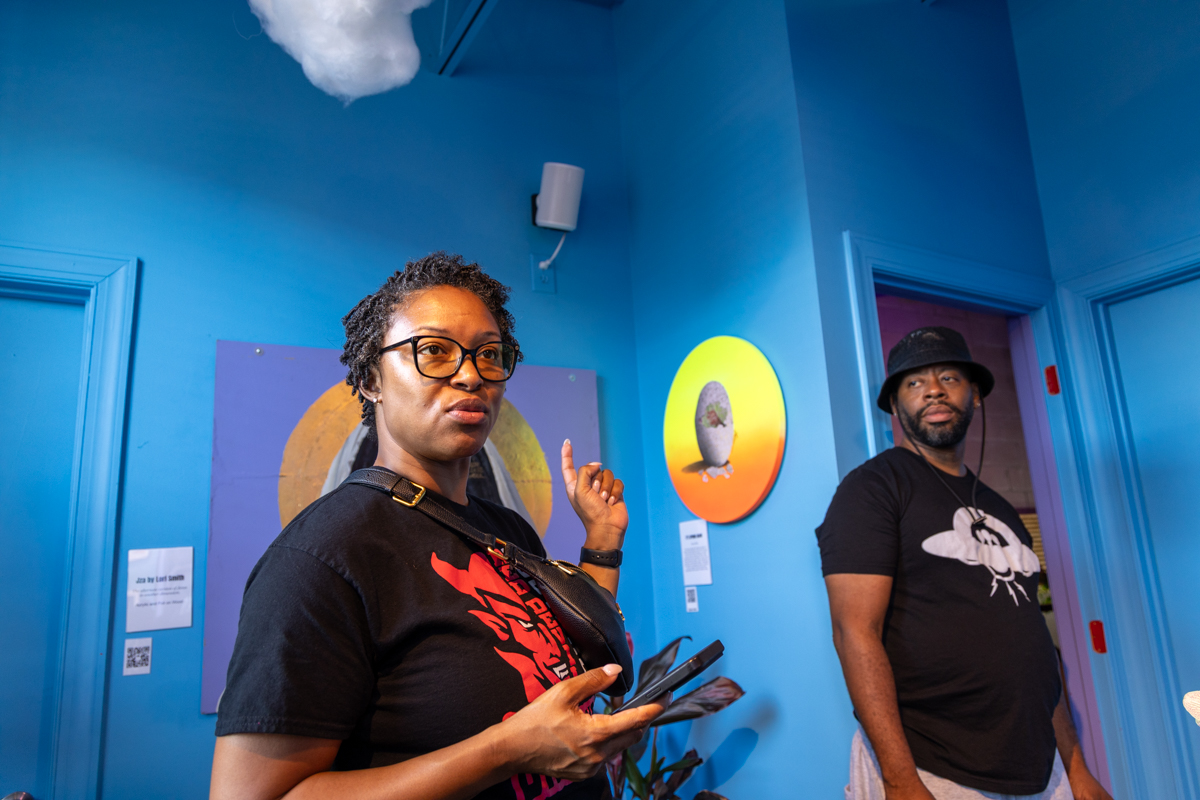
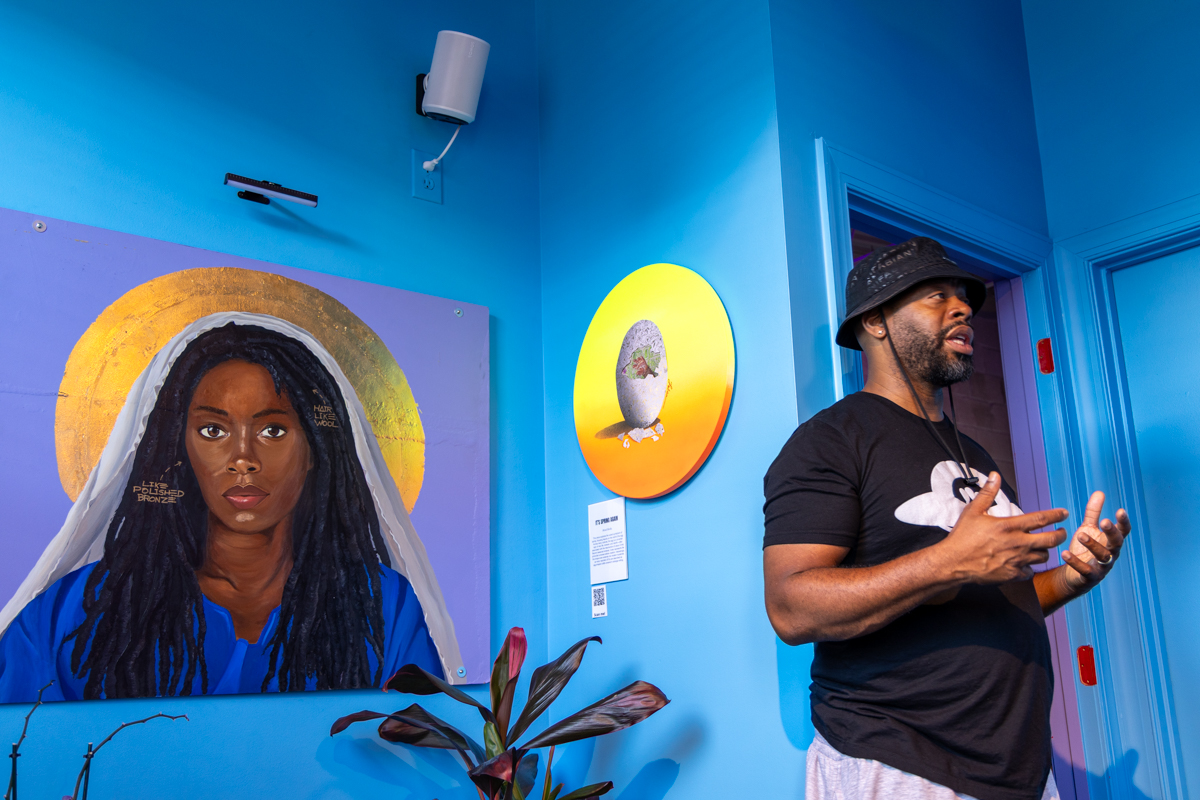
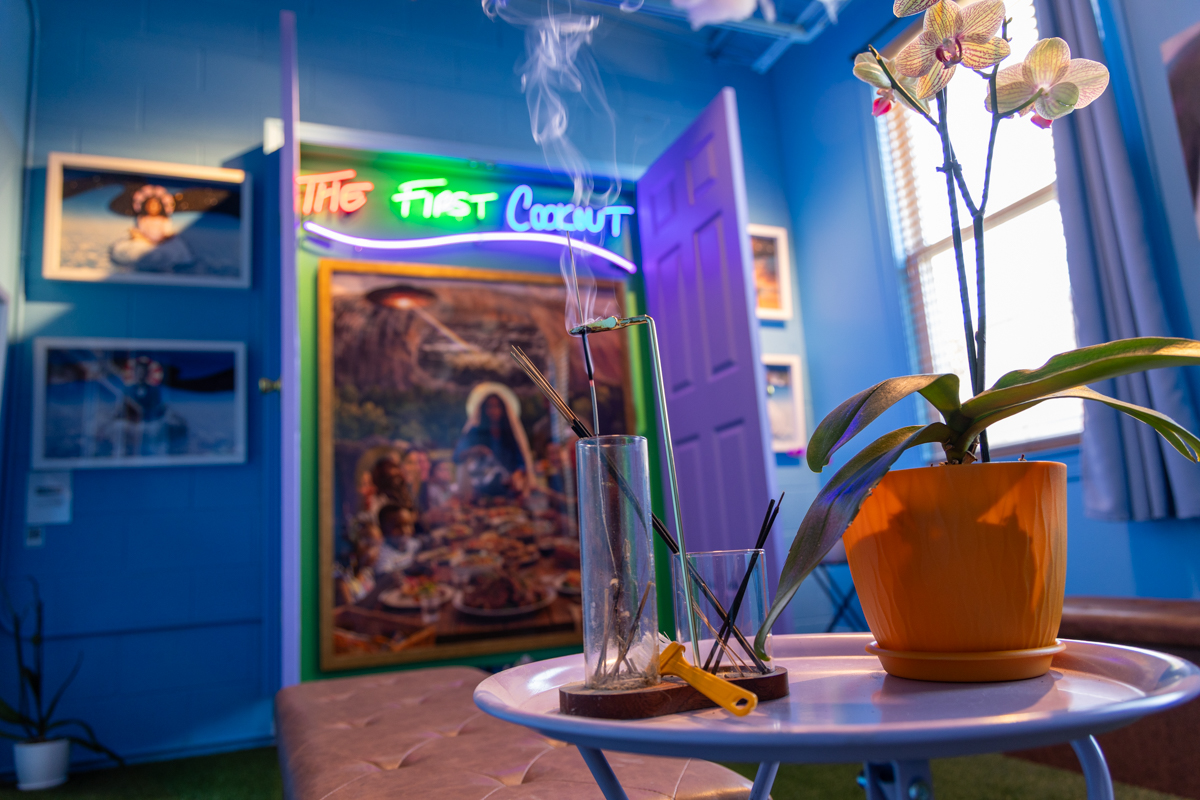
Who decides what the future looks like? For generations, science fiction and pop culture have handed us the answer. Artist Fabian Williams opened Mothership Sirius B, a three-story immersive art installation, to offer a different one.
Atlanta Students Help Shape the Exhibit
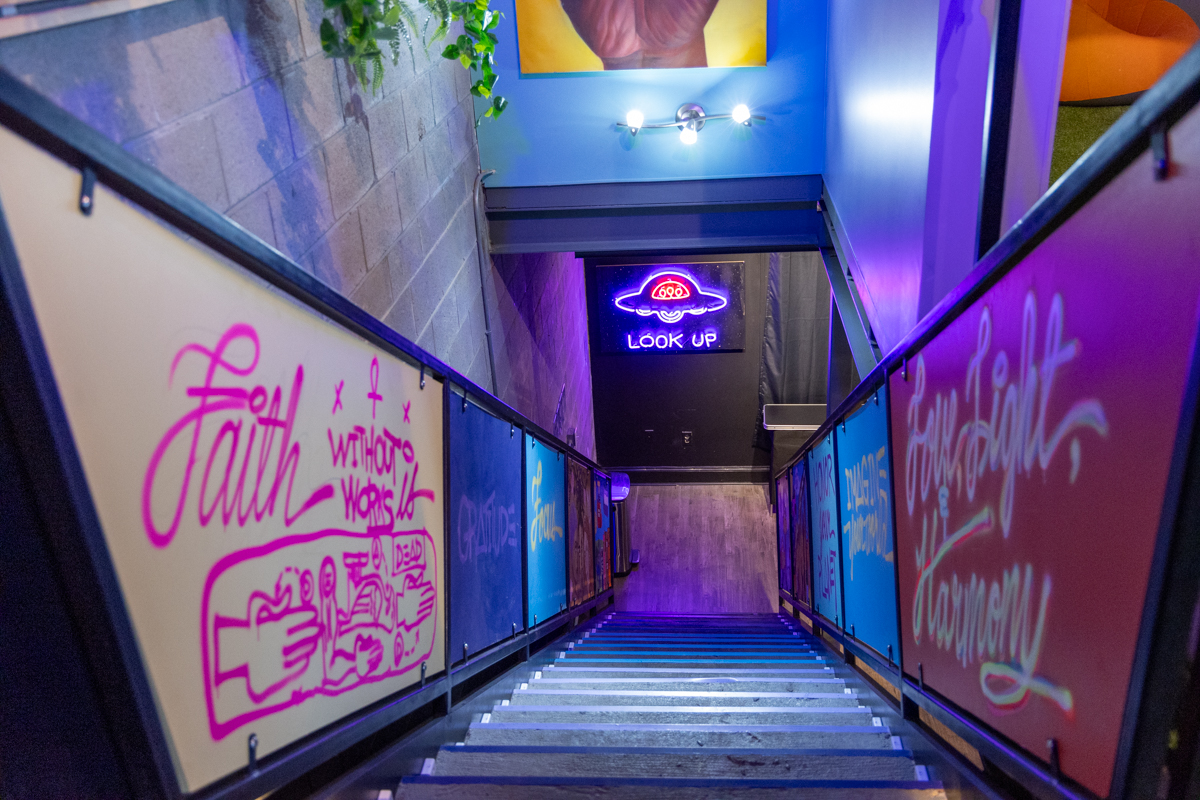
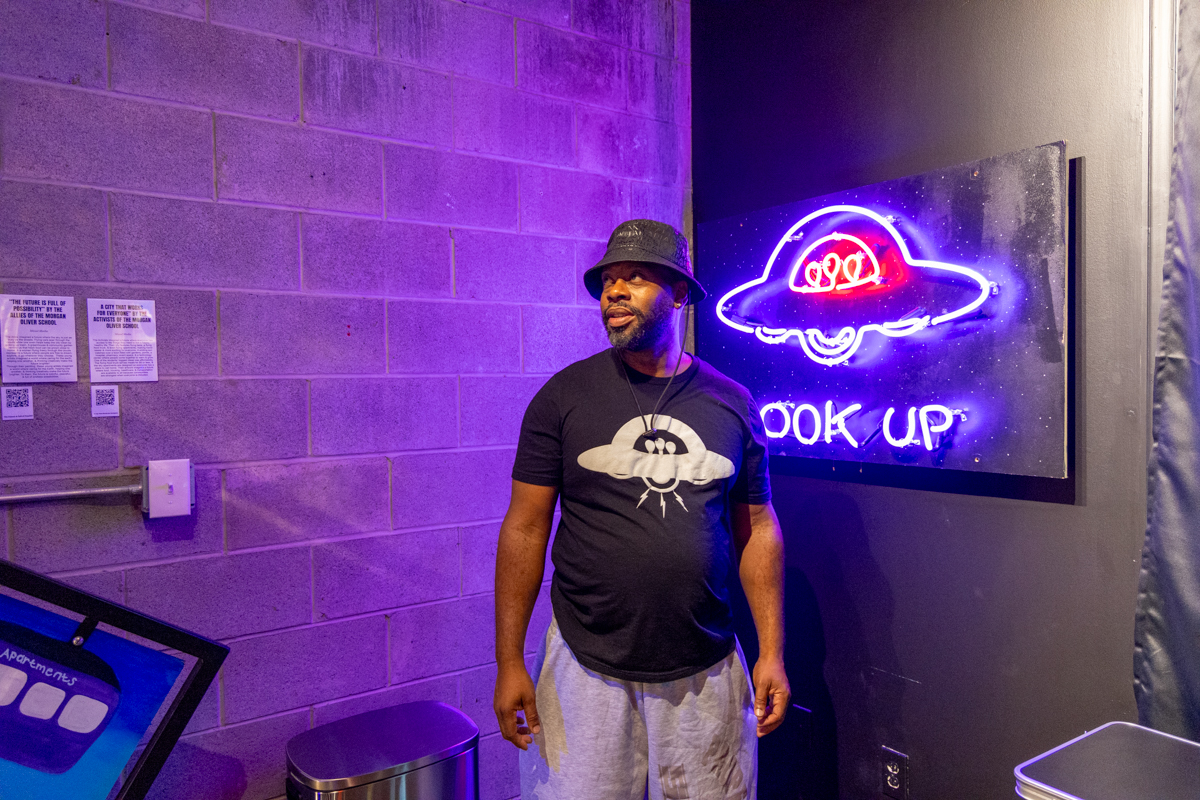
Inside the art installation at 12 Jackson St in Atlanta, the project’s community roots are what set it apart. Students from Morgan Oliver School, Maynard Jackson High School, and Georgia Tech created original artwork that runs through the whole show. It all leads to the Future Lab, a room built for conversation, creativity, and imagining what comes next together.
Williams also sat down with many of the students to ask what kind of future they want to build. Their answers give a real look at how Atlanta’s next generation pictures its city. The Mayor’s Office of Cultural Affairs, led by Adriane Jefferson, is a confirmed institutional partner.
What “Sirius B” Means
The exhibit covers six decades across its three floors, and the name carries the idea behind it. Sirius A and B form a double star system that can’t be seen with the naked eye. According to a story Afrofuturist thinkers often cite, the Dogon people of Mali knew of it centuries before Western astronomers confirmed it. For those thinkers, it shows that Black communities have always held knowledge about the future that mainstream culture was too narrow to notice. Williams puts it this way: the vessel “was always there.”
Pop Culture, Black Empowerment, and Political Commentary
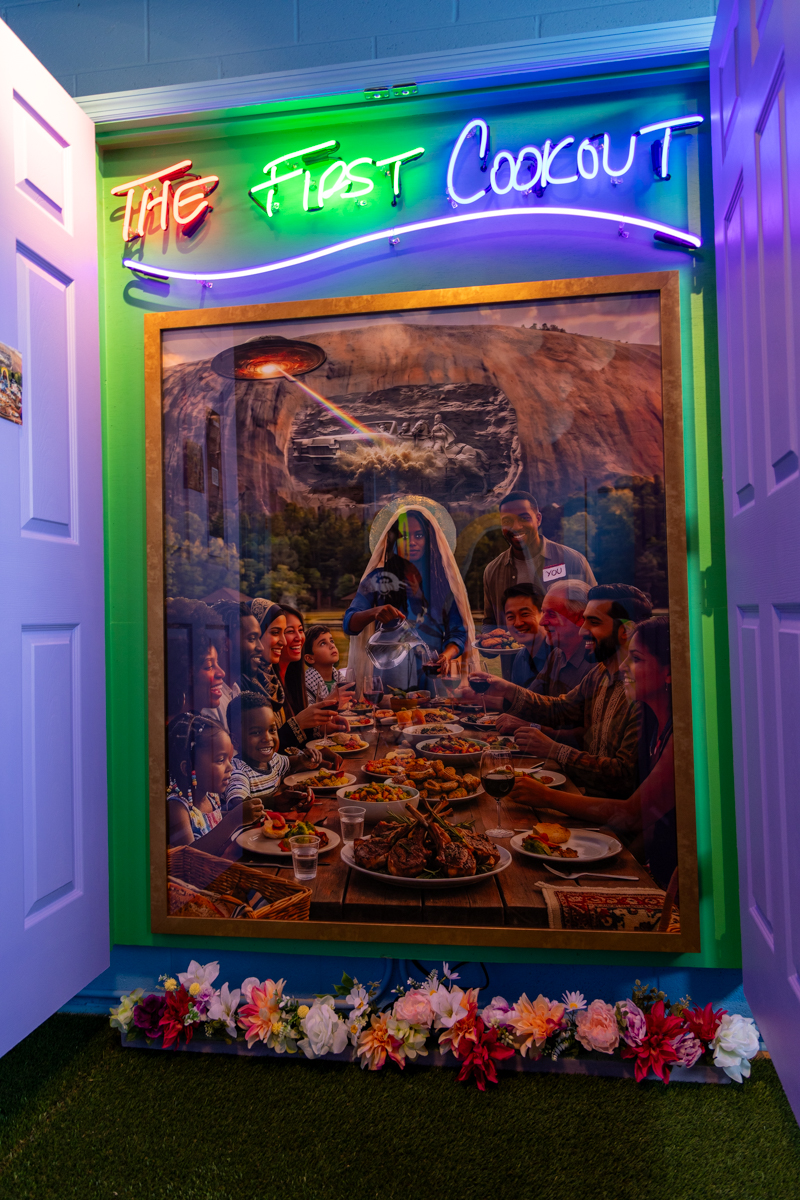
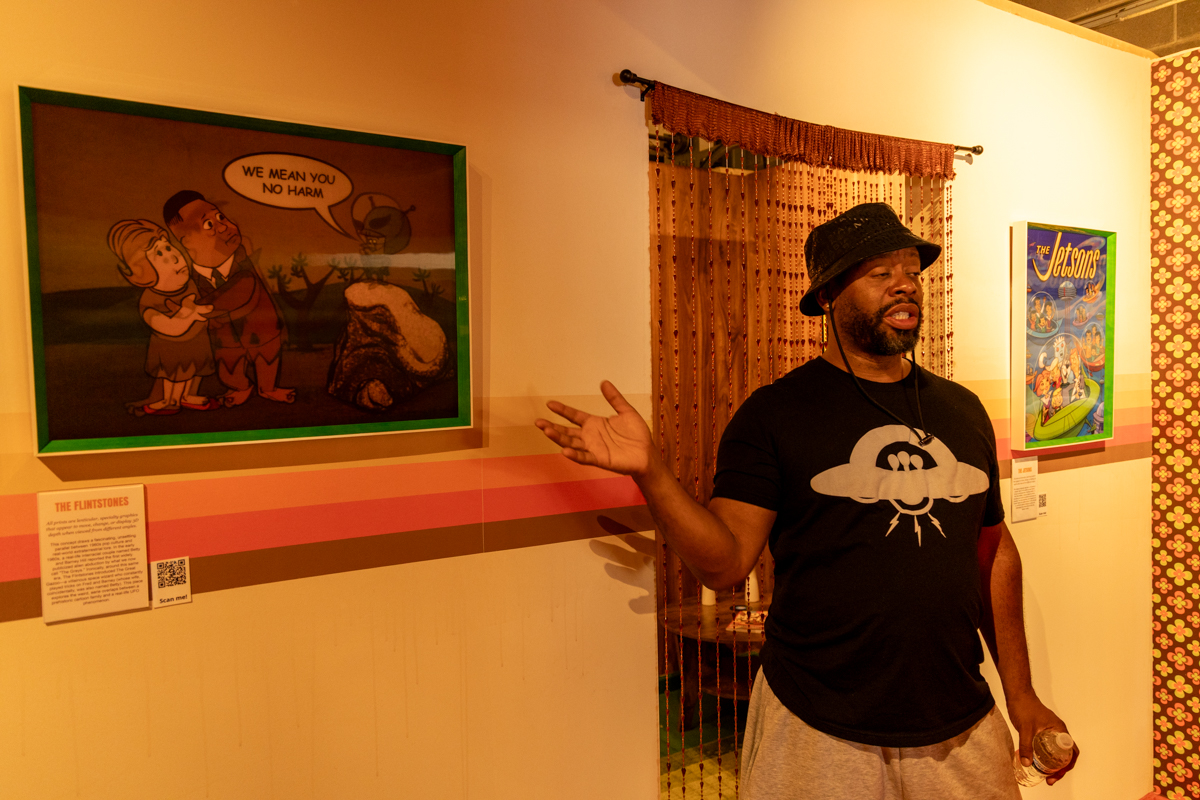
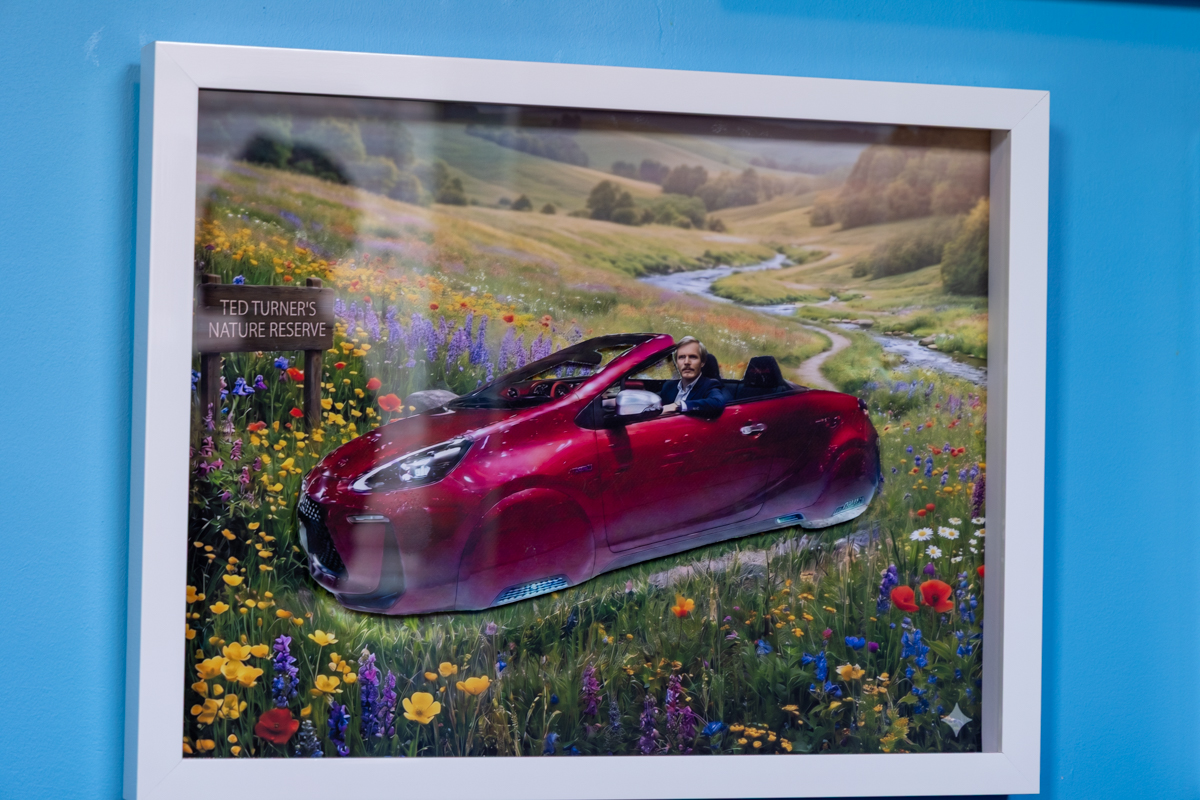
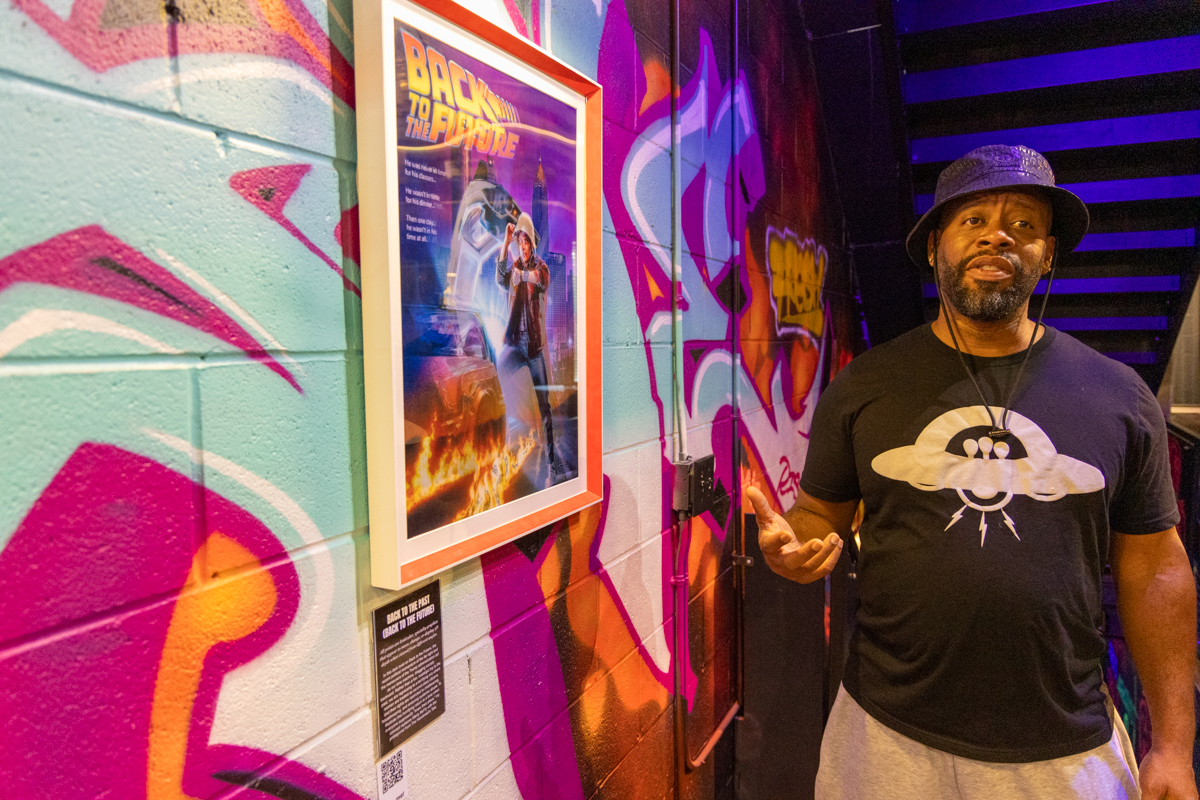
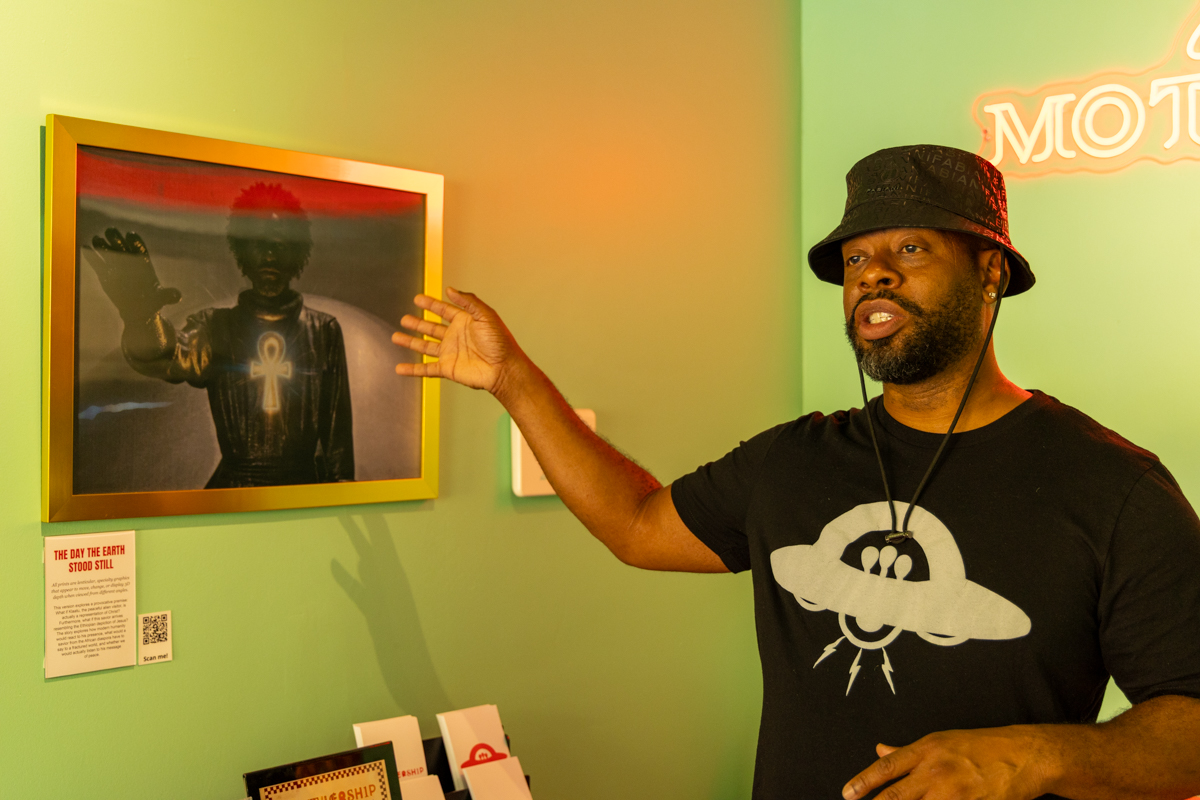
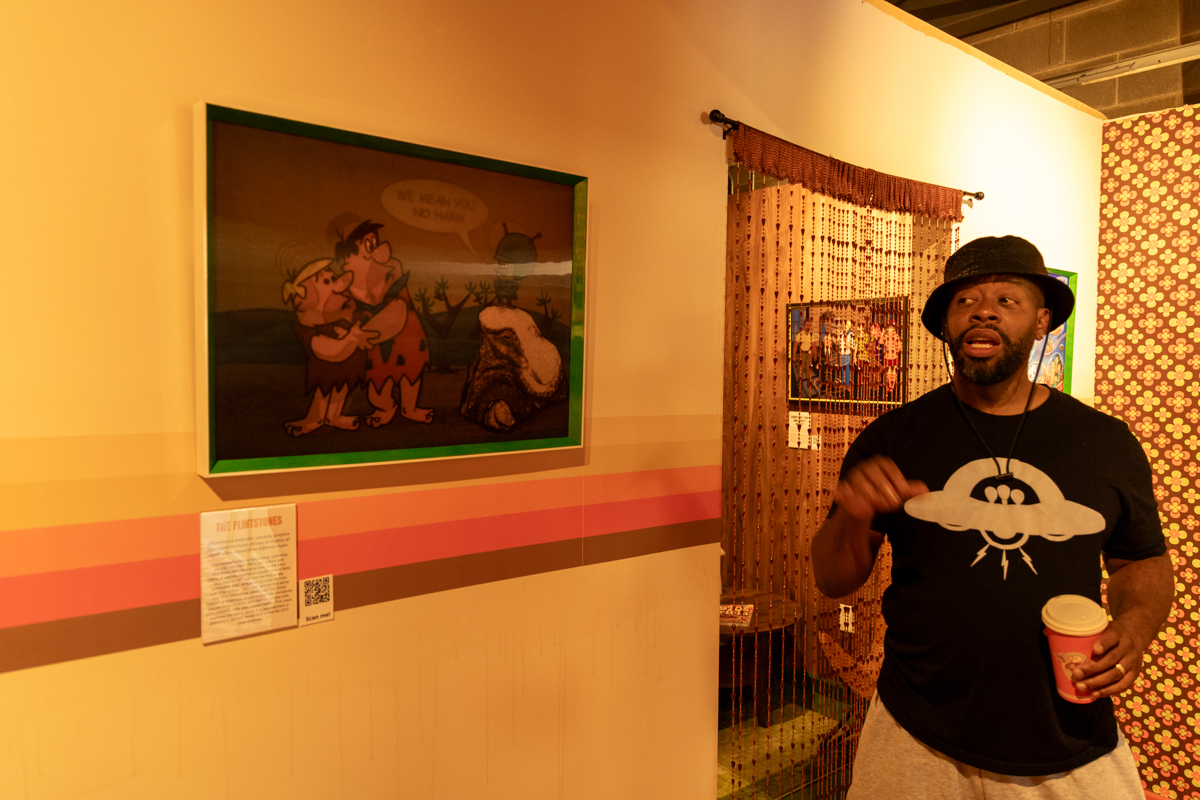
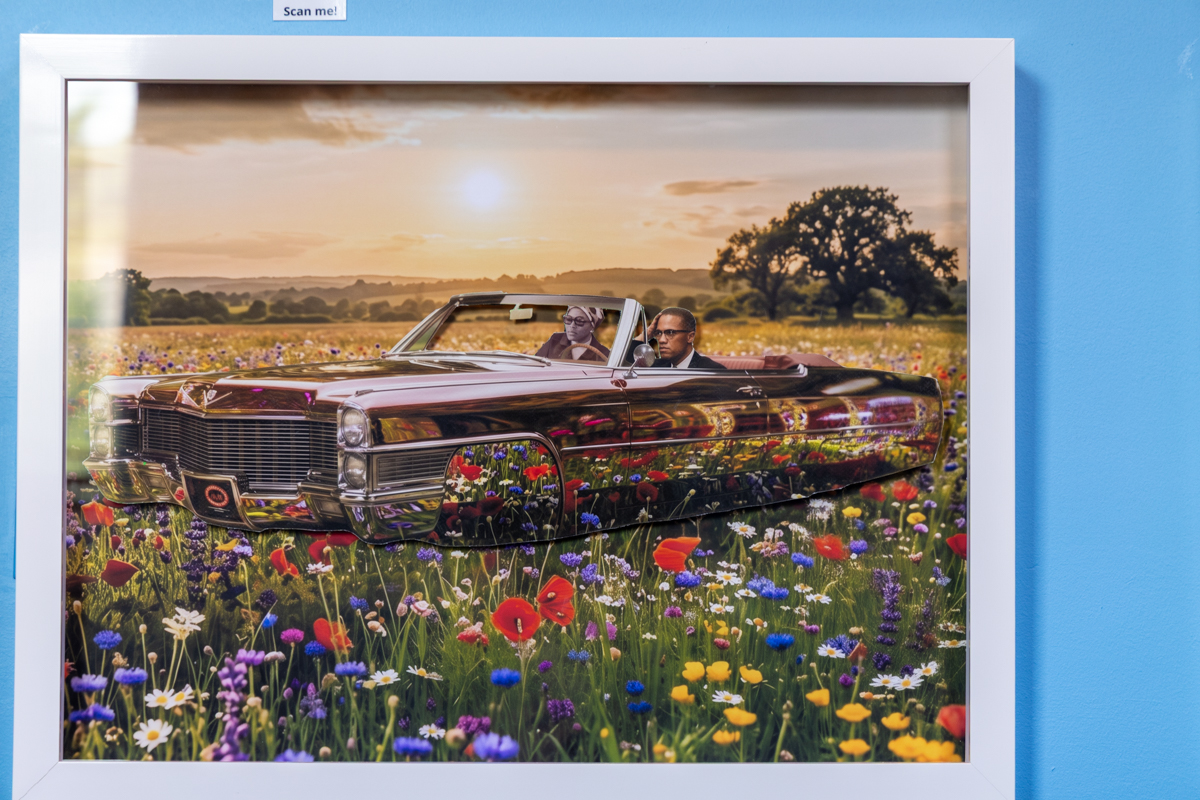
The work plays pop culture against themes of Black empowerment, and it doesn’t hide its disdain for President Donald J. Trump. Many pieces use lenticular printing, so the image changes as you move. A familiar original shifts into Williams’ own take.
Inside the Exhibit, Floor by Floor
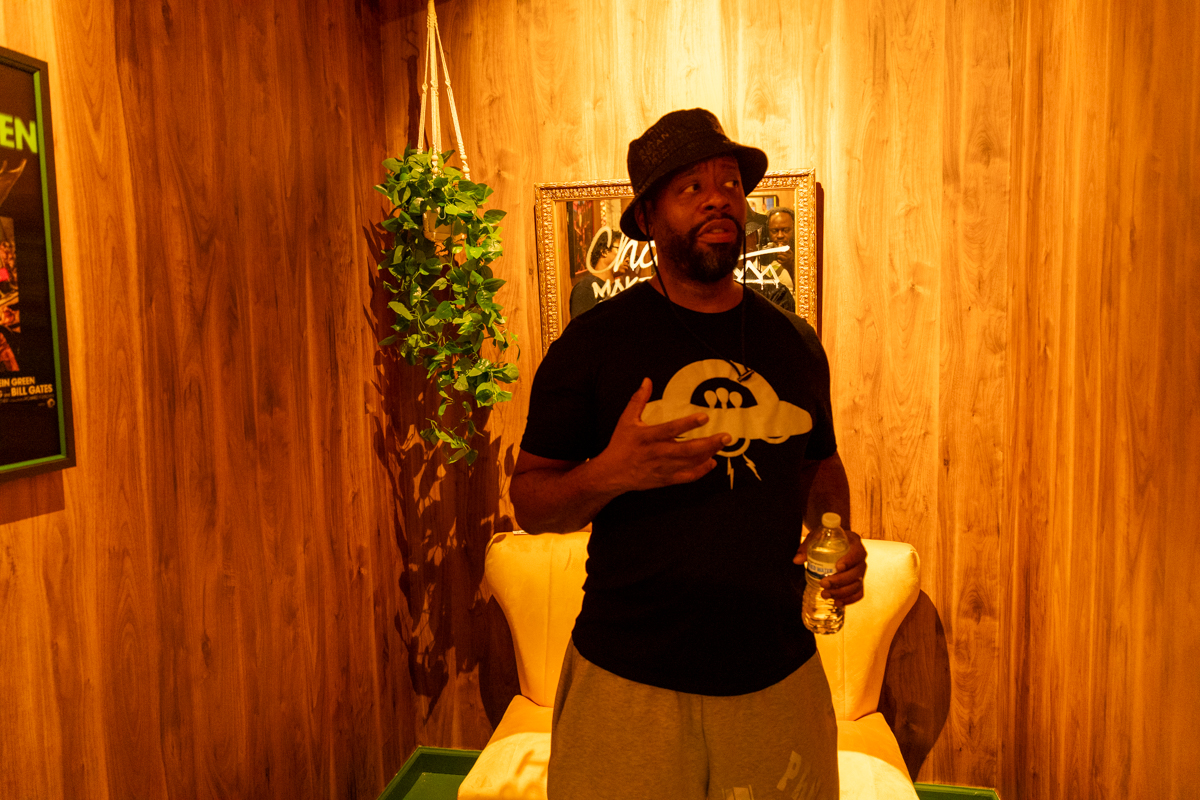
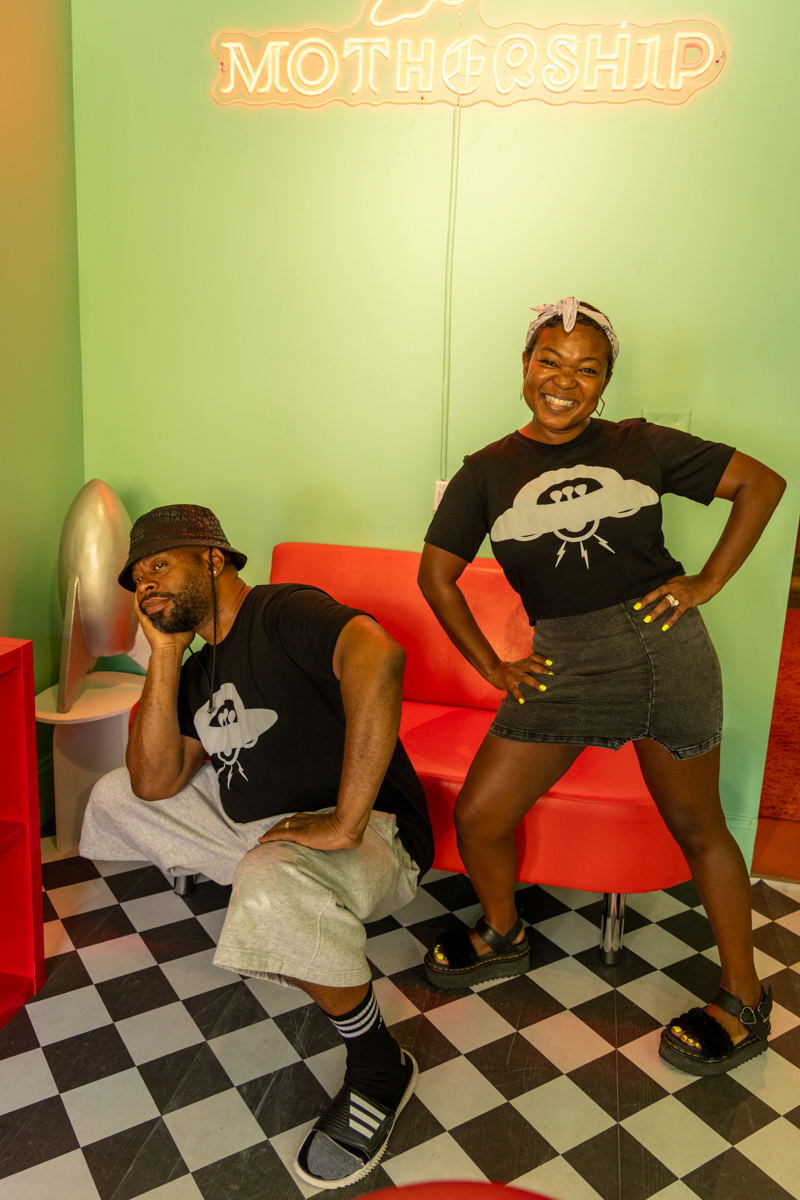
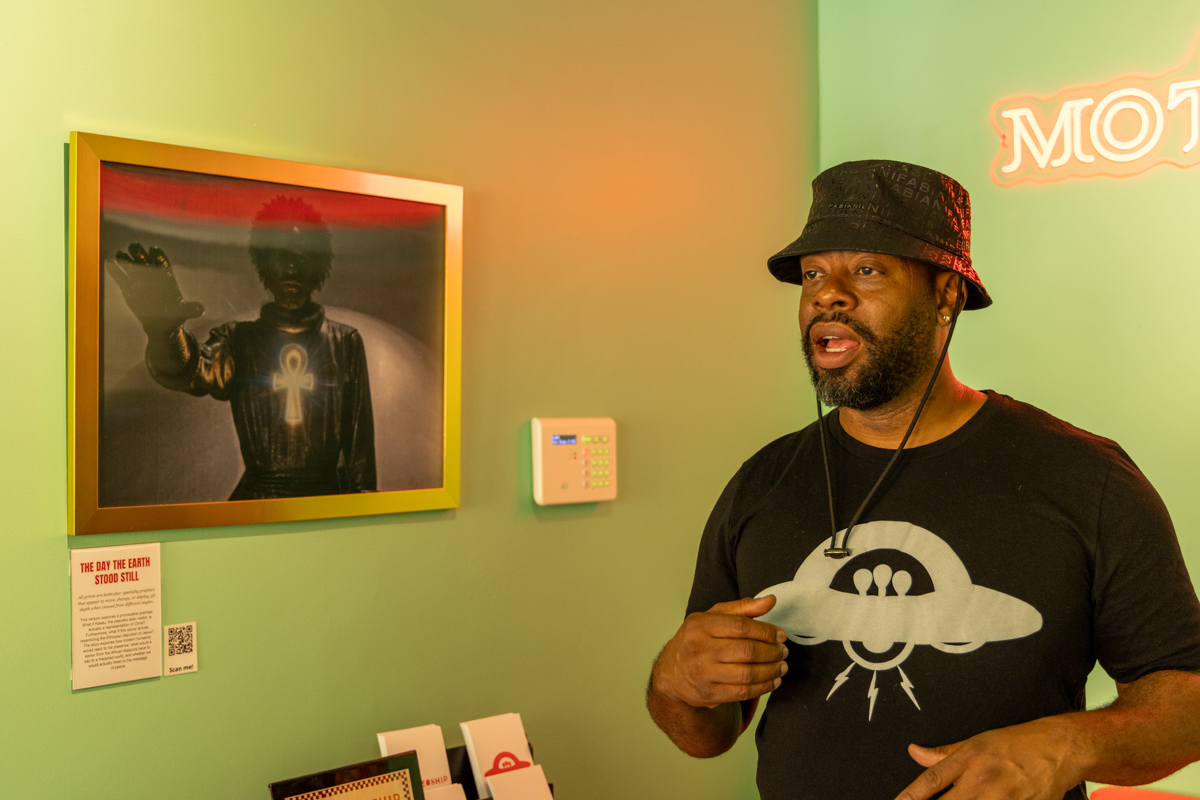
First floor: America in the 1950s. Mint green walls and checkerboard linoleum set the scene. The art draws on posters for “The Twilight Zone,” “Planet of the Apes,” and “Soylent Green,” which expose the fears and false assumptions white Americans held about Black Americans.
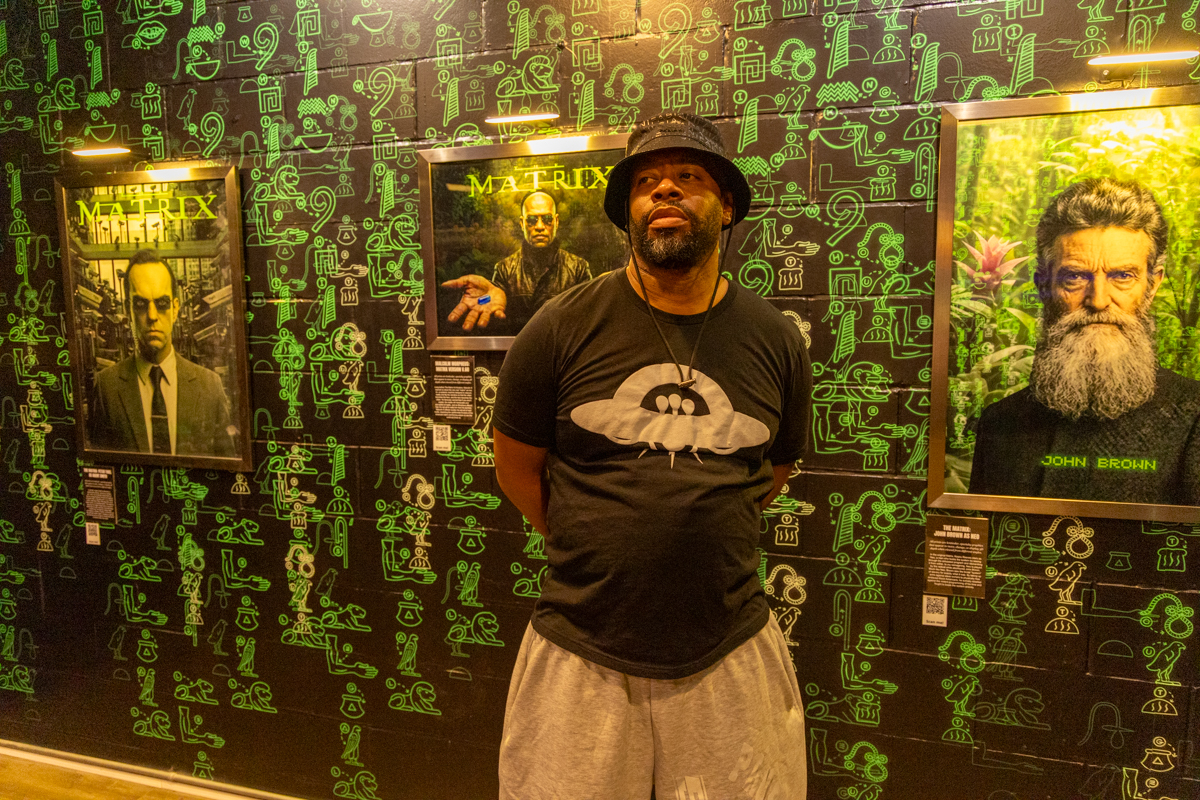
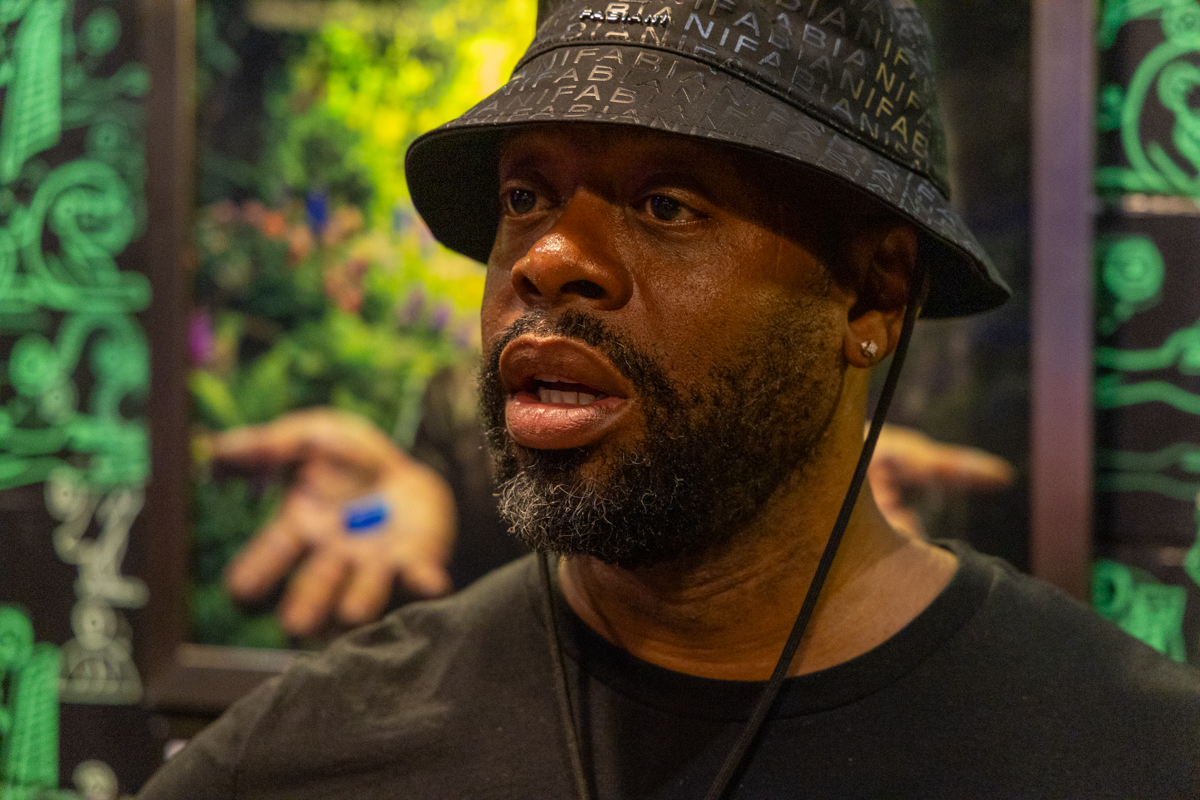
Second floor: the 1980s and 1990s. This level looks at the privatization of public life. The centerpiece of the 1990s section is “Malcolm Morpheus: Matrix Version v.68,” a lenticular print that flips between Morpheus from “The Matrix,” palms open with a red pill and a blue pill, and Malcolm X in the same pose. The wall text says Malcolm X “offered society the red pill of hard truths.”
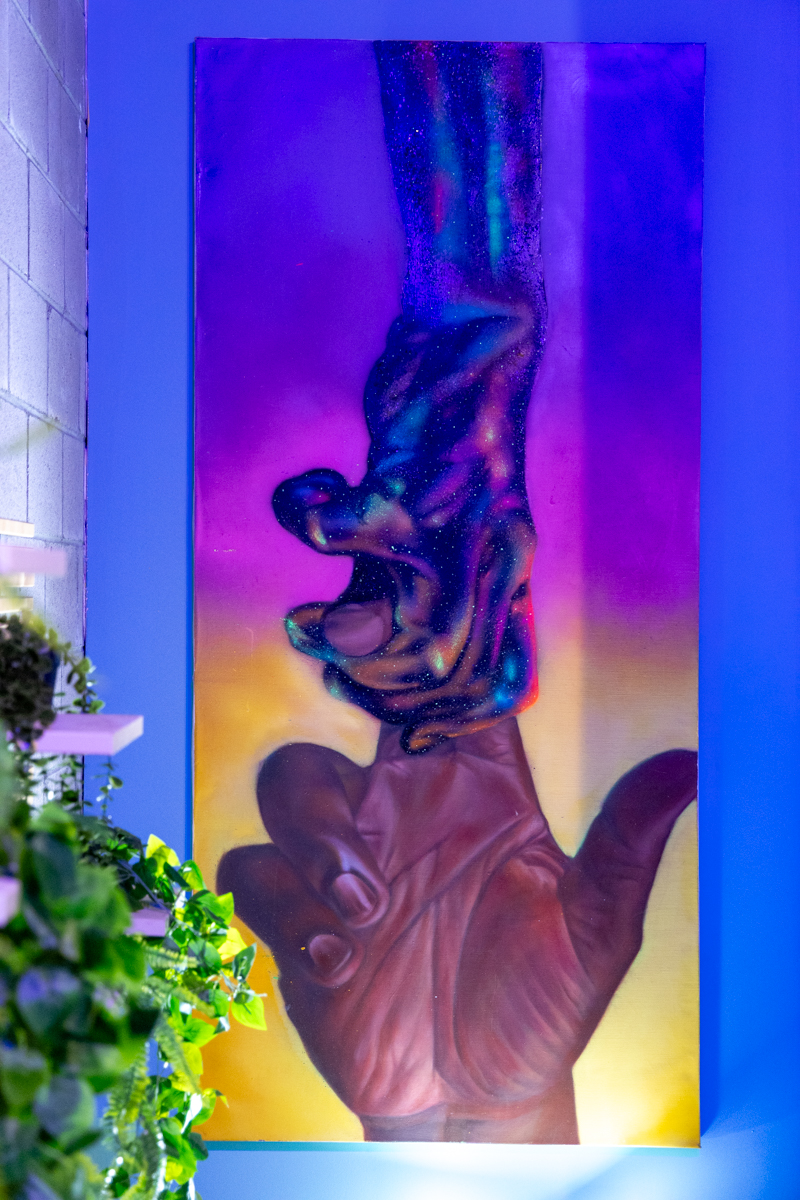
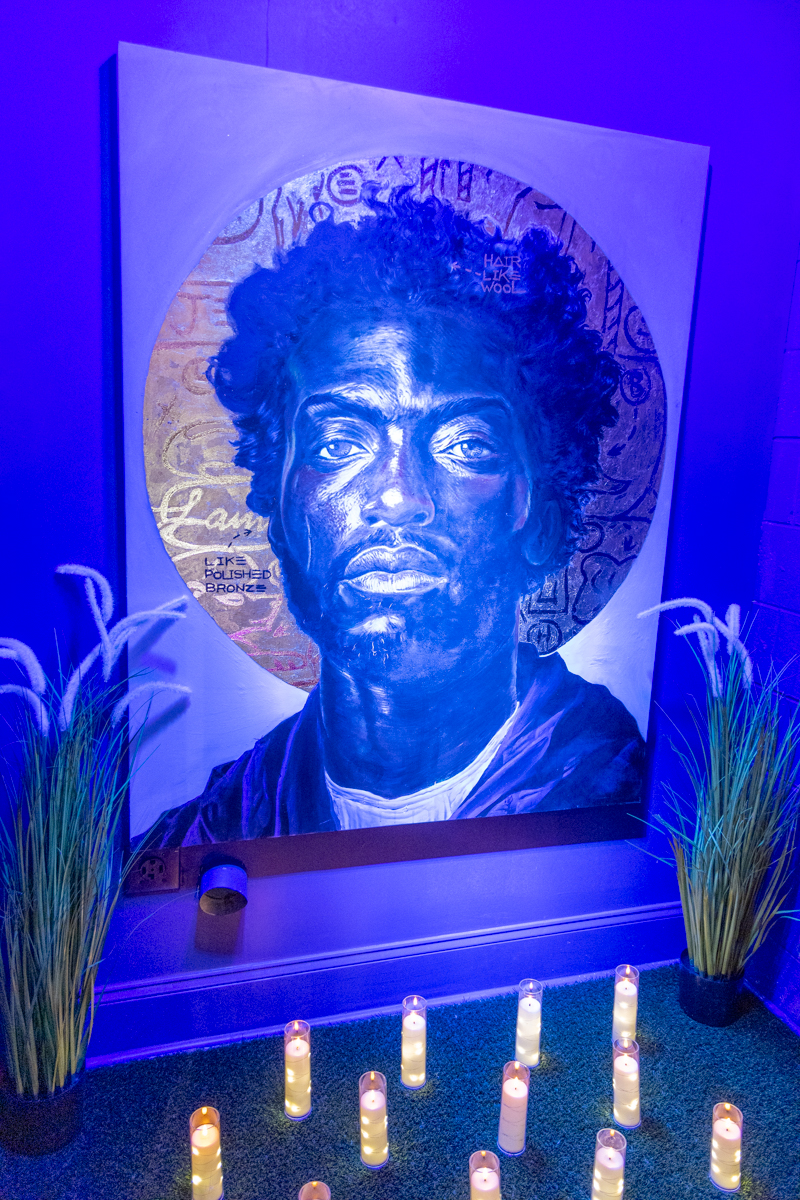
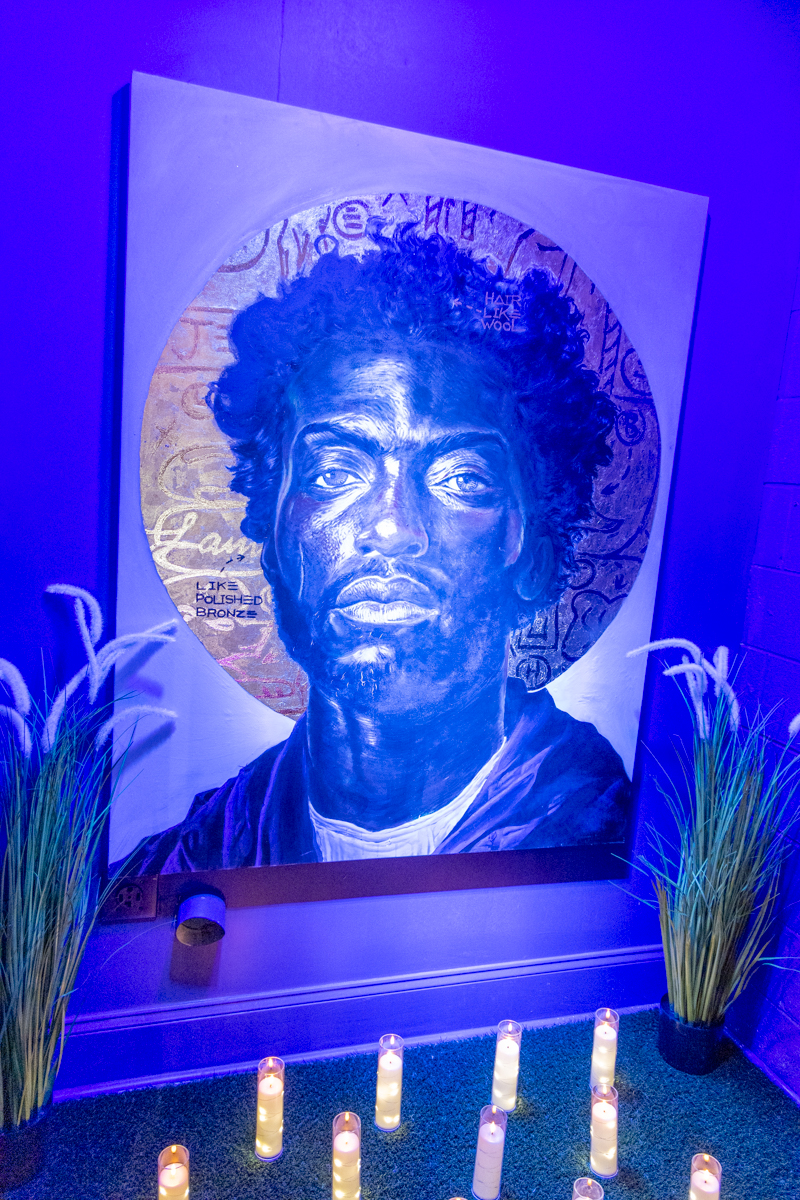
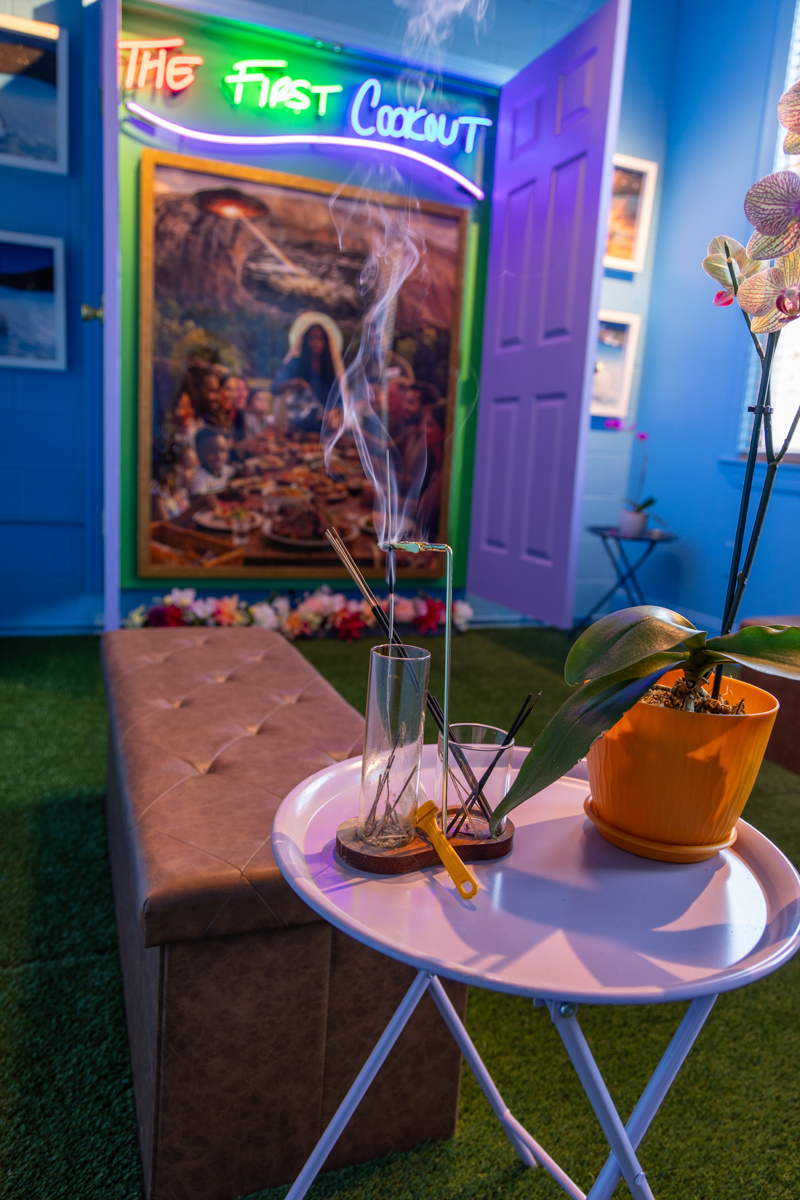
Third floor: Black Jesus and the Future Lab. A huge painting of Black Jesus greets you on arrival. The first room off the hallway, the Garden of Jza, breaks from Williams’ usual style. Its collages show civil rights figures, including Jimmy Carter, Martin Luther King Jr., and Malcolm X, alongside their spouses, drifting through peaceful landscapes in vintage cars.
The Future Lab is a lounge-style think tank with bean bag seating, curated music, and a black-lit “aether room.” Visitors are invited to write their hopes and prayers for the future on sticky notes and leave them behind.
Tickets and Admission
- General admission: $20 per person, includes one drink ticket
- RSVP without a drink: $15
- Children ages 5 to 16: $10
- Children under 5: $5
Buy tickets through Eventbrite at isawmothership.com. To support the exhibition, you can donate through Satellite Collective at secure.givelively.org/donate/satellite-collective-inc/mothership-atl.
-
- (Photo: Itoro N. Umontuen/Black Press USA)
-
- Fabian Williams delivers a presentation inside his art installation, Mothership Sirius B in Atlanta, Georgia. (Photo: Itoro N. Umontuen/Black Press USA)
-

- (Photo: Itoro N. Umontuen/Black Press USA)
-
- (Photo: Itoro N. Umontuen/Black Press USA)
-
- (Photo: Itoro N. Umontuen/Black Press USA)
-
- (Photo: Itoro N. Umontuen/Black Press USA)
-
- (Photo: Itoro N. Umontuen/Black Press USA)
-
- (Photo: Itoro N. Umontuen/Black Press USA)
-
- (Photo: Itoro N. Umontuen/Black Press USA)
-
- (Photo: Itoro N. Umontuen/Black Press USA)
-
- (Photo: Itoro N. Umontuen/Black Press USA)
-
- (Photo: Itoro N. Umontuen/Black Press USA)
-
- (Photo: Itoro N. Umontuen/Black Press USA)
-
- (Photo: Itoro N. Umontuen/Black Press USA)
-
- (Photo: Itoro N. Umontuen/Black Press USA)
-
- (Photo: Itoro N. Umontuen/Black Press USA)
-

- (Photo: Itoro N. Umontuen/Black Press USA)
-
- (Photo: Itoro N. Umontuen/Black Press USA)
-
- (Photo: Itoro N. Umontuen/Black Press USA)
-
- (Photo: Itoro N. Umontuen/Black Press USA)
-
- (Photo: Itoro N. Umontuen/Black Press USA)
-
- (Photo: Itoro N. Umontuen/Black Press USA)
-
- (Photo: Itoro N. Umontuen/Black Press USA)
-
- (Photo: Itoro N. Umontuen/Black Press USA)
-
- (Photo: Itoro N. Umontuen/Black Press USA)
-
- (Photo: Itoro N. Umontuen/Black Press USA)
-
- (Photo: Itoro N. Umontuen/Black Press USA)
-

- (Photo: Itoro N. Umontuen/Black Press USA)
Black History
IN MEMORIAM: The Mighty Sparrow, King of Calypso, Dies at Age 91 in New York
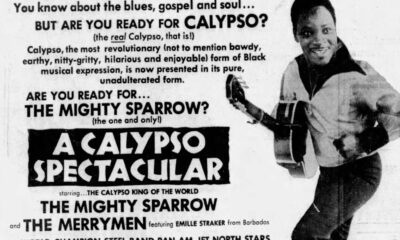
NEW YORK CARIB NEWS — Slinger Francisco, widely known as the Mighty Sparrow, died on Sunday, September 27, in New York at the age of 91. The legendary calypso artist passed peacefully after a brief illness, surrounded by loved ones. Born in Grand Roy, Grenada, in 1935, he moved to Trinidad as a child, where he developed his distinctive style.
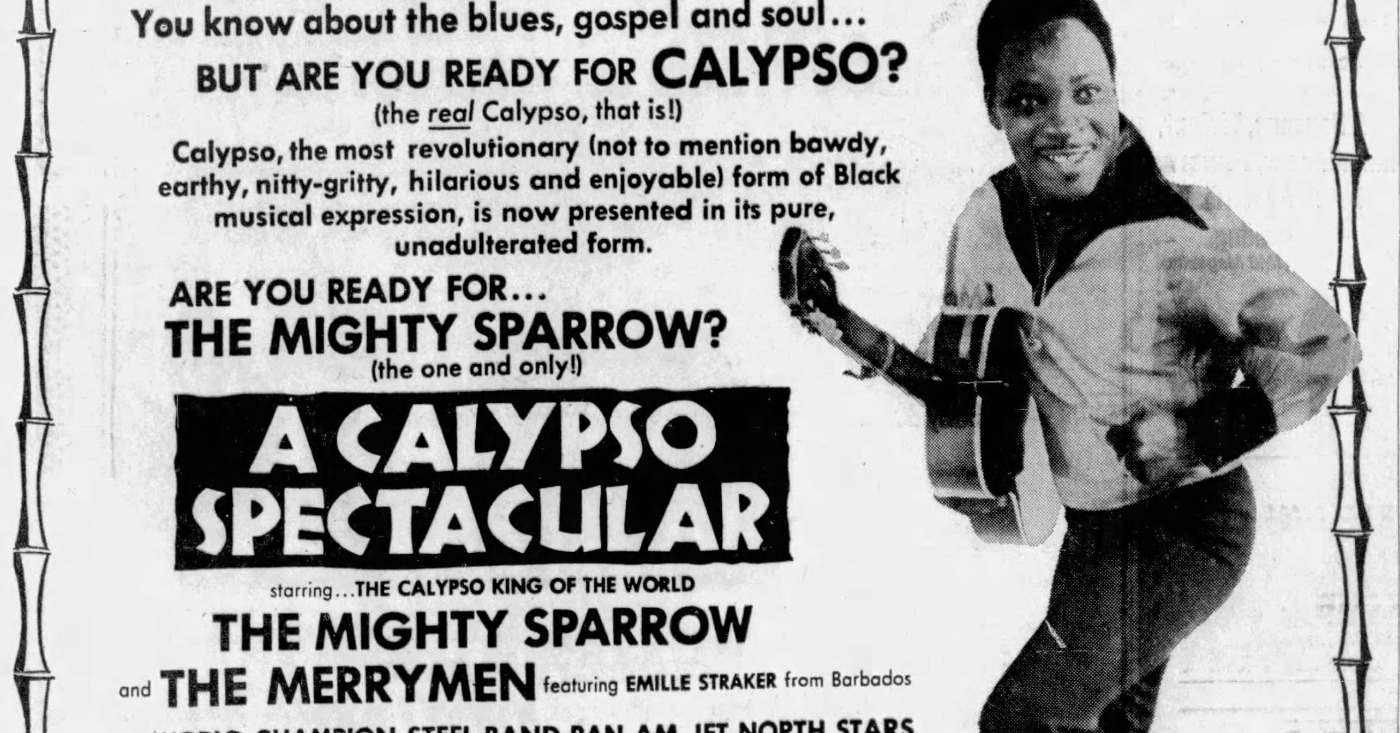
NEW YORK — For anyone raised in the Caribbean, or in a Brooklyn, Bronx, or Queens household where the radio stayed tuned to home, there was never a time without the Mighty Sparrow. His voice was simply part of the furniture of our lives: at Carnival, at weddings, at Sunday lunch, in the car on the way to JFK. On Sunday, that voice went quiet.
Slinger Francisco, known to the world as the Mighty Sparrow, died Sunday, September 27, in New York. He was 91. His family said he passed peacefully after a brief illness, with loved ones at his bedside.
He was born in Grand Roy, Grenada, in 1935, and was still a small child when his family moved to Trinidad. Port of Spain made him. Its yards, its rum shops and its calypso tents gave him his rhythm and his sharp tongue. He sang in a church choir as a boy, but the city had a louder music, and by his late teens he was performing under the name that would become a title.
The breakthrough came in 1956 with “Jean and Dinah,” his mischievous farewell to the American servicemen leaving Trinidad after the war years. The song swept Carnival, winning him both the Road March and the Calypso King crown. It introduced a young performer who could be funny and fearless at once, who could make an entire nation laugh at itself and then think hard about what it had just laughed at.
He was fearless offstage too. A year after that first crown, he refused to compete over the paltry prize money offered to calypsonians, a stand that helped push the art form toward the respect and the pay its practitioners deserved.
Over six decades, he recorded hundreds of songs. He could turn a love story, a boast or a bit of bedroom comedy into a hit, but he was just as formidable when the subject was power. “Dan Is the Man in the Van” took apart a colonial schooling that taught Caribbean children nonsense about themselves. “Congo Man,” “Mr. Walker,” “The Lizard” and “Both of Them” became standards sung by people who had never set foot in a calypso tent. Long before anyone printed it on a poster, audiences had already crowned him the Calypso King of the World.
For New York’s Caribbean community, Sparrow was never just a visiting star. He made this city his home for many years and played its biggest rooms, including Madison Square Garden, before crowds of immigrants who heard in his voice the islands they had left behind. A Sparrow show here was less a concert than a homecoming.
Trinidad and Tobago honored him with the Trinity Cross, then its highest national award, and generations of calypsonians and soca artists have named him as the standard they measured themselves against. Fans called him “Birdie,” and the affection in that nickname said everything.
Tributes are already pouring in from across the region and the diaspora, and they will keep coming for weeks. But perhaps the truest tribute is the simplest one: somewhere tonight, in Port of Spain, St. George’s, Flatbush and beyond, someone is putting on a Sparrow record, turning it up, and singing along.
Based on reporting by New York Carib News.
Black Press
From Historic Memories to New Possibilities: Oakland Celebrates Coliseum 60
More than 75 people gathered at Youth UpRising in East Oakland on Friday, September 18, for Coliseum 60, an event marking six decades of sports, entertainment, employment, and community memories at the Oakland-Alameda County Coliseum Complex. Held 60 years to the day after the Coliseum first opened, the celebration featured cultural performances and a mini-documentary highlighting its history. Speakers reflected on the venue’s significant role in the community and its future possibilities. Read more to learn about the individuals and stories honored during this special event.
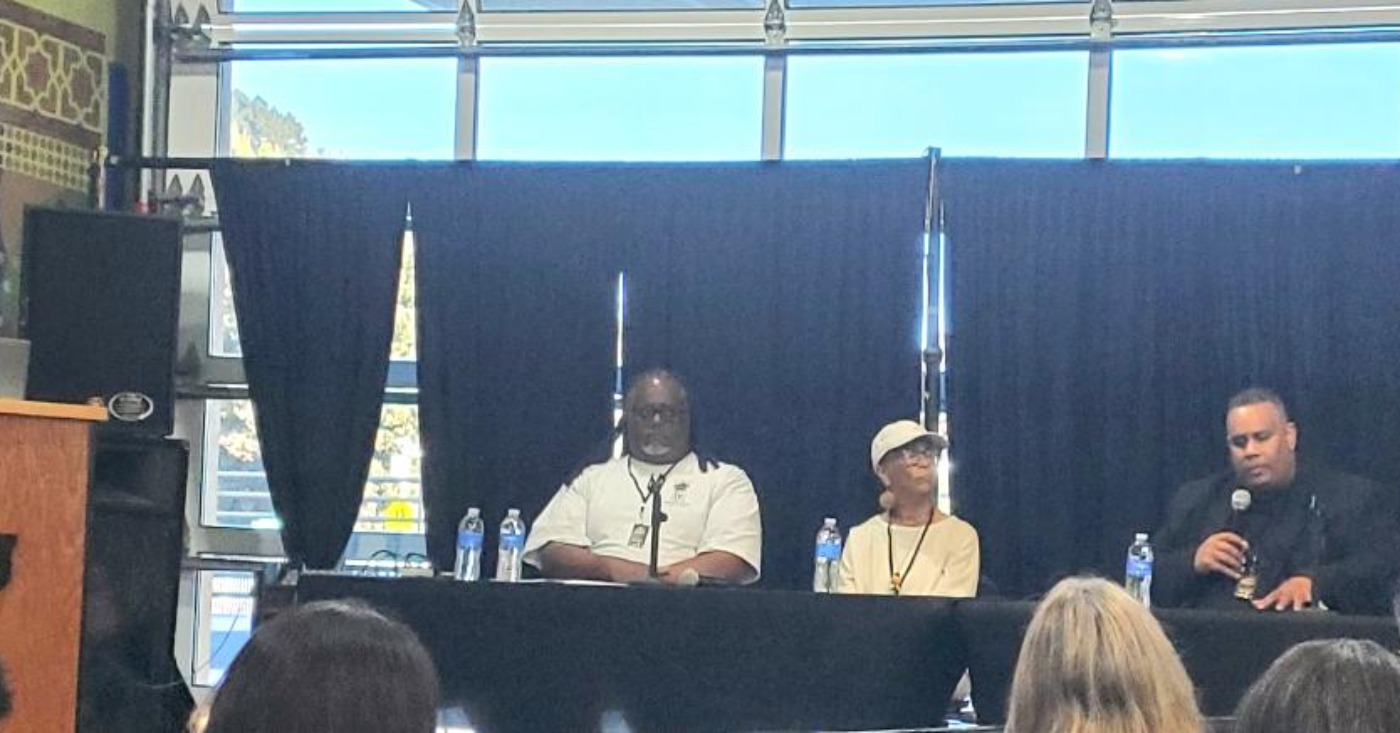
More than 75 people gathered at Youth UpRising in East Oakland on Friday, Sept. 18, for Coliseum 60, a celebration honoring six decades of sports, entertainment, employment and community memories connected to the Oakland-Alameda County Coliseum Complex.
Held 60 years to the day after the Coliseum opened, the event carried the theme, “One Community. One Legacy. One Future. Forward Together.”
The celebration opened with the national anthem performed by sisters Anese Jade, Amina Benjamin and Zaza Benjamin. Diamano Coura West African Dance Company contributed African dance and drumming, bringing movement, rhythm and cultural expression to the program.
A mini documentary highlighted the Coliseum’s sports history and its broader role as an entertainment destination. Archival material recalled performances by Prince and Tina Turner, along with memorable games featuring the Warriors, Oakland A’s and Raiders.
“The Coliseum 60 is about much more than celebrating a building or looking back at 60 years of history,” said event organizer Quixote Atkins of VillageGIVE.
“It’s about the people who made that history possible: the families, workers, athletes, artists, community leaders, fans and generations who gathered there and created memories together.”
A panel exploring that history featured author, historian and former Black Panther Party member Tareka Lewis; stagehand and union representative Keith Brown; and Ray Bobbitt, president of the African American Sports and Entertainment Group AASEG. Lewis described her family as fourth-generation Bay Area pioneers.
“My family and Black families who arrived even earlier helped build the Bay Area, grew businesses and established culture here,” Lewis said. “This should be taught in the public schools.”
Lewis recalled Oakland’s influence on sports, music and literature, from the Raiders’ beginnings at Laney College to stars such as The Pointer Sisters and Rickey Henderson who attended Oakland public schools. She also advocated for school museums, historical timelines, entrepreneurship training and investments benefiting corridors such as Bancroft Avenue and High Street.
Keith Brown, a member of Local 107 of the International Alliance of Theater and Stage Employees (IATSE) who began working at the Coliseum in 2011, remembered the Ringling Bros. and Barnum & Bailey Circus, the Ice Capades, baseball bat giveaways and Nelson Mandela’s 1990 appearance.
“The special events are amazing, but it’s the workers that make the memories real for everyone,” Brown said. “They make the magic happen at the Coliseum.”
The program recognized longtime workers, including beer-stand manager Robert Preston, who served for 40 years, and Kenyatta Gentry, who worked as a vendor for 24 years and used her earnings to purchase her first apartment. Union workers Jose Gonzales and Carmen Sandoval were also honored. Speakers emphasized that Coliseum employment provided generations of residents with union wages and benefits.
Dr. Denise Saddler, the superintendent of the Oakland Unified School District (OUSD) was also honored. Saddler shared her family’s history of working at the Coliseum.
District 7 Oakland City Councilmember Ken Houston discussed the complex ownership arrangements involving the city, county and private interests.
“This was the most complex deal of its kind in the country,” Houston said.
Prior to moving from the East Coast, Alameda County Supervisor and Coliseum Joint Powers Authority Chair Nate Miley recalled learning about Oakland through its three professional sports teams. As an elected official and public servant, Miley fought hard to keep the Golden State Warriors, Oakland As, and the Raiders, but he is hopeful for the future.
“The story is not over for the Coliseum,” Miley said. “We’re entering a new chapter.”
Bobbitt said the departure of three teams had once seemed unimaginable, but he maintained that Oakland’s future remains bright.
“Oakland is a cultural superpower worldwide,” Bobbitt said. “We’re going to write the future where we participate and drive the redevelopment.”
Bobbitt highlighted AASEG’s four-year partnership with Castlemont High School’s architecture program, which engages students in reimagining and creating redevelopment concepts for the Coliseum property. “The youth will always move us forward. They are the future.”
In closing, Atkins said, “September 18 is the celebration, but what we build together afterward is the legacy.”


Listening as a Lifeline: A Doula’s Witness to Black Maternal Health

New Protections for Ticket Buyers: Gov. Newsom Signs Assemblymember Isaac Bryan’s Bill

‘We Don’t Talk Trash — We Pick Up Trash!’

Zakiya Jendayi Arrested, Locked Out of Home by Sheriff’s Deputies

2027 Chevy Bolt EV: Is It Worth Under $30K? #shorts

Leading the Way in HBCU Research

Smooth Ride! Car Suspension & Comfort Tested #shorts

61 years since Selma, Houston leaders say the bridge remains to be crossed

Here is what you need to know about finding unique white elephant gift ideas that everyone wants to steal

Check out these proven ways to increase property value for commercial business locations

Latest Massacre in Haiti Reveals Cruelty U.S. Deportations

Black Americans Have Doubts About the U.S. Food System

When Praises Go Up: SUGC Nominated for Prestigious Stellar Award.

Booked and Unbound: The Legacy of Black Women’s Literary Circles

U.S. Sole Nation to Oppose U.N. Resolution Correcting Africa’s Size on World Maps

The Youngest American Killed in the Vietnam War

COMMENTARY: Big Mama Said ‘Don’t Let Grief Break the Bank’

U.S. Open Influencers Spark Backlash over Ring Lights, Filming as Gauff and Osaka Speak Out

Prostate Cancer is Twice as Likely to Kill Black Men. Talking to Your Doctor Could Help Save Your Life

Outnumbered: Elbert Cox’s Equation for Greatness
2027 Chevy Bolt EV: Is It Worth Under $30K? #shorts
Leading the Way in HBCU Research
Smooth Ride! Car Suspension & Comfort Tested #shorts
61 years since Selma, Houston leaders say the bridge remains to be crossed

Lutheran North Celebrates Homecoming With 40 to 19 Win Over Westminster Christian

Luxury Car Features: Harman Kardon & More! #shorts

Tuskegee Airmen Field Reopens in The Ville, Giving St. Louis Youth a Place to Grow

2027 Chevy Bolt: Worth $29,990? Hidden Flaws Revealed! #shorts

Kia Seltos Luxury Car Tech: Prestige Package Features Explained! #shorts

Serena Williams: The Beast Narrative & Black Womanhood #shorts
-
 Black History7 days ago
Remembering Chauncey Bailey as Student Journalists Face Threats to Truth-Telling
-

 Black Press4 days ago
OP-ED: Haiti TPS: Have We Lost Sense of Humanity?
-

 Black Press7 days ago
Poll: Becerra Widens His Lead Over Hilton; Californians Split on Wealth Tax
-
 Black History6 days ago
COMMENTARY: The Audacity of Joyce Beatty
-

 Black History6 days ago
Rulings Leave Questions Lingering in Nolan Wells Case
-
 Black History6 days ago
Baptist Minister Says Black Church Champions for Civil Rights to Reign but Hesitates to Let Black Women Lead
