
Commentary
Russell Hornsby: “Proven Innocent,” Actor is a Proven Talent
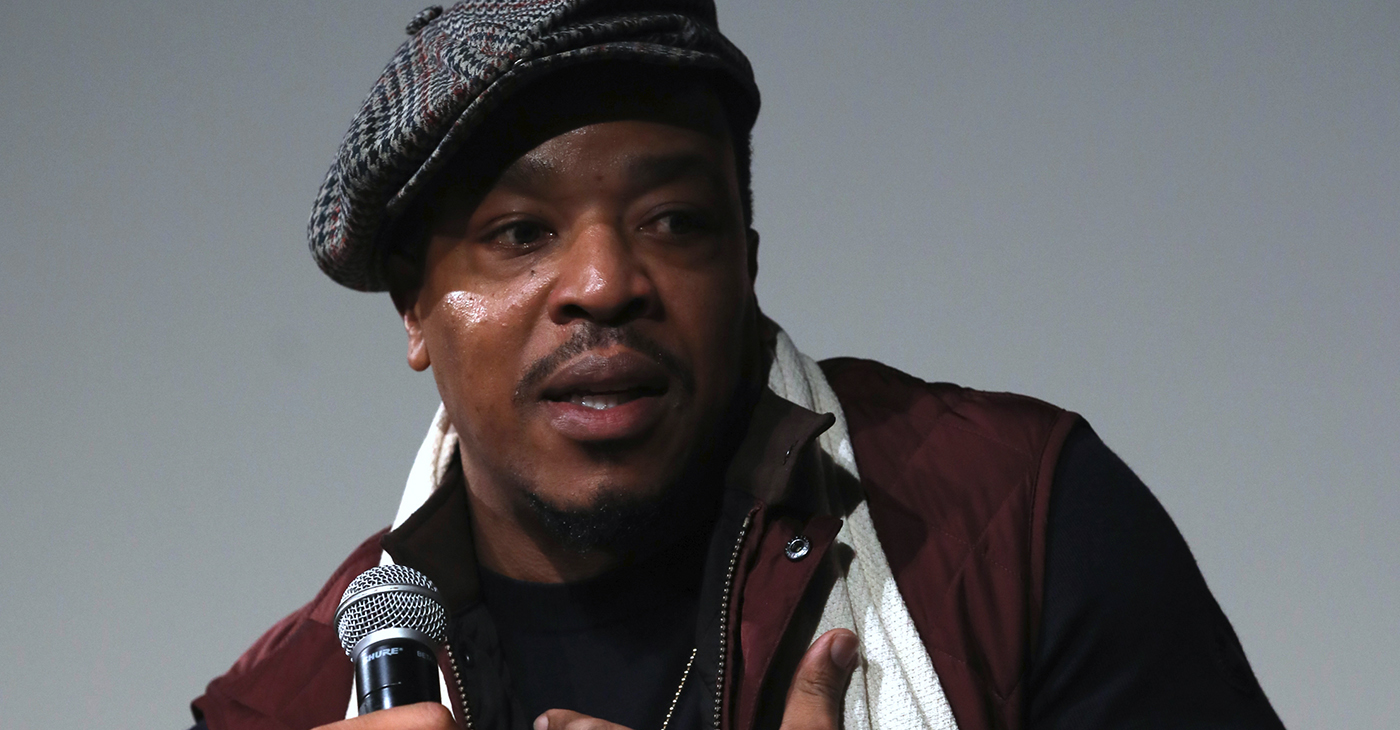
NNPA NEWSWIRE — “A dear friend of mine used to say there was a time when boats were made of wood and men were made of steel. That’s what I want our people [black people] to see on this show,” says Russell Hornsby who plays the character of Ezekiel “Easy” Boudreau in “Proven Innocent” which airs on FOX, Fridays at 9 p.m. EST.

By Nsenga K. Burton, Ph.D., NNPA Newswire Culture and Entertainment Editor
Russell Hornsby should be a household name by now with his impressive body of work. His latest role as a crusading attorney and family man on FOX’s “Proven Innocent” may be the role to do it.
The Oakland born thespian has been bringing characters to life on stage and screen for over two decades. Hornsby believes in studying the craft of acting, which is proven by his training at Boston University followed by Oxford University’s British Academy of Drama.

ATLANTA, GEORGIA – FEBRUARY 09: Russell Hornsby speaks onstage at the “Proven Innocent” Q&A during SCAD aTVfest 2019 at SCADshow on February 09, 2019 in Atlanta, Georgia. (Photo by Tasos Katopodis/Getty Images for SCAD aTVfest 2019 )
He is probably best known to fans for his role as police officer Eddie Sutton in the critically acclaimed show “Lincoln Heights,” (ABC Family) and most recently as Maverick Carter in the hit film The Hate U Give and Buddy Marcelle in the knockout film Creed II. Hornsby has studied under theater royalty (Lloyd Richards and August Wilson) and worked opposite incredible talent including Regina Hall, Nikki Micheaux, Erica Hubbard, Amandla Stenberg, Regina King, Denzel Washington, Robert DeNiro, Sylvester Stallone, Michael B. Jordan and the list goes on.
No stranger to the small screen, Hornsby has been delighting fans with powerful performances on top shows like “Gideon’s Crossing” (NBC), “In Treatment” (HBO), “The Affair “(Showtime), “Seven Seconds:” (Netflix) and now “Proven Innocent” (Fox).
Hornsby plays the character of Ezekiel “Easy” Boudreau, a lawyer who is best known for freeing Madeline Scott (Rachelle LaFevre), a wrongly-convicted woman, after she served 10 years in prison. Teaming up with Scott, Boudreau has dedicated his life to freeing the wrongly-convicted as part of the “Injustice Defense Group.”
While promoting “Proven Innocent” at the 2019 SCAD aTVFest in Atlanta, Hornsby discussed his keen ability to move between the stage, film and television playing a range of characters that have been historically unavailable to black actors.
The Drama Desk award-winner says when choosing roles, quality is most important. “You’ve heard the saying you need to start where you finish? Well, I started at such a high-level in acting, that I have to keep it going,” he says.
Hornsby explains that his first job after graduation was working for $217 a week for the great Lloyd Richards, the first black director to direct “A Raisin in the Sun” on Broadway. Richards was also Dean of the Yale School of Drama, which is one of the reasons the show had acting greats like Courtney B. Vance, Charles S. Dutton and Angela Basset. From there, Hornsby worked under August Wilson, a two-time Pulitzer Prize winner and 10-time Tony award-winner, on shows like “Jitney.”
“I started at the top with quality, so that’s my norm. Now when I assess material, I assess it from that standpoint. I’m constantly traversing between film, television and theater so I’m constantly staying at a high level and I can’t go back,” says the Obie award-winner. “I’m not holier than thou or anything,” Hornsby expounds. “I’m just saying I was blessed to be able to make money as an actor early on in my career. I was smart with my money, which enabled me to be able to say no and maintain my integrity when choosing roles,” he adds.
Hornsby’s work often delves into complex issues and “Proven Innocent” is no exception. In a social and civic climate where the topic of mass incarceration, the prison industrial complex, unjust sentences, wrongly convicted prisoners and a justice system run amok are at peak level, “Proven Innocent” is tackling these complicated issues head on.
Hornsby, who is known for playing strong family men, purposely chose this role because of its important representation of a black man.
“I want people to recognize and see that real men exist,” says Hornsby. “A dear friend of mine used to say there was a time when boats were made of wood and men were made of steel. That’s what I want our people [black people] to see on this show,” he says.
Hornsby, who was raised by a single mother and was surrounded by strong men, including his father, believes this is a much-needed image in media. “I’m not saying sisters don’t deserve the credit. They do. My mother did the damned thing and I’ve got a wife who is bad as she can be — smart, talented, everything — but men exist too. Let’s not exalt one at the detriment of the other. Let’s say we can co-exist, partner in the struggle together,” he explains, which is another reason why this character spoke to him.
“Real men still exist. Men can stand up straight, look you in the eye, conduct themselves justly and appropriately and not be afraid. That’s what I want,” says the 2018 AAFCA award winner. “Men need to share and be open and more malleable. That’s what you’ll see with this character,” Hornsby reveals.
“Ezekiel is malleable. He and his wife are going to be going through trials and tribulations and issues but he’s still valuable and willing to learn. They are still partners. Those are the men I saw. That’s what empowers me to portray the kind of characters I play.”
“Proven Innocent” airs on FOX, Fridays at 9 p.m. EST. Check local listings for channel information.
Nsenga K. Burton, Ph.D. is entertainment and culture editor for NNPA/BlackPressUSA. A film and media scholar, Dr. Burton is founder and editor-in-chief of the award-winning news blog The Burton Wire, which covers news of the African diaspora. Follow her on Twitter @Ntellectual or @TheBurton Wire.











Black Press
Jaguars Do Better: Top of Ladder or Resting at the Bottom
SOUTHERN UNIVERSITY – SOUTHERNDIGEST — Southern University received a No. 48 ranking in the U.S. News annual HBCU rankings for 2027, tying with Bethune-Cookman University, Philander Smith College, Savannah State University, Stillman College, and West Virginia State University.


On September 22, U.S. News released its annual HBCU rankings for 2027. Southern University was ranked No. 48, tying with Bethune-Cookman University, Philander Smith College, Savannah State University, Stillman College, and West Virginia State University. When I first saw the ranking, I had mixed feelings about where Southern was ranked. Did I feel like Southern needed to be ranked No. 48? Yes and no. On one hand, I understand how the university received that ranking based on the factors U.S. News uses for their rankings. On the other hand, when I look at some of the other schools that ranked higher than Southern, in my humble opinion, we should have been ranked higher.
To understand why Southern was ranked No. 48, it is important to look at the factors U.S. News uses for their rankings. The rankings consider graduation rates, freshman retention rates, financial resources, faculty information, peer assessments, and student outcomes after graduation. I understand why these factors matter because they can indicate how well a university supports its students, prepares them for life after college, and how students can benefit from attending that institution.
One of the biggest factors affecting our ranking is our graduation rate. The graduation rate measures how many first-time, full-time, degree-seeking students complete their degree within four years. Based on my research, the newest official data available from Southern lists the four-year graduation rate at about 10%. Even though that number is concerning, I believe that number needs more context. Some of Southern’s major programs, including Engineering, can take students five years to complete because of their demanding requirements and how their degree flowcharts are set up. So, while the four-year graduation rate is something Southern needs to improve, I don’t think it tells the whole story of how long it takes every Southern student to graduate.
Another issue is admissions. Southern University talks frequently about the “Southern Standard,” but I think there needs to be more consistency between the standard we expect and the students we admit. Southern should continue providing the opportunities it already provides, but I also believe the university should try to recruit more students who have already shown that they can uphold a certain academic, personal, and professional standard. Additionally, students who are admitted should receive the support and resources they need to succeed.
Overall, I understand why Southern was ranked No. 48, but in my opinion, we could and should be higher. The ranking shows areas where Southern needs to improve, but it should not define the university as a whole. Instead, it should encourage Southern to look at admissions, student support, graduation rates, career opportunities, and whether every major receives the attention it deserves. Southern is more than just a number, but if we want that number to change, we have to be willing to look honestly at what is behind it, including making sure that strong programs like Nursing and Engineering continue to provide opportunities while majors such as Agriculture, Criminal Justice, Education, and Social Sciences receive the same attention and opportunities for their students. At the end of the day, the goal should not only be to move up in the rankings, but to ensure every student at Southern has the support, accessibility to opportunities, and resources they need to succeed, not only while attending Southern, but in their future post graduation careers.
Based on reporting by Southern University – SouthernDIGEST.
Black Press
ROOTED IN CULTURE, LEADING IN BANKING
EAST TEXAS REVIEW — Beatriz Monsivais, a Branch Manager at Spring Hill State Bank, has built a 20-year banking career rooted in a childhood passion for numbers, sparked by a calculator her mother gave her. Immigrating from Mexico City at age five, Monsivais’s upbringing instilled in her a strong work ethic and the invaluable gift of bilingualism, which has significantly shaped her professional journey.
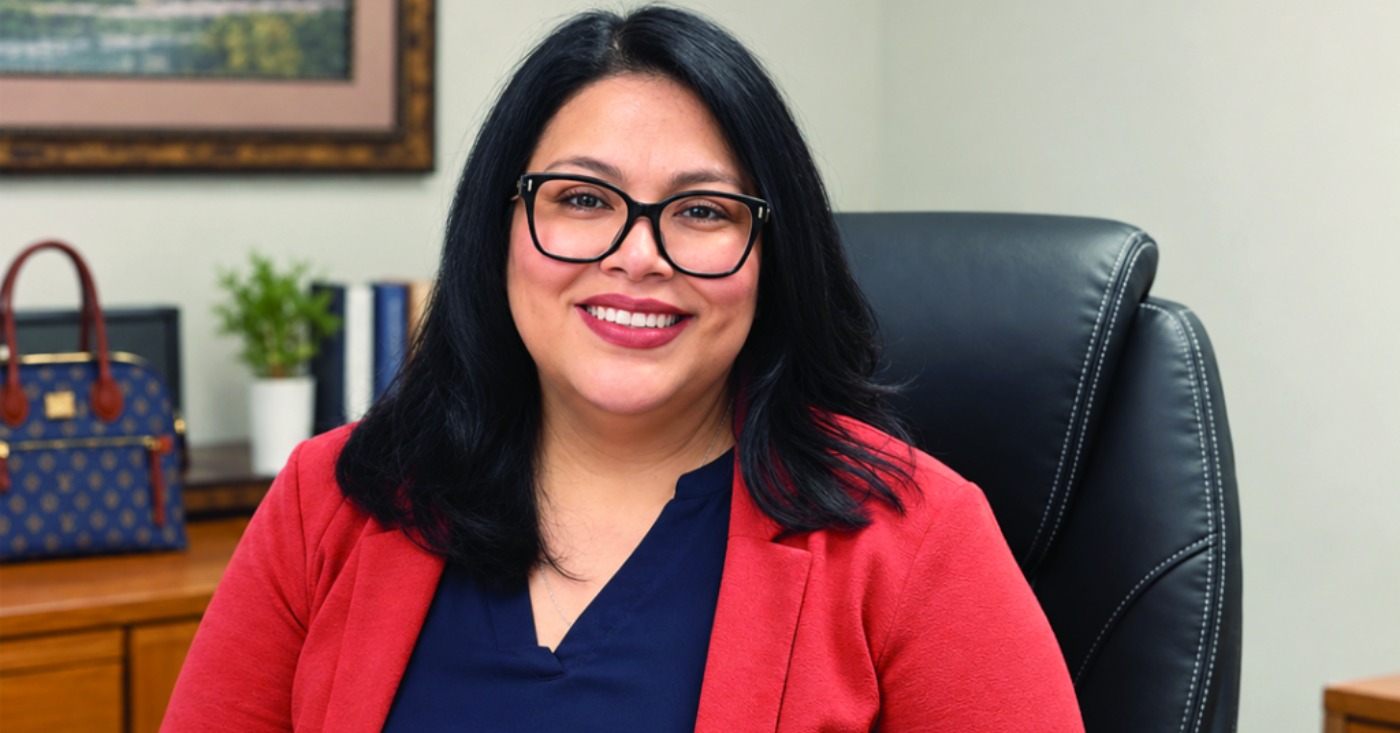
Beatriz Monsivais turns a childhood passion into a 20-year banking legacy of trust, mentorship, and community impact at Springhill State Bank
Story and photos by Joycelyne Fadojutimi
For Beatriz Monsivais, the dream of working in finance didn’t begin in a corporate boardroom or a university lecture hall. It began in childhood, sparked by a simple garage-sale calculator her mother gave her. That cherished token turned into hours of playing “store” and ignited a lifelong passion for numbers. Today, as a successful Branch Manager at Spring Hill State Bank, Beatriz is using that same passion to build financial bridges and empower the East Texas community.
Roots of Resilience and Language
Born in Mexico City, Beatriz immigrated to the United States at age five. Growing up in a traditional Mexican household, her mother enforced a strict, loving rule: only Spanish at home.
“My mom didn’t want us to lose our language,” Beatriz recalls. “I am so thankful for that today. Being bilingual hasn’t just been a personal gift; it has played a massive role in shaping my career.”
Alongside the gift of bilingualism, her mother instilled a relentless, multi-generational work ethic. In their household, the standard was clear: “If you’re going to do something, do it right!” Beatriz carries this philosophy into her leadership every day, ensuring that everyone who sits across from her desk receives her absolute best.
A Temporary Detour Becomes a Lifelong Calling
Beatriz graduated from Longview High School in 2002 and enrolled at Kilgore College. Hoping to earn extra money before fully diving into her studies, she accepted an entry-level position at East Texas Professional Credit Union. What was meant to be a one-year break quickly evolved into a flourishing, decades-long career.
When she later transitioned to Spring Hill State Bank, leadership recognized her drive. Supported by the bank, she attended classes through the Center for Financial Training, ultimately earning her Lending Certificate and expanding her expertise into the world of real estate and personal loans.
Throughout her 20-year journey at the bank, Beatriz found strength in powerful female mentors. Leaders like Lynn Magee, who first hired her as a new account representative, saw her immense potential and constantly championed her growth. Working alongside Sharon Copeland, Beatriz absorbed invaluable real estate knowledge. Seeing women thrive in pivotal leadership roles motivated Beatriz to keep climbing.
Bridging the Gap in Community Banking
When Beatriz first walked through the doors of Spring Hill State Bank in 2006, she was the only bilingual employee on staff. Today, she looks around with immense pride at a diverse team of bilingual tellers, customer service representatives, loan secretaries, and lending officers.
“Relationships and trust are fundamental pillars of Hispanic culture, and those values fit perfectly with community banking,” Beatriz explains. “Financial education—understanding credit, building savings, buying a home, or launching a business—can alter the trajectory of a family’s future. Sometimes, people just need a professional they can truly trust to explain their options in their own language and help them take that brave first step.”
For Beatriz, banking is entirely about people. Her leadership style is deeply rooted in making her team feel supported and ensuring every customer feels safe, welcomed, and genuinely cared for.
Words of Wisdom for the Next Generation
A devoted wife to her husband, Julio, and a proud mother to her two children, Alexander and Natalia, Beatriz attributes her achievements to her roots and her mother’s guidance.
To the next generation of Hispanic professionals aspiring to break into the financial sector, Beatriz offers powerful advice:
“Believe in yourself and exactly what you bring to the table. Our culture, our unique life experiences, and our language are not hurdles—they are profound strengths. Stay willing to learn, never fear a new opportunity, and surround yourself with mentors who uplift you. Above all, never feel like you have to change who you are to achieve success.”
The post ROOTED IN CULTURE, LEADING IN BANKING appeared first on East Texas Review.
Based on reporting by East Texas Review.
Black Press
COMMENTARY: But God!
THE POSITIVE COMMUNITY — Reverend J. Loren Russell discusses the concept of unmerited grace, drawing from Ephesians 2:1-10 CEV. The passage highlights that humanity was once separated from God due to sin, following worldly ways and selfish desires, which made them deserving of punishment.

Ephesians 2:1–10 CEV
“In the past you were dead because you sinned and fought against God. You followed the ways of this world and obeyed the devil. He rules the world, and his spirit has power over everyone who doesn’t obey God. Once we were also ruled by the selfish desires of our bodies and minds. We had made God angry, and we were going to be punished like everyone else. But God was merciful! We were dead because of our sins, but God loved us so much he made us alive with Christ, and God’s gift of undeserved grace is what saves you. God raised us from death to life with Christ Jesus, and he has given us a place beside Christ in heaven. God did this so in the future world he could show how truly good and kind he is to us because of what Christ Jesus has done. You were saved by faith in God, who treats us much better than we deserve. This is God’s gift to you, and not anything you have done on your own. It isn’t something you have earned, so there is nothing you can brag about. God planned for us to do good things and to live as he has always wanted us to live. This is why he sent Christ to make us what we are.”
If it were not for the love of God, none of us would be worth anything. In fact, we would be walking dead, looking for a grave to lay down in.
These are not my words. Paul tells the Ephesian church that we were all dead because of our sins. But God brought us to life through His undeserved grace. In other words, we did not then, and we do not now, deserve His grace. The reason we were then, and are now, eligible to be made alive is not because we deserve it, but because the Lord is truly good and kind to us because of what Christ Jesus has done.
Notice the conjunction, or antithesis, “but.” It serves as a directional signal. It changes the direction of the conversation and points us toward unmerited favor. We were dead—but God! We were sinners—but God! We were undeserving—but God! We were headed in the wrong direction—but God!
Although we do not deserve God’s grace, He extends it to us anyway. The Apostle John told us, “For God so loved the world that He gave His only begotten Son, that whoever believes in Him should not perish…” And here we go again—“but” has everlasting life.
That “but” symbolizes God’s grace, God’s favor, and God’s love for undeserving people who, by no merit of their own, are pardoned in this life and given a place in the Lord’s Kingdom yet to come.
When we see or say “But God,” it should force us to recognize both our unworthiness and the Lord’s sovereignty over all things—including us. The truth is that we cannot take credit for what only God could do. We didn’t save ourselves and we didn’t earn His grace. We didn’t deserve His mercy. But God!
I don’t know about you, but I thank God every day for the opportunity to look at my own life and say:
“BUT GOD!”
If God has ever stepped into your situation and changed the direction of your story, you ought to be able to say it with me:
BUT GOD!
Be Blessed!
Rev. J. Loren Russell is an associate minister at Goodwill Baptist Church and is the clergy officiant of the Evangelical Church of God, all in the Bronx, President/CEO of The JLR Company for Church Financial & Strategic Consulting (718-328-8096), and hosts “Matters of Faith – The Radio Show” on Monday nights from 8:00 – 10:00 PM on Facebook Live. Be sure to Friend “Matters of Faith” on YouTube and email us at [email protected]. Order your copy of Matters of Faith: The eBook at www.smashwords.com/books/view/993177.
Based on reporting by The Positive Community.
Black Press
A $2.1 Trillion Wellness Industry Never Built a Daily Practice for Black Children. So This Atlanta Family Did.
BLACKPRESSUSA NEWSWIRE — As Black parents strive to raise resilient, confident, brilliant children within systems that too often underestimate them, an Atlanta-based company launches an app that delivers a five-minute daily wellness practice, backed by forty years of research, to help build the identity, confidence and self-worth their children carry into every room.
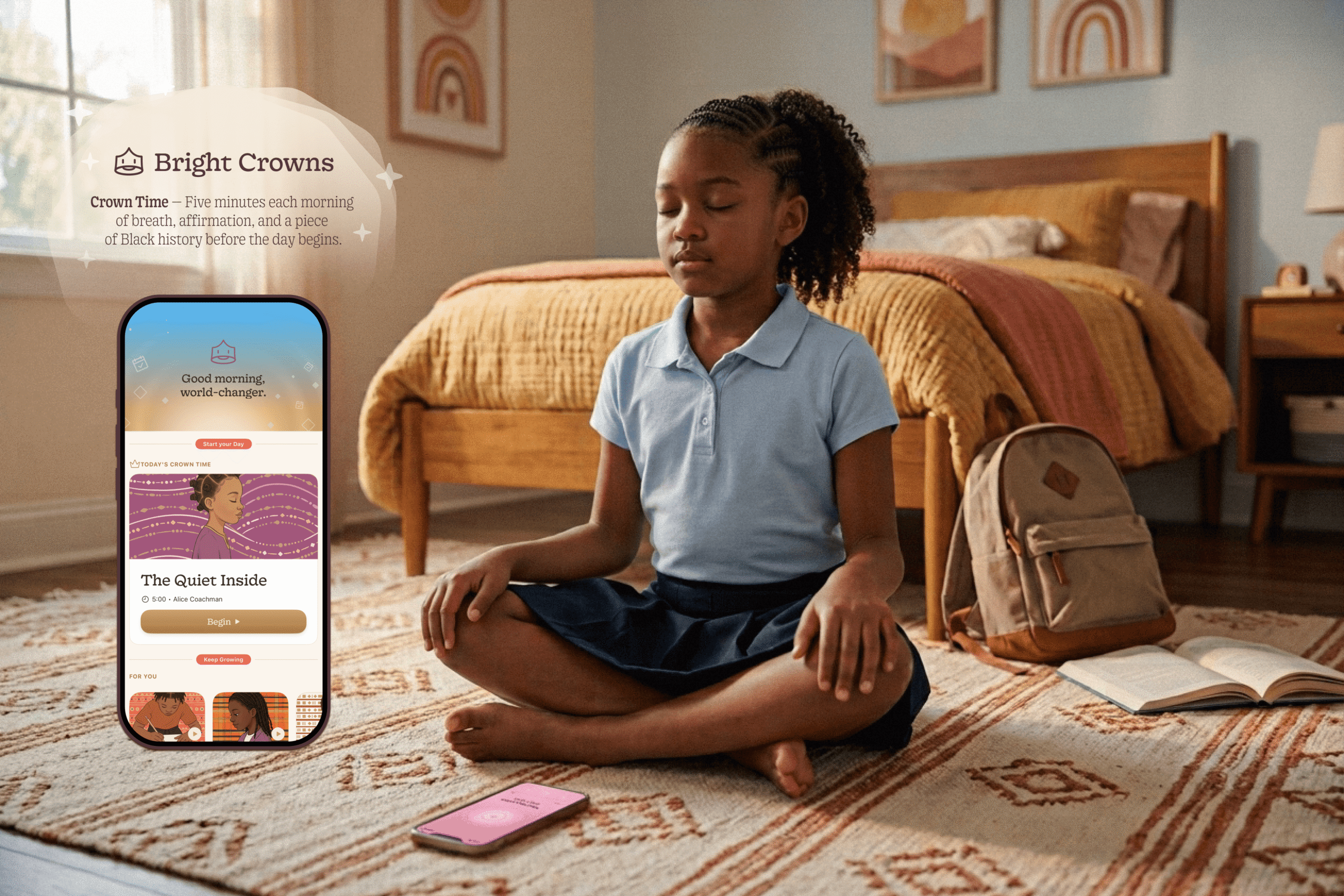
As Black parents strive to raise resilient, confident, brilliant children within systems that too often underestimate them, an Atlanta-based company launches an app that delivers a five-minute daily wellness practice, backed by forty years of research, to help build the identity, confidence, and self-worth their children carry into every room.
ATLANTA — October 6, 2026 — Every morning, Black children walk into classrooms and spaces that weren’t designed with them in mind. They carry a quiet, daily weight most adults never see. There is no shortage of national conversation about the challenges they face; there has been far less discussion about what actually helps. Yet the research has pointed to answers for decades: a grounded sense of who they are, the steadying power of breath, and the pride that comes from knowing their history and their own worth. What was missing was a way to deliver those answers to Black children, consistently and easily, every single day. Until now.
Bright Crowns, the first daily wellness practice built specifically for Black children, launched and is available now on the Apple App Store. The morning practice takes just five minutes and fits easily into a busy day.
“As much as we’d like to, we can’t always lighten the load our children carry each day,” said co-founder and CEO Tia Harley. “But we can help make them strong enough to carry it — with their heads held high.”
Here is what the Bright Crowns wellness practice delivers. Each morning, a child opens the app and hears a voice that sounds like home. The breath comes first, to help them settle and notice what they’re feeling. Then an affirmation that names who they are and the people they come from. Then the story of someone from Black history whose life is proof of the strength being built in them that day. A new figure every day, all year long, not just in February. Not a history lesson, but evidence of what they already carry inside. They start each day steady, certain, and ready for whatever it holds.
The arc is deliberate: Breathe. Belong. Become. That five-minute morning session is called Crown Time, and Bright Crowns doesn’t stop there. Its practices carry a child through the whole day. Crown Ready steadies a child before a hard test or a game. Crown Reset meets a big feeling the moment it rises. Crown Together is a weekend reflection a parent reads aloud. And Bedtime Crown carries them into sleep with folktales from the African diaspora. Instead of points or badges, children earn crowns drawn from real African kingdoms — an inheritance, not a reward. A badge says good job; a crown says this was always yours.
“Bright Crowns isn’t about making a child feel better for five minutes,” said Tia Harley. “It’s about giving them tools that compound: steadiness, identity, and resilience they carry long after the session ends, into the classroom, under pressure, and into rooms where they may be the only one.”
Built on joy. Backed by forty years of science. Husband-and-wife team David and Tia Harley built Bright Crowns out of love for their own children. Then they discovered that every piece of what they had built had already been supported by research. A landmark study in the journal Science found that a brief, culturally grounded practice measurably narrowed the racial achievement gap for Black students, without any change to the school itself. Research has since identified ethnic-racial identity as a key protective factor for Black youth mental health in the Annual Review of Clinical Psychology, and a meta-analysis of 76 mindfulness programs for young people found significant improvements in stress, attention, emotional regulation, and academic engagement. Psychologists have a name for what these build together: hardiness, the inner architecture that lets a person meet difficulty without breaking. It has been studied since 1979, when psychologist Suzanne Kobasa first identified it, and the research is clear that it is teachable, built through brief, consistent daily practice. “The research showed that while the school didn’t change,” Tia Harley said, “what those children carried into it did.”
A category built, not borrowed. Wellness has grown into one of the largest industries in the world, worth roughly $2.1 trillion in the U.S. alone, with apps for sleep, focus, breathing, and meditation. Yet when the Harleys went looking for a daily wellness practice built for their own Black children, they found none. What existed was generic: polished and useful, but spoken in voices and settings that never felt like home, and asking a Black child to set part of themselves aside just to belong there. “A Black child’s identity isn’t separate from their wellness. It’s part of it,” said Tia Harley. Bright Crowns wasn’t adapted for Black children after the fact. It was built with them in mind from the very beginning, the first of its kind, and one this community has long deserved.
David Harley, an award-winning creative director, began building a morning wellness routine at their family’s kitchen table, and he and Tia joined forces to grow it into what Bright Crowns is today. The two brought professional rigor to a labor of love: David, with two decades leading multicultural campaigns for major brands, and Tia, who led business development and partnerships at Google. They built Bright Crowns to a standard they’d trust with their own children. Then they used it with their two kids every morning for more than a year before it reached anyone else. “We built it for our children first,” Tia Harley said. “We watched them change: quicker to recover from tough moments, more willing to try hard things, holding their heads a little higher. Then we realized every Black family we knew needed the same thing.” The launch arrives as Black families across the country are thinking hard about how to prepare and educate their children in schools and spaces that weren’t always designed with them in mind. Bright Crowns speaks to the part that travels with a child into any classroom: the certainty of who they are.
Availability. Bright Crowns is available now on the Apple App Store with a free 7-day trial. Families who join by December 31, 2026 lock in the Founding Family rate of $69.99 for the first year; one subscription includes every child in the home. Learn more and download at hellobrightcrowns.com.
“Our children are already brilliant,” said co-founder and chief product officer David Harley. “We don’t teach them to survive. We teach them they were born to thrive. Their crowns are already on — we just help them remember.”
###
About Bright Crowns
Bright Crowns is a five-minute daily wellness practice built for Black children, available now on the Apple App Store. It is the first daily practice of its kind, grounded in decades of research on identity, mindfulness, and resilience. Founded by husband-and-wife team David and Tia Harley, parents of two, Bright Crowns pairs deep cultural fluency with the quality families expect and deserve. It helps Black children feel steady in themselves, certain of who they are, and ready to show the world what they’re made of. Learn more at hellobrightcrowns.com.
Media Contact
Tia Harley, Co-Founder
[email protected]
(404) 491-9637
Digital Press Kit: hellobrightcrowns.com/press
hellobrightcrowns.com
Black History
Listening as a Lifeline: A Doula’s Witness to Black Maternal Health
OAKLAND POST — Maternal mortality and pregnancy-related mortality use different time frames and methods and are not interchangeable. Finalized 2024 CDC data recorded 649 maternal deaths nationally. The overall rate was 17.9 deaths per 100,000 live births, but for non-Hispanic Black women it was 44.8, compared with 14.2 for White women and 12.1 for Hispanic women.
Word Count: 1058
Note: Client A, B & C, names are withheld for privacy; these accounts reflect my recollections as theirDoula.
Client A rocked her hips on a birthing ball, surrounded by pale wood and warm textiles in a softly lit Scandinavian-style office. I was her doula through a Southern California maternal health company combining nurse-led care, technology, and wraparound support.
She was a healthy Black woman in her thirties. Her baby girl was doing well; her partner took notes as we discussed labor and advocacy.
Then we turned to their chosen hospital. I knew it well—and remembered a phrase from another client’s experience: “Policy of Sovereignty.”
Client B had been told she needed a repeat cesarean as a precaution, though the reasoning was unclear. Her obstetrician, who performed her first cesarean two years earlier, had assured her throughout pregnancy that she was healthy, healed, and ready for a vaginal birth. We asked staff to review her chart, consult her obstetrician, and reconsider immediate surgery. Instead, they invoked the “Policy of Sovereignty.”
The physician on duty, we were told, had final authority, regardless of her established care plan. I asked whether an ultrasound or reassessing the baby’s position could offer clarity. Cesareans can be lifesaving. But were Client B’s history, informed consent, and circumstances guiding this decision—or was routine overriding individualized care? We kept asking for her obstetrician. Beneath every request was a deeper question: Was she being heard?
The Numbers Behind the Stories
Statistics arrive in clean columns. The experiences behind them do not.
Maternal mortality and pregnancy-related mortality use different time frames and methods and are not interchangeable. Finalized 2024 CDC data recorded 649 maternal deaths nationally. The overall rate was 17.9 deaths per 100,000 live births, but for non-Hispanic Black women it was 44.8, compared with 14.2 for White women and 12.1 for Hispanic women.
In California, Black birthing people experienced 56.5 pregnancy-related deaths per 100,000 live births during 2020–2022—3.8 times the White rate and four times the Asian rate.
As a doula serving Los Angeles and San Bernardino Counties, I see faces behind those numbers. I remember concerns raised softly, then firmly, then desperately. I am tired of watching Black families enter spaces meant to protect them, only to discover they must defend themselves while laboring, bleeding, trembling, or recovering.
Returning to Client A
Client A’s labor stretched nearly 48 hours. As her condition worsened, she, her partner, and I asked whether a cesarean should happen sooner. A provider questioned my place as a doula, then said she was next.
Six more hours passed.
She entered surgery visibly ill with a serious uterine infection, her baby malpositioned and stuck. Her partner later recalled the provider saying, “This baby would never have made it through the birth canal.”
Those words landed like a blow. Our urgency had been treated as ignorance. With Client B, we questioned why surgery was inevitable. With Client A, why it was delayed. Doula advocacy is not about one kind of birth. It is about informed consent, individualized care, and timely action. Hospital routine should never outweigh the person carrying the risk.
Survival Cannot Be the Standard
The Black maternal health crisis includes unequal care, untreated conditions, racial bias, delayed referrals, poor communication, and inadequate postpartum support. It is about birth plans respected only until a hospital becomes less busy and postpartum care that asks whether a mother survived, not whether she has what she needs to recover.
Survival cannot be the standard. Technology can support care, but it cannot replace human connection. An algorithm cannot detect fear in a patient’s eyes, and a mission statement alone cannot ensure adequate staffing or culturally responsive care.
The Story of Client C
Before I arrived, I heard the chaos through Client C’s phone. Staff struggled to locate her baby’s heartbeat on an external monitor as her fear and blood pressure rose. I pleaded for an internal electrode before surgery.
“There’s not enough time,” a nurse said.
“I would like to wait for my doula,” Client C called out.
But she was medicated, hurried through consent, and wheeled away while I listened.
In the operating room, after a shift change, another nurse placed an internal electrode and said, “The previous monitor wasn’t working.”
No one responded.
According to her father, the obstetrician avoided eye contact: “We need to move forward.”
Surgery may still have been necessary; that was not mine to determine. But if faulty equipment helped create the emergency, the family deserved acknowledgment and explanation—not silence. No family should have to wonder whether major surgery followed an unavoidable crisis or a machine failure no one recognized in time.
From Prevention to Accountability
After supporting nearly 100 families, I have learned that danger often begins before admission. I have urged clients to seek care—and heard why they feared returning: dismissed pain, harsh words, shame for asking questions.
Care cannot be holistic where Black families do not feel safe enough to speak or return. Representation matters, but providers of color cannot repair inequity alone. They need adequate staffing, mentorship, culturally responsive training, reliable equipment, and colleagues that are reflective of all the aforementioned. It’s not the Black providers job to care for just the Black patients, everyone should have the same goal.
The Momnibus Act, California’s Medi-Cal doula benefit, the Transforming Maternal Health Model and the Perinatal Equity Initiative require more than promises; they need sustained funding, reliable reimbursement and accountable implementation.
Birth should be sacred. Yet too many Black birthing people arrive carrying the burden of proving their pain is real. A doula can listen, educate, comfort, and advocate—but cannot repair a system that refuses to listen. The true measure of progress is what happens when a Black birthing person says, “Something is wrong.”
Are they believed? When equipment fails, is that failure acknowledged? Do families leave not merely alive, but safe, respected, supported, and whole?
Until those answers are consistently yes, California’s maternal health success story remains unfinished.
About the Author
Antoinette Stewart-Eneh is a mother of two, holistic maternal wellness advocate, and birth and postpartum doula who has supported families since 2019. She serves as program operations coordinator for Frontline Doulas, a volunteer client coordinator with the Joy in Birthing Foundation and a childbirth educator in South Los Angeles. She is studying to become a midwife and lactation educator.
Black Press
‘We Don’t Talk Trash — We Pick Up Trash!’
OAKLAND POST — Following the cleanup, Jones talked with Richard Johnson, CEO of Formerly Incarcerated Giving Back (FIGB). Johnson said he wanted to bring formerly incarcerated nonprofits together not only to help clean up the city, but also to bring youth with them to mentor the next generation.
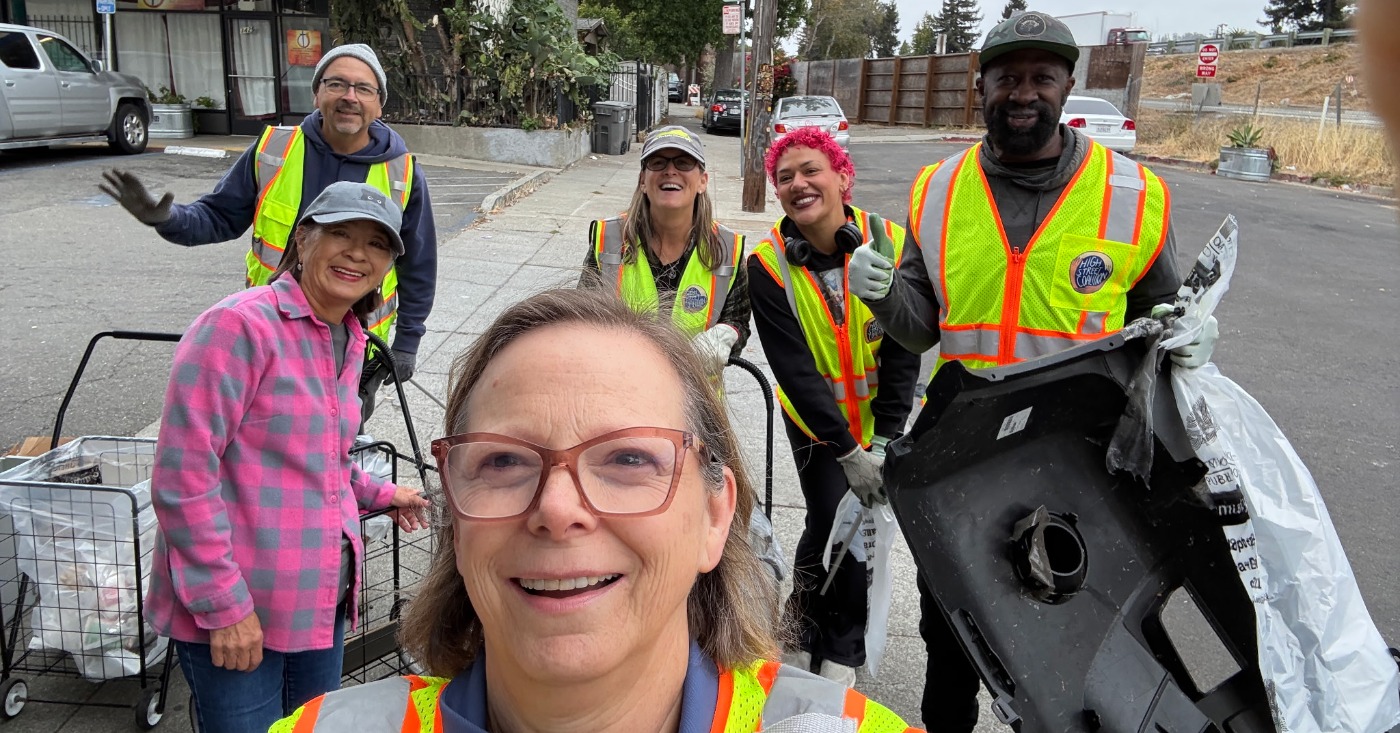
When community activist Jonathan “Fitness” Jones heard concerns from senior residents in East Oakland about illegal dumping, recurring trash issues and the health hazards they created, he decided that watching the problem was not enough.
Jones, a member of the African American Sports and Entertainment Group (AASEG) and an Oakland Private Industry Council board member, learned that seniors were frustrated by the recurrence of illegal dumping even when trash has been cleared. Recurring trash can contribute to unsanitary conditions, attract rodents and leave residents feeling that their neighborhoods are being overlooked.
On Saturday, Sept. 26, Mr. Jones joined High Street Coalition volunteers at Dick’s Donuts near High Street and Quigley Street, spending the morning picking up trash and helping beautify the surrounding neighborhood.
High Street Coalition volunteers organize community cleanups on the second and fourth Saturdays of each month.
Following the cleanup, Jones talked with Richard Johnson, CEO of Formerly Incarcerated Giving Back (FIGB). Johnson said he wanted to bring formerly incarcerated nonprofits together not only to help clean up the city, but also to bring youth with them to mentor the next generation.
Jones and Johnson discussed developing a community model that brings formerly incarcerated individuals, Oakland youth and nonprofit organizations together to clean and beautify the city.
The vision is to create opportunities for formerly incarcerated adults to take leadership roles while mentoring young people through hands-on community service. The program could also provide youth with opportunities to develop leadership skills, learn teamwork and responsibility, and potentially gain employment experience.
The goal is bigger than removing trash from the streets. It is about restoring neighborhoods while building relationships between generations and creating opportunities for people with lived experience to give back to their communities.
Jones believes the message is simple:
“We don’t talk trash, we pick up trash.”
The proposed collaboration seeks to bring Oakland nonprofits, formerly incarcerated leaders, youth, residents, businesses and community organizations together around a shared purpose — cleaning the town, beautifying Oakland and building a stronger community together.


Jaguars Do Better: Top of Ladder or Resting at the Bottom

Master P Encourages Norwood Elementary Students to Dream Big, Work Hard

New York Prosecutors Reopen Alleged Cornell University Gang Rape Case

Latanya Orr Expands Vision After Goldman Sachs Program

Students from Stonecrest Help Families Grow Food

Annika Ashton First Black Woman and Jamaican Broward County Attorney

Cuts and Conversations Turns Barber Chairs into Space for Lifesaving Dialogue

NFL: Bryce Young is Proving “Patience is a Virtue”

EV Home Charging: Don’t Buy Until You Ask This! #shorts

National Civil Rights Museum Freedom Award Honors the Relentless Fight for Equality

Latest Massacre in Haiti Reveals Cruelty U.S. Deportations

Black Americans Have Doubts About the U.S. Food System

When Praises Go Up: SUGC Nominated for Prestigious Stellar Award.

Booked and Unbound: The Legacy of Black Women’s Literary Circles

The Youngest American Killed in the Vietnam War

U.S. Sole Nation to Oppose U.N. Resolution Correcting Africa’s Size on World Maps

COMMENTARY: Big Mama Said ‘Don’t Let Grief Break the Bank’

Passing for White, Fighting for Black America: The Courage of Walter White

Outnumbered: Elbert Cox’s Equation for Greatness

U.S. Open Influencers Spark Backlash over Ring Lights, Filming as Gauff and Osaka Speak Out
EV Home Charging: Don’t Buy Until You Ask This! #shorts

The Conversation with Al McFarlane

The Conversation with Al McFarlane 📱

Introduction, 2027 VW Atlas SEL Premium R Line Worth $58,135?

Welcome, 2027 VW Atlas SEL Premium R Line Worth $58,135?

Smart Car Buying: Ask These Questions Before You Buy! #shorts

2027 VW Atlas SEL Premium R Line Worth $58,135?

Unlock Auto Loans: Black-Owned Banks & Credit Unions #shorts

Find Black-Owned Banks & Auto Loan Pre-Approval Easily #shorts

Car Warranty Explained: Powertrain, Basic & Roadside! #shorts
-
 Black Press5 days ago
OP-ED: Haiti TPS: Have We Lost Sense of Humanity?
-
 Black History1 week ago
Remembering Chauncey Bailey as Student Journalists Face Threats to Truth-Telling
-

 Black Press1 week ago
Poll: Becerra Widens His Lead Over Hilton; Californians Split on Wealth Tax
-
 Black History1 week ago
COMMENTARY: The Audacity of Joyce Beatty
-

 Black History1 week ago
Rulings Leave Questions Lingering in Nolan Wells Case
-
 Black History1 week ago
Baptist Minister Says Black Church Champions for Civil Rights to Reign but Hesitates to Let Black Women Lead
