
Black Millennial Voices
COMMENTARY: Black Millennials Embrace the Struggle and Message of Rapper 21 Savage
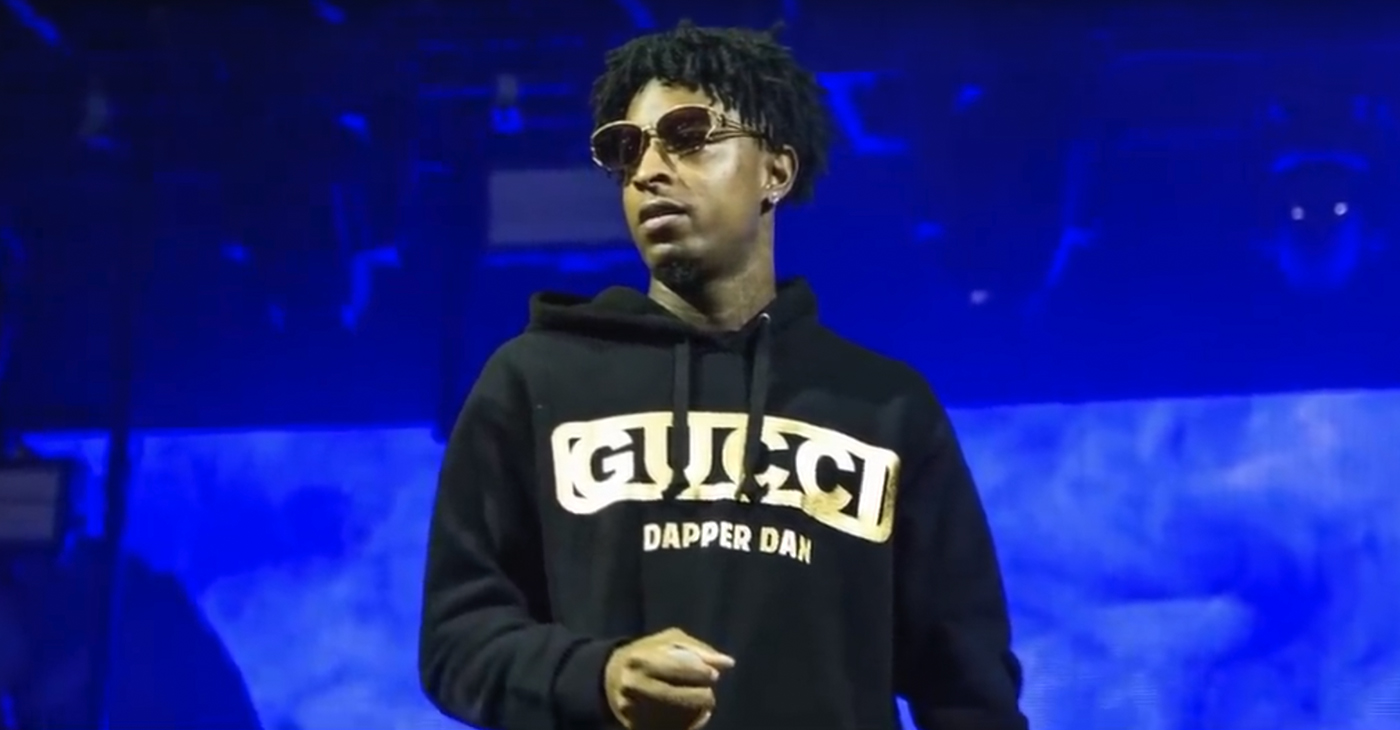
NNPA NEWSWIRE — Although 21 Savage has lived in the U.S. for the past 14 years, U.S. Immigration and Customs Enforcement (ICE) is attempting to expedite his deportation back to the United Kingdom. Savage was detained but was able to post bail from ICE last week.

By Black Millennial Voices: Malika Elmengad and Franklin Chavis
Becoming a well-known hip-hop rapper involves displaying creative genius and talent on the stage and in recording studios. Unfortunately, for some young aspiring hip-hop artists, unjust confrontations with law enforcement appear to be inevitable. This is currently the case with the Grammy-nominated rapper professionally known as 21 Savage.
Based now in Atlanta, Georgia, 21 Savage was born in London in the United Kingdom on October 22, 1992. The 26-year-old talented rapper’s name at birth was Sheyaa Bin Abraham-Joseph. He immigrated legally to the United States as a minor back in 2005 with his family.
Although 21 Savage has lived in the U.S. for the past 14 years, U.S. Immigration and Customs Enforcement (ICE) is attempting to expedite his deportation back to the United Kingdom. Savage was detained but was able to post bail from ICE last week.
Yet, in the aftermath of being released from ICE detention and appearing in a taped television show interview on ABC’s Good Morning America, police officials in Southern Georgia’s Liberty County re-arrested 21 Savage and charged him with “felony theft” because he did not perform at a paid gig in Georgia 3 years ago.
The fact of the matter is that 21 Savage actually turned himself into the Liberty County Sherriff’s office and was immediately released on another bail posting. According to one of his attorneys, Abby Taylor, “This is really a civil contract dispute. We are optimistic that it will be resolved to the satisfaction of all of the parties and dismissed.”
From the perspective of millions of Black American millennials across the nation, the unjust ordeals that 21 Savage is facing are all symptomatic and representative of racism in the U.S. immigration system combined with long-standing cultural and racial profiling of hip-hop artists by the so-called criminal justice system.
The constant run-ins that Tupac Shakur and DMX and many other hip-hop artists have had with the police are on point and relevant to what 21 Savage is now enduring. Some news reports have revealed that ICE officials were trying to intimidate and force 21 Savage to give up his fight to remain in the U.S. Immigration procedures could possibly lead to both his unjust deportation and a 10-year ban from reentering the country.
But it is good to witness that 21 Savage is keeping his faith strong, hiring good experienced defense lawyers, and that there is a growing vocal and visible support for him now coming from hip-hop icons like Jay Z, Diddy and Meek Mills.
Attorney Charles Kuck, one of the other lawyers representing 21 Savage, stated, “[21 Savage] never hid his immigration status.” Attorney Kuck also said that he has a pending U visa application that could permit him to remain in the U.S. 21 Savage also has two U.S. born children whom he supports, which could make him eligible to stay here and to continue his growing career as a gifted artist and musician.
Attorney Kuck concluded, “In fact, his contributions to local communities and schools that he grew up in are the examples of the type of immigrant we want in America.”
When the New York Times recently asked 21 Savage if he felt a responsibility to speak up about his circumstances. He responded in a classic 21 Savage manner spitting truth to power: “Yeah, I feel a responsibility. My situation is important ’cause I represent poor black Americans and I represent poor immigrant Americans. You gotta think about all the millions of people that ain’t 21 Savage that’s in 21 Savage shoes.”
Thus, 21 Savage speaks for all of us across the nation who are young and fed up with the mass incarcerations, intimidations, and racial oppression. His voice is our voice. Hip-hop is not going anywhere. We embrace the courage and the creative genius of 21 Savage today and into the future.
Malika Elmengad and Franklin Chavis are Co-Founders of Black Millennial Voices, a national and global advocacy group of millennials who are now writing and reporting for the NNPA: The Black Press of America. They can be reached at www.BlackMillennialVoices.com











Black Millennial Voices
COMMENTARY: Generation Z is the Battleground
CHICAGO DEFENDER — This population shift will have major political and social implications, as today’s digital natives will gain a greater influence in how our future society is shaped. Social activism has long been associated with young people, as evidenced by demonstrations against the Vietnam War, the Civil Rights Movement during the 1960s, and the Black Lives Matter protests triggered by the murder of George Floyd in 2020.

By David W. Marshall
Chicago Defender
(TriceEdneyWire.com)—Nine years ago, millennials reached a major milestone. Based on population estimates released by the U.S. Census Bureau, 2016 was the year millennials officially surpassed baby boomers in becoming America’s largest living generation. Born between 1981 and 1996, the millennial generation includes anyone aged 29 to 44 in 2025. While Gen Z is now the second largest generation, by natural progression, they will become the largest generation in the coming years.
This population shift will have major political and social implications, as today’s digital natives will gain a greater influence in how our future society is shaped. Social activism has long been associated with young people, as evidenced by demonstrations against the Vietnam War, the Civil Rights Movement during the 1960s, and the Black Lives Matter protests triggered by the murder of George Floyd in 2020.
Gen Z will not only be a rising influence in future elections, but in the age of smartphones and social media, young people have been given a louder voice than ever before. Due to core issues such as climate change, racial and gender justice, mass shootings, economic inequality, healthcare access, and LGBTQ+ issues, along with unprecedented access to digital tools, many Gen Zers are motivated to start social activism at an earlier age. Generation Z’s early and passionate embrace of activism reflects both a reaction to the challenges of their era and a proactive commitment to making a tangible impact. As a young gun control activist and Parkland, Florida, mass-shooting survivor, David Hogg tweeted: “I’m not powered by hope. I’m powered by the fact I have no other choice.”
Generation Z is the ideological battleground, and groups like the Proud Boys know it. The Southern Poverty Law Center has called the all-male neo-fascist group an “alt-right fight club” and a hate group that uses persuasive devices to obscure its true motives. The group was tied to the Jan. 6 insurrection at the U.S. Capitol. The Anti-Defamation League (ADL) describes the Proud Boys as “extremist conservative” and “all too willing to embrace racists, anti-Semites and bigots of all kinds” and cites the group’s promotion and use of violence as a core tactic. The nations of Canada and New Zealand have designated the Proud Boys as a terrorist group. Yet, there will be teens and young adults who are drawn to its anti-feminism, antisemitism, White supremacy, neo-Nazism, and its version of Trumpism.
Several months ago, a roadside billboard was placed in Clinton County, Illinois, as an attempt by the Proud Boys to recruit teenagers. The billboard, using the words “faith, family, freedom, and brotherhood,” was located 1,000 feet from the entrance to Central Community High School. The billboard listed a local recruiting phone number. By targeting 16-, 17-, and 18-year-old students on their way to school, the Proud Boys are fully aware of the influence Gen Z has on the future of this nation. Parents, local officials, and state leaders condemned the sign, saying the extremist group has no place in Illinois communities.
David Cunningham, a Washington University professor who studies White supremacy, said extremist groups often use billboards to try to normalize their presence. “They’re sort of using phrases related to freedom, faith, these kinds of things,” Cunningham said. “This was never in the Proud Boys lexicon prior to the current presidential administration…This is really an attempt to rebrand themselves in a more mainstream way.”
After strong community opposition, the sign was removed after a few days. But one has to wonder how many young people were persuaded to call in those few days. The Proud Boys are organizing at the grassroots level, as is Turning Point USA. Turning Point USA is an organization, founded by the late Charlie Kirk, that advocates for conservative politics on high school, college, and university campuses. Turning Point USA is a political organization that aims to elect conservative leaders.
According to its website, they are a movement rooted in faith, freedom, and love of country. They built a well-organized infrastructure of over 900 college chapters dedicated to defending America’s future. I admit that I admire how Turning Point USA has strategically built a nationwide movement focused on young people and America’s future. While I am impressed with the grassroots machine, I know this is another organization that uses persuasive devices to obscure its true motives (White supremacy). Behind the powerful words of “faith, freedom, and love of country” is a national network that promotes anti-Blackness, anti-diversity, anti-equity, and anti-inclusion under the umbrella of Christianity.
The organization is impressive, but the true message is not Christ-like. In their separate ways, the Proud Boys and Turning Point USA will draw support, loyalty, and commitment from the Gen Z population, with a long-term influence on future generations. This is the goal of both organizations. I believe communities of color committed to inclusion, justice, and fairness need a similar Turning Point network, focused exclusively on young people. The battleground is Gen Z, and we may be losing the battle.
David W. Marshall is the founder of the faith-based organization, TRB: The Reconciled Body, and author of the book “God Bless Our Divided America.”
Black History
LIVE! — 2024 ELECTION – TAP IN WITH THE BLACK PRESS
Join Let it Be Known News with Stacy Brown -He discusses what’s happening on the ground with Journalists, Influencers, and lawmakers around the nation.

https://www.youtube.com/watch?v=vmzamjv9a_o
Black History
PRESS ROOM: Fanbase Launches $17 Million Equity Crowdfunding Campaign
NNPA NEWSWIRE — Fanbase’s brand promise of “Be You. Without Limits,” is a reflection of their company values in creating a space for authentic self-expression across diverse content creation functionalities, including photo/video sharing, audio chat, live streaming, stories, and both short-form and long-form video content. This model not only champions creativity but also facilitates direct monetization of content, distinguishing Fanbase in the creator economy.

(Atlanta, GA) – Fanbase, the next generation, user-owned social media app, has begun its $17 million Reg A series equity crowdfunding campaign, allowing the public to invest for just $399.
Founded by entrepreneur Isaac Hayes III, Fanbase disrupts the conventional social media model by introducing an innovative monetization approach. This approach enables creators to start earning from day one. Accumulating over $10 million from three distinct crowdfunding campaigns via StartEngine, Fanbase demonstrates the powerful support and confidence from a community of users and investors. Fanbase empowers users to become investors and make money from the very platform they help become popular.
Fanbase’s brand promise of “Be You. Without Limits,” is a reflection of their company values in creating a space for authentic self-expression across diverse content creation functionalities, including photo/video sharing, audio chat, live streaming, stories, and both short-form and long-form video content. This model not only champions creativity but also facilitates direct monetization of content, distinguishing Fanbase in the creator economy.
As Fanbase’s journey unfolds, its trajectory is marked by significant milestones, reflecting the platform’s growth and innovation. The community has grown to over half a million users, stretching across 190 countries, showcasing the universal appeal and scalability of Fanbase’s model. The introduction of more than 20 features in 2023 alone, such as Unlimited Subscriptions, AI Algorithms, Long-Form Video on the Web, and Chat Rooms in Fanbase Audio, highlights the platform’s commitment to continuous improvement and user-centric innovation. Furthermore, Fanbase submitted a patent for seven core functionalities, including Peer-to-Peer In-App Subscription and Revenue-Driven Audio conversations, putting them at the forefront of creator economy innovation.
The $17 million raised in this equity crowdfunding campaign will be strategically invested in further enhancing the Fanbase platform, focusing on improving user experience, expanding feature sets, protecting IP, and broadening marketing efforts to reach even more users globally.
Fanbase is furthering its community-driven mission by partnering with Apple’s HBCU Non-Profit Organization, Propel. Mentoring and working with HBCU students nationwide to empower the next generation of content creators.
“This round is a big deal. It represents the shaking up of the creator economy and shows what equity crowdfunding can achieve. It demonstrates that when the opportunity for equity in social apps is made available, amazing things happen,” says Fanbase founder and entrepreneur Isaac Hayes III.
“This raise isn’t just a milestone; it’s fuel for our journey to innovate without limits and empower creators with every tool they need to succeed.”
Click here to invest in Fanbase!: startengine.com/fanbase
About Fanbase:
Fanbase Social Media is the home for creators looking to monetize their content from the outset. Founded by Isaac Hayes III, Fanbase is driven by a mission to democratize social media, offering a platform where users can “Be You. Without Limits.” For People Who Value Content And Community, Fanbase Is The Next-Generation Social Creator Hub That Allows Any User To Earn Money From Day One. Unlike Other Social Apps, Fanbase is the One Place You Can Truly Be You. Without Limits.
This Reg A+ offering is made available through StartEngine Primary, LLC. This investment is speculative, illiquid, and involves a high degree of risk, including the possible loss of your entire investment. Offering Circular (link) Risks (link)
Black Millennial Voices
OP-ED: Why Are We Leaving Black Women’s Health Behind?
NNPA Newswire — It’s not enough to acknowledge obesity for what it is, a silent killer upending Black women’s lives. Acknowledgement must be tied to immediate and impactful action. To truly stem the tide of this crisis, we must dismantle the discriminatory healthcare policies that deny access for millions of Black women to the full range of lifesaving obesity care, including FDA approved medications.

By Dr. Donna Christensen, Debra Fraser-Howze, Shavon Arline-Bradley
Although Black women make up 7.7% of the total U.S. population, we have the highest rates of obesity in the country. Sixty percent of Black women live with obesity, which means we have higher risks for heart disease, stroke, and certain cancers related to the condition. The urgency for addressing obesity amongst Black women cannot be understated: As the obesity epidemic grows, the health of Black women is increasingly at risk and so is our ability to work, care for ourselves, and participate in society.
It’s not enough to acknowledge obesity for what it is, a silent killer upending Black women’s lives. Acknowledgement must be tied to immediate and impactful action. To truly stem the tide of this crisis, we must dismantle the discriminatory healthcare policies that deny access for millions of Black women to the full range of lifesaving obesity care, including FDA approved medications.
The science clearly shows that Black women are unavoidably exposed to the societal factors that lead to obesity. Yet as a society, we’re ignoring the evidence. The data say the lived experiences of Black women – disproportionate rates of poverty, gender bias, racism, and lack of access to healthcare – lead to higher rates of obesity. The American Medical Association (AMA) not only recognizes obesity as a complex, chronic disease, but they point out that racial and ethnic disparities are a major factor in the prevalence of obesity.
If the science is clear, then why has there been no effective solution to slowing the rates of obesity among Black women? The short answer is that national obesity policy is underpinned by outdated and punitive perceptions of the disease, resulting in discriminatory care and insurance coverage schemes that deny millions of Black women from accessing FDA-approved medication and treatment.
For decades, treatment for obesity has largely focused on recommending a regimen of diet and exercise, fueled by the myth that obesity is simply a behavioral issue that can be remedied through lifestyle changes and “self-control.” For years we have left the doctor’s office with vague instructions to lose weight and eat healthy, made to feel weak as we battle this debilitating disease on our own. But science has come a long way in the past twenty years, and we now realize there’s a lot more at play that, until now, we have not been able to control. Scientific breakthroughs have even proven that diet and exercise alone can be insufficient for treating obesity. Obesity is a disease, and it must be treated as such.
But access to its treatments are hard to come by. Medicare does not cover anti-obesity medications, nor do most Medicaid and Affordable Care Act plans. These programs are still driven by disproven notions that obesity is a behavioral issue, and not a chronic disease. As a result, patients reliant on these and other programs – including millions of Black women – are denied access to the full range of care, which includes FDA approved obesity medications. These policies were created two decades ago, when our understanding of obesity was primitive and incomplete.
The CDC recently reported that nearly 42% of American adults have obesity, yet nothing has changed for obesity care coverage since the AMA’s declaration that obesity is a chronic disease a decade ago.
It’s time to modernize our federal, state, and private healthcare programs based on science, address this disease seriously with coverage for comprehensive care, and ensure all Black women have access to treatment and care. The time for action is now!
Dr. Donna Christensen is the first female medical doctor to serve in Congress and serves on the Medical Advisory Board of Choose Healthy Life. Debra Fraser-Howze is the founder and President of Choose Healthy Life, a non-profit organization that addresses health equity through the Black church. Shavon Arline-Bradley is the President and CEO of the National Council of Negro Women.




History of Black-Owned Banks: Why They Were Needed #shorts

Terresa Hardaway on Blackbird Revolt and Black Garnet Books – MSR On the Radar

Black History Fun Fact: Dr. Patricia Bath invented a laser device that helped improve cataract

Building Wealth, Inspiring Hope & Celebrating Our Legacy

Style Takes Center Stage at the 39th Annual Salute to Excellence in Education

Car Review: Seat Comfort & Dashboard Glare Issues #shorts

134 Black-Owned Banks Founded: See How Many Remain Today! #shorts

Dr. Earleen Patterson’s 30 Year Legacy of Education and Service at SIUE

Latinas Deserve Equal Pay. Unions Help Make It Happen.

Defender ONE-on-ONE: U.S. Rep. Christian Menefee

Latest Massacre in Haiti Reveals Cruelty U.S. Deportations

The Youngest American Killed in the Vietnam War

Booked and Unbound: The Legacy of Black Women’s Literary Circles

Passing for White, Fighting for Black America: The Courage of Walter White

OPINION: Nolan Wells’ Death One of Several Signifying Racial Terror Lives on in U.S. South

Prostate Cancer is Twice as Likely to Kill Black Men. Talking to Your Doctor Could Help Save Your Life

OP-ED: Haiti TPS: Have We Lost Sense of Humanity?

OP-ED: If AI Is the New Language of Power, Then NAN Wants Black Communities Fluent

OP-ED: How Does Your State Rank for Pre-K?

Henry O. Flipper: A Trailblazer at West Point and Beyond
History of Black-Owned Banks: Why They Were Needed #shorts
Terresa Hardaway on Blackbird Revolt and Black Garnet Books – MSR On the Radar
Black History Fun Fact: Dr. Patricia Bath invented a laser device that helped improve cataract
Building Wealth, Inspiring Hope & Celebrating Our Legacy
Style Takes Center Stage at the 39th Annual Salute to Excellence in Education
Car Review: Seat Comfort & Dashboard Glare Issues #shorts
134 Black-Owned Banks Founded: See How Many Remain Today! #shorts
Dr. Earleen Patterson’s 30 Year Legacy of Education and Service at SIUE
Defender ONE-on-ONE: U.S. Rep. Christian Menefee

Unlock Your Best Auto Loan: Ask These Questions! #shorts
-
 Black Press1 week ago
OP-ED: Haiti TPS: Have We Lost Sense of Humanity?
-

 Black History1 week ago
Why Black Artists Struggle to Sell Tours
-

 Auto1 week ago
Consumers and States Awarded $694 Million After Predatory Auto Lender Settles Lawsuit
-

 Black Press1 week ago
TILGHMAN: Why Parents of Children with IEPs Should Know Their School Bus Driver
-

 Art1 week ago
From Ma Rainey to AI: New Technology Amplifies an Old Fight over Artist Control
-

 Black Press1 week ago
COMMENTARY: Property Is Power! What Is a Gift of Equity and What Could It Mean for Black America?
