
Commentary
OPINION: Trump Voters Must Re-Apply!
NNPA NEWSWIRE — If you ride with Donald Trump, who controls 40% of the national electorate, this missive is for you. For those who gifted him with a questionable 50% Job Approval rating in a recent Rasmussen poll… this is for you! As it relates to our friendship, you must re-apply.


By Vincent L. Hall, Messenger Media LLC
Vincent L. Hall is coming hard as the year comes to an end!
To my lifelong friends Carrol and Delton, Bonnie and Summer, and a few others I can’t mention here, this “Bud” is not for you. However, for an increasing number of the White folks I thought I knew, the time has come to put up or shut up.
If you ride with Donald Trump, who controls 40% of the national electorate, this missive is for you.
For those who gifted him with a questionable 50% Job Approval rating in a recent Rasmussen poll… this is for you!
As it relates to our friendship, you must re-apply.
Some of the empathetic, engaging, encouraging White friends and “Coloreds for Trump” that I’ve always valued, have turned on me. I don’t mean any harm, but I need to see your updated resume.
I hear you asking, “But Vincent, why…why after all these years would you doubt our bond?” The short answer is that Donald Trump’s daily attempts to prove that he is by White people, for White people and with White people, suggests that neither he nor you are working in my best interest.
This request did not come without serious thought and consternation. I painstakingly thumbed through 30 months of Donald’s political plundering and came to this resolution, solemnly and soberly. When you add it all up, “White privilege or superiority” is the only coagulant or commonality in Trump’s pursuit of homogeny.
I listened intently to all the advances of a soon-to-be former friend, and all to no avail. His application was denied!
“Donald Trump tells it like it is. Donald Trump calls it like he sees it. Donald Trump is a straight-shooter.” My retort was equally compact. ‘Donald Trump don’t know what he don’t know. Donald Trump’s vision is jaundiced and impaired. Donald Trump has a crooked aim.’ (Double entendre: intended, intended.)
This megalomaniac told you that he was bringing his business acumen to Washington. That was an easy lie to detect. Trump is the CEO of a mom-and-pop shop, selling his celebrity on a piecemeal basis. He has a linear understanding of economics. How can you bet on a guy who lost a casino for God’s sake? Common sense tells you to be wary of any politician who calls himself, the “Tariff Man.”
Trump rode in on the wheels of White evangelical inevitability. He dispatched angelic heretics like Robert Jeffress and Paula White. Trump either rented or bought a lowly cast of famous Negro preachers that most Negroes have never heard of. Trump, a known heathen and philanderer, with five kids and three baby mamas, couldn’t qualify to sit on the deacon’s bench at First Baptist Dallas.
Then there was the argument that his pedigree and pelf prepared him to be the next Commander-in-Chief. Instead, we have a Maniac and a Mannequin in the Rose Garden. We went from branded American pseudo-royalty to “Pomp and Uncircumcised.” The splendor and symbolism of “Ruffles and Flourishes,” giving introit to “Hail to the Chief,” is wasted on Trump and his mail-order or made-to-order bride. Don’t get mad, the standards were set before we were born.
The world is bewildered with our classless, clueless Chief and a First Lady whose singular goal is to be “Best Dressed.” Trump’s declaration of Nationalism was another hint. As someone so aptly put it, “Not all Trump voters are racists, but all racists vote for Trump.” This desire to purge the “other” is offensive to 150,000,000 of us who are non-white and none too happy with Donald Trump’s daily regimen of racial division.
Black comedians have long espoused the need for having good White friends in your circle. Richard Pryor, Chris Rock and Katt Williams have been stalwart in advocating close, cross-cultured relationships. I’m a believer and a subscriber. But with racism and xenophobia spiraling out of control, I can’t take a chance.
Some of my dearest and most trusted White allies must reapply. If you’re a Negro, or your Brownness was ordained by the Creator, don’t even bother. I have even less confidence in you!










Black Press
OP-ED: America’s Healthcare System Isn’t Sustainable. What Would a Better Alternative Look Like?
BLACKPRESSUSA NEWSWIRE — Rather than waiting for Washington to impose changes from the top down, it’d be far better for patients, providers, insurers, employers, drug companies, and pharmacy benefit managers to work together now — to reimagine, and ultimately redesign, the system with a shared vision.


Virtually no one in America is satisfied with the healthcare status quo. Not doctors. Not hospital executives. Not drug or insurance company leaders. And most certainly not patients.
This nearly universal anger is setting the stage for seismic reforms. Policymakers in both parties are planning ambitious healthcare overhauls.
Rather than waiting for Washington to impose changes from the top down, it’d be far better for patients, providers, insurers, employers, drug companies, and pharmacy benefit managers to work together now — to reimagine, and ultimately redesign, the system with a shared vision.
America boasts the most talented doctors and best hospitals in the world. Our researchers develop the lion’s share of new medicines. And far more of those treatments are available here than in other peer nations, at least in theory.
Yet despite all these advantages, our current healthcare system fails to deliver the outcomes that matter most to families — because it was simply never designed to do so. We often cannot agree on what healthcare should ultimately accomplish, which outcomes matter most, or what tradeoffs we are willing to tolerate.
In the absence of this shared understanding, companies default to prioritizing their own short-term finances — even if that’s not in the long-term interests of patients, families, or society.
For instance, consider the dilemma facing health insurers. Americans frequently bounce from insurer to insurer as they change jobs, move states, retire and enroll in Medicare, or simply select new plans that better fit their needs.
So even when an expensive treatment would clearly improve a patient’s health and prevent future complications, the insurer or employer that shoulders the upfront cost likely will not reap the eventual savings.
Consider the dilemma posed by gene therapies, which target the underlying genetic malfunctions and mutations that cause certain diseases.
In many cases, a one-time dose of these therapies can completely cure a patient’s disease for life — and prevent millions of dollars in spending on hospitalizations and other care down the road. Multiple gene therapies are cost-effective, even with price tags exceeding $1 million.
In all likelihood, insurers that cover these therapies will see only a fraction of the return before patients switch plans. They therefore have a strong incentive to limit access, even when everyone agrees these treatments offer good value over a lifetime.
This behavior makes perfect sense from the perspective of an individual insurer or employer. But it makes no sense for society as a whole.
We need a genuinely market-based system in which providers, drug companies, and insurers can transparently compete for customers on both price and quality.
And that competition cannot happen unless we first adopt new valuation metrics to better understand the full costs and benefits of different treatments and care models — and then redesign payment and insurance rules so that organizations are rewarded, rather than penalized, for investing in patients’ long-term health.
The question is whether stakeholders can set aside their differences, agree on a shared definition of success, and implement reforms that improve patients’ long-term physical, mental, and financial health.
If they cannot, Washington will eventually impose changes from above.
Marc Boutin, J.D., a three-time cancer survivor and caregiver, is president and CEO of IVI and previously served as CEO of the National Health Council, where he led policy initiatives that helped shape national health care reform. This column originally appeared at DCJournal.com
Black Press
OP-ED: If Food Is Medicine, Teach Doctors How to Prescribe It
BLACKPRESSUSA NEWSWIRE — Since diet is first-line therapy for many of the most common chronic diseases afflicting Americans, physicians should be as comfortable evaluating nutrition evidence as they are interpreting the science behind the medications they prescribe. That starts with understanding how nutrition research differs from many other areas of medicine.

The Department of Health and Human Services recently announced an initiative to improve nutrition education across every stage of physician education and training. As part of the effort, dozens of medical schools have pledged to include 40 hours of nutrition training — or a competency-based equivalent — in their graduation requirements.
Those pledges target a longstanding gap. Medical schools currently devote less than 1% of lecture hours to nutrition, and until recently, roughly three-quarters of schools didn’t require a dedicated nutrition course.
As a cardiologist, I welcome this initiative.
But adding hours alone won’t be enough. More nutrition education won’t meaningfully improve our nation’s chronic disease crisis unless medical schools also rethink what they teach. For decades, medical and dietetic societies — even the government — have promoted similar dietary guidance, yet metabolic disease continues to rise.
Rather than repeat the same nutrition mantra, schools should focus on two priorities: teaching physicians how to evaluate nutrition evidence and translate it into individualized patient care.
Since diet is first-line therapy for many of the most common chronic diseases afflicting Americans, physicians should be as comfortable evaluating nutrition evidence as they are interpreting the science behind the medications they prescribe. That starts with understanding how nutrition research differs from many other areas of medicine.
A conventional drug trial can often isolate a single intervention and compare it with a placebo under tightly controlled conditions. Nutrition rarely fits that model.
Nutrition science therefore relies on observational studies, controlled feeding trials, mechanistic research, and clinical interventions.
Medical schools must teach future physicians how to weigh these different forms of evidence and understand what each study design can — and cannot — tell them.
Evaluating the evidence is only half the job — physicians also need to know how to apply it to the patient in front of them.
For decades, major medical groups have recommended a one-size-fits-all approach to healthy eating: reduce saturated fat, increase whole grains, eat less, and move more. But that conventional advice has failed to stem the rise of metabolic disease.
Today, approximately 90% of Americans show at least one sign of suboptimal metabolic health, while obesity and type 2 diabetes have steadily increased. It’s increasingly clear that a dietary strategy that works for a metabolically healthy patient may not be the best starting point for someone whose body is struggling to regulate glucose and insulin.
Future physicians need a toolkit that recognizes a range of evidence-based dietary approaches. For instance, research routinely shows that low-carbohydrate and ketogenic diets can improve glycemic control, weight, and other metabolic markers for many patients. Mediterranean-style or plant-based dietary patterns that emphasize whole, nutrient-dense foods can also offer benefits.
Medical schools must therefore teach future physicians how to match the right strategy to the right patient.
With this initiative, HHS has created an opportunity to rethink nutrition education for the next generation of physicians. Now it’s up to policymakers and accrediting bodies to ensure that the new requirements define competencies, not merely hours.
Get that right, and those 40 hours can produce better doctors — and healthier Americans.
Bret Scher, MD, is a board-certified cardiologist and lipidologist, and the founding medical director of the Coalition for Metabolic Health.
BlackPressUSA
REBROADCAST! — HE SAID, HE SAID, HE SAID: “RUTHLESS!: Love Shouldn’t Hurt,” — FRI. 11.20.26 7PM EST
Join us this Friday at 7pm EST for a raw conversation on trauma and healing. We’re going deep into the uncomfortable truths of intimate partner violence.
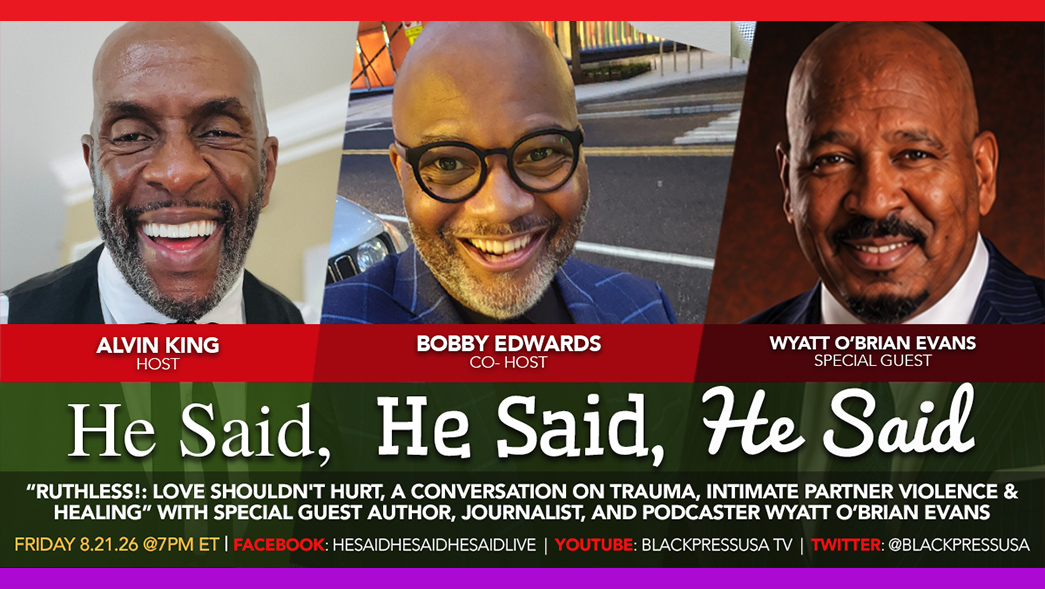
Tune in Friday, November 20, 2026 @ 7pm EST/4pm PST/6pm CST for the next “He Said, He Said, He Said Live!” A Look at the World from A Seasoned Black Man’s Perspective…because one perspective isn’t enough!” for “RUTHLESS!: Love Shouldn’t Hurt, A Conversation on Trauma, Intimate Partner Violence & Healing” with special guest Author, Journalist, and Podcaster Wyatt O’Brian Evans www.wyattevans.com
THIS FRIDAY, AUGUST 21ST, WE’RE HEATING THINGS UP. 🔥 And this conversation is going somewhere we don’t always want to go—but absolutely NEED to go. RUTHLESS!: LOVE SHOULDN’T HURT. What if the person you love is also carrying wounds you can’t see?
What happens when trauma follows you into love… when secrets threaten everything you’ve built… and when the relationship that looks perfect from the outside is fighting battles behind closed doors?
Join He Said, He Said, He Said Live for a powerful, provocative, and deeply personal conversation with Wyatt O’Brian Evans—award-winning journalist, author, podcaster, intimate partner violence and abuse subject-matter expert, advocate, and Renaissance man.
Wyatt joins us to talk about his explosive new psychological drama/thriller, “RUTHLESS!”, the latest installment in his Nothing Can Tear Us Apart series, released August 18 by Rainbow Advocacy Press. But make no mistake… This isn’t just a conversation about a book.
It’s a conversation about INTIMATE PARTNER VIOLENCE. And the complicated, sometimes painful journey toward loving—and being loved—whole.
New Episodes of “He Said, He Said, He Said” – Live stream Fridays, 7 p.m. EST on all these links: https://linktr.ee/hesaidhesaidhesaid FACEBOOK: facebook.com/hesaidhesaidhesaidlive RELIVE and SHARE special moments from “He Said, He Said, He Said” here: SHOW CLIPS youtube.com/channel/https://www.youtube.com/channel/UCV0MtJCazNWVBSaj1JFHITg FOLLOW US —- CLICK LIKE and SUBSCRIBE to us @hesaidhesaidhesaidlive on YouTube and Instagram!
#HeSaidHeSaidHeSaid #Ruthless #LoveShouldntHurt #WyattOBrianEvans #NothingCanTearUsApart #IntimatePartnerViolence #IPVAwareness #TraumaHealing #MentalHealthAwareness #HealthyRelationships #HealingJourney #BlackLGBTQ #BlackLGBTQVoices #BlackAuthors #BlackStories #Ruthless #LoveShouldntHurt
#WyattOBrianEvans #IPVAwareness
🎙️ New to streaming or looking to level up? Check out StreamYard and get $10 discount! 😍
🎙️ New to streaming or looking to level up? Check out StreamYard and get $10 discount! 😍 https://streamyard.com/pal/d/6551970446311424
Black Press
COMMENTARY: Money Matters — AI Can Help Your Small Business — But Is It Helping Your Bottom Line?
CHICAGO DEFENDER — Artificial intelligence has transitioned from a science fiction concept to a common resource for researching topics and developing content. While small businesses face increasing pressure to adopt these tools to save time and reduce expenses, experts warn that speed does not always guarantee accuracy.

Not long ago, most of us associated artificial intelligence with science fiction movies or technology companies in Silicon Valley. Today, its emergence in our everyday lives and business operations is impossible to ignore.
From organizing ideas and researching topics to developing content, AI has become an increasingly useful resource. But just because it can produce an answer in seconds doesn’t mean it’s always the right answer.
There’s growing pressure for small businesses to embrace AI. Everywhere you turn, another tool promises to save time, reduce expenses, attract customers or improve productivity, emerges.
But before jumping on the bandwagon, business owners should ask an important question:
Is this technology going to help my business make money, save money, or operate more efficiently?
After all, that’s what business decisions should ultimately come down to.
AI is rapidly becoming part of the small-business landscape in Michigan and across the country. A recent survey of 70 Michigan small businesses participating in Goldman Sachs’ 10,000 Small Businesses program found that 86% use AI, although many are still experimenting with its capabilities.
Clearly, interest is growing. But adoption doesn’t necessarily translate into profitability.
For small-business owners, every dollar counts. Whether investing in employees, marketing, equipment, or technology, you need to understand what you’re getting in return. AI should be no different.
Consider the possibilities. Small businesses can use AI to develop marketing campaigns, generate social media content, draft customer communications, conduct research, and streamline administrative tasks.
For an entrepreneur wearing multiple hats, those capabilities can be valuable.
Imagine reclaiming several hours each week that could instead be spent developing new business, strengthening customer relationships or pursuing sales opportunities.
Time is money, particularly when you’re running a small business.
However, purchasing an AI subscription doesn’t automatically improve your bottom line. Business owners need to evaluate its actual return on investment.
How much time is it saving? Is it reducing expenses? Helping generate sales? Improving customer retention? Making employees more productive?
Those are the measurements that matter.
A recent Federal Reserve survey found that while 46% of employer firms reported using AI, only 7% of those using it said the technology was fully integrated into their business processes. Many companies are still figuring out how to translate AI into measurable results.
My recommendation is to start small.
Identify one area where your business is spending too much time or money. Find an AI tool that might address the challenge. Test it, monitor the results and determine whether the investment makes financial sense.
You don’t need multiple subscriptions or an overhaul of your entire operation to get started.
There’s another consideration: AI is a tool, not a replacement for sound business judgment.
Accuracy, privacy and security matter. Be careful about sharing confidential customer information or proprietary business data. Always review AI-generated information before using it in customer communications or important business decisions.
A faster process isn’t necessarily better if it creates mistakes or damages customer relationships.
There’s also a competitive consideration.
Small businesses have traditionally distinguished themselves through personal service, flexibility, creativity and relationships. Those advantages shouldn’t be sacrificed in the pursuit of automation.
If every business uses AI to produce the same generic marketing messages, what makes one company stand out?
The answer should still be its people, its service and its ability to connect with customers.
AI can help develop the message, but you provide the personality. It can organize information, but you provide the judgment. It can make your operation more efficient, but you determine where the human touch remains essential.
Ultimately, AI could help level the playing field by giving smaller companies access to capabilities that once required larger budgets and bigger teams. That’s an opportunity worth exploring.
But don’t confuse keeping up with technology with running a better business.
Before investing in another AI platform, set clear objectives and decide how you’ll measure success. If it isn’t saving time, reducing costs, improving service, or contributing to revenue growth, reconsider whether you need it.
Artificial intelligence may be changing the way we do business, but the fundamentals haven’t changed. You still need customers, revenue, sound expense management, and smart investment decisions.
At the end of the day, the best technology isn’t necessarily the newest or most expensive. It’s the technology that delivers a measurable return on your investment.
That’s not just smart technology adoption. That’s smart business.
We invite readers, business owners and future entrepreneurs to follow along, ask questions and engage. If you have story ideas or questions, email Lee at [email protected] or visit leegroupinnovation.com.
The post Money Matters: AI Can Help Your Small Business—But Is It Helping Your Bottom Line? appeared first on Chicago Defender.
Based on reporting by Chicago Defender.
Black History
Debunking the Myth That Europeans Alone Plotted Africa
THE CAROLINIAN — Following the United Nations’ recent adoption of a resolution endorsing more accurate global maps, scholars are reexamining historical misconceptions regarding the cartography of Africa.
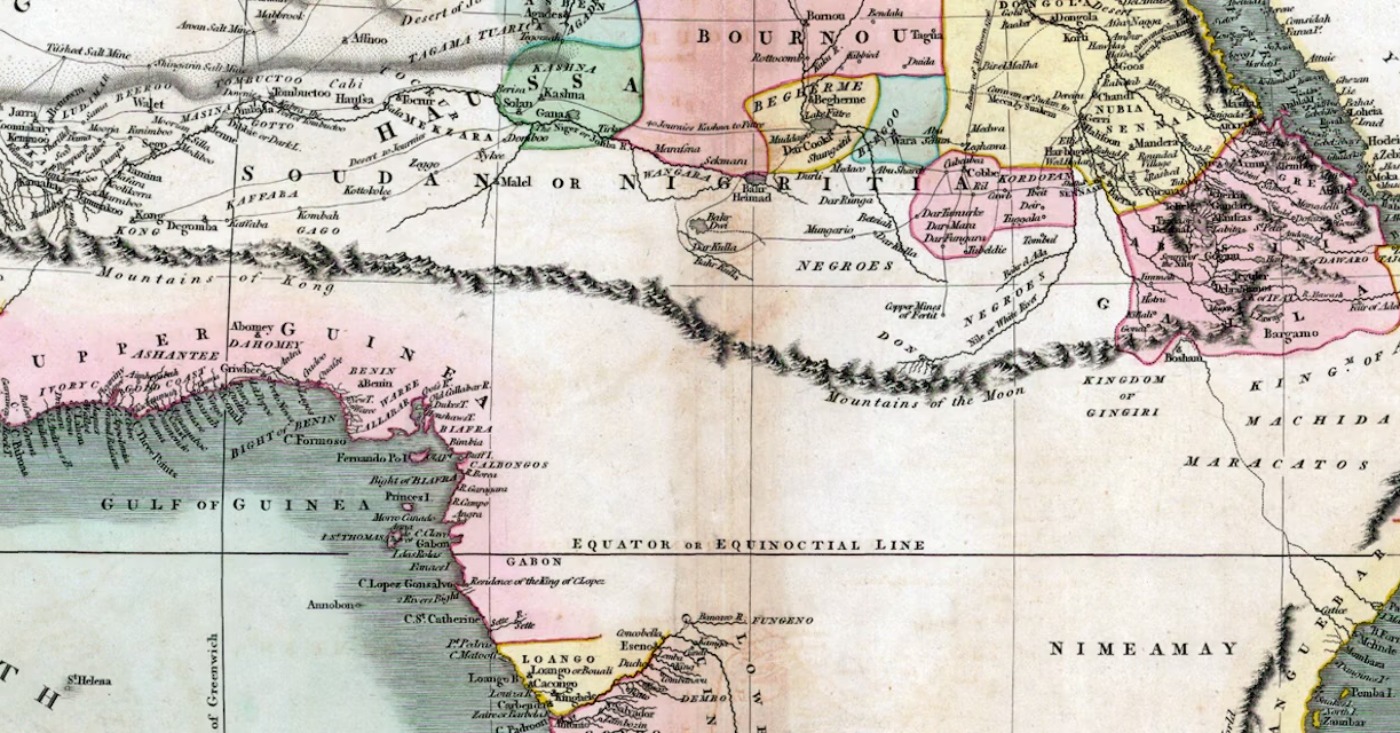
THE CONVERSATION – After the United Nations adopted a resolution in September 2026 endorsing a map that more fairly represents the size of Earth’s landmasses, author and journalist Moky Makura of Africa No Filter – a main sponsor of the Correct the Map initiative – asked: “What else about Africa is the world underestimating that’s also hidden in plain sight?”
It is a fair question.
The initiative brought attention to the way continents are distorted by projections that display our rotund planet on two-dimensional maps, something that has long made Africa especially appear far smaller than it actually is. But it left another assumption untouched: that European maps of Africa – which became the basis of how we see African countries today – are based solely on the observations of the Europeans who made them.
As an expert on the map history of Africa, I know that this is a misconception which deserves rethinking. Recent research by myself and others on colonial-era mapping of West Africa demonstrates that much of the geographical information these maps show is based on African observations. It’s just that Europeans largely took the credit.
A line in the sand
Most African map traditions are undocumented or ephemeral. But ground and oral mapping was common in the pre-colonial period, and often highly valued. European explorers relied upon these indigenous mapping practices during their travels and sometimes incorporated them into their own maps.
For example, sections of French explorer Henri Duveyrier’s 1861 map of the Sahara owed much to the maps drawn in the sand by his guide, Cheikh-‘Othmàn. Indeed, more than a third of Duveyrier’s map is based on information provided by local sources.
A common objective of mapping is to solve a spatial problem. Route mapping is all about finding one’s way between points A and B and determining the distances between them. For Europeans, it was important to know where African leaders resided or the most direct route to important trade centers.
When European explorers and soldier-surveyors inquired, African guides, interpreters and merchants described the road ahead and often drew these routes on the ground with a stick. Europeans valued African oral and ground-mapping practices for their contributions to knowledge; they were also useful for empire building.
In his 1892 travel memoir, French Navy Lt. Louis-Gustave Binger reproduced the plan of Niellé, a city in contemporary northern Ivory Coast that was drawn on the ground by his interpreter, Fofana Diawé.
Niellé’s chief prohibited Binger from visiting the town, making Diawé’s drawing particularly valuable. In another instance, Binger reports that an African intermediary placed varied lengths of straw on the ground to indicate the distances between localities in the Kong region.
In his exploration of the area between the Niger River and the Gulf of Guinea in the early 1890s, Navy Lt. Jean-Baptiste Marchand routinely collected route information from local inhabitants about places he could not visit. This “locally sourced route information,” as he described it, appears as dashed lines on his landmark map of the region. The routes of Marchand and other European explorers appear as solid lines.
When the total distance of all routes is calculated, African sources account for 65% of routes on Marchand’s map.
Thanks to African intermediaries guiding these military explorers, Binger discovered that the fabled Kong Mountains, which stretched across most 19th-century maps, did not exist.
And Marchand learned that the savanna penetrated more deeply into the rainforest in south-central Ivory Coast. The elimination of the imaginary Kong Mountains and knowledge of a shorter travel distance through the dense tropical forest accelerated French colonization of the region.
But this practice of displaying locally sourced route information on European maps was debated among European geographers and military officers. Some mapmakers refused to display African mapping because it did not follow the standards of scientific cartography.
They argued that the geographical information was based on hearsay rather than measurement. Others, particularly military officers trying to expand colonial boundaries, appreciated locally made maps’ practical value. Embedded in this debate was the self-claimed civilizing mission ideology underpinning colonialism, which assumed the superiority of European knowledge. The dashed lines suggest that locally sourced information was tentative and would eventually be replaced by solid lines based on European measurements.
Filling in the blanks
The appearance of blank spaces on maps is typically seen as demonstrating the scientific standard of accuracy: Cartographers don’t show what we don’t know.
Blank spaces were also viewed as instrumental to imperial expansion. That’s because they suggested vacant areas open to colonization.
The common denominator of both views is that Europeans determine what is shown and not shown on maps of Africa. But a closer look at explorers’ and soldier-surveyors’ reports indicates that blank spaces often emerged from the refusal of African authorities to allow Europeans to travel through their territory.
Wisely, these African rulers understood the ultimate goals of European soldier-surveyors – to map the road to colonial conquest. In the memoir of his exploration of contemporary Mali, Ivory Coast and Burkina Faso, Binger explained the blank spaces on his four-sheet map as deriving from his lack of “a good guide and a travel permit [from African authorities].”
To try to overcome this lack of access, colonial officials employed Africans to explore and map. Traces of their little-known expeditions appear in late 19th- and early 20th-century compilation maps assembled by European mapmakers. The travel routes of two Senegalese explorers, Roger Panet in 1850 and Bou El Mogdad Seck around a decade later, appear in Hermann Habenicht’s ten-sheet map of Africa published in 1885-1886.
The central Africa mapping of two Africans working as Portuguese trade agents, Pedro Joao Baptista and Amaro José, is depicted on the “Kabébé” sheet of Régnauld de Lannoy de Bissy’s 63-sheet map of Africa.
The display of their itineraries in solid lines alongside those of Europeans indicates their equal treatment by Lannoy. Lannoy also used the dashed-line symbol to show locally sourced geographical information. More than two-thirds of the route information displayed in his 1882 Segou-Sikoro sheet stems from African mapping practices.
Both maps were used at the Berlin Africa Conference of 1884-85 to determine the boundaries of free trade zones in the Congo and Niger river basins.
The conference kick-started the “scramble for Africa” that was to last into the 20th century. Paradoxically, the maps that Africans helped construct were later used to divide their territories into European colonies.
Decades after decolonization, when we open the drawers of national archives, we find these remarkable maps with their solid and dashed lines. And map historians are finally acknowledging that these maps, cataloged as purely European achievements, are in fact hybrid productions that emerged from complex intercultural encounters. The evidence was hidden in plain sight.
Based on reporting by The Carolinian.
Black History
COMMENTARY: Property Is Power! the Black Family Meeting
CHICAGO DEFENDER — For more than 30 years in the mortgage industry, experts have observed that the primary obstacle to Black homeownership is often not just the cost of housing or the availability of financing. Instead, many families miss out on building generational wealth because they lack meaningful conversations about the mechanics of property ownership.
Some conversations can change the financial direction of a family. They rarely happen in a bank, a mortgage office, or even at the closing table. More often, they begin around a kitchen table, where parents, children, and grandparents can discuss something that can shape generations: ownership.
After more than 30 years in the mortgage business, I have come to understand that one of the greatest obstacles to Black homeownership is not simply the cost of housing, the availability of financing, or the qualifications lenders require. It is that too many families have never had a meaningful conversation about the economics of owning property. We discuss education, employment, and the importance of working hard. Yet we do not always discuss how money works, how credit creates access, how real estate builds equity, or how ownership can change a family’s financial circumstances.
I founded Property is Power out of a conviction that economic advancement must include a deeper understanding of real estate ownership. Over the years, I have sat across the desk from people who worked for decades, raised families, paid rent faithfully, and fulfilled every financial obligation expected of them. Yet, after 15 or 20 years, they had little to show for the money they had spent on housing. Their labor had sustained someone else’s investment, while their own opportunity to accumulate wealth remained largely untouched.
I do not suggest that renting is always a mistake or that homeownership is appropriate for everyone. But I have encountered too many people who wanted to own, could have positioned themselves to own, and simply lacked the information, preparation, or guidance to make it happen.
Information is not a small thing. In the marketplace of wealth creation, information often determines who participates and who remains on the sidelines.
The Conversation We Are Not Having
I want to challenge Black families to do something that may seem simple but could have lasting consequences: schedule a family meeting devoted to financial preparation and property ownership.
Bring the generations together. Invite the adult children. Include the grandparents. Let the teenagers listen. Put the phones away and have an honest discussion about where the family stands financially and where it intends to go. The objective is not to make everyone a real estate investor overnight. It is to establish a different understanding of money, credit, savings, and ownership. It is to move from discussing what the family earns to discussing what the family is building.
I would begin with three subjects: credit, savings, and a plan for ownership.
Credit: Your Financial Reputation Has an Economic Consequence
We often speak about credit as though it were merely a number. It is much more than that. Credit is a record of how the financial marketplace perceives your borrowing history. That perception can influence whether you receive financing, how much you can borrow, and the interest rate you pay.
Creditworthiness is developed over time. Treat it as a financial asset that requires maintenance, discipline, and attention. We cannot expect the next generation to make informed financial decisions if we do not teach them how the system works.
Savings: Income Is Important, but What You Keep Matters
A family may have a respectable income and still lack the resources to purchase a home. Earning money and accumulating money are two different disciplines. Homeownership requires more than the ability to make a monthly payment. There may be a down payment, closing costs, inspections, insurance, and the inevitable repairs that accompany maintaining a property.
Families should establish a dedicated ownership fund. It doesn’t have to start with thousands of dollars. An automatic deposit from every paycheck, a portion of a tax refund, or a reduction in unnecessary spending can establish the foundation.
Families should also discuss whether they can help one another responsibly. A parent may be able to assist an adult child with a documented down-payment gift. A grandparent may have resources to help a grandchild begin saving. There is nothing wrong with families using their collective knowledge and resources to create opportunities for their family members. We have to stop thinking exclusively as individuals when the objective is to strengthen generations.
The Plan: Turn Good Intentions into an Economic Strategy
What kind of property are we pursuing? Where do we want to live? What can we reasonably afford? Are we preparing to purchase a primary residence, an investment property, or perhaps a multifamily property that could generate rental income? What needs to happen over the next twelve or twenty-four months to make that possible?
Establish savings targets. Identify credit issues that need attention. Research available homebuyer assistance programs. Speak with a knowledgeable mortgage professional before making major financial commitments.
A family meeting should not be a one-time event that produces enthusiasm for a week and then disappears. It should become a regular conversation about financial progress, obstacles, and opportunities. The larger objective is to establish a culture in which ownership is discussed, planned, and pursued with the same seriousness families traditionally give to education and career advancement.
Ownership Does Not End at the Closing Table
Buying a home is an accomplishment. Maintaining it is an obligation. Protecting its value is an investment in both the household and the surrounding community. Take care of the property. Maintain the lawn. Repair the porch. Keep the sidewalks clean. Replace the exterior light that has been out for months. Pay attention to the roof, foundation, plumbing, and exterior.
These may seem like ordinary household responsibilities, but they reflect something larger: an understanding that property ownership carries responsibilities beyond the four walls of a house. A neighborhood’s value is influenced by the collective behavior of its residents. Neglect can become normalized just as pride can become contagious. When homeowners invest in maintaining their properties, they contribute to the stability and economic health of the surrounding community.
We should understand that neighborhood improvement is not solely the government’s responsibility. Public investment and fair housing policies matter, but residents also have a role. Ownership should inspire participation, not isolation.
The Home Is an Economic Institution
We sometimes underestimate the economic significance of a home because we have become accustomed to thinking of it primarily as a place to live. But a home is also an asset. Over time, mortgage payments can reduce principal and build equity. Property may appreciate, although appreciation is never guaranteed. That equity can provide financial options for education, business development, or other family needs, provided it is accessed responsibly.
A home can also provide stability that extends beyond the individual borrower. Children may remain in the same school district, develop lasting friendships, and benefit from continuity in their educational environment. Parents become invested in the quality of local schools, the condition of their streets, and the vitality of nearby businesses. Homeowners support local economies by purchasing materials, hiring contractors, using neighborhood services, and supporting entrepreneurs. Their presence can help sustain commercial corridors and strengthen surrounding communities.
The Inheritance We Should Be Discussing
Perhaps the most important reason to hold a family meeting is the conversation about legacy. For generations, too many Black families have had to build their financial lives from the ground up, with limited assets to transfer and fewer opportunities to benefit from the accumulated wealth of previous generations.
That history did not happen by accident. Redlining, restrictive covenants, discriminatory housing practices, and unequal access to mortgage financing systematically limited the ability of Black households to acquire and retain property. Their economic consequences did not disappear when those practices became illegal. We should understand that history without allowing it to define the limits of our future.
The home can become one of the instruments through which families change that equation. But inheritance requires preparation. Families need wills, trusts when appropriate, clear title, and conversations about how property will be managed and transferred. Too many families have lost valuable property because nobody addressed the legal and financial responsibilities of passing it down.
We should not spend thirty years building equity only to leave the next generation with a title dispute or an unresolved estate. Legacy is not simply what we leave behind. It is what we prepare the next generation to receive, protect, and build upon.
Bring the Family to the Table
I have spent more than three decades in the mortgage business, and one lesson has remained constant: families rarely stumble into lasting financial progress. It requires information, preparation, discipline, and a willingness to make decisions that may not produce immediate gratification.
The Black homeownership conversation must become more intentional. We cannot discuss the racial wealth gap without discussing property. We cannot discuss generational wealth without discussing assets. And we cannot talk about changing the economic circumstances of our communities while overlooking the importance of what families own, what they retain, and what they pass forward. Property is not the only path to wealth, but it remains one of the most consequential wealth-building opportunities for families who prepare, purchase responsibly, and protect what they acquire.
So, call the meeting. Set a date. Bring the generations together. Talk about credit, savings, homeownership, investment property, and estate planning. Talk about the kind of financial foundation you want your children and grandchildren to inherit.
The family meeting may be the most important financial meeting you ever hold.
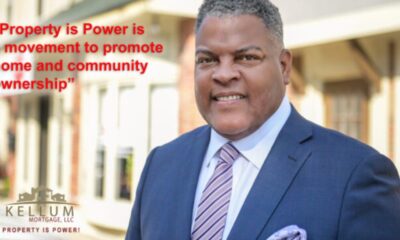
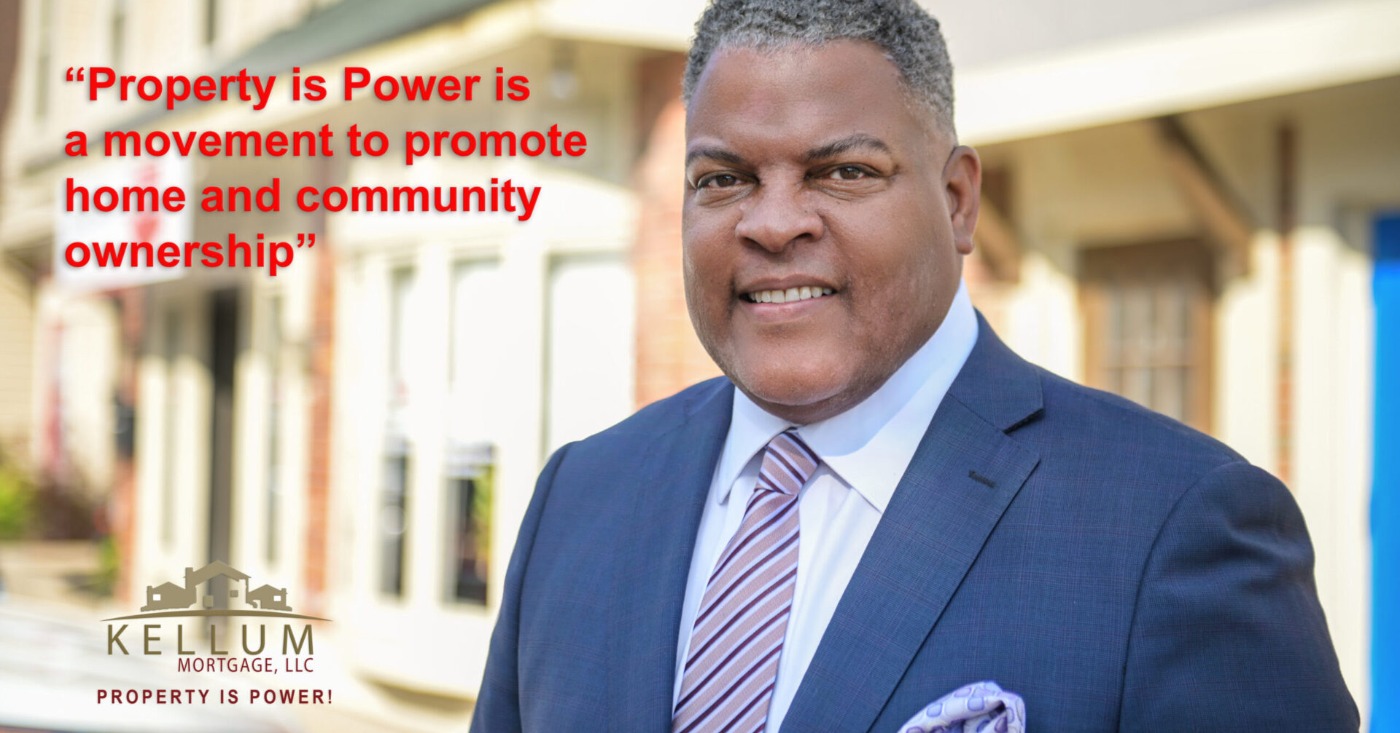
Property is Power! Dr. Anthony O. Kellum is CEO of Kellum Mortgage, LLC, a homeownership advocate, speaker, and author. NMLS #1267030 / #1567030. www.KellumMortgage.com
Property is Power! is a movement to promote home and community ownership. Studies indicate homeownership leads to higher graduation rates, family wealth, and community involvement.
The post Property is Power! The Black Family Meeting appeared first in the Chicago Defender.
Based on reporting by Chicago Defender.



OP-ED: America’s Healthcare System Isn’t Sustainable. What Would a Better Alternative Look Like?

PRESS ROOM: Delaware State University Certifies Record Fall 2026 Enrollment of 7,407 Students

Hoodoo Heritage Month Celebrates Origins of African American Folk Medicine

OP-ED: If Food Is Medicine, Teach Doctors How to Prescribe It

NFL: Carolina now has 2-game lead in NFC South after win against Ravens

San Diego Black Judges: A Historic Shift on the Bench

She’s Turning Her Ovarian Cancer Story Into a Lifesaving Mission #shorts

Tahoe 15-Inch Head-Up Display: Can You Read It in Sunlight? #shorts

MC Scat Cat: The Story Behind Paula Abdul’s No. 1 Hit #shorts

Before You Quit Your Job, Make This Exit Plan #shorts

HISTORY MADE: Keisha Lance Bottoms Becomes First Black Woman Elected Governor in American History

Secretary of State Shirley Weber Pushes Back Against DOJ Demands Over California Voter Rolls

Retirement Triggers Doctor to Pen Book for Young Audience

Capturing Black Life’s Beauty

Multi-Faith Leaders Representing 10 Million People Launch National Anti-Authoritarian Initiative

Christianity’s Racial History

Hundreds of Black Christian Leaders Arriving in Israel for Martin Luther King-Inspired Mission

Oakland Honors 60 Years of the Black Panther Party at the All Power to the People Gala

Message from the Associate Editor: Blindness, Hurts, Cops

Michael Shiner: The Enslaved Man Who Wrote His Way into American History
San Diego Black Judges: A Historic Shift on the Bench
She’s Turning Her Ovarian Cancer Story Into a Lifesaving Mission #shorts
Tahoe 15-Inch Head-Up Display: Can You Read It in Sunlight? #shorts
MC Scat Cat: The Story Behind Paula Abdul’s No. 1 Hit #shorts
Before You Quit Your Job, Make This Exit Plan #shorts

Black History and Freedom: A Powerful Spoken-Word Poem #shorts

Before You Quit Your Job, Build a Business That Can Support You #shorts

The Current Radio: Finding My Voice After B96 #shorts

“Gloomy Days”: A Powerful Song on Hope and Community #shorts

She Quit Her Job to Build a Smarter Business #shorts
-
 Black Press1 week ago
OP-ED: Closing the Next Digital Divide — Communities of Color Must Have a Voice in the AI Future
-

 Black History1 week ago
New NAACP Report Warns AI Could Deepen Health Disparities in Black Communities
-

 Black Press7 days ago
COMMENTARY: Thank You, Trump, for Making America Great Again!
-
 Black History1 week ago
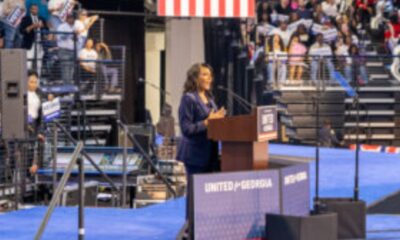
“Blue Tsunami” Sweeps Georgia, Bottoms Makes History
-

 Black Press6 days ago
Black Men Encouraged to Start Prostate Cancer Screening at 45
-

 Black Press1 week ago
OP-ED: And Then What?
