
Lifestyle
Had Me At Hello: ‘The night before the wedding he called . . . said he loved me’
THE BIRMINGHAM TIMES — “You Had Me at Hello’’ highlights married couples and the love that binds them.

By Je’Don Holloway-Talley, Special to The Times
“You Had Me at Hello’’ highlights married couples and the love that binds them. If you would like to be considered for a future “Hello’’ column, or know someone, please send nominations to Erica Wright at [email protected] Include the couple’s name, contact number(s) and what makes their love story unique.

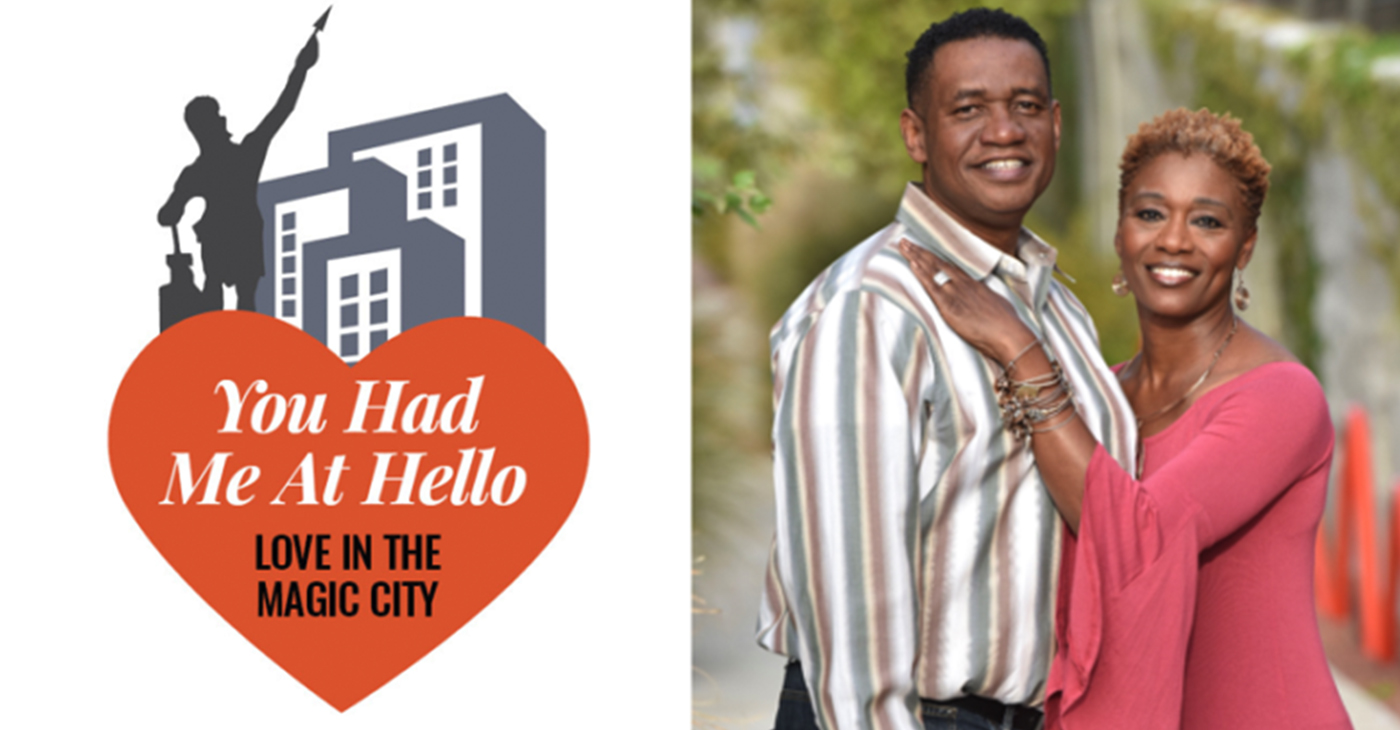
[/media-credit] Alvin and Cynthia Frazier for You Had Me at Hello for The Birmingham Times.
CYNTHIA AND ALVIN FRAZIER
Live: Hoover
Married: June 8, 1996
Met: The Frazier’s remember the exact date: May 5, 1994. They were introduced at a local Hardee’s in their hometown [Mobile], by a mutual friend. Alvin can still remember what Cynthia was wearing, “she had on an orange sleeveless top, and a skirt… I thought she was very pretty and looked real nice,” he said.
“I thought he was skinny,” Cynthia said. She may have noticed his physique, but she noticed something else as well, “he was a real gentleman,” she said. “When we sat down and started talking, I realized that I would want a second [meeting] with him. I was attracted to his intellect.”
First date: The following Saturday at a seafood restaurant called ‘Cock of the Walk’ they had “the catfish, and the pot of greens.” There was no pressure because “neither of us were looking for a companion,” Alvin said. “At that time we were building a friendship, nothing was expected. That’s what made the conversations so meaningful because neither of us looked at each other in that way. We found out we had a lot of stuff in common family wise. . . there was definitely an attraction, but not the base of it,” he said.
“Alvin is a very good listener and it’s very interesting talking to him. I call him Google, because he knows a little bit about everything,” Cynthia said.
The proposal: New Year’s Eve, 1995, at Houston’s Restaurant in Atlanta. Alvin and Cynthia went out of town to bring in the New Year with good friends. Although a romantic, Alvin admits to not being a “down on one knee type of guy . . . We were in the restaurant early evening, and our friends kind of helped me set everything up . . . I already had the ring in my pocket, so I slid it out under the table, told her I loved her and asked her to marry me.”
What Cynthia didn’t know was that everyone, even her mother, was in on her New Year’s Eve surprise. “Prior to that [their engagement], I’d always had a good relationship with her mother, and I actually talked to her mother before I proposed to Cynthia,” Alvin said. “I would go by there and have lunch with her, and, so, I got her blessing . . . she wished us well,” he said.
Cynthia says she was enjoying her food so much, she didn’t suspect anything.
“I was very surprised. I was too busy thinking about how good those ribs were, I didn’t see it coming,” she said. “I was happy, I was in awe…of course I said ‘yes’, immediately. It was really a magical weekend, being there in Atlanta with friends and getting proposed to on New Year’s Eve, starting the new year off with a confession of our love for one another and moving forward with becoming husband and wife,” Cynthia said.
The wedding: The couple had a poolside wedding at Alvin’s brother’s house in Mobile. The colors were lavender and white.
“It was quaint and very small, we sent out 75 invitations. We purposely wanted a small wedding, not a big shindig. It was simple and elegant,” Cynthia said. “We were just hoping none of the kids dove into the pool during the ceremony . . . they got in there after the fact,” she laughed.
Most memorable for Cynthia was the night before the wedding.
“The night before the wedding, Alvin called me and said that he loved me, and that divorce was not an option,” Cynthia said. “It meant we weren’t getting married with one foot in and one foot out, and we’ve been sticking to that.”
Alvin said, “I didn’t see her before the wedding, and I was amazed at how she looked coming down the aisle. I didn’t know that she was going to look that radiant,” he said.
“Also, her mother had been real sick, and we didn’t know if she was going to be able to attend . . . we didn’t think she was going to, but she pushed it on out and made it,” Alvin said, “my family came from out of town [Niagra Falls, NY; Alpharetta, GA; VIginia Beach, Viginia and Pensacola, FL.] Everybody was genuinely happy for us.”
The couple flew to Ocho Rios, Jamaica and honeymooned for seven days.
“Hanging out with the locals, and getting to walk down to the waterfall and hang out all day was a blast,” Cynthia said. “I gained six pounds,” Alvin said.
Words of wisdom: Conflict resolution skills are a must in a marriage, Alvin said.
“When we were younger, we were kind of feeling our way through conflict resolution,” he said. “But as you get older, you learn a person, their habits, and their ways. The key is communication,” Alvin said. “Being able to listen to the other person’s point of view and not try to force your own on them . . . The bottom line is, you have to be on the same page when you’re married. Especially with children,” he said.
Friendship before building a romance is key, Cynthia said.
“I would tell any couple to develop a friendship first,” she said. “I think that the reason we have a great marriage is because of our friendship. If you ask me who my best friend is, I’m not going to name a female, I would say Alvin. And sometimes when we are in a disagreement, I can say, ‘Can I get my friend, can I have Alvin, not my husband?’ and that helps get us through.”
“Also, don’t try to control your spouse,” Cynthia said. “Allow your spouse to be who he or she is. That’s another thing that allows us to have such a great relationship, because Alvin doesn’t try to
control me. He just accepts me for who I am, and I’m grateful for that.”
Happily ever after: The Frazier’s live in Hoover, and have three children, Alvin Jr., 19; Caitlin, 17; and Cameron, 15. Cynthia, 50, is an executive Cadillac Senior Sales Director with Mary Kay cosmetics, and Alvin, 52, is a former Marketing Analyst for State Farm Insurance. “I support her [Cynthia] when needed, her business is huge, she leads over 200 women in building and developing successful Mary Kay business. And, now, I have more time for my family,” Alvin said. “I have taken over the house I get to spend more time with my kids, and am enjoying life and travel more.”
The best part of being married is “never having to look for a date,” Cynthia said. “It is such a joy to always have someone to talk to, travel with and sleep next to at night,” she said.
This article originally appeared in The Birmingham Times.







Black History
Listening as a Lifeline: A Doula’s Witness to Black Maternal Health
OAKLAND POST — Maternal mortality and pregnancy-related mortality use different time frames and methods and are not interchangeable. Finalized 2024 CDC data recorded 649 maternal deaths nationally. The overall rate was 17.9 deaths per 100,000 live births, but for non-Hispanic Black women it was 44.8, compared with 14.2 for White women and 12.1 for Hispanic women.
Word Count: 1058
Note: Client A, B & C, names are withheld for privacy; these accounts reflect my recollections as theirDoula.
Client A rocked her hips on a birthing ball, surrounded by pale wood and warm textiles in a softly lit Scandinavian-style office. I was her doula through a Southern California maternal health company combining nurse-led care, technology, and wraparound support.
She was a healthy Black woman in her thirties. Her baby girl was doing well; her partner took notes as we discussed labor and advocacy.
Then we turned to their chosen hospital. I knew it well—and remembered a phrase from another client’s experience: “Policy of Sovereignty.”
Client B had been told she needed a repeat cesarean as a precaution, though the reasoning was unclear. Her obstetrician, who performed her first cesarean two years earlier, had assured her throughout pregnancy that she was healthy, healed, and ready for a vaginal birth. We asked staff to review her chart, consult her obstetrician, and reconsider immediate surgery. Instead, they invoked the “Policy of Sovereignty.”
The physician on duty, we were told, had final authority, regardless of her established care plan. I asked whether an ultrasound or reassessing the baby’s position could offer clarity. Cesareans can be lifesaving. But were Client B’s history, informed consent, and circumstances guiding this decision—or was routine overriding individualized care? We kept asking for her obstetrician. Beneath every request was a deeper question: Was she being heard?
The Numbers Behind the Stories
Statistics arrive in clean columns. The experiences behind them do not.
Maternal mortality and pregnancy-related mortality use different time frames and methods and are not interchangeable. Finalized 2024 CDC data recorded 649 maternal deaths nationally. The overall rate was 17.9 deaths per 100,000 live births, but for non-Hispanic Black women it was 44.8, compared with 14.2 for White women and 12.1 for Hispanic women.
In California, Black birthing people experienced 56.5 pregnancy-related deaths per 100,000 live births during 2020–2022—3.8 times the White rate and four times the Asian rate.
As a doula serving Los Angeles and San Bernardino Counties, I see faces behind those numbers. I remember concerns raised softly, then firmly, then desperately. I am tired of watching Black families enter spaces meant to protect them, only to discover they must defend themselves while laboring, bleeding, trembling, or recovering.
Returning to Client A
Client A’s labor stretched nearly 48 hours. As her condition worsened, she, her partner, and I asked whether a cesarean should happen sooner. A provider questioned my place as a doula, then said she was next.
Six more hours passed.
She entered surgery visibly ill with a serious uterine infection, her baby malpositioned and stuck. Her partner later recalled the provider saying, “This baby would never have made it through the birth canal.”
Those words landed like a blow. Our urgency had been treated as ignorance. With Client B, we questioned why surgery was inevitable. With Client A, why it was delayed. Doula advocacy is not about one kind of birth. It is about informed consent, individualized care, and timely action. Hospital routine should never outweigh the person carrying the risk.
Survival Cannot Be the Standard
The Black maternal health crisis includes unequal care, untreated conditions, racial bias, delayed referrals, poor communication, and inadequate postpartum support. It is about birth plans respected only until a hospital becomes less busy and postpartum care that asks whether a mother survived, not whether she has what she needs to recover.
Survival cannot be the standard. Technology can support care, but it cannot replace human connection. An algorithm cannot detect fear in a patient’s eyes, and a mission statement alone cannot ensure adequate staffing or culturally responsive care.
The Story of Client C
Before I arrived, I heard the chaos through Client C’s phone. Staff struggled to locate her baby’s heartbeat on an external monitor as her fear and blood pressure rose. I pleaded for an internal electrode before surgery.
“There’s not enough time,” a nurse said.
“I would like to wait for my doula,” Client C called out.
But she was medicated, hurried through consent, and wheeled away while I listened.
In the operating room, after a shift change, another nurse placed an internal electrode and said, “The previous monitor wasn’t working.”
No one responded.
According to her father, the obstetrician avoided eye contact: “We need to move forward.”
Surgery may still have been necessary; that was not mine to determine. But if faulty equipment helped create the emergency, the family deserved acknowledgment and explanation—not silence. No family should have to wonder whether major surgery followed an unavoidable crisis or a machine failure no one recognized in time.
From Prevention to Accountability
After supporting nearly 100 families, I have learned that danger often begins before admission. I have urged clients to seek care—and heard why they feared returning: dismissed pain, harsh words, shame for asking questions.
Care cannot be holistic where Black families do not feel safe enough to speak or return. Representation matters, but providers of color cannot repair inequity alone. They need adequate staffing, mentorship, culturally responsive training, reliable equipment, and colleagues that are reflective of all the aforementioned. It’s not the Black providers job to care for just the Black patients, everyone should have the same goal.
The Momnibus Act, California’s Medi-Cal doula benefit, the Transforming Maternal Health Model and the Perinatal Equity Initiative require more than promises; they need sustained funding, reliable reimbursement and accountable implementation.
Birth should be sacred. Yet too many Black birthing people arrive carrying the burden of proving their pain is real. A doula can listen, educate, comfort, and advocate—but cannot repair a system that refuses to listen. The true measure of progress is what happens when a Black birthing person says, “Something is wrong.”
Are they believed? When equipment fails, is that failure acknowledged? Do families leave not merely alive, but safe, respected, supported, and whole?
Until those answers are consistently yes, California’s maternal health success story remains unfinished.
About the Author
Antoinette Stewart-Eneh is a mother of two, holistic maternal wellness advocate, and birth and postpartum doula who has supported families since 2019. She serves as program operations coordinator for Frontline Doulas, a volunteer client coordinator with the Joy in Birthing Foundation and a childbirth educator in South Los Angeles. She is studying to become a midwife and lactation educator.
Black Press
‘We Don’t Talk Trash — We Pick Up Trash!’
OAKLAND POST — Following the cleanup, Jones talked with Richard Johnson, CEO of Formerly Incarcerated Giving Back (FIGB). Johnson said he wanted to bring formerly incarcerated nonprofits together not only to help clean up the city, but also to bring youth with them to mentor the next generation.
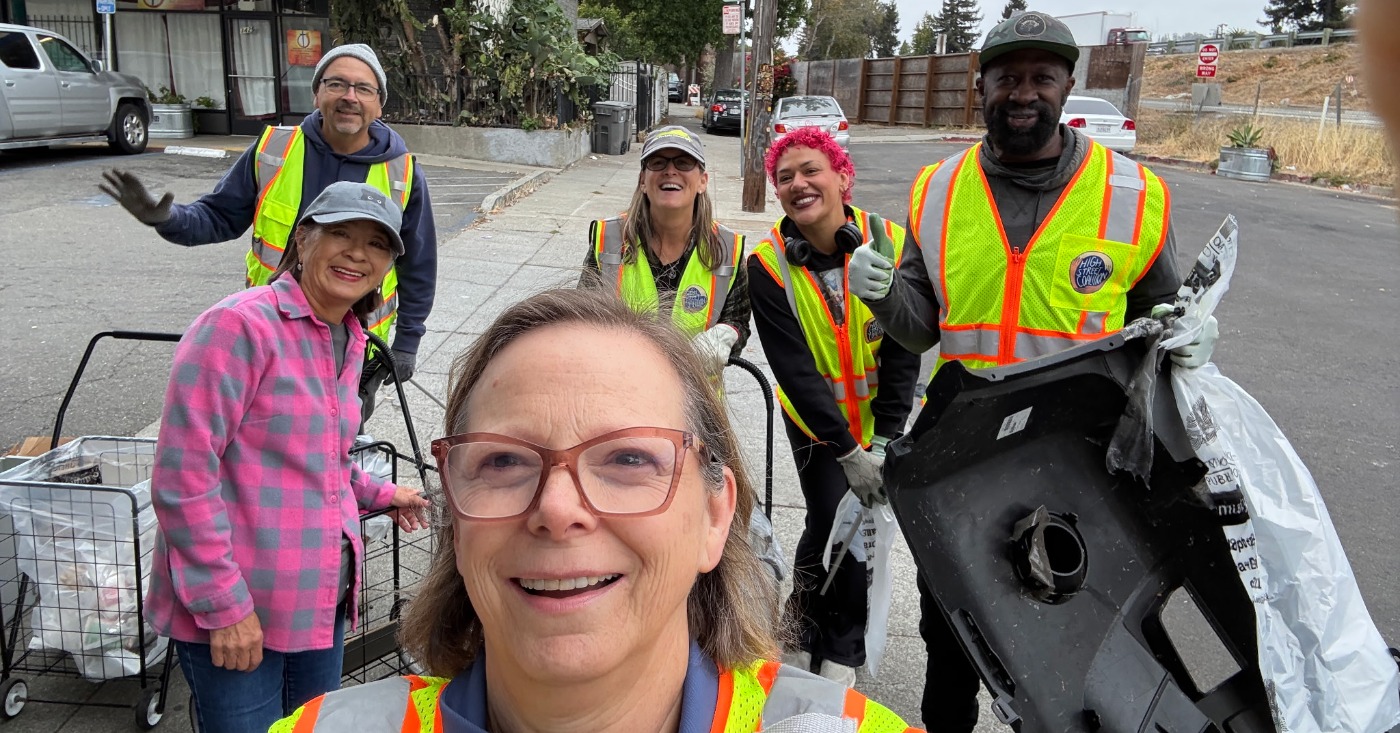
When community activist Jonathan “Fitness” Jones heard concerns from senior residents in East Oakland about illegal dumping, recurring trash issues and the health hazards they created, he decided that watching the problem was not enough.
Jones, a member of the African American Sports and Entertainment Group (AASEG) and an Oakland Private Industry Council board member, learned that seniors were frustrated by the recurrence of illegal dumping even when trash has been cleared. Recurring trash can contribute to unsanitary conditions, attract rodents and leave residents feeling that their neighborhoods are being overlooked.
On Saturday, Sept. 26, Mr. Jones joined High Street Coalition volunteers at Dick’s Donuts near High Street and Quigley Street, spending the morning picking up trash and helping beautify the surrounding neighborhood.
High Street Coalition volunteers organize community cleanups on the second and fourth Saturdays of each month.
Following the cleanup, Jones talked with Richard Johnson, CEO of Formerly Incarcerated Giving Back (FIGB). Johnson said he wanted to bring formerly incarcerated nonprofits together not only to help clean up the city, but also to bring youth with them to mentor the next generation.
Jones and Johnson discussed developing a community model that brings formerly incarcerated individuals, Oakland youth and nonprofit organizations together to clean and beautify the city.
The vision is to create opportunities for formerly incarcerated adults to take leadership roles while mentoring young people through hands-on community service. The program could also provide youth with opportunities to develop leadership skills, learn teamwork and responsibility, and potentially gain employment experience.
The goal is bigger than removing trash from the streets. It is about restoring neighborhoods while building relationships between generations and creating opportunities for people with lived experience to give back to their communities.
Jones believes the message is simple:
“We don’t talk trash, we pick up trash.”
The proposed collaboration seeks to bring Oakland nonprofits, formerly incarcerated leaders, youth, residents, businesses and community organizations together around a shared purpose — cleaning the town, beautifying Oakland and building a stronger community together.
Black Press
TILGHMAN: Why Parents of Children with IEPs Should Know Their School Bus Driver
WASHINGTON INFORMER — Parents of children with Individualized Education Programs (IEPs) often face unique considerations regarding their child’s school transportation. Ensuring consistency and understanding their child’s needs on the bus can be a significant concern.

As the father of a young daughter with autism, I have learned that getting your child to school is not always as simple as putting them on the bus and waiting for them to come home.
When your child has an Individualized Education Program, you pay attention to things other parents may never have to think about.
Who is working with my child today? Does this person understand her needs? What happens if her routine suddenly changes? If something goes wrong and she cannot fully explain it to me, who will be able to tell me what happened?
Those questions do not stop at the schoolhouse door. They follow our children onto the school bus.
That is why one of the simplest pieces of advice I can give another parent of a child with an IEP is this: Get to know your child’s bus driver and attendant.
Learn their names. Introduce yourself. Say good morning. Ask how your child is doing on the ride.
Those few minutes can matter more than we realize.
For some children with disabilities, consistency is incredibly important. The same bus, the same driver, the same seat and the same routine can provide a sense of comfort before the school day even begins.
Then one morning, something changes.
The bus is late. There is a substitute driver. The route changes. The bus does not arrive when expected.
For many families, that is an inconvenience. For some of our children, it can change the entire morning.
As parents, we also know that our children may not always come home and tell us exactly what happened during the ride. That makes the adults who interact with them even more important.
A bus driver may notice that your child suddenly does not want to get on the bus. An attendant may notice that your child seems upset at the same point along the route every day.
They may notice a change in behavior, a problem with another student, or simply that something seems different.
That information can be valuable to a parent.
But relationships work both ways.
Parents can also help transportation staff understand our children. You do not have to share every detail of your child’s disability or educational record. But appropriate information about communication, behavior, safety or transitions can help the adults responsible for transporting your child better understand how to support them.
And when a transportation problem occurs, you are no longer starting the conversation with a complete stranger.
That does not mean parents should be responsible for fixing school transportation. We shouldn’t.
School systems remain responsible for providing required transportation services, including services identified in a student’s IEP. When buses are repeatedly late, accommodations are not being followed or transportation problems interfere with a child’s education, parents should document those concerns and raise them with the appropriate school and transportation officials.
Building a relationship with a driver should complement accountability, not replace it.
That distinction is important.
As a father navigating special education, I have learned that advocacy is not only about what happens during an IEP meeting.
Advocacy happens in the hallway. It happens at pickup. It happens through an email to a teacher. And sometimes it happens at the bus stop at 7 o’clock in the morning.
Our children’s educational experience begins before they enter the classroom and continues after they leave it.
Think about the person behind the wheel.
For some children, their bus driver is the first school employee they see every morning and the last one they see every afternoon.
That person is part of your child’s school experience.
So tomorrow morning, if you haven’t already, introduce yourself.
Learn the driver’s name.
Let them learn your child’s name — and, when appropriate, a little about what helps your child succeed.
It won’t prevent every late bus, substitute driver or transportation problem.
But if there is one thing I continue to learn as both a father and an advocate, it is that relationships matter.
And for children with IEPs, one more adult who knows, understands, and cares about your child can make a difference.
Based on reporting by Washington Informer.
Black Press
New Shoes, Stronger Steps: Milwaukee Initiative Takes Aim at Gun Violence
MILWAUKEE TIMES WEEKLY — The “Stompin’ Out Gun Violence” initiative is using sought-after sneakers to engage young people with a message about preventing gun violence. Led by the Latroy V. Harris Initiative, “I Will Not Die to Gun Violence,” the program provides free shoes in Milwaukee while fostering conversations aimed at a safer future.
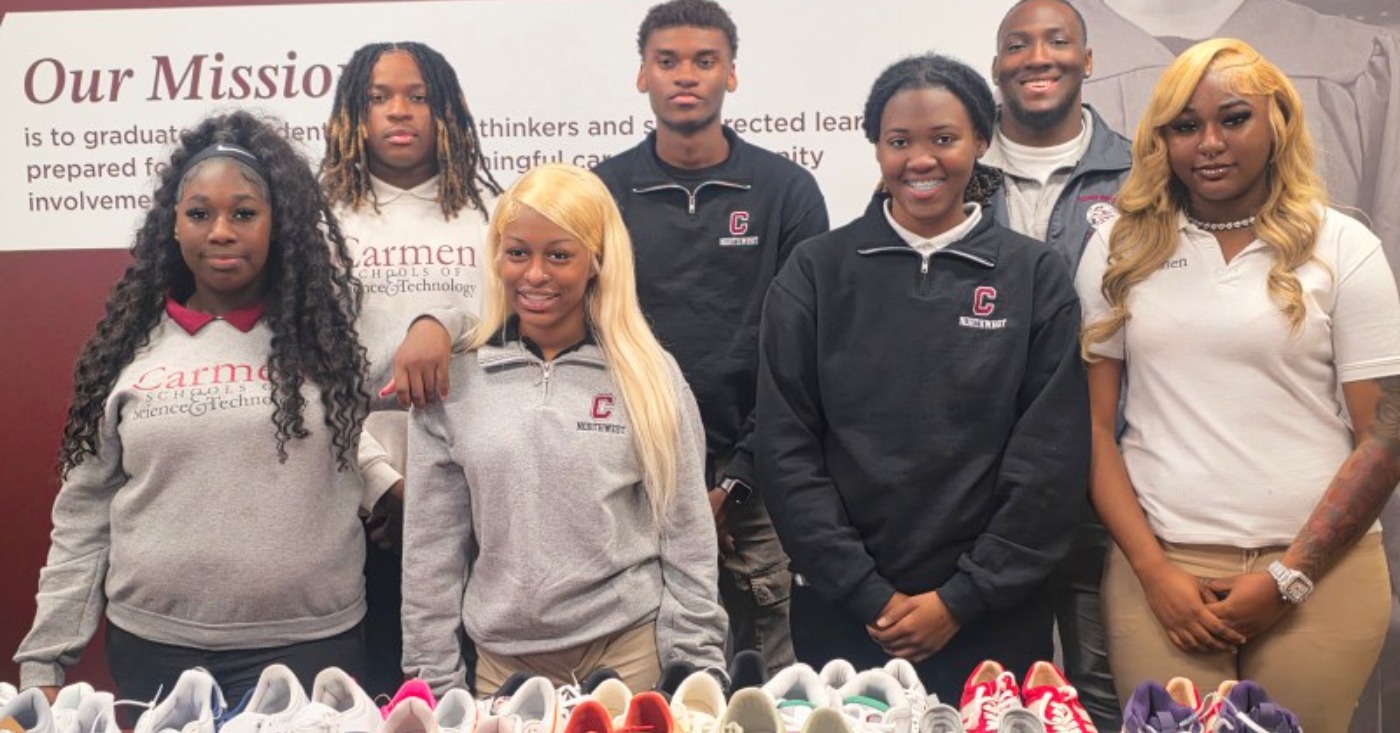
“Stompin’ Out Gun Violence” uses sought-after sneakers to open the door to a life-saving message for young people.
A new pair of shoes can do more than complete an outfit—it can help a young person step toward a safer future. That is the idea behind “Stompin’ Out Gun Violence,” a traveling shoe giveaway led by the Latroy V. Harris Initiative, “I Will Not Die to Gun Violence.”
Founder Monte Mabra says the work comes with no paycheck. Its reward is measured instead in smiles, gratitude, and the chance to turn a potentially negative outcome into a positive one. By pairing free shoes with conversations about gun violence, organizers hope to reach young people with a message that stays with them long after the event ends.
“I like what Monte is doing to change the course of violent crime,” said Michael F. Hupy of personal injury law firm Hupy and Abraham, S.C. and leading sponsor “The shoes carry them in the door, and the message follows them out.”
Students at Carmen School of Science and Technology, 3215 Dr. Martin Luther King Jr. Drive, received Nike, Adidas, and Jordans. Principal Miller said she looks forward to next year and to continuing to build a relationship with the Latroy V. Harris Initiative.
The initiative honors Latroy V. Harris, who was lost to gun violence on Dec. 15, 2025. His family and loved ones are keeping his memory alive by working to prevent other families from experiencing the same loss.
The campaign’s next stop is Bruce Elementary School on Sept. 30. Organizers plan to give away shoes, gun- and domestic-violence awareness and prevention coloring books, and educational books.
For the young people reached by the initiative, each pair of shoes carries more than a brand name. It carries a reminder: their lives matter, their futures are worth protecting, and every step away from violence counts.


Based on reporting by Milwaukee Times Weekly.
Black History
IN MEMORIAM: The Mighty Sparrow, King of Calypso, Dies at Age 91 in New York
NEW YORK CARIB NEWS — Slinger Francisco, widely known as the Mighty Sparrow, died on Sunday, September 27, in New York at the age of 91. The legendary calypso artist passed peacefully after a brief illness, surrounded by loved ones. Born in Grand Roy, Grenada, in 1935, he moved to Trinidad as a child, where he developed his distinctive style.
NEW YORK — For anyone raised in the Caribbean, or in a Brooklyn, Bronx, or Queens household where the radio stayed tuned to home, there was never a time without the Mighty Sparrow. His voice was simply part of the furniture of our lives: at Carnival, at weddings, at Sunday lunch, in the car on the way to JFK. On Sunday, that voice went quiet.
Slinger Francisco, known to the world as the Mighty Sparrow, died Sunday, September 27, in New York. He was 91. His family said he passed peacefully after a brief illness, with loved ones at his bedside.
He was born in Grand Roy, Grenada, in 1935, and was still a small child when his family moved to Trinidad. Port of Spain made him. Its yards, its rum shops and its calypso tents gave him his rhythm and his sharp tongue. He sang in a church choir as a boy, but the city had a louder music, and by his late teens he was performing under the name that would become a title.
The breakthrough came in 1956 with “Jean and Dinah,” his mischievous farewell to the American servicemen leaving Trinidad after the war years. The song swept Carnival, winning him both the Road March and the Calypso King crown. It introduced a young performer who could be funny and fearless at once, who could make an entire nation laugh at itself and then think hard about what it had just laughed at.
He was fearless offstage too. A year after that first crown, he refused to compete over the paltry prize money offered to calypsonians, a stand that helped push the art form toward the respect and the pay its practitioners deserved.
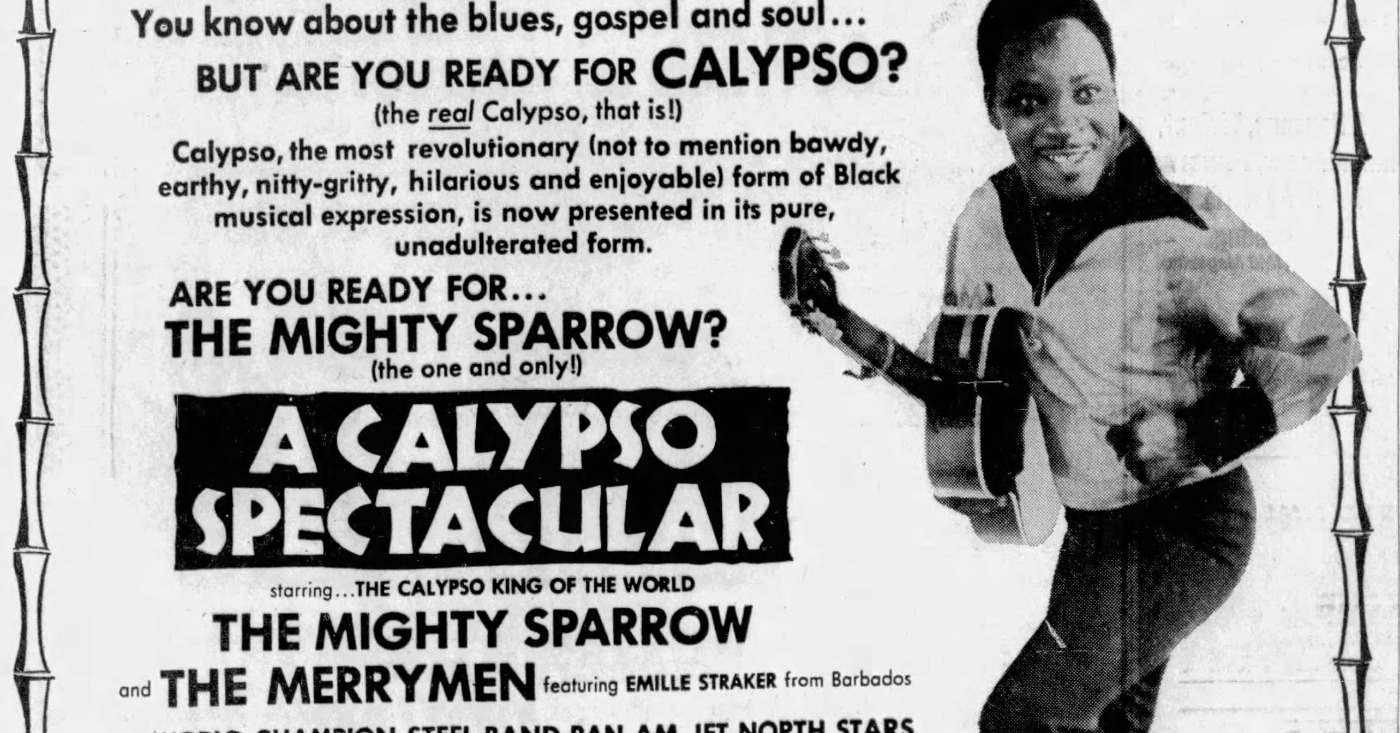
Over six decades, he recorded hundreds of songs. He could turn a love story, a boast or a bit of bedroom comedy into a hit, but he was just as formidable when the subject was power. “Dan Is the Man in the Van” took apart a colonial schooling that taught Caribbean children nonsense about themselves. “Congo Man,” “Mr. Walker,” “The Lizard” and “Both of Them” became standards sung by people who had never set foot in a calypso tent. Long before anyone printed it on a poster, audiences had already crowned him the Calypso King of the World.
For New York’s Caribbean community, Sparrow was never just a visiting star. He made this city his home for many years and played its biggest rooms, including Madison Square Garden, before crowds of immigrants who heard in his voice the islands they had left behind. A Sparrow show here was less a concert than a homecoming.
Trinidad and Tobago honored him with the Trinity Cross, then its highest national award, and generations of calypsonians and soca artists have named him as the standard they measured themselves against. Fans called him “Birdie,” and the affection in that nickname said everything.
Tributes are already pouring in from across the region and the diaspora, and they will keep coming for weeks. But perhaps the truest tribute is the simplest one: somewhere tonight, in Port of Spain, St. George’s, Flatbush and beyond, someone is putting on a Sparrow record, turning it up, and singing along.
Based on reporting by New York Carib News.
Black History
COMMENTARY: Being Frank: a Safe Place
MILWAUKEE TIMES WEEKLY — An African American male’s assertion that he feels safer in all-white environments prompts questions about safety within the African American community in 2026. The author explores whether African Americans seek out predominantly Black communities for safety or due to other factors, and if these communities genuinely offer a sense of security.

Is there a safe place for African Americans in the USA in 2026? What area or city can African Americans go to in order to feel safe and relax? This question came to me as I listened to an African American male talk about where he felt safe in a city. The answer to the previous question should be, “An area where other African Americans reside.” In today’s world, that statement might be a lie.
The African American man was adamant that when he visited another city, or even in his hometown, he felt safer in all-white environments. I listened to him and thought, “Is he right? Do I feel comfortable and safe around white people more so than African Americans?” I ended the conversation with the African American and continued thinking. “Has self-hate corrupted the African American mind to the point where they feel safer around those who have exploited them than themselves?” The question was so simple I had to laugh because the answer went straight to the root of the issues that plague the African American community. Many African Americans feel safer in predominantly white environments.
Many will argue that this is a broad statement and point to the makeup of the majority of cities that have a high number of African Americans. Yes, in a typical US city, it may seem that African Americans seek each other out. This is true, but are they seeking African American communities for safety, or because they cannot afford to live anywhere else? Are African Americans safe in the areas they live in that are majority African American? These are the questions where the answers can get uncomfortable.
There is no need to mention the crime rate in any so-called “African American Ghetto.” We all have heard the numbers and seen the actions that shock the world about African American interactions. The endless violence. The anger and aggression towards each other. The failing schools that are located in many African American communities. Are these factors that lead African Americans to feel safer around the people who created their misery? Is the seeking of safety around whites by African Americans even a sane act? I’ll let you answer these questions yourself.
We all know self-hatred is one of the main ingredients of the misery that shapes many African American communities. Yet, there is another ingredient that is often overlooked that gives the miasma a kick. Ignorance. Ignorance has become a mainstay in the African American community to the point where African Americans see it as the norm. Ignorance of self and lack of common sense have warped the mindset of many African Americans in the USA. Ignorance leads to a mental lack that keeps African Americans from understanding the issues they face. An ignorant person would run to the people who created their misery out of blindness, seeking safety. Doesn’t that sound like many African Americans in 2026?
African Americans should have overcome self-hatred and ignorance, with all the technological advances in modern society. That does not seem to be the case. The African American male mentioned earlier has a degree and uses technology daily for work and pleasure. Is he ignorant, or just being realistic in his assessment of the state of the African American community?
Are African Americans truly safe in all white environments? I won’t answer this because one common factor follows African Americans wherever they go. That common factor is themselves. If an ignorant, self-hating African American moves to White Heaven, they will still be who they are. In such cases, their ignorance and self-hatred may provoke the heavenly whites to attack on various levels. After all, who wants to be around someone who hates their own people, and self?
There will be no safe place for African Americans anywhere on the planet until they feel safe with what is looking back from the mirror. Until that day comes, White Heaven beckons.
Frank James IV © 2026
[email protected]
The opinions expressed in this editorial are those of the writer and not of the Milwaukee Times Weekly Newspaper or HT Group, LLC, its staff or management. “Being Frank” is a bi-weekly column exclusive to the Milwaukee Times Weekly Newspaper.
Based on reporting by Milwaukee Times Weekly.


Introduction, 2027 VW Atlas SEL Premium R Line Worth $58,135?

Welcome, 2027 VW Atlas SEL Premium R Line Worth $58,135?

Smart Car Buying: Ask These Questions Before You Buy! #shorts

2027 VW Atlas SEL Premium R Line Worth $58,135?

A $2.1 Trillion Wellness Industry Never Built a Daily Practice for Black Children. So This Atlanta Family Did.

Unlock Auto Loans: Black-Owned Banks & Credit Unions #shorts

Find Black-Owned Banks & Auto Loan Pre-Approval Easily #shorts

Car Warranty Explained: Powertrain, Basic & Roadside! #shorts

NFN present Tonight: Inaugural Beyond IWDM50 Podcast – Northeast Sectional Focus

Defender Athlete of the Week – Elicia Hunt

Latest Massacre in Haiti Reveals Cruelty U.S. Deportations

Black Americans Have Doubts About the U.S. Food System

When Praises Go Up: SUGC Nominated for Prestigious Stellar Award.

Booked and Unbound: The Legacy of Black Women’s Literary Circles

The Youngest American Killed in the Vietnam War

U.S. Sole Nation to Oppose U.N. Resolution Correcting Africa’s Size on World Maps

COMMENTARY: Big Mama Said ‘Don’t Let Grief Break the Bank’

Outnumbered: Elbert Cox’s Equation for Greatness

U.S. Open Influencers Spark Backlash over Ring Lights, Filming as Gauff and Osaka Speak Out

Prostate Cancer is Twice as Likely to Kill Black Men. Talking to Your Doctor Could Help Save Your Life
Introduction, 2027 VW Atlas SEL Premium R Line Worth $58,135?
Welcome, 2027 VW Atlas SEL Premium R Line Worth $58,135?
Smart Car Buying: Ask These Questions Before You Buy! #shorts
2027 VW Atlas SEL Premium R Line Worth $58,135?
Unlock Auto Loans: Black-Owned Banks & Credit Unions #shorts
Find Black-Owned Banks & Auto Loan Pre-Approval Easily #shorts
Car Warranty Explained: Powertrain, Basic & Roadside! #shorts
NFN present Tonight: Inaugural Beyond IWDM50 Podcast – Northeast Sectional Focus
Defender Athlete of the Week – Elicia Hunt

Houston confronts the toll of gun violence on youth
-
 Black Press5 days ago
OP-ED: Haiti TPS: Have We Lost Sense of Humanity?
-
 Black History1 week ago
Remembering Chauncey Bailey as Student Journalists Face Threats to Truth-Telling
-

 Black Press1 week ago
Poll: Becerra Widens His Lead Over Hilton; Californians Split on Wealth Tax
-
 Black History1 week ago
COMMENTARY: The Audacity of Joyce Beatty
-

 Black History1 week ago
Rulings Leave Questions Lingering in Nolan Wells Case
-
 Black History1 week ago
Baptist Minister Says Black Church Champions for Civil Rights to Reign but Hesitates to Let Black Women Lead
