
In Memoriam
NNPA Official Statement on the Passing of Senator John McCain
“John McCain’s integrity and courage were his greatest virtues. His national leadership example is still needed today not only in the U.S. Senate, but also in every state, city and town across America.”

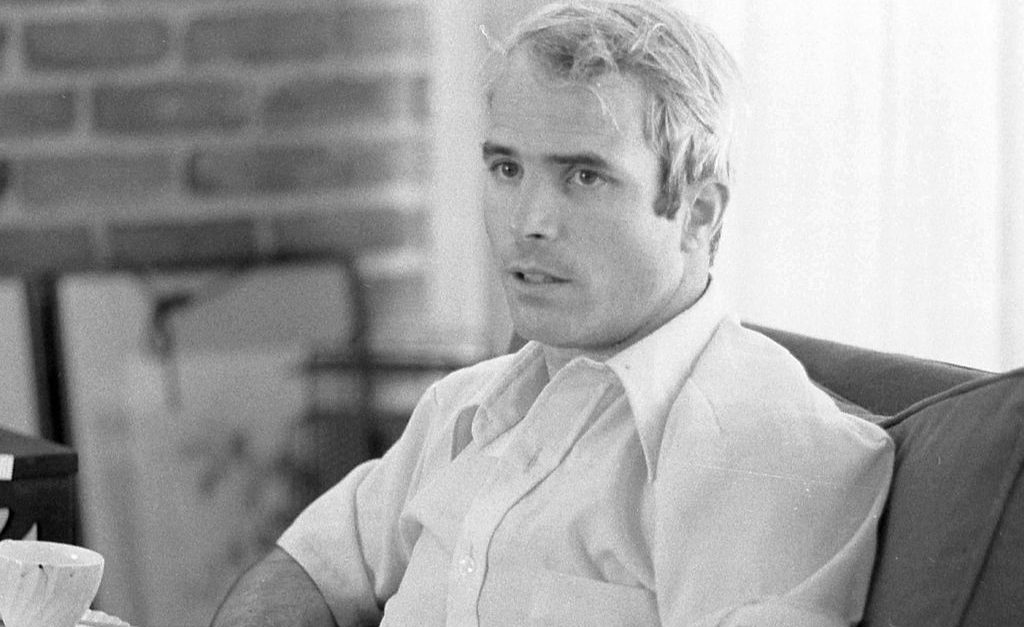
Washington, DC, August 27, 2018 — The National Newspaper Publishers Association (NNPA) extends sincerest condolences to the family of Senator John McCain. Dr. Benjamin F. Chavis Jr, President and CEO of the NNPA emphasized, “John McCain’s integrity and courage were his greatest virtues. His national leadership example is still needed today not only in the U.S. Senate, but also in every state, city and town across America.”
Dorothy Leavell, Chairman of the NNPA and publisher of the Crusader Newspapers, stated, “The death of Senator John McCain reminds us that none of us are immortal, but his life was one of service and love for his country. Giving of one’s service until the end speaks volumes of his integrity and he fulfilled the call from our maker to be of service to others.”
Cloves Campbell III, former Chairman of the NNPA and publisher of the Arizona Informant observed, “Senator John McCain will be remembered in the African American community of Arizona as a national statesman who grew and evolved particularly in his later years as an elected official who transcended partisan politics and who eventually did what he thought was the right thing to do rather than to be confined to political party loyalty. That is why he voted pivotally to save the Affordable Care Act (Obamacare) at a time when most Republicans were voting to end the ACA.”
“His acts of service in war, where he was held captive, and then at home, was one of dignity, respect and care in the United States Senate far surpassing many others in similar circumstances,” concluded Leavell. “Above all, he put partisanship aside to make decisions that were in the best interest of all of the citizens of the United States and usually without much fanfare. We shall remember him and miss his brand of high character in the Senate. We add our condolences to his family and our country as a whole. Rest in peace (RIP) dear Senator.”











Black History
IN MEMORIAM: The Mighty Sparrow, King of Calypso, Dies at Age 91 in New York
NEW YORK CARIB NEWS — Slinger Francisco, widely known as the Mighty Sparrow, died on Sunday, September 27, in New York at the age of 91. The legendary calypso artist passed peacefully after a brief illness, surrounded by loved ones. Born in Grand Roy, Grenada, in 1935, he moved to Trinidad as a child, where he developed his distinctive style.

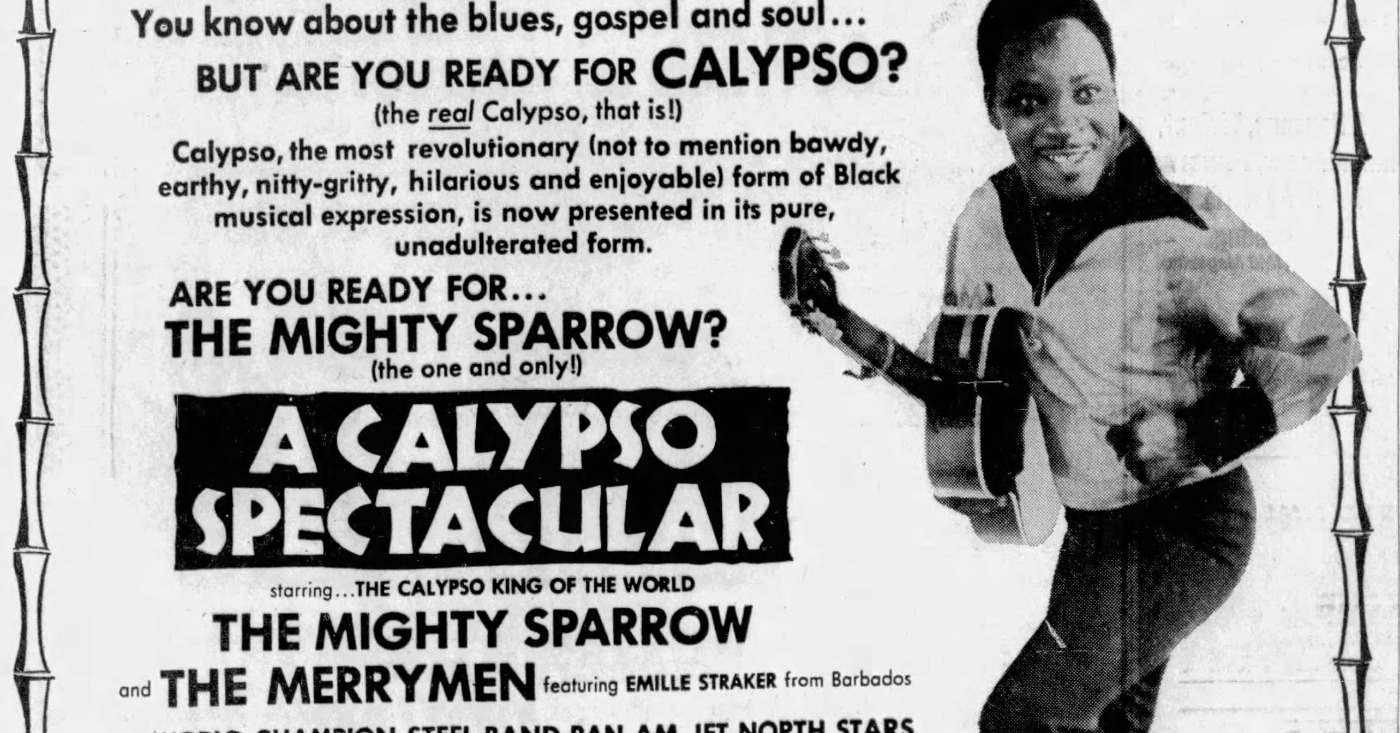
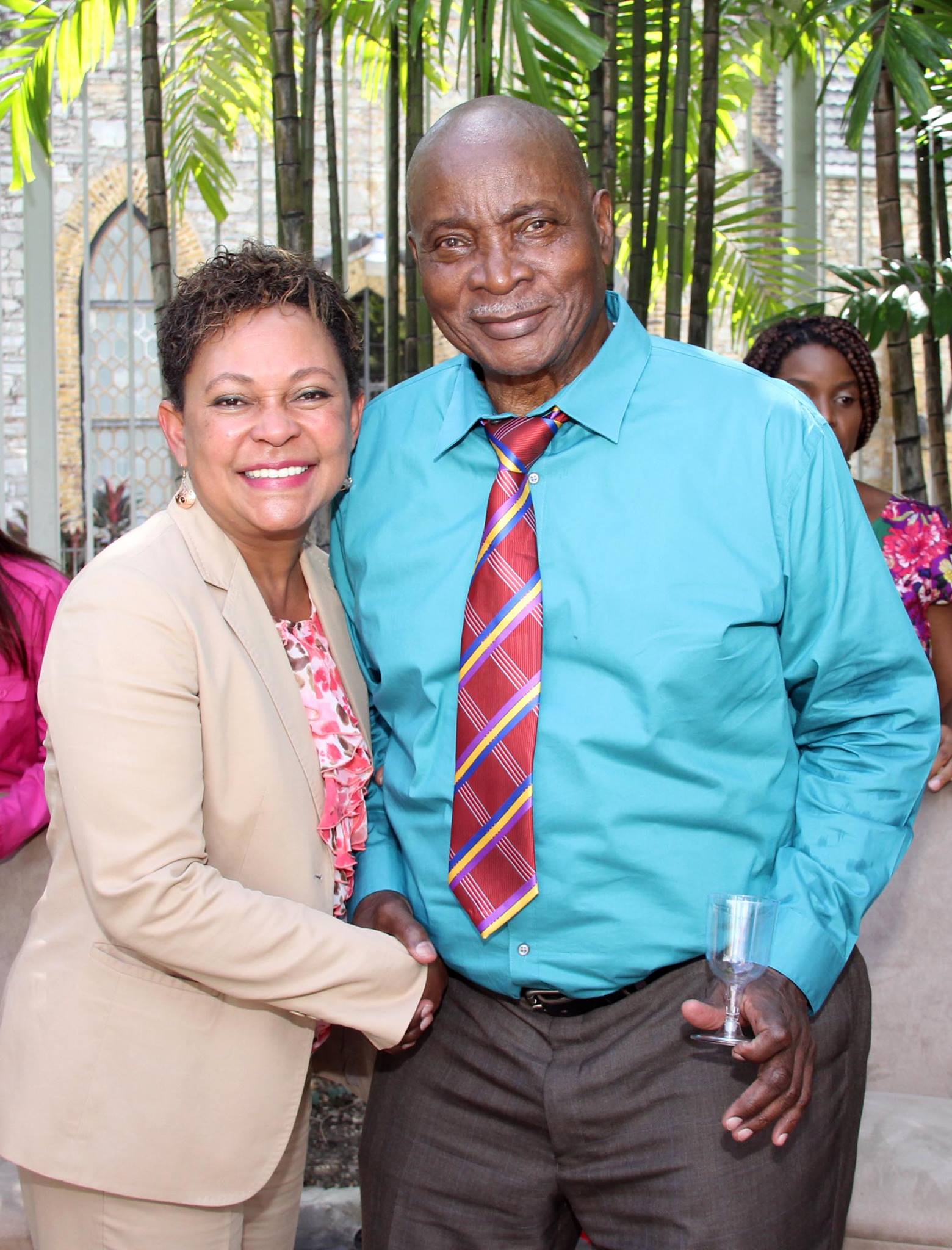
NEW YORK — For anyone raised in the Caribbean, or in a Brooklyn, Bronx, or Queens household where the radio stayed tuned to home, there was never a time without the Mighty Sparrow. His voice was simply part of the furniture of our lives: at Carnival, at weddings, at Sunday lunch, in the car on the way to JFK. On Sunday, that voice went quiet.
Slinger Francisco, known to the world as the Mighty Sparrow, died Sunday, September 27, in New York. He was 91. His family said he passed peacefully after a brief illness, with loved ones at his bedside.
He was born in Grand Roy, Grenada, in 1935, and was still a small child when his family moved to Trinidad. Port of Spain made him. Its yards, its rum shops and its calypso tents gave him his rhythm and his sharp tongue. He sang in a church choir as a boy, but the city had a louder music, and by his late teens he was performing under the name that would become a title.
The breakthrough came in 1956 with “Jean and Dinah,” his mischievous farewell to the American servicemen leaving Trinidad after the war years. The song swept Carnival, winning him both the Road March and the Calypso King crown. It introduced a young performer who could be funny and fearless at once, who could make an entire nation laugh at itself and then think hard about what it had just laughed at.
He was fearless offstage too. A year after that first crown, he refused to compete over the paltry prize money offered to calypsonians, a stand that helped push the art form toward the respect and the pay its practitioners deserved.
Over six decades, he recorded hundreds of songs. He could turn a love story, a boast or a bit of bedroom comedy into a hit, but he was just as formidable when the subject was power. “Dan Is the Man in the Van” took apart a colonial schooling that taught Caribbean children nonsense about themselves. “Congo Man,” “Mr. Walker,” “The Lizard” and “Both of Them” became standards sung by people who had never set foot in a calypso tent. Long before anyone printed it on a poster, audiences had already crowned him the Calypso King of the World.
For New York’s Caribbean community, Sparrow was never just a visiting star. He made this city his home for many years and played its biggest rooms, including Madison Square Garden, before crowds of immigrants who heard in his voice the islands they had left behind. A Sparrow show here was less a concert than a homecoming.
Trinidad and Tobago honored him with the Trinity Cross, then its highest national award, and generations of calypsonians and soca artists have named him as the standard they measured themselves against. Fans called him “Birdie,” and the affection in that nickname said everything.
Tributes are already pouring in from across the region and the diaspora, and they will keep coming for weeks. But perhaps the truest tribute is the simplest one: somewhere tonight, in Port of Spain, St. George’s, Flatbush and beyond, someone is putting on a Sparrow record, turning it up, and singing along.
Based on reporting by New York Carib News.
Black History
Rulings Leave Questions Lingering in Nolan Wells Case
CHICAGO CRUSADER — The Crusader’s ongoing “Lynchings By Suicide” investigation began after Demartravion “Trey” Reed, a 21-year-old Delta State University student, was found hanging from a tree on the Cleveland, Miss., campus on Sept. 15, 2025. The state medical examiner ruled Reed’s death a suicide within days, a finding his family continues to dispute.
A grand jury declines charges in the Nolan Wells case, a Jackson man pleads not guilty in Tasia Fortune’s hanging death, and a Maryland suicide ruling lands on raw nerves.
A Mississippi grand jury has declined to charge anyone in the death of Nolan Xavier Wells, the 18-year-old Black college football player who disappeared during a July Fourth boat trip with a group of white friends and was found dead two days later off Horn Island. His parents rejected the decision on Sept. 22, telling reporters they do not believe their son simply drowned and vowing to keep fighting for answers.
The grand jury’s report was made public late on Sept. 21, the same week a Jackson man pleaded not guilty to murder in the hanging death of Tasia Fortune and Maryland officials ruled that a Black man found hanging from a tree in Prince George’s County died by suicide.
All three cases now join the Crusader’s ongoing “Lynchings By Suicide” investigation, which began after Demartravion “Trey” Reed, a 21-year-old Delta State University student, was found hanging from a tree on the Cleveland, Miss., campus on Sept. 15, 2025. The state medical examiner ruled Reed’s death a suicide within days, a finding his family continues to dispute.
Nolan Wells: ‘We’ll Never Stop’
Wells, a wide receiver at Southwest Mississippi Community College, went to Horn Island, a barrier island reachable only by boat, with high school friends on July 4. When the group returned to the mainland that afternoon, Wells was not with them. A park ranger found his body in the water off the island on July 6.
Investigators have long said Wells chose to stay behind. His family never believed it, and an independent autopsy that attorney Ben Crump released in July at the NAACP National Convention in Chicago found an unexplained area of discoloration at the back of Wells’ head and ruled the cause of death undetermined.
The grand jury, which heard from 43 witnesses, found Wells’ death “consistent with drowning.” Jackson County District Attorney Angel Myers McIlrath said there is “absolutely no evidence” that race played a role, according to NBC News. The state medical examiner, however, also ruled the cause and manner of death undetermined.
“Elmore and I do not believe that Nolan simply and accidentally drowned,” Christine Wonsley, Wells’ mother, said, according to CNN. His father, Elmore Wonsley, reminded supporters that his son is “not a hashtag, he’s our son.”
Crump said the district attorney wants the public to accept “We’ll never know,” while the family answers, “We’ll never stop.” The family is asking the U.S. Department of Justice to investigate and demanding release of the full case file and the state’s autopsy report. Mississippi has no statute of limitations on homicide.
Tasia Fortune: An Arrest, Not an Ending
Fortune, a 29-year-old mother of four, was found Aug. 3 hanging from a tree behind a vacant house on Road of Remembrance in west Jackson. From the start, her family insisted she did not take her own life.
After the state medical examiner ruled her death a homicide on Sept.10, Jackson police arrested Jarques “Jock” Ratliff, 51, the next day as he walked along Capitol Street and charged him with murder. Ratliff is African American, as was Fortune, according to Mississippi Today. Police said the two knew each other but have not said how.
Ratliff pleaded not guilty on Sept. 14 and was denied bond as a flight risk. His attorney, Toney Baldwin, called him “a pillar of the community” and said his client made no confession.
Jackson Police Chief RaShall Brackney called the arrest “not the conclusion” and said more arrests are expected. “We understand this case is being viewed through a broader lens, a global lens,” Brackney said, according to ABC News.
Christy Spivey, Fortune’s mother, said that when police told her about the arrest, “I just started crying and told them ‘thank you, thank you, thank you.’”
Activists want more. Byron Brumfield of Medgar Evers Reloaded: A Mission and a Movement said Ratliff “should be charged with a hate crime also, just like anybody else,” according to WLOX. Ward 3 Jackson City Councilman Kenneth Stokes has asked U.S. Attorney Baxter Kruger’s office for federal assistance.
Prince George’s County: A Ruling in Hours
In Upper Marlboro, Md., a Black man was found hanging from a tree outside a business on D’Arcy Road on the morning of Sept. 20. Within hours, the state medical examiner ruled his death a suicide with no other signs of trauma. He has not been publicly identified.
Police Chief George Nader said the man’s family agrees with the ruling. Relatives asked that his name be withheld and said the public attention had made his death “more unbearable,” according to the Maryland Daily Record.
County Executive Aisha Braveboy urged residents not to share images or spread speculation online. “This is a tragedy. A person is dead,” Braveboy said, according to WUSA9.
A Pattern the Crusader HasTracked
Mississippi is where Emmett Till, a 14-year-old Chicago boy, was abducted and murdered in 1955, and where Mack Charles Parker was dragged from a Poplarville jail and lynched in 1959.
In February, JULIAN, the civil rights organization founded by attorney Jill Collen Jefferson, released “A Crimson Record,” a report documenting more than 70 suspected modern-day lynchings across seven Southern states since 2000. The report calls the federal Emmett Till Anti-Lynching Act, signed in 2022, “toothless.”
The Wells family is pressing for a federal investigation. Jackson police have promised more arrests in Fortune’s killing, and activists are calling for hate crime charges. More than a year after Trey Reed was found on the Delta State campus, his family is still waiting on answers of its own.
Across these cases, families and advocates have made the same demand: release the grand jury findings, the autopsy reports and the evidence behind every ruling.
Based on reporting by Chicago Crusader.
Black History
IN MEMORIAM: The Rev. Leon “Sonny” Clark, Longtime Orange County Pastor and Community Leader, Dies at 72
Rev. Leon William “Sonny” Clark, the longtime pastor of New Spirit Baptist Church in Santa Ana and a prominent faith and community leader in Orange County, passed away on September 9 at the age of 72. Born in Bennettsville, South Carolina, Clark was a U.S. Navy veteran who dedicated his life to service. He served various Southern California churches before leading New Spirit Baptist Church for over 22 years, extending his work into counseling, mentoring, and civic engagement, and supporting the African American community. To learn more about his life and contributions, read more.
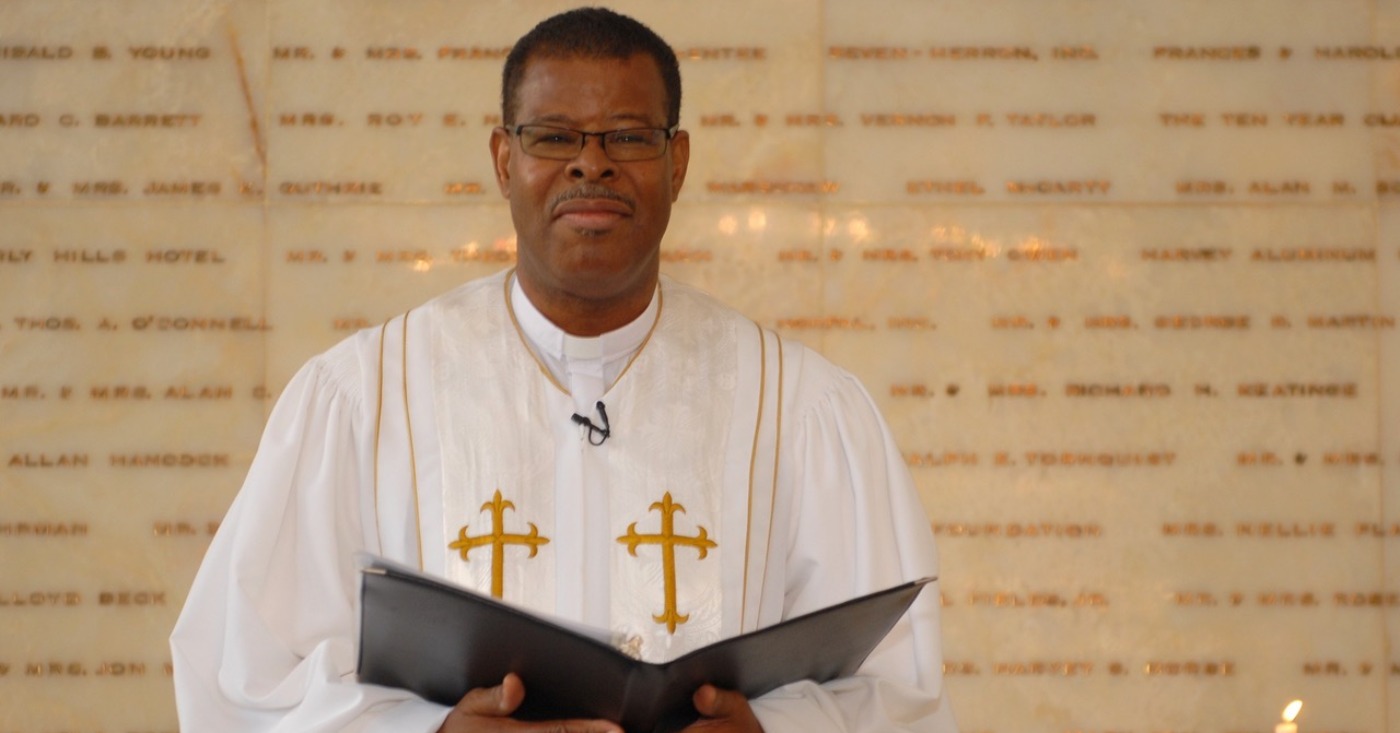
Rev. Leon William “Sonny” Clark, longtime pastor of New Spirit Baptist Church in Santa Ana and a respected faith and community leader in Orange County, died Sept. 9. He was 72.
Born Oct. 2, 1953, in Bennettsville, South Carolina, Clark was a U.S. Navy veteran who later built a life of service centered on family, faith, ministry, and community.
Clark began his formal ministry at Metropolitan Baptist Church in Altadena in 1978. After acknowledging his call to ministry in 1980, he preached his first sermon and went on to serve churches throughout Southern California, including Second Baptist Church in Riverside, Mount Vernon Baptist Church in Rubidoux, Antioch Missionary Baptist Church in Pomona, and Friendship Baptist Church in Yorba Linda.
In November 2003, Clark was called to lead New Spirit Baptist Church in Santa Ana, where he served as pastor for more than 22 years. His work extended beyond the pulpit through counseling, mentoring, civic engagement, and efforts to strengthen Orange County’s African American community.
Clark served on the Orange County Heritage Council and supported efforts to preserve and celebrate African American history and culture. He helped organize the Orange County Black History Parade and Unity Festival, served on the Interfaith Committee and the Orange County Transit Authority, and served as president of the Orange County Ministers Conference.
In 2024, the City of Santa Ana recognized Clark for his contributions to the community. He also received the Orange County Southern Baptist Association Hall of Faith Award and was previously honored as Pastor of the Year by the Orange County Heritage Council.
Clark is survived by his wife, Andrea Joyles Clark; six children, Shawn Williams, Le Ondra Clark Harvey, Kyla Coward, Joshua Clark, Marissa Clark and Ashley Clark; grandchildren and great-grandchildren; siblings; extended family; and the New Spirit Baptist Church congregation.
A wake will be held Thursday, Oct. 1, from 4 to 8 p.m. at New Spirit Baptist Church, 701 S. Sullivan St. in Santa Ana, with a remembrance service from 5 to 6:30 p.m.
A Celebration of Life will be held Friday, Oct. 2, at Friendship Baptist Church, 17145 Bastanchury Road in Yorba Linda. Viewing begins at noon, followed by the service at 1 p.m.
Burial will take place Monday, Oct. 5, at 10:15 a.m. at Riverside National Cemetery.
Clark often shared a guiding principle that shaped his ministry: “Start where you are. Use what you have. Do what you can.”
Black History
Remembering Chauncey Bailey as Student Journalists Face Threats to Truth-Telling
Nearly two decades ago, Oakland Post reporter and editor-in-chief Chauncey Bailey was tragically murdered for investigating a crooked business. His assassination shocked the journalism world and is remembered as student journalists today face increasing threats and censorship. A former classmate of Bailey and chair of the Student Press Law Center notes a significant rise in calls from students seeking legal advice amid a hostile environment. This situation highlights the importance of protecting young journalists and their pursuit of truth. Read more to learn about Bailey’s legacy and current challenges facing student press.
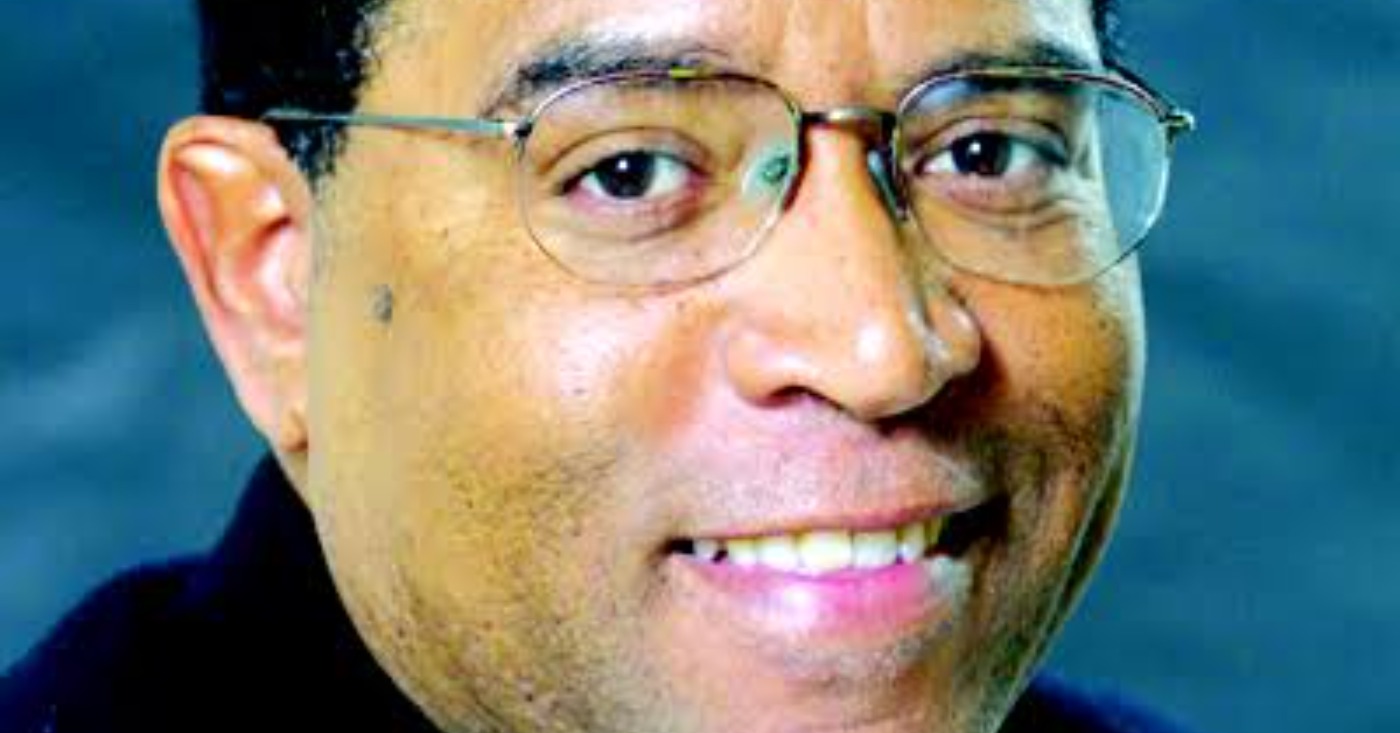
It is nearly 20 years since Chauncey Bailey, a crusading journalist, was murdered
on an Oakland street corner, gunned down to prevent him from writing stories about a
crooked business.
I hope people remember Bailey, a reporter and editor-in-chief for the
Oakland Post, the city’s Black newspaper. He had already written several articles about
the problems of a business called Your Muslim Bakery and was working on another
when the bakery’s owner ordered an employee to kill Bailey.
His murder shocked the journalism world that found the idea of an American
reporter killed for doing his job unfathomable. For me, the shock and sadness were also
personal.
I knew Bailey. In the mid-1970s we were classmates in the Michelle Clark Memorial
Foundation program, the precursor to the Institute for Journalism Education Summer
Program. A program, backed by the Ford Foundation, that provided intensive training
for fledgling minority journalism students and then placed them in jobs at newspapers
and television stations.
I’m reminded of Bailey and that program when I visit the East Bay at the end of
September to discuss the future of student journalism. To me, the visit will not only
evoke memories of Bailey. It will also be an opportunity to hone strategies to protect and
support student journalists who are under attack today, maybe not in the way that took away Chauncey Bailey, but an attack, nonetheless.
Spurred by the hostility toward the free press emanating out of Washington, high
school and college journalists are facing a barrage of censorship and harassment from
school administrators and local officials.
The 24-hour hotline staffed by the Student Press Law Center (SPLC), the non-profit I chair, has seen a 35% increase in calls from student journalists seeking legal advice on censorship, libel and copyright issues during the past two years, as well as a tripling in the number of complaints of harassment, including threats of firing, of faculty advisors.
I am not suggesting today’s national climate is as dangerous as the murderous
intentions of Yusef Bey IV, the man who ordered Bailey’s assassination. But the
harassment of student journalists does kill something else. It can destroy the desire of
student journalists to continue their growth to become professional news gatherers and
producers – something the country will always need.
It is that professional maturation that I’m reminded of when I think back on Chauncey
Bailey.
Truth be told, when we were classmates back in 1974 Bailey was the class clown,
known more for his sardonic wit than his writing or reporting talent. I have vivid
memories of Bailey sitting at his desk in the back of the room regaling us with sarcastic
comments. Sure, he was funny.
And he didn’t exhibit the level of reporting skills of our other classmates such as Milton Coleman who went on to be the Deputy Managing Editor of the Washington Post or Alexis Scott who for years has run the Atlanta Daily World.
After a series of reporting jobs in Hartford, Connecticut, Detroit, Michigan, and Oakland, Bailey had risen in talent and skill to helm this very newspaper. A tip from a source led Bailey to look into the possibility that Bey was running Your Muslim Bakery into bankruptcy. Word that Bailey was working on that story filtered back to Bey who ordered the journalist killed.
On August 2, 2007, Bailey was shot three times at point-blank range as he walked to work.
So, when I think of my trip to the East Bay my thoughts go to journalism’s past
represented by Chauncey Bailey’s sacrifice and what the staff and the board of SPLC
can do to secure the current and future work of student journalists.
Steven A. Holmes is a former Pulitzer Prize-winning journalist. His novel “Black Messiahs” was published in May this year.
Black History
The Youngest American Killed in the Vietnam War
THE CAROLINIAN — Dan Bullock, a Goldsboro native, was 15 years old when he was killed in Vietnam on June 7, 1969, making him the youngest American service member to die in the conflict. Born in 1953, Bullock moved to Brooklyn after his mother’s death and sought a path forward, considering careers such as a pilot, police officer, firefighter, or Marine.
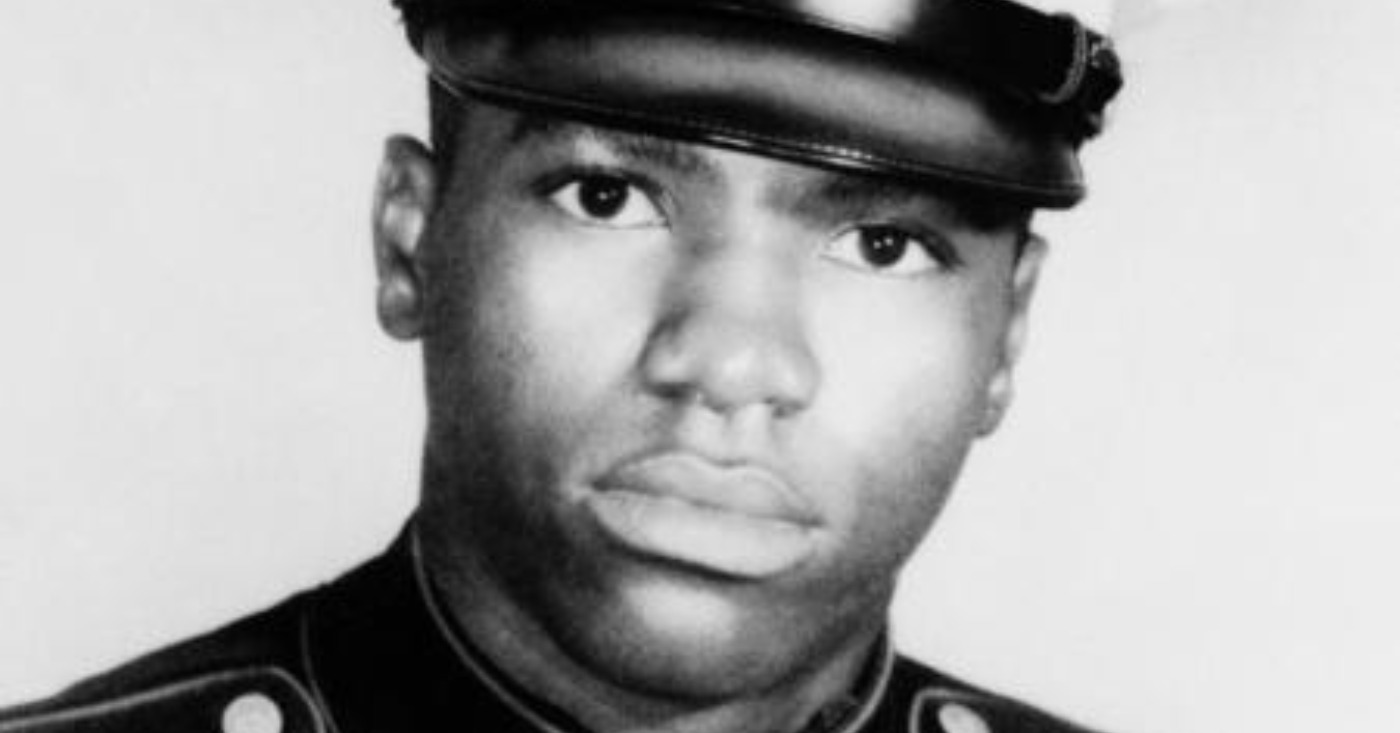
By Jordan Meadows, Staff Writer
Dan Bullock was 15 years old when he was killed in Vietnam on June 7, 1969, making the Goldsboro native the youngest American service member to die in the war.
Bullock was born Dec. 21, 1953, in Goldsboro and lived in North Carolina until he was about 12, when his mother died, and he moved to Brooklyn to live with his father.
Family members later said he’d talked about wanting to become a pilot, a police officer, a firefighter or a Marine. Unsatisfied with his living situation in New York and discouraged by the lack of opportunity he saw around him, Bullock went looking for a faster path forward—and told his father that enlisting seemed like the quickest way to get an education.
In September 1968, at 14 years old, Bullock walked into the Marine Corps recruiting station at Albee Square in downtown Brooklyn. At 5-foot-9 and roughly 160 pounds, he was big enough to pass for 18, and he had altered the year on his birth certificate from 1953 to 1949.
Recruiters never questioned it. He enlisted on Sept. 18, 1968, and his family found out only when he came home with the signed paperwork in his hand.
Bullock reported to Parris Island, South Carolina, assigned to Platoon 3039, and struggled through parts of the 13-week training regimen before fellow recruits helped pull him through. He graduated from boot camp on Dec. 10, 1968, eleven days before his 15th birthday.
Private First Class Bullock arrived in South Vietnam on May 18, 1969, assigned as a rifleman in 2nd Squad, 2nd Platoon, Fox Company, 2nd Battalion, 5th Marines, 1st Marine Division. His posting was An Hoa Combat Base in Quang Nam Province, a forward hub surrounded by some of the most contested terrain in the country. Bullock kept largely to himself, and while his fellow Marines didn’t know his real age, several sensed something was different about him.
On the evening of June 6, Bullock had been assigned cleaning duty, but took another Marine’s place on the night watch near the airstrip after that Marine was wounded. Shortly after midnight, North Vietnamese Army sappers breached the perimeter wire and launched a coordinated assault with rockets, mortars, and small arms. Accounts of exactly what happened next differ.
Fox Company accounts hold that sappers crawled beneath the wire and hurled a satchel charge through the firing slot of Bullock’s bunker, an explosion that killed Bullock; other accounts describe Bullock being killed by small arms fire on the perimeter.
Bullock’s company commander, Capt. Robert Kingrey, described the young Marine’s actions during the attack in a letter home.
“Dan immediately realized that the attack was stronger than usual and that the ammunition supply was becoming depleted,” Kingrey wrote. “He rushed to get more ammunition for his unit. He constantly exposed himself to enemy fire in order to keep the company supplied with the ammunition needed to hold off the attack.”
Bullock had been in Vietnam for 21 days.
A week after his death, the New York Times broke the story of his real age, and the Defense Department subsequently confirmed Bullock was the youngest of the roughly 58,000 Americans killed during the war.
His remains were returned to Goldsboro and buried at Elmwood Cemetery with full military honors, but no headstone marked the grave. It stayed that way for 31 years, until television talk show host Sally Jessy Raphael learned of the unmarked plot in 2000 and purchased a headstone. NYPD officers, state troopers from four states, and two veteran motorcycle groups escorted a 600-mile caravan from Brooklyn to Goldsboro for the dedication ceremony.
In 2003, the New York City Council renamed a stretch of Lee Avenue in Brooklyn—the street where Bullock had lived—as PFC Dan Bullock Way.
North Carolina dedicated a state highway historical marker near his childhood home on West Ash Street in Goldsboro, and the entrance to Elmwood Cemetery in southwest Goldsboro was also named PFC Dan Bullock Way.
His name is inscribed on Panel 23W, Line 96 of the Vietnam Veterans Memorial Wall in Washington.
Based on reporting by The Carolinian.
Black Press
Barbara Lee Mourns Gloria Steinem, Remembers a Friendship Rooted in Equality
Steinem became one of the country’s most recognizable advocates for women’s rights, reproductive alternatives and political representation. Lee said one of the most persistent inequities confronting Black women was inadequate access to reproductive healthcare, an issue Lee addressed throughout her years in the California Legislature and Congress.

Oakland Mayor Barbara Lee is mourning the death of her longtime friend Gloria Steinem, remembering the feminist icon as a devoted ally who understood that the struggles for racial justice and gender equality were inseparable.
Steinem died Sept. 2 in New York City at the age of 92. A pioneering journalist, author and political activist, she spent more than six decades advocating for women’s equality and reproductive choices. She also co-founded Ms. magazine and the National Women’s Political Caucus.
“I called her recently and could hear the weakness in her voice,” Lee said. “She was also very fragile at my New York event, but she remained supportive.”
The friendship between Lee and Steinem grew from their connections to the late U.S. Rep. Shirley Chisholm, the first Black woman elected to Congress and the first Black candidate to seek a major political party’s presidential nomination.
Chisholm was Lee’s mentor and inspired her to enter politics. Lee worked on Chisholm’s historic 1972 presidential campaign and served as one of her delegates at the Democratic National Convention.
According to Lee, Chisholm helped Steinem deepen her understanding of racial inclusion and recognize that the women’s movement could not succeed without addressing the experiences of Black women and other women of color.
“Gloria really understood what racial equity was about as a white woman and knew the value of building coalitions,” Lee said.
Steinem became one of the country’s most recognizable advocates for women’s rights, reproductive alternatives and political representation. Lee said one of the most persistent inequities confronting Black women was inadequate access to reproductive healthcare, an issue Lee addressed throughout her years in the California Legislature and Congress.
Lee considered Steinem a genuine ally who recognized the intersections of race, gender, healthcare and economic opportunity. Steinem also understood the importance of elevating women into leadership positions and encouraging them to claim their rightful places at decision-making tables.
Their relationship extended beyond politics and public advocacy. Lee recalled joining Steinem and her husband for dinner in Manhattan Beach with Lee’s son, Tony.
“It was beautiful to see how she could be a wonderful wife, feminine and be a strong woman,” Lee said.
Tony Lee also had a professional connection to Steinem through the rerelease of “The Road to Galveston,” the 1996 television film he wrote about the life of his grandmother, Mildred Parish Massey. The film starred Cicely Tyson.
“My son’s tribute to Gloria on Facebook is very touching,” Lee said.
Lee expressed profound heartbreak over losing her friend and gratitude for Steinem’s support throughout her political career, including during reelection campaigns.
As Lee continues carrying forward the lessons of Chisholm and Steinem, she has also helped encourage a new generation of women leaders, including U.S. Reps. Lateefah Simon and Jasmine Crockett.


Angel Reese Wins 2026 WNBA Defensive Player of the Year

What happens when purpose, leadership and resilience come together?

Car Dealer Add-Ons: What Protections Still STAND? #shorts

Defender Athlete Interview – John Rangel

Defender Athlete Interview – Elijah Eche

Inside a Century of Black Press Archives

The Defender Goes One on One with Congressman Christian Menefee

Demystifying the Retail Installment Sale Contract: Your Guide #shorts

CalAIM Helped Alfred Flores Rebuild His Life. Why Can’t More Californians Access Its Benefits?

Kia Seltos: Advanced Safety & Tech Features Explained #shorts

Latest Massacre in Haiti Reveals Cruelty U.S. Deportations

Black Americans Have Doubts About the U.S. Food System

When Praises Go Up: SUGC Nominated for Prestigious Stellar Award.

Booked and Unbound: The Legacy of Black Women’s Literary Circles

U.S. Sole Nation to Oppose U.N. Resolution Correcting Africa’s Size on World Maps

Prostate Cancer is Twice as Likely to Kill Black Men. Talking to Your Doctor Could Help Save Your Life

Outnumbered: Elbert Cox’s Equation for Greatness

COMMENTARY: Big Mama Said ‘Don’t Let Grief Break the Bank’

U.S. Open Influencers Spark Backlash over Ring Lights, Filming as Gauff and Osaka Speak Out

Passing for White, Fighting for Black America: The Courage of Walter White
What happens when purpose, leadership and resilience come together?
Car Dealer Add-Ons: What Protections Still STAND? #shorts
Defender Athlete Interview – John Rangel
Defender Athlete Interview – Elijah Eche
Inside a Century of Black Press Archives
The Defender Goes One on One with Congressman Christian Menefee
Demystifying the Retail Installment Sale Contract: Your Guide #shorts
Kia Seltos: Advanced Safety & Tech Features Explained #shorts

Carmen Meeks Turns Teachers’ Lessons Into a Legacy | 2026 Education Salute

2 Crucial Bolt EV Interior Details You MUST Inspect! #shorts
-
 Black History5 days ago
Remembering Chauncey Bailey as Student Journalists Face Threats to Truth-Telling
-

 Black Press2 days ago
OP-ED: Haiti TPS: Have We Lost Sense of Humanity?
-

 Black Press5 days ago
Poll: Becerra Widens His Lead Over Hilton; Californians Split on Wealth Tax
-
 Black History5 days ago
COMMENTARY: The Audacity of Joyce Beatty
-

 Featured1 week ago
Headlines and Hotlines 📱
-

 Black History4 days ago
Rulings Leave Questions Lingering in Nolan Wells Case