
Featured
Black Girl Walk with Damenica Ellis and Tracey Williams-Dillard: The Center for Performing Arts.
Join Damenica Ellis and Tracey Williams-Dillard for a Black Girl Walk to the Best of Black Business Awards, where community and excellence unite on November 7.

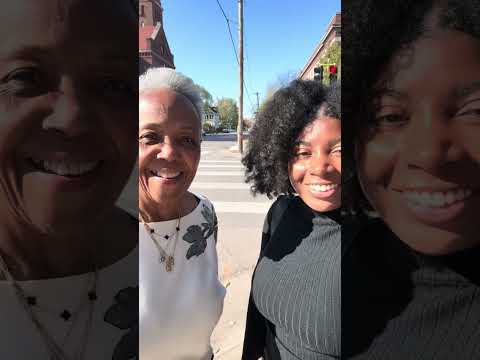
Join Damenica Ellis and Tracey Williams-Dillard on a Black Girl Walk to the Center for Performing Arts, the home of the 2nd Annual Best of Black Business Awards Ceremony. See the building from the outside and learn where to park. Five Black businesses will receive awards on Saturday, November 7, from noon to 3 PM, with the community that voted for them in the audience.
Tickets are $25: https://spokesman-recorder.com/sister-spokesman/
Center for Performing Arts, 3754 Pleasant Ave, Minneapolis, MN
#BlackGirlWalk #BestOfBlackBusiness #SisterSpokesman #Shorts



Featured
Master Your State: 5 Keys to Well-being #shorts
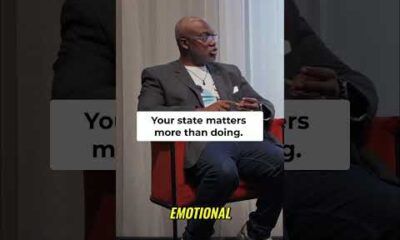
Stop grinding without purpose. Master your mental and physical state first to transform your productivity and well-being.
Stop grinding without purpose. Your state—mental, emotional, physical, and spiritual—must come before your output. Remember, you are a human being, not a human doing. #PersonalDevelopment #Mindfulness #SelfCare #ProductivityTips
Featured
Vince Wright on Sports Done Wright | Blacklight on Sports
From basement podcasting to becoming the voice of Minnesota sports, Vince Wright shares his journey and vision for a more inclusive fan experience.
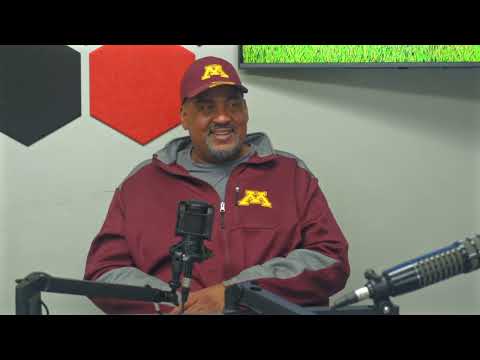
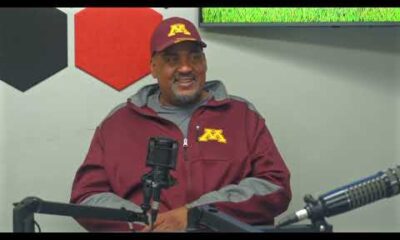
Vince Wright started his podcast with an iPad in his basement and no real plan. Fifteen years after friends in an online chat room nicknamed him “the sports governor of Minnesota,” he is interviewing the voice of the Vikings and getting recognized by strangers at golf tournaments.
Wright joins hosts Charles Hallman and Dr. Mitchell Palmer McDonald on Blacklight on Sports to talk about Sports Done Wright, his conversational approach to covering Minnesota sports, and the missed opportunities around engaging minority fans at Gophers football games and tailgates. They discuss ticket prices, seat licenses and outreach to north side youth.
The conversation also revisits Clem Haskins and the 1997 Final Four team, why Wright hopes the University of Minnesota finds a way to honor them, and how St. Thomas’s move to Division I could change the Twin Cities. Wright closes with three messages: support minority media, go to games in person including at smaller schools, and keep putting effort into your podcast.
Watch the full conversation.
Black Press
OP-ED: For Us It’s Feel-a-Nomics
BLACKPRESSUSA NEWSWIRE — Consumer confidence is at its lowest level since 2014. The median household income in America is $87,460 but it takes a median income of $150,000 to buy a home. Affordable housing is sitting vacant because folks still can’t afford it particularly with the dramatic cuts to SNAP and Medicaid we saw in Trump’s “Big Ugly Bill.”


I often refer to the economic conditions we see in our Black community is Black-a-nomics. But that description is truly rooted in Feel-a-nomics: the economy that you can feel.
Feel-a-Nomics gets past the philosophical abstractions you hear about so much on the news that politicians use to paint a rosier picture than the reality you’re facing. Feel-a-Nomics doesn’t care about corporate profits or dividend projections because those earnings don’t trickle down to your wallet. It doesn’t pay any attention to inflated job numbers when we know that it takes at least two of those jobs to earn a living wage.
Feel-a-Nomics is the economy that affects every day of your life.
Foreclosure rates are skyrocketing up 21% for the first half of 2026 and car repossessions were up 43% as of January. That’s Feel-a-Nomics because it’s your home on the chopping block and that’s the car you need to get to and from your job.
Credit card debt is surging as more than half of Americans are forced to rely on credit cards to pay for basic needs like groceries, rent and utilities. Student debt has jumped since the Trump administration reversed course on Biden repayment and forgiveness plans. This unconstitutional war has brought us record high diesel prices and fertilizer costs along with 16 unnecessary American deaths with a Feel-a-Nomics impact of higher prices at the pump and the grocery store as it costs our farmers more not just to grow our food, but to send it to us too.
Consumer confidence is at its lowest level since 2014. The median household income in America is $87,460 but it takes a median income of $150,000 to buy a home. Affordable housing is sitting vacant because folks still can’t afford it particularly with the dramatic cuts to SNAP and Medicaid we saw in Trump’s “Big Ugly Bill.”
The MAGA healthcare cuts are piling on new premiums and high deductibles. High inflation, particularly at the gas pump and the grocery store, is cutting our legs from under us. The value of our dollar is shrinking at every turn and it doesn’t matter anymore if you want to get a second or third job because, according to another piss poor jobs report, the work just isn’t out there.
According to the Federal Reserve, the net worth of Black households is down 25%. That’s our home. That’s our community. Those are our families! That’s Feel-a-Nomics and, here in the Black community, it hurts. So let’s turn that pain into progress.
After gutting the Voting Rights Act and more, President Trump and the MAGA Congress has done everything they can to cripple Black progress and Black communities. They’ve picked our pockets and our bodies to the bone. But there’s something we can do about it.
The economics of voting are undeniable and, try as they might, they can’t keep us out of the voting booth. That’s why we have groups like State Voices, Repairers of the Breach, Common Cause, No Kings and more coming together to drive voter mobilization and participation. That’s why Repairers of the Breach is organizing 1,000 marches to the polls across the South and battleground states like North Carolina where 201,609 voters cast their ballots on Thursday’s first of early voting.
That’s a 46.7% increase in early voting from 2022. That’s huge! But it’s just the start.
We need a generational, Presidential year-type turnout if we’re going to turn this ship around and find the Feel-a-Nomics relief we need in our communities. That means we all have to do our part from the streets to the suites.
We need everyone from the PhDs to folks who don’t have a GED. We need the farmers and forklift drivers, college students to life students, front line workers for everyone who works on the line.
We need everyone.
We’ve all felt the impact of MAGAnomics and Trumpism. We’ve all felt the pain whether it’s that empty feeling looking at bills you just can’t pay no matter what you cut or the cramp in your stomach because you’re skipping meals trying to keep the lights on.
We’ve all felt the pain of these Feel-a-Nomics. But the good news is that we have an opportunity right now to do something about it. We have the opportunity to make a change at the ballot box.
But it’s going to take all of us to make it happen. It’s going to take every shoulder against the wheel to push back on the big money holding us down. It’s going to take all of us but we’ve done it before.
Are you ready to do it again?
Art
OP-ED: Is Creativity a Superpower in Early Education?
BLACKPRESSUSA NEWSWIRE — “This is not anything new, knowing that play is so critical to children, whether it’s dramatic play, building play, creative arts play or physical play,” said Hoisington, a STEM expert who taught preschool for decades. “But as soon as they hit kindergarten and first grade, there’s this dichotomy that sets in. Play is something you get to do after you do the learning when, in fact, we know that play is an incredible vehicle for learning.”
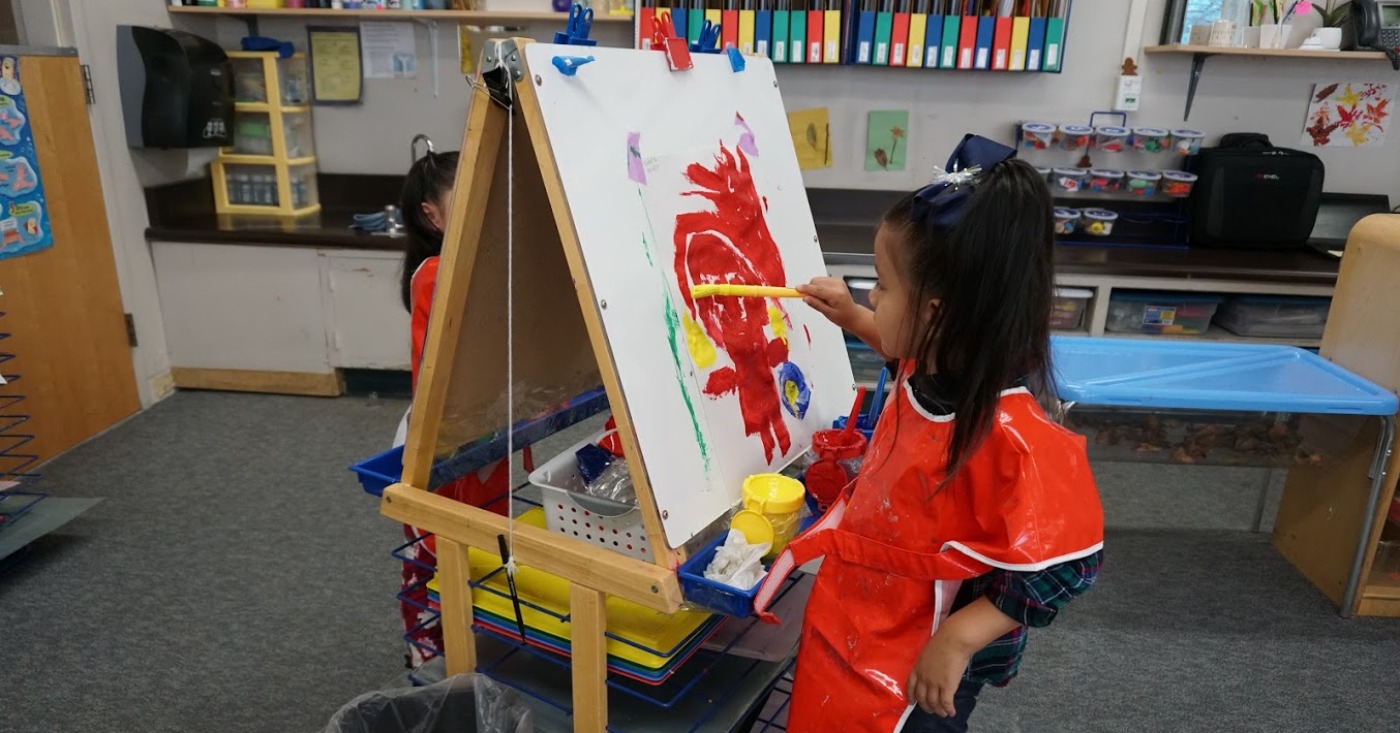
Singing the ABC song. Learning the days of the week from a nursery rhyme. Making a finger-painted collage of little handprints.
Arts education has always been center stage in early education because little children are naturally creative, filled with wonder and the burning desire to express themselves. Arts and crafts not only help nurture a child’s natural imagination, they also boost small motor skills, sharpen hand-eye coordination and feed the insatiable need to play.
“Children don’t just play, they learn fundamental skills through play,” said Daniel Mendoza, a California visual artist and specialist in early childhood education art practices. “Children are in a creative mindset all the time.”
While this may well be as true for teenagers as it is for toddlers, there is far more time and space allotted for playfulness in the early grades, when the crucial role of play in particular and creativity in general has long been a matter of common sense.
“Really, I’m just a common-sense professor, and somehow it became rogue,” said Kathryn Hirsh-Pasek, a professor of psychology at Temple University and an expert in the key role of play in learning. “What if we taught children the way we know the brain learns?”
Bringing joy back into the classroom is also what motivates Cindy Hoisington, an early childhood expert who specializes in reaching out to children from historically marginalized communities at the Education Development Center (EDC), a national education nonprofit.
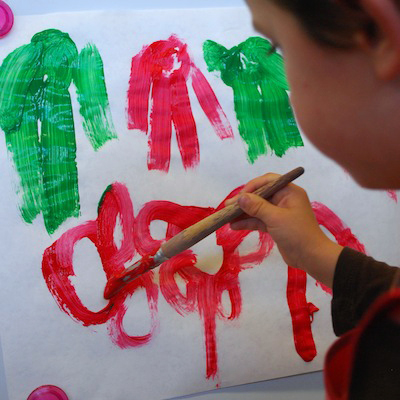
“This is not anything new, knowing that play is so critical to children, whether it’s dramatic play, building play, creative arts play or physical play,” said Hoisington, a STEM expert who taught preschool for decades. “But as soon as they hit kindergarten and first grade, there’s this dichotomy that sets in. Play is something you get to do after you do the learning when, in fact, we know that play is an incredible vehicle for learning.”
Play, some experts suggest, may be the superpower of the young. A growing body of research suggests that play may even be a way to help close achievement gaps. One report, analyzing 26 studies from 18 countries, found that in communities from Rwanda to Ethiopia, children got higher learning boosts in literacy, motor skills and social-emotional development when attending child care centers that use a mix of instruction and free play as opposed to those focused solely on academics.
“Children are so naturally, intuitively ready with their curiosity, their motivation to explore the world and everything in it, to the point where that’s why the twos are so terrible, because you’re constantly chasing after them,” said Hoisington, who helps evaluate digital media for PBS. “Science, for instance, tends to have a bad rap as this dry body of knowledge that we have to learn, but really it’s a process of exploration that is very much integral with play.”
Tapping into that spirit of discovery with hands-on experiences is often best, experts say. Curiosity burns brightest in the early years, so letting kids loose to investigate the world is part of building a rich, play-based learning environment.
“Where young children are free to investigate by observing, touching and acting on the objects in their world,” said Deborah Stipek, an expert in early childhood at Stanford University. “This is how they learn about the world — for example, that some objects float and some sink. Through their own experimentation and observation, they may even arrive at hypotheses about the qualities that differentiate the two.”
From “The Wheels on the Bus” to “Baby Shark,” kiddos love to sing and love to learn, so why not teach through music? Singing the “Old MacDonald had a Farm” song can be educational, experts say, as well as a ritual for community building. Children can take turns deciding on which animal to pick, which builds vocabulary as well as sharing skills.
“Young children learn best by doing,” said Stipek. “Counting objects is better than counting dots on a worksheet because they can move the objects to help them keep track of how many they have counted. Worksheets are not all bad. They can provide opportunities to practice and consolidate skills. But children don’t develop new skills doing worksheets, and they are typically not nearly as engaging and fun.”
Tracing the alphabet in shaving cream or making tin-foil sculptures may seem like basic exercises, but they often teach sophisticated concepts. Playing make-believe games can teach numerous skills at once. Pretend restaurants need someone to write a menu, calculate a bill and greet diners, fostering literacy, numeracy and special-emotional learning all in one game, Hoisington notes.
Songs are a clever way to remember stuff because they make memorization easy and fun for little ones. Melodies and rhymes make the most of our limited working memory to help children embed basic facts into their long-term memory, bolstering depth of cognition.
“I still sing the ABC song in my head sometimes, if I want to know which letter comes before which letter,” admits Hoisington.
What’s often missed in the discussion of the role of play is that older children also need time for creativity and free play, as well as the arts. While there is much talk about the need to engage students, there is little focus on low-hanging fruit like increasing time for arts, sports and recess. Putting too much emphasis on academic skills in isolation undercuts the love of learning, some warn.
“Kids try to buck it, but certainly by first grade we’ve started to ruin them,” said Hirsh-Pasek. “We pound the curiosity right out of kids.”
Mendoza firmly believes teachers should be guides to adventure instead of taskmasters.
“You don’t have to be a dictator,” as he puts it, “you can be a Sherpa.”
So, why doesn’t the role of play get more respect in education? Why do we emphasize test scores over deep learning?
“We got to this place because people are scared,” said Hirsh-Pasek. “They’re feeling like they’re losing control, and they want to make sure their kid is ahead. We push it younger and younger and younger, and as we do that, we’re creating a situation where our kids are anxious wrecks and the parents are anxious wrecks.”
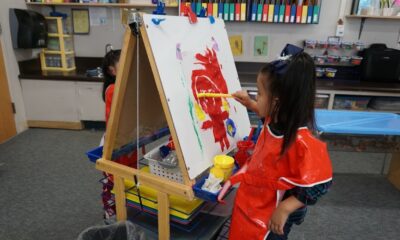
Some experts suggest that children need more time for play and creativity in the wake of the pandemic, not less. Credit: Lillian Mongeau / EdSource
Too few teachers and parents are aware that play helps build the architecture of the growing brain, experts say.
“Play is not frivolous; it enhances brain structure and function and promotes executive function (i.e., the process of learning, rather than the content), which allow us to pursue goals and ignore distractions,” as an American Academy of Pediatrics report put it. “When play and safe, stable, nurturing relationships are missing in a child’s life, toxic stress can disrupt the development of executive function and the learning of prosocial behavior; in the presence of childhood adversity, play becomes even more important.”
Some experts fear that the laser focus on falling test scores in recent years has led to a decrease in playful learning. They suggest that children need more time for play in the wake of the pandemic, not less. Amid the crisis of chronic absenteeism, engaging students on a compelling level may be more vital than ever.
Creativity is the secret formula, experts say, in a world where machines will always compute faster than humans. Drill and kill won’t help children master high-level intellectual inquiry and conceptual analysis.
“You have to ask yourself, what’s it going to take to outsmart the robots?” as Hirsh-Pasek put it. “We need kids who don’t just memorize and take tests well, which AI will do better than our kids ever will. We need kids to be explorers and problem solvers.”
Featured
Congresswoman Omar Secures Crucial Earmark Funding #shorts
See how strategic negotiation and bipartisan cooperation turned legislative gridlock into real-world results for the community.

True progress happens when opposing sides find common ground. Witness how persistent negotiation and strategic partnerships turned legislative conflict into real-world results. Success requires staying the course despite disagreements. #PoliticalStrategy #EffectiveLeadership #BipartisanUnity #PublicPolicy
Featured
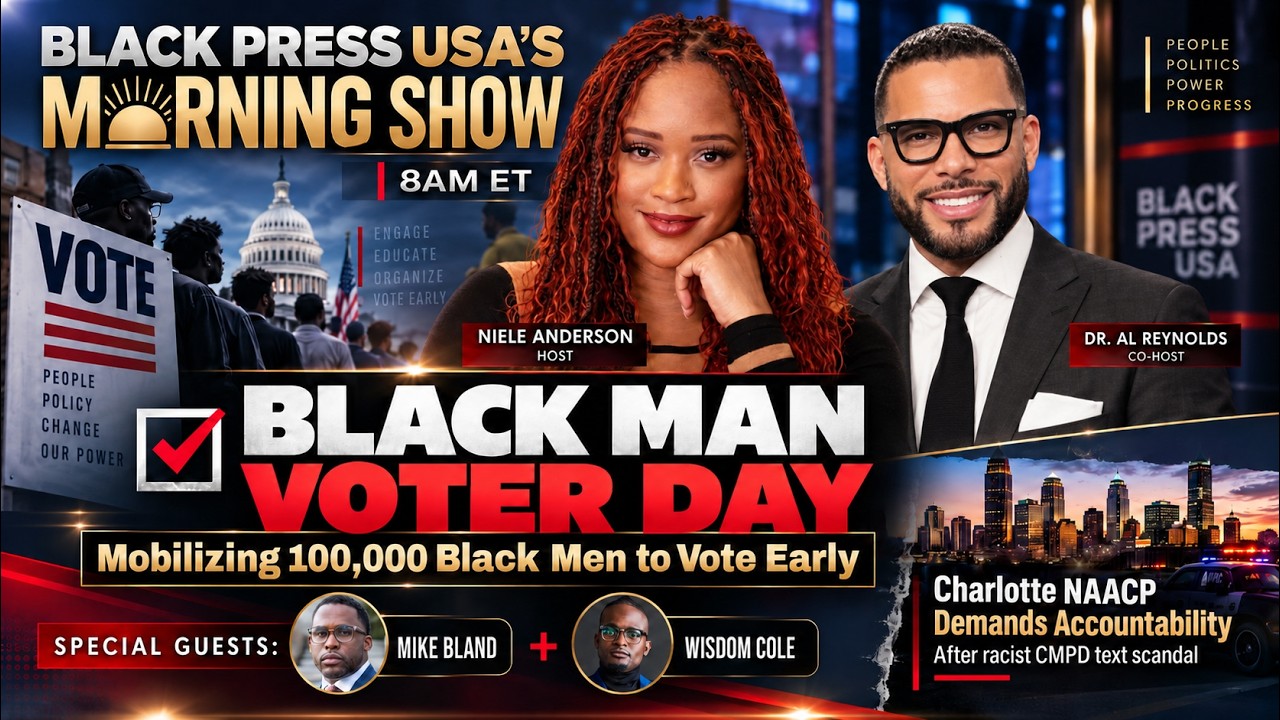
BLACK MEN VOTE: Mobilizing 100,000 Black Men Ahead of the Midterms 📱
Black Men Vote is mobilizing 100,000 voters for the midterms. Tune into Black Press USA as we break down the campaign, community issues, and urgent headlines.

https://www.youtube.com/watch?v=2FjpF8nz1M8
With the 2026 midterm elections approaching, the push to get Black men to the polls is gaining momentum.
Join Niele Anderson and guest co-host Dr. Al Reynolds on Black Press USA’s Morning Show as they welcome Michael Bland, Executive Director of Black Men Vote, and Wisdom Cole, National Director of the NAACP Youth & College Division, to discuss National Black Man Voter Day on October 24, the campaign to mobilize 100,000 Black men, and what’s at stake in this election.
Plus, the Charlotte NAACP is demanding accountability and an independent federal investigation after racist text messages involving Charlotte police officers surfaced.
We’re breaking down the headlines, the issues, and the conversations shaping our communities.
Watch Black Press USA’s Morning Show at 8 AM ET.
#BlackPressUSA #MorningShow #BlackMenVote #NationalBlackManVoterDay #Midterms2026 #BlackVoters #NAACP #VotingRights


Can You See Clearly in Bright Sunlight? Check These 2 Reflections #shorts

Master Your State: 5 Keys to Well-being #shorts

Black Girl Walk with Damenica Ellis and Tracey Williams-Dillard: The Center for Performing Arts.

Vince Wright on Sports Done Wright | Blacklight on Sports

OP-ED: For Us It’s Feel-a-Nomics

Truck Power Liftgate & Bed Liner: Smart Features Explained #shorts

OP-ED: Is Creativity a Superpower in Early Education?

Congresswoman Omar Secures Crucial Earmark Funding #shorts
Informing, empowering and connecting our community

Would You Still Want a Manual After a Tiring Commute? #shorts

The Youngest American Killed in the Vietnam War

OP-ED: Haiti TPS: Have We Lost Sense of Humanity?

Remembering Chauncey Bailey as Student Journalists Face Threats to Truth-Telling

Peter Magubane: a Camera Against Apartheid

All Skinfolk Ain’t Kinfolk

Poll: Becerra Widens His Lead Over Hilton; Californians Split on Wealth Tax

Rulings Leave Questions Lingering in Nolan Wells Case

Latinas Deserve Equal Pay. Unions Help Make It Happen.

Zakiya Jendayi Arrested, Locked Out of Home by Sheriff’s Deputies

HBCU Leaders, Corporate Partners Convene in D.C. to Strengthen Support for Black Colleges’ Athletic Programs
Can You See Clearly in Bright Sunlight? Check These 2 Reflections #shorts
Master Your State: 5 Keys to Well-being #shorts
Black Girl Walk with Damenica Ellis and Tracey Williams-Dillard: The Center for Performing Arts.
Vince Wright on Sports Done Wright | Blacklight on Sports
Truck Power Liftgate & Bed Liner: Smart Features Explained #shorts
Congresswoman Omar Secures Crucial Earmark Funding #shorts
Would You Still Want a Manual After a Tiring Commute? #shorts

Green Book: Uncovering the Truth Behind the Myth #shorts

BLACK MEN VOTE: Mobilizing 100,000 Black Men Ahead of the Midterms 📱

Jack Yates vs Sterling
-
 Black Press1 week ago
All Skinfolk Ain’t Kinfolk
-
 Black Press1 week ago
Oakland Awarded More than $14 Million in State Funding
-
 African American News and Issues1 week ago
Black History: Gladys West Mathematics Helped Make GPS Possible
-
 Black Press1 week ago
Jendayi Arrest Raises Community Concerns Regarding Sheriff’s Chain of Command
-

 Black History4 days ago
OP-ED: The Black Church Writes AI’s Next Chapter
-
 Black Press1 week ago
Democrats, Community Groups Back Measure EE to Change How Oakland Is Governed
